LIVE WIRE
BREAKING WIRE
// 02:39 PMIs VAR being used differently at the World Cup vs the Premier League?// 02:26 PMStarmer quits as Labour leader and paves way for contest for new prime minister// 02:09 PMWhy did Keir Starmer resign and what could happen next?// 02:09 PMEx-Wimbledon champion Vondrousova given four-year ban// 01:43 PMThe key differences between Tuchel and Southgate's England teams// 01:39 PMWelsh first minister wants 'new relationship' with Westminster after Starmer quits// 01:15 PMSir Keir Starmer's premiership in six charts// 12:35 PMUS Open shows why golf is on guard against bad behaviour// 12:35 PMSarwar 'proud' of work with Starmer despite resignation call// 12:11 PMBritish PM resignations over the last decade// 12:01 PM'He's stored in a hard disk in my head' - watching the World Cup as a manager// 11:55 AMAlan Greenspan, architect of the modern American economy, dies aged 100// 11:48 AMKeir Starmer - then and now// 11:25 AMSouth East Water announces new chief executive// 11:17 AMWilliams is the greatest - but will she produce another great fight?// 10:47 AMMadueke's remarkable season - from petition to World Cup starter// 10:34 AMSir Keir Starmer: Top lawyer whose 'Mr Rules' approach failed to connect with the public// 10:01 AMHow football united behind Doku after childbirth criticism// 09:54 AMIran leave note asking for peace after Belgium draw// 09:47 AMSturgeon and Gove to team up for reality TV 'wargame'// 02:39 PMIs VAR being used differently at the World Cup vs the Premier League?// 02:26 PMStarmer quits as Labour leader and paves way for contest for new prime minister// 02:09 PMWhy did Keir Starmer resign and what could happen next?// 02:09 PMEx-Wimbledon champion Vondrousova given four-year ban// 01:43 PMThe key differences between Tuchel and Southgate's England teams// 01:39 PMWelsh first minister wants 'new relationship' with Westminster after Starmer quits// 01:15 PMSir Keir Starmer's premiership in six charts// 12:35 PMUS Open shows why golf is on guard against bad behaviour// 12:35 PMSarwar 'proud' of work with Starmer despite resignation call// 12:11 PMBritish PM resignations over the last decade// 12:01 PM'He's stored in a hard disk in my head' - watching the World Cup as a manager// 11:55 AMAlan Greenspan, architect of the modern American economy, dies aged 100// 11:48 AMKeir Starmer - then and now// 11:25 AMSouth East Water announces new chief executive// 11:17 AMWilliams is the greatest - but will she produce another great fight?// 10:47 AMMadueke's remarkable season - from petition to World Cup starter// 10:34 AMSir Keir Starmer: Top lawyer whose 'Mr Rules' approach failed to connect with the public// 10:01 AMHow football united behind Doku after childbirth criticism// 09:54 AMIran leave note asking for peace after Belgium draw// 09:47 AMSturgeon and Gove to team up for reality TV 'wargame'
Is VAR being used differently at the World Cup vs the Premier League?
TOP STORY
SPORTS

Is VAR being used differently at the World Cup vs the Premier League?

Four goals have been disallowed on VAR review at the 2026 World Cup Complaining about the video assistant referee has become a sport all of its own in the Premier League. It has felt very different at the 2026 World Cup, where VAR has largely been pretty low key. So it may come as a surprise that there have been more regular VAR interventions than in the Premier League last season. Perception can be just as powerful as the facts, especially in the emotionally charged world of football. Games come thick and fast at a World Cup. No sooner has one incident happened, another match comes along to wash over it. In the Premier League, where supporters have a vested interest in every game, controversy does not fade away quite so quickly. So why does it feel so different at the World Cup? VAR at the World Cup has not been without its controversies. Think of the red card for South Africa's Themba Zwane for violent conduct in the opening game. Or the referee rejecting a penalty review after France's Kylian Mbappe appeared to be tripped by Senegal's Sadio Mane. But for the most part, there have not been too many talking points. It is often the way at major tournaments, as players take fewer risks compared to a 38-game league season. On average, there is one key match incident (red card, penalty claim etc) in a World Cup fixture. In the Premier League, it is three. That instantly creates the scope for more controversy at league level. We should expect refereeing to be the gold standard at the World Cup, too. After all, Fifa scoured the globe to select the creme de la creme, the 51 top referees and 30 best video match officials. Whisper it, but Pierluigi Collina, Fifa's head of referees, wants his officials to approach the tournament a bit like a Premier League game. Collina's ethos is that football is a contact sport, and not all contact is a foul. He wants to see free-flowing games at a higher tempo. You could pick that wording right out of the Premier League handbook. The stats back this up, too. Referees are blowing for far fewer fouls. The 2018 World Cup saw 27 fouls per game, while in Qatar four years ago it was 25. For this World Cup it is down to 21.7. In the Premier League last season it was 21.6. Collina has also reduced the number of cautions per game, with 2.4 well below any other competition or recent World Cup. If you change the way a game is being refereed, you must adapt video review too. Collina's desire to have a higher threshold for challenges on the field has a direct link to VAR. The Italian wants consistency of decision-making. If you let more tackles go on the field, you must have fewer VAR interventions. Both bars must move in unison. Take the penalty appeals for Scotland's John McGinn and Scott McTominay against Morocco. Claims for a spot-kick undeniably, but too soft for Collina's threshold. Against public perception, the Premier League has the lowest rate for VAR interventions in Europe at 0.29 per game. The high bar we hear about so much in England has made its way to the World Cup. In Qatar we saw 0.41 interventions per game, for this World Cup it is down to 0.33 - much closer to the Premier League interpretation. Compare that to the Champions League, which saw 0.47 interventions per match last season - almost one every other game. Then there are the subjective reviews, when a referee must go to the monitor. The World Cup (six reviews) and the Premier League (57) both trend the same at 0.15 subjective interventions per game. In the Champions League, it is more than double at 0.36 monitor visits per game. All the stats should point to other competitions having more intrusive video review. Lies, damned lies and statistics. How can the World Cup possibly have more VAR interventions than the Premier League when it feels like the opposite is true? There are a few reasons behind it. First and foremost, speed. Delay feeds doubt. Collina has a clear philosophy - he wants his VARs to make quick and decisive decisions. Errors should jump out, and video officials should not over-analyse. This has led to much shorter reviews on those subjective decisions like penalties and red cards. In the Premier League, there can be a tendency to procrastinate, to over-think by dwelling on replays. That can lead to long VAR reviews, including with its own version of semi-automated offside technology. Howard Webb, the Premier League's head of referees, has a similar ethos to Collina. But getting the same results across 380 games is more challenging. Fifa's enhanced semi-automated offside technology has helped too. The assistant referee gets an audio alert when a player is 10cm or more offside, so the delayed flag has largely been eradicated. It has removed many frustrating passages of play and cut the need for a VAR review on some disallowed goals. It has not been without a few issues, but the benefits of cutting delays have been obvious. Madueke's remarkable season - from petition to World Cup starter Does it matter if Scotland lose and still make history? One of World Cup's great stories - can Cape Verde become legends? One indirect reason should not be underestimated. At a World Cup, the in-game match pictures are delivered by the tournament organiser, and the broadcaster provides the commentary. Fifa, and Uefa, both have very clear policies. The incident might be replayed once, twice at most, while the VAR is looking at a possible red card or penalty. The viewer is only shown the VAR's screen if the referee is at the pitchside monitor. Now compare this to the Premier League, where Sky Sports' and TNT Sports' first responsibility is to analyse an incident, show it from every possible angle. Slow it down, speed it up, throw it to the pundit. Has there been a mistake or not? The commentators have a live feed from the VAR hub to both watch and listen to. They can pull back the curtain and switch to this at any time. It creates a completely different perspective on each potential incident. Tournament organisers want to present less controversy, rights holders want to showcase it. The Premier League must get frustrated that fans still believe VAR is worse in England even though the numbers are aligned with the World Cup. Two key lessons are clear. While accuracy is most important, speed is the greatest asset for the success of video review. And how it is portrayed can make a huge difference too. Play BBC Sport's new World Cup predictor game World Cup fixtures and group standings How to watch the World Cup on the BBC Everything you need to know about the World Cup

Starmer quits as Labour leader and paves way for contest for new prime minister
LEAD REPORT

Starmer quits as Labour leader and paves way for contest for new prime minister

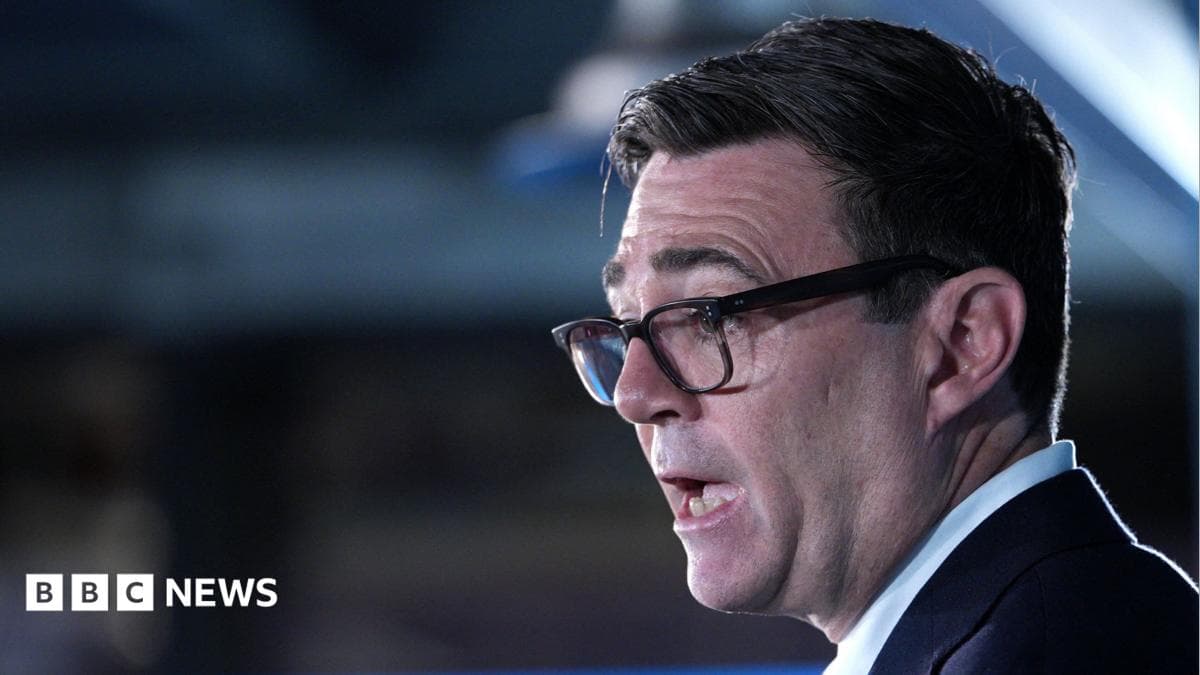
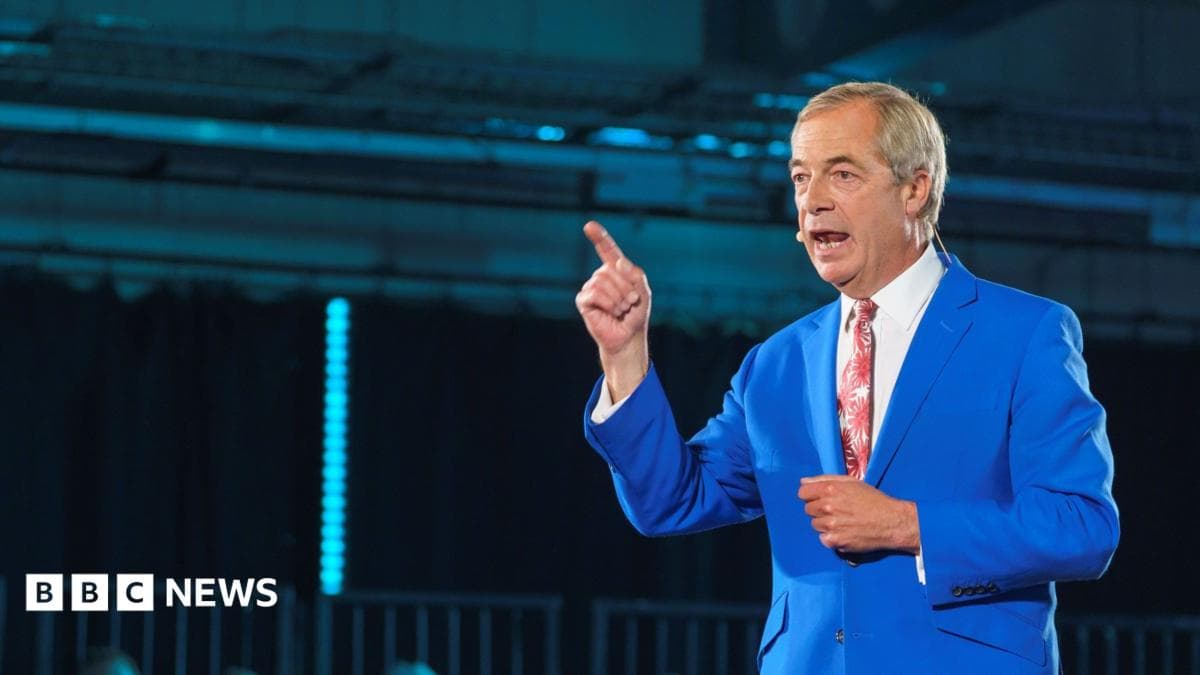
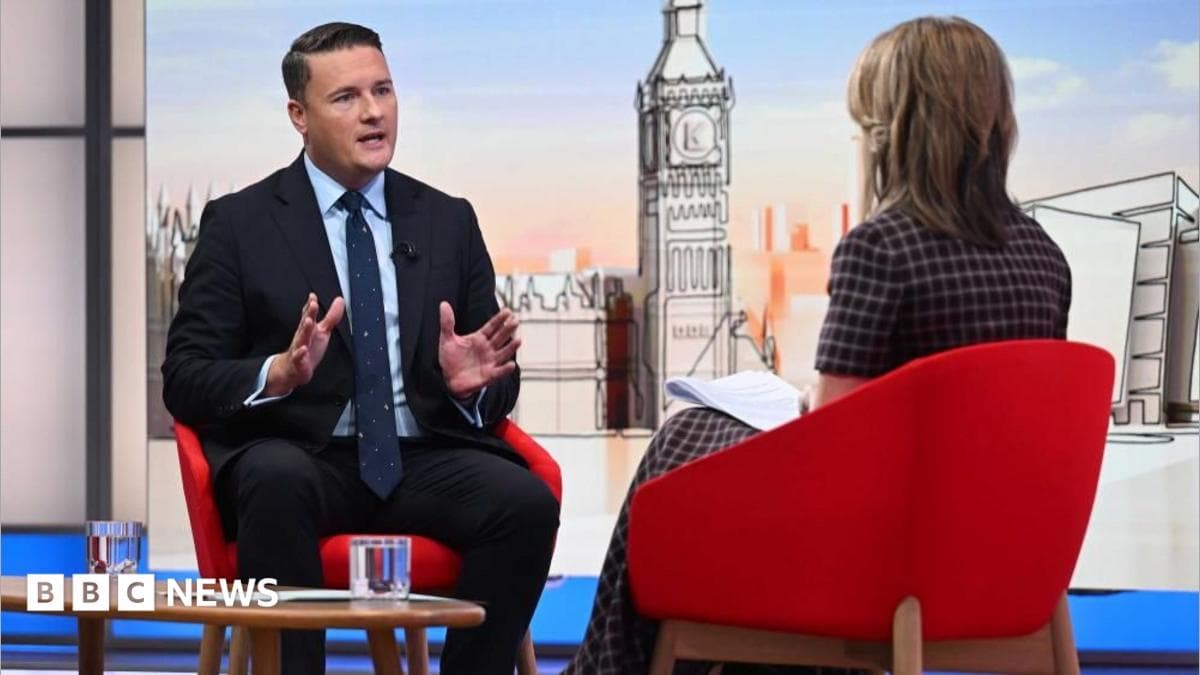
Sir Keir Starmer has said he will quit as Labour Party leader, paving the way for a contest to decide a new prime minister. Speaking in Downing Street, Sir Keir said he accepted he was not best placed to lead Labour into the next general election and he had informed the King of his decision to step down. Sir Keir added he has asked Labour's governing body to set out a timetable to replace him, with nominations opening on 9 July and ending by the summer recess on 16 July. He said if there was a contest then a new leader would be in place before Parliament returns in September, and he will "do everything" he can to ensure an "orderly" transition of power. Sir Keir said he would remain as prime minister until the leadership contest is complete. He added he would also give his successor "my full and unequivocal support, knowing that they will inherit a Britain that is far stronger and fairer than the one I inherited two years ago". Andy Burnham is regarded by many as the frontrunner to replace Sir Keir after he secured an emphatic win over his Reform UK rival in last week's Makerfield by-election . Burnham announced on Monday that he would put himself forward as a candidate in the leadership contest, before he boarded a train to London to take his parliamentary seat. His chances were given an immediate boost by former Health Secretary Wes Streeting, who had been viewed as his main rival, offering his backing to the former Greater Manchester mayor. Speaking to the BBC as he arrived at Euston station, Burnham praised Sir Keir's "dedication and service". Asked if he would call a general election in the event that he became prime minister, he replied: "You're jumping several hurdles ahead. My priority is to be sworn in as the MP for Makerfield." On being formally sworn in as an MP in the House of Commons, Burham was greeted by loud cheers from Labour benches and a few heckles from the opposition, with one MP shouting: "He's not the messiah." Sir Keir was elected leader of the Labour Party in April 2020 and became prime minister on 5 July 2024 following Labour's landslide general election victory. He will leave Downing Street as the shortest-serving Labour prime minister in history. His period in office will last longer than his Conservative predecessors Rishi Sunak and Liz Truss but behind all six previous Labour prime ministers. Sir Keir's decision to step down also means the UK will soon have its seventh prime minister since 2016. Speaking at a lectern in Downing Street, Sir Keir said his party had asked "whether I am best placed to lead us into the next general election". He said: "I have heard the answer of my parliamentary party to that question, and I accept that answer with good grace." Sir Keir was accompanied by his wife, Victoria, as he walked out to deliver his resignation speech at 09:30 BST in the blazing sunshine. Watched by his supporters, colleagues and No 10 staff, Sir Keir's voice cracked with emotion as he spoke of what his focus will be on next. He said: "When I leave the biggest job in the country, I shall spend more time on the most important job: being the best husband I can to my fantastic wife Vic, who has been a rock by my side through good times and bad; and being the best dad I can to my beautiful children, who are my pride and my joy." The sound of Beethoven's Ode to Joy could be heard playing in the background as Sir Keir delivered his speech, with the EU anthem being played by a protester. Sir Keir once described it as the piece of music that best "sums up" his party, telling Classic FM in 2023 that the symphony had a "sense of destiny and is hugely optimistic... it's that sense of moving forward to a better place". Chancellor Rachel Reeves paid tribute to Sir Keir for helping to "build a stronger, more secure Britain", saying the pair had "achieved a lot together to be proud of, and there is more to do". Former Labour deputy leader Angela Rayner said "history will remember not just the challenges he faced but the achievements he oversaw", as she pointed to reforms to employment and leasehold legislation. Burnham thanked Sir Keir for his leadership and said the country now expects "stability, seriousness and a continued focus on the issues that matter most and that is what it will get". Announcing his widely-expected decision to stand in the leadership contest, he wrote on X: "People want to see progress on economic growth, cost of living, public services, housing and opportunities for the next generation." Streeting had previously outlined his intention to join any Labour leadership contest ", but on Monday said he had "spoken at length with Andy in recent days" and called on colleagues to back Burnham. Streeting said he was convinced that Burnham "is committed to building an inclusive party that draws on the best of our political traditions" and that he "can win the fight of our lives against the force of nationalism". Sir Keir had spent the weekend mulling over his future at Chequers, the prime minister's country residence in Buckinghamshire. Pressure from within Labour had been mounting on Sir Keir to outline a timetable for his departure following Burnham's victory in the Makerfield by-election. Discontent towards Sir Keir's leadership had also been rising before a poor set of election results in England, Wales and Scotland in May . This included over his his decision to change direction on three major policies in a month after pressure from within his own party. Sir Keir's decision to appoint Lord Mandelson as UK ambassador to the US also led to questions about his judgement and the wider Downing Street operation. Lord Mandelson was sacked after new information came to light about the depth of his relationship with the late convicted sex offender Jeffrey Epstein. Sir Keir opened his resignation speech by defending his record in government, including on employment rights, immigration and child poverty. He also argued that he had changed Labour after inheriting a party that was "politically, financially and morally bankrupt". Conservative Party leader Kemi Badenoch described Sir Keir as a "terrible prime minister" and attacked his policies, including the rise in employer National Insurance contributions and "giving up on real welfare reform". She wrote on X: "But the problem isn't just Starmer. "Labour MPs only want higher taxes to hand out more benefits, as the welfare secretary has pointed out. These are Labour's choices and their values, regardless of who is running the party." Liberal Democrat leader Sir Ed Davey said the British people were "sick of being let down by an endless merry-go-round of prime ministers while nothing really changes". He said: "This time must be different. It can't just be about changing who's in Number 10, it has to be about changing our broken politics so we can fix our country." Reform leader Nigel Farage demanded a general election, saying: "If Labour thinks it can shove another professional politician into No 10, it has another thing coming." Green Party leader Zack Polanski said the country "needs a bold change of direction", adding Sir Keir "lost the confidence of the country because of his abject failure to challenge the power and wealth of an establishment".

QUICK BRIEFINGS

POLITICS

Welsh first minister wants 'new relationship' with Westminster after Starmer quits

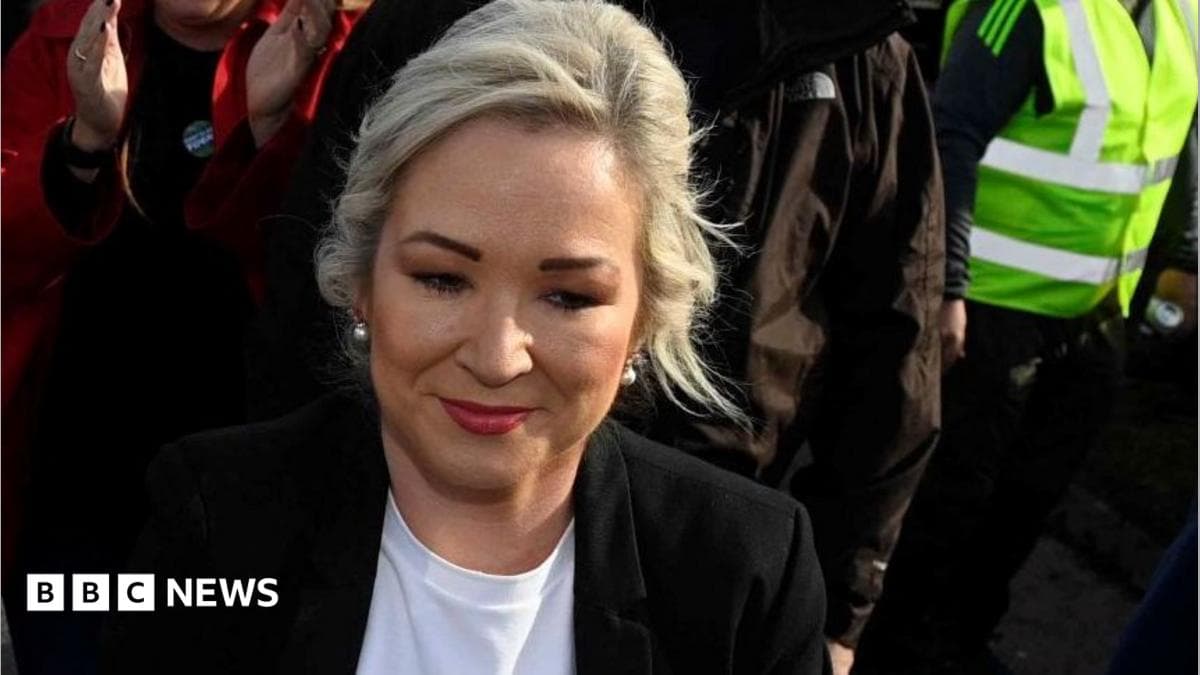
Wales' first minister Rhun ap Iorwerth has called for a "new relationship" between his country's government and Westminster following Sir Keir Starmer's resignation. Ap Iorwerth spelled out a list of demands from the prime minister's successor including more powers for the Welsh government, and said the ability of his administration to engage had been hampered by turmoil in UK politics. Welsh Labour MPs told BBC Wales that Sir Keir, who announced on Monday that he remain in post until a new Labour leader is selected by the party in September , had done the right thing. Interim Welsh Labour leader Ken Skates praised the prime minister and said he had brought his party "back from oblivion". But Reform's Welsh leader Dan Thomas called for a general election, saying: "The public must decide who governs the country, not Labour members." After ap Iorwerth's Plaid Cymru toppled Welsh Labour in May's historic Senedd election , Sir Keir promised a meeting with the first ministers of Wales, Scotland and Northern Ireland in June, but it has failed to materialise. Following the prime minister's resignation, ap Iorwerth said he was "disappointed" that the Welsh government's ability to engage with the prime minister had been "hampered by the turmoil in Westminster". In a statement, he said: "I wish Sir Keir Starmer well as he prepares to leave office. I would like to see his successor recognising that Wales needs a new relationship with Westminster, with a focus on greater powers, fair funding and respect for the democratic mandate delivered by the people of Wales. "My government and I will always seek a constructive relationship with whoever is in Number 10, but we have clear expectations that the respect agenda must work both ways." Plaid had promised at the Senedd election to negotiate further powers and cash for Wales, with many of the demands shared by Welsh Labour members in the Senedd, such as the devolution of justice. But none materialised under Sir Keir's tenure as prime minister. Welsh Labour MPs Tonia Antoniazzi and Ruth Jones told BBC Wales they both thought Sir Keir had "done the right thing". One Labour minister who did not wish to be named said "many" in the UK government had wanted Sir Keir to announce his departure. "It's never pleasant and sad for him personally, but the most important thing is to do what is best for the country - and this is," they said. Former first minister Mark Drakeford said he hopes Manchester mayor Andy Burnham will become prime minister, having campaigned together in the recent Makerfield by-election which saw Burnham elected as an MP . "I think he has an ability to persuade people in this country to have some hope again about the future," Drakeford said. "People have lost faith in the possibility of improvement." He said Burnham, who has announced he will stand to replace Sir Keir, has "seen devolution from both ends of the telescope" and had "run a major local authority and has seen devolution from that local perspective as well". But another Welsh Labour source added that while Burnham would need to engage with the Welsh government "in a positive and proactive way", he "also needs to be unafraid of calling them out". "Right now the Welsh government has a shopping list significantly larger than its wallet," the source said, saying he would need to help the government prioritise the cost-of-living crisis. In a press conference, ap Iorwerth said: "If it is Andy Burnham that is in Number 10, one would hope that his understanding of devolution, through his time as the mayor of Manchester, would perhaps give him a greater understanding of what the importance of getting devolution right is. "But whoever holds the key to 10 Downing Street, my asks will be the same." Welsh Secretary Jo Stevens described Sir Keir as "a man of dignity, duty and commitment to our country and our party". She said the prime minister "through sheer hard work, bravery and determination, he transformed our party, rebuilt public trust and led us to the greatest election victory in my lifetime". Interim Welsh Labour leader Skates said Sir Keir had "brought our party back from oblivion and delivered one of the greatest victories the Labour Party has seen", noting his delivery of an increase to the minimum wage and announcement of £14bn for rail in Wales . "He has led the country through exceptionally tough times with dignity and authenticity and I want to put on record my deepest thanks to him," Skates said. He said he would back Burnham if there was a contest. Welsh Liberal Democrat MP David Chadwick said a change in prime minister "won't change much unless Labour finally confronts the structural problems that continue to hold Wales back". Welsh Conservative Senedd leader Darren Millar said despite Sir Keir's exit "Labour's failures do remain". "The very last thing that Wales and the rest of the United Kingdom needs at this moment time is another Labour leader who won't stand up to Labour MPs on welfare, energy, defence spending and action on the cost of living," he said.

POLITICS

Sir Keir Starmer's premiership in six charts

After losing the confidence of his MPs and key members of his Cabinet, Sir Keir Starmer appeared outside Downing Street on Monday to announce his resignation as prime minister. BBC Verify looks at the record of his time in government in key areas from immigration to energy bills since he took office in July 2024. In August 2024, just a month after taking office, a YouGov poll suggested that only 36% of people thought Sir Keir was doing well as prime minister and 43% said he was doing badly, giving him a net popularity rating of minus 7. This month 74% said he was doing badly, versus 18% who thought he was doing well, suggesting his net popularity had slipped to minus 56. Other polling from Ipsos suggests that Sir Keir's personal ratings among voters fell below his predecessors as prime minister in modern times, including Rishi Sunak, Liz Truss and Boris Johnson. Labour's manifesto pledged "to secure the highest sustained growth in the G7", made up of the US, the UK, Japan, France, Italy, Germany and Canada. There had been some progress. Between the second quarter of 2024 - just before Labour came to power - and the first quarter of 2026 data from the OECD suggests that the UK economy grew by 2.3% in total, faster than the rest of the G7, apart from the US which grew by 3.7% over that same period. And the UK economy did register the fastest growth among the G7 nations in the first quarter of 2026, when it expanded by 0.6%. But most forecasters do not expect this performance to last, partly because of the energy shock from the US conflict with Iran. The International Monetary Fund's (IMF) latest forecast suggests UK GDP growth over 2026 as a whole will fall to 0.8% in 2026, which would be lower than the forecast for the US (2.3%), Canada (1.5%) and France (0.9%). The IMF also projects weaker growth for the UK than the US and Canada in 2027. On small boats, Sir Keir pledged to "smash the gangs" behind them but these Channel crossings have continued under his premiership. Last year's total was the second highest after 2022's peak under the previous Conservative government and total crossing under his premiership have passed the milestone of 200,000 since 2018 . However, there are signs of a slowdown in the rate of arrivals. The number of crossings detected so far in 2026 is down 41% on the same period in 2025. Under Labour overall immigration to the UK and net migration (the difference between immigration and emigration) have both fallen significantly. In the most recent official estimates for 2025 net migration was 171,000, down 48% over the previous year and down from a peak annual rate of 944,000 in 2023, under the Conservatives. On health Sir Keir pledged that 92% of patients in England would be seen within 18 weeks by the end of the Parliament. The latest official data for April 2026 shows 65% of patients being seen within that time, up from 58.9% in June 2024, the month before Labour took office. The overall number of waits for treatment in England in April was 7.22 million, down from 7.62 million in June 2024, a decrease of 400,000. Labour promised to reduce average household energy bills by more than £300 over the course of the Parliament, but in reality bills have gone up. The latest domestic energy price cap set by Ofgem, the energy regulator, for the summer of 2026 is an annual rate of £1,862 for a typical household - in part reflecting the impact of global events like the Iran war. That's an increase of just under £300 on the £1,568 price cap that was in place in the summer of 2024, which Labour inherited. Sir Keir attempted to curb the rising working-age welfare bill, but was forced by his own backbenchers to retreat in June 2025. The latest forecasts from the Office for Budget Responsibility (OBR) show the total UK welfare bill, which includes the state pension, rising from 10.7% of UK GDP in 2024-25 to 11.1% by 2029-30. A major driver of this increase is projected to be health and disability welfare payments to working-age adults, in particular more grants of Personal Independence Payments (PIP). The total working-age adult health and disability benefit bill is forecast to rise from £58.2bn in 2024-25 to £78.1bn in 2029-30. Sir Keir also legislated to remove the two-child limit on Universal Credit. The official impact assessment suggests that this will result in 450,000 fewer children in relative poverty - after housing costs - by the end of the Parliament than there otherwise would have been. Additional reporting by Tom Edgington, Becky Dale, Aidan McNamee, Jess Carr, Wesley Stephenson and Daniel Wainwright What do you want BBC Verify to investigate?

SPORTS

US Open shows why golf is on guard against bad behaviour

This video can not be played Clark beats Burns on closing holes of dramatic US Open US Opens drive players to distraction because the intention is always to test temperament as much as technique. The latest championship, won by Wyndham Clark at Shinnecock Hills on Sunday, did exactly that. But this edition will be remembered for its less savoury side. It was a tournament that reflected our golfing times, where deteriorating standards of behaviour inside and outside the ropes took precedence. The course was brilliantly set up to traditional US Open standards. It demanded the full gamut of shots, punishing any that fell short of perfection, and delivered a thrilling final day as Clark limped home. The champion showed steely sporting character to win his second title, after also triumphing in 2023, but he attracted more jeers than cheers while holding off the plucky Sam Burns and world number one Scottie Scheffler. Clark blocks out New York jeers to win US Open title Shinnecock Hills 'won the battle over me' - McIlroy Niemann first to get two-shot penalty for throwing club One of the reasons for Clark's unpopularity was his furious demolishing of two ancient locker doors in the Oakmont clubhouse after missing the cut at last year's US Open. It was an act of uncontrolled vandalism that speaks to the sense of entitlement that many perceive has spread through the upper echelons of the men's game. Players have never had it so good. They are richer and more pampered than ever before, yet for all that wealth and influence they have never seemed more unattractively angry. Every broadcast seems populated with commentators being forced to say sorry for players' bad language and the fact that it is the broadcaster rather than the golfer doing the apologising sums up a lack of accountability. This worsening malaise has prompted the majors to introduce its new code of conduct which resulted last week in Joaquin Niemann becoming the first player to receive a two-stroke penalty for throwing his club, while running up a nine on the par-four sixth in his first round. That nine became an 11. The Chilean fought back brilliantly to make the cut and ultimately finish tied for seventh. He would have been third with a guaranteed Masters invitation without the penalty. The United States Golf Association (USGA) hit him where it hurts most by adversely affecting his scorecard rather than a bulging bank balance with a meaningless fine. Many will feel such firm action, in general terms, is long overdue. "I really like what's happening here," former European Ryder Cup captain Paul McGinley told viewers of the Golf Channel. "We're in a game where we are seeing so much in favour of the players; so much entitlement, so much money going to the players, so much control. "The powers that be, the R&A and USGA, along with Augusta National, are making a very strong stance here about codes of conduct. "And about boundaries. And I think those boundaries have been stretched too far over the years. And its really good and refreshing to see those boundaries coming in." But Niemann's penalty sets a precedent that will be tough to fairly enforce because different players receive different levels of scrutiny. Potential punishments can influence leaderboards, cuts and careers. Next the spotlight will next fall on July's Open Championship at Royal Birkdale. R&A chief executive Mark Darbon told BBC Sport in April that he will be ready to impose shot penalties for bad behaviour. "You want passion from players, you want passion from spectators, but there's a fine line, and one of the amazing things about this sport are the values and integrity that underpin it," he said. "So we will watch that line very closely." Each group at The Open has an individual referee which should make it easier to enforce the code of conduct with consistency. The main tours, meanwhile, are still working out protocols that will be acceptable to their ultimate bosses - the players. Behaviour also needs careful management amid galleries of fans. Boorish individuals can repeatedly be heard yelling, at best, unfunny lines, and at worst abuse designed to influence an outcome. "Don't choke Wyndham," was the last thing Clark needed to hear as his six stroke lead was whittling away last Sunday. Yet such sentiments rang in his ears throughout the final day. Golf is played in an intimate arena, fans are privileged to share the stage. There is no escape for the players and it feels as though we are creeping towards a point where people could start yelling at the top of backswings to put off players while hitting. The proliferation of betting within the golf industry on both sides of the Atlantic does not help. And we saw the effects of partisan crowds at the Ryder Cup last autumn at Bethpage with abuse of European stars that was an absolute disgrace. Top level golf returned to Long Island last week and some members of the New York crowds again lived down to those depressingly deteriorating standards. And with The Open about to return to north-west England, it is worth remembering there were several individuals who behaved similarly as American Brian Harman won the 2023 Open at Hoylake when the championship was last in that region. Harman and Clark have plenty in common with what they endured among their finest hours on golf courses. Record crowds are expected at Birkdale and with high summer booze flowing, successfully policing them will be crucial. Last Sunday Clark and Burns, who came up just shy of a first major, produced a thrilling denouement played out on a great but maddening course. Despite the brilliance of the Shinnecock spectacle it also proved the sport has never been so angry or unruly. Those imposters have to be kept in check. Without its traditional civility, golf is much diminished.

POLITICS

Sarwar 'proud' of work with Starmer despite resignation call

Scottish Labour leader Anas Sarwar says he is "proud" of his work with Sir Keir Starmer after the prime minister announced he would resign. Sarwar was the first major Labour figure to call for Starmer to quit , arguing in February that "too many mistakes" had been made by the UK government. Newly elected MP Andy Burnham is in pole position to succeed the prime minister after winning the Makerfield by-election. Responding to Starmer's announcement, Sarwar praised him while saying he had made "missteps". Sarwar told BBC Scotland News: "I will always be proud that together. We got rid of the Tories after 14 years of misrule, that a Labour government helped end austerity, lifted half a million children out of poverty and secured shipbuilding on the Clyde for a generation. "That's something that no-one can take away from Keir Starmer, that's a legacy he can be proud of." He added: "Were there missteps? Yes, but I think Keir Starmer is always trying to act in what he thought was the best interest of the country." Sarwar called for the party to "move very quickly to focusing on the issues they were elected to do - and that's delivering for the great people of this country". He refused to back any potential leadership candidates, saying he would wait to see their proposals. Sarwar had called for the prime minister to resign in the run up to the Holyrood election, aiming to distance Scottish Labour from the unpopular Westminster administration. However, cabinet ministers rallied around Starmer at the time and Scottish Labour subsequently endured a poor Holyrood election result. Sarwar refused to be drawn on whether he believed that his party's performance would have been better if the prime minister had stepped down earlier. Sarwar repeatedly butted heads with Downing Street following Labour's landslide general election victory - including disagreements over winter fuel payments for pensioners, Starmer's comments about Israel and the two-child benefits cap. The prime minister confirmed he would remain in office until Labour chooses a new leader, which he said would happen by the time parliament returns from recess in September. The appointment could happen sooner if the party gets behind one candidate without the need for a contest. Shortly after Starmer's statement, Scottish Secretary Douglas Alexander backed Burnham to succeed him. He told BBC Radio 4's World at One that Burnham was a proven winner and "one of the most experienced political leaders in Britain today". Alexander refused to confirm whether he had asked Starmer to step down. First Minister John Swinney said Starmer had made the correct decision. "It was past time for him to face reality and the fact he now has allows some hope that things can change," he said. "However, rather than simply a change of personnel, what is needed is a fundamental change of direction. Labour's time in power has been characterised by broken promises, poor judgement and, ultimately, failure." Swinney said a "fresh start" was possible for Scotland, "but only with independence". Scottish Green co-leader Gillian Mackay argued there was no reason to believe that Burnham would fare any better as prime minister. She said: "The problem isn't the person behind the wheel. It is a party that once worked to serve the interests of working people but now serves only the interests of billionaires and their corporate donors." Scottish Conservative leader Russell Findlay said Starmer would be "remembered as the prime minister of U-turns and broken promises".

Politics

View All →
Starmer quits as Labour leader and paves way for contest for new prime minister

Starmer quits as Labour leader and paves way for contest for new prime minister

Sir Keir Starmer has said he will quit as Labour Party leader, paving the way for a contest to decide a new prime minister. Speaking in Downing Street, Sir Keir said he accepted he was not best placed to lead Labour into the next general election and he had informed the King of his decision to step down. Sir Keir added he has asked Labour's governing body to set out a timetable to replace him, with nominations opening on 9 July and ending by the summer recess on 16 July. He said if there was a contest then a new leader would be in place before Parliament returns in September, and he will "do everything" he can to ensure an "orderly" transition of power. Sir Keir said he would remain as prime minister until the leadership contest is complete. He added he would also give his successor "my full and unequivocal support, knowing that they will inherit a Britain that is far stronger and fairer than the one I inherited two years ago". Andy Burnham is regarded by many as the frontrunner to replace Sir Keir after he secured an emphatic win over his Reform UK rival in last week's Makerfield by-election . Burnham announced on Monday that he would put himself forward as a candidate in the leadership contest, before he boarded a train to London to take his parliamentary seat. His chances were given an immediate boost by former Health Secretary Wes Streeting, who had been viewed as his main rival, offering his backing to the former Greater Manchester mayor. Speaking to the BBC as he arrived at Euston station, Burnham praised Sir Keir's "dedication and service". Asked if he would call a general election in the event that he became prime minister, he replied: "You're jumping several hurdles ahead. My priority is to be sworn in as the MP for Makerfield." On being formally sworn in as an MP in the House of Commons, Burham was greeted by loud cheers from Labour benches and a few heckles from the opposition, with one MP shouting: "He's not the messiah." Sir Keir was elected leader of the Labour Party in April 2020 and became prime minister on 5 July 2024 following Labour's landslide general election victory. He will leave Downing Street as the shortest-serving Labour prime minister in history. His period in office will last longer than his Conservative predecessors Rishi Sunak and Liz Truss but behind all six previous Labour prime ministers. Sir Keir's decision to step down also means the UK will soon have its seventh prime minister since 2016. Speaking at a lectern in Downing Street, Sir Keir said his party had asked "whether I am best placed to lead us into the next general election". He said: "I have heard the answer of my parliamentary party to that question, and I accept that answer with good grace." Sir Keir was accompanied by his wife, Victoria, as he walked out to deliver his resignation speech at 09:30 BST in the blazing sunshine. Watched by his supporters, colleagues and No 10 staff, Sir Keir's voice cracked with emotion as he spoke of what his focus will be on next. He said: "When I leave the biggest job in the country, I shall spend more time on the most important job: being the best husband I can to my fantastic wife Vic, who has been a rock by my side through good times and bad; and being the best dad I can to my beautiful children, who are my pride and my joy." The sound of Beethoven's Ode to Joy could be heard playing in the background as Sir Keir delivered his speech, with the EU anthem being played by a protester. Sir Keir once described it as the piece of music that best "sums up" his party, telling Classic FM in 2023 that the symphony had a "sense of destiny and is hugely optimistic... it's that sense of moving forward to a better place". Chancellor Rachel Reeves paid tribute to Sir Keir for helping to "build a stronger, more secure Britain", saying the pair had "achieved a lot together to be proud of, and there is more to do". Former Labour deputy leader Angela Rayner said "history will remember not just the challenges he faced but the achievements he oversaw", as she pointed to reforms to employment and leasehold legislation. Burnham thanked Sir Keir for his leadership and said the country now expects "stability, seriousness and a continued focus on the issues that matter most and that is what it will get". Announcing his widely-expected decision to stand in the leadership contest, he wrote on X: "People want to see progress on economic growth, cost of living, public services, housing and opportunities for the next generation." Streeting had previously outlined his intention to join any Labour leadership contest ", but on Monday said he had "spoken at length with Andy in recent days" and called on colleagues to back Burnham. Streeting said he was convinced that Burnham "is committed to building an inclusive party that draws on the best of our political traditions" and that he "can win the fight of our lives against the force of nationalism". Sir Keir had spent the weekend mulling over his future at Chequers, the prime minister's country residence in Buckinghamshire. Pressure from within Labour had been mounting on Sir Keir to outline a timetable for his departure following Burnham's victory in the Makerfield by-election. Discontent towards Sir Keir's leadership had also been rising before a poor set of election results in England, Wales and Scotland in May . This included over his his decision to change direction on three major policies in a month after pressure from within his own party. Sir Keir's decision to appoint Lord Mandelson as UK ambassador to the US also led to questions about his judgement and the wider Downing Street operation. Lord Mandelson was sacked after new information came to light about the depth of his relationship with the late convicted sex offender Jeffrey Epstein. Sir Keir opened his resignation speech by defending his record in government, including on employment rights, immigration and child poverty. He also argued that he had changed Labour after inheriting a party that was "politically, financially and morally bankrupt". Conservative Party leader Kemi Badenoch described Sir Keir as a "terrible prime minister" and attacked his policies, including the rise in employer National Insurance contributions and "giving up on real welfare reform". She wrote on X: "But the problem isn't just Starmer. "Labour MPs only want higher taxes to hand out more benefits, as the welfare secretary has pointed out. These are Labour's choices and their values, regardless of who is running the party." Liberal Democrat leader Sir Ed Davey said the British people were "sick of being let down by an endless merry-go-round of prime ministers while nothing really changes". He said: "This time must be different. It can't just be about changing who's in Number 10, it has to be about changing our broken politics so we can fix our country." Reform leader Nigel Farage demanded a general election, saying: "If Labour thinks it can shove another professional politician into No 10, it has another thing coming." Green Party leader Zack Polanski said the country "needs a bold change of direction", adding Sir Keir "lost the confidence of the country because of his abject failure to challenge the power and wealth of an establishment".

Startups

View All →
It's not just about nudity warns actress - the complex reality of images and online abuse

It's not just about nudity warns actress - the complex reality of images and online abuse

Social media companies and authorities are failing women by focusing on nudity rather than consent when dealing with image-based abuse, according to a new report by gender justice organisation Chayn. Its criticisms are backed by Pakistani actress Ayesha Omar, whose experiences, along with those of other women, are described in the findings. One of the women at the centre of the report, whose name has been changed to Mahnoor to protect her privacy, explains that the images that changed her life were not nude. They were not sexually explicit. They showed a woman exposing her bare shoulders and wearing Western clothing. The 32-year-old from Pakistan told BBC Global Women that she returned to her childhood home when her marriage broke down. She hoped for comfort and support from her family, but instead, she and her young daughter were met with iciness. It's been over a year and her father and brothers still have not spoken to her. Colleagues at work who she has known for years will not look her in the eye. Mahnoor had expected a difficult divorce. It had never been an easy marriage. She says her husband, to whom she was married in an arranged match, was both verbally and physically abusive throughout their relationship. But it was the exposure of her private world that cost her the most. Like many young women, Mahnoor had saved lots of pictures of herself on her phone. She had taken photos of her everyday life - a nice dinner, a selfie when the lighting was particularly flattering. Many were years old. One was of her smiling after a new haircut. Another showed her on an overseas exchange programme with friends. Others were ordinary selfies, lying in bed, wearing a vest, with her eyes closed to show off her eyeliner. None had ever been shared publicly. She rarely posted photos on social media, mindful of the conservative culture of her community in Pakistan. According to Mahnoor, who is a university lecturer, her former husband gained access to her WhatsApp account and private images before distributing them to male relatives, colleagues and acquaintances. Mahnoor says he also cropped images of her with a group of friends, to make it appear that she was standing with a single man, insinuating that they were having an affair. The photographs, she says, were used to portray her as "a woman of bad character", an accusation that, in many communities, can carry life-altering and sometimes fatal consequences. With her friends and family, as well as colleagues, barely engaging with her, Mahnoor says she has lost her social standing and the once powerful position she held in her community. "I lost my voice," she told the BBC. "I no longer felt visible. "My family once respected me, my brothers respected me. Having your voice respected by your parents is such a great thing," she says. They used to ask for her advice, but that is no longer the case. Mahnoor's ex-husband has now remarried. The report highlighting Mahnoor's story is by Chayn, a global non-profit organisation that examines gender-based violence. Chayn argues that image-based abuse is routinely misunderstood by both authorities and technology companies because they continue to define harm primarily through nudity. Titled Explicit Harms of Non-Explicit Images, the report argues that for many women, a fully clothed image can have consequences every bit as devastating as an intimate photograph within their wider, and often conservative, communities. "The image does not have to be nude for it to be harmful," says Hera Hussain, report author and founder of Chayn. "Sometimes it can be as harmful, even if not a single body part is bare. "We want to reframe the conversation around image-based abuse away from nudity and towards consent." For years, public conversations about image-based abuse have focused on so-called revenge pornography, deepfake nudes and sexually explicit content. But Chayn's research suggests that this framework misses how shame, reputation and social control operate in many communities. A photograph that appears entirely ordinary to one person may carry severe consequences for another. A video clip showing a woman dancing at a wedding. A photograph of a woman at the beach. A selfie shared without permission. The report argues that harm is often determined not by what the image contains, but by why it is shared, who receives it and what consequences follow. Chayn conducted 64 interviews between July 2025 and February 2026 and participants spanned every major region of Pakistan as well as diaspora communities in the UK, Canada, Germany, Malaysia, the UAE and Kuwait. The research catalogues the kinds of images women feared seeing shared: hair visible without a headscarf, Western or fitted clothing, a photograph taken beside a man who is not a relative, a screenshot of a fabricated conversation, or an image generated by AI from a single photo of someone's face. None contain nudity. All can be made to tell a damaging story. For Ayesha Omar, the argument is not theoretical. The actress, who has worked in Pakistan's film and television industry for more than 20 years, says her own images were stolen and circulated long before social media made such exposure commonplace. Photographs taken on a holiday over a decade ago in Thailand with a female friend, on a beach, where she wore a one-piece swimsuit and shorts, were taken from a laptop without her knowledge and posted online. "It was very damaging for my career," Ayesha says. "I lost ad campaigns. I lost some work stuff." She takes a pause before adding: "Because in my culture, you have to conform to a particular image, even if you're representing a brand or you're playing a character on TV. So it did damage me psychologically and emotionally a lot." She says the experience left her "hypervigilant", constantly scanning her environment for people who may be filming her. For Hera Hussain, society is asking the wrong questions when it comes to image-based abuse. Chayn's framework rests on three tests: the harm done to the person, the intent behind the sharing, and the absence of consent. In Mahnoor's case, she says, all three are present. The same can be said for actress Ayesha Omar. The harm has consequences: lost relationships and lost income. "The principle is respect, dignity, consent," Hussain says. "These are the things that matter." That principle, the report argues, is precisely what tech companies and regulatory systems fail to apply. When Mahnoor took her case to Pakistan's Federal Investigation Agency, now operating as the National Cyber Crime Investigation Agency, she was told the images fell outside its remit because they were not nude or sexually explicit. Her written complaint, seen by the BBC, was declined on those grounds. When she approached her mobile network provider, she says she was told nothing could be done unless she could produce the SIM registered to the offending account - a SIM her ex-husband had taken from her. BBC Global Women approached Pakistan's National Cyber Crime Investigation Agency for comment and has not received a response. Mahnoor says she also reported the images to a customer complaints email address for WhatsApp. She says that she was told they did not breach the platform's rules. As she no longer has the email exchange, it has not been possible to verify what was said. WhatsApp declined to comment on Mahnoor's case but a spokesperson pointed the BBC to the platform's guidelines which "outline what is and isn't allowed". The guidelines do not give a specific policy on image-based abuse but say WhatsApp deals with "abusive people" to prohibit "harmful conduct towards others". They also state they are "not obligated to control the actions or information (including content) of our users or other third-parties". WhatsApp uses end-to-end encryption so cannot proactively review images that people send. In the context of sexually explicit and nude images, its parent company Meta says: "We are committed to making Facebook, Instagram, Messenger and Threads safe places. We remove content that could contribute to a risk of harm to the physical security of persons." But Hera Hussain is worried that cultural sensitivities are not recognised by tech companies, where reported images are often first assessed by an AI moderation system trained largely to detect nudity. Identifying images that could be problematic is much more nuanced than spotting bare skin and Hussain says a user may need to be very persistent to make sure a human moderator reviews a picture. There is concern that there is not enough human oversight as companies lean on cheaper automated tools and consolidate regional expertise into teams covering vast, diverse areas. For example, in a disclosure to the US Senate Judiciary Committee, the CEO of Snapchat revealed cuts to its trust and safety team - its safety and moderation headcount fell from a 2021 peak of just over 3,000 to about 2,226 in 2023 - a 27% reduction. Campaigners want the logic reversed. At present, Hussain says, platforms investigate and then take down. She believes they should take down first, for 24 hours, pending review, and investigate after. "What are you going to lose?" she asks. In our interview, Hussain points to a case that came to light in 2017 where three sisters in Pakistan were killed after a video of them singing and clapping at a wedding was shared - three of their male relatives were given life sentences. The reporting burden, meanwhile, falls almost entirely on the victim, who must locate the images, view them repeatedly, and submit each one, with no simple mechanism to remove copies in bulk. "You go through all that retraumatisation," Hussain says, "and then you might not even get a response." That distinction matters most, the report concludes, because the harm is rarely contained to the woman in the frame. It details how a leaked image lands on her whole family, fathers unable to face work, sisters whose marriages collapse, households watched "in a shameful manner". Honour is collective, and the threat of collective shame is itself a tool of control. For Mahnoor, the cost is measured in the people who no longer speak to her. Her daughter, who is three-and-a-half years old, has begun to notice that the relatives upstairs do not greet her mother. The images that took her voice were, by any platform's definition, harmless. Some countries do treat the sharing of images as a question of privacy. France has long recognised a "right to one's own image": under Article 9 of its Civil Code, every person, public figure or private citizen, has an exclusive right over how their image is used, subject to exceptions for news and matters of genuine public interest. A minister on holiday, however, retains a right to privacy. The UAE goes further still, criminalising the photographing of people without consent even in public places, with no broad public-interest exemption. "Image-based abuse is bigger and wider than nudes" and there is "systemic failure" concludes Hera Hussain. She says the police, courts and tech platforms "can all do so much better in supporting survivors", adding that "if you're experiencing image-abuse know that it is not your fault, you are not alone and there are organisations like Chayn that are here to support you". This is part of the Global Women series from the BBC World Service, sharing untold and important stories from around the globe

Is VAR being used differently at the World Cup vs the Premier League?

Is VAR being used differently at the World Cup vs the Premier League?

Four goals have been disallowed on VAR review at the 2026 World Cup Complaining about the video assistant referee has become a sport all of its own in the Premier League. It has felt very different at the 2026 World Cup, where VAR has largely been pretty low key. So it may come as a surprise that there have been more regular VAR interventions than in the Premier League last season. Perception can be just as powerful as the facts, especially in the emotionally charged world of football. Games come thick and fast at a World Cup. No sooner has one incident happened, another match comes along to wash over it. In the Premier League, where supporters have a vested interest in every game, controversy does not fade away quite so quickly. So why does it feel so different at the World Cup? VAR at the World Cup has not been without its controversies. Think of the red card for South Africa's Themba Zwane for violent conduct in the opening game. Or the referee rejecting a penalty review after France's Kylian Mbappe appeared to be tripped by Senegal's Sadio Mane. But for the most part, there have not been too many talking points. It is often the way at major tournaments, as players take fewer risks compared to a 38-game league season. On average, there is one key match incident (red card, penalty claim etc) in a World Cup fixture. In the Premier League, it is three. That instantly creates the scope for more controversy at league level. We should expect refereeing to be the gold standard at the World Cup, too. After all, Fifa scoured the globe to select the creme de la creme, the 51 top referees and 30 best video match officials. Whisper it, but Pierluigi Collina, Fifa's head of referees, wants his officials to approach the tournament a bit like a Premier League game. Collina's ethos is that football is a contact sport, and not all contact is a foul. He wants to see free-flowing games at a higher tempo. You could pick that wording right out of the Premier League handbook. The stats back this up, too. Referees are blowing for far fewer fouls. The 2018 World Cup saw 27 fouls per game, while in Qatar four years ago it was 25. For this World Cup it is down to 21.7. In the Premier League last season it was 21.6. Collina has also reduced the number of cautions per game, with 2.4 well below any other competition or recent World Cup. If you change the way a game is being refereed, you must adapt video review too. Collina's desire to have a higher threshold for challenges on the field has a direct link to VAR. The Italian wants consistency of decision-making. If you let more tackles go on the field, you must have fewer VAR interventions. Both bars must move in unison. Take the penalty appeals for Scotland's John McGinn and Scott McTominay against Morocco. Claims for a spot-kick undeniably, but too soft for Collina's threshold. Against public perception, the Premier League has the lowest rate for VAR interventions in Europe at 0.29 per game. The high bar we hear about so much in England has made its way to the World Cup. In Qatar we saw 0.41 interventions per game, for this World Cup it is down to 0.33 - much closer to the Premier League interpretation. Compare that to the Champions League, which saw 0.47 interventions per match last season - almost one every other game. Then there are the subjective reviews, when a referee must go to the monitor. The World Cup (six reviews) and the Premier League (57) both trend the same at 0.15 subjective interventions per game. In the Champions League, it is more than double at 0.36 monitor visits per game. All the stats should point to other competitions having more intrusive video review. Lies, damned lies and statistics. How can the World Cup possibly have more VAR interventions than the Premier League when it feels like the opposite is true? There are a few reasons behind it. First and foremost, speed. Delay feeds doubt. Collina has a clear philosophy - he wants his VARs to make quick and decisive decisions. Errors should jump out, and video officials should not over-analyse. This has led to much shorter reviews on those subjective decisions like penalties and red cards. In the Premier League, there can be a tendency to procrastinate, to over-think by dwelling on replays. That can lead to long VAR reviews, including with its own version of semi-automated offside technology. Howard Webb, the Premier League's head of referees, has a similar ethos to Collina. But getting the same results across 380 games is more challenging. Fifa's enhanced semi-automated offside technology has helped too. The assistant referee gets an audio alert when a player is 10cm or more offside, so the delayed flag has largely been eradicated. It has removed many frustrating passages of play and cut the need for a VAR review on some disallowed goals. It has not been without a few issues, but the benefits of cutting delays have been obvious. Madueke's remarkable season - from petition to World Cup starter Does it matter if Scotland lose and still make history? One of World Cup's great stories - can Cape Verde become legends? One indirect reason should not be underestimated. At a World Cup, the in-game match pictures are delivered by the tournament organiser, and the broadcaster provides the commentary. Fifa, and Uefa, both have very clear policies. The incident might be replayed once, twice at most, while the VAR is looking at a possible red card or penalty. The viewer is only shown the VAR's screen if the referee is at the pitchside monitor. Now compare this to the Premier League, where Sky Sports' and TNT Sports' first responsibility is to analyse an incident, show it from every possible angle. Slow it down, speed it up, throw it to the pundit. Has there been a mistake or not? The commentators have a live feed from the VAR hub to both watch and listen to. They can pull back the curtain and switch to this at any time. It creates a completely different perspective on each potential incident. Tournament organisers want to present less controversy, rights holders want to showcase it. The Premier League must get frustrated that fans still believe VAR is worse in England even though the numbers are aligned with the World Cup. Two key lessons are clear. While accuracy is most important, speed is the greatest asset for the success of video review. And how it is portrayed can make a huge difference too. Play BBC Sport's new World Cup predictor game World Cup fixtures and group standings How to watch the World Cup on the BBC Everything you need to know about the World Cup

Alan Greenspan, architect of the modern American economy, dies aged 100

Alan Greenspan, architect of the modern American economy, dies aged 100

Former US Federal Reserve chair Alan Greenspan has died aged 100, his wife has said. NBC News correspondent Andrea Mitchell said in a statement reported by her employer that her husband had died from complications of Parkinson's Disease. Mitchell's statement said Greenspan was "a giant of a man who helped shape the US economy for decades under presidents of both parties, but was always honest in acknowledging his mistakes". For nearly 20 years, Alan Greenspan was charged with safeguarding the US economy and keeping the dollar sound. As chairman of the Federal Reserve from 1987-2006, a post described as the second most important after the presidency, he presided over the longest sustained period of US economic growth in a generation. Described as the "God in the machine" of American finance, Greenspan declined all requests for interviews during his time at the Fed. But the media and the money markets hung on his few public statements, and a sign in his office said simply, "the buck starts here". But critics argue that an over-reliance on easy credit fuelled the dot-com bubble of the late 1990s and caused the sub-prime mortgage crisis of 2008. The Fed said Greenspan's policies and economic thinking "left a lasting mark on this institution, on the broader field of economics, and on the country". In a statement on Monday, the central bank said: "He brought rigorous analytical discipline to monetary policymaking and helped establish the credibility that remains one of the Federal Reserve's most important assets." The Fed said his legacy lives on at the institution through the economist he mentored and inspired as chairman. Alan Greenspan was born in New York City on 6 March 1926. His mother, who worked in a furniture store, brought him up single-handed. Far from being a budding economist, the young Greenspan was a talented musician, who studied the clarinet at New York's renowned Julliard School of Music. He played in a band with Stan Getz, the legendary jazz saxophonist, before touring the country with the Henry Jerome Band. This peripatetic lifestyle gave him a valuable practical insight into the workings of US business. And while his fellow musicians spent their evenings smoking marijuana, Alan Greenspan busied himself by swotting up on economics and doing the band's accounts. At the age of 19, he enrolled as an economics student at New York University, where he became an apostle of the free market, and eventually found employment as an economic consultant and, later, as a member of the board at JP Morgan. In 1952, Greenspan met the right-wing novelist and social philosopher Ayn Rand, whose views were to have a profound influence on him. She called him "the undertaker" because of his liking for dark, sombre suits. But the young economist came to support her belief that society functions most efficiently when people actively pursue their own self-interests, to the exclusion of the interests of society as a whole. In an article he wrote in 1966, he declared "the welfare state" as "nothing more than a mechanism by which governments confiscate the wealth of the productive members of a society". Having successfully predicted the Eisenhower recession, Greenspan advised Richard Nixon during his successful presidential election campaign in 1968. He went on to become head of the Council of Economic Advisers. Greenspan later wrote that he found the president to be "sadly paranoid, misanthropic and cynical", but the economist's success at curbing inflation impressed Nixon's successors. Gerald Ford asked Greenspan to continue at the Council of Economic Advisers and - in the early 1980s - Ronald Reagan chose him to lead an inquiry into the reform of the America's state pension system. In August 1987, Reagan promoted him to chairman of the US Federal Reserve, and - for the next two decades - he became one of the most powerful men in the world. He was thrown in at the deep end. His astute handling of the October 1987 stock market crash, which saw more than 30% wiped off share prices, earned Greenspan many plaudits. His statement of confidence in the underlying economy calmed frayed nerves, and his facilitation of cheap credit helped keep the banks afloat. It was an approach used again and again, whenever the markets had a crisis. Later dubbed "quantitative easing", such upheavals included the 1980s savings and loan crisis, the first Gulf War, the Mexican peso crisis and - shortly after he had retired - the global credit crisis in 2008. Greenspan was renominated as chairman of the Federal Reserve by George H.W. Bush, although the president later complained that a sluggish economic recovery had put paid to his chances of re-election. Surprisingly, Bill Clinton - a Democratic Party president - also asked the driest of monetarists to stay on in post. But his decision was rewarded as, under Greenspan's direction, there followed a golden era of growth in the late 1990s. Greenspan later praised Clinton in his memoir for the president's "consistent, disciplined focus on long-term economic growth" - while complaining that some Republican administrations simply lost control of public spending. Away from work, the rather grey-looking banker was a skilled and enthusiastic tennis player. An early marriage to a Canadian artist lasted less than a year, and Greenspan dated TV star Barbara Walters, before marrying NBC reporter Andrea Mitchell in 1997. The same year, the spectacular fall of the South East Asian "tiger economies" tested him again. By cutting US interest rates, he indicated his belief that the situation would recover and, in doing so, aided the world economy. Much the same happened when many dot-com companies, overpriced by investors, failed to live up to their hype and folded in March 2000. The market, said Greenspan, had exhibited "irrational exuberance". The Federal Reserve raised interest rates and then cut them rapidly after consumers vastly reduced their expenditure. But Greenspan was blamed for the low interest rate culture that had allowed the dot-com bubble to grow in the first place. The Nobel laureate Paul Krugman was one critic. "He didn't raise interest rates to curb the market's enthusiasm," Krugman complained, "he waited until the bubble burst... then tried to clean up the mess afterwards." After the 9/11 attacks on America, he slashed interest rates to help prop up the US economy and urged George W. Bush to remove Saddam Hussein, in case the Iraqi dictator caused chaos on the global energy markets. In 2006, Greenspan stood down as chairman of the Federal Reserve after an unprecedented five terms in office. A year later came a downturn in the US housing market that the Federal Reserve had failed to predict. The sub-prime mortgage crisis went on to bring down banks and trigger the worst global economic downturn since the Great Depression. Critics said Greenspan's policy of low interest rates after 9/11 had fuelled a sharp rise in house prices and over-enthusiastic selling of mortgages by banks. It was also said that his aversion to the regulation of banks - and their practice of using complicated financial instruments like derivatives to insure their lending - made the problem worse. In October 2008, Greenspan admitted that he had put too much faith in the free-market and had given insufficient attention to the dangers of sub-prime lending. He said he'd believed that the financial industry could be relied upon to "self-regulate" because it would always be in its best interests to do so. In testimony to Congress, the former Federal Reserve chairman confessed that the banks had proved his free-market, anti-regulation views wrong. "I have found a flaw. I don't know how significant or permanent it is. But I have been very distressed by that fact." Alan Greenspan will be remembered as the man who - more than anyone else - shaped the modern US economy. For twenty years, a series of presidents and many ordinary Americans viewed him as a financial guru, and a talisman against bad times. In the course of his extraordinary career, he was awarded the Presidential Medal of Freedom in Washington and an honorary knighthood by Queen Elizabeth II. He remained a sought after economic adviser and media pundit into his late 90s. He was no fan of President Trump's first administration, describing his populist approach as a "shout of pain" that would do little to raise living standards. He also criticised Britain's decision to leave the European Union, calling Brexit the "worst outcome". Fast approaching the age of 100, he popped up on television warning that the Biden administration was raising interest rates too fast in 2023. He celebrated his centenary in March 2026. With his air of Olympian detachment, Greenspan will be remembered for his long stewardship of the US economy, during which GDP contracted only once. Although, for his critics, his reputation was dented by his philosophical antipathy to regulation, and two great market crashes.