Rachel Flynn Live reporter
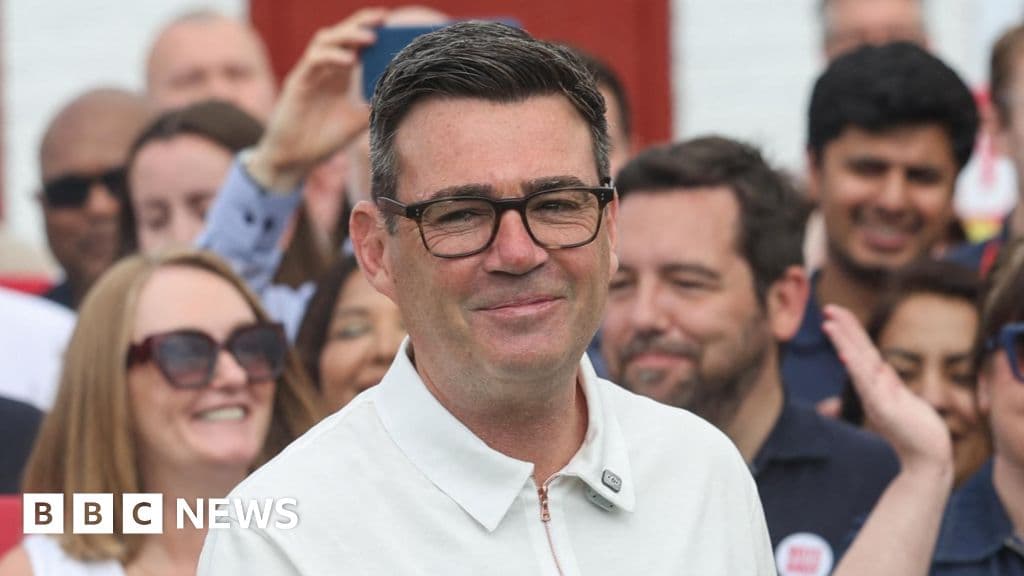
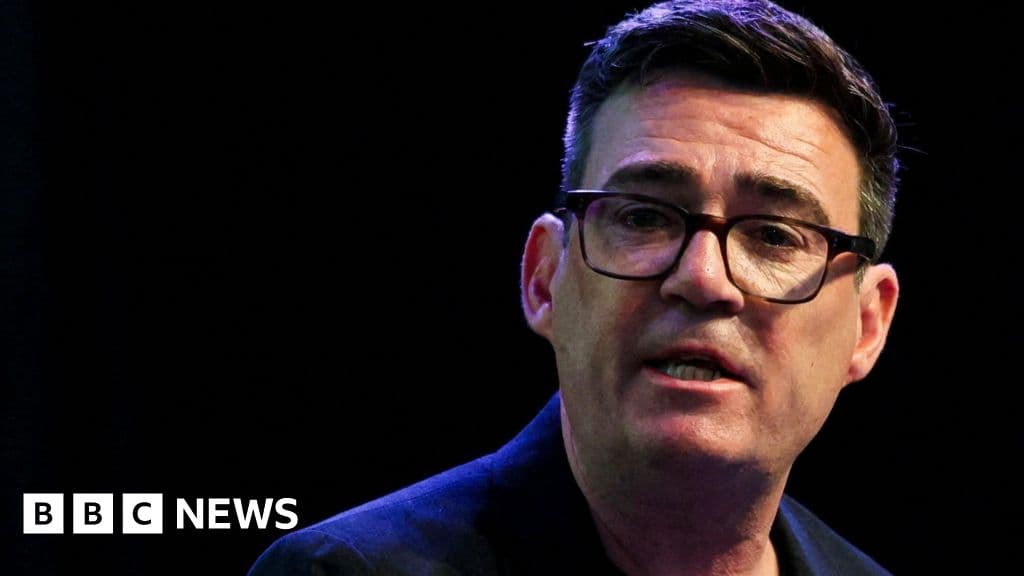
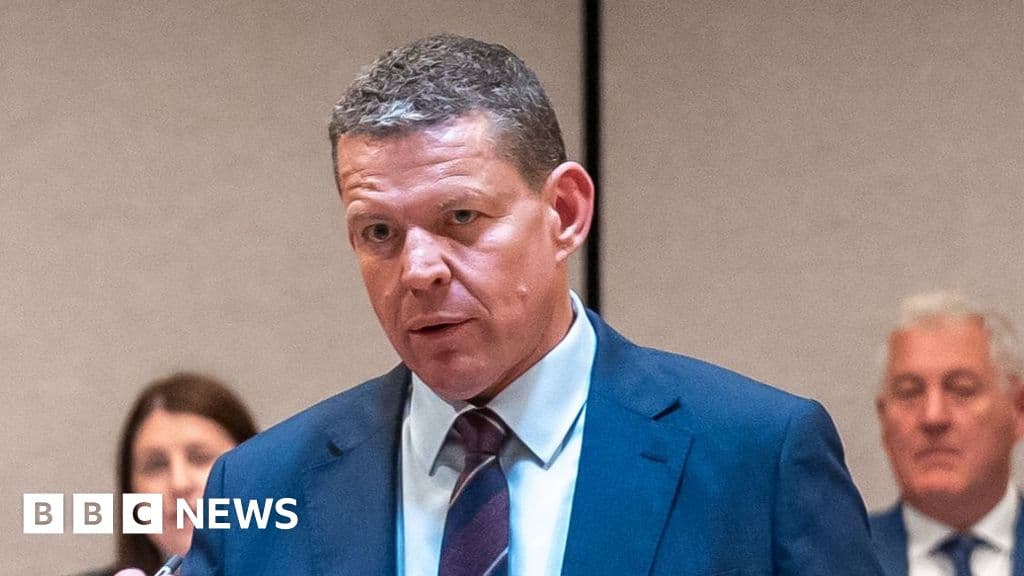
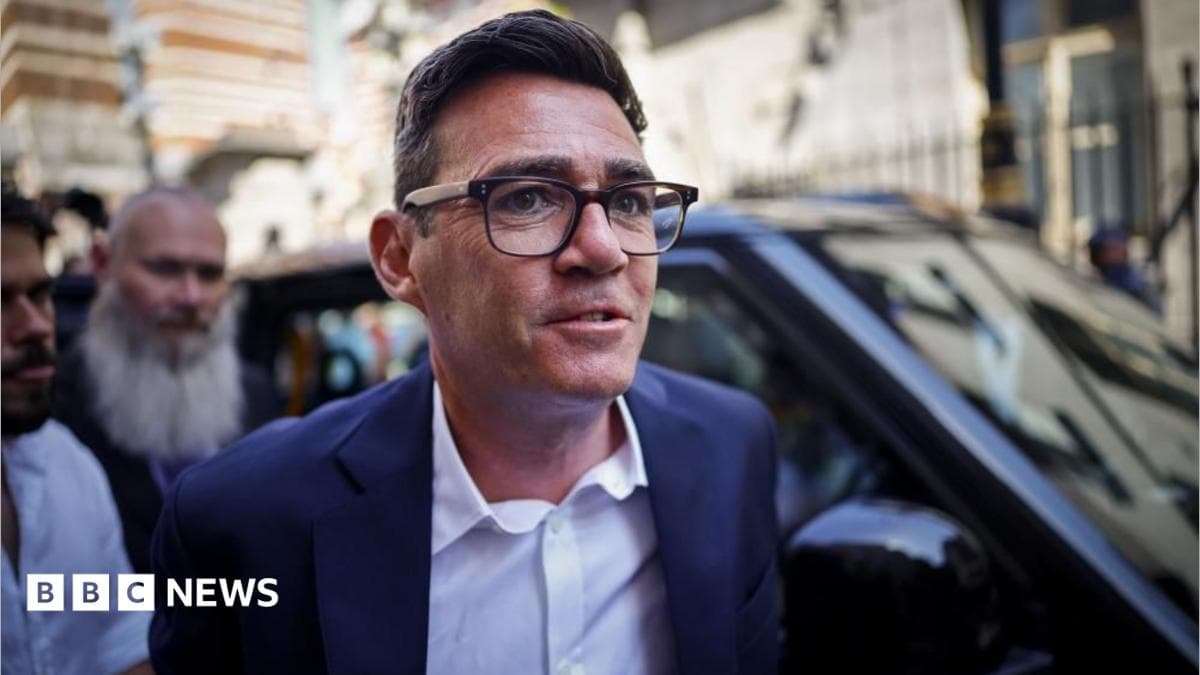
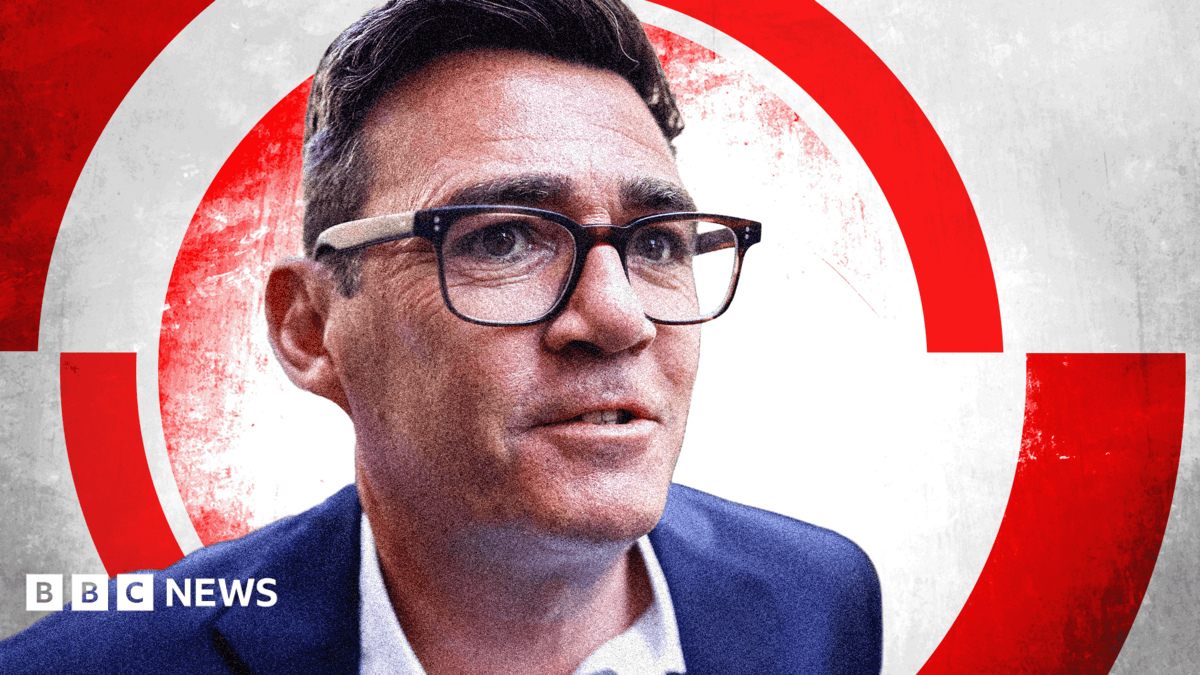
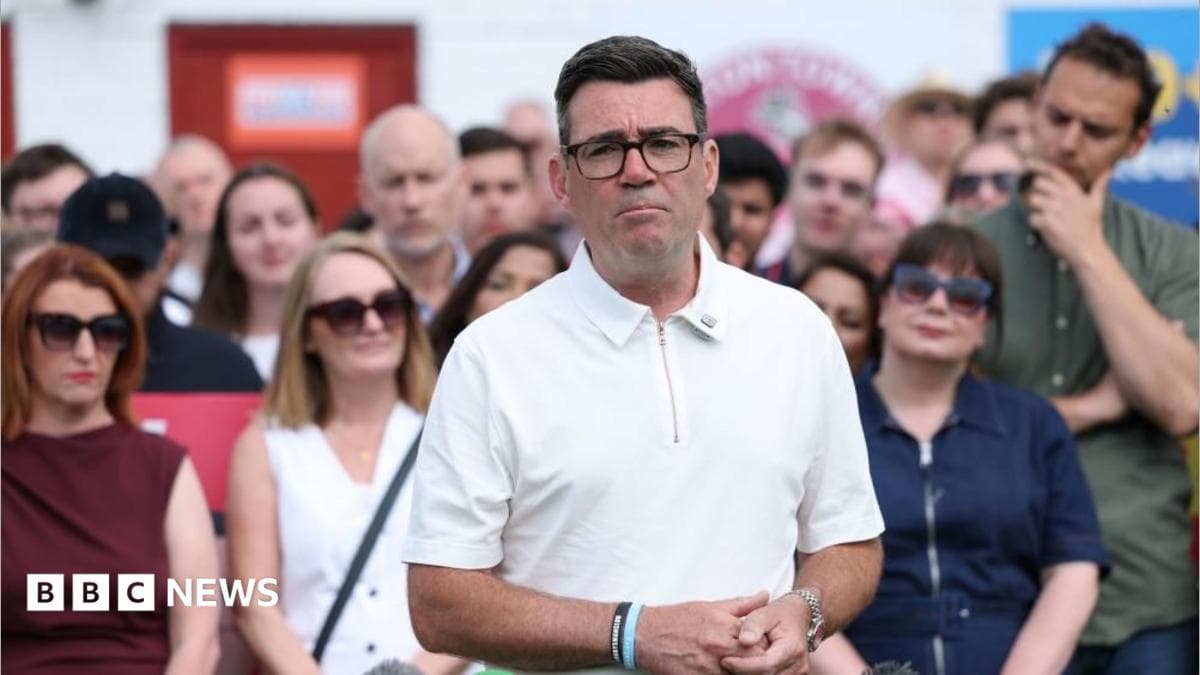
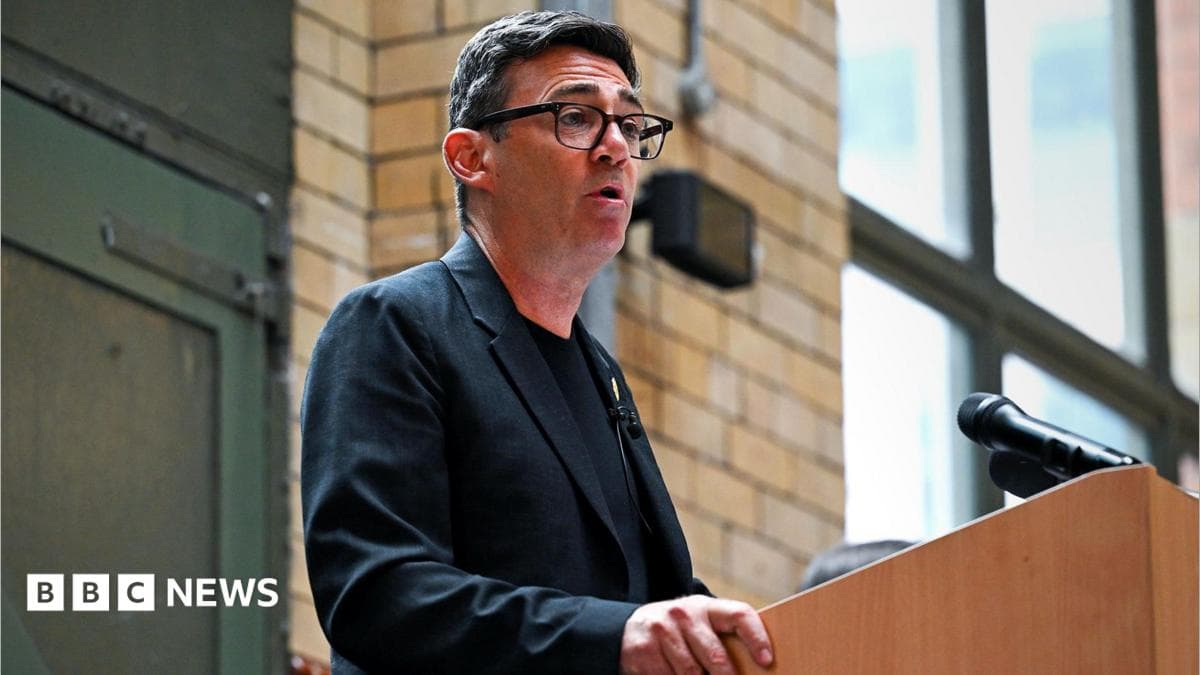
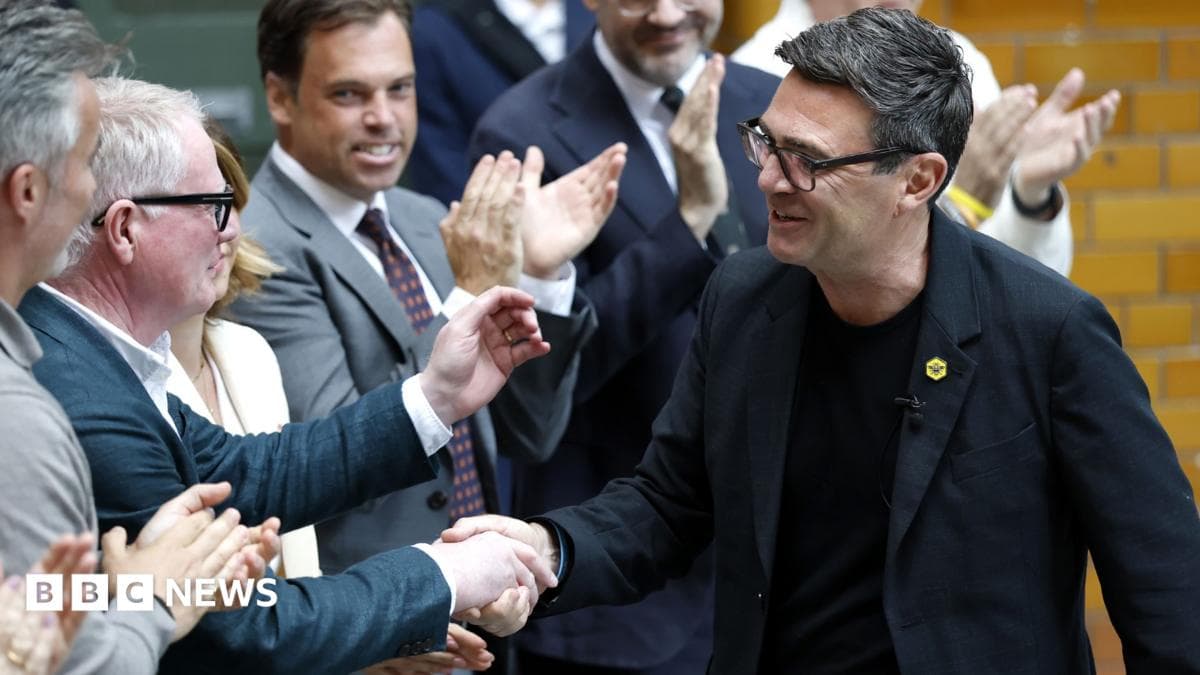
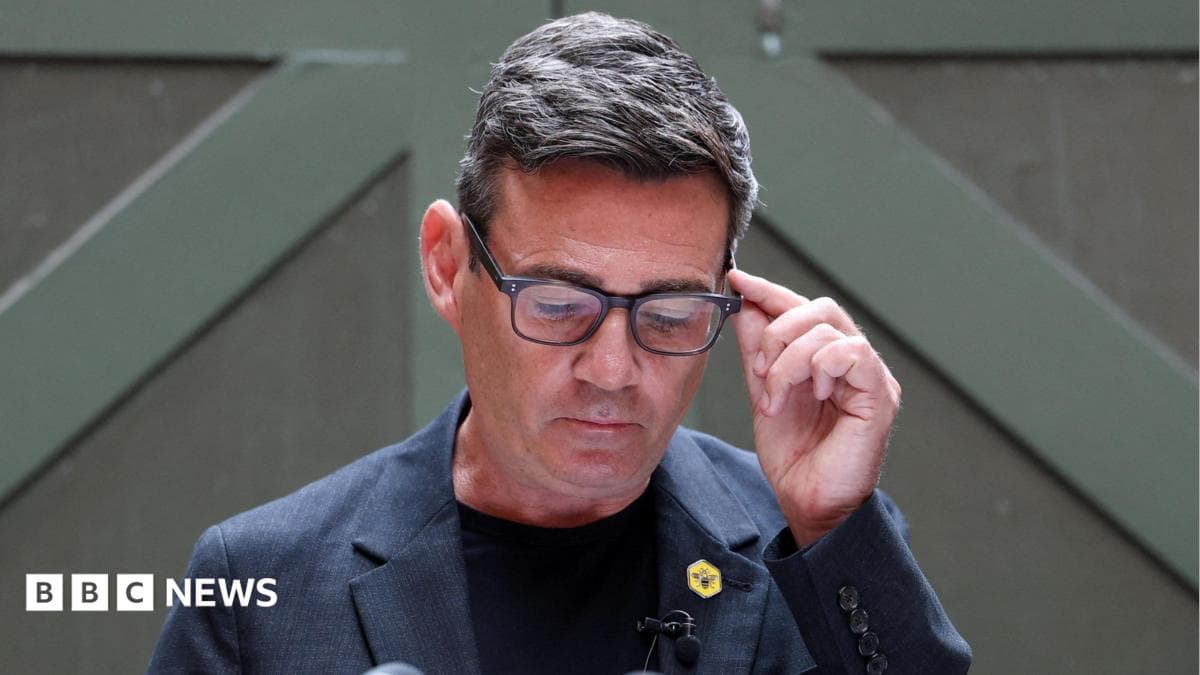
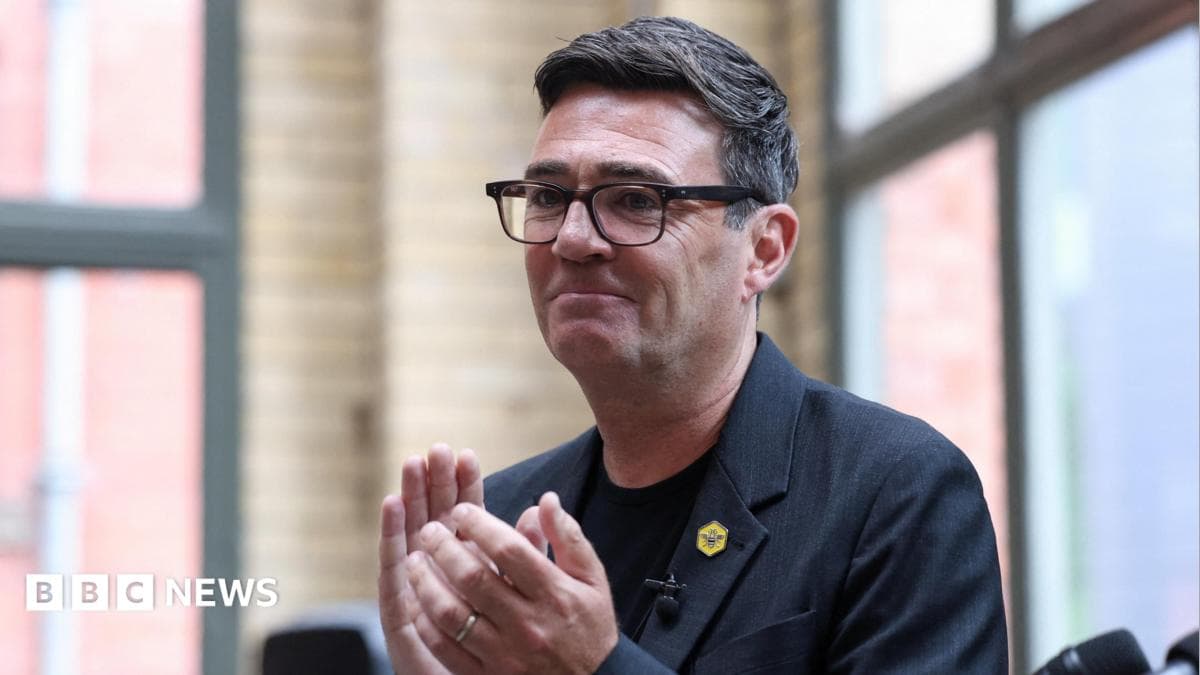
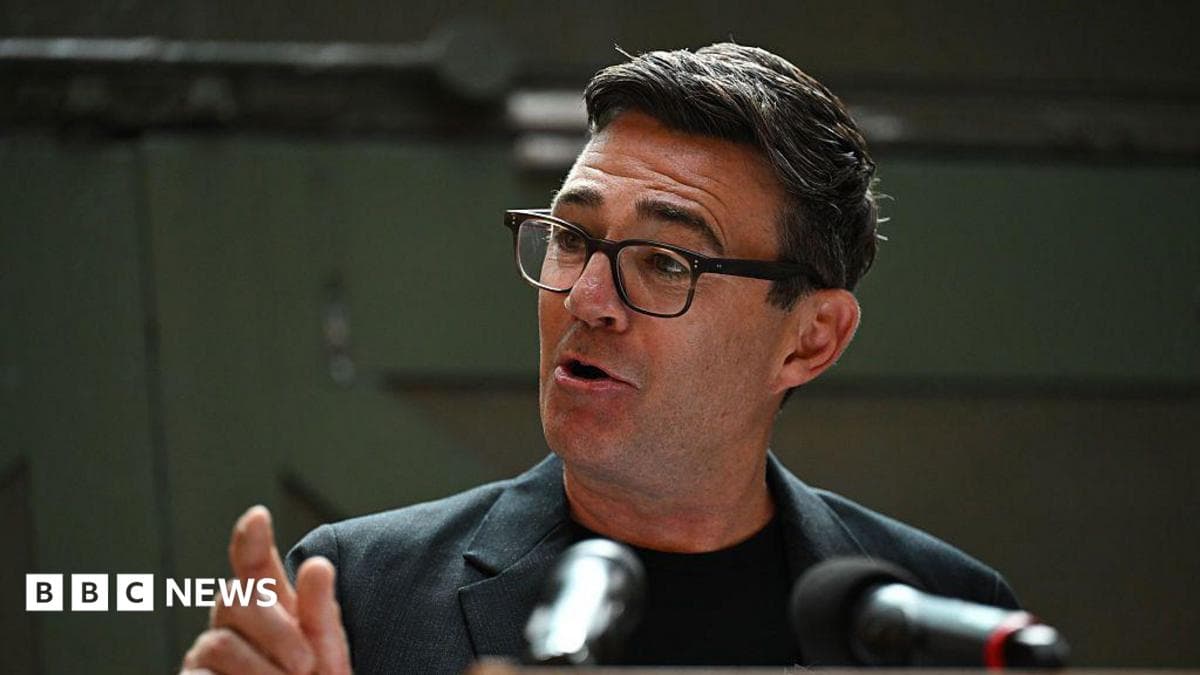
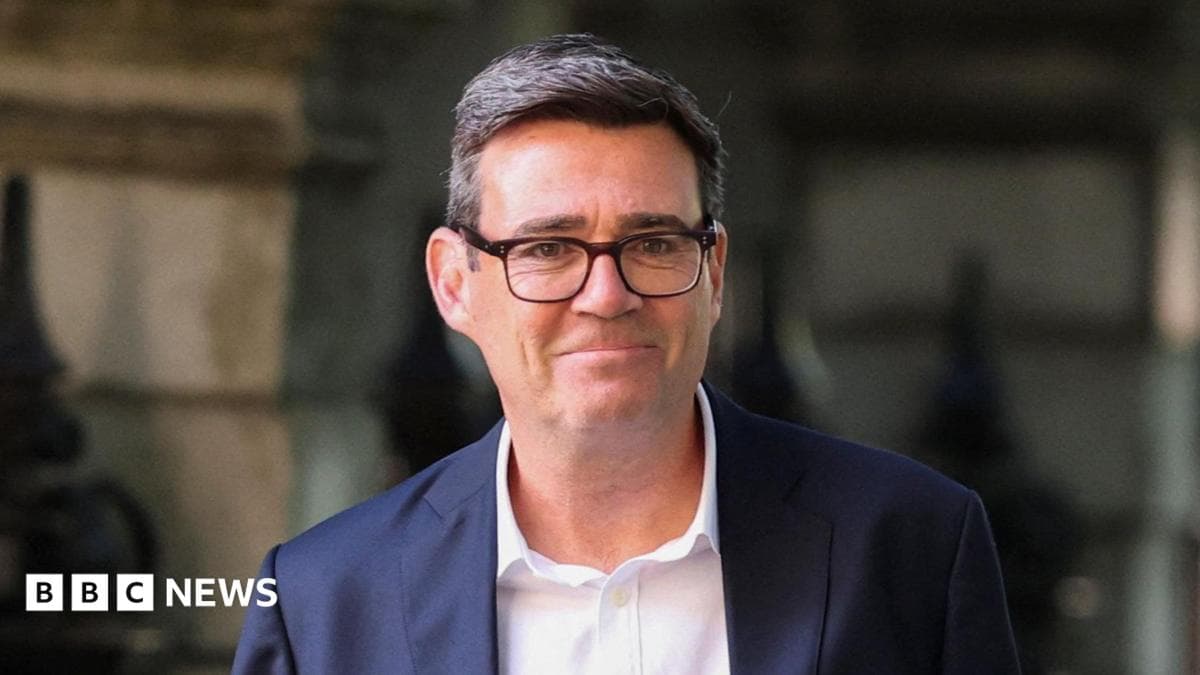
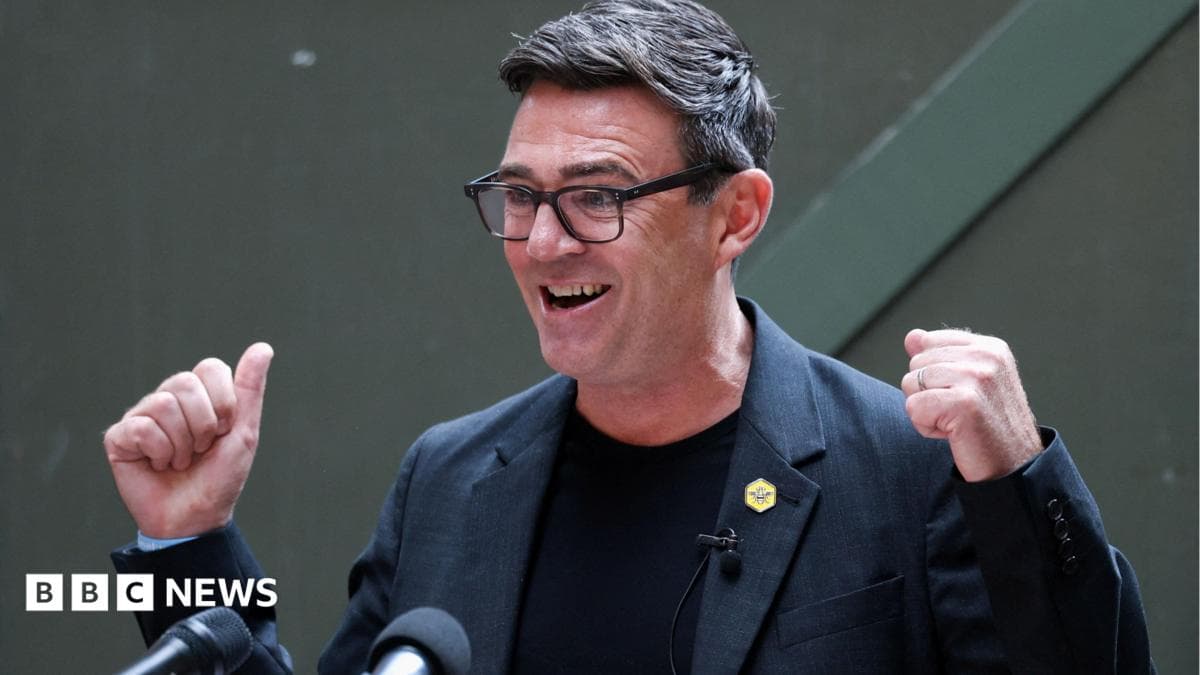
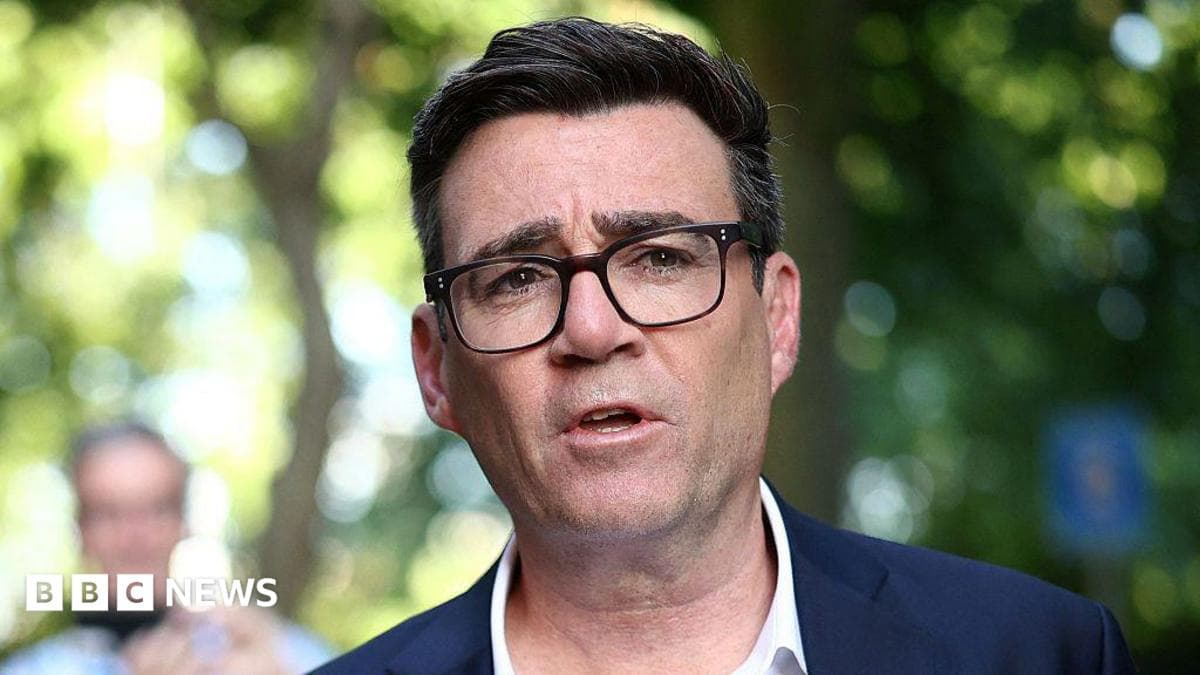
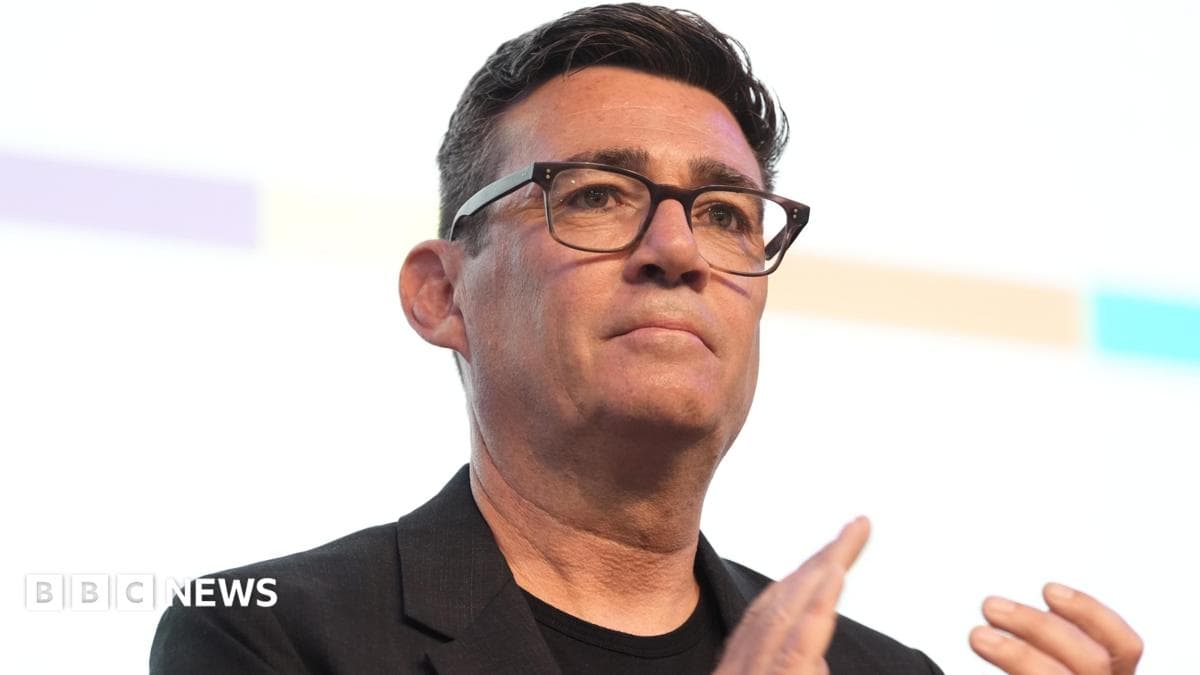
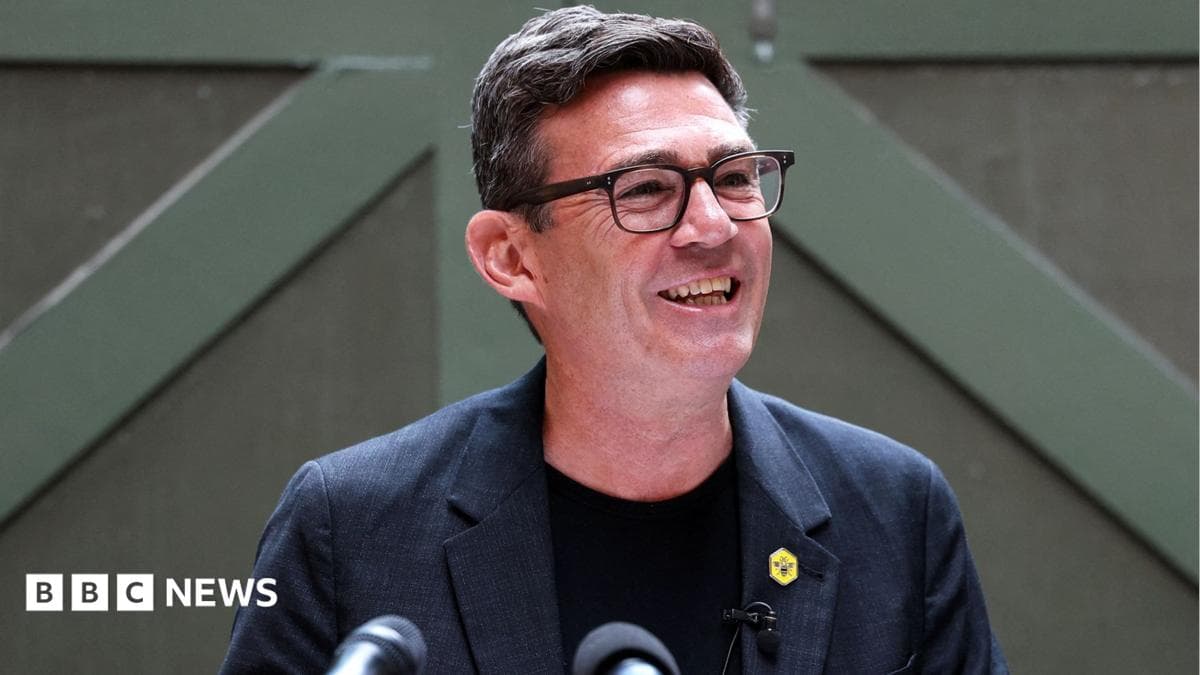
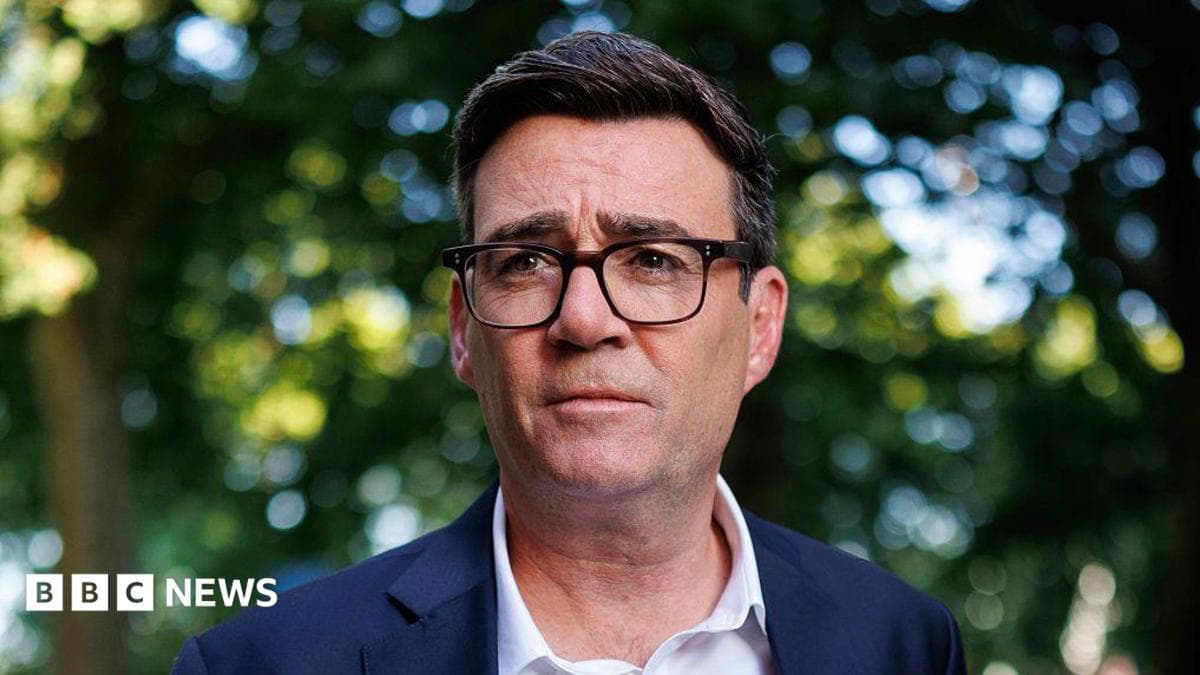
This we know for sure: Andy Burnham is the new MP for Makerfield
He won 55% of the vote - that's 9,000 more votes than Reform's Robert Kenyon. Burnham is no longer the Greater Manchester mayor - an election to replace him is expected to take place on 30 July .
He believes he is the change the Labour Party needs (if we read between the lines)
When Burnham told Labour Party members it was the "final chance to change", read between the lines - he was saying he could be the change the party needs, political correspondent Alex Forsyth writes .
So will Burnham be the next prime minister?
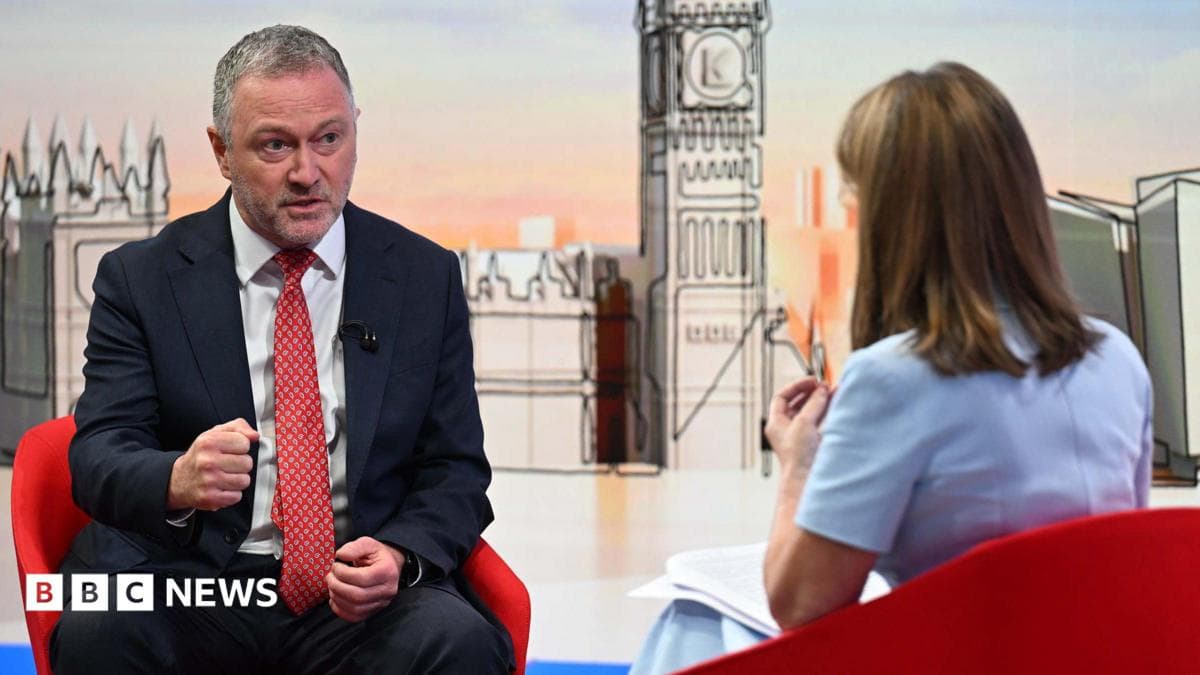
That's something we definitely don't know. Both Burnham and former health secretary Wes Streeting have said they would stand in any contest to replace the PM, and Streeting has suggested he would be prepared to trigger a leadership contest to replace him as early as next week .
But as of yet, no challenge to Starmer has been made. Contenders would need the support of at least 81 Labour MPs.
What is Starmer thinking?
Again, we don't know. We haven't heard a response to the by-election result from the prime minister. He previously warned Burnham against launching a leadership challenge if he won in Makerfield.
Did Burnham get his celebratory pint?
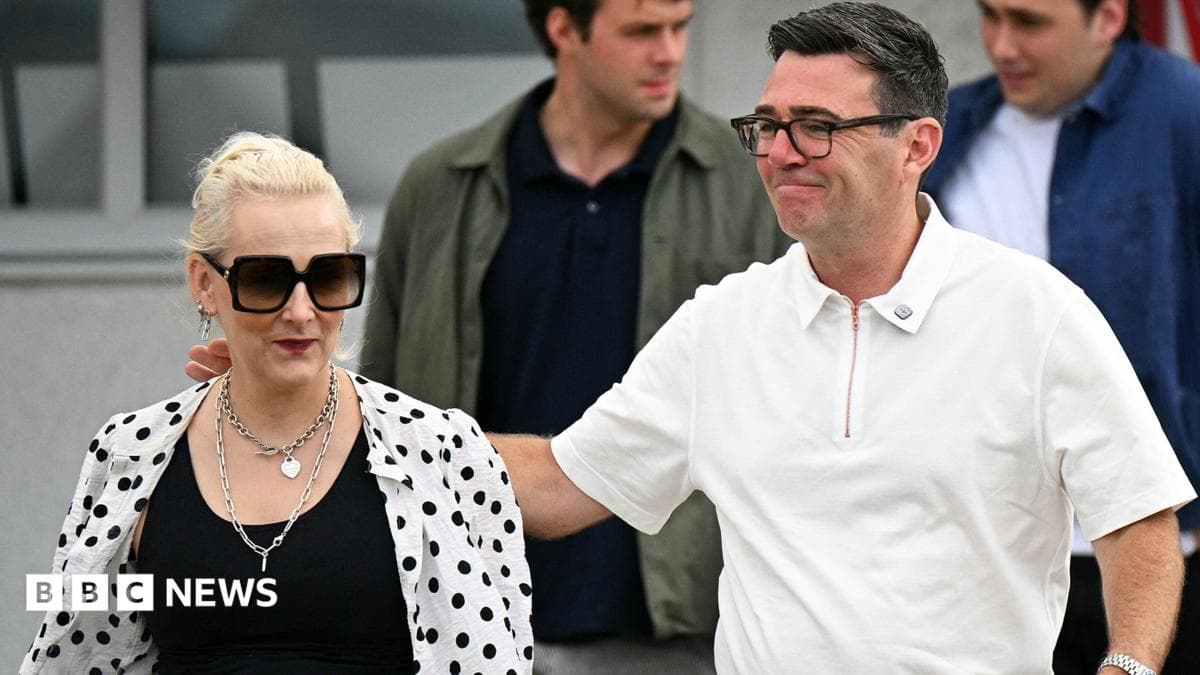
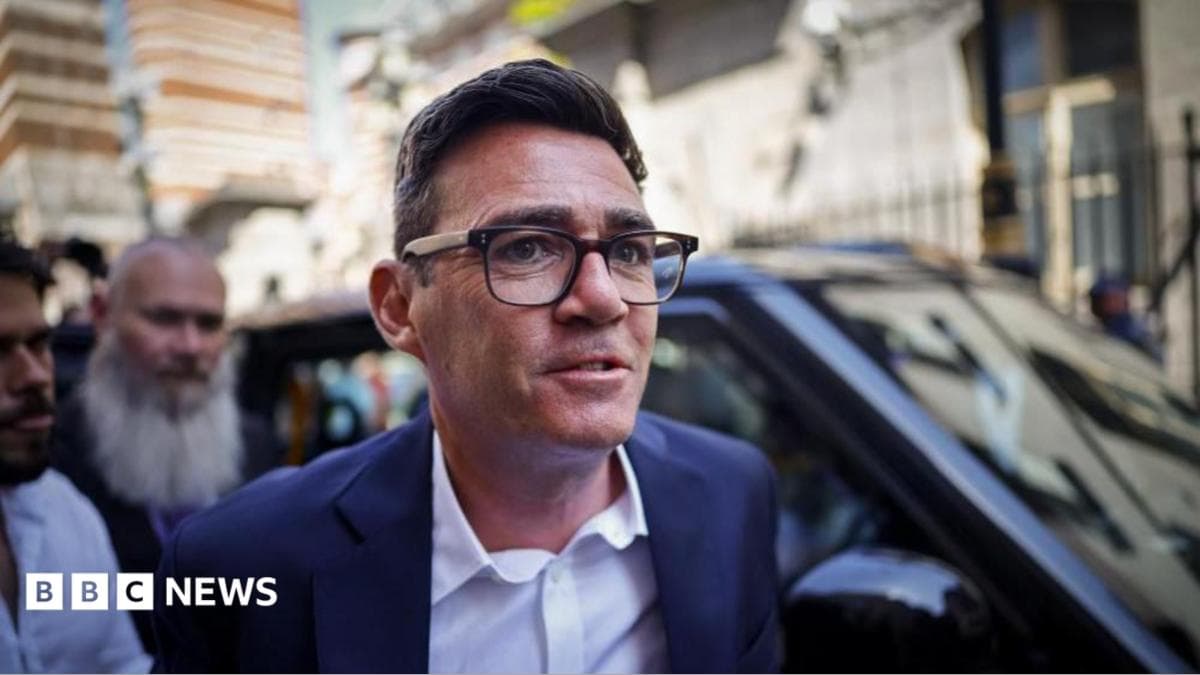
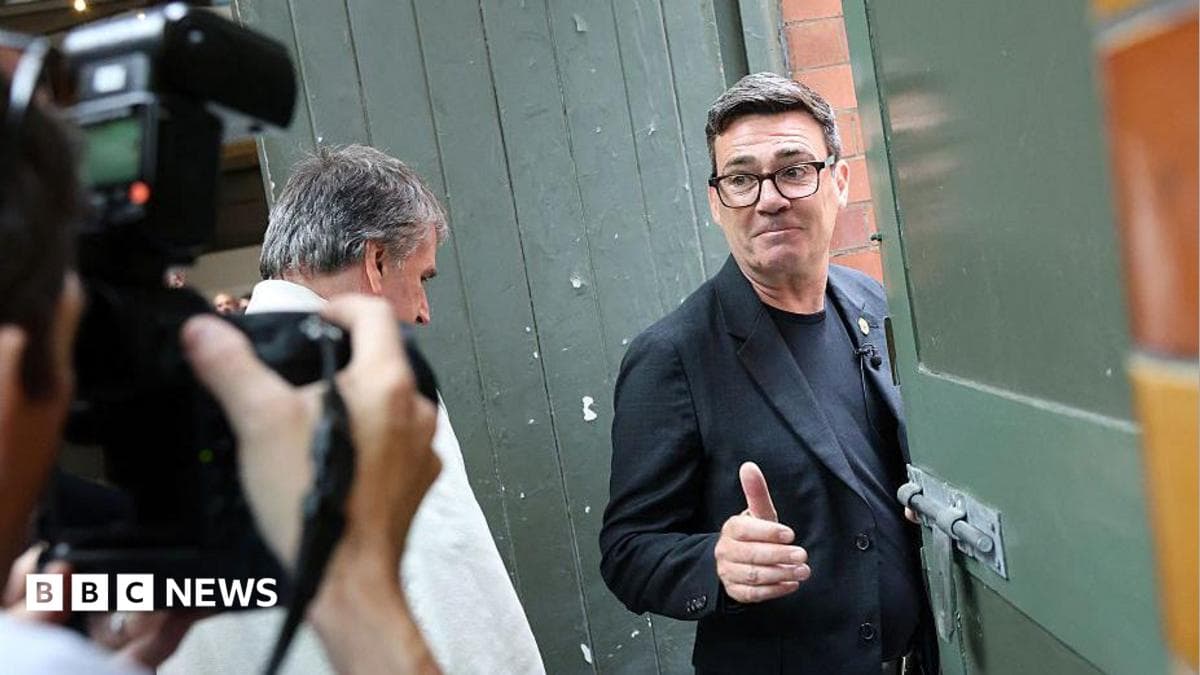
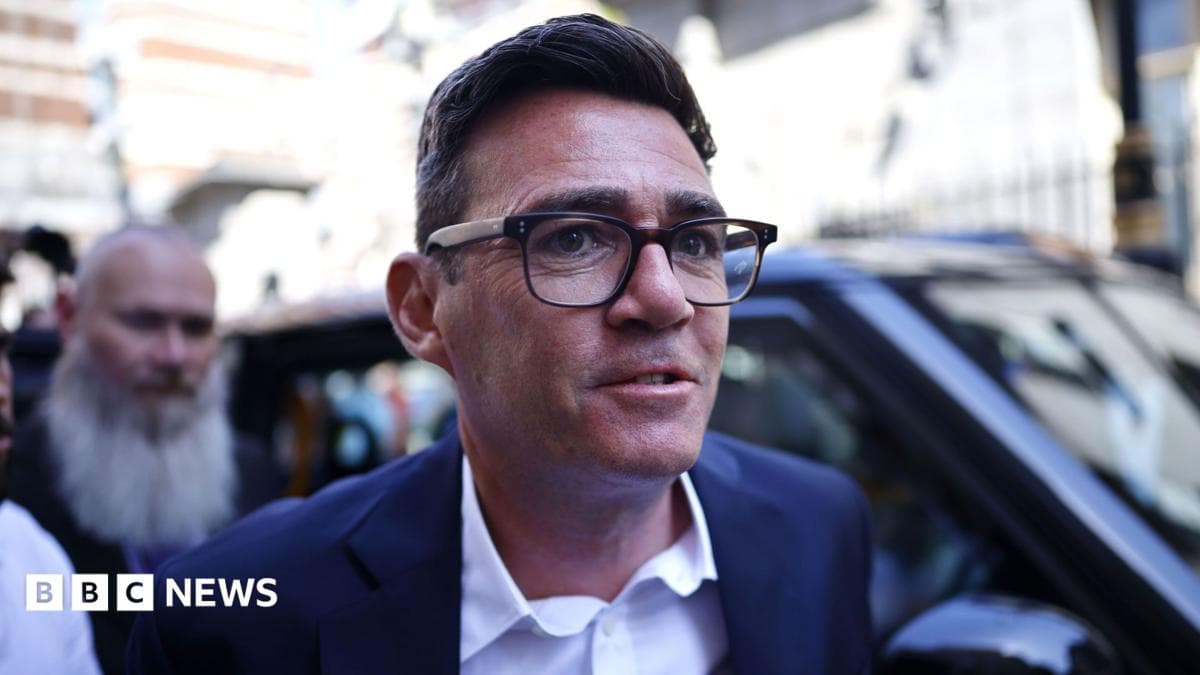
As the Makerfield MP left the count with his family , he got into a car he said he was going for a "pint". We have yet to see if he found anywhere open in the small hours of a Friday morning...
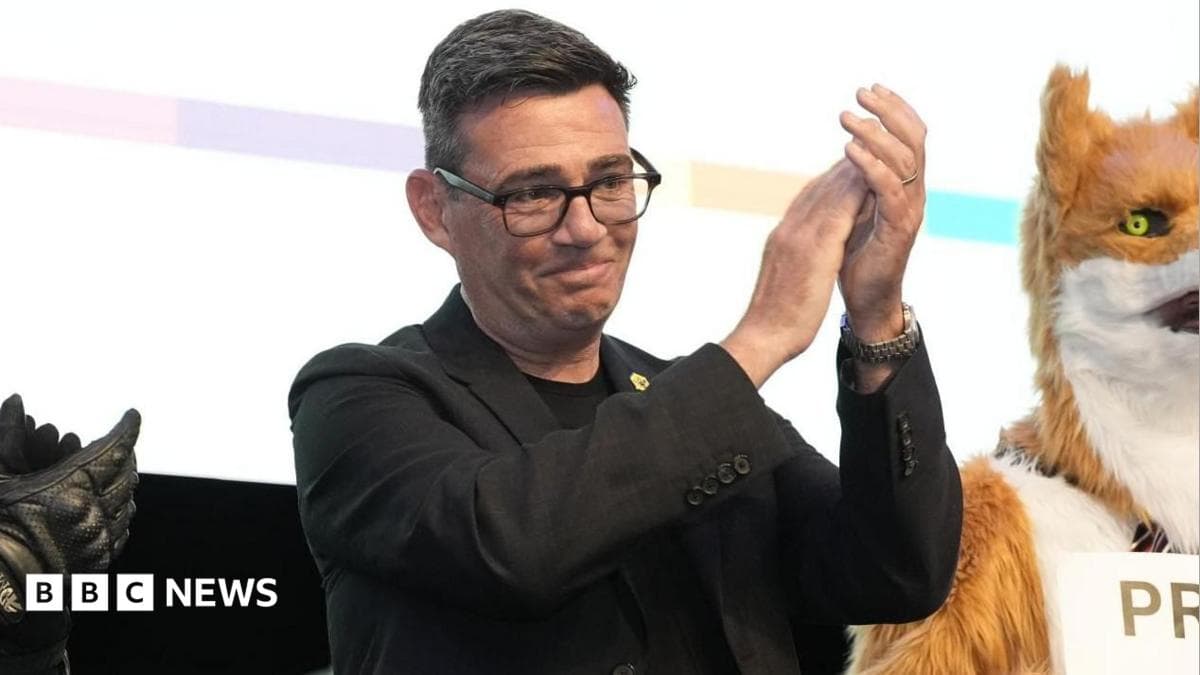
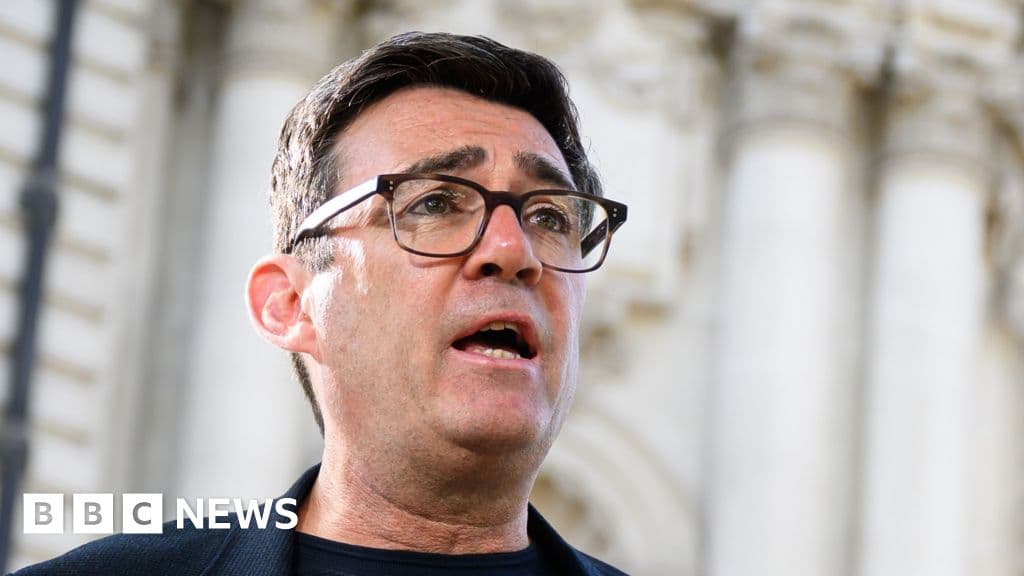
Andy Burnham has won the Makerfield by-election, clearing a major hurdle for an expected challenge for the Labour leadership.
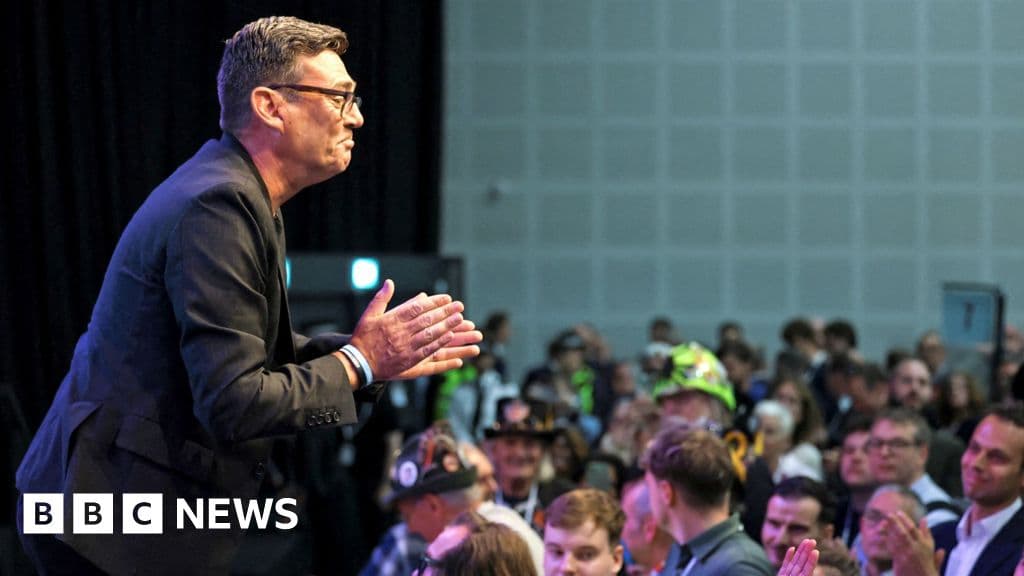
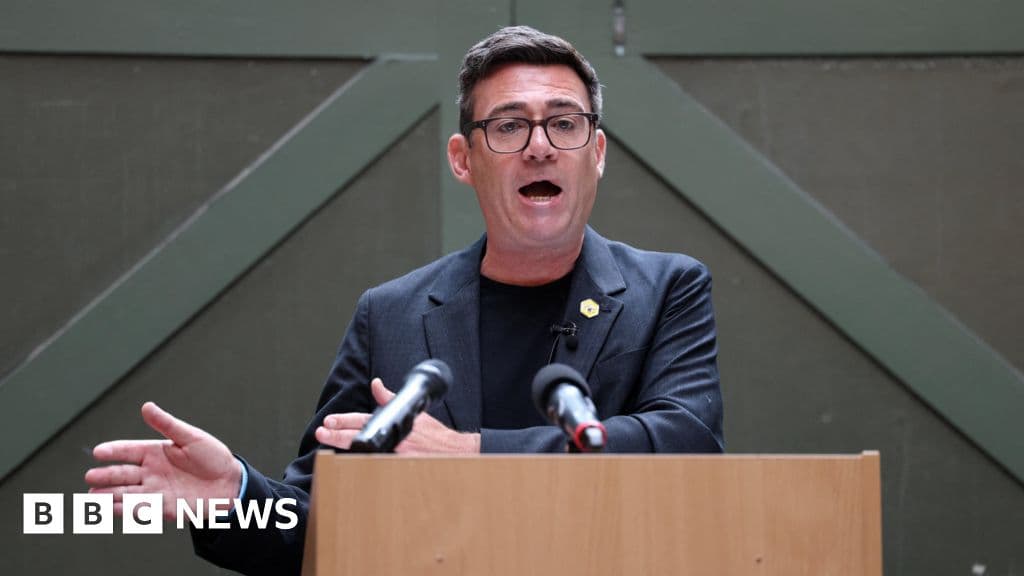
In his victory speech, he said his win could mark a turning point for the country, while he pledged not to use the constituency as a stepping stone.
The outgoing Greater Manchester mayor held off a challenge from Reform UK, which came second but more than 9,000 votes behind Labour.
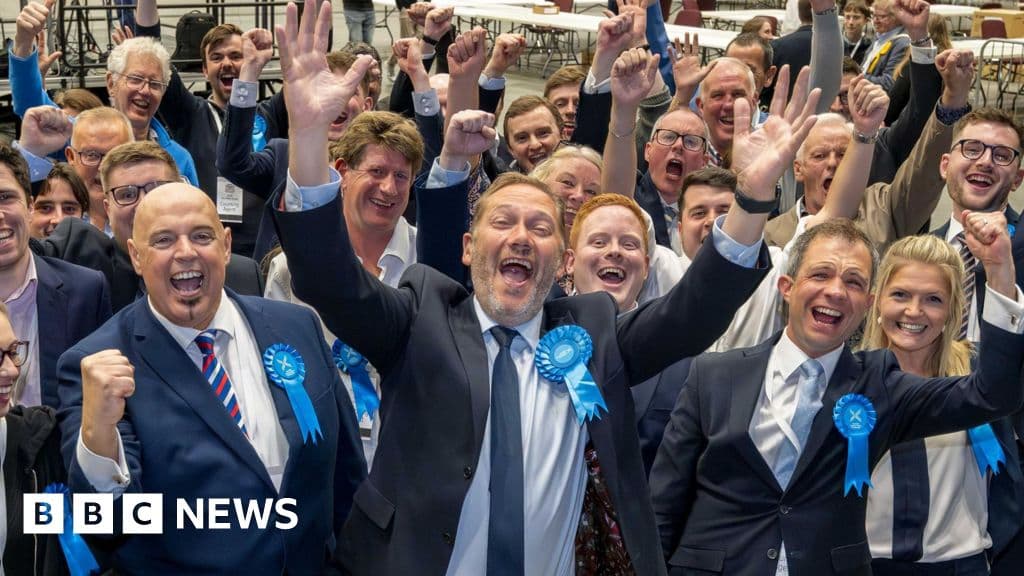
In Aberdeen South, the Scottish Conservatives won a Westminster by-election for the first time in more than 50 years taking the seat from the SNP while in Arbroath and Broughty Ferry the SNP held onto the seat in its by-election overnight.
Burnham reassured voters he would not be turning away from the constituency as he headed to Westminster.
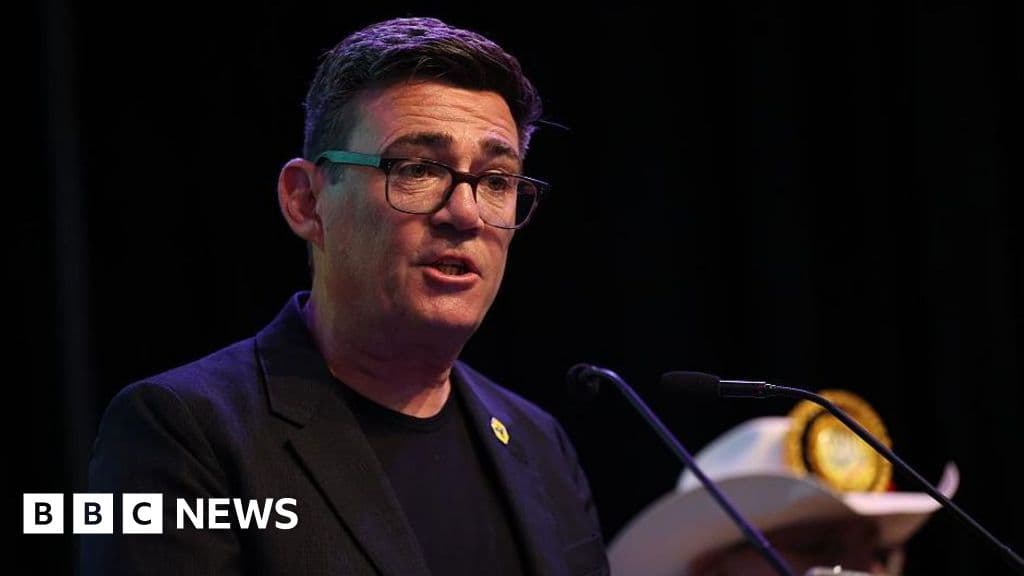
"Everyone knows that politics isn't working," he said. "Everyone can feel that the country isn't where it should be.
"Tonight could just be a turning point.
"From hereon in I will give everything I have got to make it so, to ensure the name Makerfield is for ever synonymous with bringing about the change this country needs."
He added: "It [Makerfield] will never be a stepping stone to me but instead will be my touchstone."
Makerfield has been a Labour stronghold for 120 years but the party threw everything at its campaign, following historic losses in May's elections with Labour losing ground to Reform in English council elections.
Burnham's win against his nearest challenger Robert Kenyon, a plumber and Reform councillor, came after Labour MP Josh Simons, stepped down to allow Burnham an opportunity to contest the seat.
Burnham had to be an MP if he wanted to launch a leadership challenge against the prime minister.
Speaking from the count ahead of the result, Burnham's allies stepped up calls for Sir Keir Starmer to stand aside.
Former Cabinet minister Louise Haigh, who has been managing Burnham's campaign, told the BBC she hoped the prime minister would reflect on the by-election result and results from six weeks ago.
"I hope that he will consider an orderly and managed transition."
But the prime minister has repeatedly insisted he has no intention of walking away from No 10..
If Burnham goes ahead with a challenge as expected, it would be his third leadership attempt, and former Health Secretary Wes Streeting is also expected to enter any contest.
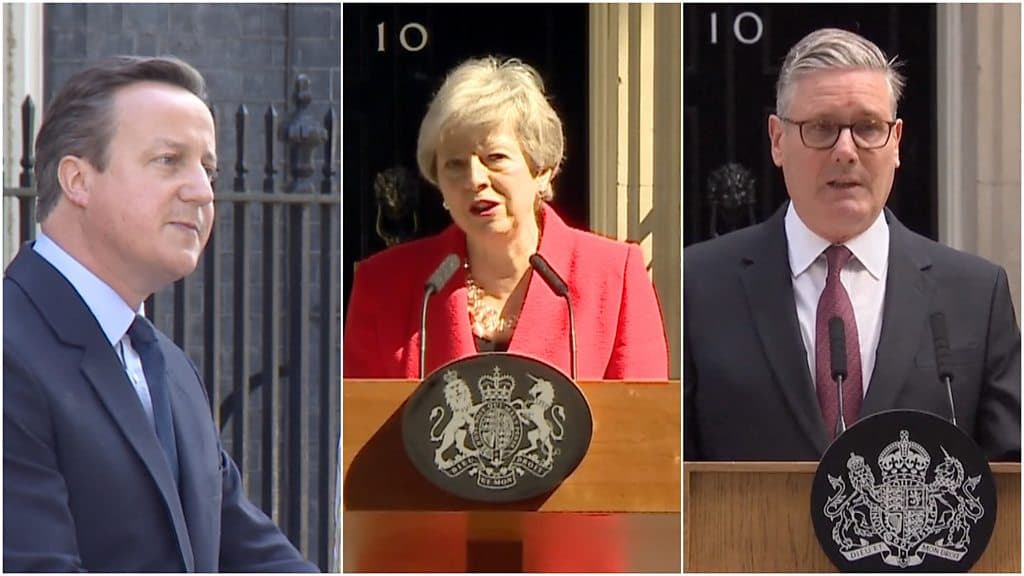
Any change to prime minister would mean the UK seeing its seventh prime minister within a decade.
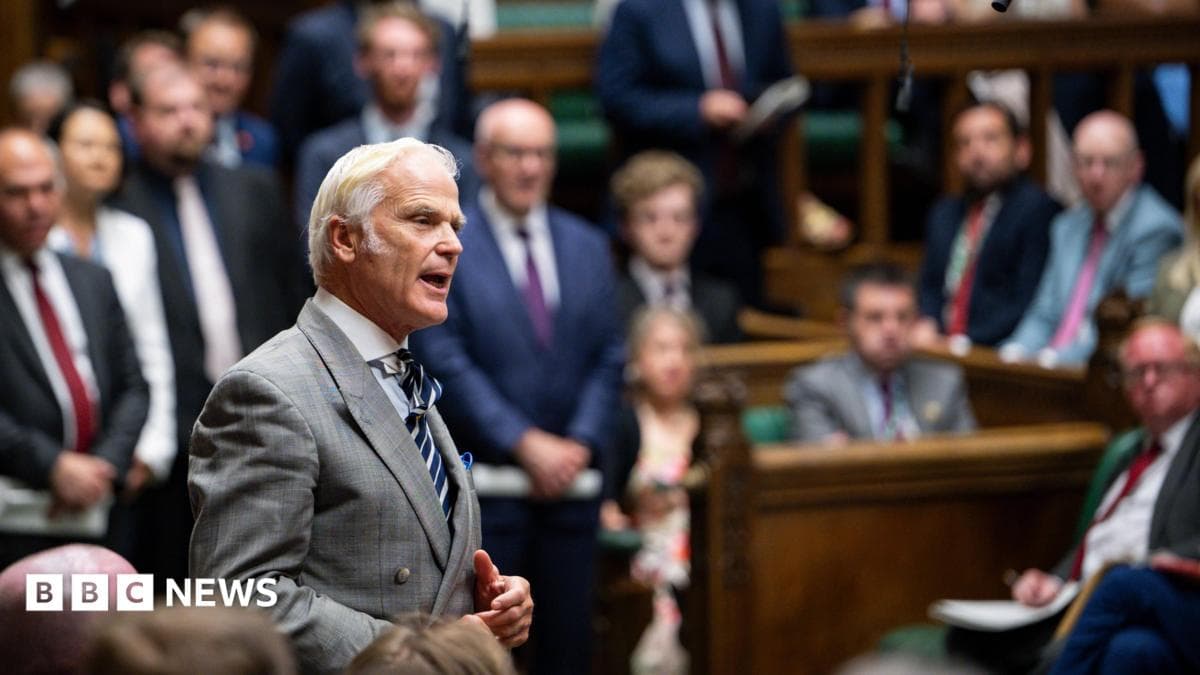
Douglas Lumsden won Aberdeen South by a convincing margin for the Scottish Conservatives, beating the SNP, with Reform UK coming third and pushing Labour into fourth place.
In his victory speech, Lumsden told his supporters: "The destruction of the North Sea oil and gas industry must stop now."
The seat had been held by the SNP's Stephen Flynn since 2019 but has shifted over the years, with a Tory MP in 2017, SNP in 2015, and Labour's Anne Begg between 1997-2015.
Lumsden is to resign as North East MSP now that he has been elected for Aberdeen South because there is a Holyrood ban on dual mandates.
The contest was held after Flynn had to give up being an MP following his election as an MSP in May.
His SNP colleague Stephen Gethins who was also elected to Holyrood in May had to give up his Arbroath and Broughty Ferry seat at Westminster.
Here the SNP held onto this seat in the by-election, with Lara Bird winning decisively by more than 5,000 votes, followed by the Tories, Reform and then Labour, who had fallen from second place in the 2024 election.
Bird said: "The people of Arbroath and Broughty Ferry have rejected the politics of division and hate that some tried to sow.
"We have demonstrated that our community is inclusive, hopeful and proud."
Sign up for our Politics Essential newsletter to read top political analysis, gain insight from across the UK and stay up to speed with the big moments. It'll be delivered straight to your inbox every weekday.
A Liberal Democrat MP has had the whip suspended pending the outcome of a police investigation, a party spokesperson said.
It is understood that Tewkesbury MP Cameron Thomas was arrested by Gloucestershire Police on Wednesday.
A Liberal Democrat spokesperson said they could not comment further while the police investigation is ongoing.
Gloucestershire Police and Thomas have been approached for comment.
A party spokesperson said: "Cameron Thomas MP has had the party whip suspended pending the outcome of a police investigation.
"We are unable to comment further while the police investigation is ongoing."
The former RAF officer has served as MP for Tewkesbury since the 2024 general election.
Follow BBC Gloucestershire on Facebook , X and Instagram . Send your story ideas to us on email or via WhatsApp on 0800 313 4630 .
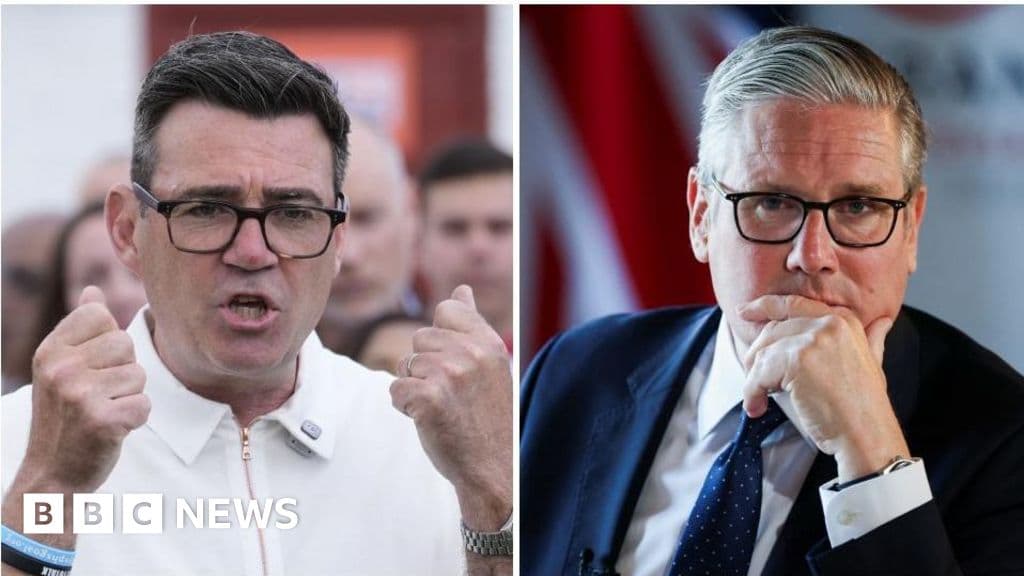
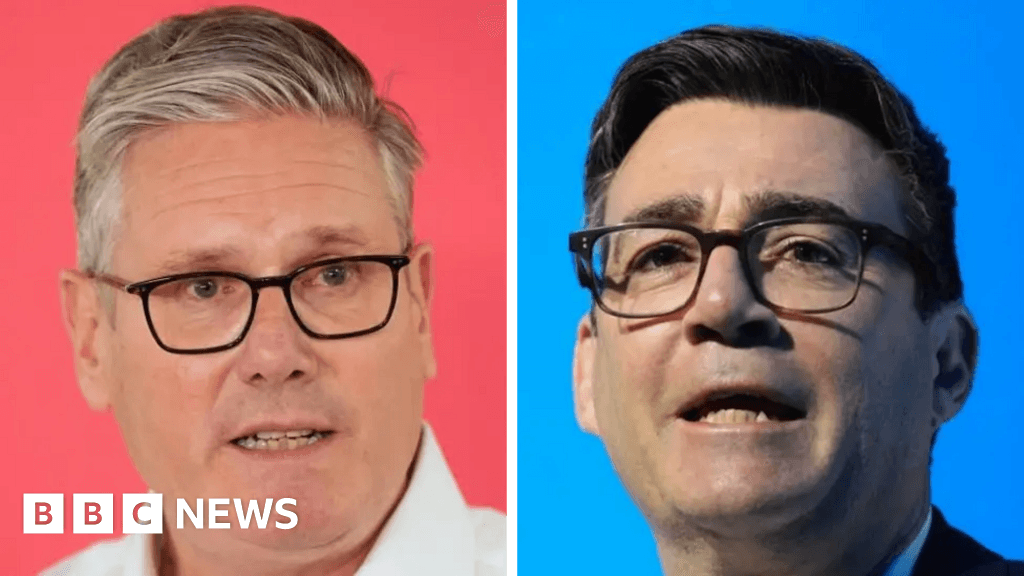
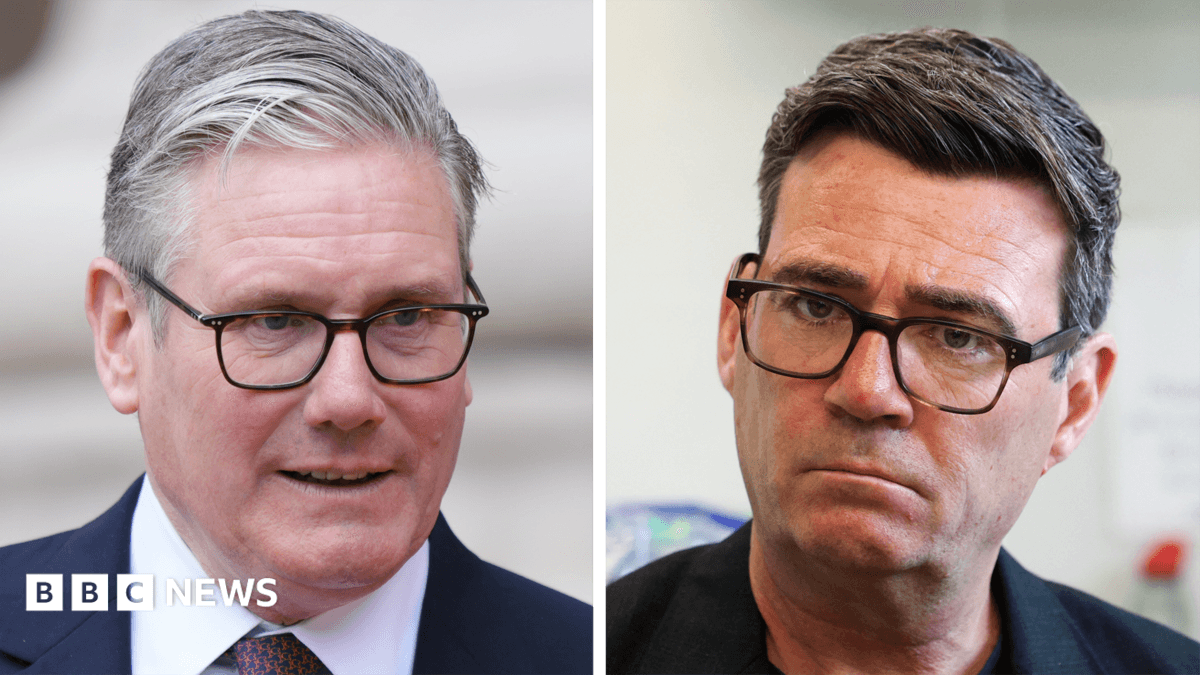
Sir Keir Starmer is facing calls to set a timetable for his departure from Downing Street after Andy Burnham won a resounding victory in the Makerfield by-election, paving the way for a leadership challenge.
A growing number of Labour MPs are urging Sir Keir to announce plans to hand power to the former Greater Manchester mayor, without the need for a potentially messy leadership contest.
But the prime minister has insisted he will fight any challenge and will not "walk away" from the job.
Burnham's allies have urged Sir Keir to reflect over the weekend and listen to his cabinet ministers, MPs and family.
The former mayor's team - and that of another potential challenger Wes Streeting - have said they will not be giving any media interviews over the weekend, in an apparent bid to give the prime minister time to change his mind.
The prime minister spent some of Friday phoning other cabinet ministers to gauge the level of support he has among his top team.
Transport Secretary Heidi Alexander suggested he set out a timetable to leave office, the BBC has been told.
A spokesperson for Alexander said: "Heidi and the PM spoke this afternoon as part of wider cabinet calls. It was a private conversation and I am not going to reveal what was said."
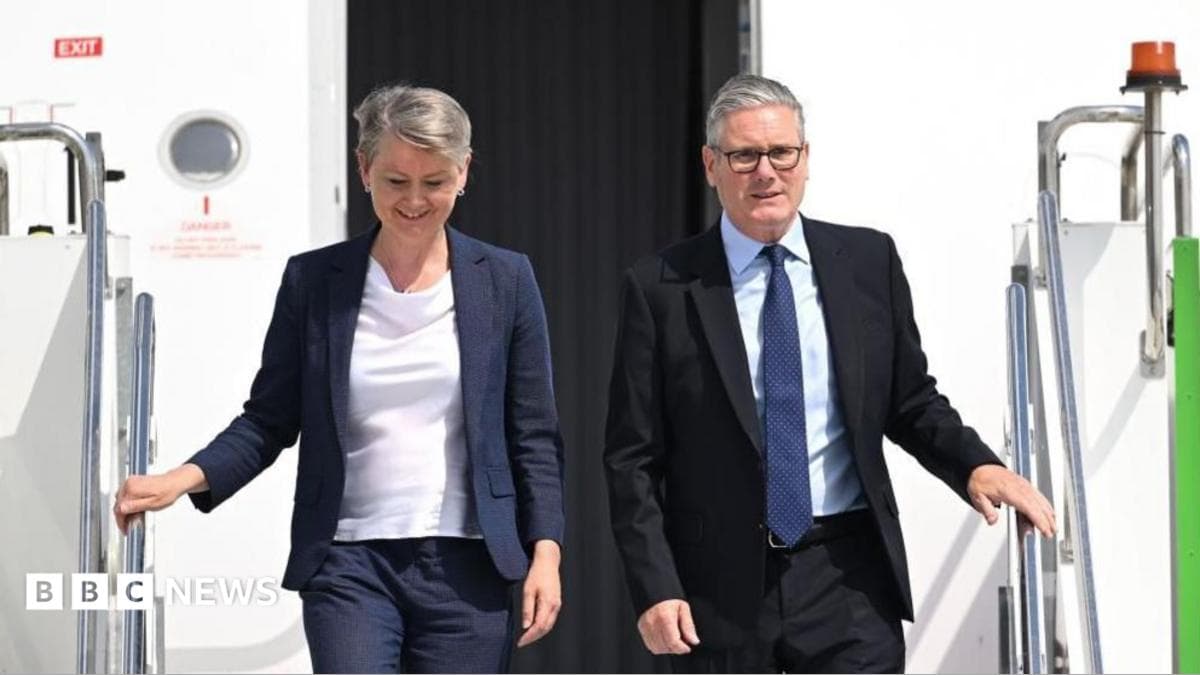
Foreign Secretary Yvette Cooper has also told the prime minister to set out a timetable to leave Downing Street, it is understood.
Chancellor Rachel Reeves also spoke to the prime minister in the hours after the Makerfield result was announced and offered him her full support.
Last month, following Labour's poor performance in elections, some ministers, including Home Secretary Shabana Mahmood and Energy Secretary Ed Miliband, urged Sir Keir to set a timetable for his resignation.
It's understood that Mahmood and Sir Keir have not spoken since Burnham's by-election victory.
A crunch moment for the prime minister could come next Tuesday, when all his senior ministers will gather for the weekly cabinet meeting.
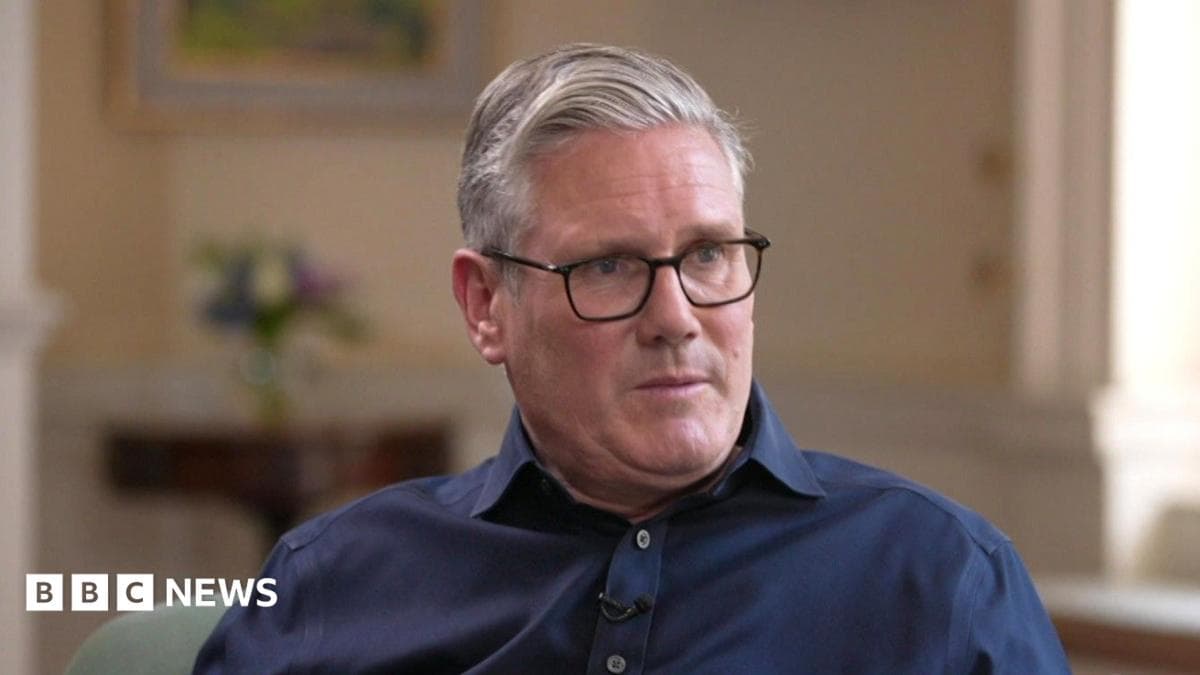
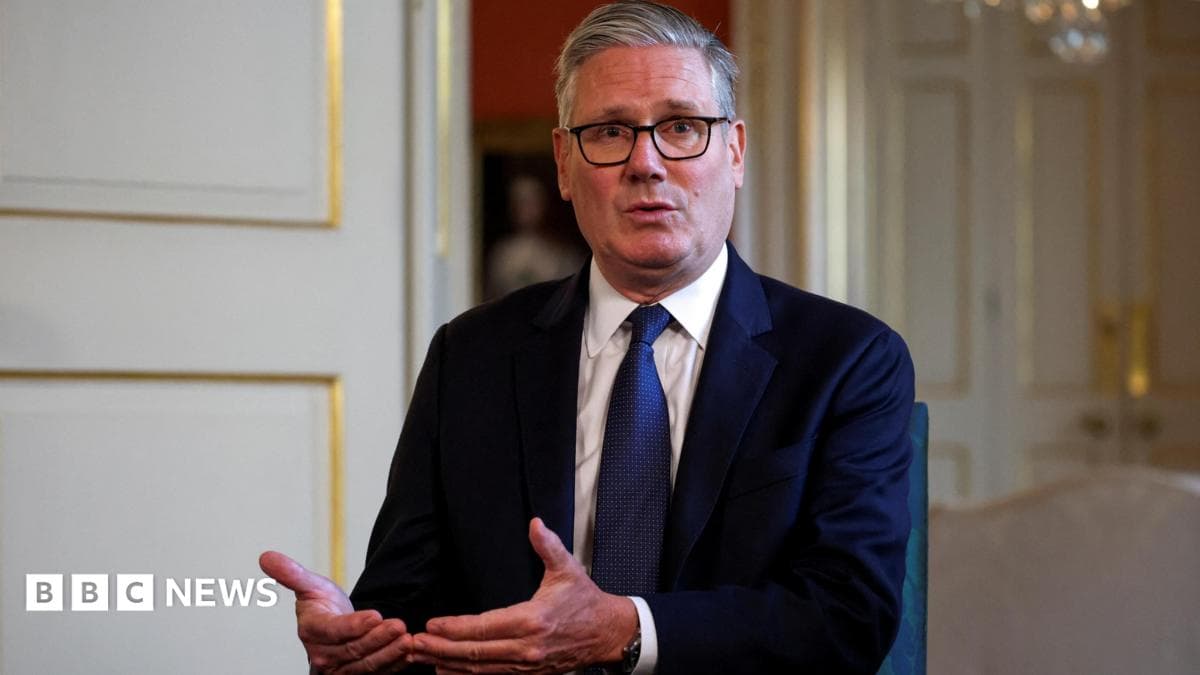
Asked if he would now set a timetable for his departure, Sir Keir told the BBC: "I was elected to serve my country with a mandate that we secured at a general election two years ago."
He said he had achieved economic stability and got immigration "back under control" and there was more he wanted to do.
But he added: "if there is a contest, yes I will run. I will stand and I have said repeatedly I am not going to walk away from that."
In a lunchtime call, Sir Keir told Labour staff members that the party should "pull together".
"The one thing we've got to avoid doing is plunging our party and our country into chaos by turning on each other and tearing apart our party and our movement.
"That has never worked. That's what the last government did. We need to learn that lesson."
He has previously said that the party should now focus on winning the Greater Manchester mayoralty, which is vacant following Burnham's by-election win. The contest will take place on 30 July.
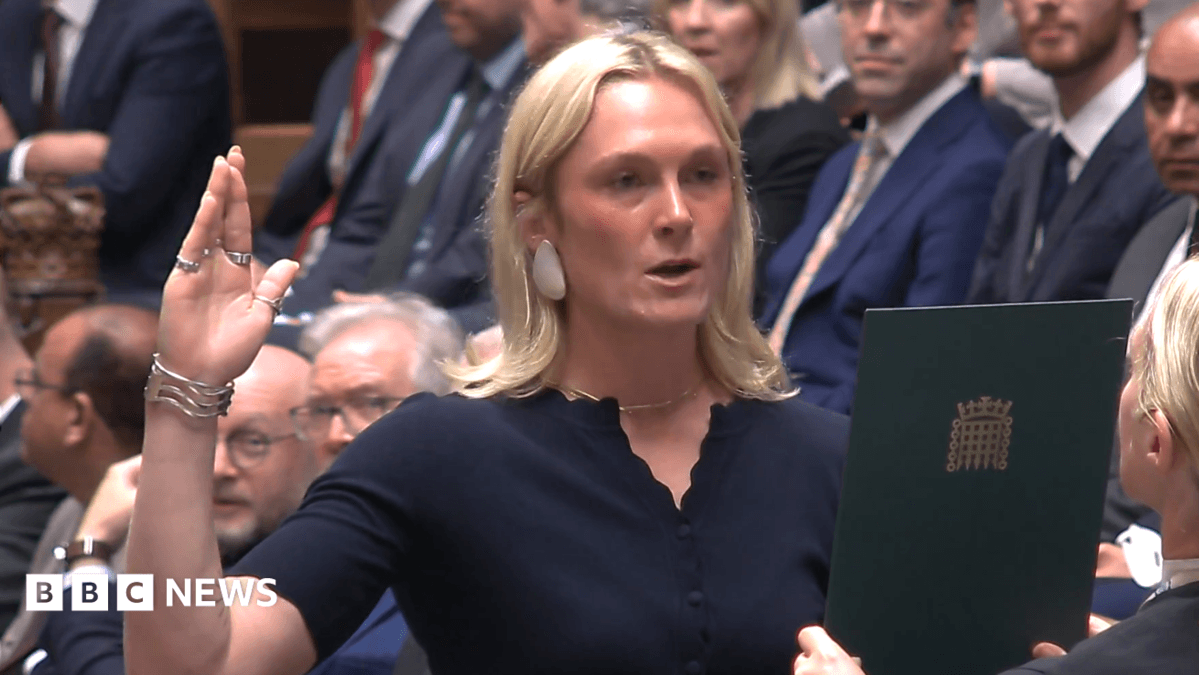
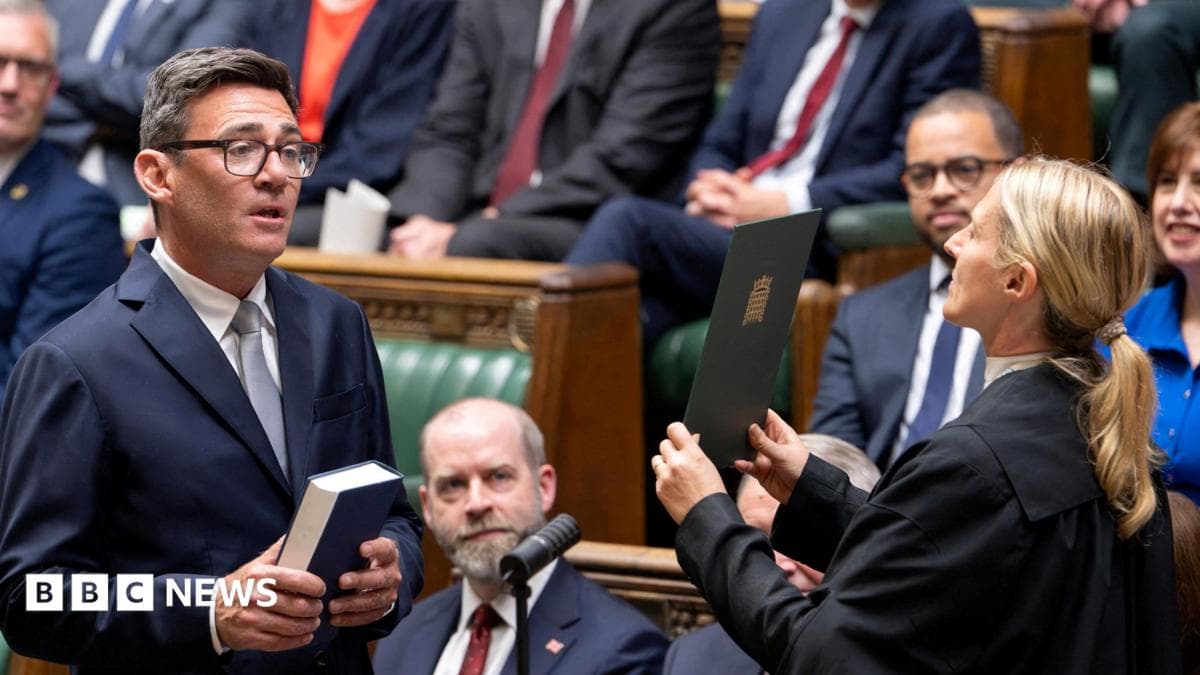
Burnham will be formally sworn in as an MP in Parliament on Monday.
The scale of Burnham's victory in Makerfield, where he increased Labour's share of the vote by 10% and beat the Reform UK candidate by more than 9,000 votes, has added to the clamour from his supporters to mount a leadership challenge.
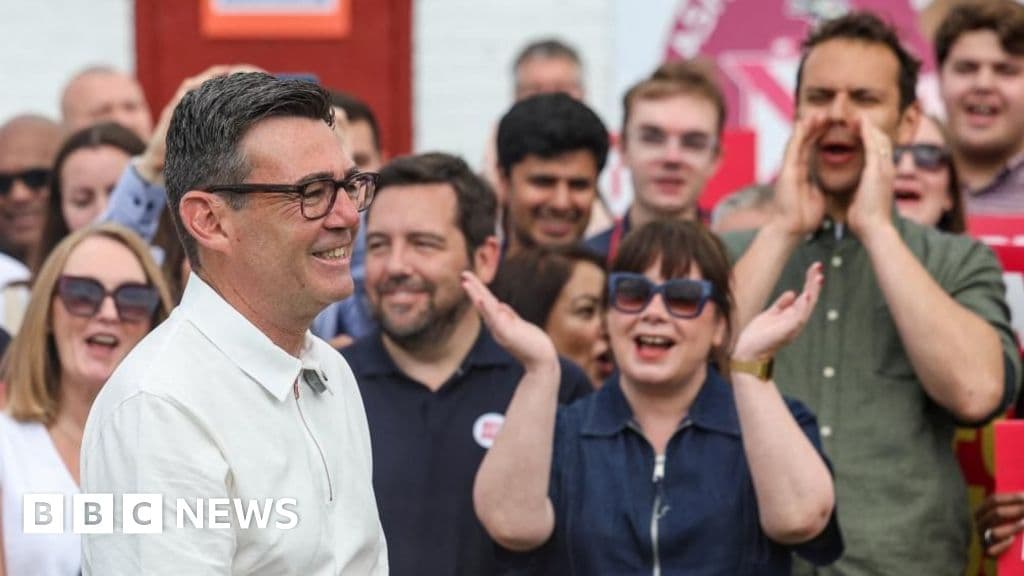
Celebrating at the grounds of Ashton Town Football Club, Burnham told them it was an "opportunity to turn the tide… make the country feel like it's working again".
He said he would take the "energy" of the campaign forward and "change British politics forever".
Burnham ally, and former Transport Secretary, Louise Haigh said she was hoping for a "managed and orderly transition".
Jess Phillips, who resigned from Sir Keir's government following May's local election results, told BBC Radio 4's Today programme on Saturday that Burnham's victory meant he had "earned the right" to make his case to Labour MPs.
"If you want to be the leader of our country as well as leader of the Labour party, you should be tested with the rigour of at least some manner of contest," she said.
Phillips, who would support Streeting in a potential leadership election, said it was important that prospective candidates set out their stall, adding that many Labour MPs "do not know Andy Burnham".
Labour MP for Bracknell, Peter Swallow, had previously signed a letter backing the prime minister but on Friday evening told BBC Newsnight he now believed it was time for the prime minister to resign.
"Frankly, our inability to agree a defence investment plan in a timely fashion was the last straw," he said and added he would be backing Burnham to be leader.
Bassetlaw MP Jo White told BBC Radio 5 Live the prime minister now needed "to consider his position very, very carefully and he has the weekend".
"I think he needs the peace and quiet of his family and listening to his ministers and I think he should announce on Monday morning that there will be a smooth transition and we allow Andy Burnham to become the next prime minister for the United Kingdom."
She said voters in her Bassetlaw constituency were telling her "they did not want Keir Starmer to be the prime minister".
But some Labour MPs have rallied round Sir Keir, with Justice Minister Catherine Atkinson telling the BBC's Any Questions that the prime minister had "grit and determination" and would not "walk away".
"We saw the constant change of prime ministers under the Conservatives and it wasn't edifying.
"We cannot afford to get distracted - there is just too much to do."
Burnham's return to Westminster as an MP - after a gap of nine years - means he can now stand to be Labour leader, something he could not do as Greater Manchester mayor.
In order to trigger a contest, the new Makerfield MP, or any other leadership challenger, needs the backing of 81 Labour MPs - a requirement Burnham is expected to meet with ease.
Streeting has said he has enough support from MPs to join a contest - however he could step back if momentum in the party appears to be swinging behind Burnham.
Under Labour's rules, Sir Keir, as the current leader, does not have to get any nominations from MPs to get on the ballot paper.
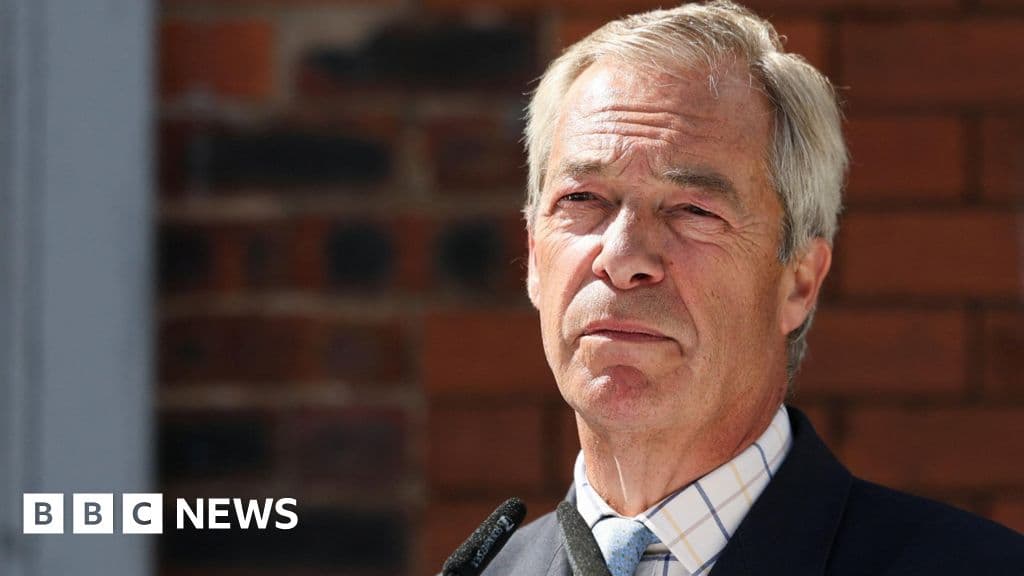
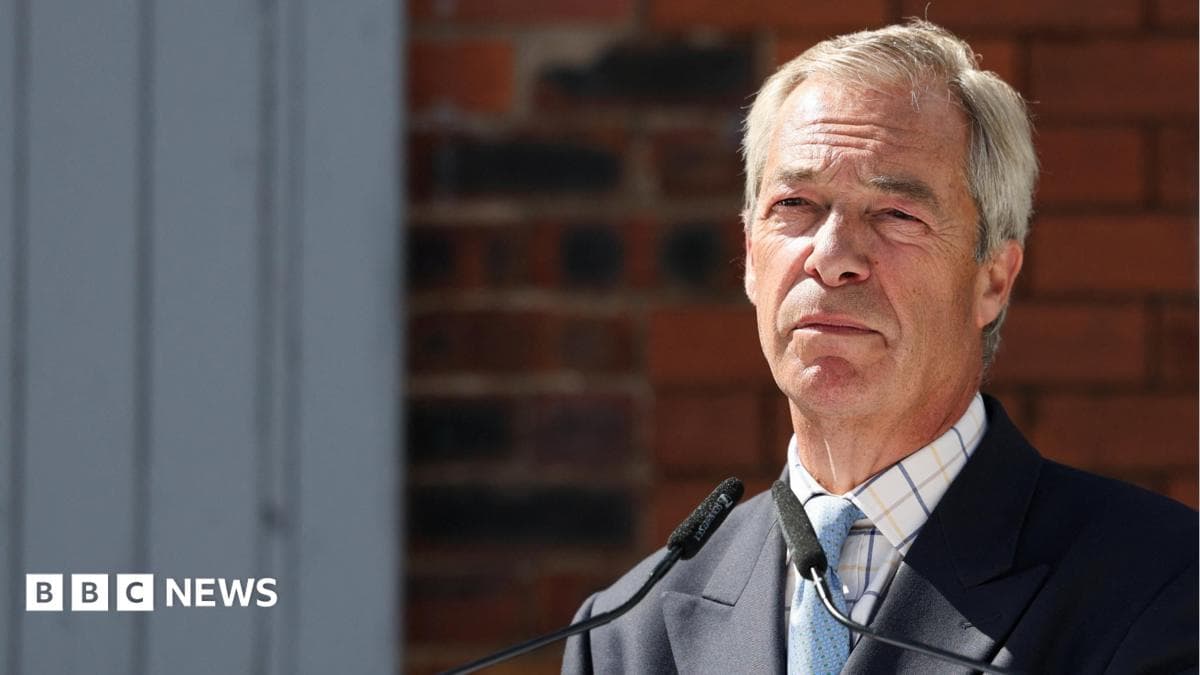
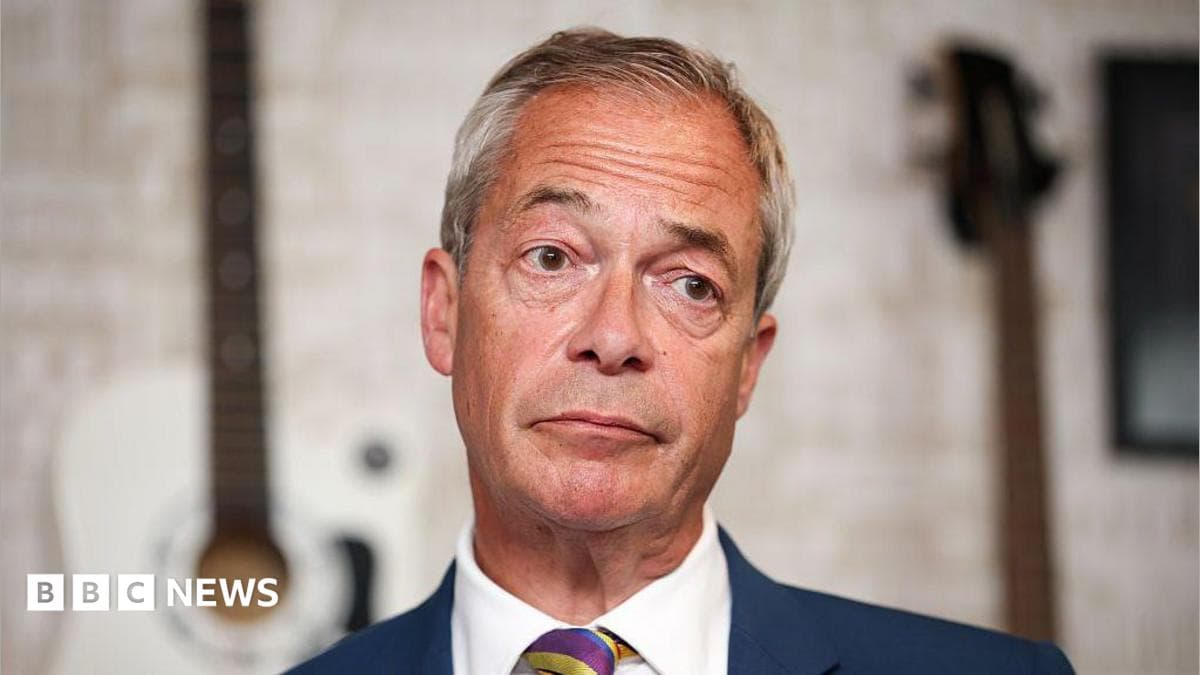
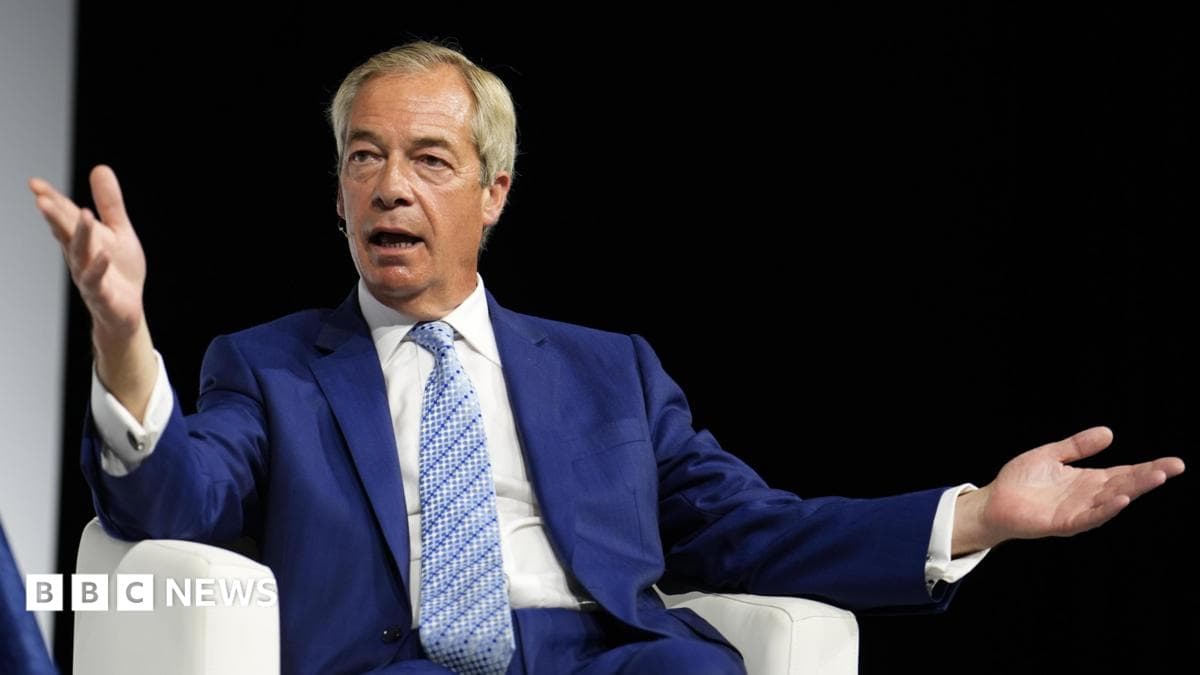
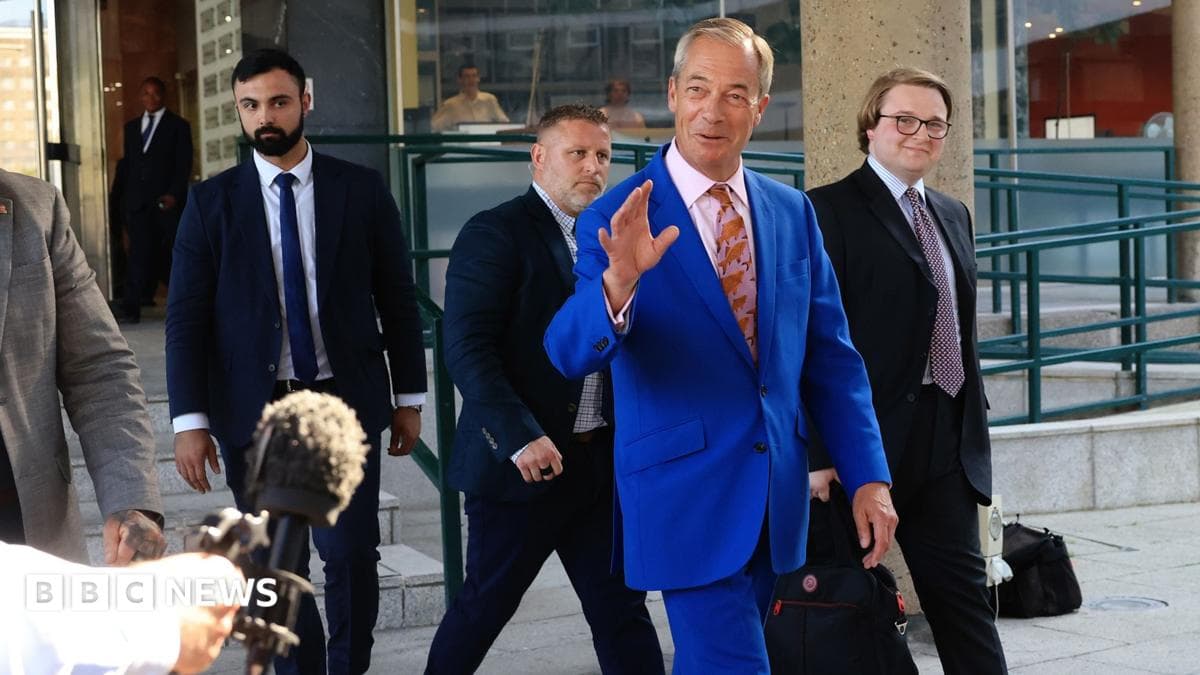
Reform UK leader Nigel Farage said his party's second-place finish was a "disappointing" result but that people had been attracted by a "vote Burnham, get Starmer out" message.
He claimed there were "a couple of thousand voters" who would normally have voted for Reform but had opted for the Restore party instead.
"I would say directly to them, what do you want? We are the challenger party to the left in this country. And I would urge you to think again, I really, really would."
Alongside Makerfield, there were two by-elections taking place in Scotland.
The SNP held on to the seat of Arbroath and Broughty Ferry but lost Aberdeen South to the Conservatives, the party's first Scottish by-election victory in more than 50 years.
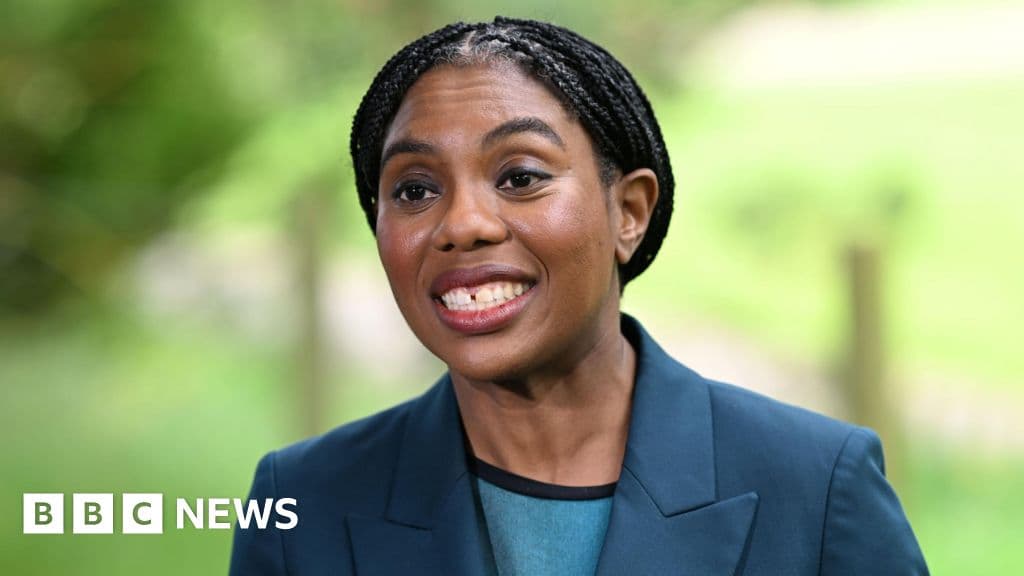
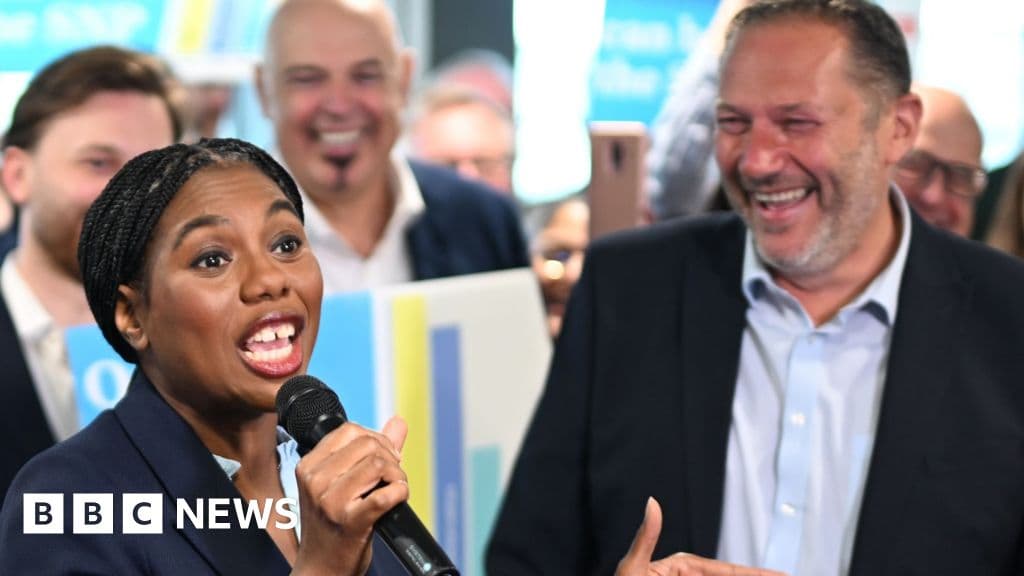
Speaking from the constituency, Tory Party leader Kemi Badenoch said voters had "sent a message" to politicians to back more drilling for oil and gas in the North Sea.
She also accused Labour of being "so obsessed about their own party drama that they are not interested in the cost of living, they are not interested in what is happening to people all across this country, what is impacting their lives".
Sign up for our Politics Essential newsletter to read top political analysis, gain insight from across the UK and stay up to speed with the big moments. It'll be delivered straight to your inbox every weekday.
"We promised people we weren't going to do this."
There is exasperation in the voice of a long time Labour adviser. But as every hour passes, it is more likely the UK will soon have its seventh prime minister in 10 years.
Talk of Sir Keir Starmer fighting is fading, his exit seems more likely as the weekend goes on. The prime minister is at his country retreat, Chequers, spending time with his wife.
The man coming for his job, Andy Burnham, is spending the weekend with his family, away from home too.
The reasons for Labour to switch leader are compelling. Andy Burnham looks like a winner. He has shown he can beat Reform, who until this moment have seemed a deadly threat to Labour. He is popular in the country, compared to most politicians at least. There are swathes of MPs eager to back him and his brand, believing he's the one who can improve the party's grim position.
"He's an instinctive guy – that's his great talent," said one source.
He's been successful and highly visible as the Mayor of Greater Manchester, known just as Andy everywhere he goes, one of his backers tells me.
He's no stranger to government either, having served as health secretary, culture secretary, and as a Treasury minister years ago. And most of all, Burnham's shown in the Makerfield by-election campaign he has that valuable talent in politics – a capacity to make people feel good.
Labour in Westminster has forgotten what that's like.
There have been more than a dozen big U-turns. Resignations. The mess over Lord Mandelson's job. And after dreadful election results in 2025 and 2026, wipe-out in Wales. Starmer has seemed like a loser to many in his own party.
It is not even two years since his massive win at the general election. But the political perception that he has an appeal to voters? Brutally, that's long gone.
On Friday, the prime minister was still arguing to the cameras that he would fight if Burnham challenges him, refusing to acknowledge that is not an "if", it's a "when".
Even privately some of his backers were still adamant he would run, talking of donors who've given money to run a campaign and office spaces being found.
One source claimed his conversations with cabinet ministers in the afternoon were not about whether he had the authority to stay in office, but the arguments he'd make in a leadership race.
Several sources told me Starmer really does believe he could beat Burnham in a leadership contest, and concluded that a fortnight ago after watching him on BBC Question Time on a Thursday, then failing to explain the borrowing and spending rules in a Newsnight interview on the Friday.
A government insider said: "On Saturday he phoned his closest allies and said, 'I'm sure I could win'."
But the widespread assumption this weekend in the party is that Burnham would beat him hands down, and another government source said "it's nuts" to imagine the PM could come out on top.
An increasing number of ministers, previously loyal to Starmer, now think it's time as one cabinet source told me they "wouldn't want the prime minister to humiliate himself" in a race.
The chances of him staying to fight are diminishing. But what is still a mystery this weekend is exactly how Starmer will respond.
One of his colleague's frustrations with him has always been that he seems unknowable.
"It's very hard for people to know a person who doesn't know themselves," said another government insider.
Don't underestimate the anger towards Burnham inside Downing Street, and that's shared by some other ministers too.
Not just for what's happening now, but how they see he's chipped in unhelpfully from the sidelines since the day Starmer moved into No 10.
One Starmer ally told me: "This is not a chase, these are big decisions about who is going to run the country – it can't be rushed 20 minutes after a by-election."
Many in Labour aren't sure what Burnham would actually do in office either.
The former minister, Jess Philips, told the BBC this morning that Burnham or any other candidate must be "tested with the rigour of at least some manner of contest".
One government minister, Mike Tapp, told me bluntly he'd never met him, and "I don't know his politics".
A backer of the prime minister said that when Burnham had faced tough questions in the by-election campaign "he's fallen apart".
There's also concern about the precedent of ousting a leader off the back of a by-election, the votes from a group of only 77,000 people deciding everything for the whole country. Burnham would have no mandate from the public without a general election.
And what happens if Labour's standing didn't improve? Might those calling for a removal van for the current prime minister do the same again? What if there were another by-election when Prime Minister Burnham was in trouble?
Is it mad to imagine that other big names from the past - David Miliband or even Ed Balls - might abandon New York and the breakfast TV sofa, and fancy a comeback too?
Just as there are compelling reasons for Labour to make the switch, there are serious risks. There may yet be a contest, and another candidate aside from Wes Streeting could find the 81 names to run.
But with 100 MPs now calling for Starmer to go and support for him to stay in the cabinet fading, one senior party figure predicts "he'll realise this weekend that he can't keep the Cabinet and ministers together and will have to go".
Labour has found itself in a strange situation it promised you it would never reach – en route to removing the leader who delivered its first general election victory in 19 years. And congratulating themselves for winning a seat they already held, so they can get rid of the man whose campaigning won them all the seats they have.
But whether Starmer reaches the conclusion that he will have to go himself, or he is forced into a contest, more agree with another veteran figure, "It's done".
Starmer's success in getting Labour back to power after the crash of 2019 was remarkable. But his time in office has proved a very different story, of many frustrations and failure.
One party source told me: "My experience of working with his administration is - the fundamental part of the job of prime minister and Labour Party leader is to be a political leader and he is neither political nor a leader."
That is brutal. But many in Labour would agree it's true, even though they'd point to achievements during his time in power – progress on pushing down NHS waiting lists, immigration coming down, his handling of foreign affairs and a growing economy.
The vow not to repeat the Conservatives' habit of switching prime minister might be the last political promise Starmer breaks.
BBC InDepth is the home on the website and app for the best analysis, with fresh perspectives that challenge assumptions and deep reporting on the biggest issues of the day. Emma Barnett and John Simpson bring their pick of the most thought-provoking deep reads and analysis, every Saturday. Sign up for the newsletter here
Kemi Badenoch says the Scottish Conservatives' first by-election win since 1973 sends a message to Labour and the SNP.
The Aberdeen South seat, vacated by the SNP's Stephen Flynn, was won by Tory MSP Douglas Lumsden.
Shortly afterwards the SNP claimed a victory in the Arbroath and Broughty Ferry by-election where Lara Bird held the seat for the party.
Lumsden, who is unable to sit in both parliaments due to a Holyrood ban on so-called dual mandates, is to resign from Holyrood just six weeks after winning re-election as a north-east MSP.
Badenoch told jubilant party activists: " I cannot tell you how thrilled I am to be able to welcome Douglas Lumsden to parliament."
The Conservative leader, who was flanked on stage by Lumsden and Scottish Tory leader Russell Findlay, thanked voters for putting their trust in the party.
She also praised the positivity of Lumsden's campaign and said the result had national significance.
Badenoch said the media had focused on the Makerfield by-election where Manchester Mayor Andy Burnham won 55% of the vote .
He is now expected to challenge Sir Keir Starmer's leadership.
Badenoch said: "The Makerfield by-election was about one man's job.
"The Aberdeen South by-election was about thousands of jobs all over the country but especially in the oil and gas sector."
She added: "Aberdeen has sent a message to the Labour government and the SNP that we will not be ignored.
"Aberdeen will not be ignored. The sector will not be ignored."
Badenoch also said the country needed to think about national security and energy security more than ever.
Scottish Conservative leader Russell Findlay described the result as a "sensational victory".
He added: "This was a referendum on oil and gas."
The Scottish by-elections were triggered when sitting MPs - Flynn and his SNP colleague Stephen Gethins - resigned from the House of Commons after being elected to Holyrood.
First Minister John Swinney said he understood why the SNP lost.
"The Conservatives mobilised a campaign which was about capturing the understandable anger there is in Aberdeen and the northeast about the issues affecting the oil and gas sector," he said.
Swinney said he was trying to help the industry by urging Labour to scrap the Energy Profits Levy .
At present, it means that operators are handing over 78% of their profits to the Treasury.
Aberdeen is at the heart of the debate around the UK's energy future , and the UK government has chosen the city as the home of GB Energy - its fledgling publicly-owned energy company.
Lumsden, a former oil and gas worker, said his constituents had sent a message that "the destruction of the oil and gas industry must stop now".
The north-east MSP defeated SNP candidate Richard Thomson, a former MP for Gordon, by a margin of more than 6,000 votes, with the Tories taking almost half of all ballots cast.
Amy Cameron, from Greenpeace UK, said "false promises" from the Tories would not deliver a prosperous economic future for people in Aberdeen.
She said a just transition has to be strong enough for people to "let go of the industry that built their community" and "trust that the new economy will be ready to catch them".
In Arbroath and Broughty Ferry, Lara Bird won the seat on Scotland's east coast for the SNP with a majority of more than 5,000 votes over the Conservatives.
Bird, from near Kirriemuir, is a qualified lawyer who has worked as an SNP researcher and adviser at Westminster.
She said voters had "rejected the politics of division and hate" and made it clear that Scotland's future "lies with independence".
Labour slipped from second to fourth in the constituency, with Reform in third.
Flynn, who is now Scotland's economy secretary, responded to the loss of his old seat on social media , posting: "A tough night in Aberdeen that some will need to reflect on, quite heavily."
He added: "We lost Aberdeen South to the Tories in 2017, and we won it back two years later.
"I've no doubt that we can do so again. If we get things right."
Lumsden will have 49 days to resign as an MSP, under Holyrood's dual mandate ban.
His place in the Scottish Parliament will be taken by the next candidate on the Conservatives' North East Scotland list, Fraserburgh councillor James Adams.
The Conservatives last won a Westminster by-election north of the border in 1973, when they held Edinburgh North.
The Scottish Tories had not gained a seat in a Westminster by-election since 1967, when they took Glasgow Pollok from Labour.
The Aberdeen South defeat comes just six weeks after the SNP won a comfortable victory in the Scottish election.
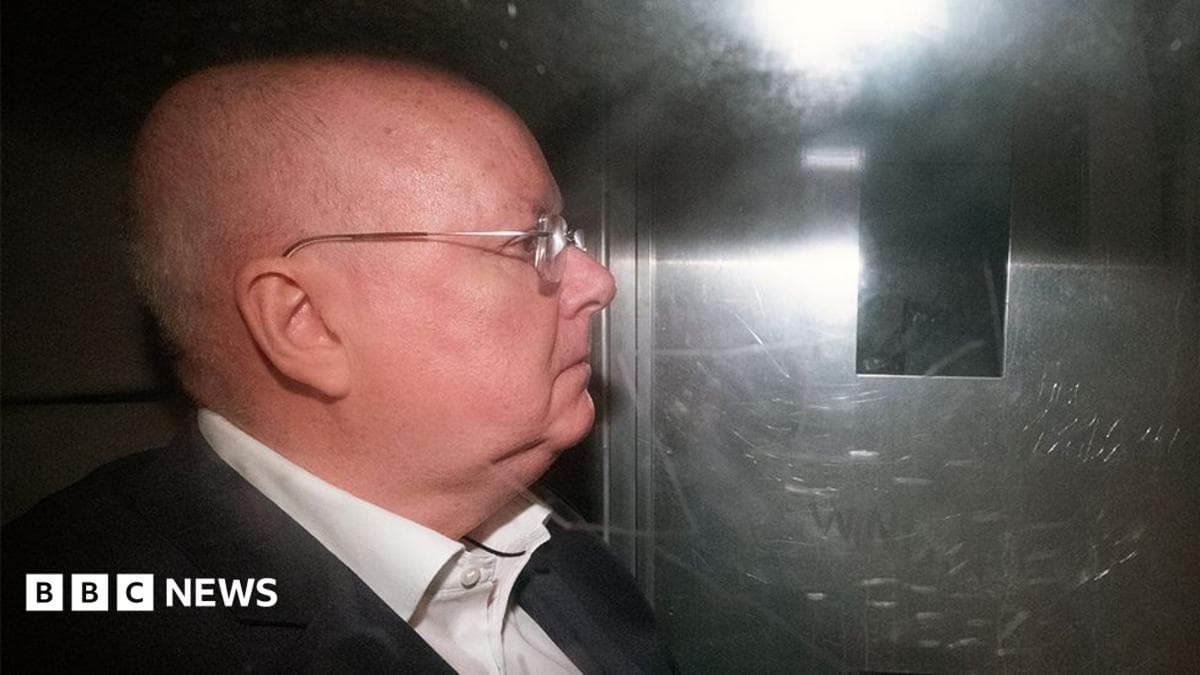
Within weeks the party was rocked by a scandal surrounding former chief executive Peter Murrell , who admitted in court to embezzling more than £400,000 of SNP funds over a 12-year period.
He is due to be sentenced next week.
Sign up for our Politics Essential newsletter to keep up with the inner workings of Westminster and beyond.
Andy Burnham is expected to seek the Labour leadership after his resounding victory in the Makerfield by-election.
If Burnham succeeds in gaining the keys to Number 10, here are some of the MPs and advisers who could be given key roles.
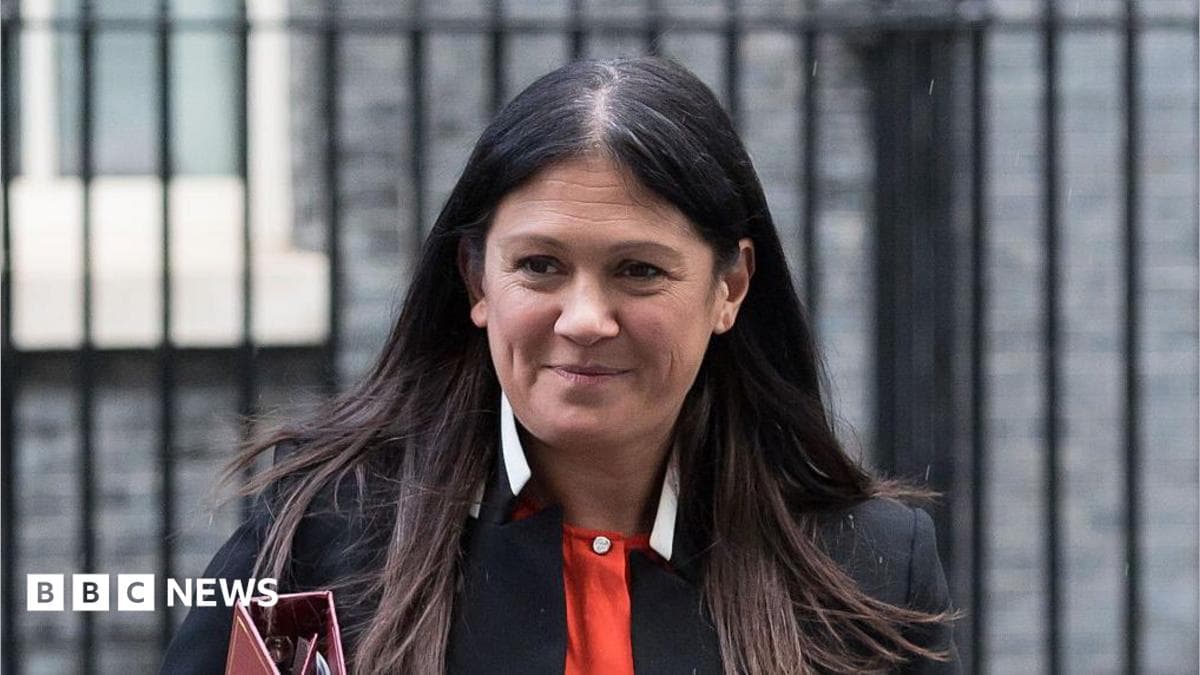
The former transport secretary was the first of Sir Keir's cabinet ministers to quit, after it emerged in November 2024 that she had a fraud conviction prior to entering parliament.
On the backbenches she emerged as a crucial power broker on Labour's "soft left", and was at the heart of the huge rebellion which scuppered the government's welfare cuts in 2025.
She has been a major figure in Burnham's Makerfield campaign, basing herself in the constituency, and is line for a big cabinet job.
Midgley has only been the MP for Knowsley, not far from Makerfield, since 2024 but she has been an influential force in the Labour movement for much longer than that.
She worked for Sir Keir's office in opposition following stints at the TUC, Unite and in former Labour leader Jeremy Corbyn's team.
She is seen as a plausible candidate for chief whip or even to be political secretary in Downing Street, not a job usually held by an elected politician.
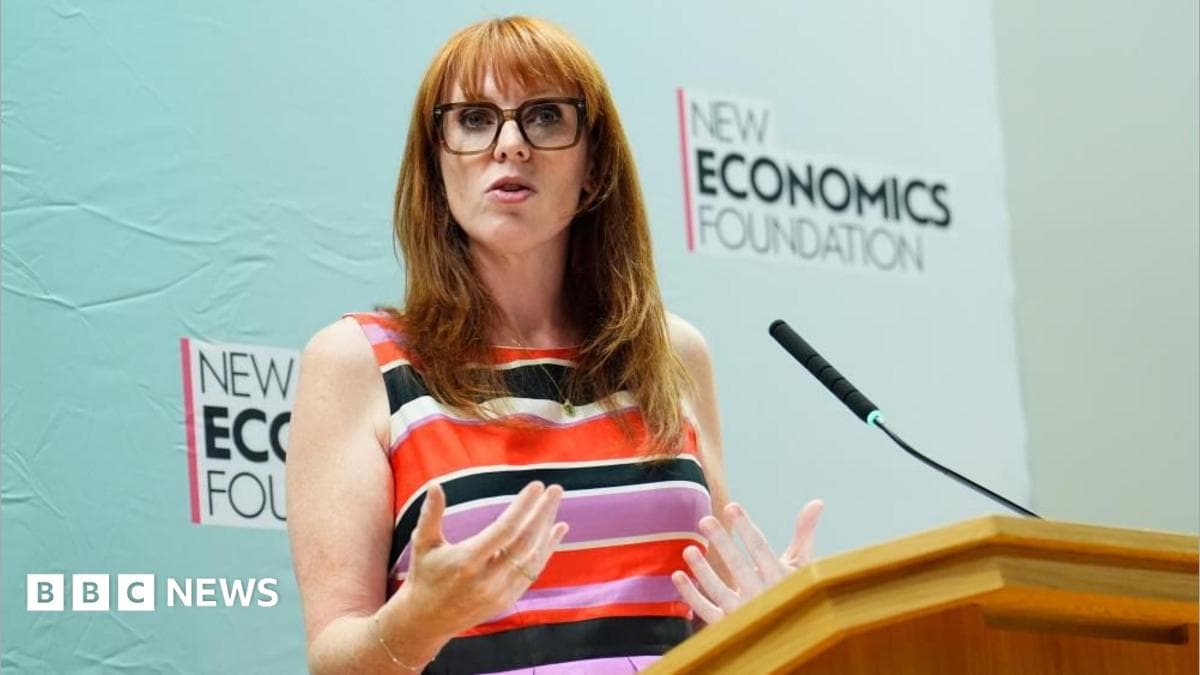
Fahnbulleh resigned as a junior minister for communities in the aftermath of the May elections, but unlike most of those who quit the government she is from Labour's soft left, not its right.
Since then she has been working on policy ideas for a potential Burnham government. She was previously a civil servant and ran the New Economics Foundation think tank.
The man who gave up his seat for Burnham - and who was praised for his "selflessness" by the new Makerfield MP, in a speech to supporters on Friday morning.
Simons is said to have been helping Team Burnham on policy, though he has a different ideological background to Fahnbulleh.
He has been on a rapid political rollercoaster: he worked for and then fell out with Jeremy Corbyn; ran a pro-Starmer think tank; became an MP and quickly a minister, from which he had to resign over accusations about his conduct at the think tank.
He is seen as a likely candidate for a role in a Burnham Downing Street.
Currently Burnham's deputy mayor for policing and crime, Green has been canvassing MPs about their opinions on what a Burnham government should do and is seen as a possible candidate for a role in Downing Street.
Before taking up her current role in 2023 she was an MP for 12 years, including a stint in Sir Keir's shadow cabinet.
Burnham's closest adviser, Lee ran his first Labour leadership campaign in 2010, advised him when he was shadow health secretary and has been running his mayoral office since 2017. A dead cert for a role in a Burnham Downing Street.
As the independently-elected deputy leader, Lucy Powell has her own big role to play regardless of who the Labour leader is.
But as it stands she is not in the cabinet so only has influence over party matters and not the government.
This is likely to change should Burnham become prime minister. The pair have worked closely together for years given she is a Manchester MP.
When Miliband won the Labour leadership in 2010, Burnham came fourth. In that contest Burnham positioned himself to Miliband's right.
Years later, the two have become aligned in their belief in a more interventionist state.
Many around Sir Keir are deeply suspicious to say the least of Miliband's behaviour as energy secretary over recent months, believing he has been agitating for Burnham behind the scenes.
He is thought to covet the role of chancellor, having spent many years advising Gordon Brown in the Treasury under New Labour.
Only four MPs are left who voted for Burnham to become leader the first time he tried, in 2010. One of them is Alexander, now the transport secretary.
She also backed him in 2015, a race he began as frontrunner, and is likely to be in line for a big job should he win.
A veteran figure on Labour's progressive left as the founder of the pressure group Compass, Lawson has also been a leading figure in the fairly new organisation Mainstream, which has generally been seen as Burnham-aligned.
But his ideas on electoral reform and alliances between progressive parties sit uneasily with others in Burnham's orbit - it will be fascinating to see if Lawson is given a role or not.
Burnham consulted high-level advisers, especially on economics, in the days before his by-election win in Makerfield.
In a sign he is preparing programmes for national policy, and to communicate stability to the markets should he become prime minister, Burnham has been taking advice from Lord O'Neill, a former Treasury minister and economist.
He has also been advised by Hughes, the former chairman of the Office of Budget Responsibility, who resigned after an IT leak of Budget numbers.
"Delusional."
"A bit deluded."
"Utterly deluded."
That's just a flavour of the messages I've been receiving from Labour MPs since Andy Burnham won the Makerfield by-election in the early hours of this morning.
To be clear, it's Sir Keir Starmer they're talking about: the man who not even two years ago brought Labour back to the promised land of government after 14 years away, and only five years after Labour's worst ever general election defeat.
These MPs span Labour factions, generations and ministerial ranks.
But they are united in their view that Sir Keir has entered the endgame.
To Sir Keir and his allies, it's those pushing for his exit who are deluded.
Their case this morning is that the spectacle of a governing party consumed by internal conflict is exactly what the public voted Labour to end.
"When the Tories lost the last election, Britons were most likely to see them as 'only interested in themselves', 'dishonest' and 'divided'," a document being circulated among the prime minister's supporters says.
"We cannot allow ourselves to be tarnished in the same way."
Yet for all Sir Keir's warnings against division, among many Labour MPs this morning there is actually a surprising amount of unity.
They are increasingly unified in the belief that Burnham's destination of Downing Street is assured, and that the only open question is the precise path for getting there.
The word being used more and more to describe the leadership contest which is now inevitable is "coronation".
In other words, MPs are saying they do not believe a leadership election will get to the stage where Labour Party members have their say.
Instead, they believe, Burnham will end up being the only candidate with the required backing of 81 MPs (and in this scenario he would get far more than that) and would therefore be elected by acclamation, as Gordon Brown was when he became Labour leader and prime minister in 2007.
One complicating factor in any coronation could be Wes Streeting, who quit as health secretary in protest at Sir Keir's leadership last month .
Amid a measure of scepticism from some of his colleagues, Streeting has been adamant in recent days that he has the backing of 81 MPs required to trigger a contest.
We may find out within days, but he is likely to come under real pressure, including from some of his allies, to tuck in behind Burnham to enable a swift transition.
Of course the bigger complicating factor is Sir Keir, who reiterated this morning that he would be a candidate in a leadership election.
Under Labour's rules, Sir Keir does not need to hit the magic number of 81. As the incumbent, he is automatically placed on the ballot of party members.
In that sense, there can be no coronation. Sir Keir's commitment to press on guarantees a ballot of Labour members. He doesn't need the backing of any of his MPs, let alone 81 of them.
Yet that ignores the fact that he is prime minister as well as Labour leader. In our system, the prime minister can only lead if he commands the confidence of a majority of MPs.
It was the reality that he could no longer put together a functioning government which forced Boris Johnson's demise in 2022 .
Does Sir Keir still have the backing of enough of his colleagues to lead the government? That's really the core question which we will find the answer to over the next few days.
Speaking to Labour Party staff this lunchtime, the prime minister said that a leadership election would "tear apart our party and our movement".
But if - when - one is triggered, Sir Keir needs to prove that it's not his own desire for survival which is more responsible for Labour's chaos.
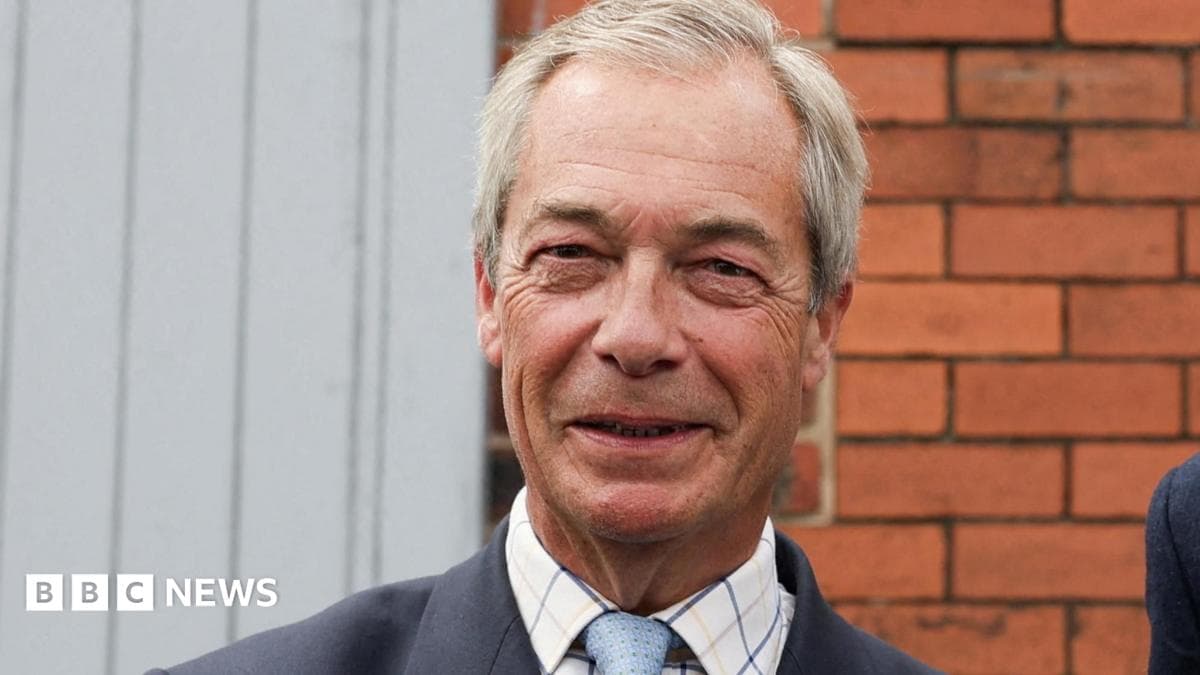
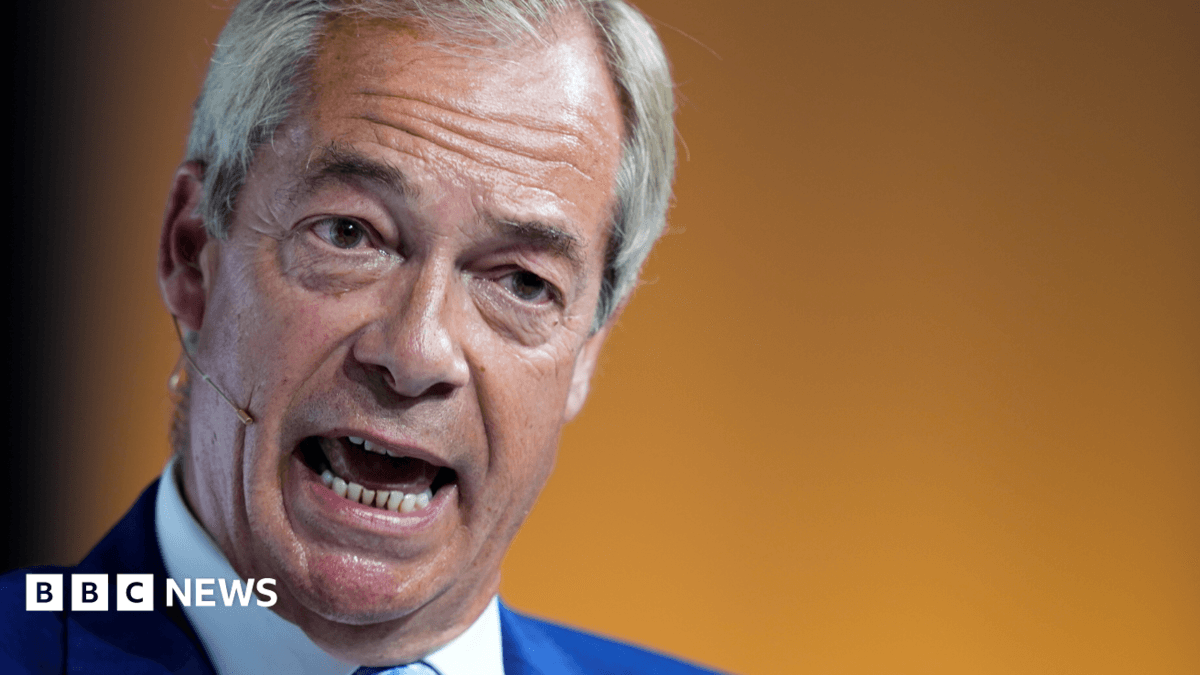
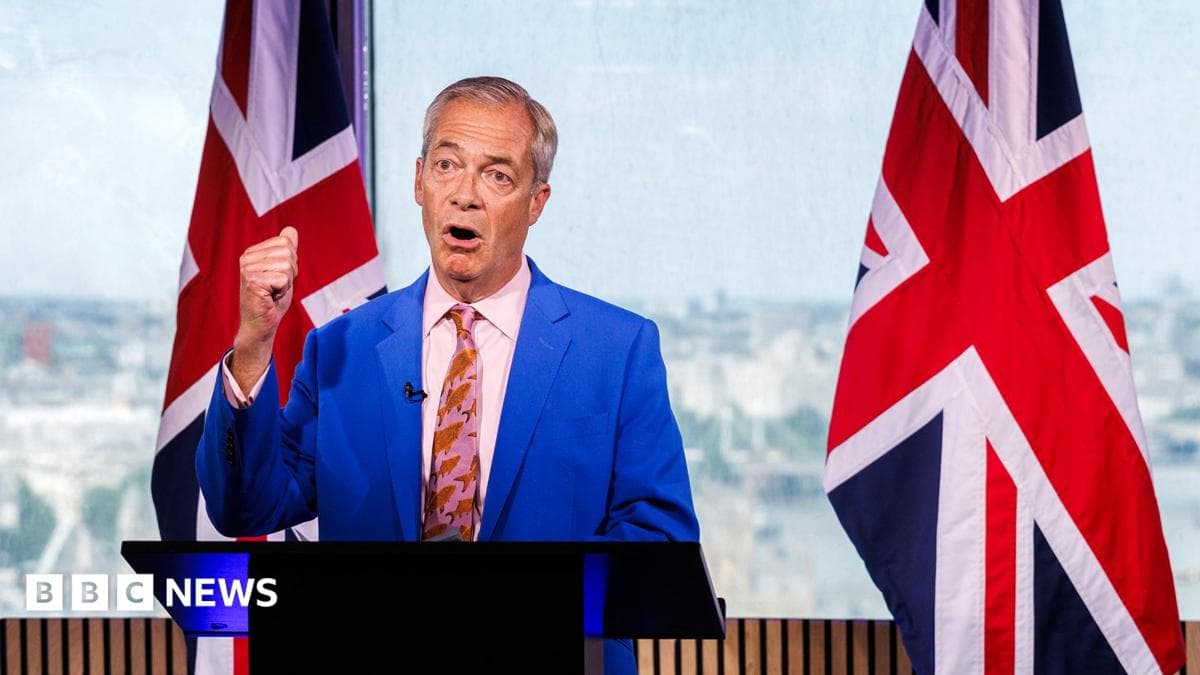
Nigel Farage says he is disappointed with Reform UK's performance in the Makerfield by-election, as he blamed his party's defeat on a desire among voters to eject Sir Keir Starmer from Downing Street.
The Reform leader claimed frustration with the embattled prime minister had driven Andy Burnham's "emphatic" Labour victory over his party's candidate, Rob Kenyon, who finished more than 9,000 votes behind.
He also conceded his party had also lost votes to right-wing rival Restore Britain, founded by ex-Reform MP Rupert Lowe, which finished third in a breakthrough night for the fledgling party.
He issued a plea for Restore voters to back Reform instead, as the main "challenger party to the left".
Reform had sought to defeat Burnham in the Makerfield seat, giving it a high-profile scalp to boost its credentials as the likely main opposition party to Labour at the next general election.
But Burnham increased Labour's majority over Reform in the constituency, in a rare feat for a candidate from the governing party.
The outgoing mayor of Greater Manchester is now expected to challenge Sir Keir for the Labour leadership and keys to No 10.
He would otherwise be barred from doing so without a seat in Parliament, making the Labour leadership a key issue in the contest in Makerfield, just south of Wigan, which has been held by the party for over a century.
In a video clip posted online, Farage said his party's second-place finish was a "disappointing" result, adding Burnham had won the contest with a "vote share that nobody could quite see coming".
"In many ways, he's a popular local mayor, just as Boris Johnson was a popular mayor in London just a few years ago," he said. "But what really happened here is it was 'vote Burnham, get Starmer out'."
He added that Reform had been "slightly hoist with our own petard", having previously framed a series of local and national elections in May as a chance for voters to put an end to Starmer's faltering premiership.
He also expressed frustration with Restore, which sought to outflank Reform on the right with bold promises including "the most ambitious programme of mass deportations ever seen in Britain".
"I thought we'd get 18,000 votes, we got just shy of 16 [thousand]. So I'm disappointed by that, no question about it," Farage added.
"There's a couple of thousand voters there who would normally have gone out and voted Reform, that voted Restore. And I would say directly to them, what do you want?
"We are the challenger party to the left in this country. And I would urge you to think again, I really, really would."
Reform candidate Kenyon, a self-employed plumber who became a councillor in England's May local elections, had stood in the constituency in the 2024 general election, coming second to Labour.
Although he grew Reform's share of the vote overall, this time around his campaign was dogged by controversy over past social media comments about women unearthed by journalists and campaign groups.
The by-election marks the first time that Restore Britain, which was registered as a political party in March, has contested a Westminster seat, marking its emergence on the national political stage.
It had been polling at around 3% nationwide but its performance in the high-profile Makerfield contest, where it captured around 7% of the vote, presents a strategic dilemma for Farage ahead of the next general election.
In the run-up to the vote, Reform had announced plans to ban non-British nationals from social housing and tax companies hiring foreign staff, as it tacked rightward to shore up its voter base.
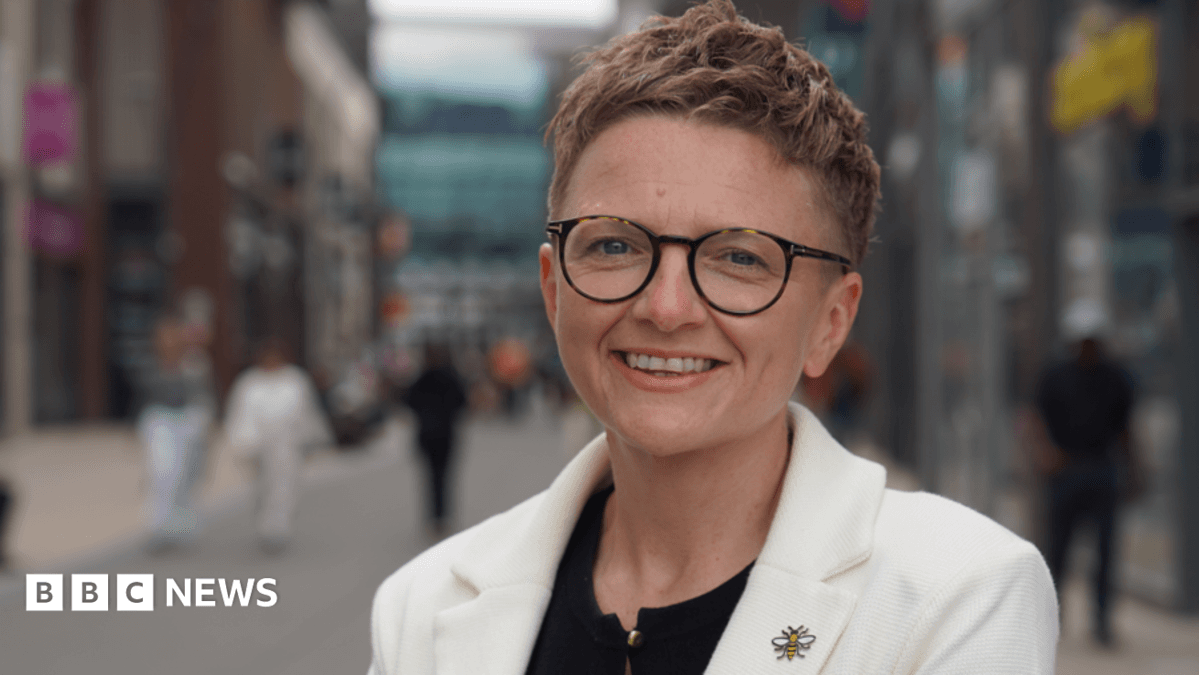
Speaking after the result, a jubilant Lowe posted on X that his candidate Rebecca Shepherd had achieved a "remarkable" result, adding that previous new parties had taken "years to do what we did in a few months".
"Restore Britain is now officially on the map," he added.
The Makerfield vote was one of three by-elections taking place on Thursday, alongside two in Scotland sparked by the resignation of sitting MPs to take seats in the Scottish Parliament.
The Conservatives won in Aberdeen South, taking the seat from the SNP, while the SNP held on in Arbroath and Broughty Ferry.
Sign up for our Politics Essential newsletter to keep up with the inner workings of Westminster and beyond.
John Edwards, the UK's information commissioner, has resigned following a workplace investigation.
"I have accepted that there have been occasions where I exercised poor judgement and made attempts at humour that were inappropriate and caused offence," he said in a statement on Friday.
The Information Commissioner's Office (ICO) is responsible for regulating AI in the UK and also oversees data protection regulation and the freedom of information law.
Science Secretary Liz Kendall said she had "seen evidence of the vulgar and highly sexualised language that was used in his interactions with his staff and am extremely concerned that he continues to describe these incidents as misplaced humour".
In a post on the networking site LinkedIn, she wrote: "Multiple women shared testimony to the investigator on feeling offended, shocked and uncomfortable following interactions with Mr Edwards.
"I am deeply grateful to all who came forward to share their experiences as part of this investigation."
The ICO later confirmed Edwards had resigned as information commissioner - a post he has held since early 2022.
"As a Crown appointee and accountable to Parliament, Mr Edwards submitted his resignation to the DSIT," it said in a statement.
"Mr Edwards had voluntarily stepped back from his duties at the end of February to enable an independent workplace investigation," it added - saying since then, the organisation's board and executive team has led its work.
"The investigation concluded that there was a case to answer and made clear that his behaviour fell short of the conduct expected from a public official," it added.
When asked by the BBC, the organisation would not elaborate on the findings, or if they concerned what Edwards described as "poor judgement" or "inappropriate" humour in his resignation statement.
In his statement, shared on his LinkedIn page, Edwards said while he disagreed with how the investigation had been carried out, "I accept that my position has become untenable".
He said he did not want to become "a distraction" from the ICO's work and had notified the government of his resignation as both commissioner and chair of the ICO "effective immediately".
The ICO said in a statement on 10 June the independent investigation had been completed and, finding "there is a case to answer", said the commissioner would be "temporarily unable to act in fulfilling his responsibilities for the remainder of the process".
It said on Friday its board and executive team would continue to lead the ICO "to ensure continuity in our leadership and regulatory work".
Edwards' resignation comes amid increased scrutiny over the ICO's work, particularly in dealing with data protection complaints from the public.
Campaign groups the Good Law Project and the Open Rights Group (ORG) recently launched action to challenge the watchdog - accusing it of "brushing aside thousands of public data complaints".
"John Edwards' departure is a chance for the Government to appoint a regulator with teeth, and reset the regulators' approach of providing data protection in name only," ORG executive director Jim Killock said on Friday.
"Parliament must ensure that the future Commission is run by professionals who want the law enforced, including against government data failures."
Edwards said in his statement on Friday he was "proud" of his own contributions and that of ICO staff, more broadly.
"While I will no longer be able to continue this work in my current role, my commitment to the principles, values, and objectives that have guided my professional life remains unchanged," he added.
Jon Baines, senior data protection specialist at law firm Mishcon de Reya, said the commissioner's resignation was "unprecedented".
"We have had Information Commissioners (initially called Data Protection Registrars) since 1984, and all have served their full term," he told the BBC.
"This is the first ever resignation, and it is in extraordinary circumstances."
The role of Information Commissioner was also "imminently" expected to be abolished and replaced by an Information Commission, he said - adding "the Government will need to recruit a new chair".
The ICO is tasked with ensuring data and information rights are upheld in the UK.
This includes making sure organisations are correctly handling people's data, and investigating potential breaches of the law.
It has the power to take enforcement action against firms which do not comply.
In serious cases, it can fine firms up to £17.5m, or 4% of their worldwide turnover in the previous financial year - whichever is higher.
The ICO recently dished out a £14m fine to online platform Reddit , finding it had unlawfully used children's personal information and failed to adequately check the age of its users.
Sign up for our Tech Decoded newsletter to follow the world's top tech stories and trends. Outside the UK? Sign up here .
Andy Burnham's victory in the Makerfield by-election means there is now a real prospect he will challenge Sir Keir Starmer for the leadership of the Labour Party - and the country.
During the by-election campaign, he set out a number of policy ideas.
Burnham committed to the economic rules Chancellor Rachel Reeves set , in a signal that if he became PM, he would not oversee a large rise in borrowing.
And he has also committed to Labour's manifesto promise not to increase the main rates of income tax, VAT or National Insurance, which would limit his ability to raise significant sums from tax.
Helen Miller, director at the Institute for Fiscal Studies, said: "Whoever is the prime minister, they will find that, within the fiscal rules, there is very limited scope to increase spending on a particular area without cutting back spending elsewhere or raising taxes."
There are still many areas of policy which Burnham has not covered during his campaign, but here are some of the changes he might try to implement if he enters Downing Street.
Burnham has repeatedly advocated bringing water "back under stronger public control", pointing to the Greater Manchester bus network, which is run by private operators but has public oversight and control, as a model. He has, however, advocated public ownership for companies like Thames Water.
"We do need to bring down water bills, energy bills, rail fares, just as we brought down bus fares in Greater Manchester, to make life more affordable for people," he said in his victory speech after winning the Makerfield seat.
The government estimated the cost of nationalising the water industry as a whole would be £100bn, although that has been disputed by some think tanks.
But if a Burnham government followed the plan of bringing rail companies under public ownership gradually as their contracts came up for renewal - which Louise Haigh, who ran Burnham's campaign, instigated when she was transport secretary - that could reduce the cost significantly.
It's hard to put a figure on how much "stronger public control" - without nationalisation - of key utilities would cost without more detail.
Burnham has been a long term supporter of reform to social care, dating back to his time as a health minister under Tony Blair in 2006-07 and then health secretary under Gordon Brown in 2009-2010.
He has repeatedly suggested inheritance tax should be replaced with a "national care levy" which, he said in a speech in 2023, would mean the "care [that] is provided is free" and "everybody would pay but obviously the wealthiest would pay the most."
Asked about those commitments during the by-election campaign, Burnham said he did not "resile" from his previous stance on inheritance tax.
But it's not clear how much that levy would raise.
And the cost of reforming social care would depend on which model was adopted. The Health Foundation think tank estimated in 2024 that a NHS-style model of universal and comprehensive care could cost around £17bn in additional funding by 2035/36.
But a model, like the one used in Scotland, of basic protection for everyone against some care costs would cost around £7bn by 2035/36 to replicate that in England.
In his campaign launch speech, Burnham said he wanted "the biggest programme of council house building since the Second World War".
He suggested this could be funded by rediverting the existing £39bn affordable housing programme entirely to social rent homes.
In an interview with iNews, Burnham said he wanted to resurrect the northern leg of HS2 between Birmingham and Manchester .
At the time it was scrapped by Rishi Sunak in 2023, the estimated cost of completing this was £36bn.
Burnham has suggested some of that cost could be recovered by capturing the rise in value of land around new stations.
"You don't take all the windfall off the landholder, but you share the proceeds of that windfall, and the increase in land values created by the infrastructure is captured to pay back the cost of the infrastructure," he told the paper.
However it isn't clear how much could be recouped using this method.
The Institute for Fiscal Studies has examined how Burnham might pay for this by looking at how previous big infrastructure projects were funded - CrossRail and the Northern Line expansion.
The think thank says it is possible to fund rail investments by levying additional business rates in areas the network would connect up, and it is also possible to ringfence developer contributions or business rates growth.
But it says most of this is not "new money". It is instead, the IFS says, a recognition that to the extent that new infrastructure boosts land values and economic activity, it can generate revenue which helps pay for it.
Burnham has called for a "new drive of re-industrialisation" across the north of England and the rest of the UK.
"It's about time we started backing British business and British industry so we can re-industrialise places like this," he said after winning the seat.
During the by-election campaign, his team sent out a policy document promising a cut in business rates for pubs and music venues by 20%.
That would be paid for, they said, by higher taxes of out-of-town warehouses used by online retailers like Amazon. Burnham also wants to raise the threshold at which business rates kick in, taking lots of small high street shops out of paying altogether.
Over the years, Burnham has repeatedly emphasised the importance of young people having alternative routes to training and employment, aside from university.
In his speech after victory in Makerfield, Burnham said he wanted an education system that was not dominated by the university route, but one which "offers a path for everybody, academic and technical in equal balance".
He also said he wanted to secure more work placements for 16 to 18-year-olds and guarantees of apprenticeships.
Burnham told BBC Newsnight he wanted to reconsider the increase in National Insurance paid by employers , brought in by Rachel Reeves in the 2024 Budget.
The Office for Budget Responsibility forecasts the increase that would generate revenue of £16.1bn in 2029/30.
Burnham isn't promising to overturn the raise completely, although he said it was the "wrong decision" - so it's not clear if he would seek to partially reverse the policy.
Possibly one of the most pressing issues facing Burnham if he replaces Sir Keir in No 10 is the ongoing row over the government's defence investment plan.
Last week, John Healey resigned as Sir Keir's defence secretary, claiming the draft government proposals would take UK defence spending to 2.68% of GDP by 2030, falling "well short" of the 3% target he considered necessary.
It came amid reports that the Ministry of Defence (MoD) was seeking £28bn more in funding between now and the end of the decade, but had only been offered an additional £10bn.
Speaking to the Times a day after Healey's resignation, Burnham said alongside the 10-year approach to defence and security, there needed to be reform of public investment and procurement.
He told the paper that this would reduce the welfare bill by bringing recipients into the workforce, ensuring more money was available for defence.
"I am not squeamish about saying that the plan would be to reduce the welfare bill. Not at all," he said.
Burnham has been a public supporter of the 3.6 million women born in the 1950s who claim they lost out because they were not properly informed of changes to the state pension age. The cost of a scheme to pay all the Waspi women would cost up to £10.5bn.
Burnham was reported to have told a hustings event during the campaign he would "stick by the Waspi women because they deserve some recompense for the unfairness".
But following concern about the cost of such a scheme, a spokesperson clarified that he "accepts the final decision" of the government not to grant compensation.
Sign up for our Politics Essential newsletter to read top political analysis, gain insight from across the UK and stay up to speed with the big moments. It'll be delivered straight to your inbox every weekday.
As Andy Burnham gave his acceptance speech on the stage after he swept to victory in the Makerfield by-election, he spoke of "some sadness" that the appointment brought to an end "my wonderful nine years as mayor of Greater Manchester".
He said it was a "wrench" to have to leave the job he loved, although promised he was not "leaving the service of Greater Manchester".
But what is his legacy according to people living in the region?
Some residents in Salford told of their sadness and disappointment at his departure, after Burnham's return to Westminster politics automatically triggered a mayoral election.
Neil Townley, 59, from Worsley, said: "I'm quietly disappointed to be perfectly honest with you.
"I've always thought Burnham had the North West at heart so obviously he will be sadly missed because of everything - the infrastructure that he tried to put into place, and Manchester has gone from strength to strength since he's been in charge.
"He knows the people, he knows how we function, and basically, I wish him all the best, but he will be sadly missed."
What is the Greater Manchester mayor and what do they do?
"A great job" is how Spencer Keogh, 56, from Walkden, reviewed Burnham's time as mayor.
He said whoever becomes mayor after the election, which will be held on 30 July, would find Burnham was "a hard act to follow".
Townley agreed, adding: "The next mayor will have to be quite forthright trying to lobby government to make sure that they listen to the North West.
"We've been overlooked for quite a few years and we're quite a powerhouse in the North West and we really need to be listened to."
Jane Battersby, 59, from Tyldesley, in Wigan, said: "The buses have improved vastly, so I will say on that level he has done exceptionally well [as mayor].
"Other than that I've not really thought about it to be perfectly honest."
She added: "I think Burnham's tried to do some good stuff.
"He's a politician and he's always been a politician and I think he was biding his time with this to do exactly what he's done which is to get a seat and then go for prime minister.
"He's played the long game and it's paid off for him."
Reflecting on any future potential mayoral candidates, she said: "I don't know whether the new candidate will be as forceful as he was."
But Battersby is clear on what needs doing, by whoever does get elected.
"It saddens me every time I walk down Deansgate in the morning and I see the homeless," she said.
"The new mayor needs to keep up with transport, not bring in the congestion charge because that's not needed.
"And just hopefully work for the people of Manchester."
Chris, from Roe Green, Worsley, said: "I'm disappointed that he won't be mayor because I think he's done a brilliant job, but wishing him all the best in the future.
"He's done a good job with the transport and stuff like that, so you'd hope we get somebody as good as that next time."
Jim, 78, from Salford, added: "He did a lot for Manchester, he did a lot for the North and we'll miss him."
The Makerfield by-election came after Labour MP Josh Simons stepped down to allow Burnham an opportunity to contest the seat and return to Westminster, paving the way for him to challenge Sir Keir Starmer for the party leadership.
Mark Neild, 52, from Salford, said he had "mixed feelings" about Burnham's victory in Makerfield.
"I think he's a great guy, a great politician here - but I'm absolutely delighted for the Labour Party because it's a significant victory.
"I don't pay much mind to local politics, more national politics and I think he's the man to save the Labour Party."
But looking to the future in Greater Manchester, Neild said: "We continually need investment, we continually need infrastructure.
"We need hope and we need jobs for younger people my daughter's age.
"To attract as much investment as possible and to try, if they can, to bridge the culture wars that are tearing us apart."
Listen to the best of BBC Radio Manchester on Sounds and follow BBC Manchester on Facebook , X , and Instagram . You can also send story ideas via Whatsapp to 0808 100 2230.
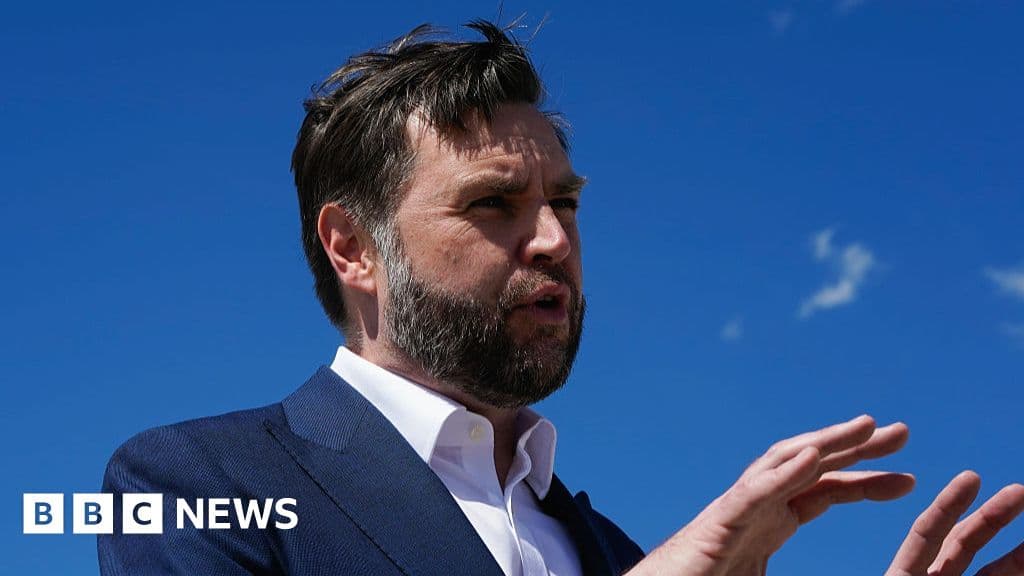
Direct talks between the US and Iran are set to begin in Switzerland despite the Iranian military saying it has closed the Strait of Hormuz again over Israel's attacks on southern Lebanon.
The US military has disputed the claim, saying "traffic continues to flow". Iran said the Strait was closed in response to deadly Israeli strikes in Lebanon that were a breach of Tehran's agreement with the US to end the war.
US Vice-President JD Vance landed in Switzerland early Sunday morning. The new round of negotiations is expected to start later in the day.
An Iranian delegation including parliamentary speaker Mohammad Bagher Ghalibaf and Foreign Minister Abbas Araghchi arrived late on Saturday.
Officials from the US and Iran will be joined at the talks by Pakistan's Prime Minister Shehbaz Sharif and the head of the country's armed forces, Field Marshal Asim Munir.
Pakistan has acted as a mediator throughout the war , and hosted a previous round of negotiations between the US and Iran.
"Pakistan will continue to support the implementation of the understandings between Iran and the United States," the Pakistan Ministry of Foreign Affairs said in a statement ahead of the talks.
Vance said he hoped to make progress "on the nuclear issue" and on the "Lebanon ceasefire issue".
Speaking to the press before he boarded his flight, he was asked about clashes between Israel and Hezbollah and Israeli air strikes in southern Lebanon and said: "Things are actually getting better there, and things are slowing down a little bit."
"It's going to be something we're just going to have to continuously manage to ensure that Israel and Lebanon are both safe and secure. That's fundamentally the goal of this, to make the whole region safe and secure," he said.
Iran's foreign ministry spokesman Esmail Baghaei said his country would be "demanding that the other side fulfil its commitments".
Earlier this week the US and Iranian presidents signed an initial agreement aiming to end the war, including in Lebanon, with immediate effect. It includes a commitment to further talks to reach a final deal over the next 60 days.
Complicating matters are the ongoing clashes between Israel and Hezbollah, the Iran-backed militia based in the southern suburbs of Lebanon's capital Beirut.
On Saturday, at least 47 people were killed in Lebanon following a series of Israeli air strikes, the country's health ministry has said.
The Israel Defense Forces (IDF) said it had struck 80 targets linked to Hezbollah and killed "dozens" of its members.
The IDF says four of its soldiers were also killed.
Israel and Hezbollah have continued to exchange fire since the deal was announced between the US and Iran, but on Friday afternoon an immediate ceasefire between the two was confirmed.
Prior to the agreement, Israel had said it had no intention of withdrawing its forces from Lebanon and had insisted that its conflict with Hezbollah was separate from the war on Iran.
Hezbollah said Israeli attacks in Lebanon were an attempt to "sabotage" the broader US-Iran deal.
The US government has criticised Israel's ongoing operations in Lebanon, which was drawn into the war when Hezbollah launched rockets into Israel in retaliation for US-Israeli strikes that killed Iran's supreme leader.
Lebanon's health ministry said 4,057 people had been killed since the re-start of conflict between Israel and Hezbollah on 2 March.
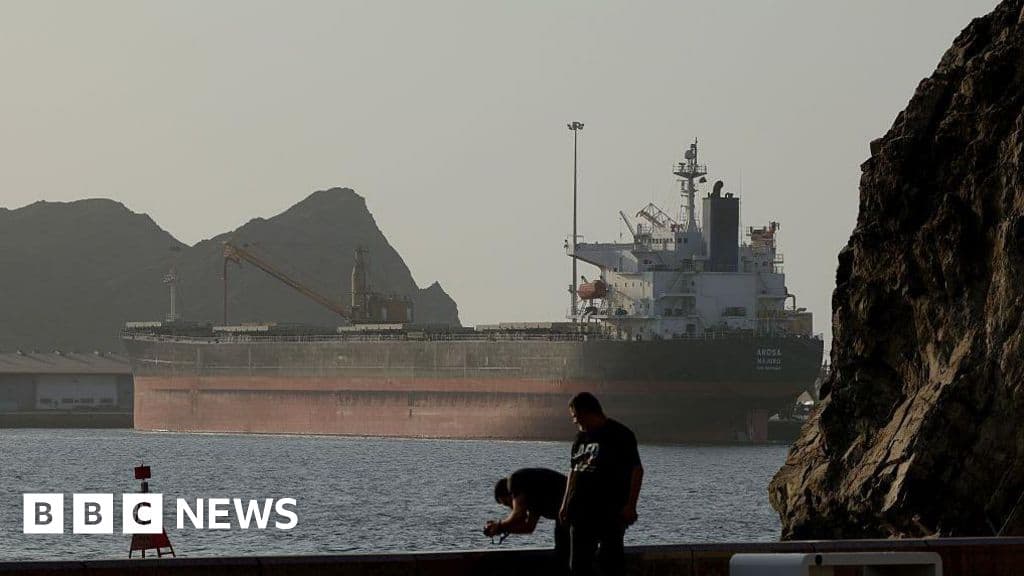
Iran's Islamic Revolution Guard Corps (IRGC) said Israeli strikes on Lebanon violated ceasefire commitments and the Strait of Hormuz, which had been reopened after the US and Iran reached a deal to end the war, had been closed.
Justifying its announcement that it was closing the strait, the Iranian military accused the US of violating the US-Iran deal by not implementing the first clause of their 14-point memorandum of understanding , which agrees to "the immediate and permanent termination of military operations on all fronts, including in Lebanon".
However, after Iran's statement, US Central Command (Centcom) spokesperson Tim Hawkins said "traffic continues to flow". He said US forces were "monitoring the situation to ensure this remains the case", adding that "Iran does not control the Strait of Hormuz".
Centcom said 55 merchant ships transited the strait on Saturday with more than 17 million barrels of oil for global markets.
Tracking data monitored by BBC Verify suggested that at least five tankers passed through the Strait on Saturday while several vessels appeared to have made U-turns in the area.
Iran effectively blocked the Strait of Hormuz after the US and Israel attacked the country on 28 February - sending shockwaves through global energy markets.
The strait is deep enough for the world's biggest crude oil tankers, and is used by major Middle Eastern oil and liquefied natural gas producers, as well as their customers.
In 2025, about 20 million barrels of oil and oil products passed through the strait per day, according to estimates from the US Energy Information Administration. That is nearly $600bn (£447bn) worth of energy trade per year.
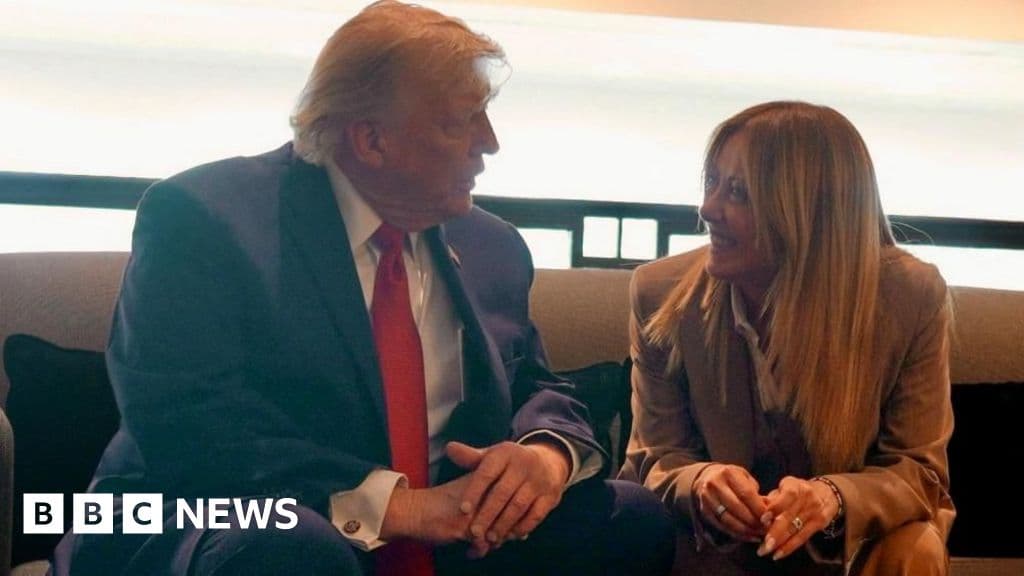
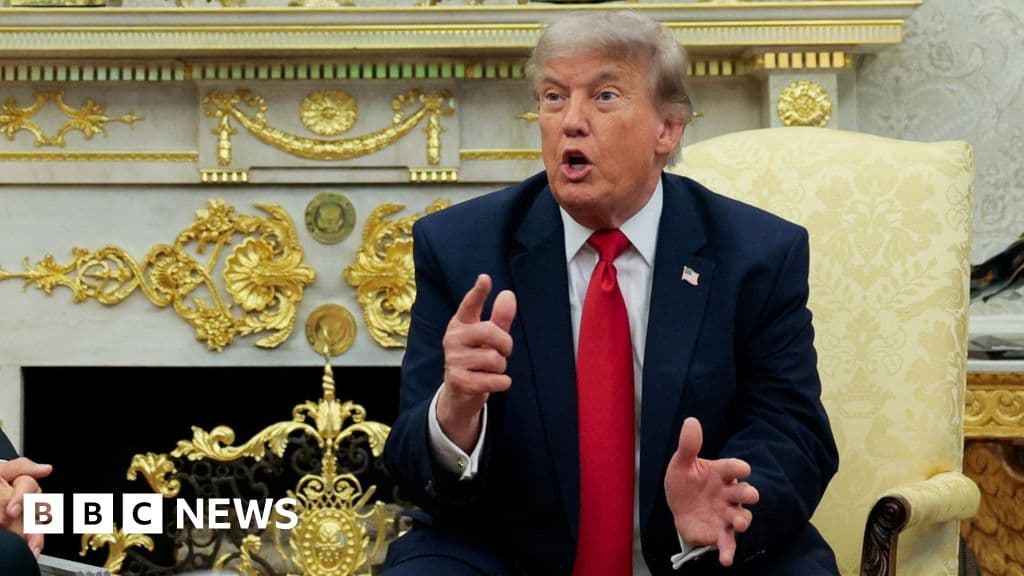
Italy's Giorgia Meloni has again hit back at US President Donald Trump on social media after he questioned her political popularity and repeated his claim that she asked "over and over" for a photo together.
Trump said on Saturday that the prime minister was "doing poorly in Italy with her level of popularity".
He also accused her of not supporting US efforts to prevent Iran "from obtaining or developing a nuclear weapon".
In a statement on Instagram, Meloni said Trump's "constant, unprovoked attacks" were "senseless".
"As for my popularity, being your friend has certainly not helped it, nor does it depend on my relationship with you," said Meloni.
"My popularity is none of your concern. I suggest you focus on yours," she added.
Earlier on Saturday, Trump also said Meloni had caused "a great logistical inconvenience" by barring the US from using Italian air facilities for American military operations in Iran.
But the Italian leader said the use of Italian bases "is government by agreements that we have always respected, and that cannot be violated as long as I am prime minister".
On Friday, Meloni said she had been astonished by Trump's initial claim that she "begged" for a photo during a G7 meeting this week in France.
The continuing exchange between the pair has highlighted a developing rift between the two countries since Trump's military action against Iran this year.
Italian Foreign Minister Antonio Tajani has cancelled a trip to the US early next week.
Trump and Meloni were pictured in close conversation at the G7 summit, and the Italian leader later told reporters their relationship was unchanged and there had been "no recriminations".
But soon afterwards, Trump gave a phone interview with Italy's La7 TV channel in which he alleged: "She begged me to take a photo with her; I felt sorry for her."
"She's probably happy I spoke to her," he said. La7 did not produce Trump's original words in English, but voiced them over in Italian.
Responding to the claim, Meloni in an Instagram video said she was "frankly stunned".
"I don't know why the US president behaves this way towards allies," she said, adding it was not the first time it had happened.
"But there is one thing he needs to remember: neither I nor Italy ever beg," she said.
Meloni received support for her comments from across the Italian political spectrum.
The leaders also clashed earlier this year after Trump accused Pope Leo XIV of being "WEAK on Crime and terrible for Foreign Policy" in a Truth Social post, later telling reporters he was "not a big fan".
Meloni later said the comments were "unacceptable".
The two country leaders have had a close political relationship, with Meloni the sole European leader to attend Trump's inauguration in January 2025.
More than 100 days after US and Israeli bombs began falling on Iran, both sides are claiming victory - a sign of how much each needed a way out.
A deal has officially ended the fighting, but the harder negotiations are just beginning.
Both sides have sold the deal to their public as a win but, as our analysts here explain, neither has fully convinced them and domestic critics on both sides argue that too many concessions were made.
For Iran , the deal with the US offers something just as important as a ceasefire: a way to claim that it has not just survived the war without surrendering but has emerged from it stronger.
From the start, Tehran's core objective was not necessarily to defeat the US and Israel in conventional military terms. It was to come out of the conflict with the Islamic Republic intact, its leadership still functioning and its negotiating position not completely broken.
The Memorandum of Understanding (MOU) – as the deal is known - allows Iran to say it has achieved that.
The document, signed separately by US President Donald Trump and Iranian President Masoud Pezeshkian, sets out a 60-day framework for negotiations over Iran's nuclear programme but it also confirms an immediate halt to military operations on all fronts, including Lebanon, mutual respect for sovereignty, the reopening of the Strait of Hormuz and the lifting of the US naval blockade on Iranian shipping.
Iran's immediate obligations are significant, but relatively limited. Tehran has agreed to help ensure safe commercial passage through Hormuz, something that had long been the status quo before the war, reaffirm that it will not pursue nuclear weapons, and enter talks on the future of its highly enriched uranium and enrichment programme.
The US commitments appear broader. According to the MoU, Washington will begin removing its naval blockade, issue waivers for Iranian oil exports, make frozen or restricted Iranian assets available, work towards easing sanctions and pursue with regional partners a reconstruction and economic development plan for Iran worth at least $300bn (£224bn).
That helps explain why the reaction from Iranian critics has so far been muted. The MoU gives the leadership enough to present the deal as a victory: Iran's sovereignty is recognised, the blockade is due to be lifted, sanctions relief is on the table and reconstruction funding is explicitly mentioned.
But that silence is unlikely to last. Even the first response of Iran's supreme leader, Mojtaba Khamenei, was carefully balanced: he allowed the deal to proceed, while making clear that it had been accepted on Iran's Supreme National Security Council responsibility.
The most difficult issues have been deferred, not resolved. The future of Iran's highly enriched uranium, the scale of its enrichment industry and the rebuilding of damaged nuclear facilities will now be negotiated under intense pressure.
That creates a problem for Tehran's leadership. State media, the Revolutionary Guards, parliament and hardline figures have spent weeks telling their base that Iran defeated the US and Israel. Expectations are now high. Any compromise over enriched uranium or nuclear infrastructure could be portrayed by critics as a concession made after victory had already been declared.
But no compromise could be just as dangerous. If Tehran refuses to move on highly enriched uranium or the future shape of its nuclear programme, the process could collapse and the ceasefire itself may come under pressure. That would strengthen those in Washington and Israel who already argue that Iran has only used the MoU to buy time and could push both sides back towards war.
Mohammad Bagher Ghalibaf, the speaker of parliament and head of Iran's negotiating team, has tried to frame the talks in defiant terms. "I am not a diplomat," he said on state TV, "but I know well how to make America understand."
Khamenei's reaction has made that task even harder. He said he held "another view in principle" but had authorised the MoU after Pezeshkian, as head of the Supreme National Security Council, accepted responsibility for defending Iran's rights and those of Iran's allies.
That wording keeps him close enough to the deal to allow it to proceed, but distant enough to avoid full ownership if it fails. For Iran's negotiators, that may narrow the room for compromise. They must satisfy Washington without appearing to have crossed lines the leader himself has not fully embraced.
Ghalibaf's language is aimed as much at Iran's domestic audience as at Washington. The former Revolutionary Guards commander has to sell the deal to a hardline base deeply suspicious of compromise with the US.
The comparison with the 2015 nuclear agreement is unavoidable. In Washington, some may present the MoU as worse than the Joint Comprehensive Plan of Action, as the earlier agreement was known, arguing that Trump has accepted a framework that gives Iran sanctions relief and economic benefits while postponing the hardest nuclear questions.
In Tehran, however, the danger is different. Hardliners may accuse the government and negotiating team of repeating what they saw as the betrayal of 2015, when President Hassan Rouhani came under attack by MPs, conservative media and political rivals who accused him of making too many concessions over Iran's nuclear programme.
For Pezeshkian and Ghalibaf, the challenge is to turn a ceasefire framework into a political success before that backlash gathers force.
Iran has gained time, relief from immediate military pressure and the prospect of major economic concessions. It has also avoided the outcome Washington demanded most publicly: total surrender.
But it has not yet secured the final deal. The MoU strengthens Iran's hand in the short term because the system has survived and Washington has made visible commitments. The risk for Tehran is that the next 60 days expose the gap between the image of victory sold at home and the compromises required to keep the war from returning.
Iran has come out of the war's first chapter stronger than many expected, but its next challenge may be harder: keeping its own political base behind the process long enough to reach a final deal, without allowing compromise to look like a concession or even a defeat.
Donald Trump has hailed the agreement as a "major win" for the United States that ultimately accomplishes his overarching war aim of preventing Iran from acquiring a nuclear weapon.
In the near term, however, a much more immediate "victory" is the re-opening of the global economy as a result of the Strait of Hormuz opening.
As the conflict wore on and the Strait of Hormuz remained essentially closed, polls consistently suggested that the American public was growing exasperated with the high price of petrol and what the war meant for them at home.
Dissatisfaction with the economy was among the primary reasons voters sent Trump back to the White House in 2024, and a perception that the war the president chose to initiate was hurting their pocketbook had become politically damaging for Trump.
And while he may himself not be on the ballot in the November midterm elections, that unease came at a difficult time for fellow Republicans, many of whom have faced increasingly angry constituents, and would-be voters who were growing more and more vocal about the prospect of a long-running, frozen conflict.
With that in mind, the deal gives Trump breathing room and, his political allies hope, the ability to portray himself as the figure who brought the conflict to a relatively quick close and avoided the sort of seemingly endless foreign entanglements of the forever wars that he campaigned against.
However, critics of the agreement - including some from within the Republican Party - have already accused Trump of giving too much as far as concessions go.
At the heart of this argument is the pledge that Iran will benefit from the $300bn reconstruction fund.
"There is no 300 billion dollar payment to Iran by the US. That's fake news," Trump wrote on Truth Social. "All there is for the US is success, lower oil prices, and victory."
While Trump and other administration officials too have made clear that none of this money will come directly from the US, it has some within the party feeling uneasy.
"History teaches us that giving billions of dollars to theocratic lunatics who want to murder us is not a good idea," Texas Senator Ted Cruz - an otherwise reliable ally of Trump - told The Hill. "I think the president is receiving some very poor advice."
Conservative commentator Tucker Carlson who, despite recent criticism of the administration remains a powerful figure among the Maga base, put it more bluntly.
"This is a pretty humiliating loss for the United States," he said on his show on X. "This is a loss."
Notably, the administration has also been forced to acknowledge that several of its war aims have seemingly become non-priorities that go unmentioned in the MoU.
Early on in the conflict, for example, Trump vowed that the US military would "destroy their missiles and raze their missile industry to the ground", leaving it "obliterated".
Similarly, the MoU contains no references to Iran's ties with regional proxy groups, despite Trump's March promise that the US was working to ensure "the Iranian regime cannot continue to arm, fund and direct armies outside of their borders".
The administration has now backed away from that aim, with Vice-President JD Vance telling reporters that the US "expects" that Hezbollah will refrain from firing on Israelis.
Ceasefires, he added, are a "little messy" and "flare-ups" can be expected to take place.
That alone will make the deal unpopular among those Republicans who view US commitment to Israel's security as an ironclad aspect of US politics.
Andy Burnham said Labour has a "final chance to change" after his victory in the Makerfield by-election paved the way for him to challenge Sir Keir Starmer for the party leadership.
Burnham said his win could mark a "turning point" for the country, while he pledged not to use the constituency as a stepping stone.
But Prime Minister Sir Keir defended his government's record on delivering change and insisted he would stand in any leadership contest, adding: "I'm not going to walk away."
Burnham was joined by several Labour MPs at a victory rally on Friday, while his allies increased their calls for Sir Keir to stand aside and agree a "managed way forward" to avoid a bruising contest.
There were three by-election results overnight and in Aberdeen South, the Scottish Conservatives won a Westminster by-election for the first time in more than 50 years taking the seat from the SNP; while in Arbroath and Broughty Ferry the SNP held onto the seat in its by-election overnight.
Burnham won the Makerfield constituency after securing nearly 55% of the vote.
The former Greater Manchester mayor held off a challenge from Reform UK, which came second but more than 9,000 votes behind Labour.
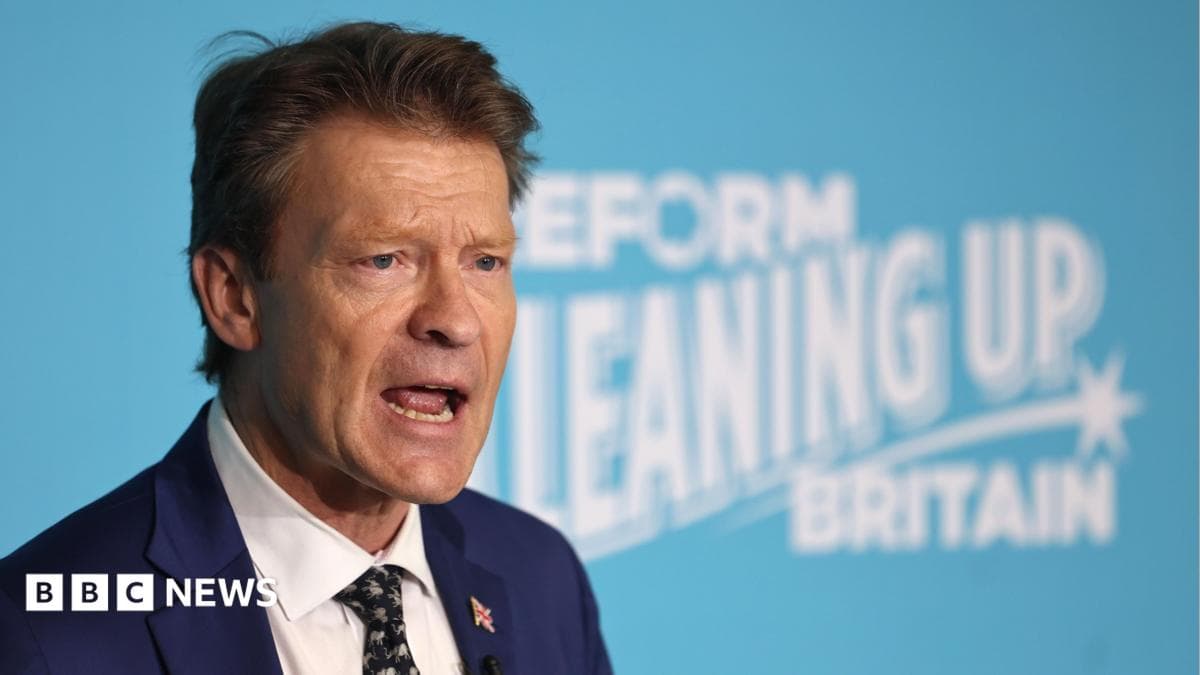
Speaking to BBC Breakfast, Reform Deputy Leader Richard Tice said his party did not win as people had "voted Burnham to guarantee that the prime minister is ousted".
Sir Keir congratulated Burnham and claimed recent by-election results suggest the "tide is turning on Reform", telling broadcasters: "They've reached probably the peak of their support, it's going down."
He went on to argue his government was delivering on the "very considerable mandate for change" it secured in 2024.
In a lunchtime call with Labour staff members, Sir Keir said the party needs to "pull together" and "take the fight to Reform" in the forthcoming Greater Manchester Mayor election.
He went on to suggest a leadership contest could end up "tearing apart our party and our movement".
Addressing supporters at the election count, Burnham told voters he would not be turning away from the constituency as he headed to Westminster.
"Everyone knows that politics isn't working," he said. "Everyone can feel that the country isn't where it should be.
"Tonight could, just could, be a turning point."
He added: "It [Makerfield] will never be a stepping stone to me but instead will be my touchstone."
In a direct message to Labour MPs he said: "I do say to my own party: this is a final chance to change.
"This is what people said directly to me on the hundreds of doorsteps that I stood on.
"We must hear it, we must act upon it and we must get it right. There will be no second chance."
Burnham told his victory rally at Ashton Town FC later on Friday morning that his campaign was won by a "band of strong northern power women" - thanking Labour MPs Louise Haigh and Anneliese Midgley - but he steered clear of speaking about the prospect of a leadership challenge.
Burnham said voters had told him about the need to "make life more affordable", adding: "We do need to bring down water bills, energy bills, rail fares, just as we brought down bus fares in Greater Manchester."
He went on to speak of a desire for a "new drive of reindustrialisation" and raised people's concerns about the "unfairness of the immigration system".
Burnham added: "It is our last chance to change, but we're going to take it, aren't we? We are going to take that opportunity and we are going to lay out a new path for Britain."
Haigh said she hoped the PM and Burnham can "speak and agree a managed way forward".
Speaking to the BBC, the former transport secretary said "it's quite clear the prime minister can't take us into another set of elections" and that she hoped he "reflects on the results and does what's right in the interest of the country and the party".
Unite General Secretary Sharon Graham also said it was "clear that there now needs to be an orderly timetable for a leadership election".
And that call was echoed in the Labour party, with Polly Billington, MP for East Thanet, telling BBC Radio 4's World At One programme that she was "disappointed" to hear the prime minister talk of "fighting on" in a potential leadership election.
"That's not the language that we need and it's not the process that we need," she said.
"We need something that's both dignified for him, gives him the opportunity for a legacy, and gives us the opportunity to serve the people in the way we promised that we would two years ago."
Former Health Secretary Wes Streeting, who is expected to enter any leadership contest, wrote on X that Burnham's victory "gives us all hope that Labour can still win".
He added: "But Andy's campaign is proof that to do so we need to change."
The by-election came after Labour MP Josh Simons stepped down to allow Burnham an opportunity to contest the seat, after Labour's ruling body blocked his attempt to run in February's Gorton and Denton by-election.
Makerfield has been a Labour stronghold for 120 years but Reform were victorious in May's English council elections.
Nigel Farage's party was running high in the polls at the start of the campaign, but Robert Kenyon, a plumber and Reform councillor, ending up in second place with 15,696 votes.
Former Reform MP Rupert Lowe's rival Restore party ended in third place, with 3,111 votes for its candidate Rebecca Shepherd.
In contrast to Burnham's victory, Scottish Labour was left in fourth place in both by-elections north of the border.
Douglas Lumsden won Aberdeen South by a convincing margin for the Scottish Conservatives, beating the SNP, with Reform coming third and pushing Labour into fourth place.
In his victory speech, Lumsden told his supporters: "The destruction of the North Sea oil and gas industry must stop now."
The seat had been held by the SNP's Stephen Flynn since 2019 but has shifted over the years, with a Tory MP in 2017, SNP in 2015, and Labour's Anne Begg between 1997-2015.
Flynn's SNP colleague Stephen Gethins, who along with Flynn was elected to Holyrood in May, had to give up his Arbroath and Broughty Ferry seat at Westminster.
Here the SNP held onto this seat in the by-election, with Lara Bird winning by more than 5,000 votes.
Sign up for our Politics Essential newsletter to read top political analysis, gain insight from across the UK and stay up to speed with the big moments. It'll be delivered straight to your inbox every weekday.
A Liberal Democrat MP has been arrested on suspicion of assault and controlling and coercive behaviour, the BBC understands.
Gloucestershire Police said a man in his 40s from Tewkesbury was arrested on Wednesday before being interviewed and released on police bail.
A spokesperson for the Liberal Democrats said Tewkesbury MP Cameron Thomas had been suspended from the party "pending the outcome of a police investigation".
The BBC has contacted Thomas and the Liberal Democrats for further information on the nature of the allegations.
Gloucestershire Police said: "On Wednesday, a man in his 40s from Tewkesbury was arrested on suspicion of controlling and coercive behaviour and assault.
"The man was interviewed by officers before later being released on police bail."
A spokesperson for the Liberal Democrats said: "Cameron Thomas MP has had the party whip suspended pending the outcome of a police investigation.
"Allegations of this nature are extremely serious, and it is important that the police are able to investigate properly.
"We are unable to comment further while the police investigation is ongoing."
Thomas, 43, previously served as a RAF officer and has been the MP for Tewkesbury since the 2024 general election.
He continues to sit as an independent MP, although the BBC understands his Parliamentary access has been temporarily revoked.
Follow BBC Gloucestershire on Facebook , X and Instagram . Send your story ideas to us on email or via WhatsApp on 0800 313 4630 .
The Conservatives won two council seats in by-elections held in Essex on Thursday.
Danielle Belton won more than half of the votes cast as she took the Sweyne Park and Grange seat on Rochford District Council.
She was leader of the council until she lost her seat on 7 May , but she will return to the council chamber in opposition to the Reform UK-led administration.
Meanwhile, her husband Stuart Belton won the Rayleigh West seat on Essex County Council, with Reform pushed into third place behind the Liberal Democrats.
"I was not predicting that kind of victory," Belton told the BBC.
"It sends a message. This area is not prepared to be used as a stepping stone for opportunist Reform members."
Belton lost her previous council seat of Hockley and Ashingdon in May to Reform by just 26 votes.
But she picked up 56% of the votes on Thursday, with a turnout of 37% - which is unusually high for a by-election.
The losses for Reform will not change the balance of power at either authority.
Reform has a majority on Essex County Council, with 52 members.
At Rochford District Council, the party is expected to remain in charge as a minority administration, as it is still the largest with 12 out of the 39 council seats.
Belton said: "I'm quite comfortable sitting in opposition and scrutinising the decisions they are going to try and make."
The two by-elections were held after Stuart Prior was expelled from Reform days after winning his seat at the local elections.
He was accused of making racist and Islamophobic posts on social media by campaign group Hope Not Hate. He denied being racist when approached by the Daily Mirror newspaper.
Peter Harris, the Reform leader at Essex County Council, was asked last month if it was a mistake to have selected Prior.
"It looks like it doesn't it. I don't know the detail. But yes extremely disappointing," he told the BBC.
Fifteen miles away, the Liberal Democrats also won a by-election on Thursday, retaining the seat of Springfield on Essex County Council.
Richard Lee will pick up the baton from long-serving Lib Dem councillor Mike Mackrory, who died suddenly in April .
Follow Essex news on BBC Sounds , Facebook , Instagram and X .
Two men have been jailed for conspiring to carry out arson attacks targeting property and a car connected to Prime Minister Sir Keir Starmer.
Ukrainian national Roman Lavrynovych 22, was jailed for seven years while Ukrainian-born Romanian national Stanislav Carpiuc, 27, was sentenced to two years imprisonment at the Old Bailey.
The attacks in north London were ordered on behalf of Russia, the BBC has revealed .
Lavrynovych carried them out after being recruited by Russian-speaking Telegram user "EL" who promised him payment. He had previously been hired by the same unknown figure to put up far-right posters.
The judge, Mr Justice Garnham, described Lavrynovych as a "useful idiot" who could be easily manipulated.
He said he had been "easily bought" and "accepted the job as you had accepted other grubby little tasks".
Carpiuc played a "supporting role" in the "utterly reckless" attacks, the judge said.
The court heard a Toyota car previously owned by the prime minister was found on fire on a street he used to live on in Kentish Town, on 8 May 2025.
On 11 May, a fire was discovered at flats linked to Sir Keir in nearby Islington. He had lived there years before.
A day later, a fire was discovered at the entrance to Sir Keir's Kentish Town home, which he still owned and was being rented out to his sister-in-law, Judith Alexander.
She told the trial of the billowing black smoke going up the stairs while she, her daughter and partner were in the house.
Lavrynovych and Carpiuc were found guilty at the court on Monday of conspiring together and "with others" to damage property by fire between 1 April and 13 May 2025.
Lavrynovych was also convicted of alternate counts of damaging property by fire, being reckless as to whether life was endangered. He was acquitted of damaging property by fire with intent to endanger life.
A third man, Petro Pochynok, 35, was found not guilty of the conspiracy charge.
After Lavrynovych carried out the arson, "EL" contacted him on 12 May saying he would get crypto and should throw away his clothes.
He urged Lavrynovych to leave the city but he was arrested hours later after officers stormed his home in Sydenham.
In a police interview, Lavrynovych said he had no idea who the prime minister was and had not heard of Keir Starmer.
James Scobie KC, representing Lavrynovych, said he was a "complete and utter foot soldier" and "fodder for this type of infiltration".
He said Lavryovych is remorseful, telling the court of the "shame he has brought on the family in Ukraine".
He told the court that a message from "EL" had made clear that damaging the front door was enough, as long as it generated media coverage.
Carpiuc, who was living in Romford in east London, was arrested on 17 May at Luton Airport as he prepared to board a flight to Romania.
Carpiuc's barrister Shahid Rashid said he had only been "the money man" and was not going to get anything out of the crimes.
He added: "His motivation was helping a friend out who needed money desperately for his father's medical treatment."
Carpiuc's father told the BBC outside court they thought the sentencing was unfair as "EL" had not been caught or punished.
Lavrynovych's mother, who asked not to be named, said she felt "heartbroken and ashamed".
She added: "Roman's poor health impacted his intelligence from the very early age, and I've tried hard to protect him from bad people. But he is so naive.
"I wish my son was better sent to Ukraine, to defend our country on the frontline."
Cdr Helen Flanagan, head of Counter Terrorism Policing London, said: "I would like to praise the swift work of the investigation team who identified the men involved within a few days of the fires.
"Crimes, such as arson, being directed by anonymous online accounts promising payment is a recurring trend in our casework."
The UK economy has taken a 6% hit from the effects of Brexit, according to economists' analysis of internal Bank of England data about the decisions, views and financial results of thousands of British companies since the referendum a decade ago.
Examining data that the Bank uses to decide on interest rates, the study analysed lost growth by trying to reconstruct how the UK would have grown if it had not voted to leave the EU.
It found that about half the economic hit came from the sheer surprise and uncertainty of the post-referendum period while the rest was from rising trade barriers after the UK left the customs union and single market in 2021.
But some critics say the study does not fully account for the outperformance of the US investment and tech industries or the European energy shock four years ago.
Co-author of the study, British professor Nick Bloom from Stanford University, said the UK was growing fast in the years before Brexit and could have at least partially kept up with the US without the disruption. He argued the Bank of England company data offered important corroboration.
His paper concludes: "In the case of Brexit, there was a substantial economic impact on the United Kingdom, but it arose gradually over the subsequent decade".
It comes as the Bank's top officials have in recent months become increasingly candid in explaining the economic consequences of Brexit in speeches and interviews.
Recently, the Bank's governor Andrew Bailey told journalists that as a consequence of Brexit: "I think the level of activity and growth in the economy has been lower.
"And the reason for that is that if you reduce the size of the markets that we trade with, so we reduce our export markets, then that does tend to have a negative impact on growth," he said, adding that productivity and the size of the market were also affected.
However, Bailey said that although the impact on financial services was "not good", it was "nowhere near as detrimental as many people predicted at the time".
Some policy economists have argued that it is difficult to model how much the UK would have grown without Brexit, and that such studies overstate Brexit's impact, especially at a time of so many global crises.
The latest version of the study has been published just ahead of the 10 year anniversary of the referendum.
It used the company data alongside five more traditional analysis methods. While the company level data point to a 6% hit over 10 years, the wider studies suggest an average of 8%.
The study is co-authored by Bloom and economists at the Bank of England, with access to all the Bank's data - but the paper officially has a disclaimer that "the views expressed do not necessarily represent those of the Bank of England".
While various attempts have been made to isolate the impact of the extra uncertainty, and trade barriers with the EU on UK economic growth numbers, this study is the first time key Bank of England information about the British corporate sector has been used in this way.
The Decision Maker Panel data is normally used to help inform the setting of interest rates, but it was actually set up by the Bank of England in 2016 specifically to give some insight into the economic impact of Brexit. The authors used years of answers to track firms' exposure to different aspects of Brexit, reported Brexit impacts, and any change in their financial accounts.
Prime Minister Keir Starmer announced that he will meet his EU counterparts at a summit in July to agree deals on food and farm exports, as well as electricity and emissions trading. Further areas of cooperation and alignment are expected to also be discussed.
The BBC has contacted political parties for comment.
Sign up for our Politics Essential newsletter to keep up with the inner workings of Westminster and beyond.
Sir Keir Starmer is reflecting on the "political realities" he now faces, a cabinet ally of the prime minister has said, in a sign he is contemplating stepping down.
Business Secretary Peter Kyle told the BBC that any decision he makes "will always be about what's in the best interest of the country", while referencing the "chaos" of leadership challenges under the Tories.
Calls for the PM to set out an exit timetable have grown after Andy Burnham's decisive victory in the Makerfield by-election means he can now challenge Sir Keir for the Labour leadership.
A growing number of figures in government believe the prime minister is preparing to set out plans for his departure as early as Monday.
In the immediate aftermath of Burnham's victory, Sir Keir continued to insist he would fight any formal leadership bid, meaning a contest in which Labour members and affiliated trade union supporters decide on the party's future would be needed.
But in a shift in tone, Kyle told the BBC's Sunday with Laura Kuenssberg that the prime minister was "taking the time to think through what the political realties are today, compared to last week and the week before".
He said he had spoken to Sir Keir on Friday and was sure that "every decision he makes today" about Labour's future would reflect "what's in the best interests of the country".
"I don't want to come on here and be delusional that there is no process, there is no forces at work which are challenging the prime minister as leader," Kyle added.
While using a formal process to change leader was "better wherever possible", this needed to be balanced against the need to maintain the government's authority "through any processes that may unfold", he said.
The 2020 leadership race that led to Sir Keir being made Labour leader took six weeks, with some Labour MPs expressing concerns that disagreements that would accompany a similar contest could further damage the party's prospects.
Concerns have also been raised that this could create uncreate unnecessary uncertainty for the markets and delay key government decisions.
Burnham was able to fend off a challenge from Reform UK and increase Labour's majority in Makerfield on Thursday, bucking a recent trend of electoral losses.
Transport Secretary Heidi Alexander and Foreign Secretary Yvette Cooper have since urged Sir Keir to set out an exit timetable, it us understood.
Home Secretary Shabana Mahmood and Energy Secretary Ed Miliband had already done the same in the aftermath of devastating results for Labour in a series of elections last month.
Burnham, who is understood to be spending time with his family this weekend, is expected to travel to Westminster on Monday to formally take up his seat as an MP.
His allies urged the prime minister to reflect over the weekend and listen to his cabinet ministers, MPs and his family.
Former Health Secretary Wes Streeting, a potential leadership rival to Burnham, has previously said he would join any contest, arguing the party needed to undergo a "battle of ideas" over its future direction.
Jess Phillips, who was one of four ministers to quit in the immediate aftermath of May's election results, said: "It feels like we've come to the end of the road."
But the former safeguarding minister, seen as a close ally of Streeting, said she hoped the party would find a means to question "what's coming next" even if this did not "end up with a full-scale contest".
"You can't just come and take over," she told Kuenssberg. "You do have to come and present your ideas to, at the very least, the Parliamentary Labour Party."
During the month-long Makerfield campaign, Burnham recommitted to Labour's manifesto promise not to increase the main rates of income tax, VAT or National Insurance, as well as the borrowing rules set by Chancellor Rachel Reeves.
He has expressed a desire for "stronger public control" of utilities and repeated previous pledges to replace inheritance tax with a new "national care levy".
However, he has yet to set out his thinking in other policy areas, including on defence spending, while Sir Keir has of late focused his efforts on rewriting government budgets to free up more cash for military investment.
Labour MP Toby Perkins, a shadow minister in opposition, told Kuenssberg he did not want Sir Keir to stand down, adding it would mean the country would have its "seventh prime minister in 10 years".
He said the PM "deserves a bit of time" and that he did not believe the government was "manifestly failing", noting it had lowered NHS waiting times, net migration and the asylum backlog.
Sign up for our Politics Essential newsletter to keep up with the inner workings of Westminster and beyond.
The signs are growing that Monday could see the prime minister set out a plan to stand down.
Sir Keir Starmer has always insisted he will not walk away and will fight any leadership challenge.
But the mood in government has shifted in the past 48 hours.
Several government insiders now think that the prime minister could announce a timetable to quit - as soon as Monday.
The signs were clear that things are moving quickly in what Business Secretary Peter Kyle told the BBC this morning.
The prime minister, he said, would do "what is in the best interests of the country".
Sir Keir, he added, was reflecting on the challenges he faces and political realities.
The challenges for the prime minister have been steadily growing for some time.
Labour MPs argue the problem isn't necessarily the party, it's the man at the top. They believe the prime minister is personally unpopular - and that it is Sir Keir who is holding his party back.
The result of the Makerfield by-election looks set to be the straw that breaks the camel's back.
Andy Burnham's victory wasn't even close - he beat Reform comfortably. For Labour MPs despairing about how they take the fight to Nigel Farage's party, they now have a leadership contender who can argue he has a track record of doing exactly that.
Dozens of MPs had already said Sir Keir should quit. That list has grown since Thursday, with senior cabinet ministers adding their voices privately.
The fact that it is known that ministers including Foreign Secretary Yvette Cooper, Home Secretary Shabana Mahmood and Transport Secretary Heidi Alexander have told the prime minister to go and yet they remain in their jobs speaks volumes about how Starmer's authority has collapsed.
Burnham is now the overwhelming favourite to be the UK's next prime minister.
If Sir Keir does resign in the coming days, the next question is whether there is any contest at all.
Wes Streeting, the former health secretary, always said he would stand. But his allies are now saying there should be conversations between candidates for No 10 about what the future looks like.
There are some hints a deal could be struck (even if Team Streeting are saying for now that their position hasn't changed).
It is of course possible that someone else throws their hat in the ring - but they won't have long to find 81 MPs to back them to get on a leadership ballot.
The next question is timing - when would the next prime minister take over?
There are disagreements across the parliamentary Labour party about what an "orderly" transition would look like - and specifically how long it would take.
Some influential figures in Burnham's camp want him to take over around the time of the annual Labour conference in late September, believing this would give him more space to prepare for government and ensure he can hit the ground running if he becomes prime minister.
But other leading supporters of the former Greater Manchester mayor believe that timetable is far too slow, arguing that an interregnum of three months would grind government to a halt as speculation about what exactly Burnham's plans for government built into a frenzy.
"His opportunity to define himself would be thrown off by endless speculation," a minister said.
One crucial question which is already the subject of intense speculation is the matter of who Burnham would appoint as chancellor.
In recent days this had been seen by some MPs as a straight fight between Ed Miliband, the energy secretary, and Shabana Mahmood, the home secretary. But Mahmood is now expected to stay in her current role if Burnham becomes prime minister.
The prospect of Miliband as chancellor is causing serious consternation among those on the right of the Labour Party, who would see his appointment as a clear shift to the left.
"If he picks Miliband, about 100 Labour MPs will be furious from the outset," a minister said. Sharon Graham, the general secretary of the trade union Unite, has already publicly urged Burnham not to appoint Miliband.
Burnham and his allies have gone to ground this weekend. They wanted to give Sir Keir time to reflect on the Makerfield result and come to his own conclusion about his future.
There are growing signs that is exactly what is happening. The next few days could be extremely consequential indeed - for the Labour Party and therefore for the country.
The Scottish Conservatives have won a Westminster by-election for the first time in more than 50 years, taking Aberdeen South from the SNP.
The seat, vacated by the SNP's Stephen Flynn, was won by Tory MSP Douglas Lumsden.
Shortly afterwards the SNP claimed a victory in the Arbroath and Broughty Ferry by-election where Lara Bird held the seat for the party.
Lumsden, who is unable to sit in both parliaments due to a Holyrood ban on so-called dual mandates, is to resign from Holyrood just six weeks after winning re-election as a North East MSP.
South of the border, Greater Manchester mayor Andy Burnham won the Makerfield by-election, paving the way for him to challenge Sir Keir Starmer as Labour Party leader.
The Scottish by-elections were triggered when sitting MPs - Flynn and his SNP colleague Stephen Gethins - resigned from the House of Commons after being elected to Holyrood.
Aberdeen is at the heart of the debate around the UK's energy future , and the UK government has chosen the city as the home of GB Energy - its fledgling publicly-owned energy company.
Lumsden, a former oil and gas worker, said his constituents had sent a message that "the destruction of the oil and gas industry must stop now".
The North East MSP defeated SNP candidate Richard Thomson, a former MP for Gordon, by a margin of more than 6,000 votes, with the Tories taking almost half of all ballots cast.
Conservative leader Kemi Badenoch has lauded her party's win in Aberdeen South as a "significant" result, promising that she will "never stop fighting" for its constituents.
She said the result is "particularly significant" due to the support from those who had "never voted Conservative before".
Badenoch added her party "is working to earn the trust of the country again", and is "grateful and humbled" that residents of Aberdeen South voted for the Tories.
"Makerfield was about one man's job. Aberdeen South was about thousands of jobs in oil and gas across our country and the future of an entire city," she said.
Amy Cameron, from Greenpeace UK, said "false promises" from the Tories would not deliver a prosperous economic future for people in Aberdeen.
She said a just transition has to be strong enough for people to "let go of the industry that built their community" and "trust that the new economy will be ready to catch them".
In Arbroath and Broughty Ferry, Bird won the seat on Scotland's east coast for the SNP with a majority of more than 5,000 votes over the Conservatives.
Bird, from near Kirriemuir, is a qualified lawyer who has worked as an SNP researcher and adviser at Westminster.
She said voters had "rejected the politics of division and hate" and made it clear that Scotland's future "lies with independence".
Labour slipped from second to fourth in the constituency, with Reform in third.
Flynn, who is now Scotland's economy secretary, responded to the loss of his old seat on social media , posting: "A tough night in Aberdeen that some will need to reflect on, quite heavily."
He added: "We lost Aberdeen South to the Tories in 2017, and we won it back two years later.
"I've no doubt that we can do so again. If we get things right."
Lumsden will have 49 days to resign as an MSP, under Holyrood's dual mandate ban.
His place in the Scottish Parliament will be taken by the next candidate on the Conservatives' North East Scotland list, Fraserburgh councillor James Adams.
The Conservatives last won a Westminster by-election north of the border in 1973, when they held Edinburgh North.
The Scottish Tories had not gained a seat in a Westminster by-election since 1967, when they took Glasgow Pollok from Labour.
The Aberdeen South defeat comes just six weeks after the SNP won a comfortable victory in the Scottish election.
Within weeks the party was rocked by a scandal surrounding former chief executive Peter Murrell , who admitted in court to embezzling more than £400,000 of SNP funds over a 12-year period.
He is due to be sentenced next week.
Sign up for our Politics Essential newsletter to keep up with the inner workings of Westminster and beyond.
New defence secretary Dan Jarvis says he is "working around the clock" to finalise a military investment plan that his predecessor claimed fell well short of what was needed to keep the country safe.
John Healey explosively resigned last week, delaying further the publication of the defence investment plan (DIP), which was originally due last autumn.
Speaking after meeting his Nato counterparts in Brussels, Jarvis responded to questions from the BBC by vowing to ensure the UK's armed forces have the "resources that they need".
But he declined to say whether he was looking to negotiate additional cash beyond the settlement that prompted Healey to resign.
Healey said last week that draft government proposals would take UK defence spending to 2.68% of GDP by 2030, falling "well short" of the 3% target he considered necessary.
It came amid reports that the Ministry of Defence (MoD) was seeking £28bn more in funding between now and the end of the decade, but had only been offered an additional £10bn.
Prime Minister Sir Keir Starmer has said he has asked all government departments to trim their investment budgets to free up additional cash, promising the investment plan will be published in the coming weeks.
Sir Keir said this week that Jarvis has his "own thoughts now on what the priorities should be", although there has been no suggestion from Downing Street that extra cash will be found.
Speaking after his Brussels meeting, Jarvis was asked whether he was looking to negotiate a bigger settlement than Healey, but did not respond directly.
He told reporters: "My priority now is to make sure that our armed forces have the resources that they need to do a very difficult job of work.
"I'm working around the clock with my colleagues across government to make sure that we can get the [investment plan] completed".
The UK has also come under international pressure to increase military budgets, having committed to spending to 3.5% of GDP by 2035, in line with Nato commitments.
Nato General Secretary Mark Rutte has urged the alliance's members to present "clear, concrete and credible plans" for how they will raise defence spending ahead of a summit on 7 July.
US Defence Secretary Pete Hegseth also criticised some Nato members that have "yet to show a credible path" to higher defence spending.
On Tuesday, the UK's chief of defence staff, Air Chief Marshal Sir Richard Knighton, warned the armed forces will have to "dial back" training and operations if they do not receive more cash than is currently being offered.
The DIP, which was initially expected in autumn 2025, was due to be published last week but has been repeatedly delayed amid the funding talks.
At the Brussels summit, Jarvis said the UK would provide funding to help Ukraine with 150,000 drones and 350 air defence missiles and radars by the end of the year.
The equipment is funded by a £752m tranche of the UK's £2.26bn loan to Ukraine, financed with the profits of seized Russian assets.
Speaking at the opening of Thursday's summit, Hegseth was critical of those Nato countries that he believes are not yet showing how they will meet their spending commitments.
He said: "Some of Nato's largest economies, some of our richest countries, allies that are happiest to go on about the rules-based international order and middle powers banding together, still seem to think the era of free-riding is here."
Hegseth also announced a six-month review of America's military footprint in Europe, which "will be designed to ensure that Nato is moving fast and irreversibly toward Europe leading" on the continent's security.
He added: "At the same time, going forward, our annual Nato dues will be contingent on other countries meeting their defence spending targets.
"Where other allies do not spend with urgency, our dues contributions will go down. Nato will be a two-way street."
On the eve of the meeting of defence ministers, Rutte made clear his desire for members of the alliance to show how they plan to raise defence spending to 5% of gross domestic product (GDP) by 2035 ahead of the Nato summit in Ankara, Turkey.
The commitment is split into a 3.5% GDP core defence spending commitment, and a 1.5% GDP commitment to wider resilience spending.
Rutte said: "Investing 5% of GDP in defence by 2035. That's what we agreed.
"So, I expect nations to present clear, concrete and credible plans to reach that goal.
"Ideally, well ahead of the agreed timeline. And many are already showing that they are doing exactly that."
Sign up for our Politics Essential newsletter to keep up with the inner workings of Westminster and beyond.
Green Party leader Zack Polanski has been cleared by the Greater London Authority (GLA) following a complaint over his failure to pay council tax on a houseboat in Hackney.
Conservative Assembly Member Neil Garratt submitted a formal grievance against Polanski last month, suggesting he had breached the Nolan Principles and the GLA code of conduct during his time as a London assembly member.
A GLA monitoring officer said on Thursday that "no further action" was needed and the case had been closed.
They said the complaint "relates to the member's personal living arrangements" and "does not have a sufficient connection to his role as an assembly member".
Polanski said the grievances, made by Garratt and Labour MP Anna Turley, were "politically motivated and not made in good faith".
The issue was raised following reports that Polanski was registered to vote at a marina address in east London but was not paying council tax.
In his submission, Garratt wrote: "As a London assembly member, Mr Polanski is responsible for voting to approve or reject the mayor's budget, and in doing so has the capacity to influence and set the level of council tax that Londoners pay via the mayoral precept.
"I therefore believe that any conduct which is found to have fallen short of the required standards would also fall within his capacity as an assembly member, given he would have voted to set a tax level which he himself may not have paid."
Polanski's lawyers said the complaint was "based on assumptions rather than established facts and must be viewed in the wider political context in which they have been made".
Polanski said he believed any charges linked to the mooring, including council tax, were covered by the fees he paid, and insisted there was no intention to evade payment.
Garratt told the Local Democracy Reporting Service : "Throughout this entire sad saga, Mr Polanski has avoided consequences the same way he avoided council tax: through happy accidents and gaps in legislation.
"It is beyond parody that a left-wing politician who will take to the stage to demand other people pay their share of taxes, has then gone home and not paid his own or endeavoured to find out what tax he owes."
In a statement previously given to the BBC , a Green Party spokesperson said Polanski had "taken steps to pay any council tax he may be found to owe".
They added: "Zack apologises sincerely for the unintentional mistake."
Listen to the best of BBC Radio London on Sounds and follow BBC London on Facebook , X and Instagram . Send your story ideas to hello.bbclondon@bbc.co.uk
The government has published its blueprint for a third runway at Heathrow, describing expansion of the airport as "critical to national growth".
Transport Secretary Heidi Alexander launched a consultation on the renamed Heathrow expansion national policy statement (HENPS), setting out the conditions needed if the project is to be given the go-ahead.
Two proposals to expand Heathrow have previously been presented to the government.
The airport's owners, Heathrow Airport Limited (HAL), want to build a full-length, 3,500-metre runway, which would require the M25 motorway being moved.
HAL's scheme is estimated to cost £33bn, including £1.5bn to move the M25, and is expected to be fully privately financed.
It would see Heathrow's capacity increase to 756,000 flights and 150 million passengers a year.
Tycoon Surinder Arora, who makes a speciality of providing rooms for aircrew near airports, wants his company to install a 2,800-metre runway which would not involve moving the motorway.
In November last year, Alexander announced her preference was for a full-length runway.
She said the government considered the development covered by the HENPS was critical to national growth.
"This is a signal of the importance the government places on the need for expansion and will be an important additional factor in the planning balance."
The draft HENPS requires applicants to demonstrate how the transport network would accommodate increased passenger numbers, including how any necessary road and rail improvements would be delivered.
Expansion must be compatible with the UK's legally binding climate targets, not cause new breaches of air quality limits and ensure noise emissions are not worse than 2024 levels, with reductions where possible.
Chancellor Rachel Reeves said she was determined to get "spades in the ground" for the third runway, and for it to be built by 2035.
She also claimed Heathrow was currently "not punching its weight" as a hub airport, and argued that Heathrow was "the perfect example of the problem in the UK in being able to get stuff done", with people knowing "for years, decades" that a third runway was needed but failing to build one.
Heathrow chief executive Thomas Woldbye said he "strongly welcomed the government has taken this next critical step".
He added: "The UK cannot realise its full economic potential without an expanded Heathrow and this is an important step towards delivering the capacity the country needs.
"We will now focus on securing planning permission and delivering this vital project."
Alethea Warrington, head of aviation at climate charity Possible, said the government was "living in a fantasy land if it thinks it can allow a new runway without making noise pollution even worse, making our air even more toxic, or crashing through our climate targets."
Listen to the best of BBC Radio London on Sounds and follow BBC London on Facebook , X and Instagram . Send your story ideas to hello.bbclondon@bbc.co.uk
A shop worker has told how being a victim of abuse by a customer left her "terrified" and "scared to go to work".
Finnola Tzagorakis, from London, said the man had subjected her to "racial remarks" and "even threatened to go after my children".
She was in Parliament to share her story as MPs debated tackling abuse against people in customer facing roles.
The debate was led by Chris Evans, Labour MP for Caerphilly, who said he was all too aware of the issue, having previously worked in a bookmakers and at a bank.
The Home Office said tackling retail crime was a priority.
MPs from different parties shared examples of abuse from across the UK in the Westminster Hall debate.
Tzagorakis, who is also an Usdaw trade union representative, watched the debate and spoke to MPs and the BBC afterwards.
She described her firsthand experience of the problem after asking a customer if they would like any help.
"He started shouting at me, he was threatening me, he was swearing," she told the BBC.
"He started saying racial remarks towards me. I started backing off to get away from that environment, then he started following me. He even threatened to go after my children.
"It left my legs shaking. I was terrified, the next day I was scared to go to work. I shouldn't have to feel like that and nor should anyone else."
The retail sector, Chris Evans, said, was "encumbered by appalling levels of aggression, harassment and violence".
"These experiences range from being followed home at night to being knocked unconscious by a shopping basket.
"Those facing such violence are ordinary, hardworking people, often with families at home. They deserve kindness, respect and the guarantee of returning home safe from work", he added.
Jacob Collier, Labour MP for Burton and Uttoxeter, shared the stories of retail workers he had spoken to in his constituency.
"Probably the most horrific story that I've heard when I spoke to those workers, was one female colleague that was doused in liquid and threatened with a lighter," he said.
Adam Dance, Liberal Democrat MP for Yeovil, called for more funding for rural police, reporting that one shop in his constituency had experienced over 100 shoplifting incidents a week.
The Crime and Policing Act 2026 created a standalone criminal offence for assaulting a retail worker in England and Wales.
Those found guilty can be sent to prison for up to six months and face an unlimited fine.
Evans urged authorities to make use of the law and have a "stronger police presence" in retail parks, high streets and shopping centres.
He also called for the law to be extended to cover other customer facing-roles like rail, hospitality and banking.
Home office minister Sarah Jones, responding for the government, said measures to help included AI tools, more police and new rules stating that all thefts have to be investigated - including those under £200.
She said abuse of shop workers would not be tolerated and the government would "keep working until we tackle it".
On whether the standalone offence on assaulting shop workers should be extended to cover other customer-facing roles, Jones said the legislation had been kept deliberately "narrow" to avoid "ambiguity in the courts".
She added: "If this piece of legislation makes a marked difference, which we hope it will, then of course we need to look at whether it should apply elsewhere."
Sign up for our Politics Essential newsletter to keep up with the inner workings of Westminster and beyond.
The jury in the sex abuse trial of Sir Jeffrey Donaldson have not yet reached a verdict and will continue their deliberations on Friday morning.
The seven men and five women were sent out by Judge Paul Ramsey to begin their deliberations at about 13:20 BST.
The former Democratic Unionist Party (DUP) leader has pleaded not guilty to 18 charges, including one count of rape, arising from allegations he sexually abused two women when they were children.
The trial at Newry Crown Court is in its fourth week.
His wife, Lady Eleanor Donaldson, denies five charges of aiding and abetting his alleged offending.
Earlier, the judge spent about two hours summing up the case on Thursday morning.
He said jurors must be satisfied that the prosecution had proven the case against Sir Jeffrey beyond reasonable doubt before they could convict.
"That is the law," he added.
Sir Jeffrey, wearing a dark suit and a pink tie, sat in the dock with his arms folded while the judge delivered his remarks.
The alleged victims, Complainants A and B, have both given evidence at the trial.
Sir Jeffrey also testified over two days.
The Donaldsons were arrested at their County Down home and charged on 28 March 2024.
Sir Jeffrey, 63, is accused of rape, four counts of gross indecency and 13 counts of indecent assault.
The offences allegedly occurred between 1985 and 2008.
At a pre-trial hearing last month, Lady Donaldson, 60, was declared unfit for a conventional trial on mental health grounds.
She has not participated in proceedings and instead is undergoing a trial of the facts in her absence.
The jury will decide if she committed the acts alleged, but it cannot result in a criminal conviction.
The Welsh government has said it is disappointed that a meeting promised by Sir Kier Starmer with First Minister Rhun ap Iorwerth in June is not taking place.
Shortly after the Senedd election Downing Street said the prime minister would meet the devolved leaders from Wales, Scotland and Northern Ireland this month.
A Plaid source said the administration had tried to make the meeting happen but no date was agreed. A spokesman for the first minister appeared to blame "instability in Westminster".
Downing Street said: "The prime minister remains committed to meeting with the first ministers as soon as possible."
Ap Iorwerth and Sir Keir spoke in May in the aftermath of a historic Senedd election, which unseated Labour after two decades of running the Welsh government, making Plaid Cymru the largest party in Cardiff Bay.
The two sides gave different accounts of the call at the time - with the Welsh government saying that Starmer had said he was "open to a conversation" about giving the Senedd more powers.
A statement from Downing Street said the pair "discussed working together constructively in the national interest, including on easing the cost of living and our domestic response to the Middle East crisis, and agreed on the importance of partnership to deliver for the people of Wales".
"The prime minister invited the first minister to meet in person in June, alongside the first minister of Scotland and the first minister and deputy first minister of Northern Ireland, to continue discussions on shared priorities."
No date for a meeting was ever publicly announced. It later emerged that the first minister had raised independence while speaking to the prime minister.
On Wednesday the first minister's spokesman said: "It is disappointing that the meeting initially proposed for June is now no longer taking place.
"We are still determined to establish a constructive relationship with the UK government and to press the case for fair funding, alongside the devolution of policing, justice, welfare, the Crown Estate and rail powers.
"The current instability in Westminster must not be allowed to hamper our ability to pursue the issues which matter to the people of Wales."
A UK government spokesperson said: "The prime minister remains committed to meeting with the first ministers as soon as possible, and our teams are continuing to work with theirs to agree a suitable time in everyone's diaries.
"In the meantime, there is regular and constructive engagement at all levels with devolved administrations - as the government gets on with delivering for people right across the UK."
Meanwhile, in the Commons on Wednesday, the Labour UK government's Welsh Secretary criticised the Plaid Cymru Welsh government for not confirming whether it "will support the UK's full membership of Nato".
Jo Stevens had written to the government asking for a commitment to support Valor, a scheme to help veterans access care and support.
Finance Minister Elin Jones' letter in response, dated 8 June, said: "I can assure you that the Welsh government is committed to upholding the principles of the Armed Forces Covenant and ensuring fair access to healthcare, housing, employment, education, skills and training for veterans and their families."
In a statement, the Welsh government said: "Defence and foreign affairs are non-devolved matters reserved for the UK government. Wales is a member of Nato by default through the UK, and all strategic decisions – including Nato commitments – are made in Westminster.
"Any suggestion that the Welsh government has sought to undermine or withdraw support for the UK's membership of Nato is therefore incorrect and misleading."
Wes Streeting has suggested he would be prepared to trigger a Labour leadership contest to replace Sir Keir Starmer as prime minister as early as next week.
The former health secretary told BBC Newsnight that "uncertainty and paralysis" in the Labour leadership would have to be resolved if the party wins Thursday's Makerfield by-election.
Both Streeting and Greater Manchester Mayor Andy Burnham have said they would stand in any contest to replace the prime minister, but previously shied away from saying whether they would trigger such a contest.
Speaking to reporters at the G7 summit in France, Sir Keir reiterated his intention "not to walk away" but to "carry on with what I was elected to do".
Burnham is standing to return to Parliament in the upcoming Makerfield by-election. If he wins and becomes an MP, he will be able to initiate or join a leadership race - something he is currently unable to do.
Asked by BBC Newsnight's Victoria Derbyshire if he would trigger a contest if Burnham wins, Streeting said: "I think the prime minister should be given some space and time to reflect over the weekend and I think we should see where we are then.
"I would prefer the PM to take a decision on his own terms rather than leave it for me or Andy or anyone else to trigger a contest.
"If not we can't carry on with this uncertainty and paralysis and there will need to be a contest and I would be prepared to do that."
Asked when he might launch a contest, he said: "I'm not going to get into 'is it Monday, is it Tuesday and all the rest of it' - let's give the prime minister a bit of space over the weekend to reflect on his position."
Streeting earlier told the BBC he had the backing of the 81 Labour MPs he would need in order to launch a leadership challenge.
At an event earlier on Tuesday, the former health secretary said any Labour leadership contest must not become a race of who can offer "the most expensive and popular pledges to the party faithful at the expense of the British people".
He told an audience in central London he would not use a leadership campaign to make costly promises that he would have to later reverse.
Streeting resigned from government last month, accusing the prime minister of drift and a lack of vision.
In an hour-long speech, he set out his own vision for the economy, seeking to present himself as the financially responsible candidate who would encourage growth and bring taxes down.
Polls have suggested that Burnham is more popular with Labour Party members and Streeting himself said he would be the underdog in a contest.
But the former health secretary seemed keen to sketch out the battleground and strike the first blows, in a "battle of ideas" over the party's future direction.
In an apparent dig at his leadership rival, Streeting cautioned against treating the bond markets, where the government borrows money, as "Bond villains", adding: "We must reject the reckless approach that says 'stuff the bond markets'".
Last year, Burnham told the New Statesman magazine: "We've got to get beyond this thing of being in hock to the bond markets."
Earlier this year, in a bid to reassure international investors, Burnham promised to stick to the government's existing rules on borrowing.
In his speech, Streeting also contested Burnham's argument that the north of England had suffered from 40 years of "neoliberalism".
"It's more complicated than that," he said, adding: "We've been through several waves of change that have delivered genuine strengths, but also deep weaknesses."
Such was his emphasis on fiscal discipline - he cited former chancellors Gordon Brown and Nigel Lawson – some in the room mused whether he was making a subtle subsidiary pitch to be chancellor if he was the runner-up in a leadership race.
But he insisted he could win the top job by convincing Labour members that he could win a general election, and unite the centre with the left.
If he did become prime minister, he said he would rule out an early election and govern for the remainder of the parliamentary term.
Elsewhere, the Ilford North MP said that he wanted to see tax on employment come down when "the public finances allow" and repeated his call for capital gains tax to be equalised with income tax rates.
Asked if he would consider getting rid of the triple lock on pensions in order to pay for defence, Streeting said the measure, which guarantees certain rises in the state pension, was "here to stay for the entirety of this Parliament".
In a jibe at another Labour colleague, Streeting suggested Energy Secretary Ed Miliband should approve North Sea oil and gas drilling projects in Rosebank and Jackdaw.
"There is a pragmatic case for producing our own gas rather than importing from abroad," he said.
When in opposition, Miliband had described a licence issued to Rosebank as "climate vandalism".
A full list of the candidates standing in the Makerfield by-election can be found here.
Sign up for our Politics Essential newsletter to keep up with the inner workings of Westminster and beyond.
Members of the Senedd from Plaid Cymru, Labour and the Greens walked out of a speech by a Reform MS on Wednesday where he joked that Welsh students are unable to read, and said Indian nurses were taking Welsh jobs.
It was the second day that Joe Martin had upset members in rival parties, after Plaid had accused him of "racism" over a speech on Tuesday claiming attacks from Sudanese asylum seekers were "inevitable" .
Presiding Officer Huw Irranca-Davies rebuked the MS for Caerdydd Penarth for the second of the two speeches - but the BBC heard some in Plaid believe the Senedd's figurehead should have been firmer with Martin sooner.
Reform's Jason O'Connell said the walk-out was "shameful".
Earlier the party's chief whip defended Martin's speech in first minister's questions on Tuesday , telling political rivals to "get used to it".
In a Reform debate about international spending, Martin gave a speech where he mocked a list of examples of spending.
He said: "We send Uganda money to plant trees as well, because we won that competition, who can find the stupidest use of taxpayers' money."
He joked the same question was asked to "some Welsh students who had been through our underfunded education system, but we didn't get a reply because we emailed them and they couldn't read".
In response to interruptions from across the Senedd floor, he replied: "Have a look at illiteracy rates for students graduating."
Martin added it was great that nurses were being recruited from India "because it means that the Welsh people who would have otherwise become nurses can instead go on universal credit".
Plaid's Caerdydd Fynnon Taf MS Zaynub Akbar then said: "I'm going to leave this because I don't accept any of this and I don't want to be a part of it."
A Plaid source said most of the party's MSs who were able to leave did so. Mike Hedges from Labour and Welsh Green Party leader Anthony Slaughter also walked out.
In his response to the debate, the minister for the constitution, Dafydd Trystan Davies, said the debate had descended "to the level of a public house" at points.
Jason O'Connell from Reform said he was "deeply disappointed" at the walkout, which he called "shameful".
One source told the BBC that the overall tone of Martin's contribution, as well as the comment about Welsh students not being able to read, sparked the walkout among Plaid MSs.
Plaid Cymru's spokesperson said the party "will not stand by as Reform UK make a mockery of our democracy and mock the communities we represent".
Wednesday's walkout followed frustration, the BBC was told, among Plaid MSs over how Irranca-Davies had tackled the comments about asylum seekers from Martin on Tuesday.
Plaid had complained that the speech broke Senedd rules.
At the opening of the Senedd on Wednesday Irranca-Davies asked MSs to avoid language that has "the potential to inflame debate or to increase tensions", but did not initially reprimand him directly.
A Senedd spokesperson said no breach had been committed by the MS, although the BBC was told the presiding officer's comments could be construed as a final warning to all members.
After the second speech from Martin, the presiding officer Irranca-Davies did reprimand him, saying: "I would like you to reflect, please, on the remarks and your contribution today. It was not in line with my expectations."
The Greens' Anthony Slaughter said after the debate that Martin had been "completely disregarding the Llwywdd's opening statement today, showing a complete lack of respect for the Senedd and other members".
Reform had called for an end to all Welsh government spending overseas in the debate, which was rejected by Plaid and Labour.
On Tuesday, in a question to the first minister about the Welsh government's Nation of Sanctuary policy, Joe Martin made a series of allegations about Sudanese asylum seekers.
He raised a recent attack in Belfast, for which a Sudanese man appeared in court for earlier this month , and the murder of Rhiannon Whyte by a Sudanese asylum seeker.
He asked the first minister what he would do "to make sure that when the next inevitable attack happens, it doesn't take place in Wales".
Dan Thomas, Reform's Welsh leader, nodded as Martin made his contribution, but the remarks were greeted with gasps from Plaid Cymru and Labour members.
At the time the comments went without remark from the presiding officer, who is in charge of maintaining discipline in Senedd debates.
Before Wednesday's events, Reform's chief whip Llŷr Powell said if there had been an incident like Plaid Cymru described on Tuesday then the presiding officer, also known as the Llywydd, "would have dealt with it there and then".
Powell said it was "bad form" to "put the spotlight on the Llywydd like this by leaking it to the press".
"I didn't hear anything I thought went over the line.
"I was talking about the Nation of Sanctuary during the election, Joe Martin was talking about the Nation of Sanctuary in the chamber."
He added: "Get used to it, it's the new norm are the words I use."
Plaid Cymru's minister for government business Heledd Fychan said the remarks were "dangerous and derogatory" which "brought the Senedd into disrepute".
Fychan, whose role is also known as the Trefnydd, added she would "always deal with instances of outright racism with the utmost seriousness and have written to the Llywydd seeking an urgent ruling on what I believe to be a serious and clear breach of Standing Orders".
Joe Martin has been approached for comment.
The UK will play its "full part" in getting the Strait of Hormuz reopened "as soon as possible", Sir Keir Starmer has pledged.
The prime minister said he and French President Emmanuel Macron were bringing together countries prepared to protect vessels in the Strait, a key oil shipping channel effectively closed by Iran since the war began in February.
He told reporters at the G7 summit in France that the impact of the closure on energy prices had affected "every household across the country".
The exact details of the US-Iran deal to end the war have not been released, but President Donald Trump has said the strait will fully reopen when the initial agreement is signed this week.
Sir Keir said: "It's going to make a material difference to our economies, to stability in the world, and of course we're [G7 countries] all united in saying that Iran must not get... a nuclear weapon."
He added that he had congratulated Trump on striking a deal with Iran, describing it as "a really important breakthrough".
On Sunday, Sir Keir said that if required the UK would support the deal by "standing up the defensive, independent multilateral mission" to restore freedom of navigation to Hormuz, including offering to clear mines.
In May, the government said the UK would deploy Typhoon fighter jets, drones and the HMS Dragon warship to a future mission in Hormuz.
French President Emmanuel Macron has said France could have fighter jets patrolling the strait soon if required, adding that an aircraft carrier was already in the region.
"About 20 countries have made concrete contributions," Macron said on Monday, adding four were "present in the region".
Trump said on Monday that he did not believe the US would "need much help" in ensuring the free passage of shipping in the Strait of Hormuz because of its deal with Iran, before adding he did not think it was "a bad idea to have a ship or two" from other countries.
However, the US president said he did not think it was "a bad idea to have a ship or two" from other countries based in the strategic waterway.
The conflict in the Middle East began after the US and Israel launched wide-ranging strikes on Iran, killing the country's supreme leader on 28 February.
Iran responded by launching attacks on Israel and US-allied states in the Gulf and by effectively closing the Strait of Hormuz.
Also on the agenda at the G7 summit is the war in Ukraine, with Sir Keir expected to hold bilateral talks with Ukrainian President Volodymyr Zelensky later.
The government has announced a package of 70 fresh sanctions targeting Russia, which it says is aimed at "choking off" the Kremlin's war effort.
The sanctions will target Moscow's shadow fleet, financial networks and military supply chains.
Sir Keir said there was "real unity" among G7 leaders on Ukraine, which he said was regaining territory and inflicting huge losses on occupying Russian forces.
It comes as the Ministry of Defence said it was investigating reports a Russian warship fired warning shots near a UK-registered yacht in the English Channel.
The incident, which happened at around 11:40am BST on Tuesday between the Isle of Wight and Normandy, reportedly involved the Russian frigate Admiral Grigorovich.
It comes days after Royal Marine Commandos boarded one of Moscow's "shadow fleet" oil tankers off the south coast of England on Sunday.
But it is understood British officials do not view this incident as being linked to Sunday's operation.
The UK's armed forces will have to "dial back" training and operations if they do not receive more cash than is currently being offered, the chief of the defence staff has warned.
Air Chief Marshal Sir Richard Knighton said the government's Defence Investment Plan (DIP) did not include enough funding to support "day-to-day activities" in the short term.
John Healey resigned as defence secretary last week, claiming the proposed cash settlement "would reduce the readiness of our Forces and increase the risk to personnel on operations".
In a Commons statement earlier on Tuesday, he said his resignation had been "necessary in securing the future of Britain's armed forces and our alliances".
"My decision last week was about our country, not career," he told MPs.
And in a swipe at Chancellor Rachel Reeves, who he has said was "unwilling" to provide adequate funds to meet the threats facing the nation, he warned that "our adversaries do not follow timetables set by the Treasury".
The government has committed to increasing defence spending to 3.5% of national income by 2035, in line with allies in the Nato military alliance.
The DIP was due to be published last week but has been delayed further following Healey's resignation.
Healey has said No 10 and the Treasury were prepared to commit around £10bn in additional funding over the next four years, around £18bn less than what military chiefs have reportedly asked for.
New Defence Secretary Dan Jarvis is currently reviewing how the money will be spent - but there has been no suggestion from No 10 that extra cash will be found.
Healey says the UK needs to be spending 3% of gross domestic product (GDP) on defence by 2030.
In his Commons resignation statement, he told MPs: "At this dangerous time, I see the current defence investment plans falling well short of what is required, a rise at 0.08% from next year to 2030, no date for reaching 3%, no path to 3.5%.
"By 2030, well over half of Nato members will be spending 3% or more. And when allies are looking for British leadership, we must not fall behind."
In his scathing resignation letter last week , Healey warned that the 10-year DIP plan "backloaded" spending increases, when the need "to speed up readiness to fight is in the first two years".
Sir Richard Knighton echoed Healey's concerns in evidence to the Lords International Relations and Defence Committee on Tuesday morning.
"The thing that I'm most concerned about is the level of day-to-day activity funding, the resource departmental expenditure limit, because that funds operational activity and drives exercises and training," he told peers.
"Those are the things that make sure the men and women of our armed forces are as ready as they can be with the equipment that they have got today, and without changes to the settlement, as John Healey set out, then those areas will come under pressure."
He said the new defence secretary had to be given time to review the funding plan, which he said was still to be finalised.
Sir Richard added: "We will have to dial back our activities and our exercise and operational activity if the level of resource funding that's available to us does not increase.
"Now, that's still to be debated and decided."
Healey was followed out the door at the MoD by armed forces minister Al Carns , who said in his resignation letter that the level of investment in the DIP was "inadequate to the task" of defending the country.
In his Commons resignation statement, Carns added that the DIP did not pay enough attention to drone warfare, and was too focused on traditional defence hardware.
Sir Keir said the government was increasing the defence budget from 2.3% of GDP to 2.6%.
Speaking to reporters at the G7 summit in Evian, France, the PM added that the DIP would give the UK "capability for the future" and he had already reallocated money from other departments to defence.
Sir Keir added: "Obviously the new defence secretary is reading in, and we're talking to him about how and what we will spend that money on, in terms of capability, and he's got his own thoughts now on what the priorities should be, and so that's the discussion we're in the middle of at the moment."
A 24-year-old former Labour councillor has pleaded guilty to a computer misuse offence amid allegations that a party database was manipulated to help fix a parliamentary candidate selection in Croydon.
Gabriel Leroy, a former councillor in Southend, pleaded guilty to conspiracy to commit an offence under the Criminal Law Act and the Computer Misuse Act.
Three other Labour activists will face a trial in February 2029 after they entered not guilty pleas.
Joel Bodmer, 40, his wife Shila Bodmer, 41, and former Croydon councillor Carole Bonner, 69, pleaded not guilty to conspiracy to commit an offence under the Criminal Law Act and the Computer Misuse Act.
Joel Bodmer, who stood for selection as Labour's candidate for the Croydon East constituency, also pleaded not guilty to a second count of perverting the course of justice.
The process to select Labour's candidate for the parliamentary seat was abandoned in November 2023 amid alleged irregularities, and re-run four months later without Joel Bodmer taking part.
The indictment alleges that Joel Bodmer "provided a PDF document and a Microsoft Excel file purporting to be his complete telephone records" but that "a telephone call to the Labour Party support team… had been deleted."
Joel Bodmer's barrister Sean Caulfield told the court that on the first computer misuse charge his defence will be that "he had the authority to act", and on the second charge he had "no intention to pervert the course of justice".
Judge Justin Cole told the court that the trial of Joel Bodmer, Shila Bodmer and Carole Bonner would start on 5 February 2029 and last four to five weeks.
Gabriel Leroy is likely to have to wait until 2029 for his sentencing.
All four have been suspended from the Labour Party pending the outcome of an investigation.
A Labour Party spokesperson said: "These are incredibly serious charges.
"When complaints were first raised with the Labour Party we conducted a thorough internal investigation and we referred the matter to the police as soon as potential criminal wrongdoing was identified.
"We cannot comment further while legal proceedings are ongoing."
Joel Bodmer is a regional organiser for the UK's largest trade union, Unison.
A spokesperson for Unison said: "Joel Bodmer is an employee of the union and is currently on unpaid leave."
In April 2026, when the four were charged, Frank Ferguson of the Crown Prosecution Service's Special Crime and Counter Terrorism Division said: "Our prosecutors have worked to establish that there is sufficient evidence to bring this case to court and that it is in the public interest to pursue criminal proceedings.
"We have worked closely with the Metropolitan Police Service as it has carried out its investigation.
"We remind all concerned that criminal proceedings against these defendants are active and that they have the right to a fair trial.
"It is vital that there should be no reporting, commentary or sharing of information online which could in any way prejudice these proceedings."
Get in touch – politicsinvestigations@bbc.co.uk
Sign up for our Politics Essential newsletter to keep up with the inner workings of Westminster and beyond.
Relationships and sex education for 16 to 18-year-olds could be made mandatory in a bid to prevent violence against women and girls.
The Labour MP for Hitchin, Alistair Strathern, has been pressing the government for change and pledged to end a postcode lottery of provision for teenagers in further education, with the introduction of his private member's bill.
He said his draft law would extend the time school pupils are taught how to navigate complex issues in relationships and recognise coercive control and other forms of abuse.
"For too long, children in further education have missed out because of gaps in provision of relationships and sex education," Strathern said.
Strathern was drawn 14th in the private members' bills ballot. His draft legislation is due to be debated during Friday sittings in Parliament.
The MP, who is also co-chair of the Labour group for men and boys, continued: "At a time when the worst corners of the internet are preying on teenagers, with their own harmful takes on what makes a healthy relationship, we surely owe young people far better than this."
He said he hoped the bill would make it mandatory for all settings to give children space, support and advice.
"With 16 to 19-year-olds facing the highest rates of domestic abuse of any age group, the real-world consequences of failing to act couldn't be clearer," he added.
"Young people's exposure to extreme content online makes this legislation more important than ever."
The Relationships and Sex Education (Further Education Sector) Bill follows a petition by the survivor-led campaign group Make it Mandatory, which called for sex education to be mandated to 18 and gathered more than 106,000.
Faustine Petron, founder of Make it Mandatory, said: "As someone who experienced an abusive relationship I know how important such a change could be.
"We now need government to honour its commitment to me and the bereaved families who support this campaign by taking it forward and ensuring it becomes law, as we know all too well that it has the potential to change and save lives."
End Violence Against Women Coalition and the Sex Education Forum also welcomed the introduction of the Bill.
Lucy Emmerson, chief executive at the Sex Education Forum, said: "It makes complete sense to extend relationships and sex education to further education because this is the time when many young people will be starting their first romantic and sexual relationships.
"Having reliable information about healthy relationships provided by trusted adults is proven to help prevent harm.
"There is overwhelming support for mandating RSE [Relationship Sex Education] up to 18 years old, and this move is backed by leaders in education, safeguarding, health and wellbeing and by colleges and young people themselves."
Do you have a story suggestion for Beds, Herts or Bucks? Contact us below.
Follow Beds, Herts and Bucks news on BBC Sounds , Facebook , Instagram and X .
For the third time in four years, we appear on the brink of a prime minister announcing their plan to leave office, not because they have lost a general election but because their own party has concluded they would be better off without them.
Many people within government and in the wider Labour Party expect Sir Keir Starmer to say just this, perhaps as soon as this morning.
Four years ago, and three prime ministers ago, Boris Johnson was running the country.
He was arguing defiantly he would carry on, but that defiance drained away as it became clear his capacity to viably govern was deserting him.
In early July 2022, I was standing in Downing Street as the lectern appeared and Johnson set out that, despite winning a big majority just a handful of years before, his own MPs were fed up of him and so reluctantly he was standing down.
Three months later, I was in the street again, as this time Liz Truss said she was leaving as she too had lost the support of her party.
And now here we are again, in all likelihood, with Sir Keir, less than two years after he won the general election to take over from Rishi Sunak.
His premiership, in the eyes of many on his own side, has been deflating for months.
And for months he has been trying to raise the bar as high as possible for any of his potential successors.
He made it very clear, via those close to him, that he wouldn't give up and he would stand in any leadership contest.
He blocked Andy Burnham's first attempt to contest a Westminster seat – when a vacancy arose in Gorton and Denton earlier this year .
And as recently as last week he said Burnham's first priority if he won the Makerfield by election should be helping Labour win the Greater Manchester mayoralty he has now vacated, and that he would offer Burnham a seat in cabinet.
But Burnham's victory last week – and the scale of it – uncorked the bottle of Labour Party dissent that had been constrained by the by-election campaign.
Not only is Burnham now an MP, but he has proven, albeit in a region where he is very popular, that he can beat Reform UK.
And so, to many Labour MPs, frightened at Reform's popularity and recent electoral success, he is a better bet than Sir Keir.
The prime minister spent the weekend mulling his options , knowing he was, frankly, running out of them.
We know of at least four cabinet ministers – the home and foreign secretaries among them – to have told Sir Keir he should set a timetable for his departure .
It isn't plausible to simultaneously leave them in their roles for long and ignore their demands.
So option one, then, is sack them, replace them and stumble on, as the hot favourite to be your successor barrels down the West Coast Mainline to Westminster.
Burnham is expected in Westminster on Monday afternoon to be sworn in as an MP and a photo is then planned with Labour MPs.
But who knows what the prime minister may have said by then?
Option two for Sir Keir is seize what agency he retains and shape what happens next by setting a timetable for going.
Then there is the question of how long to hang around.
Some in the party see a contest as key to stress-testing Burnham and any others.
Some fret such a contest could appear inward-looking, gratuitous and drag on all summer.
The alternative, which appeals to some Labour MPs, is a process involving them, with hustings at Westminster – but not a full-blown vote involving trade unions and party members.
In that scenario a new PM could potentially be in place within a week or two – and sooner still if the momentum behind Burnham is overwhelming.
Sign up for our Politics Essential newsletter to keep up with the inner workings of Westminster and beyond.
Andy Burnham is expected to challenge Sir Keir Starmer for the Labour leadership as pressure mounts on the prime minister to stand down.
With the former Greater Manchester mayor winning a seat in Parliament in the Makerfield by-election this week, a growing number of Labour MPs and cabinet members are calling for him to set out a timetable for leaving office.
Sir Keir has said he plans to fight any challenge and, if he wins, he would continue as prime minister.
However, if he loses, the winner would replace him in Downing Street without the need for a general election.
Labour performed badly in May's local elections, losing almost 1,500 councillors in England, while the party lost power in Wales and recorded its worst ever result for the Scottish Parliament.
More than 90 Labour MPs have publicly urged the PM to resign immediately or draw up an exit plan - though more than 150 MPs have either indicated support for Sir Keir or say it is not the right time for a leadership contest.
Discontent towards Sir Keir's leadership had been rising before the elections, including over his decision to change direction on three major policies in a month after pressure from within his own party.
Sir Keir's decision to appoint Lord Mandelson as UK ambassador to the US also led to questions about his judgement and the wider Downing Street operation.
Lord Mandelson was sacked after new information came to light about the depth of his relationship with the late convicted sex offender Jeffrey Epstein.
MPs unhappy with Sir Keir remaining in post could try to force a leadership election.
This would require 20% of the party's MPs to back a replacement candidate. There are 403 Labour MPs, so the support of 81 would be needed.
Once a Labour leadership election is triggered, other candidates could join the contest if they also had 81 backers.
Sir Keir would not be required to gather support as he would be automatically on the ballot paper were he to chose to contest the leadership election.
He would continue as prime minister during any contest.
No Labour prime minister has ever faced a formal leadership challenge from their MPs.
Party members and affiliated trade union supporters vote by ranking the candidates in order of preference – putting a one next to their favourite, two for their second choice and so on.
If one candidate receives more than 50% of first preferences then they will be declared the winner.
If not, then the candidate who finishes bottom will be eliminated and the voters who put them first will see their vote moved to their second choice.
This process of elimination continues until one candidate receives more than half of the votes.
The timetable for the leadership ballot would be decided by Labour's decision-making body, the National Executive Committee (NEC).
In 2020, candidates had time to secure their nominations before a ballot took place over a six-week period.
That leadership contest was triggered when Jeremy Corbyn announced he would stand down following the party's defeat in the 2019 general election.
Former Health Secretary Wes Streeting, newly elected MP Andy Burnham and former Deputy Prime Minister Angela Rayner are considered the main potential challengers to Sir Keir.
Wes Streeting
After stepping down as health secretary, Streeting told the prime minister he had "lost confidence" in the Labour leader.
He has confirmed that he would enter any potential Labour leadership contest.
Streeting is seen as the cabinet's best communicator and can point to a fall in NHS waiting lists as one of his achievements in government.
Andy Burnham
Burnham has argued Labour "needs to change if we are to regain people's trust".
His first stint as an MP ran from 2001 to 2017 when he represented Leigh. He served as a minister in the governments of Sir Tony Blair and Gordon Brown, but failed to win two Labour leadership elections when the party was in opposition.
Burnham left Westminster to stand for election as the mayor of Greater Manchester, which he won in 2021. He was re-elected in 2024.
He won the Makerfield by-election on June 18, paving the way for him to challenge Sir Keir as party leader.
Angela Rayner
Rayner is favoured by some on the left of the party.
She has called for Labour to offer regional mayors more economic powers and raise the minimum wage. "We are in danger of becoming a party of the well-off, not working people," she said.
She resigned as deputy prime minister in 2025, after admitting she had not paid enough tax when buying a new home. However, she has settled £40,000 of unpaid stamp duty and said she has been "exonerated" by HMRC of the accusation that she had "deliberately sought to avoid tax".
Prime ministers hold office unless and until they resign. Sir Keir has said a leadership contest would be a "bad thing" for the country and that he intends to fight any challenge.
However, if this changed, he could choose to stay in post during a transition period before handing over to a successor, who would be both Labour leader and prime minister.
If Sir Keir chose to resign with immediate effect, a member of the cabinet would replace him in a caretaker capacity, under Labour Party rules.
This would involve a decision by the cabinet, who would consult the NEC.
Deputy Prime Minster David Lammy would not necessarily fill the caretaker role.
A leadership contest would follow.
In this scenario, each potential challenger would need support from 20% of the party's MPs and to be supported by either 5% of constituency Labour parties (CLPs), or at least three affiliated organisations - of which two must be affiliated trade unions.
Whoever won a Labour leadership election would automatically become the prime minister without the need for a general election.
However the PM must have the "confidence" of the House of Commons to govern, which means they must be supported by a majority of MPs.
If the leader of the opposition, currently the Conservative's Kemi Badenoch, introduces a motion of no confidence, the government is expected to provide parliamentary time for a debate and a vote.
To succeed, the motion needs just one more vote in favour than against.
If the government loses the vote, a general election is usually called.
Important caveats to note are that 403 of Westminster's 650 MPs are Labour.
Several Labour MPs would therefore have to support any motion for it to succeed, which is very unlikely.
Sign up for our Politics Essential newsletter to keep up with the inner workings of Westminster and beyond.
Andy Burnham - a man who hopes to be the next prime minister - stood shoulder-to-shoulder with a man in a fox costume and an "intergalactic space warrior" with a bin for a face when he was announced as the winner of the Makerfield by-election.
These costumed characters barely registered as unusual to members of the public and supporters, as Count Binface, the fox and another, Howling Laud Hope, all shook hands with Labour's Burnham before he gave his victory speech .
Eccentric scenes like this have become a common sight in British politics, and candidates are often motivated to run for a variety of different reasons. But their satirical stances often give more serious messages a moment of attention - and can even influence future laws.
Rob Pownall spends most of his time running Protect the Wild, which advocates for British wildlife, but in recent weeks he ran for the Makerfield seat dressed as a fox.
"It was a brilliant display of British democracy in action," says Pownall - who sees people running in costumes as a part of Britain's "unique eccentric energy".
It was not his first time running as a candidate. In May he dressed as a giant gannet while running as a candidate for Scottish Parliament to call for the end of the Guga hunt, a centuries old Hebridean tradition to hunt the bird .
His motivation was to "shine a light on issues that don't get the headlines" and as he shook Burnham's hand, Pownall took the opportunity to speak about his advocacy for British wildlife.
"I urged him if he is to become prime minister to actually do something to protect animals - whether to finally end fox hunting for good or committing to a complete end to the badger cull."
Another character that has regularly appeared up against well-known politicians including former prime ministers Rishi Sunak, Boris Johnson, Theresa May and London Mayor Sadiq Khan, is Count Binface .
He has become an expected part of elections, with a manifesto for Makerfield published on his website including policies to be "the UK's entrant at Eurovision 2027" and "wifi on trains that works. Also trains that work".
Speaking to Sky News , he said reasons for running included to "rephase the traffic lights on Liverpool road", "price cap Wigan kebabs at £2" and "build at least one affordable house".
"I believe elected mayors should serve out their terms before they're eligible to stand for parliament," was another point raised by Count Binface.
The BBC has contacted him for comment.
Currently it costs £500 to run as a candidate for elections. Those who poll above 5% of the total valid votes get that sum returned.
Another costumed character running for Makerfield was Alan "Howling Laud" Hope, the leader of The Official Monster Raving Loony Party who has played a key role in the tradition of running for election in a costume for more than 40 years.
Hope has previously run against former prime ministers David Cameron, Boris Johnson and Theresa May, and told the BBC he has run at least 38 times.
The party has put up more than 200 candidates over the years.
The party was formed in 1982 and founded by Hope and the late David Sutch - also known as Screaming Lord Sutch.
Also a rock 'n' roll musician, Sutch first ran in 1963 in the Stratford by-election and also ran against former prime minister Harold Wilson in the 1966 election.
He ran for a total of 41 parliamentary seats.
While The Official Monster Raving Loony Party kicks members out if they stand a chance of winning an election, certain policies it has campaigned on since it formed in 1983 have become law.
For example, throughout the 1980s the party campaigned for pubs to remain open during the day, rather than shutting in the afternoons - something which came into force in 2005.
The party also called for the reduction of the voting age to 16 since it formed - 16 and 17-year-olds can now vote in certain elections in Scotland and Wales.
Labour also introduced a bill in February to lower the voting age to 16 for all UK citizens.
In 1985, the Conservative government, then led by Margaret Thatcher who Sutch also ran against, introduced laws that candidates who poll less than 5% of the total valid votes will lose their deposit.
However, a year later, then-home office minister David Mellor conceded the policy had not worked, as candidates including Sutch ran in the 1986 Fulham by-election in costume.
"[The election] took place against a backdrop of a lot of people dressed like idiots, behaving like idiots and waving idiotic slogans," he told the BBC at the time.
"I think we probably are just going to have to live with this."
Andy Burnham's victory in the Makerfield by-election represents a remarkable personal success.
Last year in the Runcorn by-election, Labour's vote fell by 14 points. Four months ago in Gorton & Denton, it collapsed by 25 points.
In Makerfield itself, Labour were 20 points behind Reform in the local elections on 7 May.
Even at the best of times, support for the party of government nearly always falls in by-elections. Yet, in yesterday's ballot, Burnham not only retained every bit of the 45% share of the vote Labour won in the seat in 2024, but actually pushed his party's share up by 10 points.
With Labour stuck at just 19% in the national polls, much as it has been ever since last autumn, there has been no evidence of any marked change in Labour's popularity in the last few weeks to account for this turnaround.
Indeed, Labour saw its vote fall heavily in both the Scottish by-elections also held yesterday – by 19 points in Aberdeen South and 18 points in Arbroath and Broughty Ferry.
Moreover, polling conducted during the Makerfield campaign suggested Labour would have lost quite badly if anyone other than Burnham had been Labour's standard bearer.
There appears to have been two key foundations to Burnham's success.
First, he managed to persuade many of those who voted for the party in 2024 to return to the fold. Polls published last weekend suggest that four in five of those who backed Labour two years ago voted yesterday voted for Burnham.
In contrast, the national polls suggest that only a little over half of 2024 Labour voters are currently minded to vote for the party again.
Second, as the polls also anticipated, Burnham seemingly benefited from a squeeze on the Conservatives, the Liberal Democrats and the Greens. They won just 3% of the vote between them, down 19 points on 2024.
The 0.4% won by the Liberal Democrats represented their worst ever by-election performance, while the 2.2% won by the Conservatives was only marginally better than the all-time low of 1.9% recorded in Gorton and Denton four months ago.
Both patterns were probably occasioned by a mixture of motives.
Some people will have voted tactically to keep Reform out, some will have been hoping to bring about the downfall of the prime minister, while others will simply have been persuaded by Burnham's personal style and his record as Greater Manchester mayor.
Meanwhile, Makerfield should have been prime territory for Burnham's principal opponents, Reform. The party's support is heavily concentrated among those who voted for Brexit 10 years ago, and as many as two-thirds of voters in Makerfield voted Leave in the referendum.
Failure to take the seat will thus be a particularly bitter blow for Nigel Farage.
His party's support was up by just three points on 2024, well short of the 21 point increase it registered in Runcorn and the 15 point rise it enjoyed in Gorton and Denton, as well as the 12 point increase it currently has in the national polls.
At the same time, the by-election campaign saw emerge from the shadows another new challenger - Restore Britain, the breakaway party founded by former Reform MP Rupert Lowe, that is campaigning for an even tougher stance on migrants than that advocated by Reform. It was the only party other than Labour and Reform to keep its deposit.
How many of the 7% who voted for Restore might otherwise have voted Reform is difficult to tell. But Farage will certainly not welcome the emergence of competition for the support of pro-Brexit, socially conservative Britain that Restore – currently running at 3% in the national polls – potentially represents.
But if the Conservative vote collapsed in Makerfield, the very opposite happened in Aberdeen South.
In a city that was once made rich by oil but which has now fallen on harder times, the party turned the ballot into a referendum on the net zero policy of both the UK and the Scottish governments.
It was rewarded with a 25 point increase in its share of the vote, a record for the party in a post-war by-election and its first by-election gain in Scotland since 1967.
Last night's by-elections will reverberate around Westminster for a long time.
A challenge to Sir Keir Starmer's tenure in Number 10 now seems inevitable. But just as importantly, the government's energy policy could well now find itself in the midst of a serious political storm.
John Curtice is professor of politics at Strathclyde University, and senior fellow at National Centre for Social Research and 'The UK in a Changing Europe'.
Sign up for our Politics Essential newsletter to keep up with the inner workings of Westminster and beyond.
Andy Burnham is no stranger to Labour leadership contests.
More than 10 years ago he ran twice, unsuccessfully, for the top job.
Now he's backed by many Labour MPs as the party's best chance of recovery, after months of languishing in the polls and a devastating set of election results in May.
Burnham's victory in the Makerfield by-election saw him hold off a challenge from Reform UK, which came second but more than 9,000 votes behind Labour.
It also saw the former Greater Manchester mayor increase Labour's share of the vote from 45% at the 2024 general election to almost 55%.
Beyond the numbers, Burnham's victory ensured he cleared a major obstacle to any leadership challenge as those wanting to stand in a contest need to be an MP.
Before polling day, Burnham said he would seek to enter any potential leadership contest to challenge Prime Minister Sir Keir Starmer should he win in Makerfield.
Born in Liverpool in 1970, Burnham grew up in Culcheth, a quiet commuter belt village in Cheshire, near Warrington.
His father, a BT engineer, and his mother, a GP receptionist, were both staunch Labour supporters and he developed an early interest in politics.
Burnham has described how he was inspired to join the Labour Party at the age of 14, after being moved by the BBC TV drama, Boys from the Blackstuff, about life on the dole in Liverpool.
A lifelong Everton fan, his friends remember Burnham as a competitive, sports-mad child, who was a fast bowler for Lancashire schoolboys cricket team.
At school, the local Roman Catholic comprehensive, his English teacher recalls how he stood to be a Labour candidate in mock elections - and won by a landslide.
Burnham and his two brothers were the first in their family to go to university, with Andy studying English at Cambridge.
In his book, Head North, Burnham wrote that he "struggled to feel part of things" at university and felt like an "imposter".
However, the music-lover - who is a fan of northern indie bands like The Smiths and The Stone Roses - said his "growing interest in Manchester music gave me an identity and an advantage".
After graduating, he started out in journalism, working for trade magazines including Tank World and Passenger World Management.
In his early 20s, he got his first break in politics, working as a researcher for the late Tessa Jowell, then MP for Dulwich and West Norwood, who would go on to be a minister under Tony Blair and Gordon Brown.
Despite his later contempt for Westminster politics, Burnham rose quickly through the ranks, becoming a special adviser to Culture Secretary Chris Smith before being elected as the MP for his hometown of Leigh, in Greater Manchester, in 2001.
He first served as a junior minister under Blair, but joined the cabinet as chief secretary to the Treasury, and later culture secretary and health secretary, under Brown.
It was as secretary of state for culture, media and sport that Burnham was heckled at a memorial service marking the 20th anniversary of the Hillsborough disaster.
Ninety-seven Liverpool fans were killed in the stadium crush of 1989.
The heckling spurred Burnham on to raise the issue in cabinet, contributing to the launch of a second inquiry into the disaster.
In 2010, after Brown resigned following Labour's general election defeat, Burnham ran to become the party's leader.
He came fourth out of the five contenders, losing to Ed Miliband, but spent the next five years building up his appeal with the party's grassroots.
In 2015 he tried again, beaten this time by Jeremy Corbyn.
Burnham's critics have branded him a weather vane, whose views have blown with the political winds to give him the best chance of success.
A Remain supporter during the Brexit referendum, he has expressed a desire to see the UK rejoin the European Union in his lifetime.
However, despite recently reiterating his belief that there is a case for rejoining "in the long-term", he has said he will not be advocating for this in the Makerfield by-election - which is taking place in an area which vote strongly for Brexit.
He served in Corbyn's shadow cabinet, as shadow home secretary, despite being seen as on the Blairite centre-right of the party.
Burnham's views have moved increasingly to the left, backing the nationalisation of water and energy.
He was not one of those who resigned in protest at Corbyn's leadership in 2016.
Instead he stood down in 2017 to run to be the first mayor of Greater Manchester.
Burnham won the contest with more than 60% of the vote and was re-elected by an even bigger margin in 2021.
As mayor, he has drawn praise for his transformation of the region's transport system.
Under his leadership, Greater Manchester was the first area outside London to bring bus services back under public control, while integrating them with other modes of transport under the branding of the "Bee Network".
Other bold pledges included ending rough sleeping in the region by 2020 - although the target was missed.
His profile rose further during the Covid pandemic, when he accused the Conservative government of treating the north of England with "contempt" over regional lockdown restrictions.
The stand-off helped earn him the nickname "King of the North".
By the autumn party conference season of 2025, Burnham was openly on manoeuvres for the top job, as he refused to rule out a leadership bid.
His interventions appeared to backfire, after he provoked a backlash by suggesting the government was "in hock" to the bond markets - a reference to the government's self-imposed rules limiting spending and borrowing.
In January a potential opportunity for a return to Westminster arose when Greater Manchester MP Andrew Gwynne announced he was standing down, triggering a by-election in his Gorton and Denton constituency.
However, Burnham was blocked from standing by Labour's ruling body, with the approval of the prime minister.
By May, the situation had changed. Labour suffered a poor set of election results in England, Scotland and Wales, with Reform riding high in the polls and the party seeing success in Burnham's backyard.
Sir Keir faced increased pressure over his future, with some MPs calling for change and ministerial resignations taking place.
Josh Simons announced he would step down as Labour MP for Makerfield to make way for Burnham to mount a bid to return to Parliament.
Burnham went on to be selected as the Labour candidate for the constituency and the following month he secured his return to Westminster.
Sign up for our Politics Essential newsletter to keep up with the inner workings of Westminster and beyond.
Conservative leader Kemi Badenoch became a frequent flyer in the final weeks of the by-election campaign in Aberdeen South.
She visited the city three times for photo opportunities with her Scottish counterpart Russell Findlay.
She was back at Aberdeen Airport again today as she arrived to celebrate an unexpected victory over the SNP.
Badenoch has boosted her own personal approval rating in recent months, but the Tories as a party remain stranded behind Reform UK in the polls.
In terms of election results, the direction of travel has continued to be downward for the Conservatives - as confirmed in the Scottish Parliament and English local elections last month.
That was until today, and that win in Aberdeen South.
The Conservatives threw everything they had at this seat and, in the end, their candidate Douglas Lumsden won comfortably .
And the party may take as much encouragement from the fact they came second, less than 200 votes ahead of Reform, in the other Scottish by-election in Arbroath and Broughty Ferry.
The SNP won that one by a decent margin, but the increase in the Tory vote is a sign of effective campaign organisation from a party that should still be picking itself off the floor.
Looking ahead to the next general election, it looks like a big part of the battle will be convincing voters that they want to get rid of a Labour MP, and that the Tories are a better bet than Reform.
The Tories tested that tactical voting strategy against the SNP in these by-elections and will be pleased with the results.
There were specific factors at play in Aberdeen South that might not be repeated elsewhere.
Former SNP chief executive Peter Murrell's guilty plea to embezzlement charges is fresh in people's minds.
He is due to be sentenced next week. The ongoing fallout for the nationalists has not helped the party's brand.
In addition, Aberdeen is the heart of the North Sea oil and gas industry.
The Conservative campaign was built around the job losses the city is suffering with the steady decline of offshore drilling. It targeted Labour and the SNP over their continued support for the net zero agenda.
That message won't translate everywhere across the UK - and with the SNP first minister and both leading Labour leadership contenders suggesting it may be time for more North Sea oil and gas extraction, other parties are catching up.
It's a debate Reform UK has tried to own as well, but there was a sense that the party's attention was focused on the by-election in Makerfield rather than those in Scotland.
Where energy policy meets the cost of living, it does seem this is an issue where the Tories have the public's attention.
In sharp contrast with the result from Makerfield, Labour had a terrible night in Scotland, losing nearly 20% vote share in both seats.
For some in the party, the results will spell out the risk to Labour of going into the next set of elections without a change of personality at the top.
Even though they held on in Arbroath and Broughty Ferry, and have only just won a fresh mandate at the Scottish Parliament, the result in Aberdeen South also holds a warning for the SNP and its leader, John Swinney.
The two Scottish by-elections were called because SNP MPs were elected to Holyrood and had to give up their seats at Westminster.
One of them, the former SNP Westminster leader Stephen Flynn, has been put straight into Swinney's cabinet, but is widely believed to have leadership ambitions of his own.
Following the result, he tweeted it was "a tough night in Aberdeen that some will need to reflect on, quite heavily".
Who could he mean? Flynn hasn't said - yet.
Sign up for our Politics Essential newsletter to keep up with the inner workings of Westminster and beyond.
Andy Burnham's return to parliamentary politics has automatically triggered an election to find a new mayor for Greater Manchester.
Sitting MPs cannot serve as regional mayors, because the regional role incorporates the role of police and crime commissioner.
The date for the Greater Manchester vote is 30 July.
Burnham, who won the Makerfield by-election for Labour with a 55% share of the vote, became the region's first directly elected mayor in 2017 , and won two further terms in 2021 and 2024.
In 2024, he won 63.4% of the vote, with 420,749 voters backing him.
He won in every borough in the city region, including in Wigan, where the Makerfield constituency sits.
The cost of finding a new mayor to replace Burnham is estimated to be about £4.7m - which was one of the reasons Labour gave for blocking his bid to become its candidate in the Gorton and Denton by-election in February.
Burnham's win in Makerfield means voters there are set to go to the polls for the third time in three months when they chose a new regional mayor, having just voted in the local elections for Wigan Council in May.
The mayor effectively chairs a cabinet made up of the leaders of all 10 boroughs of Greater Manchester.
This post incorporates the role of police and crime commissioner and managing the fire service.
As a result of the involvement in setting policing budgets and having influence over the force, MPs cannot sit in the role because of the inherent conflict of interest in them being responsible for making policing laws in Westminster.
Watch BBC Radio Manchester's Makerfield by-election special
The mayor also set transport budgets and have shared responsibility for the £6bn health and social care budget.
They also have involvement in the leadership of local NHS services, and control over the post-19 adult education budget.
It was under these powers that Burnham introduced free travel for 16 to 19-year-olds and a half-price pass for 18 to 21-year-olds.
Burnham also took control of the region's bus network under the integrated Bee Network brand.
The mayor oversees the Metrolink tram service, and it is envisaged that by 2030, all local rail services will be part of the network.
Burnham told a BBC North West debate for Makerfield by-election this could not legally be overturned by a future mayor.
As he made his victory speech at the by-election count in Wigan, Burnham said it would not have been possible for Greater Manchester to achieve everything it could without changes being made at a national level.
He is expected to launch a leadership challenge to Sir Keir Starmer once he takes his seat in Westminster.
He said: "It's with some sadness this result brings an end to my wonderful nine years as mayor of Greater Manchester.
"This city region has given so much to me, and it's a wrench to have to leave the job you love. But I'm not leaving the service of Greater Manchester.
"I've always been clear it can't achieve everything it should, and we can't close the north-south divide, and we can't make all the great northern cities be what they should be without big changes at the national level."
On Wednesday, The Combined Authorities (Mayoral Elections) (Amendment Order) 2026 reintroduced Supplementary Vote (SV) in combined authority and combined county authority mayoral by-elections.
The next election will use the SV system, rather than the first-past-the-post system (FPTP) used by parliamentary elections.
Under the Supplementary Vote system, voters get to choose a first and second choice.
If no single candidate wins more than 50% of the vote share after first preference votes are counted, the top two candidates go into a run-off second round, in which second preference votes from the eliminated candidates are taken into account.
This system was in place for police and crime commissioners and mayors until 2022, when it was switched to FPTP, under which there is one round and the candidate with the most votes wins.
The Conservative government at the time argued that FPTP was a "fair and simple" system which ensured "clearer accountability".
The Electoral Reform Society has said that a SV election can have an impact on the nature of how an election is fought.
"Candidates can't just focus on the needs of their core electorate. Because of this, the Supplementary Vote encourages a more positive style of campaigning as candidates try to win the second preferences of voters outside their usual support base," it said.
Political parties now have just over one month to chose their candidates and campaign to win the regional mayoral election.
Listen to the best of BBC Radio Manchester on Sounds and follow BBC Manchester on Facebook , X , and Instagram . You can also send story ideas via Whatsapp to 0808 100 2230.
Prime Minister Sir Keir Starmer has reshuffled his Cabinet three times since coming into power in July 2024.
Health Secretary Wes Streeting quit as part of a leadership bid, following a disastrous set of elections across the UK in May. And Defence Secretary John Healey resigned in June in a row over defence spending.
The first happened in September 2025 following the resignation of deputy prime minister and housing secretary Angela Rayner over underpaying stamp duty tax, which she paid off with no penalty from HMRC on 14 May.
You can learn more about the Labour MPs who are in key positions in the government in the short biographies below of each member of the cabinet and the ministers who attend its meetings.
Roy Hattersley, who has died at the age of 93, was one of Labour's cleverest and most articulate post war politicians.
But he was fated to spend more than two-thirds of his career in opposition, and only briefly achieved cabinet rank.
A moderniser before the term was invented, he vigorously opposed Labour's shift to the left after Margaret Thatcher's victory in 1979.
As Neil Kinnock's deputy leader in the 1980s, he encouraged his party to embrace multilateral disarmament, the market economy and the European Union.
As a result, they saw off the challenge of the SDP and laid the foundations for New Labour which, eventually, resulted in the 1997 Blair landslide.
Roy Sydney George Hattersley was born in Sheffield on 28 December 1932, into a family steeped in Labour history.
His mother, Enid, who served a term as the city's Lord Mayor, described herself as being born into the party.
His father, also called Roy, shared her political drive. He had once been a Catholic priest - before quitting the church to run off with Enid, two weeks after he'd married her to someone else.
Young Roy was a political campaigner in his early teens, delivering leaflets and knocking on doors in support of local councillors and parliamentary candidates.
He won a scholarship to Sheffield Grammar School before going to the University of Hull to read economics, following a friend's suggestion that it was an essential subject for any budding politician.
On leaving Hull, he worked briefly in a Sheffield steel mill and spent two years teaching in further education.
In 1956, he was elected to Sheffield City Council, and served, for a time, as chairman of the housing committee.
But his political ambitions lay at Westminster.
In 1959, he fought the seat of Sutton Coldfield, failing to dislodge the sitting Conservative MP as Harold Macmillan won a landslide nationally.
And over the next three years, Hattersley unsuccessfully applied for 25 seats before being selected for the Conservative marginal of Birmingham Sparkbrook.
In the general election of October 1964, Hattersley won the seat as Labour scraped back into power with a parliamentary majority of just four.
His career got off to a slow start.
This was partly due to his previous support for the former Labour leader Hugh Gaitskell, who was an opponent of unilateral disarmament and other policies sacred to the Trade Unions.
As a result, Harold Wilson kept Hattersley at arms length.
He got his first foot on the ladder when he was appointed parliamentary private secretary to pensions minister Margaret Herbison. But it was three years before he received his first ministerial posting.
In 1968, Roy Jenkins and Tony Crosland urged Wilson to promote him, and he became an under-secretary of state at the Ministry of Labour, under the forthright Barbara Castle.
His first task was to help implement the unpopular Prices & Incomes Act, which sought to hold down wages to curb inflation.
At the same time, Castle was trying to roll back the power of the Trade Unions.
She outlined her proposals in a White Paper, In Place of Strife. Amongst other measures, it suggested a ballot was needed before strike action was taken.
There was a bruising row in cabinet and Castle's plans collapsed, and Hattersley moved to the Ministry of Defence.
In 1969, he was required to sign the order that sent British troops into Northern Ireland - while his boss, Denis Healey, recovered from a trip to hospital.
Hattersley also disbanded the B Specials, the controversial reserve police force, replacing it with the Ulster Defence Regiment.
In the 1970 general election, he held his seat but Labour was out of office and he spent all but five of the next 27 years in opposition.
Hattersley was appointed shadow spokesman on foreign affairs, and became a keen supporter of the Common Market.
And he was one of 69 Labour MPs who voted, with the Conservative government, in favour of British entry - an issue that would split the Labour Party for the next two decades.
When Labour regained power in 1974, Hattersley was made minister of state for foreign affairs.
His primary task was the renegotiation of the terms of British membership of the EEC - the organisation that later became the European Union.
In 1976, he supported Jim Callaghan in the leadership election, and was appointed secretary of state for prices and consumer protection.
But three years later, Labour was swept out of office following the industrial strife of the Winter of Discontent, and the Conservatives held power for the next 18 years.
Hattersley became shadow minister for the environment and helped organise Denis Healey's unsuccessful leadership campaign.
But Labour was ideologically split down the middle, and it was the candidate of the left, Michael Foot, who won.
Hattersley was appointed shadow home secretary.
Despite believing that the Labour left was leading the party to oblivion, he refused join many of his political soulmates, who had left to form the centrist SDP.
In 1983, Labour stood on a leftwing manifesto and was soundly defeated.
In the aftermath, Hattersley stood for the leadership but was defeated by Neil Kinnock - and settled for the post of deputy leader.
Together, the so-called "dream ticket" worked to eradicate Militant - a Trotskyite far-left group - in the hope of making Labour electable again.
This meant throwing out policies previously seen as party shibboleths, but victory remained elusive.
After two election defeats, both Hattersley and Kinnock resigned.
They had rejected unilateral disarmament, accepted that Britain's future lay in Europe, stopped short of full-throated support of the miners' strike, and spoke warmly about the market economy.
But it had not been enough.
Hattersley supported John Smith in his successful bid for the leadership, but - having turned 65 - left Parliament at the 1997 election.
He was created a life peer, Baron Hattersley of Sparkbrook, and - having done so much to pave the way for New Labour - promptly became one of its most visible critics.
"Blair's Labour party is not the party I joined", he declared and publicly backed Gordon Brown.
But when Brown finally entered No 10, Hattersley continued the offensive claiming that Labour had managed to alienate all sections of society.
"By attempting to be all things to all voters," he wrote, "it seems to have lost both its moral compass and its nerve."
Away from Parliament, Hattersley was a prolific author.
He published a number of autobiographical books, as well as biographies of John Wesley and William and Catherine Booth, the founders of the Salvation Army.
After widespread press coverage of an incident when his dog killed one of the Queen's geese in St James's Park, Hattersley produced Buster's Diaries, purportedly written by the animal itself.
A dedicated supporter of Sheffield Wednesday, he continued to write for newspapers and magazines, and was a frequent political pundit on radio and television - where he was critical of New Labour and Tories alike.
Following his failure to honour a number of commitments to appear on the BBC's topical quiz show, Have I Got News For You, he was once replaced by a tub of lard - something he took in good part when he finally made an appearance.
He took the same relaxed view about his latex puppet in the satirical series, Spitting Image, which mocked his slight speech impediment and sprayed saliva when it spoke.
In 2013, he separated from Molly, his first wife, after 57 years of marriage. Later that year, he married Maggie Pearlstine, his literary agent.
Five years later, he retired from the House of Lords - briefly re-entering the political fray after the Brexit referendum, when he helped campaign for a second vote.
Entering his tenth decade, he remained alert and politically engaged, opining that he thought Sir Keir Starmer would be a "steady" prime minister after the 2024 general election.
Hattersley once joked that Margaret Thatcher changed the political weather, and "it hasn't stopped raining since".
And because of her, he never had the opportunity to serve in one of the great offices of state.
It was hugely frustrating for him not to have been able to implement the policies in which he passionately believed.
And instead, he will be remembered for reforming the Labour party, when many like-minded colleagues left it.
Defending the realm is supposed to be a prime minister's first priority. Yet Sir Keir Starmer is accused by two departing defence ministers of failing to provide the means to meet that vital aim.
So who is right? Is the government not doing enough to keep us safe? Or is this merely a Whitehall spending row that has gone catastrophically wrong?
The government currently allocates about £66bn for defence. That supports the UK's armed forces which remain highly regarded by friend and foe alike.
The money also pays for the nuclear deterrent. The UK is surrounded by water and has strong allies. All of these factors contribute to keeping us safe.
But successive governments have struggled to get a grip on defence spending. They spent less after the Cold War ended and failed to spend more as the world became more dangerous. As a result, the army, navy and air force contracted.
To its many critics, the Ministry of Defence failed to spend well what money it got, botching procurement after procurement, delivering new equipment late and over budget. Whitehall often failed to resolve its internal tensions, both No 10 and Cabinet Office unable - or too weak - to manage repeated rows between Treasury and MoD.
What is different about this row is its context. The world is changing fast. The nature of the threat against the UK is changing. Less immediate concern about non-state actors and militant groups such as al-Qaeda or ISIS. More focus instead on state-on-state aggression such as from Russia and Iran.
That threat is increasing. In his letter replying to John Healey's resignation, the prime minister wrote: "The world today is more dangerous and uncertain than at any point in our lifetimes".
The nature of warfare is also changing. Less need, perhaps, for traditional armour and ships. More focus on drones, cyber, space and technology as the wars in Ukraine and the Gulf have shown. What matters is the mass production of cheap and lethal projectiles that are adapted in real time, not long-term investment in big and vulnerable platforms that become outdated fast.
And all this is happening at a time when the United States has made it clear that it is no longer prepared to subsidise the defence of its European allies, demanding they finally meet their Nato spending targets.
These factors have made the need to spend more on defence more pressing. In response, the government made bold promises. The UK spent 2.3% of gross domestic product – or national output – on defence last year. Labour says that will rise to 2.5% by next year. And then, it promised to increase spending further, along with other Nato allies, to 3.5% of GDP by 2035. At the Munich security conference in February, the prime minister pledged: "We are going to have to spend more faster".
The government has also been ambitious in the commitments it has promised allies: to deploy land forces to Ukraine after a future ceasefire; to lead a multinational force protecting the Strait of Hormuz if the fighting ends; to provide Nato with a strategic reserve corps; to lead the alliance's defence of the High North and Arctic.
The accusation against Sir Keir Starmer and Rachel Reeves, the chancellor, is that they were and are not willing to find the money to meet these targets and commitments. Justin Crump, CEO of the Sibylline risk intelligence firm, told Forces News: "The government is not prepared to put its money where its mouth has been."
The delayed "defence investment plan" was supposed to deliver the money to meet the shopping list set out in last year's "strategic defence review". But earlier this year, the defence chiefs warned ministers they needed an additional £28bn over the next four years simply to meet existing commitments. This infuriated No 10 and the Treasury which had believed the SDR commitments could be fully funded by existing budgets.
Since then, a furious Whitehall battle saw that number reduced first to £18bn. Now it has reportedly settled somewhere around £13bn. Healey resigned because he did not think that was enough. As he wrote to the PM: "I am being forced to make decisions that would reduce the readiness of our Forces and increase the risk to personnel on operations, and could make the country less safe."
To get a sense of the shortfall, consider this: the Treasury is currently thinking of giving the MOD an extra £13bn or so over the next four years . Bee Boileau, a research economist at the Institute for Fiscal Studies, told me recently that that was what would be needed every year for the government simply to get defence spending up to 3% of GDP by 2030.
In his resignation letter, John Healey said: "I am certain that a headmark date for 3% of GDP on defence in 2030 is what Britain must set. This commitment would have strong cross-party support. Other European allies are stepping up in this way."
Last week the prime minister said publicly that UK intelligence believed "there could be an attack by Russia on Nato as soon as 2030". One senor defence figure told me that if that were true, "then we should be doubling spending".
So in the absence of a defence investment plan, huge uncertainty remains. Defence firms are struggling, some even going bust, because contracts have been repeatedly put on hold.
Each of the three services face uncertainty over what weapons, equipment and resources they may get. The modernisation of the nuclear deterrent, with new submarines and warheads, may be protected. So too may be plans for new attack submarines via the Aukus partnership with the US and Australia.
But will the army get a full roll out of its new AI digital targeting system? Will it have to temper its orders of the long-delayed and ill-fated Ajax armoured fighting vehicle? Will the navy get its hybrid fleet of uncrewed ships? Will its programme to renew its frigates face further delays? Will the RAF get as many 6th generation fighter jets as it wants? Will it have to cut orders for F35 warplanes? Will the services be able to restock their arsenals of missiles and munitions, much of which have been given to Ukraine?
And crucially, will the armed forces get what they need for future wars? In his resignation letter, Al Carns said: "We are still purchasing capability suitable for the last war while our adversaries arm for the next one." In particular, will the military get the drones and integrated air defence systems they need to defend the UK's skies from the kind of threat experienced not just by Ukraine but also the Gulf?
A decision of some sort is needed soon to avoid further damage to Britain's reputation overseas. Next week new Defence Secretary Dan Jarvis will meet his Nato counterparts in Brussels. They will want to know what he plans to do to resolve this crisis. They know the UK is slipping down the alliance's spending targets. They also know the UK is, according to defence insiders, almost at the bottom of the Nato leaderboard for meeting its capability targets.
Next month, at a summit in Turkey, the prime minister will himself have to face fellow Nato leaders, including Donald Trump, and set out what money he is prepared to spend on defence. They may be hard conversations.
Sir Keir Starmer has said he will quit as Labour Party leader, paving the way for a contest to decide a new prime minister.
Speaking in Downing Street, Sir Keir said he accepted he was not best placed to lead Labour into the next general election and he had informed the King of his decision to step down.
Sir Keir added he has asked Labour's governing body to set out a timetable to replace him, with nominations opening on 9 July and ending by the summer recess on 16 July.
He said if there was a contest then a new leader would be in place before Parliament returns in September, and he will "do everything" he can to ensure an "orderly" transition of power.
Sir Keir said he would remain as prime minister until the leadership contest is complete.
He added he would also give his successor "my full and unequivocal support, knowing that they will inherit a Britain that is far stronger and fairer than the one I inherited two years ago".
Andy Burnham is regarded by many as the frontrunner to replace Sir Keir after he secured an emphatic win over his Reform UK rival in last week's Makerfield by-election .
Burnham announced on Monday that he would put himself forward as a candidate in the leadership contest, before he boarded a train to London to take his parliamentary seat.
His chances were given an immediate boost by former Health Secretary Wes Streeting, who had been viewed as his main rival, offering his backing to the former Greater Manchester mayor.
Speaking to the BBC as he arrived at Euston station, Burnham praised Sir Keir's "dedication and service".
Asked if he would call a general election in the event that he became prime minister, he replied: "You're jumping several hurdles ahead. My priority is to be sworn in as the MP for Makerfield."
On being formally sworn in as an MP in the House of Commons, Burham was greeted by loud cheers from Labour benches and a few heckles from the opposition, with one MP shouting: "He's not the messiah."
Sir Keir was elected leader of the Labour Party in April 2020 and became prime minister on 5 July 2024 following Labour's landslide general election victory.
He will leave Downing Street as the shortest-serving Labour prime minister in history.
His period in office will last longer than his Conservative predecessors Rishi Sunak and Liz Truss but behind all six previous Labour prime ministers.
Sir Keir's decision to step down also means the UK will soon have its seventh prime minister since 2016.
Speaking at a lectern in Downing Street, Sir Keir said his party had asked "whether I am best placed to lead us into the next general election".
He said: "I have heard the answer of my parliamentary party to that question, and I accept that answer with good grace."
Sir Keir was accompanied by his wife, Victoria, as he walked out to deliver his resignation speech at 09:30 BST in the blazing sunshine.
Watched by his supporters, colleagues and No 10 staff, Sir Keir's voice cracked with emotion as he spoke of what his focus will be on next.
He said: "When I leave the biggest job in the country, I shall spend more time on the most important job: being the best husband I can to my fantastic wife Vic, who has been a rock by my side through good times and bad; and being the best dad I can to my beautiful children, who are my pride and my joy."
The sound of Beethoven's Ode to Joy could be heard playing in the background as Sir Keir delivered his speech, with the EU anthem being played by a protester.
Sir Keir once described it as the piece of music that best "sums up" his party, telling Classic FM in 2023 that the symphony had a "sense of destiny and is hugely optimistic... it's that sense of moving forward to a better place".
Chancellor Rachel Reeves paid tribute to Sir Keir for helping to "build a stronger, more secure Britain", saying the pair had "achieved a lot together to be proud of, and there is more to do".
Former Labour deputy leader Angela Rayner said "history will remember not just the challenges he faced but the achievements he oversaw", as she pointed to reforms to employment and leasehold legislation.
Burnham thanked Sir Keir for his leadership and said the country now expects "stability, seriousness and a continued focus on the issues that matter most and that is what it will get".
Announcing his widely-expected decision to stand in the leadership contest, he wrote on X: "People want to see progress on economic growth, cost of living, public services, housing and opportunities for the next generation."
Streeting had previously outlined his intention to join any Labour leadership contest ", but on Monday said he had "spoken at length with Andy in recent days" and called on colleagues to back Burnham.
Streeting said he was convinced that Burnham "is committed to building an inclusive party that draws on the best of our political traditions" and that he "can win the fight of our lives against the force of nationalism".
Sir Keir had spent the weekend mulling over his future at Chequers, the prime minister's country residence in Buckinghamshire.
Pressure from within Labour had been mounting on Sir Keir to outline a timetable for his departure following Burnham's victory in the Makerfield by-election.
Discontent towards Sir Keir's leadership had also been rising before a poor set of election results in England, Wales and Scotland in May .
This included over his his decision to change direction on three major policies in a month after pressure from within his own party.
Sir Keir's decision to appoint Lord Mandelson as UK ambassador to the US also led to questions about his judgement and the wider Downing Street operation.
Lord Mandelson was sacked after new information came to light about the depth of his relationship with the late convicted sex offender Jeffrey Epstein.
Sir Keir opened his resignation speech by defending his record in government, including on employment rights, immigration and child poverty.
He also argued that he had changed Labour after inheriting a party that was "politically, financially and morally bankrupt".
Conservative Party leader Kemi Badenoch described Sir Keir as a "terrible prime minister" and attacked his policies, including the rise in employer National Insurance contributions and "giving up on real welfare reform".
She wrote on X: "But the problem isn't just Starmer.
"Labour MPs only want higher taxes to hand out more benefits, as the welfare secretary has pointed out. These are Labour's choices and their values, regardless of who is running the party."
Liberal Democrat leader Sir Ed Davey said the British people were "sick of being let down by an endless merry-go-round of prime ministers while nothing really changes".
He said: "This time must be different. It can't just be about changing who's in Number 10, it has to be about changing our broken politics so we can fix our country."
Reform leader Nigel Farage demanded a general election, saying: "If Labour thinks it can shove another professional politician into No 10, it has another thing coming."
Green Party leader Zack Polanski said the country "needs a bold change of direction", adding Sir Keir "lost the confidence of the country because of his abject failure to challenge the power and wealth of an establishment".
Sir Keir Starmer has announced his resignation as Labour leader, heralding the end of his time in 10 Downing Street.
He has said he will stay on as UK prime minister until his successor is in place.
Pressure on the Labour leader had been building for a while, amid dire approval ratings for the party generally and him personally.
His premiership was further destabilised earlier this year, after the release of documents by the US Department of Justice reignited a scandal over his decision to make Peter Mandelson his US ambassador.
A damaging by-election defeat in February, where Labour lost a formerly safe seat to the Greens after Sir Keir blocked the then Greater Manchester mayor Andy Burnham from standing, turned a series of local and national elections in May into a litmus test of his leadership.
The results of those May elections were devastating, even worse than many in the party feared, prompting Wes Streeting to resign as health secretary as well as a clutch of more junior ministers.
Sir Keir fought on, but his authority ebbed further when a long-simmering row behind the scenes over defence spending prompted Labour stalwart John Healey to resign as defence secretary earlier this month.
Andy Burnham's decisive victory at the Makerfield by-election last week, where he successfully held off a challenge from Reform UK, cleared a path for him to return to Westminster and launch a formal leadership bid.
After Burnham's election, Sir Keir initially insisted he would contest any leadership challenge - before concluding over the weekend that Labour MPs wanted someone else to lead them into the next general election.
An official party timetable is yet to be announced, but in his resignation speech Sir Keir said contenders to replace him would have between 9 and 16 July to garner the necessary support to stand.
The party's rulebook says candidates need to be nominated by 81 Labour MPs, as well as either 32 of Labour's 634 local branches, or three organisations affiliated to the party (including two trade unions).
If more than one MP clears this threshold, there would then be a vote among party members and affiliated trade union supporters to pick a winner before Parliament returns from its summer recess on 1 September.
But there are already signs that this may not be required.
Burnham has confirmed he will be putting himself forward and is widely regarded as having more than enough support among Labour MPs to get on the ballot.
But as yet no other Labour MP has said they will stand, whilst potential leadership rival Wes Streeting ruled himself out and threw his weight behind Burnham within hours of Sir Keir's resignation.
If no other MP throws their hat in the ring, Burnham would automatically become Labour leader, allowing him to enter Downing Street as the UK's new prime minister as early as mid-July.
The prospect of such a curtailed contest has already led to some calls from Labour MPs for Burnham, who has been out of Westminster for nearly a decade, to set out further details of his blueprint for office.
It has also raised questions over how Sir Keir would achieve his stated desire to ensure an "orderly handover of power".
The prime minister had promised to publish the defence spending plan that triggered Healey's resignation before a Nato leaders' summit on 7 July - but it is unclear whether that plan will now be pushed back yet again.
And an EU summit planned for 22 July, at which Sir Keir had been due to unveil a series of agreements to "reset" the post-Brexit relationship with Europe, has already been postponed in the wake of Sir Keir's announcement.
Sign up for our Politics Essential newsletter to keep up with the inner workings of Westminster and beyond.
Few politicians have endured a more dramatic fall from grace than Sir Keir Starmer.
Less than two years ago, he was celebrating a landslide general election victory and was seemingly set to dominate British politics for years to come.
Now he has been ejected from power by his own party and instead of ushering in a "decade of national renewal," as he had promised, he is contemplating a return to the back benches.
In an emotional resignation speech, delivered at a lectern outside his Downing Street front door, he said his party had asked "whether I am best placed to lead us into the next general election".
"I have heard the answer of my parliamentary party to that question, and I accept that answer with good grace."
The scale of Labour's victory in 2024 puts Sir Keir in very rarefied company - only two previous Labour leaders, Tony Blair and Clement Attlee, had managed to win elections with three-figure parliamentary majorities.
But it was achieved on an historically low share of the national vote, and Sir Keir's popularity with the electorate nosedived within weeks of him arriving in Downing Street, after a series of mis-steps and policy U-turns, and never really recovered.
The fact that he will go down now in history as Labour's shortest-serving prime minister will be a bitter pill for him to swallow.
Sir Keir Starmer was always an unusual Labour leader. He had come late to politics, only becoming an MP in his 50s after a high-flying career in law.
Unlike most of his predecessors, he had not spent decades honing his political skills and building alliances with colleagues. It was not always clear where he stood on the political spectrum.
He saw this lack of baggage as a strength, once boasting that there would never be such a thing as Starmerism.
But the growing army of critics among his own MPs felt that he lacked a clear ideology and was, simply, not very good at politics.
He had set out his stall as a sensible, pragmatic leader who would always act in the national interest - a serious man for serious times. His procedural, methodical style was summed up by his Culture Secretary Lisa Nandy, who dubbed him "Mr Rules".
But his opponents claimed he lacked the communication skills to get Labour's message across. In an age when authenticity and emotion dominate politics, he could come across as stiff and wooden.
In his election victory speech outside 10 Downing Street in 2024, Sir Keir promised to restore trust in politics and return the country to "calmer waters".
Signalling a clean break with what he had called the chaos and sleaze of the Tory years, he vowed to "restore service and respect to politics, end the era of noisy performance, tread more lightly on your lives and unite our country".
But what followed was one of the shortest honeymoon periods in British political history.
The new prime minister and his chancellor, Rachel Reeves, spent their early days in Downing Street warning that the scale of the economic problems they had inherited from the Conservatives was far worse than they had expected. Taxes would have to rise.
Sir Keir later admitted that this had been a mistake and they should have given voters more hope.
But it was the government's decision, in July 2024, to axe winter fuel payments for 10 million pensioners, which pollsters would later identify as the moment Sir Keir's personal ratings began to go into freefall.
John McTernan, political strategist and former adviser to Tony Blair, told the Financial Times: "You get one chance to make a first impression. People looked at that and thought 'Now you've told us who you are'. Anger has curdled into contempt."
Sir Keir did a U-turn on winter fuel payments in May last year, by which time he had established a pattern of reversing policies that had not gone down well with the public or his own, increasingly mutinous, MPs.
The most frequent complaint was that Sir Keir lacked a strong enough sense of purpose, that he did not know what he wanted to achieve with power.
This was despite a series of relaunches and the setting out of "missions" and milestones" for his government to achieve a fairer, more prosperous Britain.
In speeches and interviews, he would speak about his burning desire for social justice, and how his humble origins had shaped his political beliefs.
Born in Oxted, Surrey, his Labour-supporting parents named him after the party's first leader, Keir Hardie.
In September 2022, when he was still in opposition, he told the BBC: "My dad worked in a factory and my mum worked as a nurse, and I actually do know what it is like to sit around the kitchen table not being able to pay your bills.
"I remember our utilities, our phone being cut off because we couldn't pay the bill, so I know what is going through people's minds."
References to his father being a toolmaker became something of a running joke in his speeches, but he also spoke movingly about his mother, who suffered from Still's Disease, a rare form of inflammatory arthritis which eventually left her unable to walk or eat.
He excelled at school and became the first in his family to go to university, studying law at Leeds University and later Oxford.
A high-flying career as a human rights lawyer followed. His political opponents claim he defended some of the worst in society - yet he was also appointed Director of Public Prosecutions in 2008, responsible for dragging thousands of criminals to court every week across England and Wales.
He was later awarded a knighthood for his time in office.
It was through his job he met his wife, Victoria, who now works in occupational health for the NHS.
The couple married in 2007 and have two children.
He had entered politics at the age of 52, when in 2015 he was elected to the safe Labour seat of Holborn and St Pancras in north London.
His first front bench role was shadow immigration minister under Jeremy Corbyn.
He was among dozens of shadow ministers who resigned in the aftermath of the 2016 Brexit referendum in an attempt to oust Corbyn.
In his resignation letter, Sir Keir - who had supported Remain - said the referendum result was "catastrophic for the UK" and a new leader was needed to address the challenge of Breixt.
However, when Corbyn survived the leadership challenge, Sir Keir returned to serve as his shadow Brexit secretary.
After Corbyn quit following the disastrous 2019 general election, Sir Keir won the contest to replace him.
He won over party members on a left-wing platform which included pledges to renationalise the water industry and scrap university tuition fees.
Almost all of these promises were abandoned when he got the job, with him arguing that Labour's policies must be affordable to win the trust of voters.
And he later turned on Corbyn, throwing him out of the party for suggesting the scale of antisemitism under his leadership was overstated and barring him from standing as a Labour candidate.
He initially struggled to make an impact as Labour leader, after winning the contest in the middle of a Covid lockdown, delivering his victory speech in a video message from an empty room.
But his lowest ebb in opposition came after the 2021 Hartlepool by-election, when the former Labour stronghold fell to the Conservatives for the first time in its history.
Sir Keir seriously considered standing down but was persuaded by aides and his wife to stay on.
Chris Ward, a former close aide, told Starmer's biographer Tom Baldwin: "Keir kept saying that he felt he would have to go, that the result showed the party was going backwards and he saw it as a personal rejection. I told him it was far too soon for that kind of thing, but it was a rocky few hours."
Starmer himself is reported to have told friends: "I'm not fulfilling some lifelong dream here. I could happily work in the bookshop or something."
But not long after, Labour's fortunes began to change.
Helped by public anger over parties at Downing Street during the pandemic and the economic turmoil of Liz Truss's mini-Budget, Labour saw its poll ratings rise.
When the general election came in 2024, Sir Keir's strategy of ditching Corbyn-era policies and presenting Labour's priority as economic stability paid off.
He fought the 2024 election campaign on a single word slogan: change. And he put his own political brand - steady, competent and embodying the highest moral standards - front and centre.
But it did not take long for the shine to come off Sir Keir's squeaky clean image.
Just three months into his premiership, he paid back more than £6,000 worth of gifts and hospitality he had received since becoming PM, including tickets to see Taylor Swift.
While within the rules, reports of ministers accepting thousands of pounds worth of freebies from wealthy donors did not sit well with the public.
The row contributed to the resignation of Sir Keir's chief of staff, Sue Gray, who had been tasked with preparing Labour for government and then delivering on its priorities.
Gray's critics blamed her for the dysfunction of the Downing Street operation in its early months.
But the resignation was also the result of an internal power struggle between Gray and the man who would replace her: Morgan McSweeney, who had masterminded Labour's 2024 election victory.
While Sir Keir faced troubles at home, he won praise for how he navigated the world stage.
He built an unlikely friendship with US President Donald Trump, as well as playing a leading role among European countries in negotiations to end the war in Ukraine.
However, his focus on foreign affairs and the frequency of his trips abroad also led critics to label him "never here Keir".
The special relationship between the UK and the US became increasingly strained after Sir Keir refused to be drawn into the war with Iran - although polling suggested the PM's approach had the backing of voters.
On the domestic front, Sir Keir faced strikes by doctors, while the number of migrants crossing the Channel in small boats continued to rise.
Despite having made economic growth his top priority, it remained sluggish and effects of wars in Ukraine and Iran intensified the the cost-of-living pressures facing the country.
This challenging backdrop, as well as missteps by the government, were exploited by Reform UK, which overtook Labour in the polls in spring 2025 and has maintained its lead since then.
In May last year, Nigel Farage's party saw electoral success at the expense of Labour, winning control of its first councils and mayoralties, as well as the Runcorn and Helsby by-election.
Rumblings over Sir Keir's leadership continued to grow as his personal poll ratings hit record lows.
In the autumn, the government was rocked by the sacking of Lord Mandelson as US ambassador over his links to convicted sex offender Jeffrey Epstein, as well as the resignation of Deputy Prime Minister Angela Rayner for failing to pay enough tax when buying a flat.
Speculation Sir Keir could face a leadership challenge continued, as allies of the prime minister told journalists he would fight any attempts by Labour MPs to remove him.
The row over Lord Mandelson's appointment reignited after the latest tranche of documents released by the US as part of the Epstein Files unearthed new evidence of the depth of the relationship between the pair.
The scandal led to the resignation of Sir Keir's chief of staff McSweeney, who had been pushing for Lord Mandelson to get the job of US ambassador despite his continued friendship with Epstein being public knowledge at the time.
But it was also the beginning of the end for Sir Keir himself.
Anger bubbled over again when it emerged Lord Mandelson was given security clearance for the role, despite concerns being raised by vetting officials.
Although Sir Keir was not made aware of this until April, it led to accusations he misled Parliament when he claimed "full due process" was followed during the appointment.
The saga also raised further questions about Sir Keir's grip over the Downing Street operation and his judgement in appointing Lord Mandelson in the first place.
While he hung on for several more weeks, the PM's authority was ebbing away.
Some polls suggested he was the most unpopular prime minister in British history.
It was not clear to Sir Keir and his inner circle quite why he was so disliked by voters, although polling guru Sir John Curtice pointed out that the public had never taken him to their hearts, even before the 2024 election.
"Sir Keir Starmer has never been a popular leader," said Curtice.
Jonathan Hinder, Labour MP for Pendle and Clitheroe, told the Times: "The sense you pick up from conversations with voters is that Keir simultaneously doesn't stand for anything and yet is incredibly sanctimonious, his style embodying the HR proceduralism that people can't stand from their workplace."
Election results in May - which saw Labour kicked out of power in Wales, suffer its worst ever result in the Scottish Parliament and lose almost 1,500 councillors in England - were the final straw for many of the party's MPs.
More than 100 of them went public with calls for him to stand down, and Wes Streeting quit as health secretary, criticising the government's "drift" and lack of "vision".
Starmer dug in, promising bolder action and arguing that the country was starting to turn the corner under his leadership, with NHS waiting lists falling and reductions in legal migration and small boat crossings.
He announced plans for a ban on social media for under 16-year-olds - seen as an attempt to secure a political legacy - and his supporters pointed to initiatives like more free breakfast clubs in schools as evidence that the government was tackling the cost of living.
Above all, he warned against plunging the country into the chaos and instability of a leadership campaign.
But Streeting was by now openly campaigning to replace him. A further blow came when his widely-respected defence secretary John Healey resigned in protest over defence spending plans.
However, it was the return to Westminster of Andy Burnham that proved to be the final nail in the coffin for Sir Keir's premiership.
Burnham, who had long coveted the top job, fought the Makerfield by-election with the aim of becoming an MP again so he could challenge for the Labour leadership.
His resounding defeat of Reform UK in an area that had just voted for Farage's party in local elections was seen by many Labour MPs as proof that he was the man to lead their party into the next general election.
In his resignation speech, Sir Keir did not mention his would-be nemesis by name, and announced that there would now be a contest to select a new Labour leader. It remains to be seen if any other candidates emerge.
Standing at the lectern outside his front door, he said: "Walking up this street two years ago was the proudest moment of my life."
There was little hint of bitterness in his brief address, as he listed what he had achieved in the past two years in his familiar dry style and promised to give his successor his full support.
It was only as he came to the end of his speech that the emotion so rarely seen during his time in office bubbled to the surface.
"When I leave the biggest job in the country, I shall spend more time on the most important job, being the best husband I can to my fantastic wife, Vic, who has been a rock by my side through good times and bad, and being the best dad I can to my beautiful children, who are my pride and my joy."
Sign up for our Politics Essential newsletter to keep up with the inner workings of Westminster and beyond.
Former first minister Nicola Sturgeon is to team up with ex-Conservative minister Michael Gove in a new reality television show.
Sturgeon will serve as deputy prime minister, with Gove as prime minister, at the head of a fictional UK government at war with Russia.
The four-part Sky TV show, The Wargame, will also feature former Scottish Labour leader Jim Murphy as foreign secretary and ex-Tory MP Dame Penny Mordaunt as defence secretary.
The cross-party cabinet will hold Cobra-style emergency meetings following a fictional Russian attack on UK soil.
Sky's Phil Edgar-Jones said the show would "challenge some of the most experienced political and military minds in the country to imagine how they might respond under threat of war".
He added: "At a time when we are facing increasing threats from all sides, this series couldn't be more timely."
Sturgeon's appearance on the show has been announced following her estranged husband's admission that he embezzled more than £400,000 from the SNP - prompting criticism from political opponents.
Peter Murrell, who served as SNP chief executive for more than 20 years, is due to be sentenced on Tuesday after pleading guilty to using the funds to buy goods including cars, a motorhome and cosmetics.
Sturgeon has denied any knowledge of his crimes and said she was "deceived, betrayed and lied to" by Murrell.
Tory Douglas Lumsden, the newly elected Aberdeen South MP, said: "Eyebrows will be raised at Nicola Sturgeon's decision to cash in on a lucrative TV show while her ex-husband awaits sentencing for defrauding SNP members out of at least £400k.
"This new series claims to put the sharpest political minds to the test. Let's just hope they don't ask contestants to spot a giant motorhome parked a few feet away – or the former SNP leader could be heading for an early exit."
Scottish Labour's deputy leader Jackie Baillie said: "This bizarre career move won't distract anyone from the unanswered questions Nicola Sturgeon has to answer about her husband's theft."
Sturgeon has been asked to comment.
The Wargame - to be aired in September - will also feature Labour's Baroness Harriet Harman as home secretary, Tory Baroness Sayeeda Warsi as attorney general and Labour Baroness Ayesha Hazarika as director of communications.
Retired British Army general Sir Richard Barrons will serve as chief of defence staff and former diplomat Lord Kim Darroch will feature as national security adviser.
The UK cabinet will be opposed by a team of Russia experts, led by British writer Keir Giles.
There will also be international roles with Anthony Scaramucci playing the US secretary of state and Lord George Robertson as Nato secretary general.
Wales' first minister Rhun ap Iorwerth has called for a "new relationship" between his country's government and Westminster following Sir Keir Starmer's resignation.
Ap Iorwerth spelled out a list of demands from the prime minister's successor including more powers for the Welsh government, and said the ability of his administration to engage had been hampered by turmoil in UK politics.
Welsh Labour MPs told BBC Wales that Sir Keir, who announced on Monday that he remain in post until a new Labour leader is selected by the party in September , had done the right thing.
Interim Welsh Labour leader Ken Skates praised the prime minister and said he had brought his party "back from oblivion".
But Reform's Welsh leader Dan Thomas called for a general election, saying: "The public must decide who governs the country, not Labour members."
After ap Iorwerth's Plaid Cymru toppled Welsh Labour in May's historic Senedd election , Sir Keir promised a meeting with the first ministers of Wales, Scotland and Northern Ireland in June, but it has failed to materialise.
Following the prime minister's resignation, ap Iorwerth said he was "disappointed" that the Welsh government's ability to engage with the prime minister had been "hampered by the turmoil in Westminster".
In a statement, he said: "I wish Sir Keir Starmer well as he prepares to leave office. I would like to see his successor recognising that Wales needs a new relationship with Westminster, with a focus on greater powers, fair funding and respect for the democratic mandate delivered by the people of Wales.
"My government and I will always seek a constructive relationship with whoever is in Number 10, but we have clear expectations that the respect agenda must work both ways."
Plaid had promised at the Senedd election to negotiate further powers and cash for Wales, with many of the demands shared by Welsh Labour members in the Senedd, such as the devolution of justice.
But none materialised under Sir Keir's tenure as prime minister.
Welsh Labour MPs Tonia Antoniazzi and Ruth Jones told BBC Wales they both thought Sir Keir had "done the right thing".
One Labour minister who did not wish to be named said "many" in the UK government had wanted Sir Keir to announce his departure.
"It's never pleasant and sad for him personally, but the most important thing is to do what is best for the country - and this is," they said.
Former first minister Mark Drakeford said he hopes Manchester mayor Andy Burnham will become prime minister, having campaigned together in the recent Makerfield by-election which saw Burnham elected as an MP .
"I think he has an ability to persuade people in this country to have some hope again about the future," Drakeford said.
"People have lost faith in the possibility of improvement."
He said Burnham, who has announced he will stand to replace Sir Keir, has "seen devolution from both ends of the telescope" and had "run a major local authority and has seen devolution from that local perspective as well".
But another Welsh Labour source added that while Burnham would need to engage with the Welsh government "in a positive and proactive way", he "also needs to be unafraid of calling them out".
"Right now the Welsh government has a shopping list significantly larger than its wallet," the source said, saying he would need to help the government prioritise the cost-of-living crisis.
In a press conference, ap Iorwerth said: "If it is Andy Burnham that is in Number 10, one would hope that his understanding of devolution, through his time as the mayor of Manchester, would perhaps give him a greater understanding of what the importance of getting devolution right is.
"But whoever holds the key to 10 Downing Street, my asks will be the same."
Welsh Secretary Jo Stevens described Sir Keir as "a man of dignity, duty and commitment to our country and our party".
She said the prime minister "through sheer hard work, bravery and determination, he transformed our party, rebuilt public trust and led us to the greatest election victory in my lifetime".
Interim Welsh Labour leader Skates said Sir Keir had "brought our party back from oblivion and delivered one of the greatest victories the Labour Party has seen", noting his delivery of an increase to the minimum wage and announcement of £14bn for rail in Wales .
"He has led the country through exceptionally tough times with dignity and authenticity and I want to put on record my deepest thanks to him," Skates said.
He said he would back Burnham if there was a contest.
Welsh Liberal Democrat MP David Chadwick said a change in prime minister "won't change much unless Labour finally confronts the structural problems that continue to hold Wales back".
Welsh Conservative Senedd leader Darren Millar said despite Sir Keir's exit "Labour's failures do remain".
"The very last thing that Wales and the rest of the United Kingdom needs at this moment time is another Labour leader who won't stand up to Labour MPs on welfare, energy, defence spending and action on the cost of living," he said.
Scottish Labour leader Anas Sarwar says he is "proud" of his work with Sir Keir Starmer after the prime minister announced he would resign.
Sarwar was the first major Labour figure to call for Starmer to quit , arguing in February that "too many mistakes" had been made by the UK government.
Newly elected MP Andy Burnham is in pole position to succeed the prime minister after winning the Makerfield by-election.
Responding to Starmer's announcement, Sarwar praised him while saying he had made "missteps".
Sarwar told BBC Scotland News: "I will always be proud that together. We got rid of the Tories after 14 years of misrule, that a Labour government helped end austerity, lifted half a million children out of poverty and secured shipbuilding on the Clyde for a generation.
"That's something that no-one can take away from Keir Starmer, that's a legacy he can be proud of."
He added: "Were there missteps? Yes, but I think Keir Starmer is always trying to act in what he thought was the best interest of the country."
Sarwar called for the party to "move very quickly to focusing on the issues they were elected to do - and that's delivering for the great people of this country".
He refused to back any potential leadership candidates, saying he would wait to see their proposals.
Sarwar had called for the prime minister to resign in the run up to the Holyrood election, aiming to distance Scottish Labour from the unpopular Westminster administration.
However, cabinet ministers rallied around Starmer at the time and Scottish Labour subsequently endured a poor Holyrood election result.
Sarwar refused to be drawn on whether he believed that his party's performance would have been better if the prime minister had stepped down earlier.
Sarwar repeatedly butted heads with Downing Street following Labour's landslide general election victory - including disagreements over winter fuel payments for pensioners, Starmer's comments about Israel and the two-child benefits cap.
The prime minister confirmed he would remain in office until Labour chooses a new leader, which he said would happen by the time parliament returns from recess in September.
The appointment could happen sooner if the party gets behind one candidate without the need for a contest.
Shortly after Starmer's statement, Scottish Secretary Douglas Alexander backed Burnham to succeed him.
He told BBC Radio 4's World at One that Burnham was a proven winner and "one of the most experienced political leaders in Britain today".
Alexander refused to confirm whether he had asked Starmer to step down.
First Minister John Swinney said Starmer had made the correct decision.
"It was past time for him to face reality and the fact he now has allows some hope that things can change," he said.
"However, rather than simply a change of personnel, what is needed is a fundamental change of direction. Labour's time in power has been characterised by broken promises, poor judgement and, ultimately, failure."
Swinney said a "fresh start" was possible for Scotland, "but only with independence".
Scottish Green co-leader Gillian Mackay argued there was no reason to believe that Burnham would fare any better as prime minister.
She said: "The problem isn't the person behind the wheel. It is a party that once worked to serve the interests of working people but now serves only the interests of billionaires and their corporate donors."
Scottish Conservative leader Russell Findlay said Starmer would be "remembered as the prime minister of U-turns and broken promises".
Sir Keir Starmer has announced he is stepping down as prime minister and leader of the Labour Party, here is his resignation speech in full:
Thank you. Thank you. Walking up this street two years ago was the proudest moment of my life. A new Labour government. The first in 14 years. A page in our country's history turned after years of disappointment and despair.
The chance to change the lives of millions of people for the better. That's what I came into politics for. The journey to that point was not easy.
Six years ago, I inherited a Labour Party that was politically, financially and morally bankrupt. I was told, time and time again, that my party was finished.
That we were consigned to history, that a majority at the general election, let alone a landslide majority, was impossible. But we proved those people wrong because we changed our party.
Ripping out the poison of antisemitism, restoring trust on the economy, defence, and national security.
And becoming a party that, once again, stood proudly with, not against, our national flag. The hard work of change was with a singular purpose. Not power for power's sake but to change Britain for the better.
To build a fairer country, with dignity and respect, where everyone is seen, everyone is valued. Wealth and opportunity for all, not just the privileged few. And look at what we've achieved in just two years.
An economy that is stronger, growing faster than our peers. Wages rising faster than inflation in every single month since we came to power. Investment secured, infrastructure being built. An end to austerity, with the fastest fall in NHS waiting lists for 17 years.
The biggest improvement in rights for workers and renters in a generation. The biggest uplift in defence spending since the Cold War. Small boat crossings falling, asylum hotels closing, protecting young people from social media, and half a million children being lifted out of poverty because of the choices that I made.
Our reputation in the world restored, with Britain once again standing up for decency, respect and the rule of law. Securing trade deals, standing with Ukraine, standing up for our values, and rebuilding our relationship with our allies in Europe.
Change promised by a Labour government. Change fought for by a Labour government, change delivered by a Labour government.
But I know the question being asked now is not who was best placed to change the Labour Party, to take us into power, and to begin the vital work of improving lives for millions of people. Those questions have been answered.
The question my party is asking now is whether I am best placed to lead us into the next general election. I have heard the answer of my parliamentary party to that question. And I accept that answer with good grace.
Every decision I've taken has been about putting the country I love first. That is why I will resign as leader of the Labour Party. I have spoken to His Majesty the King this morning to inform him of my decision.
I will ask the National Executive Committee of the Labour Party to set out a timetable with nominations opening on 9 July and completed by the summer recess. In the case of a contest, this will ensure a new leader is in place before Parliament returns in September.
I will remain in post as Prime Minister until the contest is complete. And I will do everything I can to ensure an orderly handover of power.
I will also give my successor my full and unequivocal support, knowing that they will inherit a Britain that is far stronger and fairer than the one I inherited two years ago, better prepared for the challenges ahead, and better able to ensure the Labour Party secures a second term in office.
I want to thank all of those friends and colleagues who have been at my side for these past six years or so for their incredible commitment, service and support.
I want to thank the brilliant No 10 staff and our country's extraordinary civil service, who dedicate their lives to public service.
And when I leave, the biggest job in the country. I shall spend more time on the most important job. Being the best husband I can to my fantastic wife, Vic, who has been a rock by my side, through good times and bad. And being the best dad I can to my beautiful children, who are my pride and my joy.
Thank you very much.
After losing the confidence of his MPs and key members of his Cabinet, Sir Keir Starmer appeared outside Downing Street on Monday to announce his resignation as prime minister.
BBC Verify looks at the record of his time in government in key areas from immigration to energy bills since he took office in July 2024.
In August 2024, just a month after taking office, a YouGov poll suggested that only 36% of people thought Sir Keir was doing well as prime minister and 43% said he was doing badly, giving him a net popularity rating of minus 7.
This month 74% said he was doing badly, versus 18% who thought he was doing well, suggesting his net popularity had slipped to minus 56.
Other polling from Ipsos suggests that Sir Keir's personal ratings among voters fell below his predecessors as prime minister in modern times, including Rishi Sunak, Liz Truss and Boris Johnson.
Labour's manifesto pledged "to secure the highest sustained growth in the G7", made up of the US, the UK, Japan, France, Italy, Germany and Canada.
There had been some progress.
Between the second quarter of 2024 - just before Labour came to power - and the first quarter of 2026 data from the OECD suggests that the UK economy grew by 2.3% in total, faster than the rest of the G7, apart from the US which grew by 3.7% over that same period.
And the UK economy did register the fastest growth among the G7 nations in the first quarter of 2026, when it expanded by 0.6%.
But most forecasters do not expect this performance to last, partly because of the energy shock from the US conflict with Iran.
The International Monetary Fund's (IMF) latest forecast suggests UK GDP growth over 2026 as a whole will fall to 0.8% in 2026, which would be lower than the forecast for the US (2.3%), Canada (1.5%) and France (0.9%).
The IMF also projects weaker growth for the UK than the US and Canada in 2027.
On small boats, Sir Keir pledged to "smash the gangs" behind them but these Channel crossings have continued under his premiership.
Last year's total was the second highest after 2022's peak under the previous Conservative government and total crossing under his premiership have passed the milestone of 200,000 since 2018 .
However, there are signs of a slowdown in the rate of arrivals.
The number of crossings detected so far in 2026 is down 41% on the same period in 2025.
Under Labour overall immigration to the UK and net migration (the difference between immigration and emigration) have both fallen significantly.
In the most recent official estimates for 2025 net migration was 171,000, down 48% over the previous year and down from a peak annual rate of 944,000 in 2023, under the Conservatives.
On health Sir Keir pledged that 92% of patients in England would be seen within 18 weeks by the end of the Parliament.
The latest official data for April 2026 shows 65% of patients being seen within that time, up from 58.9% in June 2024, the month before Labour took office.
The overall number of waits for treatment in England in April was 7.22 million, down from 7.62 million in June 2024, a decrease of 400,000.
Labour promised to reduce average household energy bills by more than £300 over the course of the Parliament, but in reality bills have gone up.
The latest domestic energy price cap set by Ofgem, the energy regulator, for the summer of 2026 is an annual rate of £1,862 for a typical household - in part reflecting the impact of global events like the Iran war.
That's an increase of just under £300 on the £1,568 price cap that was in place in the summer of 2024, which Labour inherited.
Sir Keir attempted to curb the rising working-age welfare bill, but was forced by his own backbenchers to retreat in June 2025.
The latest forecasts from the Office for Budget Responsibility (OBR) show the total UK welfare bill, which includes the state pension, rising from 10.7% of UK GDP in 2024-25 to 11.1% by 2029-30.
A major driver of this increase is projected to be health and disability welfare payments to working-age adults, in particular more grants of Personal Independence Payments (PIP).
The total working-age adult health and disability benefit bill is forecast to rise from £58.2bn in 2024-25 to £78.1bn in 2029-30.
Sir Keir also legislated to remove the two-child limit on Universal Credit.
The official impact assessment suggests that this will result in 450,000 fewer children in relative poverty - after housing costs - by the end of the Parliament than there otherwise would have been.
Additional reporting by Tom Edgington, Becky Dale, Aidan McNamee, Jess Carr, Wesley Stephenson and Daniel Wainwright
What do you want BBC Verify to investigate?
This video can not be played
Watch: Commons Speaker tells MPs to think about their words and "show respect"
The Conservatives have said Kemi Badenoch will not apologise for her language after a fiery Prime Minister's Questions in which she repeatedly attacked government ministers.
During the Commons session, Badenoch said Labour MPs were cheering on Sir Keir Starmer despite there being "400 knives stuck in his back", with Speaker Sir Lindsay Hoyle calling for a "little bit more decorum and respect".
The Conservative leader also suggested many Labour MPs are "traitors and deserters" before branding Education Secretary Bridget Phillipson a "spiteful class warrior".
Badenoch and Phillipson had a heated exchange in the moments after PMQs, and have since exchanged barbs on social media.
In the first Prime Minister's Question session since Sir Keir Starmer announced his resignation, Badenoch said Labour MPs have "abandoned" him for a "pair of eyelashes and a black t-shirt" - a reference to leadership frontrunner Andy Burnham.
Sir Keir quit as Labour leader on Monday, paving the way for a new prime minister to replace him as early as next month.
Burnham, the new MP for Makerfield, is seen as the overwhelming favourite for the position.
Badenoch also accused Chancellor Rachel Reeves of "killing jobs" and Energy Secretary Ed Miliband of "killing industry".
Sir Lindsay intervened to highlight the need to "think about the language" being used in the Commons, saying "when we leave this chamber, don't be surprised when constituents feel they can use the same language".
Asked if she would be apologising, a spokesman for Badenoch said "absolutely not".
It's not clear what specific language led to Sir Lindsay's intervention.
A Conservative source claimed the Speaker was unhappy when Badenoch said Labour MPs "don't like it up them", a reference to the sitcom Dad's Army.
But a Labour source claimed the Speaker's comments related to Badenoch's criticism of Phillipson.
The pair exchanged words in the division lobbies afterwards, with a Labour source claiming that Badenoch told Phillipson: "You are spiteful, I'm never going to stop talking about how spiteful you are."
Phillipson is said to have replied: "The public are going to find out who you really are."
A Conservative source said Badenoch also told Phillipson: "I will fight you all the way, you're destroying children's lives" - but that has subsequently been denied by a source close to Phillipson.
Posting on social media, Phillipson later said "Kemi lost her head at PMQs - and afterwards too" and claimed the Conservative leader had previously compared her "to a Gestapo officer".
She added: "I wonder what it is about a working class woman driving record investment in state schools by ending private schools' tax breaks that the Tories hate so much."
Burnham on course to be PM, but what would his No 10 operation look like?
Burnham likely to replace Reeves if he becomes PM
Starmer holds talks with Burnham as he seeks 'orderly' transition
Badenoch continued the row by replying that "'I grew up on a council estate' is not an excuse for failure".
She said on X: "You are sacrificing the future of generations of kids on the altar of your class envy - reversing even Labour's academy reforms."
Badenoch also wrote: "I speak for those people whose lives you're destroying and I'll NEVER stop speaking up for them."
Earlier in the Commons, Sir Keir defended Phillipson and her "incredible story of social mobility and success" after growing up in poverty.
He said: "She knows that for poor children education is absolutely vital and that is why it drives every single priority and value that she has."
Badenoch replied: "The fact is if she knew so much about poor children she wouldn't have given them fewer teachers."
The prime minister also staunchly defended other ministers, including Reeves, who he said "ended austerity" and had delivered the "right economic plan" to help "weather the global storms", including the Iran conflict.
Sir Keir said he believes he will hand over the country in "better shape" than he found it.
Sign up for our Politics Essential newsletter to keep up with the inner workings of Westminster and beyond.
The big question in Westminster today is not who will be prime minister, it's who will Andy Burnham appoint to his government and what will he do with power.
Burnham's accession is taken as a given by Labour MPs. As soon as Sir Keir Starmer announced his departure , it became overwhelmingly likely.
In the past couple of days, the remaining obstacles have fallen quickly, including on Wednesday morning when senior minister Darren Jones confirmed he would not be launching a challenge of his own.
The former Armed Forces Minister Al Carns has not ruled out his own bid, but it seems vanishingly unlikely he would get the backing of 81 Labour MPs needed to trigger a formal contest.
Who could be the UK's next chancellor?
Starmer holds talks with Burnham as he seeks 'orderly' transition
Burnham's people: MPs and advisers in line for a job if he gains power
Attention is therefore increasingly focused on what Burnham in No 10 would look like.
On his policy and priorities, there are still a lot of questions in search of answers. We are starting to get some answers on his top team, however.
Rachel Reeves will not be his chancellor. That is hardly a surprise for an incoming prime minister vowing to offer change.
But it is still a big deal: Reeves has not only been chancellor for two years but spent years in opposition fashioning Labour's economic approach.
She is likely to be offered a more junior cabinet position - though it is worth noting how rare it is for a chancellor to move downwards in the cabinet.
With the exception of Nadhim Zahawi, who spent a few brief weeks as Boris Johnson's chancellor, you have to go back to 1983 for an example of a chancellor moving into a more junior cabinet job.
So who replaces her?
The frontrunner is widely considered to be Ed Miliband, the energy secretary. He urged Sir Keir not to block Burnham's first attempted return to Parliament in January and has been seen as supportive of Burnham's ambitions ever since.
Miliband's advocates argue that he is exactly the kind of chancellor Burnham would need to make good on his ambitions to transform the British economy.
They also argue that - whatever MPs think of his agenda, particularly on the green transition - he has shown in the past two years an uncommon ability to drive the government machine. He also has years of Treasury experience advising Gordon Brown.
But there are many Labour MPs, especially on the right of the party, who are opposed to the idea.
Some of that is animosity lingering right back to his years as leader. But their bigger concern about Miliband is policy: for some he would represent a shift too far to the left.
"I think the chancellor thing is a huge risk for Andy," says one MP.
"If Andy goes through with Ed it will divide the party from the start," says another.
What about Wes Streeting? He has been talking up his economic credentials in recent weeks , arguing for a vision of "progressive capitalism" â and his allies are lobbying for him to get the keys to No 11.
They argue he would be a "sensible choice" who could reassure financial markets. They also claim his communication skills would mean he would be able to sell big economic ideas at a human level.
But there are big risks too. "Wes wants to be prime minister one day. Would Andy ever be able to trust that Wes would have his back when things are tough?" asks a minister.
Other names doing the rounds include Yvette Cooper, the foreign secretary who like Burnham is a former chief secretary to the Treasury, and John Healey, the ex-defence secretary - though appointing him would commit Burnham to a large increase in defence spending.
Andy Burnham and James Purnell in 2009 when the two men were ministers in Gordon Brown's government
One area where a decision has been made is on the question of who would run Burnham's Downing Street. His chief of staff would be James Purnell, a former culture secretary and work and pensions secretary.
This is ideologically interesting: when he was in elected politics, Purnell was seen as a firm Blairite on the right of the Labour Party. He also resigned from Gordon Brown's government in an attempt to bring him down - and replace him with David Miliband.
But this might be more about personal allegiances than ideological nuances.
Purnell and Burnham are three months apart in age. They were both special advisers in Sir Tony Blair's first government, before being elected to represent Greater Manchester constituencies in 2001.
They shared an office as new MPs and became cabinet ministers at the same time in 2007. They even for years played in the same New Labour football team - "Demon Eyes".
Since leaving politics in 2010 Purnell has held various roles, including spending seven years as a senior executive at the BBC.
As Burnham's succession becomes more inevitable and his preparations for government still more advanced expect more speculation about who will fill big jobs - and more questions from Labour MPs about what the appointments reveal about Burnhamism.
Sign up for our Politics Essential newsletter to keep up with the inner workings of Westminster and beyond.
Andy Burnham is expected to replace Rachel Reeves as chancellor and offer her a more junior cabinet position if he becomes prime minister, the BBC understands.
A spokesperson for Burnham said no decisions had been made about who he would appoint.
The MP for Makerfield is the only candidate to have emerged so far for the Labour leadership, and has met Prime Minister Sir Keir Starmer for talks as he prepares for a likely entry to No 10.
Senior Cabinet minister Darren Jones ruled himself out of the running for the leadership on Wednesday, and if there are no other candidates, Burnham could become prime minister by 17 July.
The biggest decision Burnham will make as he begins to sketch out a possible cabinet is who will be his chancellor, and most Labour MPs assume Reeves will not continue in that role.
As first reported by the Financial Times , external , she is expected to be offered a more junior cabinet position.
A close ally of Burnham told the BBC: "Andy really respects Rachel and I'm confident he'll want her in his top team."
The Treasury has been approached for comment.
It is unclear who might replace Reeves as chancellor, with Ed Miliband, Wes Streeting, John Healey and Yvette Cooper among the names mooted.
James Purnell, who served as a minister in Gordon Brown's government between 2007 and 2009, is expected to become Burnham's Downing Street chief of staff.
Who could be the UK's next chancellor?
The economic challenges facing the next prime minister
Burnham's people: MPs and advisers in line for a job if he gains power
Paul Johnson, former director if the Institute for Fiscal Studies, said any chancellor had a number of difficult decisions to take.
He said the UK had borrowed more than virtually any other country in the last 25 years at very high rates, but had also failed to grow to pay off the debt.
"Simply borrowing more is certainly not an easy thing to do and it's absolutely not a costless thing to do," he told BBC Radio 4's Today programme, adding: "Growth clearly is the number one priority."
He said: "That requires a lot of really quite difficult decisions in terms of not just increasing taxes but reforming taxes, reforming welfare, focusing investment on the things that are actually likely to get you growth, radically changing regulatory and planning regimes.
"All of those sorts of things, and that's something where I think we need a really clear indication from a new chancellor that they're really focused on."
Another immediate challenges for a new prime minister is how much to spend on defence, following the row over the controversial defence spending proposals, which triggered the resignations of two defence ministers.
Burnham and his team have been discussing that with John Healey, the former defence secretary, warning the current planned increase in military funding fell "well short of what is required".
Why did Keir Starmer resign and what could happen next?
What is Burnham's path to becoming Labour leader and PM?
Chris Mason: Questions multiply for the man tipped to replace Starmer
Sir Keir met Burnham for an hour on Tuesday, as the outgoing leader sought to ensure an "orderly" transition of power.
It was the pair's first meeting since Burnham won the by-election.
Jones and former armed forces minister Al Carns were being considered as potential candidates by some Labour MPs who want to avoid installing Burnham in No 10 without a contest.
However, Jones confirmed on Wednesday that he would not be running. He told Sky News: "Andy Burnham is going to be the next prime minister and if there was a contest of Labour Party members, he would win."
Jones, a close ally of Sir Keir, said he had wanted assurances on Burnham's approach to economic policy, which he received after speaking with the new MP for Makerfield.
Former Royal Marines officer Carns told BBC Newsnight he was still considering standing in a potential contest but was waiting to see what policies Burnham was planning to "push forward".
"We need to see that material before I can make a decision to back him," he added.
It is not clear whether either MP would gather enough support to get on the ballot paper.
The party's rulebook says candidates need to be nominated by 81 Labour MPs, as well as either 32 of Labour's 634 local branches, or three organisations affiliated to the party (including two trade unions).
This video can not be played
Victoria Derbyshire asks Al Carns if he's serious about Labour leadership bid
Sign up for our Politics Essential newsletter to keep up with the inner workings of Westminster and beyond.
With Sir Keir Starmer resigning, Andy Burnham, the newly elected Makerfield MP, is almost certain to be the next UK prime minister.
And many believe he will want a new chancellor to replace the current occupant of Number 11 Downing Street, Rachel Reeves.
That person will face quite the in-tray â high debt, low growth, welfare reform, defence spending, and the economic fallout from the US-Israel war with Iran to name a few issues.
Here are the names of those believed to be in the running for the job and what they could mean for your finances.
The bookies' favourite to be chancellor is a former contender for the leadership, Wes Streeting.
Having instead thrown his weight behind Burnham, the thinking is the former health secretary could be awarded the number two job in British politics for his loyalty.
However, economist and cross-bench peer Lord Jim O'Neill, who has been providing advice to Burnham, has warned against this approach.
While not naming any specific person, he tells the BBC: "There are clearly some people pushing to be chancellor who feel they are owed it for their support."
Though Burnham may appreciate Streeting's backing, the pair's politics differ - with Burnham seen to be inclined to spend more than Streeting.
Simon French, chief economist at consultancy Panmure Liberum, says Streeting is a "relatively market-friendly option" because of his pro-growth comments, but also a political risk because he might someday want to be prime minister.
As for the idea that Streeting could get the job because of his support rather than his abilities, French said: "Politics is what politics is. It's a popularity contest."
Miliband is the bookmakers' second favourite pick, with the former Labour party leader politically closer to Burnham than Streeting.
Paul Johnson, former director of think-tank the Institute for Fiscal Studies, sees this as a positive.
"You really don't want people in Number 10 and Number 11 having very different views," he says.
However, opinions differ on whether former Treasury adviser Miliband could rally the markets.
Nick Macpherson, the former permanent secretary at the Treasury, told the Financial Times: "The key to gaining the confidence of the markets is to articulate, implement and deliver a coherent strategy.
"Miliband is one of the few cabinet members with the intellect, experience, and authority to do that."
Yet, others see Miliband as an inflation risk, believing his drive for net zero as energy secretary as partly responsible for the UK's high energy prices compared to other countries.
Analysts say that reputation, whether accurate or not, could affect how bond markets react to his time as chancellor.
Meanwhile, the Unite union's general secretary Sharon Graham says Miliband as chancellor would be a "noose around the neck" of job creation , external because of his opposition to new oil and gas drilling in the North Sea.
Though seen as a less likely option than Streeting or Miliband, some view Pat McFadden as the most qualified pick, having held shadow Treasury jobs, been a business minister in a previous Labour government, and also being the current work and pensions secretary.
It is his experience in the latter role that could help him to tackle what many say will be any future chancellor's biggest task: welfare reform.
Panmure Liberum's French believes the markets may view McFadden as "the safest pair of hands" out of those in the running and will either react positively or neutrally if he were picked.
But if Burnham is looking for a clean break from the previous government, he will likely overlook the Sir Keir-loyalist.
Foreign Secretary Yvette Cooper could be a surprise compromise pick.
She has years of experience in government, serving as chief secretary to the Treasury under Gordon Brown, and sits somewhere in between Miliband and McFadden or Streeting politically.
Danni Hewson, head of financial analysis at financial services firm AJ Bell, calls her a "middle of the road" option but also "a bit more of an unknown".
There's always the possibility that Chancellor Rachel Reeves simply keeps her job - for now at least.
It's looking unlikely that she will keep it for long.
One ally of Burnham has said, as first reported by the Financial Times , external , that if the Makerfield MP does become prime minister, he is expected to offer Reeves a junior or mid-level cabinet position.
The ally told the BBC: "Andy really respects Rachel and I'm confident he'll want her in his top team."
A spokesperson for Burnham said no decisions had been made. Reeves's team has been contacted for a comment.
But there are some places taking bets on there being no change in the chancellor this year.
Lord O'Neill says the advice he has given Burnham is to "figure out what his priorities are as prime minister before he picks a chancellor".
If he does so, Reeves may well stick around - at least for now.
Burnham has said previously he would stick to Reeves' fiscal rules and the current chancellor was in Burnham's Westminster photoshoot after he was sworn in as MP on Monday .
She was notably absent from Sir Keir's resignation speech.
Then there are the longlist of wildcards.
One of those is current Home Secretary Shabana Mahmood, who is reported to be financially conservative but has limited economic experience.
Former defence secretary John Healey, who very publicly quit because he did not believe the government was spending enough on defence, is another option.
However, Paul Johnson says Burnham would essentially be committing to meeting that spending demand if he chose him.
"If I was Andy Burnham, I would not want to tie myself to that particular pillar that quickly," he said.
Bookmakers and reports also mention chief secretary to the prime minister Darren Jones and former chief executive of the Resolution Foundation Torsten Bell as outsiders.
While some politicians are more likely to be hired than others, each one will want the job.
As Lord O'Neil puts it: "The ones whose names are in the papers are the ones who are putting themselves forward."
Starmer quits as Labour leader and paves way for contest for new prime minister
Why did Keir Starmer resign and what could happen next?
Sir Keir Starmer (left) and Andy Burnham
Sir Keir Starmer met Andy Burnham for talks earlier on Tuesday, as he seeks to ensure an "orderly" transition of power after announcing he is standing down as prime minister.
It is the first time the pair have met since Burnham won last week's Makerfield by-election.
The hour-long meeting, which was first reported in the Times , external , comes as Sir Keir authorised access talks with civil servants for prospective Labour leadership candidates to prepare them for government.
Burnham is the only candidate to have emerged so far and if he does not face a challenger he could become prime minister as early as 17 July.
One ally of Burnham has said, as first reported by the Financial Times , external , that if the Makerfield MP does become prime minister, he is expected to offer Rachel Reeves, the currennt chancellor, a junior or mid-level cabinet position.
The ally told the BBC: "Andy really respects Rachel and I'm confident he'll want her in his top team."
A spokesperson for Burnham said no decisions had been made. Reeves' team has been contacted for a comment.
It is unclear who would replace Reeves as chancellor, with Ed Miliband, Wes Streeting, John Healey and Yvette Cooper among the names mooted.
Burnham is also expected to appoint former Labour cabinet minister James Purnell as his Downing Street chief of staff, according to two close allies of the Makerfield MP.
Purnell served as culture secretary and work and pensions secretary under Gordon Brown between 2007 and 2009.
After quitting as an MP in Greater Manchester in 2010, he worked as a senior BBC executive, university vice-chancellor and more recently has been the chief executive of a lobbying and strategy company, Flint Global.
Burnham and Purnell in 2009 when the two men were ministers in Gordon Brown's government
Access talks are normally granted to opposition party leaders ahead of a general election.
The PM's spokesman said the access talks would begin "as soon as possible" and before formal nominations for any Labour leadership contest closed on 16 July.
The talks will focus on the "formation of government and key policy priorities", the PM's spokesman added, and will include security briefings.
He said he did not know if Burnham had formally requested access talks, adding that the decision to make them available had only just been made.
It comes after Sir Keir announced he would be standing down as prime minister after less than two years, after losing the support of Labour MPs.
Speaking at a cabinet meeting on Tuesday morning, Sir Keir said he wanted whoever became the next prime minister to succeed, his spokesman said.
The PM added that he would "seek to resolve difficult issues in the coming weeks to support his successor" and " seek to make the transition as easy as possible".
Sir Keir has agreed to suspend "major policy" and spending decisions until a new PM is in place.
Follow live updates
Who could be the UK's next chancellor?
Energy bills, defence and social care: What are Burnham's potential policies?
Minister supports Burnham as Labour MPs split over possible contest for leadership
Andy Burnham has yet to set out a detailed policy agenda or indicate who would get the top jobs - including chancellor - in a government headed by him.
He is due to make a series of speeches aimed at demonstrating a shift in approach from Sir Keir, starting next week with one on devolution and the economy.
The former Greater Manchester mayor, who returned to Parliament this week after winning the Makerfield by-election, has committed to Reeves' fiscal rules, in a sign he would not oversee a big rise in government borrowing.
He has also committed to Labour's manifesto promise not to increase the main rates of income tax, VAT or National Insurance, which would limit his ability to raise significant sums from tax.
But he has spoken about the need for more public control over utilities like water, building more council houses and "reindustrialising" the economy, among other priorities.
Cabinet minister Darren Jones and former armed forces minister Al Carns are being considered as potential candidates by some Labour MPs worried about installing Burnham in No 10 without a contest.
But it is not clear whether they will gather enough support to get on the ballot paper.
Jones said he was not currently minded to run but that he would want assurances on the former mayor's approach to economic policy, amid concerns among some potential unease in the markets.
Former Royal Marines officer Carns told BBC Newsnight he was still considering standing in a potential contest but was waiting to see what policies Burnham was planning to "push forward".
"We need to see that material before I can make a decision to back him," he added.
This video can not be played
Newsnight's Victoria Derbyshire asks Al Carns if he's serious about Labour leadership bid
Sign up for our Politics Essential newsletter to keep up with the inner workings of Westminster and beyond.
Finnish and British soldiers take part in a training exercise near the Finnish-Russian border
The long-awaited defence investment plan will be published ahead of next month's Nato summit, Downing Street has said, despite Sir Keir Starmer's resignation as prime minister.
A Downing Street spokesman said there would be no new "major policies" or spending decisions during the transition to the next prime minister.
However, the government is still planning to press ahead with the controversial defence spending proposals, which have already triggered the resignations of two defence ministers.
The decision could cause tension with Sir Keir's successor, who may want to revise defence spending when they take over.
On Monday, Sir Keir announced that he would resign as Labour leader and prime minister but will stay on as leader until the party picks a replacement.
Andy Burnham, the newly elected MP for Makerfield and the only candidate to have formally joined the leadership race so far, has previously said , external he would reduce the welfare bill by getting more people into work and thereby ensuring more money for defence.
Al Carns, who is considering entering the contest, resigned as armed forces minister last month in protest at the defence investment plan (DIP) which he said was "not built for the threat we face".
If either MP becomes prime minister they will have to decide whether to stick to the current plan or unpick it, further postponing its implementation.
MPs have already warned that repeated delays to publication were undermining the UK's credibility with allies.
Delays to defence plan undermine UK credibility, MPs say
Minister supports Burnham as Labour MPs split over possible contest for leadership
Chris Mason: Questions multiply for the man tipped to replace Starmer
Speaking in the House of Commons, Chancellor Rachel Reeves confirmed that the plan would be published before the Nato summit in Turkey, on 7 July, and said it would "involve more money, spent more effectively and meet the scale of the challenges we face".
Under Sir Keir's leadership, defence spending has increased, however on resigning as defence secretary John Healey said a planned rise to 2.68% of GDP by 2020 fell "well short" of the 3% target he argued was necessary.
There have been reports that the Ministry of Defence is asking for an extra £28bn between now and the end of the decade, but had only been offered an additional £10bn.
Sir Keir has said he has asked all government departments to cut their investment budgets to free up extra money for defence.
But there is no suggestion that the government will increase spending above what had already been set out in the investment plan seen by Healey.
New Defence Secretary Dan Jarvis said he has had "very good and constructive" meetings with the chancellor in recent days, adding he is "determined to secure the best possible deal that I can".
Speaking at the Rusi Land Warfare Conference, Jarvis also said his "priority is to get the defence investment plan done but not at any cost".
He said: "I have a responsibility to get it right. There will now be a change of prime minister, there will be no change in the urgent need to produce the defence investment plan."
Nato Secretary-General Mark Rutte has said he expects all members of the alliance to arrive at the Turkey summit with "clear, concrete and credible plans" on how they will increase their defence spending.
European countries have come under pressure to boost their budgets, following Russia's invasion of Ukraine, and the re-election of President Donald Trump, who warned allies he would not defend them unless they spent more to defend themselves.
Jarvis acknowledged the UK has vowed to increase defence spending to 3.5% of GDP by 2035, adding: "I told the Nato Secretary-General last week that promise will be met and a credible plan will be produced to ensure that it is."
Conservative shadow defence secretary James Cartlidge raised the subject of defence spending in the House of Commons.
"It's a simple question," he said, adding: "Who is in charge of defence in the United Kingdom at a time of war on two fronts?
"Is it the prime minister or the right honourable member for Makerfield?"
Burnham is set to receive briefings from civil servants on taking over as prime minister, as part of Sir Keir's promise to ensure "orderly" transition of power.
Downing Street has said the outgoing prime minister has authorised access talks to begin with "prospective candidates" to be the next Labour leader.
Sign up for our Politics Essential newsletter to keep up with the inner workings of Westminster and beyond.
This video can not be played
Watch: Farage quizzed over £5m gift from billionaire Reform UK donor
Nigel Farage has said "it's not the public's business" to know details of how he spends a £5m gift from a billionaire Reform UK donor.
Speaking to the BBC, the Reform leader said the money from British cryptocurrency investor Christopher Harborne was an "unconditional gift, I can spend it on cars if I want to".
He went on to say the money was for his personal security and he will need protection "until the day that I die", but declined to confirm how much he has spent.
Farage has argued he did not need to declare the gift because he received it before he was elected as Clacton MP and it was not political. The Parliamentary Standards Commissioner is investigating whether he broke the rules.
Labour and other rival parties believe Farage has questions to answer over the gift received in early 2024.
The Commons code of conduct states that new MPs "must register all their current financial interests, and any registrable benefits (other than earnings) received in the 12 months before their election within one month of their election".
The rules say "purely personal gifts or benefits" from family or commercial loans would not normally have to be registered.
The rules also say "both the possible motive of the giver and the use to which the gift is to be put should be considered", adding "if there is any doubt, the benefit should be registered".
Farage replied "I have not" when asked on ITV's Good Morning Britain for details of what he had spent the money on.
Asked on BBC Breakfast to clarify what the money was for, Farage spoke about the threats to his personal safety and said "most times" the state had refused his requests for help.
On how much of the money he has spent, Farage replied: "It's literally none of your business.
"If I'd given it to charity, the truth is I haven't, I know what it's for."
Pressed on whether he has spent any of the money, Farage repeated it is "none of your business" before asking presenter Sally Nugent how much of her salary had been spent on petrol and beer.
Told it was the public's business to know, Farage replied: "No, it's not the public's business."
Asked again to say how much of the £5m has been spent on security, Farage said: "No, I'm not going to answer that deliberately, wilfully.
"It's not your business at the BBC to put me in danger therefore I will not answer it."
Nugent replied "we're not putting you in any danger at all", with Farage saying: "If I answer that question you are, so I won't."
Speaking to BBC Radio 4's Today programme, Farage was asked if he would give the money back and replied by asking presenter Nick Robinson if he would give his salary to charity.
Asked again about whether he would give the money back, Farage said: "What on earth has that got to do with you?
"If I did it'd be a purely private matter as the money was in the first place."
Farage also rejected the idea that the gift contributed to Reform's candidate finishing second to Labour's Andy Burnham in the Makerfield by-election , noting "only one person" raised it with him during the campaign.
He told BBC Breakfast he is "absolutely convinced I've done nothing wrong in any way at all" and he has "taken zero in personal expenses" since being elected in July 2024.
Farage added: "I'm very careful and very cautious about these things. I believe it to be a wholly private matter, the standards commissioner may take a different view."
In May 2024, Farage was serving as Reform's honorary president but announced he would not be standing as a candidate in the general election in July of that year.
He reversed this position at the beginning of June and took over the leadership of the party.
Farage acknowledged he had done an interview about the possibility of becoming an MP and then he had accepted the gift.
He told the BBC: "And after that I said I will not stand in this election. I was pretty clear when a snap election was called that I wasn't going to do it, I did change my mind subsequently."
In a Telegraph interview , external in April, Farage said Harborne had given him the money in early 2024 to pay for his security.
He later told The Sun , external that the gift, which was investigated by The Guardian newspaper , external , was a "reward for campaigning for Brexit" and that he "cannot be bought by anybody".
On Tuesday, the Liberal Democrats launched a billboard to mark the 10th anniversary of voters supporting Brexit in which they referenced Farage's £5m gift.
Lib Dem leader Sir Ed Davey said: "Nigel Farage pocketed a £5 million 'reward' for the damage he's caused, while the rest of us are paying for it dearly."
Harborne, who lives in Thailand, in April told The Telegraph that he "wasn't expecting anything in return apart from ensuring his safety" when referring to the gift.
Harborne also said he gave the money to Farage "because of my great admiration for the decades of work he had done to achieve Brexit".
He last year gave a single donation of £9m to Reform UK.
The Conservatives wrote to Parliament's standards watchdog and the Electoral Commission about the £5m gift.
Farage received £5m from donor before he became MP
Farage faces standards probe into £5m gift from crypto billionaire
Sign up for our Politics Essential newsletter to keep up with the inner workings of Westminster and beyond.
Conservative Sir Desmond Swayne MP used Prime Minister's Questions to quote a 1907 poem as a cautionary warning to Labour MPs
In the first Prime Minister's Questions since Sir Keir Starmer announced his resignation, there was an air of tension and the atmosphere had an edge, with the speaker warning the leader of the opposition Kemi Badenoch about her language.
But another exchange stood out - between the New Forest West MP Sir Desmond Swayne and the Prime Minister.
The Conservative MP's point (and these are his exact words) - "I hope there is still time in which the Prime Minister will be able to enlighten his party as to the moral of the cautionary tale of Jim who ran away from his nurse and was eaten by a lion"
The house erupted in confused laughter - and it felt like it was much needed at that point.
Hang on ... Jim, his nurse and the lion?
It is actually a poem from 1907 by Hilaire Belloc, which tells the tale of Jim, who had a lovely life, with friends, tricycles to ride, cakes, jam, "delicious ham" and even a trip to the zoo.
But Jim decides to "run away when he is able" from his nurse and is eaten by a lion.
His mother laments he "would not do as he was told" but it is his father's cautionary tale to other children which was the moral Sir Desmond alluded to.
"Always keep a-hold of Nurse - for fear of finding something worse".
Speaking afterwards, Swayne told the BBC, Hilaire Belloc's cautionary tales were his "favourite reading and a compendium of wisdom".
In his response, the Prime Minister thanked the Conservative for his "most generous" comment.
He went on to tell a story about when he was on holiday in the New Forest with his family and Sir Desmond leaned through the door of the rental property offering a bottle of champagne and a "welcome to the New Forest".
Swayne has been an MP since 1997 and this is the eighth Prime Minister he has watched take part in Prime Minister's Questions in the House of Commons.
According to Hansard, it is the first time Sir Desmond has asked a question of this one and it will almost certainly be the only time.
Do you have a story BBC Hampshire & Isle of Wight should cover?
Sir Desmond Swayne tops private members bill ballot
Proposed babies bill to give 'best start' in life
Bev Craig will be Labour's candidate for mayor of Greater Manchester
The leader of Manchester City Council will be Labour's candidate to succeed Andy Burnham as mayor of Greater Manchester.
As well as leading the city council, Bev Craig is the deputy mayor for economy, business and inclusive growth on the region's combined authority.
She said: "Greater Manchester is a special place â from the Industrial Revolution, the trade union and co-operative movements and the suffragettes, this place has always fought for progress.
"This place changed my life and I owe it everything. It gave me opportunities I could never have imagined, and I've spent my career trying to give something back."
The by-election for a new metropolitan mayor was called after Burnham was elected as MP for Makerfield in last Thursday's by-election.
Other candidates who have confirmed their intention to stand in the contest â set to be held on July 30 â include, in alphabetical order:
Geraldine Coggins , who is standing for the Green Party
Marlon West , who is standing for Restore Britain
Tell us which stories we should cover in Greater Manchester
Listen to the best of BBC Radio Manchester on Sounds and follow BBC Manchester on Facebook , external , X , external , and Instagram , external . You can also send story ideas via Whatsapp to 0808 100 2230.
Greater Manchester mayoral election candidates announced
What is the Greater Manchester mayor and what do they do?
This video can not be played
Murrell sentenced to more than five years for embezzling party funds
Former SNP chief executive Peter Murrell has been sentenced to five years and three months in jail after he admitted to embezzling more than £400,000 from the party.
Murrell - the estranged husband of Nicola Sturgeon - used the funds to buy goods ranging from cars and a motorhome to kitchenware and toiletries.
The 61-year-old's sentence was backdated to 25 May, when he was remanded in custody after pleading guilty.
He did not react as his sentence was delivered, staring straight ahead before being led away in handcuffs.
Look back on Peter Murrell's sentencing hearing
Shame and ridicule - but no motive
New pictures show dozens of items bought illegally by Peter Murrell
Judge Lord Young said Murrell had carried out a "calculated crime of dishonesty" but told the court he had been unable to identify a clear motive.
Sturgeon has denied any knowledge of his wrongdoing, saying she was "deceived".
Peter Murrell: The Man with the Money
How the former SNP chief executive embezzled £400,000 from the party using a trail of lies to cover up his spending spree on luxury goods.
At a court hearing on 25 May, Murrell admitted embezzling £400,310.65 from the SNP between 2010 and 2022.
Police Scotland began investigating the party's finances in 2021 after questions were asked about what had happened to £667,000 raised for a second independence referendum campaign .
Officers initially looking into those concerns ultimately uncovered Murrell's embezzlement.
They found Murrell had used charge cards, bank transfers and fake invoices to illicitly purchase items including jewellery, cosmetics, stationery, and games consoles.
At the sentencing hearing, Murrell's lawyer John Scullion KC recognised that the only "appropriate" punishment was imprisonment.
He said his client had "behaved dishonestly" and went to considerable lengths to conceal his crimes and avoid detection.
Scullion told the court that Murrell accepted full responsibility for his actions, had expressed guilt and remorse and recognised the "psychological and financial harm" he had done to the SNP and others.
He described his client as "overwhelmed by feelings of embarrassment and shame" and said that following his arrest he lived "in almost total isolation" for months "at times to the detriment of his health".
The lawyer said Murrell had been publicly humiliated and faced a "bleak and solitary" future.
Nicola Sturgeon and Peter Murrell announced last year that they had separated
Judge Lord Young said Murrell had carried out a "calculated crime of dishonesty".
He told the court it was "very difficult to get a clear picture" of what motivated the former SNP chief executive, noting that many of the high-value items were not even used.
Lord Young said: "I cannot identify any factors which caused you to offend, which might be considered to be mitigatory factors."
He described Murrell's future employment prospects as "difficult if not impossible" and accepted that the former SNP chief executive was remorseful and presented a minimal risk of re-offending.
The judge said the sentence would have been seven years if Murrell had not pleaded guilty, and noted that the punishment was intended as a deterrent to senior leaders of large organisations who may be tempted to act in a similar way.
The former SNP chief executive will be eligible for parole after he has served half of his sentence - a little over two years and seven months.
He could also be freed earlier under a home detention curfew, with a tag and controls over his movements.
A motorhome was seized from Peter Murrell's mother's home in 2023
Murrell was first arrested in April 2023, a few weeks after resigning due to a row about membership figures .
The Glasgow home he shared with Sturgeon was searched as part of the police operation, as was the SNP headquarters in Edinburgh.
Murrell's largest single purchase, in 2020, was a £124,550 luxury motorhome, paid for entirely with party funds.
When it was seized by police three years later, it had only ever been driven four miles.
Murrell used party funds to buy further items including a £3,223 coffee machine, a £3,000 robotic lawn mower, £2,600 salt and pepper grinders and a £425 gold pendant that Sturgeon was photographed wearing .
The illicit purchases also included games consoles, a £100 chopstick set, £100 men's loafers and £2.50 hand cream.
It is understood that the purchase of Le Creuset products - including mugs, ramekins, a wine carafe and bottle stopper - were what first tipped off officers about the possibility of embezzlement.
At a time when the party's finances were lower than normal, the luxury cookware products stood out. Officers then discovered the items had been mis-coded in the party's accounts.
Sturgeon has said she was not aware that Murrell had purchased many of the high-value items listed in court documents.
The former first minister added that she had no reason to believe that Murrell had not used his own money for any items he bought for her.
Sturgeon - who had stepped down as first minister in March 2023 - was arrested In June 2023 but was later told that she was no longer under investigation .
The former first minister announced last year that the pair were ending their marriage.
Responding to Murrell's sentencing, her lawyer Aamer Anwar said his client "remains angry, hurt and distressed" by Murrell's crimes.
He said Sturgeon was "utterly deceived and let down by her husband whom she had trusted" and that his actions were "beyond her comprehension".
Anwar reiterated that the ex-SNP leader was not charged after a "robust" police investigation.
First Minister John Swinney, who appointed Murrell in 2001 during his first spell as SNP leader, has apologised to party members.
However, he has denied any attempts to shut down concerns about party finances.
After the sentencing, the SNP leader told reporters at Holyrood: "I was not a serving office bearer in the Scottish National Party from 2004 to 2024, so I had no operational right to look at these things.
"But is it distressing? Is it hurtful? Is it agony? Yes, all of those things."
He said that he was focused on ensuring that the SNP "operates with clear and effective governance that protects the interests of the party".
Swinney indicated that he still does not understand why Murrell stole £400,000 from the party.
Asked if he could forgive the former chief executive, Swinney said that as a matter of his faith he does not believe people should pay for their crimes forever.
He has repeatedly rejected calls for an inquiry into the case, saying it would not provide more answers than the four-year police investigation.
Murrell's lawyer confirmed his client's intention to pay back the sum embezzled, with a proceeds of crime hearing scheduled for 14 September.
The exact amount prosecutors are seeking is yet to be made public and will be adjusted for inflation. Those funds would be handed back to the state, which spent millions on the police investigation.
Separately, the SNP is hoping to recover £400,000 from Murrell through a compensation order.
Who is Peter Murrell? The former SNP chief who stole from his party
What we now know about how Peter Murrell hid his embezzlement
The painstaking work to uncover Peter Murrell's crimes
Home Secretary Shabana Mahmood is restricting one of her minister's access to government documents, in an escalation of a row over a newspaper column.
Immigration Minister Mike Tapp wrote an unauthorised article about Home Office policy, which prompted Mahmood to ask the prime minister to sack him.
A Home Office source said Mahmood believed the article constituted "freelancing on policy" and was a breach of both collective responsibility and the Ministerial Code.
But her request for the prime minister to sack him has not yet been heeded, and a Downing Street spokesman said the prime minister was "taking advice".
Tapp, a loyal ally of Sir Keir, said he "won't be intimidated to drop my views".
The Downing Street spokesman said decisions on the ministerial code were for the prime minister and added that the PM had confidence in both Mahmood and Tapp.
The dispute began when Tapp used an article in The Times , external to argue that foreign care workers should be exempt from Mahmood's plans to change visa rules for migrants already living in the UK.
He wrote: "It is my strong belief that those who have come to the United Kingdom on care worker visas who have played by the rules and have genuinely contributed to our care system should not be required to wait longer to apply for settlement.
"That is the issue I am working hard to address," he added.
After the article was published on Thursday evening, a Home Office source told the BBC: "Mike Tapp is expected to be sacked for breaching the Ministerial Code.
"He has taken possible ideas that the home secretary and her team were working on, and briefed them as his own to try to win a job in the new administration."
Reporters were pointed to a passage in the Ministerial Code which says: "The principle of collective responsibility requires that ministers should be able to express their views frankly in the expectation that they can argue freely in private while maintaining a united front when decisions have been reached."
In response, Tapp said on the social media site X , external : "It's gone from 'he broke the ministerial code' to 'he stole my idea'.
"I have put my views across on a policy I've been working on for months (I have the receipts) in an op ed in The Times. Give it a read, and let's continue to discuss.
"I won't be intimidated to drop my views. Stay classy!"
Allies of the home secretary interpreted the reference to "receipts" as a threat to leak sensitive documents.
Tapp will now need the approval of the home secretary before seeing government documents or attending government meetings.
Is government going wobbly on its migration plans?
Changing visa rules for care workers is wrong, says Rayner
Mahmood to press on with immigration reforms despite by-election defeat
Last month, the BBC and others reported that Mahmood had privately told the prime minister she believed he ought to publicly announce plans to leave Downing Street.
Tapp remained a strong public defender of Sir Keir until he set out his resignation plans on Monday.
Earlier, prior to this spat emerging in public, the prime minister's official spokesman said: "The prime minister and all ministers remain in office and the normal business of government continues."
Asked about the row, Justice Minister Jake Richards told Radio 4's Today programme there was an "ongoing debate" about the proposed immigration rules and added: "I think that debate should happen perhaps more privately than Mike â who is a friend and a good man â has shown in the last 24 hours."
He acknowledged that the government was in "uncertain times" following the prime minister's departure but urged his colleagues to "take a deep breath".
"We've got a lot of work to be doing in the meantime...we should be doing that instead of some of the silliness we've seen over the last 24 hours."
The government is about to introduce sweeping reforms to the immigration system.
Ministers want to double the time it takes for most migrants to qualify for permanent residence from five to 10 years.
Under the proposals, people who arrived on health and social care visas would face a 15-year wait, while those who relied on benefits for more than 12 months would have to wait 20 years.
Mahmood has defended the plans, saying the "unprecedented" number of people arriving in the UK demands an answer from the government.
But dozens of Labour MPs have opposed the plans, branding the retrospective approach "un-British" and "moving the goalposts" .
Mahmood will seek to drive through the reforms, which will be inherited by the next prime minister, following the resignation of Sir Keir.
Last month Andy Burnham, who is widely expected to become the Labour leader and prime minister, told the BBC he "supports the broad thrust" of what Mahmood is proposing.
In addition, the Immigration and Asylum Bill, which will aim to increase the forced removal of people refused asylum, is expected to be put before the House of Commons next Tuesday and is likely to face stiff opposition from some Labour MPs.
Crowborough Training Camp in East Sussex is already being use to house asylum seekers
The Home Office is attempting to use three more military sites to house thousands of asylum seekers, as the government seeks to move people out of hotels.
Three Ministry of Defence (MoD) sites in Bicester in Oxfordshire, Barnham in Suffolk, and Linton-on-Ouse in North Yorkshire, could house about 3,750 asylum seekers if planning permission is granted.
The government is also looking to extend the use of existing military sites in Crowborough, East Sussex until 2030 and Wethersfield, Essex beyond 2027.
Labour has pledged to stop using asylum hotels, a costly form of accommodation that has become a focal point for anti-migrant protests.
As of March this year, 20,885 (21%) asylum seekers were in hotels and 72,768 (75%) were in other accommodation as they awaited decisions.
The number of asylum seekers in hotels has dropped from a peak of 56,000 in September 2023.
On Thursday, the Home Office said a further 20 asylum hotels had been shut, reducing the number in use to 170.
Border security and asylum minister Alex Norris said: "We are moving asylum seekers into ex-military sites that are a far cry from the hotels the last government left us with.
"This is a system being brought back under control â and we will not stop until the job is done."
But Conservative shadow home secretary Chris Philp said Labour "should be putting illegal immigrants on a plane home rather than messing around with military camps and hotels".
He said Labour "will not do what is needed to tear down the barriers to deportation, and without deportation, there is no deterrent".
Lib Dem MP Callum Miller told Radio 4's Today programme he opposed the use of an MoD site in his Bicester and Woodstock constituency, accusing the government of having "no credible plan about how it will manage the site and how it will maintain social cohesion".
"The question we are looking for the answer to is why the government thinks it is possible to put 1,250 asylum seekers in to a community when the nearest village numbers 370... I've literally no idea how the government thinks that can be absorbed into the community."
The government stated its intention to increase the number of MoD sites it was using to accommodate asylum seekers last year.
Two former military sites - RAF Wethersfield in Essex, and Crowborough Training Camp in East Sussex - are already being used to house asylum seekers.
But the use of military sites for this purpose has been hampered by practical difficulties and highly contested by local residents as well as human rights groups.
This week, an MP said one scheme to house up to 300 male asylum seekers at Cameron Barracks in Inverness had been dropped, following protests.
The Red Cross said military barracks "are often in isolated locations and, by their very nature, can retraumatise people who have fled conflict and persecution".
"It's clear that housing people seeking asylum in hotels isn't working well for anyone, but any alternative accommodation must enable people to live in safety and dignity," said Sam Turner, British Red Cross director of migration and displacement, said.
An asylum seeker is someone who wants to be in the UK because they say they cannot live safely in their own country due to persecution or violence.
The government must house an asylum seeker if they cannot financially support themselves while their claim is being considered. There were 93,653 people in asylum accommodation as of March 2026.
About 22% of those people, 20,885, were in hotels. These are used when there is not enough shared housing available, such as houses of multiple occupation (HMOs) or former military sites .
The government has pledged to stop the use of hotels by 2029.
More people are in hotels across the south of England than elsewhere in the UK, while HMOs are more common in the north of England and Scotland.
A modern browser with JavaScript and a stable internet connection is required to view this interactive
Type in a postcode or the name of a local council below to see how many asylum seekers are housed in the area
A total of 93,525 people applied for asylum in the UK from April 2025 to March 2026. This was down by 12% on the same period in the previous year.
Most people who arrive in the UK by small boat claim asylum, but they were only 42% of all asylum seekers from April 2025 to March 2026.
The rest include people who arrived by other illegal means or who came to the UK legally and applied for asylum while holding, or just after holding, a valid visa.
It can take years for the government to decide whether someone should be granted asylum.
In March 2026, 48,758 people - across 35,744 asylum applications - were waiting for an initial decision. The number of people awaiting an initial decision was down by 55% on the previous year.
As of March 2026, a further 87,450 refused asylum applications were part of a second backlog, waiting the outcome of an appeal in the courts. This was up by 72% on the previous year.
Together, these initial decision and appeal cases form the governmentâs total asylum applications backlog, which it has pledged to clear .
Refugee status was granted in about 39% of asylum decisions made by the Home Office from April 2025 to March 2026.
About 39% of asylum appeal cases concluded between April 2025 to March 2026 resulted in a previous refusal decision being overturned.
The move to use more military sites comes ahead of immigration reforms expected to be introduced in Parliament next week.
The Immigration and Asylum Bill, which will aim to increase the forced removal of people refused asylum, is expected to be put before the House of Commons next Tuesday and is likely to face stiff opposition from some Labour MPs.
Home Secretary Shabana Mahmood will seek to drive through the reforms, which will be inherited by the next prime minister, following the resignation of Sir Keir Starmer.
Last month Andy Burnham, who is widely expected to become the Labour leader and prime minister, told the BBC he "supports the broad thrust" of what Mahmood is proposing.
The use of hotels to accommodate asylum seekers increased dramatically in 2020, driven by a backlog in processing asylum claims and a lack of long-term housing.
Their use has proved controversial, triggering protests in local communities and legal challenges from councils, as well as concerns over the cost.
In 2024-2025, £2.1bn was spent on hotels and the previous year the figure stood at £3bn - or £8.3m per day.
The Home Office said the following hotels had now closed to asylum seekers:
Dayz Away Lodge â Dudley, Black Country
Holiday Inn Ashford Central â Ashford, Kent
Best Western Atlantic â Chelmsford, Essex
The Cisswood â Horsham, Sussex
The Collection Hotel â Birmingham, West Midland
Adagio â Leicester, East Midlands
Norwich Hotel â Norwich, Norfolk
Allerton Court â Northallerton, North Yorkshire
Mercure George â Reading, Berkshire
TLK Apartments â Bromley, Greater London
Best Western Stoke â Stoke-on-Trent, Staffordshire
The Granby (1 The Hill) â Gravesham, Kent
Hampton by Hilton â Bristol
Delta Hotel Cheshunt â Broxbourne, Hertfordshire
Episode Leamington â Leamington Spa, Warwickshire
Oxford Witney Hotel â Oxford, Oxfordshire
Shambrook â Bedford, Bedfordshire
Bell hotel - Epping, Essex
OYO Evesham hotel â Evesham, Worcestershire
Best Western â Wembley, London
The majority of asylum seekers living in hotels entered the country after crossing the English Channel on small boats.
Labour promised to reduce the numbers of people crossing the Channel on small boats by smashing trafficking gangs however, numbers have remained high, with 41,472 arriving in 2025.
Inverness barracks asylum seeker plan dropped, says MP
Number of asylum hotels falls to 185 after 11 close
Asylum hotel vacated after fire safety concerns
Sir Keir Starmer announcing his resignation
For month after month, week after week, sometimes day after day, we have chronicled the unravelling of Sir Keir Starmer's government.
Nonetheless, it still prompted a sharp intake of breath on Monday morning to be standing in Downing Street yet again, awaiting another prime minister publicly reading the last rites on their time in the highest office.
This wasn't a leader brought down by scandal, as Boris Johnson was , nor economic calamity, as Liz Truss was .
But there were parallels with the downfall of both Johnson and Truss: Sir Keir, like both of them, had lost the capacity to viably govern. When that happens to a prime minister, they are done for.
All three lost the capacity to govern because their own MPs lost faith in them.
And all three stood at the lectern in Downing Street within four years of each other. Extraordinary.
Theories abound about why our last five prime ministers have not lasted very long. To what extent is a stagnant economic picture, dating back to the financial crisis of nearly 20 years ago to blame? What about the incessant noise of social media?
The contributors to the outlook of so many Labour MPs about Sir Keir were multiple, building slowly and then exploding quickly.
Labour won a majority of more than 170 seats in July 2024 with Sir Keir as leader.
The cancellation of the winter fuel payment for many pensioners, announced shortly after Labour's general election win two years ago and eventually reversed , was one of many U-turns.
Then there was the row over freebies, dubbed by some "passes for glasses" .
And within weeks of Labour taking office, dysfunction at the heart of Downing Street became public when we revealed a briefing war seeking to ensure the removal of Sir Keir's first chief of staff, Sue Gray .
All of this happened in the first three months.
Then, just over a year ago, a crucial moment: the prime minister's humiliating climbdown on his planned changes to the benefits system .
It was the moment Labour MPs collectively realised they could push this government around and so amounted to a massive loss in authority for Downing Street.
And all of this before the rolling saga and acute embarrassment of the appointment of Lord Peter Mandelson as ambassador in Washington.
Lord Mandelson was sacked in September but the row dogged the prime minister for month after month of what would turn out to be his remaining time in office .
In the midst of it all, Morgan McSweeney , the man who had been at Sir Keir's side for his entire time in political leadership, both in opposition and government, resigned, as did yet another No 10 director of communications, Tim Allan .
Bubbling beneath all of this, firstly expressed privately and eventually publicly, was the growing discontent among Labour MPs about their leader. The private jitters of plenty have been there for ages.
This video can not be played
Are UK prime ministers spending less time in the job?
It is our job as journalists to chronicle this to the best of our ability, and so give you a real sense of what is really going on, often a long way from TV cameras and microphones.
By necessity, much of this is off the record â information and sentiments shared with us, on the condition we don't reveal publicly who it is we have spoken to in a way that could identify them.
Sometimes I get emails from readers, viewers and listeners expressing frustration that they are hearing about "sources" or "senior figures" and demand we name people.
But if we only brought you the quotes from people willing to put their names to them, we would present a very shallow interpretation of events.
Like in any organisation, or indeed family, sometimes the most candid views are expressed privately, at least up to the point that the weight of an opinion becomes sufficiently significant that people choose to share their view more widely.
Take a moment in November, when we reported via well-placed sources that Sir Keir would fight any attempt to depose him .
This story came to light because the prime minister's allies were fearful he faced imminent danger. They were sufficiently fearful that they were willing to advertise their own vulnerability in the hope of diminishing the likelihood of him facing a challenge.
By New Year's Eve, these private conversations meant I could report 2026 would be Sir Keir's make or break year, and the likely fulcrum of the political year would be the elections in May.
But things accelerated more quickly than some might have anticipated, when in February we reported on the prime minister's political near-death experience , when the Scottish Labour leader, Anas Sarwar, publicly called for him to go.
The appointment of Lord Mandelson (left) as US ambassador "dogged" Sir Keir's leadership for months.
Sir Keir Starmer: Top lawyer whose 'Mr Rules' approach failed to connect with the public
Sir Keir Starmer's premiership in six charts
Why did the last six prime ministers resign?
A look back at Keir Starmer's political career
It was clear then, as we reported at the time, that this was unlikely to be the end of the matter â and so it proved. The elections in May solidified in the minds of countless MPs what many of them had long feared - their leader was deeply, deeply unpopular and costing their party support.
The view of Labour MPs, channelling what they saw as the view of the electorate, calcified to a point where Sir Keir's imminent departure became near inevitable.
Against that backdrop, he was powerless to prevent Andy Burnham contesting the by-election triggered in Makerfield in Greater Manchester to give him a chance to return to Westminster and take over as Labour leader.
Now, at the end of a week in which the prime minister has set out a timetable for his departure and a newly re-elected Andy Burnham assembles a programme for government, we witness what remains of Sir Keir's government disintegrating before our eyes.
The story of the public spat between the home secretary and the prime minister over the future of immigration minister Mike Tapp is a case study in discipline and coherence in government breaking down.
Home Secretary Shabana Mahmood is furious that one of her junior ministers has, as she sees it, been insubordinate.
Tapp is setting out his policy stall as Burnham, expected to be the next prime minister, thinks about who will get jobs in his new government.
Tapp, incidentally, was super loyal to Sir Keir until the last.
And the prime minister, who was told by Mahmood last month that he should stand down, has now rejected her public demands to sack Tapp.
This is, to put it gently, some distance from a group of government minsters acting collectively and coherently. The last crumbs of power are being brushed away in Sir Keir's final weeks in Downing Street.
Meanwhile, in a cluster of offices in Westminster, and in Manchester, a government-in-waiting takes shape.
Andy Burnham will give a set-piece speech at the beginning of next week sketching out some of his planned key themes and by the middle of next month he is highly likely to be prime minister.
What are Andy Burnham's potential policies for No 10?
Chris Mason: Questions multiply for the man tipped to replace Starmer
Sign up for our Politics Essential newsletter to keep up with the inner workings of Westminster and beyond.
Labour's ruling body has set out the timetable for electing a new party leader which could see Sir Keir Starmer's replacement installed as early as 17 July.
The schedule means Andy Burnham could take over as prime minister from Sir Keir in less than a month, if he continues to be the only MP to enter the race.
Potential candidates have from 9 July to 15 July to collect the backing of 81 MPs and until 16 July to gather the required number of nominations from affiliated bodies such as trade unions, in order to stay in the contest.
If only one candidate meets that threshold, the new leader will be announced at a special Labour conference on 17 July, before being appointed PM by the King.
If more than one MP is able to garner enough support to progress to the next stage, a ballot of Labour party members and affiliated supporters would take place between 6 and 27 August.
Under that scenario, the final result would be announced on 29 August.
Trump describes Burnham as the 'mayor of a town' and 'extremely liberal'
Reeves urges Burnham to 'stick to what I'm doing' on economy
Starmer holds talks with Burnham as he seeks 'orderly' transition
Burnham on course to be PM, but what would his No 10 operation look like?
Burnham confirmed his intention to stand shortly after Sir Keir stepped down as prime minister on Monday.
There had been suggestions that senior minister Darren Jones or former Armed Forces minister Al Carns could try to stand â however Jones has ruled himself out and Carns is yet to confirm if he will make a bid.
Former Health Secretary Wes Streeting had previously said he would throw his hat into the ring, but gave his backing to Burnham on Monday.
Burnham has also received backing from cabinet ministers including Chancellor Rachel Reeves, Foreign Secretary Yvette Cooper, Education Secretary Bridget Phillipson and Health Secretary James Murray.
It is looking increasingly likely that Burnham will gather so many nominations no other Labour MP will be able to stand.
Sir Keir has said he wants an "orderly" transition of power and has authorised civil servants to meet prospective Labour leadership candidates to help them prepare for government.
Despite announcing his resignation, Sir Keir will stay as prime minister until a new Labour leader is elected.
Earlier, his official spokesperson denied that the administration is now a "zombie government".
"The prime minister and all ministers remain in office and the normal business of government continues," the spokesman said.
"That includes domestic priorities, such as public services, economic stability and reforms, alongside international leadership on security and growth, and you saw evidence of that yesterday with the PM in Berlin, and the focus very much remains on serving the country and getting on with the job".
Downing Street has also said it will not make "major polices" or spending decisions during the transition to the next prime minister.
However, it is still planning to publish the long-awaited Defence Investment Plan (DIP) which sets out spending for military equipment, before the Nato conference on 7 July.
Sir Keir plans to attend the defence alliance's conference in Turkey in what is likely to be one of his final official duties as UK prime minister.
Under the timetable announced by Labour's National Executive Committee, the new leader will be announced the day after the House of Commons is scheduled to begin its summer recess.
A hustings â where Labour MPs can ask questions of the candidates â will still go ahead if Andy Burnham is the only candidate.
The NEC has agreed that only Labour members who joined on or before 25 December 2025 will be eligible to vote in any leadership contest.
This video can not be played
Donald Trump has given his first public reaction to Andy Burnham, describing him as an "extremely liberal" politician who "probably won't open up" the North Sea for further oil and gas drilling.
He also labelled the former Greater Manchester mayor, and man most likely to be the UK's next prime minister, as "the mayor of a town".
Burnham's team have declined to comment on the US president's remarks.
The new MP for Makerfield is so far the only candidate in the race to replace Sir Keir Starmer as Labour Party leader and prime minister.
Trump's intervention underscores that the question of how to handle the US president would be one of the great challenges of Burnham's premiership.
As mayor of Greater Manchester, he has generally avoided commenting on foreign policy.
In a long career as a Labour minister and shadow minister, before becoming mayor, he has always focused on domestic policy areas.
Some supporters of Burnham are keen for him to continue doing that â even at a time of global turmoil â if he becomes prime minister. Much of Sir Keir's time has been consumed by global issues.
The UK is hosting the G20 summit of world leaders next year, as well as the smaller G7 gathering the year after â both of which Trump would attend.
Like many Labour politicians, Burnham has been critical of Trump in the past.
In 2017 he told the Manchester Evening News, , external he would refuse to meet the US president as a "matter of principle" if he were to visit Manchester during a planned state visit, accusing him of sharing "hateful extremist material" online.
He also called on the prime minister at the time Theresa May to withdraw her invitation of a state visit.
In 2021, following riots at the US Capitol, he posted on X: , external "Any UK politician who gave Trump the time of day should be ashamed right now."
And in 2016, he jokingly said , external he blamed Trump for American crowds who had made the Ryder Cup golf tournament "almost unwatchable".
During his campaign to be the Makerfield MP, he described US politics as "polarised" and "poisonous".
Despite having previously condemned Trump, some Labour ministers were able to forge close relationships with members of his administration - notably David Lammy who, as foreign secretary, built a friendship with US Vice President JD Vance.
Trump has crush on me, says Khan as feud restarts
What does Trump want from a new UK prime minister?
Is the Trump-Starmer bromance over?
The city caught in the middle of the big energy shift debate
During a question session with reporters in the White House, Trump also reiterated his criticisms of the Labour London Mayor Sadiq Khan, describing him as "grossly incompetent" and a "bad person".
In response, Khan said: "I'm not quite clear why this man appears to have a crush on me.
"Last week, London won the Lee Kuan Yew Prize as the world's best city - that's probably why President Trump is upset."
Asked about the likely arrival of Burnham in Downing Street, Trump said, in comments that could irritate residents of one of the UK's largest cities, "I don't know, I think I see that he was, I guess, the mayor of a town.
"I hear he's extremely liberal, extremely, so that means he probably won't open up the North Sea."
In the US the term liberal is usually used to refer to people on the left of politics or a socialist. In the UK, the word traditionally meant someone who opposed excessive government intervention.
Trump has repeatedly criticised Sir Keir's government for favouring renewable energy over oil and gas exploration.
One of the first items in Burnham's in-tray will be whether to approve the Jackdaw gas field, east of Aberdeen, and Rosebank, which sits off the Shetland Isles.
Rachel Reeves, who is not expected to stay as chancellor under a Burnham premiership, has said she would like to see big new energy fields in the North Sea get approval.
Speaking to the British Chambers of Commerce she said "I think the North Sea is a crucial asset and will be for years to come and am very keen to see us use that resource."
Trump said: "I gave Keir Starmer some pretty good advice. I said open up the North Sea, go to Aberdeen, which was the hottest city of the whole continent.
"It was the oil city of Europe, and they closed everything. It was terrible. I couldn't believe it."
Greenpeace has argued that further drilling would not "take a penny off our energy bill" but would increase carbon emissions.
The Conservatives won a by-election last week in Aberdeen South after campaigning for oil and gas drilling in the North Sea, arguing it would create jobs and improve energy security.
This video can not be played
'I don't think anyone can doubt my commitment to the prime minister' - Rachel Reeves
Chancellor Rachel Reeves has urged an Andy Burnham-led government to stick to what she is doing because it is "beginning to bear fruit", as she defended her handling of the UK economy.
The chancellor is backing Burnham to be the next prime minister, despite reports he could demote her to a junior cabinet position if he becomes Labour Party leader.
She said she would not pre-empt his choice of chancellor, but stressed that she had worked closely with him as mayor on "fiscal devolution" - transferring more powers to English regions - something he is committed to.
She told the British Chambers of Commerce (BCC) conference she was proud of her record so far but there was "more to do".
Burnham looks set to replace Prime Minister Sir Keir Starmer, who announced he was standing down on Monday after losing the support of Labour MPs.
The former Greater Manchester mayor could take over as soon as 17 July if no other contenders emerge.
He is reported to be considering Ed Miliband, Wes Streeting or Shabana Mahmood as possible replacements for Reeves.
Some on the left of the Labour Party have called for Reeves' fiscal rules to be relaxed to allow more spending on defence and other priorities.
These are rules are designed to ensure day-to-day spending is funded through tax revenue by the end of the Parliament, only borrowing for capital investment and reducing debt as a proportion of GDP.
But Reeves told the BBC Conference: "Andy has been really explicit - he backs those fiscal rules."
She claimed she had brought "stability" to the economy since becoming chancellor and added she was "proud" of her record on inflation and growth.
"Yes, there is more to do," she told Sky News journalist Sophy Ridge, who was hosting the conference, saying the budget later this year would include further reforms to business rates and fiscal devolution.
But she added: "I hope that whoever is chancellor, in the future... sticks to what I'm doing because it is beginning to bear fruit."
Asked whether she accepted there needed to be a change at the top, Reeves said: "Clearly we need to do more to connect to the country to tell a better story of what we've done in government but also set out the vision of where we want the country to go.
"That is what Andy will be able to provide as our next prime minister. He is a great communicator, he's got a great track record of delivering in Greater Manchester, and I have no doubt he will bring that to the position of prime minister."
Burnham is so far the only contender to replace Sir Keir Starmer, who announced his resignation earlier this week following a slew of senior cabinet resignations.
If no other challenger emerges, Burnham could become prime minister as soon as 17 July.
In an earlier interview with the BBC, Reeves said: "The last government lost control of the public finances.
"It sent inflation through the roof and interest rates through the roof. So control of the public finances has a real impact on families today."
While Reeves said she had improved the flexibility in the government's budget by increasing its financial headroom, she added the public must be left in no doubt about the party's commitment to fiscal discipline.
"Because if you lose control of the public finances, it is ordinary working people and businesses who pay the price with higher inflation, higher taxes and indeed higher interest rates," she added.
Who could be the UK's next chancellor?
The economic challenges facing the next prime minister
Burnham on course to be PM, but what would his No 10 operation look like?
The chancellor was absent from the crowd outside 10 Downing Street on Monday as Sir Keir announced he would be stepping down as prime minister, but was present for a group selfie with Burnham following his swearing-in at Westminster later the same day.
Reeves said no one could doubt her commitment to Sir Keir, but when pressed on her absence from his speech she would not be drawn on why she had not been present.
"I don't think anyone can doubt my commitment to the prime minister. I've been by his side for six years now as shadow chancellor and then as chancellor of the exchequer," Reeves said.
Reflecting on her time as chancellor so far, Reeves acknowledged there were things she could have done better but said she was "really proud" of her record which included increasing the national living wage and national minimum wage, and seeing the economy grow and inflation flatten out.
"I know that whoever is prime minister and chancellor in the future will inherit a stronger economy than the one I inherited two years ago," she said.
Conservative shadow chancellor Mel Stride, also at the BCC conference, said a potential Burnham government should rule out additional tax rises on businesses, which he described as already "overburdened".
When asked whether he wanted a general election to be called, he said the country needed a "clear plan from an incoming new regime that they understand business and they're going to take the right kind of decisions to get the economy moving".
Liberal Democrat leader Sir Ed Davey told the conference the UK needed closer ties to Europe in order to deliver growth for the economy, including by rejoining the single market and customs union.
He would not be drawn on whether his party may consider a coalition with a Labour Party led by Andy Burnham after the next general election.
"I'm very confident about when my party is going to be. It will be, I think, Mrs [Kemi] Badenoch who will be worried about questions about coalition," he said.
Robert Jenrick, Reform UK's Treasury spokesperson, claimed that a Burnham-led government would introduce higher taxes because he would not be able to "take on the [Labour] backbenchers" and find billions in welfare cuts.
"If I had to guess, I would say that the things that have been very harmful for the British economy in the last two years will just continue, and in fact will escalate," he told the conference.
Chris Mason: Questions multiply for the man tipped to replace Starmer
What are Andy Burnham's potential policies for No 10?
Sign up for our Politics Essential newsletter to keep up with the inner workings of Westminster and beyond.
Phillipson is in a war of words with the Tory leader over her schools policies
Education Secretary Bridget Phillipson has told the BBC she will be turning Kemi Badenoch's attack on her at Prime Minister's Questions into a T-shirt.
The Conservative leader called Phillipson a "spiteful class warrior" for taxing private school fees, claiming this was to pay for more teachers in state schools "but the number of teachers has gone down".
The two women exchanged harsh words after PMQs and continued their row on social media, before both doubled down again on Thursday.
Asked whether she would apologise to Phillipson, Badenoch said she had also called the education secretary incompetent in the Commons and it was "interesting" that she had not complained about that.
Speaking on a visit to an army barracks in Essex on Thursday morning, the Tory leader told reporters Phillipson "could dish it out but can't take it".
At PMQs the previous day, Badenoch had attacked Phillipson for Labour axing the historic VAT exemption for private schools and introducing a 20% rate, which was expected to raise £1.8bn for the education budget, but was not ringfenced for hiring teachers specifically.
However, she was correct to point out that teacher numbers have fallen , external by just under 2,000 since last year, according to government statistics, although the pupil teacher ratio has remained the same, because pupil rolls are falling.
The Tory leader also highlighted a poll this week from 4,000 National Education Union (NEU) members, which showed 0% of respondents , external thought Phillipson was doing "very well" in the role, with 74% responding either quite or very badly.
Badenoch has also criticised the education secretary for falling nearly 2,000 short of her 2024 pledge to hire 6,500 more teachers this parliamentary term.
On that pledge, the NEU said promised extra staff had "failed to materialise" and Phillipson was "overseeing the largest reduction in teachers, in terms of pupil demographics, in over half a century" instead.
Asked about Badenoch's comments by Nick Robinson on BBC Radio 4's Today programme, Phillipson said: "Next time you see me, Nick, I'll be wearing a T-shirt saying 'spiteful class warrior' - because if being a spiteful class warrior means lifting half a million children out of poverty I'll be wearing that T-shirt with pride."
The education secretary was referring to Labour's plan to tackle child poverty , external , which included scrapping the two-child benefits cap, expanding free childcare and free school meals, and creating 3,000 extra nursery places.
Phillipson said Badenoch had recently compared her to a Gestapo officer and added: "Kemi Badenoch can speak for herself and her own unique brand of unpleasant politics - I'm focused on better life chances for children.
"I think you're losing the argument when you reduce yourself to that level of abuse."
Deputy prime minister David Lammy has defended Phillipson in the row and Scottish Secretary Douglas Alexander said: "Like Bridget, I'm proudly state-schooled: we're the most state-schooled cabinet in the post-war era.
"We're not motivated by spite but by tackling poverty and extending opportunity."
Phillipson was pressed on whether she had crossed a line herself, by accusing Conservative shadow justice secretary Nick Timothy of racism for describing a mass Muslim public prayer in Trafalgar Square as an "act of domination and division".
In March, Sir Keir had called on Badenoch to sack Timothy for the comments at PMQs, claiming they showed her party had a "problem with Muslims".
Phillipson had reignited that row ahead of PMQs on Wednesday morning's education questions , external , in response to a question from shadow women and equalities minister Claire Coutinho raising concerns about the policing of criticism of Islam.
The education secretary responded: "We have seen shocking examples of Muslims in our country being targeted on the basis of their faith and because of who they are.
"We need look no further than [Nick Timothy], who engaged in appalling racism towards Muslims in our country and, rather shamefully, was not sacked by the Leader of the Opposition for those comments."
Asked by Robinson whether labelling Timothy racist was hypocritical when she wanted to tone down political discourse, Phillipson said: "It was racist, he should be ashamed of himself, and he should have been sacked.
"If you want robust political debate, I'm here for that every day of the week, but I think reducing this to Nazi analogies, reducing it to that level of highly personalised abuse, I think says more about Kemi Badenoch than anybody else."
Timothy denies his comments are racist and, on Thursday Badenoch went further still, demanding Phillipson apologise for calling Timothy a racist just before PMQs.
Asked whether she would apologise to Phillipson, she steadfastly refused to do so, instead pointing out that neither Phillipson nor Sir Keir had complained that the Tory leader had called the education secretary incompetent.
She said: "The reason why those taxes were put in place was to fund more teachers.
"Phillipson promised 6,500 teachers - we have 2,000 fewer teachers. We have gone backwards both years she has been education secretary.
"That's a failure and it's my job as the leader of the opposition to hold her to account."
Pressed on whether politicians had a responsibility to set the tone of debate, Badenoch insisted there was a need for robust debate and called on Labour to stop complaining about "hurty words".
The Department for Education has been approached for comment.
Badenoch won't say sorry for language at fiery Commons session
PM urges Badenoch to sack shadow minister over Muslim comments
Badenoch backs Tory MP in row over Muslim prayer event
Sign up for our Politics Essential newsletter to read top political analysis, gain insight from across the UK and stay up to speed with the big moments. It'll be delivered straight to your inbox every weekday.
Plans to ban conversion practices were first promised in 2018 but led to protests after several U-turns
Those who carry out conversion practices - commonly known as "conversion therapy" - could be jailed for up to five years under landmark new plans.
The draft Conversion Practices Bill, which criminalises "abusive acts" aiming to change someone's sexual orientation or transgender identity, was laid before Parliament on Thursday.
The Cabinet Office said the Bill will ensure LGBT+ people are "protected from physical and psychological abuse to change who they are".
Some groups have raised concerns such laws could criminalise exploratory conversations around gender identity or sexual orientation.
The government says it is proposing to legislate because existing domestic abuse or coercive control laws do not address "the unique nature of abusive conversion practices".
The plans - which apply to England and Wales - will, for the first time, set a legal definition of conversion practices as conduct which "aims to change someone's sexual orientation or transgender identity through abusive acts that seriously harm the victim".
Minister for Equalities Olivia Bailey said: "Conversion practices are driven by the false belief that being LGBT+ is shameful and can be forcibly changed.
"Legal loopholes have left LGBT+ people vulnerable to these harmful acts, which is why we must legislate."
Two new criminal offences will be created under the plans: one for carrying out conversion practices "which cause serious harm, alarm or distress", and another for encouraging or assisting such practices to take place outside of England and Wales.
Proposals also include new civil powers known as Conversion Practice Protection Orders, which they say will "pre-emptively protect those deemed to be at risk of abuse".
Those found guilty of conducting abusive conversion practices could face both an unlimited fine and prison sentences of up to five years.
It's difficult to know exactly how widespread conversion practices are.
About 5% of the 108,000 people who responded to the government's UK-wide LGBT Survey in 2018 said they had been offered some form of conversion therapy, while 2% had undergone it.
But the survey did not define what it meant by conversion therapy, and did not ask when or where it had happened.
Galop, an anti-LGBT abuse charity which has campaigned in favour of a ban, has today released new figures and says between 2022 and 2025 it identified more than 300 calls about conversion practices.
Researchers analysed a sample of 195 of those calls and found reported examples of physical and sexual violence, attempts at forced marriages and people being forcibly taken abroad to undergo conversion practices.
The majority of cases (132) were reported as ongoing or recent, and more than half (123) were reported as being initiated by parents.
Many cases involved more than one type of reported conversion practice, with Galop finding:
158 cases involving coercive and controlling behaviour
52 cases of religion-based conversion practices, including forced or coerced prayer, religious "aversion therapy" and exorcisms
47 cases involving physical violence
How are UK laws made?
Legislation to ban conversion practices was first promised in 2018, but was subject to several government U-turns and the resignation of the government's LGBT+ Advisory Panel.
The BBC understands that advisors had previously failed to reach a consensus over whether bringing in legislation risked criminalising parents or professionals who had exploratory conversations with young people experiencing gender-related distress.
The government says the draft proposals include exemptions for legitimate healthcare, and set a "high threshold" for criminality so that "only acts that are abusive, seeking to change someone's identity" will be covered by the law.
Dr Hilary Cass, author of a landmark report into children's gender identity services , said it was important the legislation allowed healthcare professionals to do their job "without fear of litigation".
She said: "I am pleased to see that the government is bringing forward legislation which not only gives a clearer definition of what conversion practices are, compared to previous drafts, but also what they are not."
Mary-Ann Stephenson, Chair of the Equality and Human Rights Commission, said it's "crucial" the legislation has "clear definitions and boundaries" to protect legitimate medical treatment and therapy and to make sure religious freedoms are not "disproportionately restricted."
The proposals will likely lead to intense scrutiny, both from campaigners who say the legislation is long-overdue, and from those who have concerns over the potential unintended consequences of a ban.
Andrea Minichiello Williams, chief executive of the Christian Legal Centre, says any legislation brought forward would "needlessly restrict freedom of speech and prayer".
She told the BBC the legislation would have a "chilling impact" on therapists and religious leaders attempting to support people with questions around their sex or gender.
Andrea Minichiello Williams, chief executive of the Christian Legal Centre, says the organisation will bring legal action over any ban
She said: "Genuinely abusive and harmful practices are already illegal in the UK. A new ban would target prayer and consensual conversations that many people find beneficial.
"The counselling room and the pastor's room are places that should be free for them to explore that fully."
Williams told the BBC she will launch a legal challenge against any law banning conversion practices.
Baptist minister Justin Kennedy, who says he underwent conversion practices in his early 20s, says a ban will help prevent harm.
He told the BBC he was left suicidal after spending six years undergoing "deliverance therapy", where pastors would pray over him to "clear out demons" and try to blame "past trauma" for his sexuality.
Justin Kennedy says conversion practices left him with life-long issues
He said: "When somebody that you respect, and who you believe holds knowledge of God tries to rewire you, the knock-on effects are absolutely drastic.
"The only thing I lost through deliverance therapy was my faith, and what came in its place was shame and suicidal ideation."
The BBC understands a process of pre-legislative scrutiny for the Bill will begin in the coming weeks, and is expected to last around three months.
It will then need to go through several stages in the House of Commons, where MPs can table and vote on amendments, and the House of Lords before it can become law.
Asylum seekers were due to start arriving at Inverness' Cameron Barracks in December
A scheme to house up to 300 male asylum seekers at Cameron Barracks in Inverness has been dropped by the UK government, according to a Highland MP.
The Home Office originally wanted to move people into the barracks by early December and use the site for 12 months, but the plans were delayed.
Angus MacDonald, Lib Dem MP for Inverness, Skye and West Ross-shire, said he has been told by UK Border Security Minister Alex Norris that the plan has been dropped.
The UK Government wanted use the site as part of drive to close asylum hotels, which led to campaigns in support and in opposition .
MacDonald said: "This is the right outcome, and it is a result of the strength of feeling shown by residents, and by the military families connected to Cameron Barracks who made their concerns heard from the very start."
He added: "There was also a strong local feeling that the site itself was simply too close to the city centre, schools and residential areas.
"The sense of closing asylum hotels in town centres in the South of England while opening an Inverness asylum barracks similarly poorly located defied logic."
An asylum seeker is someone who wants to be in the UK because they say they cannot live safely in their own country due to persecution or violence.
The government must house an asylum seeker if they cannot financially support themselves while their claim is being considered. There were 93,653 people in asylum accommodation as of March 2026.
About 22% of those people, 20,885, were in hotels. These are used when there is not enough shared housing available, such as houses of multiple occupation (HMOs) or former military sites .
The government has pledged to stop the use of hotels by 2029.
More people are in hotels across the south of England than elsewhere in the UK, while HMOs are more common in the north of England and Scotland.
A modern browser with JavaScript and a stable internet connection is required to view this interactive
Type in a postcode or the name of a local council below to see how many asylum seekers are housed in the area
A total of 93,525 people applied for asylum in the UK from April 2025 to March 2026. This was down by 12% on the same period in the previous year.
Most people who arrive in the UK by small boat claim asylum, but they were only 42% of all asylum seekers from April 2025 to March 2026.
The rest include people who arrived by other illegal means or who came to the UK legally and applied for asylum while holding, or just after holding, a valid visa.
It can take years for the government to decide whether someone should be granted asylum.
In March 2026, 48,758 people - across 35,744 asylum applications - were waiting for an initial decision. The number of people awaiting an initial decision was down by 55% on the previous year.
As of March 2026, a further 87,450 refused asylum applications were part of a second backlog, waiting the outcome of an appeal in the courts. This was up by 72% on the previous year.
Together, these initial decision and appeal cases form the governmentâs total asylum applications backlog, which it has pledged to clear .
Refugee status was granted in about 39% of asylum decisions made by the Home Office from April 2025 to March 2026.
About 39% of asylum appeal cases concluded between April 2025 to March 2026 resulted in a previous refusal decision being overturned.
In early December people took part in demonstrations near the 140-year-old base in Inverness city centre.
One was organised by Highlands Against Hate, which supports refugees coming to Scotland, and another involved supporters of anti-illegal immigration group Peterhead United.
A potential stumbling block to the proposals was that Highland Council believed the barracks would need to be licensed as a house of multiple occupancy.
Usually, an HMO is a property rented out by at least three unrelated people who share the bathroom or toilet and kitchen.
A licence can last for three years.
In March, Highland Council said it had initial discussions with the Home Office on an HMO, but it had not received a licence application.
The UK government previously said it was "furious" at the level of illegal migrants and asylum hotels.
Elsewhere, Asylum seekers have moved into Crowborough training camp in East Sussex .
A spokesperson told BBC Scotland News earlier this year: "This government will close every asylum hotel.
"Work is well underway, with more suitable sites, such as military bases, being brought forward to ease pressure on communities and cut asylum costs.
"We are working closely with local authorities, property partners and across-government so that we can accelerate delivery."
The Home Office has been asked for a comment.
It is an offence to come to the UK without permission, although international law says refugees should not be penalised for illegal entry.
The barracks are about 140 years old
Scotland's social justice secretary, Shirley Anne Somerville, said the Scottish government - along with Highland Council and NHS Highland - repeatedly raised questions around the practical suitability of the site.
She said: "The UK government failed to adequately answer these questions.
"The reported decision not to proceed is in the best interests of the local community and the people who would have been accommodated at the site."
Somerville said Scotland had a long history of welcoming people of all nationalities and faiths, including those seeking refuge and asylum from war and persecution.
Highland Council said it had received no written confirmation of the UK government's plans.
Scottish Conservative MSP for the Highlands and Islands, Tim Eagle, said Inverness residents would be relieved that the UK government had "finally seen sense and abandoned this misguided plan".
Fresh clarity call over barracks asylum seeker plans
Barracks asylum plan presents complex challenges, says council
Opposing rallies take place over Inverness barracks asylum plans
Burnham is so far the only contender to replace Sir Keir Starmer as prime minister
Andy Burnham has no intention of reforming the main way the Welsh government is funded if he becomes prime minister, BBC Wales has been told.
The new Labour MP is expected to make a speech about devolution and the economy next week, with a spokesperson saying he would put Wales and Scotland "at the centre" of any government he runs.
Comments by Burnham in a book two years ago - in which he said it was time to "tear up" current funding arrangements - have resurfaced this week in The National newspaper.
Plaid Cymru First Minister Rhun ap Iowerth said it "was not a great start".
On Wednesday the party had vowed to "hold" Burnham to his previous words.
But Plaid's hopes appear to have been dashed even before Burnham has entered Downing Street.
BBC Wales has been told that the plans would not include changes to the Barnett formula for Wales and Scotland.
His spokesperson said: "Andy has spent his whole political career fighting for the nations and regions of the United Kingdom â he will put Wales at the centre of any government he runs, radically pushing power down and out of Westminster and Whitehall."
Welsh first minister wants 'new relationship' with Westminster after Starmer quits
In response ap Iorwerth said: "This is not a great start even before he starts in the job.
"It does not give me an awful lot of confidence in seeing something that is rather important to Wales being somehow cast aside before Andy Burnham even gets the chance to become prime minister.
"There are real issues that we are facing in Wales, and I am hoping that Andy Burnham's experience of working in a devolved context in Manchester would help him to understand what those issues are."
He added that Burnham should not "duck out of" dealing with funding and repeated his calls for more powers over borrowing and taxation to be given to the Welsh government as well as devolution of rail, policing, justice and the Crown Estate.
Ap Iorwerth said the two men are yet to speak, but that it would need to happen "very soon" if Mr Burnham takes over in Downing Street.
Additional UK government funding for Wales is calculated using the Barnett Formula.
It determines the amount of cash the Welsh government receives, based mainly on share of population.
Critics have long argued that it underfunds Wales, despite Wales receiving more funding per head than England, because the Welsh population is relatively older and more infirm.
An overhaul of the funding formula is also backed by Welsh Labour.
Less than a year ago the Welsh Labour conference passed a motion calling for reform, a call that was rejected two months later by Chancellor Rachel Reeves .
A major assessment of Wales' needs was last carried out by the economist Gerry Holtham in 2010.
Welsh first minister wants 'new relationship' with Westminster after Starmer quits
Burnham co-wrote a book with his Liverpool counterpart Steve Rotheram when he was mayor of Greater Manchester in 2024, which outlined how they would tackle inequality and overhaul the distribution of public money.
In it they wrote that a "new formula covering the whole of the UK and including the English regions as separate entities" was needed, and that funding "would be allocated to the regions and nations based on social factors and levels of need".
The book also compared the UK to a "rambling stately home" in which the power was only on in some rooms.
He likened the "main living room" where the lights worked well to Greater London, said that Scotland was the main bedroom where the "lights flicker" and that: "down end of the landing, there are two smaller bedrooms where the lights work but are much dimmer. I think you know where this is going â they are Wales and Northern Ireland".
The pair also proposed scrapping the Treasury's "Green Book" - the official UK government spending guidelines.
Critics argue that it disadvantages Wales and the English regions by channelling investment to the south east of England.
During his 2015 bid for the Labour leadership, Burnham said he had known Wales received an unfairly low share of UK spending when he had been a Treasury minister eight years earlier.
He told BBC Wales he had been unable to change government policy but "I believe Wales has been short-changed and as leader I would take steps to correct that ".
Burnham, who has returned to the House of Commons after winning the Makerfield by-election last week, is so far the only contender to replace Sir Keir Starmer.
Starmer announced his resignation on Monday and Burnham could be prime minister as early as 17 July if no other challenger emerges.
The UK government's Wales Office minister, Bangor Aberconwy MP Claire Hughes, was asked by BBC Radio Wales Breakfast what a Burnham premiership would mean for Wales.
She said it was "early days" but there was "genuine excitement" about reports in the Financial Times that his plans include "relocating some of the Number 10" operation to Manchester.
But she said it was "up to Andy Burnham to set out his policy platform and his thoughts around devolution for Wales when, [and] if, he becomes prime minister".
Wales breaks record for hottest June night amid red heat warning
A-listers dazzle locals after being spotted around Wales for new film
Bus crash rescuers say they 'didn't know what they would be faced with'
Gray left Northern Ireland after being overlooked for the top job in the civil service in 2020.
Baroness Sue Gray, former chief of staff to Sir Keir Starmer and one-time civil servant in Northern Ireland, has said she "fears for Stormont".
She said people in Northern Ireland "deserve action and decisions", which she accused of being too slow at times, due to bureaucracy within the power-sharing institutions.
Baroness Gray left Northern Ireland after being overlooked for the top job in the civil service in 2020.
She went on to become Boris Johnson's principal advisor on the union and was in Sir Keir's government after Labour won the 2024 general election, but quit just months later due to rows over her salary as chief of staff.
Baroness Gray was speaking at a panel event organised by the Social Democratic and Labour Party exploring constitutional change, coinciding with the 10-year anniversary of Brexit.
The former civil servant said as a result of slow decision-making, she believed that Northern Ireland should have a number of metro mayors, like in England, with more authority to take regional decisions.
Pressed on how many she would want to see, she suggested at least two - Belfast and Londonderry.
Asked about the prospect of Andy Burnham becoming the next PM if he secures the Labour leadership, Baroness Gray said Burnham had a lot of skills to bring to the role.
"I think we've got time to the next election," she said.
"People will see⦠actions speak louder than words.
"If Andy is the successor his experience, not just in working in Manchester and Whitehall, he can bring a lot of experience to it."
Baroness Sue Gray was talking at a panel event exploring constitutional change
Also speaking at the event, Irish justice minister Jim O'Callaghan said he would have "no issue" with the Police Service of Northern Ireland (PSNI) being retained in the event of a united Ireland.
O'Callaghan had previously raised the prospect of keeping the PSNI five years ago, when he was a backbench Fianna Fáil TD.
On Thursday, the minister said he still saw benefits in keeping two police forces on the island of Ireland in the event of people voting for unification.
Jim O'Callaghan speaking at panel discussion
Pressed on whether an Irish unity referendum could happen before the end of the decade, he said it could occur if political structures in Great Britain changed by then.
"If Reform came to power, if they decided they want to get out of the European Convention on Human Rights and dispense with Northern Ireland," he said.
"We can't predict the future but it's worth having conversations like this."
The conference also heard from former First Minister of Wales Mark Drakeford, who said he hoped if Burnham became the next prime minister that he would "abolish" the roles of secretaries of state for Northern Ireland, Scotland and Wales.
He described the positions as "territorial" and that he felt Burnham, if successful, would be a "radical" leader in changing how devolution is structured.
Emma Lewell, Labour MP for South Shields will lead a debate calling for tougher legislation on houses of multiple occupancy (HMOs)
A town's MP has said she believes growing numbers of shared houses are causing overcrowding, parking problems and anti-social behaviour.
Emma Lewell, Labour MP for South Shields, will lead a debate in Parliament later calling for tougher government legislation on houses of multiple occupancy (HMOs).
Speaking to Radio Newcastle, Lewell said: "We don't even know how many HMOs there are in South Shields. This is like the wild west."
In a statement the Department for Housing, Communities and Local Government said: "Councils already have powers to prevent too many HMOs being allowed in their area but we're looking at tougher rules that would give local leaders even more control over HMOs."
A local petition supported by Lewell and presented to Parliament in 2025 said too many HMOs were leading to problems.
She also said that HMOs were letting down the people living in them.
"People who are vulnerable deserve better, they deserve supported living, they don't deserve to be dumped in a property and told 'there's your room, there's your shared bathroom, crack on'.
"I am not trying to stigmatise people here - they deserve better and my community deserves better," Lewell said.
Local resident Eddie Arfaoui said he was concerned about crime and HMOs.
He said: "The type of people put in shared houses are not really responsible people.
"They'll commit crimes and every so often you'll have police knocking on your door asking if you've seen this person."
Nic and Scott said they were concerned about drug culture in some HMOs
Nic said she was concerned about drug use in HMOs and wanted her son Scott to avoid this type of accommodation when he leaves home.
She said: "I dread the day when he's got to fly his wings, it's crime and all sorts, you could get lured into something, followed home at night, we talk about girls' (safety) but what about young men?
"I know there are a few areas around here that have shared accommodation where someone who's got off drugs has gone in and ended up back on them - it's sad."
Scott, 20, said he would rather wait longer to afford to live in his own accommodation.
He said: "It has crossed my mind but it's more hassle than it's worth. I'd rather get my own place and stay with my mum in the meantime.
"One of my friends had got clean but went into supported accommodation and ended up in a worse state."
Joe Mason lives in a HMO which allows him to live close to his daughter
Joe Mason lives in a HMO in the area, and said people living in shared accommodation were being unfairly blamed.
The 42-year-old told Radio Newcastle: "I can understand where people are coming from, but people are getting paranoid about illegal immigrants.
"They need to do more research on it, I live in one just down the road and there's not a single illegal immigrant near it.
"I think the current rules are strict enough, there's rules you've got to abide by, there's CCTV on every property I've been in, it's not like they're unsafe.
"Crime happens everywhere, you can't just blame it on HMOs."
Jason said housing was needed but he worries that HMOs can attract troublemakers
Jason, 53, said he does not mind HMOs existing, but has concerns over the behaviour of some occupiers.
"They're building flats at the bottom of my street, and I'm worried that it'll potentially cause trouble.
"If there's people who need housing, that's fair enough, but if it's people that are going to cause trouble, no.
"They just seem to be coming up all over the place."
South Tyneside Council said it used additional powers to prevent any HMOs from being converted without planning permission.
Council leader Paul Mackings, said: "South Tyneside Council already uses all the powers available to us to regulate HMOs and manage their impact on our communities.
"In addition, all HMOs that require a licence must meet clear legal standards and management conditions.
"We carry out enforcement activity where these standards are not met."
Follow BBC North East on X , external , Facebook , external , Nextdoor and Instagram , external .
Do you have a story suggestion for BBC Tyne?
Owner drops HMO plans after public response
Reform councillor resigns as job was 'mis-sold'
Council stripped of planning powers by government
Lara Bird crossed her fingers will swearing an oath in the House of Commons
When is an oath, not an oath? And who decides whether a Scottish accent is 'real' or not?
After every election, before taking their seats in the House of Commons, new MPs are required by law to swear to God, or simply affirm, that they will be "be faithful and bear true allegiance to His Majesty King Charles, his heirs and successors, according to law".
On Monday - while most of Westminster's attention was on Andy Burnham - the SNP's Lara Bird appeared to have her fingers crossed as she held up her right hand and took the oath.
She also began it by saying: "I take this oath only so that I can serve the people of Arbroath & Broughty Ferry."
Bird, who won the Arbroath & Broughty Ferry by-election last week, has drawn some criticism and comment online mostly, it should be acknowledged, from political opponents on the right.
The former Conservative MP Bob Seely posted on X that it was "an act of childish petulance".
He added: "If you don't want to serve in a UK Parliament, don't. But don't make a fool of yourself doing so."
And the former deputy leader of Reform UK used the same platform to accuse Bird of "contempt for Parliament. Contempt for her office. Contempt for the constitution."
Lara Bird, centre, won Arbroath and Broughty Ferry for the SNP at the recent by-election
Speaking on BBC Radio 5 Live's Matt Chorley show , Bird confirmed she did indeed cross her fingers.
"It's about making clear that I've been sent here by my constituents who elected me to represent them," she said.
"I'm loyal to them and I want to show my allegiance to them and I don't think it's particularly democratic in this day and age to have to swear your allegiance to the King to come and represent the folk who elected you.
"And that was just a demonstration that my loyalty will always be to the people of Arbroath and Broughty Ferry."
On the same programme, her fellow new Scottish MP, the Conservative Douglas Lumsden, who won a by-election in Aberdeen South, called the move "disrespectful".
Tony Benn, who died in 2014, served as an MP for 47 years
But Bird's stance is by no means new - there's a long tradition of qualifying the oath.
The veteran Labour MP Tony Benn made his oath after the 1992 general election "as a committed republican".
At Holyrood, the pledge of allegiance is also a legal requirement, but MSPs have chosen to qualify it since the start of the Scottish Parliament by saying their true allegiance is to the people of Scotland.
These include the former Scottish Socialist leader Tommy Sheridan, a committed republican, and late SNP leader Alex Salmond, who had a bit more time for the royals.
Bird's oath has drawn attention for another reason too - her accent.
In a post on X that's been viewed more than a million times, footage of the oath is contrasted with a video from before Bird's election as an MP.
It accuses her of putting on a "fake Scottish accent".
One of those to repost the videos was the comedian and impressionist Matt Forde.
He wrote: "There's only room for one English person doing dodgy Scottish accents in the political arena. This is an attack on my business model."
Bird was also asked about this on the Matt Chorley show.
With a hint of sarcasm she said that she was "flattered" by the level of interest in her voice in the same week that the prime minister announced his resignation.
She told the programme: "You know, my mum's English, my dad's Scottish.
"I grew up in Angus, outside of Kirriemuir. But I lived in London for a few years and picked up a bit of an accent.
"And, you, know, that comes out a wee bit stronger when I'm in England and the Scottish accent comes up a wee bit stronger, when I am back home."
Even before her election victory, Bird was drawing comment online over her family background, her education, how she dresses and the fact that she doesn't use her full legal name - Pyla Lara Bird-Leakey.
This was something she addressed in an interview with the Courier newspaper , external .
She explained: "My parents got divorced when I was very young and they weren't married when I was born, which is why I ended up having both names.
"My mum was Leakey and I had quite a difficult relationship with her and it was quite a difficult divorce - so even though my legal name is Bird-Leakey, that's not a name I've ever used really."
For what it's worth, having dealt with Bird in a previous role as an SNP press officer, she sounds the same now as she did then.
The MP herself says she looks forward to dealing with questions about politics, rather than pronunciation.
Scottish Conservatives win first Westminster by-election in more than 50 years
Historic by-election win sends message to Labour and SNP - Badenoch
The number of children getting support for special educational needs and disabilities (SEND) has risen sharply again to a new record high, government figures show.
Between January 2025 and January 2026, there was a 12.5% increase in the number of children with education, health and care plans (EHCPs) - the legal documents setting out the support they are entitled to.
It is the highest year-on-year increase since EHCPs were introduced over a decade ago, with numbers now over 700,000.
A spokesperson for the Department for Education (DfE) said the figures "show the scale of the challenge we inherited", adding that they were investing £4bn to bring specialist support into mainstream schools.
"We're building a system where every school can support every child to thrive, while ensuring those with the greatest needs get the specialist help they need," they said.
Families of children who need more support than mainstream schools usually provide can apply for an EHCP, which are designed to guarantee extra help for those who need it.
Over 110,000 new plans were issued during the 2025 calendar year. The figures include children and young people up to the age of 25.
The number of plans issued within the statutory timeframe of 20 weeks has decreased slightly, with less than half of plans issued on time.
The number of children and young people with EHCPs in mainstream schools has also increased by over 15% compared to last year - with nearly half of those with EHCPs now attending mainstream schools.
It comes after the government announced its plans to reform the SEND system earlier this year, with a focus on making mainstream schools more inclusive for children with SEND.
Karen hopes that her son Adam will be able to attend a mainstream secondary school if he receives the right support
After many years of trying to get support for her son, Karen Quinn is currently going through the EHCP process.
Adam is 11 years old and will be going to secondary school in September. For mum Karen, getting an EHCP in place before that transition is crucial.
Adam is autistic and has ADHD and dyslexia. Karen says he's very bright, but struggles with his writing and emotional regulation. Now in Year 6, she says he has been suspended from school several times and is struggling.
She says trying to secure SEND support "wastes so much of their one little childhood that they have".
After putting in the EHCP paperwork in February, Karen says the council agreed to assess Adam in May, a couple of months later than expected.
"It's not massive delays, but every delay is going to impact the transition to high school," she says.
Karen says the EHCP would need to be issued by the end of June to meet the 20-week timescale targets, but that she doesn't think it will be in place in time for secondary school in September.
"I just want him to get the help that he needs to be the best that he can be," she says.
Helyn Clack, cabinet member for children, families and lifelong learning at Surrey County Council, said: "While we cannot comment on the circumstances of individual children, EHCP assessments are governed by national legislation and are considered on a case-by-case basis.
"We would encourage any family with concerns to contact us directly so we can provide clear advice and ensure the appropriate support is considered."
Under the government's SEND reform plans, which were released in the spring , fewer children will qualify for EHCPs from 2030.
Instead, all children with SEND - currently over 1.8 million children - will get individual support plans, or ISPs, with EHCPs reserved for those with the most complex needs.
Families and campaigners have raised concerns that this could "strip away" legal rights to support , but the government says this is not the case.
The government's consultation on the reform plans closed in May.
New guidance on creating inclusion bases in mainstream schools has also been released.
The government says these are dedicated spaces providing targeted teaching and specialist support for those who need it, which it says will put a stop to inconsistent and patchy provision where children feel excluded from the wider school.
Education Secretary Bridget Phillipson told the Today programme she believes that every young person should be able to go to their local school "with their friends" and get a "brilliant education".
She said high-quality provision for SEND pupils was a "postcode lottery", but that the reforms would address that.
Jolanta Lasota, chief executive of the Ambitious About Autism charity, said the school environment can make or break a young person's ability to attend, learn and achieve.
But she said children they had spoken to were also "uncertain" about whether inclusion bases would help them feel supported and included in mainstream school, or become another place where they are "separated, excluded and disengaged".
Matt Wrack, general secretary of the NASUWT teaching union, criticised the government for issuing guidance on inclusion before publishing the "long-awaited response to the SEND consultation".
He said the government was "passing the buck to overstretched schools and overburdened teachers", adding that they were being asked to adapt without clear expectations of what an inclusive school must provide.
The DfE said the SEND system had been "stretched to breaking point", and that its investment would help to "train every teacher to better support children with SEND, and give schools the expertise and resources to meet needs earlier".
Additional reporting by Rahib Khan
The investigation found MP Tahir Ali paid for some electrical work in his new office himself, rather than claim for it
A Labour MP has been cleared of breaching Parliament's expenses rules after an investigation into apparent discrepancies over accommodation and travel found he was "careful with spending public money".
The probe by the Independent Parliamentary Standards Authority (Ipsa) found Birmingham MP Tahir Ali even erred "too much on the side of caution", funding "considerable" costs out of his own pocket when he could have claimed for them.
Ipsa opened its investigation into Ali in May 2025, over questions about not only travel and accommodation expenses but office costs.
In a report on Thursday, Ipsa's compliance officer Matt Walker said Ali had committed "no breaches" of Parliament's expenses policy.
He found that three mobile phone handsets ordered by the Birmingham Hall Green and Moseley MP were ultimately "claimable business costs".
On the issue of seeming discrepancies in claims for travel and hotel accommodation by the MP, Walker said he had received "detailed information" that led him to conclude they were due to "dating errors".
He added: "My investigation revealed that [Ali] is in fact careful with spending public money.
"When he moved from his former constituency office into his current office, [Ali] made the decision to remove and reuse anything that was possible to reuse, which had been funded by Ipsa."
As well as reusing window blinds and kitchen units, Ali attempted to have the laminate flooring he had installed in his old office removed and reused in his new one.
The investigation also found the MP had paid for new LED lighting and some electrical works at his constituency office out of his own pocket, which Walker said would have come "at quite a considerable cost" and should have been covered by Ipsa or the office's landlord.
Mr Walker said: "[Ali] covered costs himself, advising me that this was as he is very protective of the public purse.
"I advised [him] that where a cost is claimable, he should claim it and there is no expectation that he covers some costs himself."
Ali has been contacted for comment.
Tell us which stories we should cover in Birmingham and the Black Country
Follow BBC Birmingham on BBC Sounds , Facebook , external , X , external and Instagram , external .
Voluntary and community groups will be permitted to sponsor refugees to come to the UK from the autumn
The Home Office has vowed to introduce new "capped safe and legal" routes for refugees to come to the UK from later this year.
The department said it would allow organisations like universities, community groups and businesses to sponsor refugees who applied to come to the UK, a model based on Canada's asylum system.
Alongside the new route, the government said it would press ahead with changes to how human rights and modern slavery laws are applied to asylum applications to root out what it described as "vexatious" claims.
In response, the Conservatives said no extra people should be let into the country until illegal immigration was stopped.
Home Secretary Shabana Mahmood said the new system would protect "genuine refugees" while "closing loopholes that have been too often abused".
"Britain has always offered sanctuary to those â¯fleeing warâ¯andâ¯persecution," she said.
"But this system only survives if the public trustsâ¯that it is fair,⯠controlled, and notâ¯open toâ¯abuse."
Mahmood is attempting to shore up support for her immigration bill before Andy Burnham's expected rise to prime minister. It is set to be put before the Commons next week and its more hardline elements could be opposed by some Labour MPs.
Earlier this year, she took inspiration from Denmark with an asylum system shake-up giving only temporary protection to refugees and doubling the time migrants must wait to gain permanent residency.
The reforms have angered some in Labour who feel there should be more safe and legal routes to the UK to help prevent small boat crossings.
The latest measures, announced on Friday night, draw on Canada's community sponsorship scheme, which has successfully resettled almost 400,000 refugees since being introduced in 1979.
In Canada, 70% of sponsored refugees find work within a year - 30% higher than those resettled through government schemes, according to the Home Office.
The UK already has a relatively small number of refugees who are sponsored in communities under the UK Resettlement Scheme (UKRS), but the Home Office said the "vast majority" were supported by local councils.
The government has been under pressure to reduce the number of asylum seekers being housed in hotels at the taxpayers' expense, while illegal small boat arrivals have also undermined public confidence in the asylum system.
Home Secretary Shabana Mahmood says the new system would protect genuine refugees fleeing war and persecution
The new routes would allow a wider number of organisations to support those who arrive, including "trusted universities" and community groups such as churches - though the full scope of which groups would be accepted is unclear.
These organisations would be responsible for providing support to refugees in finding housing and work.
The government would work with the UN High Commission on Refugees to establish eligibility - and background checks would be conducted before refugees could come to the UK.
A refugee work route is expected to open next year, allowing employers to sponsor refugees, the Home Office said.
Applications for the university route is set to open later this year, with the first arrivals due to take place in 2027.
The government did not say how many people would be allowed to arrive under the new routes, but said it would be capped and start from a low base - and would "operate at a much higher capacity" than UKRS once it is fully established.
It also said the Home Office would control which organisations could provide sponsorship and that all applicants would be subject to strict checks.
Conservative shadow home secretary Chris Philp said that until illegal migration was at zero, "we shouldn't be shipping any extra people in at all on 'humanitarian grounds'".
He said the measures "won't stop the boats" and accused Labour of supporting "open borders".
Max Wilkinson, Liberal Democrat home affairs spokesman, said the plan was a "step in the right direction" but more work was needed to stop small boat arrivals.
The government has been under pressure to create more safe and legal routes to the UK to help prevent small boat crossings
The Community Sponsorship Alliance wants the government to let local people and communities decide who they will sponsor under the new scheme.
"We urge the government not to draw eligibility criteria so narrowly that it stifles the very public goodwill that makes sponsorship work," the group's deputy chair Leonie Ansems De Vries said.
Ministers have been under pressure from some on the right to leave the European Convention on Human Rights (ECHR) over concerns about appeals under Article 8, enshrining a right to a family life, against rejected asylum applications.
The Home Office insisted membership of the ECHR was "firmly in our national interest, especially at a time of geographical instability" but said it would tighten the definition of family to mean an immediate family member.
Changes are also being planned to how the Modern Slavery Act is applied, including removing the right to protection for any foreign national who has received a custodial sentence, or where there is evidence documents have been forged.
This latest announcement on UK asylum policy came as the home secretary clashed with her junior minister Mike Tapp .
He used a Times article to argue foreign care workers should be exempt from the home secretary's plans to change visa rules for migrants already living in the UK in the upcoming immigration bill.
Mahmood requested that Tapp be sacked but was rebuffed by Prime Minister Sir Keir Starmer.
Between 1 January and 25 June 2026, a total of 11,638 people crossed the English Channel by small boat from France. This was down by 37% on the same period the previous year.
These crossings have become the most common way for people to be detected entering the UK illegally since 2020.
Nearly all those who arrive by small boat claim asylum. Under international law, this means they are allowed to stay in the country while their asylum application is considered.
Small boat arrivals made up 42% of asylum applications between April 2025 to March 2026.
Boats that arrived in the UK from 26 June 2025 to 25 June 2026 carried an average of 65 people. This has more than doubled since 2021.
Experts say overcrowding in boats makes crossings riskier . At least 84 people died while attempting to cross the Channel in 2024, according to the United Nations (UN).
When looking at the scale of small boats crossings, the number of these arrivals is about 5% of the size of total immigration into the UK from January 2025 to December 2025.
The government has pledged to âsmash the gangsâ behind these crossings in order to reduce the numbers.
People from Eritrea accounted for 18% of all arrivals from April 2025 to March 2026.
In the latest figures covering January 2025 to December 2025, at least 2,000 people who arrived by small boat were found to be potential victims of human trafficking or other forms of modern slavery, according to the Home Office.
Another 4,535 people were detected entering the UK without permission via other methods including hiding in vehicles, travelling on ferries or through airports from April 2025 to March 2026. This was down by 22% on the same period the previous year.
There are also individuals who arrive legally, for example via a work or study visa, and then overstay their limit.
The total number of people who live in the UK illegally after arriving legally is not known.
An asylum seeker is someone who wants to be in the UK because they say they cannot live safely in their own country due to persecution or violence.
The government must house an asylum seeker if they cannot financially support themselves while their claim is being considered. There were 93,653 people in asylum accommodation as of March 2026.
About 22% of those people, 20,885, were in hotels. These are used when there is not enough shared housing available, such as houses of multiple occupation (HMOs) or former military sites .
The government has pledged to stop the use of hotels by 2029.
More people are in hotels across the south of England than elsewhere in the UK, while HMOs are more common in the north of England and Scotland.
A modern browser with JavaScript and a stable internet connection is required to view this interactive
Type in a postcode or the name of a local council below to see how many asylum seekers are housed in the area
A total of 93,525 people applied for asylum in the UK from April 2025 to March 2026. This was down by 12% on the same period in the previous year.
Most people who arrive in the UK by small boat claim asylum, but they were only 42% of all asylum seekers from April 2025 to March 2026.
The rest include people who arrived by other illegal means or who came to the UK legally and applied for asylum while holding, or just after holding, a valid visa.
It can take years for the government to decide whether someone should be granted asylum.
In March 2026, 48,758 people - across 35,744 asylum applications - were waiting for an initial decision. The number of people awaiting an initial decision was down by 55% on the previous year.
As of March 2026, a further 87,450 refused asylum applications were part of a second backlog, waiting the outcome of an appeal in the courts. This was up by 72% on the previous year.
Together, these initial decision and appeal cases form the governmentâs total asylum applications backlog, which it has pledged to clear .
Refugee status was granted in about 39% of asylum decisions made by the Home Office from April 2025 to March 2026.
About 39% of asylum appeal cases concluded between April 2025 to March 2026 resulted in a previous refusal decision being overturned.
The government requires people who are in the UK, but no longer have permission to live or work in the country, to leave.
This is called a return and can happen voluntarily or involuntarily.
People can lose the right to be in the UK for different reasons, such as a visa expiring, an asylum claim being refused, or by receiving a criminal conviction that results in deportation.
There were 39,007 returns from April 2025 to March 2026. This was up by 7% on the same period the previous year.
That number of returns is equivalent to about 6% of total emigration from the UK from January 2025 to December 2025.
Of all returns from April 2025 to March 2026:
5,858 had been convicted of a criminal offence 11,918 had lodged an asylum claim at some point 2,750 had arrived in the UK by small boat
People from India made up 26% of all returns from April 2025 to March 2026.
The UK is trialing a scheme with France to return people who arrived in the country on a small boat.
For every person the UK sends back to France, the UK will accept an equal number of asylum seekers.
This is called the "one in, one out" deal. As of 15 June 2026, 921 people have been returned through this arrangement.
Returns can happen in different ways. "Enforced returns", which includes deportations, means the government arranges transport to return people to a different country. In some cases, people are escorted by officers.
All other returns are "voluntary". This means a person has agreed to leave and may receive government help with travel and other costs to help facilitate the return.
Some people classed as leaving the country voluntarily do so completely independently and without any government knowledge or involvement .
Independent returns made up 33% of the total from April 2025 to March 2026.
Most people who come to the UK do so legally, after being granted a visa before they travel.
A visa gives someone permission to enter or stay in the UK for a specific purpose, such as work, study or joining family members.
There were 778,625 people who came to the UK via visas from April 2025 to March 2026, not including visitors or people transiting through the UK. This was down by 11% on the same period the previous year.
That does not mean all those people travelled to the UK, only that they were approved to do so.
The most common type of visa people came to the UK on was study, which made up 53% of all visa entries from April 2025 to March 2026.
People from India were the most common group to come to the UK on study visas, making up 22% of the total.
Together, people from China and India accounted for nearly half of all study visas. This has been the case for many years.
The EU and UK monitor the number of people crossing borders in the Mediterranean and English Channel by sea without permission.
There were 161,608 sea arrivals to the UK, Greece, Italy, Spain and Cyprus from May 2025 to April 2026.
Crossings to the UK accounted for about 23% of the combined total.
Sea arrivals into mainland Europe peaked in 2015, when the UN said more than a million people crossed the Mediterranean.
The top three countries with the most people claiming asylum from April 2025 to March 2026 were Spain with 133,795, Italy with 124,740 and France with 111,320.
The UK ranked at number five for asylum claims over the same period when compared with 26 other European countries with populations over one million.
When adjusted for population size, the UK ranks at number 10 for asylum applications per 100,000 people.
Net migration measures the overall change in a countryâs population due to migration over a given period. It is everyone coming into the country (immigration) minus everyone who leaves (emigration).
The latest available data to compare the UK with other European nations is January 2024 to December 2024.
At that point, the countries with the biggest increase in their population were Spain with 626,000, Germany with 494,000 and the UK with 331,000, after taking into account the people who left the country, and those who arrived.
When adjusting for population size, the UK was in position 11 for increase in population due to migration, alongside 13 other European countries with comparable data per 100,000 residents.
UK migration drops to 171,000 - almost half 2024's figure
Track UK's latest migration numbers - net migration, visas, asylum and small boats
UK backs human rights plan to accelerate illegal migration removals
Rayner warns immigration reforms risk being 'un-British'
The Conservatives have proposed offering military reservists a tax cut to help increase the number of part-time members of the UK forces to 50,000.
Shadow defence secretary James Cartlidge said reservists with full-time jobs are "clobbered by the taxman for giving up their evenings and weekends".
A Conservative government would make a reservist's first 30 days of service per financial year tax-free, with the policy paid for by money saved from reinstating the two-child benefit cap .
Defence Minister Luke Pollard accused the Tories of leaving "recruitment and retention in crisis" after their 14 years in power.
New rules to make it easier to call up reservists for war
Which European countries have mandatory or voluntary military service
What's happened to UK defence spending?
Pollard said: "This Labour government is now rebuilding our military, including through increasing the size of our strategic reserves and giving them more opportunities to work with their regular counterparts."
The Conservatives said their pledge would be to recruit approximately 18,000 new reservists to bring the total to 50,000.
The trained and untrained strength of the Army, RAF and maritime reserves was more than 32,000 on 1 January 2026, according to government statistics , external .
The Tories also want to ensure more reservists complete their minimum training days, which typically number 19 or 27 days.
A reservist who meets their minimum training commitment and also passes their military training tests currently receives a tax-free bonus payment on top of their pay.
The annual tax-free bounty was paid to 46% of reservists in 2024/25, according to the government , external .
Conservative Party leader Kemi Badenoch said Labour was "dithering", highlighting John Healey's decision to quit as defence secretary due to concerns that funding for the defence investment plan fell "well short" of what is needed to keep the country safe.
Badenoch said: "To fund our defence, Britain has to cut its welfare bill. That is why the Conservatives will restore the two-child benefit cap and use the money saved on defence.
"We will give our reservists a tax cut, backing our military to keep our country safe and ensuring we can boost our reserve forces to 50,000."
Cartlidge said the UK's Nato allies are boosting their reserves to "stand up to the more dangerous world we all face".
He said: "Britain must do the same, but whilst other countries have used conscription, we remain committed to a professional, volunteer armed forces - and that means we need to make reserve service financially worthwhile."
The Conservatives said implementing their policy would cost around £44m in the first year and this would increase across the five-year parliament.
Once the number of reservists reaches 50,000, the policy would cost an estimated £152m per year.
The largest cost would be associated with paying more reservists and the current ones serving on more days, with the tax-free incentive costing around £20m per year, according to the party.
Last year's Strategic Defence Review (SDR) outlined a shift towards "warfighting readiness" to deter threats and pledged billions in extra spending for extra ammunition, next-generation fast jets, drones, and new attack submarines.
It also anticipated it will "become necessary" to increase the UK's active reserve forces by "at least 20% when funding allows, most likely in the 2030s".
The SDR added defence "must make much better use of the resources available", including improving recruitment and retention, and welcomed some of the work being undertaken by the Ministry of Defence.
Sign up for our Politics Essential newsletter to keep up with the inner workings of Westminster and beyond.
The Green Party of England and Wales has been forced to return a donation made by its leader Zack Polanski because it was considered to be impermissible.
Under UK electoral law parties can only accept money from people on the UK electoral register. Impermissible donations must be returned within 30 days.
As first reported in The Financial Times, , external Polanski gave £1,539.45 to the party in September last year, shortly after he was elected leader, but it was not returned until 10 June this year.
Deputy Green Party leader Rachel Millward told the BBC Polanski had not been on the electoral register because of "security reasons".
She added that he was "in conversation with the police to work out a way of registering anonymously so that he can be protected".
A Green Party spokesperson said: "This donation was made to the London Green Party. When the issue was brought to the national party's attention the donation was returned."
It is common practice for Green candidates elected to the London Assembly to donate a portion of their salary to the party.
In a statement the Electoral Commission said: "The guidance makes clear that the law requires donees to report impermissible donations and return them to the donor within 30 days.
"If after the 30-day period they become aware that a donation they have accepted is impermissible, they should act quickly to bring themselves into compliance.
"The donee should return the value of the donation to the donor if possible, or to the commission.
"We are currently considering this under our regulatory remit, so we cannot comment further at this time. This is not the subject of an investigation by the commission."
Last month, the Green Party confirmed that Polanski had not voted in the local elections in London.
The party's spokesman said Polanski had faced "heightened intrusion and safety risk" and had been "the target of antisemitic and homophobic abuse" since becoming leader, and that there had been two arrests related to "abuse directed towards him".
Polanski ultimately failed to register to vote as a result of the security concerns and the "extra process" required to register to vote anonymously, the spokesperson said.
Zack Polanski cleared over houseboat tax row
Zack Polanski did not vote in local elections, Green Party says
Zack Polanski's unusual path to becoming Green Party leader
Sign up for our Politics Essential newsletter to keep up with the inner workings of Westminster and beyond.
The former Foreign Secretary David Miliband has said he is "optimistic" about the prospect of Andy Burnham becoming the next prime minister.
Miliband told a think tank event in London on Friday that Burnham, who is widely expected to succeed Sir Keir Starmer as Labour leader and prime minister, has "this openness and energy that I think is very attractive and positive".
He said the expected appointment of the former Labour cabinet minister James Purnell as Burnham's Downing Street chief of staff was "fantastic".
"I haven't lost my youthful optimism," Miliband told an event organised by the Center for Global Development think tank.
"Andy Burnham, James [Purnell] and I came into the House of Commons at the same time in 2001 and I think [Burnham has] always had this remarkable ability to listen, to connect, to process data and ideas and information."
There has been speculation Miliband, the older brother of Energy Secretary Ed Miliband, could return to front-line politics in a Burnham government.
He quit as MP for South Shields in 2013 to take up the posts of president and CEO of the International Rescue Committee (IRC) - jobs he still holds.
Usually a prime minister's cabinet is made up of MPs from the House of Commons.
But in theory, Miliband could join the cabinet if he is given a peerage in the House of Lords, as former Prime Minister David Cameron was when he became foreign secretary in Rishi Sunak's Conservative government.
Burnham has mainly talked about domestic policy since he won the Makerfield by-election and is due to give a speech about the economy and devolution on Monday.
At the event, the BBC asked Miliband what his message to the next prime minister was about UK spending on aid, and whether he was interested in joining Burnham's government if he entered Downing Street.
Miliband said: "My message is of course to read the IRC's publications because they provide such an evidence-based and innovative and cost-effective way of serving the most vulnerable and poverty-stricken parts of the world. So there you go."
When asked later whether he had been in contact with team Burnham recently, he did not reply.
Someone who knows Miliband told the BBC he would be "a massive asset to Andy Burnham's cabinet," citing his work on the international stage in foreign affairs, humanitarian action and climate change.
At the event, which was focused on climate finance and international aid, Miliband repeated his criticism of Sir Keir's decision last year to cut UK development assistance from 0.5% to 0.3% of national income.
But he added: "Within the amount of money that they've got available, I think it's really welcome that they put the UK in a leadership position as to the priority it gives to fragile and conflict-affected fragile states."
Miliband was a key policy adviser to Sir Tony Blair, when Labour was in opposition and in government under the former prime minister.
He joined Sir Tony's cabinet in 2006 as environment secretary, before being promoted to foreign secretary after Gordon Brown took over as prime minister in 2007.
He was a candidate for the Labour Party leadership in 2010, following the resignation of Brown, but was defeated by his younger brother Ed.
Following Sir Keir's resignation as prime minister on Monday, his successor could be elected by 17 July if Burnham continues to be the only MP to enter the leadership contest.
Burnham could be leader in weeks under Labour timetable
Burnham on course to be PM, but what would his No 10 operation look like?
What are Andy Burnham's potential policies for No 10?
Andy Burnham is on course to become the UK's next prime minister after Sir Keir Starmer announced he was stepping down.
The former mayor of Greater Manchester is currently the only Labour MP standing to replace him as the party's leader, with a slew of potential rivals standing aside and supporting his bid for power.
It means he could enter Downing Street as soon as mid-July, just a few weeks after returning to Parliament after nearly a decade away from Westminster.
His successful campaign in the Makerfield by-election saw him offer glimpses of a potential blueprint for office during debates and media interviews.
Notably, he made a key commitment that he would stick to the Starmer government's rules on government debt and spending, in a bid to reassure international investors he would not oversee a large rise in borrowing.
Here is what we know about his potential plans for power.
A centrepiece of Burnham's view of taxation is that UK overtaxes work, whilst at the same time undertaxing wealth.
This has led to speculation he could raise capital gains tax - paid on profits made when selling assets such as shares and property aside from a main home - although this is not something he has said himself.
One important pledge he has made is that he would stick to Labour's pledge at the last election not to raise the main rates of income tax, VAT or National Insurance.
During his Makerfield campaign, he also said he wanted to "have a proper look" at potentially raising the £12,570 starting threshold for income tax.
He has previously suggested that both council tax and stamp duty, a tax paid by homebuyers, could be replaced with a new tax on the value of land - an idea he has been advocating since as far back as 2010.
Burnham has repeatedly advocated bringing both water and energy companies under "stronger public control".
He has been at pains to point out this does not necessarily mean full nationalisation, a move that would cost many billions of pounds.
As an example he has pointed to Greater Manchester's bus network, where private operators bid to run services on a franchise basis, with local authorities controlling fares, timetables and routes.
He is yet to spell out what an equivalent model for water and energy companies would mean in practice, although he has said he would like to prevent "excessive profiteering" in the sector.
The Starmer government was already planning , external stronger supervision of the water sector via new legislation this autumn.
One area where Burnham has advocated direct public ownership is Thames Water, a move that is already on the cards after government objected to a proposed rescue deal for the debt-laden company in June.
Burnham has long supported the idea that social care should become a more universal system.
In a speech in 2023, he suggested this could be funded by replacing inheritance tax with a new "national care levy". He has suggested everyone would pay this new tax, whilst "obviously the wealthiest would pay the most".
The Health Foundation think tank estimated in 2024 that an NHS-style model of universal and comprehensive care could cost around £17bn in additional funding by 2035/36.
A cheaper option would be a Scottish-style system, with basic protection for everyone against some care costs, would cost around £7bn by 2035/36 to replicate in England, according to the think tank.
During his Makerfield campaign, Burnham said he did not "resile" from his previous stance, but is yet to offer further details of how the idea would be implemented.
How to improve England's social care system, where subsidised care is currently reserved for those with the highest needs and fewest assets, is a question that has bedevilled politicians for years.
Labour promised to overhaul the system in opposition, but upon taking office commissioned a review of funding that is not due to report until 2028 . Burnham has said he would bring that forward to the end of this year.
Burnham has argued housing policy has fallen too far down the pecking order of priorities for successive governments.
But many of his signature policies - such as prioritising development on "brownfield" land and restricting Right to Buy - have already been put in train by the current government.
One big change in approach he has advocated is to devote the entire £39bn 10-year affordable housing budget towards homes for social rent, the cheapest and most heavily subsidised form of publicly-funded housing.
Currently some of the budget goes towards "affordable" housing, where rents are more similar to market rates, as well as affordable home ownership schemes.
Keir Starmer resigns as prime minister and leader of Labour Party
Prime Minister Keir Starmer's resignation speech in full
Like the Sunak government, Labour has reduced levels of immigration by tightening visa requirements.
During his Makerfield campaign, Burnham said net migration "needs to fall further", although he has not set a specific target.
One area where he could have an internal battle on his hands is over proposals to lengthen the time that foreign nationals already living in the UK would have to wait before they can qualify for permanent residence.
Earlier this year, Burnham urged Labour MPs to heed warnings from the party's former deputy leader Angela Rayner about the impact of the changes.
But when running to be an MP himself, he said he supported the "broad thrust" of the plans, unveiled earlier this year by Home Secretary Shabana Mahmood.
Burnham has long made the case that the country is far too centralised, and is expected to soon set out his plans in this area in a speech.
As mayor of Greater Manchester, he was in charge of one of England's most powerful regional authorities, with powers over housing, transport, policing and local skills.
This could be an area where he builds upon foundations set by the Starmer government rather than setting an entirely new direction.
The government is already in the process of merging lower-tier councils across England, alongside plans for a new generation of regional mayors .
Rachel Reeves was also due to set out a roadmap at the next Budget , external for how to give regional mayors more control over how national taxes are spent locally.
During the by-election campaign, his team sent out a policy document promising a cut in business rates for pubs and music venues by 20%.
That would be paid for, they said, by higher taxes of out-of-town warehouses used by online retailers like Amazon.
Burnham also wants to raise the threshold at which business rates kick in, taking lots of small high street shops out of paying altogether.
Burnham told BBC Newsnight he was "sympathetic" to complaints from smaller business about last year's increase to the National Insurance they pay on the salary of their employees, without fully committing to unpicking the change.
Perhaps unsurprisingly, Burnham's campaign for the Makerfield seat did not yield a huge amount of detail about his plans for international affairs.
The 56 year-old has said he would like the UK to rejoin the EU within his lifetime, but he did not want to "re-run the [2016] referendum now".
His stance on relations with the EU would soon be put to the test, as he inherits a series of live negotiations on youth visas, food regulations and plans to relink the UK to the EU's carbon pricing regime.
Defence spending, which prompted the resignation of Starmer's defence secretary John Healey earlier in June, would provide another headache.
The outgoing Labour leader is determined to free up more cash for a long-delayed military investment plan, which he hopes to publish himself before leaving office, risking a clash with Burnham over the scale of the plans.
A key challenge would also be how Burnham seeks to handle US President Donald Trump. He has said the UK should seek a "good relationship" with the US, whilst being willing to say "if we can't agree with them".
Sign up for our Politics Essential newsletter to read top political analysis, gain insight from across the UK and stay up to speed with the big moments. It'll be delivered straight to your inbox every weekday.
Andy Burnham and Marie-France van Heel have been together since their university days
She was described as the coolest girl in college when she first started dating Andy Burnham.
More than three decades later, Marie-France van Heel could be about to walk into Downing Street alongside her husband to take on one of the most powerful unofficial roles in government - the prime minister's spouse.
Considered the favourite to replace Sir Keir Starmer in No 10, Burnham met Dutch-born van Heel, known as Frankie, when she started studying at Fitzwilliam College at the University of Cambridge in 1989.
He was in his second year of an English Literature degree, and Burnham's former lecturer, John Mullan, wrote in the Times that other students thought he had scooped the pools when they began dating.
Van Heel was born in January 1970, the same month as Burnham, and grew up in the Netherlands and Belgium before moving to the UK.
Although they started dating at university, van Heel had a surprising request in the early days of their relationship, when she asked Burnham if she could go on Cilla Black's TV dating show Blind Date - and he agreed.
So in 1992, wearing flares, a bottle green jacket and a yellow headband over her bobbed blonde hair, van Heel appeared on the hit ITV programme.
She chose Will from Surrey to be her date on a holiday to Gibraltar, but the pair did not hit it off.
Having quickly reunited, Burnham and van Heel were reportedly in a bar in Parliament 12 years later when Will walked in, having become the director of communications for the Conservative Party.
Van Heel and Burnham during his 2017 Greater Manchester mayor campaign
By this point, van Heel had given birth to their first child, Jimmy - and it was his birth in March 2000 which Burnham has said spurred them on to get married, after years of living together.
"I think marriage is better for kids," Burnham told the Daily Telegraph in 2007 , external , adding: "I'm a bit old fashioned on these matters - although I have to admit that Jimmy, my eldest son, was at our wedding so I'm only old fashioned up to a point.
"When my wife got pregnant for the first time it was a complete shock. My first thought was, 'Oh my God, we'll have to get married'."
Their daughters, Rosie and Annie, were born a few years later while the couple were living in Manchester.
Van Heel appeared on the ITV show Blind Date, hosted by Cilla Black, in 1992
Van Heel has worked in marketing and strategy for many years, notably for Sky, and has also been involved in the logo designs for the BBC and England Rugby.
That professional experience is credited by some for helping design Burnham's striking campaign logos , external , which feature a cartoon of the northerner in his trademark black t-shirt and black NHS-style glasses.
There has also been a small controversy over Van Heel's current role as the chief marketing officer of Iduna, which owns large parts of Manchester's electric vehicle charging network.
As Greater Manchester Mayor, Burnham had declared his wife's job and stepped away from all decisions about Iduna and any linked infrastructure to avoid any perception of a conflict of interest.
The Conservatives complained he had not declared she held 0.2% of company shares, the Times , external reported, but the Greater Manchester Combined Authority (GMCA) confirmed Burnham was given legal advice that no further declaration was necessary because he had already declared Van Heel as an employee.
"We are satisfied that the mayor has met his legal obligations to register disclosable pecuniary interests," a GCMA spokesperson said.
Burnham celebrates winning the Greater Manchester mayoral election in 2017 with son Jimmy (L) wife Marie-France van Heel (2nd-L) daughter Rosie (3rd-L) and daughter Annie (4th-R) and his mum Eileen (R).
Who is Andy Burnham? Returning MP who wants to be prime minister
Energy bills, defence and social care: What are Burnham's potential policies?
Burnham brands claims against wife 'disgraceful'
Sign up for our Politics Essential newsletter to read top political analysis, gain insight from across the UK and stay up to speed with the big moments. It'll be delivered straight to your inbox every weekday.
Andy Burnham is sworn is an MP
With Andy Burnham looking increasingly likely to become prime minister next month, speculation is mounting about who might be in his top team.
The BBC understands Rachel Reeves will be replaced as chancellor and offered a more junior cabinet position.
Here are some of the MPs and advisers thought likely to be part of a Burnham government, if he succeeds in gaining power.
James Purnell, a longstanding ally of Burnham who served alongside him in Gordon Brown's cabinet, has been lined up as his Downing Street chief of staff.
When Purnell stood down as the MP for Stalybridge and Hyde, in Greater Manchester, in 2010 , Burnham described it as "a great loss to frontline politics", adding: "James is a great friend of mine and a man of huge intellect and talent."
A year earlier, Purnell had quit as work and pensions secretary in a failed attempt to topple Brown as leader.
After leaving politics, Purnell returned to the BBC, where he had previously been head of corporate planning, serving first as director of strategy and digital, and then head of radio and education, before moving into the lobbying world as chief executive of Flint Global.
When Miliband won the Labour leadership in 2010, Burnham came fourth. In that contest Burnham positioned himself to Miliband's right.
Years later, the two have become aligned in their belief in a more interventionist state.
Many around Sir Keir have been deeply suspicious to say the least of Miliband's behaviour as energy secretary over recent months, believing he was agitating for Burnham behind the scenes.
He is thought to covet the role of chancellor, having spent many years advising Gordon Brown in the Treasury under New Labour.
The former health secretary has thrown his weight behind Burnham rather than launching a long-promised leadership bid of his own.
Team Streeting insist he has not not done this because he has been offered a job by Burnham.
"He's done it because it's the best way forward for the country," one adviser told the BBC.
But there is speculation he may be offered the crucial role of chancellor.
The former deputy prime minister had been lining up her own leadership bid after settling her tax affairs with HM Revenue and Customs.
She remains a powerful figure on Labour's "soft left" - now the dominant faction in Parliament - and it is hard to see her not being offered a role in a Burnham government.
Louise Haigh and Anneliese Midgley at Burnham's by-election victory rally
The former transport secretary was the first of Sir Keir's cabinet ministers to quit, after it emerged in November 2024 that she had a fraud conviction prior to entering parliament.
On the backbenches she emerged as a crucial power broker on Labour's "soft left", and was at the heart of the huge rebellion which scuppered the government's welfare cuts in 2025.
She was a major figure in Burnham's Makerfield by-election campaign, basing herself in the constituency, and is in line for a big cabinet job.
Midgley has only been the MP for Knowsley, not far from Makerfield, since 2024 but she has been an influential force in the Labour movement for much longer than that.
She worked for Sir Keir's office in opposition following stints at the TUC, Unite and in former Labour leader Jeremy Corbyn's team.
She is seen as a plausible candidate for chief whip or even to be political secretary in Downing Street, not a job usually held by an elected politician.
Fahnbulleh resigned as a junior minister for communities in the aftermath of the May elections, but unlike most of those who quit the government she is from Labour's soft left, not its right.
Since then she has been working on policy ideas for a potential Burnham government. She was previously a civil servant and ran the New Economics Foundation think tank.
Lucy Powell is a longstanding Burnham ally
As the independently-elected deputy leader, Lucy Powell has her own big role to play regardless of who the Labour leader is.
But as it stands she is not in the cabinet so only has influence over party matters and not the government.
This is likely to change should Burnham become prime minister. The pair have worked closely together for years given she is a Manchester MP.
Only four MPs are left who voted for Burnham to become leader the first time he tried, in 2010. One of them is Alexander, now the transport secretary.
She also backed him in 2015, a race he began as frontrunner, and is likely to be in line for a big job should he gain power.
Burnham consulted high-level advisers, especially on economics, in the days before his by-election win in Makerfield.
In a sign he is preparing programmes for national policy, and to communicate stability to the markets should he become prime minister, Burnham has been taking advice from Lord O'Neill, a former Treasury minister and economist.
He has also been advised by Hughes, the former chairman of the Office of Budget Responsibility, who resigned after an IT leak of Budget numbers.
Starmer holds talks with Burnham as he seeks 'orderly' transition
Why did Keir Starmer resign and what could happen next?
Who is Andy Burnham? Ex-Manchester mayor who wants to lead the country
Who could be the UK's next chancellor?
Green was Burnham's deputy mayor for policing and crime, and has been canvassing MPs about their opinions on what a Burnham government should do and is seen as a possible candidate for a role in Downing Street.
Before taking up her current role in 2023 she was an MP for 12 years, including a stint in Sir Keir's shadow cabinet.
Kevin Lee has been at Burnham's side for many years
Burnham's closest adviser, Lee ran his first Labour leadership campaign in 2010, advised him when he was shadow health secretary and has been running his mayoral office since 2017. A dead cert for a role in a Burnham Downing Street.
Josh Simons and Miatta Fahnbulleh in the front row at Burnham's victory rally
The man who gave up his Makerfield seat for Burnham, Simons is said to have been helping Team Burnham on policy, though he has a different ideological background to Fahnbulleh.
He has been on a rapid political rollercoaster: he worked for and then fell out with Jeremy Corbyn; ran a pro-Starmer think tank; became an MP and quickly a minister, from which he had to resign over accusations about his conduct at the think tank.
He is seen as a likely candidate for a role in a Burnham Downing Street.
A veteran figure on Labour's progressive left as the founder of the pressure group Compass, Lawson has also been a leading figure in the fairly new organisation Mainstream, which has generally been seen as Burnham-aligned.
But his ideas on electoral reform and alliances between progressive parties sit uneasily with others in Burnham's orbit - it will be fascinating to see if Lawson is given a role or not.
This video can not be played
Andy Burnham: Who is the man who may be the next PM?
Andy Burnham has tried to become Labour leader before - twice running, twice missing out.
But it may now be a case of third time lucky, with Sir Keir Starmer's resignation and many Labour MPs rallying around the new MP for Makerfield, paving the way for a potential Burnham premiership.
Burnham has confirmed he intends to bid for the Labour leadership, and his chances will have been boosted by the backing of Wes Streeting - Sir Keir's former health secretary who had himself been keen on running for the top job.
Burnham's first major obstacle to the doors of Downing Street was cleared last week when he won the Makerfield by-election, seeing off a challenge from Reform UK, which came second but more than 9,000 votes behind Labour.
The former Greater Manchester mayor increased Labour's share of the vote from 45% at the 2024 general election to almost 55%.
Now the Labour MP, who was first elected to Parliament in 2001, will be sworn into Parliament on Monday afternoon. But how did he become front-runner in the race for No 10?
Born in Liverpool in 1970, Burnham grew up in Culcheth, a quiet commuter belt village in Cheshire, near Warrington.
His father, a BT engineer, and his mother, a GP receptionist, were both staunch Labour supporters and he developed an early interest in politics.
Burnham has described how he was inspired to join the Labour Party at the age of 14, after being moved by the BBC TV drama, Boys from the Blackstuff, about life on the dole in Liverpool.
A lifelong Everton fan, his friends remember Burnham as a competitive, sports-mad child, who was a fast bowler for Lancashire schoolboys cricket team.
At school, the local Roman Catholic comprehensive, his English teacher recalls how he stood to be a Labour candidate in mock elections - and won by a landslide.
Burnham and his two brothers were the first in their family to go to university, with Andy studying English at Cambridge.
In his book, Head North, Burnham wrote that he "struggled to feel part of things" at university and felt like an "imposter".
However, the music-lover - who is a fan of northern indie bands like The Smiths and The Stone Roses - said his "growing interest in Manchester music gave me an identity and an advantage".
Burnham appeared alongside Sir Keir Starmer during a visit by the PM to Ashton-under-Lyne in April
After graduating, he started out in journalism, working for trade magazines including Tank World and Passenger World Management.
In his early 20s, he got his first break in politics, working as a researcher for the late Tessa Jowell, then MP for Dulwich and West Norwood, who would go on to be a minister under Tony Blair and Gordon Brown.
Despite his later contempt for Westminster politics, Burnham rose quickly through the ranks, becoming a special adviser to Culture Secretary Chris Smith before being elected as the MP for his hometown of Leigh, in Greater Manchester, in 2001.
He first served as a junior minister under Blair, but joined the cabinet as chief secretary to the Treasury, and later culture secretary and health secretary, under Brown.
It was as secretary of state for culture, media and sport that Burnham was heckled at a memorial service marking the 20th anniversary of the Hillsborough disaster.
Ninety-seven Liverpool fans were killed in the stadium crush of 1989.
The heckling spurred Burnham on to raise the issue in cabinet, contributing to the launch of a second inquiry into the disaster.
A keen footballer, Burnham was a regular feature in the annual Labour MPs vs political journalists match
In 2010, after Brown resigned following Labour's general election defeat, Burnham ran to become the party's leader.
He came fourth out of the five contenders, losing to Ed Miliband, but spent the next five years building up his appeal with the party's grassroots.
In 2015 he tried again, beaten this time by Jeremy Corbyn.
Burnham's critics have branded him a weather vane, whose views have blown with the political winds to give him the best chance of success.
A Remain supporter during the Brexit referendum, he has expressed a desire to see the UK rejoin the European Union in his lifetime.
He served in Corbyn's shadow cabinet, as shadow home secretary, despite being seen as on the Blairite centre-right of the party.
Burnham's views have moved increasingly to the left, backing the nationalisation of water and energy.
He was not one of those who resigned in protest at Corbyn's leadership in 2016.
Instead he stood down in 2017 to run to be the first mayor of Greater Manchester.
Burnham won the contest with more than 60% of the vote and was re-elected by an even bigger margin in 2021.
Burnham gave a speech in 2014 at Anfield Stadium to mark the 25th anniversary of the Hillsborough disaster
As mayor, he has drawn praise for his transformation of the region's transport system.
Under his leadership, Greater Manchester was the first area in England outside London to bring bus services back under public control, while integrating them with other modes of transport under the branding of the "Bee Network".
Other bold pledges included ending rough sleeping in the region by 2020 - although the target was missed.
His profile rose further during the Covid pandemic, when he accused the Conservative government of treating the north of England with "contempt" over regional lockdown restrictions.
The stand-off helped earn him the nickname "King of the North".
Burnham has hailed the "Bee Network" as one of his successes as mayor
By the autumn party conference season of 2025, Burnham was openly on manoeuvres for the top job, as he refused to rule out a leadership bid.
His interventions appeared to backfire, after he provoked a backlash by suggesting the government was "in hock" to the bond markets - a reference to the government's self-imposed rules limiting spending and borrowing.
In January a potential opportunity for a return to Westminster arose when Greater Manchester MP Andrew Gwynne announced he was standing down, triggering a by-election in his Gorton and Denton constituency.
However, Burnham was blocked from standing by Labour's ruling body, with the approval of the prime minister.
By May, the situation had changed. Labour suffered a poor set of election results in England, Scotland and Wales, with Reform riding high in the polls and the party seeing success in Burnham's backyard.
Sir Keir faced increased pressure over his future, with some MPs calling for change and ministerial resignations taking place.
Josh Simons announced he would step down as Labour MP for Makerfield to make way for Burnham to mount a bid to return to Parliament.
Burnham went on to be selected as the Labour candidate for the constituency and the following month he secured his return to Westminster.
Keir Starmer resigns, as Andy Burnham confirms he will run to replace him as Labour leader and PM
Sir Keir Starmer: Top lawyer whose 'Mr Rules' approach failed to connect with the public
Sign up for our Politics Essential newsletter to keep up with the inner workings of Westminster and beyond.
Ten years on, Brexit's economic impact is becoming clearer
Not long after the UK left the EU in 2020, a Bristol-based firm called Eskimo started selling a new kind of high-fashion and energy-efficient electric radiator, based on new technology developed by academics in the city.
They planned to send them around Europe using the Channel Tunnel.
It was a timely product given Europe's green ambitions, and with orders flowing, its Birmingham factory was being kept busy.
The boss Phil Ward tells me his start-up has continued to grow, but that in his view it could have been so much more without what he calls "the Long Brexit effect": in 2020, 40% of his exports went to the European Union, and by 2025 it was just 5%.
The post-Brexit deal agreed with the EU by then-Prime Minister Boris Johnson in December 2020 guaranteed zero tariffs on exports to the EU, but Ward says that despite this, red tape and paperwork not directly related to tariffs were enough to create delays, costs and the expectation of hassle for prospective customers.
Eskimo did manage to export some goods to agents in France but it stopped selling directly to European consumers entirely. A planned expansion to Germany floundered.
And as Eskimo discovered when it attempted to export towel rails to Australia and New Zealand, both countries abide by international safety standards that are heavily influenced by the EU's CE mark.
This matters because one theoretical potential Brexit benefit was that it would allow UK regulators to not follow the EU's safety regulations and take a more pro-innovation, less regulatory approach for high-tech inventions.
Eskimo's experience is one example of a broader trend reflected in export figures. The UK Trade Policy Observatory at Sussex University calculated a rapid 26% reduction in the different types of UK exports by 2023, while a new study from Aston University Business School using five years of more detailed trade data concludes a loss of 53.8% of the type of exports and 31.5% for imports.
These figures for "trade varieties" are falls in the number of products sent to different EU countries.
A decade ago, many economists argued the UK would sustain longer-term economic damage by leaving the EU and many believe that damage has come to pass.
But to make that call you have to compare what did happen with what might otherwise have happened were it not for Brexit and doing that is a matter of method and statistical judgement.
And that judgement has to account for the fact that the period since Brexit has been a time of huge global flux. The pandemic that struck in the spring of 2020, the war in Ukraine that began two years later and, more recently, the energy price shock sparked by the conflict in Iran all have to be accounted for.
So too does the question of whether a Brexit-free UK would have really kept up with the Silicon Valley tech boom in recent years to the extent Brexit Britain has.
The clear consensus of economists making the calculations say they have factored in the global turmoil when assessing Brexit's impact. Others question their methods and the extent of Brexit's impact.
Some of the most negative predictions back in 2016, including those that said the UK could experience a Great Depressionâstyle hit, proved unduly pessimistic. Whatever economic hit there was, it was not sudden enough to cause an instant recession.
But those who believe the UK did sustain longer-term economic damage by leaving the EU say the hit was no less profound.
Many economists argued the UK would sustain longer-term economic damage by leaving the EU
"Among economists there is not much debate, but there still is among policy folks. The experts were right. It was, if anything, worse than we thought, but it's taken longer to get there," says Nick Bloom, a British Stanford University professor and author of one of the most prominent recent major studies using Bank of England data.
His work sits among dozens of academic economics papers that have analysed vast amounts of data to try to assess what effect Brexit had on the UK's economy.
UK trade with Europe had been on an upward trend before 2016. But official figures show that compared to 2019, 2025 UK exports to the EU were 14% down and imports were down 10%.
And they've been getting worse. Last year, 2025, was the worst year for UK goods export volumes to the EU this century, apart from one year in the depths of the financial crisis.
Think tank Niesr calculates exports were 16.9% lower and imports 16.1% less than what could have been expected based on positive pre-2016 trends. The Centre for European Reform uses a different method, trying to take account of what could have happened if the UK had not been excluded from a more recent surge in intra-EU trade, leading to a goods trade hit of 16% to exports and 14% to imports. It's all in the same ballpark and there is other research from European countries that suggest similar drops in their trade with the UK. Again, these calculations rely on selecting a method and statistical judgment.
Most studies conclude similarly, but using raw trade figures, so not accounting for significant inflationary spikes, you see a 4% rise in cash terms since 2019 of UK goods exports to the EU, which some analysts have used to argue there has been minimal impact.
One area that has performed more strongly since 2016 is services, which make up over 80% of total UK economic output. Services sector exports from the UK to the EU are up 57% over the last decade, driven by a category that includes accountancy, legal services and consultancy. Non-EU services exports are up 49%. Imports from the EU are up 35% in the same time, and up 60% from outside the EU.
It is also true that there has been a service boom across the advanced world and some argue Britain might have done even better without Brexit. But either way, financial services clearly remained in healthier shape than the worst projections during the referendum.
Investment by businesses was significantly lower than what might have continued after Brexit, according to two studies. Former Bank of England independent economist Jonathan Haskel calculates a £29bn or 1.3% reduction in the size of the economy from lower investment than would have been expected since 2016.
Business investment flattened in real terms immediately after 2016, and notably underperformed various measures of UK long term-trends and comparisons with other countries. Professor Haskel's latest calculation is a shortfall of 13% against the pre referendum trend from 1997-2016.
Using different methods, the National Institute of Economic and Social Research and the top US economic research body the NBER find that UK business investment is down 12-13% against where it would have been, compared to a representative basket of advanced economies.
Much of these findings predate the energy shock in 2022, and attribute the hit to uncertainty in the first years after Brexit. The latest analyses show the UK still behind most of the G7 but having overtaken Germany after the hit to its economy from the 2022 energy crisis.
The most visible sign of economic shock was the fall in the value of the pound in the minutes and then years after the referendum. This makes imports and travel more expensive, and makes UK assets worth less in the world.
Pre-referendum, the pound had reached new highs against major currencies. It then fell sharply after the referendum and has since traded lower, particularly against the dollar and the euro. It fell again further at various points of post-Brexit uncertainty and then too during the mini-budget in 2022 when Liz Truss was prime minister. Since then, sterling has broadly strengthened and taken advantage of a weaker dollar and is currently near the top of its post-Brexit range.
The impact of an overall weaker pound has raised prices for imported goods, from fresh foods to manufactured goods. But it has also helped cushion disruption for exporters by making their goods cheaper in international markets. In turn, some food prices have been helped a little by lower tariffs on international imports not produced in the UK.
One potential Brexit benefit was the UK's ability to sign its own trade deals outside the EU. The UK-India deal stands out as an example of where the UK broke ground well beyond what might have happened within the EU.
The UK also signed the first "deal" to alleviate the impact of President Trump's tariffs. The Government itself calculates that the trade deals Britain has signed will only slightly boost economic growth, by fractions of a percentage point over decades.
It is worth noting that even former Prime Minister Tony Blair, an avowed Remainer who was previously a backer of a second referendum, recently suggested the UK had enjoyed some benefit from being able to have its own AI regulations and that this would have implications for any attempt to rejoin the EU or single market in the future.
We have now had a decade since the referendum and six years outside the EU and its economic structures
But it is also the case that it is not all one way. The EU has signed a deal with South America, the Mercosur deal, which gives access to EU car exporters to Brazil, the world's sixth biggest market, at zero tariffs, versus 35% for the UK.
And while Britain also achieved the first and best deal to alleviate President Trump's tariffs, the EU has since received many of the same benefits. The rate at 10% is better for the UK than the EU at 15%, but there is no quota for EU car exports to the US, and there is one of 100,000 for the UK.
It could be that the quiet competition between London and Brussels prompted by Brexit has motivated dealmaking that might have otherwise taken years.
There is a place that is as central to the UK's relations with the EU as the Strait of Hormuz is to global energy markets: the Channel Tunnel. When Britain was in the EU, the tunnel was the living embodiment of frictionless goods trade.
Back in 2016, 1.64m trucks went through the tunnel. Last year, post Brexit, there were 1.16m. So there are almost half a million missing lorry journeys a year - nearly 30% of this economically critical, high-value cross-Channel traffic has been lost.
Exactly how many trucks there would have been were it not for Brexit is impossible to say, but the hit from the pandemic, for example, would have subsided by now.
An industry participant describes the pattern as "pure Brexit" with small exporters leaving, unable to afford to invest in systems and surviving business models changing from "just in time" to increased stock-holding. HMRC trade data analysed by LSE also pointed to 16,400 firms - 14% of EU exporters - stopping exporting to the EU between 2019 and 2023 altogether, and that falls in exporting were concentrated among smaller firms.
What has happened in the Channel Tunnel tallies with the academic consensus that the UK economy is smaller now than it would have been based on the trajectory it was on in 2016.
The numbers range from about 3% to 8%. "The fact that it is harder to trade with the EU is about half the hit, in line with previous forecasts," says lead author of the NBER research, Nick Bloom.
He attributes the rest to the consequences of what at times felt like near-nightly political meltdown during the Brexit negotiations. "The other half is the uncertainty from the fact the Brexit process itself was such an enormous mess⦠We can never get that second 4% back."
These calculations are based on modelling how a UK still within the EU could have been expected to perform economically had it still experienced the pandemic and the 2022 energy shock but not Brexit.
The most recent study by the NBER takes account of population growth, and says the UK lost 6-8% of per capita output.
Bloom says he has used a variety of approaches including accounting for distance, economic gravity, the size of the economy and selectively omitting potential outliers.
There are, however, other figures. The authors, including Bank of England economists, also used a special survey of thousands of firms, accounting for a tenth of private employment, that was created by the Bank in 2016 to track Brexit reaction. The first Brexit analysis based on this survey was only published this year and updated on Friday and it shows how prolonged Brexit uncertainty hit commercial decision-making.
This entirely different firm-level method also leads to a conclusion of an economy about 6% smaller than without Brexit. That means an economy that would have otherwise grown about two thirds of a percentage point faster every year over the past decade.
The world that post-Brexit Britain entered in 2016 has changed beyond any recognition.
Back in 2016, Brexiteers talked up the prospects of a free trade deal with the US when the reality in 2026 is a US that has put up higher trade barriers and weaponised tariffs. A decade ago, the idea was floated that the EU could collapse - it hasn't, and has introduced protections for its manufacturers. And China is now increasingly assertive.
The questions the above raise about UK global economic strategy are almost entirely different questions to those posed a decade ago.
It's possible an economically independent UK is well placed to deal with this volatile world. It's also possible that the opposite is true and that UK exporters would benefit from rejoining the EU single market.
Brexit, and its impacts on the economy, remain very much with us
What's clear from the data is that many UK goods exporters, especially smaller ones, have not become used to Brexit and that in certain sectors it's not getting any better.
Does the UK align itself with the US and its focus on lightly-regulated tech and in particular AI? Can a closer UK-EU relationship be squared with that? The EU has responded to the new economic nationalism with "Made in Europe" legislation that may require a certain percentage of parts to be made in Europe - it's unclear if the UK is included or not. An early test will be steel next month, and then a deal to avoid UK-EU electricity car tariffs at the end of the year.
UK officials recently suggested establishing a single market for goods trade with the EU as part of the next phase of a Brexit reset, something the EU says is incompatible with current government red lines around freedom of movement.
Unions have shifted position from wanting to rejoin the customs union, to looking for a Swiss-style deal in the European Economic Area.
In recent weeks government ministers have begun to quietly say that these red lines are specifically for this Parliament and will be looked at again. What path Sir Keir Starmer's replacement as prime minister decides to go down, we don't yet know.
Next month's UK-EU summit has now been postponed. Sir Keir had wanted to seal a deal to row back many of the post-Brexit frictions on food and farm trade that have impacted the cross-Channel trade flows. Other political parties have vowed to rip up the government's EU reset or even try to row back on elements of the post-Brexit deal.
Put bluntly, the status quo will not hold. Ten years on, Brexit, and its impacts on the economy, remain very much with us, and the policy debates may be about to return.
Top picture credit: Getty Images
Graphics by Miguel Roca-Terry
Why the economics make this the craziest World Cup ever
SpaceX's stock market blast-off could be Musk's biggest gamble yet
The furious dispute over what caused Air India flight 171 to crash
BBC InDepth is the home on the website and app for the best analysis, with fresh perspectives that challenge assumptions and deep reporting on the biggest issues of the day. Emma Barnett and John Simpson bring their pick of the most thought-provoking deep reads and analysis, every Saturday. Sign up for the newsletter here
Are you personally affected by the issues raised in this story?
A decade on from Brexit, the new PM has big calls to make on Europe
With its nostalgically-painted, golden-maned horses, wistful French chanson music wafting as it turns, the Carrousel de St Pierre, by the venerated Sacre Coeur Church, is a firm favourite amongst tourists to Paris. But recently, as I watched the merry-go-round rotate to those romantic French tunes, more than anything else, it reminded me of Brexit.
It's 10 years since the UK voted to leave the European Union. Almost immediately, from an EU perspective, the UK collapsed inwards, embarking on what would be years of political crisis as the country splintered, fought and went round and round in circles - not unlike the painted carousel.
And now, here we are again.
Seven UK prime ministers in this post Brexit-vote decade - after Sir Keir Starmer announced his resignation on Monday. And the fraught - seemingly circular - EU debate: to what extent the UK should edge closer to Brussels economically - is very much back on the UK domestic political agenda, launched by Starmer's Labour government.
Shocked a decade ago at the apparent social and political implosion following Britain's vote to leave (the UK parliament had traditionally been regarded as the European Union's most stable and venerated), EU partners say they've since got used to the roller-coaster that is modern-day UK politics.
Frankly, if you look at big EU players France and Germany, their domestic political scene is hardly what you'd describe as a sea of calm either.
But doesn't UK political volatility impede the new negotiations with the EU, launched by Starmer, in a declared attempt to tear down post Brexit red tape and boost Britain's ailing economy?
Brussels assumes these talks will continue under his successor, though it said on Monday it was reviewing whether to go ahead with a summit planned with the Starmer government for late July.
Sir Keir Starmer's government's declared intention to "reset" relations with the EU
Michel Barnier was the EU's chief negotiator throughout the years of often bitter Brexit talks. Nowadays, he's still a big cheese in French politics - a centre-right MP who was briefly PM two years ago and is expected to throw his hat into the ring in the country's upcoming presidential election.
I met Barnier at his compact office adjacent to the French parliament. His attitude is essentially that the EU must take the outstretched hand of whomever the UK puts on the dancefloor to represent them.
"We have to deal with this situation and respect it," he told me. There will be a (new) UK prime minister and we will work with them. Look at what happened during the (Brexit) negotiations. I faced in four years four different UK negotiators. That was also a situation of instability, but we... deal with it."
During those long years of often fractious Brexit talks, Barnier was famous amongst us journalists for printing up a coffee mug emblazoned with the phrase: Keep Calm and Carry on Negotiating, a rather cheeky play on the Keep Calm and Carry On catchphrase that originated in Britain in 1939 as a government-planned World War II propaganda poster, designed to keep up public morale and determination.
Barnier was also famous for being seemingly implacable in the face of British demands for a 'special deal' from the EU.
And, not unlike that Paris carousel, similar UK arguments seem to have come round once again with the Labour government looking to get much closer to parts of the EU single market, yet without sending too much money across the Channel, or accepting the free movement of EU workers to the UK, where an immigration debate rages.
This is the "cherry-picking" Brussels said 10 years ago it wouldn't entertain. The UK couldn't leave the club and still keep its favourite perks.
I reported for the BBC on all the twists and turns of those negotiations but the world outside has changed dramatically since.
Europe's former best friend, the United States, has become unpredictable, even aggressive towards its presumed allies under Donald Trump. Then there's Russia, conducting a kinetic war on European soil in Ukraine, and a hybrid war, in terms of disinformation, sabotage and more, across much of the rest of the continent. And who can forget China?
Europe's mainstream believes the EU faces an existential threat from within the bloc too, with eurosceptic parties performing strongly in many countries.
Would increased synergy with the UK - Europe's second-largest economy and a military power, despite its well-documented problems - not be advantageous for the EU under these new circumstances? Closer defence ties have been well under way for some time now. So what about the economy?
Michel Barnier was the EU's chief negotiator during the Brexit talks
Speaking to me shortly before Sir Keir Starmer's resignation, Michel Barnier told me that in his view the EU "sincerely welcomed" any UK request for closer relations.
He said he still viewed the British decision to leave the single market as "lose-lose" for both parties. But he was as insistent as ever that the single market was the jewel in the EU crown. Especially in view of the challenging times Europe now found itself in, Barnier insists Brussels couldn't and shouldn't compromise its biggest asset to make special deals with the UK.
"We are in a much more dangerous, unstable, fragile world, and we need to keep our assets and keep our unity. This is the point for us. There is no aggression, no spirit of revenge with the UK, but the UK must understand that it will not be possible to unravel or to fragilise the single market... We can't take the risk."
Barnier then went on to describe what he sees as the added threat to the EU from within its own ranks, drawing parallels with the leader of the UK's Reform party, Nigel Farage, who before Brexit was a member of the European Parliament (MEP). Farage was famous for campaigning long and hard for the UK to leave the bloc.
Nigel Farage, a former MEP, spent years campaigning for the UK to leave the European Union before Brexit
"In many of our countries we have our Farage, like Mrs Le Pen or Mr Bardella [Rassemblement National's presidential candidate if Le Pen is unable to run because of corruption charges] in France from the far right," mused Michel Barnier. "There are many Farage's in Europe who want to destroy us. No way, no way."
Farage has often said he "hates" the EU though he loves Europe. He's denied his aim is to destroy the EU altogether.
What Michel Barnier frets about (and he is far from a lone voice in EU circles) is that if you compromise Brussels' rules and you make attractive economic deals with non-member nations, like the UK, that strengthens eurosceptic parties calling for their countries to leave the EU or to drastically weaken common rules and regulations that bind EU countries together.
That's exactly what Fabrice Leggeri has in mind. He is an MEP for Marine Le Pen's hard right National Rally (RN) Party and very close to the party leadership. I chatted to him in the gossip-filled, overcrowded cafe at the European Parliament in Brussels. He was very upbeat.
"We are confident that 2027 is going to be a very important year, a turning point, if we win the elections in France," he told me.
Opinion polls suggest that Marine Le Pen's eurosceptic party is better positioned than ever before to win France's presidency. The French President holds huge sway over foreign policy, including EU affairs. As the EU's most high-profile nation, alongside Germany, that could have a massive impact on Brussels.
Leggeri told me the RN wants the EU to be far tougher on non-EU migration and to roll back ambitious green regulations, which he describes as "nonsense" and damaging to European industry. His party wants to reduce France's contributions to the EU budget. It has long opposed sending military aid to Ukraine.
Opinion polls suggest Marine Le Pen's eurosceptic party is in its strongest position yet to win the French presidency
Across Europe, 2027 is a mega election year. Leggeri and the RN hope like-minded eurosceptic parties will win majorities or significant roles in coalition governments in big EU powers Italy, Spain and Poland as well as France.
Together we have the possibility to change the EU from the inside, says Leggeri.
Even alone, France could bring the EU to its knees in many respects.
Just consider how the heavily eurosceptic former prime minister of far smaller Hungary, Viktor Orban, was able to freeze and frustrate common EU decisions in the past.
"We are preparing [for] the future," Mr Leggeri told me confidently. "I had the honor to accompany Mr Bardella to London, when he met Mr Farage, before Christmas. If Mr Farage becomes the next British prime minister, and if Rassemblement National is going to rule France next year, I can tell you that I see a lot of possible cooperation."
Nigel Farage's political fortunes are being watched here. Much as the EU would like the UK to be closer economically, Brussels wants to know definitively what a strong majority of British people desire from the EU and will cede in return.
Only then, I'm told, will the EU consider making really significant deals with a UK prime minister. Until then, apart from those EU countries that do most trade with the UK (like Ireland, Belgium and the Netherlands) and therefore suffer from Brexit red tape too, most say they are satisfied with the status quo - the Trade and Cooperation Agreement (TCA) signed by the EU and UK at the close of their post Brexit negotiations.
As for changes to the EU itself, what's fascinating is that in 2016, after the UK's Brexit vote, there was widespread prediction of a "domino effect". Italy would leave next, then Denmark or Sweden. France would go too. The EU's burgeoning eurosceptic parties called for Frexit, Swexit, Italexit and more. But that didn't happen.
Why? According to the German conservative MEP David McAllister, EU voters saw the UK dissolve into crisis after voting for Brexit; they witnessed the long and painful ensuing negotiations with the EU and decided it just wasn't worth it.
A decade after Brexit, a new survey from the Pew Research Centre suggests the vote that severely strained UK unity may have helped bring the EU closer together. Across the UK and seven EU member states, tracked consistently since 2016, 62% of respondents now have a positive view of the EU, compared with 49% a decade ago.
A new Pew Research Centre survey suggests Brexit may have helped strengthen EU unity over the past decade
Armida van Rij from the Centre for European Reform points to re-invigorated efforts by a long list of European countries clamouring to join the EU's ranks - none more insistently than Ukraine.
At the same time, as we've discussed, amongst existing EU member states, nationalist eurosceptic parties are popular. While more traditional European leaders from Germany's Merz, to France's Macron and Poland's Tusk look beleaguered, even weak.
Most Europeans say they believe the EU is far from perfect but, especially after Russia's 2022 invasion of Ukraine, they've decided that in our turbulent world, there is safety in numbers. Better to stick together.
France's RN, Germany's AfD, Austria's Freedom Party and others have adjusted their slogans to appeal to as many voters as possible.
Brexit as a topic is history, Michel Barnier told me. The potential power of EU eurosceptics going forward has Brussels worried. Really worried.
Top image credit: Getty Images
Sir John Curtice: Why Labour's Brexit focus has shifted from Leavers to Remainers
Would leaving the ECHR really 'stop the boats'?
Is Britain really inching back towards the EU?
BBC InDepth is the home on the website and app for the best analysis, with fresh perspectives that challenge assumptions and deep reporting on the biggest issues of the day. Emma Barnett and John Simpson bring their pick of the most thought-provoking deep reads and analysis, every Saturday. Sign up for the newsletter here
Are you personally affected by the issues raised in this story?
Fires targeting properties linked to Sir Keir Starmer were part of a Russian campaign, the BBC has found
Even after he set fire to Sir Keir Starmer's house, Roman Lavrynovych - convicted on Monday of conspiring to commit arson - seemed to know as much about the prime minister as a bullet knows about its target.
His anonymous handler, known by the initials EL, gave a clue in a message: "Look, you attacked the home of a very high-ranking person in Britain. I'll send you money, you need to leave the city."
It was too late: Lavrynovych was arrested within hours.
The 22-year-old Ukrainian builder had been weaponised to target the UK's head of government. But by who?
Our investigation has found the arson attack was just one part of an extensive campaign of sabotage, provocation and lies leading all the way to the Russian state.
The handler EL, who directed Lavrynovych, offered Russian citizenship in return for other attacks and glorified President Vladimir Putin, messages the BBC has uncovered show.
We have identified evidence suggesting that EL is a young Russian diplomat, schooled in information warfare by spies and propagandists, who is close to the highest levels of power in Moscow. His name is Evgeny Lyukshin. He is 23 and the son of a senior official.
Two men found guilty over Starmer-linked arson attacks
Russian operatives ran their sabotage and provocation campaign remotely through social media and the messaging app Telegram, we found, creating fake online far-right and Muslim groups, which were used to organise acts of vandalism in the UK and stir up division and fear.
Accounts based in Russia posted lies about the motive for the arson attacks targeting Starmer, which were spread by figures such as far-right anti-Islam activist Tommy Robinson.
The Russian embassy said: "We reject any attempt to associate Russia or its foreign ministry with unlawful activities."
It said that Russia poses "no threat to the United Kingdom or its people and harbours no aggressive intentions towards Britain".
Lyukshin did not respond to our questions, but hours after contacting him, a propaganda channel we had challenged him on disappeared.
Ukrainian national Lavrynovych, and Ukrainian-born Romanian national Stanislav Carpiuc, 27, have now been convicted at the Old Bailey of conspiring to target property and a car connected to the UK prime minister.
A third man, Petro Pochynok, 35, was found not guilty of conspiracy to commit arson.
The first fire last year occurred when a Toyota, previously owned by the prime minister, was set ablaze in north London. There were two more arson attacks: one at the entrance to flats where Sir Keir used to live and another at the entrance to his house, which had been rented to his sister-in-law after his move to No 10.
But the trial of the three men was strange, mainly because the true author of the drama was never revealed.
The case focused strictly on a financial motive. The identity, connections and motives of the anonymous handler who offered Lavrynovych money for the attacks were deliberately avoided.
From left: Petro Pochynok, Roman Lavrynovych and Stanislav Carpiuc were charged with conspiring to conduct arson attacks - Pochynok has been found not guilty
In court, the handler was referred to as "EL Money", which is how he was saved in Lavrynovych's phone, but on the Telegram messaging app he simply used the initials "EL". This app was where EL recruited Lavrynovych, finding him in a group for Ukrainians in London seeking work.
From that innocuous initial connection, Lavrynovych was tasked with actions of escalating criminality, from plastering posters, to graffiti, to arson. Lavrynovych knew he was doing wrong but carried on anyway, hoping to earn a payday.
In court, there were only a limited number of messages from EL, all of them sent to Lavrynovych and Carpiuc, which showed him writing in formal Russian and far less proficient Ukrainian. But we were able to uncover EL's wider activities using open-source tools.
EL's ideology and goals were plain.
Messages from the EL account in various Telegram channels show him glorifying Putin and Russia, attacking the Ukrainian people and promoting Russian narratives.
"It is obvious that Putin is the leader of the white race," he posted in one chat.
Panorama - The Starmer Fires: The Russian Connection
In May last year, three arson attacks targeted the prime minister, Sir Keir Starmer. Two properties and a car were set alight. But who lit the fires and why? Daniel De Simone investigates.
EL posted in jobs groups for Ukrainians, asking for "painters to do graffiti" in London - but in other chat groups he used deeply offensive Russian terms for Ukrainian people.
EL incited attacks on conscription centres in Ukraine, which has been at war since Russia's full-scale invasion in 2022. He said that people there who are in favour of the "white Slavic race" should join the "real Third Rome", a reference to the belief that Russia is the successor to the Roman Empire.
"Work for the glory of the nation to spite your enemies," EL added, before offering $1,000 (£749) and Russian citizenship as a reward for arson attacks.
EL also gave hints about his identity, offering Russians in other Telegram groups access to documents from Nato and the CIA. "My father leaks part of it to me, it was not for nothing that he went to Europe," he said.
There was no mention in the trial of what the posters put up by Lavrynovych on EL's orders actually advertised: a purported far-right group called Direct Action UK.
The group sought to appear as an organic British creation. But we found that Direct Action was created online by Russian operatives to cause division among ordinary people in the UK.
Messages sent in the group bore a Moscow timestamp, used Cyrillic letters, and placed pound signs at the end of numbers, rather than at the start - as in Russian.
The accounts that were principally involved in running Direct Action, particularly EL's, were using other channels to promote Russian political goals and using Russian to communicate.
Direct Action first appeared online in autumn 2024, after the riots that followed the Southport murders, and its propaganda exploited images from the disorder.
Direct Action offered cash for attacks on police - but used currency symbols in the Russian style
Its social media channels, which the posters were advertising, featured videos branding Sir Keir a traitor, promoting hatred of Muslims and offering money for violence and arson, including attacks on mosques and police. Direct Action also lionised Tommy Robinson.
"This is war," the group declared.
But, although Direct Action was fake, it generated real-life attacks. In London, six mosques and an Islamic school were vandalised last year after the group offered payment for Islamophobic graffiti.
Slogans such as "remigration" and "Stop Islam" were spray-painted on mosques from Croydon in the south of the capital to Leyton in the east. Direct Action turned video clips of the vandalism into brash social media videos, to amplify hatred and create fear.
The morning after a mosque and primary school had been vandalised by a Direct Action attack in Leyton, EL posted an innocent-sounding ad in a chat group for Ukrainian people seeking work in London: "Part time job today! Leyton District. You need to take pictures of two buildings." He wanted images of the aftermath, so the vandalism could be publicised online.
Even Direct Action's apparent support on the ground was fake and only existed because it paid people to act. When Lavrynovych himself carried out actions for EL he did so for financial reasons, the court heard, not because he shared Direct Action's ideology.
Direct Action's posters advertised its social media, while anti-Islamic graffiti was sprayed on mosques
Anti-racist organisation Hope Not Hate investigated Direct Action and reported its concerns to counter-terror police in February last year, months before the arson attacks relating to the prime minister. Hope Not Hate concluded that Russians were behind the group.
The anti-racist organisation told the authorities people behind the group may be grooming UK residents to launch a "terror attack against a mosque or identifiably Muslim target in the UK".
But no-one replied, says Nick Lowles, CEO of Hope Not Hate, which has since worked with the BBC to investigate Direct Action and the people behind it.
Tell Mama, a group which monitors anti-Muslim hate, also passed evidence to counter-terror police and concluded that Direct Action appeared to be a Russian operation. It received an acknowledgement but nothing more from police.
Iman Atta, Tell Mama's CEO, told us she believed such actions are not taken seriously by police, and it was worrying for Muslim communities to see a group offering cryptocurrency to vandalise mosques and create division.
"It's something that is happening online, but it's actually moving directly into criminal damage and criminal acts of violence and terrorism on our streets," she said.
The Met told the BBC it is investigating seven instances of criminal damage as anti-Muslim hate crimes. No arrests have been made and it is "keeping an open mind" whether offences are linked.
Before EL began running fake far-right groups, he helped to create a bogus Islamic organisation called the Takbir Foundation.
We discovered this because the username for EL's Telegram account previously bore the name of the fake foundation.
The foundation sought to recruit Muslims to spray-paint "sacred graffiti" in the UK. But its real goal was obvious: to inflame the far right with this vandalism. Telegram accounts that pretended to be those of devout Muslims later switched seamlessly to an aggressive anti-Islam agenda with Direct Action.
In a Telegram group for Muslims, another account called "El" posted that the "Takbir Foundation is dedicated to financially supporting jihad throughout England. O mujahideen, be courageous and extend your hand towards the coming caliphate."
The foundation offered up to £150 for graffiti in one location and said: "this is halal money to promote the word of Allah".
But, just as Direct Action would later pay people who were not really on the far-right, Takbir Foundation offered money to non-Muslims to spray Islamic graffiti.
If you have information about this story or a similar one you would like to share with the BBC News Investigations team please email security.investigations@bbc.co.uk - please include a contact number if you are willing to speak to a BBC journalist
Or click here to learn how to use SecureDrop , an anonymous whistleblowing tool that works only in the Tor browser and follow the advice to stay secure
We tracked down two Bristol graffiti artists who separately responded to an ad by a fake Facebook account with the name "Michael John" for "a paid opportunity with a generous budget", with no reference to Islam.
Both were asked to spray-paint the Islamic shahada - the declaration of faith - in Arabic on a defunct Debenhams in the city centre. One was also asked to spray a Quranic verse about the "devil's handiwork" on a Conservative Club in the city.
They were sent images of the buildings with precise areas highlighted showing where the graffiti was to be sprayed. This was the same approach as EL, who sent similar images of mosques when asking for them to be defaced with Islamophobic graffiti.
The artists were offered payment from the Takbir Foundation, but both refused the work, regarding the requests as illegal.
Bristol street artists were sent these mock-ups of Islamic graffiti to spray on city buildings
Another link between EL and the Takbir Foundation underlines how the handler and his fake groups sought to provoke and divide ordinary people.
EL had provided Roman Lavrynovych with an anti-Muslim poster, designed to appear like it had been written by a Hindu by referencing the 1992 destruction of an ancient Indian mosque by right-wing Hindu groups. "Every mosque closed = 100 fewer crimes," the poster said.
Lavrynovych was asked to put it up on a specific road in Southall, west London, which is home to a large mosque, Southall Central Masjid.
It is unclear if Lavrynovych carried out the task. However, we found the Takbir Foundation's Facebook account had posted a photo of the same poster - apparently on a brick wall - in a Muslim community group, claiming it had been plastered up in Southall. "Hate leaflets were found near Southall Central Masjid," the post said.
EL was sowing hatred on the UK's streets - and then his fake foundation was ensuring the message spread to the Muslim community online.
Hope Not Hate CEO Nick Lowles says his organisation reported Direct Action to the UK authorities, but received no response
The attack on the prime minister's property was also used for online propaganda.
One lie spread on social media by Russia-based accounts became particularly well-known - that the three Ukrainian suspects were sex workers, with the implication that the fires were the result of a personal sex scandal.
It was all untrue. The suspects did not know the prime minister personally and they were not sex workers. But the lie was taken up by Tommy Robinson, the very person who had been promoted by Direct Action, EL's fake far-right group.
Robinson, whose real name is Stephen Yaxley-Lennon, claimed on X that Sir Keir Starmer had been "banging" Ukrainian male sex workers and posted a fake image of the prime minister with the suspects. Putin's special presidential envoy Kirill Dimitriev reposted one of his messages about the case.
These attacks fit the pattern of a wave of Russian-backed sabotage which has hit Europe over the past five years, targeting Ukraine and its allies - from explosions on railway lines to firebombs on planes destined for the UK .
Russia recruits people as "proxies", offering payment to carry out acts of violence, sabotage, and espionage. There can be layers of proxies, making it easier for Russia to deny involvement. In Russia itself, several organisations run such operations, not all of them formally part of the government.
Ukrainians are frequently targeted for Russian sabotage recruitment across Europe. The National Police of Ukraine said that in one Russian network plotting sabotage in 11 countries, including the UK - which was recently uncovered in a joint operation with the EU - a third of participants were Ukrainians.
"It's easier for the Russians this way, because it discredits Ukraine in the eyes of our partners and European countries," said Vitaliy Sova, a senior investigator.
Senior investigator Vitaliy Sova said Ukraine and the EU had uncovered a Russian network plotting sabotage in 11 countries
More often, however, it is age rather than nationality that attracts sabotage recruiters, he says. Approached on social media, young people are offered "easy money" for a low-level crime, often masked as innocent tasks, then blackmailed if they try to refuse further actions.
The US has long been a target of Russian hybrid warfare. In one example, it accused a state-controlled media organisation, Rybar, of seeking "to sow discord, promote social division, stoke partisan and racial discord, and encourage hate and violence". Rybar has also been sanctioned by the UK government, which said it uses "classic Kremlin manipulation tactics".
Rybar ran an online campaign called TEXASvsUSA which was designed to look like real activism in the run-up to the last US presidential election in 2024, exploiting the issue of undocumented immigrants crossing the US border.
Hope Not Hate identified the account on Telegram that had created the TEXASvsUSA channel, and found it had also created a series of five UK-focused channels, including one called Radio Southport, which appeared after the riots in summer 2024.
They all promoted a relentlessly bleak view of the UK and spread racist abuse about migrants and Muslims - the same blueprint as Direct Action.
In the Direct Action Telegram chat group, we identified a member of the Russian elite associated with the ministry of foreign affairs: Evgeny Lyukshin, whose initials "EL" match those of the handler who directed the attack on the UK prime minister.
We found Lyukshin again in a private chat for Radio Southport, the channel created by Rybar. He was also in another chat that glorified the Wagner Group, the Russia-controlled military organisation whose late founder Yevgeny Prigozhin previously funded Rybar.
A picture posted by the Ministry of Foreign Affairs shows him standing behind Deputy Foreign Minister Alexander Grushko at a Diplomats' Day event in Moscow in February, where Foreign Minister Sergei Lavrov gave a speech.
Evgeny Lyukshin - highlighted with a red circle - was pictured with Russia's deputy foreign minister
Another photo he posted on social media placed him in the car park of the Ministry of Foreign Affairs in Moscow, with another showing his pass for a Russian embassy. A further image showed him posing in a military outfit holding bullets.
Lyukshin, 23, is the son of a senior Russian diplomat, who previously served as counsellor at the embassy in Denmark.
This means Lyukshin's father was in Europe, potentially with access to and knowledge of sensitive documents. This accords with the Telegram post by EL which stated he had access to Nato and CIA documents because his father had been in Europe.
Lyukshin has been training at the Moscow State Institute of International Relations (MGIMO), a diplomatic academy controlled by the foreign ministry, where Rybar has a "media school".
In a Telegram group of MGIMO students, which Lyukshin was the administrator of, the BBC has found discussion about "conducting pro-Russian propaganda" as part of the course.
Among the public Telegram groups shared between students was Lyukshin's own "The Lost Britain" group, where he had posted in English calling for taxpayer money to be "diverted" to the NHS instead of being spent on "support for Ukraine".
We found an image, posted on Telegram by Rybar, showing Lyukshin in a group of "future diplomats" who had "trained using Rybar's manuals". His face had been blurred in the photo but we matched his distinctive hoodie to photos from social media showing him wearing the same top.
In the Rybar photo, Lyukshin was pictured with the organisation's director, Mikhail Zvinchuk, who has been sanctioned by the UK and is wanted by US law enforcement for the TEXASvsUSA campaign. Zvinchuk is closely involved with President Putin and sits on "special working groups" for the Ukraine war created by the Russian president.
Lyukshin was pictured wearing the same top on social media and in a blurred photo with Rybar's director
The Rybar course that Lyukshin studied on was part of an entire programme devoted to "information warfare", created two years at the direction of the Kremlin.
It is jointly run by Putin's presidential administration and Andrey Sushentsov, who is sanctioned by the European Union for his close association with Putin and involvement in policies that threaten democracy and security.
The programme is taught by spies and close Putin allies.
One is Andrey Bezrukov, who spent decades as a spy in the West, using the identity of a dead Canadian, before his arrest in an FBI operation in 2010. The lives of Bezrukov and his wife, who also used a stolen identity, partly inspired the TV show "The Americans".
Another tutor is Sergey Nalobin, widely accused of being a spy, who once worked at the Russian embassy in London.
Andrey Bezrukov used a stolen identity while spying in the West - he now teaches an "information warfare" course in Russia
Lyukshin was previously at the prestigious First Moscow Cadet Corps, and images of him in military uniform have been posted online by his family, including one described as being taken in the Kremlin.
We do not know for sure if Evgeny Lyukshin is EL. Lyukshin did not respond when we contacted him setting out the evidence that he is.
But he was in the fake far-right group created by Russian operatives to cause hatred in the UK, his details match EL, he is trained in information warfare, and surrounded by Putin allies.
We set out our evidence about the attacks targeting the prime minister to Ben Wallace, the Conservative former defence secretary and security minister, who was in office during the Salisbury nerve agent attack and the full-scale invasion of Ukraine.
He says the evidence showed Russia conducting a "very deliberate and definite escalation against the British state".
Launching attacks on property linked to the UK prime minister was a change of policy that "would not have just come from a low-level individual, it would have come from the very top", he said.
Former Defence Secretary Ben Wallace said this "escalation" would have been ordered "from the very top"
Cdr Helen Flanagan, head of Counter Terrorism Policing London, said the aim of the attacks was clearly "to intimidate and create fear for the prime minister and to attack the UK". But she said police have not been able to prove the identity of EL or who he was working for, and that "we've got no evidence to suggest that this was a state-backed threat".
However, sources have told us that authorities in the UK and in Ukraine have privately concluded Russia was behind the arson attacks.
Hours after we contacted Lyukshin, mentioning that we knew he was a member of the Radio Southport Telegram channel, that channel vanished.
Four more channels also created by Rybar to stoke hatred in the UK disappeared with it, and the photo of Lyukshin with the deputy foreign minister was taken down by a Russian news site.
In his resignation letter former Defence Secretary John Healey said the UK's defence investment plan (DIP) "falls well short of what is required for defence and the country at this dangerous time".
The plan - which has yet to be published - will explain how new equipment and defence infrastructure will be funded over the coming decade and follows the wide-ranging Strategic Defence Review published on 2 June 2025.
But in his letter to the prime minister, Healey says Sir Keir Starmer is "unable and the Treasury has been unwilling, to commit the resources that the nation needs to defend the country at this time of rising threats".
The letter suggests the planned DIP intends to increase defence spending in 2030 to 2.68% of GDP.
That implies an 0.08% increase on the existing 2027 commitment of 2.6% of GDP - around £2.4bn in today's money.
Healey's letter says the government should aim to spend 3% of GDP on defence by 2030."
BBC Verify has been looking at the current size of the UK military.
In 1990 - at the end of the Cold War - the army had 153,000 regular soldiers , external in its ranks, this is now down to 73,790 , external .
The 2025 SDR recommended , external that the British Army's regular force should not drop below 73,000.
In its latest update, the Ministry of Defence (MoD) confirmed the number of people applying to enlist in the regular army had fallen by around 40% in 2025 compared to 2024.
Since 1990, the number of reservists has fallen from 76,000 to 25,770.
In 1990, the Royal Navy had 48 major combat ships , external (13 destroyers, 35 frigates).
That has dropped to seven frigates , external and six destroyers , external .
There has been criticism of the Navy's readiness after it took weeks to deploy a single ship - HMS Dragon - to the Gulf to help protect an Royal Air Force (RAF) base in Cyprus.
In 1990, the RAF had over 300 combat jets , external .
Now, with 107 of the newer model Eurofighter Typhoons , external and at least 37 Joint Strike Fighter F-35 Lightning II , external in service, it has far fewer, though they are technically superior.
Uncrewed aircraft systems, also known as drones, now form an element of the UK's military air capabilities. These did not exist in 1990.
The threat from drones has been highlighted in the Ukraine conflict where they now kill more people than traditional artillery , external .
Analysts say the UK needs to invest considerably more in this military technology.
Former Nato chief warns UK's national security 'in peril'
Criticism of complacency on defence spending will sting government
The government has said it is planning "the largest sustained increase in defence spending since the Cold War".
But that is a low bar because defence spending has been on an almost constant downward path since the fall of the Berlin Wall.
The government is currently planning to commit 2.5% of GDP to Nato-qualifying defence spending by April 2027 (2.6% including spending on the security and intelligence services) with an "ambition" to spend 3% of GDP in the next Parliament , external .
In April, Lord Robertson, who led the government's recent Strategic Defence Review, said: "We cannot defend Britain with an ever-expanding welfare budget."
Spending on non-pensioner social security was lower than on defence in the early 1980s - but now it's considerably more, although the gap has not significantly increased in recent decades. There has been an increase since 2020 in the number of claims for things like Personal Independence Payments (PIP).
While there is some evidence that a rising number of people suffering from mental health conditions have contributed to the increase in PIP claims, independent researchers remain uncertain about the exact causes behind the upward trend .
In addition to the "ambition" to spend 3% of GDP on defence during the next Parliament, the UK has committed to a Nato target , external to spend 5% of GDP on "national security" by 2035.
The government has said this would be made up of 3.5% of GDP on "core defence" and another 1.5% of GDP going on things like protecting critical infrastructure and ensuring civil preparedness.
Only three countries: Poland, Lithuania and Latvia, spent more than 3.5% of their GDP on defence in 2025, although Estonia and Norway were close.
The UK's spending of 2.3% of GDP in 2025 put it just above the mid-point of spending by Nato members, according to figures from the military alliance , external .
How much do Nato members spend on defence?
The MoD has some of the largest procurement projects in government, accounting for 47 of the 213 , external Government Major Projects Portfolio (GMPP) in 2024-25.
In December, the National Audit Office (NAO) published an overview , external of its performance and said progress on 12 of those projects was rated 'Red', meaning that their successful delivery "appears to be unachievable".
And the NAO added: "Over many years, the MoD has regularly experienced difficulties delivering many of its projects to required performance, cost and time".
In addition, the NAO report was critical of the MoD's administration, noting that for projects valued above £20 million it currently takes the MoD an average of six and a half years to award a contract.
The 2025 SDR , external recommended a new "segmented approach" to MoD defence procurement to deliver contracts within two years.
Military analysts cite the rising threat from Russia since 2022, the current war in the Middle East and questions over the future of the US in Nato as powerful reasons for the UK to spend more on national defence.
General Sir Richard Barrons - one of the authors of the SDR in 2025 - told the BBC: "We've now entered a very new era in global affairs, with much greater risk but we're entering it with the armed forces we were left with for a much more comfortable, peaceful time."
A government spokesperson said: "We are delivering on the Strategic Defence Review to meet the threats we face."
"It is backed by the largest sustained increase in defence spending since the Cold War, with a total of over £270bn being invested across this Parliament."
Additional reporting by Gerry Georgieva
Correction: 23 June 2026: We have changed the chart in the piece as the previous version did not reflect the full picture of government spending on non-pensioner welfare. The previous chart used DWP's "working age benefit expenditure" series to represent this. It did not include tax credits paid by HMRC, but as these recipients were changed over to Universal Credit (paid by DWP) this appeared to show a marked increase in this spending since 2010 - in reality the expenditure was just moving from one government department to another. The overall rise in non-pensioner welfare expenditure since 1980 was therefore lower than suggested in the DWP figures. Payments directed at children which are paid to working-age parents were also not captured. The text has also been updated to reflect these changes.
Correction: 15 April 2026: The original article used MoD annual figures from October 2025 to show there were 11 frigates. A subsequent Parliamentary answer reduced that figure to seven. We also sourced a figure of 137 Eurofighter Typhoons to a House of Commons Library briefing from November 2025. After consulting the MoD we have changed that number to 107.
What claims do you want BBC Verify to investigate?
Steve Hilton, the former senior adviser to David Cameron, has told the BBC his bid to be California's next governor is a campaign to "save" the state from what he describes as overbearing bureaucracy and economic decline.
In his first UK interview since advancing this week to November's election, he said his candidacy was rooted in what he called the state's "rebel spirit".
Hilton, who moved to California in 2012, told BBC Radio 4's Today programme the state's tradition of innovation and economic dynamism had been undermined by 16 years of Democratic control.
He is running as a Republican in the overwhelmingly liberal state on what he calls a "common sense" platform rather than party ideology.
Hilton has presented himself as a political outsider, casting his campaign as a push to restore affordability and opportunity in what he described as "the most incredible place in the world".
Ultimately, Hilton said his campaign would hinge less on party identity and more on a broadly framed appeal to pragmatism.
"It's not ideological," he said. "It is just common sense."
"The quickest way we can get more money into people's pockets is for government to take less out," Hilton said, setting out a platform focused on tax cuts, deregulation and reducing what he called "bloat and waste" in state government.
Listen: The Trump-endorsed Brit running for California governor
He pledged a tax-free threshold on the first $100,000 (£74,485) of income, sharply lower energy prices and measures to reduce housing costs.
Biden cabinet secretary advances in California governor race
Hilton had had an unusual political journey, from architect of the UK Conservative Party's "Big Society" agenda under former Prime Minister Cameron to an early supporter of Trump in 2015.
Asked where he now sits on a spectrum between Cameron-era conservatism and Trump-era populism, Hilton rejected the framing, arguing that both were political movements that did not define him "personally".
Instead, he linked his positions to a broader critique of stagnating wages and inequality, citing decades of flat real earnings for most US workers as a driver of populist politics on both left and right.
That economic argument underpins his message in California, where he blamed Democratic policies for high living costs and business departures, as well as homelessness and crime.
"The record is a disaster," he said, citing what he described as the highest poverty rate, unemployment and cost of living in the US.
Here's why counting votes in California is taking so long
Trump-backed candidate Steve Hilton advances in California governor's race
Hilton dismissed comparisons with left-wing figures such as New York City's Mayor Zohran Mamdani, saying he paid little attention to that campaign.
One political challenge remains Hilton's alignment with Trump, whose approval ratings are low in California.
The president has endorsed him, saying Hilton would work with his administration.
Asked whether that backing might be a liability, Hilton insisted it was an "asset for Californians", arguing co-operation with Washington could help deliver policy changes - particularly on energy.
He pointed to fuel prices as an example, blaming environmental restrictions for forcing California to import much of its oil despite domestic reserves.
"I will work co-operatively to expand energy production," he said, arguing this would bring down costs.
Immigration policy also featured prominently in the discussion. Hilton, the son of Hungarian immigrants, described himself as a candidate for the "legal immigrant community".
But he said he opposed California's "sanctuary state" policies, which limit co-operation with federal enforcement on immigration law.
As governor, he said he would not obstruct federal immigration authorities, instead favouring a return to what he characterised as a more co-operative approach seen during the Obama administration.
Pressed on civil liberties concerns - including cases where people without criminal records have been detained - Hilton argued such situations would be avoided through better co-ordination between state and federal authorities.
Meanwhile, his Democrat opponent Xavier Becerra, a former cabinet secretary under Trump's predecessor Joe Biden, has framed himself as a candidate fighting for the California dream who answers to the state's residents, not Washington.
Becerra has said that Hilton would hand the state over to US President Donald Trump and questioned whether Hilton could be trusted to safeguard the Golden State against claims of voter fraud by the Trump.
"Californians didn't build the greatest state in the nation to hand it over to a Trump errand boy dead-set on throwing our progress into reverse," Jonathan Underland, a spokesperson for the Becerra campaign, told the BBC.
"Voters know Steve Hilton means higher prices, rights stripped away, and an all-out attack on our values â and they don't want anything to do with it."
Hilton's path to the final stage of the race has already surprised many observers.
He advanced through a crowded primary field in part because of a split Democratic vote, and he acknowledged the scale of the challenge ahead in a heavily Democratic state.
But he argued that polling showing a majority of Californians believe the state is "going in the wrong direction" has carved out an opening for a change candidate.
He also pointed to the size of the Republican vote in presidential elections - more than six million in California in 2024 - suggesting that mobilising those voters, combined with appealing to independents frustrated with the status quo, could be enough to secure victory.
A proposed ballot measure on voter ID, popular with Republican voters, could help drive turnout, he added. Hilton has said that he has not seen evidence of voter fraud in the state, but has called for electoral reform, including ending the practice of mailing ballots to California's 23 million registered voters - a practise that largely causes the state's slow ballot count.
The contest will test if that message can resonate beyond the Republican base in a state long dominated by Democrats - and whether a figure once associated with Westminster can successfully reinvent himself in US politics.
With additional reporting by Nardine Saad
The surprise thing about John Healey's resignation is that he never looked like a quitter.
He has always been a loyal minister and Labour Party man.
Unlike other recent defence secretaries, he studiously avoided briefing against other ministers or the Treasury.
When he met journalists, he - frustratingly for us - hid his own frustrations and mostly said the same in private as he did in public.
But the government's failure to move as fast as other European nations, or as fast as he had promised, on ramping up defence spending had clearly taken its toll.
Defence Secretary John Healey's resignation letter in full
Chris Mason: Healey's resignation is a devastating critique of Starmer's government
Live reaction to this story
Allies were asking when the UK government's words would be matched by actions, as was the defence industry.
Healey made mistakes too. He thought the government's promise to increase defence spending to 2.5% of GDP earlier than planned would be enough, and senior defence officials were exasperated when they heard he had said he would not be asking for any more.
He soon had to.
Healey was also accused of cutting out other ministers in his department from key conversations and decisions.
But all that being said, his resignation means the government has lost a hard-working, dedicated and - until now - loyal minister.
The BBC understands that behind the scenes John Healey had been pressing the prime minister for a larger increase in defence spending than he was offered.
The deal the prime minister put to him on Monday did not include a timetable to increase defence spending to 3% of GDP, an ambition the government has committed itself to, not least because of pressure from the Trump administration, which has tired of doing the heavy lifting on investment.
Healey was pushing the prime minister to commit to hitting that mark by 2030.
Having promised to reverse what he called the "hollowing out" of the armed forces, the settlement Healey was offered on Monday was not enough for him.
As he set out in his resignation letter, according to his analysis the increase on the table would have actually meant cuts to investment because of increasing demands on the military, not least supporting Ukraine, protecting Gulf allies from Iranian attacks and ongoing efforts designed to deter Russian aggression in the Arctic.
Healey was offered an extra £13.5bn over the next four years - which defence sources said would really mean a £10bn increase once "Treasury trickery" had been taken into account.
The offer was well short of what Healey had been asking for - and well below the estimated £28bn needed to avoid large cuts.
It is understood that Healey told the prime minister that what amounted to a percentage increase of 0.08% would not be enough to keep the country safe. The plan he was presented with took spending from 2.6% of GDP now to 2.68% in 2030.
That, ultimately, is why he walked.
While there has been praise for Healey's decision to resign as defence secretary, there has been criticism too.
Some who worked with him in the Ministry Of Defence said he had long been warned its budget was already overcommitted, stretching back to the previous government when he served as shadow defence secretary.
When he commissioned Labour's strategic defence review, it increased those unfunded ambitions "substantially".
The "hard part", a defence source said, was always going to be getting agreement on the defence investment plan - in other words, the extra money.
A source said that Healey still believed he could somehow balance the books, that big adjustments could be made - an assumption they described as "inept".
But at a time of international instability and with the government's defence plans still seemingly up in the air, Healey's resignation could hardly be more serious.
The politics are clear: this makes the prime minister look weaker.
But there is a big outstanding question we do not yet know the answer to: By resigning, has Healey strengthened the hand of the armed forces in his last act as defence secretary?
What's happened to UK defence spending?
Starmer dithering over defence spending, says Badenoch
Delays to defence plan undermine UK credibility, MPs say
The prime minister met families of the victims of the Hillsborough disaster last year
Campaigners for the Hillsborough Law have called for the bill to be passed in full before the end of the summer, despite the imminent change in prime minister.
Hillsborough survivor Ian Byrne, Labour MP for Liverpool West Derby, called on Sir Keir Starmer to get the bill passed before leaving office, as promised in Labour's 2024 manifesto.
The Public Authority (Accountability} Bill was due to be passed in April this year â on the 36th anniversary of the disaster â but was paused amid a dispute over a potential opt-out clause for the security services.
"The prime minister's got a real opportunity to do this as part of his legacy," Byrne told the BBC.
The legislation is intended to ensure greater openness and accountability from public bodies following major incidents.
Byrne had tabled an amendment to the bill to avoid "carve-outs", and called on Sir Keir to ensure the law was passed in its intended form.
"That's in his gift to give," Byrne said.
"I'm really impressing on him to do that because that could be a key part of his legacy. We know it's done then, so all the worry will be off our shoulders."
Charlotte Hennessy fears a further delay in passing the law
Charlotte Hennessy, whose father James was among the 97 people unlawfully killed in the disaster, told the BBC she welcomed Andy Burnham's return to Westminster as MP for Makerfield.
However, she added she did not believe there was any need to wait for him to secure his position as Sir Keir's successor before the legislation was implemented.
"It was written in 2017, it's been amended along the way. There's no reason [Sir Keir] can't endorse that original bill," she said.
Burnham has a long history of supporting the Hillsborough campaign, and as culture secretary in 2010 he pressured the then Labour government to commission the landmark Hillsborough Independent Panel report.
Hennessy said: "Andy Burnham launched our campaign group, and Andy also had a part to play in the writing of the bill, so I have got no doubt whatsoever that it's definitely going to be a priority, but my concern is there will still be these barriers from the intelligence agencies."
In a statement, the Hillsborough Law Now campaign said: "We recognise that it was Sir Keir Starmer who campaigned for the Hillsborough Law to become a manifesto pledge in 2023, and for that, and for his continued support, we are grateful.
"He did not forget us. While we are disappointed by the continued barriers and delays, we thank him for helping us reach this point when many other prime ministers did not even try."
Tell us which stories we should cover on Merseyside
Listen to the best of BBC Radio Merseyside on Sounds and follow BBC Merseyside on Facebook , external , X , external , and Instagram , external . You can also send story ideas via Whatsapp to 0808 100 2230.
Hillsborough Law - what is it and how did we get here?
The Liberal Democrats are facing a call for an independent investigation into the deselection of one of their candidates before the last election.
The party has admitted it unlawfully discriminated against former BBC journalist David Campanale on the basis of his religious beliefs when he was stopped from standing in the Sutton and Cheam constituency in 2024.
A civil court in London will this week begin the process of deciding what damages and costs Campanale is due.
A party group, the Liberal Democrat Christian Forum, has called for an inquiry into the deselection.
A party spokesperson declined to comment on an ongoing case but said the party was "home to people of all faiths and none".
Campanale was selected as a prospective parliamentary candidate for the London seat at the end of 2021, before being deselected in the run-up to the general election in 2024 in favour of Luke Taylor, who went on to win the constituency for the party.
Among the claims made to the Central London County Court, Campanale said he was "mocked and abused" by party members in relation to his Christian beliefs, which are protected under the Equality Act.
He also claimed he was told not to campaign in certain wards where activists did not want him because they did not agree with his views on "matters of conscience".
The party has accepted his claim in full.
John Pugh, a former MP and spokesperson for the forum, said: "Launching an investigation would send a message that Liberal Democrats are serious about discrimination."
Campanale's case has also drawn support from the party's former leader Tim Farron MP.
In a statement he said that while he had always found the Liberal Democrats to be a "welcoming home" for all faiths, it was clear in this case that the party "did not get this right."
"It is right that the party now takes steps so that this can never be allowed to happen again - to anyone of any protected characteristic including Christians. And I will be pushing them to do just that."
Christianity is seen as dangerous - Farron
Lib Dems told to pay £14,000 to ex-candidate
Separately the group Liberal Voice for Women, which says it campaigns "to ensure that women's sex-based rights, representation, and voices are fully respected within the party", has threatened it could raise concerns about discrimination within the Liberal Democrats' ranks with the Equality and Human Rights Commission.
The group's chair Zoe Hollowood wrote to the party's chief executive Mike Dixon this week arguing that complaints raised by its members were being dismissed while complaints about them are "routinely" progressed.
Under the Equality Act, religion or belief, including holding gender critical views, can be protected from discrimination.
The Act applies to Great Britain. Northern Ireland has separate equality legislation.
If a review of the party's complaints system by its Federal Audit and Scrutiny Committee is not completed by September, the letter says, it should be handed to an independent external reviewer and completed by the end of the year.
It is understood the party's chief executive has responded to say he will prioritise support for completing the review.
Last year the party was ordered to pay £14,000 to Natalie Bird, a former parliamentary candidate who says she was driven out of the party and barred from standing as an MP over her gender-critical views.
And in 2024 an anonymous parliamentary researcher crowd-funded more than £11,000 to bring an employment tribunal case against an unnamed Liberal Democrat MP arguing she had been dismissed after voicing her belief that "sex is real, immutable and important".
It is understood the case has since been settled out of court.
A party spokesperson said: "The Liberal Democrats are home to people of all faiths and none, including many Christians.
"Three Liberal Democrat MPs in neighbouring seats to Sutton and Cheam are practising Christians including party leader Ed Davey."
Al Carns told Politics Midlands he wanted a long-term vision from Andy Burnham
Former defence minister Al Carns has said a major economics speech due to be given by Andy Burnham will help him decide whether to challenge the Labour leadership favourite.
The Labour MP for Birmingham Selly Oak said he hoped to hear "really clear and concise outcomes" for where Burnham sees the country over the next decade.
"We need to see a vision, we need to see the plan because unfortunately a vision without a plan is a dream," he said.
"What I would like to see is where do we want to be by 2029 and where do we want to be by 2034-35."
Carns continued: "Is it the healthiest nation in Europe, is it adding a trillion pounds onto our GDP, is national security important, how do we get the next generation to have a better deal than the last generation et cetera, et cetera."
"And then a plan to deliver it, and it doesn't need to be the detail but it needs to be there.
"Let's see how that lands, let's see how much that pulls everybody together."
He told BBC Politics Midlands: "I'm not going to start jumping up and down until I've had a look."
To take part in any leadership contest, Carns would need to secure the nominations of 81 Labour MPs , and further endorsements from Labour affiliates such as trade unions.
Other leading figures, including Wes Streeting and Darren Jones, have already decided not to run against Burnham, as momentum in the party grows behind the former Greater Manchester Mayor.
Carns resigned as Armed Forces Minister earlier this month due to concerns over the defence budget, a pressing issue for the next prime minister.
The government is expected to reveal its Defence Investment Plan ahead of a Nato summit on 7 July, despite the resignation of Sir Keir Starmer.
Carns said the topic of defence was one of the "key factors" he would be looking out for in Burnham's speech, stating: "It's much broader than just defence, bombs, bullets and battleships, it's actually about national resilience."
He also said, if it were up to him, he would not target welfare spending to raise money for defence.
"I think the premise of the question is welfare over warfare - a pound off a nurse to give it to a soldier? And I just don't agree with that premise," he said.
"I actually think there's a far broader strategy across all the government departments to make it more productive and indeed shave 10% off... by actually enhancing our standards across the country."
Neil Shastri-Hurst said the Conservatives would look at the welfare system to fund defence
Neil Shastri-Hurst, Conservative MP for Solihull West and Shirley, told the programme his party would look at social security spending.
"We've been very clear, we think the money should come from the welfare state," he said.
"The welfare state should be there to protect the most vulnerable but it shouldn't be there as a better alternative to going out to work.
"So we would reintroduce the two-child benefit cap, we would be cutting that welfare bill - at the moment the defence budget is a fifth of what we spend on welfare."
Reform's Dawn Husemann said money could be taken from net zero and the welfare system for defence
Dawn Husemann, Reform UK group leader on Shropshire Council, said there were "tens of millions" that could be taken from net zero and the welfare system.
She said: "We've already committed to [spending] 3.5% [of GDP] by 2035 on defence spending which is incredibly important, we pull our weight on the world's stage and we see that as a floor not a ceiling."
"Spending is about political choices and those choices at the moment are net zero, they are benefits for non-British people.
"We need to be looking at that because there are tens of millions that could be used there, and we need to actually utilise our resources for drilling."
Tell us which stories we should cover in Birmingham and the Black Country
Follow BBC Birmingham on BBC Sounds , Facebook , external , X , external and Instagram , external .
Ministers support Burnham as Labour MPs split over possible contest for leadership
PM needs to make 'bold' decisions on defence spending, says Carns
PM to push ahead with controversial defence plan despite resignation
Politics Midlands
Andy Burnham will need a "Moscow test" for his policies if he becomes prime minister, the former Chief of the Defence Staff Admiral Sir Tony Radakin has said.
Burnham, the favourite to succeed Sir Keir Starmer as prime minister, has previously said that new legislation must pass a "Makerfield test", the constituency he was elected to this month.
The ex-military chief told the BBC's Sunday with Laura Kuenssberg programme that the UK's next leader would need to operate "almost like a wartime prime minister" in light of global threats.
Sir Tony's intervention came as the government prepares to publish its long-awaited defence spending plan.
He said that whoever becomes prime minister must fulfil the pledge to increase defence spending to 3.5% of GDP by 2035, describing military capabilities as "too bare".
Negotiations in Whitehall have continued this week over how the Defence Investment Plan (DIP) will be funded, while the government has committed to releasing it before the Nato summit in Turkey on 7 July.
Defence Secretary John Healey and Armed Forces Minister Al Carns - who has not ruled out challenging Burnham in the race for Labour leader and prime minister - both resigned from the government earlier this month over what they said was insufficient investment for the plan.
Sir Tony told the BBC: "As well as having the Makerfield test, I would say it's the Moscow test.
"What do we look like to Moscow? Do we look like a strong member of the Nato alliance? Do we look like a strong nuclear power? Do we look like a strong ally of America?
"Because those are the elements that keep us safe."
Asked what his message to Burnham would be should he become prime minister, Sir Tony said: "It is keep our country safe, acknowledge that you have this extraordinary responsibility - so you're almost like a wartime prime minister at the moment.
"And that means you need to invest in what really keeps us safe."
Sir Tony said the UK's level of defence spending at present risked falling "short on those commitments - and then that creates a whole load of hurt with our Nato allies and especially our relationship with America".
Speaking about military capabilities, he said: "We've been very clear in saying that we need to strengthen our armed forces. It means additional money for day to day operations.
"That is stores. That is maintenance. That's how you get those ships out. That's how your aircraft are available for operations. That's how your tanks and armoured fighting vehicles are available.
"All of that at the moment is too bare."
Under Sir Keir's leadership, defence spending has increased and the government has pledged, along with most other Nato allies, to continue doing so to an eventual ambition of 3.5% of GDP by 2035.
But in his resignation statement, Healey said the planned increase set out in the draft DIP fell well short of what was required and claimed it would in fact lead to operational cutbacks.
There have been reports that the Ministry of Defence (MoD) asked for an extra £28bn between now and the end of the decade, but had only been offered an additional £10bn.
All government departments have been asked to cut budgets to fund the increase.
On Saturday, the (MoD) said £500m would be allocated to equip the UK's elite Commando Force with new boats as part of the DIP.
The department said the plan had been "refreshed" over the last fortnight since Healey's resignation, while his successor Dan Jarvis said it would "prioritise getting the latest kit" into the hands of front-line forces, including "new lethal strike drones".
Prior to that announcement, Jarvis told BBC South that Burnham "understands the nature and complexity of the world we're operating in, and national security will be, I know, the first priority of any Labour prime minister".
He continued: "I am very confident, though there will be a transition in prime minister, the basic policies will remain the same, which is ensuring everything we possibly can to keep the country safe."
Jarvis also repeated the government's commitment to publish the DIP before the Nato summit in July.
Watch Sunday with Laura Kuenssberg at 09:00 BST on Sunday on BBC One and iPlayer
What's happened to UK defence spending?
Jarvis 'working round clock' to finalise defence plan
Conservatives offer tax incentive as part of 50,000 reservist pledge
This video can not be played
King Charles addresses the Scottish Parliament
King Charles urged MSPs to help build a "fair and prosperous society" as he opened the new session of the Scottish Parliament.
The ceremony, which featured pageantry, poetry, drama and music, marked the beginning of the seventh session of Holyrood since it was established in 1999.
The event started with the Crown of Scotland being escorted down the Royal Mile from Edinburgh Castle.
Following the arrival of the royal couple in the debating chamber, the celebration began with a fanfare performed by the Royal Conservatoire of Scotland brass ensemble.
The Crown of Scotland was carried in by the Duke of Hamilton and Brandon, escorted by the Lord Lyon King of Arms
The mace, Crown and Elizabeth sword were carried into the chamber in a procession featuring three Team Scotland athletes preparing to compete in the Commonwealth Games in Glasgow next month.
The Officers of Arms were joined by young people from a range of organisations, including the Scottish Youth Parliament, RNIB Scotland, and the Young Women's Movement.
Why is the King opening the Scottish Parliament during summer recess?
The King offers his âwarmest good wishesâ as Scottish Parliament begins its new session
King and Queen to attend 'milestone' Scottish Parliament event
Presiding Officer Kenneth Gibson then delivered his opening remarks to the audience, which included 65 new MSPs who were elected last month.
Gibson used his speech to praise the Tartan Army for "showcasing the very best of our people on a global stage".
And he joked that they would be enjoying an extended stay in North America "but for a couple of dodgy penalty decisions in the Morocco game".
All the leaders of the main political parties attended the event
The King then addressed the chamber to formally open the parliamentary session.
He said: "From its proud history and its treasured customs to the remarkable beauty of its land, it is the warmth and spirit of the people of Scotland that leave the deepest impression upon us and continue to inspire admiration."
The King said that since his late mother opened Holyrood in 1999 it had stood as a "powerful expression of Scotland's democratic tradition".
He also urged MSPs to show that debate could be "carried out with respect and courtesy" and that "disagreement is possible while honouring one's dignity".
The King greeted First Minister John Swinney before the ceremony
The King added that everyone in public service should be "seeking the good of the people we serve".
King Charles told the audience: "People across Scotland look for leadership and for practical action to help build a fair and prosperous society."
The monarch also highlighted his concerns for the environment when he last spoke in the chamber in 2024 and he revisited the theme on Saturday.
He told MSPs the planet's climate was "changing dangerously" and warned its biodiveristy was being "seriously depleted".
Four-year-old Gregor Corse was among the "local heroes" who got to meet the King
In response, First Minister John Swinney told the chamber that Scotland had the capacity to absorb and overcome every passing storm.
He called for co-operation and renewal and added that new politics was the basis for a new hope.
Swinney then spoke in Gaelic and said: "Our people need us to work together, to improve their lives to bring them hope. That is what we must now do," he said.
The parliament's piper, MSP Stuart McMillan, brought the event to a close with a performance in the members' garden of Bonnie Dundee and a Hundred Pipers.
Following the ceremony, the King and Queen met local heroes nominated by MSPs for their "extraordinary contribution" to local communities.
They included four-year-old Gregor Corse from Orkney, who was born with a brain condition which affects his balance and motor skills.
He was nominated after raising £70,000 for charity by doing laps around his house, supported by a walking frame.
Stephen Harrington was Andy Burnham's teacher in the late 1980s and persuaded the now-MP to apply to Cambridge University
"He needed a lot of persuading to apply because he felt that as a working-class boy, going off to Cambridge wasn't for him. He didn't believe in himself, but he did it, and the rest is history."
These are the words of former English teacher Stephen Harrington on the advice he gave to a 16-year-old Andy Burnham in 1986 at St Aelred's Catholic High School in Newton-Le-Willows, Merseyside.
The man, now widely tipped to win any Labour leadership contest and become prime minister, has credited his former teacher with boosting his confidence at that pivotal time in his life.
"My son has been saying to me 'you've changed history Dad', but he likes a good phrase," Harrington said.
Burnham said his former English teacher "lifted him" to achieve more than he thought possible
Burnham returned to Westminster last week as MP for Makerfield, after a by-election was triggered by the resignation of the constituency's Labour MP Josh Simons.
Following Sir Keir Starmer's announcement on Monday that he would step down, Burnham is currently the only candidate running in a leadership election in the Labour Party .
Burnham grew up in Culcheth, a quiet commuter belt village in Cheshire, near Warrington, having been born in Liverpool.
He was entering his first year of sixth form at the local Roman Catholic comprehensive, when he joined Harrington's A-Level English class.
Harrington described him as "really pleasant" and a "bright lad", who was modest.
"Here he was playing cricket for Lancashire Schoolboys, which is a very prestigious thing to do in this area, and he never mentioned it to me.
"He was never sort of showing off or anything like that, he actually kept that to himself."
This video can not be played
Burnham's ex-teacher on encouraging him to go to Cambridge
Spanish and maths were the other subjects Burnham was studying at St Aelred's, and he told people he was considering taking a linguistics degree at university.
But Harrington said he remembers convincing him to study English instead.
"He was so interested in the poet Tony Harrison. So I gave him a lot more material, including a cassette recording of one of Harrison's latest poems, called V."
Tony Harrison was a poet and playwright born in Leeds in 1937 who was famed for his controversial work.
Published in 1985, the poem contains obscenities and references to the 1984-1985 UK miners' strike and union leader Arthur Scargill, with a reference to the division between the political left and right.
V was later broadcast by Channel 4 in 1987, and caused such a reaction that a group of MPs called for a debate about it in the House of Commons .
Harrington said he thinks Harrison's work showed Burnham that poetry was not something reserved for the middle classes.
"That was really what turned Andrew towards studying English," he said.
Tony Harrison was famed for his, often controversial, poems and works which spoke to his working-class identity
When it came to choosing Cambridge, Harrington said Burnham was "very reluctant, he didn't think he would be good enough and all this kind of thing".
"It was very much 'I know that's not for people like me' and 'socially that's not me'."
Harrington said in some ways Burnham's fears about going to Cambridge University "came true".
"When he went there he told me he found it quite difficult for a while and did feel a bit out of place," he said.
"But nevertheless, he found his own group of friends and he came through."
Burnham studied English Literature at Fitzwilliam College, Cambridge, where he graduated with a 2:1.
Burnham met his now-wife Marie-France van Heel during his time at Cambridge University
Most recently, The Mirror , external reported Burnham as having said his former teacher was an "amazing man" who he still speaks to.
"He couldn't be more thankful towards me," Harrington said of Burnham's praise, and remembered when the politician travelled from London to attend his retirement from St Aelred's in 2003.
Harrington said he is flattered by the praise, but he did not want to overstate his own importance on Burnham's journey.
Burnham with Tessa Jowell in 2009, when he was health secretary and she was minister for the Olympics and London
Earlier in his life, Burnham spent the majority of his childhood living on Common Lane in Culcheth.
The street is made up of big, detached, roomy properties with plenty of garden space and several houses are listed for sale with asking prices in excess of £1million.
Many of the houses surrounding the former Burnham family home are occupied by relative newcomers, but one couple remembered him and his two brothers, John and Nick, and in particular their love of football.
The former neighbour, who did not wish to be named, said: "When we moved here, I think Andy would be maybe 16 or 17, so he was almost going away to university.
"The three boys played football in the garden, a lot, and their footballs came over into our garden, so we saw and heard them quite a lot."
Her husband recalled how even in his teenage years Burnham was a good communicator and "remembered people".
"We only really met him just before he went to university and he was obviously very good then, so he'd learned those skills quite early on," he said.
Danni, who lives close to Common Lane, said her son attended college with Burnham's niece and said she occasionally sees the Labour man in the local Sainsbury's store.
She said it was "really exciting" that someone who grew up in the village could become the country's next prime minister.
"He just seems like a very kind of down-to-earth guy and I think he's going to involve the north a bit more which is always nice, because it's always very south-centric isn't it down at Parliament."
A few doors down from Burnham's childhood home was Lindsay, who only recently moved to the area but remembered him from his time as MP for Leigh - before he left Westminster to run for Greater Manchester mayor.
"I think it's a good thing for the North, I do, hopefully, he'll do really well," she said.
"He's just always worked hard at what he's done and he deserves to be where he is.
"You used to see him walking down Bradshawgate in Leigh all the time, waiting for you to go and approach him."
Andy Burnham described the late MP Paul Goggins as his 'mentor'
Burnham has always remembered those who helped him, none more so than the late Paul Goggins, Labour MP for Wythenshawe and Sale East.
Burnham described Goggins, who died in January 2014, as his mentor.
At Goggins' funeral, the then MP for Leigh and shadow health secretary, said: "Every time I had a problem when I was first elected, I would call Paul Goggins â who do I call now?"
Wyn Goggins, Paul's widow, said the pair "were very close friends â in addition to their politics they were northerners who shared the same faith and loved football".
"Paul helped Andy a lot when he was first elected."
While excited that Burnham could be PM she has mixed emotions at the prospect and said it will be "hard" seeing him come under increased media focus.
"His lovely family come under so much scrutiny but they are strong and he knows what happens in politics."
Tell us which stories we should cover in Greater Manchester
Listen to the best of BBC Radio Manchester on Sounds and follow BBC Manchester on Facebook , external , X , external , and Instagram , external . You can also send story ideas via Whatsapp to 0808 100 2230.
Burnham could be leader in weeks under Labour timetable
Who is Andy Burnham's wife, Marie-France van Heel?
Burnham on course to be PM, but what would his No 10 operation look like?
Andy Burnham will give a major policy speech later, his first since launching a bid to become prime minister, in which he will announce plans for a "No 10 North".
Speaking in Manchester, Burnham is expected to say the body will be tasked with driving growth "across every nation and region of the UK" as he vows to put devolution at the heart of his programme for government.
He will set out a commitment for a "10-year mission" to raise living standards, as well as proposals on youth employment, in order to "lift Britain back up to where it should be".
In the event no other Labour MP puts themselves forward to be leader, Burnham is expected to become prime minister on 20 July.
He has faced calls from opposition parties to set out his plans, confirm who he intends to appoint to his cabinet and explain whether or not he will deviate from Labour's 2024 manifesto.
In Monday's speech Burnham is expected to say the government must "give Britain the circuit-breaker it needs", as well as address his view of why there is low public trust in politics.
He will say decision-making needs to be "pushed to regions and local communities", and will promise "good growth in every postcode".
Burnham has signalled he will stick to the fiscal rules set out by Chancellor Rachel Reeves, who he is expected to replace if he becomes prime minister.
Those rules stipulate that day-to-day government costs will be paid for by tax income, rather than borrowing, and a commitment to see debt falling as a share of national income by the end of this parliament in 2029-30.
Pressures on the government's budget and high borrowing costs mean Burnham or any prospective prime minister have little financial room to pursue policy objectives.
Speaking at a conference in London on 25 June, Reeves urged Burnham to stick to her economic approach, saying it was "beginning to bear fruit", as well as backing his approach to "fiscal devolution".
But some Labour MPs on the left of the party have called for him to relax Reeves's self-imposed rules to allow for more spending.
He is reported to be considering Ed Miliband, David Miliband, Wes Streeting or Shabana Mahmood as possible replacements for Reeves.
Burnham has also come under pressure to commit to increased defence spending.
The government is due to publish its defence investment plan (DIP) before a new prime minister succeeds Sir Keir Starmer, which will set out a multi-billion funding increase.
On Sunday, the former Chief of the Defence Staff Admiral Sir Tony Radakin called on Burnham to commit to increasing defence investment to 3.5% of GDP by 2035 if he becomes prime minister.
Asked what his advice to Burnham would be, he told the BBC's Sunday with Laura Kuenssberg programme: "It is [to] keep our country safe, acknowledge that you have this extraordinary responsibility - so you're almost like a wartime prime minister at the moment.
"And that means you need to invest in what really keeps us safe."
Responding to the upcoming speech, Conservative Party chairman Kevin Hollinrake said Burnham's "big idea is to shuffle power between politicians" rather than make welfare reforms, cut taxes or "fund the defence our country desperately needs".
He continued: "Just more devolution, more committees, more process. It's the politics of distraction from a Labour Party that is deliberately avoiding the questions that actually matter."
A Reform UK spokesman said previews of the speech amounted to "a lot of words for no actual concrete changes", adding: "It's clear that Burnham has taken a leaf out of Starmer's book - all talk, no action."
Liberal Democrat leader Sir Ed Davey warned that Burnham had only a "very short window to turn this government around" as the country is "impatient for change".
"People have heard this sort of talk before only to be badly let down because nothing changes â Burnham mustn't repeat that mistake," he said.
Reeves urges Burnham to 'stick to what I'm doing' on economy
Senior Labour figures say party is united behind Andy Burnham
What could Andy Burnham as PM mean for Scotland?
Burnham will need a Moscow test as well as Makerfield test, says ex-military chief
Andy Burnham will give what his team has called "his first major leadership speech" later and will promise to "lift Britain back up to where it should be".
In an address at the People's History Museum in Manchester, the new MP for nearby Makerfield will say as prime minister he would "give Britain the circuit breaker it needs".
His inner circle describe it as "the foundational text" of his programme for government.
As such, it is expected to be broad based.
It is not thought he will take any questions from reporters afterwards, which will likely raise eyebrows from some given his lack of a mandate from the electorate.
His team insist this won't be part of "a pattern" of avoiding scrutiny - but that will come later in the campaign.
Central to his plans is handing more power to politicians beyond Westminster, in what is claimed would be "the biggest transfer of power out of Whitehall in modern times".
However, it isn't thought his ideas would be as significant as the setting up of the Scottish and Welsh parliaments and the Northern Ireland Assembly, nor the introduction of regional mayors in England.
Instead, it is expected that he will argue that nowhere near enough has been done to empower politicians outside London to do as much as they could.
Allies of the former mayor of Greater Manchester say Burnham's time in that job proved to him "how resistant Whitehall can be to devolution", as one put it, and that he wanted that to change.
One idea, described as a "flagship proposal", is the creation of what is being called a "No10 North" - with a part of the prime minister's operation being based in Manchester.
The aim is that this unit would be "to drive devolution" and it would be responsible for "good growth in every postcode" of the UK.
One source emphasised this would not be about favouring the north of England - there would be attention paid to the other English regions and to Scotland, Wales and Northern Ireland, they said.
Burnham will also talk of his desire for what he calls "public control" of energy, water and transport - but a central question will be how much detail he offers about what he would want to do and on what timescale.
How much state intervention would he seek and how close might it be to nationalisation?
The chairman of the Conservative Party, Kevin Hollinrake, said: "Andy Burnham's big idea is to shuffle power between politicians. Not fix the welfare system.
"Not cut the taxes strangling working families and British business. Not fund the defence our country desperately needs.
"Just more devolution, more committees, more process.
"It's the politics of distraction from a Labour Party that is deliberately avoiding the questions that actually matter."
Burnham's team say having sketched out his vision he will be able to continue to work out who he places in key roles in his cabinet.
A central dilemma for Burnham in the coming weeks is whether to appoint Energy Secretary Ed Miliband as his chancellor.
It is a live, ongoing discussion within his team.
They insist no jobs have been offered to anybody yet.
Some argue that Miliband, a former Treasury aide, has a clear political vision and the proven experience to drive change in a government department.
But his critics, of which there are many, variously see him as too left wing, too wedded to net zero targets and standing in the way of further development of oil and gas fields in the North Sea.
Another name also cropping up frequently in conversations is another Miliband - Ed's brother David, a former foreign secretary.
Ed Miliband beat his brother David to the Labour leadership in 2010.
David Miliband went on to move to the US and become the president of the International Rescue Committee.
Some wonder if Burnham might give him a seat in the House of Lords and hand him his old job back as foreign secretary.
Burnham faces an extraordinary three weeks ahead.
Three weeks from today, he could become prime minister, assuming, as is widely expected, he doesn't face a contest for the Labour leadership.
In the next three weeks, he has to charm Labour MPs, sell his vision to the country, decide who will serve in his government and wrestle with the huge challenges that currently face Sir Keir Starmer.
How will he pay for our defence? What about social care? How will he manage his relationship with US President Donald Trump?
These are three of the dozens of huge questions that confront a man who wasn't even an MP a fortnight ago.
Senior Labour figures say party is united behind Andy Burnham
Burnham will need a Moscow test as well as Makerfield test, says ex-military chief
Ex-minister not ruling out leadership bid yet
Housing Secretary Steve Reed spoke to Victoria Derbyshire
The Labour Party is united behind Andy Burnham as its next leader, two senior party figures have told the BBC.
The party set out a timeline for a leadership contest following Prime Minister Sir Keir Starmer's resignation earlier this week, but there is scant evidence of support for any contenders other than Burnham.
Former defence minister Al Carns has said a speech on Monday, in which Burnham will set out his economic policy, will decide whether he challenges him for the Labour leadership.
Labour deputy leader Lucy Powell and Housing Secretary Steve Reed, who had stayed loyal to Sir Keir, both said that Labour MPs were backing a coronation of Burnham, rather than a contest.
This video can not be played
Labour will unite behind Andy Burnham, Steve Reed says
"I'm pleased that actually what it looks like is we're probably going to have just the one candidate in Andy Burnham," Powell told the BBC's Sunday with Laura Kuenssberg programme.
"How refreshing that would be - that the whole Labour Party is agreed on the new leader and we don't have to go through a contest that could be damaging at this point in time.
"Now we've all got to get behind that leader and stop the kind of infighting and chitter chatter from the background."
Reed agreed the party was "going to move very swiftly to uniting behind Andy Burnham" without "turning inwards", which he described as absolutely essential.
While a general election is not necessary to replace a prime minister, calling one is seen as a test of a new prime minister's support among the public.
Powell was among then-opposition figures to call for a general election when the Conservatives forced Liz Truss out of office as prime minister in 2022.
But she denied that it was hypocritical that she did not want one to test a new Labour leader.
"I think we were in very particular times after Liz Truss crashed the economy," she said, adding: "People want us to get on with the job and deliver the change they want to see."
Reed, too, said this time was very different as the Tories had repeatedly changed leader while in government.
Reform UK's Nigel Farage has called for an immediate general election, but the Conservatives have not.
Shadow housing secretary James Cleverly told Victoria Derbyshire, who was standing in for Kuenssberg, that a general election would delay key decisions, particularly on defence spending.
He said the Tories would be ready to fight a general election, adding: "I, of course, did not call for one when we changed leaders mid-term, but there is a job of work to be done and we should get on with it."
Is Andy Burnham Labour's saviour, or just its best bet?
David Miliband says he is optimistic about potential Burnham government
Chris Mason: The anatomy of the prime minister's downfall
Powell, the MP for Manchester Central, said that further devolution of powers to local areas would be a priority for Burnham's administration if he won the Labour leadership race.
"He's got a really strong agenda about changing that," she said, adding that it was "something that, actually, was in our manifesto but we've really not realised in the scale and speed in which we should have".
"If we had more control over things like skills and local transportation we could better connect people to all those new job opportunities of the future."
Burnham is expected to give a closely watched speech in Manchester on Monday to outline his economic vision for the country, which will have a strong emphasis on devolution to drive growth and which could be key to winning over potential challengers such as Carns.
On Sunday, Badenoch said Burnham should set out his plans to Parliament in special one-day session before the summer recess, rather than in a speech to supporters on Monday as expected, if he becomes prime minister.
She said: "Andy Burnham is days away from taking charge of the country and still has not told people the basics: Will he stick to the Labour manifesto? Will he borrow even more money? Will he fund the Defence Investment Plan so that our country is not at risk?"
She accused Sir Keir of entering No 10 without a plan, and said the country must not be forced to wait until Parliament returns in September to know the plan for the country.
Badenoch added: "A speech full of warm words to a friendly crowd is not a substitute for speaking at the despatch box where MPs can question the substance of what he has said. "
A Labour party spokesperson responded by saying: "Labour's ruling body, the National Executive Committee, has set out a clear timetable for the election of the next Leader of the Labour Party.
"While that process is ongoing, the Labour Government is getting on with the job of delivering the change the country voted for and tackling the cost of living.
"MPs are able to scrutinise the government in the normal way, as the public would expect."
Sign up for our Politics Essential newsletter to read top political analysis, gain insight from across the UK and stay up to speed with the big moments. It'll be delivered straight to your inbox every weekday.
Sir James Cleverly was asked about the comments on the BBC's Sunday with Laura Kuenssberg programme
Sir James Cleverly said he would not have compared a government minister to a Gestapo officer, after Kemi Badenoch's comments about Education Secretary Bridget Phillipson.
The Conservative leader made the Nazi comparison while criticising the government's decision to end a tax exemption for private schools, an insult which drew heavy criticism from Labour.
Appearing on the BBC's Sunday with Laura Kuenssberg programme, Sir James, the shadow housing secretary, criticised Labour's education record but when pressed on whether he would have made the remark himself, said: "No, I probably wouldn't have done."
Badenoch has not apologised for the comment, which Phillipson said showed she was "not fit to be prime minister".
Badenoch was also highly critical of Phillipson at Prime Minister's Questions earlier this week , describing her as a "spiteful class warrior".
The Conservatives have accused Labour of targeting families with children at private schools with VAT to raise money for more teachers in state schools, while instead overseeing a fall in teacher numbers.
Badenoch told the Spectator earlier this month that the education secretary had "acted like a Gestapo officer" in doing so.
Asked about the insult, Sir James said: "The point is Bridget Phillipson has pursued an agenda which has nothing to do with raising money, nothing to do with recruiting teachers, it is about punishing people who spend their own money to send their children to private school."
Pressed on whether he thought the language was appropriate, Sir James said: "So that wouldn't have been the phraseology that I use, but you can see Kemi's explanation there."
Phillipson has herself been criticised by the Conservatives for labelling comments made by Tory MP Nick Timothy as "racist" and calling for him to be sacked. Timothy, who described a Muslim religious gathering in central London in March as an "act of domination", denied the comment amounted to racism.
Sir James continued: "When Kemi highlights the fact that these policies are vindictive and they are about class war rather than recruiting teachers, she gets vilified by the Labour Party.
"And when people in the Labour Party, literally minutes earlier, describe a Conservative MP as being racist, no-one seems to bat an eyelid."
Pressed on whether politicians had a duty to maintain a tone of respect in their exchanges, Sir James said: "We have a robust democracy and I think one of the dangers in a desire to be collegiate and calm is the voters think that we are not holding each other to account.
"So I do think we need to be robust and I do think when we see people, particularly Secretaries of State, particularly the government, doing things, not for the good of the country but to scratch a party political itch, I think it's absolutely right that we call it out."
Labour Party chairwoman Anna Turley said Badenoch's shadow ministers "won't defend the indefensible because they know full well Kemi Badenoch's comments were completely appalling and deeply inappropriate".
Why was VAT added to private school fees?
Badenoch won't say sorry for language at fiery Commons session
Education secretary says she'll turn Tory leader's insult into a T-shirt
Sign up for our Politics Essential newsletter to read top political analysis, gain insight from across the UK and stay up to speed with the big moments. It'll be delivered straight to your inbox every weekday.
The Nowak murder has lit a match under British politics. This is how we got here
Henry Nowak's mum and dad were being shown round the Victorian maze that is the Houses of Parliament when they heard politicians talking about their 18-year-old son's murder .
They were being taken on a tour of the labyrinthine building in between meetings with Conservative leader Kemi Badenoch and their appointment at Downing Street with the prime minister. They'd climbed the steep steps to the crammed public gallery to take a peek at the Commons Chamber when, by chance, the leader of the Commons, Alan Campbell, and his opposite number, Jesse Norman, both paid tribute to their son, and the dignity of the family.
In a terrible week of grief, I'm told they were touched to hear their son's death being acknowledged calmly in the country's parliament.
The same would not apply to the ugly conversations of the day before. The family were, mercifully perhaps, not present to hear the vicious argument with shouts of "condemn it", cries of "shame", and jeers and boos on Wednesday.
MPs had rounded on Reform leader Nigel Farage as he repeated his claim that "growing millions" in the UK believe we live under what he has long described as "two-tier policing" â that's the suggestion that police are more lenient towards ethnic minorities than white people for fear of causing racial tensions or being accused of prejudice. And he warned that the anger seen "spilling out" in Southampton was "in danger of getting considerably worse" if the public lose trust in the police.
The Nowak family met Kemi Badenoch
But the Hampshire Conservative police commissioner, Donna Jones, who has been helping support Nowak's parents, told me: "Farage's comments on Wednesday were irresponsible and will lead to more division on Britain's streets â the Nowaks had called for calm reflection and reiterated that to me on Friday, and asked me to represent that view".
Now,⯠this weekend, to the horror of Downing Street, even the vice president of the United States has piled in . A torrid political argument is raging, one that's gone way beyond the tragedy of one family â it's a new fault line in British politics, involving the Trump administration too.
Henry Nowak case: What happened and why has it caused national outrage?
Claims of "two-tier" policing, which conveniently for the prime minister's critics, can be made into the damning rhyming jibe of "two-tier Keir", first started to circulate in mainstream politics in the summer of 2024. Although claims of a "two-tier" system had been made by the convicted far-right activist Stephen Yaxley Lennon (Tommy Robinson) many years before.
But two years ago, there were violent protests in towns and cities across England and Northern Ireland after fatal stabbings at a children's dance class in Southport on 29 July. Unrest had been stirred by misinformation on social media that the suspect was an illegal migrant. â¯It was not until 1 August that the identity of the girls' killer was made public .
Public anger at the girls' deaths, and the digital howlround about what had happened, led to clashes with police, attacks on mosques and asylum hotels. There were more than 1,800 arrests, and suspects were fast-tracked through the courts.
The new prime minister, Sir Keir Starmer, wanted to stamp his authority, and fast. But accusations started to emerge that the summer rioters, mainly white, were being treated more harshly than protestors had been at other recent demonstrations. The optics of other offenders being released early because of prison overcrowding was an uncomfortable contrast too.
Henry Nowak was murdered in December
Claims of an unfair approach were strongly rejected by the police and later, an independent committee of MPs found there was no evidence to back up the "two-tier" allegation â the response had been strong and swift because the disorder was serious, they reported. But the idea had gained traction, not least because the prime minister's unflattering nickname had been used online by Elon Musk - yes, the world's richest man, who just happens to own one of the biggest social media platforms in the world.
Fast forward to the start of 2025, when long-held fears about gangs of South Asian or British Pakistani men abusing young girls in British towns, as happened in Rochdale, Rotherham and Telford, reared their heads. Oldham Council's request for another inquiry into what became known as "grooming gangs" had been turned down.
When that was reported, opposition politicians started to push the prime minister for a national inquiry. And Elon Musk piled in again with extraordinary accusations against the prime minister and one of his ministers, Jess Phillips, but the nickname of "two-tier Keir" spiked again.
Unlike the allegations that 2024 rioters had been overly harshly treated because they were white, which were not proven, there had been evidence for years that investigations into grooming gangs of mainly Pakistani men were affected by concerns over race.
Dame Louise Casey, who led the inquiry into what happened in Rotherham, and later, looked at the situation across the country, even revealed that in one file she'd seen the word "Pakistani" tippexed over, suggesting that "do-gooders" had covered up the identify of abusers out of fear of stirring up racism.
It is broadly acknowledged now, across the political spectrum, that girls were terribly let down, in part because the authorities were worried about stirring up community tensions. And despite his own record of challenging and convicting those abusers as the director of public prosecutions, that row gave Keir Starmer's critics another chance to make the argument there the authorities do not treat everyone equally, fuelling the claims of "two-tier Keir".
But let's set aside the contested claims of the 2024 protests and the shame of grooming gangs scandal, and take a look at the overall picture. Even a glance at statistics suggests that, overall, ethnic minorities fare overwhelmingly worse in the police and justice system.
Nigel Farage claims there is a "two-tier policing" system in the UK
Black people are seven times more likely to be stopped and searched than white people, and five times more likely to be subjected to the use of force. There is a long, shameful and well-documented record of racism in the police, from the Stephen Lawrence murder back in the 1990s to an undercover Panorama last year that revealed those attitudes on display in a London police station even now.
There is a genuine political debate about whether recent efforts to right those wrongs in the police have gone too far. Ministers have acknowledged already that guidance to forces is clunky and ought to be reviewed. But they also say there is a history of racism in policing that needs to be recognised. The Conservatives have called for an "independent rapid review" into the circumstances surrounding Nowak's death. And the shadow home secretary Chris Philp has said: "Two-tier policing is real. It is hardcoded into policy documents, recruitment, and training".
Liberal Democrat leader Ed Davey called the killing "an evil murder made so much worse by the police response" but said we must avoid attempts to politicise the death and "divide our country".
Mark Nowak and Katie Woodcock, the father and stepmother of Henry Nowak, arriving at Downing Street
Some officers have reported pressure to change their conduct out of the fear of allegations of racism, as my colleague Sima Kotecha has been reporting . But that does not mean it is accurate to make bold claims that the whole system is definitively stacked against white people. And Farage, now aided by the White House, has been using the occasion to make a wider claim about our overall culture, that he believes the rights of ethnic minorities are being protected over whites. In his words: "We're living in a two-tier culture in this country where the rights and privileges of white people matter less than those of ethnic minorities."
JD Vance even claims that Nowak's death was a result of a "mass invasion" of migrants, making dramatic comments about the decline of European civilisations, which Farage has reshared online. We don't know if Vance doesn't care, or isn't aware, that Nowak's killer was born in Britain. Nor do we know if he's aware that by crashing into the political debate, he has done precisely what Nowak's family did not want.
In the specific tragedy of the Nowak case, there is no way of knowing yet exactly why the police behaved as they did. What led the officers on the ground to arrest and handcuff him as he lay bleeding on the ground? Why did they ignore his appeals that he couldn't breathe? Did they not question Digwa sufficiently because of fears over race?
Before there are answers to those fundamental questions, can any politician use the case to "prove" one thing or another about policing, let alone to come to firm conclusions about the culture of the UK in 2026?
Vickrum Digwa, 23, was jailed for life with a minimum of 21 years on Monday for Nowak's murder in Southampton last December
What is clear is that Nowak's family did not want their son's death to provoke an angry conversation about race, or divide the country. They do want answers and accountability for the police's action. They want Digwa's 21-year sentence to be reviewed. And they want the law changed so that large Sikh ceremonial knives are not exempt from the rules on carrying weapons.
They are pressing that case with senior politicians, and have met the prime minister and Kemi Badenoch. They've also received a letter of condolence from Sir Ed Davey. As I write, despite his very public mentions of the case, â¯the family has still not had any direct contact with Nigel Farage.
There is, of course, an important conversation to be had about modern policing. There is a serious debate to be had about whether fears of causing offence or being accused of prejudice alters behaviour, particularly in the public services on which we all rely.
But Reform is overtly using this case aggressively to make their wider arguments about the country, safe in the knowledge that while other politicians, and some of the public, find their arguments repellent and wrong headed, some of their supporters are on side.
Polling from the fractious summer of 2024 for the research group More In Common suggested that only 18% of voters overall believed the police treat ethnic minorities more favourably than white people. But among Reform voters, that number jumped to 47. This is a message that appeals to Farage's base, and he's not afraid to use it.
But a horrendous tragedy for one family is being used by some politicians to stir online outrage, and provoke a debate about race. A textbook example of politics in the 2020s â a terrible event on the streets of Southampton â now an angry transatlantic argument about race.
The deeply contentious debate around what it means to be English
The race to replace Starmer is on - but he still faces a momentous choice
How the 'red v blue school wars' exposed the social media gap between children and parents
BBC InDepth is the home on the website and app for the best analysis, with fresh perspectives that challenge assumptions and deep reporting on the biggest issues of the day. Emma Barnett and John Simpson bring their pick of the most thought-provoking deep reads and analysis, every Saturday. Sign up for the newsletter here
Are you personally affected by the issues raised in this story?
Is it harder than ever to be prime minister?
The story of British politics today can be told by numbers. Five prime ministers in seven years, none of whom served a full parliament. Over the same period, seven foreign secretaries, six chancellors of the exchequer and four cabinet secretaries.
It is a story of instability and inconsistency with potentially a new chapter written by Labour if it removes Sir Keir Starmer, an incumbent premier with a bigger parliamentary majority than his transformative predecessor Clement Attlee won in 1945.
What is driving this narrative? Why is the UK churning through its leaders almost as quickly as Italy once did? Why do voters and MPs bequeath and remove their support with seemingly such casual ease? In short, is Britain becoming ungovernable?
For Sir Keir, the answer is clear. At a news conference this week, the prime minister said: "No, I don't think Britain is ungovernable." His opposite number, the Conservative leader, Kemi Badenoch, agreed, telling the House of Commons: "Britain is not ungovernable."
The UK has seen five prime ministers in seven years
But Sir Keir and Badenoch both lead MPs who in recent times have shown a taste for political regicide; they have to govern through a complex administrative, regulatory and judicial framework that can make implementing policy hard; and they appeal to voters who seem increasingly impatient for results and unwilling to accept that politics involves trade offs.
Is this a particularly turbulent moment in British history that has left leaders buffeted by events? Or does the turmoil at Westminster reflect deep and systemic problems in our politics?
The first answer may simply be that times are hard for the political classes. This period of history might have tested any generation: the financial crash of 2008, the political chaos of Brexit, the economic body blow of Covid-19, the war in Ukraine and resulting energy shock, and of course the systemic disruption of US President Donald Trump. These are challenges that are not specific to the UK, they are faced by other world leaders who are also struggling to cope. All across Europe, incumbent governments have wobbled into the face of economic headwinds and impatient electorates.
Tackling problems in the UK will involve difficult trade-offs
Have our political leaders in the UK risen to meet all these challenges? Hannah White, CEO of the Institute for Government (IFG) think tank, has her doubts. "The UK is not 'ungovernable'," she says. "But its political parties have handed the country a series of prime ministers lacking in key leadership skills at a time when crises have hit thick and fast and a number of trends are making governing substantially harder."
Professor Anand Menon, director of the UK in a Changing Europe think tank, agrees. "Our system provides significant power to a government with a majority," he says. "That this majority has not been deployed [to drive through change] to date is a failure of leadership rather than being indicative of a systematic trend towards ungovernability."
Sir Anthony Seldon, historian and biographer of many prime ministers, argues some recent incumbents â such as Boris Johnson, Liz Truss and Sir Keir â lacked the political abilities to do the job and the humility to get help. "They didn't have the skills and weren't willing to bring people in," he says. "Past prime ministers had mentors. Even Margaret Thatcher had Willie Whitelaw."
But if prime ministers arrive at No 10 with less experience than in the past, some MPs say the civil service is failing to support their prime ministers adequately, claiming Whitehall can be obstructive.
Baroness Cavendish, former head of David Cameron's policy unit, told BBC Radio 4's PM programme: "Every government seems to come in and is astonished⦠that things are so difficult to do. Many Labour ministers have said to me that they might actually agree with what Dominic Cummings [former Boris Johnson adviser] said about parts of the civil service needing reform."
In a frank admission before the House of Commons Liaison Committee last December, Sir Keir complained even he struggled to get things done: "My experience as prime minister is of frustration that every time I go to pull a lever, there are a whole bunch of regulations, consultations and arm's length bodies that mean the action from pulling the lever to delivery is longer than I think it ought to be."
Civil servants, who cannot speak publicly, push back in private, some blaming ministers for failing to give them clear guidance and instructions. They wonder if the political class has forgotten how to govern.
Rebellions against the premier have become more common
One veteran of Whitehall's corridors told me: "The contempt for the civil service, now amply reciprocated, has left the means by which politicians implement their policy frightened and wary." He said politicians "are increasingly like children. Agog and overawed at winning office and too frightened to do anything with it once they are there."
Some officials and advisers point to Downing Street itself, as an institution, saying it is woefully ill-equipped and understaffed to run a modern government. Yet successive governments have centralised power even further into the building. Some say this leaves decisions piling up there unresolved - and ministers disempowered.
Lord Hill, John Major's political secretary in the 1990s, said: "The centralisation of power in No 10 and the Cabinet Office - and the obsession with news management - has made the job of a minister far less relevant and powerful. It's a miracle that people are still prepared to go into politics and become ministers."
But are contemporary events, poor leadership and a creaking civil service enough to blame for our current political disorder?
Some blame social media for accelerating the political process to a point it is almost unmanageable. Theo Bertram, former adviser to Tony Blair and Gordon Brown, now director of the Social Market Foundation, told the PM programme: "There is a structural problem which is that all the things we need to do to fix the country, they are going to take 10 years. But if you are prime minister, you don't have 10 years. In the age of social media, what you have is a lot of short-termism."
Social media, including personal messaging apps, makes rebellion easier at Westminster and policy discussion harder. Steve Baker, former Tory MP and arch Brexit plotter, wrote: "Whips and ministers arrive too late to a conversation that social media concluded an hour ago. Today, the same mechanisms are being deployed inside Labour: miniâpower centres built around WhatsApp lists, organising against their own leader in days rather than months."
Some argue that a hunger for chaos makes governing harder
Others say the media bear responsibility. Nick Bryant, political commentator and former BBC colleague, believes the "excitability of journalists" is "part of the problem", arguing the "drama addiction among both politicians and the political reporters who cover them⦠fuels the constant cycle of chaos and uncertainty that is becoming so democratically destabilising".
Certainly, the politics around Brexit was so divisive that some believe it poisoned the political well, creating a culture of constant turmoil and rebellion. Conservative MPs got used to replacing their leaders. Have the current generation of Labour MPs watched and absorbed that culture, thinking it normal when historically it is not? Successive studies suggest backbenchers are becoming less obedient. Rebellion was rare in post-war parliaments but became more common in the Major, Blair and coalition governments as backbenchers grew in confidence and party management weakened.
MP rebellions increased during the coalition years
But, again, is this the whole story? Some say the nature of our politics is changing. They point to the rise of smaller parties which are challenging the duopoly of Labour and the Conservatives. This has left the current government, yes, with a sizable parliamentary majority, but a paltry share of votes cast and thus weaker mandate. This trend may not change with the increased support for Reform UK and the Greens.
Lord Wood, former adviser to Gordon Brown, says: "Both main parties have had problems in government due to internal problems. The Conservative Party's travails in government were largely the result of Brexit fracturing the party and making party management impossible. The Labour Party has been strangely cursed by its loveless landside in 2024, without having a clear governing agenda to unite the party and set course once in power."
Sir John Major has said contemporary leaders struggle to make hard choices
Some argue the problem is deeper than that, and that the fracturing of traditional party lines reflects the failure of the political classes to address the scale of the problems the UK faces - structural economic weakness, persistently high immigration, weakening relations with traditional allies in Europe and the US, and an energy dependence on a tumultuous Middle East.
That points to a broader issue, one of political leadership. Have prime ministers forgotten how to make arguments, to present their parties and voters with honest policy choices or trade-offs? Where once they promised short-term pain for long-term gain, do they now offer instant satisfaction that is almost always undelivered? This can fuel disillusionment and loss of trust. At the last election, neither of the two largest parties were candid about the prospects for tax rises and spending cuts.
Lord Hill says many in Westminster had forgotten politics was about working out what you want, making an argument for it and persuading as many people as possible to support it at a general election. "Instead, they think their job is to find out what different groups want, thread a needle through all the positions and assemble enough votes to get them over the line," he argues. "We've moved from government and parliament being a transmission mechanism into one that receives messages like a giant lobbying machine."
Theo Bertram, of the Social Market Foundation think tank, adds: "One of the things that we haven't seen so much in recent prime ministers is that ability to take on their own backbenches, to take on the public and tell them difficult things."
Liz Truss became a figure of derision during her short tenure
Some say politicians have yet to level honestly with the electorate about the need to cut welfare budgets, increase defence spending, reform the NHS and make the economy more productive, all of which would involve short term pain and - some think - a rebalancing of state support from the old to the young.
Politics is about persuasion, seduction even, and prime ministers seem to have forgotten this is an almost constant process of wooing voters, MPs and civil servants to keep them driving your agenda forward.
Perhaps, too, have we voters become too impatient? In an era of instant online purchases that are delivered to our doors within hours, do we demand faster political results at a rate no government could possibly deliver?
The rise in support for anti-establishment parties like Reform and the Greens is a result of voters becoming disillusioned with the mainstream parties which, they think, have failed to address the problems the UK faces.
Sir John Major, the former prime minister, agreed with Matt Chorley on BBC Radio 5 Live, that voters wanted quick and easy answers to complicated problems. "I'm afraid we do, and that is because nobody is telling us we can't have that," he said. "Governments have lost the capacity, it seems, to say no. And part of the job of politics is to say, no."
Here, perhaps, we are coming to the nub of the issue, the gap of expectations between the governed and those who seek to govern. In the past, prime ministers could often spend their way out of trouble. Leaders of the right could cut taxes; leaders of the left could spend more on welfare. Both options are now less viable. Tory promises of unfunded tax cuts - and Labour hints at easing fiscal rules to borrow more â spook the bond markets in equal measure.
Yet we have an economy seemingly trapped in low growth, high debt and stagnating real incomes with voters feeling the bitter reality of a cost-of-living crisis. The Tories promised a Brexit boom, Labour promised growth; neither materialised. This leaves many people feeling government is failing to deliver for them, and that makes government hard.
Royal finances face a cut. But will much really change?
How the Trump-Xi summit could set superpower relations for many years to come
How the winner-takes-all voting system has turned on Labour and the Tories
"Pressures on public services are rising," says Hannah White from the IFG. "Public expectations are high but government room for manoeuvre is limited. The public, seldom faced with trade-offs, has become accustomed to the sort of sweeping government intervention we saw during the pandemic and Ukraine energy crises, and struggles to understand why today's cost of living pressures remain unchecked. But lack of money seriously constrains policy choices."
Sir Anthony Seldon thinks it could get worse. "What would be very dangerous is an economic and political crisis at the same time," he says. "In the past, we have had financial crises without political instability. If you have both, that is really serious."
So what might be a way out of the cycle of chaos? Lord Wood says our leaders should be "prepared to tell hard truths to the country, especially on fiscal realities, defence and security, and lead the country through the pain required to respond; and develop an agenda based on a clear view of the world, identifiable values and grounded optimism about the future, to unite their parties and inspire voters again."
Sir John Major echoed that call for straight talking: "There are millions of people out there who'd be only too pleased to hear a politician stand up and set out absolutely clearly and honestly and unmistakably the depth of the problems we face and the sort of measures we are going to have to take in order to protect ourselves."
Larry the cat, a stalwart during an era of upheaval
Perhaps, but that might require voters willing to accept hard trade-offs and give politicians the time they need to resolve them. It might also require political parties that are ready to face up to difficult truths and to take voters with them. Above all, it would depend on competent leadership and prime ministers surviving long enough to implement what they promised the voters. Right now the longest incumbent in Downing Street is probably Larry the cat and that is a problem for all of us, not just the mice.
Top picture credits: Bloomberg / AFP / Getty Images
BBC InDepth is the home on the website and app for the best analysis, with fresh perspectives that challenge assumptions and deep reporting on the biggest issues of the day. Emma Barnett and John Simpson bring their pick of the most thought-provoking deep reads and analysis, every Saturday. Sign up for the newsletter here
Are you personally affected by the issues raised in this story?
Relish and dread as Starmer 'shambles' hangs over Scotland and Wales elections
"We're living the dream," a minister jokes.
Labour might have to rely on black humour over the next couple of weeks.
Each day brings a vast set of elections closer - local tests in England, and national ballots in Wales and Scotland - votes that another cabinet minister frets "will be a disaster".
We've been travelling around Wales this week, and Scotland last week, talking to the politicians vying for power, and the most important people of all - the public who'll make the choice on 7 May.
Just when Labour needs to be going hammer and tongs in a campaign, instead, almost every day brings fresh embarrassment to the prime minister over his decision to give Lord Mandelson one of the finest jobs in the land - our man in Washington.
Ructions in Whitehall. Rancour in Labour. A sense the government doesn't seem to have a grip. How big is the impact in Wales and Scotland of Sir Keir Starmer's woes?
"It's just so huge," says a senior Labour MP who's been knocking on voters' doors in recent days.
But these elections aren't remotely all about the government's recent horror show - we'll come to that in a second.
Voters will decide who makes important devolved decisions affecting the lives of millions of people - the kind of schools kids go to; the standard of the care patients receive when they are sick; even income tax rates.
Both the Labour administration in Cardiff and the SNP government in Edinburgh have been in charge for a remarkably long time - Labour since 1999, the SNP since 2007. It's perhaps not surprising, then, that voters we met in both countries expressed a similar level of disillusion with the status quo, frustration with a patchy track record on public services, and a sense devolution itself has not been all it was cracked up to be.
The two countries are poised to make very different decisions on what's next.
Labour's power over the Senedd is under threat
In Wales, it feels like Labour's time is more or less up. Canvassers report back praise on the doorstep for how Starmer held off from going to war with the US in Iran. But beyond that, the mood is bleak. One party source tells me "it's been a long time coming - the failures of the Welsh government keep coming up on the doors".
In the blazing spring sunshine on a Swansea rooftop, Welsh First Minister Eluned Morgan tells me she'll keep "fighting and fighting", but accepts the election might be so tough for Labour that she could lose her seat. I don't remember covering another election where a party leader admitted their own perch in Parliament might disappear.
Don't underestimate how totemic a Labour loss would be if it happens. The party has been winning in Wales for a century. Plaid Cymru leader, Rhun ap Iorwerth, and Dan Thomas of Reform are bouncing around the country, both believing they have a real shot at power. If either wins it would be the first time the post of first minister has been under their party's stripe - and the first time anyone other than a Labour politician has been in charge.
Be prepared for haggling after the results themselves, mind. A new proportional voting system in Wales makes it unlikely any one party will have a majority this time around, and it's hard to make accurate predictions.
First Minister of Wales Eluned Morgan is up against enthusiastic Plaid and Reform rivals
Plaid's ap Iorwerth says he'd happily run a minority government - a calculation that the Lib Dems, Greens and Labour would allow Plaid to form an administration, because they'd never dream of backing Reform.
Tory leader Darren Millar has suggested he'd be open to working with Reform, while Reform leader Thomas - who also seems to be relishing the campaign - insists he's campaigning to win a majority.
Let's see. There's also the possibility either Reform or Plaid wins the most seats, but the other wins the most votes. Under that headscratcher the party with the most seats would be the winner, theoretically, but you can already imagine the narrative of unfairness that the loser could spin.
The old certainties have gone and parties who were tiny outfits not so long ago stand to gain.
Several hundred miles away, the traditional order in Scotland was turned over in 2007, when the SNP stunned the political establishment by beating Labour in another of its spiritual homelands.
The party has won every Holyrood election since. Despite all sorts of scandals and a less than glowing record on public services, it looks like voters will let them enter their 20th year of power.
Scottish First Minister John Swinney is credited with restoring calm to the party after a crazy few years when its two big stars - Alex Salmond, then Nicola Sturgeon - crashed.
First Minister of Scotland John Swinney is confident he can hold onto power
Swinney told us last week he was "confident to predict" the SNP would win a majority, but as in Wales, the political system makes it hard for any one group to get over that threshold, and it's tough to make predictions. One Labour minister tells me they are "gobsmacked by [the SNP's] lack of expectation management".
Reform is snapping at the heels of both the SNP and Labour, and looks to make big advances. Nigel Farage's party is campaigning hard on immigration, particularly in Glasgow where a high number of asylum seekers have been housed. That said, Reform's rivals have described their campaign as a "binfire", with candidates lost over offensive views and Scottish party leader Malcolm Offord having to apologise for a homophobic joke years ago.
The Greens have plenty of new members, though the zip of the party in England doesn't feel matched here following a bruising experience of being in government with the SNP.
Meanwhile, Lib Dem and Conservative leaders' campaigns have been very on-brand - the former making frangipane tarts at a cookery school in Edinburgh's fancy New Town; the latter knocking doors alongside a labrador in a comfortable Glasgow suburb. No longer the big players they once were, the Lib Dems and Tories are trying to max out on a second ballot where voters select a party to represent their whole area, not the individual politician for their constituency - known as the "peach vote" because it's cast on a peach-coloured piece of paper.
Plus, the Lib Dems and Tories are trying to avoid the independence-backing SNP and Greens winning enough votes to claim majority support for Scottish independence.
It's worth noting an irony in both Wales and Scotland. The nationalist parties are likely to prosper, but independence hasn't been a major part of the political conversation in either country this time. Plaid admits independence isn't on the table for now. The SNP still believes it would have a mandate for a new independence referendum if it got a majority. But for voters, the cost of living, the NHS and immigration have been the topics of concern in the run-up to polling day - not constitutional issues.
And then there was Labour. A year ago, it looked like Scottish Labour leader Anas Sarwar had a good shot at returning to power in Holyrood, but in 2026 that seems out of reach.
We meet him leaping off his battle bus in another well-to-do Glasgow suburb, where he's making his repeated plea to voters: "The SNP have had 20 [years], give me five."
Noise down in Westminster could put paid to that. Labour up here in Scotland believes it has been thoroughly hobbled by the mistakes and mishaps of Starmer's time in office so far - Sarwar went public in February to proclaim Starmer the wrong man for prime minister.
Scottish Labour Leader Anas Sarwar - pictured on the left alongside East Kilbride candidate Joe Fagan - has criticised Starmer
Sarwar's idea was to distinguish himself from the bitter disappointment many Scots feel with UK Labour. That gamble has not translated into a big bounce in the party's chances. As one of many disaffected Labour or former Labour voters in Scotland tells me: "It's been shambles after shambles." He used to deliver leaflets for Sarwar.
This election isn't a simple health check on the UK government, but it's impossible to separate the mood of gloom around Downing Street from Labour's sense of dread in Scotland and Wales.
One experienced SNP campaigner, grinning ear to ear, tells me Labour's UK performance has "been an absolute gift".
Is Keir Starmer a good prime minister, I ask Welsh First Minister Morgan? There's a tiny, but telling pause, before her more diplomatic than enthusiastic answer.
"He's helped us in Wales."
She then talks about nuclear investment, sticking carefully to the party line. She's also keen to point out the moments when she has disagreed with the Westminster party, like on the winter fuel allowance decision.
As ever, much of the Westminster bubble seems like it is eating itself.
Labour insiders are split over whether Starmer's time is up
Ministers disagree on whether there will be a challenge to Starmer after the May elections. Some reckon "it's terminal", a challenge is on the way. Others say the fundamental lack of agreement on a successor is a huge block, making a change in leader self-indulgent and a huge risk.
A poll by the consultancy Portland Communications of 2,042 people suggests the public echo that dilemma. The research, shared with us this weekend, suggests 12% of voters believe Starmer should stay on as prime minister if Labour loses a significant number of council seats in May.
But the same research, from 16-20 April, suggests that among Labour voters, Starmer outpolls all of the other possible contenders for the job on a variety of factors.
The Labour Party is in an unhappy state of suspended animation â unsure whether to stick with a troubled status quo, or unleash the potential chaos of a leadership election.
The outcome of the coming elections could determine whether the unhappy contingents find the courage to move, or whether Starmer and what feels like his diminishing group of allies use the moment to draw a line under disappointments and crack on with new zeal.
Whatever the intrigue of the next ten days bring in Westminster, the public's decisions around the UK will come first.
If Plaid win in Wales, that won't mean independence - at least not yet
Why Starmer still can't move on from the Mandelson mess
Why cheap power could matter more than clean power in the push for net zero
BBC InDepth is the home on the website and app for the best analysis, with fresh perspectives that challenge assumptions and deep reporting on the biggest issues of the day. Emma Barnett and John Simpson bring their pick of the most thought-provoking deep reads and analysis, every Saturday. Sign up for the newsletter here
Are you personally affected by the issues raised in this story?
Why Starmer still can't move on from the Mandelson mess
Everyone's cross.
The prime minister's furious. Whitehall's angry. Labour MPs are frustrated. But giving a top official, Sir Olly Robbins, the boot has not brought an end to this fiasco, nor to the political blowback for Sir Keir Starmer.
As one party insider suggests in disbelief: "There's no point Keir saying again and again he's angry, when that's exactly how the public feels about him!"
The prime minister's original decision to give Peter Mandelson the US ambassadorship, one of the best jobs in the land, had risks from the start that could be seen from space. Now we know the former Labour minister didn't clear security checks, perhaps it was even, in the words of one government source, "absolutely mental" - a disastrous episode of "don't ask, don't tell" spreading political poison months on.
First you have to understand, I'm afraid, the labyrinth of Whitehall's process. As we revealed in September , No 10 was warned about Peter Mandelson's links with the late sex offender Jeffrey Epstein before giving him the job. Those warnings were in the first government report that checked out the Labour peer's background, produced by the Cabinet Office's Propriety Department.
Starmer's team asked Mandelson three further questions after that report and were satisfied with his answers, although they now believe he misled them.
Step two: crucially after the prime minister had given the former Labour minister the job, there was a security check, known as developed vetting. As we reported in the autumn, that's a standalone confidential process, which involved an in-person interview, financial checks, and "ought to have been completely forensic", said one senior figure. To protect confidentiality, the details of those investigations would not have been passed on to No 10 or ministers.
Sir Olly Robbins will give evidence in front of MPs on Tuesday
As sources told me in the autumn, and government still says publicly now, no concerns were raised with ministers as a result, even though the agency that checked him out had recommended that he didn't get the job.
That might also seem insane nearly 18 months later, but to explain: there is process and then there is political reality.
Under an obscure bit of the law - section three of the Constitutional Reform and Governance Act, if you are really interested - ministers do not have powers over security vetting. The vetting agency also only provides recommendations to officials at the Foreign Office - they don't make decisions about who gets what job. Think of it like a credit checking agency: they might delve into your financial background, but it's the bank that decides in the end if you get the loan.
In this case, the agency's concerns were passed on to the most senior official in the Foreign Office, Sir Olly Robbins. But he didn't necessarily see the full documented verdict at the time. And he seems to have concluded that the concerns he was told about could be managed. As one former senior official says: "Vetting is a process, not a point, it's not like a test you pass or fail - it's about managing risk, not big thumbs up or down."
When he appears in front of MPs on Tuesday, Robbins will no doubt be pressed on why he thought the gamble was worth it. But the political reality? Before Robbins' department took a look, the former peer had already been through a separate government check, and concerns had already been shared with No 10. But Starmer had decided to go ahead anyway, and the White House was expecting Mandelson. As the now former top mandarin at the Foreign Office underlined to MPs last year, when the vetting had actually been taking place, "it was clear that the prime minister wanted to make this appointment himself".
One insider said the PM had "never gripped the danger" of Mandelson's appointment
In Whitehall, some are amazed that a highly capable and experienced official took the decision to clear Mandelson for the job despite the vetting verdict, without lodging concern somewhere. One said: "It is impossible to believe that Olly would have done this on his own. He is known to be obsessed with process â what did he have to gain by taking a risky decision like this without a paper trail? It just doesn't add up."
MPs and advisers now say it's "incredible" and "unforgiveable" and that they are "aghast" that Robbins didn't flag the problem to ministers at the time.
The law suggests ministers ought not to be involved. The process is meant to be confidential. And one ally of Robbins tells me simply: "He hasn't done anything wrong." It's a line that was echoed by his predecessor, Lord Simon McDonald, on Saturday : "No 10 wanted a scalp and wanted it quickly."
The view at the top of government, though, is that it is unconscionable that Robbins didn't stick his hand up when the prime minister and other ministers said repeatedly in public that the process had been followed, and explicitly, that Mandelson had been cleared by vetting. One bit of the law might say that vetting must be a confidential process. But the civil service code says officials must correct errors as soon as possible, accurately present options and facts and not knowingly mislead ministers, or Parliament.
A former Foreign Office minister says it's astonishing that ministers didn't press for more information about the vetting process when Mandleson was given the job: "It's shocking, and it's also incompetence - when giving a job to someone of that nature, and nobody asked the question! Whether David Lammy (foreign secretary at the time) or the PM didn't ask: Is everything OK?"
One senior Whitehall figure suggests: "Olly Robbins has seemingly been sacked for not creating a problem for the prime minister. Which is novel. The great lesson from all this is that the Labour government want the civil service to save them from their own judgments."
What is more baffling than the botched decision-making at the time is that officials have been going through what happened behind closed doors for months. The prime minister has repeatedly promised everything is being pored over, with countless earnest statements about how no stone will be unturned.
When he was giving repeated assurances that the rules had all been followed properly, on one of the hottest and most embarrassing political controversies in years, did Starmer really not think to ask if Mandelson's security checks had come back clean?
If you're feeling charitable, he, of course, is a pretty busy man. But then did no-one in his team think to ask that pretty basic question during the many months when the government has been under the cosh over giving Mandelson the job?
It's not until the past few weeks that the vetting decision seems to have been uncovered. And it was the work of journalists, not the promised transparency from ministers, that brought it to light.
Some experienced government insiders find it hard to believe the official account. One told me: "It is inconceivable that there was a flag from the vetting that did not come up between September and now. I just find it very hard to believe that anyone outside of the foreign office didn't know - it doesn't stack up."
No 10 was warned about the links between Mandelson (r) and Epstein (c) before giving him the job
Above all else, given the Mandelson mess has caused the prime minister deeply serious and repeated political trouble, did he - a former chief prosecutor - really think not to ask if anyone had checked all his references in the last few torrid months? It suggests, as a party insider worries, "he's just never, at any point, gripped the danger".
This is not the first time Starmer has been criticised by his rivals for a lack of curiosity about the government he runs, risking the impression that he is somehow a bystander - a witness to what happens in Whitehall and Westminster, rather than its central character.
It's one thing being "mortified and furious" when things go wrong, as one Starmer loyalist describes it when things go south - but that's a reaction to government, not an action. One senior Whitehall figure claims this latest bout of panic over Mandelson "sums up Starmer's premiership: a man who claimed he was grown-up public servant turns out to be hopelessly out of touch with the detail, not interested in the actual processes of government and devoid of any political antenna". Ouch!
By publishing an account of a recent meeting about the mess, it's been made clear the prime minister didn't know what had happened. One of his senior ministers, Darren Jones, says it's a "failure of the state". Starmer himself has found lots of different words to say the same thing - that he is mightily hacked off. It's plain to see that No 10 does not accept it's their failure and the rapid firing of Robbins shows they where they are determined to place the blame.
The horror of this row's return is not just that it connects the Labour government with the worst excesses of power - the friendship between a prominent Labour figure and a disgraced wealthy billionaire and his abuse of vulnerable young women. And it's not uncomfortable just because of how it clashes with Starmer's 'Mr Rules' persona - as one ally says: "It's so painful to Keir, who prides himself to be a person of integrity - and this is just wiping that away in the eyes of the public."
But this is happening at a time when Labour is about to face millions of voters in a vast set of elections in Scotland, Wales and across England. The party felt like it was almost, with some praise for Starmer's handling of the war, starting to catch a break. Then, this most embarrassing of scandals blows up again - a mess, fundamentally, created, not by Whitehall, but by Starmer's original decision to bring Mandelson back into the fold.
Mandelson held a number of roles in the Blair and Brown governments before being brought back
One MP with the unforgiving task of banging on doors in the rain this week told me: "It's so incredibly frustrating for Labour activists, councillors and candidates across the country to once again have campaigns derailed by this mess. It is unbelievably incompetent from Keir to have us in this situation again, three weeks out from an election." Another senior MP told me it's just a sinking feeling: "Oh no, here we go, again."
With those elections in just a few weeks, no Labour figure is now likely to jump-start a bout of leadership frenzy, but don't doubt that is on many MPs' minds. Another told me: "It's not possible to put any more nails in his coffin without it being made of nails, but this is another one."
Robbins' exit also creates more bad blood between ministers and the civil servants they need to make their plans work - friction a struggling government can ill afford. And it's also worth noting the departure creates a vacuum in foreign policy - one of the few arenas where the prime minister is generally considered to have a decent record.
There won't be a break from this until the middle of next week at the earliest. Starmer himself will face questions on Monday. Sir Olly Robbins has been summoned to give evidence in front of MPs on Tuesday, P45 in hand. He's getting the blame: his original judgment that he could clear Mandelson for take-off to DC despite the vetting agency's concerns will take a hammering. But Robbins' allies insist he believes he was working within the rules. And ministers are yet to explain clearly why they think he was not.
It's easy now to say Mandelson should never have been given the job in Washington, although there were clear reasons why it was tempting to send a flamboyant maverick with a troubled past to appeal to another flamboyant maverick with a troubled past in Donald Trump.
It's easy, too, to say that the way Mandelson was appointed was bonkers, that the process failed. But ultimately it was a political decision to give the job to a politician with huge talent but a reputation for finding himself in huge trouble.
Many months since Mandelson's forced exit, the prime minister is still struggling to demonstrate decisively that he can move on.
As Starmer faces war overseas, his party can't find peace at home
Sir John Curtice: Why Labour's Brexit focus has shifted from Leavers to Remainers
Polanski and Farage don't agree. But they have more in common than you might think
BBC InDepth is the home on the website and app for the best analysis, with fresh perspectives that challenge assumptions and deep reporting on the biggest issues of the day. Emma Barnett and John Simpson bring their pick of the most thought-provoking deep reads and analysis, every Saturday. Sign up for the newsletter here
Are you personally affected by the issues raised in this story?
As Starmer faces war overseas, his party can't find peace at home
Traditionally, British politicians stuck together when it came to dangerous moments abroad. In 2026? Not so much.
It used to be the case that governments with whopping majorities could more or less do what they liked. That's not true now. Sir Keir Starmer's party is still restless, and underneath the overwhelming scale of the crisis in the Middle East, politics continues to fray.
"There is a lot of anxiety around," one minister tells me, adding that it's not clear the public has a whole heap of faith in our politicians' ability to prioritise and protect the public from what could be "the greatest global energy security threat in history" according to the head of the International Energy Agency.
Nor is it certain that the government has the public's support to increase the UK's involvement in the conflict, after last night's decision to let the US use British bases to launch strikes on Iranian sites targeting the vital waterway, the Strait of Hormuz.
In a few weeks, millions of voters have a chance to show their confidence in politicians, or lack thereof, at the ballot box during local elections. And polls suggest the outcome won't be neat or ordered but, in reality, a bit of a mess.
While the prime minister is trying to deal with a war that he didn't start, and doesn't have the power to end, some of his own MPs are making his life harder - not least his former deputy Angela Rayner, who popped back into public life in a very obvious way in the past couple of weeks.
She's one of the Labour MPs complaining about the Home Secretary Shabana Mahmood's plans. The group is thinking about trying to force a vote in the Commons unless Mahmood ditches some of her ideas , most controversially perhaps the plan to expect most migrants to wait 10, not five, years before they could be given the right to live in the UK for good.
Sources close to the home secretary are convinced that a stricter approach to immigration is what the public wants. Those sources are resolute in the face of discomfort among Labour MPs. "Once again we have people out of step with the country," they say, claiming that more voters have switched to Reform because of immigration policy being too weak than have gone over to the Greens because it's too harsh.
After the debacle over ditching welfare reforms that ran into a brick wall of resistance in the Commons, the home secretary is planning to make the changes she wants over a longer period of time, in a variety of ways - rather than create one big moment in Parliament where critics could organise a big bust-up.
But ministers are conscious of risk, and the impression it gives to voters. One warned colleagues picking a fight on the changes while the conflict in Iran rages: "Anyone thinking about it should take a deep breath and focus on the reward we could get with unanimity." Another frustrated source said it was "classic fighting amongst ourselves when we should be focusing on the world and trying to govern".
But a rocket was put on the row when none other than Angela Rayner jumped into it, not just arguing about some of the technicalities in the Commons, but accusing ministers of putting forward immigration proposals that were "un-British" in a speech in London, helpfully chipping in for good measure that "the survival of the Labour Party is at stake", and that it was "running out of time".
Some of her colleagues have huffed and puffed that it is a bit rich for someone under investigation for not paying the right amount of tax to be "lecturing Keir on British values". Others look at this speech and her recent speaking engagements in the City and conclude she's warming up to a leadership bid after the elections in May, in what seems the likely event that Labour get hammered.
Given what's happening in the Middle East, any talk of leadership elections is self- indulgent to many ears.
The war had shoved Labour infighting off the front pages, and also given some MPs a strong sense that now was just not the time for a challenge. But Rayner's outing this week proves the concern about the government's direction has faded, not been forgotten.
Starmer can't be sure he'll have the support of his party on controversial plans like those on immigration. Leadership angst remains, and could come roaring back in May. Wise heads point to a moment when Labour's power structures could change further down the track.
Over the summer, there are party elections for the ruling body, the National Executive Committee. As things stand, Starmer has been able to rely on the NEC, as was shown when he won their support to block Andy Burnham from running as an MP. By the end of the summer, new faces on the NEC could change that and make his position more precarious.
In the meantime, however, one government source says: "The world is on fire and we are doing what we can to protect people, but we also have to show we can chew gum and walk forward."
That's a story Labour has to try and tell in the run up to the May elections, partly by highlighting plans to give local communities cash to spend on doing up high streets, or community projects, with the election campaign slogan "Pride in Britain". Given the state of the government's popularity, you don't have to be a cynic to ask if these sorts of promises will be enough to turn things round.
We'll be joined by the Communities Secretary, Steve Reed, to talk about it on Sunday. But the hope in government is that getting cash out of Whitehall to tiny local projects, playgrounds, community pubs, or other ideas that people come up with, can make a political impact, despite all the turmoil. The government source said: "We are trying to do very visible change so people say 'Ah OK, there is a government out there that actually has its hands on the wheel, despite almost perma-crisis around the world'."
The May elections don't just give Starmer's critics on Labour's inside a chance to have a go at him, they are a big moment for the other political parties to make hay. And in 2026, there is no shortage of outfits trying to have a go.
One of the chief challengers is, of course, Reform UK. There's a belief in both senior Labour and Tory circles that Reform's party has plateaued - their stellar growth has slowed, and their dominance in the polls not as convincing as it was for much of last year.
In the last couple of days, there's been embarrassment for its leader Nigel Farage, who quit the video message platform Cameo after a newspaper investigation found he had recorded clips supporting a man convicted of violent disorder, and an event by a neo-Nazi group.
Reform said he had stopped using the account for security reasons and that he had used the platform in good faith. Reform has definitely moved into a different era from their heady ascent in the polls last year, grappling with more scrutiny, as we reported on in our documentary, Reform: Ready to Rule?
They also have a new rival further to the right, Restore Britain, founded by one of its own former MPs, Rupert Lowe, who had a spectacular bust-up with the party. He's now building followers online and has just officially registered Restore as a political party. Restore even claims now to have more members than the Conservatives - but evidence of party numbers is often closely guarded.
They hope to win some seats in Great Yarmouth in May. Party sources claim they are growing because "we are saying things that people want to hear, not the woke stuff that is being peddled".
But as far as the polls are concerned, they're yet to make any meaningful national impact. Reform is still the biggest challenger to Starmer, and, for that matter, Kemi Badenoch.
Her position in her own party is much more secure than in the early months of her leadership, but the Conservatives are still likely to have a rough night in May. But, irrespective of the election results, the big poll of polls survey shows the same broad picture week after week: Labour, the Conservatives and the Greens bunched around the same modest poll level, in the high teens, with the Lib Dems consistently in fourth and Reform constantly at the top. Add in healthy showings for Plaid Cymru in Wales, and the SNP in Scotland, and a completely different complicated picture in Northern Ireland.
The shape of our politics is in flux, and any traditional expectations of stability fraying. And that's happening just at the moment when it feels like the gravity of the decisions that faces politicians is growing every day: to take part in war or work only for peace, to grapple with what could be a hefty economic shock and, perhaps, to keep the lights on.
Is there "a lot of anxiety around", as the minister told me? You can be absolutely sure of that.
Sir John Curtice: Why Labour's Brexit focus has shifted from Leavers to Remainers
We expect government help in a crisis. Will Reeves intervene on energy bills this time?
How the 'red v blue school wars' exposed the social media gap between children and parents
BBC InDepth is the home on the website and app for the best analysis, with fresh perspectives that challenge assumptions and deep reporting on the biggest issues of the day. Emma Barnett and John Simpson bring their pick of the most thought-provoking deep reads and analysis, every Saturday. Sign up for the newsletter here
Are you personally affected by the issues raised in this story?
World Service , · 26 Jun 2026 , · 24 mins
Available for over a year
Katya Adler speaks to Michel Barnier who served as the EU’s chief Brexit negotiator, on the 10th anniversary of the highly consequential referendum.
On 23 June 2016, the British public went to the polls to decide its future with the European Union. An unusually high number of people voted, and by 52% to 48%, the decision was to leave the bloc.
Barnier, then a European Commissioner who had served as a minister in a number of French governments, represented the EU at negotiations to help agree the terms of the UK’s departure and future relationship.
It was a long, hard process, with the UK seeing three different prime ministers from 10 Downing Street before formally leaving the Union in January 2020.
Monsieur Barnier reflects on the UK’s decision and how both European and international politics have changed since.
The Interview brings you conversations with people shaping our world, from all over the world. The best interviews from the BBC, including episodes with European Investment Bank President Nadia Calviño, and Vitali Klitschko, Mayor of Kyiv. You can listen on the BBC World Service on Mondays, Wednesdays and Fridays at 0800 GMT. Or you can listen to The Interview as a podcast, out three times a week on BBC Sounds or wherever you get your podcasts.
Presenter: Katya Adler
Producer: Ben Cooper and Kathy Long
Editor: Damon Rose
Get in touch with us on email TheInterview@bbc.co.uk and use the hashtag #TheInterviewBBC on social media.
(Image: Michel Barnier. Credit: PA.)
This video can not be played
Donald Trump has given his first public reaction to the prospect of the former Mayor of Greater Manchester Andy Burnham becoming prime minister.
Campaigning during the Makerfield by-election, Burnham said the UK needed to avoid what he called the "polarised, poisonous politics" of the US.
Asked his view of the current frontrunner to replace Sir Keir Starmer, Trump described him as "the mayor of a town" and said he had heard Burnham was "extremely liberal".
The defence investment plan will be published on Tuesday, around nine months later than expected
A long-delayed military spending plan will be published on Tuesday, with Sir Keir Starmer saying it would keep Britain "safe and secure long into the future".
The Ministry of Defence said the defence investment plan (DIP) includes £5bn worth of investment to increase the armed forces' use of drones and autonomous weapons.
Earlier this month, the Treasury and No 10 agreed a £13.5bn funding increase, well short of the £28bn the MoD wanted - though new Defence Secretary Dan Jarvis has pushed for more in recent weeks. His predecessor John Healey resigned over the funding row.
The Conservatives said the plan was "too little, too late", while the Liberal Democrats said it "dangerously short-changed our armed forces".
The MoD has given some details of the plan:
The "largest ever drone investment" into the armed forces - worth £5bn over the next four years to create an "integrated force"
Plans for the Royal Navy to become a "hybrid navy", using self-controlled vessels and AI alongside warships and aircraft and funding for six new warships
The Army will receive £50m funding for drones and to develop uncrewed vehicles
The Royal Air Force will develop autonomous fighter jets and bring its "uncrewed electronic warfare drone system" into service in 2026
The DIP will also go towards what the MoD call "Europe's biggest drone testing centre" in Swindon, which opened in March - as well as a task force for developing autonomous technology
Despite his impending departure from Downing Street, Prime Minister Sir Keir is pushing ahead with the DIP.
Tense Whitehall negotiations over how to fund it have been ongoing for months, with departments across government asked to make cuts.
The row has seen two defence ministers resign over what they said was an inadequate funding increase in the original version of the plan.
The DIP will also explain how new equipment and defence infrastructure will be funded over the coming decade.
It was initially expected to be published last autumn but now arrives before the Nato leaders summit in Turkey on 7 July.
Earlier this month, Healey quit the government, saying the DIP fell well short of what is needed to protect the UK and meet existing spending commitments, while Armed Forces Minister Al Carns resigned, saying it was not "transformative enough" in the face of rapidly-evolving warfare.
It has been reported Jarvis has secured some extra money for the plan. He has also spent the last two weeks "refocusing" the DIP to take on more of the lessons from Ukraine and Iran, the MoD said.
This includes how drones have been used to destroy high-value targets, with Jarvis saying the "character of warfare is rapidly changing".
He said: "In Ukraine and the Middle East, uncrewed systems are defining conflicts.
"This largest ever UK investment into these evolving technologies will help our armed forces stay ahead of our adversaries, backed by the best of our defence industry."
The MoD has said plans to replace ageing warship will be scrapped in favour of building at least six new modern "hybrid" vessels equipped to deploy drones.
Sir Keir said there would be "game-changing investment" to strengthen the armed forces on land, at sea and in the air.
He said: "Today's defence investment plan will help drive growth across the UK, giving our industrial base the confidence, certainty and support it needs to develop and scale the technologies that will keep our country safe and secure long into the future."
His remarks come after unions and defence firms warned the continued delays to the DIP were a "threat" to British jobs, skills and national security.
Frank Gardner: Navy plans reflect sea change in how wars are fought
Burnham will need a Moscow test as well as Makerfield test, says ex-military chief
UK forces face operational cuts without more cash, defence chief warns
Sir Keir's decision to publish the DIP in his final weeks as prime minister could cause tension with his successor, who may want to revise defence spending when they take over.
The Sunday Times reported Andy Burnham, who is widely expected to succeed Sir Keir as prime minister next month, has seen the DIP and approved it, though No 10 declined to confirm that on Monday.
Burnham is the only candidate to have formally joined the Labour leadership race.
He has previously said he would reduce the welfare bill by getting more people into work, thereby ensuring more money for defence.
Shadow defence secretary James Cartlidge said the DIP was "being rushed through because Keir Starmer is desperate for a legacy".
He said: "This plan is not worth the paper it's written on - Keir Starmer is prime minister in name only.
"The next prime minister needs to cut welfare and give our armed forces the funding they need to keep Britain safe."
Lib Dem leader Sir Ed Davey said: "The government has dangerously short-changed our armed forces when they need urgent investment after years of Conservative negligence.
"Defence chiefs have been forced to make hard choices, when they should be given what they need."
The DIP follows the wide-ranging Strategic Defence Review (SDR) published in June 2025.
The SDR outlined a shift towards "warfighting readiness" to deter threats and pledged billions in extra spending for extra ammunition, next-generation fast jets, drones, and new attack submarines.
Nato General Secretary Mark Rutte has previously urged the alliance's members to present "clear, concrete and credible plans" for how they will raise defence spending ahead of next month's summit.
The UK government has vowed to increase defence spending to 3.5% of GDP by 2035, in line with Nato commitments.
Sign up for our Politics Essential newsletter to read top political analysis, gain insight from across the UK and stay up to speed with the big moments. It'll be delivered straight to your inbox every weekday.
This video can not be played
Burnham to open a PM's office in Manchester
A new Downing Street team based in Manchester and labelled 'No 10 North' will "oversee the biggest rebalancing of power our country has ever seen", Andy Burnham has said in his first speech since launching a bid to be the next prime minister.
In a speech which outlined his broader vision, he pledged to redistribute power across the UK in an effort to "drive good growth in every postcode".
He also promised the biggest council house building programme since the post-war period; a "complete rethink" of education and cuts to welfare.
Conservative leader Kemi Badenoch said Burnham backed devolution because he "doesn't know what to do so he wants to pass the problem to someone else".
Burnham announced his intention to stand as prime minister to replace Sir Keir Starmer last Monday, shortly after being elected as the MP for Makerfield.
So far, he is the only Labour MP to announce, and if he remains the sole candidate he could become the next prime minister as early as 20 July.
Speaking at the People's History Museum, Burnham addressed an audience which included Steve Rotheram, Tracy Brabin and Oliver Coppard - his former mayoral colleagues from Liverpool, West Yorkshire and South Yorkshire.
He provided an overview of the direction his government would take but did not provide a detailed plan and, unusually for a political speech, did not take questions at the end.
His key message was a commitment to devolving power to local communities away from senior civil servants in Whitehall, which Burnham said had "blocked" progress in Manchester.
"It is time for Whitehall to accept that growth cannot be ordered from the top down - it can only be nurtured from the bottom up."
He did not spell out what would be given to different areas but suggested regions would see "greater public control of essential services" such as water, energy and transport and that London could have more say over education and housing.
He also said there would be "new opportunities to extend devolution in Scotland, Wales and Northern Ireland by taking power deeper down".
"The people of Dundee and Bangor feel just as distant from Holyrood and the Senedd as they do from Westminster," he added.
He argued that distributing power across the country would "give Britain the circuit-breaker it needs".
The new No 10 North unit would, he said, be the tool to achieve this, making "power flow" across the country and supporting regions in three tasks - reform of essential utilities, reindustrialisation and regeneration.
Labour's 2024 manifesto promised to roll out devolution powers to new areas and to extend powers in those areas where mayors and combined authorities were already established.
In February 2025, Angela Rayner, then the local government secretary, announced plans for six mayors in Cheshire and Warrington, Cumbria, Essex, Hampshire and Solent, Norfolk and Suffolk, and Sussex and Brighton.
What are Andy Burnham's potential policies for No 10?
Henry Zeffman: Andy Burnham offers a blueprint for his premiership
Burnham will need a Moscow test as well as Makerfield test, says ex-military chief
One of the biggest rows between Labour backbench MPs and Sir Keir concerned his attempts to cut the welfare bill.
Burnham has previously said he wouldn't be "squeamish" about reducing the bill and his speech promised to find cuts in a "way that is fair and lasting", adding: "Where young people need mental health support, that will be provided as part of in-work support."
He also said employment support could be devolved to mayors and that more help should be provided through the grassroots organisations that "people trust... rather than going to places that they fear".
Former Labour minister Alan Milburn, who served alongside Burnham in the last Labour government, is currently carrying out a review into ways of getting young people into work.
Burnham said he was taking his findings seriously and that there needed to be a "complete rethink of how we support the next generation to succeed", adding: "It has to start with the education system."
He said that the school system should no longer be focused on university, and promised a greater emphasis on technical education.
On tax, he reiterated his plan to change business rates in order to support pubs and high street businesses.
"Rather than being a marker of decline, shouldn't we make our high streets the symbols of Britain's renaissance," he said.
In a bid to reassure the financial markets, he said his plans would be backed by "the stability that comes from sound public finances", promising a "10 year mission to raise people's living standards".
He acknowledged that "people can't wait forever for change", saying: "I will do my very best to deliver it, and whilst not taking risks the public finances, will seek to give Britain some breathing space as soon as I can."
Since Sir Keir's resignation, there has been speculation about who Burnham will pick for the top jobs in his cabinet, particularly for the position of chancellor.
During his speech, Burnham said he would not make any announcements about appointments until the end of the leadership contest.
This week, Burnham will begin having meetings with the civil service to prepare for the transition of power.
Sir Keir authorised these so-called access talks, which are usually granted to opposition parties ahead of a general election.
Speaking before Burnham's speech, Badenoch said: "A lot of politicians hide behind devolution because they don't have any answers.
"So they say 'why don't we let local people take it up' but they don't give them the real tools for power.
"We have seen so much go wrong because right now politicians have outsourced decisions."
Liberal Democrat leader Sir Ed Davey said "People have heard this sort of talk before only to be badly let down because nothing changes â Burnham mustn't repeat that mistake.
"If he's serious about firing up growth and cutting the cost of living, Burnham must ditch Labour's old red lines on Europe and take Britain into the single market."
Reform UK leader Nigel Farage said: "Devolution can work, but if you have a No 10 in the south and a No 10 in the north, they will naturally fight against each other."
"Devolution can work," he said but added: "The big national issues that people want to be solved will not be solved by devolution."
Green Party leader of England and Wales Zack Polanski said: "What is the value of giving local government more powers if it cannot afford to use them?
"Labour has done little to restore council budgets that were slashed under the Conservatives, and Burnham's commitment today to stick to the so-called fiscal rules ensures continued austerity and cuts to vital services."
The SNP's Westminster leader Dave Doogan said there was "nothing of substance for Scotland in these proposals â and nothing that will fundamentally improve people's lives".
Sign up for our Politics Essential newsletter to keep up with the inner workings of Westminster and beyond.
The plans will be included in the upcoming Immigration and Asylum Bill
People granted asylum in the UK will be required to pay back around £10,000 towards the cost of their accommodation and support once they start earning, the government has announced.
Adults who have sufficient funds will be asked to pay off the sum over time under new rules included in the upcoming Immigration and Asylum Bill, which will be put before Parliament on Tuesday.
It will apply to asylum seekers who have the right to work in the UK, and must be paid off before they can become eligible to settle here permanently.
Home Secretary Shabana Mahmood said the changes would demonstrate "asylum support is a right, but it is also a responsibility".
She added: "Once people can contribute and repay the generosity of the British people, we expect them to do so."
The plans will mean migrants working and earning a specific amount will be required to pay back a flat-rate sum, which is expected to be set at £10,000.
The Home Office has not determined how much they would need to earn before making monthly instalments.
The home secretary would have the power to adjust the charge and the repayment thresholds in the future to ensure "they are both fair to the taxpayer and will not force any migrant into destitution".
Those whose claims have been rejected will also have to pay back the costs if their income matches the government threshold.
Around £4bn of taxpayers' money was spent on supporting asylum seekers last year, according to the Home Office.
The average cost of housing an asylum seeker for one night in publicly-owned accommodation is £23.25, and £144 in a hotel - while subsistence payments range from £9.95 to £49.18 for each person per week.
The Refugee Council said the "unfair, impractical" plans amounted to an "extra tax on refugees", and would make it "harder for families to rebuild their lives and stand on their own feet".
Its director of external affairs Imran Hussain said: "The reason why many need asylum support is because the Home Office itself bans asylum seekers from working while their claims are being assessed.
"Asylum support is only given to people who are at risk of being destitute, so this new financial burden would only harm those who arrive on our shores with nothing."
The University of Oxford's Migration Observatory questioned how much money the government would actually be able to recoup through the system, pointing to the low rates of employment and earning among refugees.
Dr Madeleine Sumption said: "In 2023, for example, an estimated 13% of people granted refugee status five years earlier were earning at least £20,000, with the rest either not working or on lower earnings.
"The data suggests that unless thresholds were significantly below the minimum wage, a relatively small share of people granted asylum would earn enough to make contributions to the scheme."
According to the Home Office, a quarter of 16 to 64-year-olds granted asylum between 2015 and 2023 were in employment within the same calendar.
That number rose to 50% two years after refugee status was granted.
Of those who were in employment eight years after receiving refugee status, 37% had been in full-time work with median earnings of £23,000, with just 40% earning more than the minimum wage.
Shadow home secretary Chris Philp said Labour had "adopted yet another" Conservative policy, adding: "This precise scheme was proposed by us in an amendment to the Immigration Bill last year, which Labour blocked."
Ministers hope the Immigration and Asylum Bill will bring into force proposals that will create a firm but fair asylum system, and which will reduce the pull factors driving illegal migration.
However, parts of the bill are expected to draw opposition from some Labour MPs opposed to some of the strictest measures it will contain.
Last week, the Home Office revealed it was planning to use more former military barracks to house thousands of asylum seekers after closing 20 more hotels in England.
It also said the new the immigration law would include plans for new "capped safe and legal" routes to the UK for refugees , which would involve organisations like universities, community groups and businesses sponsoring a person to reduce costs for the taxpayer.
An asylum seeker is someone who wants to be in the UK because they say they cannot live safely in their own country due to persecution or violence.
The government must house an asylum seeker if they cannot financially support themselves while their claim is being considered. There were 93,653 people in asylum accommodation as of March 2026.
About 22% of those people, 20,885, were in hotels. These are used when there is not enough shared housing available, such as houses of multiple occupation (HMOs) or former military sites .
The government has pledged to stop the use of hotels by 2029.
More people are in hotels across the south of England than elsewhere in the UK, while HMOs are more common in the north of England and Scotland.
A modern browser with JavaScript and a stable internet connection is required to view this interactive
Type in a postcode or the name of a local council below to see how many asylum seekers are housed in the area
A total of 93,525 people applied for asylum in the UK from April 2025 to March 2026. This was down by 12% on the same period in the previous year.
Most people who arrive in the UK by small boat claim asylum, but they were only 42% of all asylum seekers from April 2025 to March 2026.
The rest include people who arrived by other illegal means or who came to the UK legally and applied for asylum while holding, or just after holding, a valid visa.
It can take years for the government to decide whether someone should be granted asylum.
In March 2026, 48,758 people - across 35,744 asylum applications - were waiting for an initial decision. The number of people awaiting an initial decision was down by 55% on the previous year.
As of March 2026, a further 87,450 refused asylum applications were part of a second backlog, waiting the outcome of an appeal in the courts. This was up by 72% on the previous year.
Together, these initial decision and appeal cases form the governmentâs total asylum applications backlog, which it has pledged to clear .
Refugee status was granted in about 39% of asylum decisions made by the Home Office from April 2025 to March 2026.
About 39% of asylum appeal cases concluded between April 2025 to March 2026 resulted in a previous refusal decision being overturned.
Andy Burnham tried and failed to become prime minister twice before. He is now three weeks away from moving into Downing Street.
It was Burnham's decade away from Westminster as the mayor of Greater Manchester which ultimately delivered the prize which had previously eluded him.
So it is little surprise that Burnham chose to give his first speech as the presumptive prime minister in Manchester.
And it is little surprise that at the heart of Burnham's vision for the nation is using his approach in Greater Manchester - "Manchesterism" - as a blueprint for the rest of the country.
Today offered more of a sense of what this would mean: principally a significant devolution of powers away from Westminster and to the kinds of office that less than two weeks ago Burnham still held.
Take "Number 10 North", the new prime ministerial office based in Manchester whose creation was one of the most significant announcements of the speech. There are already lots of government offices outside of London, and under Rishi Sunak the Treasury set up a campus in Darlington .
But what Burnham was describing here felt more significant than the relocation of staff. This No 10 North would have specific responsibility for the "biggest council housebuilding programme since the postwar period", he said, raising some questions about the role of the Ministry of Housing and perhaps suggesting that a wider shakeup of the machinery of government is in the offing.
How exactly this will work would doubtless have been a subject for the media questions which Burnham declined to take.
For all the vision, and do not underestimate how happy Labour MPs will be to hear a vision, there is plenty of detail to be filled in.
As well as new powers for national civil servants based in Manchester, Burnham - as anticipated - vowed to give new powers to locally-elected leaders across the country, and he made clear that included new powers for leaders in Scotland, Wales and Northern Ireland.
This, he said, would bring about the "biggest rebalancing of power" in political history.
Burnham sets out plans to devolve power to regions with new 'No 10 North' in Manchester
What are Andy Burnham's potential policies for No 10?
Burnham's people: MPs and advisers in line for a job if he gains power
This video can not be played
Burnham on when he'll make key appointments
This was billed as an economic speech. There was a promise to raise living standards for everyone, a commitment to reform business rates in order to support businesses like pubs, and an intriguing if vague hint of giving people "a bit extra" to cope with rising costs.
Yet it felt like at its core this was really a speech about power and where it is exercised. Of course power is partly an economic question, but the first arguments Burnham made for devolving power related to political culture rather than economic growth.
In this broader critique of the "broken" Westminster system, Burnham attacked "finger-pointing", which he said was "destructive of what remains of public trust in politics".
His call for a "more collaborative politics" - perhaps a hint at seeking cross-party talks on an elusive solution to the problem of social care - became an argument for why power must be localised.
On his return to becoming a national politician, Burnham was at pains to praise the "positives in all places and all postcodes", saying he would help rural areas and boost coastal communities.
And London, he said, is the world's greatest capital city.
That may have been a response to the sprinkling of unease - no stronger than that - which is already being expressed by a handful of the many Labour MPs who represent seats in London and the south-east of England about Burnham's strong association with the north-west.
There are some in Labour who look at the political and demographic trends and suggest that London and the south is now the Labour Party's true heartland, more than some of the seats where it traditionally was strongest.
One MP who represents a seat in the north of England told me after the speech, which they generally liked: "I can see why southern MPs are worried."
Early in his speech, Burnham remarked that Parliament seemed to be an unhappier place than when he was last an MP.
A minister who served with Burnham in the New Labour years said to me recently that they expected the change in the experience of being an MP to be one of the biggest shocks for him. Public disaffection, social media and security threats have all contributed to a different atmosphere.
Here, in a dark blue t-shirt, was an incoming prime minister palpably at ease with himself.
For Labour MPs who have found government a slog and were so spooked by the opinion polls that they ousted a landslide-winning leader within just two years, if Burnham can simply make politics fun again he will earn their support.
Former Conservative MP Craig Williams has pleaded guilty to cheating at gambling by placing bets on the date of the 2024 general election.
The 41-year-old was the MP for Montgomeryshire and an aide to then-Prime Minister Rishi Sunak before the election was called.
The prosecution said Williams bet £250, £100, and £22.50 on the election date, telling the court he "used highly sensitive and confidential information".
Sunak's decision to call the poll was a surprise to many, including many Conservative MPs, who were expecting an autumn date.
When details of the scandal first emerged in June 2024, Williams admitted making a "huge error of judgment" by betting on the date of the election just days before Sunak called it.
He served as Sunak's parliamentary private secretary, which ensured he was part of the then-PM's inner circle.
Williams, of Llanfair Caereinion, Welshpool, Powys, entered his guilty plea at a hearing at Southwark Crown Court on Monday.
Prosecutor Zoe Johnson KC said three further cheating charges, which Williams denies, will be dropped when he is sentenced.
She said Williams, a member of the Privy Council, was "given a privileged position, he was party to a number of meetings in both Downing Street and Conservative headquarters when the date of the general election was discussed".
Johnson also said: "He has now accepted by his plea that he used highly sensitive and confidential information to place bets and to profit."
Williams was among 15 people who were charged with betting offences by the Gambling Commission.
The charges came after "Operation Scott" was launched to investigate gambling by politicians and employees of the Conservative Party in the lead-up to the 2024 general election.
Amy Hind, 35, has also pleaded guilty to cheating on the date of the election.
She had placed bets of £10, £5, and £20 on the date of the election before attempting on 13 May 2024 to stake £767 and £700 on a July poll.
The court heard those attempts failed before she ultimately successfully placed a £100 bet on a July election, at odds of 11-1.
A separate charge against her husband Anthony Hind, 37, that he had cheated at gambling by passing information to his wife was then dropped by prosecutors.
Amy Hind is due to be sentenced on 23 October.
Williams will not be sentenced until co-defendants have stood trial.
Also at the hearing on Monday, 12 co-defendants pleaded not guilty to cheating at gambling in relation to bets on the 2024 election.
Trials have been set for September 2027 and January 2028.
Resident doctors in England have voted to accept the government's offer on pay and jobs, bringing an end to three years of strikes.
The offer includes more training jobs, faster pay progression and a plan to cover out-of-pocket expenses like exam fees.
Patients have seen hundreds of thousands appointments cancelled due to industrial action over the past few years.
Some 53% of eligible British Medical Association members voted in favour in a referendum. The turnout was 57%, with 32,932 doctors voting.
The offer includes a 3.5% pay rise this year, as recommended by an independent review body.
Resident doctors will get backdated pay to 1â¯April 2026, worth an average increase of 4.9% under the wider package, according to government.
The pay rise would grow to an average 6.6% by April 2027, with a further âincrease to follow, the union âsaid.
It means starting salaries will be just over £40,000, with the most senior resident doctors getting £76,500 in basic pay. They can earn thousands more each year for things like working unsociable times and additional hours.
In addition, 4,500 extra training places for newly qualified doctors have been promised and doctors' exam fees will be paid.
The BMA's resident doctors committee chair Dr Jack Fletcher said: "These strikes did not need to happen.
"We spent far too long at loggerheads with the government when a solution in everyone's interest was waiting for us: more jobs for doctors, better pay for doctors, and a better-staffed NHS secured for patients well into the future."
Health and Social Care Secretary James Murray said drawing a line under the disruption was good news for resident doctors, patients and the NHS as a whole.
How much resident doctors earn in their first five years
Resident doctors in Wales are currently resolving or navigating disputes, without going on strike, regarding pay and training opportunities.
In Scotland, they have accepted the government's pay offer.
In Northern Ireland, resident doctors are holding a 24-hour strike beginning at 07:00 BST on 29 June.
Resident doctors are qualified doctors who have completed a medical degree.
They make up nearly half of all doctors in England, and work across the NHS including in A&E and GP surgeries.
After their initial degree and the mandatory two years of post-graduate foundation training, many choose to specialise in a particular area of medicine or surgery.
They used to be known as junior doctors, but in September 2024 the government agreed to change the name of their role to better reflect their expertise.
Once-in-a-generation reforms are needed to fix an education system that "is not serving the interests of white working-class children", an independent inquiry has concluded.
It was set up last summer to look into why such children are the lowest-performing large demographic in the school system in England.
The inquiry's recommendations include expanding apprenticeships and free public transport for under-21s.
Inquiry co-chair Baroness Morris said responsibility "cannot sit with schools alone" and was not due to a lack of aspiration or effort from young people.
Education Secretary Bridget Phillipson said multiple generations had been "robbed of opportunity".
"The communities in this report are my communities. I know what they've given this country and what this country has failed to give back," she said.
The Independent Inquiry into White Working Class Educational Outcomes , external was commissioned by the multi-academy trust Star Academies and is supported by the Department for Education.
It spoke to thousands of young people and their parents as well as hundreds of teachers. Education data about white working class pupils was also analysed as part of the year-long review, looking at the 1.25 million young people in England who are white British and in receipt of free school meals.
The inquiry found a growing belief among white working-class families that the current education system does not guarantee future success.
Baroness Morris, who as Estelle Morris was education secretary under Tony Blair's Labour government from 2001 to 2002, said none of the initiatives rolled out in the past 30 years had significantly or sustainably boosted the performance of white working-class children in school.
There was a disconnect between what the children and their parents wanted in terms of careers and what their schools could offer them, she said.
While the system often emphasises academic progression to higher education, the inquiry said many families place greater importance on the social experience of school and wanted to see more high-quality vocational options like apprenticeships in their local area.
The inquiry is calling for sweeping changes, from more support in the early years to improved mental health support and restrictions on smartphone use in schools.
It makes 24 recommendations, including:
Free access to local public transport for all young people up to the age of 21, improving access to education, training and work
Extending 30 hours of free childcare to all disadvantaged families, not just those in work
Making reading fluency at primary school a national priority for white working class children
A major expansion of apprenticeships, so that all young people who want one can access a high-quality apprenticeship local to them
File on 4 Investigates: Are white working-class girls falling behind?
Across England, GCSE results for girls have fallen. What is behind the decline and what is being done to reverse it?
The inquiry said the move to secondary education was a key moment where students can start to disengage with school.
That was the case for Stephen, who is 16 now but left school three years ago and spent the next three years out of education.
He said if the system was more vocational, then he may have stayed on.
"I feel like schools need to engage in more practical work because, at least for me, the written work didn't work," he said.
"So if they engaged in more practical work, that would help people who couldn't really complete school because it would help them learn actual skills that are useful for them."
At the beginning of this year, he started a four-week course in Preston, run by the charity Spear, which supports young people back into work or education and then mentors them for six months.
With their support, he is pursuing his dream of becoming a barber, and is starting a college course in September.
Stephen left school three years ago at the age of 13, but is now pursuing his dream of becoming a barber
When 16-year-old Adam arrived at secondary school he was disengaged and struggled with reading.
"In Year 7, I started off in phonics. I couldn't speak really well and I couldn't really say certain words. I was so focused on home life," he said.
But over the next six months at Beacon Hill Academy in Dudley, he learned to read in the library and was able to catch up with his peers.
"My teacher kept saying, 'Whatever you believe in, you can achieve.'"
Adam received extra reading support in Year 7 and is going to college next year
Adam has just finished his exams with the help of his grandad, who made flash cards to help him revise. He said he taught him to be hard-working and he is now hoping for a place at his local college.
"I'm from a working-class background and now I get to do an A-level in law and politics and business," he said.
"It's a huge achievement and I feel like it'll help me further down the line."
Adam and Stephen are proudly working-class, which the inquiry said was a common feature within the demographic.
It said children, families and communities had spoken powerfully about the joy, pride, humour, identity and sense of community that comes with being white working-class.
"The task is not to change these communities, but to build an education system that better recognises, values and builds upon the strengths already within them."
But the inquiry also acknowledged that the true scale of white working-class disadvantage is "likely to be substantially larger", as the education data they looked at did not include families who were on low incomes but did not receive free school meals.
One of the inquiry's recommendations was to introduce a wider definition of who is working-class.
Currently, for a child from Year 3 onwards to qualify for free school meals in England, families need to be on Universal Credit or earning below £7,400 a year. That is changing this September to include all families on Universal Credit, regardless of income .
Phillipson said the inquiry's report laid bare the scale of the challenge, but added that "for the first time in a long time white working-class children have a government that will fight for them".
She said: "From lifting the two-children limit, to more opportunities through sport and the arts, to breathing new life into family services, I'm changing things for these children and families."
Have you been affected by the issues raised in this story?
Sign up for our Politics Essential newsletter to keep up with the inner workings of Westminster and beyond.
Andy Burnham promised the "biggest rebalancing of power our country has seen" as part of his plans for the UK if he becomes the next prime minister.
In his first major policy speech, Burnham said on Monday he would seek to take power away from Whitehall and devolve it to all parts of the UK. This would include Greater Manchester and other city regions in England.
But the former Mayor of the Greater Manchester Combined Authority also said he would further extend devolution in Scotland, Wales and Northern Ireland - though not giving detail - and also promised to give Greater London more devolved powers.
Burnham, who was sworn in as the new MP for Makerfield last week, said this radical devolution of power was essential for delivering higher economic growth in all parts of the UK. "We will never get growth up to the level Britain needs unless every single postcode in the land is set up to contribute to it," he said.
BBC Verify has looked at what impact further devolution could be expected to have on economic growth across the UK.
Scotland has had extensive devolution, with the Scottish parliament now holding powers covering health, education, local government, environment, justice and policing.
Holyrood also has powers to set most income tax rates (although not the level of the tax-free personal allowance) and has some control over welfare.
The Welsh Senedd's devolution powers are more limited compared with Scotland, though it does include running the NHS in Wales, education, local government and housing.
The Senedd also has some tax powers, including the ability to to vary income tax rates. But, unlike Scotland, it has no justice or policing powers.
Under the terms of the 1998 Good Friday Agreement, the Northern Ireland Assembly has significant devolved powers, including over health, education and housing.
There has also been some devolution , external to English city regions over the past decade, albeit less extensive than for Scotland, Wales and Northern Ireland.
Manchester has some of the most extensive devolved powers of any of the English city regions, with some authority over transport, housing, skills and health spending.
Most economists who have studied the impact of devolution have not identified any significant increase in overall economic growth rates in Scotland, Wales and Northern Ireland over the past quarter of a century.
There is also no clear evidence of those nations catching up with the UK average, although it's important to stress the UK average is heavily influenced by the performance of London and the South East of England.
Official statistics show that the GDP per capita - a measure of productivity - of Scotland, Wales and Northern Ireland in 2023 was broadly similar relative to the UK average as it was in 1998, with Scotland at around 93%, Northern Ireland at 83% and Wales at 74%.
However, analysts say this does not mean that devolution has been an economic failure , external , as it is possible that the nations might have experienced economic decline relative to the rest of the UK if they had still been centrally governed.
Events like Brexit might also have had a disproportionate effect , external on some parts of the UK, making it harder to separate out the impact of devolution.
And some Scottish nationalists argue full independence is required for Scotland to realise its underlying economic potential. Some Welsh nationalists argue similarly for Wales.
Burnham has argued that Greater Manchester is a case study in how devolution can lift economic growth.
The city region has been progressively granted more powers in successive devolution deals since 2009.
When George Osborne was chancellor in 2014 the city region was granted an uplift in powers over transport, housing and strategic planning. , external
Official statistics suggest that Greater Manchester has grown faster than other English city regions, including London, since 2015.
And those statistics point to impressive productivity growth , external in the city of Manchester and the greater Greater Manchester region since 2020.
Some analysts have questioned whether those recent productivity figures are reliable, in part, because some of the high growth spots are in residential areas, and that they could be explained in part by errors in the data , external .
Nevertheless, many economists do think Greater Manchester has performed better than other UK city regions over the past 15 years - and they argue it's justified to partially attribute this to the devolution of powers, particularly on transport, planning and housing.
Devolution has helped to deliver this record on housing because the Greater Manchester mayoralty is empowered to set the city-region's housing strategy, direct housing investment funding and co-ordinate affordable housing programmes. Devolution has enabled the increase in investment because one of the devolved roles of the mayor of a city region is to encourage companies to invest in an area, particularly multinationals, to create jobs and drive local growth.
Some economists also point to the Bee Network of buses which brought the system under control of the mayoralty, and the encouragement of private sector investment in Manchester city centre.
"There's been a recognition [among the Greater Manchester leadership] that the future of Manchester is a big city that is offering lots of different opportunities, but particularly to higher value added activity," says Andrew Carter of the Centre for Cities think tank.
"They're prepared to do what is required - build the housing, support the expansion of the university, support research and development, try to introduce a transport system which really supports all of that kind of stuff. And as a result you become more attractive to investment, whether it's foreign or domestic."
Many economists argue that one of the things that has held the overall UK economy back over many decades has been the fact that economic activity has been heavily concentrated in London, while cities in the Midlands and the North of England - such as Manchester, Birmingham, Leeds and Newcastle - have been relatively weak.
Evidence suggests that in other European economies such as France, Germany, Spain and Italy, their second-tier cities are closer in terms of their economic productivity to their capital cities.
For instance, the output per worker in French cities such as Toulouse and Lyon are considerably closer to the levels in Paris, than Birmingham and Manchester are to London.
The productivity of big Germany cities such as Munich and Frankfurt and Spanish cities such as Barcelona and Madrid are also relatively similar, avoiding the kind of extreme inequality between London and other UK cities. Analysts point to the much greater level of devolution , external in those countries as a reason for this.
The Resolution Foundation has argued , external that closing these gaps between London and big UK cities would not just boost jobs, incomes and prosperity in those regions, but would improve the performance of the national UK economy, both by lifting the overall level of economic activity and increasing its long-term potential growth rate.
Burnham is not the first politician who has sought to boost growth in the North and Midlands.
Boris Johnson's Conservative government had an objective of "levelling up" the UK economically.
Some analysts say that Johnson's project failed in part because it did not put sufficient state resources and investment into achieving it.
That government established a £5bn levelling up fund , external to, among other things, regenerate high streets and upgrade local transport.
But analysts pointed out that the post-reunification plan to bring up East Germany closer to the productivity , external of West Germany after 1990 had cost around â¬2 trillion in state spending between 1990 and 2014, or the equivalent of £70bn a year.
Burnham on Monday pledged "to strive for equivalent living conditions in all parts of Britain" and said that this would borrow from Germany's "basic law", which has a similar wording.
However, he also said that he would stick to the "current fiscal rules" and the existing Labour manifesto, which would likely limit how much his government would be able to borrow or raise tax to finance devolution.
"True to the motto of this city, I am going to do things differently," Andy Burnham declared, a reference to the film 24 Hour Party People.
His speech in Manchester did indeed show a rather different way of seeing and running the UK.
The departing Greater Manchester mayor presented a diagnosis of what has caused economic malaise, rooted in his own experiences running the city and when he was previously in Cabinet.
At its heart it is a critique of an unresponsive British state, adept at arguing with itself, rather than achieving real change and rebuilding the country.
His solutions were ambitious, and mostly rather general, taking power from the centre and giving it to regions and cities, as occurs routinely in other advanced countries.
Burnham tells a story of his time as chief secretary to the Treasury, two decades ago, wishing to build a northern equivalent to London's Crossrail, but being told it would not pass the Treasury cost benefit equation.
His speech today was not a detailed plan for the economy, with assessments of appropriate levels of tax, spend, investment and infrastructure and strategies for trade, AI and Europe.
Perhaps that is partly because this is still officially a Labour leadership campaign. It rather appears that he is trying to keep as much powder dry as possible on the precise trade-offs, for as long as possible.
There was general policy direction on changes to business rates, housebuilding, technical education, and infrastructure. The upbeat and optimistic tone was also notable.
In two specific areas Burnham appeared to want to communicate a capacity for being prudent on spending and borrowing. He confirmed he will stick to existing borrowing rules, and also backed the Milburn Review into young people's employment outcomes, which could lead to welfare savings.
These are two parts of what has been described to me as a broad five-part plan. Devolution, and industrial policy are two other legs. The remaining part was referred to by Burnham as quicker help on the cost of living.
New No 10 North plan will rebalance power in Britain, Burnham promises
Henry Zeffman: Andy Burnham offers a blueprint for his premiership
How does this all square with sticking to the 2024 manifesto not to raise the major taxes and the fiscal rules?
Some of these changes will surely require extra spending. Perhaps devolution of decision-making will also require diverting actual capital spending, from the south east, to northern powerhouse rail.
In Europe this agenda normally means extra borrowing powers for regions to invest in their infrastructure. Can that be squared with keeping to existing borrowing rules?
There are many other questions about the detail, which may or may not get answered in the next three weeks. Here are just two:
Is Burnham fully backing potential tough policy choices on welfare spending which could emerge from the Milburn report? What does the "Makerfield Test" mean for the Brexit reset discussions on access to the single market?
The announcement on who will be chancellor will wait for three weeks too, with no decision made so far. The markets seem relaxed, much to the private satisfaction of some Burnham advisers.
A sense of direction, confidence and optimism, alongside promises of prudence, can go some distance. But even famous Mancunian swagger can only get you so far.
The MoD has set our plans to invest in drone technology
Andy Burnham's government will have to find an extra £4.7bn to fund the defence investment plan announced by the outgoing prime minister Sir Keir Starmer, a defence minster has said.
Luke Pollard told the BBC the next chancellor "whoever that may be" will have to "find the resources" in their autumn Budget.
In one of his final acts as PM, Sir Keir announced £15bn of spending over the next four years to support a long-awaited plan to boost the UK's defences.
But the Treasury said only £10.3bn in savings had currently been identified, meaning Burnham, who is widely expected to take over as prime minister on 20 July, will have to find the resources to plug the gap.
Pollard told BBC Breakfast: "Just over £4bn will be set out in the autumn Budget.
"Of course, this is pretty standard fare for the government to make an announcement and set out the details at the forthcoming budget.
"The last government did it a number of times."
Burnham is widely expected to replace Rachel Reeves as chancellor if he becomes PM, with Energy Secretary Ed Miliband seen as the frontrunner to step into the crucial role.
Pollard said Reeves had set aside more cash for emergencies and "shocks" - known as headroom - in her Budget last November and it would be "up to the next chancellor, whoever that may be, to allocate both the headroom and the resources in the budget this year".
He said he was a "big supporter" of Burnham and hoped he would become prime minister, but also revealed that the former Greater Manchester mayor had only been told about the £4.7bn defence funding gap on Tuesday.
"Downing Street have a close dialogue with Andy's team ⦠I understand they've been keeping him close to the process, and told him yesterday when the Treasury published the statement and the breakdown of the financial costs," he told Sky News.
Defence Secretary Dan Jarvis said there would have to be "conversations" with the next prime minister about funding the armed forces, but insisted it was "not unreasonable" to set out those plans at a "major fiscal event" like the next Budget.
Speaking to reporters on a visit to missile manufacturer Cambridge Aerospace, Jarvis said: "I think we made really good progress yesterday with the publication of the plan, and that was helpful because it ended the uncertainty that had been around it.
"But yes, I will want to do more and go further, and it's my job, working with the chiefs, to make sure that we secure the resource, the investment that we need into defence to honour the commitments that we have made, which I am absolutely determined that we will keep."
Burnham has yet to comment on where he will find the extra money - or whether he would be open to increasing the defence budget further.
One Burnham ally told the BBC the funding gaps in Tuesday's defence plan were "another spending pressure" he will have to face.
In a speech on Tuesday, Sir Keir said the defence investment plan (DIP), initially expected last autumn, would reverse the "corrosive hollowing out" of the armed forces under the Conservatives.
Under the plans, overall defence spending will rise from 2.6% of national income in 2027 to 2.7%, or nearly £80bn, by 2030.
He said the UK was on track to spend 3% of GDP on defence in the next five-year Parliament - but he did not set a more specific date on this target, something defence chiefs and former Defence Secretary John Healey had called for.
Sir Keir said the DIP would put the UK on track to meet Nato's core defence spending target of 3.5% of GDP by 2035.
The outgoing PM ruled out further borrowing to fund the increase, and instead the money would be found by cutting the long-term investment budgets of other government departments by 1%.
The Department for Transport is making a further £700m in savings from roads projects, with the A38 Derby Junctions and A46 Newark Bypass scheme being considered for cancellation.
The Department for Energy Security and Net Zero (DESNZ) is finding an additional £2bn from its budget. More detailed plans are expected in the autumn.
Burn
Chris Mason: Starmer's defence plan leaves crunching tradeâoffs for Burnham to confront
Why Starmer's defence plan leaves next PM with £4.7bn headache
Starmer trims budgets to fund extra £15bn for defence
In the moments before the government unveiled its Defence Investment Plan, the two men who have overseen its progress shared a quiet moment in the House of Commons chamber.
John Healey, who resigned as defence secretary because he was unhappy with the amount of money attached to the plan, and Dan Jarvis, who replaced him, could be seen deep in conversation tucked away behind the Speaker's chair.
When Jarvis took to the dispatch box, he was keen to boast about the extra £1.5bn he's secured from the Treasury in the few weeks he's been in the job.
Some in Westminster have highlighted the "collegiate" relationship between him and the Chancellor Rachel Reeves, a contrast to the briefings after Healey's resignation that revealed his soured relationship with the Treasury.
The extra cash Jarvis achieved brought the overall funding increase for the armed forces to £15bn, which Healey made clear he still didn't believe was enough.
Sir Keir Starmer had earlier described the plan as "a platform on which I know my successor will build".
And faced with Healey's polite criticism in the chamber, Jarvis admitted that "we need to do more" beyond today's announcement.
Starmer trims budgets to fund extra £15bn for defence
Will Starmer's plan for defence help UK hit Nato's spending target?
Frank Gardner: Key points from government's defence spending plan
When Healey resigned earlier this month, his allies had claimed that "Treasury trickery" had in effect inflated the money that appeared to be attached to the investment plan.
Buried within that plan today were numbers that are likely to cause Sir Keir's successor as prime minister a headache.
It contained confirmation from the Treasury that only £10.3bn of the £15bn that's been committed has actually been identified.
The remaining £4.7bn would have to be found at the next Budget, due in the autumn.
That's a task likely to fall to Andy Burnham and whoever he picks as his chancellor.
Today's investment plan also outlines the MoD is seeking £10.7bn of "defence efficiencies" by 2030, with little detail about how that would be achieved.
And there's an assumption that defence will be a key priority at the next spending review, which potentially means further cuts in other government departments.
That raises a question about the priorities of Burnham if he becomes prime minister next month, as expected.
He's understood to have held constructive talks with Healey about defence spending, but even some of those close to Burnham admit they know little about his philosophy on the topic.
When he outlined his vision for Downing Street yesterday, there was not much talk of bombs and bullets.
Jarvis told BBC Newsnight that he had discussed the investment plan with Burnham, but it's understood he couldn't be briefed on certain security issues and did not sign off the full thing.
The defence secretary would not confirm if Burnham had been told that he would need to find £4.7bn to fund the Defence Investment Plan if he becomes prime minister.
The most awkward moments for Jarvis came not from interventions on the opposition benches, but his own, as almost every Labour MP who stood up said the money currently on offer does not go far enough.
That included senior Labour backbenchers such as the chair of the defence select committee Tan Dhesi and the chair of the treasury select committee Dame Meg Hillier.
One Burnham ally described the funding gaps in today's plan as "another spending pressure" he will have to face.
Those around Burnham may be relieved that Sir Keir has published this plan before he leaves office.
But it's clear that the rows around defence spending which the outgoing prime minister had to deal with will still make for one of the trickiest issues in his successor's in-tray.
If, as expected, Andy Burnham becomes prime minister next month, he will inherit a £4.7bn bill to deliver the Defence Investment Plan, or DIP, and that is before he worries about how to boost defence spending further as the next general election looms.
The numbers accompanying the much delayed plan point to a big gap that the current government anticipates the next one will need to fill this autumn.
Already, the sharp trade-offs to get the DIP out of the door have provoked a backlash, including from a serving minister, Hamish Falconer, who went public about his frustration at the uncertainty that now swirls around a road widening project for the A46 Newark bypass near his constituency of Lincoln.
Finding the thick edge of another £5bn from existing budgets could prompt plenty more backbench gnashing of teeth.
Sir Keir Starmer was in a reflective mood as he took public ownership of the unveiling of the DIP.
He was keeping a promise to have it published before the Nato summit in Ankara in Turkey next week, his last scheduled set-piece foreign event as prime minister.
Heading there without it would have heaped further embarrassment on a man already en route to the fire exit of leadership.
But in getting a deal his new Defence Secretary Dan Jarvis was willing to put his name to he has also spared Burnham from having to front up its publication himself, potentially in just a few weeks' time.
While Burnham has not commented on the DIP, Defence Minister Luke Pollard told the BBC there had been "regular talks between Downing Street and Andy's team about the defence investment plan".
Observing Sir Keir over the last two years as prime minister, he has always sought to point out publicly the brutal trade-offs he confronts. All prime ministers confront them, but perhaps this one more than many.
An anaemic economy, a high tax burden, high national debt, a spiralling benefits bill and huge extra demands for defence spending are quite the combination.
Throw in that his first attempt to have a crack at changing the welfare system was rejected by his own MPs and the challenge got trickier still.
Well, it won't be his challenge for much longer.
A former defence secretary, Sir Ben Wallace, said the DIP felt like an attempt to "give Sir Keir a leaving present".
"But if you start unpicking the facts and the hard figures, almost nothing has changed," Sir Ben said.
As Sir Keir set out the DIP, his tone and language had a knowing perspective to it: a prime minister who had pored over the numbers, examined the trade-offs, because that is what the job is all about.
"There will always be those who say, whatever the sum is frankly, it is not enough," he told us.
He acknowledged it was the "end of my journey" but he would "depart the stageâ¦knowing we have left this country in a better state than we got it".
He added: "Are there wranglings between departments and the Treasury? Yes, of course there are, there always are, there always will be. At the end of the day the prime minister and the chancellor have to look at the overall judgements for the government, the overall affordability and prioritise between different things."
He didn't say good luck Andy, it's harder than it looks.
But it rather felt like that was the subtext.
Do you have any comments or questions about this story?
Burnham revels on public stage but has little time to hammer ideas into shape
Starmer trims budgets to fund extra £15bn for defence
Why Starmer's defence plan leaves next PM with £4.7bn headache
Sign up for our Politics Essential newsletter to keep up with the inner workings of Westminster and beyond.
Andy Burnham is being asked to ensure there are as many women as men in top roles should he become prime minister
Andy Burnham is being urged by female Labour MPs to commit to a 50:50 gender split within his government should he become prime minister in July.
A draft letter from the Women's Parliamentary Labour Party (WPLP), seen by the BBC, says Labour must lead by example with its own personnel if it wants to be seen as the party of equality.
Demanding that change start at the top, the WPLP writes: "We are asking you to demonstrate this change from day one and address the toxicity and misogyny within our own party and government."
Labour has never had an elected female leader, whereas the Conservative Party has had three female prime ministers and is currently led by Kemi Badenoch.
Burnham is expected to remove Chancellor Rachel Reeves from her position as the first ever woman in No 11, and the top contenders to replace her are men.
He will also bring back New Labour ally James Purnell as his chief of staff, a position shared by two women under Sir Keir Starmer.
One member of the WPLP suggested it would not be acceptable "to have more Milibands in the great offices of state than women".
Energy Secretary Ed Miliband is a possible contender for chancellor in a Burnham government. There is speculation that his brother David could return to UK politics as foreign secretary, perhaps via an appointment to the House of Lords.
However, Burnham moved to reassure the WPLP he was an ally at a meeting this week, promising to sack any staff who undermined women in his team.
Labour MPs have complained of feeling undermined by what they call a boy's club culture in Westminster. They say this has contributed to scandals, structural misogyny, bullying, and a blind eye being turned to reports of sexual harassment.
The draft letter, yet to be sent to Burnham, states: "We have fought very hard to achieve our electoral success only to find that we are battling within our own party to be heard as women.
"Rooms where decisions are being made are often closed to us leading to blind spots in appointment decisions and policy development.
"The tendency of previous leaderships to sideline the voices of women makes us a weaker government."
In a 13-point plan aimed at removing barriers to gender equality, the WPLP is calling for a female deputy prime minister, as well as a separate first minister of state for women.
It also calls for zero tolerance of bullying or misogyny from No 10 staff and parliamentarians, as well as unprofessional behaviour that diminishes the contributions of women.
The letter also highlight threats to women, particularly female MPs belonging to ethnic minorities, asking for better security and action through legislation to limit online abuse and deepfakes.
The same group put pressure on Sir Keir Starmer to appoint a woman as first secretary of state, a powerful but still vacant role at the top of government.
Harriet Harman, a former Labour deputy leader who served as acting party leader for short stints in 2010 and 2015, has long called for gender equality in the party.
She was brought in as an adviser on women and girls by Sir Keir Starmer following the backlash to Peter Mandelson's appointment as US ambassador surrounding Jeffrey Epstein, which Harman said would never have happened if women had been involved in decision-making.
Burnham is so far the only candidate to announce a bid to replace Sir Keir as prime minister. In the event no other Labour MP does so, he could become the next prime minister as early as 20 July.
He has praised Home Secretary Shabana Mahmood and is also expected to reward senior northern MPs who have supported him should he form a new government.
They include deputy leader of the Labour Party Lucy Powell and former transport secretary Louise Haigh, who managed his campaign during the Makerfield by-election.
Starmer faces call to appoint woman to first secretary of state role
MP tells of frequent creepy behaviour in Commons
Harman wants zero tolerance of sexual harassment by MPs
Sign up for our Politics Essential newsletter to read top political analysis, gain insight from across the UK and stay up to speed with the big moments. It'll be delivered straight to your inbox every weekday.
Andy Burnham plans to spend some of his working week in Manchester if he becomes prime minister, the BBC has been told.
It is not clear whether he will spend a set number of days there, or whether there will be a more informal arrangement.
But he plans to split his time between Downing Street and the North West, it is understood.
In his first speech since launching his Labour leadership bid, Burnham announced on Monday he would create a new "No 10 North" unit in Manchester if he replaces outgoing PM Sir Keir Starmer.
Burnham's allies hope his presence in the city would be a strong symbol of his commitment to devolve power away from Westminster.
The former mayor of Greater Manchester announced his intention to stand to replace Sir Keir last Monday, shortly after being elected as the MP for Makerfield.
So far, he is the only Labour MP to announce a leadership bid. If he remains the sole candidate, he could become the next prime minister as early as 20 July.
Past prime ministers, including Sir Tony Blair and Gordon Brown, have spent some time away from London in their constituencies, but those around Burnham say his arrangements would be different to the norm.
If Burnham chose to not to make Downing Street his main home, he would become the first prime minister since Labour premier Harold Wilson not to reside primarily in the famous London building.
Wilson lived in No 10 during his first term in office between 1964 and 1970, but opted to live at Lord North Street, a short walk from Parliament, during his second premiership between 1974 and 1976.
The last prime minister not to live in Downing Street at all was Lord Salisbury at the end of the 19th century.
In his speech on Monday outlining a broader vision of his prospective government, Burnham said the new No 10 North unit would "oversee the biggest rebalancing of power our country has ever seen".
He said the unit would be tasked with giving English regions more control in several areas, including housing and transport.
He indicated that key economic decisions would be devolved to local communities away from senior civil servants in Whitehall, transferring power from the Treasury to his new team.
"The political direction I set will not be up for negotiation," Burnham said.
Burnham would not be the first prime minister to try to challenge the centrality of the Treasury's role in Whitehall.
Wilson in the 1960s attempted to weaken the department by creating the Department of Economic Affairs to handle long-term economic planning - but this ultimately failed.
Do you have any comments or questions about this story?
NHS maternity services in England need a radical overhaul, the government has said, after a damning report found women and babies were being failed "on a scale that shames our society".
The rapid review by Baroness Valerie Amos found too many women were not being "listened to, heard or believed", with racism and discrimination "embedded throughout the system".
Health Secretary James Murray said new national standards for emergency maternity care would be published this week, alongside plans to create 1,000 temporary midwifery posts.
But another of the report's key recommendations â the creation of a maternity commissioner to oversee improvements â was strongly criticised by some families.
Emily Barley, whose daughter Beatrice died at Barnsley hospital in 2022, told the BBC the idea was "fundamentally dangerous" and placed too much power in the hands of one person.
Other groups representing families reacted with disappointment to the report, which was ordered by then health secretary Wes Streeting last summer , external .
The Birth Trauma Association described it as a "huge missed opportunity" with the views of staff given too much weight compared to the experiences of patients.
"It is devastating to see that so little of what women told Baroness Amos is reflected," said chief executive Dr Kim Thomas.
She said injuries caused by forceps deliveries and the impact of post-traumatic stress on women and their partners were not mentioned.
Speaking in the House of Commons, James Murray said the report painted a "bleak picture" of failings across maternity services, spanning pregnancy, childbirth and postnatal care.
"Too often families have been sneered at, disbelieved, blamed and lied to," he said.
"We know from review after review that wrongdoing is being covered up and that bullying towards staff who try to sound the alarm is rife."
Murray said that the new temporary midwife posts would be created this year with an extra £41m also made available to upgrade "rundown" maternity and neonatal facilities.
But he was unable to confirm a timeline for appointing the new national maternity commissioner, telling BBC Breakfast his team would "move as quickly as we can" to make it happen.
Maternity investigator Donna Ockenden, who led a recent investigation into failings in Nottingham , played down suggestions that she could take on the new role given she has also been appointed to chair upcoming reviews into maternity services in Leeds and Sussex.
"I'm not really convinced that one person can take on the system. I think it needs now something bigger than that," she told the BBC.
"I wouldn't be prepared to take on a job and do it half-baked or badly."
She said that she was grateful to Baroness Amos for pulling together evidence from across England but felt she had not learnt anything new after reading the report.
"I wish I could tell you I was shocked and surprised but I wasn't," she said.
Another safety expert, Dr Bill Kirkup, who investigated maternity services in Morecambe Bay and East Kent , resigned as one of Amos's clinical advisers.
He is understood to have disagreed over her finding that a drive in some maternity units for normal (vaginal) birth, including denying women caesarean sections, was not prevalent nationally.
Baroness Amos chaired the government-commissioned review
Baroness Amos was asked to write her report after a series of individual maternity scandals undermined the trust of many families in the NHS.
Her team heard from more than 450 families and visited 12 NHS hospitals in England to understand what change was needed.
The key failing identified was an unwillingness to listen to women and families, leading to poor outcomes. There was a lack of a consistent standard of care, with large variations across the health service.
The system was "fragmented, overly complex and too slow to learn and improve," the report found.
In her recommendations, Baroness Amos called for an immediate overhaul of maternity triage services, which were described as "increasingly becoming the A&E service for maternity".
As part of that, dedicated midwives should answer calls and provide timely advice, while women should be offered face-to-face appointments if they were still concerned. If those changes were made, the report said, "lives will be saved and harm reduced".
Racism and discrimination must be treated as a critical safety issue, the inquiry found, requiring urgent intervention, including gathering data on unequal outcomes that can be escalated to board level when patterns emerge.
Speaking to BBC Radio 4's Today programme, Baroness Amos said the system was "not fit for the now and it's not fit for the future".
"We need national standards to frame maternity and neonatal care against which we can then test how trusts are doing, how care is being delivered," she added.
She acknowledged calls by some families for a statutory public inquiry that would compel senior figures at hospital trusts to give evidence, but she said she was not supportive of the idea.
"Statutory public inquiries take a very, very long time," she said.
"From the work that I have done and from the conversations that I have had with families, I don't at the moment see that there is a need for a statutory public inquiry, but that's not a decision for me to take."
The eight recommendations made in the report are:
Appoint a national maternity and neonatal commissioner to drive change
Listen to the voices of women, birthing people and families
Improve how the system responds and learns when something goes wrong
Set out national standards to consistently achieve high-quality care
Tackle racism, discrimination and inequality
Improve governance and accountability structures and regulatory oversight
Improve culture and teamworking, and strengthen leadership at all levels
Deliver digital systems and buildings that are fit for modern care
Racism and 'poor' staff relationships factors in maternity care failings, report finds
Hungry mothers and dirty wards - maternity care 'much worse' than anticipated, review chief says
Bereaved parent Rhiannon Davies, who campaigned for a review into maternity failings in Shrewsbury and Telford after the avoidable death of her daughter Kate in 2009, said she broadly welcomed the report's findings.
"One area where I think the report is particularly strong is that it reframes listening to women as a patient safety issue rather than simply an issue of patient experience," she said.
"The report also places considerable emphasis on maternity triage. Again, I think this has huge potential - but only if we get it right."
Helen Gittos, whose daughter died in the care of East Kent NHS Trust in 2014, believes the report has the potential to make a difference
Helen Gittos, whose baby daughter Harriet lived for a week after sustaining a brain injury under the care of the East Kent NHS Trust in 2014, said she had mixed feelings about the report.
Gittos, who is chair of the family expert reference group for the National Maternity and Neonatal Taskforce, thinks many of the recommendations will make a real difference if they are implemented "fearlessly in a way that tackles the core issues and does not water them down".
But she was "dismayed" after reading the report's depiction of East Kent, one of the selected trusts, which she felt was "overly positive".
"If improvement in an individual trust cannot be sustained even with intensive support from national teams, it indicates that the support they are giving is not working," she added.
Meanwhile, the Maternity Safety Alliance (MSA), which represents families who are calling for a public inquiry, said the report "failed to address core issues at the centre of maternity failings".
The MSA said the maternity commissioner role proposed by Baroness Amos would "not be meaningfully independent and will not be able to create real change."
Emily Barley, the group's co-founder, said the idea was "designed to make headlines but not actually make the change we need".
"Concentrating all of the power and responsibility for turning around maternity services in the hands of one person is, in my view, just insane," she told the Today programme.
How have you been affected by the issues raised in this story? Please share with us your experiences.
The mayor appealed to the prime minister to treat regional mayors "like grown-ups"
The mayor of the East Midlands has hit out at the government's "completely unacceptable" decision to propose cancelling two major road improvement schemes in Derby and Nottinghamshire.
The estimated £600m A38 scheme was approved by the government in July last year, with the A46 Newark Bypass approved in October.
Both areas were set to have roads significantly widened and in Derby, flyovers and underpasses constructed in order to cut congestion and increase capacity at Little Eaton, Markeaton and Kingsway roundabouts.
However, the government has announced that they are among several road projects that could be scrapped in order to pay for increased defence spending.
Transport funding in the East Midlands is particularly low and has faced decades of underinvestment.
In 2023â24, transport spending in the East Midlands was 54% of the UK average, the lowest level of any UK region or nation. , external
The estimated £600m A38 scheme would create flyovers and underpasses at the Little Eaton, Markeaton and Kingsway roundabouts
In a statement, the Labour mayor for the region Claire Ward said she had only been informed of the decision while Sir Keir Starmer was making his speech announcing a £15bn boost in defence spending .
"If mayors and their regions are to be seen as respected partners of government, we need to be treated like grown-ups and involved in trade-offs which affect our regions," she said.
"I understand that everywhere will need to contribute so that we can be safe in a less certain world.
"What I cannot understand is why the only region being asked to lose £900m of investment into its roads is the East Midlands â that is not equitable and fails to recognise the decades of underinvestment that have preceded today's decision.
"The East Midlands will play its part in delivering a safer world â we have strengths in defence and will be investing into those alongside the government.
"But people working in defence need good roads so that their staff can get to work, access their supply chains, and trade. We will not serve our defence sector well if we underinvest into its enabling infrastructure."
"The government must seek contributions from regions other than ours and from spending areas other than roads. This is what I am asking ministers for today."
A "Defence Investment Plan Funding explainer" , external published by the government outlines that £700m will be saved from the Department of Transport from its roads funding.
"The department will consult on reductions to the third Road Investment Strategy (RIS3) - including the potential cancellation of the A38 Derby Junctions and A46 Newark Bypass schemes, both of which are yet to enter contract and not as far along as other road schemes," it said.
"There will be stakeholder consultations before any final decision is taken."
The A46 Newark Bypass scheme involves widening 6.5km (4 miles) of the existing single carriageway to a dual carriageway between Farndon and Winthorpe
The A38 scheme was part of the Department for Transport's (DfT) £27bn road investment strategy for highways improvements across England.
The project - which had been expected to start work in 2030 - had been designed to cut congestion on the stretch of the A38 where local traffic meets vehicles travelling between Birmingham and the M1.
A public consultation on how to improve the road started in 2001, but the project has been repeatedly paused, leading to the plans being redesigned and then challenged in court by campaigners.
Speaking in the commons after the announcement, the Labour MP for Mid Derbyshire Jonathan Davies warned the proposal to cancel the A38 project could mean the area faces an economic hit.
"Some local people would welcome that scheme not going ahead, particularly on environmental grounds, but others will see the cancellation as a brake on economic growth in the region," he said, adding: "We need economic growth to fund our defence."
Newark MP Robert Jenrick has also condemned the government's decision
The A46 project also includes a new flyover at the Cattle Market junction, a new bridge over the A1 and the widening of roundabouts at Farndon and Winthorpe.
On Monday, construction and development company Skanska said the contract with National Highways worth £297m had been cancelled .
A spokesperson for National Highways said it thanked Skanska for their "valuable contribution in progressing the project" and the next step for the body would be to procure the main construction works for the scheme.
Robert Jenrick, Reform MP for Newark, said: "I'm furious that such an important project for the area has been thrown into disarray.
"I have written to the transport secretary and demanded an urgent explanation for local residents. It is shameful that such a big decision has been snuck out by the government without any debate.
"I will keep campaigning to get spades in the ground as soon as possible so we can finally deliver this crucial project."
The government has been approached for comment.
Tell us which stories we should cover in Derby
Listen to BBC Radio Derby on Sounds and follow BBC Derby on Facebook , external , on X , external , or on Instagram , external . Send your story ideas to eastmidsnews@bbc.co.uk , external or via WhatsApp , external on 0808 100 2210.
Work on A38 expansion expected to start in 2030
Work to increase capacity of A38 approved
Contract worth £297m for road upgrade cancelled
East Midlands Combined County Authority
Department for Transport
Posters of Farage promoting Direct Bullion appeared at the Reform UK conference in Birmingham last year
Reform UK leader Nigel Farage has earned £270,000 for advertising gold bullion - the single biggest payment he has registered since becoming an MP.
In the list of MPs' interests, Farage declared that the payment from Direct Bullion was for work amounting to an estimated four hours per month across a three-month period.
Labour chair Anna Turley said: "Nigel Farage clearly has the Midas touch when it comes to lining his pockets instead of doing his day job."
A spokesman for Farage said: "As has previously been reported and declared, Nigel Farage is a brand ambassador for Direct Bullion."
Farage has previously registered payments from the company, including one of £91,200 in February 2025 and another of £135,000 in November 2025.
In the most recent set of declarations, he recorded an estimated £18,402 for his work as a presenter on GB News.
The Clacton MP has faced growing questions about his finances - specifically an undeclared £5m gift he received from cryptocurrency investor and billionaire Christopher Harborne.
Farage has argued he did not need to declare the gift because he received it before he was elected to Parliament and that it was not a political donation.
The Parliamentary Standards Commissioner is investigating whether he broke the rules.
Farage had previously registered more than £80,000 from filming personalised messages for individuals on the Cameo website.
However, in March of this year he said he would be pausing the service, citing security reasons.
MPs are allowed to take on second jobs separate to their work as an MP however, they must record income which exceeds £300 per year. They are not allowed to provide paid parliamentary advice.
Turley said: "He should be focused on putting more pounds back in his Clacton constituents' pockets rather than racking up payments off the back of gold sales."
Farage says £5m gift spending details 'not public's business'
Lib Dems call for inquiry into Farage Bitcoin deal
Farage faces standards probe into £5m gift from crypto billionaire
Sir Keir Starmer announced new investments in defence on Tuesday
Wales' first minister says the money he has to spend on new buildings and other infrastructure will be cut because of UK government defence plans.
Rhun ap Iorwerth said he was "deeply concerned" that schools, hospitals and other schemes "could miss out on vital funding". He said sums could be cut this year and future years.
A Welsh Labour source close to the UK government said the "contribution" the Welsh government will make over the next four years will be "minuscule", and suggested Plaid Cymru was playing "fast and loose with national security".
BBC Wales asked the UK Treasury for figures. The Welsh government said it was "many millions" but that it was for the Treasury to say how much.
Prime Minister Sir Keir Starmer has said a £15bn increase in military spending will be funded by cutting investment budgets in other areas.
The Welsh government's budget is mostly funded by the UK government, based on a calculation of what is spent on public services in England.
If budgets are cut in England, that can mean less money for Welsh ministers.
In a letter from the first minister to Welsh Secretary Jo Stevens, ap Iorwerth said: "I know that we share a commitment to the safety and security of our citizens in Wales and the wider UK, and it is important that defence forces are adequately equipped to face modern-day threats.
"I was, however, deeply concerned to learn that Welsh government capital budgets are facing cuts this year and in following years to fund the Defence Investment Plan (DIP), meaning that schools, hospitals, and infrastructure projects in Wales could miss out on vital funding as a consequence."
He alleged there was "no advanced warning of the precise scale of these cuts" - and said he first heard about them in the media.
Tories rule-out deal with Plaid Cymru ministers for first big budget test
Final warning for failing health board after nine years of special measures
New five-hour bus route to connect north and south Wales
The Welsh government added: "It is completely unacceptable that Welsh capital budgets which are already stretched are now being cut by potentially many millions of pounds in this financial year â and years to come â to fund a plan we were given no say in."
Pressed for more information, a spokesperson said: "The figures are not yet settled, but the UK government has confirmed that there will be significant cuts to the Welsh government capital budget starting this year."
Earlier the UK government said the DIP included £50m for Wales, which had been announced earlier this year and will be aimed at helping small and medium sized companies to grow.
A Welsh Labour source said Plaid's response "to safeguarding the country's defences is disappointing but not surprising".
"Protecting the public should be the first priority of any government, and they should never play fast and loose with the national security."
The source added: "The Welsh government's contribution over the next four years is minuscule compared to the record budget secured by the Labour UK government over that same time frame.
"The UK government has already boosted the Welsh government's spending power by nearly an additional £6.5bn in this period, with an average £22.4bn annual budget."
"Everyone must play their part to keep our country safe, including Plaid Cymru."
Sources in both Labour and Plaid Cymru said that Finance Minister Elin Jones attended a meeting where the defence spending plans were discussed.
The Labour account of that meeting said it involved ministers from the Treasury and the Ministry of Defence, and said Jones had been supportive and that it had been agreed that numbers would be sent to the Welsh government. The meeting had ended on good terms, the source said.
A Plaid government source said the finance minister was present at the meeting on Tuesday and was "surprised that no figures were shared with her in the meeting".
In a statement on Tuesday, Chancellor Rachel Reeves said £10.3bn would be switched from UK government departments to fund extra defence spending. Another £4.7bn will have to be found at the next budget, she said.
Welsh Labour has been putting Plaid under pressure in recent weeks over defence, and whether the party supports the defence alliance Nato.
Challenged about Nato membership in the Senedd last week, the first minister said neither he nor Plaid Cymru "has ever advocated or suggested that the UK should pull out of Nato".
"It would of course be for an independent Wales, in years to come, to decide on what kind of association or membership it would have with Nato," he added.
Additional reporting: Daniel Davies
A Protector RG Mk1, a next generation remotely piloted aircraft used by the RAF
The government has published its long-delayed defence investment plan (DIP) that outlines how much money it will spend on the UK's armed forces.
An additional £15bn will go on defence - a total of £298bn over the next four years - and will include spending on the nuclear deterrent and new combat aircraft.
But the extra money is less than the £28bn reportedly sought by defence chiefs, and both the Conservatives and Liberal Democrats have criticised the plan as underfunded.
Here are the key points included in the 81-page plan, and what they may mean.
The government has raised defence spending from £54bn per year when it took office in 2024, to £80bn by 2029 - a real-term increase of 27%,
Ministers say that is the largest increase since the Cold War in the 1980s.
Since John Healey resigned as defence secretary on 11 June over what he considered insufficient funding in the plan, his successor Dan Jarvis has secured a further £1.5bn.
But this takes the total additional funds awarded to the Ministry of Defence (MoD) to £15bn, while the gap between what's needed and what's actually funded reportedly stands at £28bn.
But is it enough? This represents just 2.7% of GDP by 2030, well short of the 3% mandated by Nato.
The US already spends 3.2%, Germany 3.7%, while Russia, which has put its economy onto a war footing, spends more than 7.5%.
In a speech earlier on Tuesday, Prime Minister Sir Keir Starmer described it as a "huge, historic shift for our nation".
It is certainly a dramatic transformation away from expensive big-ticket items like destroyers, towards large numbers of much cheaper and more expendable weapons.
Jarvis has spent the last few weeks getting his team at the MoD to 'refocus' the DIP plan to incorporate the lessons learnt from wars in Ukraine and the Strait of Hormuz in the Middle East.
Money is being earmarked for the UK's continuous-at-sea nuclear deterrent, and the warheads and infrastructure that supports it.
The plan includes buying F35A combat aircraft modified to carry relatively small nuclear bombs to allow Britain to play a part in Nato's European Nuclear Plan. But these aircraft will not be delivered during this decade.
Russia already possesses large numbers of smaller, tactical nuclear weapons while Britain has none.
Britain has sent huge volumes of defence equipment to Ukraine, some of which has been instrumental in holding back the Russian advance, such as the NLAW anti-tank weapons.
The UK's stock of AS90 self-propelled artillery are so depleted that the MoD has had to buy in Swedish Archer systems to replace it.
Money will be spent on a collaborative project with Italy and Japan to build the next generation of RAF stealth jets.
As with the Army and the Royal Navy, the whole way the RAF operates is set to change as it moves away from traditional crewed aircraft to 'hybrid' squadrons whereby pilots in their cockpits will be flanked by legions of uncrewed drones flying alongside.
The government has said this funding will enhance protection of the UK and overseas bases by investing in command as well as buying new radars, sensors and more counter-drone systems.
This will be welcomed but military officials worry there is still a glaring gap in the UK's defences when it comes to ballistic missiles.
The RAF's Typhoon jets, in service since 2004 and now to be extended to the 2040s, will remain the primary means of intercepting drones and cruise missiles.
But even with the new investment it is likely that an adversary armed with hypersonic missiles would be able to overwhelm Britain's defences.
This is in response to Russia's increasing interest in scoping out some of the 60-odd vital undersea cables that carry the UK's data as well as the energy pipelines under the North Sea.
A Russian deep sea 'research' ship, the Yantar, has been seen loitering close to the points where these cables come ashore.
The fear is that should a conflict with Russia ever materialise then these cables, which carry trillions of pounds worth of financial data, would be cut.
Will Starmer's plan for defence help UK hit Nato's spending target?
Starmer trims budgets to fund extra £15bn for defence
At its current size of just 74,000, the British Army is now so small that it would be impossible for it to generate the size of forces (45,000 men and women) that it did for Operation Desert Storm in the Gulf War 1991.
Instead, one recently retired British general expressed doubts it could even generate a 5,000-strong brigade for a conflict in Europe.
But the DIP plans to increase by tenfold the lethality of the Army by combining crewed weapons systems with drones.
Inevitably, there are some losers in the plan. The Royal Navy's ageing but capable Type 45 destroyers will no longer be replaced by the planned Type 83 destroyers.
Instead, the Navy is to become a 'hybrid force' by combining traditional crewed vessels with a range of uncrewed and autonomous vessels both on and below the waves.
The Storm Shadow missile programme is to be discontinued but will eventually be replaced by a new missile called Stratus, a low-cost cruise missile.
There will also be cuts in Civil Service support and the expansion of the Cadets is being pushed back until after 2030.
This video can not be played
Morgan McSweeney: We hadn't done enough to prepare for government
Sir Keir Starmer's former chief of staff has conceded that Labour failed to properly prepare for power in the run-up to its landslide general election win.
In his first media interview, Morgan McSweeney told the BBC's Nick Robinson he did not yet have all the answers for the prime minister's dramatic downfall just two years after he led the party back into office.
But he admitted Labour had not given enough thought to how the world had changed since the party last took power in the 1990s.
He added the party should have been "way more optimistic" in its first few months, and had been unable to deliver results quickly enough to satisfy voters.
He told the BBC's Political Thinking with Nick Robinson podcast: "We didn't prepare enough for what kind of world we were going to. We are now in a very different era than when Labour was last in government.
"I think we didn't have enough conversations at the top of the party about what that meant, how to prepare for it, what that meant for the state.
"You have to deliver quite quickly for people, for them to see the change quickly. And I think we didn't come in with enough of a theory about how we would do that."
McSweeney ran Labour's successful 2024 election campaign and followed Sir Keir into office as his head of political strategy.
He has kept a low public profile despite his instrumental role behind the scenes, but was thrust into the limelight earlier this year when he resigned over his role in Peter Mandelson's appointment as the UK's ambassador to the US.
McSweeney said he was "still processing" Sir Keir's political demise, but identified a lack of preparation as a key factor in the government's early troubles, adding that Labour's time in opposition "went quickly".
What went wrong for Starmer: Morgan McSweeney gives his side of the story
Political Thinking with Nick Robinson
Available now
He said that there had been a widespread expectation that Labour would require at least two elections to return to power after its crushing defeat in 2019, and "quite a lot of people" thought it needed a plan for defeat rather than victory in 2024.
He recalled that during planning meetings early that year, he "did start to realise that we hadn't done enough to prepare for government".
McSweeney took on the chief of staff role three months after Labour's return to office, replacing top civil servant Sue Gray, who was appointed the year before the election and tasked with leading preparations for government.
Asked about Gray's role in the run-up to taking power, he replied it was "not about one individual", adding: "When I say we weren't prepared, I really do mean the Labour Party more generally".
He added: "I take my own responsibilities for that, rather than blaming one person."
Sir Keir himself had made arguments about how Britain had changed in the years since Labour's last term in office, he went on, but "I don't think that we really discussed what that meant for how we prepare for government".
Who is Starmer's former chief of staff Morgan McSweeney?
PM's chief aide McSweeney quits over Mandelson row
Reflecting on Labour's early months in office, when it complained of the state of the public finances it inherited from the Conservatives, he said the party should have been "way more optimistic when we started".
He admitted an early decision to remove winter fuel payments from millions of pensioners, a policy on which it would later U-turn, had been a mistake and had "defined the government in a way that did us a lot of damage".
He said it was not a mistake to means-test winter fuel payments so that better-off pensioners did not receive them, but added the threshold for claiming them had been set at "too low a level".
He also admitted there was "no question" the party had been damaged by an early row over freebies given to ministers by donors. Sir Keir himself had accepted thousands of pounds' worth of clothing and spectacles in opposition.
Whilst politicians require a "wardrobe budget" given the need to regularly appear on TV during campaigns, he added, it would have been better for this to have been paid for out of the party's campaign budget.
Elsewhere in his interview, McSweeney said he found Donald Trump "much funnier than I expected him to be".
He said that during his first phone call with Sir Keir, officials in the room had been "barely able to contain themselves" with a joke the US president made about foxes eating birds killed by "windmills" - his preferred term for wind turbines.
"He went on to say that as the foxes ate so many birds and became lazy, they became fat, and as they became so fat people no longer knew what kind of a creature they were," he added.
Asked whether Trump had been trying to be funny, he replied: "Yeah, yeah, yeah. Yeah. Definitely."
McSweeney also said he thought Andy Burnham, Sir Keir's expected successor, was the right person to replace the prime minister as Labour leader, adding: "I feel optimistic about it".
He added that he also backed Burnham's plan to create a Downing Street unit in Manchester , adding he did not think the idea was just a "gimmick".
"If at the top of government there are people who don't just have a desk somewhere outside London but actually live their whole lives outside of London, I think that will be a good thing," he said.
"A lot of people won't like it. I think it's a good idea. I think he should just push it through, the logistics can be sorted out."
Speaking about the end of Sir Keir's time in office, he disclosed he had found himself too sad to watch the entirety of the prime minister's emotional resignation speech in Downing Street last week.
Asked about his own future, he said he wanted to move in a "completely different direction" professionally, adding he had no intention of returning to British politics "in the foreseeable".
He added: "I mean, I can't say forever, but certainly for the next few years I'm committing to being out of politics for at least the next few years ahead."
Andy Burnham is meeting the leaders of the trade unions which help fund the Labour Party, as he looks for support ahead of his expected premiership.
The meeting is being held at the headquarters of Unison, one of the 11 unions affiliated with the party, Unison sources have told the BBC.
In a speech on Monday , his first since launching his bid to replace Sir Keir Starmer as prime minister, Burnham suggested he wanted local communities to be given "greater public control of essential services".
The GMB union is expected to raise this issue with Burnham, specifically on the ownership of water, as well as buying British, school support staff and equal pay, sources say.
Trade union support is an important step on the way to becoming a candidate for the Labour leadership.
As well as securing the support of 20% of Labour MPs, candidates must also achieve the support of 5% of constituency Labour Parties (CLPs), or at least three affiliates of the party - at least two being trade unions - in order to progress.
Burnham announced his intention to stand shortly after being elected as the MP for Makerfield. He is so far the sole candidate, and if that remains the case he could become the next prime minister as early as 20 July.
A central point of contention between some of the unions and Burnham is the possible appointment of Ed Miliband as his chancellor.
The general secretaries of Unite and the GMB union - which both represent workers in the fossil fuel industry - have heavily lobbied against Miliband due to his policies on North Sea oil drilling as the energy secretary.
Miliband has repeatedly dismissed calls to approve new oil and gas licences in the North Sea.
Gary Smith, the general secretary of the GMB, has described the government's net zero policies on the North Sea oil and gas industries as "shameful" and "economic madness", and reportedly raised the prospect of a Miliband chancellorship with Burnham when they met last week, according to the Financial Times.
But Andrea Egan, the general secretary of Unison, has backed Miliband for chancellor, the Guardian reports.
The other candidate reportedly being mooted as chancellor in a Burnham government is Wes Streeting, Sir Keir's former health secretary whose resignation contributed to his downfall.
Also among the topics which could be discussed between Burnham and the unions on Thursday is electoral reform.
Critics have long said the first-past-the-post system means candidates can be elected on a relatively low share of the vote, undermining democracy; but defenders say it means decisive results and, in theory, more stable government.
Burnham has long called for reform, telling BBC Radio Manchester during the Makerfield by-election campaign: "I do think there needs to be reform to the electoral system to enable less point-scoring, more problem-solving."
Eight out of Labour's 11 affiliated trade unions also have formal policy in favour of electoral reform.
Henry Zeffman: Andy Burnham offers a blueprint for his premiership
What are Andy Burnham's potential policies for No 10?
Who could be the UK's next chancellor?
Shabir Ahmed was the head of a gang which abused girls as young as 12
The ringleader of a Rochdale grooming gang that targeted girls as young as 12 has been released from prison.
Shabir Ahmed, 73, who was known as 'Daddy' by his victims, was jailed for 22 years in August 2012 for a raft of child sexual offences including rape.
This week his victims were told he would be released on licence and despite earlier promises, could not be deported due to a 55-year-old law.
But Sir Keir Starmer has now asked the home secretary to review the case amid calls for the law to be changed to allow him to removed from the country.
The BBC understands Ahmed left prison earlier and is now in 24-hour staffed accommodation, wearing a GPS electronically monitored tag.
The Home Office has said any breach of Ahmed's strict licence conditions would result in him being immediately returned to prison.
Earlier ministers said the government was looking at ways to have the child rapist deported to Pakistan.
In response to a question from Labour's Rochdale MP Paul Waugh, the Leader of the House Sir Alan Campbell said officials were "exploring every option in this case."
A No 10 spokeswoman said: "Ahmed's horrific crimes were at the heart of the grooming gangs scandal that represents one of the darkest moments in our country's history.
"He will rightly be on the sex offenders register for life, ordered to stay away from his victims and banned from contacting any child or young person.
"His every movement will be tracked, and forced to wear an electronic tag."
Ahmed, who came to the UK in the late 1960s, held dual British and Pakistani citizenship at he time he was convicted.
His British citizenship was stripped by the courts after he was jailed, and it was expected he would be deported when his sentence was complete.
Earlier this week victims of the gang were told provisions under the Immigration Act 1971 barred the removal of any Commonwealth citizen who arrived in the UK before 1973 and had been in the country for five years.
Conservative leader Kemi Badenoch said her party would attempt to amend the Government's Immigration and Asylum Bill "to close the loophole so that this man can be deported immediately".
Paul Waugh, Labour MP for Rochdale, urged the government to make sure Ahmed's victims would never have to see him in the community
On Wednesday Andy Burnham, expected to take over as Labour leader and Prime Minister in the coming weeks, wrote on social media: "Like everyone, I want this vile criminal out of the country. Victims must come first.
"I will ask the home and foreign secretaries to review all possible options - and they should consider nothing is off the table."
The Home Office said the provisions of the 1971 act had "protected many individuals caught up in the Windrush crisis.
However the BBC understands there may be a further update from the Home Office this week.
Labour MP Jim McMahon, who represents a constituency in Oldham where some of the abuse occurred, earlier told the BBC that the 1971 act was intended to protect Commonwealth citizens who had come to the UK for a better life and who contributed to the country.
"It was not designed to give a free pass to a child rapist," he said.
"I think we need to anchor it in what the law was intended to do and not the way it has been abused today."
Jim McMahon told the BBC he wanted the law to change
McMahon said the government wanted to "close the loophole" in the 1971 act, but said legal advice was needed to say whether any change could apply retrospectively and therefore allow Ahmed to be deported.
The BBC understands the government is considering whether the 1971 law could be changed through an amendment to the Immigration and Asylum Bill, which is currently making its way through Parliament.
Conservative Shadow Home Secretary Chris Philp told the BBC he was planning to lay his own amendment to the bill to remove the provisions preventing Ahmed's removal.
He said McMahon and Waugh had "both agreed with me that the law needs to change".
Ahmed was the ringleader of a group of nine men who systematically groomed and sexually abused teenage girls in Rochdale and Oldham.
The men offered the girls food and cigarettes, and later plied them with alcohol before repeatedly raping them often in flats above take-away restaurants.
One survivor, identified as 'Ruby' to maintain her legal right to anonymity, told BBC Newsnight that she was: "Scared for my safety and my kids' safety."
"The main ringleader is getting out of prison, who is well known in Rochdale, Oldham and Middleton, so even if he's not in that area, he still knows people and has a chance to talk to people from that area and that makes me unsafe."
Tell us which stories we should cover in Greater Manchester
Listen to the best of BBC Radio Manchester on Sounds and follow BBC Manchester on Facebook , external , X , external , and Instagram , external . You can also send story ideas via Whatsapp to 0808 100 2230.
Grooming victims heard of abuser's release on social media, MP says
Burnham calls for grooming gang ringleader to be deported
Government 'cannot deport' grooming gang ringleader
Pubs may now be allowed to stay open until the end of England's World Cup match against Mexico, which is due to kick off at 1am UK time on Monday.
The government had initially said it would not relax licensing laws further than they already have been for the World Cup, but BBC News understands that the Prime Minister is now considering it.
In April, the government relaxed licensing rules so England and Scotland fans could watch matches in the pub.
But earlier on Thursday, Business Minister Kate Dearden had told the House of Commons that opening times would not be extended even further for the 1am start in Mexico City.
The round-of-16 match in the Azteca Stadium may not finish until 3am â or even later if there are penalties and extra time.
Dearden was responding to a question from Liberal Democrat MP Max Wilkinson about a blanket extension.
Wilkinson said in the House of Commons: "Pubs will miss out on a real opportunity to get money in the till if ministers do not make a blanket extension for licensing hours."
Dearden said that Local Government Secretary Steve Reed had written to councils encouraging them to sign off on pubs staying open late enough that fans can watch to the end of the match.
"Pubs can stay open for an extra two to three hours depending on how late the match starts so pubs can still open as the game finishes," she said.
"Regarding Sunday, unfortunately that doesn't apply with the 1am start but going forwards we are absolutely backing our pubs so people can watch and support our lads, and it's coming home hopefully."
Licensing hours were extended from 11pm to 1am for games with kick-offs from 5pm up to 9pm.
Additionally, pubs can stay open until 2am for kick offs after 9pm and up to 10pm.
Outside of those rules, pub can apply to their local council for what is called a Temporary Event Notice (TEN) to stay open late.
However, it must be submitted no later than five working days beforehand, leaving it too late for pubs to apply on Thursday.
Some establishments had plotted England's potential progress through the tournament and have already applied for and received an event notice.
In a video on X, Reed encouraged councils to approve applications from pubs.
"There are still some councils that are saying no to the pubs, and my message to those councils is please say yes," he said.
Emma McClarkin, chief executive of the British Beer and Pub Association, said: "We remain in close contact with government about concerns raised by publicans who want to show the match but haven't got TENs in place.
"It would be a crying shame for fans and pubs if our locals weren't able to host such an important match."
A spokesperson for the Local Government Association, which represents councils across England, said they would make decisions "based on local conditions and community needs".
The Mayor of London is also encouraging councils to allow pubs to stay open in the capital, his spokesperson said.
Will you be watching the match? Are you hosting your own event or watch party?
World Cup dreams shattered as StubHub tickets cancelled at last minute
'You can't catch your breath' - how will Azteca altitude impact England?
Pub faces losses over England match licence refusal
This video can not be played
'The shame is ours': Starmer gives formal apology for forced adoptions
Sir Keir Starmer has apologised on behalf of the British state for its role in historical forced adoptions in England and Wales.
An estimated 185,000 babies were taken from their mothers in the 1950s, 1960s and 1970s, with women pressured into giving up their children because they were unmarried.
In a statement in the House of Commons, Sir Keir said what happened to "tens of thousands of mothers, children and families" was "a stain on our history".
"The shame is not yours. The shame was never yours. The shame is ours," he said.
The apology comes after years of campaigning from mothers, adoptees and their wider families, and parliamentary reports into the issue.
No compensation scheme has been put in place, but a £4 million support package over three years has been announced for better access to adoption records and improved family reunion services.
Sir Keir said: "Mothers, many young, vulnerable, and without support were coerced, bullied, or misled into feeling that they had no choice but to have their children taken away from them. What a thing to do."
Sir Keir said the forced adoptions were not isolated or accidental acts, but were practices "embedded" across local authorities, religious organisations and parts of what is now the NHS.
"All institutions that operated with power over people's lives, yet they did so without compassion, without consent, and without dignity or proper safeguards" he told the Commons.
He continued: "We are deeply and profoundly sorry to the mothers who were told they were unfit, who were prevented from caring for the children they desperately wanted to help and to keep, and who have carried this loss for decades."
During the prime minister's speech, some of the birth mothers and adoptees watching from the public gallery were seen wiping away tears, while others clapped.
Conservative shadow minister Alex Burghart agreed with Sir Keir that historical forced adoption was "a stain on our history", as he added former practices are "mercifully alien to us" today.
Speaking in the Commons, Burghart said: "those beliefs have left a permanent mark on each and every one of those lives, on children separated from their mothers and on the mothers whose children were taken away."
Support groups for mothers and adopted adults will be established by the Department of Education, Sir Keir told the Commons.
Campaigners met the prime minister in Downing Street ahead of the apology.
One of those was former Labour MP Ann Keen, who told BBC Radio 4's Today programme ahead of the meeting that she was looking forward to "being released from my shame" by the apology.
Keen said she "didn't have a say" in her son's adoption after she was sent to a Swansea mother and baby home in 1966, when she was 17.
"We all need this apology because we have always been accused of giving up our babies and we didn't give them up," Keen said.
The former health minister said mothers and adoptees had been "waiting a long time" for an apology, but that the government had "done the best they could, because it's so complex".
Former Labour MP Ann Keen says she "didn't have a say" over the adoption of her son in the 1960s
The formal apology recognises the "lifelong trauma" endured by mothers who had their babies forcibly adopted, campaign group the Movement for an Adoption Apology said, as it also paid tribute to the many "determined women" who had long pushed for the state to say sorry.
Affected women have said public sector employees, such as doctors, nurses and social workers, were involved in pressuring them into adoption due to social stigma around being young and unmarried.
In March, a parliamentary inquiry recommended the government urgently apologise for the state's role in the practice.
The inquiry report, from the Education Committee, found that government decisions had "shaped the environment in which unmarried mothers were often shamed and coerced into having their children put up for adoption".
It called for improved access to adoption records, as well as more support for people seeking to contact or reunite with their families.
It stopped short of recommending financial redress to victims, but called on the government to "rigorously assess" how other countries had responded to historical forced adoption, including Australia, Northern Ireland and the Republic of Ireland.
A previous report from the Joint Committee on Human Rights called for a state apology in 2022. The then-Conservative government said it was "sorry on behalf of society" in 2023, but said it did not think a formal apology was appropriate "since the state did not actively support these practices".
The apology comes three years after the devolved governments in Cardiff and Holyrood said sorry to victims of forced adoption in Wales and Scotland.
An apology is also expected in Northern Ireland, but not until after the completion of a public inquiry, following a 2021 report on mother and baby institutions, Magdalene laundries and workhouses.
'They made my mum give me up because she was unmarried'
Government to apologise to victims of forced adoptions in England
Previous BBC reporting into forced adoption led to the parliamentary inquiry.
Gaynor Weatherly, whose mother was 16 when she was born in 1963, told the BBC in 2021 that while she had found happiness through her own marriage and children, she felt "cheated out of a different life".
Diana Defries, who was 16 when she became pregnant, had her baby taken from her moments after she gave birth.
Also speaking to the BBC in 2021, she said: "I yelled to bring her back, but the nurse then just walked past me and put my daughter on a table out of my reach."
The Education Committee report in March also found that the state was "aided in enacting its policies by charities and religious institutions, who were, for example, responsible for the operation of mother and baby homes".
In June, the Church of England said it was "profoundly sorry" for its role in forced adoptions .
In a formal apology, the Archbishop of Canterbury Dame Sarah Mullally said victims experienced "pain and trauma and suffering and fear when you should have received care and compassion".
She added: "You have nothing to be ashamed of. The shame is ours."
Bebe King, Elsie Dot Stancombe and Alice da Silva Aguiar were killed in the 29 July 2024 attack
The Home Secretary has vowed to "right the wrongs" identified by an inquiry into the "senseless killing" of three young girls and violent attacks on others in Southport.
Bebe King, six, Elsie Dot Stancombe, seven, and Alice da Silva Aguiar, nine, were killed by 17-year-old Axel Rudakubana at a Taylor Swift-themed dance class in June 2024.
Inquiry chairman Sir Adrian Fulford said there had been a "fundamental failure" by any organisation to take ownership of the risk Rudakubana posed in the years leading up to his attack.
Shabana Mahmood said the government accepted these findings, adding: "We will do whatever is needed to protect the public."
"The Southport Inquiry identified fundamental failings, across many of our public services in the years leading up to July 2024," she said.
"These devastating failures led to the senseless killing of three young girls and violent attacks on others.
"My thoughts today are first and foremost with the families and friends of Bebe, Elsie and Alice and all the victims of that awful day.
"We owe it to them to right these wrongs."
She added that her department would now carry out the necessary work "with the urgency it deserves".
The attack happened at the Hart Space studio in Southport
Nicola Brook, who represents the three adult survivors, said: "The government states they are now, and always, thinking of victims of this heinous crime, yet our clients were first told of this government response by the media.
"This is not the approach of a government committed to putting the victims first and centring their lived experience in any future policy change.
"There is a black hole in mental health funding, and unless that issue is addressed as a matter of urgency, all the other restrictions aimed at preventing similar heinous attacks will only go so far."
Nicola Ryan-Donnelly, who represents the families of 22 child survivors of the attack, said they were pleased that the government had accepted the findings but there were yet to see evidence of "real change".
"The families affected by this tragedy need to see firm timelines and detailed plans around how changes will be implemented, and how their impact will be measured," she said.
"They want to be involved in conversations with these agencies to inform changes."
Sir Adrian Fulford chaired the Southport inquiry at Liverpool Town Hall
The Southport Inquiry, commissioned by then Home Secretary Yvette Cooper, was set up to examine the overall timeline of the killer's history and interactions with various public bodies.
The first phase of that inquiry finished in November following nine weeks of evidence.
Sir Adrian found that "catastrophic" failures by the parents of the killer and various agencies meant clear chances to prevent the attack were missed.
In a 760-page report published in April, he called for the end of what he described as a "culture" of agencies passing responsibility between each other or downgrading their own involvement in cases like this.
He described it as the "single most important conclusion" of his report, adding: "This failure lies at the heart of why [Rudakubana] was able to mount the attack, despite so many warning signs of his capacity for fatal violence."
Sir Adrian said the attack "could and should have been prevented", if public bodies had taken steps to stop the killer, who was 17 when he launched the attack.
The attack in the summer of 2024 sent shockwaves across the world
The report also focused on a serious incident in March 2022, when the teenager was reported missing and found by Lancashire Police officers on a bus with a knife.
Sir Adrian described that incident as the "most marked example of the consequences of poor information sharing".
He said an arrest would likely have led to his home being searched and "critical information" found about the ricin seeds he had bought and the terrorist manuals he had downloaded.
Instead, he was simply taken back to his family home in Banks, West Lancashire, and no criminal action was taken.
Sir Adrian also said if the killer's parents had done "what they morally ought to have" and reported his suspicious behaviour, he would not have been free on the day of the attack.
But a "merry-go-round" of referrals, assessments and "hand-offs" - and his autism being used as an "excuse" for past conduct - meant no agency understood the danger he posed.
The second phase of the inquiry is expected to consider the adequacy of multi-agency systems to address the risk posed by young people whose desire to commit acts of extreme violence presents a significant risk to public safety.
Tell us which stories we should cover on Merseyside
Listen to the best of BBC Radio Merseyside on Sounds and follow BBC Merseyside on Facebook , external , X , external , and Instagram , external . You can also send story ideas via Whatsapp to 0808 100 2230.
Parents of Southport survivors say anonymity has erased their girls from the story
We will name police and social workers unless action taken, lawyer for Southport families says
Southport killer's parents failed in 'moral duty' to report son
Angela Rayner has said the next prime minister must go further in giving power to communities, as she backed Andy Burnham's "vision" for devolution.
The former Deputy Prime Minister suggested the Labour government under Sir Keir Starmer has "too often left the impression" that it was "defending the status quo rather than challenging it".
In a speech on Wednesday, Rayner argued it is a "time for boldness" as Labour would not defeat the challenge from Nigel Farage's Reform UK "with caution".
Rayner's remarks came after senior minister Darren Jones said he liked the idea of "No 10 North" put forward by Burnham, who is the favourite to replace Sir Keir as prime minister.
Burnham suggested the creation of new Downing Street team based in Manchester to help deliver his aims.
Jones, the chief secretary to the prime minister, also urged Sir Keir's successor to "strengthen the centre" as well by creating a department for the prime minister in London.
Burnham is widely expected to become the next prime minister later this month when the Labour leadership contest concludes, following Sir Keir's resignation last week.
Launching his Labour leadership bid in a speech on Monday, Burnham said he wanted to redistribute power across the UK to "drive good growth in every postcode".
Burnham's core pledge was to devolve power to local communities away from senior civil servants in Whitehall, which he said had "blocked" progress in Greater Manchester where he had been mayor.
"It is time for Whitehall to accept that growth cannot be ordered from the top down - it can only be nurtured from the bottom up," Burnham said.
Rayner highlighted her efforts in government to further devolve power to regions in England, but said there needs to be "much deeper cultural changes" in central government.
Speaking at an event for the New Economics Foundation think tank, Rayner said "Whitehall empires hoard their own power" and "we must rewire England by devolving power and money to the country as a whole".
Rayner said she experienced "institutional resistance to fiscal devolution throughout" her time in office, adding it could be "overcome".
She cited moves to give English regional mayors the power to charge tourists a tax for staying overnight in their areas.
Rayner added the "devolution revolution" will only "reach its full potential if central government changes too, with No 10 driving it as a core mission".
Transport, children's social care and derelict buildings were raised by Rayner as areas in which mayors should be backed to deliver.
In her concluding remarks, Rayner outlined her hopes for achieving a "fairer future" and said the work has started.
She said: "The scale of the challenge demands we go further and faster.
"This week Andy Burnham put forward a vision of good growth in every British postcode and hope in every heart. An economy that serves people, their place and our planet - not the other way around."
New 'No 10 North' plan will rebalance power in Britain, Burnham promises
Burnham plans to work some days in Manchester as PM
Will Andy Burnham's devolution plan raise economic growth?
Earlier, Jones told the Remaking the State conference in London that Burnham had "rightly set out" how "overcentralisation of power and bureaucracy in Westminster can stifle growth, decision-making and opportunity".
"I just say to Whitehall with the direction the political winds are blowing, I think this is a clear warning," Jones said.
"Devolution must mean devolution, not duplication."
Jones has overseen structural changes to the machinery of government in his role as chief secretary to the prime minister, alongside enforcing policy delivery.
In January, Jones announced a plan to "rewire Whitehall" with initiatives including reducing bureaucratic checks and setting up taskforces to drive through policy priorities.
He has often complained that government is not operating effectively and needs to change, a critique he repeated at the Remaking the State conference.
Jones said reforming how government works can "distract the system from delivering on everyday issues the public faces" while also presenting opportunities.
"We either take this opportunity to remake the state and show the public we can get the job done, or we risk handing it to the populists who just want to tear it all down and leave people to fend for themselves," Jones said.
But Jones's focus on delivery teams has been criticised as "heavily centralising" in an article , external co-authored by Patrickâ¯Diamond, a former head of policy planning in No 10 Downing Street.
The article says such an approach "regards delivery as the transmission of control from the centre to the front line, rather than building capacity in the institutions, localities and services that have to sustain improvement once the attention of the centre has moved on".
Burnham has yet to set out how his plan to bring about "the biggest rebalancing of power our country has ever seen" would work alongside Jones's reformed Whitehall.
His proposed new No 10 North in Manchester, Burnham said, would make "power flow" across the country, with a focus on essential utilities, reindustrialisation and regeneration.
MP Dan Norris said he "vigorously and entirely" denied the "untrue" allegations
Police investigating a 66-year-old on suspicion of multiple sexual offences have submitted a file to the Crown Prosecution Service (CPS) to consider charges.
Dan Norris, MP for North East Somerset and Hanham, faces allegations of rape against three women, sexual assault against a fourth woman, voyeurism and upskirting.
The former West of England mayor was first arrested in April 2025. All the offences are alleged to have occurred between the 2000s and 2020s.
Norris, who the BBC has approached for comment, previously said: "I vigorously and entirely deny the serious allegations made against me. They are untrue."
"I am challenging them through my legal representatives," he added.
Bristol could move to single A&E, NHS boss says
Heartbreak for city farm after multiple break-ins
Judge says lawyer misled jury in Palestine Action trial
Avon and Somerset Police has not named the man at the centre of the investigation, which began in December 2024.
It is being led by officers from Operation Bluestone, its dedicated rape and serious sexual assault investigation team.
"As a result of our enquiries, a file has been submitted to the Crown Prosecution Service to consider a charging decision," the force said.
"We've updated the victims about this significant development, and we'll continue to make sure they have access to any help or support they need.
"We'd respectfully ask people not to speculate on the circumstances so the investigation can continue unhindered."
The Labour Party said it "immediately suspended" Norris after being made aware of his arrest.
The suspension means Norris has also had the party whip suspended, meaning he is not able to sit as a Labour MP in the Commons.
Despite his suspension, Norris has refused to step down from his position as an MP.
He is now sitting as an independent but has not attended the House of Commons since his arrest. He is still able to vote by proxy.
Tell us which stories we should cover in Bristol
Follow BBC Bristol on Facebook , external , X , external and Instagram , external . Send your story ideas to us on email or via WhatsApp on 0800 313 4630 .
MP arrested over more alleged sexual offences
MP refuses to resign after child sex offences arrest
MP banned from Weca headquarters after rape arrest
Avon and Somerset Police
RAF Barnham, or Barnham Camp, has been used as accommodation for military personnel
Parents may withdraw their children from a village primary school if asylum seekers are housed on a nearby military site, a meeting has been told.
Last month, the government said RAF Barnham, on the Suffolk/Norfolk border, was one of three sites that could house a total of about 3,750 migrants if planning permission was granted.
But the West Suffolk Council meeting heard "there simply isn't the infrastructure" for the plan, and councillors unanimously backed a motion saying the site was not suitable.
A Home Office source said a final decision about the site at Barnham, near Thetford, had not been taken and it was "listening to local concerns to reduce the impact on communities".
The motion committed the council to urgently engage with the Home Office to explain why RAF Barnham is not suitable as asylum seeker accommodation.
Councillors from all parties unanimously backed the motion saying the site was not suitable for asylum seekers
Up to 1,250 asylum seekers could be moved to the Ministry of Defence site, the meeting heard.
The government has pledged to stop placing asylum seekers in hotels â a costly form of accommodation that has become a focal point for anti-migrant protests.
John Bauer, chairman of Barnham Parish Council, told the meeting parents had said they were considering removing their children from Barnham School due to its proximity to the site, which could threaten the school's long-term viability.
He also said the village, which has fewer than 600 people, had no shop, no pub and very limited access to services, including public transport.
"If this were a conventional housing development for 1,250 people, it would require extensive consultation, transport assessment, environmental review and infrastructure planning," he added.
Green district councillor Dylan Roques agreed, telling the meeting: "There simply isn't the infrastructure for it, for both asylum seekers and for residents.
"Asylum seekers deserve places where their needs and wants are recognised, and RAF Barnham simply isn't that place â their dignity sadly will not be valued."
Liberal Democrat councillor Jon London criticised the government's planning process and said: "This is the most egregious example of overdevelopment I have ever seen, and one with the least level of democratic oversight."
Cliff Waterman said he was proud of the way councillors from all parties had worked together
West Suffolk Council leader Cliff Waterman, a Labour member, said he hoped the vote would give him a "strong hand" when speaking to the government.
"One thing [the government] cannot do is just dismiss me as someone standing on a soapbox shouting down a megaphone," he said.
"I'm hopeful that they will listen carefully to what we say."
The proposal is unsuitable both for residents and for asylum seekers, said Conservative councillor Andrew Smith
Andrew Smith, the Conservative councillor for Bardwell ward, which includes Barnham, said a village was "simply the wrong place" for the plans.
"I'm optimistic we can stop the plans... we have got a long way to go, but today we have squared the edge and we have drawn a line in the sand," he said.
The Home Office source said it was "working closely with local authorities".
"No final decisions to proceed will be taken until all necessary arrangements, assessments and approvals are in place and have been properly considered," they said.
"Asylum seekers are expected to stay in contact with the Home Office and comply with the asylum process â failure to do so could lead to their claim being withdrawn and support being discontinued."
Do you have a story suggestion for Suffolk? Contact us below.
Your Voice
Follow Suffolk news on BBC Sounds , Facebook , external , Instagram , external and X , external .
Plans to house migrants at base concerns villagers
West Suffolk Council
Barnham Parish Council
This video can not be played
Mike Hedges says rabbit owners should undergo training courses
A Labour politician wants people to take "short training courses" before they can own a rabbit as part of animal welfare reforms in Wales.
Mike Hedges told Wales' parliament, the Senedd, that people should be restricted from becoming owners until they "can show they understand the needs of rabbits".
A Conservative Senedd member questioned the practicality of requiring the training, while a Senedd source told BBC Wales the idea was "hare-brained".
The RSPCA said rabbits are among the most neglected pets in the UK, and welcomed an improvement to animal welfare, while a rabbit charity said bunnies can currently be bought "too easily, with too little understanding of their needs".
Guinea pigs to be bred for food by off-grid family after council approval
Hop to Save Rabbits, an animal welfare charity, said it was "very encouraged to see this issue raised in the Senedd" and that it supported a "short rabbit welfare course before acquisition".
"Many welfare problems begin before acquisition. Rabbits can be obtained too easily, with too little understanding of their needs," a spokesperson said.
"This frequently leads to poor welfare outcomes, including unsuitable housing, loneliness, mis-sexing, unwanted litters, abandonment and pressure on rescues."
Rabbits like Buzz, who was abandoned in a garden along with another bunny friend Woody, are searching for their forever homes while being cared for by RSPCA Bryn Y Maen Animal Centre
On Tuesday, Hedges - Welsh Labour's culture spokesperson - used a question to First Minister Rhun ap Iorwerth to ask what actions the government was taking to improve animal welfare.
After ap Iorwerth said it would "develop a science-led animal health and welfare plan" for the country, Hedges said it reflected badly on society if "we allow animals to be mistreated, either by ignorance or cruelty".
Hedges suggested several reforms, including microchipping cats, bans on tethering horses, owning primates, cage breeding of game birds and ending the use of Larsen traps - spring-door wire cages used to catch birds like magpies and crows.
He added that Wales should allow "rabbit ownership only after a short training course where individuals can show they understand the needs of rabbits".
The Senedd election in May saw Hedges' Labour lose power in Wales for the first time since the country got its own parliament in 1999, with Plaid Cymru becoming its largest party and taking over the running of the Welsh government.
Asked by Hedges if the Welsh government would bring in these changes, Plaid leader ap Iorwerth only said his government wanted to "set high standards for the treatment of animals".
Conservative Senedd member Andrew RT Davies later said he questioned "the practicality of the kind of training that has been suggested".
"Those in power must focus on feasible measures to deliver the high animal welfare standards the public expects," he said.
A Conservative source told BBC Wales that the proposal was "hare-brained".
They added that "people will be hopping mad that Labour see it as a priority", and that Hedges should "focus on the mess which his party has left Wales in".
Wales' Greens leader Anthony Slaughter said his party would lend support "wherever there is a case to improve human knowledge around how to best care for a pet".
Hedges received support on social media for his comments in the Senedd at First Minister's Questions
Hedges received hundreds of supportive comments on social media, with some saying they were glad "someone stood up for rabbits".
On the BBC Wales News Facebook page , external , Tamsin said: "Rabbits are horrifically misunderstood creatures that require a lot of space... to be looked after properly.
"If somebody can't be bothered to do a little research about a pet they wish to own, they shouldn't have one."
Another comment, from Laura, said: "I think more awareness is definitely needed on a rabbit, but I'm not sure about training as such. It's very easy to research rabbits needs but it's getting people to do it."
Andy is a two-year-old bunny who is waiting for his forever home at the RSPCA's Upper Colwyn Bay centre
The Animal Welfare Act 2006 , external already makes it an offence in England and Wales to cause animals unnecessary suffering or to fail to meet their welfare needs.
RSPCA Cymru said it welcomed the call to improve animal welfare, and said rabbits "are among our most forgotten and misunderstood pets, despite being popular with many people and families".
The charity added it is calling on the Welsh government to commit to an "overdue review" and update of the relevant Code of Practice , external , which has been unchanged since its publication in 2009.
The RSPCA said rabbits have very complex needs and are among the most neglected pets in the UK.
"Anyone considering taking ownership of them as pets needs to thoroughly research their needs to ensure they are provided with a suitable diet and the appropriate accommodation that helps them thrive," a spokesperson said.
Its tips for keeping a rabbit include:
A healthy diet mainly consisting of good quality hay and grass, as well as clean drinking water
As rabbits teeth grow continuously, they need to be worn down with a constant supply of high fibre from their diet
Rabbits need much more space than a small hutch - they must be able to run, hop, stretch, dig and stand upright
Their home should be safe, clean, dry and protected from weather and predators
They also need places to hide and rest, as rabbits are prey animals and can become stressed without shelter
Rabbits are highly social animals and should usually be kept with at least one other rabbit
Living alone can lead to loneliness, stress and behavioural problems
Additional reporting by David Deans.
A trip to India left me with 38 parasites in my brain
Signed Paul McCartney book found in charity shop sells for nearly £1,000
'Complete mess' as drinks could rise by 50p under new bottle return plan, experts say
Andy Burnham has said he would take his responsibilities to fund the defence investment plan "extremely seriously" if he becomes prime minister.
The plan, published on Tuesday, provided a £15bn spending boost to defence but is projected to leave the next prime minister with a £4.7bn funding gap to fill.
Burnham told LBC he had not seen all of the details of the plan prior to its publication but insisted there would be "no compromise on the security of the nation".
The Makerfield MP also rejected attacks on his economic stance, insisting he would not be "indisciplined" on public finances.
He has faced criticism in the past for arguing , external that the UK had "got to get beyond this thing of being in hock to the bond markets".
In his first media interview since announcing his bid to become PM, Burnham said the finances in Greater Manchester had been "rock solid" when he was mayor - and pointed to his previous experience working in the Treasury.
Labour's 2024 election manifesto included a pledge not to increase taxes on "working people", including National Insurance, income tax and VAT.
Asked if he would stand by those commitments, he said: "I stick by the manifesto and the promises that it made.
"So, let me be absolutely clear about that, but there is some room within that manifesto for movement on tax."
He pointed to the possibility of increasing business rates on warehouses and major developments in order to cut the tax for pubs and some high street businesses.
On welfare, Burnham said he would not make "crude cuts to benefit levels that just put people who are struggling in even worse poverty".
He said he would try to reduce the benefits bill by changing the education system to ensure better support for young people pursuing technical qualifications and providing work placements for 16 year olds.
He also said he wanted to see mental health support provided for those in work.
Burnham remains the only candidate in the race to replace Sir Keir Starmer and is expected to take over as prime minister on 20 July.
One of the biggest items in his in-tray will be the question of how to fund the UK's rising defence spending.
On Wednesday, Conservative leader Kemi Badenoch accused Sir Keir of "leaving this mess to his successor" and asked if Burnham had agreed to fund the shortfall.
Asked by Andrew Marr on LBC whether he was aware of the funding gap before the defence investment plan was published, Burnham said: "I wasn't in all of the discussions, but to be fair, the government had had an internal process ongoing.
"I regard it as something that the country has to face up to very seriously.
"We're in a changing world. The nature of the threat is changing.
"What I can say to you tonight is I will take my responsibilities fully to fund the defence investment plan, if I am in the position to do so, I will take those responsibilities extremely seriously."
In his interview Burnham also said:
He hadn't made a decision on who would be his chancellor
It was too early to commit to a bank holiday if England were to win the football World Cup
He hoped his No 10 North office, announced on Monday, would be based at a proposed government digital campus near to Manchester Piccadilly Station
What are Andy Burnham's potential policies for No 10?
Is Andy Burnham facing a £5bn defence 'black hole'?
Who could be the UK's next chancellor?
The culture department has become the second government department to leave the platform
Culture Secretary Lisa Nandy has announced she and her department are leaving Elon Musk's X platform.
Explaining her decision in what seemingly will be her last post on X , external , Nandy said the platform "isn't healthy for our democracy or our communities and I don't want to support it".
"A platform originally designed for free speech and expression now favours abuse and misinformation over meaningful debate," she wrote.
Responding on X, , external Conservative leader Kemi Badenoch said "DCMS [the Department for Culture, Media and Sport] is supposed to counter and deal with misinformation, not run away because it's all too much."
The culture department becomes the second government department to stop using X after the attorney general's office, while several MPs also left the platform earlier this year over reports its AI tool was being used to create sexualised images.
Nandy said she would continue to use Instagram, Facebook and LinkedIn.
Attorney General Lord Hermer defended his decision to ban his office from posting on X last month, telling MPs it "constantly descends to racism and misogyny" and that his department "can do better".
"I can understand why other departments feel they need to be on the pitch engaging with people, but that is not where the attorney general's office needs to be," Lord Hermer told the Justice Committee in June.
"For the work that I can do, I can engage with people in serious debate, detailed debate, respectful debate, without being on a platform that constantly descends to racism and misogyny."
Prime Minister Sir Keir Starmer has accused Musk of using his platform to "whip up division" in the UK over the murder of student Henry Nowak last month.
There were violent protests in Southampton following the release of bodycam footage showing police handcuffing 18-year-old Nowak as he lay dying. His killer Vickrum Digwa had claimed he had been the victim of a racist attack.
The footage of Nowak's final moments has prompted a wave of political reaction in the UK, as well as X owner Musk criticising the police treatment of the teenager.
Several MPs, including Liberal Democrat Layla Moran and Vikki Slade, and Labour's Darren Paffey, left the platform after reports the Grok AI tool was being used to create sexualised images, including of children.
X has previously said: "Anyone using or prompting Grok to make illegal content will suffer the same consequences as if they upload illegal content."
Labour's Shav Taj accused Reform of "scapegoating"
Members representing a majority of the Senedd defended the Welsh government's Nation of Sanctuary policy in a heated debate on Wednesday.
Reform's Welsh leader Dan Thomas told the Welsh Parliament that the scheme, aimed at helping asylum seekers and refugees integrate, "puts illegal arrivals ahead of the queue".
But politicians from Plaid Cymru, Labour, the Greens and the Welsh Lib Dems rejected the criticism. Plaid Deputy First Minister Sioned Williams accused Reform of being "historically illiterate".
Reform lost a vote calling for the policy to be scrapped - with 52 votes against, and 38 for.
While the debate was passionate on both sides, it did not see a repeat of the drama witnessed two weeks ago in response to two speeches from Reform's Joe Martin, the second of which prompted a walk-out by Plaid Cymru MSs .
The debate followed a protest in favour of Nation of Sanctuary on the Senedd steps, attended by some MSs.
Immigration is not something that the Welsh government controls, but in recent years it has had policies to assist asylum seekers and refugees, which it has labelled the "Nation of Sanctuary" .
The scheme dates back to when Labour ran the Welsh government. Between 2019 and 2025 the Welsh government spent £63m, equivalent to 0.05% of its total budget on the policy. Most of the money has been spent on Ukrainian refugees.
Those opposed to the Nation of Sanctuary - Reform and the Conservatives - have argued that the policy sends the wrong message but both those parties have backed support for Ukrainians.
Opening a debate he tabled, Reform's Thomas said: "The Nation of Sanctuary is effectively an open invitation, welcoming the world to Wales irrespective of their backgrounds, their motives, their skills, or their criminal record.
"This policy puts illegal arrivals ahead of the queue."
He said Plaid's claim to be the "party of Wales" was undermined "by the Nation of Sanctuary plan and their willingness to spend public money overseas whilst we have the poorest education and NHS outcomes in the UK".
Plaid's Alun Cox challenged Thomas on his previous remarks as leader of Barnet Council, where he said he had offered "five Afghan households the opportunity to resettle in Barnet" and a "warm welcome".
Thomas said the families "were small in number".
"Since then, the floodgates have come open," he said. "They're coming over in small boats. You're comparing apples with pears."
Shav Taj, Labour MS for Caerdydd Fynnon Taf, was one of several Senedd members to receive applause from the public gallery.
Taj accused Reform of having "us believe that actually it is something very different, that the Nation of Sanctuary is somehow responsible for pressures on our NHS, for housing shortages, for insecurity in our communities".
"It isn't. That isn't evidence, that's scapegoating," she said, adding: "Scapegoats don't actually fix our public services."
She said: "Integration isn't charity, it's common sense. A person who learns English or Welsh, finds work and contributes isn't actually a burden."
"Can Wales actually afford failed integration? Because exclusion costs us money."
Joshua Kim, Reform MS for Blaenau Gwent Caerffili Rhymni, said many in the UK "feel that our kindness is being abused".
"Of course, I'm not saying every asylum seeker is a liar. However, some are."
He addressed what he called the "elephant in the room".
"You might say to me, 'But Josh, you're an immigrant'.
"I'm a citizen first, an immigrant second. As a citizen, I want what is best for this country, and putting citizens first is in the best interest of this country."
Peter Fox, of the Welsh Conservatives, said his party "don't believe the sanctuary policy is needed" but said the Tories "do not share Reform's approach".
"Reform has taken this debate to an extreme, particularly in its stance towards Ukraine, such as their request to have the Ukrainian flag taken down . We will not follow that path."
Carmelo Colasanto, who was born in Switzerland to Italian parents who came to Wales in 1970, told the Senedd that his parents were "not offered housing or any other benefits, no allowances or funds to assimilate into society, nor language classes - and nor were they expecting it".
He said the Nation of Sanctuary policy "brings stress onto our economy that is not sustainable as well as placing the people of Wales at risk from people who may wish us harm".
Responding to the debate for the Welsh government, Plaid Cymru's Sioned Williams said it was "shameful" of Dan Thomas to call the policy "virtue signalling".
She said: "After the horrors of World War Two, Britain and its allies helped establish the principle that refugees deserve a fair chance to seek asylum. It was ensured that the statement 'never again' was manifested in international law.
"Backs would never be turned again. That legacy must be protected. When we say 'never again', we must mean it, we must live it, we must never undermine it."
Money for buildings and other infrastructure in Wales could be cut by as much as £30m within the next year because of UK government defence plans, the Welsh government has estimated.
On Tuesday the Welsh government said that it expects to lose money from its £3.7bn capital budget because of the Defence Investment Plan - but it was not clear how much.
The Welsh government said it expects further cuts in further years with a "direct impact for schools, hospitals and transport".
If £30m was cut, that would be about 0.8% of the capital budget, but current figures suggest all bar £29,000 is allocated under existing plans.
The UK government said any changes to the Welsh budget would be "minor".
A Welsh Labour source close to the UK government described the cut as "minuscule" on Tuesday.
In a letter to the Welsh Secretary Jo Stevens, First Minister Rhun ap Iorwerth said his "capital budgets are facing cuts this year and in following years to fund the Defence Investment Plan (DIP)".
It followed an announcement from the Prime Minister, Sir Keir Starmer, who said a £15bn increase in military spending will be funded by cutting investment budgets in other areas.
The Welsh government's budget is mostly funded by the UK government, based on a calculation of what is spent on public services in England.
If budgets are cut in England, that can mean less money for Welsh ministers.
The Welsh government said that its own estimates were that, if a 1% cut to UK government capital budgets was applied evenly across all UK departments, it would lead to £25m-£30m less in the capital budget this financial year.
They said they expect further reductions in future years up to April 2030.
"This would cumulatively be significant for the Welsh government's budget with a direct impact for schools, hospitals, and transport connectivity," the Welsh government said.
"We are also mindful that the UK government has indicated there is a further £4.7bn to be found at the autumn budget â so this is the minimum cuts we expect to face - and could be much larger."
As things stand, the Welsh government has not said how it might find the extra money from its capital plans to cope with the savings.
For comparison, £25m is the amount ministers plan to spend on surgical and diagnostic hubs.
On Tuesday, Elin Jones told a committee the Welsh government was "close to committing the entirety of the capital budget".
She has said that only £29,000 is left in capital from her mid-year budget, which will be voted on by the Senedd on 14 July.
But she said there was a reserve of £50m that the Welsh government has access to, "if there were issues that needed to be dealt with additionally within the financial year".
A Welsh Labour source had said on Tuesday that Plaid's response "to safeguarding the country's defences is disappointing but not surprising".
"Protecting the public should be the first priority of any government, and they should never play fast and loose with national security."
A UK government spokesperson said: "The £298bn Defence Investment Plan is about keeping people across the UK, including in Wales, safe.
"People in Wales will benefit from higher defence spending through strengthened national security and thousands of skilled well-paid jobs in our crucial defence industry.
"The Welsh government was engaged on this matter in line with existing protocols, including a confidential briefing prior to the announcement, with the view that governments across the UK should work together on matters of national security.
"Any changes to the Welsh government's budget to contribute to our shared objective of keeping Wales safe would be minor compared to the largest settlement in devolution history secured for this spending review, including nearly £6.5bn in additional spending power for the Welsh government."
The Defence Investment Plan (DIP) increases military spending by £15bn over the next four years and Prime Minister Sir Keir Starmer has described this as "a historic shift", although critics say that this new money is still insufficient to keep the country safe.
Attention has turned now to how the extra spending in the DIP will be funded, with the Treasury revealing that the savings identified from other departments do not cover the full planned rise for defence.
This has resulted in talk of a "£5bn defence black hole" which could be a problem for Sir Keir's presumed successor Andy Burnham.
BBC Verify has looked into these figures to put them into context.
The Treasury has released a table showing that in the four years to 2029-30 defence spending will rise by an average of £3.75bn each year compared with its previous plans following the publication of the DIP.
The government has added up those annual increases to produce the figure of £15bn of extra spending on defence over four years.
The Treasury table also shows that around £1.2bn a year of that annual £3.75bn a year rise still has to be found and will be outlined in the Budget later in the year.
Adding up these annual funding shortfall figures over four years gives a total of £4.7bn.
However public finance experts say it's better to talk about budget shortfalls in annual terms, rather than cumulative totals spread over several years, which can produce exaggerated and confusing numbers.
So a clearer way to discuss the size of the DIP funding shortfall is around £1.2bn a year.
It is true that the next Budget - due in the autumn and Burnham's first assuming he becomes prime minister - will have to fund that gap whether through additional spending cuts, tax rises or additional borrowing.
Total Whitehall departmental spending in 2026/27 is projected to be £678bn so £1.2bn represents only a small fraction of that - 0.17%.
£1.2bn is an even smaller fraction (0.1%) of total tax revenues which are forecast to be £1,170bn in 2026/27.
However, it's probably more appropriate to compare the funding gap figure to the amount of headroom - or leeway - that the Chancellor Rachel Reeves left herself against meeting her chosen fiscal rule, which is to balance day-to-day spending with tax revenues by the final year of the Parliament.
The 2026 Spring Statement left her headroom of around £24bn against meeting this goal, so £1.2bn would represent around 5% of that.
Will Starmer's plan for defence help UK hit Nato's spending target?
Will Andy Burnham's devolution plan raise economic growth?
What's happened to UK defence spending?
Ruth Curtice of the Resolution Foundation said this does create a relatively large figure in the context of budget gaps, pointing out to BBC Radio 4's Today programme that a decade ago all the new tax and spending measures outlined in a Budget sometimes added up to only £2bn a year in cash terms.
Though it's also worth putting this £1.2bn in the context of other decisions that governments take that throw public finance forecasts off course, such as the regular last minute decisions by chancellors in budgets over the past 16 years to freeze fuel duty rather than increase it in line with inflation.
The Institute for Fiscal Studies (IFS) has estimated that the extension of the fuel duty freeze through to 2029-30 would cost around £5.5bn a year.
Ministers have argued that it is not unusual for governments to make decisions with spending implications which are then funded in subsequent Budgets.
Last year, for instance, Rachel Reeves announced a reversal of the cuts to the winter fuel payment without announcing where the money would come from.
There was major spending during the Covid pandemic for things like the furlough scheme which were announced outside of a Budget.
And in 2018 then-Prime Minister Theresa May announced announced a big five-year NHS funding package and left it to the next spending review and Budget to explain where that money was going to come from.
"It's not that unusual," says Thomas Pope, chief economist at the Institute for Government (IFG). "It's not best practice but it does happen."
He adds that the funding gap created by the DIP fits in the more "modest" category by historic standards of spending decisions taken between Budgets.
The Treasury says it has cut all other Whitehall departments' capital spending budgets by 1% over the next four years raising £1bn a year to help get extra money for defence.
There are also additional cuts to the budgets of the energy department (£500m per year on average) and transport department (£200m per year) which will involve cutting investment in roads.
There is also a contribution from public sector "asset sales" - such as government-owned land - which is set to raise around £275m per year on average over the next four years.
Another source of savings - £600m per year on average - comes from "Treasury support for ongoing international objectives and more efficient defence procurement". This means the Treasury will take responsibility from the MoD for future financial commitments to Ukraine if there is a ceasefire.
This could create more resources for the MoD, but it simply shifts those costs to another part of the public sector.
"If these new Treasury responsibilities require any spending, this will need to be paid for from somewhere else, potentially squeezing other budgets further," says Max Warner of the IFS.
It says this will be delivered through plans, among other things, to automate 20% of the MoD's human resources and finance departments by 2028 and by cutting spending on consultants.
It also expects savings from accelerating the use of Artificial Intelligence, with around £50m a year of "digital" efficiencies.
The biggest efficiency savings - around £1bn a year - are supposed to come from reforms of "acquisition", which means buying new defence equipment.
Defence procurement has historically been a source of major budget overruns for the MoD.
Public finance experts warned that it cannot be guaranteed that these savings will be delivered.
Carl Emmerson, a partner at consultancy London Economics, noted the government already has ambitious efficiency targets baked into its 2025 Spending Review settlements with individual departments, which set their budgets over the coming years.
"This just makes that challenge harder," he said.
"Sometimes efficiency savings just means cuts and doing less and therefore delivering slightly less," said Thomas Pope of the IFG.
The government has published the much-delayed Defence Investment Plan (DIP) and Prime Minister Sir Keir Starmer has said the additional spending represents a "huge historic shift for our nation".
BBC Verify has been looking at how much extra the government is committing to spend on defence in the coming years - and whether it puts the UK on track to hit its promised commitments.
The Ministry of Defence's overall budget for 2026-27 is £68.3bn, according to the Defence Investment Plan.
However there is a measure known as Nato-qualifying defence spending which is wider than the MoD's budget, because it includes state spending on things like military pensions.
According to this measure the UK's spending was estimated by the military alliance to be £70bn in 2025, equivalent to 2.4% of the UK's GDP in that year.
In February 2025 Sir Keir committed to raising Nato-qualifying defence spending to 2.5% of GDP by 2027.
The prime minister also announced that the activities of the UK's security and intelligence agencies would - by 2027 - be classified as Nato-qualifying defence spending. As a result spending would hit 2.6% of GDP by 2027.
The prime minister also stated a "clear ambition" to increase spending to 3% of GDP "in the next parliament".
At a Nato summit in the Hague in June 2025 the UK and other members committed to spend 5% of GDP on defence and security with 3.5% going to Nato-qualifying "core defence" by 2035.
The alliance's members agreed that the rest of the 5% (1.5% of GDP) could be made up of spending to "protect critical infrastructure, defend networks, ensure civil preparedness and resilience, innovate, and strengthen the defence industrial base".
Sir Keir said on Tuesday that the measures in the DIP "takes us to 4.2% under that commitment".
Starmer trims budgets to fund extra £15bn for defence
Frank Gardner: Key points from government's defence spending plan
When he resigned on 11 June, former Defence Secretary John Healey said that the DIP he had been presented with only committed to take Nato-qualifying defence spending to 2.68% by 2030.
He said this was insufficient "to defend the country at this time of rising threats" and the government should be committing 3% of GDP to defence by 2030 rather than in the next parliament.
The actual DIP says that "based on latest projections" UK defence spending will rise to 2.7% of GDP by 2027-28.
It does not provide a year-by-year estimate for later years but states that the money spent on defence "by the end of the decade will be 2.7% of GDP".
That suggests that the proportion of GDP spent on defence is not planned to change between 2027 and 2030.
That 2.7% figure suggests an increase on the original DIP of around 0.02% of GDP, which the government has found since Healey resigned - that's equivalent in today's money to £600m extra in 2030.
Healey posted on X after the DIP was published on Tuesday that a "target date" was needed to achieve the 3% target and a "clear plan" for how the UK gets to Nato's 3.5% of GDP by 2035.
Sir Keir Starmer has insisted that as a result of this Defence Investment Plan the UK is on a "trajectory" to achieve the ambition of spending 3% of GDP in the next parliament.
And the DIP states that the separate commitment to Nato of 3.5% of GDP by 2035 "will be met".
However, it is hard to see how reaching 2.7% of GDP by 2030 would put the UK on a trajectory to meet that target.
Future spending reviews could potentially change that picture if they commit more money for the MoD's budget and other defence activity in future years.
The prime minister has frequently claimed the government is spending £270bn on defence over this parliament which he says is "the biggest sustained increase in defence spending since the 1980s".
This number represents the total cash spending figure for the MoD budget set out in the 2025 Spending Review, covering the four years to 2028-29.
Sir Keir said today that the DIP increases this by "a further £15bn".
So this £15bn figure is an increase in defence spending over four years relative to previous plans.
Reports suggest that the original DIP would have increased spending by £13.5bn over four years.
That suggests that, over four years, the government has found an additional £1.5bn for defence since Healey resigned from Sir Keir's cabinet.
Rachel Reeves said in a statement , external that of the £15bn, £10.3bn had been identified now, and "a further £4.7bn over four years will be confirmed at Budget 2026".
What's happened to UK defence spending?
Sir Keir Starmer's premiership in six charts
It has also been widely reported there was a £28bn "shortfall" in the UK's defence budget.
The figure was originally reported by the Times in January.
The paper said the Chief of the Defence Staff, Air Chief Marshal Sir Richard Knighton, had warned Sir Keir at a meeting late last year that the MoD faced a £28bn shortfall over the next four years.
The MoD has said that £28bn number did not come from them and it has not been officially confirmed.
It might represent an internal MoD estimate of the gap between its available budget funding over the next four years and the cost of existing commitments.
Two things stand out watching Andy Burnham, as I've done during the recent by-election campaign and in the ten or so days since.
The first is that he is a politician who revels in being on the public stage: comfortable in his own skin, comfortable in front of a microphone and cameras, and confident in venturing off script and ad-libbing to respond to things as they unfold.
The second thing is he revels in doing the vision thing: setting out, with passion, the route he believes could lead to a better society and why he reckons he could lead us there.
"A leader with politics and vision. Quite something," one Labour MP told me, the comparison with Sir Keir Starmer implicit in his compliment of Burnham.
Don't underestimate the contrast many Labour figures will draw between the current prime minister and his likely imminent successor on these points alone.
Whether it is anywhere near enough to make a success of governing, let's see, but it is a difference being widely pointed to.
"There is no such thing as Starmerism and there never will be," the brilliant chroniclers of Sir Keir's years of leadership Patrick Maguire and Gabriel Pogrund quote him as saying in their book Get In: The Inside Story of Labour and the Starmer Project.
The equivalent line wouldn't be one you would hear from Burnham.
New 'No 10 North' plan will rebalance power in Britain, Burnham promises
Will Andy Burnham's devolution plan raise economic growth?
Chris Mason: Burnham starts to sketch out his vision as potential prime minister
Sir Keir's argument was that he would be pragmatic, not bound by ideology or too fixed a worldview.
But his internal critics long privately grumbled, and more recently increasingly publicly grumbled that this amounted to him all too often not being able to articulate what he did believe.
So now many of them exude a sense of relief, even joy, that Burnham, on the big picture at least, appears to know his own mind.
It hasn't always been like this: Burnham's critics a decade ago, after he had fought and lost his second Labour leadership race, would joke about his indecision and capacity to change his mind.
Elements of this critique have returned more recently, from some, given his changing outlook on the Waspi women campaign, the government's borrowing rules and on trans rights, for instance.
But it also true that Burnham's time as the Mayor of Greater Manchester has allowed him to develop and road test a political outlook he now wants to extend to the UK as a whole.
Devolution, the pushing of power away from Westminster, is at the centre of this.
A couple of years ago Burnham co-authored a book with the Labour mayor of the Liverpool City Region, Steve Rotheram.
It is a tome, 'Head North,' which Westminster is now re-devouring, poring over for clues about his instincts and how much of what he advocated then he will actually seek to deliver in government.
In the book, Burnham points to the shaping of post war Germany, in which the allies, including the UK, "drew up boundaries for the new German state in a bid to prevent a future concentration of political power in Berlin."
The individual regions, or Lander, he adds, "were given a high degree of autonomy."
In addition, he points out, a law was passed to ensure there were equivalent living standards between these regions.
Imagine how the UK might look, he argues, if the UK had done the same.
Instead, Burnham argues, both Labour and Conservative governments have failed to sufficiently empower devolved leaders.
In fairness, it is worth pointing out that both the last Labour government - with the creation of devolved bodies in Scotland, Wales and Northern Ireland and a mayor of London - and the last Conservative government in accelerating the idea of elected mayors around England - did quite a bit of constitutional plumbing.
So the question now is whether Burnham's rhetoric will be matched by action in office.
His speech in Manchester on Monday is seen by his team as the "foundational text" of his programme for government.
It was broad and bold in vision, but his challenge will be fleshing out the detail and delivering noticeable change quickly amid the climate of contributors to Sir Keir's demise - including an impatient electorate and a fracturing politics.
And he has vanishingly little time to knock his ideas into shape.
For a man who has nurtured prime ministerial ambitions for years, the final dash to the door is, in all likelihood, happening in days â two weeks on Monday, if he is not challenged.
Do you have any comments or questions about this story?
Sign up for our Politics Essential newsletter to keep up with the inner workings of Westminster and beyond.
Westminster is a postcode whose currency is power â and power is shifting, quickly.
Two key moments on Monday accelerated the likelihood of one key outcome.
Not only did Sir Keir Starmer set out a timetable for his departure but the biggest potential rival to Andy Burnham, Wes Streeting, folded and endorsed the former mayor of Greater Manchester.
So not only did we learn that Sir Keir will soon be gone, but we got the strongest possible indication yet that it is highly likely to be Burnham who is his successor and possibly very quickly.
Burnham would be the UK's fifth prime minister in four years.
The photographs of the new MP for Makerfield beaming in the presence of hundreds of Labour MPs sit alongside the images of Sir Keir and his wife, both emotional, in illustrating that brutal transfer of power .
Take the sight of Chancellor Rachel Reeves at Burnham's event. She wasn't spotted earlier, outside her own home, 11 Downing Street, when staff and some senior ministers applauded the prime minister as he set out his resignation plans.
This video can not be played
Watch: A day of big changes and mixed emotions for Labour
Senior figures hope to retain big jobs in government and there is a new man to impress. Those making the case for retaining Reeves at the Treasury would point out that she has maintained the confidence of the markets and keeping her in post might help Burnham do the same.
But others tell me it is highly unlikely he would keep her on, given how closely she is associated with Sir Keir's administration.
Some whisper Streeting may replace her, although he denied to me he'd been offered the job by Burnham.
But after the theatre and drama of Monday, the hard questions for the Labour Party and for Burnham beckon.
And some are already worried.
They fret about what all this looks like.
A bloke who wasn't even a parliamentary candidate at the last general election and wasn't even an MP this time last week, could be prime minister by this time next month.
"And remember he's run for the Labour leadership twice before and lost," one minister pointed out to me, adding: "And not only that. He lost to two losers â Ed Miliband and Jeremy Corbyn."
Miliband lost the 2015 general election. Corbyn lost the 2017 and 2019 general elections.
Sir Keir Starmer's premiership in six charts
A decade on from Brexit, the new PM has big calls to make on Europe
So what is driving Burnham's current magnetism? In short, he is seen as a winner and Sir Keir is seen as a loser.
And not just any winner â a winner against Reform UK, in a part of the country where Reform did very well in the English local elections last month.
Without question, Burnham didn't choose an easy seat to contest to return to Parliament. But it is also true to say that he is very popular in Greater Manchester and his popularity remains largely untested beyond.
"It feels like lots of Labour MPs are dashing for a train that's about to leave the station, but they haven't any idea where it's going," is how one figure put it to me, suggesting there is still plenty the party and the country doesn't yet know about Burnham's prospectus for government.
He set out some ideas, in broad terms, during the by-election campaign, but â perhaps understandably â wanted to focus then on the local concerns that might help ensure he won the seat.
In a social media post reflecting on the prime minister's decision to stand down , he added that "people want to see progress on economic growth, cost of living, public services, housing and opportunities for the next generation".
Few, of any political persuasion, would disagree with this. How he would deliver it will now face intense scrutiny.
It is the lack of detail and potentially very narrow window to fill in the blanks that are causing jitters for some in the party.
It is why some Labour MPs are talking up the idea of trying to persuade Darren Jones, the chief secretary to the prime minister, to stand in a contest against Burnham.
His friends suggest that, on balance, it is probably unlikely that he would, but he isn't ruling it out at least yet.
The next key moment in all this, then, will be when Burnham decides to set out his stall .
A man who was, until the early hours of Friday, a mayor hasn't had much reason to expound in public on foreign affairs, for example.
But he can be sure, if he becomes prime minister, to spend a huge amount of time considering it.
So how might he approach a relationship with US President Donald Trump , for instance?
Would he be willing to find the money to provide the military with the money they claim they need to keep us safe? And if he was, how is he going to pay for it?
A handful of questions among the dozens and dozens anyone might ask about a man who could be leading the country as soon as next month.
Share your views and questions.
Why did Keir Starmer resign and what could happen next?
Who is Andy Burnham? Ex-Manchester mayor who wants to lead the country
What does Trump want from a new UK prime minister?
This video can not be played
Morgan McSweeney tell's Political Thinking with Nick Robinson about part of the first phone call between Prime Minister Keir Starmer and President Donald Trump.
Sir Keir's former chief of staff left his role in Downing St in early 2026.
Listen to the full interview here.
This video can not be played
Watch: Former home secretary says the police service "is not good enough"
The police service in England and Wales is "not good enough" and its leadership needs an "ethical reset", Lord Blunkett has said.
Speaking exclusively to the BBC ahead of the publication of a major report he co-authored on police leadership, the former Labour home secretary said its findings point to weaknesses in leadership, morale and culture across the service.
The report, to be published on Monday, will conclude there are "significant causes for concern" and that police leadership requires a "fundamental overhaul".
"At the moment, the service isn't good enough," Lord Blunkett said. "At the moment, the morale and motivation of many of those working in the service needs a reset."
The report, produced along with the former Conservative policing minister Lord Herbert for the College of Policing, will recommend a "root and branch modernisation" of recruitment, development and monitoring within the service.
The "comprehensive" review of police leadership was commissioned to ensure the service could respond to evolving threats and deliver government targets, the College of Policing said, in the face of declining public confidence in policing.
None of the 43 police forces in England and Wales were graded "outstanding" for leadership in the most recent inspection round. Almost a third were rated as needing improvement, and two as inadequate.
Lord Blunkett told the BBC's Sunday with Laura Kuenssberg programme that the evidence gathered during the review pointed to "a very large number of those at senior level who have been or are under investigation".
"I think at the moment, there are eight former or serving chief constables who are either under disciplinary action or awaiting the result," he said. "And that's out of 43 forces."
He added: "All of that leads us to believe that a new ethical reset is required."
The report will highlight challenges including a scarcity of resources, excessive paperwork and officers being "demotivated" by negative and overly risk averse leadership cultures.
Lord Blunkett was also asked whether he thought there was a problem with "two-tier policing", a term some politicians have used to argue that police may deal with people belonging to ethnic minorities more favourably than white people.
Last month in the House of Commons, Reform UK leader Nigel Farage connected it to the police's handling of the murder of Henry Nowak , a teenager arrested as he lay dying after his killer had falsely accused him of racism.
Prime Minister Sir Keir Starmer rejected the claims, saying he did not believe there was two-tier policing in the UK, and accused Farage of exploiting the tragedy to create grievance and division.
Lord Blunkett said: "I think there's a perception. We've moved the pendulum.
"It's gone from the [1999] Macpherson report about outright racism in the force, particularly the reflections in the Met, all the way through to people saying 'oh, it's woke'.
"We make it clear in the report that there's no room for culture wars or woke. It isn't the job of the police in our country to take sides of any sort. It's the job of the police to deliver."
Henry Nowak's death raises more questions about UK policing and race
Nigel Farage's spokesman has denied fresh allegations the Reform UK leader may have broken parliamentary rules, after reports the MP failed to declare benefits provided by an ally.
The Sunday Times says George Cottrell supplied support , external including security and social media staff who worked on Farage's online content in the year before he was elected. It also claims Farage used a property rented by Cottrell, who was convicted of fraud in the US, near Buckingham Palace.
Farage is already facing a parliamentary probe over a £5m gift from a billionaire Reform UK donor which was not registered. He has argued that money was for personal security and was not political because it was received when he was not involved in politics.
His team have made a similar argument for why the "in kind" - non-cash - benefits allegedly from Cottrell were not registered.
Cottrell, 32, who admitted a count of wire fraud in the US in 2017, is a long-standing ally of Farage.
Farage served as Reform's honorary president between March 2021 and June 2024. On 3 June 2024, he confirmed he was returning as party leader and standing in the general election. He became Clacton MP in July 2024.
Under parliamentary rules, new MPs must declare financial interests and "registrable benefits" received in the 12 months before their election.
The guidelines say purely personal gifts or benefits do not need to be registered.
When he became an MP, Farage registered a £9,253 trip to Belgium in April 2024 donated by Cottrell, and later added a £15,276 donation from Cottrell for a US domestic flight he provided in December 2024. No other support from Cottrell is listed in the Register of Members' Financial Interests. , external
A spokesman for Farage said: "It comes as no surprise that the Sunday Times has chosen to publish this baseless and contrived story, covering a period of time when Nigel Farage was not even an active politician let alone an elected one, given that the newspaper backed the Labour Party at the last general election. Contrary to the story's tone, no parliamentary rules have been broken."
A source said Reform paid for Farage's security and staff after his return to politics.
The source also denied Farage received accommodation from Cottrell - saying the MP did not stay at the London property.
The Parliamentary Standards Commissioner is currently investigating whether Farage broke the rules over the £5m gift from British cryptocurrency investor Christopher Harborne in early 2024.
Farage has said Harborne gave him the money to pay for his personal security, adding the gift was "purely private" and "wasn't political in any sense at all".
A Labour Party spokesperson said: "Nigel Farage and Reform are engulfed in a huge and growing scandal."
"These new allegations of secret payments from a wealthy convicted criminal are on top of the ongoing scandal of his secret £5m gift from a crypto billionaire. How much money has he been given, what did his donors get in return, and why has he tried to cover them up and avoid legitimate questions?"
Sign up for our Politics Essential newsletter to keep up with the inner workings of Westminster and beyond.
Farage declares earning £270,000 for promoting gold bullion
Farage says £5m gift spending details 'not public's business'
Farage faces standards probe into £5m gift from crypto billionaire
The massive scramble behind the scenes before the new PM arrives
Welcome to limbo land. Unless a meteorite crashes to earth, Scotland wins the World Cup after all, or the ravens leave the Tower, in just over a fortnight, Andy Burnham will walk up Downing Street as the 59th British prime minister.
We are, once again, in a bizarre in-between political moment. An informal transition where the man technically in power has no authority. But the man with all the authority doesn't yet have any real power.
What, though, is actually happening while the Starmers get ready to pack their bags, and the Burnhams prepare for the day that will change their lives?
This afternoon, Burnham is taking a break, watching his rugby league team, Leigh Leopards, take on the Warrington Wolves. And tomorrow night he'll stay up with his family to watch England play Mexico.
But that's only a brief respite. In public, every move he makes is being pored over to an incredible degree.
The next prime minister hasn't fought a general election, so hasn't published a clear manifesto, meaning Westminster's hungry for clues.
Since becoming an MP again, he's only made one big speech, given one radio interview, and taken questions from the public on social media.
Using Reddit or Instagram does make politicians more accessible to the public, allowing you, not journalists like me, to push them. Remember, though, it also gives them the power to pick and choose the topics, or the questions they want to answer.
So right now in government, officials are "rushing around picking up every little hint and tidbit on areas that might affect their department", in the words of one former senior figure.
As we talked about last week , Burnham's broad approach to politics has been clear for years. In his speech last Monday, he gave some details of what that would mean in practice, with a "No 10 North" in Manchester, where he wants to spend some of the week.
On Thursday, he repeated his plan to give a tax cut to pubs, and small independent leisure and retail companies, paid for by levies on giant warehouses operated by big online firms like Amazon.
Burnham has indicated he will broadly stick to the Labour manifesto from 2024, but says it has "room for manoeuvre" when it comes to tax, for example.
He also wants to expand public control of utilities, some of which is underway already. Every nudge he gives is seized on in public, and in Whitehall's corridors of power.
Beyond the limited amount the likely next prime minister is saying in public, this limbo period is frantic behind the scenes politically and practically.
Burnham spent the week in meetings with MPs, and a crunch session with the powerful unions. And there's a talent contest going on inside the Labour Party, with Andy Burnham the Simon Cowell, and aspirant ministers auditioning for their place.
It's what one MP describes - in colourful language - as the "greatest show of arselickmanship you have ever seen", telling me, "there's a bunfight for jobs, a bunfight for Cabinet and a bunfight for political space".
But the man himself is not expected to announce his team until he's almost through the black shiny No 10 door.
He's told colleagues he'll set the direction of his plans before deciding who gets what job. The wannabes will have to wait. Burnham, for now, holds all the cards.
But even though he is not yet the Labour leader, a formal handover process has begun - "access talks".
Just like before a general election, the incoming team has been given permission by the sitting prime minister to start conversations with the civil service about what they want to do.
Cabinet Secretary Antonia Romeo, the country's top official, is running the process and Burnham himself has led the talks.
Alongside him have been his chief of staff (former cabinet minister and old flatmate James Purnell) and Lou Haigh, the MP who has been critical to his campaign and served in Starmer's cabinet.
The focus so far as been on devolution, the grisly state of the country's books and the security threats the UK faces. And there'll be more talks in the coming week.
For all the vital high-level talk about plans and policy, there are also the basic practicalities of the preparation for the big move-in day, when everything official changes.
One former No 10 staffer recalls arriving early in the morning, being "shuffled through weird corridors, taken into a room, choosing logins and signing our lives away".
How will Team Burnham choreograph the moment where he walks up to the lectern to address the country?
Keir Starmer's team agonised over whether to bring crowds of supporters into Downing Street to wave and cheer his arrival, worried "it would look too gauche to have a celebration".
But in the end, they did plump for an image they hoped would be "strong and patriotic", according to one of them, with Union Jack brollies on hand in case it poured, and supporters waving flags.
It will be Burnham's first official introduction to the country as prime minister, an image that will be seen by millions, and a speech that will be quoted again and again.
Inside the building, permanent civil service staff will be conscious they are saying goodbye to one team as well as welcoming another. And that's not always straightforward.
One former official recalls a departing prime minister being peeved there was an "office spruce-up", with walls being freshly painted for their replacement about to arrive.
New prime ministers, like the monarch perhaps, maybe get used to the smell. The renovation of the men's loos outside Theresa May's office into a more pleasant waiting area for her guests had only just been finished when her time was up.
Officials stop copying departing political staff into important emails as power drains away.
I'm told there is epic desk tidying to make a good impression when the new boss arrives. And on the day itself, a frantic rush, as one leader will be clapped out, and less than two hours later, a new one clapped in.
And on that day, it's a strange combination of the deadly serious and the banal â from a heavy security briefing, to what kind of desk the prime minister would like, and where he wants to sit. There will suddenly be hundreds of decisions, big and small, for the country's new leader, and his new chief of staff.
"James Purnell will be weirdly dragged into having to worry about the toilet paper as well as when he is going to write his letters to the nuclear submarine commander," a former official jokes.
One of the most sombre tasks every new prime minister carries out more or less immediately is writing four of those letters, to the commanders of Britain's four nuclear submarines â the letters of "last resort" â with instructions on what to do in the eventuality that the UK government has been destroyed by a nuclear attack.
From the gravest to the most basic, a set of choices will confront Andy Burnham as soon as he walks through the Downing Street door.
Remember he'd hoped to have longer to get ready. Key allies had hoped Keir Starmer would stay on until September, and give them time to prepare.
But while he looks near certain to achieve his biggest goal, finally becoming Labour leader (which he first tried in 2010) and then prime minister, the hope of a couple of months to get ready was dashed.
An ambition more than 15 years in the making. Only 15 days to go.
To picture credit: Getty Images/ EPA/Shutterstock
Is Andy Burnham Labour's saviour, or just its best bet?
Talk of Starmer staying on to fight is fading - fast
Are the Downing Street dominoes about to fall?
BBC InDepth is the home on the website and app for the best analysis, with fresh perspectives that challenge assumptions and deep reporting on the biggest issues of the day. Emma Barnett and John Simpson bring their pick of the most thought-provoking deep reads and analysis, every Saturday. Sign up for the newsletter here
Are you personally affected by the issues raised in this story?
This video can not be played
Starmer says you can't separate foreign policy from domestic
Sir Keir Starmer has warned his likely successor Andy Burnham will have to spend just as much time dealing with global turmoil as he has during his time in No 10.
In an untypically candid interview, the outgoing prime minister spoke for the first time about the "intensely personal" and "really tough" decision he took alongside his wife and children to accept that his "political career" was "over".
Sir Keir told the BBC he had "saved" the Labour Party and been a successful prime minister.
He promised to "keep my mouth shut" under his successor, insisting that he liked Burnham and the pair had "always got on".
Sir Keir has faced frequent criticism during his two years as prime minister - an anniversary he is marking this weekend - about the amount of time he has spent on the world stage, with critics labelling him "never here Keir".
Among Burnham's supporters in parliament are those who hope he will be able to focus more on issues in the UK such as the cost of living and public services.
"It is not sensible to think you can just separate these two things out," Sir Keir said.
Asked if a prime minister could spend less time on diplomacy than him, he replied: "No, I don't think it is possible."
He added: "There's often this discussion - what's the right balance between dealing with international affairs and dealing with domestic affairs? They're one and the same thing."
Sir Keir continued: "Whoever's my successor is going to face the same global conflict. We keep saying, and it's true, we're in a more dangerous and volatile world than we've been in for probably most of my lifetime. That's not just a phrase, that's reality.
"That's not going to change. And the domestic challenges aren't going to change."
Andy Burnham has ruled out calling an early general election if he becomes prime minister later this month
Having repeatedly vowed to fight on as prime minister, including facing any challengers in a Labour leadership election, Sir Keir ultimately changed his mind and resigned within three days of Burnham's victory in the Makerfield by-election.
He described it as a "really, really tough" decision which he ultimately came to that weekend with his wife, Victoria, and teenage children at Chequers, the prime minister's countryside residence.
"I grappled with what was the best thing to do for me, for the country, for the government," Sir Keir said. "And those discussions inevitably start with many discussions with colleagues, with parliamentary colleagues, with the team here, with my immediate advisers, with trade unions, so many people in that discussion.
"But for me, and this may be different for other people, in the end it became an intensely personal decision. And that's why it was a decision taken ultimately when Vic and I were away with the kids. We went to Chequers and just spent two days together as a family. And that's when I came to my final decision."
He added: "Taking the decision that your political career is over, it is an intensely personal matter, or at least it was for me. I wanted to do that with Vic, and that's what I did."
This video can not be played
Starmer says decision to step down was 'intensely personal'
Sir Keir appeared to acknowledge that his successor is almost certain to be Burnham, although at other times he made reference to "whoever my successor is" and said there was "a little bit of process to go".
He said he had "never had any personal animosity" towards the former Greater Manchester mayor and that he would "do everything I possibly can to make sure" that the next government succeeds.
Sir Keir committed to remaining an MP until at least the next election but said he would be "keeping my mouth shut, rather than giving constant advice to my successor about what they should be doing".
He made clear that he sees his four years as Labour leader in opposition as "absolutely core" to his legacy.
Describing Labour when he became leader as "politically, financially and morally bankrupt", he said it had been "hard and bloody work".
Sir Keir said that in electoral terms his success should sit alongside Clement Attlee's victory in 1945 and Sir Tony Blair's in 1997.
He added: "The Labour Party arguably could have been lost, but I stepped up as leader and with others we saved the Labour Party".
But he said he had been ousted because Labour MPs no longer believed he was "the right person to take us into the next election".
Burnham rules out calling early election as PM
Labour failed to prepare for power, admits PM's former top aide
What are Andy Burnham's potential policies for No 10?
Sir Keir Starmer's premiership in six charts
Andy Burnham has ruled out calling an early general election if he becomes prime minister later this month.
Taking part in an online Ask Me Anything (AMA) session on Reddit, one user asked whether he would call an election.
Burnham replied: "No. As I said in my speech on Monday, I'm going to work to the 2024 manifesto."
The newly elected MP for Makerfield is so far the sole candidate in the running to replace Sir Keir Starmer as the leader of the Labour Party and could become the prime minister on 20 July.
The last general election was held on 4 July 2024, with Labour winning a landslide majority, meaning the next election must be called by August 2029, though a prime minister can choose to call one at any point before this.
Thousands of Reddit users have been writing questions to Burnham since he announced he would be holding an AMA session on Thursday.
One such user was Conservative leader Kemi Badenoch, who accused the former mayor for Greater Manchester of answering "softball questions".
"You're going to be prime minister soon so it's time to start acting like one. Come out from hiding, face a proper press conference and submit yourself to scrutiny and some tough questions.
"Are you up for it?"
Burnham replied: "Fair challenge Kemi - but don't forget it's only two weeks since I faced questions from 74,000 members of the public of Makerfield."
Burnham has only given one media interview since announcing his intention to run for Labour leader.
Badenoch has in recent days called on Burnham to fund a shortfall in the recently published defence investment plan if he enters No 10 - or to call an election.
Meanwhile, Reform UK leader Nigel Farage called for an election "as soon as possible" following Sir Keir's resignation last month.
Burnham says there is some room for movement on tax
Labour MPs seek cap on political donations
Burnham fielded questions from Reddit users on a range of topics and confirmed some policy positions.
He said he would seek to negotiate a returns agreement for failed refugees, including with Taliban-run Afghanistan.
He said he would not scrap the triple lock, a policy introduced by the Conservative-Lib Dem coalition government which guarantees the state pension goes up each year in line with either inflation, wage increases or 2.5% - whichever is the highest.
"I appreciate there's a lot of debate about this but it is important that the commitment in the manifesto stands," he told one user.
He also promised to work for a closer relationship with the EU. Last September, Burnham said he would like to see the UK re-join the bloc within his lifetime, but during the Makerfield by-election campaign in May promised not to "re-run" Brexit arguments.
Asked on Reddit if he would look at a closer relationship and negotiate a more ambitious trade deal, Burnham said: "Yes, I will build on the good work the government has already done in this area."
He also suggested he was still in favour of reforming how Britain's electoral system works, having previously expressed support for replacing the first-past-the-post system with a form of proportional representation.
"I will seek to persuade my own party of the need for a manifesto commitment to it in the next manifesto," he told one user.
Burnham has committed to sticking to key elements of Labour's election-winning manifesto - including Chancellor Rachel Reeves' fiscal rules on borrowing.
In an interview with LBC's Andrew Marr on Thursday, he said he would stick to the pledges Labour made not to raise VAT, income tax or national insurance, and would not be "indisciplined" with the public finances.
But he said there was "some room" for movement on tax, suggesting business rates on warehouses could be increased to fund tax cuts for pubs and some high-street businesses.
One of the biggest items in his in-tray if he steps into No 10 will be the issue of how to fund an increase in defence spending.
Sir Keir announced plans this week for a £15bn increase - but did not spell out in full where the extra money was coming from .
It means whoever Burnham chooses to replace Reeves as chancellor will have to find at least £4.7bn in savings from other departments when they deliver their first Budget in the autumn.
Labour MPs are proposing a cap on UK-based donations to political parties that they believe Andy Burnham will support in some form if he becomes the next prime minister.
One Labour MP, Alex Sobel is putting forward a plan to cap political donations at £1m in an amendment to a bill that is back in Parliament this month.
There are currently no restrictions on the amount of money UK-based donors can give to political parties and politicians.
Labour MPs are confident a donations cap will be backed by dozens of MPs including Burnham, who is widely expected to replace Prime Minister Sir Keir Starmer later this month.
But Sir Keir has not supported such a cap and the bill that could introduce it is due to finish its remaining stages in the House of Commons before Burnham is expected to take over as prime minister on 20 July.
The Starmer government could pull the bill and wait until the next prime minister takes office.
Or if Burnham becomes prime minister, he could try to bring in a cap on donations once the bill has progressed to the House of Lords.
Burnham has said "there should be a cap on political donations" in an email seen by the BBC.
In an email exchange in May, when Burnham was campaigning as Labour's candidate in the Makerfield by-election, he responded to questions about his view on capping donations from Shaun Bowler, the founder of WakeUpGB, a grassroots campaign.
In one email, Burnham said a donations cap "would guard against the perception of any one party being unduly influenced or swayed by one person or organisation".
"As to the level, I think that would have to be subject to wider review of political funding but my gut feeling would suggest somewhere in the region of £500k," Burnham wrote.
UK political parties reported accepting £20.7m in donations during the first three months of 2026, according to the Electoral Commission.
Reform UK received the most money from donors in that period, bringing in £9.2m, with much of that coming from two wealthy backers, Christopher Harborne and Ben Delo.
Last year, Harborne donated £9m to Reform UK - the biggest single donation to a UK political party by a living person.
The Electoral Reform Society, a campaign group, says the lack of a cap on UK donations "means that a handful of very wealthy individuals can continue to assert undue influence over our politics".
Sobel's £1m cap has been proposed as an amendment to the Representation of the People Bill, which is currently making its way through the House of Commons.
He said under his amendment, the government could reduce the cap following a transitional period ending in 2029.
Sobel's proposed cap only applies to individual donors, with collective organisations, such as trade unions - traditionally Labour's biggest donors - not in scope.
Another amendment that also suggests capping political donations has been tabled by the Liberal Democrats and has been signed by a handful of Labour MPs, including Dr Simon Opher.
Opher suggested a cap of £50,000, subject to review, "some sort of public funding for political parties".
"There's no way that politicians or parties ought to be able to take bungs of hundreds of thousands of pounds, either publicly or privately," Opher said. "It's the 21st century and we are better than that."
Transparency International, an anti-corruption campaign, wants the government to go further as well.
"The Representation of the People Bill takes some welcome steps, but it stops short of the one reform that matters most: a cap on how much any single donor can give," said Duncan Hames, senior director of policy and programmes.
"Without it, the wealthiest will still be able to buy influence over our democracy in a way ordinary voters never could."
The government has already used the bill to propose a £100,000 annual cap on political donations from British citizens living overseas.
Ministers are also planning to ban cryptocurrency donations to political parties, as part of the government's response to a review of foreign financial interference in British politics.
But Reform UK has criticised these planned restrictions on donors, accusing Labour of "choking off legal funding for its main rival".
Reform and its key donors have suggested Labour is attempting to frustrate its fundraising efforts ahead of the next general election.
Speaking to the Telegraph in April, Harborne, a Thailand-based businessman, claimed he was "the reason" the government had announced a £100,000 cap on donations from British citizens living overseas.
He told the newspaper he believed he could challenge the cap in court and has not ruled out returning to the UK to get around it.
During the 2024 general election campaign, the Labour Party received more donations than all the other parties combined, taking in £9.5m in total.
More than £8m of Labour's donations came from 10 sources.
They included: two trade unions, the former Autoglass boss Gary Lubner, hedge fund managers Martin Taylor and Stuart Roden, the sculptor Antony Gormley, the production company Toledo Productions, tech investor Danny Luhde-Thompson and former professional poker player Derek Webb, who founded the Campaign for Fairer Gambling.
New rules won't stop me donating, says billionaire Reform backer
Crypto donations to UK parties to be banned
Crypto billionaires help Reform cement fundraising lead
Hollie Ridley has been credited with organising the ground campaign which led Labour to its landslide election win in 2024
Labour's general secretary has announced she will resign this autumn after almost two years in the role.
Hollie Ridley, a close ally of Sir Keir Starmer and his former chief of staff Morgan McSweeney, told party staff on Friday it was right for Labour's ruling national executive (NEC) to appoint a new general secretary "to work alongside our new leader".
She said she would step aside after the party's annual conference in September.
Sir Keir, who announced he was standing down as prime minister in June, described Ridley as "one of the most formidable campaigners the Labour Party has ever produced".
He also credited her with leading the ground campaign which contributed to Labour's landslide general election victory in 2024.
Should Andy Burnham replace Sir Keir as prime minister, he will have the opportunity to influence the NEC as to who leads the party operation.
Burnham, the former mayor of Greater Manchester and newly elected MP for Makerfield, is so far the only candidate to announce he is standing.
In her email to colleagues, Ridley said the next leader "will have my full support, as we continue to drive forward the vital work of change and deliver that crucial second term in government".
Ridley began working with Labour in 2011 and said she first became involved with the party to fight the rise of the British National Party in Dagenham, east London, where she grew up.
She has held a series of party roles in the party, becoming the third female general secretary in Labour's history in October 2024.
Jessica Morden, chair of Labour's parliamentary party, told MPs on Friday that Ridley had been the most "extraordinary servant".
"Hollie delivered the first two Jo Cox women in leadership programmes, won countless elections against the odds, including the Peterborough by-election in 2019, she fought to turn our party around and never lost sight of the communities that Labour exists to serve," she wrote.
The general secretary of the Labour Party is responsible for its operational management, including running election campaigns and paid staff.
Burnham says there is some room for movement on tax
Labour failed to prepare for power, admits PM's former top aide
Burnham meets trade union leaders ahead of expected premiership
Shabir Ahmed was the head of a gang which abused girls as young as 12
UK government officials are in talks with Pakistan about the possibility of deporting a Rochdale grooming gang ringleader to the country.
Shabir Ahmed was released from jail this week, after being convicted in 2012 for multiple counts of rape and sexual offences against girls.
Ahmed had dual British-Pakistani citizenship but was stripped of his UK passport following his conviction.
But this week his victims were told that Ahmed could not be deported to Pakistan because of a 55-year-old law that bars his removal.
Prime Minister Sir Keir Starmer has asked the home secretary to review the case following calls for the law to be changed to allow Ahmed to be removed from the UK.
Andy Burnham, who is widely expected to replace Sir Keir as prime minister this month, was among those calling for Ahmed to be deported.
When asked about the government's progress on the case, a No 10 spokesperson said: "We have raised this issue with our counterparts in Islamabad and we are committed to doing everything possible to deport foreign national offenders, and we're clear that they should have no place in this country.
"As previous governments have found, this necessarily involves the agreement of the receiving country - which has not always been possible - but we are currently working across government to explore all possible options in this case."
The PM's spokesperson said while the UK would "do everything in our power to remove" Ahmed, they stressed this was "clearly a complex case with implications beyond this specific incident".
The BBC understands Ahmed left prison on Thursday and is now in 24-hour staffed accommodation, wearing a GPS electronically monitored tag.
The Home Office has said any breach of Ahmed's strict licence conditions would result in him being immediately returned to prison.
But some of his victims said they were "frightened" by his release, and they felt "unsafe".
Ahmed, who came to the UK in the late 1960s, held dual British and Pakistani citizenship at the time he was convicted.
His British citizenship was stripped by the courts after he was jailed, and it was expected he would be deported when his sentence was complete.
Earlier this week, victims of the gang were told provisions under the Immigration Act 1971 barred the removal of any Commonwealth citizen who arrived in the UK before 1973 and had been in the country for five years.
The BBC understands the UK government is considering whether the 1971 law could be changed through an amendment to the Immigration and Asylum Bill, which is currently making its way through Parliament.
But once any legislative hurdles are cleared, the UK government would face the diplomatic challenge of getting Pakistan to agree to accept Ahmed's deportation to the country.
That would require co-operation from Pakistani authorities, something that has proved elusive in similar cases in the past.
Pakistan has previously refused to take back two of Ahmed's co-ringleaders in the nine-man Rochdale grooming gang.
Qari Abdul Rauf and Adil Khan could not be deported despite being stripped of their British citizenship in 2018.
Conservative shadow home secretary Chris Philp said the government should consider cutting foreign aid to Pakistan if it refuses to take Ahmed back.
He told GB News: "If a British citizen commits a criminal offence somewhere else or is in another country illegally, of course, we take back our own citizens.
"So we expect other countries, like Pakistan, to do the same when the boot is on the other foot."
Ahmed was jailed for 22 years in 2012, one of nine men in the Rochdale grooming gang trial convicted of offences against children.
Police said as many as 50 girls could have been victims of the gang, and that many of them had come from chaotic, "council estate" backgrounds.
Judge Gerald Clifton said victims were treated "as though they were worthless and beyond any respect" because they were not part of the gang's community or religion.
Greater Manchester Police said at the time there was no "racial or cultural" element to the crimes.
A report later found that police had not acted despite multiple concerns being raised. It said there had been "serious multiple failures" by police and local authorities.
Grooming gang leader released from prison
Burnham calls for grooming gang ringleader to be deported
Government 'cannot deport' grooming gang ringleader
Fans watch England play DR Congo in a Manchester pub garden on Wednesday
Police have criticised the timing of the government's decision to let pubs stay open until 05:00 BST on Monday for England's World Cup match against Mexico.
The National Police Chiefs' Council said the "late announcement" meant officers would have to be taken away from other duties and work longer hours, even though the team's likely route through the tournament "has been known for a considerable time".
It asked fans to be "considerate" and "drink within sensible limits" while watching the crucial last-16 match in which the losing team will be eliminated.
Later on Friday, it emerged Fifa is considering changing the time of the match , which is currently scheduled to kick off at 01:00 BST.
Forecasts suggests there could be thunderstorms and heavy rain around the current start time. One suggestion is that the England-Mexico face off be brought forward to 19:00 BST on Sunday, six hours ahead of schedule.
The government has said a previous relaxing of licensing laws for the tournament had not covered the eventuality of England playing so late.
A Downing Street spokeswoman said that after England's progression was confirmed on Wednesday evening, the government "announced plans as quickly as possible following this".
The spokeswoman added: "And more broadly, we have engaged with policing partners throughout preparations for the World Cup and we are grateful for their flexibility and professionalism throughout."
Kick-off for the knock-out game is not until 01:00 in the UK and the match is not expected to end until at least 03:00. It could finish even later if it goes to penalties.
Knock-out games in previous tournaments have led to an increase in violent incidents and domestic abuse, the policing body said.
"This is directly linked to alcohol consumption," the NPCC's football and alcohol policing leads said in a joint statement.
"We will continue to work with partners and venues to support a safe and enjoyable evening for everyone."
Licensing hours had already been extended for the international football tournament and the government had initially said it would not relax the laws further.
But late on Thursday, Prime Minister Sir Keir Starmer said pubs could remain open until the end of the game.
Local Government Secretary Steve Reed told broadcasters the previous measures "hadn't covered the eventuality of England playing so late in the night", adding it was "one of the fastest changes in the law that we've seen".
England was not guaranteed to play in Monday's match, only earning a place in the round of 16 after beating DR Congo 2-1 on Wednesday.
The hospitality sector welcomed the government's decision. Emma McClarkin, chief executive of the British Beer and Pub Association, said: "We all know the best place to watch the match is down the local."
Michael Kill, chief executive of the Night Time Industries Association, said it was "fantastic news" that would be "hugely welcomed by operators".
Pub chain Greene King has said more than 600 pubs across England will be staying open late to show the match, while Marston's has said more than 400 of its pubs will also be open.
Priyesh Bathia, who runs the Elephant and Barrel pub in Stockwell, south London, and said he is "so thankful" for the late licensing on Monday.
"I'm really excited," he added, and said so far they have had between 100-150 people book tables for the game.
Cramptons Sports Bar in Broadstairs, Kent says it is handing out free bacon sandwiches and bottles of water to England fans after Monday's match to help them cope with work and school the same day.
The bar has reached capacity for every England game so far, selling more than 1,350 pints during England's Saturday match - more than on New Year's Eve.
Landlady Miranda Richardson has chosen not to open for the match
Miranda Richardson is the landlady at The Squirrels pub in Duston, Northamptonshire, and has decided not to open for the match.
"It was a really straightforward decision for me", she said. "I wasn't tempted at all."
This is mainly because she is in the middle of a village surrounded by houses "and having people pouring out at three, four, five in the morning is not conducive to my neighbourhood," Richardson said.
She added that there would also be staffing issues.
"I'd have to pay a late night increase because they are working unsociable hours. Some staff are part-time and getting up in the morning for college, uni, and other work. So trying to find a team that will work for you is difficult. And on top of that there is expensive door staff."
On customers, she said they are "really not that bothered".
"The majority of people I've spoken to have told me they're just going to watch it at home."
The UK Hospitality Union warns that the benefit to businesses must not "come at the expense of the workers" staffing the late-night trade.
General secretary Jo Watling told the BBC that for many staff, a short-notice request to work late "can feel far from optional".
"Workers may feel pressured to agree because saying no could affect future shifts, their relationship with management, or the hours they are given afterwards. These last-minute changes will likely also leave staff with little or no chance to arrange childcare, transport, or other caring responsibilities."
She added that the late opening will also "undoubtedly increase the risk of staff having to manage drunk, frustrated or aggressive customers late at night.
"A one-off national moment must not become another example of one-sided flexibility, where hospitality workers are expected to jump at short notice without proper safeguards, fair notice, or genuine choice."
Wetherspoons has confirmed that only five out of its portfolio of more than 800 pubs will be open for the game.
The chain, which doesn't typically show sports fixtures in its venues, said one pub in central London, one in Birmingham, and three in the north east of England will stay open and show the game.
Tuchel wants young England fans to stay up for 1am World Cup clash - but should they?
Pubs allowed to stay open until 5am on Monday for England Mexico match
'Start work at 11' - but will other bosses be as flexible over England's 1am match?
Unions have called on firms to accept flexible working requests from employees on Monday.
General Secretary Paul Nowak said the TUC was asking employers to "show some common sense and understanding" by allowing staff to work from home or come in later where possible.
The British Chambers of Commerce said businesses where this will be challenging include manufacturing production lines, frontline retail and hospitality.
Its director of policy Kate Shoesmith said for some jobs, such as those with shift work, it will not be possible to work flexibly.
"But we're confident most employers will be thinking about how they can keep everyone onside," she added.
'Start work at 11' - but will other bosses be as flexible over England's 1am match?
England head coach Thomas Tuchel has said parents should let their children stay up late for the match .
"There's so much school to go to, but the World Cup is every four years. Let them watch," he said after England's victory in the round of 32 on Wednesday.
The head of the National Education Union (NEU) Daniel Kebede told BBC Breakfast he would also like to see "a bit of a flexible start" for schools on Monday morning.
Education Secretary Bridget Philipson earlier told the BBC that she would not tell parents when they should send their children to bed, but asked them to make sure they were in for school on Monday.
Motoring organisation the RAC said people who stay up for the match "shouldn't drive until they're fully rested and hydrated".
The hot weather coming this weekend means dehydration is a higher risk than normal, especially when combined with alcohol.
What do you think of the decision to allow pubs to stay open for England v Mexico?
Surrey Heath MP Dr Al Pinkerton said the proposed new Frimley Park Hospital site is unsuitable
An MP has said he was "disappointed" with Sir Keir Starmer's answer to his question about the site of a replacement hospital in Surrey.
During Wednesday's Prime Minister's Questions, Surrey Heath MP Dr Al Pinkerton said the proposed location to replace Frimley Park Hospital at Pine Ridge Golf Club is inappropriate and called for an independent review.
Starmer criticised him for calling for a new hospital and "then oppose actually building it" and said it was "thanks to Labour investment" Frimley Park would be one of the first hospitals in the UK to be rebuilt.
Pinkerton has written a letter to the Prime Minister saying the response did not "engage" with the "substantive concerns" he had raised.
In the Commons, Starmer said: "His hospital, thanks to Labour investment, is at the front of the queue.
"It will be one of the first in the country to be rebuilt.
"But his approach has been on the one hand to demand a new hospital, and then oppose actually building it.
"He has urged his constituents to oppose it because, this is his quote, 'If the hospital goes ahead, there will be no golf course'.
"Labour is building new hospitals, and the honourable gentleman is standing up for golf courses...I can't think of anything more Lib Dem."
Work on the new Frimley Park Hospital is expected to begin in 2028 or 2029
In his letter, Pinkerton said: "This has never been about a golf course...nor is it about opposing a new hospital."
He added that the site is "fundamentally unsuitable" because of the impact on "transport and accessibility" and that the development "would destroy part of the historic Frimley Common."
The letter went on to say that he "was disappointed that your response at PMQs did not engage with these substantive concerns" and that his constituents "deserved answers, not political point-scoring".
Pinkerton also raised concerns about transparency on finances, the cost of the works, and the "integrity of the site selection process," including questions about whether alternative sites had been "properly explored" by the Frimley Health NHS Foundation Trust.
He called on the government to pause the site selection process, commission an independent review and publish the evidence on how the decision on the location of Pine Ridge Golf Club and the surrounding land was reached.
The BBC has approached Number 10 for further comment.
Lance McCarthy, Chief Executive of Frimley Health NHS Foundation Trust, said: "A new Frimley Park Hospital will mean safer buildings, modern facilities and an environment that helps our staff deliver the very best care."
Follow BBC Surrey on Facebook , external , on X , external , and on Instagram , external and listen to BBC Radio Surrey on Sounds . Send your story ideas to southeasttoday@bbc.co.uk , external or WhatsApp us on 08081 002250.
New hospital site 'wholly inappropriate', MP says
'Better roads needed to make hospital site viable'
Speaker urged to stop Keir Starmer avoiding MPs' questions
Frimley Health NHS Foundation Trust
Nigel Farage said he has "done no wrongdoing" after it emerged he did not declare benefits provided by an ally once convicted of fraud in the US.
The Sunday Times said , external George Cottrell's support included security and social media staff who worked on Farage's online content in the year before he was elected. It also claims Farage used a property rented by Cottrell near Buckingham Palace.
The Reform UK leader responded by insisting he "followed the rules" and also claimed he is the victim of an "establishment hit job".
Liberal Democrat MP Josh Babarinde has asked the parliamentary standards commissioner to investigate, telling the BBC that Farage needs to be "straight with the British people".
'Posh George': Who is aristocrat and convicted criminal at heart of Farage controversy?
Reform denies rules broken by Farage after benefits from ally not declared
Farage declares earning £270,000 for promoting gold bullion
Speaking to BBC Radio 4's Today programme, Babarinde said: "He has dined out on a career about taking back control, yet he won't tell us, he won't be straight with us about who controls him."
Under parliamentary rules, new MPs must declare financial interests and "registrable benefits" received in the 12 months before their election.
The guidelines say purely personal gifts or benefits do not need to be registered.
Farage is already facing a parliamentary probe over a £5m gift from a billionaire Reform UK donor which was not registered .
He has argued that he did not need to declare the gift because he received it before he was elected as Clacton MP and it was not political.
His team has made a similar argument for why the "in kind" - non-cash - benefits allegedly from Cottrell were not registered.
Cottrell, 32, who admitted a count of wire fraud in the US in 2017, is a long-standing ally of Farage. He was involved with Farage's former political party Ukip as a volunteer in the run-up to the Brexit referendum.
According to the Sunday Times, Cottrell is a cryptocurrency entrepreneur.
Farage said: "I have done no wrongdoing, followed the rules and I am now considering legal action against the Sunday Times.
"It's now clear the establishment will stop at nothing to hurt Reform - we want to smash their cosy consensus."
Lawyers for Cottrell, providing a statement on his behalf, said he "categorially disputes allegations and assertions made by The Sunday Times".
The statement added Cottrell is "reviewing this matter with his legal representatives".
When he became an MP, Farage registered a £9,253 trip to Belgium in April 2024 donated by Cottrell, and later added a £15,276 donation from Cottrell for a US domestic flight he provided in December 2024.
No other support from Cottrell is listed in the Register of Members' Financial Interests.
Cottrell (far left) was with Farage when a milkshake was thrown over him as he launched his campaign to become the MP for Clacton in 2024
Labour peer Baroness Harman said the parliamentary rules are intended to give people "trust and confidence" in Parliament and their MPs, before questioning Farage's language suggesting an "establishment hit job" was taking place.
Baroness Harman, who formerly chaired the House of Commons Committee on Standards, told BBC Radio 4's Today programme: "I think what he should be saying is that 'these rules are important, they keep our Parliament clean, I'm going to at all times comply with them, I have complied with them, I will cooperate with the investigation and I am confident I'll be found not to have broken the rules'.
"But he's not doing that. He's attacking and trying to delegitimise the system and if it comes to a finding by the commissioner that he has been in breach of the rules, the way he's conducted himself whilst he's been under investigation will be taken into account as an aggravating fact when it comes to the penalty."
In 2017, Cottrell was jailed for eight months in the US after pleading guilty to a charge of wire fraud after admitting attempting to defraud criminals on the dark web by posing as a money launderer.
He was arrested in July as he and Farage were preparing to return to the UK after the Republican convention.
In March 2021, Farage stood down as leader of Reform - initially launched as the Brexit Party - and said he intended to step back from party political activity and election campaigning.
He served as the party's honorary president until early June 2024, when he confirmed he was returning as party leader and standing in the general election. He became Clacton MP in July 2024.
Sophie Stowers, from polling company More in Common, said stories about Farage's finances are starting to stick with "wavering voters" who are considering voting for Reform but they "haven't quite officially made the jump over".
She told BBC Radio 4's World at One: "I think in part that is because so much of Reform's brand and Farage's appeal is actually built on being outside the establishment, an insurgent party not like the rest, this story kind of it feels like it goes against that narrative."
Stowers also said core supporters of Reform are "more minded" to think the stories show the "establishment going after" the party's leader.
Sign up for our Politics Essential newsletter to keep up with the inner workings of Westminster and beyond.
The prime minister and Foreign Office were involved in arguing for the kick-off time for England's World Cup match against Mexico not to be moved earlier - as mooted by Fifa in the days before the game.
Sir Keir Starmer instructed officials to make the case, backed by the Football Association, that the match should remain in its original time slot, as first reported by the Sun newspaper , external .
Foreign Office officials were also in touch with British diplomats in Mexico City, to request they made representations against a change, to try to ensure that the 3,000 travelling England fans didn't miss the match.
Fifa had been set to bring the match forward by six hours, due to a forecast of storms.
In the end, Fifa stuck to the scheduled start time, but kick-off was then delayed by an hour because of the weather.
Speaking at a Downing Street reception, Sir Keir said: "We had to battle with the FA to get it back to where it was, which was counterintuitive."
The Football Association has not commented.
Five and a half hours that left England's World Cup tie in chaos
Bellingham scores twice as England reach World Cup quarter-finals
The proposed time-change was said to have been prompted by fears about the potential impact of lightning and flooding around the Azteca Stadium, which holds more than 87,000 spectators.
However, both the English and Mexican football associations objected to the time being changed less than 48 hours before kick-off, with concerns raised about the impact on fans' travel plans and the teams' preparations.
The Mexican football manager, Javier Aguirre, called the proposals a "kick in the gut".
After more than five hours of uncertainty, Fifa made clear that the time would remain as originally planned.
England won the match, beating Mexico 3-2, setting up a quarter-final clash against Norway in Miami on Saturday.
Sign up for our Politics Essential newsletter to keep up with the inner workings of Westminster and beyond.
The Treasury has refused to see defence spending as an engine for growth, former defence secretary John Healey has told the BBC.
Healey quit his cabinet role after a battle over a long-delayed military spending plan, which proved to be one of the final blows for Sir Keir Starmer's leadership.
A slightly-increased Defence Investment Plan (DIP) of £15bn was unveiled last week - but £4.7bn will need to be found in the next budget.
Speaking to Nick Robinson's Political Thinking podcast, Healey blamed the Treasury for refusing to allow higher defence spending, adding he believed it was in denial about the UK's commitments to Nato.
At a Nato summit in the Hague in June 2025, the UK and other members committed to spend 5% of GDP on defence and security - with 3.5% going to Nato-qualifying "core defence" by 2035.
The original DIP committed to core defence spending of 2.68% by 2030, which led to Healey's resignation , because he said the government should be committing to 3% by 2030.
Although the latest version of the DIP added an extra 0.02% of GDP, the document suggests the government is still expecting to spend 2.7% by 2030 - still short of the figure Healey says is needed.
Asked whether it was a lack of political will or the Treasury blocking spending, Healey said: "The Treasury said no in the end.
"The Treasury's a paradox: you have some of the very best and brightest officials in the Treasury, but you have, too often, a Treasury orthodoxy that's a dead hand on dynamic government."
Healey, who was a Treasury minister in former Prime Minister Gordon Brown's Cabinet, said he saw the defence sector as an engine for growth and reindustrialisation, particularly in the defence technology sector.
He added: "The Treasury with defence really was in denial about the commitment that the UK has rightly made to Nato and to our people: it is still planning, was still planning on 3%, but not until 2034-35.
"The Treasury still often sees defence as a drain on public spending and not the driver of economic growth that we've demonstrated in two years."
UK fighter jets intercept Russian plane over Norwegian Sea
Badenoch accuses Starmer of leaving defence spending 'mess' for Burnham
Chris Mason: Starmer's defence plan leaves crunching tradeâoffs for Burnham to confront
The prime minister has frequently claimed the government is spending £270bn on defence over this parliament which he says is "the biggest sustained increase in defence spending since the 1980s", with Sir Keir saying the DIP increases this by "a further £15bn".
At Prime Minister's Questions last week, Conservative leader Kemi Badenoch criticised what she called a missing £5bn in the DIP, saying outgoing PM Sir Keir was leaving a mess for his successor, widely expected to be Andy Burnham.
Asked whether he thought Burnham would prioritise defence spending, Healey said he was surprised the DIP now included £5bn of unfunded pledges, but adding defence investment fitted with Burnham's vision of reindustrialisation.
"This means that it will be something for Andy Burnham as a short-term challenge," he said.
"I welcome the fact that he's committed to fully funding that.
"I know he's strong on defence - I've sat in Gordon Brown's cabinet alongside him and no one doubts his commitment to national security."
On Tuesday, Sir Keir will head to the Nato summit as one of his last appearances as prime minister on the world stage, following calls from US defence secretary Pete Hegseth for all Nato countries to set out credible plans for reaching the 3.5% target.
By 2030, more than half the Nato nations will have reached or exceeded 3%, Healey said, and the UK needed a credible path to do the same in order to maintain the leadership role re-established by the Labour government.
"It's important to Nato, it's important to Britain that we...demonstrate the sort of leadership that's required from within the European Nato as the US starts to scale back its contribution," he said.
"Anything that puts that at risk will, in the long run, count against us."
Sign up for our Politics Essential newsletter to read top political analysis, gain insight from across the UK and stay up to speed with the big moments. It'll be delivered straight to your inbox every weekday.
Nigel Farage has faced renewed scrutiny over his financial affairs in recent days.
Since May, the Reform UK leader has been under investigation from Parliament's standards commissioner after not declaring a £5m gift he received from a billionaire Reform UK donor before his election.
Now opposition parties are calling for a further parliamentary probe, after reports he did not disclose support provided by a different political ally.
Farage argues that he was not obliged to declare any of the benefits under Commons rules, and has done nothing wrong.
The Reform UK leader hit the headlines earlier this year after it emerged he had received £5m from Christopher Harborne, a Thailand-based British cryptocurrency investor, in April 2024, before he entered Parliament.
Harborne has donated £15m to Reform since the start of last year, making him one of the party's most important financial backers.
Over the weekend, The Sunday Times said Farage had also received support ahead of the election from George Cottrell, a longstanding ally who was jailed for eight months in the US in 2017 after pleading guilty to a charge of wire fraud.
This reportedly included paying for staff who provided Farage's security and worked on his social media content.
According to the newspaper, Farage also used a property near Buckingham Palace rented by Cottrell.
Parliament's rulebook says newly-elected MPs have to declare gifts or benefits, including accommodation, received in the 12 months before their election that relate to their "parliamentary or political activities".
However, there is an exemption for gift and benefits that are "purely personal".
The guidelines say MPs should consider "both the possible motive of the giver and the use to which the gift is to be put" when deciding whether to make a declaration.
"If there is any doubt, the benefit should be registered," the rulebook adds.
MPs can seek advice from parliamentary authorities about what to register. If they provide adequate information and follow the advice they receive, they cannot be found in breach of the rules.
When he became an MP, Farage registered a £9,253 trip to Belgium donated by Cottrell in April 2024, before the election. He went on to register a £15,276 donation from Cottrell for a US domestic flight in December 2024.
However, he has not declared any further support from Cottrell, or the £5m he received from Harborne, arguing he was not required to do so under the rules.
In interviews towards the end of June, the Reform UK leader said he had chosen to earmark the £5m sum from Harborne for his future security costs, arguing he would require protection "for the rest of my life".
However, he stressed the gift was "unconditional" and how he spends it was "entirely up to me". Speaking to ITV, he said he was yet to spend the money.
In an interview after the Sunday Times story was published, Reform Treasury spokesman Robert Jenrick said Cottrell had contributed towards Farage's staffing and security costs before he was an MP.
"You're allowed to accept a gift, support, whatever you want to call it, from a personal friend before you're a Member of Parliament if it's in a purely personal capacity," he added.
Farage is yet to face media questions about support provided by Cottrell detailed in the Sunday Times report. In a statement, he said he had "followed the rules" and was the victim of an "establishment hit job".
Lawyers for Cottrell say he disputes "allegations and assertions" in the Sunday Times report, and he was reviewing the matter with legal representatives.
In May, Parliament's standards commissioner, Daniel Greenberg, opened an investigation into whether Farage broke Commons rules by not declaring the £5m from Harborne. That probe remains ongoing.
But opposition parties have called on Greenberg to also investigate whether any of the support reportedly given by Cottrell should have been registered too.
The Liberal Democrats have asked him to specify whether this could happen as part of the existing investigation, or as part of a separate inquiry.
If Greenberg finds that Farage broke Commons rules by failing to register any financial support, he has two options.
If the failure to declare is found to be minor, he could ask him to update his entry without a punishment.
This happened earlier this year, when he found Farage had failed to declare £384,000 in financial interests he had received since becoming an MP within the required 28-day limit.
Alternatively, he could recommend a sanction, which would have to be considered by the Commons standards committee and approved by the entire House of Commons to come into effect.
The most serious sanction available to Greenberg is a suspension from the Commons. Any suspension longer than 10 days would lead to a vote in Farage's Clacton seat that would see voters decide whether to trigger a by-election.
Once again, the Reform UK leader Nigel Farage is in the news and at the heart of the headlines are power, transparency and money.
Vast amounts of money, in the view of his critics far too little transparency and a party that opinion polls suggest is the favourite to win power at the next general election.
The ongoing swirl of stories about Farage has put him on the back foot â he has been much less visible in front of the cameras and has come across , external as uncomfortable, even irritable, at the questions thrown his way as a result.
His argument is none of this relates to taxpayers' money and it collectively amounts to ongoing attempts to undermine both him and Reform UK.
But it does relate to huge quantities of money and big questions about what that money can buy â particularly given the connections to cryptocurrency and Farage's long standing desire to liberalise the UK's approach to digital currencies.
The Reform leader has long argued his views on crypto are long standing and gifts buy nothing in terms of influence.
Farage says he's 'done no wrongdoing' after benefits from ally not declared
'Posh George': Who is aristocrat and convicted criminal at heart of Farage controversy?
Farage says £5m gift spending details 'not public's business'
In truth, all of this is what scrutiny looks like when you are a candidate for prime minister, as Nigel Farage is. And for the first time in a long time, Reform's political rivals spot a party encountering turbulence.
So let's take a look at the House of Commons Code of Conduct , external and then examine Farage's conduct.
On pages three and four of the document, it is spelt out that "members must fulfil conscientiously the requirements of the House in respect of the registration of interests in the Register of Members' Financial Interests.
"New members must register all their current financial interests, and any registrable benefits received in the 12 months before their election within one month of their election."
So what wouldn't need to be registered?
On pages 19 and 20, it says: "Benefits which could not reasonably be thought by others to be related to membership of the House or to the member's parliamentary or political activities, for example purely personal gifts or benefits from partners or family members.
"However, both the possible motive of the giver and the use to which the gift is to be put should be considered. If there is any doubt, the benefit should be registered."
Nigel Farage argues that both the £5m gift from the Thailand based British cryptocurrency investor and billionaire Christopher Harborne and the support from George Cottrell, who is also heavily involved in crypto, were gifts he received before he was an MP and at a time when he was not involved in politics.
Harborne has previously said he "wasn't expecting anything in return" for his gift and wanted it to help pay for Farage's security.
Cottrell, via his lawyers, said he "categorically disputes allegations and assertions made by The Sunday Times, which clearly fail to reflect what that publisher was told in advance of its reporting".
It is true that in the year prior to the 2024 general election, Farage waxed and waned about whether he wanted to return to front line politics again â and whether he would run for Parliament again, and arrived at his decision publicly very late.
It is also true that during this time he was working for GB News and went to the Australian jungle as a contestant on ITV's I'm A Celebrity, Get Me Out Of Here.
His argument is he was a broadcaster, influencer and businessman at this time and not a politician.
Cottrell (far left) was with Farage when a milkshake was thrown over him as he launched his campaign to become the MP for Clacton in 2024
But his critics point out that he was the honorary president of Reform UK and they argue that if he wasn't campaigning why did he need the hired skills of those with social media expertise, paid for, as the Sunday Times revealed, by George Cottrell?
Does this amount to "political activities" as set out in the rules above?
His fellow MPs in other parties are aghast at all this. As many of them see it, a failure by the parliamentary commissioner for standards to come down hard on Farage would make a mockery of plenty of other MPs' diligence.
"Why should we be so scrupulous in declaring everything, if he were to be able to get away with this?" one said to me.
It is almost two months since the commissioner, Daniel Greenberg, opened an inquiry , external into Farage's "failure to register an interest" over the £5m gift given to the Reform leader by Christopher Harborne.
The Liberal Democrats have now asked Greenberg to look into the latest revelations from the Sunday Times.
And both of these are on top of the registered income Farage acknowledges , external for promoting gold bullion.
He has been paid almost half a million pounds over the last year for talking up Direct Bullion, a firm whose adverts he appeared in at last autumn's Reform conference.
The question for Farage is whether all of this looks very out of touch to the millions of voters he is seeking the support of?
Unquestionably, he would rather be talking about almost anything else.
The potted story of politics in the last two years has been Reform's spectacular rise, a growth which has spooked, even petrified their opponents, in particular the Labour Party.
Farage's political successes are a big factor, probably the biggest factor, in accelerating the demise of Sir Keir Starmer and the rise of Andy Burnham.
But, in recent months and yes, recent days, this swirl around Farage has started to give his political rivals belief that he is vulnerable and beatable.
"You can never write off someone of his political ability, and he is still leading in the polls as he has done for ages. But with all this, it shows it is game on, he's under pressure," said one rival.
Farage now awaits the decision of the parliamentary commissioner for standards â his judgement about the £5m gift and whether he will look into these latest revelations.
Sign up for our Politics Essential newsletter to keep up with the inner workings of Westminster and beyond.
UK fighter jets intercepted a Russian maritime patrol aircraft after it "repeatedly approached" a carrier strike group in the Norwegian Sea, the Ministry of Defence (MoD) said.
The Russian Bear-F plane passed at low altitude and "unnecessarily close" to the HMS Prince of Wales aircraft carrier and is believed to have dropped 10 sonobuoys into the water on Thursday, the MoD added.
The MoD said Moscow's activity in the Norwegian Sea was "unsafe and unprofessional".
It comes weeks after Royal Marines boarded a Russian shadow fleet oil tanker in the English Channel , while the head of the military has warned the risks and threats facing the UK are greater now than at any time since the Cold War.
The UK's Carrier Strike Group is currently deployed off Iceland under Nato command, with 1,500 British personnel on board.
The group consists of HMS Prince of Wales, Type 45 destroyer HMS Duncan, F-35 jets, Merlin and Wildcat helicopters, and is supported by RFA Tidespring, a replenishment tanker.
It is the first time Nato has conducted air policing operations from a European aircraft carrier.
The monitoring devices which were believed to have been dropped by the Bear-F plane float on the water and use sonar to detect submarines and other vessels.
British forces attempted to contact the Russian plane on international frequencies, but it did not respond.
Two F-35 jets then flew from the Prince of Wales to escort the Bear-F away from the Carrier Strike Group.
Defence Secretary Dan Jarvis visited British forces on board the flagship HMS Prince of Wales over the weekend.
"We live in an increasingly dangerous and uncertain time, and it's deployments like this, supported by allies and partners including Iceland, that improve our deterrence and defence as part of Nato," he said.
He told Channel 4 News: "We should be clear-eyed about the fact that the threat from Russia exists in every domain, under the water, on the water, on the land, in the sky, in space and in cyberspace as well."
Chief of the Defence Staff Sir Richard Knighton told the BBC in June that Russia had been "probing, challenging, testing our defences", and was "raising the stakes and risks crossing a line".
Nato has warned that Russia could be ready to use military force by 2030.
The government published the UK's long-delayed plan to invest in defence last week, with outgoing Prime Minister Sir Keir Starmer setting out a £15bn increase in military spending, part of which will be funded by cutting budgets in other government departments.
Opposition MPs and military figures have criticised the level of investment, saying it does not go far enough to meet the scale of the threat posed by Russia.
John Healey and Al Carns resigned from Sir Keir's government in June over a previous version of the plan, contributing to the prime minister's downfall.
Shadow defence secretary James Cartlidge said Russia's actions underlined why Labour needed to establish how they were going to fund their "shambolic" Defence Investment Plan.
"Only by prioritising defence spending over a bigger welfare state can the government hope to deliver the funding our forces need," he said.
Meanwhile, the government has announced sanctions on seven individuals and two organisations over their involvement in developing the chemical weapons used to kill Dawn Sturgess, in the Salisbury Novichok attack in 2018, and Russian opposition leader Alexei Navalny in 2024.
Badenoch accuses Starmer of leaving defence spending 'mess' for Burnham
UK in most dangerous period I've known, military chief says
Shabir Ahmed was the head of a gang which abused girls as young as 12
A government minister has said they were open to changing the law to deport Shabir Ahmed, the freed ringleader of a Rochdale grooming gang that targeted girls as young as 12.
Ahmed, 73, who was known as 'Daddy' by his victims, was jailed for 22 years in August 2012 for a raft of child sexual offences including rape but released on licence last week.
Alex Norris Home Office minster of state told the Commons the government was "examining every option" and reiterated Ahmed could not be deported unless a 55-year-old law was amended.
Norris was responding to an Urgent Question in the house by Conservative MP Katie Lam.
Lam said the idea that Ahmed could not be deported due to a "decades-old law is as just absurd as it is sickening".
She said as recently as 2023 parole officers said Ahmed "poses a very high risk of harm to children".
Lam added: "When the law produces an outcome which is so wrong, it must be changed."
Norris, who confirmed reports Ahmed was released wearing a GPS electronically monitored tag, said having arrived in the UK before 1971 he was exempt under immigration legislation introduced in 1973 to protect citizens in the UK "most notably the Windrush generation".
He added foreign nationals are usually deported for committing the kind of "heinous" crime like Ahmed's and the fact his has not been possible so far was "unacceptable".
Norris said "I can assure the house we have not given up and will not," adding the nature of the offending demands we examine all options" and this included looking at possible amendment to the Immigration and Asylum Bill which is before the Commons next week,
Ahmed, who came to the UK in the late 1960s, held dual British and Pakistani citizenship at he time he was convicted.
His British citizenship was stripped by the courts after he was jailed, and it was expected he would be deported when his sentence was complete.
Last week victims of the gang were told provisions under the Immigration Act 1971 barred the removal of any Commonwealth citizen who arrived in the UK before 1973 and had been in the country for five years.
Tell us which stories we should cover in Greater Manchester
Listen to the best of BBC Radio Manchester on Sounds and follow BBC Manchester on Facebook , external , X , external , and Instagram , external . You can also send story ideas via Whatsapp to 0808 100 2230.
Grooming victims heard of abuser's release on social media, MP says
Burnham calls for grooming gang ringleader to be deported
Government 'cannot deport' grooming gang ringleader
Andy Burnham has promised to devolve power 'deeper down' in Wales
A Welsh news site says Andy Burnham provided an "error-filled" article for publication spelling out his pitch to Wales.
WalesOnline says the team working for the Labour MP provided a piece for publication that was similar to essays written for London and Scotland, but with the names of places changed.
The article said Burnham, who is expected to become PM later this month, wanted to take action on housing, business rates and education - all of which are controlled by the Plaid Cymru Welsh government.
A Plaid MS, Carrie Harper, called it a "copy and paste opinion piece".
The MP has promised a "collaborative" relationship with the Welsh government. Burnham's team was asked for comment.
The newly elected MP for Makerfield is currently the only candidate in the running to replace Sir Keir Starmer as the leader of the Labour Party, and could become the prime minister on 20 July.
In a major speech last week, Burnham promised to shift power away from Westminster to the nations and regions.
WalesOnline said it initially refused to publish without a disclaimer that much of the article was misleading. It has now published it, with a column criticising the article.
Both the Scotsman , external and the London Standard , external published similar articles from Burnham last week, promising a "new direction for the country".
Both articles said: "We need a new determination to raise living standards for every single person in this land. To do that, to fix the economy and the country, we need to change politics, and we need to do it now."
In a WalesOnline , external column calling the opinion piece "error-filled", the Welsh news website said it was offered a "Welshified version of this piece".
"We didn't run the piece we were offered as it was confused about where power and responsibility lies in Wales," the news site's political editor Ruth Mosalski wrote.
"It listed promises about housing, education and transport even though these are all things that are devolved to Wales - and for which the Plaid Cymru government is now responsible."
I'll give Burnham benefit of doubt on new powers for Wales, says first minister
Where will Andy Burnham take Wales and Welsh devolution?
Some parts of the different versions of the article were different.
All three said: "Growth cannot be ordered from the top down. It can only be nurtured from the bottom up."
In Scotland, Burnham wrote that meant "backing energy, shipbuilding, manufacturing and public services". In Wales this was "steel, ports, energy and manufacturing", and in London "housing, transport, skills and public services".
But many paragraphs are the same. Some sentences are the same in all three but have the names of places changed.
Both the London and Wales versions said: "Everyone can feel the country is not where it should be. People feel it in their bills, their rent, their high streets, their transport, and at the end of every month when there is less and less left over."
The WalesOnline Burnham article continued: "In Wales, that feeling has its own shape. It is felt in Merthyr. It is felt in Rhyl. Port Talbot feels it. It is felt in towns like Wrexham, communities like the Valleys, and places that have waited too long for politics to work for them."
The London version said: "In London, that feeling has its own shape. It is felt in Newham. It is felt in Brent. Croydon feels it. It is felt in towns like Barking, communities like Tottenham, and in places that have waited too long for politics to work for them."
All three said Burnham will set out a 10-year plan "to bring down the cost" of essentials, including "housing, energy and transport".
Housing policy in Wales is led by the Plaid Cymru government, as are roads, buses and some rail policy.
Burnham also promised to reform business rates in Scotland, London and Wales - business rates are set in Scotland and Wales by their respective devolved governments.
In an Ask Me Anything event on internet forum Reddit last week, the former Greater Manchester mayor said he would like to be "as collaborative and pragmatic as possible" with the devolved governments in Scotland, Wales and Northern Ireland.
He promised to "speak soon" to the first ministers of all three countries "to agree a positive way of working to this end".
Speaking at a speech in Manchester last week, Burnham promised to devolve "deeper down" in Wales.
It was not clear what he meant, but there were suggestions at the time that he was referring to councils. Plaid's First Minister Rhun ap Iorwerth said there were "signs" he might want to bypass the Welsh and Scottish governments.
On Radio Wales' Sunday Supplement programme , interim Welsh Labour leader Ken Skates said the risk of bypassing Welsh ministers to devolve powers straight to councils was "nonexistent".
He said the Welsh government "should crack on with delivering services in Wales and show confidence in doing so".
Dafydd Trystan Davies, Plaid minister for the constitution, said on the same programme: "I'd hope that he will listen to voices within Wales and within Scotland that can put the case for devolution to our national governments here in Wales and in Scotland.
"There's a real opportunity to work in partnership there, a fresh start at a UK level and a fresh start in that relationship with the Welsh Government.
But he said it would be "very unfortunate indeed if Westminster chose to try and bypass our national Senedd and the Scottish Parliament and Scottish government.
"It would be a sign of no respect whatsoever".
In response to the article, Plaid's Carrie Harper said: "Andy Burnham talks a good talk when it comes to devolution, but his lazy, copy and paste opinion piece proves his understanding of the matter stops at Offa's Dyke.
"He has already backtracked on his commitment to fair funding for Wales, and now he threatens to undermine our democracy."
Sir George Howarth represented Knowsley and its predecessor seats for almost 38 years
Tributes have been paid to veteran MP and former Labour minister Sir George Howarth, who has died at the age of 77.
Sir George represented the Merseyside constituency Knowsley and its predecessor seats in Parliament for almost 38 years after first being elected in a by-election in 1986 when he succeeded Robert Kilroy-Silk who later became a TV host.
He stood down at the 2024 general election, having served as a minister under Sir Tony Blair and later as a long-serving member of the Panel of Chairs in the House of Commons.
Commons Speaker Sir Lindsay Hoyle led tributes in Parliament, describing Sir George as a "great politician" and his death as "another sad loss" to the House.
Prime Minister Sir Keir Starmer said Sir George had given "a lifetime of public service".
Writing on X, he said: "George served his party, his country, and the people of Knowsley with distinction.
"My thoughts, and those of the entire Labour movement, are with his family at this difficult time."
Defence Secretary Dan Jarvis also paid tribute in the Commons, calling Sir George a "hugely experienced parliamentarian" who would be "very much missed".
Sir George served in Sir Tony Blair's government, first in the Home Office between 1997 and 1999, and then in the Northern Ireland Office until 2001.
He was knighted in the 2019 Birthday Honours for parliamentary and political service.
Born in Prescot, Sir George was educated at Huyton Secondary School before working as a fitter, engineer and further education lecturer.
Before entering Parliament, Sir George began his political career in local government in 1971. He later served on Knowsley Borough Council, becoming its deputy leader before he was elected as MP for Knowsley North.
Boundary changes saw a new Knowsley constituency created in 2010.
Seven years later he retained his seat with a massive 85% of the poll.
Knowsley Council leader Graham Morgan said Sir George had been an "outstanding advocate for Knowsley throughout his life".
He said he had given more than five decades of service to people in the borough, championed causes close to his constituents and supported major projects including Shakespeare North Playhouse.
"Having served as a councillor, and even as deputy leader of Knowsley Council before he entered parliament, he was someone who really understood the borough and passionately wanted the very best for the area and local people," he said.
"He leaves a lasting legacy in the borough he was so proud to have grown up in, and to represent."
Tell us which stories we should cover on Merseyside
Listen to the best of BBC Radio Merseyside on Sounds and follow BBC Merseyside on Facebook , external , X , external , and Instagram , external . You can also send story ideas via Whatsapp to 0808 100 2230.
Labour MP to step down after nearly 40 years
Overseas voters moving to the UK would be prevented from giving more than £100,000 in political donations for a year after their arrival, under new proposals.
Ministers announced the planned restriction alongside tougher checks on company donations, which they believe will help stop foreign money from influencing UK elections.
The government previously announced a £100,000 annual cap on donations from British citizens living overseas backdated to 25 March.
They now want an individual to be based in the UK for a minimum amount of time before their donations can exceed this limit. The change could hit two of Reform UK's biggest backers, who have previously donated millions to Nigel Farage's party .
British billionaire Christopher Harborne, a Thailand-based businessman, last year gave a single donation of £9m to Reform - the biggest single donation to a UK political party by a living person.
The cryptocurrency investor and aviation entrepreneur gave £12m in total to Reform in 2025 and a further £3m in January.
The Times last month reported Harborne has registered to vote in the UK , external , and in April he said the government's planned crackdown on political finance would not stop him from giving money to the party .
Electoral Commission figures also show that Ben Delo, another crypto billionaire, donated £4m to Reform between January and March.
Delo, writing in The Telegraph in April, , external said he will move back to Britain from Hong Kong so he can contribute more to Reform.
Under the government's planned changes, both Harborne and Delo would be among those donors still covered for a year by the £100,000 cap once they return.
Ministers said other changes will include political donations from companies being assessed against post-tax profits over the previous five years rather than revenue alone.
The government's aim is to ensure only legitimate UK-linked businesses will be able to donate.
People running for election will also be required to prove that any funding they received before becoming a candidate has come from legitimate sources.
They will have to declare donations above £2,230 received prior to officially becoming a candidate.
The government said the proposals will be introduced as amendments to the Representation of the People Bill, which is currently scheduled to return to the House of Commons for further consideration on 14 July.
Communities Secretary Steve Reed said: "British democracy is not for sale.
"These tough new rules will shut down dodgy funding, stop foreign money influencing our elections and keep our democracy strong.
"By holding overseas donors to tougher standards and requiring candidates to prove where their funding comes from, we are taking world-leading action to protect the integrity of our elections and tackle the threats we face from abroad."
The changes are part of the government's response to a review of political funding , external led by former senior civil servant Philip Rycroft.
The review was commissioned last year in response to threats posed by foreign states attempting to meddle in British democracy.
In March, the government announced that donations in cryptocurrency to UK political parties would be banned alongside the move to cap donations of British citizens living abroad at £100,000 annually.
Reform was critical of the changes, with the party's home affairs spokesman Zia Yusuf accusing Labour of "choking off legal funding for its main rival".
Sign up for our Politics Essential newsletter to keep up with the inner workings of Westminster and beyond.
Labour, the Conservatives, the Liberal Democrats, the Green Party and Restore Britain have all ruled out contesting the Clacton by-election triggered by the resignation of Nigel Farage.
The Reform UK leader said that, having announced his resignation, he would re-fight the Essex seat in what he billed as a "people versus the establishment" by-election.
Facing increasing scrutiny over his finances and a parliamentary investigation, Farage said the "people of Clacton should be the judge of my actions".
Labelling the election a "circus", Labour accused Farage of "desperately trying to change the subject".
"It's pathetic, and the Labour Party is not going to indulge it," a spokesperson said.
"Farage should let the parliamentary investigation into his finances run its course and face the consequences."
Foreign Secretary Yvette Cooper told BBC Breakfast: "Nobody is going to get drawn into what is a political stunt by Nigel Farage because he wants to duck and dive around the rules that apply to everyone."
Farage on Tuesday said he had "done nothing wrong" in regards to his finances.
Conservative leader Kemi Badenoch said her party would not participate in "the fake election, which Nigel Farage is causing to distract people from what is happening".
The Liberal Democrats urged the government to block Farage's resignation until the standards investigation had concluded, arguing that his constituents needed "all the facts before they cast their votes".
Restore Britain - set up by the MP Rupert Lowe after he was suspended from Reform - said it would not stand in this election but would do so if a second by-election was ultimately triggered by the standards inquiry.
The Green Party of England and Wales initially said it would be a decision for the local party.
Later, Green MP Hannah Spencer told BBC Newsnight local members had decided not to field a candidate.
Comedian Jon Harvey, who regularly runs in by-elections under the pseudonym Count Binface, has confirmed he will run.
Chris Mason: Farage attempts to seize back the agenda after finance row
Why has Farage resigned and what happens next?
'Posh George': Who is aristocrat and convicted criminal at heart of Farage controversy?
Reform asks NCA to investigate leaks of private financial information
In a 20-minute video statement, recorded at his party headquarters in London, Farage insisted he had "done nothing wrong" in regards to his finances and railed against the media, complaining about the treatment of his family.
He said the "establishment" were using "foul means" to target his party.
The by-election would, he said, be "a chance to stick two fingers up to the entire establishment to frankly tell them where to go".
Reform sources have said they want the election to take place quickly and under parliamentary rules it could be scheduled as early as August.
Asked as he left his party's offices if he was staging a stunt, Farage said: "Oh, it's a big gamble."
Farage has said that his party has offered to cover the cost of the by-election, which is normally paid for from central government funds.
A government estimate from 2016 put the cost of by-elections at £228,964 but that figure will have risen since then.
Farage won the Clacton constituency in the 2024 general election, securing a healthy majority of more than 8,000 and beating the Conservatives into second place. Labour finished third followed by the Liberal Democrats and the Green Party.
Farage has been under investigation from Parliament's standards commissioner Daniel Greenberg since May after not declaring a £5m gift he received from billionaire Reform donor Christopher Harborne before he became an MP.
In his speech, Farage described the money as "the equivalent of a lottery win".
He said he was "the most physically and verbally attacked public figure or politician of modern times" and that the "unconditional" gift would help cover his personal security costs.
Over the weekend, the Sunday Times published a story in which it said George Cottrell, a longstanding Farage ally, had provided support, before the 2024 general election, which included paying for staff who provided Farage's security and working on his social media content.
Parliament's rulebook says newly elected MPs have to declare gifts or benefits, including accommodation, received in the 12 months before their election that relate to their "parliamentary or political activities".
There is an exemption for gift and benefits that are "purely personal".
Farage has argued that the support he received would fall under this exemption.
The standards commissioner's investigation has been paused following Farage's resignation but it could be resumed if he wins the by-election and returns to Parliament.
One possible outcome of the investigation is a suspension, which triggers a recall petition.
This process enables an MP to be removed and a further by-election would be triggered if 10% of eligible registered voters sign a petition.
Separately, it has emerged that Cottrell and his mother both gave money to a company and a think tank owned by Reform's deputy leader, Richard Tice.
As first reported by the Telegraph, Tice's company Tisun Investment received a loan of £80,000 from Cottrell in late 2024 while his think tank Britain Means Business received a £1m donation from Fiona Cottrell in June 2024.
These payments were flagged to the National Crime Agency (NCA) as part of its Suspicious Activity Reports programme, something Tice says he only became aware of when he was contacted by the Guardian newspaper.
Reform UK believe the information is likely to have come from the NCA.
Tice has written to the boss of the NCA asking if he will investigate if the organisation is responsible for leaking his private financial information to the media.
A spokesperson said: "The NCA does not confirm or deny the receipt of suspicious activity reports (SARs), nor comment on how any SAR is used. SARs are confidential and breaching that confidentiality risks committing a tipping off offence under the Proceeds of Crime Act."
The SAR programme alerts law enforcement to potential instances of money laundering and flagged 866,616 reports in 2024/25.
Sign up for our Politics Essential newsletter to keep up with the inner workings of Westminster and beyond.
Yvette Cooper and Sir Keir Starmer arriving in Turkey on Tuesday
Twelve countries, including the UK, are set to spend more than £37bn ($50bn) over the next 10 years on a new long-range missile to protect Europe.
The Deep Precision Strike project has just been unveiled by No 10 and is due to be discussed later on Wednesday at the Nato summit in the Turkish capital, Ankara.
Sir Keir Starmer is there for his final Nato summit as prime minister. He is likely to face some criticism from US President Donald Trump for failing to set out a plan for reaching 3.5% of GDP spent on defence by 2035, a target agreed by nearly all Nato members last year.
But on Wednesday the prime minister will convene around a dozen leaders to discuss the new missile programme.
Billed as one Nato's most advanced weapons, it is intended to strike targets nearly 200 miles (300km) away with pinpoint accuracy, possibly extending out to 1,250 miles.
Sir Keir said the UK-led initiative would "help bring European allies together to keep Nato safe for years to come".
Foreign Secretary Yvette Cooper said the plan was "part of a recognition that we're in a more dangerous world".
"This is about how we make sure we have a stronger Europe within a stronger Nato," she told BBC Breakfast from Ankara.
But like many planned military projects in the pipeline, Deep Strike is not expected to be ready until the 2030s.
In June, US Defence Secretary Pete Hegseth announced a six-month review of the presence of US forces in Europe.
Trump has repeatedly made clear he wants Nato members to contribute more to defence spending in Europe and at last year's Nato summit, members of the alliance agreed to spend 5% of GDP on defence and security by 2035.
Sir Keir said he was "determined" to ensure the safety of the UK and its allies, adding: "We must step up to deliver a stronger, more European Nato."
The UK government has already committed £300bn by 2030 in the Defence Investment Plan.
Trump looms large as Nato grapples with challenge of rearming Europe
Hegseth renews Nato criticism and says US will review presence in Europe
Zelensky presses Nato for air defence systems after intense Russian strikes
At the summit, Sir Keir is expected to underline the threat posed by Russia to the UK and Nato.
The government said Nato had scrambled fighter jets to intercept Russian aircraft approaching allied airspace more than 700 times and that Russian military activity around UK waters had surged 30%.
Sir Keir is expected to stress that whilst Nato did not seek confrontation with Russia, it must be ready to defend every ally.
Cooper said: "With deep precision strike capability, the UK and our allies will be able to hit high value military targets and the logistical engines that drive armies, deterring any aggressor and strengthening our mutual security.
"At Ankara we are sending a clear message to [Russian] President [Vladimir] Putin; Nato is stronger, more European and ready to defend our citizens against the long-term threat posed by him and the Russian state."
Ukrainian President Volodymyr Zelensky used a speech at the summit on Tuesday to urge Ukraine's allies to deliver the air defence systems it urgently needs to protect it from escalating Russian attacks.
Ukraine has been stepping up its own long-range drone and missile attacks against Russia, hitting oil refineries and military targets there and causing significant fuel shortages and power cuts.
"Ukraine's Armed Forces have proved that the effective use of long-range systems can have game-changing impacts on the battlefield, giving the Armed Forces the ability to degrade enemy forces far behind the frontline," Number 10 said.
"Ukrainian long-range strikes, such as those on key logistics hubs, have significantly impacted Russia's ability to sustain their offensives."
Kremlin spokesman Dmitry Peskov said on Tuesday that Russia, which invaded Ukraine in 2022, would closely monitor the summit in Ankara.
He said that no new weapons Kyiv would get from Nato could prevent Russia from pressing on with its military operation in Ukraine until its objectives were achieved.
"In the context of preparations for this summit we heard a great many statements concerning our country," Peskov told reporters.
"To our regret, these were not statements about constructive engagement and dialogue but rather statements of a confrontational nature."
"Settlement of this conflict through political and diplomatic means remains preferable" for Russia, Peskov added.
Nigel Farage has long had a capacity for political theatre â and here he goes again.
Having tantalised Westminster with a teasing social media post about his "future in public life", he took to Reform's stage, in front of Reform's camera and without journalists in the room, to set out how he would again try to seize the limelight and the initiative.
His address held onto its headline until the last few sentences: he will resign as an MP and then refight the seat of Clacton in Essex that has held for the last two years.
So why is he doing this?
In recent weeks, and indeed days, Nigel Farage has been under the cosh.
Headline after headline about his relationships with rich folk willing to give him money and his lack of willingness to disclose and register this, later exposed by journalists, meant his back was against the wall.
He has repeatedly insisted he didn't need to disclose what were, he says, personal gifts from before he returned to politics.
The weekly, sometimes daily, diet of Reform news conferences at Westminster had dried up.
The Parliamentary Commissioner for Standards had opened an inquiry into the £5m gift Farage had received from the Thailand-based British crypto billionaire Christopher Harborne but decided not to declare.
Farage insisted he didn't need to, because it was a personal gift. Many others pointed to the rules demanding such disclosures from benefits received in the 12 months before being elected â and an inquiry began.
This video can not be played
'A big gamble': Farage on Clacton by-election
And the headlines kept coming â not least the Sunday Times investigation, published at the weekend , external , into the support given to Farage by George Cottrell, a man previously convicted and jailed for fraud in the US.
A key thing to understand here is the inquiry by the Parliamentary Commissioner for Standards, Daniel Greenberg, had the potential to lead to a by-election itself.
Granted we were several steps away from that, but a growing number of folk at Westminster were anticipating its likelihood.
In that situation, Nigel Farage could have been forced to face his electorate. In this situation he is seeking to seize the initiative and bring it on himself.
Speaking to his allies after his announcement, I am told his aim throughout the forthcoming campaign â as he himself said in his speech â is to clearly frame this as "the people versus the establishment", as one friend put it.
"This is Nigel setting the agenda, he is sick to death of being judged by Sky, The Times and Daniel Greenberg," they added.
The reference to Sky News is because Farage is boiling with anger at what he sees as the recent "harassment" of his daughter at one of his properties.
Sky insist they have behaved appropriately.
Farage resigns as MP for Clacton, triggering by-election which he says he will stand in
Farage says he's 'done no wrongdoing' after benefits from ally not declared
Why is Farage facing renewed scrutiny over his finances?
Reform intend, I am told, to get on with the by-election as quickly as possible.
They will crack on with the parliamentary formalities immediately.
This will mean Farage being given a Crown appointment which bars him from being an MP - either Crown Steward and Bailiff of the Chiltern Hundreds or Crown Steward and Bailiff of the Manor of Northstead.
Once this has happened and the Clacton seat is vacant, the writ can be moved in the Commons to trigger a by-election, while Parliament is still sitting and before its summer break begins at the end of next week.
That would likely mean a by-election at some point next month - just as a new government led by Andy Burnham is beginning its time in power, in all likelihood.
The question now is how Reform's opponents react.
So far, five of Farage's likely main opponents â Labour, the Conservatives, the Lib Dems, the Greens and Restore Britain â have all ruled out standing in the by-election, variously describing it as a "circus", a "vanity project" and "a waste of taxpayer's money".
There is a precedent in these situations for opponents not to put up candidates - and to argue they are not going to endorse what they see as a publicity stunt by taking part.
In 2008, Conservative MP David Davis resigned his seat of Haltemprice and Howden as part of a campaign about civil liberties. Neither Labour nor the Liberal Democrats stood against him .
It is worth remembering, incidentally, that this by-election doesn't end the investigation that the Standards Commissioner is conducting, which, as I mentioned, could itself eventually lead to what is known as a recall petition and, yes, a by-election.
It has led some in Parliament to envisage a scenario where Nigel Farage fights and wins one by-election, only to be confronted by another.
This would only happen if Parliament concluded this punishment was appropriate, and, crucially, 10% of those on the electoral roll in Clacton signed a recall petition demanding one.
It could be, in that scenario, that people there have had enough of ballot boxes and polling stations.
Let's see.
What Reform are effectively trying to say is we are getting ahead of you - and grabbing the attention and the agenda.
We are in for a split screen summer by the looks of it: a new prime minister, in Andy Burnham on one side, and Nigel Farage, his big political rival, on the other.
Why replacing leasehold may be easier said than done
When Sally, 74, bought her two-bedroom flat in 2021, she hoped it would be the home she could peacefully retire in.
But she says buying a leasehold home has led to terrible stress.
There are around five million leaseholders in England and Wales. Sally is one of over 1,000 people the BBC spoke to in an attempt to understand the pressures on leaseholders. Most said that fast rising service changes and ground rent costs make them feel they have little control over their own homes.
When she moved into her London flat, Sally says service charges were around £2,600 a year. One year, they totalled more than £5,400.
"That was a really bad year. Me and my fellow owners were very stressed and anxious. There were tears and I remember us talking about how we were going to pay."
Now, the government wants to fundamentally change how flats are owned.
Under its Commonhold and Leasehold Reform Bill, new leasehold flats will be banned and replaced with commonhold, a system where residents collectively own and manage their buildings.
"The people who should own buildings, and who should exercise control over their management, shared facilities and related costs are not third-party landlords but the people who live in flats within them and who have a direct stake in their upkeep," said Housing Minister Matthew Pennycook, in a speech in April.
Matthew Pennycook: "The people who should own buildings, and who should exercise control over their management...are not third-party landlords but the people who live in flats"
Freeholders argue that the English Housing Survey suggests 93% of leaseholders living in flats are satisfied with being an owner occupier (the survey doesn't ask specifically about being a leaseholder).
Despite this, the government is introducing reforms widely seen as the biggest shake-up of home ownership in decades.
But as commonhold moves closer to becoming the default for new-build flats, questions remain over whether it can avoid creating a new set of challenges for homeowners. And can a system that has existed for centuries really be replaced - or will a whole new set of problems emerge?
To understand the complexities of today's leasehold system, described by many, including Housing Minister Matthew Pennycook, as "feudal", we have to go back almost 1,000 years.
In the Middle Ages, William the Conqueror took control of England's land and granted parts of it to loyal nobles, who leased it to others for a fixed term.
While today's leasehold system is very different, critics argue the basic principle remains the same - homeowners pay for the right to occupy land they do not fully own.
For almost 60 years, successive governments have tried to reform it, with one alternative repeatedly put forward: commonhold.
It was first introduced into law under Tony Blair's government in 2004, but developers have rarely chosen it. According to the Land Registry, there are only 18 commonhold developments in England.
Commonhold is a type of home ownership where flat owners have a share in running their building. There is no freeholder, and residents vote on decisions about shared spaces and maintenance. Homeowners are expected to pay into a reserve fund and either manage the property themselves or appoint a managing agent.
Commonhold was introduced under Tony Blair's government in 2004, but it has rarely been used for new developments
Nick Hopkins, Professor of Land Law at UCL and specialist adviser to the House of Commons Housing, Communities and Local Government Committee - the group of MPs scrutinising the draft Commonhold and Leasehold Reform Bill - says that after years of looking into the issue he is "convinced" commonhold is the right direction for the government to go in.
He says flat owners would still have to pay towards the upkeep of their building, but they would have "much more autonomy" over decision-making under the proposals.
John Bartholomew, 81, and his wife have lived in one of England's commonhold developments, in Somerset, for around 12 years.
The development consists of two blocks of flats and five town houses. They have an annual general meeting and come together to discuss issues such as the shared car park.
He says he has been lucky to live in a place where people agree on the work that needs to be done.
"If a renegade came in, we might struggle," he says.
"If we want something done, we have to agree that part of the fee will be put to that purpose, like the repainting of the sheds."
Freeholders argue that they act as "stewards" of buildings.
They point to research by the Royal Institution of Chartered Surveyors (RICS), which they say suggests Scotland's commonhold-like system has created "major hurdles" in carrying out essential building maintenance, with 28% of buildings in critical disrepair.
Professor Nick Hopkins says he is convinced commonhold is the right direction for housing reform in England and Wales, with similar ownership models already common around the world.
Similar concerns were raised in evidence to MPs scrutinising the draft legislation.
Mari Knowles, a landlord and tenant lawyer, told the Select Committee there was a risk of a "stalemate situation" where residents may not agree on paying for maintenance and investment in a building.
She said she had worked with resident-managed buildings that "traditionally have not paid into the reserve fund... now the buildings are severely dilapidated, and they are all looking at five-figure or six-figure bills."
Under the leasehold system, the freeholder appoints a managing agent to maintain and service the common parts of a building. Flat owners are then given the bills.
Leaseholders are also legally obliged to pay ground rent - a fee paid for the land beneath their building - to the freeholder. Depending on the terms of the lease, the amount can either double at fixed intervals or increase in line with inflation, which can make a property harder to sell, mortgage or remortgage.
Freeholds can be bought and sold between investors who do not live in the building, and sometimes not even in the country, meaning the English system of flat ownership has become "financialised", according to Hopkins.
He believes a move to commonhold would change that, ensuring "theâ¯only financial interest in the block is with those living in it."
Under the proposed plans, ground rents will also be capped at £250 before falling to a "peppercorn" rate - effectively zero - after 40 years. In a debate in Parliament on Thursday, a number of MPs called for that process to be sped up - and described ground rents as "money for nothing".
Freeholders say this overlooks the long-term oversight and legal accountability they provide, including maintaining buildings and acting as an independent party when disputes arise.
The BBC wrote to all of the groups that run commonhold developments in England and Wales, and not all described a harmonious way of living.
One resident described commonhold as a "nightmare".
He says one flat owner has refused to pay towards maintenance and other residents now have to pay more to cover that share. The collective is now £10,000 in debt.
"The government is pushing commonhold forward, but it's not the way to go. It's terrible - a disaster."
Due to the ongoing dispute, the man did not want to be named for this article, but said the leasehold system would have offered more protection in his case because, "if a leaseholder doesn't pay there is something in the contract that will say 'you forfeit the lease'. With commonhold, that doesn't happen, so the payments fall on everyone else."
The BBC contacted every known commonhold development in England and Wales, with residents describing mixed experiences of managing their buildings
A freeholder can seek to repossess someone's home if a leaseholder doesn't pay service charges, something that will also be abolished under the reforms. In a commonhold, disputes between owners must be resolved through the courts. Under the changes, in the most extreme cases, homeowners who refuse to pay could be forced to sell their home to settle debt.
Hopkins accepts that commonhold is "not a panacea for everything that can go wrong when you own a flat," but says it is "the right legal basis to have to deal with the issues that can go wrong".
He says commonhold will require "a bit of a cultural change" and that people will need to view themselves as "stewards" of their building.
One of the main arguments from Hopkins and many others is that commonhold, or similar forms of ownership, already work in much of the rest of the world.
Dr Cathy Sherry, Professor at Macquarie Law School in Australia, has studied property law and ownership across the world. She agrees there is no perfect way of owning buildings but believes England and Wales should move to commonhold.
Australia uses a system known as strata, which Sherry describes as a form of commonhold similar to the condominium model used in the United States and other countries.
"The reason why we have strata and condominiums is ex-British colonies were settled by people, the working class of Scotland, England, Wales and Ireland, and they actively did not want the emergence of a landed aristocracy."
Sherry, who was also a technical adviser to the Law Commission's review of commonhold, describes leasehold as "deeply unfair".
Cathy Sherry says leasehold is "deeply unfair" and believes commonhold offers a fairer system of home ownership
She says the Australian system is "much better than leasehold" because ownership and building management are set out in legislation, rather than relying on millions of different leases.
Under the government's proposals, there would also be standard rules around how commonhold buildings are managed.
The Residential Freehold Association (RFA) argue the picture is more complicated.
They point to research from Your Strata Property suggesting only 30% of committee members in Australia's strata system considered themselves "very knowledgeable" about strata law, while 70% admitted to having limited or no confidence in their legal understanding.
They argue this can result in poor governance, legal non-compliance and deferred maintenance - all risks in collectively owned building
Although commonhold has been an option for developers for more than 20 years, they have continued to build leasehold blocks. One reason was reluctance from lenders to provide mortgages for commonhold properties because they were seen as an untested risk.
John Bartholomew says that when he tried to draw equity from his home he was told: "We don't lend to commonhold."
He believes one of the biggest challenges is getting institutions to treat commonhold owners "like any other householders" rather than "second or third-class citizens".
Charles Roe, former Director of Mortgages at UK Finance, which represents around 120 mortgage lenders, told MPs in March that estate agents, valuers, surveyors and conveyancers would all need to be brought up to speed, and that the transition for consumers and the industry would be a "big piece of work".
He said lenders' main concern is what happens when existing leasehold buildings convert to commonhold.
And that is arguably the most complex part of the government's plans.
Campaigners are calling for "commonhold now" and a select committee report released in May called for the government to "go further and faster". But Housing Minister Matthew Pennycook has sought to manage expectations.
How population decline is exposing Germany's old divides
Empty homes are on the rise. So why aren't they being used to solve the housing shortage?
Why so many homes are still dangerously mouldy - years after this toddler died
In April he said the "outright and immediate abolition of the leasehold system in England and Wales" would be "almost certainly impossible".
Converting a block to commonhold means transferring ownership from the freeholder to the residents, and how existing freeholders should be compensated is disputed.
The previous government tried to make buying a share of freehold cheaper through the Leasehold and Freehold Reform Act 2024. But those changes were challenged in the courts by freeholders, who argued the reforms breached their human rights.
The government won that case, but the decision is now under appeal.
Barrister Dr Douglas Maxwell told MPs it was "almost inevitable" that further legal challenges would be brought under human rights law once the new legislation is introduced.
Meanwhile, court battles could slow attempts to make it easier for residents to convert their buildings.
Despite what has happened in Australia and other countries, there is no direct comparison for dismantling a leasehold system on the scale of England and Wales.
Scotland did not so much reform leasehold as remove a much smaller version of it.
Ken Gerber, a solicitor in Glasgow, explains that most residential properties in Scotland are already owned outright after a feudal-style system of land ownership was abolished in 2000. Long leases were automatically converted to ownership in 2015.
But he says the scale was very different. In 2006 there were around 2,500 long leases in Scotland - roughly 2% of all residential properties.
"Leasehold in England is much, much more common than in Scotland," he says.
Scottish landlords were entitled to compensation, but Gerber says it was relatively modest. "It was roughly 40 times the amount of annual rent. But it was only leases where the rent was less than £100 a year."
Ken Gerber says Scotland's move away from long residential leases was on a much smaller scale than the reforms proposed for England and Wales
The compensation likely to be sought by English freeholders would be far greater.
On Scotland's current system, which has similarities to commonhold, Gerber says it "generally works".
"You'll always find one that doesn't want to stump up their money... that can be a problem," he says.
Most of the experts agreed there is no perfect system where multiple people share responsibility for a building.
Hopkins believes commonhold will happen, regardless of further legal challenges. "The judicial review failed at first instance and failed quite comprehensively. A lot of the arguments, I think, have really been lost."
He says there is now broad political support for reform.
Former housing secretaries Angela Rayner and Michael Gove both backed reform when giving evidence together to MPs. The Liberal Democrats and Greens also support commonhold, while Reform UK has stopped short of supporting the complete abolition of leasehold.
A spokesperson at the Ministry of Housing, Communities and Local Government said their reforms would "transform the experience of flat ownership in England by giving homeowners "more power and control over high costs".
Professor Sherry accepts that "stuff can be tricky, but it's workable".
"Commonhold is better because I don't believe that people who don't live in homes should own the underlying land and get the benefits that flow from that."
Whether that vision becomes reality now depends on politics as much as policy.
The likely next prime minister, Andy Burnham, has previously expressed support for leasehold reform, but who he appoints as housing secretary will matter. With the draft bill described as "technical and long", there is still a long way to go before the manifesto pledge comes to fruition.
Top image credit: Getty Images
BBC InDepth is the home on the website and app for the best analysis, with fresh perspectives that challenge assumptions and deep reporting on the biggest issues of the day. Emma Barnett and John Simpson bring their pick of the most thought-provoking deep reads and analysis, every Saturday. Sign up for the newsletter here
Are you personally affected by the issues raised in this story?
Reform UK Deputy leader Richard Tice has written to the boss of the National Crime Agency (NCA) asking if he will investigate whether the body is responsible for leaking his private financial information to the media.
Payments made to his organisations were flagged to the NCA as part of its Suspicious Activity Reports programme, something Tice says he only became aware of when he was contacted by the Guardian newspaper.
Reform UK believe the paper's information is likely to have come from the NCA.
A spokesperson for the agency said "The NCA does not confirm or deny the receipt of suspicious activity reports (SARs), nor comment on how any SAR is used.
"SARs are confidential and breaching that confidentiality risks committing a tipping off offence under the Proceeds of Crime Act."
As first reported by the Telegraph, , external Tice's company Tisun Investment received a loan of £80,000 from George Cottrell, a close ally of Reform leader Nigel Farage, in late 2024.
A think tank owned by Tice, called Britain Means Business, also received a £1m donation from Cotrell's mother Fiona in June 2024.
Data from the Electoral Commission shows , external that Britain Means Business donated £500,000 to Reform UK in the same month.
The NCA was notified about the payments as part of the SARs programme, which alerts law enforcement to potential instances of money laundering. In 2024/25, 866,616 cases were flagged.
It's understood the NCA often makes information in SARs reports available to police forces and other organisations involved in their investigations.
Cottrell is at the centre of a political row after the Sunday Times reported he had supplied Farage with support including security and social media staff in the year before he became an MP.
Under parliamentary rules, newly elected MPs have to declare gifts or benefits, received in the 12 months before their election that relate to their "parliamentary or political activities".
However, there is an exemption for gift and benefits that are "purely personal".
Reform has argued that Farage did not breach the guidelines by not declaring the support from Cottrell because the support was provided in a "purely personal capacity".
'Posh George': Who is aristocrat and convicted criminal at heart of Farage controversy?
Why has Farage resigned and what happens next?
The country needs to be "woken up" to the threat of war, a former Nato secretary general has said, as he urged the next prime minister to look again at the level of spending on defence.
Lord Robertson told MPs that Britain's Nato allies were "disturbed" by the delay to the UK government's plan to invest in defence, which he described as "unconvincing".
Last week, Prime Minister Sir Keir Starmer set out plans to increase military spending by £15bn over the next four years, following a bitter row over defence funding.
Sir Keir is expected to face pressure to ramp up defence spending sooner at a Nato summit attended by US President Donald Trump in Turkey this week.
The prime minister landed in the Turkish capital Ankara for the Nato summit on Tuesday.
Ahead of the summit Lord Robertson, the former Labour defence secretary who wrote a strategic review of defence for Sir Keir, gave his assessment of the UK's plan to fund defence in front of a committee of MPs.
He said the delay of the defence investment plan (DIP) had "caused a degree of confusion inside the Ministry of Defence and considerable disturbance in the industry as well".
Lord Robertson said the challenge of increasing military spending to levels that meet the threats facing the UK "is now bigger, more serious, and earlier than we had anticipated, and yet the defence investment plan itself doesn't come up to it".
He said a warning he made, in a speech in April , about the UK government showing "corrosive complacency" towards defence "applies to the whole political leadership".
"There is a degree of complacency in the country as a whole, which I think is very very dangerous," Lord Robertson said. "People need to be woken up."
He added: "We need to alarm people because as the review said, we are under daily attack at the present moment and that will be ramped up."
Sir Keir has said "there could be an attack by Russia on Nato as soon as 2030".
The prime minister said the DIP would ensure the UK is "more ready to fight and defend our nation and better prepared to win".
The plan prioritises spending on the UK's nuclear deterrent and a transition towards greater use of drones and other unmanned systems in the armed forces.
Speaking to the Defence Committee on Tuesday, Lord Robertson said the UK "will have a force to fight with when the day comes".
But he said it may take a "crisis" to raise sufficient funds to fight a war.
"In this country, we need to get used to the fact we are no longer immune and we are being targeted," Lord Robertson said.
Sir Keir said the DIP would be built on by his successor, who is widely expected to be Makerfield MP Andy Burnham.
In an interview with LBC last week, Burnham said he would "take my responsibilities fully to fund the defence investment plan".
He added: "If I'm in the position to do so, I will take those responsibilities extremely seriously - no compromise on the security of the nation."
The extra £15bn in spending over the next four years is more than the £13.5bn secured by former Defence Secretary John Healey, who resigned in protest at the plans.
But the £15bn is less than the £28bn reportedly sought by defence chiefs.
The DIP will increase the military budget to 2.7% of gross domestic product (GDP) by 2029, and put the UK on track to meet Nato's core defence spending target of 3.5% of GDP by 2035.
But a target date to reach 3% of GDP of defence spending was not in the DIP.
The DIP says the plan to hit the 3% target would be set out at the next spending review, which is currently scheduled to take place next year.
Starmer trims budgets to fund extra £15bn for defence
What's happened to UK defence spending?
UK in most dangerous period I've known, military chief says
When asked if Sir Keir's successor should come up with a new plan to fund defence, Lord Robertson said: "Speaking as a politician, the new prime minister is going to have to look at the DIP again."
He said the next prime minister will be "confronted by allies in Nato, especially by the American president" over the UK's plan to hit the 3% spending target.
"So the assumption by Nato and the Americans is we're going to have to plot our way towards that," Lord Robertson said. "And that is where the DIP is unconvincing."
The prime minister's spokesperson said they would not speculate on the future of the DIP.
"I am not going to speak about the potential future prime minister, whoever that may be," Sir Keir's spokesperson told reporters.
"But the prime minister will make clear at the Nato summit that the UK's contribution to Nato will not waiver.
"Alongside Nato allies, we remain committed to reaching 3.5% of GDP on defence spending by 2035."
A major review says recruitment, training and promotion within the service needs to be reformed
Police leadership is not consistently of a high enough standard and requires a fundamental overhaul, a landmark independent review has warned.
The report by the Police Leadership Commission, published on Monday, found the system for identifying and developing leaders was too weak, with chief constable roles in England and Wales often attracting a single suitable candidate.
It also pointed to low morale and motivation within the service, recommending reformed recruitment and promotion processes.
Policing minister Sarah Jones said the recommendations would shape the government's "programme of police reform to strengthen leadership, raise standards and restore confidence in policing".
Speaking ahead of its publication, co-author Lord Blunkett told the BBC the service's leadership needed an "ethical reset" , with a number of senior officers having faced internal investigations.
"I think at the moment, there are eight former or serving chief constables who are either under disciplinary action or awaiting the result," he said. "And that's out of 43 forces."
The report also highlighted challenges including a scarcity of resources, excessive paperwork and officers feeling "demotivated" by negative and overly risk-averse leadership cultures.
The Commission, chaired by former Labour home secretary Lord Blunkett and former Conservative policing minister Lord Herbert, was set up in October 2025 with the support of the Home Office amid declining public confidence in the service and heightened scrutiny of its culture.
Evidence was gathered from a survey of nearly 2,000 sergeants and inspectors, expert round-table discussions and more than 400 responses to an open call for evidence.
Areas of concern highlighted by the Commission included a lack of leadership support for frontline officers, with almost a third having less than five years' experience according to recent workforce data , external .
It also found a postcode lottery system of promotion, with some officers raising concerns about nepotism and favouritism, as well as limited investment in leadership development.
Following the report's publication, Lord Blunkett said the Commission had found "outstanding examples of those who have transformed delivery to the public" but also "extraordinarily worrying evidence requiring profound change".
It recommends that central funding for police leadership development should be restored in line with other public services, such as the NHS.
Other recommendations include a new senior constable rank to reward and recognise experienced frontline officers who provide leadership and mentor colleagues, as well as nationally accredited training for new constables.
It also called for a new sergeant qualification to replace an "outdated" exam currently passed by fewer than half of candidates, as well as "urgent action to build a credible pipeline of future chief constables".
The Commission recommended a National Academy of Police Leadership to provide "consistent, high-quality development" across forces to support a "stronger candidate pipeline".
Sir Andy Marsh, a former chief constable and chief executive at the College of Policing, said the report was "the most comprehensive examination of police leadership in a generation".
He added: "We will seize this opportunity to invest in officers and staff with time and resources so that they can do what they joined policing to do, protect the public and catch criminals."
None of the 43 police forces in England and Wales were graded "outstanding" for leadership in the most recent inspection round. Almost a third were rated as needing improvement, and two as inadequate.
The Home Office said it would consider the Commission's recommendations and publish a government response this autumn.
Policing minister Sarah Jones said the department was aware of significant challenges facing leaders, as well as "too many examples where leadership has failed to meet the standards that officers and the public rightly expect".
She added: "Every officer deserves access to high-quality training, development and leadership throughout their career and we know this is not being delivered consistently."
Police leadership needs 'ethical reset', Lord Blunkett tells BBC
Police officers to be told they must get work licence or face dismissal
Number of police forces to be cut in major shake-up
Yes Scotland campaigned during the 2014 independence referendum
Police are making inquiries after a complaint was made about the finances of Yes Scotland, the group which campaigned for independence in the 2014 referendum.
The Sunday Mail , external has reported on claims that it was not known how income of more than £1.5m had been spent.
The newspaper said the complaint was made by David Henry, who was one of those whose concerns about the SNP's finances led to the Operation Branchform investigation and the eventual conviction of former chief executive Peter Murrell.
Yes Scotland Ltd, which was launched by former SNP leader and First Minister Alex Salmond to campaign for independence ahead of the referendum, has not been active since 2014.
Its latest set of dormant accounts were published last year, showing a zero balance.
The organisation told the Sunday Mail that all the money is accounted for and there has been no wrongdoing, adding that Murrell had no access to its bank accounts.
Yes Scotland has subsequently pointed BBC Scotland to the audited referendum returns which are available online.
Figures published by the Electoral Commission , external show that Yes Scotland reported receiving donations of more than £2.6m and spent more than £1.4m during the referendum campaign.
The pro-union Better Together campaign reported receiving almost £3.7m in donations and spent more than £1.4m.
BBC Scotland has asked Yes Scotland to provide records of its income and expenditure. As a small company, it is not obligated to publish this information.
The SNP has said Yes Scotland Ltd was an "entirely separate organisation" from the party.
Henry told the Sunday Mail that the campaign company's accounts from 2016 onward showed a zero balance and £1.5m which was recorded earlier appeared to have "just gone".
Henry was disqualified from acting as a company director for eight years in 2011. He says this related to a civil matter heard in his absence, and that he declared it to the SNP.
A Police Scotland spokesperson said: "We have received a complaint and inquiries are ongoing."
It comes after former SNP chief executive Peter Murrell was jailed for more than five years after he admitted embezzling more than £400,000 from the party over five years.
Police Scotland and the Crown Office investigated Murrell's actions in Operation Branchform.
Scottish Labour's deputy leader Dame Jackie Baillie said: "These are incredibly serious allegations and it is right that they are considered by the police.
"There are still far too many unanswered questions surrounding Peter Murrell's fraudulent activities and the secrecy of the SNP.
"John Swinney and the SNP need to stop running scared and come clean about these allegations and back a full financial audit of the accounts."
Scottish Conservative leader Russell Findlay said: "Peter Murrell's crimes were enabled by the SNP's toxic culture of control and aggressive aversion to basic levels of scrutiny.
"But John Swinney's determination to shut down an independent inquiry shows that they haven't learned any lessons.
"That's why an inquiry is critical and why these latest allegations should be fully investigated by the police."
An SNP spokesperson said: "The criminal actions of Peter Murrell were uncovered by a complex and extensive police investigation which found the SNP was the victim of embezzlement."
Zack Polanski has confirmed he will pay any outstanding council tax he owes, saying he believed he was not liable for the charge while living on a houseboat in London.
The Green Party leader told the BBC he could be liable for between £3,000 and £4,000 in unpaid council tax, owed to the London borough of Waltham Forest.
However, Polanski said the council has yet to tell him whether he faces a bill for unpaid tax - and claimed he may not owe anything at all.
Speaking on BBC Breakfast, Polanski said working out the tax bill for living on a boat was "complicated".
Last month Polanski, who sits on the Greater London Assembly, was cleared by the Greater London Authority following a complaint over the matter.
He said: "The council have still not reached a decision because they're saying that at the marina where I was living, largely they're paying business rates, which is what I assumed was what I was paying instead of council tax.
"I said to the council and I'll say again, if I am found to owe any money, then of course I will pay that."
Polanski added that he didn't know exactly how much he might owe.
Waltham Forest council previously said it was taking legal advice over "complex factors unique to moorings".
Polanski said: "Ultimately the council are saying that it might look like I don't owe anything at all, because of the business rates.
"If you were going to work it out in terms of Waltham Forest, it's probably about between £3,000 and £4,000, if I were to owe something."
In May, the Green Party admitted Polanski may have failed to pay council tax on the houseboat, which was his home until recently.
The party said Polanski apologised and had "taken steps to pay any council tax he may be found to owe".
Sign up for our Politics Essential newsletter to keep up with the inner workings of Westminster and beyond.
The police are investigating at least £500,000-worth of donations made to Reform UK by the mother of a convicted fraudster who paid for Nigel Farage's social media staff and security, the Times newspaper reports.
Fiona Cottrell is reportedly at the centre of the inquiry being conducted by the Metropolitan Police. The newspaper reports , external that officers have spent more than a year looking into potential offences relating to "the evasion of restrictions on donations."
This relates, the Times alleges, to concealing or disguising donations derived from an "impermissible" donor to a political party, or the use of "false" information about a donation including the amount or the identity of the donor.
Reform sources say no party officials have been interviewed by the police.
The Times reports that it understands the investigation is about two payments of £250,000 Fiona Cottrell made to Reform before the last general election in 2024.
The first donation appeared in the party's account on May 9 2024. The second one appeared a few weeks later on 29 May, just over a month before polling day. Records of the donations have been published by the Electoral Commission , external .
Nigel Farage was elected to the Commons for the first time at that election.
The Sunday Times reported at the weekend that Cottrell's son, George Cottrell, had supported the Reform UK leader by paying for staff and security before the election, but these benefits were not declared once Farage became an MP.
George Cottrell pleaded guilty to fraud in the United States and spent eight months in jail there, before being released in 2017.
Lawyers for George Cottrell said he "categorically disputes allegations and assertions made by the Sunday Times" in relation to his financial help for Farage. The Reform leader has denied any wrongdoing on his part.
Approached by the BBC, a spokeswoman for the Metropolitan Police said: "An investigation was launched in February 2025 after a referral was made to the Metropolitan Police by the Electoral Commission relating to donations made to a political party ahead of the 2024 UK General Election."
She added: "Detectives from the Met's Special Enquiry Team are investigating alleged offences under Section 61 of the Political Parties, Elections and Referendums Act 2000.
"Early investigative advice has been sought from the Crown Prosecution Service and two people have so far been interviewed under caution. No arrests have been made.
"An offence under this section is not one that the Electoral Commission can investigate and, as such, it is a matter for the police."
The Electoral Commission told the BBC: "The Metropolitan Police Service have issued a statement about an on-going police investigation. We have no further comment."
The BBC has attempted to contact Fiona Cottrell for comment.
Reform asks NCA to investigate leaks of private financial information
'Posh George': Who is aristocrat and convicted criminal at heart of Farage controversy?
Sign up for our Politics Essential newsletter to keep up with the inner workings of Westminster and beyond.
This video can not be played
The career of former Tory minister Ann Widdecombe
Former Conservative minister turned Reform UK spokeswoman Ann Widdecombe has died aged 78.
Her political career spanned decades, serving as MP for Maidstone in Kent for 23 years, before going on to join Reform UK.
She worked as a Home Office and employment minister in Sir John Major's government between 1994 to 1997.
After leaving Parliament she embarked on a showbiz career, appearing on Strictly Come Dancing in 2010 and Celebrity Big Brother in 2018.
A staunch supporter of the UK's departure from the EU, she became an MEP for the Brexit Party, representing South West England in the European Parliament between 2019-2020.
In 2023, Widdecombe joined Nigel Farage's Reform UK, after the party changed its name from the Brexit Party, and made a number of appearances as the party's immigration and justice spokesperson.
Following news of her death, Farage credited Widdecombe for playing a "decisive role" in getting Brexit "over the line".
"When Ann Widdecombe decided to stand for The Brexit Party in the snap 2019 European Elections, it was a big moment and huge boost. The voters loved her," he wrote in a post on X, adding she would be "missed by us all".
Ann Widdecombe: Brexit-backing, animal-loving Strictly star
Ann Widdecombe to stand for Brexit Party
'Ann Widdecombe was a national treasure'
Conservative leader Kemi Badenoch described Widdecombe as a "formidable politician who was never afraid to speak her mind and fought hard for what she believed".
Tory MP and former party leader Iain Duncan Smith said she expressed her views "strongly and straight, which was refreshing in many senses and sometimes difficult".
By appearing on Strictly, he said she discovered "a new lease of life, an inner Ann that we never had any sight of at all".
Former Conservative MP and friend Gyles Brandreth described her as "a curious mix of Danny de Vito and Margaret Rutherford".
"We met when we were both 19 and remained friends because she was fun and kind - even when you disagreed with her fiercely."
Lord Howard, a former Conservative leader who clashed with Widdecombe when they were both ministers at the Home Office, told BBC Radio Kent she was a "feisty lady" and a "good minister".
Widdecombe famously described him as having "something of the night about him".
Lord Howard acknowledged they had had "our ups and downs" but later "made up".
Ann Widdecombe described her dancing as "elephantine" but the audience kept voting for her to stay in the competition
In a statement, her agent Cloud 9 Management said her life and career were "driven by her strong Christian values and commitment to public service".
They added that Widdecombe loved the "cut and thrust of political debate" and despite leaving Parliament 16 years ago, was "still actively campaigning for Reform UK".
"For many, of course, she will be best (or worst?) remembered for her unforgettable appearances on Strictly Come Dancing, defying the judges week-after-week as the public delighted in her unsuccessful attempts to follow the choreography of the long-suffering Anton Du Beke," the statement went on to say.
The former Tory minister became a favourite with viewers when she appeared on the BBC's Strictly Come Dancing in 2010.
One judge likened her to a "Dalek in drag" but her popularity with the audience took her to the semi-finals.
She described her 10 weeks on the show as "magnificent" and life-enhancing".
During her parliamentary career, Widdecombe, a staunch Catholic, often sparked controversy due to her socially conservative views, including opposing abortion and comments about the LGBT community.
In 2019, the former minister received backlash after suggesting science might one day "produce an answer" to being gay.
In the 1990s she converted to Catholicism, a move she later described as the best decision she ever made.
She told The Times newspaper: "To have a church which calls a sin a sin and has done with it is a blessed relief."
During her political career, faced cruel comments about her appearance, with newspapers calling her "Doris Karloff", a reference to the old Hollywood horror movie star, Boris Karloff.
However, she breezily dismissed the jibes saying: "I am toothy, dumpy, ugly, overweight, a spinster â what the hell."
Sign up for our Politics Essential newsletter to keep up with the inner workings of Westminster and beyond.
Culture Secretary Lisa Nandy at the Makerfield election count
Culture Secretary Lisa Nandy says Labour under an Andy Burnham government will be "faster and bolder".
She was speaking after 322 Labour MPs nominated Burnham as their next leader, leaving him one short of it being mathematically impossible for anyone else to challenge him.
With Burnham still the only declared candidate, and some MPs saying they backed him but were unable to vote on Thursday, he is expected to be declared Labour leader next week before taking office as prime minister on 20 July.
Nandy, whose Wigan constituency is next to Burnham's Makerfield seat, told BBC Radio 4 she did not believe a leadership contest was necessary and backed his plans to set up an No 10 north in Manchester.
"I think there will be two things that will be different under Andy Burnham," Nandy told the Today programme.
"The first is that it will be faster and bolder, and he's willing to think very differently about how we deliver that change.
"Number 10 in the North has attracted a lot of interest but that really is about shifting the centre of gravity in the country so that all parts of the country are seen and heard and are able to contribute.
"The second thing that will be different is we will wear our hearts on our sleeves more."
Nandy stood to be Labour leader in 2020, losing out to Sir Keir Starmer.
She was thought to have ambitions to stand again before throwing her weight behind the former Greater Manchester mayor, who is a longstanding friend and ally.
She said she had not yet been told she would be continuing as culture secretary under Burnham or offered another job and neither had anybody else in Sir Keir's cabinet.
"He [Burnham] has not offered any jobs to anybody and I firmly believe that's the right thing to do."
In her Today interview, she also defended Labour's record in office over the past two years, including cutting NHS waiting times and opening up opportunities for young people.
She said this had been achieved by Sir Keir under very difficult circumstances - but admitted that the government's work had not resonated with the public.
This, she argued, was why Burnham was now taking over, adding that a leadership contest was not necessary because Labour was putting the country first.
"If I'm honest, no I don't think that a contest would have been helpful at this moment.
"I feel very much in my constituency in Wigan, and we heard it in the neighbouring constituency of Makerfield in the recent by-election, people have put up with a lot for a long time.
"They need things to change, they voted for that change two years ago, they've sent us a clear message that they want that change to be bolder, they want it to be faster."
Burnham had set out his vision for the future of the party in his speech at the People's History Museum in Manchester last Monday, and what she called an overwhelming number of Labour MPs had backed that direction of travel.
Personal decision for Starmer on whether to fight leadership contest, minister says
Burnham should be allowed to stand as an MP, says Nandy
Starmer agrees with Nandy over government's challenges, says No 10
Sign up for our Politics Essential newsletter to read top political analysis, gain insight from across the UK and stay up to speed with the big moments. It'll be delivered straight to your inbox every weekday.
Ann Widdecombe with her Strictly dance partner Anton Du Beke in 2010
Ann Widdecombe, a former Conservative minister who defected to Reform UK, has died aged 78.
She was a household name even before she reinvented herself as a reality TV star, with a high profile spell on Strictly Come Dancing, known for her forthright views and no-nonsense attitude.
A leading figure on the right of British politics for decades, and an enthusiastic early backer of Brexit, she signed up for Strictly in 2010, shortly after leaving Parliament, having represented the Kent constituency of Maidstone for more than 20 years.
Not the most polished dancer - she described her own moves as "galumphing" - she made it to the semi-final before being knocked out.
Her appearance kick started a showbiz career which also saw her take part in Celebrity Big Brother and star in panto as the Evil Queen in Snow White.
Her long-term friend broadcaster Gyles Brandreth described her as a "curious mix of Danny DeVito and Margaret Rutherford".
Widdecombe was born in Bath, Somerset, in 1947 and went on to study Latin at Birmingham University, then Philosophy, Politics and Economics at Oxford University, before being elected as a Runnymede District councillor.
She was a member of the Conservative Christian Fellowship and held staunchly socially conservative views, opposing abortion, assisted dying and gay rights and supporting the reintroduction of the death penalty.
First elected as an MP in 1987, she faced cruel comments about her appearance, with one newspaper calling her "Doris Karloff" - a reference to old Hollywood horror star , Boris Karloff.
But she brushed off the barbs, saying: "I am toothy, dumpy, ugly, overweight, a spinster â what the hell."
She was also not shy of criticising her Conservative colleagues, famously describing Michael Howard as having "something of the night about him".
Despite being one of the few female MPs in Parliament in the 1980s, she had little time for feminists, describing them as "whingers".
Reflecting on her political career in 2016, she said: "I never went round looking for problems so I never found them. The only problem I found as a woman MP were there were insufficient loos."
A keen-animal lover, she was also one of the few Conservative MPs who opposed fox-hunting.
Her devotion to animals led to her setting up a section of of her website, the Widdyweb, for the pet cats she has lived with, adopting goats and becoming the patron of a donkey sanctuary.
Ann Widdecombe defected from the Conservatives to Reform UK in later life
Three years after becoming an MP, she got a foot on the ministerial ladder as a junior social security minister and was then promoted to the employment brief.
In 1995, she was promoted to prisons minister, where she got into a row after defending a policy of chaining pregnant prisoners to prevent them from escaping.
Following the 1997 Labour landslide, she served under William Hague as shadow health secretary between 1998-1999 and shadow home secretary between 1999 - 2001.
When she retired from politics in 2010, she was disappointed not to have been offered a place in the House of Lords by David Cameron.
Widdecombe continued writing, publishing four fiction novels and an autobiography, and made many broadcast appearances, including as a guest host of news quiz Have I Got News for You.
In 2013, she was awarded a papal honour, as Dame of the Order of St Gregory, for her services to politics and public life, particularly her opposition to abortion and assisted dying.
She had converted to Catholicism in the 1990s, telling The Times: "To have a church which calls a sin a sin and has done with it is a blessed relief."
She returned to politics as a prominent Brexit campaigner, winning a seat as a Brexit Party MEP for South West England in the 2019 European Parliament election, until the UK left the EU at the end of January 2020.
Widdecombe re-joined the party, which had been renamed Reform UK, in 2023 as their immigration and justice spokesperson.
She shared her home in London with her widowed mother, Rita, until her death in 2007.
Speaking to the BBC's Woman's Hour in 2010, she said that being an MP could be lonely but that she was able to cope with it.
"I like my own company very much indeed, just as well because I might be the only one who does," she joked.
Former Tory minister Ann Widdecombe dies at 78
UK MEPs urge EU to 'learn lessons' of Brexit
How well is David Cameron's book selling?
Departing MEPs leave their mark on art project
Sign up for our Politics Essential newsletter to read top political analysis, gain insight from across the UK and stay up to speed with the big moments. It'll be delivered straight to your inbox every weekday.
The writ calling for the Clacton by-election was received by Tendring District Council this morning
The by-election in Clacton triggered by Nigel Farage's decision to quit as an MP and fight to reclaim his seat will be held on 13 August.
The Clacton contest is being boycotted by the other main Westminster parties, who view his actions a stunt, leaving comedy candidate Count Binface as the highest-profile opponent for the Reform UK leader.
Other candidates include the actor and political activist Laurence Fox and some local residents.
Reform UK had originally hoped the vote would be held on 6 August but Tendring District Council received the writ on Friday and announced the date would be a week later.
A bin, two foxes and a mystic: the candidates fighting Clacton
Acting returning officer Ian Davidson said: "The electoral timetable is set out by law and so we are bound by these dates.
"If residents want to have their democratic say then they must be registered, so anyone who wants to vote in the upcoming by-election should make sure they can by registering in time.
"You can register to vote online, or you can contact our team who will be happy to help you.
"I would also encourage people to check now that they have valid ID to enable them to vote at a polling station; and if they do not, then to apply for the free alternative Voter Authority Certificate.
"We want to make sure that everyone is still able to cast their vote next month."
Nominations will open on Monday for candidates with a deadline of next Friday 17 July, to apply.
Residents of the Essex constituency not already on the electoral register have until July 28 to apply for a vote.
Do you have a story suggestion for Essex?
Follow Essex news on BBC Sounds , Facebook , external , Instagram , external and X , external .
A bin, two foxes and a mystic: the candidates fighting Clacton
Farage's by-election in Clacton officially confirmed
Farage denies stunt as Reform proposes August by-election date
https://www.tendringdc.gov.uk/
Andy Burnham has taken another step towards becoming the next Labour leader and prime minister, after the vast majority of Labour MPs nominated him to replace Sir Keir Starmer.
Burnham's Labour leadership bid has been backed by 322 out of 403 Labour MPs as he remains the only declared candidate
It makes him just one short of the 323 needed before it is mathematically impossible for a rival to run against him. Some MPs say they were not able to vote on Thursday but will back Burnham once they are back in Parliament.
If no one else enters the contest, as expected, Burnham will be declared Labour leader next week before taking office as prime minister on 20 July.
It would mark an extraordinary rise to power following the former Greater Manchester mayor's by-election win in Makerfield just weeks ago.
In a statement, Burnham said he was "deeply grateful" to the Labour MPs who had nominated him to be leader of the party.
He said the support had come from across the party and reflected a "shared belief that Britain needs a new approach to politics".
"That is the circuit breaker I am offering: power out of Westminster, an economy rewired for ordinary people, and good growth in every postcode," Burnham said.
Later on Thursday, he joked about Reform UK leader Nigel Farage's decision to trigger a by-election in his own constituency, Clacton , where he will stand again. Labour and the other main parties are boycotting the vote but serial comedian candidate Count Binface is a candidate.
Speaking at the Silver Clef music awards at the Royal Albert Hall in London, where he was delivering the Legend Award to Manchester indie band James, Burnham said: "The legends that we're here to honour have not shied away from politics in their career, but I promise you, I am not going to talk politics to you tonight...
"Except to say this, 'Count Binface, you are carrying the hopes of the nation. Don't let us down.'"
This video can not be played
Andy Burnham says Count Binface is carrying the "hopes of the nation"
Burnham's own by-election victory and heavy Labour losses in May's local elections left Sir Keir facing calls from his own MPs for him to stand aside and allow Burnham to replace him.
Sir Keir quit as Labour leader on the same day Burnham was sworn in as an MP, saying in his resignation speech he had heard the answer to the question of whether "I am best placed to lead us into the next general election".
Candidates have until Wednesday next week to gather the required backing of 81 Labour MPs in order to take part in the leadership race.
As well as 323 nominations - which is when no one else can reach the 81-MP threshold needed to run against him - Burnham would also need to garner nominations next week from at least three of the 31 socialist societies and trade unions affiliated to the party, although this is expected to be a formality for him.
Burnham would then become Labour leader and be propelled into Downing Street without the need for a vote over the summer among party members and affiliated trade union supporters.
A few dozen MPs had already posted on social media to confirm they were nominating the former mayor.
This included Burnham himself, who joked that it would be "hopefully third time lucky" for him, referring to his two previous failed bids for the leadership in 2010 and 2015.
Burnham's route to running unopposed was confirmed on Wednesday evening, when former defence minister Al Carns, who had suggested he could throw his hat into the ring, ruled himself out .
But the possibility of Burnham getting the top job without a contest has already led to some calls within Labour for the ex-mayor to set out further details of the policies he intends to pursue in office.
Burnham left Westminster in 2017, limiting his opportunities to forge strong relationships with Labour MPs elected since then, who now make up the bulk of the party's contingent in the House of Commons.
As things stand he would be the only participant in an official parliamentary hustings scheduled for Monday next week, at which he would field questions from fellow Labour MPs about his plans for power.
"Access talks" with civil servants about his policy proposals are ongoing, run by Cabinet Secretary Antonia Romeo, the UK's most senior official.
As Labour leadership nominations formally opened on Thursday, Sir Keir said Burnham would make a good prime minister.
"I have known him a long time, I've worked with him when I first came to Parliament, in his team directly," Sir Keir said.
Burnham apologises for Labour's initial response to Gaza war
Who is Count Binface, aiming to face Farage in by-election?
Burnham offered some details of his blueprint for office in a speech in Manchester last week, including proposals to establish a new No 10 unit in the city.
He has suggested the unit will be tasked with handing local government more control in areas including housing and transport.
A central part of his policy offering is a pledge to give all parts of the UK "greater public control" of the water and energy sectors, although he is yet to spell out what this would mean in practice.
In a video posted to X earlier, Burnham apologised for Labour's initial response to Israel's military action in Gaza , saying the party "didn't get it right" and needs to do better under his leadership.
And in a Times article on Thursday , external , he also confirmed he wanted to keep Sir Keir's national security adviser Jonathan Powell, a former Blair aide, in post.
He also said he wanted to see a "sustained increase" in defence investment, without committing to a specific target, whilst being "more open with the public" about cost overruns or delays to military procurement.
In one of his final decisions as prime minister, Sir Keir announced a plan to increase military spending by £15bn over the next four years by cutting spending in other parts of government, whilst leaving the details to his successor.
Burnham planning for No 10 for at least a year, key ally says
Andy Burnham's path to becoming prime minister
What we know about Andy Burnham's policies
Sign up for our Politics Essential newsletter to keep up with the inner workings of Westminster and beyond.
Andy Burnham has apologised for Labour's initial response to Israel's military action in Gaza, saying the party "didn't get it right" and needs to do better under his leadership.
Burnham, who is expected to become prime minister later this month, was one of several high-profile Labour figures who were calling for a ceasefire in Gaza by late October 2023 - which at the time put him at odds with Sir Keir Starmer.
"Labour's initial response to the treatment of Gaza caused huge hurt. We got it wrong and I am sorry for that," he wrote on social media.
In a video message, the Makerfield MP also reiterated his condemnation of the 7 October Hamas attack, as well as antisemitic attacks in the UK.
During the early weeks of the conflict, Sir Keir had backed humanitarian pauses to help aid reach Gazans but stopped short of calling for a ceasefire.
Compared to a formal ceasefire, humanitarian pauses tend to last for short periods of time, sometimes just a few hours, and are implemented purely with the aim of providing support as opposed to achieving long-term political solutions.
"I know that many people feel that at the start of Israel's military action in Gaza, my party didn't get it right, and I am sorry about that," Burnham said in his video message on Thursday.
"The response has too often not been good enough. We need to do better.
"The UK was too slow to call for a ceasefire."
In the early weeks of the conflict, Sir Keir was also criticised for an interview he gave to LBC on 11 October in which he was asked whether it was "appropriate" for Israel to cut off the supply of power and water to Gaza.
"I think that Israel does have that right," he said. "Obviously everything should be done within international law, but I don't want to step away from the core principles that Israel has a right to defend herself."
A spokesman for the Labour leader later said he had only meant to say Israel had a general right to self-defence.
Sir Keir's stance on a ceasefire at this time was also in line with that of the previous Conservative government, led by Rishi Sunak.
In February 2024, Labour called for an immediate humanitarian ceasefire in Gaza for the first time since the outbreak of the conflict the previous October.
Burnham in his video did praise several policies Labour had enacted in government - the recognition of a Palestinian state, placing sanctions on Israeli ministers and settlers, and restrictions on arms licences to Israel.
But he said more needed to be done to "strengthen our approach", to "ensure the Israeli government adheres to international law and to keep the prospect of a two-state solution alive".
He accused Israel of violating the US-brokered ceasefire agreement and said there had been a surge of settler violence in the West Bank and East Jerusalem.
"[Prime Minister Benjamin] Netanyahu's government is clearly attempting to make a two-state solution impossible," he said, calling for further sanctions and measures to ban trade in goods with illegal settlements in the West Bank.
The former Greater Manchester mayor has received praise from several Labour MPs.
Wes Streeting, Sir Keir's former health secretary who was seen as a possible challenger to Burnham until he endorsed him last month, said on X: "This is extremely welcome."
Meanwhile, Rupa Huq, MP for Ealing Central and Acton, said on X: "High time this is acknowledged and glad something will be done about it".
Several UN reports have accused the Israeli government of committing war crimes which amount to genocide in Gaza. Israel has repeatedly denied all such allegations.
The Israeli military launched a campaign in Gaza in response to the unprecedented Hamas-led attack on southern Israel on 7 October 2023, in which about 1,200 people were killed and 251 were taken hostage.
Ten candidates say they intend to fight the by-election in Clacton
The main Westminster parties have decided not to stand against Reform UK in the Clacton by-election. But plenty of other candidates have declared their intention to stand.
Here is the full list of those we know about - in alphabetical order.
ADHAM ALKHATIP - FORWARD PARTY
An engineering student at London University who previously worked as a housekeeping assistant at a hospital in Birmingham. Announcing his candidature on TikTok , external , Alkhatip said he would be standing on an "anti-corruption, pro-worker platform".
COUNT BINFACE - INDEPENDENT
Real name Jon Harvey, Count Binface is a comedian and author who often participates in elections and by-elections always in a silver dustbin costume. He says he hopes to appeal to disillusioned voters. His policies include abolishing the House of Lords, banning the eating of noisy snacks in cinemas and scrapping VAR in football.
PIERS CORBYN - INDEPENDENT
Brother of former Labour Party leader Jeremy Corbyn, he announced his decision to stand on his website , external and said he would be campaigning to stop British involvement in wars abroad, end compulsory vaccinations, halt net zero targets and scrap digital ID.
NIGEL FARAGE - REFORM UK
Nigel Farage was elected MP for Clacton in 2024 but resigned in order to force this by-election. He says he is asking for the public's support following allegations he did not properly declare donations from two businessmen. A Parliamentary Standards Commissioner investigation into one of the donations has been suspended while the by-election takes place. He says he has done nothing wrong.
LAURENCE FOX - RECLAIM
The actor and political activist set up the Reclaim Party in 2020. Its website says it stands for patriotism, protecting Britain's borders and supporting working class communities. He lives near West Mersea in Essex and said on social media , external that "Clacton is my back yard" and "someone is going to have to provide a voice on the right".
OLLIE GRANGER - INDEPENDENT
The broadcasting and media professional from Colchester says he has no party machine and no political background. In a Facebook post , external he said that he would fight for more policing in the town, more investment in jobs and champion farming and tourism.
ROB POWNALL - INDEPENDENT
A wildlife campaigner and founder of Protect the Wild, who often dresses in a fox costume. He told the Metro newspaper , external that he would use the by-election to "give British wildlife a voice" and campaign against trail-hunting.
AMELIA RANDALL - BALANCED BRITAIN PARTY
A clairvoyant and an Independent on Kent County Council, Randall was elected as a Reform UK councillor in Thanet before leaving the party last year for reasons that are not clear. When she founded her Balanced Britain Party she said that she had learned that politics "is like a school playground" , external and she wants to represent people who don't vote or want to be associated with politics.
KAI STEPHENS - BRITISH DEMOCRATS
Stephens, who is 21 and from Norwich, says in a post on X , external that the far right party is the only one that is serious, patriotic and "most importantly NATIONALIST". The party was founded in 2011 by former members of the BNP.
LUKE WORLEY - INDEPENDENT
A resident of Clacton, Worley made news after appearing briefly in the TV show Married at First Sight UK before being removed after an altercation with another contestant. In a post on Instagram , external he says he wants to improve roads in the town and make life more affordable for local families.
Do you have a story suggestion for Essex? Contact us below.
Your Voice
Follow Essex news on BBC Sounds , Facebook , external , Instagram , external and X , external .
Farage's by-election in Clacton officially confirmed
Farage denies stunt as Reform proposes August by-election date
What do Farage's constituents think about his resignation?
A key disability benefit is not working for millions of disabled people or the government and needs fundamental change, a review has said.
Sir Stephen Timms told the BBC the interim review of Personal Independence Payments (Pip) in England and Wales had found it to be "not fit for purpose".
People applying for the benefit said the process was "dehumanising" and a barrier to work.
The disability minister, who is leading the review, said his final report due out later this year was not expected to make "crude proposals" on payment changes.
But with the cost of Pip expected to rise to more than £41bn by 2030, the sustainability of this would "be a concern as we reach these decisions", he said.
Speaking to the Today programme, Sir Stephen said: "My view is that the current level of spending is not a great concern. What would be a concern would be if it carried on going up forever more."
Conservative shadow work and pensions secretary Helen Whately accused the government of being "in denial about the seriousness of the situation of our welfare system and the fact that we have to make savings".
How a rise in ADHD benefits claims is adding to welfare spending challenge
Tories pledge to tighten household benefit cap rules
Welfare cuts: What's been happening with Pip and universal credit?
Last year, the UK government asked Sir Stephen to review whether Pip was "fair and fit for the future". His initial report is being published on Thursday ahead of the final recommendations due in the autumn.
The interim report, published on Thursday, , external suggests a sweeping overhaul of the assessment system is needed.
It also highlights the steep increase in the number of Pip recipients in recent years and the forecast rise in spending on the benefit.
Pip is a benefit people with long-term illnesses and disabilities can claim if they need help with extra costs associated with living, work and care. Eligibility is determined through an assessment.
Under the current system, claimants are scored on a zero to 12 scale by a health professional on everyday tasks such as washing, getting dressed and preparing food.
Autism awareness campaigner Cheryl Fyfield said the Pip assessment process needed to change.
"It can be really hard to even qualify for Pip, let alone go through the process if you do qualify every three years," she said.
"I'm autistic, I'm going to be autistic my whole life, yet every three years I have to go through the gruelling process to be reassessed."
Sir Stephen told the BBC Pip "does a very important job in helping people meet the additional costs of disability".
But he said disabled people had told the review the assessment can be "demeaning" and "deter you from participating in society".
"We've also found that it hasn't kept pace with changing understanding of health and disability over the last 13 years since the benefit was introduced, so we do think quite fundamental change is needed," Sir Stephen said.
The co-chair of the review, Sharon Brennan, told the BBC she and Sir Stephen were considering how they could change the Pip assessment process.
"At the moment, it's a very blunt process," Brennan said. "It's a yes or no answer, do you get cash or not, and we're not really having conversations with people about what extra support they need to live the lives they want to live."
She said increasing "participation in the workforce" would be an important part of any reforms to Pip.
As of April there were about four million claimants entitled to Pip in England and Wales.
The number of Pip recipients has risen considerably since the benefit was introduced in 2013, with the increase fuelled by claimants citing mental health conditions in recent years.
Sir Stephen's review was commissioned by Prime Minister Sir Keir Starmer after his government's attempt to reform welfare last year.
Dozens of Labour MPs expressed concerns about plans to cut disability and sickness-related benefits payments to save £5bn a year by 2030.
Fearing MPs would vote down the reforms, the government U-turned, saying it would not change Pip rules until it had time to consider the review's conclusions.
By the autumn when the final report will be published Sir Keir's successor will be in office, with Makerfield MP Andy Burnham widely expected to be prime minister.
Burnham told LBC last week he would not make "crude cuts to benefit levels that just put people who are struggling in even worse poverty".
Sir Stephen said although he had not spoken to him yet about the review, he expected him to see this process through if he became PM.
"The final report will be delivered in the autumn, and I'm not expecting it to contain crude proposals," Sir Stephen said.
"They're going to be very well thought through proposals, thanks to this lengthy and very carefully considered exercise that we've gone through."
But Sir Stephen added: "We're certainly going to be looking fairly at how these decisions are being made, and the question of fiscal sustainability for the benefit is going to be a concern as we reach these decisions."
Do you claim Pip or do you believe are you entitled to it? Share your experiences
Sign up for our Politics Essential newsletter to keep up with the inner workings of Westminster and beyond.
Rupert Lowe founded Restore Britain after he was suspended from Reform UK
The leader of Restore Britain has been urged to apologise after describing the Dunblane school shooting as "one murder".
Rupert Lowe was criticising the UK's ban on handguns during an appearance on the Joe Rogan podcast. He said the ban came after "there was a murder in Dunblane".
Host Rogan clarified with Lowe that the ban was due to "one murder" and the Restore UK leader repeated that was the case.
Sixteen children and their teacher were killed in the 1996 mass shooting at Dunblane Primary School, one of the worst gun atrocities to happen in the UK.
A spokesperson for Restore Britain said: "Rupert was clearly referring to one incident."
'Our children paid the ultimate price' â How the Dunblane school shooting changed Britain
Lowe, the MP for Great Yarmouth, said his father's pistols had been taken away after the Dunblane shooting, and that society in the UK needed "radical change" and to "release the individual".
Kenny Ross, whose daughter Joanna was one of the pupils killed, told BBC Scotland News that he was not surprised at the "ignorance of some people" around the shooting.
He said: "They don't realise how devastating it was. But now we have a safer society because there is no longer private gun ownership.
"Thirty years have passed and people forget what we had to go through.
"I wouldn't want anyone else to go through that. It's people like him that are very ignorant and selfish."
Teacher Gwen Mayor and her class at Dunblane Primary School
Conservative MSP Stephen Kerr said Lowe's comments were "astonishingly insensitive and profoundly disrespectful to the victims".
He said: "To describe Dunblane as 'one murder' is not simply inaccurate â it diminishes one of the darkest days in Scotland's modern history.
"There is no excuse for reducing the murder of 16 children and their teacher to 'one murder'.
The Mid Scotland & Fife MSP criticised the "casual" and "ignorant" manner in which Lowe spoke about the mass murder.
He said: "That tragedy changed Scotland forever. To speak so casually about an event that still causes such profound pain is both callous and indefensible."
All but two of the children shot in Dunblane were aged just five and six years old.
On 13 March 1996, gunman Thomas Hamilton entered the gym hall of Dunblane Primary School and murdered the 16 children and their teacher Gwen Mayor.
He carried four legally-owned handguns and 743 rounds of ammunition.
Another 12 children and three adults were shot or injured. All but two of the children were aged just five and six.
The attack lasted less than four minutes before Hamilton turned the gun on himself.
The Snowdrop Campaign, founded by the grieving families, led to the UK enforcing some of the strictest firearms laws in the world.
Local MSP Keith Brown described Lowe's comments on the tragedy as "beyond despicable" and said the MP was "a stain on our politics".
He added: "Sixteen children and a teacher were shot dead while 15 more children were wounded.
"Despite these hideous remarks from Rupert Lowe, the Snowdrop Campaign that followed ensured a ban on the private ownership of most handguns.
"That is the proud legacy of the bereaved families and the local community."
Lowe founded the political party Restore Britain as a "political movement" after he was suspended from Reform UK in March last year.
His suspension came after allegations that he made threats of physical violence against then party chairman Zia Yusuf.
The Crown Prosecution Service later said there was insufficient evidence for a "realistic prospect of conviction".
Ex-Reform MP Rupert Lowe sets up party
MP fails to halt probe into complaint against him
This video can not be played
Widdecombe's last public appearance
Police have launched a murder investigation into the death of Ann Widdecombe.
The 78-year-old former Conservative minister turned Reform UK spokeswoman was found dead at her home on Dartmoor in Devon on Thursday morning with serious injuries.
In an updated statement on Saturday afternoon, Devon and Cornwall Police said they believed the attack happened on Wednesday at around 12.30pm.
It comes hours after police said a 26-year-old man who was arrested on suspicion of murder, a day prior, had been released.
Here is everything we know - and do not know - so far:
Police were pictured attending Ann Widdecombe's home on Dartmoor on Friday
Widdecombe was found dead with serious injuries at her home in Haytor, a village on Dartmoor, on Thursday morning when officers were called by the ambulance service at around 11:40 BST.
Her death was announced on Friday morning by her management team, but there was no information about when, how or where she died, and no detail on any suspicious circumstances.
The statement said in part: "We know this news will come as a great shock to the many colleagues and friends she made along the way."
On Friday afternoon, Devon and Cornwall Police issued a statement saying a murder investigation had been launched and released details of a suspect.
Follow the latest updates
Ann Widdecombe obituary: Brexit-backing former minister turned Strictly star
Anton du Beke 'devastated' over Ann Widdecombe death as politicians react
Pugnacious, charismatic and she always answered the question - Chris Mason on Ann Widdecombe
Widdecombe's management team then released another statement, saying they were "absolutely devastated" by news of the police investigation "following a very traumatic and upsetting 24 hours".
Police said there was "no information that this is a politically motivated crime" and also confirmed the incident was not being treated as terror-related.
A significant police presence remains at the house, with a BBC correspondent describing several police cars on the road outside and a police van on the driveway.
A 26-year-old white British man was arrested on Friday on suspicion of the murder of Widdecombe. He was arrested in Newton Abbot, a town roughly 10 miles from Haytor.
However on Saturday morning, Devon and Cornwall Police said the man had been released from custody and was no longer part of the investigation.
Assistant Chief Constable Matt Longman said: "Our priority remains identifying those responsible and ensuring that all available evidence is thoroughly examined."
In a statement on Saturday afternoon, police confirmed they were still hunting "for a suspect who is believed to be a white male".
Assistant Chief Constable Matt Longman said Widdecombe's death is being treated as suspicious but added: "We do not believe there is a wider risk to the public."
He said detectives were continuing to "carry out numerous enquiries as part of the ongoing investigation and we remain committed to establishing the full circumstances surrounding the incident".
Police continue to appeal for anyone with information to come forward.
Widdecombe's political career spanned decades - she served as MP for Maidstone in Kent for 23 years and worked as a Home Office and employment minister in John Major's government between 1994 and 1997.
Following news of the police investigation, Prime Minister Sir Keir Starmer said it was "shocking news" and his thoughts were with Widdecombe's family "at this awful time".
He said he had spoken to the Speaker of the House of Commons Lindsay Hoyle, Conservative leader Kemi Badenoch, Reform UK's Nigel Farage, as well as Andy Burnham, "to urge everybody to come together".
Badenoch said she was "stunned" and "really struggled to find the words". She added: "My heart is breaking for her family."
Likely incoming prime minister Burnham sent his condolences to Widdecombe's family, and said: "Ann gave a lifetime of public service."
Home Secretary Shabana Mahmood urged the public "to avoid speculation and allow the police investigation to progress".
In a post on X, she said the circumstances of Widdecombe's death were "extremely distressing", adding that her "thoughts are with Ann's family and loved ones".
This video can not be played
Watch: Starmer, Badenoch and Farage respond
Widdecombe was born in Bath, Somerset, in 1947 and went on to study Latin at Birmingham University, then philosophy, politics and economics at Oxford University.
After leaving Parliament she embarked on a showbiz career, appearing on Strictly Come Dancing in 2010 and Celebrity Big Brother in 2018.
Anton Du Beke, Widdecombe's dance partner on Strictly, said her death was the "saddest of news".
"We had an incredible time together," he said in a video on X.
A staunch supporter of the UK's departure from the EU, Widdecombe became an MEP for the Brexit Party , representing South West England in the European Parliament between 2019-2020.
In 2023, Widdecombe joined Nigel Farage's Reform UK, after the party changed its name from the Brexit Party, and made a number of appearances as the party's immigration and justice spokesperson.
This video can not be played
"I want [Burnham] to be a success and I am sure he will be," Rachel Reeves tells Laura Kuenssberg
Rachel Reeves has warned the incoming prime minister, Andy Burnham, that he needs to be properly prepared to govern when he arrives in Downing Street in a little more than a week.
Speaking exclusively to the BBC in what is likely to be her last major interview as chancellor, Reeves told Laura Kuenssberg that "it is important that when Andy walks through that door he has a worked-through plan, because governing is hard in Britain, and lots of challenges and shocks will come his way".
She said Burnham and his team coming into Downing Street must be "really clear about what they want to achieve", and that "he needs to stay laser-focused on those things that have always motivated him, have always driven him".
Asked why Sir Keir Starmer's time in office was coming to an end, she said: "People are impatient for change - I'm impatient for change and I totally get that people want to see their lives changed faster."
Rachel Reeves is likely to leave No 11 and its lavish state rooms
We sat down in one of the lavish 17th Century state rooms upstairs in No 11 Downing Street - exactly the same room where she gave her first full interview as chancellor in July 2024.
She would never have suspected then that she and her next-door neighbour would be moving out just 24 months later. Reeves wouldn't explicitly say who should be the next chancellor, or even if she would like to stay.
She has always told us that being chancellor is her "dream job". She and her team clearly do not expect to stay in No 11, but with the incoming No 10 team tight-lipped about its cast list, we just don't know.
Reeves said that she had returned "stability and trust" to the economy over the past two years, and that "Andy will take over an economy that is much stronger than the one I inherited from the Conservatives just two years ago."
In the interview, Reeves wanted to focus on what she described as the "big picture" - government borrowing costs that have gone down, inflation way down from its peak, increased investment in infrastructure like roads and railways, and the economy growing faster than the UK's nearest competitors.
But by other measures, there are still big problems in the economy. Inflation is still above target and is expected to rise, growth has been slow, and just this week, the Bank of England warned that interest rates might have to go up again .
The country's debts are due to be higher at the end of this parliament than they were when Labour moved in. And more than anything else, firms and families' spending power is still under pressure, with the latest ONS figures showing disposable income falling.
Reeves has remained a close ally to Starmer
One former senior minister told me Reeves had "spent a lot of time and energy painting a picture of her grim inheritance in the expectation things would brighten up quickly and she could claim credit".
"By the time she found that things were different, with tight public finances, mushrooming welfare, and the economy stuck in a low-growth trap, she had used up all her political capital and was unable to win the big arguments on welfare reform," they said.
"It's all actually sad because I think her instincts are generally OK, but by the time she figured out the right things to do, it was too late".
A close political ally of Starmer, Reeves became shadow chancellor in 2021 as Labour campaigned to return to power, resulting in their landslide victory two years ago.
Many Labour MPs believe mistakes made in No 11 soured the prospects for Starmer's government soon after he and Reeves moved into Downing Street. Starmer himself has pointed to the decision to take away the winter fuel allowance from millions of pensioners, later partly reversed, as being one of the government's errors.
A senior Labour figure told me: "She'd underestimated the desire for radical change, and lacked political nous on key decisions like winter fuel."
Reeves however, would not acknowledge this had been a specific problem, and was eager to highlight the progress she believed the economy has made on her watch. Nor was she in the mood to admit that her relationship with business had worsened after she hiked National Insurance tax for employers.
One City source told me the increasing costs for business had an immediate effect, and led to them laying off staff. "There was so much goodwill, but it was genuinely staggering - it just went in a few weeks," they said.
This video can not be played
Crying in the House of Commons "was probably my toughest moment", Reeves said
Reeves credited her decisions as the first female chancellor with creating a "rock of stability and trust", but acknowledged there had been tough moments in office.
She said the worst had been when she was seen in tears in the House of Commons during a session of Prime Minister's Questions in July last year. Reeves said: "Don't cry on national television. That was probably my toughest moment, or perhaps even tougher, seeing the photos of me crying on national television on the front page of pretty much every newspaper the following day."
Asked if she was disappointed that Burnham has been planning his time as PM for a year, as a Labour MP admitted this week , she said: "I think it is perfectly reasonable for people to have ambition. Andy has never shied away from the fact that he wanted at some point to lead the Labour Party. And I want him to be ready for that, because I want it to be a success and I am sure he will be."
The massive scramble behind the scenes before the new PM arrives
Is Andy Burnham Labour's saviour, or just its best bet?
What we know about Andy Burnham's policies
Deputy Prime Minister David Lammy has said Labour's initial response to the Gaza conflict was "problematic" and Sir Keir Starmer had got the party off to a "bad start" on the issue when it was in opposition.
In the early weeks of the conflict, Sir Keir was criticised for not calling for an immediate ceasefire and saying in an interview that Israel had the "right" to cut off the supply of power and water to Gaza.
A spokesman for Sir Keir later said he had only meant to say Israel had a general right to self-defence.
On Thursday, Prime Minister-in-waiting Andy Burnham apologised for Labour's response to Israel's military invasion of Gaza, saying the party "didn't get it right".
Burnham, who is expected to become prime minister later this month, was one of several high-profile Labour figures who were calling for a ceasefire in Gaza by late October 2023.
"Labour's initial response to the treatment of Gaza caused huge hurt. We got it wrong and I am sorry for that," he wrote on social media.
In a video message, the Makerfield MP also reiterated his condemnation of the 7 October Hamas attack, as well as antisemitic attacks in the UK.
Speaking to BBC Radio 4's The Week in Westminster programme, Lammy said what Sir Keir had said about the Gaza conflict in an LBC interview "came out all wrong".
In the interview, Sir Keir was asked whether it was "appropriate" for Israel to cut off the supply of power and water to Gaza.
"I think that Israel does have that right," he said. "Obviously everything should be done within international law, but I don't want to step away from the core principles that Israel has a right to defend herself."
A spokesman for the Labour leader later said he had only meant to say Israel had a general right to self-defence.
Lammy said: "The PM in that LBC interview⦠got us off to a bad start in opposition and I think he's acknowledged that and that's definitely the case."
In February 2024, Labour called for an immediate humanitarian ceasefire in Gaza for the first time since the outbreak of the conflict the previous October.
The UK formally recognised the state of Palestine in September 2025, in a move announced by Sir Keir.
"So I think in office we did a lot, but clearly those initial steps were problematic," Lammy said.
When asked if Sir Keir got too sucked into foreign policy to the detriment of domestic issues in the country, Lammy said the "two are indivisible".
He said the cost-of-living crisis "has been driven in part by a pandemic, then by the war in Ukraine, now by the problems in the Strait of Hormuz".
"I think there's a trend right across the Western world for leaders to end up spending much more time on foreign policy than they'd hoped," Lammy said.
Burnham apologises for Labour's initial response to Gaza war
Why Starmer decided the time was right to recognise a Palestinian state
Labour members call for action on Gaza conflict
There were protests against the Labour government's welfare reforms last year
A major review of the main disability benefit in England and Wales is considering whether claimants could be offered alternative support instead of cash payments in some cases.
Sir Stephen Timms, the minister leading the review, told MPs the government would not be "moving away" from providing cash to disabled people to help them with their extra living costs.
But the minister said the review was looking at whether some claimants of personal independence payments (Pip) could instead be pointed to other kinds of support.
Alternatives to cash payments could include NHS treatments, specialised equipment or employment support.
In initial findings published this week , external , Sir Stephen's review found Pip was not working for millions of disabled people and needs fundamental change.
Declaring Pip was "not fit for purpose", the interim report said people applying for the benefit had described the process as "dehumanising" and a barrier to work.
Pip claims, especially for conditions such as anxiety and ADHD, have soared in the years since the Covid pandemic, putting increasing pressure on the public finances.
Around 10 million working-age people (24%) report living with a disability, compared with under 17% in 2013/14.
The cost of Pip is expected to rise to more than £41bn by 2030, up from £15bn in 2020.
The review suggests a sweeping overhaul of the Pip assessment system is needed.
A Department for Work and Pensions spokesperson said the review's final recommendations are due this autumn and "will lay the foundation for deep, sustainable reform".
On Thursday the co-chair of the review, Sharon Brennan, told the BBC she and Sir Stephen were considering how they could change the Pip assessment process.
"At the moment, it's a very blunt process," Brennan said. "It's a yes or no answer, do you get cash or not, and we're not really having conversations with people about what extra support they need to live the lives they want to live."
She said the review would question whether the different levels of cash support available to Pip claimants "really reflects the real-life impact of disability" in 2026, stressing that increasing "participation in the workforce" would be an important part of any reforms.
Speaking in the House of Commons on Thursday, Sir Stephen said the review "is clear that the provision of cash to meet the additional costs of disability is vital".
He added: "We will not be moving away from the importance of that, but I think there is a question about whether the process can also point people towards help that may be valuable to them in addition to, or in some cases perhaps instead of, a cash payment.
"There is help and support that people need, and I think the process could help to point people to that."
He said the system "may be able to point people to the right place in the health service", adding the review was "looking at all those issues and we will come back with recommendations in our final report".
The interim report says the needs of disabled people and their extra costs "vary significantly, and the current system does not always recognise these differences or offer appropriate support".
Pip is a benefit people with long-term illnesses and disabilities can claim if they need help with extra costs associated with living, work and care. Eligibility is determined through an assessment.
Under the current system, claimants are scored on a zero to 12 scale by a health professional on everyday tasks such as washing, getting dressed and preparing food.
As of April, there were about four million claimants entitled to Pip in England and Wales.
Sir Stephen's review was commissioned by Prime Minister Sir Keir Starmer after his government's attempt to reform welfare last year.
Dozens of Labour MPs expressed concerns about plans to cut disability and sickness-related benefits payments to save £5bn a year by 2030.
Fearing MPs would vote down the reforms, the government U-turned, saying it would not change Pip rules until it had time to consider the review's conclusions.
Sir Stephen told the BBC the review was not expected to make "crude proposals" on payment changes.
But he said the financial sustainability of the benefit would "be a concern as we reach these decisions".
His recommendations will be put to the next prime minister, which is almost certain to be Andy Burnham after he secured the support of the vast majority of Labour MPs in the first tally of party leadership nominations on Thursday.
The Centre for Social Justice, a centre-right think tank founded by Conservative MP Iain Duncan Smith, has called for mental-health benefits to be tightened to more severe cases to save an estimated £7.4bn.
The think tank proposes using £1bn of those savings to expand NHS talking therapies, treatment and employment support.
"Britain is an international outlier in how reliant our system is on blunt cash payments," said Joe Shalam, policy director at the think tank.
He said hundreds of thousands of people with mental-health conditions had been "parked and forgotten about" under the "broken status quo".
Disability benefit not fit for purpose, minister leading review says
How a rise in ADHD benefits claims is adding to welfare spending challenge
Welfare cuts: What's been happening with Pip and universal credit?
Sir Keir Starmer and Donald Trump at the 2026 NATO summit in Ankara, Turkey
Sir Keir Starmer has said he will keep in touch with US President Donald Trump after his time as prime minister ends.
The pair developed a positive relationship in their opening months of working together, which Sir Keir's team highlighted at the time as one of the biggest successes of his premiership.
But Trump later mocked Sir Keir as being "no Winston Churchill" in a row over the refusal to permit the use of UK bases for the initial US-Israel strikes on Iran.
On Wednesday, Trump repeated his criticism of the UK's response to the conflict. But Sir Keir, asked whether Trump had wished him well as he prepares to leave Downing Street, said: "Yes he did, and we're going to stay in touch."
Sir Keir was also handed a personalised gun with live ammunition as gift from Nato summit host Turkish President Recep Tayyip Erdogan.
The revolver has Sir Keir's name written on it, but it is understood the bullets did not have anyone's name on them.
A similar gift was given to the leader of each Nato country in attendance.
Starmer's gifted firearm has been left with British officials in Turkey, and they are expected to decommission it so it can no longer fire live rounds.
Trump accuses Starmer of seeking to 'join wars after we've already won'
Starmer tells of 'intensely personal' decision to quit and warns Burnham in first interview since resigning
Nato allies announce £37bn for new missile project
Speaking at the Nato summit in Ankara, Sir Keir also told broadcasters: "We've always got on as two individuals.
"That is important because it really matters in politics to have a relationship that is a working relationship."
Sir Keir said the strategic alliance between the UK and US is "hugely important" in defence and security matters, with the two countries working "together 24/7".
After he stressed the importance of a UK prime minister having a "good relationship" with a US president, Sir Keir said: "I'm glad that that's what I've been able to achieve.
"That has been what I set out to do, I think it's really important for my country, and that's what always comes first for me."
Sir Keir announced his resignation as Labour leader last month, paving the way for a contest to replace him as prime minister.
Andy Burnham is currently the only candidate in the running to replace Sir Keir and could become the prime minister on 20 July.
Sir Keir Starmer and Donald Trump at a press conference in the White House
In September 2024, Sir Keir and Trump had a two-hour dinner at Trump Tower in New York.
It was the first time they had met and came shortly before Trump won the 2024 US election to secure his return to the White House for a second term, after losing in 2020.
Five months later in the Oval Office, Sir Keir presented Trump with a letter from King Charles III inviting him to the UK for a second state visit.
In July 2025, Sir Keir told the BBC that the two leaders had built a relationship on shared family values .
He also said Trump had reached out to console him after the death of his younger brother Nick Starmer.
But by January of this year, Sir Keir was warning a trade war was in "no-one's interest" after Trump threatened to impose a 10% tax on imports from the UK and other countries who opposed his plans to take control of Greenland.
The UK government also defended a proposed deal to give the Chagos Islands to Mauritius and lease back a key military base.
Trump had labelled the move as an "act of great stupidity" despite he and senior US officials previously endorsing it.
Some Labour MPs were also voicing concerns about Sir Keir's desire for a warm rapport with the president.
In March, Sir Keir and Trump publicly disagreed over the approach to the Iran conflict.
Sir Keir angered Trump by refusing to allow the US to use UK bases for its initial offensive strikes against Iran.
He later gave permission for them to be used for defensive action against Iranian missile strikes.
Trump criticised the UK in his public remarks as he said allies of the US should have provided more support. Sir Keir stood by his decisions, saying he would not be "diverted or deflected" from acting in what he says is the "best national interest".
Ahead of the meeting of Nato leaders on Wednesday, Trump again complained that Nato allies "weren't there for us" in the US war in the Middle East and criticised the UK for its initial denial of a request to use British bases.
Speaking after the summit, Sir Keir said he believed the alliance was stronger and more united following the gathering.
He said: "All the leaders spoke in the meeting and at the end President Trump summed up and said he was very pleased to welcome the spirit of the meeting and the unity of the meeting.
"And therefore in terms of what's the outcome here and answering that question 'Is Nato stronger and more united coming out of this summit?', then the answer is yes to that. And that really was all of our main purpose."
Trump described it as a "very successful" summit and said fellow Nato members were "answering the call" to increase defence funding.
He has repeatedly made clear he wants Nato members to contribute more to defence spending in Europe, and has also previously threatened to remove troops from Europe.
Members of the alliance last year agreed to spend 5% of gross domestic product (GDP) on defence and security by 2035.
Trump said: "Some have truly answered the call, and others are making big changes, and will be answering the call. I think I can say, in all cases, they're going to be answering the call."
Additional reporting by political editor Chris Mason
Sign up for our Politics Essential newsletter to keep up with the inner workings of Westminster and beyond.
Robert Jenrick
Police are investigating a donation given to Robert Jenrick's Conservative leadership campaign in 2024, BBC News understands.
The Electoral Commission had reportedly been looking at claims £37,500 donated to Jenrick's campaign originated overseas. That information was passed from the commission to the Metropolitan Police in January this year.
The force confirmed it had now launched a formal investigation "concerning donations connected to a political party's leadership campaign", as first reported by the i paper , external .
Foreign donations to UK politicians are banned under electoral law. Jenrick said the "allegations are entirely false".
"I have had no contact with the Met Police whatsoever in connection with this matter," he added.
The Metropolitan Police has not said who might be caught up in the investigation's inquiries.
Jenrick is now a Reform MP, having defected from the Conservatives to Nigel Farage's party earlier this year.
He ran to replace Rishi Sunak as Conservative leader in summer 2024, when he came second to Kemi Badenoch.
As first reported by the Guardian in April, the Electoral Commission began examining allegations related to £100,000 in donations from the company Spott Fitness, given to Jenrick's campaign.
In September 2024 the British businessman Phillip Ullmann revealed that he was the man behind those donations.
However the Electoral Commission has been examining claims that £37,500 of that money actually came from the US company Innovyz.
Innovyz was founded by Gary Klopfenstein, a US businessman who in 2024 pleaded guilty to committing wire fraud.
A spokesman for Jenrick said: "The suggestion that Robert knowingly accepted impermissible donations is an untrue, politically motivated smear, put about years later by the Conservatives, despite the fact that Mr Ullman was introduced to Robert by a Tory MP, and had his donations' permissibility checked by the party.
"Robert and his campaign team complied with all electoral laws when receiving the donation received from Spott Fitness Ltd in 2024.
"Mr Jenrick has never met, spoken to, or had any contact with Mr Klopfenstein, nor was he aware of any connection between him and Mr Ullman's donation until he was contacted by the Electoral Commission.
"He fully cooperated with the Electoral Commission inquiry, providing detailed records that categorically disproved these smears in 2025."
The Conservative Party says that all candidates in the 2024 leadership race were reminded of the law surrounding what counts as a permissible donation.
A spokesperson for Ullmann declined to comment.
A Met Police spokesperson said: "We have launched an investigation following a referral from the Electoral Commission on Tuesday, 6 January concerning donations connected to a political party's leadership campaign. The investigation remains ongoing."
Sign up for our Politics Essential newsletter to keep up with the inner workings of Westminster and beyond.
Louise Haigh helped campaign in Makerfield and introduced Andy Burnham at his victory speech
Andy Burnham has been planning what he would do as prime minister for at least a year, a key ally has said.
Louise Haigh, who briefly served as transport secretary in Sir Keir Starmer's government, has been central to the new MP for Makerfield's operation in recent weeks.
"He has been thinking about this and certainly planning for this, for this moment, for at least the last year," she told the BBC's Political Thinking with Nick Robinson.
She added that his route to No 10 only became clear after Labour's disastrous set of election results in May, saying it was obvious "it couldn't continue the way it was continuing."
Burnham is so far the sole candidate to have announced their intention to stand to replace Sir Keir as Labour leader.
Nominations from Labour MPs have now opened and should the former Greater Manchester mayor become PM later this month, Haigh is likely to play a central role in his government.
The MP for Sheffield Heeley is a leading figure on the "soft left" of the Labour Party and has been involved, with Burnham and a handful of other senior figures, in access talks with the civil service, aimed at ensuring a smooth transition of power.
She told the BBC the former Greater Manchester mayor has been thinking about what he would do as prime minister for years, noting that he had twice before run to become Labour leader in 2010 and 2015.
And she denied that he was "unprepared or inexperienced" because of his nine years away from Westminster while Greater Manchester mayor.
"He has spent that time thinking very deeply about how the country is run, what holds regions like Greater Manchester, and therefore most regions and the devolved nations of this country, back.
"He has got very, very clear ideas and a plan to put that right."
She also defended the lack of detail on who might be in Burnham's cabinet, saying he was not "beholden" to anyone - with no need for horse-trading or deals.
"He can set out the agenda... and then build out the people from that. That's the right way to do it, but it's so so rare that you get given the opportunity to do it that way."
We've got a plan: Louise Haigh on her journey back to power
Political Thinking with Nick Robinson
Available now
Burnham on course for No 10 as Labour nominations open
What we know about Andy Burnham's policies
Burnham plans to work some days in Manchester as PM
One of the big headaches facing a prospective Burnham government is the welfare budget.
A major review of Personal Independence Payments (Pip) in England and Wales published on Thursday found the disability benefit to be "not fit for purpose" and in need of fundamental change.
Opposition parties, most notably the Conservatives, have called for the welfare budget to be cut in order to fund defence spending.
Sir Keir attempted to push through welfare reforms to cut £5bn a year from budget, but was forced into a major U-turn following a backbench revolt, which was led by Haigh among others.
She told the BBC the welfare bill was "ballooning massively", but said the cuts the Labour government had tried to push through would not sustainably bring down the welfare bill because it would push costs up "elsewhere in the system".
Among Burnham's flagship policies is devolving power away from Westminster to regional authorities - and he has indicated he could transfer decision-making away from the Treasury.
"The Treasury is all-powerful and does exert, I think, too much power over other areas of public policy," Haigh said.
But she added: "I think whilst Andy has a clear plan for some of that because he thinks really deeply about rewiring the state, I don't think in two and a half years we've got time to break up the treasury because it would just drag everything down and be a huge distraction."
Haigh's resignation in November 2024 was the first from Sir Keir Starmer's government and came after it emerged she pleaded guilty to a fraud offence a decade prior.
She admitted telling police in 2013 she had lost her work mobile phone in a mugging, but later found it had not been taken.
She was given a conditional discharge by magistrates, following the incident which happened before she became an MP.
Haigh told Nick Robinson she had disclosed her conviction to Sir Keir when Labour was in opposition.
She said the PM had initially been supportive of her when the story broke in the Times, before his then chief of staff Morgan McSweeney asked for her resignation.
She also claimed she was the victim of briefings which were a "deliberate attempt to knock my character down".
Asked whether Sir Keir's message in summer 2024 after coming to power was too gloomy, Haigh said: "We were elected on a mandate for change, and everyone was hopeful when we came in.
"There was excitement and ambition for a changed country, and the government immediately turned around and said that wasn't possible.
"We've just never been able to recover from that, no matter how many resets [Sir] Keir Starmer and the rest of the government attempted, it could never get itself out of that."
The Hillsborough Bill is not likely to go back before MPs before the summer recess, the BBC has been told
A bill to create a Hillsborough Law is not expected to be back in Parliament until after the summer.
Deputy Prime Minister David Lammy told the Commons earlier that he expected the bill to return to the House "in the coming days", but the BBC has been told it is unlikely to go before MPs before the summer recess.
Downing Street had been looking at changes to the Public Office (Accountability) Bill after campaigners raised concerns about how strongly intelligence services could be compelled to comply with a "duty of candour".
While sources suggested there had been "significant progress", they said there were no plans for the bill to return to Parliament before it rose on 16 July.
In the wake of the disaster which claimed 97 lives during an FA Cup semi-final match between Liverpool and Nottingham Forest at Hillsborough stadium in Sheffield in April 1989, police spread false narratives blaming Liverpool fans, and withheld evidence of their own failings.
Fresh inquests held in 2016 found that the fans had been unlawfully killed, and it was the police who had caused or contributed to their deaths.
The Hillsborough Law would create a legal duty for public officials to tell the truth to inquiries and investigations.
The passage of the bill was paused after families involved in the campaign opposed an opt-out for intelligence services.
A proposed government amendment would have given the heads of intelligence agencies the right to decide whether to co-operate with public inquiries, allowing them to opt out if they believed giving evidence would cause a national security risk.
But some campaigners pointed to the actions of intelligence agencies after the Manchester Arena bombing, when MI5 was accused of misleading the inquiry into the incident.
In the Commons on Wednesday, Liberal Democrat Deputy Leader Daisy Cooper raised a BBC story about an MI5 agent defended by the service despite it knowing he was a misogynist obsessed with violence .
Cooper went on to ask Lammy for an assurance the Hillsborough Bill would be brought back next week â allowing MPs to pass it before the summer break.
Lammy said he was "confident" it would be back "in the coming days".
But the BBC has been told the bill is likely to be left to the next prime minister, which will almost certainly be Andy Burnham.
Burnham, who has been a long-standing supporter of the Hillsborough campaigners, said government plans for the intelligence services created "too broad an opt-out" and risked "undermining the spirit of the legislation".
It is understood Burnham intends to move quickly to pass the bill if he becomes prime minister.
A spokesperson for Burnham said: "Andy has campaigned alongside the Hillsborough families in their fight for justice for many years and continues to meet with them regularly.
"He has been clear that the Hillsborough Law must be delivered in full as quickly as possible. Securing justice for the families and ensuring no other families have to endure what they have been through is a priority for him."
Speaking after the exchange with Lammy, Cooper said: "The Hillsborough families and countless other campaigners have already been let down badly by Labour's broken promises.
"Now that David Lammy has made a commitment at the Dispatch Box to bring the bill back within days, it would be unforgivable for Labour to break yet another promise to those families.
"We need a full Hillsborough Law on the books now, which also covers the security services, to prevent more appalling scandals and ensure justice for victims."
Tell us which stories we should cover on Merseyside
Listen to the best of BBC Radio Merseyside on Sounds and follow BBC Merseyside on Facebook , external , X , external , and Instagram , external . You can also send story ideas via Whatsapp to 0808 100 2230.
'Hillsborough Law could be Starmer's legacy'
Hillsborough Law - what is it and how did we get here?
This video can not be played
After the announcement that Reform UK leader Nigel Farage would quit his Clacton constituency and stand in a by-election, the serial election candidate Count Binface posted online: "Game on, Nige."
Jonathan Harvey, the man who dresses as a bin, spoke to the BBC's Justin Webb and Nick Robinson on the Today programme on Wednesday.
He is one of few people saying he will run against Farage in the contest after Labour, the Conservatives and the Liberal Democrats all said they would not field candidates.
"Get at least one affordable house, nationalising Adele and bring back Ceefax", Binface told the BBC when asked about his policies.
Other candidates have not yet confirmed they will participate in the contest.
The final match of the 2026 World Cup will take place on Sunday 19 July
The prime minister has given a heavy hint that there will be an extra bank holiday if England win the World Cup.
Thomas Tuchel's team will play Norway in the quarter-finals on Saturday night.
The final will take place in New Jersey a week on Sunday, on 19 July.
It is widely expected Sir Keir Starmer will step down as prime minister the day after, to be replaced by Andy Burnham.
Should England make the final, it would be likely the prime minister would go to the game, which could briefly delay the handover of power.
As for the idea of an extra day off for people in England were the team to win the World Cup, Sir Keir said: "On the question of a bank holiday, I think I don't want to jinx it, but ask me again if we get to the final."
It is understood the extra bank holiday would be on the Friday following England's triumph - 24 July.
There is, though, the not insignificant matter of England winning a quarter-final, semi-final and final first.
Do you have any views, comments or questions about this story?
Chris Sutton's World Cup quarter-final predictions
'Your boys took a hell of a beating' - England and Norway's football rivalry
This video can not be played
Burnham promises 'substantial change' to social care
Andy Burnham has told the BBC "the NHS will collapse" if social care is not reformed but said he could not put a timeline on changes.
In his first major interview since becoming prime minister, Burnham said he would not want to leave office without bringing in "substantial change" to the social care system.
The prime minister also suggested making it harder to claim benefits, saying the country had to get serious about getting the welfare bill down.
Kemi Badenoch has meanwhile written to the prime minister, saying he should rule out tax rises or increased borrowing to fund social care reform.
In his interview with the BBC, Burnham said if the government did not reform social care, the NHS would "collapse under the weight of trying to care for people who've really not needed to end up in the NHS system".
But pressed on whether he would create a new system before the next election, he said he "couldn't put a timeline on it right here, right now", though he would put "whatever political capital I have into fixing broken social care".
Burnham first proposed a universal system of social care in England in 2009 when he was health secretary under Gordon Brown.
Now as prime minister he is due to make a speech on adult social care on Wednesday.
The BBC understands the PM will stop short of unveiling plans for a new system in this speech, instead announcing he is speeding up the Casey Commission, an independent review which has been considering possible solutions for social care.
Currently Baroness Louise Casey is not expected to give her final recommendations until 2028, but Burnham wants to bring her schedule forward.
He told the BBC: "Social care was on longer path and I have brought it straight forward."
Adult social care provides support to help people live more independently, ranging from personal care such as washing to household tasks.
Unlike the NHS, social care is not free at the point of use. In England and Northern Ireland people with savings worth more than £23,250 are not entitled to help with care costs from their council.
In Wales and Scotland different rules apply in terms of eligibility.
Adult social care has proved a complex issue to tackle for successive governments.
Two years ago Sir Keir Starmer was criticised when Labour scrapped plans for an £86,000 cap on the amount people in England would spend on social care in their lifetime.
Conservative leader Badenoch wrote in her letter to Burnham that "any solution to the issues around social care must also be fair to those who have made provisions and saved up over the course of their lives".
The prime minister also addressed the issue of benefits in his interview.
He said he might "increase the conditions on people required to receive benefits", telling the BBC he believed "there are people out there who, with the right support, can go into work."
He added: "It's about changing the nature of the support and making some of the support conditional upon people taking opportunities that are presented in front of them. So you might increase the conditions required to receive benefits. "
He said he would not go "straight to blaming " people on benefits, saying "there are people in the benefits system, young people in their 20s who have been quite seriously let down because the support wasn't there for them when it should have been there".
This video can not be played
UK needs to 'get serious' about reducing welfare bill, says Burnham
In the wide-ranging interview, the prime minister also spoke about how he would be prepared to call out Donald Trump to defend Britain's national interest .
On a lighter note, Burnham was asked if his dog Axel would be moving in to Number 10 Downing Street.
He said "Axel would have to stay up north" because he would not get on with Larry the Cat.
He said Axel, who is part bichon frise, part poodle, has "got that angry little man thing going on" and "I don't think the nation would thank me if I brought Axel down to disturb Larry's world", joking ,"these are the big decisions. The big decisions they've been made."
This video can not be played
My dog Axel 'wouldn't get on' with Larry the cat, says Burnham
Watch the full interview, BBC Panorama "Andy Burnham: the Laura Kuenssberg Interview" on iPlayer from 06:00 on Monday and BBC One on Monday at 20:00 BST.
Our exclusive behind-the-scenes access at No 10 as Andy Burnham became PM
"You can clap now," a Downing Street official with a clipboard instructed the staff eagerly lining the halls of No 10 in the moments before the new prime minister walked in.
The applause duly began before the famous door opened, so the first sight and sound to greet Andy Burnham and his wife were crowds of clapping staff, crammed into the Downing Street hall. They stretched up the long corridor all the way to the door of the Cabinet Room - left ajar for him to walk straight in and get down to work.
I've seen plenty of prime ministers come and go from outside No 10. But I'd never been allowed inside at that moment before , able to hover outside the Cabinet Room and grab a quick word with the country's new leader at such an intense, symbolic time.
I have rarely seen a politician look as thoroughly delighted as Burnham, pride bursting out of his buttoned-up suit - that's right, the T-shirt and bomber jacket didn't make it to No 10 - or a leader who has wanted to stop and shake as many hands.
Andy Burnham: The Laura Kuenssberg Interview
Panorama
What kind of prime minister will Andy Burnham be? In his first major broadcast interview since taking office, Laura Kuenssberg asks about his plans - and the challenges ahead.
No 10 staff are already wondering if they'll ever be able to stick to a regular prime minister's schedule, normally designed with military precision. If Andy Burnham was able to take the time to stop and speak to everyone in the country, I suspect he probably would.
It's a sign of his different style that our team was given permission to be behind the scenes at three key moments in the 59th prime minister's first week in charge - when he became Labour leader, when he walked into No 10, and on day one at his new Manchester outpost, No 10 North.
Most important by far was our half-hour interview in that shiny new office, after weeks during which Burnham was chased by accusations he'd avoided tough questions. But the extra glimpses we were given, alongside Burnham's own voracious appetite for social media, display a prime minister that's not just at ease in front of the cameras, but a leader who wants to bring you along for the ride.
They included revealing moments that are normally hidden - his first steps into the Cabinet Room to appoint his team, rating pub snacks with his Chancellor, John Healey, in an Instagram post , external , and sharing pictures with us of the family dog, Axel, whom he describes as having "angry little man energy".
"Comms" - how politicians communicate and explain themselves and talk to the public - is not the be-all and end-all.
Burnham's exploits online have already brought mockery and launched a thousand memes. But if a leader can't get your attention to make their arguments - as Keir Starmer found so challenging - ultimately, they are not going to get very far at all.
And the biggest difference of the Labour reboot so far is how the government looks and sounds. They've put an obvious priority on punter-friendly announcements such as cutting VAT from energy bills and tax breaks for pubs - although it is important to note the details on how to pay for all of that are not yet clear.
For Burnham though, telling his story is the easy part. Joking about the unique stink that accompanies Scampi Fries, or showing me his gold disc on loan from The Smiths' guitarist Johnny Marr, won't help him deal with US President Donald Trump, find money for defence, or create a new service to care for the elderly and vulnerable in England. Nor will it be any use as he grapples with the country's huge debts, changing demographics or public concerns about immigration.
Andy Burnham's dog, Axel
Listening carefully during our interview, it seemed Burnham had distinct gears. He was fluent and passionate on his familiar ground: his desire to sort out social care, his track record in Manchester, his desire to run a government that feels relevant and effective where you live, local leaders eager to make many more decisions and able to spend taxpayers' money more freely without permission from Whitehall.
Those are his core beliefs, arguments he's made hundreds, if not thousands of times.
But when it comes to how he'll apply what he thinks in principle to what he does in practice, that was not always so clear. On social care for example, he's long believed there ought to be a National Care Service, like the NHS. But in a speech on Wednesday, that's not likely to be what he unveils.
Instead, he told me he'd "brought it straight forward", understood to mean speeding up the government review by Baroness Louise Casey of what ought to be done, not saying, "here's the plan".
When it came to questions that are on his desk for the first time, there was a contradiction. Burnham told us all many times that he will stick to the manifesto the country voted for in 2024 .
But he's also vowed his arrival in office will usher in the biggest change in four decades. You don't have to be a student of political history to find a mismatch there - he's going to stick broadly to Sir Keir's plan, yet shift the government more fundamentally than leaving the EU, or the financial crash? Really?
And beyond the rhetorical tension in several areas, Burnham gave clear indications that he will apply "new eyes". Will he stick to the home secretary's plans to make migrants wait 10 years or more before they can permanently stay in the UK? He's looking at that again he told me, and hinted that care workers could possibly be exempt.
What about welfare? Remember Sir Keir ditched most significant reforms in the face of resistance on the back benches. While seeking not to "blame" anyone receiving benefits, Burnham said the country had to "get serious" about getting the welfare bill down, and suggested he might make it harder for some people to claim, by imposing extra conditions.
He didn't want to give much away about where he was going to find extra billions for defence, or pay for public services. He repeated that he'd stick to the promises on income tax, VAT and National Insurance made in 2024. But the prime minister clearly pointed to a possible shake-up of the council tax system, where those with the most expensive properties might have to pay considerably more. Changes like that to council tax, or to welfare, would be huge political moves that would put him on a collision course with some of his party, and some political opponents too.
Then, when it comes to matters of war and peace, which for Burnham are genuinely new, it felt we could see him thinking in real time how to answer the question, perhaps trying to balance giving a flavour of who he is, without creating a political accident.
Does he trust Trump? Twice he wouldn't say.
"It's a changing world," his second answer.
This video can not be played
Watch: 'You have to defend your own national interest before anything else'
Would he take a call from Russian President, Vladimir Putin?
A pause, then: "I'd have to know the circumstances".
As mayor, Burnham evidently spent years thinking hard about how to use power, and how he wants to shift the balance in the UK away from Westminster. The impact of that stance could be profound, way beyond some admirably shiny No 10 signs emblazoned all over one floor of a government building in Manchester.
Mayors are expected to get power to spend nationally collected income tax, and crucially to spend billions without strings.
Burnham spent time too as mayor absorbing people's experiences, their hardships and frustrations.
"My strength always is in remaining close to people, close to the public, that will not change because I am prime minister," Burnham told me.
Although don't be in any doubt, he also spent time thinking and planning about how to make a return to the political heart of this country, the Westminster he believes is so flawed.
Andy Burnham with members of his team at the new No 10 North
But when it comes to the gravest matters that prime ministers have to deal with - security, power around the world, or the country's long-term economic stability, we're perhaps yet to see if Burnham's ambition for No 10 is accompanied by truly new big ideas that match the scale of his rhetoric.
There are worries on the right of the Labour Party that Burnham has not absorbed the reality of the country's economic position - years of stuttering growth, and sky-high levels of debt that leave the UK incredibly vulnerable to the financial markets' judgements, whether he likes it or not.
And concerns on the left, that he's tickled their bellies with promises of "authentic Labour", flirting with the ideas of increasing state control of vital industries, but which might not come through. And like most incoming prime ministers, he has precious little experience of handling international events. The moments in our interview where he was least sure-footed were answering questions about how he'd manage relationships with Donald Trump and Vladimir Putin.
Burnham says he is prepared to call out Trump 'if right for Britain'
Andy Burnham rules out early election in exclusive BBC interview
NHS 'will collapse' without social care reform, PM tells BBC
One minister said he'd "vibe left, but govern from the centre". Perhaps, as he's tried to give firms and families a "breathing space" when it comes to the cost of living, he'll ask for "breathing space" from the public before his complete programme becomes clear.
Burnham has long been unusual as a politician - a leader who has managed to be popular in a time when politicians often disappoint and are sometimes despised. He knows he's walking into a job that's been marked by failure for a decade. As he told me, "the onus is on me not to be another one who just doesn't change things". He's part of a political generation he proclaims to be "just not good enough".
Remember, his own career has had plenty of failure too. It took Burnham three goes to become the leader of his party. As he arrived, straightening his tie, to be confirmed in the top job in central London 10 days ago, I asked him why he'd taken so long.
He laughed and told me, "I like to make an entrance".
Andy Burnham has now truly arrived. But he knows all too well, there won't be applause everywhere he goes.
Watch Panorama Andy Burnham: The Laura Kuenssberg Interview on iPlayer now, and on BBC One at 20:00BST on Mon 27 Jul 2026.
Ruthless plotter? Flip-flopper? Dad dancer? Insiders reveal the real Andy Burnham
Burnham's 'Manchesterism' got him to No 10 - but will it work for the UK?
Why Andy Burnham will find it so tricky to unite Britain
Top picture credit: Reuters
BBC InDepth is the home on the website and app for the best analysis, with fresh perspectives that challenge assumptions and deep reporting on the biggest issues of the day. Emma Barnett and John Simpson bring their pick of the most thought-provoking deep reads and analysis, every Saturday. Sign up for the newsletter here.
Are you personally affected by the issues raised in this story?
Andy Burnham spoke exclusively to Laura Kuenssberg this week in his first major interview as prime minister
Andy Burnham says he would be prepared to call out Donald Trump to defend Britain's "national interest before anything else" if it is the right thing to do, in his first major interview as prime minister.
Speaking exclusively to the BBC, Burnham said he had had a good first exchange with Trump, finding him to be "really warm".
But asked twice if he would trust the US president, he did not say, answering, "it's a changing world isn't it, and you just obviously have to call things as they develop".
In the interview, to be broadcast in full on Monday, he said: "I can't at any point say that I won't take a different opinion from him [Trump], that I will need to voice a different idea that is right for Britain."
This video can not be played
Watch: 'You have to defend your own national interest before anything else'
Burnham said: "My strength is remaining close to people, close to the public, that will not change as prime minister."
Asked if he would call out Trump if it was the right thing, he said, "of course", going on to say: "You have to defend your own national interest before anything else. That's what you're required to do if you're to do this job properly."
Burnham also said he had had "concern" about the president starting the conflict with Iran, and he "wouldn't hold back from saying what I think is right".
Responding to Burnham's comments, Shadow Home Secretary Chris Philp said: "Clearly, the US is a long standing ally. We need to have good relations with them but if they do something we disagree with, we should honestly say so."
The prime minister would not commit to a date when the government would spend 3% of GDP on defence. His Chancellor John Healey resigned from the previous government saying that unless a commitment was made to spend that amount by 2030, the country would not be safe.
But Burnham said: "I appointed my new chancellor very aware of what he had said about the critical importance of defence spending and the position that he had taken about that.
"The first challenge facing us both is to ensure that the defence investment plan is fully funded and that's the thing that's right in front of us and we need to work that through as we go towards the budget later this year."
This video can not be played
Watch: PM says 'we've got to work out the way' of meeting defence promises
Asked again specifically about the commitment to increase defence spending to 3% of GDP, he said: "We've got to work out the way of doing that."
Burnham, for the first time, explicitly dismissed the idea of an early general election before 2029, saying: "I'm going to rule it out... I don't think people want it." He said his focus instead was on "getting the country back where it should be".
Philp said the Conservatives were ready to fight an election whenever it happens.
"It pretty clear to me we are back in business and that the polls suggest that we are pretty much neck and neck with other parties" he said.
Watch the full interview, BBC Panorama 'Andy Burnham: the Laura Kuenssberg Interview' on iPlayer from 06:00 on Monday and BBC One on Monday at 20:00 BST.
This video can not be played
In an exclusive interview with the BBC's Laura Kuenssberg, Andy Burnham explicitly dismissed the idea of an early general election, saying "I'm going to rule it out... I don't think people want it."
Explaining his decision, the new prime minister suggested the majority of the electorate "voted for a manifesto" in the last election, and vowed he would "honour that manifesto" with the support of parliamentary colleagues.
Burnham went on to say, "I just think what I most need to do is get Britain focused on getting the country back where it should be, getting it working."
Andy Burnham: The Laura Kuenssberg Interview will be available across BBC News on Sunday and the interview will be shown in full on Panorama on BBC One on Monday at 20:00 BST.
Kemi Badenoch has written to the prime minister asking him to "rule out any tax rises or increased borrowing" to fund social care reform.
In a letter to Andy Burnham, the Conservative Party leader said she would be happy to work with him to find a solution, but only if he sticks to her party's "two core principles".
She said any reform must be funded by reducing current spending and not raising taxes, and also be fair to those who have "made provisions and saved up over the course of their lives".
Burnham is expected to make a speech on adult social care this week. A No 10 source said this was part of his plan to "run towards problems that have been neglected".
Burnham to address social care, youth unemployment and devolution
Andy Burnham's first week pledges - how much do they add up to?
Writing to the prime minister on Sunday, Badenoch said she hoped they could "find common ground" on the issue.
Badenoch said it was a "hugely important issue" but that previous efforts to form a "durable consensus around social care has not been at all simple".
She wrote to Burnham: "The Conservatives are happy to work with you and other parties on reforming social care. But we will only support a solution that abides by two core principles."
Any proposed solution must firstly be fair to those who have "made provisions and saved up over the course of their lives", Badenoch said.
Secondly, she said the money must be found by reducing current spending and that Burnham "must rule out any tax rises or increased borrowing that will ultimately fall on the next generation to pay for".
Badenoch added: "With businesses closing or relocating, youth unemployment higher than in the eurozone, and the cost of living already causing real hardship for many people, the last thing Britain needs is further tax increases to pay for social care."
Burnham first proposed a universal system of social care in England in 2009 when he was health secretary under Gordon Brown. He has vowed to spend political capital on the issue as prime minister.
However, he is not the first leader in recent years to pledge to address the issue of adult social care.
In 2019, in his first speech as prime minister, Boris Johnson said the Conservative Party would "fix the crisis in social care once and for all".
Five years later in July 2024, Sir Keir Starmer faced criticism when Labour scrapped plans for an £86,000 cap on the amount anyone in England would need to spend on their personal care over their lifetime.
Liberal Democrat leader Sir Ed Davey, who has pushed for social care reform, said on Saturday: "This has to be the start of a real effort to end the social care catastrophe."
He added: "I'll fight to ensure family carers aren't forgotten. We need cross-party consensus, and I hope the PM's door is open."
Burnham responded to Sir Ed on X, writing: "It most certainly is, Ed. Let's work together to find some common ground."
Ongoing investment in nuclear submarines will "protect Britain for decades to come" but also support 47,000 jobs and apprenticeships, Andy Burnham has said.
Speaking ahead of a visit to Barrow-in-Furness, where four new Dreadnought-class submarines are being built, the prime minister said: "Security is not only about what we build, it is about who builds it, and who benefits from it."
The project to replace existing nuclear submarines will receive £8.4bn to support progress towards getting the new vessels ready for service.
Conservative shadow defence secretary James Cartlidge welcomed progress on the submarine programme but accused Burnham of "failing to commit" to fully funding defence.
Burnham has said he wants to honour the UK's commitments on defence spending - including meeting a Nato target of spending 3.5% of national income by 2035.
A separate target to increase the UK's defence spending to 3% of GDP is another promise the Burnham government will face pressure to outline.
John Healey resigned as defence secretary under Sir Keir Starmer's leadership over frustrations that there was no clear timeline to meet that target.
Healey, who is the new Chancellor, and Burnham face the tricky task of finding the extra money needed to fulfil the pledges.
Speaking to BBC Breakfast, recently appointed Defence Secretary Wes Streeting refused to confirm whether the prime minister would commit to spending 3% of GDP on defence.
He said he was "100% confident the prime minister and the chancellor will give us what we need", however "before we set out specific spending commitments we will also set out how we pay for them at the same time."
He added: "I'm not going to... set out new spending commitments ahead of the Budget or the spending review when these sorts of decisions are made, because we would end up making a commitment on spending without spelling out how we would fund it."
Defence must cut waste and maximise value for money, says Streeting
UK complacent about war threat, warns BAE boss
The Dreadnought-class submarines will replace the UK's four Vanguard-class vessels that have been in operation since 1992, carrying Trident missiles to provide a nuclear deterrent.
Those Vanguard submarines are due to be retired in the 2030s, with the Dreadnoughts entering service at the same time.
The project has taken 20 years to get to this stage and was first announced in 2006 by the then Labour Prime Minister, Tony Blair. A decade later, in 2016, MPs formally approved building the new submarines.
Thursday's announcement of £8.4bn marks the start of what has been called the fourth phase of the project.
The spending was already planned, and was included in the Defence Investment Plan, published in the final days of Sir Keir Starmer's government.
The plan sets out £63.6bn over the next four years for what is called the Defence Nuclear Enterprise.
The bulk of the money (£47bn) will go on keeping the nuclear submarines in operation, continuing with the Dreadnoughts, starting work on what might replace them in 30 years' time, and constructing several other new submarines and upgrading the UK's naval docks and manufacturing facilities.
The prime minister will use his visit to Barrow-in-Furness to stress how defence spending can have economic benefits for the country.
"The submarines produced in Barrow will protect Britain for decades to come, and the 47,000 jobs and apprenticeships will change lives both in this town and in dozens of places like it," he said prior to his visit.
"British money, spent on British workers, British firms and British skills, in the places that were written off for 40 years."
The government says the spending on the UK's nuclear defence currently supports around 47,000 British jobs â and is forecast to rise to 65,000 by 2030, including 22,000 apprenticeships by 2035.
Since becoming prime minister, Burnham has said he wants to reduce the number of young people not in employment, education or training and has announced funding to help those starting apprenticeships.
In a further step, Burnham has said the public procurement process, used to decide how to spend taxpayer cash, will favour companies offering 45-day work placements.
Speaking to the Jimmy's Jobs of the Future podcast, , external he said there would be "more social value weighting in public contracts", with a particular focus on firms offering such placements.
He said the move had been inspired by his time as Greater Manchester mayor, when he oversaw a rise in the number of 45-day placements offered by private firms.
But the announcement offered little detail of the extent of the changes, how they would be implemented and how many firms he expected to roll out the placements as a result.
Liberal Democrat defence spokesperson James MacCleary called for the use of defence bonds to "raise dedicated funding to rebuild capabilities across the whole of the armed forces".
For Reform UK, Danny Kruger dismissed Burnham's announcement as a "rehashed spending plan" that did "nothing to address the crisis in the UK's nuclear programme".
"If the prime minister actually cared about keeping Britain safe and ensuring our armed forces can stand alongside our allies, he would commit to a significant increase in spending and a total overhaul of both procurement and the nuclear enterprise," Kruger said.
Green Party Westminster leader Ellie Chowns questioned the decision to spend billions of pounds on "weapons that must never be used".
"Ministers should not pretend that the best way to create employment is by funnelling ever-increasing sums into the nuclear weapons programme," she said.
Sign up for our Politics Essential newsletter to read top political analysis, gain insight from across the UK and stay up to speed with the big moments. It'll be delivered straight to your inbox every weekday.
Reform UK's Robert Jenrick has urged PM Andy Burnham to rule out future tax rises to fund his plans to fix adult social care in England.
Burnham has said he wants to look at existing budgets before considering tax rises but he has not ruled them out, adding that "difficult decisions" lay ahead with funding options to be set out in a review being published next year.
Jenrick said any reforms should be paid for by cutting foreign aid and benefit payments for migrants, urging the prime minister to rule out what he called a universal "death tax".
Burnham was health secretary in a Gordon Brown government which proposed a compulsory levy which people could defer until after they had died.
The idea was labelled a "death tax" by the Conservative Party.
Burnham has not mentioned introducing an adult social care levy in this form.
He told reporters on Wednesday that proposals he put forward in 2009 were intended to stop people having to sell their home in order to pay for their care.
The new prime minister has said fixing the social care system was a top priority and he has speeded up a review of the system by Baroness Casey, which will now be published next summer.
He said the review should consider how to pay for a national care service, adding that there needed to be a system in place that becomes "highly integrated" with the NHS.
He said he would immediately start to examine, with Chancellor John Healey, how to boost the pay and training of care workers, something he said would be "fully funded" from existing budgets.
On paying for the wider shake-up of the system, he said he wanted to extract more from existing budgets "before we talk about tax rises".
Speaking at a press conference earlier today, Jenrick said: "He won't, he can't, he will not rule out a death tax."
The former Tory minister, who is now Reform's Treasury spokesman, called on Burnham to "rule out this tax, end the uncertainty, end the worry today".
He said he agreed with Burnham that care workers were "scandalously underpaid" and said a Reform government would stop visas for overseas workers in order to employ more British citizens.
And he said Reform would find the money to fix social care by cutting waste and raiding the foreign aid budget.
"I could not look the British taxpayer in the eye and impose a tax - another tax - before I had stopped sending taxpayers' money to rich countries overseas," he said.
The Conservatives have also called on the prime minister to rule out tax rises and further borrowing to pay for social care.
Tory leader Kemi Badenoch wrote to Burnham earlier this week that "any solution to the issues around social care must also be fair to those who have made provisions and saved up over the course of their lives".
Jenrick's speech comes a day after Burnham held talks with Lib Dem leader Sir Ed Davey and shadow health secretary Stuart Andrew as part of efforts to secure cross-party support for any changes. Badenoch was unavailable.
Reform and the Green Party were not invited for talks. Both parties expressed disappointment at this.
Jenrick said he was "not surprised" Reform leader Nigel Farage had not been asked to attend.
"Andy Burnham knows that Nigel will never go along with the betrayal of people who've paid in all their lives," he said.
He insisted that Reform were serious about health and social care, despite not having a health spokesperson.
"We are absolutely at the coalface of this, trying to do our utmost to support people in difficult times. Don't tell us we don't care about this issue. We really do."
Adult social care provides state support to help people live more independently, but it has proved a complex issue to tackle for successive governments.
Unlike the NHS, social care is not free at the point of use. In England and Northern Ireland, people with savings worth more than £23,250 are not entitled to help with care costs from their council.
In Wales and Scotland, different rules apply in terms of eligibility.
Burnham doesn't rule out tax rises to fix social care
NHS 'will collapse' without social care reform, PM tells BBC
The Metropolitan Police has said it will take no further action against Green Party leader Zack Polanski after he re-posted a photo of a man wearing a T-shirt with an image of a guillotine and the slogan "we're only making plans for Nigel".
In a statement, the force said it did not believe sharing the picture constituted an offence.
A Green Party spokesperson said it was "obvious from the start" that no crime had been committed, and said Reform UK was "using this as a political football for their own cynical purposes" as a distraction.
In response to the Met's decision, a Reform UK spokesman said: "Once again we see that we are living in two-tier Britain."
"Zack Polanski is allowed to get away with inciting murder whilst ordinary people up and down the country get a knock at the door for making a joke online."
The Met said after careful review it had concluded it was unlikely the sharing of the image online would constitute a criminal offence.
It said the post has been shared by about 130 accounts and the police should not treat individuals differently based on their public profile, meaning any investigation would have to consider all those accounts too.
"Given it is unlikely their actions would have ultimately constituted an offence, such an extensive investigation was deemed to do be disproportionate and not a reasonable use of police resources."
While the Met Police said it would not be taking further action over the sharing of the image, it said it had determined that a crime should be recorded in relation to the wearing of the T-shirt and had referred a crime report to Avon and Somerset Police, who cover Bristol where the photo was taken.
Shortly after the Met Police's statement, Avon and Somerset Police said "the threshold for a criminal offence has not been met".
Setting out its decision, the Avon and Somerset Police said: "Particular consideration has been given to the context around the image; its use of song lyrics, and the marketing of the T-shirt as a satirical piece.
"No complaints were received from people at the event at which it was worn and there is no evidence the wearer of the T-shirt intended to threaten any individual, or encourage anyone else to do so."
The force added they it took the safety of elected politicians "extremely seriously" and it would continue to take action "wherever a threat is identified".
Polanski says guillotine re-post was mistake but refuses to apologise
Reform UK reports Zack Polanski to police over guillotine T-shirt post
Earlier on Wednesday, Farage said that Polanski as a political leader with a large following "cannot put out on his social media the image that he did, my name, the guillotine, without some consequences".
"If people post on social media things that are racist or inciteful, they nearly always get a knock at the door, charged, and that's right and proper," he told reporters.
Farage said he had not received a private apology from Polanski, saying: "We all get things wrong in life, we all make mistakes in life and what we do afterwards is we apologise."
Polanski has said he would not apologise to Farage for sharing the image, telling BBC Newsnight on Tuesday: "You know as well as I do that as soon as I do that Nigel Farage would run all over social media saying he was correct about incitement to murder and this would all ramp up again.
"I think it's important that I draw a line and don't play his game... It is important that he's kept safe, it is important we condemn political violence, but I also recognise this as the political attack that it is."
This video can not be played
Zack Polanski: 'I won't apologise' to Nigel Farage
Reform UK reported Polanski to the police on Monday after he shared the Instagram post.
The Green Party of England and Wales leader had shared the photo, which he said was one image in a series of 20, having accepted a request to collaborate with the Instagram account of a photographer at an event.
Polanski told Newsnight "If I'd done it deliberately I'd be apologising but because this was a mistake I think the important thing is that I point out this was a mistake, that I also make sure that I condemn political violence, and also crucially I make a commitment to be better on social media."
Announcing the decision to take no further action, a Met Police spokesperson said: "We absolutely understand the reaction to this image being shared online, particularly in the context of increasing threats towards politicians.
"We take the safety and security of those in public life, including politicians, very seriously.
"Where we identify threats we take appropriate action and where there is evidence of offences we will investigate.
"While there will be people who will argue that those who shared the image in this Instagram post should be subject to criminal action, our review has concluded that on this occasion, the threshold is not met."
Sign up for our Politics Essential newsletter to read top political analysis, gain insight from across the UK and stay up to speed with the big moments. It'll be delivered straight to your inbox every weekday.
Polls opened at 07:00 across Greater Manchester for the mayoral election
Polling stations across Greater Manchester have opened in a mayoral election that was triggered when Andy Burnham resigned as the city region's mayor.
MPs are not permitted to be mayor, meaning Burnham had to stand down after his success in last month's Makerfield parliamentary by-election. His election as an MP paved the way for him becoming prime minister earlier this month.
Voters are now choosing which candidate they would like to represent them as mayor of Greater Manchester and leader of the Greater Manchester Combined Authority (GMCA).
Polling stations opened at 07:00 BST and will close at 22:00. The results are due to be announced on Friday.
Here is a list - in alphabetical order, by surname - of the seven candidates who are standing in the mayoral election:
Sian Astley, Reform UK
Geraldine Coggins, Green Party
Bev Craig, Labour
Phil Eckersley, Conservative
Marcus Farmer, Independent
Richard Kilpatrick, Liberal Democrats
Marlon West, Restore Britain
Voting on the day of the election takes place at polling stations across Greater Manchester.
Residents who are registered and entitled to vote in the election will have been sent a polling card before the election, which states the address of their nearest polling station and other important information. The address can also be found by searching on the local council's website.
Voters do not need to take their cards to the polling station but it may speed up the process if they do.
On arrival, they will be asked for their name, address and their voter ID - a list of accepted voter IDs, such as a passport or driving licence, can be found here , external .
The staff will check registration and if the voter ID is acceptable and then issue a ballot paper.
Ballot papers can legally only be printed in English.
The election will be decided using the supplementary vote system - meaning voters can choose to select both a first- and second-choice candidate.
Voters do not have to make a second choice, but, as the official GM Elects website explains , external , if a voter only marks a second choice and does not choose a first choice, their vote will not be counted.
If nobody wins more than 50% of the initial vote, all but the two highest-polling candidates are knocked out of the race.
The second choices of those who voted for the other candidates are then reallocated.
Whichever of the top two candidates ends up with the most votes after this "run-off" round is then declared the winner.
The polls close across Greater Manchester at 22:00.
All votes will be counted on Friday, with the first count beginning at about 10:00.
Each of the ten Greater Manchester districts has a returning officer, who has personal responsibility for verifying and counting the votes in their area.
The GMCA returning officer is responsible for co-ordinating the poll across Greater Manchester and will calculate the overall result by adding the ten individual council's results together before declaring the successful candidate.
Tell us which stories we should cover in Greater Manchester
Listen to the best of BBC Radio Manchester on Sounds and follow BBC Manchester on Facebook , external , X , external , and Instagram , external . You can also send story ideas via Whatsapp to 0808 100 2230.
Greater Manchester mayoral election candidates
What is the Greater Manchester mayor and what do they do?
How supplementary votes could influence mayoral election
Greater Manchester's mayoral election explained
The UK economy is expected to grow by more than previously forecast this year, according to the Bank of England, although major uncertainties remain because of the Iran war.
The Bank said it expects the pace of price rises â as measured by inflation â to pick up due to volatile oil and gas prices caused by conflict in the Middle East.
But the peak will be slightly lower than previously thought and the UK economy will expand a little more.
The Bank voted to hold interest rates at 3.75% for a fifth meeting in a row. It said any change in borrowing costs would depend on how long the energy shock will last and how severe it is.
The Bank moved marginally towards a rise in rates later in the year with three members of its nine-member rate setting committee voting for a hike, one more than the previous meeting.
If the Iran war continues and oil prices hover around $100 a barrel, then a rate rise seems likely. However, many in the markets expect tensions to subside in the coming weeks, ahead of crucial elections across the US in the Autumn.
Oil and gas prices have seen wild swings in recent days because of uncertainty over the status of the conflict.
On Monday, the price of crude fell as US President Donald Trump said there were "very friendly negotiations" happening between Washington and Tehran.
On Wednesday, oil shot up to more than $91 per barrel as Trump said of Iran: "We'll be hitting them hard. They're going to get a beating."
Recent data showed that UK inflation eased to 2.6% in the year to June, when diesel and petrol prices fell during a brief lull in hostilities between the US and Iran.
Bank of England governor Andrew Bailey said: "Inflation has fallen faster than expected but the conflict in the Middle East continues to mean high and volatile energy prices. That will cause inflation to rise again this year.
"However, as the conflict unfolds, our job is to make sure any increase in inflation is temporary and that it comes back to our 2% target."
The Bank of England examined a range of scenarios of what might happen to inflation and the economy depending on the Middle East conflict.
Inflation was previously expected to reach 3.5% this year.
In a worst-case scenario, where oil prices reach $100 a barrel, the Bank now projects that inflation could reach 3.2% in 2026.
In a scenario where oil prices are around $76 before falling back to $71, inflation could reach 3%.
While better than previously forecast, that remains above the Bank of England's 2% target.
The UK economy is expected to grow by 1.1% this year, ahead of forecasts the Bank made in April.
The Bank of England is ready to raise rates, if the war in the Gulf continues to re-escalate leading to higher oil costs and, in particular, elevated gas prices as Europe refills its storage capacity ahead of winter.
But the judgement on that changes day to day, depending on the responses of the US and Iran. If, as seemed to be the case just a month ago, a ceasefire returns and holds, then energy prices could fall rapidly and raise the prospect of a rate cut.
While the Bank's rate-setting committee voted to hold borrowing costs, three of its nine members wanted to increase the rate to 4%.
Megan Greene, one of the three who voted for a rise, said that while there was uncertainty because of the Iran war, other "risks loom" over inflation.
These include a second choke point for global energy supplies in the Red Sea â Houti rebels in Yemen recently attacked oil tankers passing through the region.
There are also new factors that the Bank is considering. Droughts around the world and the prospect of a "super El Niño" weather pattern could hike food prices.
The price of technology could also be affected by the current convulsions in the market for microchips.
How are interest rates affecting your standard of living? Is your mortgage up for renewal?
This video can not be played
PM Andy Burnham pledges to be 'relentless' on small boat crossings
Andy Burnham has pledged his government will be "relentless" in curbing the number of people arriving in the UK on small boats.
The prime minister said progress had been made and the government was "changing the whole approach", with enforcement officers tackling people-smuggling gangs doubled on both sides of the Channel.
"People want to see this issue addressed," he said in Dover, adding: "We also need to build a system that offers safe routes for people as well, because that also takes away the selling point of the gangs."
The Conservatives said that Labour had not delivered on its promises on migration, while Reform UK said if in government it would deploy the navy to ward off crossings.
Political discussions around the UK's policies on illegal migration have resurfaced since tens of thousands of migrants swam into the Spanish exclave of Ceuta on Thursday.
Burnham noted that 98% of the people who swam to the African territory had been returned to Morocco - which he said had dealt with the immediate issue.
But he added: "There's a broader issue about the Schengen area and our relationship with it, and of course, I would want to be in regular dialogue with the EU on those issues."
His comments came shortly after the Home Office announced that the number of National Crime Agency (NCA) officers tackling smuggling gangs facilitating small boat crossings had risen to almost 800 from 376 at the start of 2025.
Burnham said there had been a similar doubling of French officers.
Asked whether he wanted to change the tone of the debate around small boats, he said that he wanted to "deal with the issue rather than play politics with the issue".
He added: "The public don't like the idea that the border looks like it's not controlled. We need to bring back that control. But also we need to offer support for people who genuinely need it."
Between 1 January and 29 July 2026, a total of 14,128 people crossed the English Channel by small boat from France. This was down by 42% on the same period the previous year.
These crossings have become the most common way for people to be detected entering the UK illegally since 2020.
Nearly all those who arrive by small boat claim asylum. Under international law, this means they are allowed to stay in the country while their asylum application is considered.
Small boat arrivals made up 42% of asylum applications between April 2025 to March 2026.
Boats that arrived in the UK from 30 July 2025 to 29 July 2026 carried an average of 67 people. This has more than doubled since 2021.
Experts say overcrowding in boats makes crossings riskier . At least 84 people died while attempting to cross the Channel in 2024, according to the United Nations (UN).
When looking at the scale of small boats crossings, the number of these arrivals is about 5% of the size of total immigration into the UK from January 2025 to December 2025.
The government has pledged to âsmash the gangsâ behind these crossings in order to reduce the numbers.
People from Eritrea accounted for 18% of all arrivals from April 2025 to March 2026.
In the latest figures covering January 2025 to December 2025, at least 2,000 people who arrived by small boat were found to be potential victims of human trafficking or other forms of modern slavery, according to the Home Office.
Another 4,535 people were detected entering the UK without permission via other methods including hiding in vehicles, travelling on ferries or through airports from April 2025 to March 2026. This was down by 22% on the same period the previous year.
There are also individuals who arrive legally, for example via a work or study visa, and then overstay their limit.
The total number of people who live in the UK illegally after arriving legally is not known.
The Home Office also said on Sunday that there had been nearly 300 arrests of smuggling gang members last year, as well as the seizure of more than 1,100 small boats and engines.
It said that, if the equipment seized by the NCA had been used, it could have helped 72,000 more people come illegally to the UK. The BBC has been unable to independently verify this claim.
"Clearly, progress is being made, but we're not complacent," Burnham commented.
Reform UK shadow home secretary Zia Yusuf said his party would order the Navy to force small boats carrying migrants back to France, saying it would be "the largest military operation in the English Channel since World War Two".
International conventions on the sea allow for states to pick people up from boats if they are in danger of being lost but do not allow for them to be taken to another country without that nation's consent.
A Labour Party spokesperson said Reform's plans were a "desperate bid" to distract from scrutiny of their party's finances .
Reacting on BBC Breakfast, shadow home secretary Chris Philp repeated calls for the UK to leave the European Convention on Human Rights.
"That would enable us to deport every single illegal immigrant within a week of arrival," he said. "Either back to their country of origin if possible, or a safe third country, for example Rwanda, if not."
He said this would bring a "deterrent effect" as migrants would no longer cross the channel if they knew they would be deported straight away.
The Liberal Democrats' immigration and asylum spokesman Will Forster said the government should "redouble its efforts to rebuild our broken relationship with Europe" and "continue to cut down on the asylum backlog".
The prime minister was shown a small boat during a visit to Dover's joint command room
The number of migrants who have arrived in the UK on small boats since Burnham became PM a fortnight ago surpassed 2,000 after 326 people crossed the English Channel on Saturday.
More people attempt the potentially perilous crossing in the summer when conditions are better, and Home Office figures show small boat crossings so far this year are down around 43% compared to the same period in 2025.
Small boat crossings have become the most common way for people to be detected entering the UK illegally since 2020, and the issue has become a lightning rod in the wider debate over immigration.
The number of small boats crossing the Channel have been on a downward trend since it peaked in 2022, Home Office figures show.
In May, the Office for National Statistics (ONS) revealed that net migration to the UK fell to 171,000 last year - almost half the number seen in 2024 when Labour assumed power, and the lowest level since 2012.
The drop has been attributed to fewer people arriving from outside the EU for work and study.
Track UK's latest migration numbers - net migration, visas, asylum and small boats
UK and France strike new £662m small boats deal
Mega dinghy carries record 165 migrants to UK
The ballot paper for the parliamentary by-election in Clacton, as this replica shows, is nearly a metre long
The longest ballot paper in British political history is costing four times as much to print than regular ballot papers, the local council has said.
The list for the Clacton parliamentary by-election, which was prompted by the resignation of Reform UK leader Nigel Farage , is 90cm (3ft) long.
When people unfold the paper, they will find it is longer than most adults' arms.
Tendring District Council chief executive Ian Davidson - who is the acting returning officer for the by-election in the Essex constituency - said organising the vote had been "manic".
People have already started returning postal votes to town hall and most registered voters will go to polling stations on 13 August.
Davidson said: "We've logistically been looking at the size of the ballot paper, how we fold it to get it into the envelope so we can send it out to our postal voters [and] how we manage the polling stations."
Ian Davidson unfurled the ballot paper for the BBC
Davidson said his teams are having to make changes to the way they usually carry out elections.
The ballots are "going to be sometimes longer than the table so we're having to do double tables and we're going to have to sort them in batches before we can verify them or even count them."
Paul Whiteley, professor of government at the University of Essex, said the previous record for the number of candidates standing for a seat in the House of Commons was the Haltemprice and Howden by-election in East Yorkshire in July 2008.
"David Davis resigned his seat and stood again as a protest over the issue of civil liberties," explained Whiteley.
"There were 26 candidates."
Prior to that, the previous record was the Newbury by-election in Berkshire in 1993, which featured 19 candidates.
Farage resigned as MP for Clacton on 7 July, following increased scrutiny over his finances and a parliamentary investigation, but the Reform leader is standing again.
Among the candidates on the ballot are 20 independents - also a record for a single election.
A full list of the 34 candidates is available on the BBC News website.
Labour, the Conservatives, the Liberal Democrats, the Green Party and Restore Britain have all chosen not to stand .
Do you have a story suggestion for Essex?
Follow Essex news on BBC Sounds , Facebook , external , Instagram , external and X , external .
The candidates standing in the Clacton by-election
Clacton by-election attracts 34 candidates
Clacton by-election date set for 13 August
Sir John Curtice: The 'Burnham bounce' is real but it's not massive
The consistent message of the opinion polls since the new prime minister walked into Downing Street almost a fortnight ago is that Labour is enjoying a "Burnham bounce". And this has now been confirmed by the party's convincing victory in Thursday's Greater Manchester mayoral by-election.
Polls conducted in the last week put Labour on average in the mid 20s. It is the party's highest standing since the beginning of last year and compares to their rating of 19% in late June when Sir Keir Starmer announced he was standing down.
But with Reform polling only narrowly behind Labour, Burnham's party still has a long way to go before it can face the prospect of fighting a general election with confidence.
The Burnham boost is far from unprecedented.
All but one of the recent mid-term changes of prime minister have been followed by an increase in the popularity of the incumbent government. Support for Labour rose by seven points after Gordon Brown replaced Tony Blair in 2007, while the Conservatives enjoyed a six-point bounce when Boris Johnson took over from Theresa May in 2019. Only Liz Truss' arrival in Downing Street in 2022 â which was overshadowed by the death shortly thereafter of Queen Elizabeth II â failed to give her party a boost.
It is not unusual for a new prime minister to enjoy a poll bounce
We should also bear in mind the depth of the electoral hole that Burnham has inherited as Labour leader. The 19% at which Labour stood when Sir Keir resigned was the lowest poll rating passed on by any prime minister departing mid-term â even lower than the 23% bequeathed by Liz Truss when she resigned after just 45 days in office.
Against that backdrop, it would have been very surprising indeed if the replacement of the deeply unpopular Sir Keir by the relatively popular Burnham had not given Labour a short-term boost. However, even after Burnham's bounce, his party's poll average is still the lowest for any newly minted mid-term PM, while the party is still well adrift in the polls of the (relatively low) 35% it won at the 2024 general election.
That said, Labour's victory in Thursday's Manchester mayoral by-election was convincing. True, Labour's 47% share of the first preference vote was well down on the 63% that Burnham secured in the last mayoral contest shortly before the 2024 general election. However, not only did it represent a near doubling of the 24% that Labour registered across the region in May's local elections, but also it was even four points up on Labour's tally locally in the 2024 general election â and thus a much better performance than would have been anticipated from even the latest national polling.
But with still no more than a narrow lead over Reform, it is unsurprising Burnham has ruled out an early election. In any event, Reform's displacement from first place in the polls for the first time in over a year appears to owe more to its own difficulties than it does to Labour's new-found popularity.
Reform has been dogged in recent weeks by questions about the legality of the source of some of its funding and about whether Farage should have declared to the Commons authorities some of the funding he received before being elected an MP. Following these allegations, Farage announced on 7 July that he was standing down and putting himself again before the voters of his Clacton constituency in a by-election now scheduled for 13 August.
This move appears to have backfired. Immediately before Farage's announcement, Reform's average poll rating stood at 27%. In the polls conducted immediately after Farage's announcement, it fell by three points to 24%, the level at which it still stands now, and the lowest it has been for 15 months. At the same time, Farage's personal poll ratings are now the worst they have been since he returned as Reform's leader during the 2024 election campaign.
In the Manchester by-election, Reform's share of the first preference vote was nine point down on its tally across the region in May's local elections. As in the Makerfield by-election, the party seemingly suffered from the advance made by Rupert Lowe's breakaway from Reform, Restore Britain, which won nearly 9% of the Manchester vote, outpolling the Conservatives in the process.
But for Reform's difficulties, the "Burnham bounce" would probably have been insufficient to put Labour in the lead in the national polls.
The principal source of that bounce has been clawing voters back from the Greens and the Liberal Democrats, both of whom have suffered a two-point drop since Burnham's uncontested victory in the Labour leadership contest. For the Greens â much of whose increased support in recent months came from disappointed 2024 Labour voters â the change of prime minister has proven particularly damaging. The Greens' current 11% tally is as much as four points adrift of where it was when Sir Keir announced he was leaving.
When he resigned, 14% of Labour's 2024 election voters said they would now back the Greens. That figure is now 9%.
Winning back former Labour voters has generally been a key component of the Burnham bounce. Overall, 67% of those who voted Labour in 2024 now say they would vote for the party, compared to 57% when Sir Keir indicated he was leaving Downing Street.
Following Farage's difficulties, Labour is also now losing fewer of its 2024 voters to Reform. But the same is true of the Conservatives, whose loss of support to Reform in the polls during this Parliament has always been much greater than that suffered by Labour. Far from suffering from a Burnham bounce, Kemi Badenoch's party has edged up to 20% in the polls for the first time since last spring.
Burnham's arrival has given Labour new hope. But despite having overtaken Reform in the polls, the new Labour leader still has to prove he can win back the working class pro-Brexit voters that Labour once regarded as its core vote but who now form the heart of support for Reform.
To do this â and put Labour on course for victory in 2029 - Burnham needs to deliver on the policy challenges facing his government, which remain as formidable as those that beset Sir Keir. Labour's prospects at the next election will ultimately depend on whether voters have come to believe that what he has said he will do is actually happening.
John Curtice is a professor of politics at Strathclyde University and senior fellow at the National Centre for Social Research and The UK in a Changing Europe
Top picture credit: Reuters
Why Andy Burnham will find it so tricky to unite Britain
Burnham's 'Manchesterism' got him to No 10 - but will it work for the UK?
Our exclusive behind-the-scenes access at No 10 as Andy Burnham became PM
BBC InDepth is the home on the website and app for the best analysis, with fresh perspectives that challenge assumptions and deep reporting on the biggest issues of the day. Emma Barnett and John Simpson bring their pick of the most thought-provoking deep reads and analysis, every Saturday. Sign up for the newsletter here
Are you personally affected by the issues raised in this story?
This video can not be played
The by-election was called after Andy Burnham was elected as MP for Makerfield in Greater Manchester in June
Greater Manchester's new Mayor Bev Craig has said Prime Minister Andy Burnham's move to give the regions more power could "change our lives".
The Labour candidate claimed victory in Thursday's by-election after securing 309,525 votes over Reform's Sian Astley, who won 157,178.
The 41-year-old will succeed Burnham as mayor, after he stood down to run in the Makerfield by-election in June. The pair appeared together at a Labour rally in Manchester after Craig's election win.
Craig said: "For a prime minister two weeks in, to start giving powers out of Whitehall and putting it in the places that can make a difference - that can change our lives."
She added: "I will rise to his challenge about taking the power and control that he is offering mayors like me to make our regions better.
"Because that is what it is all about."
Who is Greater Manchester's new Mayor Bev Craig?
Burnham has said he would give all mayors of city regions in England a share of income tax revenue for the first time, as part of his drive to transfer power from Westminster to local leaders.
Opposition parties said the plans lacked detail and could lead to areas with weaker economies losing out on funding.
Bur Craig said she was "excited" about the challenge and would not "stop at the levels of growth that we have achieved".
She said she wanted to make "every kid" in Greater Manchester "feel they can succeed".
Bev Craig spoke in front of a Labour audience after she was elected as mayor
The prime minister said Manchesterism was about "devolution" and "taking control of things that affect people's daily lives, such as housing, building more homes that people can truly afford and the buses".
"We want everyone in Greater Manchester facing the same way, pulling in the same way," he said.
"It is a different way of doing things."
Burnham told Craig "go further and do more" as he dubbed her the "queen of the north".
He added: "You are the right person to lead this great city region forward into its best decade ever, because that is what the next decade is going to be."
Craig, pictured with her partner Tracy, on polling day on Thursday
More than two million people across Greater Manchester's 10 boroughs were eligible to vote in the mayoral contest but turnout was just under 25%.
Reform's Astley said after her defeat: "I'm really proud of our campaign, of getting out there, working with all the branches and councillors to try and get people motivated to get out and vote."
She added "we'll be watching to see if all those pledges made during the campaign are delivered".
Craig grew up on a council estate in Belfast, but moved to Manchester in 2003 at the age of 18 to study politics and modern history at the University of Manchester.
After she was announced as Labour's candidate to succeed Westminster-bound Burnham, Craig said she was ready to "deliver the next chapter for the region".
Her headline campaign pledges have been to freeze Metrolink and bus fares on the Bee Network and extend free bus travel to 11 to 18-year-olds.
Currently, only 16 to 18-year-olds benefit from the scheme.
She said she was committed to delivering 50,000 new homes in a mix of council properties and genuinely affordable housing over the next 15 years.
Craig said she would also launch a new £20m high street scheme, promising it would support small businesses, revitalise empty units and invest in town-centre regeneration.
Tell us which stories we should cover in Greater Manchester
Listen to the best of BBC Radio Manchester on Sounds and follow BBC Manchester on Facebook , external , X , external , and Instagram , external . You can also send story ideas via Whatsapp to 0808 100 2230.
Andy Burnham to give regional mayors share of income tax
Mayor hopefuls discuss issues in live debate
Bev Craig said she felt humbled to be elected
Labour's Bev Craig will succeed Andy Burnham as the new mayor of Greater Manchester.
After no candidate secured outright victory in the first round by winning more than half of the vote, Craig beat Reform UK's Sian Astley by 309,525 to 157,178 after second-preference votes were added.
The by-election for a new mayor was called after Burnham was elected as MP for Makerfield in Greater Manchester in June, paving the way for him to become prime minister in July.
As well as having led Manchester City Council since 2021, Craig has been Greater Manchester Combined Authority's deputy mayor for economy, business and inclusive growth.
Who is Greater Manchester's new Mayor Bev Craig?
Craig said she would "set myself a simple task... That every single decision I take, as your Mayor of Greater Manchester, will pass the test of making your life better."
She said the city region that had given the world the Suffragettes had "changed the world" and would do so again in the future.
She promised: "I will defend this city region with every bone in my body and I will fight for a better life for all of us."
Thanking those who voted for her as well as others who had "loaned their votes" as second preferences, she said: "The special 'thank you' has to go to the residents of Greater Manchester."
She said: "I'm honoured, I'm humbled and I stand ready to serve the three million people that live across this fantastic city region. I will serve every single one of them, every single day."
How the first-preference votes were allocated
In the first round, Craig secured 47% of the vote, compared with Astley's 21%.
This meant the ballot papers from voters who did not select either of them as their first choice were brought back into play.
They were checked to see if the second-preference votes were for either the Labour or Reform candidate.
They were then added to the first-preference votes.
Craig expanded her already significant lead.
More than two million people across Greater Manchester's 10 boroughs were eligible to vote in the contest but turnout was just under 25%.
Analysis of the votes showed that Craig came top of the poll in the first round of voting in all the 10 local authority areas that make up Greater Manchester.
Astley came second in eight of the 10 areas, while the Green candidate Geraldine Coggins came second in Manchester and the Conservative candidate Phil Eckersley was second in Trafford.
In her speech, Craig said: "For too many people across our region, life is simply too hard. The generational belief that we had, that if you work hard and do the right thing, your life will be better and the life of the community will be better, is something that many people just don't feel at the minute."
She continued: "Everyone deserves a quality home in a good neighbourhood."
Craig added that people should be able to plan for their future and for that of their children.
She added: "We have to move away from divisive politics, and we'll do it together."
Congratulations came from Labour's deputy leader Lucy Powell, the MP for Manchester Central, who posted on X , external : "Huge congratulations to @bevcraig our fantastic new Mayor of Greater Manchester.
"Thank you to our tireless activists who have worked so hard to help deliver this win."