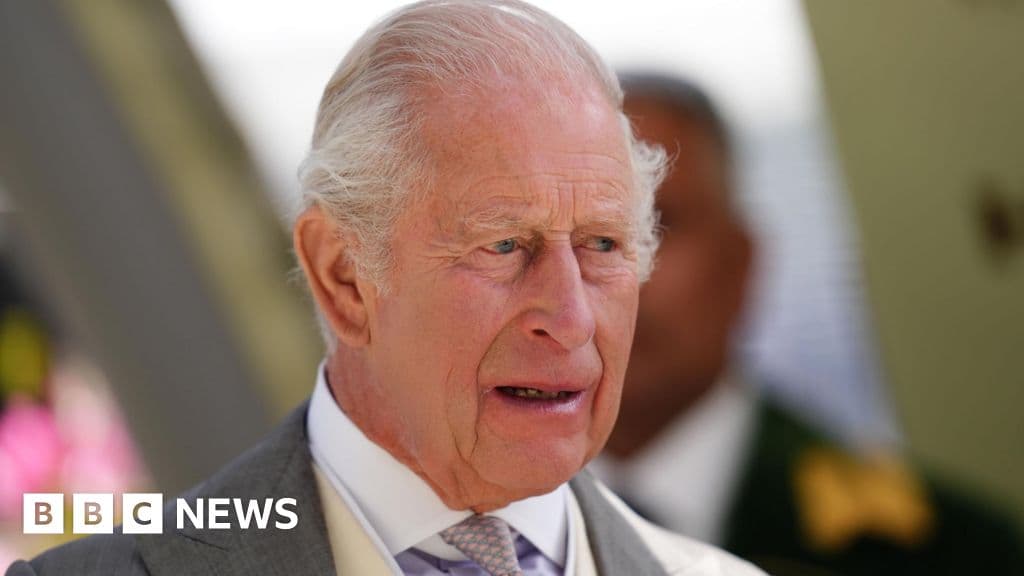
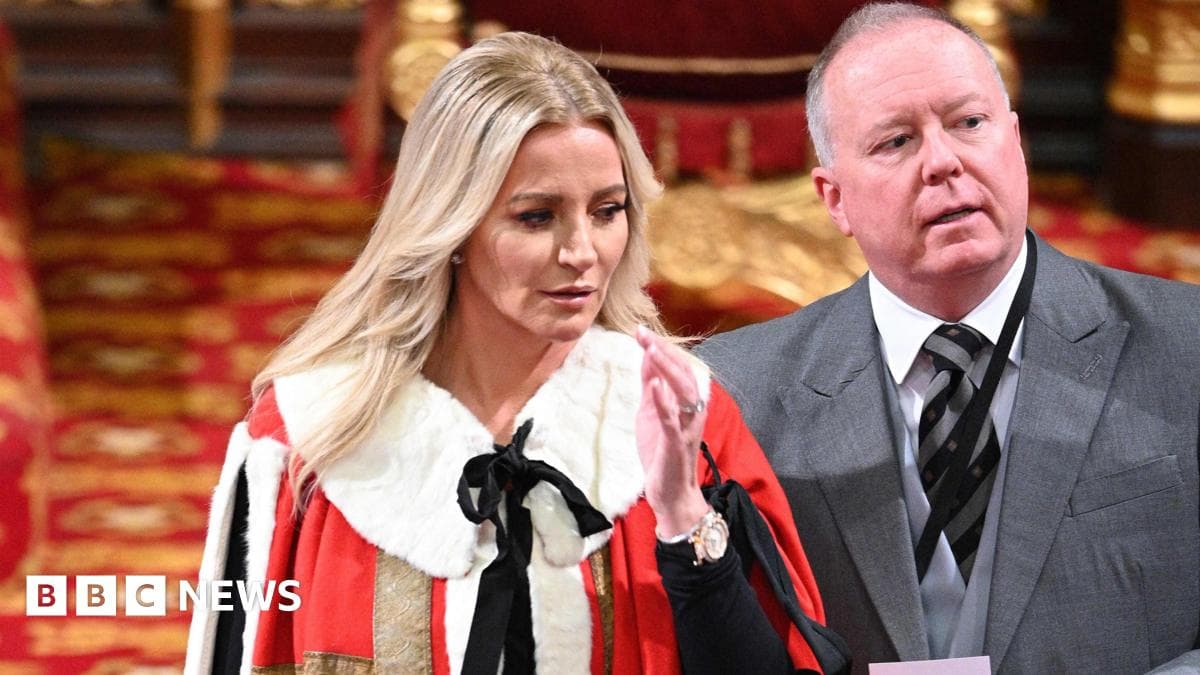
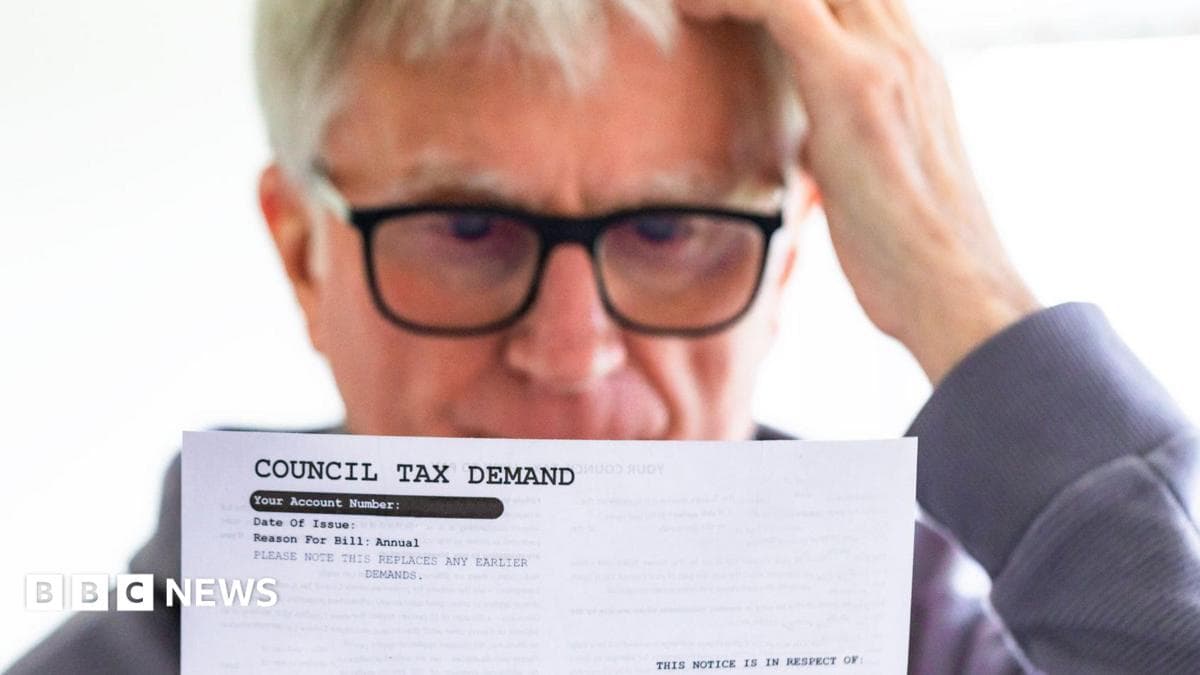
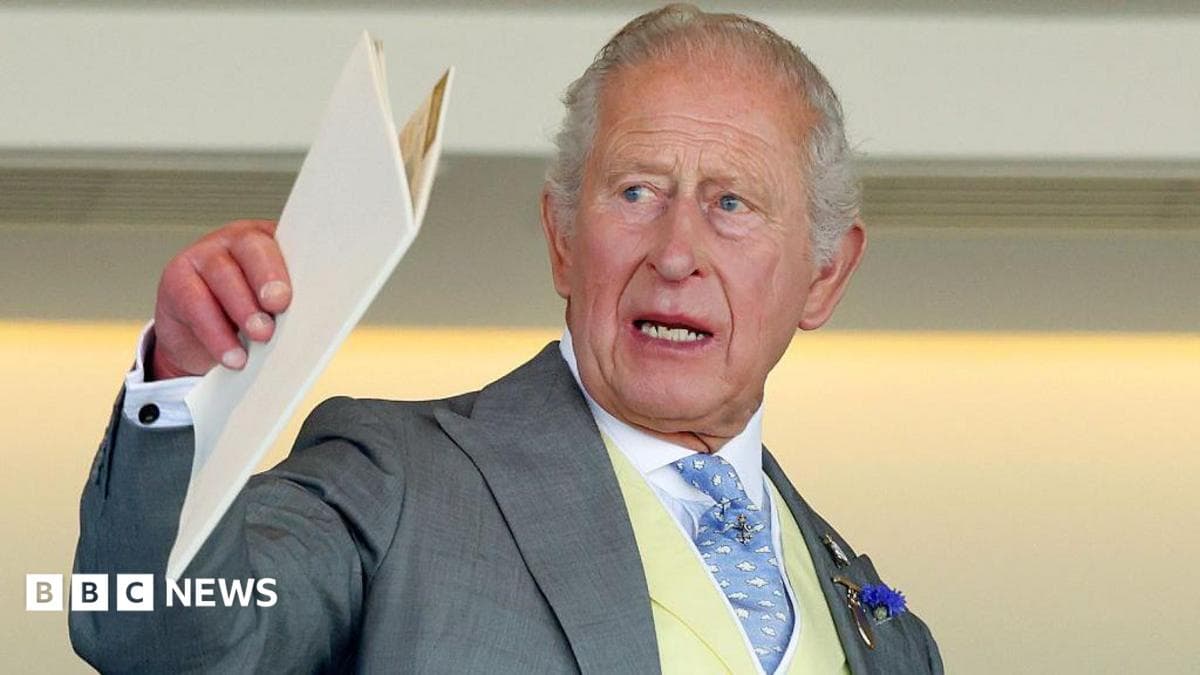
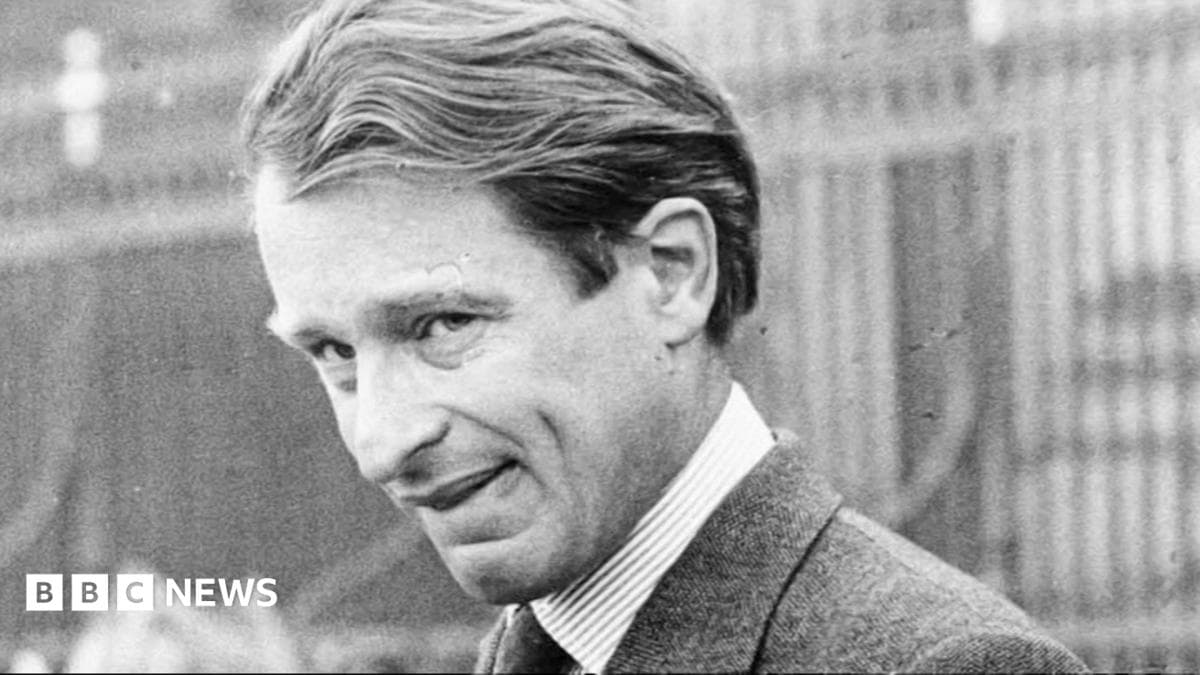
King Charles will become Britain's first monarch in modern times to reveal his personal tax bill.
His tax payments will be shared on Thursday as a new element in the annual royal financial accounts, with the decision said by Palace sources to have been a personal one by the King.
Buckingham Palace says the move is part of a modernising drive for greater transparency and to "encourage wider understanding of our accountability".
It also follows calls for more openness with regard to royal finances following scandals surrounding Andrew Mountbatten-Windsor.
The move will make public the King's tax payments for the previous year - 2024-25 - and will include tax on his income such as profits from the Duchy of Lancaster, any personal investments and earnings from the King's private estates, such as Sandringham and Balmoral.
A Buckingham Palace spokesman said this was part of a wider drive to be more open with the public.
"To put it simply, we continue to modernise and evolve," they said, with a commitment to an annual publication of the King's taxes.
When he was Prince of Wales, Charles also revealed how much tax he was paying.
Monarchs are not obliged to pay income tax, inheritance tax on what they receive from a previous monarch or capital gains tax - but the King voluntarily pays income tax and capital gains tax on any sale of private assets.
And the total amount paid will be revealed for the first time - including tax on the Duchy of Lancaster's profits, which were about £24m last year.
That property business, including estates in the north of England and property in central London, provides much of the monarch's personal income.
The decision to shift in the direction of more transparency seems to have tuned in to the public mood.
In the wake of the Andrew Mountbatten-Windsor scandals, MPs were among those demanding more openness about the financial dealings of the royals.
Next week's financial report should see a broader account of the royal finances.
"Our aim is to explain all elements of royal finances in a way that further enhances clarity and accessibility," said a Palace spokesman.
The King's tax bill will be published alongside details of the Sovereign Grant, which is the annual public funding for the Royal Household, and covers costs such as staff, the upkeep of buildings and travel on official engagements.
The Sovereign Grant has risen to a record £137.9m, with a temporary increase used to pay for renovations to Buckingham Palace.
Since it was introduced in 2012, the grant has never gone down, but a first reduction is expected to be announced soon as part of a review being carried out by the Treasury, Downing Street and the Royal Household.
MPs will have a chance to debate the Sovereign Grant when legislation comes before Parliament.
Also increasing the scrutiny on royal finances this year will be the Public Accounts Committee, which is going to hold an inquiry into royal property and leases from the Crown Estate.
An initial report from the National Audit Office revealed the daughters of Andrew Mountbatten-Windsor, Princess Beatrice and Princess Eugenie, who are not working royals, had properties in St James's Palace and Kensington Palace.
The rent for their accommodation was paid by the King from his private income.
The Palace says there is already Parliamentary oversight of the Sovereign Grant, but adding personal tax information can "enhance this transparency still further" and in a way "in keeping with our public service priorities".
Sign up here to get the latest royal stories and analysis every week with our Royal Watch newsletter. Those outside the UK can sign up here .
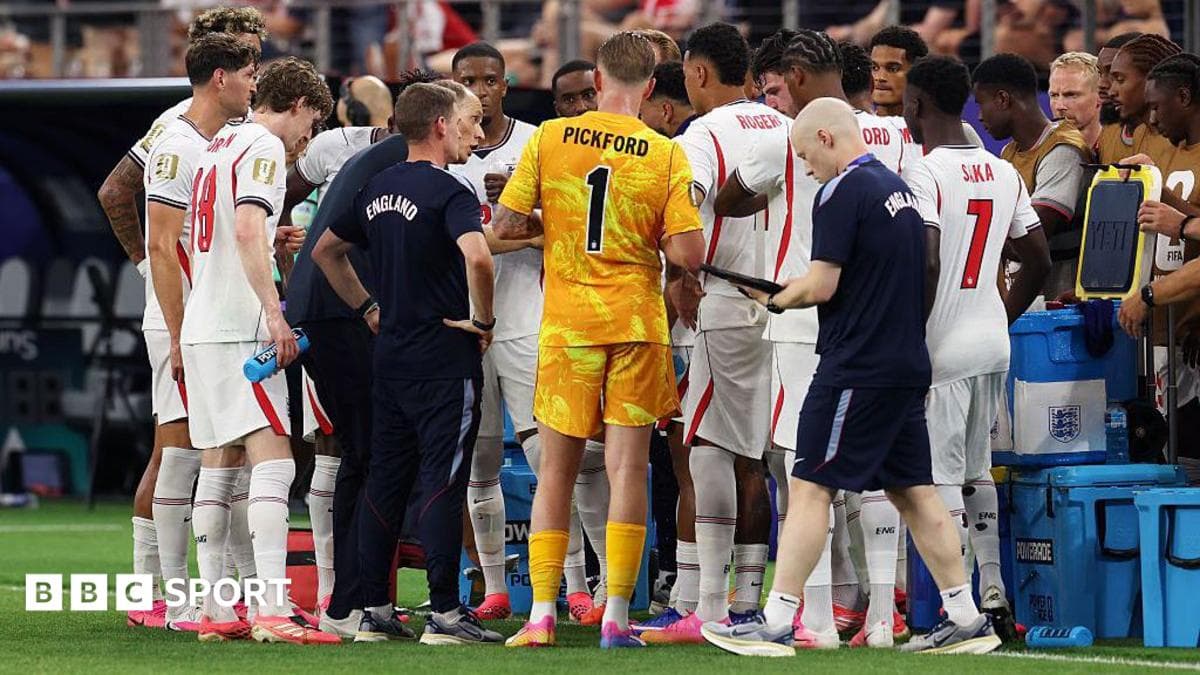
World Cup hydration breaks are being treated as tactical timeouts by teams, and a money-making machine by some broadcasters
Four minutes and 20 seconds per match. Or seven hours, 30 minutes and 40 seconds across the tournament.
That's how much extra TV advertising some football fans around the world are watching during mandatory hydration breaks at the World Cup.
While viewers in the UK watching on BBC and ITV are seeing players refuel and hearing extra tactical insight from pundits, spectators elsewhere are taken away from the football to see companies selling their products.
The ads are allowed to begin 20 seconds after the referee blows the whistle for the three-minute pause midway through each half, and must end 30 seconds before the action starts again.
That works out as a potential eight extra 30-second ad slots per match for each broadcaster in each country - 832 between the start and end of the competition.
Experts have told BBC Sport that an average 30-second World Cup ad slot on Fox Sports costs between $200,000 (£152,000) and $300,000 (£227,000), rising to $750,000 (£567,000) during USA matches and the final stages.
That means advertising during hydration breaks is likely to generate more than $250m (£189m) in the USA alone.
The breaks have disrupted the momentum of matches, brought heavy criticism from managers and players, and drawn loud jeers from supporters at almost every venue.
But, in which countries are the ads being shown, how do they work, and what could it mean for the future of football?
This video can not be played
Why hydration breaks are big business
Fifa has insisted that hydration breaks have been introduced to benefit player welfare in the North American heat, and that sporting integrity means they must be used equally in every single match, even when temperatures are low in roofed, air-conditioned stadiums.
Fans in the UK have been protected from ads during hydration breaks because the BBC does not use advertising, and ITV's ability to show ads during play is restricted by Ofcom regulations governing how many adverts can be used in a 60-minute period. If ITV used slots during mid-match breaks, they would have fewer available at half-time, for example.
But elsewhere broadcasters have the ability to choose how to use the breaks, and most have used them as an opportunity to bring in extra money from advertising, whether by cutting away to a full commercial break or showing ads in split screen.
Fox Sports, the US broadcaster, has been using the maximum amount of advertising time it can during the pauses and displaying them full screen.
It has also been introducing the ad break itself as "sponsored by" a brand, and with Fifa sponsor Coca Cola providing branded drinks for players, the advertising US viewers are faced with during hydration breaks is effectively three-fold.
This video can not be played
Who won the battle of the World Cup adverts?
"Amercians have been used to in-play ads for 40, 50 years, so culturally this fits right in," says Rob di Gisi, lecturer in sport management at the University of Pennsylvania's Wharton School.
"There is very little pushback here. Any changes which make games more Americanised will be embraced without people noticing."
Fellow US broadcaster Telemundo, which shows matches in Spanish and is aimed at Latino Americans, is one of the few broadcasters which has decided not to show ads during the breaks.
During Canada's opening match last week, its commentator said: "We prefer the old school way. We should be able to see what the players do.
"We show fans, people enjoying themselves, not the corporate direction of football."
BBC Sport has contacted Fox Sports and Telemundo for comment.
In other big markets around the world ads are being used too, including in Mexico, Canada, France, Germany, Italy, Spain, China, Japan, India, Australia, the Middle East and Sub-Saharan Africa.
The broadcasters in those territories will not be able to charge prices as high as Fox Sports, and not all are running them for the maximum duration allowed, but the total amount accrued will be huge.
"When you start scaling that up over all the rest of the countries, it's probably a billion dollars (£756m) from hydration break ads across the globe," Di Gisi adds.
Having eyeballs on products during in-game breaks doesn't necessarily guarantee success, however.
"Will advertisers in the hydration break be met with enough discontent that it negates the value of the advertising?" says T. Bettina Cornwell, head of marketing at the University of Oregon.
"It is the case that when brands violate the expected experience, in this case the flow of the game, fans can react negatively."
Fox Sports missed the restart after the second hydration break at the opening match between Mexico and South Africa because its ads overran
The broadcasters in each territory act independently when they sell advertising slots, meaning Fifa does not directly gain financially.
But the extra income makes purchasing rights to show the World Cup more valuable to broadcasters, meaning Fifa can theoretically charge higher prices when negotiating over future tournaments.
Fifa has not yet confirmed whether hydration breaks will be used in future editions of the World Cup, but given the financial benefit to the organisation and its broadcast partners - and the fact that the 2030 World Cup in Morocco, Spain and Portugal will be held in climates with very hot summers - it is highly likely that they will remain a long-term feature.
"The rights for this World Cup, Fox Sports got for only $485m (£367m)," says Dennis Deninger, author of Live Sports Media: The What, How and Why of Sports Broadcasting.
"If they're making $250m (£189m) just on the hydration breaks, that rights fee is a real bargain.
"When Fifa goes into rights negotiations next time, they can say their product is worth more, because broadcasters can sell sponsorship in these hydration breaks, have more advertising, and there is the increased amount of matches, so they can charge every broadcaster in every country more money.
"There is never any going back â when there is an opportunity to make more money, nobody ever says 'let's make less money'."
USA manager Mauricio Pochettino (right) called the hydration breaks "unnecessary" except in cases of extreme heat
The more casual football fan demographic the World Cup attracts has made introducing the ads easier.
"I think this is here to last, especially in Fifa-organised tournaments," says Thomas Peeters, professor of strategy economics at the Erasmus School of Economics.
"The World Cup is an event that attracts non-traditionalists, people tuning in who don't watch every game. A very general audience.
"There is a trend for those people to watch clips rather than entire games, so in that sense you can build in breaks yourself [and show ads to them without them caring].
"It breaks the game into shorter bits which, as we see with other forms of entertainment, helps with younger audiences who typically consume content in smaller portions."
But whether other major football competitions would take on hydration breaks for the economic benefit is doubtful.
The Premier League would be restricted in the UK by Ofcom rules and likely face a huge backlash from fans, while Uefa has sought to create clear distance between itself and Fifa on policy matters in recent months, including pledging not to use dynamic ticket pricing at Euro 2028.
"When a game is watched by diehard fans of both sides, they don't want a break after 25 minutes," Peeters adds.
"For Uefa and the Premier League this idea is less of a concern because they are in very mature markets compared to Fifa."
In a statement, Uefa told BBC Sport: "Uefa has no plans to change [hydration break] regulations for upcoming competitions, including for the Champions League and Euro 2028."
The world's longest commercial long-haul flight has been announced, a non-stop trek from Sydney to London that can take up to 22 hours.
Australian airline Qantas announced the direct flight route will start from October 2027, billing passengers approximately 20% more for the long-haul journey compared with a traditional layover.
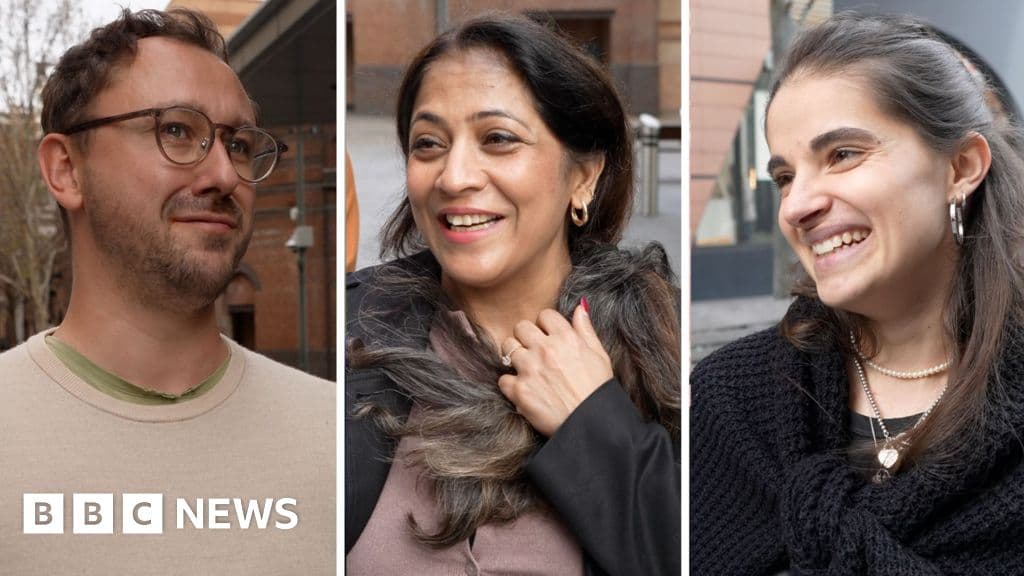
The BBC's Harry Sekulich asks the public what they think, and if they would voluntarily pay more for the ultra long-haul?
Her comments came after Trump said that his once-close ally had "begged" for a photograph with him at a G7 summit.
The BBC's diplomatic correspondent Caroline Hawley analyses what will come out of the deal signed on Wednesday.
The 14-point Memorandum of Understanding was signed at a post-G7 dinner in France.
The BBC's Gary O'Donoghue breaks down the 14-paragraph memorandum of understanding between both two countries.
The BBC's Tom Bateman looks at the US president's reaction to what he called "vicious" strikes.
The BBC's Gary O'Donoghue looks at the contrasting approaches of the two presidents as Trump touts a new peace deal.
The BBC's Celestine Karoney spoke to jubilant fans after the game in Atlanta, where the African team made its tournament debut.
BBC's Sebastian Usher on the deal announced by the US and Iran on Sunday.
The World Cup officially kicked off this week - but alongside the football, there are questions around heat, cost, the environmental impact and travel restrictions.
Bosnia-Herzegovina fans attending the team's game in Toronto, Canada spoke to the BBC about how costly their trip and seats were.
Changeable and challenging weather conditions are expected throughout the Fifa World Cup 2026.
The president also revealed that the US is 'taking out' millions of barrels of oil from Iran, saying Tehran didn't know 'until right now'.
The crew, who are all men, are scheduled to blast off in 2027 to test systems ahead of a planned Moon landing.
For the first time since the start of a precarious ceasefire two months ago, Israel and Iran have traded missile strikes.
President Trump denies having promised 'no new wars'. BBC Verify has found multiple examples of him saying this during the 2024 US election campaign.
The players and staff will have to fly in and out of the US for each of their games in the group stage.
Some wore matching suits and others carried identical green bags as they landed, just days before the tournament kicks off.
Four people have been arrested and charged with trafficking more than $45 million in cocaine, according to federal officials.
Will Grant spoke to a 70-year-old widow who says the inability to use her building's elevator during a power outage trapped her and her husband when he needed medical care.
BBC's Brandon Livesay toured the Columbia Park Training Facility in Morris Township, New Jersey that will host the team in the coming weeks.
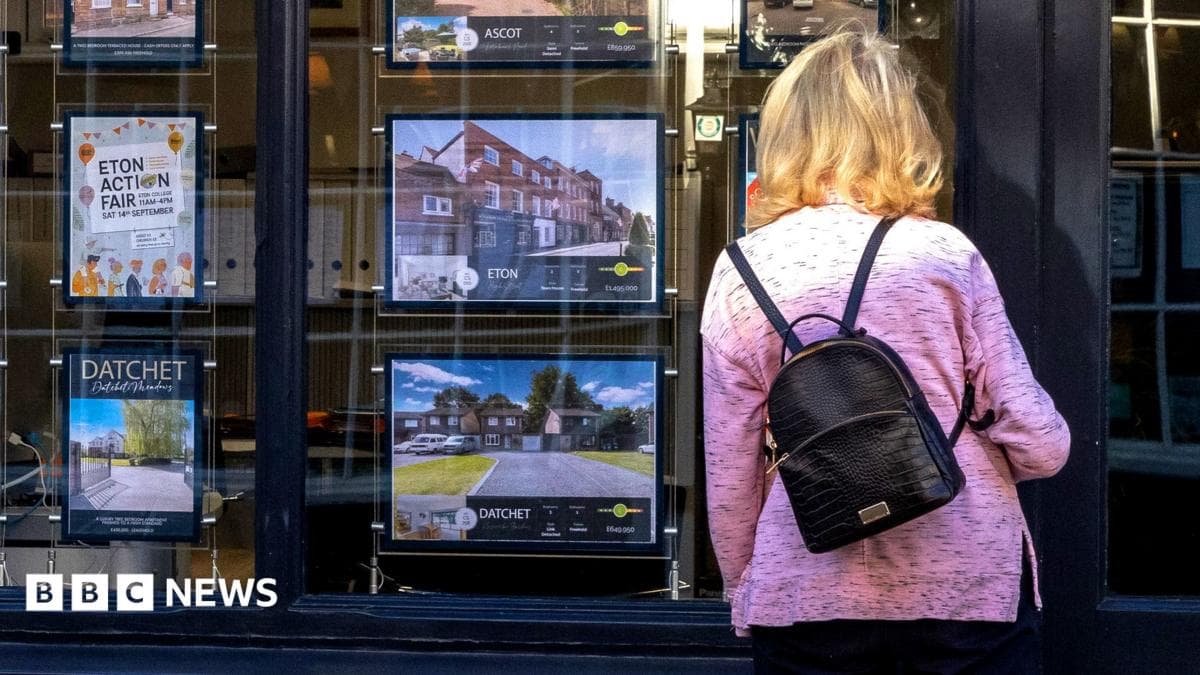
Home buyers and sellers can expect an end to "gazumping" in a major shake-up aimed at speeding up housing sales.
Legally binding sales agreements will be introduced earlier to stop buyers or sellers walking away at a late stage in the process without a legitimate reason.
In England and Wales, buyers can currently be outbid at a late stage of the sale and chains can fall apart months into the process, causing huge frustration for buyers as well as being expensive.
Previous attempts to improve the system have had limited success and few of the latest proposed changes will happen immediately.
The planned reforms, first announced in October last year , will be introduced at the end of this Parliament in 2029.
The changes include home buyers receiving more information about properties listed for sale.
Sellers and estate agents will be required to share important information about the property including its condition and status in a chain through so-called sales packs.
The government estimates buyers will save about £650 on average.
The reforms will make the system "faster, fairer and more secure," says Housing Secretary Steve Reed.
The move has some echoes of Home Information Packs introduced by a Labour government 20 years ago, which were swiftly dropped by the coalition government.
The plans have been widely welcomed by the housing sector, although some have raised concerns about unintended consequences - such as properties taking longer to get onto the market as paperwork is prepared.
The timetable suggests a new code of practice for property agents will be introduced this year.
Prime Minister Sir Keir Starmer said the current home buying system leaves "people in limbo" and puts the prospect of home ownership out of reach for some.
"We're turning the page. Our reforms will bring this outdated process into the modern age, saving people time and money, and giving them the certainty they deserve," he said.
At the moment in England and Wales, a buyer and seller may agree on a sale, only for the seller to pull out weeks or months into the process because someone has offered them a higher price.
For the gazumped buyer, there is currently no legal recourse.
In other countries, however, there are penalties for pulling out of a sale once both parties have agreed to the transaction.
In Scotland, formally accepted offers are already legally binding, and sellers must provide home surveys to prospective buyers. Once the buyer's and seller's solicitors have exchanged letters, known as missives, if a party withdraws from the sale they are liable for financial losses to the other party.
Under the government's proposal, binding conditional contracts would make a transaction legally binding much earlier in the process, potentially once an offer is accepted.
The government says that if a party broke that agreement by withdrawing without a valid reason or not meeting their obligations, they would face a financial penalty.
The government says binding contracts would not come into force until the sales packs were also active, ensuring buyers had key information about the property before committing to a purchase.
President of the Law Society of England and Wales, Mark Evans, said it was important for buyers to have "consistent high standards of upfront information" before binding contracts could be introduced.
"Alongside this, consistent regulation across all parts of the property process – including estate agents – is essential to build trust and confidence for consumers," he said.
Henry Jordan, Nationwide's group director of mortgages, said purchasing was often a "slow, complex and stressful process" and welcomed the proposed changes.
"Speeding up homebuying isn't just about convenience - it's about helping more people complete their purchases with less frustration and fewer surprises along the way," he said.
According to property listing portal Rightmove, it takes on average nearly six months (170 days) to complete a property sale across the UK.
Rightmove's chief executive Johan Svanstrom said their data shows more than one in five sales will initially fall through.
"This is an encouraging step towards a faster and more efficient property market, addressing some of the biggest frustrations that home-movers and industry participants face," he said.
"By making more information available upfront, there is a clear opportunity to reduce fall-throughs and increase transparency."
Lesley Horton, the UK's Chief Property Ombudsman, said: "If implemented carefully and supported by clear guidance and appropriate training, these reforms can create a home buying and selling system that is faster, fairer and better equipped to meet the needs of consumers in the years ahead."
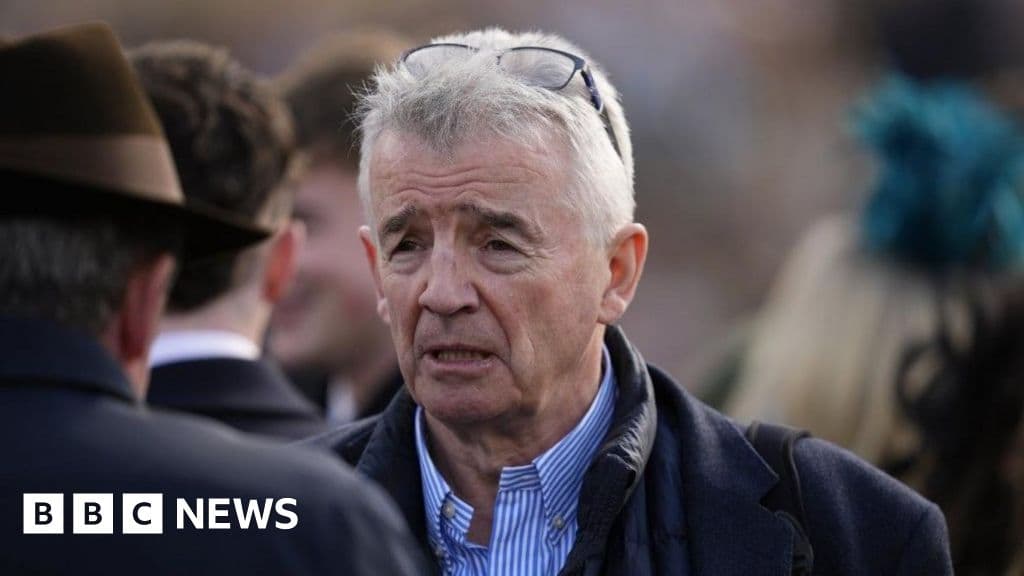
Ryanair boss Michael O'Leary has extended his contract to 2032, in a deal featuring a bonus scheme that could earn him more than €150m (£130m).
Since becoming chief executive in 1994, Ryanair has grown from a relatively small regional airline into Europe's largest low-cost carrier.
If O'Leary remains at the Ryanair group until April 2032, he would be granted the option of buying 10 million shares at €26.70 per share if annual profit reached €4 billion or if the share price exceeds €42 for 28 successive days.
"Achievement of these very ambitious targets would create substantial additional value for all Ryanair shareholders," Ryanair said in a statement.
Ryanair group chairman Stan McCarthy said that in spring, the company's board had "commenced discussions" with O'Leary on his contract.
"I am pleased to report that this process, which included extensive engagement with Ryanair's largest shareholders, has successfully concluded with Michael agreeing to extend his leadership of the Ryanair Group for the next six years to April 2032, for the benefit of all shareholders," he added.
Last year, it was reported that O'Leary was on track to pocket bonuses worth more than €100m.
This was after shares in the budget airline closed above €21 (£17.65) for a 28th consecutive day in May 2025, meeting a key performance target.
The UK borrowed £23.3bn in May, according to official figures, up almost a third on the same month last year.
May's borrowing figure — the difference between spending and income from taxes — was £5.6bn higher than forecast by the Office for Budget Responsibility (OBR), the independent fiscal watchdog.
"The big picture is that the public finances are fragile," said Capital Economics deputy chief UK economist Ruth Gregory. She said this would constrain whoever is Prime Minister.
Greater Manchester mayor Andy Burnham was elected MP for Makerfield in a by-election, paving the way for him to launch a leadership challenge against the Prime Minister.
"Spending on debt interest, public services, investment and benefits all increased in May 2026, compared with last May," ONS statistician Tom Davies said.
This outweighed higher tax receipts, he added.
The OBR forecast was made in March, at which point the impact of the war in the Middle East had not yet become clear.
The Office for National Statistics (ONS) said interest payable on government debt jumped to £11.7bn – the highest ever recorded in any May.
Danni Hewson, head of financial analysis at AJ Bell, said that much of the jump in borrowing costs was the result of higher inflation.
Inflation jumped when the Iran conflict broke out and is expected to rise further due to the knock-on effects of higher oil prices.
Hewson said: "Long-term borrowing costs have been creeping up and will be monitored closely if the anticipated Labour leadership contest gets under way.
"Burnham has drafted in economic heavyweights to help shore up his credentials and has pledged to follow the existing fiscal rules, which includes not borrowing to fund day-to-day spending."
Susannah Streeter, chief investment strategist at Wealth Club, said investors seem to have priced in the likelihood of a Labour leadership challenge.
"For now, that may be because Andy Burnham has promised to be more cautious about spending by largely sticking to fiscal rules.
"His pledge to bring down huge welfare costs, partly to fund higher defence spending , is a signal that he is positioning himself closer to the political centre, which may be providing some reassurance."
On Thursday, the Bank of England opted to hold interest rates , in an attempt to balance a sluggish jobs market and widespread expectations that inflation will rise further in the coming months.
Chief Secretary to the Treasury Lucy Rigby said: "The war in the Middle East has clearly had an impact on economies around the world.
"We have the right economic plan to deal with these challenges — protecting families and businesses from rising costs, while cutting borrowing at a faster rate than any other G7 economy."
Shadow Chancellor Mel Stride said: "Borrowing is out of control."
"The Conservatives are the only party with a plan to balance the books by getting spending under control, especially the welfare bill."
Separate official figures showed that retail spending rose by 1.2% in May, helped by unseasonably good weather.
Retailers said sales of outdoor furniture and fans were higher for the month due to the weather conditions and promotions.
Few topics divide opinion quite like who should pay on a first date.
Ask a group of friends and you'll likely get a dozen different answers. Some insist the bill should always be split equally, others believe the person who sets up the date should pay and despite changing attitudes towards gender roles, many still see a man picking up the bill as a romantic gesture rather than an outdated tradition.
With cocktails regularly topping £15, restaurant bills climbing and many keeping a close eye on their budgets, even a casual evening out can quickly become expensive.
Adults across the UK spend more than £111 per month on dates and dating apps, equating to more than £1,300 per year, according to research from Barclays in 2025 ,
For under 30s in particular, cost is a great barrier as over half of Gen Z adults feel the expense impacts their ability to go on dates.
Jennifer Read-Dominguez, a digital editor who is currently single, believes whoever asks for a first date should be prepared to pay for it.
She says women "can absolutely foot the bill themselves but that's not the point".
"Sometimes it's nice to take a step back from always being the one making decisions and simply enjoy feeling feminine and being looked after."
For her, a man paying on a first date is not about dependence or inequality but "effort and keeping some traditional gestures alive in modern dating".
Jennifer says the amount spent matters far less than the thought behind it and she'd be just as happy being taken to a fast-food restaurant as a high-end one, but it's important that it's "within their means."
She went on one date where a man took her to an expensive restaurant, complained about the cost and suggested they split the bill. When his card failed, Jennifer ended up paying for the entire meal.
"He said he'd pay me back, but he never did. I could afford it, but that's not the point."
The experience left her feeling taken advantage of.
"I think he assumed I'd simply absorb the cost and I did but I felt used."
Yasmin El-Saie is a content creator from London who says she would be "put off if a man expected us to split the bill on a first date".
"When a man pays, he's showing he wants his date to feel comfortable and looked after," she says. "Maybe it's a double standard and down to my upbringing, but I still find it attractive."
That doesn't mean she expects men to pay for everything - if a date continues elsewhere, she is happy to contribute.
"If he pays for dinner and we go for drinks afterwards, I'd happily get the drinks. I wouldn't want anyone to feel used."
One memorable date involved a recent divorcee who was determined to keep finances separate.
The pair went to a buffet restaurant where diners were charged according to the number of food sticks they accumulated throughout the meal.
"He spent the whole evening holding onto his sticks to make sure they didn't get mixed up with mine," she says.
On another date, Yasmin says: "A man picked me up in his Porsche and I assumed we were going for drinks before dinner. Instead, he rushed us straight to the restaurant so he could get the early-bird deal and I saw him hide the à la carte menu when we arrived."
Jamie Rutter, 32, who works in finance, says clear communication is more important than sticking to a rigid rule.
"As a queer person it can get confusing because you don't have those traditional expectations around who should pay," he says.
"My view is that if I ask someone out, I expect to pay. If they ask me out, I'd go in expecting to pay my half."
Jamie says having become more conscious about his finances in recent years, he's very upfront on a date about what he can and cannot afford.
"If someone suggested somewhere expensive and it was outside my budget, I'd just be honest and suggest a different place."
He prefers a coffee and a walk for a first date "where you can actually get to know someone" rather than dinner which "can feel a bit like an interrogation".
One of his most memorable dates involved a man taking him on a picnic and "he'd arranged for a restaurant to prepare a three-course meal in a hamper and paid for everything in advance so there wasn't really even a bill to discuss."
Not every expensive date has been such a success and Jamie recalls a cocktail bar date where he spent a "ridiculous amount of money", only for there to be no connection.
"It wasn't a bad date, it just didn't lead anywhere. But I'd suggested it, so I went in expecting to pay."
Whatever the circumstances, Jamie says he will always offer to split the bill "regardless of whether I want to see them again".
The outbreak of the US-Israel war with Iran in February caused shockwaves across the global economy.
The region plays a major role in global oil and gas supplies, and the closure of the key Strait of Hormuz shipping corridor has driven up prices on a wide range of things from energy bills to air fares.
On 18 June, Iran and the US signed a deal aimed at bringing an end to the war, with the Strait set to reopen.
But negotiations on some of the thorniest issues - including Iran's nuclear programme - will be deferred for 60 days, raising questions about how long this agreement will last.
Here are five ways the deal might affect your day-to-day life.
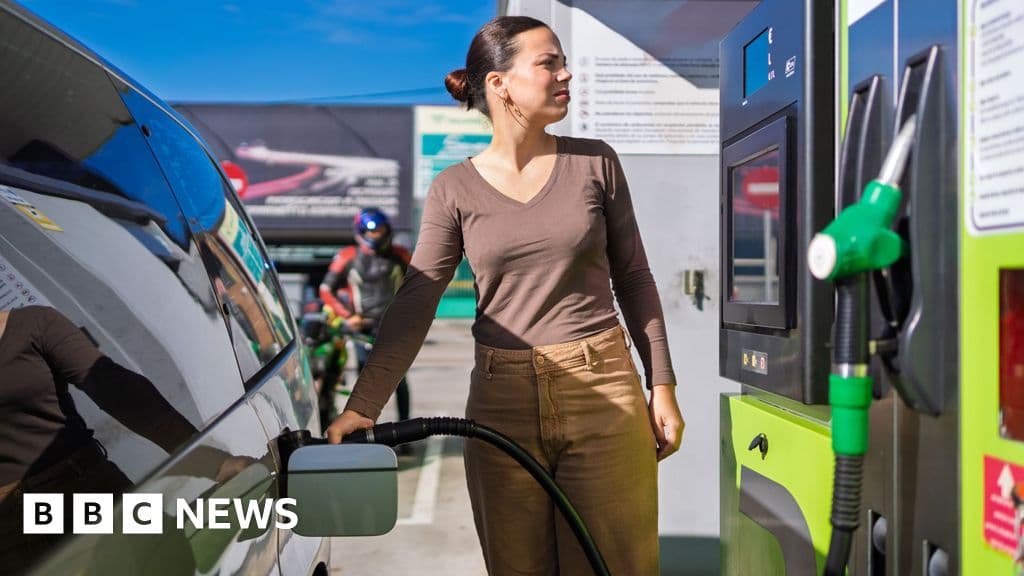
The war caused an immediate rise in motor fuel prices, as production and transport of oil in the Middle East slowed or stopped entirely.
Prices at the pump have started to drift lower in recent weeks on rising hopes for a peace deal.
But they are still far above where they were before the conflict began.
As of Thursday in the UK, petrol cost an average of 154.72p per litre, while diesel was an average 174.30p per litre, according to RAC Fuel Watch data.
Nearly four months ago, petrol was 132.05p a litre and diesel was 141.6p.
In the US, prices have also started to fall away since the average gasoline price topped $4.50 last month. The latest data shows the average gas price stands at $3.97 (£3) per gallon , up from $2.98 per gallon before the war started, while diesel has risen from $3.76 to $5.09 over the same period.
Simon Williams, head of policy at the RAC, said the recent fall in global oil and wholesale petrol prices if sustained - will "in time lead to much lower prices at the pumps".
But he said: "The big question is how fast will this happen, and whether the fall in pump prices happens as swiftly as the rise drivers had to endure through March and April did."
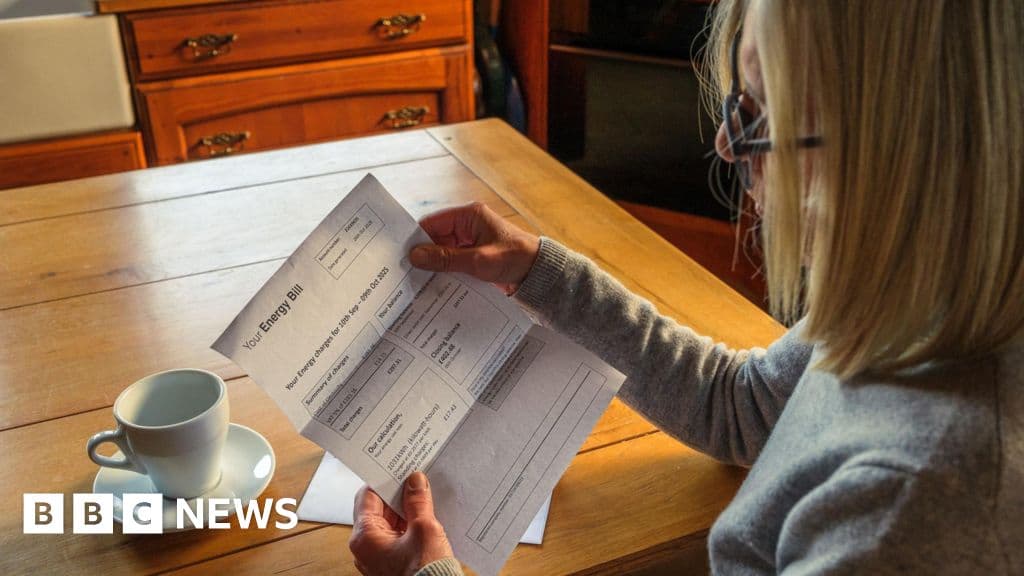
UK gas prices almost doubled at the beginning of the conflict, sparking fears of higher energy bills across the country. Gas is used directly in millions of homes for heating and hot water; it was also used to generate about 27% of our electricity last year.
The benchmark UK gas price was below 80p a therm before the Iran war began but was trading at around 157p by 19 March. Now it's back down at 98p per therm.
However, the consultancy Cornwall Insight says it would be "overly optimistic" to assume prices will quickly return to pre-conflict levels.
Firstly, the UK energy regulator Ofgem has already set its next price cap on household energy bills for July and it can't be changed. The average household bill is set to rise by 13% - or £221 – per year from next month. The cap covers 33 million households in England, Wales and Scotland.
The Gulf is where Europe gets around half of its jet fuel from. In the weeks following the start of the war, jet fuel prices soared from about $784 per tonne to $1,838, raising fears of shortages and higher flight prices.
Some airlines announced fare hikes , particularly for long-haul flights, but there was also evidence of European airlines cutting fares to try to overcome customer "hesitancy".
In recent weeks, jet fuel prices have fallen sharply to around $967 a tonne, but the aviation industry is not out of the woods yet, says Amaar Khan, a jet fuel specialist at Argus Media.
He says European airlines should have all the fuel they need to meet demand this summer and beyond. But he also expects jet fuel prices to remain above pre-war levels for much of this year.
Inflation, which measures the rate at which prices rise, had been falling in the UK and globally prior to the war. But the conflict has disrupted that overall downward trend, largely because of the rise in global energy prices.
In February, UK inflation fell to 3% and the Bank of England said before the current conflict it believed inflation could reach its 2% target by as soon as April.
In March, however, it climbed to 3.3% before settling at 2.8% in April and May .
Charlotte O'Leary, associate economist at the National Institute of Economic and Social Research, says there is expected to be a "sizeable" upward impact on inflation when Ofgem increases its energy price cap in July.
Over in the US, inflation rose from 2.4% in February to 4.2% in May , with the war seen as a major contributing factor, while in the European Union it went from 2.1% to 3.3% over the same period.
Interest rates are the primary tool used to control inflation; they also influence the cost of borrowing as well as the interest paid to savers.
But uncertainty over the impact of the Iran war on energy prices has prompted central banks around the world to keep interest rates on hold.
The Bank of England held rates at 3.75% for a fourth consecutive meeting this week. Its governor Andrew Bailey said that recent drops in oil prices were "encouraging" but high energy prices during the war had still left "inflationary pressure in the pipeline".
Interest rates are widely expected to remain on hold for the rest of this year, with some analysts predicting cuts next year.
This week the US Federal Reserve also held interest rates at between 3.5% and 3.75%, citing "elevated uncertainty" owing in part to the conflict in the Middle East .
Last week, the European Central Bank opted to increase its interest rate to 2.25%, the first rise for almost three years, noting that the conflict was "generating inflation pressures".
Get our flagship newsletter with all the headlines you need to start the day. Sign up here.
Uncertainty over the impact of high energy prices has led policymakers at the Bank of England to hold interest rates at 3.75%.
It is the fourth meeting in a row that the Monetary Policy Committee (MPC) has decided to leave rates unchanged.
Bank governor Andrew Bailey said recent drops in oil prices were "encouraging" but high energy prices during the war had still left "inflationary pressure in the pipeline".
The base rate is the primary tool used to control inflation and influences the cost of borrowing as well as the interest paid to savers.
The latest hold comes as the situation in the Middle East continues to be watched closely.
Policymakers said that oil prices remained higher than before the conflict and had "continued to be volatile". However, they said inflation expectations by the end of the year were now lower than the Bank had thought in April.
Interest rate policy, to maintain low inflation, would depend on the "scale and duration" of the energy price shock and how much that filtered through to the wider economy through prices and wage demands, they said.
"Oil prices have fallen in recent days, and that's encouraging," Bailey said.
"Whatever happens in the future, the higher energy prices of the past four months mean there's already some inflationary pressure in the pipeline.
"The Bank's job is to make sure that doesn't turn into sustained inflation above our 2% target."
At the last meeting in April, the committee members voted 8-1 for a hold, with Huw Pill, the Bank's chief economist, the only one to vote for a rate rise.
This time, the vote was 7-2, with Megan Greene voting alongside Pill for an increase in the rate to 4%. She highlighted the uncertainty over the impact on households and businesses of higher energy prices.
The MPC met just before the US-Iran peace deal was signed and will meet again at the end of July, when its success and longevity should be clearer.
Speaking later, Bailey said he was "encouraged" by recent developments in the Middle East.
"Energy prices have come down quite a lot, but they're still above where they were before this conflict started. Inflation is higher than we expected it to be," he said.
"I think holding is the right position to be in at the moment for that, so I think it's a sensible decision in the light of the news."
The peace deal, which was signed on Wednesday, could lead to the reopening of the Strait of Hormuz.
Should oil start to flow freely again through the vital waterway - which normally carries a fifth of the world's oil and gas supplies - then concerns over a pick-up in inflation would be eased.
Price rises are still expected to accelerate in the UK, given the delayed impact of higher wholesale energy prices on domestic gas and electricity prices.
Millions of UK households' energy bills are governed by regulator Ofgem's price cap, which will increase by 13% in July.
However, the committee has lowered its overall inflation expectations since its last meeting in April, with an expectation that the rate will hit 3.25% in the final three months of the year. This is below even its most benign scenario outlined by the Bank earlier in the year, but still above the 2% target.
Official figures published on Wednesday showed that inflation remained at 2.8% in the year to May , as the pace of food price rises slowed to a 17-month low.
Over the year to May, transport costs rose by the fastest rate, the Office for National Statistics (ONS) said, while the rate of price increases in meat, dairy, and vegetables eased.
Meanwhile, ONS data released earlier on Thursday showed that firms were more cautious about taking on new staff, with the number of job vacancies at the lowest level for five years.
Last week, the European Central Bank opted to increase its interest rate for the first time in almost three years, noting that the conflict was "generating inflation pressures".
The Federal Reserve, the US central bank, held rates on Wednesday , although Fed governors were split on whether to keep rates steady or raise them to tame inflation.
Some analysts predict no further rises in the Bank of England's benchmark rate for the rest of the year, although the situation remains highly uncertain.
The Bank's base rate is what it charges other banks and building societies to borrow money, which influences what they charge their own customers for mortgages as well as the interest rate they pay on savings.
As of now, the average rate on a new two-year fixed mortgage deal is 5.59%, up from 4.83% at the start of March when the Iran war began, according to the financial information service Moneyfacts.
For those looking for a five-year deal, the average rate is 5.57%, up from 4.95% over the same period.
The Foreign Office has dropped its advice against travelling to Dubai, but warned British citizens that "the situation remains unpredictable" in the region.
The announcement makes it easier for people planning to visit the popular holiday destination, after the US and Iran reached an agreement to stop the war.
However, the foreign travel advice page for the United Arab Emirates said that despite the peace deal, "attacks could resume at short notice".
Thousands of Britons were left stranded in the Middle East when the conflict broke out, and many airlines have suspended flights to the major travel hubs in the region.
More than 1.4 million Brits visited Dubai last year and it has become a major holiday and business destination.
Lifting the "do not travel" advice means that people travelling to the UAE will no longer risk invalidating their travel insurance.
Despite this, there were early signs that some carriers could be slow to restart their services.
Virgin Atlantic suspended flights until winter 2027 after the war started, and a spokesperson said on Thursday that this "remains the case".
British Airways said earlier in June that it would not resume flights to the UAE until October 2026.
Emirates, which is owned by the state, has still been operating flights to the region during the conflict.
Mark Tanzer, the chief executive of Abta, an industry group for travel agents, said he expected to see a "positive impact" on travel to the region.
"This is the most important development for tourism to and through the Middle East in some time, we know the government won't have taken this decision lightly," he said.
"We know from our research that people have been delaying booking their summer holiday because they wanted to see what happened with the conflict in the Middle East, and that the government travel advice is an important factor in confidence to travel.
"While we're not out of the woods yet, hopefully this change will open up the market more broadly – there are some very competitively priced holidays for this summer, so if you're still to book, now is the time to do it."
The Foreign Office advice said: "The US and Iran have announced a memorandum of understanding in relation to the conflict in the Middle East.
"The situation remains unpredictable and attacks could resume at short notice."
It continued: "Before the 8 April ceasefire, the Iranian regime had stated its intention to target locations in the Gulf associated with the United States and Israel.
"This included US or Israeli-linked organisations, businesses, facilities and institutions.
"Iran has previously targeted civilian infrastructure across the region such as ports, hotels, roads, bridges, energy facilities, oil production sites, water systems, and airports."
The government has also dropped its warnings against travelling to Qatar and most parts of Saudi Arabia.
Get our flagship newsletter with all the headlines you need to start the day. Sign up here.
The number of job vacancies has fallen to its lowest level for five years as businesses cut back on recruitment, according to the latest official figures.
The Office for National Statistics (ONS) said that while the labour market remained "broadly stable", some areas showed signs of weakening.
The number of job vacancies in the March to May period fell to 707,000, the ONS said, the lowest level since February to April 2021.
Liz McKeown, the ONS's director of economic statistics, said the further drop in job vacancies suggested that "firms are becoming more cautious about taking on new staff".
The professional services sector saw the largest fall in vacancies, but retail and hospitality also saw significant drops.
Data from HMRC shows that the number of new recruits was at a five-year low, with the number of 'inflows', or new hires, just under 540,000 in April - the lowest monthly figure since March 2021.
McKeown said that there were "some signs of workers moving into self employment" against a backdrop of falling vacancies.
The unemployment rate fell slightly to 4.9% in the three months to April, from 5% in the three months to March.
Regular pay — which excludes bonuses — grew at an annual rate of 3.4% in the three months to April. That was unchanged from the three months to March and means that average earnings are still rising slightly faster than prices.
However, McKeown said regular wage growth in the private sector was rising at its lowest rate in five and a half years.
Jamie Younger, who opened The Victory pub in south London last month, said rises to the minimum wage and national insurance contributions had "made life very difficult "
He said many pubs and restaurants were now only hiring people with several years' experience, "rather than trying to support a younger generation and get them into their first job".
Cutting VAT, a measure called for by hospitality groups, would help ease the pressure and "give us the opportunity to train young people", he added.
"There is a benefit of employing someone in their first job because you get to train them… and mould that person," he said. "But with the financial restrictions it's becoming harder and harder every day."
Sasha Swann, a student working in the pub's kitchen over the summer, said she had been thrown in "at the deep end… but it's made me learn so much".
She said she was "extremely fearful" about entering the world of work after university. "It's all up in the air whether we are going to get those jobs."
Shazia Ejaz, the Recruitment and Employment Confederation's (REC) director of campaigns, said: "Global pressures and domestic political uncertainty are making employers hesitant to commit to hiring although latest REC data shows temp hiring is faring better than permanent.
"With the Gulf crisis resolution on the table, the government has an opportunity to kick off a new phase in hiring."
The latest jobs figures came ahead of the Bank of England's decision to hold interest rates at 3.75% .
Bank governor Andrew Bailey said it was "encouraging" that oil prices had fallen following a peace deal between the US and Iran .
But he noted that there is still "inflationary pressure in the pipeline".
Yael Selfin, chief economist at KPMG UK, said the labour market was not proving a major contributor to inflation, with private sector wage growth easing.
"Against a weak economic backdrop, workers are increasingly reluctant to push for higher pay, reducing the likelihood of second-round effects feeding through from the labour market into wider cost pressures."
"We expect pay growth to continue to slow over the coming months," she said.
The quality of ONS statistics has been criticised in recent years, with a review last year finding "deep seated" issues with the body.
The Labour Force Survey, which it uses to report payroll and employment figures, has suffered from low response rates.
Apple plans to raise the prices of its products as the cost of the memory chips it uses has surged, the technology giant's boss has said.
Tim Cook, Apple's outgoing chief executive, told the Wall Street Journal (WSJ) that price increases were "unavoidable" as the situation around memory chips had become "unsustainable".
He did not say when prices would rise or which products would be affected. It is also unclear whether the price hikes will affect the iPhone 18, which is expected to be launched in September.
Memory chips are essential components in smart devices like mobile phones, but the boom in artificial intelligence (AI) has driven up their prices in recent months.
Later, US President Donald Trump said that Apple had agreed to work with chipmaker Intel to make its chips in the US.
"I decided to help Intel because we need to design and build our Chips right here in America," he wrote in a post on his social media platform Truth Social.
The BBC has contacted Apple and Intel for comment.
In August last year, the Trump administration announced that the federal government would take a 10% stake in Intel .
Intel's shares rose more than 10% when US stock markets opened on Thursday.
Speaking to the WSJ, Apple boss Cook said: "We're doing our best to mitigate the huge increases that are being passed to us, and we've been trying to shield our customers from the increases, but the situation has become unsustainable.
"There's less supply at a time when consumers want devices and the memory guys are passing along huge price increases," said Cook, who is due to be replaced by John Ternus as Apple's CEO in September after 15 years in the role.
"We definitely need memory pricing and supply to return to reasonable levels for consumer products. That's the bottom line."
The price of Ram - typically one of the cheapest computer components - has more than doubled since October 2025 .
In addition to rising AI demand, the war in Iran has also disrupted the global supply of helium, a gas crucial in making semiconductors, adding to the cost of computer chips.
The average selling price of smartphones globally is expected to rise by around 20% in 2026 to an all-time high, according to research firm Omdia.
Apple's new phones are likely to cost up to $150 more than the iPhone 17s, as the firm is expected to upgrade their specifications to support new AI features, Omdia's smartphone market analyst Chiew Le Xuan told the BBC.
Most smartphone brands have already raised prices, pulled back on promotions or cut specifications to protect their profit margins in response to rising costs, he added.
"This is the new pricing reality, not a temporary spike. "
Other technology giants have also highlighted pressure in the chipmaking industry.
In an exclusive interview with the BBC this month , Taiwan Semiconductor Manufacturing Company (TSMC) would not rule out price increases as inflation pushed up its costs.
TSMC makes the most advanced chips designed by companies such as Apple, Nvidia and AMD.
Earlier this year, Samsung said that it expects memory chip supply shortages to make electronic devices more expensive.
In April, Sony raised the price of its PlayStation 5 consoles by £90 in the UK and $100 in the US as a result of "continued pressures in the global economic landscape".
Nintendo later said it would increase the price of its Switch 2 from September due to "changes in market conditions".
The iPhone 17 has been popular since the lineup was launched last September. Sales of Apple devices grew by 17% in the first three months of 2026 compared with the same period a year ago, helped by strong demand in China.
Apple removed the entry-level option of its Mac Mini compact computers, raising its starting price by about $200 (£150) earlier this year.
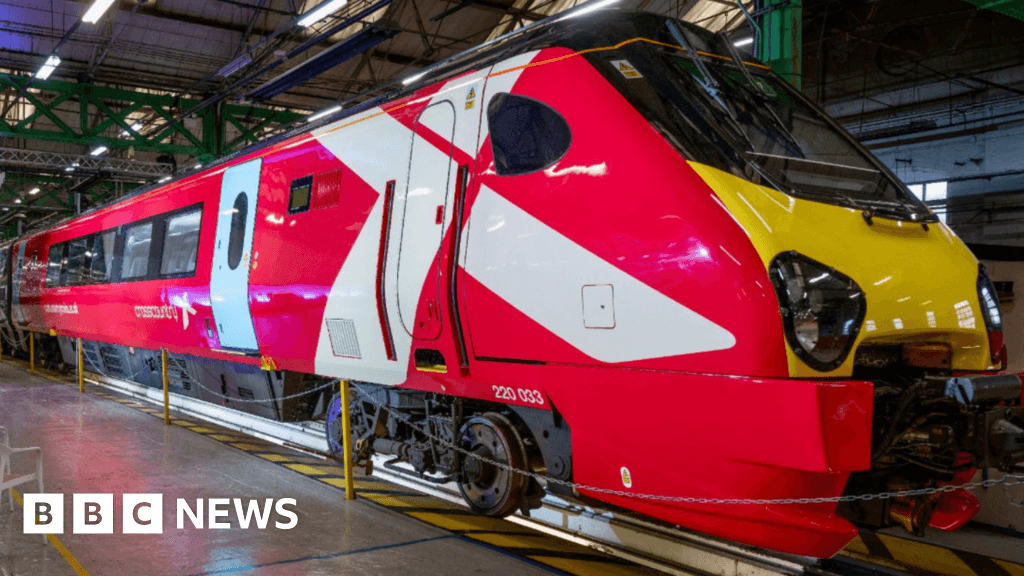
Train operator CrossCountry has been told to raise its performance, after receiving the worst score in a passenger survey.
In three months to the end of March, 72% of Birmingham-based CrossCountry's stops at stations were made within three minutes of the schedule, while 7% of services were cancelled, said Transport Focus.
The watchdog added that of those surveyed, 79% were satisfied with the Arriva Group-owned operator, 77% reported being satisfied with their journey's punctuality and reliability, and 46% said they were satisfied with how the company dealt with delays.
The operator said despite slight improvements in some areas, it knew it "must do more to deliver the service our customers rightly deserve".
Transport Focus has asked CrossCountry to improve the passenger experience, reduce delays, provide better information during disruption and cut overcrowding on services.
Hull Trains achieved the best overall satisfaction score at 94%, followed by LNER with 93%.
87% of passengers overall said they were satisfied with their journey and disabled passengers reported lower satisfaction than non-disabled passengers, at 85%.
More than 100,000 passengers were questioned in the six months to the end of March.
CrossCountry, the Arriva Group-owned operator, runs long-distance trains serving cities such as Cambridge, Cardiff and Manchester.
Mark Anderson, CrossCountry's customer and commercial director, said that looking forward, its refurbished trains were "transforming" journeys and its new timetable was "delivering better regional connectivity across the country".
"We're always working to improve onboard experience – from cleaning to catering, better wi-fi and clearer information during disruption.
"In particular, we know that crowding is a challenge and we're working with industry partners to explore all possible options to ease this."
Transport Focus chief executive Alex Robertson said: "This is the first report of its kind.
"I'm optimistic the railway understands the importance of using it to create a more customer focused culture and we'll be holding them to account to make sure they do."
The chief executive also stated more than nine in 10 people would report a positive experience if a delay was "handled well – a remarkably high figure given their train is late – but this falls to one in four when it isn't".
Follow BBC Birmingham on BBC Sounds , Facebook , X and Instagram .
In the dimly lit cellars of London's oldest wine merchant, Texas is not the first thing that springs to mind.
But nearly 200 years ago, Berry Bros & Rudd was home to the Embassy of the Republic of Texas.
If you look closely, you can see a remaining "Texan Legation" plaque on the wall outside the St James's Street store.
After Texas joined the US in 1845, the embassy closed - and the Texan diplomats headed home, apparently leaving behind an unpaid rent bill.
Now, two centuries later, the State of Texas has opened a dedicated new office just up the road to "grow international trade and tourism and support activities that are key to the economy".
Trade between Texas and the UK is already worth about $17bn a year , and the state wants even closer business ties.
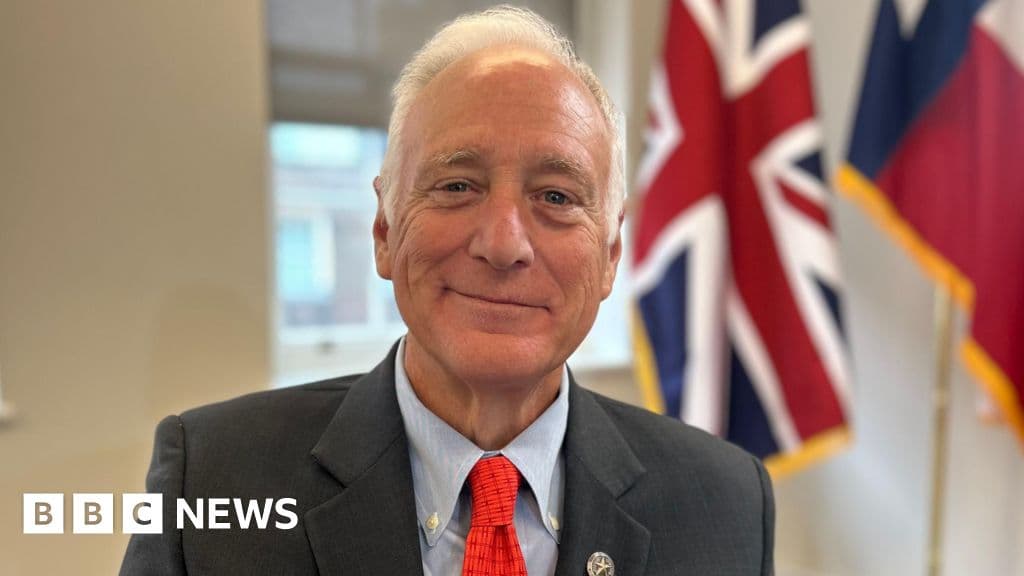
"One of the things that was very compelling to me is the opportunity to look at dual listings between the London Stock Exchange and the Texas Stock Exchange," says Senator Tan Parker of Texas North and Republican leader of the Texas State Senate.
He adds he hopes it will create jobs and opportunities for small and large businesses - both in Texas aiming to enter the UK market, and British companies that want to enter the Texas market.
It comes as the state's capital Austin raises the profile of its own stock exchange as a challenger to New York, known as "Y'all Street".
"Austin 25 years ago was becoming a big international city and we are doing a lot to mature our way into that international role," the city's mayor, Kirk Watson, tells BBC London.
"Austin has become a focal point in a global economy."
He adds: "Looking to places like London will help us with that.
"I also think places like London get something out of these relationships because we talk about things like Austin energy - our municipally-owned utility - renewables, and climate."
He also stressed the importance of cities working together to address the growth of artificial intelligence and data centres, and how to implement them in dense urban settings.
Watson stressed the importance of subnational diplomacy and "city-to-city relationships" amid "confusion and chaos on the world scene".
But while he adds that London is seen as a "leader" on the international business stage, this move may seem contrary to the recent exodus of firms from the London Stock Exchange with some well-known and highly regarded UK companies now selling their shares on foreign markets.
Economist Alexander Harvey from Oxford Economics says the move follows "a period of mixed economic fortunes for London".
"While employment growth in the capital has been stronger than in the rest of the UK, productivity has broadly stagnated since the global financial crisis," he says.
"Attracting investment in productivity-enhancing technologies, such as artificial intelligence, will be essential if London is to raise its trend growth rate and strengthen its position as a world-leading city."
As such, it is no surprise that the opening has been welcomed by the City of London Corporation.
The City's mayor, Dame Susan Langley, marked her enthusiasm by travelling to Dallas in February, posting on X: "With the launch of the Texas Stock Exchange, new dual-listing opportunities could connect British and Texan firms to fresh capital".
Policy chairman Chris Hayward describes it as a "huge boost of confidence" that "highlights its role" as a gateway to capital markets around the world.
"This new trade office is just the start and we're confident in building closer relations with Texas which is the eighth largest economy in the world," he says.
"London and Texas shouldn't be viewed as competitors, rather our capital markets can complement each other for our mutual benefit."
Listen to the best of BBC Radio London on Sounds and follow BBC London on Facebook , X and Instagram . Send your story ideas to hello.bbclondon@bbc.co.uk
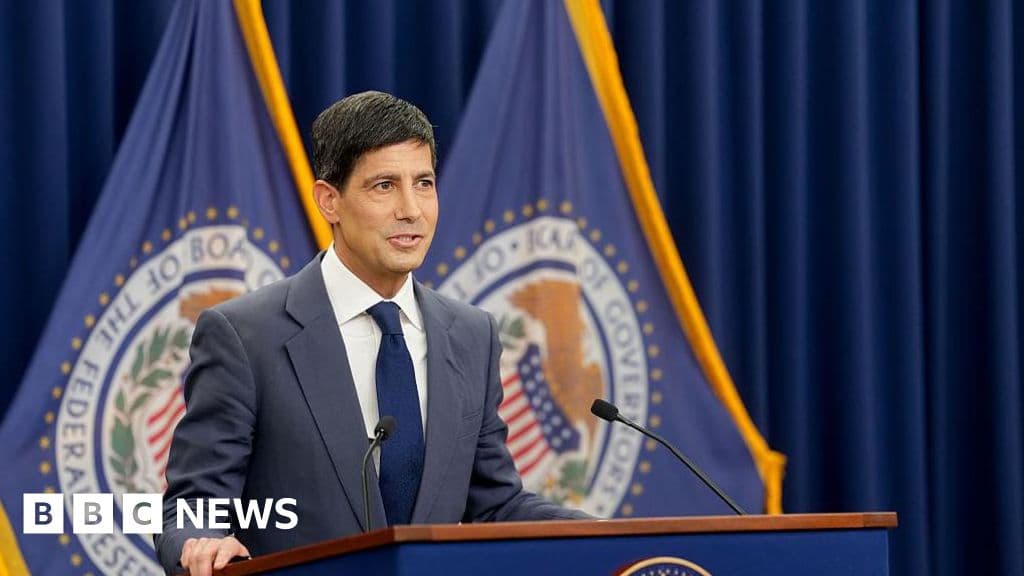
The Federal Reserve held US interest rates between 3.5% and 3.75% after Kevin Warsh's first meeting in charge of the central bank.
Fed governors were split on whether to keep rates steady or increase them in a bid to tame inflation, which has been pushed up by the US-Israel war in Iran.
US President Donald Trump pushed Warsh's predecessor , Jerome Powell, to cut interest rates, and made clear he expected Warsh to fulfil his demand for cuts.
But, with inflation running at an above-target 3.8%, and uncertainty surrounding Trump's deal to end the war with Iran, the Fed's rate-setting committee unanimously decided to kept rates steady.
In a statement backed by its 12 members, the Federal Open Market Committee (FOMC) said: "Economic activity is expanding at a solid pace despite elevated uncertainty that owes, in part, to the conflict in the Middle East. Productivity growth and capital investment are strong.
"Job gains have kept pace with the workforce, and the unemployment rate has changed little."
The Fed's statement on Wednesday represented a marked change in the central bank's communication style, one of Warsh's key promises for his tenure.
He was a sharp critic of how the Fed has communicated its decisions in the past, arguing it should say less while getting on with the job.
Its last statement, released in April, was almost 350 words, while Wednesday's update was just 132. "The Committee will deliver price stability," it concluded.
The Fed's update also removed a statement hinting that it was leaning towards lowering interest rates in the future.
And nine of the 18 central bankers who participated in the FOMC's rate-setting process predicted an interest rate hike this year, while just one said they expected a cut. The remaining eight predicted rates will stay the same, according to the closely watched "dot-plot" grid of central bankers' expectations released alongside the decision.
Warsh did not offer a projection of his own for the "dot-plot", which he opposes, but said he encouraged his colleagues to go ahead with it.
Samuel Tombs, chief US economist at Pantheon Macroeconomics, said the "big news" from Wednesday was the "dot-plot" pointing to potential interest rate hikes before the end of the year.
Commenting on the Fed's decision, Trump said: "It's alright… whatever."
When asked about potential interest rate hikes, he replied: "It could happen… it's hard to believe," adding "it just keeps the country down, it is so unusual".
But he heaped praise on Warsh, whom he nominated to replace Powell. "We have a very good guy over there now, so I'm guided by what he wanted," he said.
In a press conference after the decision, Warsh said the change in Fed leadership was "a natural and timely opportunity to reaffirm its mission, to review current practices".
He said forward-looking guidance from the Fed was unhelpful to discussions about interest rate and other monetary policy decisions. And Warsh said his new, slimmed-down statement "just gives you the facts as best we can judge it".
Warsh also indicated he will move quickly to reshape the central bank and how it sets policy. He launched task forces to examine five areas of how the Fed works: how it communicates, the size of its balance sheet, its use of economic data, the link between productivity and jobs, and its framework for managing inflation.
Inflation, the rate at which prices are increasing year over year, hit 3.8% in April. Trump's decision to launch strikes on Iran, which resulted in it retaliating by shutting the key Strait of Hormuz shipping lane, has been largely blamed for the increase.
It led to a spike in energy costs, which the US Bureau of Labor Statistics (BLS) has said is a key driver of the price rises.
But, asked earlier this month about the rising cost of living, Trump said : "I love it. The numbers were great. You know what I really love? I love the inflation."
When inflation is high, central banks can raise interest rates to restrict the supply of money in the economy and bring further price rises under control. Interest rate cuts, which Trump called for, are believed to spur on the economy by lowering borrowing costs and encouraging spending.
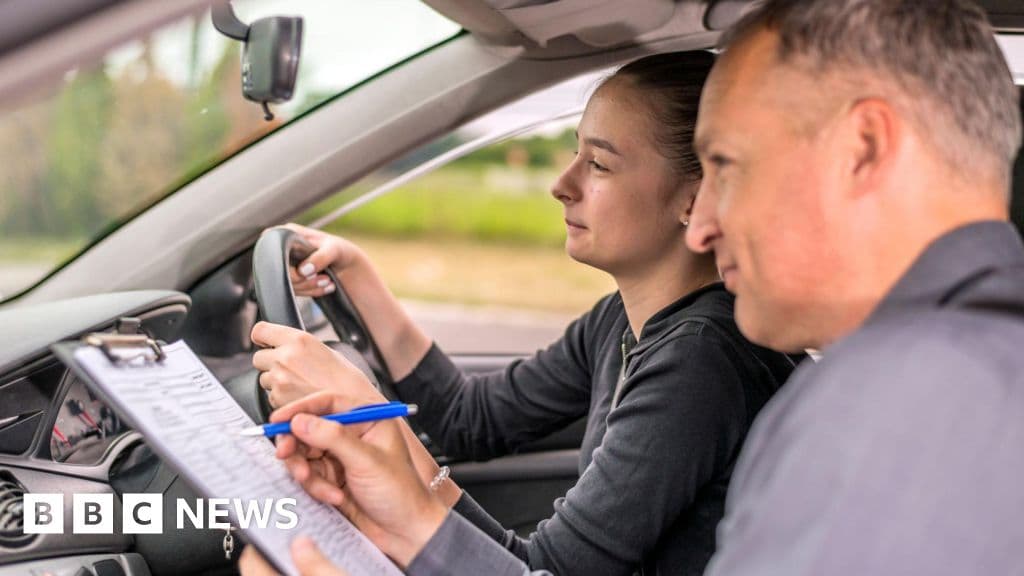
The driving test backlog won't be reduced to the target of seven weeks until autumn next year, the Transport Secretary has said.
Driver and Vehicle Standards Agency (DVSA) figures show the average waiting time to book a test last month was nearly 22 weeks.
Last November, Heidi Alexander announced changes aimed at cutting long waits and preventing test slots getting booked up - including by bots - and resold at inflated prices.
Changes which have already come into effect including only allowing learners themselves to book their test slot.
Before the Covid-19 pandemic, the wait time was about five weeks.
The DVSA initially had a target of reducing the average waiting time to seven weeks by the end of 2025.
Alexander pushed this back to summer 2026, but admitted last November even that would not be possible.
She told a Committee of MPs on Wednesday that she understood people's frustrations and insisted the government has done a lot to tackle the issue.
However she added that "demand is still very high" and acknowledged there was still a lot of work to do.
The BBC has repeatedly heard from learner drivers frustrated by the difficulty of booking tests when, and where, they need them.
Some have ended up buying slots from resellers who charge many times the official cost of taking a driving test.
A BBC investigation in December found some driving instructors were being offered kickbacks of up to £250 a month to sell their login details to touts.
In the past few months, a number of changes to the test booking system have been introduced as part of efforts to combat the problem.
At the end of March, a new rule was brought in that only two changes could be made to a booked slot, for example the date or test centre location.
Since 12 May, only pupils have been able to book their driving test instead of anyone else, including instructors.
From 9 June, if you want to move your test, you can only move it to the three test centres closest to where your test is booked.
This is meant to stop learners booking the soonest slot available, wherever it is, then swapping it to a location closer to home.
The Transport Secretary told MPs it was too early to draw conclusions, but that there was already evidence of less speculative booking since the latest changes were brought in. For example, she said the volume of test swaps had gone down by 70%.
"My aspiration is to get us back down to a point where when someone is booking a test, they're not having to wait months on end to get one, which is the situation for some people in some locations at the moment," she said.
One issues which has previously been highlighted is the issue of recruiting and retaining enough driving examiners.
Alexander said there had been a net increase in examiners of 147 in the 12 months to May.
She also said the figures on average wait times published so far "have not been particularly helpful" so there will be a change to routinely published statistics "broken down by driving test centre as well".
Inflation remained at 2.8% in the year to May as the pace of food price rises slowed to a 17-month low, according to new figures.
Over the year to May, transport costs rose by the fastest rate, the Office for National Statistics (ONS) said, while the rate of price increases in meat, dairy and vegetables eased.
Experts had expected inflation — the rate at which the cost of goods and services is rising — to rise to 3% in May, and were widely expecting it to steadily increasing over the coming months due to the ongoing impact of the war in the Middle East.
But the peace deal agreed between the US and Iran means further increases could be smaller, according to analysts.
Grant Fitzner, the ONS's chief economist, said that airfares, vehicle taxes and petrol prices all pushed up inflation.
Motor fuels were 24.6% higher in May than the same last year, according to ONS figures. Overall transport inflation was 6.8%, the highest annual rate since December 2022.
But that was "offset by lower food prices, with decreases in inflation seen across a range of meat, dairy and vegetable items compared to last month", Fitzner said.
Food inflation fell from 3% in the year to April to 2.2% in the year to May, the slowest rate of food inflation since December 2024.
The price of meat is particularly high, but the rate of increase is slowing: beef and veal went up by 9.4% in the year to May, compared to 13.2% in the year to April and 18.8% in the year to March.
Responding to the figures, the British Retail Consortium (BRC) said easing food inflation showed that the British supermarket sector was highly competitive, but food inflation was likely to rise in the coming months.
Similarly, the Food and Drink Federation said prices "prices still don't reflect the inflation caused by the closure of the Strait of Hormuz".
Its chief executive Karen Betts explained: "It generally takes several months for the increased costs paid by farmers, processors and manufacturers to filter into raised prices at the tills.
This is partly because of "the widespread use of long-term contracts for energy and ingredients".
Domestic heating oil — which does not have a price cap like energy bills — also fell after rising sharply due to the war.
Charlotte O'Leary, associate economist at the National Institute of Economic and Social Research, said there is expected to be a "sizeable" upward impact on inflation when Ofgem sets its energy price cap in July.
"The lagged effects of higher oil prices are still feeding through," she said.
She also cautioned that "should the [US-Iran] deal collapse, oil may rebound and reinstate upward pressure on inflation".
Chancellor Rachel Reeves said the government was "protecting families and businesses from rising costs, with cuts in energy bills and freezes in fuel duty and rail fares".
"While the war in the Middle East pushes prices up globally, we have got the right economic plan and inflation has held steady."
Shadow Chancellor Mel Stride said "prices are still rising too fast".
"Thanks to Labour's choices the UK went into the latest energy crisis with the highest inflation in the G7," he said.
The inflation figures come ahead of the Bank of England's next interest rate decision on Thursday. Economists widely expect the Bank to hold the core interest rate at its current level of 3.75%.
Many economists had predicted inflation would peak at between 3.5% and 4% in the second half of 2026, as the effects of the conflict in the Middle East filter down to household costs.The Bank's target for inflation is 2%.
The good news of slower food inflation has already been "somewhat surpassed" by the prospect of price rises slowing even further due to a US-Iran peace deal, according to Suren Thiru, chief economist at the Institute of Chartered Accountants in England and Wales.
But "even with hostilities seemingly over, the UK faces a painful hangover from the Iran conflict, with energy and other supply chains likely to take months to normalise, delaying any meaningful easing in inflation until late 2026", she said.
Yael Selfin, chief economist at KPMG UK, said the new figures "strengthen the case" for a hold on interest rates by the Bank of England on Thursday.
"Underlying inflationary pressures have yet to show clear signs of strengthening, which is likely to underpin a majority decision within the Monetary Policy Committee to hold interest rates at Thursday's meeting," she said.
The boss of Cadbury chocolate-maker Mondelez has defended its decision to continue doing business in Russia but admitted he is "not pleased" the firm's taxes are funding the war with Ukraine.
Chief executive Dirk Van de Put said it was the "right decision" to stay after Russia invaded Ukraine in 2022, saying pulling out would risk thousands of jobs and leave Mondelez vulnerable to the Kremlin taking control of its local operations.
Many Western companies such as McDonald's exited Russia after it launched a full-scale assault on its neighbour.
Others remained but Mondelez said it had discontinued new investment in its Russian business and suspended spending on advertising.
In an in-depth discussion as part of the BBC's Big Boss Interview series, Van de Put said: "I think over time you try to be neutral in the whole conflict. We're not trying to take any side.
"I think we did the right thing for our people in Russia. Can we be criticised for that? Yeah, of course. We pay taxes in Russia that helps the war. I'm not pleased about that."
Since Russia's full-scale invasion of Ukraine, the country has generated sales of between $1bn (£745m) and $1.4bn a year for Mondelez.
Last year, more than 70 MPs signed a letter from the All Party Parliamentary Group on Ukraine to Van de Put calling for Mondelez to sever its business ties with Russia.
Alex Sobel, chair of the parliamentary group, wrote: "Continuing to operate in a nation responsible for the deaths of countless Ukrainian civilians and the abduction of thousands of children cannot be justified under any definition of 'business as usual'."
Van de Put told the BBC he believed if Mondelez pulled out of Russia: "They would have confiscated our plant. It would have probably given them a much bigger source of income, keep on selling our products to fund the war.
"So I feel that in the end it is not the most popular decision, but I think it was the right decision."
Mondelez, which also produces Philadelphia cream cheese, Ritz crackers and triangular chocolate Toblerone, continues to operate in Ukraine although the conflict is never far away.
On the morning he spoke to the BBC, Van de Put said an office building there had been hit. "Everybody's safe," he said. "But yes, it's the reality of the situation."
Mondelez operates two manufacturing plants in Ukraine - one in Trostyanets, near the Russian border and one in Vyshhorod, close to the capital Kyiv.
"One plant got hit twice, we've rebuilt it twice, " said Van de Put, adding that it costs tens of millions to do so.
"We've agreed that we will rebuild every single time there so we keep on investing in the country. We doubled everybody's salary when the conflict started, and we have not fired anybody.
"We're committed there but for the people that work there every day there's danger," he added.
Japan's competition watchdog has raided some of the country's biggest ice cream makers for allegedly forming a cartel to raise the price of their products.
Some of the firms, including Meiji and Pocky maker Ezaki Glico, said this week that they have been subject to an "on-site inspection" by the Japan Fair Trade Commission (JFTC) over suspicions that they fixed the prices of frozen desserts.
The JFTC said it is not releasing a statement regarding the investigation.
The companies are suspected of inflating ice cream prices beyond increases in the cost of raw materials, even as the country faces a hot summer with record high temperatures.
The six firms that were raided on Tuesday were Meiji, Morinaga Milk Industry, Lotte, Morinaga, Ezaki Glico and Akagi Nyugyo.
The BBC has contacted the companies for comment.
The firms improperly raised prices of popular desserts "several times by 5-10% over the years", according to Japanese broadcaster NHK, citing anonymous sources.
The brands distribute their products wholesale to supermarkets and convenience stores across Japan.
Morinaga Milk, Glico and Meiji said in separate statements that they would co-operate with the authorities' investigation.
"As reported by some media outlets today, our company has been subject to an on-site inspection by the Fair Trade Commission on suspicion of violating the Antimonopoly Act in connection with the setting of sales prices for ice cream and other products," Meiji said.
"We take this inspection very seriously and will cooperate fully with the Fair Trade Commission's investigation," the Hello Panda snack maker wrote.
Glico said: "We will respond in good faith to the Fair Trade Commission's investigation and cooperate fully."
Earlier this year, Japan unveiled a new name for days that reach 40C (104F) or above, after the country experienced its hottest summer on record in 2025.
The term - kokushobi - has been translated as "cruelly hot", "brutally hot" or "severely hot" day by Japanese and international media.
Additional reporting by Chika Nakayama in Tokyo
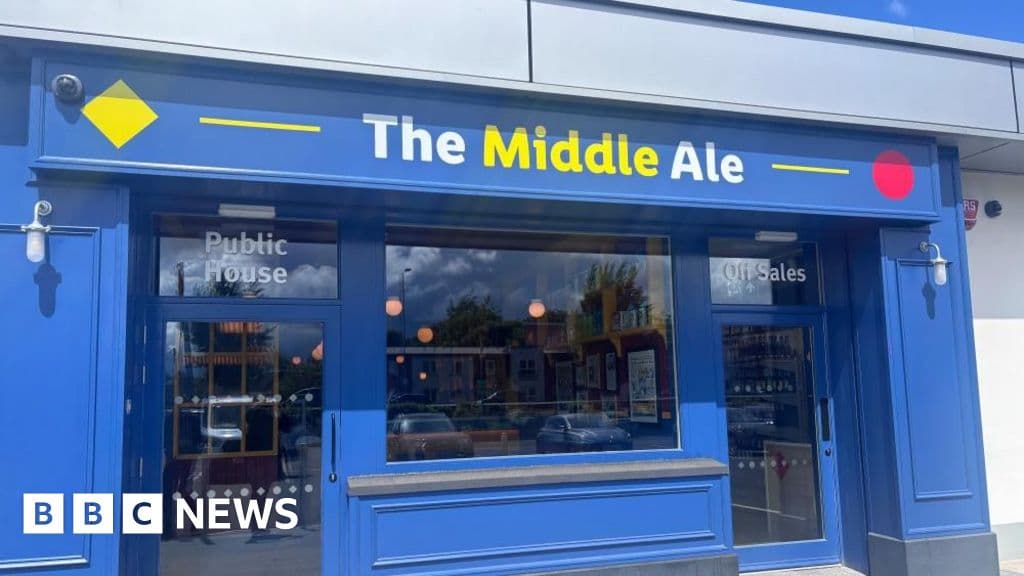
When you enter The Middle Ale, it may look like a regular pub, but the reality is far from that.
Owned by the supermarket chain Lidl, this public house is a 'world first' for the brand .
With the walls painted in bright primary colours and the shelves stacked with produce, the venture may look like a gimmick, but underneath that shine the brand is making a stark statement about Northern Ireland's licensing laws.
The journey from inception to opening day was a long one involving courts , hurdles, and a creative solution to an old problem.
In Northern Ireland, supermarkets must overcome two hurdles before they can start to sell alcohol.
They first must buy a licence which has been "surrendered" by another business, such as a pub which is closing.
This "surrender principle" acts as a strict cap on the number of premises which can sell alcohol.
Secondly, the supermarket must pass the "inadequacy" test in which it has to show the number of existing licensed premises in an area is inadequate to meet the needs of the public.
Lidl could not pass the inadequacy test for a standard off-licence but was able to pass the test for a pub as two bars close to the supermarket have closed in recent years.
BBC News NI was given exclusive access to the site ahead of opening day.
Named The Middle Ale in a play on the chain's famous middle aisle, the company is adamant this is not a stunt.
"The challenges surrounding the liquor licensing laws in Northern Ireland, they're well known and long documented," Gordon Cruikshanks, regional managing director for Lidl Northern Ireland said, adding that it's been "a long wait".
When asked if the licensing laws should be updated, he said it was "for others to continue to discuss".
The company spent £500,000 creating the pub and adjoining off-licence, hiring eight additional staff members.
"In the Dundonald area, there's been a significant increase in the population, and whenever we saw the opportunity to open a pub, we thought that was the best option to be able to provide the community in Dundonald with our full range of products so they can do a full shop with us," Cruikshanks continued.
"This is certainly a unique scenario for us, but we don't have any plans currently to open any more pubs."
Charlie Steele told BBC News NI that the pub is "absolutely fantastic" and "just what the area needs".
"We've lost a couple of pubs in the last three or four years and I think it's the first one in Europe… we're really looking forward to it," he said.
He said it doesn't bother him that a multinational company is behind it rather than a local independent business owner.
"It will bring new beers, German beers, Belgian beers, and stuff like that. It'll be something new."
Everal Thompson agrees that a new pub in the area is a good thing.
"There's nothing up here now, so there's nowhere for anyone to go, I think it's needed," Thompson said.
When asked what her thoughts are on it being a multinational company behind the pub rather than an independent and local owner, she said: "Well, there was nobody that was going to open one, so I think it's handy."
Although she said she "probably" won't visit the pub.
Ray Johnston said it's "exciting".
"There's another pub down the road, so it wouldn't be anything new having a pub in Dundonald, it's just something different having a pub that's also a supermarket."
Alliance Party councillor Martin Gregg said people were really excited by the novelty aspect when it was first announced.
"That was a long time ago, so it will be interesting to see how the concept plays out locally," he said.
DUP councillor Sharon Skillen said the pub "could provide a valuable new meeting place and create local jobs.
"It must ensure it respects nearby residents and local infrastructure."
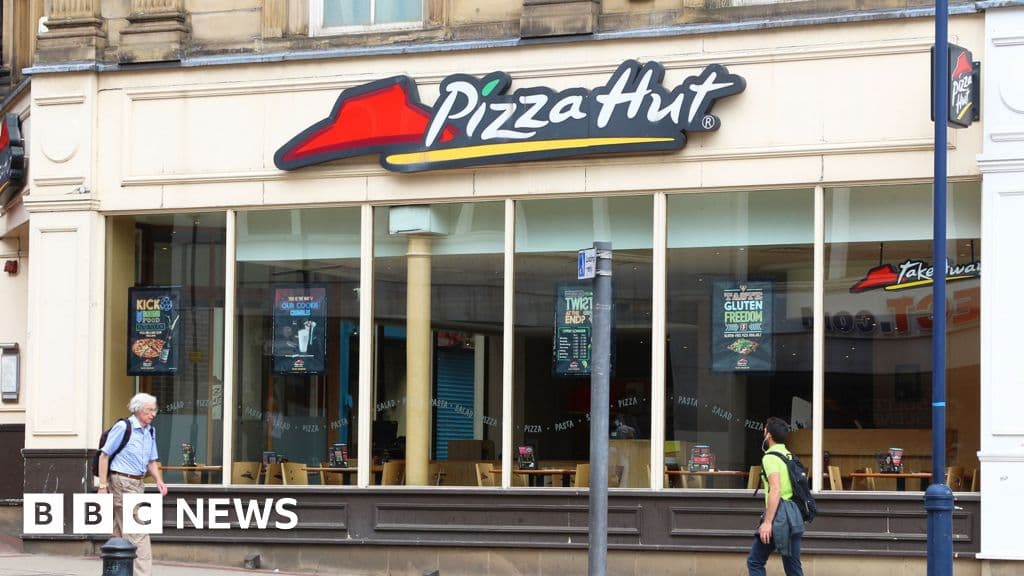
Yum! Brands is selling its struggling Pizza Hut chain in a deal worth $2.7bn (£2bn), the company has announced.
Private equity firm LongRange Capital will acquire the brand outside of mainland China for $1.5bn, while Yum China Holdings will buy the mainland China operations for $1.2bn.
"Under LongRange and Yum China, Pizza Hut will be well positioned for future growth with ownership that brings deep expertise in the restaurant industry," said Yum! Brands chief executive Chris Turner.
The decision comes after a prolonged period of difficulty for Pizza Hut - a name synonymous with casual dining in America.
Yum! Brands first revealed it was exploring a potential sale in November 2025, following several quarters of declining US same-stores. The American market is highly critical for the chain, as it makes up 40% of its total international sales .
The drop in performance has been driven by intensifying competition from revival chains like Domino's, Papa John's, and Little Caesars. At a time when inflation remains sticky , these rivals have aggressively discounted their offerings to win over price-sensitive consumers.
Moreover, mid-sized regional chains have also chipped away at the market. These smaller, more nimble fast-food competitors have adapted faster to changing consumer habits in the so-called "pizza wars".
At the same time, the rapid rise of third-party delivery apps has flooded the market with alternative options, diluting Pizza Hut's historic dominance.
Pizza Hut was founded in 1958, the brainchild of two brothers in Wichita, Kansas.
It was bought by PepsiCo in 1977 and then spun off into what became Yum! Brands in 1997.
"Pizza Hut is one of the most iconic restaurant brands in the world, and we are proud of the important role it has played in Yum!'s history," said Turner.
Yum! bought Pizza Hut's UK operations in October last year after DC London Pie, the firm running the dine-in restaurants, fell into administration.
While the financial collapse shut 68 restaurants and put more than 1,200 jobs at risk, about 64 restaurants were saved as part of a rescue deal.
By divesting Pizza Hut, Yum! intends to streamline its corporate focus and resources on its remaining core brands, which include KFC and Taco Bell.
The transactions with LongRange Capital and Yum China are both expected to close in the third quarter of 2026, subject to customary regulatory approvals.
Elon Musk's SpaceX has overtaken Amazon to become the world's fifth most valuable company after a surge in its share price.
Days after joining New York's tech-focused Nasdaq stock exchange in the biggest public listing ever, its share price has risen by more than 50%.
It leaves Musk's rocket company worth about $2.78tn (£2.1tn), while Jeff Bezos's sprawling online retail and media empire is currently worth about $2.66tn.
The boom in SpaceX's value came as it announced it was buying AI coding start-up Cursor for $60bn.
SpaceX said it would take over Anysphere, Cursor's parent company, which makes the artificial intelligence coding agent.
SpaceX has garnered huge enthusiasm among investors for its vision of sending AI data centres to space and even helping humans to colonise Mars.
Its listing raised $85.7bn and minted Musk as the world's first trillionaire. Since first selling shares to the public at $135 each on Friday, they have risen to $209.
But analysts have questioned the sustainability of its high share price given the huge amount of uncertainty over its future earnings.
While Amazon is a household name, with its brand difficult to avoid being encountered on an almost daily basis, SpaceX is less embedded in the lives of the general public.
Despite SpaceX's stock market value overtaking Amazon, the revenues and profits made by the companies are vastly different.
Amazon made $30.3bn of profit in the first quarter of 2026, while Musk's future-focused SpaceX lost $4.3bn.
In 2025, Jeff Bezos's firm accrued some $716.9bn in sales, while SpaceX recorded $18.67bn.
But investors appear to be betting on what they think SpaceX can acheive. While its biggest focus is the manufacture and launch of rockets with reusable parts, the company also manufactures and launches Starlink internet satellites, and is ramping up its presence in the AI race.
Venture capitalist Eileen Burbidge told the BBC that many traders seem to be buying into a "well-marketed opportunity" to invest in Musk and his vision instead of doing so based on SpaceX's financial fundamentals.
Some analysts have also highlighted that despite huge demand for SpaceX stock only around 4% of the shares are currently available to trade freely on the public market.
Smaller shareholders may "end up paying a premium for stock now that gets diluted later" if institutional investors eventually sell their shares, Dan Sheehan from Telos Wealth Advisors said.
SpaceX and Cursor have been partners since April, when Musk's firm announced it had the right to either buy it for $60bn, or pay $10bn for the work they have done together.
Like OpenAI and Anthropic, Cursor's technology uses AI to automate the process of writing code, one of the most prominent current uses for artificial intelligence.
The tie-up comes as SpaceX tries to catch up with rivals by growing its AI business, xAI, which is behind the controversial Grok chatbot.
Announcing the partnership in April, SpaceX said: "The combination of Cursor's leading product and distribution to expert software engineers with SpaceX's million H100 equivalent Colossus training supercomputer will allow us to build the world's most useful models."
Cursor is used by major companies including Stripe, Adobe and Nvidia, whose boss Jensen Huang has described it as his "favourite enterprise AI service".
SpaceX said the deal would be completed by the end of September, with Cursor's shareholders paid with $60bn worth of SpaceX shares.
The government has objected to a proposed rescue deal for Thames Water, in a move which takes the UK's largest water company a step closer to a form of nationalisation.
Environment Secretary Emma Reynolds wrote to the industry regulator on Monday to raise concerns over the £10bn package put forward by the firm's lenders.
Fears the company could collapse first emerged three years ago.
Reynolds said the deal does not do enough for consumers or the environment, but Thames's creditors said its plan was "the fastest route" to improving the firm's performance.
If the company does go bust, households will still have drinking water and sewerage services.
Thames Water, which serves the most customers — some 16 million — in the UK, has faced heavy criticism in recent years over its performance, sewage discharges, and pipe leaks.
The company, which supplies water and wastewater services mostly across London and parts of southern England, was handed a £122.7m fine in May last year, the biggest ever issued by the industry regulator Ofwat, for breaching rules on sewage spills and shareholder payouts.
A group of its existing lenders has offered to write off £9.4bn of its near £20bn debt pile and inject billions in new money, but want leniency from future pollution fines in return.
London & Valley Water (L&VW), a consortium of large financial institutions and investors, said some £3.35bn of cash would be put into the company along with a new £6.55bn debt facility. It would be part of a £10bn business plan until 2030.
Reynolds said on Tuesday that she did not want a scenario where Thames Water customers had to "pick up the bill for the company's failures".
She told reporters that the government "stands ready for all eventualities", including temporary nationalisation.
Speaking in the House of Commons, Reynolds said she had "three particular concerns about the proposal: the unfair cost to customers, delays to vital infrastructure investments, and delays to environmental improvements".
"There is an expectation in the proposal for customers to fund and therefore bear an undue cost for investment in the company," she said.
"In addition, I'm not convinced about the proposal's request to reduce performance standards and about the significant delay to vital infrastructure investments needed."
She added she was "concerned that the long-term resilience of the water and wastewater systems may not be adequately protected".
However, a spokesperson for L&VW said the group was "confident that our plan is by far the fastest route to improve outcomes for customers and the environment, without any government funding or any cost to taxpayers".
The proposed deal was a "long-term solution that recognises the full extent of Thames Water's problems".
"All other routes offer significantly worse outcomes for customers and the environment. Our proposals do not anticipate any increase in customer bills beyond those set out by Ofwat," they added.
"Creating further delay and transferring risk to the taxpayer with special administration is not the right answer. It will only delay the process of fixing Thames Water."
Ofwat has been reviewing the proposal and a decision is expected this summer.
The regulator said it would review the letter from Reynolds and consider her views on the current proposal.
"Ofwat's board has not made a decision on the proposal," a spokesperson said.
"We continue to engage with London & Valley Water and are reviewing their plans carefully to assess whether they deliver a turnaround in the company's operational performance and strengthen its financial resilience to the benefit of customers and the environment."
Without a rescue deal agreed, Thames Water is set to run out cash within a matter of months and could collapse.
Thames Water reiterated on Tuesday that it believed a market-led solution was the best option for customers and the environment.
A spokesperson for the company said: "It is positive that the Secretary of State has provided feedback to Ofwat in relation to the London & Valley Water plan.
"We will continue working with all parties to reach an agreement that supports long-term financial stability."
The government has previously said it would prefer "a market-based solution", but would step in "if that were to become necessary".
The form of temporary nationalisation on the table is known as a special administration regime (SAR), which ensures vital companies such as water, are kept running by government appointed managers.
Proponents of the SAR solution say that it would give Thames something of a fresh start, allowing it to write off some of its losses and be sold without such a large debt pile.
In July last year, the boss of Thames Water, Chris Weston, said the company was "extremely stressed" and that it would take "at least a decade to turn around".
Get our flagship newsletter with all the headlines you need to start the day. Sign up here.
EasyJet has rejected a takeover offer worth £4.74bn from US investment firm Castlelake, describing the bid approach as "highly opportunistic".
Castlelake said it had made three approaches to EasyJet this month, all of which had been rejected, but it had now made details of its latest offer public to allow shareholders to assess the proposal.
The US fund, which already owns a stake of about 2.14% in EasyJet through the funds it manages, has until this Friday to make a firm offer or walk away.
Under Castlelake's latest offer, the airline's shareholders would receive 625p per share, a 24% premium to last Friday's closing price.
"Following the rejection of three proposals by the EasyJet Board, and given its unwillingness to engage meaningfully, Castlelake is announcing this Third Proposal to enable EasyJet shareholders to consider its merits," Castlelake wrote.
It said its latest bid "offers compelling value" to EasyJet's shareholders.
"Castlelake's ambition is to support EasyJet as a stronger, more resilient European airline under European control, respecting EasyJet's valuable airline assets and continuing to sustain its network," the US firm said.
European Union regulations stipulate that EasyJet must be majority-owned by EU citizens. Castlelake said it had proposed an ownership structure which was a "deliverable solution to ensure compliance with all applicable regulatory requirements."
Nobody thinks they will become the victim of a scam, until they are.
A record four million cases of fraudsters stealing money were registered last year, according to UK Finance, a banking trade body - with plenty more going unreported.
Sam Little, a 35-year-old former contestant of BBC show The Traitors, revealed last week he had lost £40,000 in life savings to a phishing scam. "I like to think I'm savvy, but it can catch anyone," he said.
Here are three of the most popular tricks used by fraudsters and how to avoid them.
The scam : "Hi Mum, I've got a new phone" or messages about missed deliveries.
Fraudsters send out mass messages suggesting that the recipient needs to update their details. It is just a way of harvesting vital banking details in order to steal money.
In the case of the "Hi Mum" text, the message is usually followed by an urgent request to send money. Banks reported a surge in "Hi Dad" scams in the run-up to Father's Day.
Messages about missed deliveries usually include a link which, when clicked on, take the recipient to an official-looking website.
It is run by fraudsters and gathers banking information which is then used in so-called remote-purchase fraud - when criminals buy things from stolen card details. Some £423m was lost this way last year, according to UK Finance.
How to avoid it : Type, don't tap.
Experts urge people to avoid tapping on links. If a message claims to be from, for example, Royal Mail, then type out the genuine Royal Mail website.
Card details can be stolen in many different ways, such as through data breaches. But fraudsters often need a One-Time Passcode (OTP) to complete a theft. These should be treated as carefully as bank details and never given to someone who calls pretending to authorise a transaction.
It may seem obvious, but fraudsters are skilled in keeping you on the phone for ages to trick you into giving the number.
The scam : "I love you, can you send money so I can visit you." The victim joins a dating website, chats to someone with whom they build a relationship over time, until eventually there is a request for money.
On average victims of romance scams, which are at a record high, send 10 payments to the fraudster. Some never accept their loved one isn't real.
The fraudster uses fake pictures, often taken from the profiles of people innocently posting on social media.
After being groomed, victims are told of an accident, or the supposed partner needing help to pay for a ticket to meet up.
How to avoid it : It isn't very romantic, but when meeting someone on a dating website put their picture in a reverse image search.
Most search engines have that as an option, and it might show whether they are telling the truth about who they are.
Experts also urge people never to send money to someone they haven't met, and to be open with family and friends over questions they may have about the "relationship".
The scam : "This investment opportunity won't last for long," says a celeb, promising rapid and generous returns.
But the celeb is AI generated by fraudsters. In some cases, criminals have even used the technology to mimic the voice of family and friends.
Investment fraud losses are also at record levels.
How to avoid it : Fraudsters always inject a sense of urgency, but taking time over any decision is crucial.
A genuine financial firm should be authorised by the Financial Conduct Authority (FCA), so visit the regulator's firm checker tool .
Contact details, such as the website, listed on the checker should be used rather than any links seen on social media which could lead you to a spoof site.
There are more tips on how to protect yourself on the Take Five to Stop Fraud website.
Get our flagship newsletter with all the headlines you need to start the day. Sign up here.
Disney's Toy Story 5 racked up the animated franchise's best ever opening weekend, with ticket sales of more than $300m (£227m) globally.
Released on 19 June, the fifth installment of the Toy Story saga follows Woody, Jessie and Buzz Lightyear as they face their toughest rival yet - a tablet computer .
Its strong box office performance is a return to form for Disney and Pixar after a series of challenges in recent years.
It is estimated to be this year's second-biggest opening weekend globally, after The Super Mario Galaxy Movie . That film is currently the highest grossing film of the year, taking in more than $1bn.
Toy Story 5 grossed over $160m in North America and more than $150m internationally in its first weekend in cinemas
With an estimated production budget of $250m, it will need to make at least twice that amount to cover the additional costs of marketing and other expenses.
Disney's Pixar films have historically recouped their budgets - often comfortably - with many titles bringing in three times as much as they cost to make and promote.
A handful of its films - especially sequels like The Incredibles 2 and Inside Out 2 - have crossed the $1bn mark.
But some of the storied studio's more recent titles, like the alien adventure Elio and Toy Story spin-off Lightyear , have bombed at the box office.
The Mandalorian and Grogu , Disney's latest big-budget Star Wars spin-off, has yet to double its $165m cost.
Overall box office revenues have declined since the Covid-19 pandemic, as studios struggled to draw people back to cinemas as the industry has seen a shift towards streaming services like Netflix and Disney+.
Big-budget blockbusters in particular have suffered, with many films underperforming at the box office.
Still, the Toy Story series is one of Pixar's most lucrative franchises, having raked in more than $3bn at the global box office since audiences were introduced to Woody and Buzz in 1995.
The original movie, set in a world where toys come to life, revolutionised the use of computer-generated graphics and propelled Pixar into the ranks of leading animation studios.
The series' third and fourth instalments each made more than $1bn at the box office.
When 84-year-old Maggie Dodd discovered that the last remaining bank in her town was closing, she began to panic.
"I was distraught," she says.
"I mean I couldn't sleep that first night when I realised. I thought what am I going to do?"
Maggie has been a customer at the Bank of Scotland in Lochgilphead since 1976.
Now her nearest branch is in Oban, almost an hour's drive away (or 37.2 miles away if you prefer) and she's worried about banking online.
"I'm frightened," she says.
"There's so much of this scamming business, and I'm always worried that I'll hit something and press the wrong thing."
That's why she has 'buddied up' with her 83-year-old friend Ina Callander to try banking at the local post office.
"I've been using the post office for years," Ina says.
"Maggie was really upset and I thought, why not help her? Because that's what friends are for."
Lloyds Banking Group, which owns the Bank of Scotland, say the branch at Lochgilphead is no longer viable as most of their customers prefer to bank online.
But BBC Your Voice was approached by residents in the town who are worried about the impact the closure will have on elderly and vulnerable people, as well as local businesses.
Karen McCurry, who runs the wellbeing centre Snowdrop Argyll, set up the buddy scheme used by Maggie and Ina.
She says: "I had people approaching me, telling me they weren't sleeping at night because the bank was going to close - and that's massive.
"We always try to think of solutions and how to make things easier for somebody.
"We can't change what's happening outside a lot of the time, but we can help somebody feel a bit better about it, a bit more confident."
Adriano Pia, who runs the Argyll Café, says banks are needed because bank cards and cash machines aren't always reliable.
"Even today we had two people whose cards aren't working," he says.
"I've had times where I've had to tell people just to take it, so they don't go hungry because they're stuck," he says.
A few doors along at the Community Shop, manager Scott McBride is worried about the impact the closure will have on the charity's insurance if they are not able to deposit their takings at the bank every day.
"We either extend our insurance, and that comes at a cost, which ultimately comes with a risk as well, because we're then potentially holding more cash on-site," he says.
Lochgilphead isn't the only place in Scotland affected by bank closures.
Figures from the consumer watchdog Which? reveal 742 bank branches have closed across the country since 2015.
The Caithness, Sutherland and Easter Ross constituency has seen the most closures, with 30 banks shutting their doors in a decade.
In Argyll, Bute and South Lochaber, 25 bank branches have closed.
Argyll and Bute Council said their bid for a Banking Hub in Lochgilphead, where banks share facilities to provide to face-to-face services, was rejected.
Link, the body which assesses cash access, said the area was already well served with free-to-use ATMs and the local post office.
But Anna Dudziak, the sub-postmaster in Lochgilphead, says she can't offer as many transactions as a bank.
"The problem is they're telling people to go to the post office, saying 'they can do it for you'," she says.
"But at the same time, they set up limits for cash withdrawals, for cash deposits, for cheque deposits that we can't do for people.
"Most people understand, but every day we have people really, really angry and they blame the post office."
Dougie Philand, the Provost of Argyll, said he hopes Link will reconsider its decision on cash machines.
"We, myself and the community council, will keep an eye on the difficulties that people are experiencing and at least we can give the evidence and be able to say 'look, we do need a banking hub here'," he says.
The Lochgilphead bank is one of 28 Bank of Scotland branches closing this year.
A spokeswoman for Lloyds Banking Group said it offers more ways to manage money than ever before.
"In addition to our app, or over the phone, customers can use their local Post Office to manage their money alongside PayPoint locations to deposit cash," she said.
"We're giving our customers the flexibility to bank wherever and whenever they need us."
The UK government is carrying out a review into access to face-to-face banking, which is due to report in October.
Discount website Wowcher has apologised after a marketing email appeared to reference a crocodile attack on a toddler at a zoo.
A three-year-old boy is understood to have been attacked by at least one crocodile after ending up in their enclosure during a family trip to Johnsons of Old Hurst near Huntingdon, Cambridgeshire, on Thursday.
An email sent to Wowcher customers on Saturday featured a list of getaways and activities under the subject line: "Snap up these deals quicker than a croc can catch a kid!"
Screenshots were shared across social media prompting outrage, with Wowcher later saying in a statement that it was extremely sorry for the "unacceptable" wording.
The firm added: "It should never have been written, it was never approved for use. The responsibility sits with us and we are urgently reviewing how our processes failed.
"We recognise the hurt and distress it has caused, particularly for the young child's family at this unimaginably difficult time."
The little boy was pulled from the crocodile enclosure by zoo staff and is now in a critical but stable condition at Addenbrooke's Hospital.
Following the incident, a 30-year-old man was arrested on suspicion of attempted murder and subsequently bailed because he was "unfit for interview".
Police were called to the zoo at 13.24 BST on Thursday by the ambulance service and said the boy, who was not known to the man, had suffered serious injuries "while in the enclosure".
Reacting to the email, one customer said they had "now unsubscribed" from Wowcher's emails, while another person condemned the message as "disgusting", adding: "If that's real someone needs to be fired."
The screenshot was posted to a Facebook group under the caption: "Why do wowcher think its ok to use this as a heading on their emails??"
The Wowcher spokesperson added: "We are reviewing all scheduled marketing content while we urgently strengthen our creative, approval and sign-off safeguards.
"There is no excuse for this. We apologise unreservedly and will take the necessary steps to make sure this does not happen again."
Do you have a story suggestion for Cambridgeshire? Contact us below.
Follow Cambridgeshire news on BBC Sounds , Facebook , Instagram and X .
Get our flagship newsletter with all the headlines you need to start the day. Sign up here.
They have a word for it in German – kohleausstieg, which means "coal phase out".
Germany is the biggest user of coal for power generation in Europe, and the fourth largest in the world after China, India and the US. But it has pledged to stop using it altogether by 2038.
For lignite, the low-quality soft coal that is the most polluting, Germany has even brought the phase out forward to 2030.
Currently some 20% of German power generation comes from coal, but it wishes to end this as it focuses on growing wind and solar.
In fact, Germany already gets more than half of its electricity from renewables, 59% last year.
As back-up to wind and solar, especially for the winter months, it wants to replace coal with more natural gas power stations. These generally release half as much carbon dioxide as coal, and gas currently accounts for 13% of German electricity generation.
However, the recent jump in global gas prices following the US-Israel conflict with Iran, has encouraged a number of countries to reconsider coal as an energy source.
Japan has loosened rules to allow for the increased use of coal-fired power plants, Italy is delaying the closure of its remaining stations until 2038, and India has postponed maintenance shutdowns.
But what about Germany? Back in March, Chancellor Friedrich Merz said: "We must supply this country with electricity. I am not prepared to jeopardise the core of our industry simply because we have adopted phase-out plans that have become unrealistic."
Was this the start of a phase-out of the phase-out? Is Germany going to keep coal power after all?
The problem for the German government regarding what the country burns to make electricity is a two-fold one of supply and price. Germany has an abundance of readily available, cheap lignite. It has the largest reserves in Europe and the third biggest globally. It is entirely self-sufficient in the fuel.
By contrast, it has to import 95% of its natural gas supplies. So when the global cost of gas shoots up, switching back to the much cheaper lignite is financially very appealing. And Germany doesn't have to worry about supply shortages.
Meanwhile, nuclear is not an option, as Germany closed the last of its nuclear power stations in 2023.
Perhaps unsurprisingly, German energy firm LEAG, which is the country's second biggest miner of lignite, is upbeat at the suggestion that coal-powered energy power could get a reprieve.
"We very much welcome the fact that the German federal government is placing not only medium, but also long-term, security of supply at the heart of its energy policy considerations," it said in a statement.
It also highlighted that it increased supplies of lignite to compensate for the halting of Russian gas imports after Russia's 2022 invasion of Ukraine. "We already demonstrated our ability to quickly draw on reserves to return to the market when the situation demands it."
By contrast, Hauke Hermann, a senior researcher with the Öko environmental research institute insists that more coal is not the answer. Instead, he wants to see a further increase in the use of renewables.
For some in German industry, they just want a decision regarding gas or coal. "Our industry needs reliable energy," says Wolfgang Große Entrup, director general of the German Chemical Industry Association (VCI).
"Renewable energy alone cannot yet guarantee this… Companies will only invest billions if they can trust that energy will remain reliably available at competitive prices in the future."
While practically no-one outside of the far-right AfD party is calling to scrap the coal phase-out altogether, some loosening of the phase-out is another matter.
One possible compromise being put forward concerns six coal power stations that use imported hard coal, which is less polluting than the domestic German lignite. These are currently only used as back-up, to top up the national grid as and when required, such as during a cold winter.
The owner of some of these power plants, Steag Iqony Group, says they should be allowed to operate all the time.
"If they were temporarily allowed to resume regular production, they could deliver electricity to several million homes," says a spokesman for the company. "We think these plants should be used in order to strengthen security and affordability of supply."
A parliamentary committee set up in March is studying this possibility.
The difficulty for the German government is that it is a grand coalition comprising the centre-right CDU/CSU parties and the left-wing SPD. The former are more favourable to extending the use of coal, while the latter is against.
The SPD's energy spokeswoman Nina Scheer warns that relaxing the rules for coal would be "counterproductive for the energy transition and mean new fossil lock-in effects".
By contrast, the deputy leader of the CDU, and Minister-President of the German region of Saxony, Michael Kretschmer, says: "Germany, as a major industrial nation, must do everything in its power to ensure that energy remains affordable."
He adds: "The energy transition must be completely recalculated. It should not be a matter of cost, but rather a matter of realistically considering security of supply and affordability."
The government must decide this year whether the 2030 deadline for lignite phase-out must be respected, or whether some capacity may be maintained for a limited period as a strategic reserve.
And in August, the government will publish a statutory review of the coal phase-out which will include the impact it is having on energy supply, security and prices. The original purpose was to see if the Kohleausstieg could be accelerated. It is now quite possible that it will be used to slow it down.
Staff at Softstar Shoes in Oregon have discovered a newfound enthusiasm for eking out resources and growing profits.
It started in January when the shoemaker became owned by its 30-strong workforce.
Former sole owner and chief executive Tricia Salcido had decided to sell the business to the employees, because at age 56 she is starting to plan for her future retirement.
Salcido, who for next few years is staying on as chief financial officer, says that colleagues are now offering lots of suggestions for how to best run aspects of the business.
"I'm getting personal emails from employees saying, 'well, have you thought about this idea?'," she says. These are business insights that weren't forthcoming before!"
Salcido is among a small but growing number of business owners in the US said to be choosing to entrust their ventures to employees, rather than sell to an outside buyer.
One 2025 study said that up to 600 US firms are now being sold to their workers per year, with investment funds available to help finance the deals rising 78% to $865m last year from $500m in 2024, an indication of more businesses making the transfer.
As well as motivating staff – who share in the risks and rewards of ownership – research shows that employee-owned companies can be more productive, less likely to make staff redundant, and that they pay higher wages.
For Salcido, it was a way to preserve local jobs and prevent her firm's artisan shoemaking from being taken out of the US – which she was convinced would happen under a cost-cutting corporate buyer.
"It's something you put your life's work into… most small business owners really care," she says.
A huge number of other US entrepreneurs are in the same boat as Salcido – they are approaching retirement age, and therefore having to decide what to do with their businesses.
The "baby boomer" owners of about six million American small and medium-sized companies will retire between now and 2035, says a report this year from business consulting firm McKinsey. Some commentators have dubbed this a "silver tsunami".
McKinsey adds that this mass retirement will result in "a once-in-a-generation wave of ownership transitions".
Ethan Rouen, associate professor at Harvard Business School, says: "I don't think a week goes by where I don't talk to an owner who is looking to sell their business." Their grown-up children often aren't interested in taking on the family venture, he adds.
Rouen and his Harvard colleagues believe a switch to employee ownership could help many firms survive, and that such a move often appeals to owners who care deeply about their employees, and worry about what would happen following a sale to a larger company or private equity firm.
That was the case for William Stockwell, who wanted to protect the future of Stockwell Elastomerics, the Philadelphia-based manufacturer of industrial components that his great-grandfather started in 1919.
Stockwell made the decision to sell to his employees after seeing what happened to other firms that had been bought out. "The new [outside] ownership might move the business, they might shut it down, or drastically change it in other ways, and the people remaining are stuck," he says.
There are a number of different schemes available in the US by which a workforce can buy their company. At Softstar Shoes they used an Employee Ownership Trust (EOT).
Under an EOT a trust is set up, which takes ownership of the business on behalf of the staff, removing the need for them to buy the business out of their own pockets.
The trust then pays the former owner the agreed sale price of the business in instalments as a share of future profits.
This means that Salcido has committed herself to a waiting game before she gets her money, with an element of risk on top – she needs the business to continue to be successful.
"I carry the risk, in that if anything happens, I don't get paid," she says. But she has faith in her team to deliver. They also get a share of annual profits.
Stockwell, who now works part-time for Stockwell Elastomerics, opted for a slightly different method of transferring ownership to the staff – an Employee Stock Ownership Plan or ESOP.
This also sees the business placed under trust ownership, but instead of staff sharing the annual profits, they get shares which they can only cash in when they leave the company.
Meanwhile, the retiring owner also must wait for his or her money. "I'm accepting payments over 10 years," says Stockwell, who acknowledges he is making a "short-term financial sacrifice".
ESOPs are the most common method by which firms are handed over to their workers in the US. In 2023, the most recent year for which data is available, there were 6,609 companies under such ownership structure. These employed 10.9 million people, and held combined assets of more than $2tn (£1.5tn).
A third method of staff taking ownership is through the creation of a worker co-operative, whereby workers purchase a share of the business.
Harvard's Rouen says employee ownership doesn't just appeal to older founders looking to preserve what they have built over many years. Younger workers, "disillusioned" by traditional, unequal corporate structures, are also attracted to the model.
"The only way to truly create wealth in this country is through ownership of capital. And this is a way to democratise that," he says.
However, EOT and ESOP schemes are undoubtedly more complex to set up than a simple, traditional sale of the business, which may put off some owners. As does the longer wait for their money, and the increased risk.
Adoption is also hampered by a lack of awareness that the schemes even exist. "No one's heard of them," says Salcido at Softstar Shoes.
In central Pennsylvania, Paul Silvis is in the process of selling his manufacturing business SilkoTek Corporation to his employees. He says he is confident that he has made the right decision.
"I'm getting ready to ride off into the sunset at some point," says the 71-year-old.
Stockwell cautions that retiring business owners who want their staff to take over ownership need to start planning early for a process that could take years. "It's not something you want to begin the year you want to retire," he says.
Rouen says that, thankfully, there is now political will in Washington to simplify the process of employee ownership, as the US government has started to encourage it. The Department of Labour has a new Employee Ownership Initiative, which aims to both promote the practice and offer advice.
He adds that there is also bipartisan support in Congress "to figure out ways to make [selling up to staff] an easier and more realistic option for business owners." As a result, "my hunch is that we will see more successful employee ownership conversions in the next few years."
A desert plant changed the life of Masapalli Venkatesh.
His 10-acre farm in Kandukur is on the Deccan Plateau, which covers a large part of southern and central India. There he grows tomatoes, peanuts and corn.
But in 2010 he was approached by traders looking for a very different crop - the cactus agave americana.
For him and his fellow farmers the agave cactus was just a "stubborn, valueless weed" - planted as fencing to keep wild animals off their crops.
But it is also part of the family of agave plants that feed the $15bn (£11bn) global market for tequila and mezcal.
In Mexico, blue agave is farmed to supply the tequila industry. Only plants from select areas, mainly in the state of Jalisco, can be used to make tequila.
Unlike in Mexico, where vast plantations dominate the landscape, nobody grows agave commercially in India - at least not yet.
Instead, Indian farmers and entrepreneurs collect and process agave that grows wild.
For some, like Venkatesh, it's a welcome source of extra income - earning it the name "blue gold".
These days Venkatesh ranges across an area of 100km (60 miles), co-ordinating villagers and farmers.
"By combining the yields of multiple farms, I ensure a steady, high-volume supply that distilleries are willing to pay a premium for," he says.
Harvesting agave plants is a skilled job.
The most important part of the plant is the heart, known as the piña because it resembles a giant pineapple.
Skilled workers reveal the heart by chopping off the spiky leaves. But getting the timing of the harvest right is crucial.
Once the plant decides to bloom, it channels its entire reserve of accumulated sugar upward into the stalk in a matter of days.
If the flower blooms, the sugar is completely depleted, making the piña useless for alcohol production.
"Gatherers must accurately identify the exact pre-blooming window to harvest the plant at its absolute peak sugar capacity, making the timing of the harvest incredibly narrow," says Rakshay Dhariwal, founder and managing director of the distiller Maya Pistola Agavepura.
Once harvested, the clock starts ticking. The piñas must get to a pressure cooker within 24 hours, where the sugars can be extracted.
"Any transport delay can risk ruining the batch. If it takes longer than 24 hours, the internal sugars begin to rot and ferment unpredictably, destroying the delicate flavour profile needed for premium spirits," says Dhariwal.
And transportation is not straightforward, as agave suppliers are scattered across vast distances in states like Karnataka, Maharashtra, Rajasthan, and Andhra Pradesh.
"Brands like us cannot simply order from a centralized farming cooperative. We rely on networks of local aggregators to scout, negotiate for, and harvest individual patches of semi-wild agave growing on marginal lands or rural property boundaries," he says.
It's all helping to meet a rising demand for agave spirits. According to Dhariwal, the Indian market for agave spirits is growing at a rate of 31%.
"It's only been a few years now, that India's finally caught the tequila bug," says Vikram Achanta, co-founder of 30 Best Bars India.
"Producers are beginning to experiment with it seriously, and there's a consumer base today that is far more open to exploring new spirits than before," he says.
Agave drinks are unlikely to replace whisky, India's favourite spirit, he says, but they could carve out a market.
"New brands are interesting examples of early experimentation, especially in how they're working with wild agave from the Deccan Plateau and beginning to shape what an Indian agave identity could look like. It's still early days, but they're helping move the category from curiosity to something more credible," he adds.
Desmond Nazareth is a pioneer in the Indian agave spirit industry. His company, Agave India, launched India's first homegrown agave spirit in 2011.
"What started as kitchen experiments eventually became India's first craft agave distillery after nearly 12 years of research and experimentation," he says.
"We were making Indian agave spirit long before the market was ready for it. It was a craft business way ahead of its time."
Now he's taking a scientific approach to developing the industry.
"We have taken satellite images of areas where agave already grows successfully, then matched those environmental patterns with nearby regions to identify more suitable land. That's important because agave grows for 9–13 years. If you plant in the wrong area, you lose a decade," he says.
With growing demand is there a danger that India's wild supplies of agave will become depleted? Not for at least five years, and probably longer says agricultural expert, Miguel Braganza.
He points out that India's domestic industry is still tiny, with just one plant for processing agave hearts, which belongs to Nazareth's Agave India.
Also, the wild agave plant is very good at propagating itself.
"When you look at a wild agave, you aren't just looking at a single plant. Beneath the soil, the mother agave is incredibly busy. Throughout her 10-to-20-year life, she secretly sends out long root-runners into the earth," says Braganza,
And those roots are the source of future plants.
"Every few feet, a mini-clone of herself pops out. Those baby plants grow their own roots and become independent plants, slowly forming large agave colonies over time. So one plant can naturally turn into dozens of plants across an area without any human help,"
India's wild supply of agave plants is far from ideal, points out Indian entrepreneur Sree Harsha Vadlamudi.
Unlike farmed plants the wild plants are "geneticially inconsistent" he says.
"That means sugar yields fluctuate... and that means alcohol output changes. So standardizing production becomes difficult. Mexico solved this over decades through selective breeding. India hasn't yet," he says.
Vadlamudi co-founded tequila brand Loca Loka. It uses Mexican blue agave from the tequila heartland of Jalisco.
"We wanted to leverage the rich, iron-heavy red soil left behind by ancient volcanic eruptions in Jalisco, Mexico. This unique terroir imparts a distinct flavour profile to the agave that cannot be replicated by growing the same seeds in Indian soil," Vadlamudi says.
Mexico's large, organised agave farms are a sharp contrast to India's informal system.
Those big, rich farms can afford hi-tech farming techniques. Some combine drones and AI systems to monitor their crops.
"Drones scan thousands of hectares to accurately count individual crops, assess plant health, spot early signs of disease, and monitor the growth of the piña to predict the absolute perfect window for harvesting," Vadlamudi says.
Such investment is still a long way off for Indian producers.
Nazareth accepts that building a significant agave spirit industry will take time. But he's confident.
"India could absolutely become a major agave economy. The Deccan Plateau alone has millions of acres suitable for cultivation. We could theoretically rival Mexico if there's long-term vision and patience."
With US consumer confidence at historic lows, it's a tough time for retailers across the country. But in and around New York City one niche sector is expanding – candy stores.
Mitchell Cohen, the third-generation owner of Economy Candy, on Manhattan's Lower East Side, has a theory – people will still buy candy (or sweets, as they are called in British English) – when economic times are difficult.
"The dollar isn't going as far these days," he says. "Inflation, uncertainty, all that, but there's always candy."
The business, the oldest sweet shop in New York, first opened its doors in 1937, towards the end of the Great Depression.
Initially it was a hat and shoe repair store, with candies sold from a cart out front as an extra earning stream.
But people couldn't afford to get things repaired, Cohen says. So his grandfather entirely pivoted to what was still selling – the affordable sweet treats. Eighty-nine years later, Economy Candy is still going strong.
While the most recent official data shows that US retail sales are still growing, up 4.9% in April from the same month last year, US consumer sentiment hit a new all-time low in May, according to one closely-watched report.
Echoing the thoughts of Mitchell Cohen, Kate Bolger says that as candy has a low price point "everyone can partake" despite people feeling the economic pinch.
Next month she is due to open The Village Confectionery, a candy store in Sleepy Hollow, the Hudson Valley town 28 miles north of New York City that is best known as being the setting of the 19th Century horror short story The Legend of Sleepy Hollow.
Bolger, who previously worked as a movie producer, says that while consumers may be putting off making big, expensive purchases, they can still treat themselves to a piece of candy.
It is an extension of the so-called "lipstick effect" economic theory that was popularised in the early 2000s, whereby people who couldn't afford to buy something really expensive would buy a little luxury item instead.
Back in New York City, an upmarket candy store company called BonBon now has five shops across Manhattan and Brooklyn, and another in the Hamptons on Long Island that opened last summer.
The business, founded in 2018 by three Swedish expats, imports its product range from Sweden. Swedish confectionery, which has strict rules regarding the use of all natural ingredients, has in recent years seen a big rise in global popularity thanks to social media.
BonBon co-founder Leo Schaltz says that a key company rule for its shops is to avoid main avenues. "You wouldn't want to be on Broadway," he says.
Instead the firm goes for side streets, where the rents are lower, and takes over small units. "You don't want to overpay for rent, and it's easier to make a space feel cozy when it's smaller," he says.
Schaltz adds that BonBon also focuses on "little, quirky details", such the staff wearing uniforms inspired by a Stockholm restaurant. This summer it is due to open a branch in Greenwich, Connecticut.
Meanwhile, Swedish sweet shop chain Candy King, opened its first US outlet in Manhattan last December.
In Brooklyn, Cat Cirino launched her sweet shop, Candor Candy's, in the Fort Greene neighbourhood in March. To boost revenues she also sells pantry items such as granola, rice, soft drinks and beef jerky, all from independent producers.
But when it comes to her core product, selling candy has a number of benefits, such as it having a long shelf life, and being able to sit at room temperature. And if the shop follows the pick-and-mix model then the customer does a lot of the work on his or her own.
But as Cohen points out, it is not all plain sailing. With many confectionary supplies coming from overseas, he says that his wholesale prices have risen. The increases come due to President Trump's numerous import tariffs on other countries, and higher global transport costs as a result of fuel prices rising due to the US-Israeli conflict with Iran.
Cohen notes that a Hershey chocolate bar that cost his shop about 62 cents pre-pandemic now comes to more than a dollar. For while Hershey's is a famous American brand, the cocoa beans it is made from come from overseas.
He adds that one of his UK suppliers simply stopped shipping to the US after losing too much money in customs.
Despite these issues, Cohen says he has absorbed most of the cost increases, and that his sales are up. In these tough economic times, he says "a little candy goes a long way".
I've come to an industrial space in a tech-heavy area of San Francisco expecting to see a menacing humanoid robot solider doing something combat-like: the future of land-based warfare, perhaps.
Instead, the black shiny faceless Phantom robot is engaged in "free play", manipulating a bunch of coloured kids blocks.
"We need data from it just interacting with its environment…[and] this is today's menu," explains Sankaet Pathak, co-founder and CEO of two-year-old start-up Foundation Robotics, which is developing Phantom for military and civilian applications.
Later he pushes its 80kg steel-covered body around the room to demonstrate its stability and shows me how it walks.
While many companies are building autonomous humanoid robots for factories, homes or companions, Foundation claims it is the only US firm developing them specifically for a broad range of defence applications.
That includes support roles like supply pickup, reconnaissance, recovery of equipment or casualties, and hazard inspection. But also, more controversially, warfighting to engage and neutralise threats – which Pathak calls "frontline weaponisation".
Arming robots could keep human soldiers out of harm's way, he argues. They could enter and search buildings, where chokepoints can be lethal.
They could also reduce collateral damage. Land-based autonomy can be more precise than striking targets autonomously from the air, he says.
That is all well in the future for Foundation's Phantom.
The company's first-generation model, Phantom MK-1, which I am shown, doesn't have a battery, isn't dust or waterproof and can't get back up if it falls.
Its hands – still a major robotics challenge – lack strength and dexterity, and it has no proper wrists yet.
A second-generation model is being built in another off-limits part of the facility.
Not only will Phantom MK-2 be element proof, says Pathak, but a large battery will provide about six hours of runtime, and it will be able to recover if it falls and withstand more force.
Better hands are crucial. The robot's next set will move in far more ways, with wrists that help it to fire weapons, Pathak says.
Foundation's goal, Pathak adds, is to produce at least 40,000 units a year by end of 2027 with costs in the long term less than $20,000 (£15,000) each.
Pathak argues that China is pursuing the technology and the West needs to keep up.
He envisions hundreds of thousands of AI-driven humanoid robots forming a ground force, matching the growing use of autonomous drones in the skies. A fleet of humanoid robot soldiers could be a major deterrent to conflict, he says.
Foundation has $24m (£18m) in research contracts to pilot its technology with the US military as well as two units currently being tested by the Ukrainian military.
The US military pilot is limited to handling rather than firing weapons, Pathak says, though weaponisation is part of the testing in Ukraine.
The company attracted attention earlier this year after Eric Trump, the US Presidents' son, became an investor and advisor .
Foundation is also an opportunity for Pathak to prove himself - Synapse, the financial services firm he co-founded and led, filed for bankruptcy in 2024 .
But are humanoid soldier robots what the military needs, how hard are they to build and what ethical issues do they raise?
The military is clearly interested, says Dean Fankhauser at Robozaps, a humanoid robotics advisory firm that runs a marketplace for commercial systems. He points to a current US Army contest for humanoids that could eventually support soldiers across a wide range of tasks.
It is "completely inevitable" says Fankhauser that a company would see a business opportunity in weaponising the technology.
There are plenty of simpler robots – namely drones and even some ground robot systems – used to carry explosives, missiles and other payloads, with battlefield use especially visible in Ukraine.
Some firms have also been working to weaponise dog-like quadruped robots, though we haven't seen them too much in active warfare yet notes Fankhauser.
But other legged robot companies have drawn a line opposing weaponisation , citing risks of harm and ethical issues.
Pathak disagrees with that, arguing it is dangerous that more firms aren't following Foundation's lead.
Humanoid robot soldiers make sense, he argues, because the world is built for humans. From screwdrivers to weapons, there is no need to reinvent existing tools.
Humans should be "in the loop", approving any use of lethal force before the system can act, Pathak says, though he makes exceptions where firing autonomously might be necessary to avoid a catastrophic outcome and sees scenarios where human authorisation is less critical.
Perhaps the biggest challenge, and one faced by all companies building humanoid robots, is developing artificial intelligence that can operate in the real world and cope with unpredictable and complicated situations.
Phantom is directed by an AI system called Cortex, and a new version is also in development.
The idea is that Phantom is given a goal – such as moving supplies or mapping the inside of a building – based on a task it has been trained specifically to carry out through demonstrations using videos, images and text.
It then navigates its environment using cameras in its helmet that provide 360-degree vision, allowing its AI system to assess the surroundings and adapt its movements.
In Cortex, says Patak, two types of AI models work together.
A "reasoning model" trained on task-specific examples interprets the goal and formulates Phantom's action plan.
A broader "world model", trained on internet videos as well as data gathered from the robot interacting with the physical world – including its "free play" with blocks – predicts how the environment will respond, helping Phantom move safely and execute actions.
Yet not everyone is convinced the humanoid form factor is the most effective.
Other robots, such as quadrupeds, can navigate terrain more quickly and efficiently, says Fankhauser of Robozaps.
He also notes, based on what he has seen in the commercial space, humanoid technology still has a long way to go.
Today's commercial humanoid robots can barely handle warehouse packing let alone open a door, says Fankhauser.
"If there was a war in Taiwan today, the likelihood that China is going to militarise these humanoids and fight effectively is fanciful," he adds.
While Chinese robots have produced some impressive displays , they have taken place in highly controlled or structured environments – the antithesis of real-world warfare. Though Fankhauser adds things might be different in another five or 10 years.
Robert Griffin works on humanoid robots at the non-profit Florida Institute for Human and Machine Cognition, whose activities include military-funded humanoid projects focused on non-combat applications.
One of its spin-out companies was later acquired by Foundation for part of its core technology.
Griffin sees value in humanoids in reducing risk to human soldiers, but also says unpredictable environments remain a major hurdle.
Getting a robot to jump through a window of unknown height, land on uneven ground, and immediately navigate an unfamiliar interior is hard.
"You get an impression of human-level capability by seeing the human form… but [these autonomous systems] don't know how to handle open-ended uncertainty yet," says Griffin.
Human soldiers have easily foiled AI systems by doing what is "out of the ordinary", like somersaulting or putting cardboard boxes over their heads , he adds.
The practical issues also aren't easily solved.
Runtime is a problem "plaguing every humanoid company" Griffin says – locomotion and moving joints are power consuming. Six hours would be "very impressive".
Whether Foundation can build hands capable of manipulating a weapon designed for a person remains open.
"[The company is] setting extremely hard challenges for their engineering team to either meet or fail at," he says.
Meanwhile, ethical concerns loom large.
Lethal autonomous weapons, whatever their form, lower the barrier to warfare, dehumanise conflict and blur accountability, says Nicole van Rooijen, the executive director of Stop Killer Robots, a global coalition of non-governmental organisations.
But she also finds the humanoid form "extra worrying".
Human-like machines may appear familiar and trustworthy as their civilian use grows, increasing the risk people misread danger.
The answer to the current technological arms race, she argues, is international rules to de-escalate it.
Former US Federal Reserve chair Alan Greenspan has died aged 100, his wife has said.
NBC News correspondent Andrea Mitchell said in a statement reported by her employer that her husband had died from complications of Parkinson's Disease.
Mitchell's statement said Greenspan was "a giant of a man who helped shape the US economy for decades under presidents of both parties, but was always honest in acknowledging his mistakes".
For nearly 20 years, Alan Greenspan was charged with safeguarding the US economy and keeping the dollar sound.
As chairman of the Federal Reserve from 1987-2006, a post described as the second most important after the presidency, he presided over the longest sustained period of US economic growth in a generation.
Described as the "God in the machine" of American finance, Greenspan declined all requests for interviews during his time at the Fed.
But the media and the money markets hung on his few public statements, and a sign in his office said simply, "the buck starts here".
But critics argue that an over-reliance on easy credit fuelled the dot-com bubble of the late 1990s and caused the sub-prime mortgage crisis of 2008.
The Fed said Greenspan's policies and economic thinking "left a lasting mark on this institution, on the broader field of economics, and on the country".
In a statement on Monday, the central bank said: "He brought rigorous analytical discipline to monetary policymaking and helped establish the credibility that remains one of the Federal Reserve's most important assets."
The Fed said his legacy lives on at the institution through the economist he mentored and inspired as chairman.
Alan Greenspan was born in New York City on 6 March 1926. His mother, who worked in a furniture store, brought him up single-handed.
Far from being a budding economist, the young Greenspan was a talented musician, who studied the clarinet at New York's renowned Julliard School of Music.
He played in a band with Stan Getz, the legendary jazz saxophonist, before touring the country with the Henry Jerome Band. This peripatetic lifestyle gave him a valuable practical insight into the workings of US business.
And while his fellow musicians spent their evenings smoking marijuana, Alan Greenspan busied himself by swotting up on economics and doing the band's accounts.
At the age of 19, he enrolled as an economics student at New York University, where he became an apostle of the free market, and eventually found employment as an economic consultant and, later, as a member of the board at JP Morgan.
In 1952, Greenspan met the right-wing novelist and social philosopher Ayn Rand, whose views were to have a profound influence on him.
She called him "the undertaker" because of his liking for dark, sombre suits.
But the young economist came to support her belief that society functions most efficiently when people actively pursue their own self-interests, to the exclusion of the interests of society as a whole.
In an article he wrote in 1966, he declared "the welfare state" as "nothing more than a mechanism by which governments confiscate the wealth of the productive members of a society".
Having successfully predicted the Eisenhower recession, Greenspan advised Richard Nixon during his successful presidential election campaign in 1968.
He went on to become head of the Council of Economic Advisers.
Greenspan later wrote that he found the president to be "sadly paranoid, misanthropic and cynical", but the economist's success at curbing inflation impressed Nixon's successors.
Gerald Ford asked Greenspan to continue at the Council of Economic Advisers and - in the early 1980s - Ronald Reagan chose him to lead an inquiry into the reform of the America's state pension system.
In August 1987, Reagan promoted him to chairman of the US Federal Reserve, and - for the next two decades - he became one of the most powerful men in the world.
He was thrown in at the deep end.
His astute handling of the October 1987 stock market crash, which saw more than 30% wiped off share prices, earned Greenspan many plaudits.
His statement of confidence in the underlying economy calmed frayed nerves, and his facilitation of cheap credit helped keep the banks afloat.
It was an approach used again and again, whenever the markets had a crisis. Later dubbed "quantitative easing", such upheavals included the 1980s savings and loan crisis, the first Gulf War, the Mexican peso crisis and - shortly after he had retired - the global credit crisis in 2008.
Greenspan was renominated as chairman of the Federal Reserve by George H.W. Bush, although the president later complained that a sluggish economic recovery had put paid to his chances of re-election.
Surprisingly, Bill Clinton - a Democratic Party president - also asked the driest of monetarists to stay on in post. But his decision was rewarded as, under Greenspan's direction, there followed a golden era of growth in the late 1990s.
Greenspan later praised Clinton in his memoir for the president's "consistent, disciplined focus on long-term economic growth" - while complaining that some Republican administrations simply lost control of public spending.
Away from work, the rather grey-looking banker was a skilled and enthusiastic tennis player.
An early marriage to a Canadian artist lasted less than a year, and Greenspan dated TV star Barbara Walters, before marrying NBC reporter Andrea Mitchell in 1997.
The same year, the spectacular fall of the South East Asian "tiger economies" tested him again.
By cutting US interest rates, he indicated his belief that the situation would recover and, in doing so, aided the world economy.
Much the same happened when many dot-com companies, overpriced by investors, failed to live up to their hype and folded in March 2000.
The market, said Greenspan, had exhibited "irrational exuberance".
The Federal Reserve raised interest rates and then cut them rapidly after consumers vastly reduced their expenditure.
But Greenspan was blamed for the low interest rate culture that had allowed the dot-com bubble to grow in the first place.
The Nobel laureate Paul Krugman was one critic.
"He didn't raise interest rates to curb the market's enthusiasm," Krugman complained, "he waited until the bubble burst... then tried to clean up the mess afterwards."
After the 9/11 attacks on America, he slashed interest rates to help prop up the US economy and urged George W. Bush to remove Saddam Hussein, in case the Iraqi dictator caused chaos on the global energy markets.
In 2006, Greenspan stood down as chairman of the Federal Reserve after an unprecedented five terms in office.
A year later came a downturn in the US housing market that the Federal Reserve had failed to predict. The sub-prime mortgage crisis went on to bring down banks and trigger the worst global economic downturn since the Great Depression.
Critics said Greenspan's policy of low interest rates after 9/11 had fuelled a sharp rise in house prices and over-enthusiastic selling of mortgages by banks.
It was also said that his aversion to the regulation of banks - and their practice of using complicated financial instruments like derivatives to insure their lending - made the problem worse.
In October 2008, Greenspan admitted that he had put too much faith in the free-market and had given insufficient attention to the dangers of sub-prime lending.
He said he'd believed that the financial industry could be relied upon to "self-regulate" because it would always be in its best interests to do so.
In testimony to Congress, the former Federal Reserve chairman confessed that the banks had proved his free-market, anti-regulation views wrong.
"I have found a flaw. I don't know how significant or permanent it is. But I have been very distressed by that fact."
Alan Greenspan will be remembered as the man who - more than anyone else - shaped the modern US economy.
For twenty years, a series of presidents and many ordinary Americans viewed him as a financial guru, and a talisman against bad times.
In the course of his extraordinary career, he was awarded the Presidential Medal of Freedom in Washington and an honorary knighthood by Queen Elizabeth II.
He remained a sought after economic adviser and media pundit into his late 90s.
He was no fan of President Trump's first administration, describing his populist approach as a "shout of pain" that would do little to raise living standards.
He also criticised Britain's decision to leave the European Union, calling Brexit the "worst outcome".
Fast approaching the age of 100, he popped up on television warning that the Biden administration was raising interest rates too fast in 2023.
He celebrated his centenary in March 2026.
With his air of Olympian detachment, Greenspan will be remembered for his long stewardship of the US economy, during which GDP contracted only once.
Although, for his critics, his reputation was dented by his philosophical antipathy to regulation, and two great market crashes.
South East Water (SEW) has announced a new chief executive designate after its previous boss resigned.
The heavily criticised water company said that John Halsall will take over from David Hinton, pending regulatory approval.
Halsall has previously worked for Thames Water, South West Water and Network Rail.
The announcement comes as SEW remains under fire for repeated water supply failures in Kent and Sussex and grapples with major infrastructure issues.
Halsall said that his priorities were "responding to customers' immediate concerns" and delivering on short term improvements.
In the longer term, Halsall said that he would deliver the company's largest ever investment programme of £2.1bn to "improve reliability and resilience".
He added: "I look forward to working with our customers, community partners, regulators and colleagues to rebuild trust in South East Water, drive the improvements the business needs to deliver and make the changes people want to see."
Reacting to the appointment of Halsall, Tunbridge Wells MP Mike Martin said: "Bringing in leadership from outside the organisation is the right decision. fter years of managed decline, fresh leadership and ideas are urgently needed.
"I hope this marks a genuine turning point for the company."
Tens of thousands of SEW customers lost water supply or had low pressure in incidents in November, December, January and May.
Regulator Ofwat recently proposed fining the firm £22m over issues affecting 286,000 people in Kent and Sussex between 2020 and 2023.
Halsall's predecessor Hinton – who earned £400,000 and was awarded a £115,000 bonus last year – will leave SEW after a handover period.
A SEW annual report shows it has £1.3bn worth of debt.
SEW raised its prices by an average of 7% from April, bringing the average yearly bill to £324.
Follow BBC Kent on Facebook , X , and Instagram , and listen to BBC Radio Kent on Sounds . Send your story ideas to southeasttoday@bbc.co.uk or WhatsApp us on 08081 002250.
Russian-backed authorities have suspended fuel sales to the public in the occupied region of Crimea as Ukraine continues its attacks on the peninsula.
Fuel had already been rationed due to shortages caused by Ukraine's recent campaign against supply routes in Russian-occupied territories.
Governor Sergey Aksyonov said individuals and businesses would be turned away from petrol stations, and fuel would only be sold to government agencies ensuring Crimea's "functioning and security".
Earlier, he said four people had been killed and 28 injured by a Ukrainian drone attack on an oil depot in Kerch overnight - which President Volodymyr Zelensky called a "just response to Russia's brutal attacks".
Crimea - which Russia illegally annexed in 2014 - has been experiencing logistical difficulties and shortages, but this appears to be its most significant fuel restriction so far.
"Further decisions regarding the current situation in the republic's fuel market will be announced at a later date," Aksyonov said.
Zelensky said Kyiv had also hit a logistics facility for oil transportation in Russia's Krasnodar region, which lies adjacent to Crimea across the Kerch Strait. Local authorities said one person had been killed on a passenger ferry.
Military logistics facilities and radar systems were also struck, the president said, without specifying where.
"Russia understands only strength, and our long-range strength is certainly working for peace," he said in a statement posted on X.
Zelensky added at least seven people had been killed in Russian attacks over the weekend, with children among more than 30 injured.
Russia's defence ministry said 239 Ukrainian drones had been shot down overnight.
Crimea is a strategically important location from which Moscow's forces have launched strikes towards the rest of Ukraine.
It is also a popular summer holiday destination for Russians - some of whom have reported struggling to find petrol to return home .
Both sides have escalated attacks in recent months as progress towards a ceasefire has stalled more than four years on from Russia's full-scale invasion.
Kyiv's focus has been to choke off revenue for Moscow's war chest by hitting its fuel export.
But it also wants to undermine the Russian war effort and maximise disruption for its population, in the hopes of applying pressure on President Vladimir Putin and bringing him to the negotiating table.
So far, however, there is little sign he is ready to talk, having rebuked Zelensky's request for face-to-face talks in early June.
In the four years since Russia's invasion began, Ukraine has developed a booming defence sector. It has rapidly developed its mid-and long-range drone capabilities and is now offering advice and expertise to allies around the world.
But this success is a double-edged sword.
For every strike that gets through - and embarrasses Putin - there is an inevitable reply.
Specks of black oil rained down on Moscow on Thursday after Ukraine struck an oil refinery in its largest attack of the full-scale war so far.
The people of Kyiv and beyond are now bracing themselves for Russia's response.
From the rooftop terrace of a hotel, Fede Fuster looks out across Benidorm, at the nearby high-rise buildings and the town's famous, sweeping beach.
"With all its virtues and its defects this is a place we feel proud of," he says. "It's a place of opportunities."
Fuster is the president of the local tourism association, and his family was one of the first to build a hotel in this Mediterranean city, in the 1950s.
Benidorm's population is still only 77,000, but it swells to around five times that number in the height of summer, due to its status as one of Spain's prime tourism draws.
Since the Covid pandemic left resorts like Benidorm virtually deserted and the Spanish tourism industry at a standstill there has been a remarkable recovery. Foreign arrival numbers into the country have broken records each year, and totalled 97 million in 2025.
Currently the world's second-biggest tourist destination, just behind France, Spain is expected to consolidate its recent success in 2026.
"I think this is going to be a great year," Fuster says. "I'm optimistic, we're talking about reaching 100 million tourists in Spain. If we keep growing like this we're going to be number one [in the world] very soon."
Industry experts had originally expected 2026 to see more modest growth. But the outbreak of the US-Israeli conflict with Iran has made Spain an attractive alternative compared to Middle Eastern holiday destination Dubai, and countries in the eastern Mediterranean, such as Turkey and Cyprus.
"In these moments of crisis, of [military] strikes or wars, the bookings always increase," says Fuster, who recalls a similar phenomenon in 2011, during the turmoil of the Arab Spring, although he insists he would prefer to compete with other countries without this advantage.
"Any time that you have a crisis in the [eastern] Mediterranean or the Middle East, Spain is seen as a secure place to go," says Francisco Femenia-Serra, a lecturer in geography at Madrid's Complutense University.
He explains that "part of the tourists that would normally go to Turkey or Egypt because of the [low] prices, for instance, might end up in Spain".
Spain's official tourist arrival figures appear to bear this out. The country received 9.1 million international visitors in April, a new high for the month. This was 5.2% more, or 450,000 additional people, than April 2025.
Meanwhile, Dubai International Airport saw its passenger numbers drop by 66% in March as flights and bookings were significantly reduced due to the Iranian situation.
With tourism directly contributing 13% of Spain's GDP, the industry has been a crucial component in the country's growth of recent years, which has outstripped that of France, Germany, Italy and the UK.
One cloud on the horizon is the possible impact of rising fuel costs, which could end up curtailing Europeans' foreign travel.
The other major concern for the Spanish industry is more domestic - growing anger among local residents at the impact tourism is having on their home environments.
"Tourism was always accepted as a positive economic sector for Spain," says Femenia-Serra. "That changed from 2016, 2017, with the label of over-tourism being put on some cities, like Barcelona.
"And now, most young Spaniards under 45 have a different image of tourism. They see it as a sector that obviously has a positive impact but also some negative outcomes in their lives."
Since 2024, Barcelona and many other tourist hubs, along the Mediterranean coast, in the Balearic Islands and the Canary Islands, have seen summer protests against perceived excessive visitor numbers.
A Europe-wide YouGov poll published in September 2024 found that 28% of Spaniards had a negative view of foreign tourism, by far the highest percentage of any country. The report also found that two-thirds of Spaniards sympathised with the protests.
Locals' grievances include the congestion caused by visitors in city centres, their environmental impact and, above all, the idea that they are exacerbating Spain's housing crisis. A new wave of protests at the country's soaring rentals has begun in recent weeks, with tourism often closely associated with the problem.
In a bookshop in the centre of Valencia, a group of local tenants meet regularly to discuss their housing-related problems with representatives of the Sindicat de Llogateres (Tenants' Union) activist group. Many of those who attend have seen their rentals increase sharply when landlords have revised their contracts.
"We have on the one hand the tourist accommodation market and on the other the residential market," says Jordi Vila, a representative of the Sindicat de Llogateres.
"When it comes to renewing rental contracts, the owners of properties no longer think about setting rents according to local salaries, but rather the salaries of people visiting from abroad, which might be three or four times higher. So local people end up getting pushed out of their homes."
He points to Barcelona, further up the Mediterranean coast, as the epitome of this phenomenon, describing the centre of the city as "a kind of theme park" where the proliferation of tourist accommodation has displaced locals.
In the northern region of Asturias, graffiti has been daubed in recent days on holiday rental properties, with the slogan: "Your business, our ruin."
While organisations such as the Sindicat de Llogateres continue to campaign, the left-wing coalition government has also identified tourist accommodation as a problem.
In 2025, Prime Minister Pedro Sánchez warned that "there are too many Airbnbs and not enough homes". In December, his government fined the holiday rental platform €65m ($75.5m; £56m) for advertising unlicensed apartments.
Local governments have also announced measures both aimed at curbing the growth of holiday accommodation and managing the large numbers of tourist arrivals.
Some city halls are restricting the granting of tourist-flat permits, and Barcelona has said it will revoke the licenses of all its 10,000 short-term apartments by 2028. It has also announced a doubling of the city's tourist tax to eight euros for those arriving on cruise liners for short-term stays.
Local activists applaud such measures yet demand more be done. The tourism industry, however, is concerned. The Exceltur tourism association has called for "the reparation of the links between the tourism sector and local residents".
The holiday apartment sector, meanwhile, has pointed to a report by PwC on the Barcelona licence-revocation plan, warning it could undermine the city's competitiveness and cause the loss of thousands of jobs.
Femenia-Serra says that cities are still searching for satisfactory formulas.
"We have measures that try to alleviate the impact that tourism has and that try to distribute tourists in cities in a different way," he says. "But we still haven't seen a single measure that is effective in reducing the number of tourists."
In Benidorm, as he ponders what looks likely to be another record-breaking summer for Spain, Fede Fuster acknowledges the backlash against his sector.
"We say we are the industry of happiness," he says. "But we also have to realise that we impact the normal life of citizens.
"The way we welcome people and we care about them and our happiness, the way we live, I think that's something the tourist really appreciates – that's the key," he explains.
"That's why we have to work a lot in these places, mostly in cities, where there is a feeling of not welcoming tourists. It's very important for us because if we lose that, we're dead."
Get our flagship newsletter with all the headlines you need to start the day. Sign up here.
Vayu Hill-Maini's lab has created a new cheese, or at least something that tastes like cheese, but is actually made from food waste.
The bioengineer, who runs a lab at Stanford University in California, is experimenting with fermentation using fungi.
"One of the most amazing things that we found recently is that we could take waste and add a few other ingredients in a fungal fermentation and create this delicious cheese that is like a Pecorino or Parmigiano," he says.
Fermentation is a biological process whereby organisms convert carbohydrates like starch or sugar into substances like alcohol, without using oxygen.
Perhaps the best-known examples of fermentation are in baking and brewing, where yeast breaks down sugar into ethanol and carbon dioxide.
But it's not just wheat flour, or barley that can fuel fermentation, all sorts of substances are suitable - in biology those fermentation hosts are known as substrates.
With the latest biotech tools, companies are taking by-products of the food industry, that are currently discarded or have little value, and using fermentation to turn them into something useful.
UK-based Fermtech is transforming cocoa shells, which are normally thrown away, into a cocoa powder substitute, using fermentation.
"If you were to sniff a bag of cocoa shells, you would be really struck by the intense chocolatey nature of it," says Andy Clayton, Fermtech's CEO.
He says it's a shame that by-products of the food industry are composted or burnt, rather than using microorganisms to break down the hard bits of the plant and make it bioavailable for humans, while retaining the flavours.
Utilising a broader palette of substrates can save money, help the environment, and expand flavour.
"We're kind of like flavour miners," says Clayton says.
Take peas. Protein makes up about a quarter of a pea, and pea protein has become an increasingly popular source of plant-based protein.
What then to do with the other three-quarters of the pea?
That makes "a perfect substrate for fermentation," according to Bosco Emparanza, the CEO of Spain's MOA Foodtech.
His company gathers data on environmental conditions and available substrates, and sequences the genomes of microorganisms appropriate for the food industry.
With that data, MOA has trained an AI to work out what combinations of substrates and microorganisms would achieve the best yields.
Emparanza marvels at the speed of such AI-driven fermentation design.
"When we started the company, we were able to develop one bioprocess in two weeks," he says, referring to the use of living cells to generate a product.
"Nowadays, the platform can develop 300 bioprocesses per hour."
Using that tech, MOA Foodtech discovered the best microorganisms to make use of the leftover starch and fibre in the pea protein industry.
Those byproducts would normally get sold at rock-bottom prices for animal feed, for instance, or possibly even discarded.
MOA Foodtech is working to put those byproducts back into the human food chain.
Germany's MicroHarvest has developed a confidential process which speeds up the fermentation process.
MicroHarvest uses byproducts of the sugar industry, such as molasses, which isn't typically eaten in Germany.
Rather than the sugar industry turning this over to farmers to feed cows, MicroHarvest is working with sugar makers and pet food producers to convert side streams into premium pet food.
Katelijne Bekers, the CEO and co-founder of MicroHarvest, describes the cat snack Vegcat as having an umami taste without the bitterness of some plant-based proteins.
Singapore's Mottainai Food Tech also has a mission to use unconventional and underappreciated ingredients, which can be nutritious and widely available throughout Asia.
The inspiration for the name comes from the Japanese term mottainai, which laments waste - think of the phrase "waste not, want not" and you have the sentiment.
The company has produced a meat substitute called Jiro Meat based on okara, a soy pulp typically discarded after making tofu and soymilk.
Mottainai also recently started a plant-based tuna project.
They've experimented with different microorganisms to minimise off-flavours and maximise desirable flavour compounds such as umami or sweetness.
Singapore has a supportive environment for these kinds of food experiments.
"In five years' time, we hope to be able to have a wide range of ingredients" drawing on the company's fermentation platform, says Daryl Pek, a cofounder of Mottainai Food Tech.
Back in Stanford, Hill-Maini's lab is working on precision fermentation.
This involves genetically engineering microorganisms, such as moulds, to produce a specific material in a fermentation process.
Precision fermentation can efficiently adjust the aesthetics, aroma or flavour of a food, but also its digestibility.
For instance, Hill-Maini says that some waste products are rich in cellulose, which humans can't digest. But as they grow, fungi can break down the cellulose and convert it into protein.
"They become kind of a bioconversion machine where they can remove some of those complicated molecules that the human gut cannot digest and convert them into more digestible substances."
Hill-Maini believes that his lab's work inspires others to think differently about food waste. But he doesn't want this work to stay in the lab.
They have a chef in residence and an R&D culinary innovation kitchen to ensure that their food experiments are as appealing to potential consumers as possible.
Of the recently developed Pecorino-like cheese, the lab used a Neurospora mould, but would not say what waste was used as a substrate. That's secret until they publish a paper about their work.
But he's excited about the new "cheese".
"You can grate it, it's salty, it has a nice texture, it can be added to pasta. And it's just really cool to see… the fermentation can help it become delicious."
The rising popularity of lab-grown diamonds has caused a big fall in the price of the mined gems. In the West African nation of Sierra Leone the country's biggest diamond mine has closed.
Stripped to the waist, men toil in the heat of the sun. The mud in the pit is sifted and shovelled.
Daniel, the foreman in this remote, informal, small-scale mine in Kono, the diamond region of Sierra Leone, shows me the gravel he's picking through with his fingers.
"We put it in water and we wash it," he says. "If there is anything like a diamond or any bright stone, we can see it."
Daniel and five others are searching for just tiny fragments, but pickings are thin. "I have not made a lot of money yet," he says. "Sometimes for the whole of the year you can't get anything.
"It is by the grace of God that you find a diamond. We are just dreaming, really. We still have that hope."
Such informal mining has increased in Kono following the closure last year of the country's biggest diamond mine Koidu Holdings. It shut with the loss of 1,000 jobs after a bitter industrial dispute over the miners' pay.
Officially the company says it closed due to the cost of the dispute and security concerns, but privately, insiders also acknowledge that the weakness of the global market also played a role.
In just the past four years, the retail price of polished natural diamonds has fallen some 40%. The main driver has been the rapid growth of the so-called lab-grown diamond industry.
These factory-made diamonds, produced from crystalised carbon, are chemically and physically identical to mined diamonds.
Manufactured mostly in India and China using two different technologies – HPHT (high pressure high temperature) and CVD (chemical vapour deposition) – they cost a fraction of the price, up to 70% less.
Kono's governor, Augustine Shekho, says the big fall in the global price of natural diamonds has hit the region hard over the past five years. "Lower diamond values have reduced earnings for miners, constrained investment, and weakened local economic activity."
Diamond mining has been the lifeblood of this part of West Africa since the 1930s. Thirty-five years ago it became the focus of a brutal, long-running civil war in Sierra Leone, immortalised by Leonardo Di Caprio in the 2006 Hollywood film Blood Diamonds.
Kono was a target because of its diamond wealth. Shekho described multiple atrocities committed in the region, including the killing of his own mother, as armed factions traded control.
"They shot at random, they killed people, burnt the entire town," he says. "All houses were mined.
"It was a war of terror... She, my mother, unfortunately, was the victim of that… It was a nightmare. I would really not want to think about it."
It's estimated that by the end of the 11-year conflict, more than 50,000 people had died, and hundreds of thousands more were maimed or displaced.
In 2003, a United Nations-backed international diamond certification scheme, the Kimberley Process, was launched in order to prevent conflict stones from entering the mainstream diamond market. But the industry has struggled to contain the reputational damage.
"To me the diamonds have failed us," says Abubakar Amara, a primary school teacher in Kono. "What have those diamonds done for our community, for Kono, for Sierra Leone? We are considered as poor in the world."
The British multinational, De Beers, which specialises in the mining and marketing of diamonds, is eager to change the narrative. In Sierra Leone, it's launched a project called Gemfair, where local artisanal miners are offered equipment, training, and more transparent pricing for their finds. You might call it a kind of fairtrade scheme for diamonds.
"The idea is to connect with markets so that they can be able to find a place to sell their diamonds, and also to empower them, give them training, we give them skills," says Raymond Alpha, Gemfair's local representative.
But for De Beers, perhaps its most important function is reputational, allowing retailers to tell the origin story of every diamond they sell.
"We are seeing a growing interest from consumers," says David Johnson, a De Beers representative. "With people increasingly wanting to know where their coffee, cotton or chocolate has come from, it's not surprising that people also want to know where their diamond – one of the most emotionally significant purchases – has come from."
While this increased traceability could win mined diamonds more customers, others say that the lab-grown alternatives are only going to continue to grow in popularity.
Rohit Mehta, chief executive of Forlink Ventures, a commodities house based in India's lab-grown diamond capital, Surat, says these diamonds are not just cheaper, but also more ethical and better for the environment.
"People are more conscious about climate change, about extracting too much from the earth," he says.
But the argument that lab-grown diamonds are "green" doesn't sit well with everyone. Unlike natural diamonds, the lab-grown variety are hugely energy-intensive, requiring vast amounts of electricity to produce a single rough carat.
"These reactors run at the temperature of the sun," says Stanley Mathuram, a US-based environmental consultant who's studied the growth of the lab-grown diamond industry. "They're like data centres. That's the kind of energy that they require."
However, that concern about energy consumption does not appear to be putting off buyers. The global lab-grown diamond market was valued at $29.5bn (£21.9bn) last year, and is tipped to grow to $91.9bn by 2034, according to one study.
The lab-grown figure for 2025 is already above the $20bn that De Beers estimates is the total, international annual value of natural, mined diamonds used in jewellery.
In the US, engagement rings with lab-grown stones now account for 61% of all sales, according to the 2026 Real Weddings Study by wedding planning website The Knot.
The report said this was a more than two-fold increase since 2022, with lab-grown diamonds by far the most popular choice. It said the shift was "driven by economic pragmatism and evolving values, with 40% of couples stating it is specifically important that their stone be lab grown".
Doug Meadows, co-founder of David Douglas Diamonds, a jewellery retailer in Atlanta, Georgia, says that people are going lab-grown as it means they can afford a bigger stone.
"It's all about the stone. They're going for the biggest bling that they can afford. Years ago, it used to be the diamond was the expensive part.
"With the advent of gold jumping up to $4,500, $5,000 an ounce, now the mounting is becoming a lot more expensive, and the diamond is becoming the cheap part."
Meadows adds that he is sympathetic to the idea of promoting natural diamonds, with a story rooted in the soil, and the experience of poor miners in West Africa. But it's a hard sell.
"To try to educate a consumer about the value in a natural diamond, it is a new challenge. I don't know how we do it yet, I'm hoping the industry can give us an idea."
Back in the diamond belt of Sierra Leone, Daniel discards another sieve-load of gravel.
"Unfortunately there is no diamond here," he says, head bowed, gazing into the blue-grey mud of the pit. "I will try my luck again," he adds as he resumes digging.
When AI engineer Malcolm was working at a data analysis firm, executives wanted to use generative AI to categorise the customer database into a range of personas.
"Don't use AI," was his advice.
A traditional machine learning model would have been much more appropriate, he argued, producing consistent, repeatable results. And it would have been much cheaper.
"They still went ahead with Gen AI," says Malcolm (we have not used his real name).
What is AI and machine learning?
That meant a process that was less accurate and much more expensive, but it also allowed the organisation to say they were embracing AI.
Malcolm's experience will be familiar to staff at other companies. More bosses are embracing AI and insisting their staff use it.
In February, global consultancy Accenture reportedly told staff that promotions to top roles would require "regular adoption of AI tooling" and it would be tracking their usage of the AI platform it has developed.
And in May, rival firm KPMG said it had developed a dashboard to track whether its US employees' meet a 75% usage target for its AI tools.
The company says this is part of "a holistic effort… to help people move up the AI maturity curve."
Other organisations are taking a less targeted approach to implementing AI but nevertheless expect it to transform how their workforces spend their days.
Governments are also hoping to tap into some AI magic.
The UK government is banking on AI to help "rewire" the state and boost efficiency across Whitehall.
However, research by the civil servant union, the FDA, shows that while civil servants were open to the idea of using AI to improve productivity, there's doubt that management can handle the transformation .
Less than a third of civil servants had been consulted on how the technology could be rolled out, the union found, meaning "change is being done to workers, not with them".
FDA general secretary Dave Penman said the rollout was "inconsistent across departments which limits the productivity gains".
If organisations are quick to highlight AI adoption, says Dan Boyles, CEO of consultancy Hello AI Collective, they're not always clear on why they're adopting it and how they expect to benefit.
"I was with an oil and gas company, and I sat with the C-suite, and I just went 'what's the reason for using AI?' And none of them could agree."
The firm's CEO cited the need to keep up with competitors, Boyles continues, while the head of sales said they wanted to make more money, and the marketing team wanted to stop using outside contractors.
This sort of confusion at the top can mean AI investments fail to deliver on expectations.
"I think the wreckage is organisations not getting the ROI [return on investment] from it that they were expecting and not getting their people engaging with it," says a senior consultant at one large consulting firm, who did not want to be named.
In his firm, everyone had access to two AI tools, but could request specialist tools for specific tasks, such as coding.
If their job demands it, "some of our people will have access to four or five, AI, tools".
Organisations needed to consider the people side of the equation, he continues. "There are generational differences in terms of confidence levels with regards to this. There are potentially gender differences."
And before anyone in his organisation can have access to a tool, he says, they must take mandatory training covering AI ethics and risks such as bias. This training also makes clear that AI tools can be sycophantic and hallucinate, he adds.
The pre-existing culture in an organisation can make or break an AI rollout, not least because AI tends to accelerate things for better or worse, says Caroline Rawlinson, CEO of Culture Amp, which tracks employee experiences and feedback.
The firm says that while nine out of 10 HR professionals expect to increase their use of generative AI, a third said "say no one currently owns AI strategy at their companies".
"If you're putting AI technology on top of a fragmented culture or a fear-based culture, it is not going to succeed," says Rawlinson.
"At best, it becomes a very slow roll out as people don't understand what they're being asked to achieve or the tools that they're being provided with. At worst, it ends up as quite a big, wasted effort."
In the case of the oil and gas company Boyles was helping, the president eventually said: "I want to increase my operating earnings because I want to sell [the company] in years."
That motivation was the key bit of information for Boyles.
His team could then go to each department, talk through their processes and technology, identify bottlenecks, and work out where AI could actually help.
Hot pepper sauce in Caribbean cuisine is as pervasive as ketchup in the US.
The fiery flavouring is a staple of dining tables regionwide, the obligatory accompaniment for everything from rice and peas, to curries and stews.
And as international palates continue to heat up to the potent taste, a growing number of brands are exported to North America, Europe and Australia, appearing on the shelves of major supermarket chains, from the US's Walmart, to the UK's Tesco, and Woolworths in Australia.
But a shortage of the particular chilli pepper used to create the quintessential Caribbean condiment is threatening to stifle supply, while sending costs for the region's producers soaring.
A confluence of extreme weather, disease and pests is making core ingredient Scotch bonnet peppers particularly hard to source, manufacturers tell the BBC.
The temperamental little, yellow fruit with its susceptibility to heavy rain and viruses can be tough to grow, while devastating hurricanes in Jamaica, a prime producer of Scotch bonnets, delivered a further blow.
Last October's Hurricane Melissa – the strongest in Jamaica's history – walloped the island's agricultural sector, while it was still recovering from Hurricane Beryl the year before.
"We were hugely limited, and we did have to cancel orders," says Sean Garbutt, of Associated Manufacturers, which makes Jamaica's popular Walkerswood sauces and seasonings.
Walkerswood exports more than 95% of its products – two-thirds of it to the US. Last year alone, the company sent overseas the equivalent of 500 20ft (6m) long cargo containers.
The primary factor hindering expansion "is always produce", Garbutt continues. "After Beryl, many farmers switched to sweet potato because it's much hardier and the price per pound is better.
"Our number one pepper sauce, which unfortunately is the hardest for us to maintain and control, is our Scotch Bonnet Pepper Sauce, made from our Jamaican yellow peppers.
"It requires fresh peppers as we don't add colouring. We crush them and within a week we need to cook them to get that vibrant colour that people like. The weather is always a challenge," Garbutt says.
Heavy rains can also impact the taste. Walkerswood is known for producing some of the fieriest sauces.
"We might get a call from someone who says they really enjoyed our pepper sauce, but it wasn't as hot as it normally is. We have to explain it's due to too much rain," Garbutt says.
Many Jamaicans are fiercely proud of the island's Scotch bonnets, which are something of a cultural cornerstone and a central feature in its cuisine.
"We joke that other countries don't know how to season their food," smiles Drew Gray, whose grandfather founded Gray's Pepper more than 50 years ago.
"Hot sauce is on the table of every cook shop and every restaurant. It's almost an affront if it's not there," he says. "We definitely have a high heat tolerance, which I think makes our cuisine unique. We have a heavy hand when it comes to seasonings, especially Scotch bonnets, which we add to everything."
As one of Jamaica's largest buyers of the fruit, for Gray's Pepper the shortages have been onerous.
"Climate change is affecting the Caribbean the hardest," says Gray. "Back-to-back hurricanes wiped off most of the crop so product has been scarce, and farmers are increasingly hesitant to replant.
"Needless to say, prices rose. Right after Melissa, Scotch bonnets went up maybe 10-fold, which was crazy. Over the last two years, there's been an overall increase of about 40-50%."
One way to navigate the impact is by keeping stocks high year-round, Gray says.
"Going into Beryl we had around six months of inventory, and about the same for Melissa. It's a strain on cashflow, but it allows us to weather the storms. If it's not hurricanes, it's adverse weather patterns. Scotch bonnets are very sensitive to overly wet weather as they get funguses."
Around two-thirds of the family-owned company's business is exports.
"Our premises were also damaged by Melissa because we were where the eye passed over. But we were able to get back up and running with orders going out within two weeks," Gray says.
"My motto is, we need to produce no matter what. Because we are able to carry inventory, our exports haven't been affected. At the end of the day, the big chain stores don't care if you have a hurricane, they just want the product."
The Jamaican government has been working to help farmers get back on their feet. That included supplying Scotch bonnet seeds to 650 growers.
"Peppers, particularly Scotch bonnets, are facing myriad challenges right across the Caribbean," says Dwight Forrester, of Jamaica's Rural Agricultural Development Authority.
"They're highly susceptible to viruses and pests like gall midges. But they are one of our flagship products and are a household name in Caribbean stores and Caribbean restaurants worldwide. We export 40% of what we produce," Forrester explains.
Many of Jamaica's peppers are sold to neighbouring Caribbean islands. In Antigua, the shortage of Scotch bonnets has been felt by manufacturers including Homebrew Hot Sauce.
"Sometimes we have to defer or reduce orders," explains company owner Ensly Smith. "We might tell a supplier we can only give them two of the four cases they ordered, for example.
"When peppers are in abundance we stock up. When Hurricane Melissa hit, we had close to 600lbs [272kg] in storage so we were able to stay afloat."
The six-year-old company, which Smith describes as a "pandemic experiment that blew up into something profitable", occasionally sees its hot sauce bought by the caseload by visiting tourists.
"People are definitely warming up to it. Caribbean sauce tends to be a little thicker and I think has more flavour than those from North America. We take a lot of pride in our spices and local seasoning," he adds.
Another Antiguan producer, Novella Payne, who cooks up a range of sauces, syrups and jams under her Granma Aki label, agrees. To avoid the high prices of Scotch bonnets, she also uses locally grown Moruga scorpion peppers, which are native to Trinidad. "They give it a nice flavour," she says.
As the warmer months are now arriving - peak season for both Scotch bonnets and storms - hot sauce manufacturers are keeping their eyes on the weather as well as their profit margins.
Some have seen success by using high-yielding, hybrid red chilli peppers which have shown resilience to disease.
Walkerswood, which has created its own farm through a partnership with the Jamaican government to grow a variety of crops for its products, is also funding genetics research to create a resilient strain of classic yellow Scotch bonnets.
"Lots of countries grow red chillis, but our yellow peppers are special," Garbutt adds. "I'm a purist at heart and I think our Scotch bonnets need to be properly protected."
Motorists in the UK are already seeing cheaper fuel prices after the US and Iran agreed to end their war, with further falls expected in the coming weeks.
When the conflict began on 28 February, fuel costs jumped as the war significantly disrupted the production and transportation of energy across the Middle East.
However, in recent weeks they have dropped and the framework deal reached between the US and Iran has sent them to their lowest point since the first days of the war in early March.
Motoring group the AA said it expects pump prices to fall further and "the timing is perfect for the start of the summer holidays".
Crude oil is a key ingredient in petrol and diesel, which means that higher wholesale costs make filling up a car more expensive.
Analysts say every $10 (£7.53) increase in the oil price pushes up pump prices by roughly 7p a litre.
Since the war began, the price of a barrel of Brent crude – the global benchmark for wholesale oil prices – has been very volatile.
Before the conflict, Brent was about $70 a barrel, but the conflict saw it peak at above $120.
The price has been slipping in recent weeks and after the framework deal was signed it fell to around $76 a barrel on Thursday, before rising to just under $80 on Friday.
According to the RAC, the price of petrol reached an Iran war peak of 159.53p a litre on 28 May, while diesel's highest price during the conflict was 191.54p a litre on 15 April.
Since 28 May, the price of petrol has come down by 4.8p to 154.7p a litre, with diesel reducing by 10.3p to 174.3p a litre.
The RAC says it now costs £85.05 to fill up a 55-litre family car with petrol – £12 more than it did on 28 February - and £95.86 for a tank of diesel – £17.56 more than at the start of the conflict.
The RAC's head of policy, Simon Williams, said: "Even more positively, the rate of reduction ought to accelerate as the price of a barrel of oil has been under $80 for the last two days – something we haven't seen since the start of March.
He said the price of petrol could fall below 150p a litre over the next week. Diesel is likely to fall to under 170p, he added.
"If Brent crude stays at this level or reduces further, the longer-term picture at the pumps should get even better," said Williams.
Despite the conflict, petrol and diesel prices remained below the levels reached in the summer of 2022 following Russia's invasion of Ukraine, when petrol reached 191.5p a litre and diesel hit 199p.
Because transporting oil is a slow process, price movements in the wholesale markets take about a fortnight to show at the pump.
Fuel retailers have denied accusations of price gouging during the conflict. The official markets regulator said it had "not seen evidence of retailers actively changing their pricing strategies to take advantage of the crisis".
A government scheme called Fuel Finder lets drivers compare the cost of fuel offered by petrol stations across the UK.
Luke Bosdet, the head of policy at the AA, said the group had been surprised at the speed that prices had fallen and put it down to the scheme.
On 20 May Prime Minister Sir Keir Starmer said a planned 5p increase in fuel duty due in September would be postponed until 31 December because of the conflict.
Bosdet added that despite price falls, road fuel is "still very expensive" compared with pre-pandemic levels when petrol was about 120p.
The Middle East conflict sent global oil prices soaring as it effectively closed the Strait of Hormuz - one of the world's key water transport routes for oil, liquid natural gas and other essential commodities - limiting global supplies.
About 20% of the world's oil and liquefied natural gas normally passes through the waterway.
Analysis by BBC Verify showed that only a handful of ships have passed through the strait since the conflict began – in normal circumstances around 138 vessels make the crossing every day.
However, experts warn a return to normal levels of shipping through the Strait of Hormuz will take time, and the impact of the war will continue to affect the global economy for potentially months to come.
The UK is heavily reliant on oil and gas imports, with the majority coming from the US and Norway.
The price of oil on the global market determines how much the UK pays for it.
Although the UK does get some oil from the North Sea, most of that is exported for refining elsewhere.
You can also send us your questions by following this link
Reed founder and chair James Reed
If you've sent off dozens of job applications and heard nothing back, the silence can be as infuriating as a rejection.
Part of the problem is the shrinking number of entry-level jobs. Reed, the recruitment firm, says that graduate vacancies on its website have fallen from around 180,000 three or four years ago to 50,000.
James Reed, chair and chief executive of Reed, has spent 30 years watching how employers make decisions and, like many, is frustrated at how difficult the process has become.
Here, the recruitment veteran gives some pointers on how to get noticed in a tough jobs market.
Many employers use artificial intelligence (AI) systems to screen applications before a human lays eyes on them.
Reed believes that "computers shouldn't reject people".
But if AI is being used, Reed suggests it is probably comparing the job description with your CV or cover letter so you should "try and mirror the job description with your skills and experience".
That doesn't mean pretending to have skills you do not have. "It's really important you don't lie," says Reed, but if the job asks for communication, organisation or customer service, make sure your application clearly shows where you have done those things.
It is one of the most frustrating parts of job-hunting: being told you need experience for an entry-level role.
Reed says the problem is worse at the moment because employers are hiring less, so often look for candidates who already have some know-how.
He advises building experience wherever possible - "even if it's temporary, casual or part-time" - through work, volunteering, community projects or free online training, such as Anthropic's AI academy.
If you get in front of an employer (and are feeling brave) it can be worth making the point directly: "Someone gave you your first opportunity, that's all I'm looking for."
Reed is not against using AI to help with applications as it's a "wonderful tool" that cam improve your application.
But he warns against letting the technology do all the work because "if you leave it as AI-only then it'll be identical to lots of other people's and the point is to stand out".
His main piece of advice is to "make sure your CV says who you are".
"Make sure it is one page," he says. "Get that opening top statement right and get advice from people to make sure it really sounds like you and it's a document you feel proud of."
Reed jokes that while he doesn't mind the odd spelling mistake "because it shows it was written by a human, not AI", attention to detail is really important so make sure it is grammatically correct.
Communication, collaboration and resilience are the skills Reed says some people are lacking but are vital to succeed in any career.
"Good communicators have an advantage," he says. "So you should learn how to express yourself and build your confidence speaking in front of people."
Collaboration matters too. "Nothing is achieved by one person as you're always part of a team," Reed says.
"If it's all about 'me, me, me' at a job interview you won't proceed."
And resilience can make a real difference when job-hunting feels relentless. "If you can develop a super thick skin and be persistent and resilient, it will serve you well," he says.
"You'll have some knocks in life, but don't take it personally, it's normal."
James Reed: Big Boss interview
Reed talks about whether it's worth going to university and how more can be done to encourage employers to hire graduates.
One question that comes up more than any other at interview is "tell me about yourself".
Reed says: "If you're prepared, it's the easiest question and you can knock it out of the park, but if you're not, then you go all over the place.
"Interviews are a life-changing conversation so it's important to really prepare."
Reed says the biggest mistake is thinking "the world owes you a living" or that someone should give you a job just because you are in the room.
His advice is to flip the way you think about it.
"A job is a problem to be solved so you need to think how are you the solution to the employer or company?"
Once you pitch yourself that way, he says, you stop focusing only on "what's in it for me" and start showing the employer why they should hire you.
Reed is clear that university is not the right route for everyone and "doing a degree thinking it's the done thing and all my friends are doing it is not such a good idea".
He believes too many young people currently go to university, and that more should consider apprenticeships, trades or going directly into work.
"We have been ridiculously snobby about trades and the idea that half of young people should go to university feels very outdated," he says.
Opportunities shrinking for too many young people, says major report on 'lost generation'
Number of job vacancies hits five year-low
Families are expected to get cheaper access to theme parks, zoos and museums as well as kids' meals as a temporary VAT cut comes in to force on Thursday for the school summer holidays.
Ticket prices at various attractions are among the activities where VAT will be reduced from 20% to 5% in what the goverment said would help with the cost of living.
The cut begins on 25 June, in time for schools breaking up in Scotland at the end of this month, followed by Northern Ireland, England and Wales in July, until 1 September.
But families, charities and firms said the measure will do little to help squeezed budgets, with some doubting the tax saving would be passed on to customers.
Chancellor Rachel Reeves said the summer holidays could be quite expensive, and the purpose of the temporary cut to VAT on family-related activities was to "help people make those precious memories during the summer holidays, but not having to fork out too much for it".
Alan, 42, from Brighton goes to theme parks with him family regularly but he does not expect much from the VAT cut.
"These kind of attractions are quite expensive in the first place," he said, adding that the savings, if passed on, would be "negligible" and only benefit those who go to theme parks as a one-off.
He said the best option for his family was having a theme park pass, which they use to go to Legoland, Chessington World of Adventure and Sea Life centres.
Helen Miller, director of the Institute for Fiscal Studies think tank, previously said the measures would lead to some savings, but estimated they would equate to an "average saving of around £10 per UK household".
Alan says that more useful measures would be if energy and fuel costs were addressed.
"How the government can say this is going to result in any household saving is a mystery," he said.
Asked whether the savings would be meaningful, Reeves told the BBC the government was focused on helping families.
"Especially over the summer, things can be a bit more expensive. So we are targeting this directly at families," she said, adding there would also be unlimited free bus travel for children in England in August.
The chancellor pointed to other measures the government has introduced including freezing prescription charges, freezing rail fares and providing energy bill relief as also helping households with cost of living pressures.
Rob Parkinson, chief executive of the Family Holiday Charity, said that the government, industry and voluntary sector needed to "work together to identify and implement an enduring solution" for families.
VAT will be reduced on children's meals served in restaurants as well as kids' and family tickets for cinemas, theatres, concerts, shows. and exhibitions.
Also included are adventure parks, nature reserves and wildlife parks. There will be free bus travel for children aged between five and 15 in England.
The government said the scheme will cost around £300m.
Businesses can choose whether or not to pass on the discount to customers.
Pub chains Wetherspoons and Greene King, as well as Nando's will be among those who say they will pass on tax savings to customers in the form of cheaper meals.
But Laughton Ross, an accountant from London whose clients include local hospitality businesses, is concerned about the additional costs to firms of implementing the scheme.
"The changes only apply for a few weeks," he told the BBC. "They will have to reprogramme till systems and accounting systems, which creates operational and financial risk, only to reverse all of this a few weeks later.
"Many smaller businesses don't have in-house capability to handle the changes and the cost of support could be significant for them. This is in addition to the cost of re-printing menus, and so on," he said.
He added that "the guidance published to date suggests the rules around how the scheme will operate are overly complex."
Additional reporting by Peter Ruddick and Alex Emery.
Are you going on any family days out over summer holiday? Will the VAT cut help you?
What is happening to UK prices?
Funds available to help with back-to-school costs
Baroness Michelle Mone in the House of Lords with her businessman husband Douglas Barrowman, pictured in 2019
Baroness Michelle Mone and her husband Doug Barrowman are among individuals being sued in an attempt to recover some of the millions owed to the government by his collapsed company, PPE Medpro, the BBC understands.
The government was awarded £122m plus interest from PPE Medpro last year, after a court ruled the firm had breached a contract to supply sterile surgical gowns during the pandemic.
The joint liquidators from the firm Interpath Advisory have launched a case against six individuals and five companies linked with the firm, after PPE Medpro was put into liquidation.
Mone and Barrowman have been approached for comment.
PPE Medpro was set up in 2020 during the Covid-19 pandemic as the government struggled to secure supplies of protective equipment to protect health workers during the acutest phase of the outbreak.
It won its first government contract to supply masks through a so-called 'VIP lane', after a recommendation by Baroness Mone, who sat in the House of Lords as a Conservative peer.
However by the end of 2022, the government sued the firm, claiming the medical gowns supplied did not comply with relevant healthcare standards.
Last year the High Court found in the government's favour, ruling that PPE Medpro had failed to prove whether or not its surgical gowns, which were to be used by NHS workers, had undergone a validated sterilisation process.
While the government had won its case, it wasn't immediately clear how it would get its money back. The company itself had less than £1m on its balance sheet, and was put into liquidation in December 2025.
But the Health Secretary at the time, Wes Streeting, accused PPE Medpro of putting "NHS staff and patients in danger with substandard kit whilst lining their own pockets with taxpayers' money at a time of national crisis."
He pledged to pursue the company with "everything we've got" to recover the money.
Barrowman and Mone were not directors of PPE Medpro - and for a long time they denied any connection with the firm.
However in 2023 Barrowman confirmed in a BBC interview that he was the ultimate beneficial owner of the company.
In the same interview, Mone admitted that she was a beneficiary of a trust which had received some of the profits from PPE Medpro.
The list of people being sued includes four former directors of PPE Medpro, including Arthur Lancaster, an accountant who is also a business associate of Andrew Mountbatten-Windsor. Lancaster has been approached for comment.
News of the case was first reported by the tax expert Dan Neidle.
It emerged last year that HMRC also put in a claim for £39m against PPE Medpro, for tax it says the company owed.
The Department for Health and Social Care said that the recovery of funds was a job for the appointed liquidators, and that it would not be appropriate for ministers to intervene - but that the government had been clear that it expects robust action to be taken. Interpath declined to comment.
The National Crime Agency is also conducting a separate, criminal investigation into PPE Medpro.
Anthropic CEO Dario Amodei
US artificial intelligence (AI) giant Anthropic has accused Chinese e-commerce and technology firm Alibaba of "brazenly" and "illicitly" extracting its Claude AI model's capabilities.
In a letter seen by the BBC, the San Francisco-based company said operators linked to Alibaba carried out almost 29 million exchanges with Claude using thousands of fraudulent accounts in what it called the largest extraction campaign of its kind.
Anthropic urged Congress to penalise the companies behind attacks like this and to ramp up measures to prevent US tech from being stolen.
The BBC has contacted Alibaba for comment and requested more details from Anthropic.
Anthropic's letter, dated 10 June and addressed to US Senators Tim Scott and Elizabeth Warren, accused New York Stock Exchange-listed Alibaba of carrying out "the largest campaign to illicitly extract Claude's capabilities".
According to Anthropic, the campaign was carried out through what are known as "distillation attacks", which extracted answers from a stronger AI model to train a weaker one.
Alibaba-linked operators targeted Claude's most valuable capabilities, including its ability to tackle longer and more complex tasks and its approach to decision-making, Anthropic said.
These type of attacks are carried out on an "industrial scale" to enable Chinese companies to harvest and repackage US AI capabilities as their own, the company said.
The letter also cited other alleged attacks, which Anthropic said posed a threat to the US military.
"Distillation attacks turn hundreds of billions of dollars in American investment and [research and development] into a massive subsidy for our geopolitical competitors," said Anthropic.
It cited the US Department of Defense's claims that Alibaba and several major firms like car maker BYD and tech company Baidu are tied to the Chinese military .
The companies have denied any such allegations, while Alibaba this week sued the US government in a bid to get its name removed from the Pentagon blacklist.
US developers have previously accused Chinese competitors of using distillation attacks to train their models to rival American AI technology at a fraction of the cost.
OpenAI has also previously accused Chinese groups of employing the same practice.
Anthropic is a leading AI developer and, alongside ChatGPT-maker OpenAI, is gearing up for a blockbuster stock market debut that could make it one of the most vaulable companies in the world.
But some of Anthropic's more advanced models, such as Mythos, have raised cybersecurity concerns over their ability to target weaknesses in computer systems.
Is China quietly winning the AI race?
The Chinese AI app sending Hollywood into a panic
Elon Musk has repeatedly boasted of Tesla's self-driving capabilities.
A Texas woman is suing Tesla and a driver for at least $1m (£759,000) in damages after one of the electric vehicles crashed into her family home, killing her mother
Jennifer Barbour filed her lawsuit in a local court on Tuesday, just days after her 76-year-old mother Martha Avila died from injuries she sustained after a Tesla Model 3 sped into their shared home .
The Tesla driver told police that he was using the car's autonomous or "full self-driving" technology at the time of the crash.
In the lawsuit Barbour accuses Elon Musk's electric vehicle company of defective design and negligence by promoting technology that is unsafe, while Musk on social media denied the technology was to blame.
Tesla was approached for comment.
Musk took to X, the social media platform he owns, to refute the idea that Tesla's self-driving technology was to blame for the crash because it happened at a high speed.
"This makes no sense," Musk wrote on Monday.
Tesla's vice president of AI software Ashok Elluswamy followed up on Musk's comment with more apparent detail on the accident.
Elluswamy wrote that the driver was going at 73mph (117 km/h) and had overridden the car's self-driving mode "by pressing the accelerator all the way to 100%."
He also claimed that the driver "had the accelerator pushed even after the crash".
Barbour's complaint, filed with her husband Justin Barbour, puts forward a different explanation.
It argues that the driver was operating his Tesla on "in a reasonably foreseeable manner" with full self-driving engaged when the car's technology "failed to detect the end of the street", went into "sudden unintended acceleration" and crashed into the Barbour residence.
In addition to the death of her mother, Barbour claims her husband also suffered severe and grievous injuries as a result of the crash.
Monetary damages being sought include those for anguish, injury and medical expenses, as well as "exemplary" damages because Tesla's actions have been "grossly negligent."
The crash remains under investigation by police in Texas and the National Highway Traffic Safety Administration (NHTSA), the US government's auto safety regulator.
Tesla's self-driving technology has come under increased criticism and scrutiny.
Last week, Democratic Senators Edward Markey and Richard Blumenthal sent a letter , external to the NHTSA demanding that the agency investigate Tesla's full self-driving technology for its safety risks.
Tesla crash that killed a woman under US federal investigation
Special workshops for disabled people employ 300,000 people in Germany
A test case before a German court could have implications for hundreds of thousands of disabled people in the country who currently work for less than the legal minimum wage.
The legal action has been brought on behalf of 57-year-old Jürgen Linnemann, who has spent all his working life in a "Werkstatt für behinderte Menschen" â a workshop for disabled people.
In English these would be called sheltered workshops, and in Germany some 300,000 disabled people work in them.
The workshops produce a range of goods for companies and brands that are often known internationally, but the people who make them are paid less than the minimum wage, less than a worker in the mainstream economy would be paid for doing the same work.
This is possible because disabled people in sheltered workshops are technically not employees. That means not only that the right to the minimum wage does not apply to them, but also that they do not enjoy other rights, such as the ability to join a trade union.
Linnemann is asking the court to rule that people like him should be treated as employees and be paid the minimum wage.
According to Hubert Hüppe, a former federal commissioner for the interests of disabled people, and a prominent critic of the workshop system, once you become part of what is a segregated system it's very hard to get out of it.
"You go from a special kindergarten to a special school and then into one of these sheltered workshops," he says.
This is what happened to Dirk Hähnel, now in his 50s, who spent most of his adult life in sheltered workshops near the central-western city of Paderborn.
He was sent initially to a regular school, but before long was transferred against his wishes to a special school. "My parents were told that a special school was the best choice," he tells me.
Later, when he was preparing to leave that institution, he was told his only option was to go to a workshop. "I didn't want to do that," he says.
So he tried to find an apprenticeship instead. He remembers one devastating job interview. "I told my potential employer that I had epilepsy and he said, 'we don't employ idiots here'."
Dirk Hähnel has spent much of his adult life in a workshop
I have heard many similar stories. I myself was born blind, and remember very well my first school report, when I was six, which advised my parents to send me to a school for children with learning disabilities.
I grew up speaking both German and Arabic and constantly mixed them up, not understanding that they were separate languages. If my parents had not ignored that first school report, I too might have ended up in a workshop. Instead, today I'm one of only a handful of journalists in Germany with a visible disability.
Hüppe says the workshop system fails in one of its most basic responsibilities â to rehabilitate disabled people in order to prepare them to work in the mainstream economy.
"This responsibility just isn't taken seriously," he tells me.
The reason for that is in part the economic incentives that are offered to German companies to support the system. In Germany, any company that employs more than 20 people is legally obliged to employ at least one disabled person.
Larger companies have a minimum quota of 5%. Those who fail to meet this commitment have to pay a sum in compensation into a central fund that supports disabled people in the workplace.
Many companies choose simply to pay this money rather than meet their quota. They are offered a further incentive by the system, in that if they outsource production to a workshop the compensation they have to pay is reduced.
The result is that fewer than 1% of disabled people make a successful transition from workshop to a job with a mainstream company.
Hüppe also says workshops are reluctant to see their best staff move on. "Obviously a workshop is a commercial enterprise that survives on what it produces," says Hüppe. "And so obviously they want to hold on to their best workers, the ones that would have the best chance of making it out in the mainstream economy."
He points me to a 2023 report , external by the United Nations Committee on the Rights of Persons with Disabilities, which criticised Germany's record on disability.
Specifically, it noted "the high number of persons with disabilities enrolled in sheltered workshops and the low rate of transition to the open labour market".
Not everyone, however, is unhappy being employed in a workshop, including Medina Arnaut, 35. She works for one in Paderborn that is operated by a charity called Caritas.
Arnaut is also the chair of the local workshop council, which represents the interests of the workers in a similar way to a trade union.
"We have colleagues here who are so grateful that workshops exist," she says. "These are colleagues who quite simply need this workshop environment because of their disability."
Arnaut adds many of her colleagues have worked in the mainstream economy and the pressure there is completely different. "People come to me and say, I've experienced life out there in the commercial world and it made me sick."
Medina Arnaut says that colleagues are grateful that the workshops exist
Karla Bredenbals, the boss of the Caritas workshops in Paderborn, agrees that the rate of transition to the mainstream economy is too low.
"Quite often we'll find companies that, for example, don't have any accessible toilets," she says. "Or we might have someone with the potential to move on, but they are not able to use public transport."
Bredenbals acknowledges, however, that on occasion she does hear colleagues express reluctance to let the more productive workers leave the workshop.
"That's the one sentence that makes me really angry," she says. "When I hear someone say 'I can't let this person leave because I don't know how we'll get the work done without them'.
"Hanging onto people means we are robbing them of the chance to take responsibility for their own working lives."
Karla Bredenbals says workshops must let staff move into the wider economy if they wish to
On the question of workshop workers receiving the minimum wage, Bredenbals responds carefully.
"If you are talking about what it means to be employed and you are talking about rights, then you also have to talk about obligations," she says.
"Someone who is in employment is obliged to perform certain tasks, to perform to a certain level, as per their contract. But many of the people in our workshops are not in a position to fulfil these obligations fully, and we have to talk openly about this."
Linnemann's legal case is against a different set of Caritas-run workshops near the city of Münster, so separate to those where Karla Bredenbals works. It has been brought on his behalf by Berlin-based human rights organisation Gesellschaft für Freiheitsrechte (The Society for Civil Rights).
The next hearing at Münster Labour Court is due in September. A decision is not expected for a year.
Additional reporting by Tim Mansel.
Is Germany looking again at coal-powered electricity?
'We had to get out of the way': The backlash over delivery robots
Why I sold my business to my staff
Spain's visitor numbers hit new highs as tourists avoid Middle East
Elon Musk during the Cannes Lions International Festival Of Creativity 2024.
Tech entrepreneur Elon Musk lost his trillionaire status on Tuesday, less than two weeks after becoming the first person to achieve it following SpaceX's public debut, according to data from Bloomberg.
The Bloomberg Billionaires Index - updated daily at 17:30 in New York (22:30 BST) - valued his fortune at $957bn (£727bn) on Tuesday, down from the $1.11tn valuation less than 14 days ago.
The reversal followed a sharp retreat in SpaceX and Tesla shares as technology stocks broadly tumbled , fuelled by growing doubts over the long-term profitability of artificial intelligence.
Despite the loss, Musk remains the world's richest person, and his wealth still dwarfs that of his nearest rivals.
The billionaire originally made history on 12 June with the highly anticipated public market debut of his rocket company, SpaceX, on the Nasdaq exchange.
The blockbuster initial public offering (IPO) was priced at $135 per share and opened at $150 when it began trading.
The debut valued the rocket and satellite giant at more than $1.77 trillion. Because Musk owned roughly 42% of SpaceX, the listing instantly propelled his paper fortune past the $1 trillion mark.
By 16 June, surging investor enthusiasm drove SpaceX shares to a peak of $225.64, pushing Musk's total net worth to a peak of $1.32 trillion.
However, the market rally did not last.
Concerns over capital spending, artificial intelligence infrastructure costs, and stubborn interest rates triggered a widespread tech sell-off and hit high-flying technology giants such as Nvidia, Intel, and AMD, particularly hard.
But SpaceX shares bore the brunt of the correction, plunging more than 30% from their mid-June peak to trade around $156.
On a single turbulent Monday, 22 June, a 16% single-day drop erased an estimated $240 billion from Musk's personal balance sheet.
Concurrently, shares of his electric vehicle venture, Tesla, slid nearly 6% just a day later, compounding the financial damage. Musk owned about 12% of Tesla's outstanding shares.
Musk's trillionaire status is uniquely vulnerable due to the extreme concentration of his wealth. Unlike traditional billionaires with diversified portfolios, his fortune is almost entirely tied to equity in just two companies: SpaceX, which represents nearly 80% of his total net worth, and Tesla.
Market analysts note that post-IPO volatility is entirely standard for highly valued growth firms, though the scale of the movement reflects a deeper tug-of-war between hype and reality.
"For a stock like SpaceX, a lot of decision making might have been emotional and based on the anticipation of huge leaps forward in space exploration and utilisation, but investing should be something treated with clear eyes and patience, even when such huge numbers are involved," said Danni Hewson, head of financial analysis at AJ Bell.
With restrictions lifting in late July that will allow company insiders to finally sell their shares in stages, market pressure may continue.
However, because a modest 6% recovery in SpaceX stock would restore his 13-figure status, Musk may simply become the world's first recurring trillionaire.
We've had six prime ministers in a decade and it looks increasingly likely that Andy Burnham will be the seventh. But whoever is in charge, they face the same challenges.
That's because what has underpinned political instability over recent years has been, to a great extent, the economy.
Lack of job opportunities, lack of improvement in living standards, and pressured public services â the public expects change and its patience has been wearing thin.
So here are the issues the next prime minister will have to tackle.
Burnham has pledged to revive the economy but also stick to the current government's own rules on borrowing and spending.
That means only borrowing to invest, not to fund day to day spending, and in a few years' time reducing debt as proportion of the whole economy.
Before the US-Israel war with Iran started, Chancellor Rachel Reeves reckoned she could meet her financial rules with £24bn to spare. But much of that could have been eroded because of the conflict.
Burnham's pledge to stick to the current government's rules shows he is wary of upsetting the bond markets, the government's lenders, at a time when just the interest repayments on our national debt account for one in every £10 the government spends.
Even the plans Burnham has hinted at so far could easily exceed the available wiggle room. His ambitions may be thwarted and some ideas may not survive contact with financial reality.
He could tweak those rules. For example, bond markets could be sympathetic towards borrowing to fund more investment if they were convinced that would pay off in the terms of higher growth.
Or he could simply look to raise the money from elsewhere to fund priorities, including through taxes â or cutting from other areas.
Growth, putting more money in pockets, will have to remain the government's number one priority.
Between 1990 and 2007, the average person was better off by roughly 2.5% per year.
Since then, living standards have improved at half that rate, meaning households are thousands of pounds worse off than they could've been otherwise.
A lack of investment â public and private â in the years of austerity and then following Brexit has taken its toll on productivity and that has affected our prosperity. This was then made worse by the disruption of Covid and higher energy prices.
Meanwhile, food prices have jumped by 40% in just a few years, which has clobbered people's finances.
While we've been hit less by the war than once feared, there remain several challenges to ensuring economic growth is raised sustainably and permanently.
More investment is likely to be needed, and more focus on skills. While his plans remain unclear, Andy Burnham has implied boosting both â as well as more state control of utilities to lower bills.
Underpowered growth is one reason why hiring is at its lowest level for five years, with young people hit particularly hard.
The reluctance from companies to hire reflects more than just recent economic woes. Automation and the government's own policies, including higher national minimum wages and taxes, have played a role.
The latter is most telling in the concentration of job losses in sectors such as retail and hospitality. These are industries most vulnerable to an increase in labour costs and, crucially, they are typically a source of entry-level jobs.
The recent report by former Labour minister Alan Milburn highlighted how a longer term erosion of such posts contributed the recent rise in youth joblessness, adding to the rising number of those not in employment, education, or training (NEETs).
He warned NEETs could rise to one in six young people, potentially blighting lives for decades.
The second part of that report, containing policy recommendations, will be published later in the year. It's been suggested that it will call for a radical overhaul of the way every part of the public sector â from education to health and the welfare system â interacts with the private sector.
The next prime minister will have to decide exactly how those recommendations are taken on board, and there will be a cost involved.
Talking of costs, the bills to provide us with better and safer lives could mount fast.
Still unsettled is the government's pledge to increase spending on defence to 3.5% of GDP by 2035. Burnham has indicated he wants to support that.
But that takes more than good intentions. Rather, it could take tens of billions of pounds.
John Healey quit as defence secretary over what he termed the unwillingness of the Treasury to "commit the resources that the nation needs to defend the country at this time of rising threats".
Finding that cash may mean taking some away from other bits of government spending because of the self-imposed constraints on public finances. And remember, many departments are already facing a squeeze on their budgets.
That brings us on to welfare spending. That is set to rise by over a quarter between 2025 and 2030, with the main increases being sickness-related payouts for working age adults and pensioner benefits.
Pushing through welfare reform has proved difficult for Prime Minister Sir Keir Starmer. Will a new prime minister have greater will and freedom to do so?
The government's official forecasters have flagged that the cost of providing the state pension under the triple lock system â which increases it by the greater of 2.5%, inflation or earnings every year â is set to double within the next 50 years.
Simplifying that formula could mean smaller pension increases and would save tens of billions of pounds. It's an approach backed by many economists, including Lord Jim O'Neill, one of Andy Burnham's new advisers.
But would Mr Burnham venture where few politicians have and upset the most influential group of voters?
While older people are most likely to vote, it is younger generations who feel the most short changed.
With house prices rising more slowly than earnings, purchasing a home for the first time is more possible compared to just a couple of years ago. At the start of the year, the Nationwide Building Society said mortgage payments accounted for a third of take home pay â well below the record of 48% in 1989.
But today's prospective buyers tend to be juggling high rental costs too, making it harder to save for a deposit. This is partly why the average age of the first time buyer has risen over recent years.
The most sustainable solution is to build more homes, but the government's behind on its target. The number of new homes was down by 6% last year and below the 300,000 needed to reach the government's target.
Andy Burnham wants to build more social housing, which would help. But, as successive governments have found, it's not easy.
Housing is one the many big plans Burnham has hinted at to cure our economic malaise, but he has to grapple with a challenging inheritance.
Ironically, the easiest way to fund his plans would be to draw on the spoils of faster growth.
Like many before him, Andy Burnham's vision appears to be that you have to spend more money to make money. But whose money?
Who could be the UK's next chancellor?
Faisal Islam: Burnham seeks to calm markets by committing to fiscal rules
Get our flagship newsletter with all the headlines you need to start the day. Sign up here.
US President Donald Trump has said he has ordered an investigation into major energy companies, accusing them of "gouging" drivers by not cutting fuel prices after wholesale oil costs fell on global markets.
Speaking to reporters in the White House on Wednesday, Trump said "gasoline prices should be much lower at the pump" as he named Chevron, ExxonMobil, Shell and BP.
His remarks come after wholesale oil prices fell from peaks reached during the US-Israel war with Iran and are now close to levels seen before the conflict started.
The American Petroleum Institute (API), which represents the oil and gas industry in the US, said fuel prices "don't move in lockstep with crude oil".
The BBC has contacted Chevron, ExxonMobil, Shell and BP for comment.
"Oil prices have come down so much and we are not seeing anything at the pump by comparison the way they should be," Trump told reporters in the Oval Office.
"We should be, in my opinion, at $2.25 (£1.71) [a gallon] right now at the pump and we are higher than that."
Earlier, Trump posted on that he believed drivers are being "gouged" by energy firms, adding that he had ordered the Department of Justice (DOJ) to "immediately start looking into this".
"The price of fuel is not only national security issue, it impacts the wallet of every American. We will always commit to ensuring affordability in this nation," a DOJ spokesperson told the BBC without confirming whether an investigation had been launched.
A White House spokesperson said: "President Trump was clear all along that there would be short-term, temporary disruptions to energy markets, and that oil and gas prices will quickly fall as soon as the Iran situation is resolved.
"President Trump has a proven track record of bringing gas prices to historic lows, and the Administration continues to be laser-focused on delivering economic relief for the American people."
In response to Trump's comments, the API's spokesperson Bethany Williams said: "Our industry shares the goal of delivering relief at the pump and restoring stability to global energy markets."
She added that the conflict is "still affecting supply, refining and inventories".
How could the US-Iran deal affect oil prices and the cost of food?
The companies making billions from the Iran war
Oil prices shot up after Iran responded to US-Israeli strikes on 28 February by effectively shutting the critical Strait of Hormuz waterway , severely disrupting shipments of oil and gas and causing energy prices to soar.
Brent crude, the global wholesale oil benchmark, reached almost $120 a barrel in May as the war continued.
But prices have fallen since as peace talks have progressed. On Wednesday, Brent dropped to around the $74 a barrel mark it was at before the conflict.
It is a similar picture with the US wholesale oil benchmark, WTI crude, which dipped to $70 a barrel on Wednesday as it moved close to levels seen in the run-up to the war.
Meanwhile, the average price of regular gasoline in the US has fallen to about $3.93 a gallon after topping $4 a gallon in April , its highest since 2022, but is still well above pre-war levels.
Trump's comments come after UK oil firms faced similar accusations of unfairly hiking petrol prices following the start of the Iran war.
However, the UK competition regulator said in May there was no widespread evidence of this , adding that average profit margins were "broadly unchanged" between February and March.
More than £9bn is owed to councils in unpaid council tax as people continue to struggle with their finances - but some help is going unclaimed.
Newly-published data shows that uncollected council tax had risen to £7.4bn in England by the end of March. Data published separately in Scotland and Wales further pushes up the total.
Charities say the latest numbers point to a council tax affordability crisis, with a wider group of people struggling to cover essential bills.
Although non-payment of council tax can lead to a prison sentence in extreme cases, there are various discounts and support measures in place of which people are often unaware.
The latest government data shows that £2.2bn of council tax levied in England during the financial year to the end of March went unpaid.
However, £43bn of what was levied during the year was collected, marking a collection rate of 95.6%, according to the Ministry of Housing, Communities and Local Government , external .
How much is council tax and what does it pay for?
Vikki Brownridge, chief executive of debt charity StepChange, said: "Our advisors know all too well just how deep the council tax affordability crisis runs.
"With one in three of those coming to StepChange behind on this bill, these latest figures are no surprise to us and point to a system that perpetuates debt with little to no constructive route out."
Charities are urging anyone struggling to check whether they are eligible for council tax discounts and support.
They vary depending on your council area , external , but include:
A 25% discount for adults living on their own
A total exemption from council tax for full-time students
People with disabilities being able to apply to move to a different council tax band with a lower bill
Help to pay for those on low incomes through Council Tax Support , external , but this too crucially requires making an application. The system is different in Northern Ireland where you may claim housing benefit
Charities, such as the National Debtline, say local authorities need more funding to provide support which varies significantly.
They have also long campaigned for councils to stop the use of bailiffs and threats of court action and prison , arguing that it stops people seeking help for non-payment.
In April, the government published plans to change the collection system for council tax in England, including a change to payment over 12 months rather than the current 10 instalments.
Under the proposals , external , people struggling to pay would be given 63 days, roughly two months, to settle their bill.
There would also be a requirement for councils to work with them on a sustainable repayment plan. Many councils have demanded the full year's payment after people missed one month's bill.
The changes could be introduced next year.
Flight passengers are being warned not to pack power banks or vapes in their hold luggage ahead of the busy summer holiday travel period beginning for parts of the UK.
The fire risk posed by lithium batteries is now the number one safety risk to aircraft, according to the aviation regulator, as the number of devices found in hold bags has nearly doubled in a year.
The Civil Aviation Authority (CAA) says the average person now takes four different lithium powered devices on a flight.
Ahead of the school summer holidays, which begin in Scotland first this week, people are being reminded to take devices in the cabin with them.
The batteries can store huge amounts of energy in a small space, and are now commonly used in lots of electrical items including laptops, vapes, power banks, mobile phones and smart watches.
They're incredibly useful and versatile. But if the batteries overheat or are defective, a fire can result which spreads very quickly and is hard to control.
In 2024, 316 incidents of devices with lithium batteries detected in hold bags were reported to UK authorities. In 2025, that rose to 643.
Reports of devices overheating or malfunctioning also nearly doubled the same year, from 123 to 206.
Most of these issues occurred in the cabin where crew could deal with the situation, but the concern is that if this happens in the hold, the problem may not be discovered until it's too late to control it.
This video can not be played
Lithium battery catches fire on board Air China flight in October 2025
The CAA says around two lithium battery incidents are now occurring each week.
Apart from the risk of fire, having to remove bags from the hold can cause delays.
Planes can even be diverted. Last month an EasyJet flight had to divert to Rome because it emerged a power bank had been packed in the hold.
In October, video was widely shared of flames belching from the overhead storage compartment of an Air China flight, reportedly caused by a lithium battery.
The CAA believes many passengers still aren't aware of the rules.
Passengers are being reminded:
To take items like mobile phones, vapes and power banks on board in the cabin.
Only two power banks per person are allowed on a flight, and they can never be charged onboard.
To turn off laptops completely if they're going to be put in check in bags.
Tim Alderslade, Chief Executive of Airlines UK, says the risk of lithium battery incidents was a "growing challenge" as the number of electronic devices people use increases.
"Whilst pilots and cabin crew are trained to deal with any situation the best outcome is always prevention, which starts when passengers pack their bags," he says.
Giuseppe Capanna, a product safety engineer at the campaigning charity Electrical Safety First, said lithium batteries carry enormous amounts of energy, which is handy for recharging devices.
However, it also means that when things go wrong, they can cause "ferocious" fires which are difficult to put out.
"When these products are packed in your baggage, there is no access to them. So if something goes wrong, they can cause a really devastating fire that can have real dangerous consequences," he said.
While most devices with these batteries are safe, Capanna said it was "substandard versions" bought through third-party sellers that usually caused these problems.
"It is really important that we make sure that we only bring safe, tested products with us on holiday," he added.
Additional reporting from Danielle Codd
EasyJet flight diverts to Rome over power bank in luggage
Power bank likely caused S Korea plane fire - investigators
Portable charger problems on flights 'on the rise', watchdog warns
Tackling lithium battery fires on planes
Asian stock markets fell sharply on Friday, led by a sell-off in technology firms as investors worried that recent jumps in share prices had gone too far.
Trading on South Korea's Kospi was temporarily halted as an 8% fall in the benchmark index triggered a mechanism intended to curb panic selling. The index closed 5.8% lower.
It comes after shares in Apple fell sharply on Thursday after it announced it would raise the prices of its iPads and MacBooks due to the soaring cost of computer chips.
Some investors are also concerned about the hundreds of billions of dollars being spent this year by big tech firms to build artificial intelligence (AI) infrastructure.
Traders are reassessing the valuations of tech stocks, while some are taking profits after a rally in recent months, said senior partner David Makaryan from the Alpha Pacific Group, an investment firm.
"The long term investment case for AI remains compelling, but investors are becoming far more selective about which companies can justify the valuations the market has assigned to them," Makaryan said.
Elsewhere in Asia, Japan's Nikkei 225 closed more than 4% lower as shares in technology investment giant SoftBank fell by 12.5%.
Other major indexes in the region, including in Taiwan and mainland China, were also sharply lower.
Share trading in South Korea has been particularly volatile in recent months.
Friday's 20-minute halt on the Kospi marked the third time the so-called circuit breaker has been triggered this week and the fifth such event this year.
On Thursday in the US, Apple shares dropped by 6% - its biggest one-day fall in more than a year.
Microsoft shares also fell after it announced higher prices for its Xbox gaming consoles, citing higher costs of components.
The moves have raised concerns that rising component prices could hit sales of devices, which in turn may slow demand for computer chips.
The high cost of commercialising AI tools is gradually being passed on to consumers, said analyst Raymond Woo from Kyoto University Innovation Capital.
That "naturally raises questions" about how quickly demand for such tools will match the investment into AI, and whether the valuations of tech stocks today are realistic, Woo said.
Ryanair has changed its family seating policy to allow parents to sit next to their young children without paying a seat reservation fee, after an investigation was opened.
Adults travelling with children who do not wish to pay for a reserved seat will now be told of their free seat allocation after check-in, which Ryanair said was in line with most other European airlines.
Ryanair boss Michael O'Leary said it would "reluctantly adjust to this industry standard", but insisted its long-standing policy fully complied with laws and had given families "certainty".
It comes after the Competition and Markets Authority (CMA) said it was looking into whether the policy was unfair under consumer law.
The CMA said it would test whether the airline's new seating policy complies with the law, and that its investigation continues.
Under the old policy, Ryanair said adults travelling with children paid one reserved seat fee, and could select seats beside them for up to four children for free.
This typically led to a fee of £8 each way, the CMA said when it launched its investigation earlier this month.
It said at the time it was looking at whether the airline's "approach to seat reservations may mean parents are being charged for the airline to meet its child safety and disabilityârelated obligations as set out under aviation rules â and will investigate to determine whether or not this practice is in line with consumer law".
Other airlines offered to seat children next to a parent or guardian without a fee, or allocate seats together automatically during booking for free, it added.
Ryanair said its policy had given families certainty of where they would be sitting at the time of booking, which they had valued.
It said the "free parent seats" will now be available at the back of the aircraft, as front rows tend to be reserved.
The "minor policy tweak" came into effect on Thursday, it said. It does not expect the change to have an effect on Ryanair's revenue.
O'Leary hit out at the CMA for targeting its family seating policy, which he said had been "universally embraced by consumers as the most progressive and transparent in Europe".
"Instead of promoting competitiveness and lower fares for consumers, the CMA is on a mission to force Ryanair to adopt the less transparent and less consumer-friendly family seating policy applied by most other airlines â just because it's the industry standard," he said.
A CMA spokesperson said: "Ryanair claims its seating policy now complies with the law, and we'll test that thoroughly. If true, it's a win for families â who will no longer have to pay to sit with their children â and it shows the impact our new powers are having.
"But it doesn't change the fact families have been paying for 'mandatory family seats'. Our investigation remains ongoing."
Consumer rights body Which?, who had previously highlighted Ryanair's seating policy, said it should not have had to report the "unjustified charges" to the CMA to prompt action.
Rory Boland, editor of Which? Travel, said: "It's clear Ryanair is unhappy about being dragged into doing the right thing, so Which? will be monitoring the implications of this policy and whether all parents are seated next to their children without charge over the next few months."
Ryanair investigated over charging parents to sit with children
The amount of money owed to energy suppliers by customers has risen again to a new record high of £4.79bn.
Regulator Ofgem said that total debt and arrears in England, Wales and Scotland had risen by 15% in a year.
The data , external is updated every three months, with the newly-published figures covering the period from January to the end of March. They relate to energy customers who have been in debt for more than three months.
Average arrears for those without a repayment plan hit £1,876 for electricity and £1,623 for gas â more than twice the amount as those who have a repayment agreement.
Energy prices will rise for millions of households in July â driven by the increase in the cost of gas.
Experts say there are options to cut bills, even though people may feel they have already made every saving possible.
Collectively people owe £4.79bn in unpaid bills and charges.
Suppliers say they may write off some of that debt, provide payment plans, or help with the cost of white goods, such as fridges and washing machines - but only if you tell them you're in trouble.
You can check what your supplier offers through various support measures , external .
Some 22 million people - about 40% of billpayers - have the certainty of fixed tariffs.
In these deals, the cost per unit does not change for the term of the tariff, which is usually a year. The total bill still depends on the amount of energy used.
Options on the market are cheaper than the price cap level. However, if international events do change and prices fall sharply, savings might not be so clear-cut.
Receiving your bill every quarter, rather paying a monthly direct debit, is typically about £140 a year more expensive, says regulator Ofgem.
There are still about seven million of these so-called standard credit accounts. Although some people like the quarterly payment of bills, it is a more expensive option.
The record-breaking heatwave is not necessarily the time you think about getting your home winter-ready.
But experts say it is the perfect time to check if you can do more to block draughts, change cooking habits, bleed radiators and generally be more energy efficient.
Short shower times can also make a difference, albeit small. There are egg timers and even four-minute songs that can keep time for you.
Millions of pounds goes unclaimed in the benefits system. Pension credit, in particular, is underclaimed and yet it can help older people with financial support as a gateway to other benefits.
Grants for energy efficiency improvements may also available through schemes organised by local councils.
Eligibility criteria, such as income and location, varies. Charities such as Citizens Advice can help people see if they can get assistance.
What will the energy cap changes mean for my bills?
EasyJet has rejected a fourth takeover offer worth £4.93bn from Castlelake.
The low-cost Luton-based airline said the US investment firm's bid was worth £6.50 a share, compared with the previous offers of £5.60, £6 and £6.25 a share.
A spokesperson said it was giving Castlelake until 17:00 BST on 5 July to make a firm offer or walk away.
"Having carefully reviewed it with its advisers, the board of EasyJet continues to regard the fourth proposal as substantially undervaluing the company and its prospects and continuing to give rise to significant questions of deliverability," said EasyJet.
EasyJet said the takeover interest came at a time when its share price had been pushed down by concerns about the consequences of the Iran war.
The FTSE 250 firm's shares had dropped by about 30% over the past year, before news of Castlelake's interest.
EasyJet said it remained "concerned" about Castlelake's ownership structure and ability to deliver any offer, adding the investor would need to provide "satisfactory assurances and commitments" on those issues.
Castlelake has assets under management worth $36bn (£27.3bn).
Under the deal, EasyJet would be 49% owned by Castlelake and co-investors including Brookfield Asset Management, and 51% owned by individual European Union investors.
Do you have a story suggestion for Beds, Herts or Bucks? Contact us below.
Your Voice
Follow Beds, Herts and Bucks news on BBC Sounds , Facebook , external , Instagram , external and X , external .
EasyJet says US bidder trying to buy it 'on the cheap' as it rejects £4.7bn offer
EasyJet says possible takeover bid 'opportunistic'
The price of oil has fallen to levels not seen since before the Iran war as traffic through the key Strait of Hormuz shipping route gradually resumes.
Global benchmark Brent crude briefly fell below $72.48 (£55) a barrel, the price it was at the day before the US and Israel launched attacks on Iran on 28 February, before edging up to $73.23.
Energy prices have been on a wild ride since Iran responded to the strikes by effectively closing the strait, a critical waterway for oil and gas shipments.
The cost of crude has been moving sharply lower since the US and Iran signed a Memorandum of Understanding (MOU) on 17 June which set out a 60-day period for negotiations on Tehran's nuclear programme and other measures to end the war.
However, Pratibha Thaker, regional director of Middle East and Africa at the Economist Intelligence Unit, said though oil prices have fallen back to pre-conflict levels, risks still remain.
"Markets are still watching the region closely, and any renewed tensions could quickly send oil higher again," she said.
Representatives from the two sides met in Switzerland last weekend for talks to end the war, which resulted in the US partially lifting sanctions on Iranian oil exports.
The number of vessels crossing the Strait of Hormuz has risen significantly since the MOU was signed, according to maritime intelligence firm Kpler.
Its latest data suggests 284 vessels have made the transit from 18 June, the day after the deal was signed, although that is is still well below the pre-conflict average of some 138 crossings each day.
The ships passing through the waterway in recent days include those carrying crude oil, liquefied natural gas (LNG), fertiliser and other goods, Kpler told the BBC.
The US and Iran had also formed a "communication line" to prevent misunderstandings "with the aim of safe passage for commercial vessels through the Strait of Hormuz", mediators Qatar and Pakistan said in a joint statement on Monday.
There has been a "tremendous shift" with far more ships using the strait in recent days, said Dimitris Maniatis, the chief executive of Marisks, a maritime risk advisory firm working with ships stuck in the region.
A limited number of ships can cross a northern passageway with the permission of Iranian authorities, he said.
The US navy has also provided guidance for vessels to travel through a southern route that is safe from mines and other obstacles that has been laid out since the war, Maniatis said.
But the number of ships crossing the strait is still below levels seen before the war, when it was used by more than 100 ships a day.
Hundreds of ships still appear to be waiting in the Gulf.
Fuel prices at the pump rose sharply when the Iran war began, and now the focus is on how quickly they will fall.
"On the back of the lowest oil price since before the Iran war started, drivers should see the average price of petrol fall below 150p [a litre] in the next week or so," said Simon Williams, head of policy at UK motoring group the RAC. He added the price of diesel "ought to go back under 160p.
Petrol peaked at 159.53p a litre on 28 May, according to the RAC, while diesel has fallen from a high of 191.54p on 15 April.
The average price of regular gasoline in the US has dropped to around $3.93 a gallon after reaching $4 a gallon in April, its highest since 2022, but is still well above pre-war levels.
US President Donald Trump on Wednesday ordered an investigation into major energy companies , accusing Shell, ExxonMobil and other firms of "gouging" drivers by not reducing fuel prices even as oil costs fell.
"Oil prices have come down so much and we are not seeing anything at the pump by comparison the way they should be," Trump told reporters in the Oval Office.
The American Petroleum Institute, which represents the oil and gas industry in the US, said fuel prices "don't move in lockstep with crude oil".
British energy firms have faced similar accusations of unfairly hiking petrol prices since the Iran war.
The UK competition watchdog said last month that there was no widespread evidence of this, adding that average profit margins were "broadly unchanged" between February and March.
What Iran and US get from deal and why both could struggle to keep it
Five ways the Iran peace deal could affect you and your money
The all-electric Ferrari Luce was unveiled in May
Ferrari's marketing boss has quit after 16 years at the company just weeks after a backlash over the launch of the supercar maker's first-ever electric car, the Luce.
The firm announced this week that Enrico Galliera would leave the role of chief marketing and commercial officer. He will be replaced by former BMW Italy head Massimiliano Di Silvestre in July.
Ferrari thanked Galliera for his service and said he had "decided to embark on a new chapter in his professional journey - a decision shared with the company some time ago."
The Luce was heavily criticised when it was unveiled in May. Ferrari did not mention the launch in its statement about Galliera's departure.
Chief executive Benedetto Vigna said that Galliera "has played a significant role in the company's growth and in strengthening the Ferrari brand worldwide."
Galliera's role involved managing which clients could purchase the luxury car maker's highly sought-after vehicles.
"He has the gratitude of the entire Ferrari team and my personal best wishes for the future," Vigna said in the statement.
Galliera declined to add any further comment to the statement from Ferrari.
Since taking the role in 2010, Galliera has been involved in many of the firm's key events.
LaFerrari, Ferrari's first production hybrid hypercar, which combines a petrol engine and an electric motor, was launched in 2013.
In 2015, the firm listed on the New York Stock Exchange and in Milan the following year.
However, the launch of the $640,000 (£485,552) Luce spawned a host of internet memes and negative reactions.
Its look, the brain-child of iPhone designer Sir Jony Ive, was criticised by the company's former chairman, Italy's deputy prime minister and transport minister Matteo Salvini.
The company's shares plunged by 8% the day after the Luce was unveiled .
Although a university degree is widely understood to lead to better earnings over a lifetime, new research suggests it can vary significantly depending on which course you do.
You can use our look-up tool below to check your chosen subject and find out how much more - or less - graduates can earn compared with non-graduates.
On average, graduates picking medicine can earn up to £400,000 more over their lifetime compared to non-graduates, research by the Institute for Fiscal Studies (IFS) suggests.
Economics could also earn graduates significantly more but other subjects, including creative arts, philosophy and languages, offer little to negative financial return when compared to the earnings of someone similar without a degree, the research suggests.
The Department for Education (DfE) says it will cap numbers on courses with poorest returns, and will consult on the introduction of minimum English language requirements.
The data suggests the average graduate earns around £100,000 more over their lifetime than non-graduate counterparts, even after taxes and student loan repayments.
While there are significant financial benefits to undergraduate degrees on average, the data suggests a quarter of graduates can expect to be financially worse off over their lifetime as a result of going to university.
One in ten male graduates will potentially be more than £90,000 worse off than they otherwise would have been.
For students who continued in education post-16, but had relatively low GCSE grades, the data reflects that they can expect their lifetime take-home pay to be £53,000 higher on average than peers with similar grades who did not attend university.
However, among graduate men with low prior attainment, around four in 10 can expect to be worse-off financially over their lifetimes than if they had not gone to university.
I've spent 30 years in recruitment - this is how to get a job
The research investigates the lifetime financial returns to starting a full-time undergraduate degree at a UK university before the age of 21. The data was produced from analysis of a cohort of England-domiciled students who were born in the mid 1980s and took their GCSE exams in 2002.
More recent data on graduate outcomes was published by the DfE on the 2022-2023 tax year.
The DfE said the government had outlined plans to draw up options to limit the growth of some courses at some providers, where there are consistently "poor returns for students".
The government will begin a new consultation in the autumn to look at options for a minimum English language requirement for prospective undergrads to access student finance.
Minister for Skills Jacqui Smith said it was important that prospective undergrads "choose carefully".
"Don't walk into a degree by default," she says.
"Going to university and getting a degree is one of the most transformational things a young person can do. But it is not a universal guarantee of success and not all degrees are equal.
"As well as the variation by subject, too many franchised and poor-quality courses do not offer a good deal to young people, selling the dream then leaving students in the lurch."
Responding to the IFS report, Nick Harrison, chief executive of the Sutton Trust, a social mobility charity, said while university was not a guarantee of "financial success", it does remain the "most reliable route to upward mobility".
He added: "Most graduates continue to see big financial benefits over their lifetimes, and for young people from lower-income backgrounds those gains are often greatest."
However, he said the report raised an "uncomfortable question" regarding the career options young people have.
"If we are telling young people not to go to university, what exactly are we telling them to do instead? There is no shortage of criticism of so-called low-value degrees, but there is a chronic shortage of high-quality alternatives.
"Apprenticeships and technical pathways can offer great prospects for progression and success, but there are simply not enough of them available to be a viable alternative for lots of young people."
Vivienne Stern, chief executive of Universities UK, said it was important to highlight that some degree choices such as the arts, were "not motivated by money".
"We should recognise that these subjects also feed the creative industries, which are a huge economic driver for the UK.
"In an age of AI, we'll value the understanding of how human beings think and act more, not less, in the future."
Additional reporting by Phil Leake
Student loans inquiry finds many did not understand terms
Third of people say uni degree not worth it, as student loan inquiry begins
Gousto, which has a warehouse in Lincolnshire, supplies meal kits that include fresh food and recipes
A company that sells meal kits is to close its Lincolnshire warehouse, putting 290 jobs at risk.
Gousto said it would shut its Clay Lake unit, near Spalding, and centralise the production of its food boxes at one site in Cheshire to reduce costs.
The firm said it had heavily invested in its Warrington facility, where about 600 people work.
It also said running two warehouses was no longer efficient and was leading to duplication.
Founder and chief executive Timo Boldt said the closure was "an incredibly difficult proposal given the impact on our colleagues in Clay Lake, who have contributed enormously to Gousto's journey over a number of years".
"In a highly competitive food market, it is however essential that we operate as efficiently as possible so that we can continue to invest in our proposition and keep prices as low as possible for customers," he said.
"Our focus now is on supporting people through this process with care, respect and practical help."
The BBC has contacted the company for a response.
Listen to highlights from Lincolnshire on BBC Sounds , and watch the latest episode of Look North .
Your Voice
Download the BBC News app from the App Store , external for iPhone and iPad or Google Play , external for Android devices
Co-op changing 'ways of working' as costs rise
Gousto
Temperatures passed 33C in parts of the West on Wednesday, making working outside much harder than usual
If you think it is hot where you work, try fitting aluminium solar panels to a steel roof. Or carrying scaffolding tubes up a ladder in 33C (91.4F). Or driving a bus with no air conditioning.
Ben Harrison, founder of a Gloucestershire solar panel installation firm, said his crews are "like cats on a hot tin roof".
In Bristol, scaffolders started early on Wednesday, at 06:00 BST. But by midday the tubes they handle were "burning hot", and they called an early finish.
Bus drivers said their uncooled cabs are well over 40C (104F).
Yet there is no law telling employers to call a halt when the heat records are broken. So what are companies doing to keep their staff cool, and what can you do if your workplace is sweltering?
Technicians install solar panels to harness the sun's power, but have to endure scorching heat as they work
Ben Harrison's firm, 'Mypower' is powered by the sun, so he feels he cannot complain about it.
His teams fit solar panels to the rooftops of farms and factories across the country, cutting their electric bills and carbon emissions.
But in the heatwave, there is no escape from the sun on a roof.
"The temperature of that heat reflecting off the roof is significant," Harrison explained.
"We need to look after those guys out there. Here we are in the middle of the summer, and they are like cats on a hot tin roof, dare I say it."
Like many firms, Mypower has protocols that kick in at 30C - extra water breaks, cool boxes carried onto the roof and so on. But with rooftop temperatures now well over 35C and in full sun, they have been shortening their working days this week.
The teams now start at 06:00, two hours earlier than normal, and finish at noon instead of 16:30. This, Harrison admitted, is costing the firm money.
"We've had to delay a job, slow things down, and be working short time, but we've got to look after the guys that work for us."
"We're melting, but we carry on", say scaffolders Phil, Lewis and Louis
"It's a hard game anyway what we do," scaffolder Lewis Winkworth told me. "But this heat makes it twice as hard."
When I met Lewis and his team from 'Straight up Scaffolding' at 13:00 on Wednesday, they were "melting hot".
They had been working on a suburban Bristol house since 06:00, but the earlier start made little difference, Winkworth said.
"It's already super hot when you wake up," he said.
Along with the harnesses, hard hats and hi-vis, the safety kit now includes suncream and plenty of water bottles.
There's plenty of banter as they work. I ask Winkworth's colleague Phil Williams if the scaffold tubes are too hot to handle.
"They are hot, sure - but we're used to them," he laughs. "We've got rhino skin!"
I wonder if they considered cancelling work for a few days while the heatwave grips Britain.
"It is hot, but we've just got to get on with it," Winkworth smiles.
"Someone's got to do it, and there's no escape from the sun in our trade."
"It's unbearable", says Darren Ford describing the 45 buses in Bristol's fleet that have no air conditioning
"You've got the sun beating down, magnified by the glass, and the bus is 20 years old with no air conditioning, it's unbearable," says Darren Ford.
He represents Bristol's bus drivers who are in the Unite Union. While the city boasts a few hundred shiny new air-conditioned electric buses, there are still old 'hothouses' on the road.
About 50 buses, Ford tells me, have no air-conditioning. With the doors opening at every stop, the driver "just cooks".
One bus driver tells me he feels "like I'm in a sauna". He flashes a rueful smile, "we're used to it, but it's pretty awful."
The bus company are replacing the fleet fast, with electric buses and modern air-conditioning. During the heatwave, they are running as few older vehicles as possible, but there are still plenty on the road.
"Our drivers are sat there for four or five hours at a time," Ford continues.
"It's just unbearable, and these old buses need to be retired."
"There is no official maximum temperature at the workplace," explained Luke Menzies, a leading Bristol employment lawyer.
The law does protect some workers, he said, who are pregnant or disabled.
"You might be protected by Section 44 of the Employment Rights Act, which is where an employee says that I have the right to protect myself from 'serious and imminent danger'."
But for most workers, the law simply relies on the usual duty of care that an employer has to provide a "reasonable" workplace.
What if your office or factory is sweltering hot and the boss refuses to do anything?
Again, Menzies says there is no easy law to turn to for help.
"Perhaps strength in numbers is the answer in some way. Perhaps you can get together with some of your colleagues and lead a delegation, speak to your manager.
"Hopefully you'll be met with a helpful response, because managers are people too, and they're going to probably be just as hot as you are."
While thousands work on hot building sites, the biggest construction project in Europe actually has some cool spots.
At Hinkley Point, on the West Somerset coast, they are building a nuclear power station. I have been there on sweltering hot days, dressed from top to toe in nylon hi-vis, thick safety boots and a hot hard hat.
But now the project has moved on, many of the workers are deep underground, in the tunnels that will carry the cooling water. Or fitting cables inside new cavernous buildings with concrete walls thick enough to protect nuclear reactors.
Rob Jordan, construction director for Hinkley Point C, said: "We are prioritising working indoors, in our buildings and underground galleries where it's cooler thanks to the thick concrete structures."
Hundreds of workers at Hinkley Point C are sheltered from the heat by thick concrete, like this water inlet
Scientists are clear that climate change, caused by carbon emissions from human activity, is making heatwaves like this " more likely and more intense," as Professor Stephen Belcher, Met Office chief scientist, put it.
"Events like this bring home the implications of climate change," he added.
Ben Harrison's firm exists to install solar power, reducing carbon emissions that contribute to these heatwaves. But the irony of having to stop work because of one is not lost on him.
And at Hinkley Point, Rob Jordan also pointed out that the hot weather "reminds us why we're building Hinkley Point C."
"All this work is so that we can have reliable, low carbon power to help combat climate change," he said.
Tell us which stories we should cover in Bristol
Follow BBC Bristol on Facebook , external , X , external and Instagram , external . Send your story ideas to us on email or via WhatsApp on 0800 313 4630 .
A fifth of homes in the UK currently have air conditioning installed
Air conditioning companies have reported business is booming, with one saying inquiries for its home units is up by 300%.
Shoppers rushed to pick up portable air conditioning units , external as a red extreme heat warning was put in place for millions of people and temperatures rose to 36.7C, the hottest recorded for June.
A red warning of extreme heat affected millions of people with schools closing, transport disrupted and people searching for cooler spaces in which to work or rest.
It has been predicted that 90% of UK homes will overheat by 2050, according to the National Housing Federation (NHF).
UK homes have historically been designed for the colder weather with the aim of keeping heat in.
Overheating occurs when indoor temperatures rise to an uncomfortable level, typically exceeding 25C to 27C and the NHF said it was more likley to happen in lower-income households that may not be able to afford cooling measures.
"Many homes are unable to maintain comfortable temperatures during the more frequent and intense heatwaves we are experiencing as a result of climate change," it said.
Marc Newbold (left) and Alister Boulstridge (right) founded their business in 2008
Prolonged exposure to high indoor temperatures is linked to heat exhaustion and heat stroke, cardiovascular issues, sleep disturbance and mental health problems.
Finding an air conditioned space during the heatwave has been a topic of conversation for many people.
Churches, community centres, museums and libraries have been providing free 'cool spaces' , helping people to take a break from the rising temperatures.
But some people are going a step further and installing air conditioning in their homes. For companies like Aircon Services in Tamworth, business is booming with domestic inquiries rising by 300% in the last six years.
People were not willing to tolerate the heat anymore co-founder Marc Newbold said adding air conditioning was starting to be viewed as a necessity not a luxury.
In England, 4% of homes currently have air conditioning , external according to the University of Reading.
The hot weather has increased air conditioning inquiries from two a week to about 25 as people look for instant ways to cool down, Newbold said.
"We are stacking up bookings for weeks to come and the inquiries are difficult to keep up with, but creates a lot of business," he added.
Air conditioning for a small bedroom could cost about £1,500 but people were seeing this as an investment in comfort, he said.
Also specialising in air conditioning for hotels, shops and offices, Newbold added the units were "not just a one year purchase" but something that would last for 15 years.
Jasheem Benson said he was finding ways to fit in customers due to rising demand
Jasheem Benson, who runs Aervue Air Conditioning in Birmingham, described business as "manic" with sales doubling since March.
His staff are working seven days a week to fit in extra installations and surveys, visiting around five homes a day as inquiries pour in.
"The phone doesn't stop ringing from 08:00 to 20:00 as people look for last minute, same day air-con units," he said.
But as his business is fully booked until the end of August, he urged people to "be patient" as companies wait for supplier deliveries with booming demand.
Most customers were asking about entire home air-con units, costing up to £6,500.
"The heat is staying regardless and it will be the same next year, so people need to get prepped and book ahead," he said.
Lizz Fleming installed home air-con in 2018 to support her dog Bailey
Lizz Fleming installed two air-con units in her Leamington Spa home in 2018 to support her dog Bailey who had difficulties with breathing.
"Our house does not cool for weeks after the heat and Bailey couldn't breathe in his own home during the heat, but the air-con would sort him out," she said.
The Warwickshire animal lover runs a dog day care and boarding business and said if she didn't have air conditioning, she would have to close during high temperatures.
She added she would "not be able to cope" without air conditioning and that it was "such a part of our life that we don't think about it anymore".
The NHF said overheating was more likely to occur in lower-income households that may not be able to afford cooling measures.
"Many homes are unable to maintain comfortable temperatures during the more frequent and intense heatwaves we are experiencing as a result of climate change," it said.
Prolonged exposure to high indoor temperatures is linked to heat exhaustion and heat stroke, cardiovascular issues, sleep disturbance and mental health problems, it added.
Tell us which stories we should cover in Birmingham and the Black Country
Follow BBC Birmingham on BBC Sounds , Facebook , external , X , external and Instagram , external .
The UK's summers are getting hotter - but how prepared are we?
Air conditioning creates political divide after France records hottest day
Britain is hotting up - but is home air-con the answer?
Brad and Skyla were referred by the homeless charity Shelter to the Sheffield Family Holiday Fund
A long-standing Sheffield charity is celebrating its 50th anniversary providing much-needed holidays and short breaks for local families facing adversity.
Founded in 1976, the volunteer-led Sheffield Family Holiday Fund (SFHF) gives thousands of children and parents a chance to escape the pressures of daily life.
The charity works closely with community partners to identify appropriate families many of whom are navigating illness, disability, bereavement, domestic abuse, or homelessness.
Typical breaks include traditional seaside destinations including Cleethorpes, Filey, and Butlins in Skegness, as well as an annual festive trip to the Lyceum Theatre for the Christmas pantomime.
Chair David Meadows is one of 12 volunteer trustees who runs the charity and said "it's amazing" to see the impact the holidays have on families.
"A holiday is not a luxury for a family in crisis; it is a proven intervention that repairs fractured relationships, boosts children's confidence, and improves mental health".
Meadows also recognises the impact the holidays can have on children's "connection" at school.
"When teachers ask the class 'what have you done over your holidays?' children can share those stories and feel really proud about what they've done with their peers," he said.
Skyla, 8, enjoyed a holiday playing on the beach in Skegness courtesy of the Sheffield Family Holiday Fund
In 2025 alone, the charity sent 221 individuals (57 families, including 113 children) away for a break.
Referrals came from frontline services, with 22% of support going to young carers, 19% to families raising a child with Special Educational Needs (SEN), and 19% to those facing homelessness.
Over the last twenty years the Sheffield charity has partnered with the national Family Holiday Charity who then work directly with families recommended through community groups including Sheffield Young Carers Project, Sheffield City Council, Sheffield Shelter, and Zest.
According to recent data from the national charity, 62% of families supported had never had a holiday before and 93% of families reported an improvement in their children's mental health.
Yemi, a mother of four energetic boys and her husband Temitayo also benefitted from a SFHF holiday to Skegness.
One family who recently benefitted from a holiday was Brad and his eight-year-old daughter Skyla who is autistic and has ADHD.
After a relationship breakdown Brad and Skyla moved in with his mother and became a full-time carer for both. He then discovered he had suffered multiple strokes which affected his eyesight.
The homeless charity Shelter referred the pair, who enjoyed a week in Skegness on Skyla's birthday for a weekend of swimming, arcades, and "letting their hair down".
For Brad, the impact was simple but profound.
"It was just good to see my daughter smiling after all the stress we've had to go through" he said.
Shortly after arriving back in South Yorkshire the father and daughter were able to move into their first permanent home.
Yemi and husband Temitayo say their youngest son Ayosubomi's behaviour improved at school after their holiday
Yemi, a mother of four energetic boys and her husband Temitayo also benefitted from a SFHF holiday to Skegness.
"It was our very first holiday as a family, and when we found out we were going, we were so happy" she said.
"For my boys, it was their first time on a train, and they were beyond excited," she said.
She said her youngest child, Ayosubomi, was a "lockdown baby" and had missed out on interaction with other children.
Yemi said the holiday had a "wonderful outcome".
"He came home from school and told me about how he's been playing nicely with other children and sharing toys.
"His behaviour has improved so much, and I'm incredibly proud of him".
Helen Bolt the family services manager for Sheffield Young Carers who refers families to the charity describes the holidays as "transformative".
"They create space for positive shared memories, something many families may not otherwise have the opportunity to do."
"They help improve family functioning and emotional wellbeing long after the holiday ends."
Your Voice
Listen to highlights from South Yorkshire on BBC Sounds , catch up with the latest episode of Look North
Children to benefit from holiday food vouchers
'We set up a breakfast club for parents at our nursery'
The furious dispute over what caused Air India flight 171 to crash
It was a hot and dry afternoon on 12 June last year, when Air India Flight 171 left the terminal at Sardar Vallabhbhai Patel Airport in Ahmedabad in the western Indian state of Gujarat. Settling into their seats for the nine-and-a-half-hour journey to London were 230 passengers - including 169 Indian nationals and 53 Britons. Looking after them were 10 cabin crew.
On the flight deck were Captain Sumeet Sabharwal, a pilot with decades of experience, and his younger colleague, first officer Clive Kunder. Just 32 seconds after take-off the plane crashed, killing all but one of those on board. Another 19 people on the ground were also killed.
CCTV footage from the airport and a social media video show the aircraft taking-off in what looks like a normal fashion, but rather than gain height it appears to hang in the air, before gliding gently downwards.
It disappears from view behind buildings and trees. Seconds later a huge cloud of flame and black smoke appears, and the magnitude of the disaster becomes apparent. What is not at all clear from the footage, however, is what actually caused the crash.
The crash killed all but one of those on board, Vishwash Kumar Ramesh
Finding out why so many people died is the job of India's Aircraft Accident Investigation Bureau (AAIB), part of the country's Ministry of Civil Aviation. Under international law, as set out in Annex 13 of the Convention on International Civil Aviation, the country in which an accident occurs is directly responsible for the official investigation.
Other parties, including the country where the aircraft or its engines were built, can also take an active part as "accredited representatives". In the case of AI171, that means the US National Transportation Safety Board (NTSB). The NTSB sent a delegation which included technical experts from Boeing, which made the plane itself and GE Aerospace, which built the engines, as well as the US aviation regulator, the Federal Aviation Administration.
According to Annex 13, "the sole objective of the investigation of an accident or incident shall be the prevention of accidents or incidents. It is not the purpose of this activity to apportion blame or liability".
Nevertheless, there is a great deal at stake.
For Boeing, a company already reeling from years of safety scandals, it is about the integrity of one of its premium products: the 787 Dreamliner, an aircraft with a hitherto impeccable safety record. Air India, a loss-making airline belonging to the Tata Group, can ill-afford to see its brand tarnished. Families of those who died, meanwhile, want to know what really happened to their loved ones.
The final conclusions of the investigation have yet to be published, although more could become apparent in the coming days. But it has already generated intense controversy, which has exposed deeper questions about the way inquiries into major air incidents are carried out. So can national authorities be trusted to conduct investigations that critics say are vulnerable to perceptions of political pressure and corporate influence?
In theory, the inquiry should be impartial and informative â a learning process focused solely on improving passenger safety. But in the case of AI171, the information revealed by the investigation so far has triggered a major backlash from safety campaigners, pilots' groups and lawyers acting for the bereaved relatives.
A key factor in this has been the preliminary report issued by the AAIB a month after the accident. The 15-page document did not draw any conclusions about the causes of the crash, or make any recommendations.
Nonetheless, just two short paragraphs generated a great deal of controversy.
First, it was noted that according to the aircraft's flight data recorder, the two fuel cutoff switches - normally used when starting the engines before a flight and shutting them down afterwards â transitioned from the run to the cutoff position seconds after take-off. This would have deprived the engines of fuel, causing them to lose thrust rapidly.
The report then says: "In the cockpit voice recording, one of the pilots is heard asking the other why did he cutoff. The other pilot responded that he did not do so."
This brief statement, provided without a transcript or any indication of who was speaking, sparked intense speculation about the actions of the pilots. Newsweek, for example, focused on the "troubling possibility: that a seasoned captain may have deliberately doomed his jet â and nearly 250 lives". Former NTSB chairman Robert Sumwalt told CBS News the report showed "this was not a problem with the airplane or the engines. Insteadâ¦somebody in the cockpit shut the fuel off to those engines."
A few days later, The Wall Street Journal weighed in. Citing people familiar with the matter, it claimed that recordings of dialogue between the pilots suggested it was the Captain, Sumeet Sabharwal, who had flipped the fuel switches.
It is important to note that this was merely a preliminary report, and within days, the AAIB issued a statement condemning "selective and unverified reporting" in the international press as "irresponsible". It urged the public and the media to "refrain from spreading premature narratives that risk undermining the integrity of the investigative process."
By then, arguably, the damage had already been done.
"When a pilot is alive he can defend himself" says Capt. CS Randhawa, president of the Federation of Indian Pilots (FIP). "When the pilot is dead, all the agencies can collude â and they put the blame on the pilot, to save the manufacturer. And this is seen the world over. It's not the first time".
His organisation, which represents around 6,000 pilots, condemned the preliminary report as "irrevocably compromised". Together with Sumeet Sabharwal's 91-year-old father, Pushkar Raj Sabharwal, they took their concerns to India's Supreme Court, demanding a judicial investigation into the crash.
Safety campaigners in India and the US have pushed back vigorously against the pilot suicide theory
Former UK air accident investigator Tim Atkinson agrees that there is always a temptation to blame a dead pilot for a serious accident.
"It's incredibly, incredibly convenient for all concerned," he says. "You know, the regulator's off the hook, the operator's off the hook, the manufacturer's off the hook. And that's why you have to push back against it so hard."
However, he personally believes that in this case, there is no other credible explanation â a view that is common among aviation professionals.
"I am in absolutely no doubt this is a homicide-suicide. And if you set out to investigate one of those, and try to show it is an aviation accident, you'll fail â because it isn't", he explains.
Nevertheless, safety campaigners in India and the US, along with the FIP, have pushed back vigorously against the pilot suicide theory. They point to reports alleging prior faults with the aircraft, as well as apparent anomalies in the timelines set out in the preliminary report, as evidence that the crash could realistically have been caused by a serious electrical failure.
The plane â registered as VT-ANB â was delivered to Air India in 2014. According to the Foundation for Aviation Safety, a US body led by the former senior Boeing manager turned whistleblower, Ed Pierson, it suffered from a series of serious electrical problems throughout its lifetime. Air India denies this.
Documents seen by the BBC show an incident of "burning" in one of the plane's main power panels in 2022. Air India says repairs were "carried out in accordance with Boeing-approved maintenance procedures" and that "the aircraft was returned to service only after applicable airworthiness requirements had been satisfied".
The preliminary report, meanwhile, notes that the aircraft had been permitted to fly with a known fault in its "core network", a framework that links the aircraft's computers and associated electronics and is often described as the "central nervous system" of the plane.
Boeing has referred all questions about what happened to the Indian AAIB.
A key theory put forward by campaigners is that the crash may have occurred because a major electrical failure caused the aircraft's main flight computers to reboot seconds after takeoff. They say this created a situation where the aircraft's systems briefly believed the plane was actually on the ground, even though it was in the air. A safety system detected dangerous levels of engine thrust, assumed a malfunction, and ordered the fuel supply to be cut off, the theory goes.
Under this scenario, fuel switches in the cockpit were not actually touched â the flight data recorder may instead have registered the electronic command to cut the fuel supply, rather than the physical movement of switches.
Rachel Chitra, an investigative journalist who has published a series of technically detailed articles in India, has promoted this theory. In her work, she points out a series of inconsistencies in the preliminary report. Among these is an account of how the engines attempted to relight after their fuel supply was restored.
The report indicates that "Engine 1's core deceleration stopped, reversed and started to progress to recovery. Engine 2 was able to relight but could not arrest core speed decelerationâ¦". But Chitra claims her research, which she says is backed up by engineering documents, suggests that any such relight would have been physically impossible at the speed the aircraft had reached and with the power sources available.
Meanwhile, lawyers acting on behalf of victims' families have focused on the moment at which an emergency power system began to operate. The Ram Air Turbine (RAT) is a small propeller which can rotate in the airstream to provide electricity and hydraulic pressure when other systems in the plane fail. On AI171, CCTV footage shows that the RAT had deployed immediately after take-off.
According to the preliminary report, the RAT was providing hydraulic power within five seconds of the fuel switches being cut off. However, simulator tests, the results of which have been shared with the BBC, appear to demonstrate that it would actually need 14-18 seconds. This would imply that it had actually deployed far earlier, potentially while the aircraft was on the ground, and well before the fuel was cut off.
Lawyers acting on behalf of victims' families have focused on the moment at which an emergency power system began to operate
Mike Andrews is an attorney with the Beasley Allen law firm which represents the families of 135 victims of the crash. He says the findings raise important questions, which cast doubt over the pilot suicide narrative.
"The RAT deployment is a symptom of something else going on," he explains. "In order for it to be out, something has happenedâ¦if it is out prior to the fuel switch allegation, our question still is: why?
"It is a symptom of something that has gone wrong".
Safety consultant and author Eckhard Jann thinks such controversy in a case like this is inevitable.
"We have gotten used to safe airline travels," he says, and as the reason for the B787 crash in Ahmedabad is unknown, it "rattles the world".
Former investigator Tim Atkinson thinks the "incredibly complex multiple electrical failure scenario" is unrealistic. He believes the physical architecture of the plane's systems would not allow it to happen.
For him, the controversy over AI171 comes down to "just the difficulty we all have talking about homicide and suicide".
Under Annex 13, those investigating a serious air accident are meant to publish a final report within 12 months if they can. However, this is not always possible. If a final report cannot be issued, an interim report must be published on the anniversary of the accident.
This means India's AAIB must publish an update of some kind by Friday, 12 June.
There is now widespread doubt that it will be conclusive. In May, India's civil aviation minister muddied the waters when he told reporters the investigation into the crash was into its "last stage", and that the final report would "mostlyâ¦come after a month".
Whatever report is published, it looks highly unlikely to reverse the wave of controversy and cynicism that has already engulfed the AI171 investigation.
A great deal of that stems from perceptions that the companies involved are being protected from blame.
Boeing, certainly, can ill-afford to see questions raised about the safety of the 787. Although it suffered severe teething problems in its early days, including a major battery fire on one aircraft at Boston airport in 2013, the 787 has since racked up a very impressive safety record. AI171 was the first time a 787 had been lost due to an accident. However, production of the plane has proved deeply problematic over the years with reports of defects and manufacturing problems, while whistleblowers have drawn attention to what they considered to be dangerous practices on the production line.
Boeing has consistently denied allowing potentially dangerous planes to enter service.
Air India flight 171 crashed less than a minute after taking off from Ahmedabad airport
The manufacturer's corporate culture has, however, come under fire thanks to a series of issues involving the smaller 737 Max - including two fatal crashes. It has been forced by regulators to implement a comprehensive safety and quality improvement plan.
Air India, meanwhile, has struggled for years, racking up heavy losses. After being under government ownership until 2022, it was then taken over by the giant Tata Group. This was meant to herald a turnaround, but it has continued to struggle in what has been a difficult environment for the industry as a whole. It can not afford further damage to its brand.
This is not the first time the current system for investigating major air accidents has faced criticism. It has however highlighted ongoing concerns about the integrity of high-profile and often politically sensitive inquiries.
According to the non-profit Foundation for Aviation Safety, asking the country where the accident occurs to oversee an investigation "can trap the process within local bureaucracies or political pressures. Even more troubling, manufacturers' technical experts, while ostensibly assisting investigators, may face intense pressure to deflect corporate culpability."
"Diagnosing an extremely complex airplane with an outdated playbook is impossible," says the Foundation's executive director, Ed Pierson.
Eckhard Jann points out that the current system is still largely founded on principles set out in 1944. In today's more globalised world, he thinks "investigating authorities are having more and more difficulty fulfilling their duties: to investigate independently and make solid recommendations in order to improve aviation safety."
The International Civil Aviation Organisation (ICAO), the UN agency which oversees international air travel, is well aware that investigations can be vulnerable to conflicts of interest. In March, it set out a series of changes to Annex 13. These set out guidance on what states can do to enhance credibility and improve transparency, including by delegating investigations to a third party if necessary. The new measures will take effect in late 2028.
Prepare for turbulence - how a prolonged Middle East conflict could reshape how we fly
'Carspreading' is on the rise - and not everyone is happy about it
The true cost of cyber attacks - and the business weak spots that allow them to happen
But according to Jann, this is just a sticking plaster. "Whatever ICAO is trying to change and improve is only trying to reduce the symptoms, but global aviation, global manufacturers and global airlines demand a global answer," he says.
Such an answer, he believes, would be "a global investigation authority with enough power to demand changes based on their recommendations."
But others question whether such investigations are even worthwhile in the modern era, given the tremendous cost and effort involved, among them, former investigator Tim Atkinson.
"This cycle of an accident happens, you investigate it impartially, make recommendations, prevent future occurrences⦠it doesn't really happen any more.
"The things that prevent people dying these days are nothing to do with that. They're to do with better technology."
However, if investigations are to continue, he says, much more transparency is needed, with information being provided much more freely at an early stage.
"I've always believed that", he says. "And I've never seen negative consequences of it".
Top image credit: EPA/ Shutterstock and Reuters
BBC InDepth is the home on the website and app for the best analysis, with fresh perspectives that challenge assumptions and deep reporting on the biggest issues of the day. Emma Barnett and John Simpson bring their pick of the most thought-provoking deep reads and analysis, every Saturday. Sign up for the newsletter here
Are you personally affected by the issues raised in this story?
Air India Plane Crash
When an Air India plane heading to London crashed in a residential area of the Indian city of Ahmedabad, just seconds after take off, it killed all but one onboard. We hear from eyewitnesses, aviation experts and the families of those who died.
How the High Street became a window on our political instability
For a number of years, people around Britain have spoken of what they perceived to be "dodgy shops" on their High Street. To many, it seemed new businesses were popping up that had little obvious purpose or, in many cases, a huge number of direct competitors already in situ. Rumours spread between neighbours about money-laundering mini-marts and gang-owned vape stores.
There was a vague feeling of unease about all of this - but it was difficult for ordinary people living nearby to prove there was anything amiss.
And so when we started looking into the topic last February, I didn't truly appreciate the scale of what was really going on on our High Streets.
Our BBC team has travelled across the UK - including to Plymouth, Rochdale, Shrewsbury, Newport and Bradford - exposing what we have found to be brazen criminality on the High Street.
In Hull, we unearthed underground tunnels supplying sacks of illegal cigarettes to High Street mini-marts. In Swansea, we watched as officers smashed in windows of "stash cars" that were used to hide illegal cigarettes during the day, and deal drugs at night. And we exposed a network of high street shops selling illegal tobacco fronted by "ghost directors" masking the real owners.
Freedom of Information requests revealed for the first time that more than 3,600 shops across the UK had illegal goods - such as counterfeit cigarettes, tobaccos, and vapes - seized over 2024-25. The then-Home Secretary Yvette Cooper described some of our findings as a "disgrace". Throughout our reporting we were repeatedly attacked and threatened.
In lots of places, it seems, High Streets have become a front for organised crime. The National Crime Agency (NCA) estimates that at least £1bn of criminal cash is laundered through UK High Street stores each year.
Barber shops have become the subject of debate
"People want to feel safe⦠[going] down the local High Street," says John Herriman, chief executive of the Chartered Trading Standards Institute. "The concern is that they don't feel as safe as they used to."
Every episode of High Street criminality causes local angst. But when you look at the national picture - as we have done over the last year - another broader lesson emerges. High Streets seem to offer insight into Britain's troubles. Like a cracked mirror, they reflect other trends in British society, including lacklustre income growth, inequality and the boom in online shopping.
And some analysts tell us that obvious criminality on the High Street is shaping politics too, turning voters away from long-established parties and towards political newcomers.
So how did it get to this? And is there a solution for the decline of Britain's High Streets?
Organised crime has always existed on the High Street, says Elijah Glantz, a research fellow into organised crime at the Royal United Services Institute (Rusi), a security think tank.
"Nail bars, pubs, certain restaurants - anything that's cash-intensive has always been vulnerable to organised crime exploiting it," he says. Criminals like cash because unlike card transactions or bank transfers, it is largely untraceable, which makes it useful for both transactions and money laundering.
But in the last decade, he says, both the police and Trading Standards - a body enforcing consumer protection laws - have been squeezed. In 2002, there were 4,260 staff employed by Trading Standards, but in 2025 there were 2,378. Since then, crime has seemingly become more visible.
"There does seem to be an increase in the visibility of it. We're looking at organised crime that has manifested because nobody has put it away, nobody has forced it underground," says Glantz.
And that brazenness has a sharp psychological effect, analysts say - particularly on politics.
Politicians such as Nigel Farage have seized the issue
Nick Plumb, a director at the Power to Change think tank, says that the sight of open criminality on the High Street fuels feelings of "powerlessness" - a force that's proving potent in UK politics.
"The sense of a lack of control⦠has been a key feature of our politics over the last decade," he says. "High Streets are incredibly important [to] how people feel about the country⦠and politics."
And it's not just criminality that people care about. There is the issue of empty shops too.
In particular, Plumb's analysis showed that in the 2024 general election, support for Reform UK was higher in the 100 places in England with the biggest increases in persistent High Street vacancy relative to the rest of the country. This is based on parliamentary seats they won, or came second in. It built on previous research - from academics at the universities of Warwick and Oxford, and Imperial College London - that linked visible High Street decline to support for the United Kingdom Independence Party, an earlier political outfit of Nigel Farage, between 2009 and 2019.
Plumb says that "High Street decline is only partially explained by deprivation," and points to the "rise of online shopping and out-of-town retail, distant and uninterested ownership [and] changing working habits" as a factors behind the decline.
This decline often starts with those vacant units.
Vape shops have become a High Street mainstay
Glantz from Rusi thinks that as legitimate businesses close, crime moves in. "Rents are down, there's a lot of empty spaces, so landlords are willing to pretty much take just about anybody," he says.
Plumb came up with a new name for these areas: the "shuttered front", a string of constituencies with struggling High Streets that Power to Change think could play a pivotal role in future elections.
Indeed, Reform's Nigel Farage and Richard Tice were among the first mainstream politicians to regularly talk about visible signs of High Street criminality.
In 2024, Farage said at an event: "You can see High Streets with five, six, seven barber shops in them." Tice added: "Seriously, how come lots of these new barber shops have got no customers in them? How come they all want cash only? These are fronts for money laundering and drug money, and someone has to talk about it."
And in a social media video he made last year - one that quickly set parts of the internet alight - Robert Jenrick, who was then the shadow justice minister, listed "weird Turkish barber shops" as a visible sign of decline, alongside bike theft, phone theft, and drugs in town centres. "It's all chipping away at society," he said. He later clarified that he was "obviously not talking about all Turkish-style barber shops". Jenrick defected to Reform earlier this year.
Some politicians argue the language around High Street decline is in danger of becoming racially coded. In January, Miatta Fahnbulleh, then the devolution, faith and communities minister, agreed when asked by the Guardian if she thought the focus on Turkish barbers had racist overtones. "Yes, I do. The fundamentals aren't to do with the colour of the skin of people running our High Streets. It's to do with long-term decline and neglect."
At the time a Reform spokesman was quoted as saying: "This is not a matter of ethnicity.
"The National Crime Agency itself has said many of these establishments are used as fronts for money laundering as well as a whole range of criminality which is why they carried out hundreds of raids on them last year."
Meanwhile, immigration - the issue that voters consistently highlight as among the most pressing, and that Reform campaigns heavily on - came up in our investigation too. We exposed a Kurdish gang that was enabling migrants to work illegally in mini-marts the length of Britain, by offering to put their own names to official paperwork. Trading Standards told us they find a constant supply of staff from asylum hotels, who are vulnerable to abuse by employers, working in those shops.
Josh Nicholson, a researcher at the Centre for Social Justice think tank, says, "Chaos and flux in Westminster are reflected in our High Streets.
"People feel powerlessness, they look at Westminster and see an inability of politicians to grapple with the basics and that feeds down to a local level."
This feeling of helplessness came up again and again in our travels.
"Nothing is going to change," Daniel, in Swansea, told us about the criminality on his High Street, which has become a hub for counterfeit rolling tobacco. He has seen violence on the High Street and an increase in raids on High Street shops. He's a dual British and Chinese national and was considering moving to Hong Kong.
"It doesn't make me feel safe. I've got kids."
Oscar Selby, who researches troubled High Streets at the Centre for Cities think tank, sees them as a "bellwether" for the wider economy.
"High streets are ultimately⦠downstream of the broader economy's performance," he says. "The reason why people are so frustrated about High Streets is that people are also just annoyed that incomes have stagnated for the last 15 years. I think it all comes together in one package."
He thinks troubled High Streets are a "visual manifestation of the economic hardship that a lot of places feel".
High Street criminality sheds light on how bricks-and-mortar stores have been hammered by the boom in online shopping, with footfall 15-20% lower after the Covid lockdowns, according to a study from 2024. Amazon's net sales in the UK, however, have doubled since 2020. This has been exacerbated by the woes in the commercial property market, which was hit by the shift to working from home since lockdowns were introduced, and rising interest rates.
Of course, it's an uneven picture across the country. Some town centres appear to be thriving, and in those places you won't notice much visible sign of criminality - though the NCA did find organised High Street crime gangs in every part of the UK during an operation last year. Research from the Centre for Cities points to Cambridge, York, Edinburgh and Manchester as relative success stories. But this reflects another problem: inequality, because it tends to be places that are already wealthier that have less High Street crime. Towns that are already struggling, meanwhile, are the ones that attract money-laundering gangs.
Now, amid calls for Sir Keir Starmer's resignation, Westminster is paying more attention. Housing Secretary Steve Reed directly linked the state of High Streets to people's faith in politics.
"Each of the last four prime ministers have been the most unpopular ever and the reason for that is the public are very angry about the state of the economy, very angry about the state of our public services and very angry about what they see around them when they look at their High Streets and their hometown," Reed told the BBC.
So, what can be done about it?
The government has announced a new High Street organised crime unit, which will cost £30m over three years. About two-thirds of that will go towards the NCA, funding 75 officers. The rest will go to Trading Standards, with a small amount given to tax and immigration authorities.
The promise is that rogue barber shops, vape stores, mini-marts and sweet shops will face thousands of raids.
The make-up of the high street has been the subject of intesnse scrutiny
Glantz from Rusi thinks the extra cash will make some difference, and hopes the new officers hired at the NCA will spend time looking in detail through company documents and help to "peel back the layers of ownership structures, which is very difficult to do".
He adds: "If you get specialist investigators at the NCA to look, you will get a better threat picture and start to understand who is at the end of it."
But he doesn't think £30m over three years is enough to make up for long-term cuts to police and Trading Standards budgets - though he does say that a small number of flashy, highly visible raids on shops, if shared widely on social media, could have a deterrent effect.
"There hasn't been that visible community policing that might have in the past deterred these very obvious shops from springing up."
To take truly tough action, Glantz says, authorities need extra powers.
Currently, if Trading Standards want to shut a business, they usually have to use anti-social behaviour powers. But it requires lots of paperwork, and it's a tough bar to meet: it must be proved that a business is a serious nuisance, or that disorderly, offensive or criminal behaviour is likely to occur.
On the few occasions when Trading Standards can shut a business permanently, it's generally by working with landlords, who evict tenants.
Instead, Trading Standards wants stronger, direct powers to close illegal shops quickly, and to shut down crime networks operating in multiple premises across High Streets (to end the whack-a-mole strategy where criminals simply shift their illegal goods to another shop they own next door).
Partly in response to the BBC's journalism, the government has now ordered a "rapid review" of local responders' powers; in particular, it will look at whether Trading Standards should be able to close a potentially criminal shop for longer than the initial three months.
Herriman, from the Chartered Trading Standards Institute, thinks that for too long High Street organised crime was seen as a local problem rather than a national one, in part because Trading Standards activities are devolved to councils.
The deeply contentious debate around what it means to be English
What a hair loss breakthrough could mean for women like me
How pupils with special educational needs are more likely to see their schools close
"Actually what it needs is some strategic direction from [national] government⦠because then you can start to coordinate across the country," he says.
The newly announced cash, Herriman says "is not job done, it is just job started".
Perhaps the biggest lesson from our year-long investigation was this: people still fundamentally care about their High Streets.
In the 1990s, it was out-of-town shopping centres that were predicted to kill off High Streets; then it was online shopping, then working from home.
But travelling the country, we found that High Streets still occupy a special place in our psyche. That's why the sight of brazen criminality causes such distress.
One pensioner in Oldham urged us to keep going, because "nobody cared". Richard, in north-west London, asked us in desperation for tips to investigate gangs himself. And I'll never forget Errol, a Kurd from Turkey who had spent decades building his grocer's shop in Pill, south Wales. He said he could no longer compete with gangs, and was tempted to give up and leave. He stayed mostly for his children and grandchildren, who were born in Britain.
Now, it's the task of the government and police to fix it.
Additional reporting: Patrick Clahane and Rebecca Wearn
Lead image credit: Getty
BBC InDepth is the home on the website and app for the best analysis, with fresh perspectives that challenge assumptions and deep reporting on the biggest issues of the day. Emma Barnett and John Simpson bring their pick of the most thought-provoking deep reads and analysis, every Saturday. Sign up for the newsletter here
Are you personally affected by the issues raised in this story?
US President Donald Trump speaks during an event in the Oval Office of the White House on June 22, 2026 in Washington, DC.
US president Donald Trump has vowed to impose a 100% import tariff on any European country that introduces a digital services tax on American technology giants.
Writing on his Truth Social platform, Trump said "Numerous European countries" had been discussing bringing in such a levy and some were close to doing so.
He warned that the punitive penalties would be applied immediately and would completely "supersede" any existing bilateral trade agreements.
While the post targets nations planning the "imminent implementation" of new levies, the precise implications for the UK were not immediately clear, given London has had such a tax in place since 2020.
"Please let this statement serve to represent that any Country that imposes such a Tax will immediately be met with a 100% TARIFF on any and all Goods sent to the United States of America," he wrote.
Britain's 2% Digital Services Tax (DST) applies to major search engines, social media platforms, and online marketplaces with global revenues from their digital businesses exceeding £500 million, and total UK revenues surpassing £25 million.
It impacts some of the largest US companies, including Apple, Google, Meta, and Amazon and raised more than £800 million in 2024â25, up from £678 million in 2023â24, according to the Treasury.
In April, Trump said that the UK faced "a big tariff" for purportedly targeting major US companies with a tax.
"They think they're going to make an easy buck, that's why they've all taken advantage of our country", Trump said at the time.
The Department for Business and Trade and the Treasury have been contacted for comment.
Trump's threat of retaliation against European nations that may be planning to launch or revise their own such tax comes just days after the US and EU finalised a new trade deal , external .
Michael Damianos, minister of energy, commerce and industry of the Republic of Cyprus, said at the time that "the EU can respond swiftly and proportionately when the deal is not respected or its interests are at stake".
France, Italy and Spain also impose a digital services tax of 3% on large companies operating in their countries, and several other EU nations have implemented or proposed , external a similar tax, according to Tax Foundation, a nonprofit group focused on tax policy.
Amazon earlier this year upped its fees on sellers , external citing such taxes.
Trump has attempted to impose large tariffs on many countries since he became president again in 2025.
The US Supreme Court in February struck down Trump's earlier attempt to impost a global tariff of 10%.
Nevertheless, the US recently announced new tariffs of 10-12.5% on dozens of countries accounting for almost all its imports over claims that such countries are not doing enough to tackle forced labour.
UK mulls big tech tax changes to avoid US tariffs
US announces new tariffs over forced labour concerns
King Charles has made history by revealing his £12.9m tax bill, but the payment is far from ordinary.
The announcement comes alongside the Royal Household publishing its annual financial report .
Here's what the document tells us â and doesn't tell us â about the King's unique tax situation.
King Charles is not legally required to pay income tax, capital gains tax, or inheritance tax.
Instead, he voluntarily pays some income tax, capital gains tax, and inheritance tax according to an agreement with the government called the Memorandum of Understanding (MoU)
The MoU came about in 1993 following public pressure over the cost of running the Royal Family and is occasionally updated, most recently in 2023 to reflect the change of monarch following Queen Elizabeth II's death.
The fact that some of the King's taxes are voluntary is not the case for regular taxpayers, and some argue this means that it is not a tax at all.
HMRC defines tax as "money that individual people and businesses are legally required to pay to the government".
Dan Neidle, founder of Tax Policy Associates, told the BBC: "If it's voluntary, it's not tax."
Meanwhile, the report says King Charles pays VAT, employer taxes, and local rates "in line with requirements".
While the Royal Household describes releasing the King's tax bill as part of its "commitment to transparency", it's not clear how it has been figured out.
So although we know that the King has agreed to pay tax on personal income, income from the Privy Purse not spent on official duties, and capital gains tax on private property sales, we don't know what proportion of those taxes make up the £12.9m paid.
The Privy Purse is a source of private income for the ruling monarch.
It mostly comprises income from the Duchy of Lancaster, an estate that belongs to whoever is the ruling monarch and includes, among other things, thousands of hectares of valuable land, castles and quarries.
The report does say that the Privy Purse received £25.2m from the Duchy of Lancaster for the year to 31 March, but that is not all of the King's income.
He also has personal earnings which the Royal Household says may include "investment income and trading profits". The report does not put a figure on this.
Buckingham Palace described the move to publish the King's tax bill â as well as Prince William's â as increasing transparency which it said aimed to "encourage wider understanding of our accountability".
Historian Anna Whitelock said the King revealing his tax bill puts him "front and centre as a very rich man".
"I do think this is very much a sign of the times, and it's an attempt by the monarchy to try and get on the front foot and before they were absolutely pushed to try and show they are responsive and not reactive."
However, Shaun Moore, tax and financial planning expert at wealth manager Quilter, said there's ultimately not much detail to look at in report.
"The headline figure is a large sum of tax and there's also a large sum of income quoted as well, but there's not any breakdown of about how that was arrived at."
How transparent are the royals being about money?
Another thing not detailed in the report is what proportion of the Privy Purse income has been spent by the King personally and what proportion of it has been spent for official royal duties.
This matters because the King only voluntarily pays tax on income spent personally, meaning the King can effectively deduct royal business from his tax bill.
The King also does not pay tax on the Sovereign Grant, which is money paid from the Treasury to the Royal Household to pay for official duties.
This system is a bit like how a self-employed person can file expenses on their self-assessment tax return for things like uniform or training.
Except that the King has two tax-free ways in which he can fund official duties.
Also, what counts as official duties is very different from what a regular self-employed taxpayer can expense.
For example, the untaxed Sovereign Grant can be used to fund the staff costs and running expenses of the King's official household while untaxed official duties that can be paid by Privy Purse include the personal income of working members of the Royal Family.
The Keeper of the Privy Purse, James Chalmers, said: "While Royal finances can sometimes appear complex, the underlying system is clear in principle, structured in law and refined over time to ensure the Monarch can serve with independence, accountability and in the long-term interests of the nation."
Royal finances face a cut. But will much really change?
King becomes first monarch to reveal tax bill as royal public funding to double to £100m
Motorists in the UK are already seeing cheaper fuel prices after the US and Iran struck an agreement to end their war, with further falls expected in the coming weeks.
When the conflict began on 28 February, fuel costs jumped as the war significantly disrupted the production and transportation of energy across the Middle East.
However, in recent weeks they have dropped and the framework deal reached between the US and Iran has sent them to their lowest point since the first days of the war in early March.
Motoring group the AA has said it expects pump prices to fall further and "the timing is perfect for the start of the summer holidays". Meanwhile rival group the RAC has said price reductions "should be faster and greater, particularly for diesel".
Crude oil is a key ingredient in petrol and diesel, which means that higher wholesale costs make filling up a car more expensive.
Analysts say every $10 (£7.53) increase in the oil price pushes up pump prices by roughly 7p a litre.
Since the war began, the price of a barrel of Brent crude â the global benchmark for wholesale oil prices â has been very volatile.
Before the conflict, Brent was about $70 a barrel, but the conflict saw it peak at above $120.
The price has been slipping in recent weeks and after the framework deal was signed it fell to around $76 a barrel. It has continued to drop and at one point fell below $72.48 (£55) a barrel, the price it was at the day before the US and Israel launched attacks on Iran on 28 February.
According to the RAC, the price of petrol reached an Iran war peak of 159.53p a litre on 28 May, while diesel's highest price during the conflict was 191.54p a litre on 15 April.
Since 28 May, the price of petrol has come down. The RAC said that on Friday, 26 June show the average price of petrol had fallen 2p in a week to 151.98p and diesel by 4p to 168.64p.
The RAC says it now costs £83.59 to fill up a 55-litre family car with petrol and £92.75 for diesel, However, this is still £10.50 and £14.40 respectively more than it did at the end of February before the conflict began.
The RAC's head of policy, Simon Williams, said: "Fuel prices are falling steadily in reaction to the drop in the price of oil and wholesale petrol and diesel costs which is good news for drivers who've had a torrid time at the pumps this year.
"But our analysis of wholesale data shows the reduction should be faster and greater, particularly for diesel. Drivers really ought to see average prices of below 150p for unleaded and below 160p for diesel in the next week or so."
Despite the conflict, petrol and diesel prices remained below the levels reached in the summer of 2022 following Russia's invasion of Ukraine, when petrol reached 191.5p a litre and diesel hit 199p.
Because transporting oil is a slow process, price movements in the wholesale markets take about a fortnight to show at the pump.
Fuel retailers have denied accusations of price gouging during the conflict. The official markets regulator said it had "not seen evidence of retailers actively changing their pricing strategies to take advantage of the crisis".
A government scheme called Fuel Finder , external lets drivers compare the cost of fuel offered by petrol stations across the UK.
Luke Bosdet, the head of policy at the AA, said the group had been surprised at the speed that prices had fallen and put it down to the scheme.
On 20 May Prime Minister Sir Keir Starmer said a planned 5p increase in fuel duty due in September would be postponed until 31 December because of the conflict.
No evidence of widespread fuel price-gouging, watchdog says
Drivers can compare fuel prices at different petrol stations - how does it work?
The Middle East conflict sent global oil prices soaring as it effectively closed the Strait of Hormuz - one of the world's key water transport routes for oil, liquid natural gas and other essential commodities - limiting global supplies.
About 20% of the world's oil and liquefied natural gas normally passes through the waterway.
Despite the deal between the US and Iran, experts warn a return to normal levels of shipping through the Strait of Hormuz will take time, and the impact of the war will continue to affect the global economy for potentially months to come.
Why and how is US blockading Iranian ports in Strait of Hormuz?
Oil price predicted to remain above $100 for rest of year
The UK is heavily reliant on oil and gas imports, with the majority coming from the US and Norway.
The price of oil on the global market determines how much the UK pays for it.
Although the UK does get some oil from the North Sea, most of that is exported for refining elsewhere.
You can also send us your questions by following this link
How have you been affected by the price rises? Share your experiences
The £5 coffee that tells a story of global economic turmoil
Listen to Faisal read this story.
It's 9am at Kew Bridge in west London, and tourists, runners and dog walkers are queuing up at the Dear Coco vintage Italian coffee cart.
It is high-grade coffee made from the arabica bean, brewed in an expensive La Marzocco machine - and the price shows that, at £4.50 for an iced latte, £4.10 for a 10 oz latte, and £3.90 for a 6 oz flat white.
It's a price tag that would have once looked strikingly high, but across much of the UK the £4 threshold is well broken, including in chains that do not use the highest-grade beans. A large coffee in central London, served with an alternative milk like soy or almond, is now closer to the £5 mark.
Earlier this month in the US, Starbucks CEO Brian Niccol came under fire for suggesting a "$9 [£6.68] experience" at one of his outlets was a "really affordable premium experience".
The man working at the cart in Kew doesn't agree. He is relatively lucky; carts pay street trading fees rather than soaring rents and business rates. But still, he is squeezed. "We feel super strongly about keeping the price of a flat white under £4 for as long as possible," Anthony Duckworth tells me, as rowing boats glide past. "But it's becoming increasingly difficult, because every part of the supply chain has become more expensive. We think there's a really important psychological threshold around that four pound mark."
Coffee is not just a morning ritual, repeated worldwide: in fact, it's an insight into the modern global economy. The latte sheds light on everything from commodity inflation to trade chaos; from geopolitical strife and climate change to Gen Z cultural tastes. It teaches us about rampant new demand from the Chinese middle class, and the long-hanging economic effects of the Vietnam War.
It's all there, in every frothy cuppa.
The modern coffee journey started in Turin, northern Italy, at a train station in 1895. Steam-powered coffee machines were developed to cater to time-poor travellers, often on the Milan express - one theory for the name "espresso". It was the start of mass consumption of what had originally been a luxury drink.
Near the Turin ring road, at a glass and steel structure, I speak to Giuseppe Lavazza, whose great-grandfather launched the Lavazza coffee brand 131 years ago. "The secret of surviving is having a company ready to modify," he tells me while holding what he hopes is his next great innovation: a cookie of coffee, called a tabli, that he hopes will serve the growing at-home coffee market, without the need for environmentally questionable metal pods.
Giuseppe Lavazza says that despite high prices, demand for coffee has stayed resilient
In recent years his industry has encountered serious hiccups - affecting both of the world's most important coffee beans.
At one end of the market, arabica beans, known for their sweetness and aroma, are hand-picked at cool altitudes in Brazil, Ethiopia, and Kenya; it's a careful process, even more intricate than the harvesting of grapes for the finest champagne. At the other end, robusta beans, known for their high levels of caffeine, are mass harvested by machines. Vietnam has cornered the market on robusta since emerging from its war in the 1970s.
Two years ago, a convergence of climatic events pushed the price of both beans to multi-decade highs.
In early 2024, Vietnam suffered its worst drought in decades (rainfall collapsed by 30%); then, late last year, a typhoon during harvest hit production too. And in Brazil, farmers are still struggling to recover from a severe frost in 2021 that damaged the arabica crop.
As a result, arabica prices peaked last year above $4 (£2.97) per pound of green beans, up from about $1.20 historically. It has now settled at $3.08. Robusta beans increased even more, reaching $2.59 (£1.92) before settling at about $1.56. Both beans now cost significantly more than they did before 2020.
Lavazza calls the last few years an "unprecedented time in terms of complexity and troubles". And he says prices are unlikely to drop any time soon. "Unfortunately, we have to wait for at least a couple of years, because we need two big crops from Brazil, Vietnam, arriving on the market that could create a different market condition."
Lavazza also points to speculation in the financial markets.
Every morning at 4.30am, thousands of Vietnamese coffee farmers check their smartphones to see the prices (and predicted future prices) of robusta beans. It's become a daily ritual. And the Hanoi office of the US government's Foreign Agricultural Service says that with price information so easily available online, many farmers are choosing to store - rather than sell - their coffee beans after harvest, in the hope prices will rise further. Essentially, they're playing the markets.
All eyes are now on July's crop in Brazil. Some analysts expect a bumper harvest of the arabica bean, which should drive down prices. On the other hand, the prospect of a "super" El Niño predicted this autumn - a warming of the Pacific Ocean that occurs every few years - could lead to more turmoil.
And of course, there's another, more familiar source of disruption in coffee markets.
A curiosity of Donald Trump's 'Liberation Day' tariffs, announced last year, was that coffee producing nations were sharply hit. Vietnam faced a 46% tariff, Indonesia 32%, and Brazil 50% (after an escalation from 10%). The coffee belt also happened to be the tariff belt.
It caused chaos on world coffee markets. Brazilian exports to the US fell off a cliff, more than halving last summer. And the prices of beans from lower-tariffed countries (like Colombia) also went up, because American suppliers raced to import them.
And American coffee-drinkers have noticed. US roasted coffee prices surged by 17% in the year to March, whilst instant coffee rose a near-record 25% - faster than gasoline prices (in fact, they were the single fastest-rising item in the entire inflation basket, apart from fuel oil). A bag of ground roast coffee that cost $4.30 in 2020 was already $6.32 in 2024, and is now $9.61 and heading for $10. The cheapest forms of coffee have been hit hardest, hurting poorer Americans.
Donald Trump imposed tariffs against some coffee-producing countries last year - but later signed an executive order giving coffee beans a free pass
Brazil's exports were diverted to Europe, with Germany overtaking the US as the biggest importer of Brazilian beans over the course of 2025, cushioning Europe's coffee drinkers to a degree.
With angry American voters facing higher prices in supermarkets, in November last year Trump signed an executive order allowing coffee beans (along with other foods like bananas and beef) to escape his sweeping tariffs.
To many, coffee seemed to expose a flaw in the White House's tariff policy. Trump said he imposed tariffs against countries that were "cheating America" - but arguably Vietnam's dominance over coffee production is simply a result of what economists call its "comparative advantage" (mostly its climate and low labour costs), rather than the result of cheating.
Trump also said tariffs would help to reshore industry - but that's largely irrelevant in the case of coffee, which requires a subtropical climate.
It took an import collapse and a price spike for a rather predictable lesson to land.
The chaos in global shipping is also playing its part. Ships transporting those Vietnamese beans to Europe now have to loop around the southern tip of Africa, to avoid the threat of Houthi militants at the Bab al-Mandab Strait, at the southern end of the Red Sea, between Yemen and the Horn of Africa. That journey is about 4,000 miles longer than it was before 2024.
And new EU anti-deforestation rules, due to come into effect across 2026 and 2027, are having an effect too. In order to ship coffee to Europe, Vietnamese and Brazilian suppliers will soon have to supply the GPS coordinates of their plantations. EU officials will then use satellite images to check the beans are not coming from land that was a forest in the past five years. The policy has repeatedly been delayed, but the cost for farmers is already adding up.
But here's the really interesting thing about the current coffee shock. So far, consumers are still paying up. Demand is what economists call inelastic, meaning it doesn't respond to price signals.
"We saw that despite the high prices, people love having coffee," says Lavazza, in Turin. "We don't see any significant decrease in terms of volumes in the most important countries."
In an age of higher prices, he says, it's important to recognise there are "different ways of approaching coffee" - like boosting production of the increasingly fashionable cold brews.
In general, the growing popularity of cold brews among young people could be seen as an example of so-called 'premiumisation', where businesses make their products look fancier to justify higher prices.
Coffee marketing has evolved since steam-powered machines first emerged to serve travellers on Italy's railways in the late 19th Century
Another example is the chain that used to be known as Blank Street Coffee, founded in New York and developed by former venture capitalists. The baristas, who sell elaborate fruit and cake-themed concoctions, are supposed to connect with customers as "brand ambassadors". It uses this curated experience to justify higher prices.
And some coffee shops have become so fancy that they have lost the coffee entirely. Instead, 'matcha' has been on the march among younger customers. The drink's bright emerald colour has attracted the TikTok generation, and the milder caffeine hit from its green tea powder is suited to health-conscious drinkers who want good sleep. Blank Street rebranded last year, losing the word 'coffee' from its title and adopting a green hue.
And China shows a version of where this all may be heading. Luckin Coffee, founded in Beijing, is chasing Starbucks for the title of world's biggest coffee chain. Luckin developed as a tech company with astonishingly detailed data about how customers' preferences change by day, and by different weather.
Coffee chains like Blank Street have embraced "premiumisation", selling experience as much as coffee
They also know exactly when their customers' phones are within range of a kiosk. Their coffee is served up personalised, allowing customers to pick sugar levels and coffee-to-milk ratios, with different recommendations triggered by sun or rain. Their cafes are not designed for seating, but for the rapid delivery of caffeine, ordered by apps. Luckin is expanding into the US.
And on the other end of the market, the British chain Greggs has managed to keep prices low via automation. The bakery uses bean-to-cup Swiss machines to make some of its coffee. A regular latte is about £2.40, much lower than in other UK coffee cafes. It is now Britain's largest coffee provider, with more outlets than Costa.
In essence, it's a story of two halves.
On the one hand, there's a supply chain tsunami - involving climate problems and geopolitical tensions - pushing up prices.
But on the other hand, there's a coffee-loving public who are happy to pay the extra costs.
The commodity price surge matters significantly in supermarkets, but less so in cafes, which are now in the business of selling experiences, rather than drinks.
And prices will stay sticky, even if the harvests in Brazil and in Vietnam normalise and the price of raw coffee retreats a little.
That £5 large latte could be here to stay.
Top image credit: Getty Images
The £5.30 orange juice that tells the story of why supermarket prices are sky high
A fresh financial crisis may be coming - it won't play out like the last one
'The vibes are young male vibes': Why prediction markets attract a certain type
BBC InDepth is the home on the website and app for the best analysis, with fresh perspectives that challenge assumptions and deep reporting on the biggest issues of the day. Emma Barnett and John Simpson bring their pick of the most thought-provoking deep reads and analysis, every Saturday. Sign up for the newsletter here
Are you personally affected by the issues raised in this story?
The threat to summer holidays looming from jet fuel shortages
Listen to Theo read this article.
Step on to the tarmac at any major airport around the world, and you'll notice an unmistakable smell. A slightly sweet, oily scent, redolent of old workshops or antique paraffin lamps. It is as much part of the travelling experience as lukewarm coffee and queues at passport control. It is, of course, the pervasive smell of jet fuel.
That pungent aroma has become a lot more expensive in recent weeks. The price of jet fuel has risen dramatically on international markets since the start of the conflict in the Middle East. There are now concerns that unless the Strait of Hormuz reopens soon, there could be physical shortages in some areas in the coming months.
Many airlines have already pushed up ticket prices as the cost of flying has increased, and some have trimmed their capacity. Unless extra supplies can be found, a lack of fuel could lead to further disruption and cancellations heading into the peak summer holiday period.
The crisis has exposed just how vulnerable the industry in the UK - Europe's biggest consumer of jet fuel - is to disruption in the Middle East. So what impact might that have on our summer holidays - and what could be done about it?
The Gulf region produces far more jet fuel than it requires for its own purposes. As a result, under normal circumstances it is a major exporter, accounting for about 20% of the fuel traded on international markets each day. Europe as a whole is a key buyer of that fuel. Due to a lack of refining capacity, it is heavily reliant on imports, more than half of which typically come from the Gulf.
With the Strait of Hormuz having been blocked for the past eight weeks, however, those supplies have not been available, prompting a scramble for fuel produced elsewhere. This has pushed up prices dramatically.
In late February, before the first US and Israeli airstrikes, jet fuel was trading at $831 per tonne in Europe. By early April, it had touched $1838 â an increase of more than 120%. It has since retreated but has consistently remained above $1500.
Jet fuel is essentially a highly refined form of kerosene with specialised additives, and is usually produced from fractional distillation of crude oil.
Because supplies are dictated largely by the availability of refining capacity, the loss of output from the Gulf has led to jet fuel prices increasing far more than those for crude oil.
After recent closures, there are just four refineries left in the UK, including
Fawley in Hampshire owned by ExxonMobil (pictured).
"We have had five refinery closures in the last two-and a-bit years in Europe, whereas jet fuel demand has been rising year on year," explains Amaar Khan, head of jet fuel pricing at Argus Media. "So, we see weaker supply, greater demand."
The UK is particularly dependent on imports, which make up 65% of what we need. Two of the refineries that closed were British, leaving just four in operation here.
For airlines, fuel is a major expense. It typically accounts for 25-30% of their operating costs, according to the International Air Transport Association (IATA). As a result, if the price goes up, it can have a major impact on their profitability.
In Europe and Asia, it is common for airlines to use hedging strategies to limit their exposure to rising prices, buying fuel or other oil products at a fixed or capped cost in advance.
However, this does not offer complete protection. EasyJet, for example, hedged 80% of its fuel supply for the first half of the year at $717/tonne - but finding the remainder at prevailing prices cost the airline an extra £25m in March alone.
Other carriers, notably US ones, have preferred not to hedge at all in recent years, because it can prove expensive when prices fall. That has left them heavily exposed to the current crisis.
Some airlines - such as Air France KLM, Air Canada and SAS - have already responded by cutting their summer schedules. The German group Lufthansa said earlier this month it would remove 20,000 flights between now and the end of October.
"If a route was marginally profitable before this crisis came along, it is now firmly under water and losing money in a big way," says Jonathan Hinkles, a former chief executive of the regional carrier Loganair and current CEO of Skybus.
The high cost of jet fuel has forced airlines to cancel flights in coming months.
Fares have also been going up. This has been most marked on long-haul routes â especially those normally served by the major Gulf carriers , where a steep reduction in capacity has combined with high fuel prices to make tickets a lot more expensive. A flight from London to Melbourne in June now costs 76% more than it did last year, for example, according to research from the consultancy Teneo.
The US carrier United Airlines has been particularly bullish about making sure passengers bear the brunt of higher fuel costs, with its CEO Scott Kirby telling investors last month the company would do "whatever it takes to recover 100% of the increase in jet fuel prices as quickly as possible".
IAG, which owns British Airways as well as Iberia, Aer Lingus, Vueling and Level, has also warned that travellers will have to pay more, while Virgin Atlantic has already introduced surcharges ranging from £50 on a return economy class ticket to £360 for a business class fare.
While prices on long-haul routes have increased significantly, some short-haul routes in Europe have bucked the trend.
On short-haul services within Europe, however, the impact on fares has been a lot more muted so far. In fact, according to Wizz Air's chief executive József Váradi, prices have been going down as airlines have sought to persuade potentially reluctant customers to travel.
"Simply, people don't know what's going to happen⦠so there is a level of hesitancy," he told reporters in late April. "But to be honest, that level of hesitancy can be overcome through price stimulation. So, short term, you are actually seeing prices dropping."
According to John Strickland of JLS Consulting, the price spike gives well-hedged low-cost carriers an advantage over rivals who have not bought so much fuel in advance.
"They will look to put pressure on other people who are not in such a healthy position," he says.
But although fuel prices have clearly been the leading preoccupation for airlines since the start of the conflict in Iran, there is another looming concern that particularly affects Europe: the risk that supplies could actually run short.
In mid-April, the head of the International Energy Agency (IEA), which advises 32 member governments on energy supply and security, warned that Europe had "maybe six weeks of jet fuel left".
A detailed analysis from the IEA noted that while imports from the US in particular had picked up, the extra fuel coming across the Atlantic so far was only likely to replace a little over half of the lost Middle Eastern supplies.
If that trend continued, it warned, reserves would reach critical levels by June. This would mean "physical shortages may emerge at select airports, resulting in flight cancellations and demand destruction".
Despite airline strategies such as cutting schedules, there have been fears in Europe over fuel supplies running short.
It is important to note that although Europe is highly dependent on Middle Eastern sources, it does get fuel elsewhere. Cargoes come from East Asia, particularly South Korea and Taiwan, as well as from the US and Nigeria.
However, East Asian refineries rely heavily on supplies of crude oil from the Middle East, which have been restricted by the war â and that has curbed the amount of jet fuel available for export.
Imports from the US meanwhile, while growing, have been constrained by the fact that the US aviation market uses a different fuel specification to most of the rest of the world.
It uses Jet A, which has a higher freezing point than the Jet A1 supplied here. Not all US refineries that make jet fuel are currently capable of producing Jet A1, limiting the extra that can be shipped across the Atlantic.
Until last year, India was a major source of fuel as well. However, the EU's import ban on refined products made from Russian crude oil had a big impact on supplies. "In practice, what that led to was the removal of Indian jet fuel from the European market en masse. It just became too complicated," explains Amaar Khan of Argus Media.
As a result, reserves have been dwindling. Stocks at the key Amsterdam-Rotterdam-Antwerp hub are at their lowest level in six years, according to the procurement intelligence firm Beroe.
Experts fear that some planes might have to be grounded due to fuel shortages over the summer months.
Before the conflict, Europe as a whole had about 37 days' supply available. Now, this is likely to have dropped to 30 days, the firm says. 23 days is the critical point at which the IEA believes some airports would run out of fuel.
Beroe's analysis suggests there is a "high risk of shortages if Hormuz disruption continues". Mr Khan agrees. "I think there is a huge risk," he says, although he points out that the effects of any shortage would not be felt equally. "Larger demand hubs, big airports are probably going to be prioritised over smaller demand hubs," he explains.
Wizz Air's CEO József Váradi is optimistic that extra supplies will be found, because there is "a lot of room to be creative" when prices are so high. "I don't think we're going to run out of fuel," he told reporters in April. But he agreed that shortages would not be felt equally across Europe.
"This is not going to be like every single European airport is going to be hit on the same minute of the same hour. This is going to be a mess," he explained. "There are multiple suppliers, and multiple suppliers might be in different positions, so you may not get jet fuel from one guy, but you may get jet fuel from another guy."
"But the ultimate measure, obviously, is that if there is really no fuel anywhere, then you will have to cancel [flights]."
In public, most airlines appear sanguine about the fuel supply situation. But behind the scenes, in London and in Brussels there is intense lobbying going on for measures to mitigate the impact both of high prices and potential shortages.
In the UK, the government is preparing a number of concessions. These include allowing airlines to cancel flights at busy airports like Heathrow well in advance, without the risk of losing valuable take-off and landing slots.
Under normal circumstances, if airlines do not use slots 80% of the time in a given season, they lose the right to use them the following year. In practice, this can encourage airlines to fly half-empty planes in order to retain their slots, which can be worth tens of millions of pounds.
The new plan would make it easier for them to trim their schedules in advance, rather than being forced to cancel flights at the last minute. It would, for example, make it easier for an airline that has a number of flights to the same destination on the same day to cut one or two services without being penalised.
Prepare for turbulence - how a prolonged Middle East conflict could reshape how we fly
How Europe sleepwalked into yet another energy crisis
We still have no idea where this war is heading
Refineries have also been asked to maximise jet fuel supply, while the government is exploring the possibility of allowing imports of Jet A from the United States, although that will depend on whether such a move would be viable with existing infrastructure.
In Brussels, the European Commission is preparing similar steps, and in some areas has gone further.
It has already made it clear that cancellations and severe delays due to jet fuel shortages will qualify as "exceptional circumstances". Under EU rules, this will allow airlines to avoid paying financial compensation to passengers, though they will still be entitled to reimbursement or an alternative flight.
It is also likely to ease rules that usually restrict a practice known as "tankering".
This is where aircraft take off with much more fuel than they need for a flight from airports where it is cheap, in order to limit the amount of refuelling needed at their destination, where it may be more expensive. It can save airlines money â but it also involves burning extra fuel, because the aircraft is heavier when it takes off.
All of this, however, is designed to deal with the symptoms of shortages, not the causes.
Addressing the structural reasons why the UK is so dependent on imports, meanwhile, is likely to be trickier. Back in the 1970s, the country had 18 refineries - but that's now down to four.
"I think there is probably a point in saying, actually, do we need more resilience from a homegrown perspective in terms of our capacity in the UK to be able to refine a higher proportion of our fuel?" says Skybus' CEO Jonathan Hinkles.
The question is how that could be done. The remaining refineries have already been asked to prioritise jet fuel production. But according to Amaar Khan, "this doesn't happen overnight, and doesn't result in a significant increase in jet fuel output".
One option could be to boost local production of Sustainable Aviation Fuel (SAF). A synthetic fuel, it can be derived from wastes, such as old cooking oil and agricultural residues; from dedicated energy crops; or from using renewable energy to convert water and carbon dioxide into liquid hydrocarbons known as e-fuels.
So far SAF, as the name suggests, has been promoted mainly for its environmental credentials. These can vary widely depending on the method used to make it, but in general burning SAF adds less carbon to the atmosphere than burning fossil fuels. Both the UK and the EU have mandates to significantly increase the amount of SAF used over the next 25 years.
However, the industry is in its infancy. There is relatively little SAF available at the moment, a large chunk of what we use comes from East Asia, and it is very expensive â typically trading at more than $1000 per tonne more than conventional fuel. Nevertheless, Hinkles believes if these problems can be overcome, SAF can help reduce our reliance on foreign imports.
"It really becomes a question of; can you actually get SAF? Can we scale up production of SAF at a meaningful rate in the UK or Europe to take over an increasing proportion of jet fuel supply?", he says.
Green campaigners agree. "Increasing SAF production won't eliminate jet fuel imports overnight," says Tom Taylor, UK policy manager for lobby group Transport and Environment.
"But by scaling it up, we can shift the source of aviation fuel from geopolitically sensitive fossil fuels to locally managed renewable grids and waste streams."
That would require investment on a large scale, however, and clearly remains a long way off.
In the short term, meanwhile, dark clouds are hanging over the industry. There seems little prospect of jet fuel prices coming down quickly, and if fears of a shortage prove justified, then the aviation industry and the travellers that rely on it are heading for a turbulent summer.
BBC InDepth is the home on the website and app for the best analysis, with fresh perspectives that challenge assumptions and deep reporting on the biggest issues of the day. Emma Barnett and John Simpson bring their pick of the most thought-provoking deep reads and analysis, every Saturday. Sign up for the newsletter here
Are you personally affected by the issues raised in this story?
Scammers are becoming ever more sophisticated - this is what the fightback looks like
In 2024, Kirsty, a woman in her 40s living in North Yorkshire, met a man on a dating website who said he was an English businessman working in Turkey.
He shared a picture that he claimed was of himself showing his chiselled abs on the beach and claimed to be financially secure. He even used a banking website to persuade her he had $600,000 (£443,600) in savings.
But after two weeks of chatting, he said he'd been mugged and his phone and computer had been stolen, and he asked her to buy him a phone and to pay some bills for him with her money. What happened next perfectly illustrates the international web that scammers weave.
Kirsty bought a phone in the UK and posted it to a block of flats in northern Cyprus, where the man told her he was visiting for work, and bit by bit over a period of two months she transferred £80,000 from her bank account. She'd borrowed £50,000 of it from her family, in the belief the man she loved was in trouble. All on his promise he'd pay her back as soon as he could get back into his bank account.
But in fact the phone ended up in Lagos, Nigeria, and the £80,000 went to people with Nigerian, Romanian and other European names via money transfer services. The man was not British, but Nigerian, using a voice disguiser to deceive his target.
Even the banking website he had shown Kirsty shortly after meeting her turned out to be a very sophisticated fake registered in the US city of Baltimore.
Thousands of people are duped into handing over personal information and money in the UK every year
Kirsty is just one victim of what experts say has been a surge in scams since the Covid lockdowns of the early 2020s. Global fraud losses are now over half a trillion dollars a year, according to the Global Anti-Scam Alliance.
Reports of romance scams such as Kirsty's rose by 20% in the first quarter year on year between 2024 and 2025, according to Barclays, with City of London police saying £106m was lost in the UK in 2024 alone to scams like the one Kirsty fell prey to.
Kirsty's story is also an example of the increasingly internationalised nature of scamming and with the costs adding up, governments and companies are pushing for international cooperation to stop the scammers.
For the first time, a joint agreement has been signed between nations to combat scamming. But criminal techniques are becoming increasingly sophisticated and they often originate from parts of the world where the authorities struggle to operate.
And so the question is whether there is really much countries can do to turn the tables on the scammers and prevent many more people like Kirsty being conned out of their savings?
Scams are usually defined as an attempt by an individual, be it by text, on the phone or email, to get you to do something which will ultimately see you losing money, or your data. I've spent two decades investigating fraud for the BBC and while scams come in every flavour, ultimately they're all the same â someone lying to you to get you to send money.
Fraud is the most common crime in the UK, accounting for more than 40% of crimes against individuals. The UK government says 70% of scams come from overseas, and they're usually through criminal gangs.
Scam Secrets: Following the Trail
Dissecting the techniques criminals use to steal your money - with fraud investigator Shari Vahl, criminologist Dr Elisabeth Carter and ex-criminal Alex Wood.
As governments across the world restricted the movements of their citizens during Covid lockdowns from 2020, people spent more time online. We bought more online and socialised more online, and this brought us closer to the people who want to scam us. At the same time, realistic video impersonations, voices, websites, and texts became more commonplace, and scammers increased their use of social media including WhatsApp.
Meanwhile, global layoffs created a new labour force that could be recruited by criminal networks, says Ilias Chatzis, acting head of the UN Office on Drugs and Crime. The criminal networks are very hard to crack.
"Some of these scams are in almost lawless areas or in areas which are controlled by armed gangs⦠that the governments may have very little control over."
This scam compound in Cambodia is one of a number that have been identified in South East Asia
Myanmar is one country that has become notorious for its scam centres. These have their roots in the 1990s, when illegal casinos were set up. These were cracked down on, but during the pandemic these buildings were increasingly used as the operational hubs for scams. When the military junta seized power in 2021, the civil war that ensued helped criminals capitalise on the chaos within the country and scam centres flourished.
There's also another complicating factor - that the scammer could be a victim too. Bogus job adverts lure people overseas who can't find work in their home country. They are trafficked to scamming centres, where they are trapped and forced to steal people's money for their criminal bosses.
The BBC recently visited a massive vacated scam compound in a Cambodian town that people had fled after being shelled during a border dispute between Thailand and Cambodia.
The scam centre revealed desperate living and working conditions. The walls of one of the rooms in the centre were painted with motivational messages, such as "Money Coming From Everywhere" in Chinese letters.
Records showing when 'employees' went to the lavatory and how long they took were found, along with fake police uniforms and counterfeit police summons, which were designed to scare people into handing over their money.
Bogus police uniforms were found in the scam compound the BBC visited
Conning people into going to the scam centres is a scam in itself. The victim will be met at the airport, convinced they are on their way to a new job as a teacher or a customer service agent. "Everything looks normal - until they are in the compound, and they're totally in the hands of the traffickers," Chatzis says. "From then on, the nightmare starts. Passports are taken away."
The people inside these scam compounds are forced to work long, hard shifts, with targets to bring in a certain amount of money from defrauding victims around the world. Failure to hit these targets can mean solitary confinement, beatings or the threat of being moved to a different compound where conditions are even worse.
Chatzis points out that for every victim in the UK, "there may be another victim on the other side that has been forced to commit this scam".
Trafficked scam centre victims in Myanmar are stuck in limbo after being freed
It isn't only South East Asia - scam centres also flourishing in countries such as India and the UAE.
Some scam farms act as legitimate businesses during the day and scam centres by night. For example, in north-east India, legal call centres become scam centres by night, with the scammers taking advantage of the time difference to target people in the UK, the US and Australia, because the common language is English.
The living conditions in the scam centres are often very bad
Nick Court, a City of London police officer who is currently working as head of Interpol's financial crime and anti-corruption centre, says people from wealthy nations need to understand the reality overseas.
He describes them as "lawless areas where law enforcement officers cannot enter, except with huge military escorts, where the pay is low and the benefits of being involved in fraud are incredibly high."
At the Global Fraud Summit in Vienna, organised by the United Nations and Interpol last month, there were 1,400 guests including governments, from the UK to China, and the biggest tech companies in the world.
Gatherings like this have been taking place since 2024, but I could see this was clearly much bigger. Government ministers, tech giants and law enforcement were all there and for the first time a joint agreement was signed between some nations at the end.
The summit saw 44 countries out of 120 represented signing a pledge committing to "disrupting fraud at the source and enhancing victim support". While it's hoped more will sign later, there are still many nations that have not committed to cooperation.
Wealthier nations in attendance â European nations, South Korea, Australia â are often the victims, and they have a greater interest in solving this matter.
Much of the discussion at the Global Fraud Summit was about how to encourage better collaboration
Meanwhile developing nations, where many of the scam operations are based â especially Myanmar, West Africa and South Asia â are being asked to do more, often without the resources to do so.
It is a stark reminder of the imbalance: of criminals exploiting impoverished communities with opportunities to make money that they wouldn't otherwise have. And for some countries tackling things that are much more elemental to their own population's existence have to take precedence over worrying about financial crimes in wealthier countries.
What really caught my ear was Xolisile Khanyile, a financial crimes prosecutor from South Africa, outlining this tension. She argued that two-way collaboration was critical: if developing nations are to help destroy fraud networks, wealthier countries need to share their technical expertise and resources too.
She said in her experience, developed nations will complain about a lack of resources without understanding that fighting industrialised fraud needs "fit-for-purpose skills like your forensic accountants, experts on crypto, experts in open source investigations, so that we will be able to make a difference."
When I spoke to the UK's Fraud Minister, Lord Hanson of Flint, he told me punishing countries for refusing or failing to cooperate on tackling scams could be counterproductive. Instead, he said, the focus should be on "soft power".
"What I can do is try to get international cooperation to ensure that we have outcomes which support the making of fraud harder for criminals, make their costs harder, bring them to account, and if we can freeze any assets they're making from those fraudulent activities."
There is also the question of whether the authorities and big tech are working closely enough together. "It's long been my opinion that the big tech companies and social media giants need to be far more involved and at a far more operational level," says Steve Head, who is now retired but was previously the UK's first National Coordinator for Economic Crime. In 2014 he helped break up the so-called boiler room scams operating from Spain that tricked British people into investing in non-existent shares.
"It's these multifaceted international relationships with big business that we really need to be strengthening far more than we have," he adds.
Digital firms including Amazon and Meta were at the summit, signed the joint statement, and have stepped up their anti-scam protections. Dating platform Match.com has cracked down on fake accounts, and says it now removes 50 every minute.
Head says he learned laying the groundwork for successful action took time before any operational activity took place, and the same applies to cooperating with tech firms. "That's still about creating and demonstrating that mutual benefit, and it's about building trust between the partners and mutual respect."
It's not all doom and gloom. There were plenty of examples of successful operations at the Vienna summit.
Alex Wood, former fraudster and part of the BBC Scam Secrets team, heard a successful example of collaboration on a very small scale that could give inspiration for future operations.
"I was listening to someone from the German police in one of the sessions and he was explaining how a victim in Germany was defrauded and the money ended up in Hong Kong," he said. "He happened to have the mobile phone number for somebody at Interpol, phoned that person, the person at Interpol happened to have the mobile phone number for someone in Hong Kong, and they managed to stop the payments and get the money back."
Why cheap power could matter more than clean power in the push for net zero
The surprising reality of how teenage girls still define themselves
China is winning one AI race, the US another - but either might pull ahead
Another example from Vienna was a Google representative saying it had worked with the Singaporean government to prevent 2.8 million "malicious apps" from being downloaded. Criminals were persuading people to "sideload" things like fake banking apps â downloading them from the internet rather than the official Android store.
Though many remain hopeful about the future of fighting scams, it's victims like Kirsty who resonate with me. As well as the money she transferred, she lost her faith in people.
With scammers increasingly fleet of foot, cross-border attempts to crack down on them will need to be swift too.
Top image credit: Getty Images
Correction 20 April: This article was amended after we incorrectly stated in an earlier version that Nick Court was a former City of London police officer. As we have now made clear, he remains a member of the force while in his current role at Interpol.
BBC InDepth is the home on the website and app for the best analysis, with fresh perspectives that challenge assumptions and deep reporting on the biggest issues of the day. Emma Barnett and John Simpson bring their pick of the most thought-provoking deep reads and analysis, every Saturday. Sign up for the newsletter here
Are you personally affected by the issues raised in this story?
This video can not be played
How do you escape an overdraft? Finance expert Iona Bain explains.
To watch this with subtitles go to BBC iPlayer and search for Morning Live from 26/06/2026
Sounds , · 25 Jun 2026 , · 28 mins
Available for over a year
The US dollar is the backbone of global trade and held by governments around the world as a safe haven in times of crisis.
It's so powerful that countries like Ecuador and Panama have adopted the dollar as their official currency, while Argentina for many years has tried to "dollarize" its economy.
But what happens if nations and private institutions were to lose trust in the dollar?
How did we get here? Well, after WWII the world order was re-established in part by tying the monetary systems to the value of the dollar, backed by gold. But since 1971 President Nixon cut that link to gold and the entire exchange system has since been tied directly to the dollar itself, its historic success and access to its financial markets.
That success gave America what was dubbed an "exorbitant privilege" to print money without fear of inflation and to build up national debt without consequence.
It also enables the US to flex its muscles on the international stage by imposing sanctions on countries and cutting off access to their all-important currency. That has led some countries, most notably China, to call for the dollar to be replaced as the world's reserve currency.
How difficult would it be to untangle the dollar from global trade, can any other nations offer the same conditions which has allowed the US currency to thrive, and what would happen if the dollar's role was replaced by newer digital currencies which operate outside traditional government control?
Presenter: Professor Ben Ansell
Producer: George Dabby
Editor: Damon Rose
Contributors:
Martin Wolf, Chief Economics Commentator at the Financial Times
Barry Eichengreen, Professor of Economics and Political Science at the University of California, Berkeley
David Shrier, Professor of Practice, AI & Innovation with Imperial College Business School
Stephanie Flanders, Head of Economics and Politics at Bloomberg News
Zanny Minton Beddoes, Editor-in-Chief of The Economist
Material from:
British Pathé, "Bretton Woods Money Pact Signed" (1946)
World Service , · 24 Jun 2026 , · 21 mins
Available for over a year
We hear how a childhood in Guatemala, a fascination with computers and a belief that education should be accessible to everyone helped inspire the world's most popular learning apps. Luis von Ahn tells us how he went from creating CAPTCHA and selling reCAPTCHA to Google, to building Duolingo into a multi-billion-dollar education technology company used by millions around the world.
He reflects on his mother's sacrifices to fund his education, the lessons he learned as an entrepreneur, and why he struggles with conflict in his life as a tech CEO.
Presenter: Leanna Byrne
Producer: Amber Mehmood
If you'd like to get in touch with the team, our email address is businessdaily@bbc.co.uk
The non-stop London to Sydney flight would enter new frontiers in aviation
On a stage at the Airbus headquarters in Toulouse, the chief executive of Australian airline Qantas declares: "The tyranny of distance has finally been conquered".
Vanessa Hudson was in the French city last week to announce the world's first 20-plus hour flight route.
The airline first flew what it named the Kangaroo route between London and Sydney in 1947. At the time, it was an odyssey spanning seven stops and four days.
Those stops have been gradually reduced, with Qantas now stopping only once, in Singapore, on the way through.
But 80 years after that 1940s venture, the first non-stop flight between the two cities is set to take off from October 2027.
Using specially designed ultra-long-haul Airbus planes, Qantas expects to shave about four hours off the current journey time. It is expected to last around 22 hours.
The much anticipated - and delayed - breakthrough comes after a turbulent few years in the airline's history, and bosses are banking on customers embracing the premium but marathon flight.
"We feel really confident that this is going to be a success," Hudson tells the BBC.
Some analysts say it is a major milestone in aviation history. But is it really what people want?
Qantas has overcome some challenges to get this far - and still faces others.
The flight will save money on landing fees by eliminating a stop, but Hudson admits the longer flight has a higher relative fuel bill.
There are also fewer seats, nearly half of which (40%) will be premium economy, business, or first class.
To counter the increased risk of issues such as deep vein thrombosis which can occur from flying for such long periods, Qantas has increased the legroom in economy and also created a dedicated "wellness" space where passengers can follow stretching exercises on a screen and have a little more room to move about.
Hudson points to the success of the Perth to London route, saying "customers have been prepared to pay a premium" for that service.
Australian travel agent Karis Heemskerk is among the fans of spending more time on one plane to get to their destination faster.
Karis Heemskerk is keen to avoid a stop on long-haul flights
The 41-year-old has taken the roughly 18-hour flight from Perth to London a couple of times, including with her husband and two children, and says being able to fly direct is "amazing" and an efficient use of time.
"I think the direct flights cut time and there is no risk of missed connections and the stress of your luggage being lost," she tells the BBC.
"Cons are that it can be gruelling and it is a long time for some individuals to be confined to a cabin. [But] overall, I'm a big fan of the direct flights."
However, some frequent fliers such as Tom Gill are less interested.
The 33-year-old cultural consultant, who is originally from London but lives in Melbourne, travels at least once a year to London plus other trips to Europe.
"I don't mind an airport stopover at all: the idea of sitting in a plane for 20, 21 hours non-stop would be quite unbearable for me," he says.
Tom Gill is put off by the expected cost of the London-Sydney flight
For Gill, the main factor is cost. Given the new route is expected to cost about 20% more than its current Sydney to London offering with a stopover, he doesn't think it will be a flight he'll catch anytime soon.
"To be clear, I'd try anything once. If it was cheaper I would definitely consider it."
Research from ABTA suggests an increase in the number of people who travelled from the UK to Australia in the past year, particularly among 18-24-year-olds.
"Australia is for many of us a bucket list destination," the UK travel industry body tells us.
But Bryan Terry, managing director of Alton Aviation Consultancy says demand for this sort of service is narrow - posing a risk for the airline.
"Qantas is targeting premium and time-sensitive travellers willing to pay a meaningful premium to avoid a Dubai, Singapore, or Los Angeles connection," he says.
Singapore Airlines currently has the world's longest flight - between Singapore and New York - and Terry notes the route proves people are willing to pay "significantly more" to eliminate a stopover.
The Airbus A350-1000, seen here on a test flight, comes with an extra fuel tank
Terry says Qantas is conquering "one of the last frontiers in commercial aviation".
"Every generation of aircraft has chipped away at Australia's isolation, but a non-stop Sydney to London or New York has always been just out of reach," he adds.
It's an effort that has been years in the making, but which has also faced several setbacks and delays.
The programme to develop the non-stop London to Sydney route, dubbed Project Sunrise, was launched in 2017 - around the same time as the first direct London to Perth flights were announced.
Previous announcements about the route launching have stalled, but the project now seems to be coming to fruition with the first of 12 Airbus A350-1000 aircraft being delivered to Qantas in April 2026.
This video can not be played
Watch: Would Australians choose to take a 22-hour non-stop flight?
These come with an extra fuel tank to help increase the plane's flying time to 22 hours, with cabin lighting and meal times optimised to minimise jetlag on arrival.
Airbus chief test pilot Malcolm Ridley says it has taken a relatively modest engineering change to adapt the aircraft for ultra-long-haul flights.
While the first 12 aircraft must be delivered to Qantas before other airlines can buy them, he says there has already been some informal interest in the modified planes from competitors.
"When the aircraft goes into service and people can see what it's capable of, we may see more interest," he adds.
The unveiling of the new premium aircraft and world-first route comes after a tumultuous first half of the decade for Australia's flag carrier.
In 2024, Qantas agreed to pay a A$100m ($66.1m, £52.7m) penalty to settle a legal case with Australia's consumer watchdog after it was accused of selling tickets for flights that had already been cancelled, affecting up to 880,000 consumers.
The next year, Qantas was fined a record A$90m following a years-long industrial relations dispute after it outsourced its Australian ground handling operations, sacking 1,800 staff.
Vanessa Hudson, centre, became Qantas chief executive in 2023
The controversies and poor punctuality led to Qantas plummeting in the industry benchmark Skytrax Awards to rank the world's 24th-best airline in 2024, its worst-ever ranking and down from 5th just two years prior.
Hudson, who began her tenure as chief executive in 2023 by apologising for the airline's failings, says Qantas has been focused on rebuilding trust.
"It's been hard work in lifting on-time performance, investing in the customer experience and that's in all of our fleets, all of our networks," she says.
While she says customer satisfaction and the airline's reliability has come on "leaps and bounds", she doesn't ever want to say the job is done.
For this airline, Project Sunrise is another step forward in delivering more of what customers want - and many in aviation are watching closely.
Airline Qantas relaxes gender-based uniform rules
Abusive passengers could be banned from all airlines under new proposal
The furious dispute over what caused Air India flight 171 to crash
The scheme will visit green spaces around Sheffield, with free food and drink also offered
Free sport sessions are set to be offered in Sheffield to "get families active" during the school summer holidays.
More than a dozen parks and green spaces in the city will host the two-hour sessions, including Firth Park, Greenhill Park and Gleadless Common.
The afternoon and evening slots will offer football, rounders and other multi-sport sessions, with family-friendly games for all ages and abilities also promised.
Everyone Active - which has a contract with Sheffield City Council to run leisure, health and wellbeing facilities - will lead the events, with free food and drink also on offer.
Lorenzo Clark, from Everyone Active, said: "The scheme provides activities for those who might not necessarily be able to go away on holiday because of affordability.
"We put expert coaches in place so people can try new things as well as activities they will have done before."
Everyone Active is contracted to run facilities including the English Institute of Sport, Ponds Forge International Sports Centre and Ice Sheffield.
The summer activity sessions run from 20 July to 28 August, with booking in advance advised. , external
Councillor Brian Holmshaw, chair of the communities, parks and leisure policy committee at the council, said: "The school summer holidays are always an exciting time for children right across Sheffield, but it can give parents a challenge of how to entertain their kids during the daytime.
"These activities are perfect for getting families out and about across the city, getting them active and having lots of fun, hopefully in the sun."
Tell us which stories we should cover in Yorkshire
Listen to highlights from South Yorkshire on BBC Sounds , catch up with the latest episode of Look North
Demand prompts more funding for child beds scheme
Leisure centres rebuild to start in 2026 - council
As fans queue up at Wimbledon in the hope of securing a ticket to watch some of the biggest names in sport, many tennis lovers face another challenge.
Trying to book a court to play at this time of year can be as hard as returning a professonal tennis player's serve.
And families trying to be healthy, active and entertained by any sports often face another hurdle - money.
Yet, there are a host of opportunities to try out sport for free.
"Record numbers of adults and children are active, and cost should never be a barrier," says Simon Hayes, chief executive of Sport England, which is responsible for growing participation in grassroots sport.
"But the reality is that for many people and families, amid rising bills, it's increasingly a concern - particularly in the communities which face the greatest challenges.
"We're focused on supporting the people and places that need the most help."
Football - with the men's World Cup currently giving it unrivalled prominence - is often held up as a mass participation sport because it is so cheap to play.
However, the well-versed ball and jumpers for goalposts claims may ignore the cost to families of kit, club fees and transport to matches.
Tennis has faced a more complex reputation, with some considering it to have been an elitist sport.
But anyone wanting to try tennis, without the costs of hiring a court or any of the equipment, can attend free sessions - often on Saturday mornings - as part of a Lawn Tennis Association scheme.
Anyone can search for a park near you running the sessions , external , although not every area of the UK is covered.
Beyond tennis, there are a host of leisure centres which offer free fitness class taster sessions , external .
Cricket is another high-profile summer sport. The Chance to Shine charity runs hundreds of free street cricket sessions , external around the country throughout the year - often within walking distance of children living in poorer areas.
British Blind Sport runs Have a Go days , external for people with sight loss to try out sports ranging from rugby to rowing for free.
Parkrun has become a hugely popular free running and walking , external activity across the UK.
There is no centralised database for free sports activities, but lots of campaigns are designed to get people moving to help their physical and mental health.
They include Every Body Moves , external for people with disabilities, regional schemes such as London Sport Get Active , external , and the This Girl Can , external campaign.
Sport England also invests in the Active Partnerships network , external , which boosts free sporting and exercise activities in different areas.
On a local level, charity-run possibilities range from free table tennis sessions in Brighton , external to street dance in Blackpool , external .
How to be a good tennis parent
Millions of people can get discounts on their bills - here's how
Barry and Shelley Sawkins say the building work took "every penny" they had
A heartbroken couple lost more than £30,000 to a rogue builder who left their new extension unfinished, with water pouring into their home.
Alarms bells had been raised earlier when Shelley Sawkins, 75, called the tradesman, and realised he was in Lanzarote spending money she had given him.
The builder, Christian Williams, 54, is currently serving a two-year prison sentence after admitting theft and three counts of fraud by false representation involving four families.
In a Proceeds of Crime Act , external hearing earlier this month, Mold Crown Court heard he had benefitted to the tune of £163,051.70 from his offending, but his assets available to pay back amounted to just £1.
Williams had been posting photos on Facebook of holidays and days out at the races, while one of his victims, a dad of three, had to finish his two-storey extension himself.
Shelley and husband Barry, 63, spent £50,000 in total getting the botched job at their bungalow in Buckley, Flintshire, fixed - almost £30,000 more than the initial quote of £21,000.
About £30,000 went to Williams, and £20,000 to other builders fixing the mess he had left.
But there are still major problems, including uneven flooring, and they are now desperate to move out of their once-beloved home and into sheltered accommodation.
"We paid the first installment. The work started, and then just stopped," Shelley said.
"Then we saw he was in Lanzarote on holiday with our money.
"He would disappear for weeks and then come back with excuse after excuse."
They had hoped work from Williams - trading as Chris Williams Construction - would make their lives easier, providing a spacious kitchen area.
But instead, it ruined their happy lifestyle, Shelley added.
The first sign the job was not up to scratch was when one of the walls started to wobble when pushed.
Then one night, after the roof had been worked on, rainwater began pouring into the house.
Shelley had been caring for her husband - who has Alzheimer's disease , external - and added: "I was up in the middle of the night collecting water in buckets while trying to look after my husband.
"I didn't have enough buckets.
"I was in tears. I was constantly in tears. It was a nightmare."
The extension is still not finished three years after work began in 2023
The project had seemed to suddenly stall soon after it began in 2023.
After handing Williams the job, they found he rarely attended the site himself, instead sending workers Shelley called "elderly and apparently unqualified to carry out much of the work".
Despite the poor quality and apparent lack of progress, Williams kept pressing them for further payments.
He insisted this would speed things up.
However, it later transpired the suppliers of the extension's specially-made bifold doors were never paid, and they couldn't hand them over.
The couple had no choice but to pay for them again.
The project was abandoned by Christian Williams when only half finished
The impact of it extended way beyond the couple's finances.
"We're sitting in an extension that's still not properly completed," Shelley added.
"The flooring isn't level, parts of the work were never finished, and we've spent years dealing with the consequences.
"I just wanted to run away from it all. It affected every part of our lives... our health, our home and our future."
Claire and David Eddon says the stress of the experience had impacted their relationship
Meanwhile, a couple with three young children took on Williams to build a two-storey extension to their home - but described how the experience impacted them for years and put a strain on their relationship.
Dave Eddon, 42, and wife Claire had decided to extend their property in Higher Kinnerton, Flintshire, as they raised a one-year-old baby, and toddlers aged two and four.
Williams had told them it would take about four months and cost £100,000, with work starting in September 2022.
Dave paid him more than £56,000 in installments but, after lots of progress in the first two weeks, barely anything was done in the next four months.
Lots of excuses followed - such as Williams being on holiday, and the unavailability of tradespeople or supplies.
After he abandoned the job the following February, the couple had to finish it with a combination of individual tradespeople and Dave's own labour.
This was because other contractors refused to take it on - meaning they spent a further £60,000, leaving them £16,000 out of pocket.
"The project management [was] a significant drain... at a time in my life where I wanted to be spending as much time as possible with my young family," Dave said.
"However, it was the only option I had to get out of the horrendous situation that he left us in."
The stress meant his wife suffered "significant mental and physical symptoms", including insomnia, heart palpitations, panic attacks, and many episodes of crying, he added.
Williams left Dave's house looking like a building site
A third victim, 75-year-old Mark Barber-Riley, from Holywell, employed Williams in March 2022, to build a downstairs bedroom for his disabled grandson.
Things started well, before work slowed.
The job was supposed to be completed by August but, by January 2023, it was still unfinished and Williams claimed he couldn't get any workers to come.
"I found him an electrician," said Mark.
"He [Williams] agreed to pay him... but then he contacted me to say that he had no money. I felt that was shocking."
Mark paid Williams £44,000 - but ended up shelling out an extra £20,000 to get the job finished without him.
Williams, 54, from Mynydd Isa, Flintshire, was jailed for two years last December after admitting one count of theft and three of fraud by false representation.
His victims called for better regulation to protect people who employed contractors.
The Federation of Master Builders , external (FMB) said Chris Williams Construction was permanently removed from its website in March 2023.
It had initially put the company under a monitoring process after receiving a complaint.
After a second complaint about delays and incomplete work, an investigation took place.
The results of this were put before a committee that included trading standards officers, and it was decided to expel the company from the federation.
"Despite our best efforts, including onsite inspection of work, financial vetting and 10 additional background checks, a very small minority of members fall below the standards we expect of our members - with only 2% of all jobs our members do resulting in a complaint," a spokesperson said.
The FMB has long called for the licensing of builders , external .
Earlier this year, the Department for Business and Trade said it supported "the TrustMark scheme , external which helps consumers find good traders and provides redress if work does not meet those standards".
The new-build estate where only two homes have been sold years later
Murder investigation after man dies on street
Teens praised for helping collapsed man, 74, get to hospital
Jules Pritchard said many pensioners were "surviving rather than living"
People at a community centre in one of the most deprived parts of Lancashire said they are afraid they will not be able to afford a 13.5% hike in energy bills next month.
Average household energy bills will rise by £221 from 1 July, a 13.5% increase on the previous quarter and 79% higher than before the energy crisis began in winter 2020/21, under the latest cap announced by energy regulator Ofgem.
"It will affect a lot of people in Bacup, particularly the elderly," Jules Pritchard, class leader at the ABD Centre in the Rossendale Valley, said.
A government representative said tackling the affordability crisis is its "number one priority".
Alison Grant said price increases were "relentless"
Bacup has the highest levels of deprivation in the Rossendale Valley according to English indices of deprivation 2025 , external statistics.
"They're trying to survive and I think a lot of them are surviving rather than living, which is a very sad place to be," said Pritchard, who teaches an arts and craft class to around 20 people.
"You've worked all your life, you shouldn't just be surviving, you should be living comfortably and the way the world is at the moment, that's not happening."
Community centre user Alison Grant, 61, from Weir said she was "very anxious and very worried".
"I don't know where the money will come from," she said.
"I have a meter and a smart meter, but you might as well call it an anxiety meter.
"You're watching it constantly to see how much is on the meter until your next payday."
Volunteers at the centre help to run a weekly luncheon
The increase for those on variable deals comes as the higher wholesale costs, faced by suppliers, feeds through to bills.
The conflict in Iran scuppered Bank of England UK inflation targets of 2% over the next five years.
Regulator Ofgem said the war means a household using a typical amount of gas and electricity will pay £221 more a year, with an annual bill of £1,862.
"It's a juggling act," Alison said.
"My food's gone up, the petrol for my car to get me to work. It's relentless."
According to the Office for National Statistics , external , 66% of adults reported their cost of living had increased compared with a month ago with the most commonly reported reasons being the price of food shopping, the price of fuel, and gas or electricity bills.
"Whoever you are your shopping bill has gone up," June Divine, who runs a weekly luncheon where people can eat at cost price, said.
"Everything has just rocketed."
Lottery money and church donations help to keep food prices at the centre low
In a statement a government representative said:
"We have taken £150 of costs off energy bills for the years ahead and extended the Warm Home Discount to around six million households.
"We are also freezing fuel duty, rail fares, and prescriptions, increasing the minimum wage, and cutting VAT on family activities and children's meals this summer."
Tell us which stories we should cover in Lancashire
Listen to the best of BBC Radio Lancashire on Sounds and follow BBC Lancashire on Facebook , external , X , external and Instagram , external . You can also send story ideas via Whatsapp to 0808 100 2230.
How you can save money on your energy bill
ABD Centre
Jules Bal (right) set up Wee Knob of Butter five years ago with his business partner Kieran Woods
Jules Bal says he has noticed a change in the way Scots regard their relationship with food and thinks people are increasingly prepared to pay extra for it.
The 34-year-old French national, who co-owns a small artisanal butter manufacturing firm in Glasgow, is among a chorus of people concerned about the push for cheaper food to address the cost-of-living crisis.
He says that in his homeland there is much more focus on quality and that people are most concerned about where the product originates and what it tastes like.
It's an argument that appears to run counter to recent calls to make some foods more affordable. In its recent manifesto for the Holyrood election the SNP promised a price cap on "a basket of essential food items" including bread, milk and eggs.
The pledge was criticised by farmers and food producers, but the Scottish government said it had a "public health responsibility" to provide an affordable nutritious diet.
The butter is hand made and supplied to high-end restaurants across Scotland
Jules was born in the French city of La Rochelle - which sits on the coast of the Bay of Biscay - and moved to Scotland at the age of 14.
He was taught by his father who worked as a chef in "high-end" restaurants so he "grew up in a kitchen".
Wee Knob of Butter was created in 2021 with his friend Kieran Woods and began with them selling their product once a month at a market.
Their butter is now supplied to a range of exclusive Scottish restaurants, is sold by mail order and is even served on the Royal Scotsman pullman train.
"In France, we like to take our time with our food," Jules said. "We like to have a strong relationship with our food as well and that quality is not necessarily a luxury. It's just something that we just expect to have as a family.
"But Scotland is really coming up. People really care about where their food comes from. Now, people are taking more time to go and shop at local markets to make sure they get quality produce."
The amount of our household income which goes on what we eat has changed significantly over the years.
According to the UK government's Living Costs and Food Survey , external , the proportion of total spending earmarked for food has halved in the 60 years to 2016 from 33% to just 16%.
Experts say some of that is driven by industrialisation of farming which reduces production costs, alongside supermarkets using their buying power to keep prices low.
But food historian Peter Gilchrist says many of us have lost the connection to how food is produced.
Food historian Peter Gilchrist believes many of us have lost our connection with food production
"At the end of the day, you're buying packaged goods," he said. "You're not going into your greengrocer and asking 'what is fresh, what's in season, what's your best products?' You really only have one option; you go in with a trolley and you shop."
Gilchrist believes that during a crisis, governments have to step in to ensure that food is "accessible and affordable" as they have in the past but he says intervention needs to go beyond price caps.
He added: "We can try to fix our food systems and ensure that schools have home economic teachers so that every young person knows how to cook with those capped grocery items, that we have a better education about what is grown locally and what is quality Scottish produce."
First Minister John Swinney says food price caps are a public health responsibility
Although average spending on food amounts to about 16% of total household budgets, those on lower incomes can be paying a much larger proportion on feeding themselves.
That concerns Prof Alex Johnstone, a nutrition scientist from Aberdeen University's Rowett Institute, who says prices have already risen by 40% over the past five years.
She has calculated that some people will need to spend around half of their disposable income on their food shop and that for families with children, the figure increases to about 85%.
Johnstone added: "That means that these families are 'food insecure' - they're living with food poverty and not able to afford and access a healthy diet."
She said that if there was a cost cap, it needed to cover a range of foods which were healthy, environmentally sustainable and culturally acceptable, including healthy ready-meals in recognition of lower-income households also often being time-poor.
Farmers have long been concerned by the squeeze placed on their profit margins by demands for cheaper food, high animal welfare standards and more environmental stewardship.
The pig sector in particular has been struggling because of an outbreak of African swine fever in Spain which has heavily affected the country's exports and led to a glut of pork hitting the European markets.
It means Scottish pig farmers are losing up to £1,000 per sow place, according to NFU Scotland.
Former president Martin Kennedy has been a long-time advocate of increased food prices to make farm businesses more profitable.
He said: "If we keep putting pressure on the primary producers they'll just simply say we can't do this any more and we'll rely more and more on imports."
Kennedy, who farms at Aberfeldy in Perthshire, said there was too much focus on delivering "cheap" food which could lead to an increase in imports produced under conditions which would be illegal in Scotland.
"If your priority is really about health and having enough affordable food, then we should be really focusing on the good food that we produce here throughout the UK which is recognised, particularly here in Scotland, as high quality," he added.
'Six eggs used to be £1' - why everyday essentials cost so much more now
Supermarkets hit back over pressure to cap price of milk, bread and eggs
The Royal Highland Show, a highlight of the agricultural calendar, is a showcase for Scottish farm animals and food.
It features an area called Scotland's Larder in which different regions take turns to highlight and sell food which originates from that area.
This year is was the turn of Aberdeen and Aberdeenshire, with Rora Dairy, near Peterhead, exhibiting for the first time, alongside dozens of other small food producers.
The company makes additive-free organic yogurt from milk produced by its own herd of cows which is sold in some supermarkets, including Sainsbury's and Morrisons.
Owner Jane Mackie says demand for organic dairy is growing year-on-year, particularly in milk, with that growth happening faster in England than Scotland.
She believes consumers could consider eating products such as yogurt less often, but choosing higher-quality options like organic as a treat when they do.
Rora Dairy near Peterhead in Aberdeenshire produces additive free organic yogurts
Jane added: "We're not educating people well enough to realise that they could feed their children differently.
"It's much cheaper to be feeding them a chicken McNugget than it is to be home cooking food and I think that's a real issue.
"I think we have to realise that it's important for our society and long-term health benefits to know that spending a little bit more money on your food is a good thing."
In 2022, the Scottish government passed legislation called the Good Food Nation Scotland Act , external which aims to ensure that people "eat well" and benefit from "reliable and dignified access" to nutritious, affordable, enjoyable, and age-appropriate food.
The SNP manifesto commitment to capping some food prices was dismissed as a "potty gimmick" by some retailers.
But First Minister John Swinney insisted it was a "moral outrage" that some people could not afford to feed themselves properly.
He told BBC Scotland News: "I admire and respect the quality within Scottish agriculture but I've also got to be mindful for the genuine hardship that families are facing in delivering an affordable shop."
Swinney said that was the reason his government was bringing forward legislation to introduce price caps.
Farmers are facing increasing demands to deliver for nature and the environment, as well as consumers.
There is genuine concern from food producers that we're in a "race to the bottom" which, they fear, could result in an influx of cheap imports pricing them out of the market.
South Korean President Lee Jae-myung
South Korea has unveiled plans for about $1tn (£760bn) of investments to build out the country's chip manufacturing and artificial intelligence (AI) capabilities in the coming years.
It is part of the country's so-called Three Mega Projects to develop new chip production hubs, data centres and robotics technology.
The plan is aimed at rejuvenating the economies of areas outside the capital Seoul, President Lee Jae-myung said on Monday.
It comes as regional rivals like Taiwan, China and Japan are investing heavily in chip factories and other technologies as the AI boom pushes up demand for semiconductors.
"We must secure the core elements of AI faster than any other country," Lee said. "Semiconductors, physical AI, and AI data centres are the triple axis for a great leap forward."
Lee announced the plans in a televised event alongside the leaders of Samsung and SK Hynix, the country's two largest chipmakers.
The companies are expected to build a semiconductor manufacturing hub in the south west of the country.
Lee also announced plans to build other AI infrastructure hubs outside of Seoul, where most of the country's advanced factories are currently concentrated.
Earlier, Lee said in a statement that the project was a matter of "survival" for the country to address the decline in rural areas due to the concentration of industries in Seoul.
"Now, we must break this long-standing cycle of discrimination and marginalisation - not only for the sake of justice and equity, but also to ensure sustainable and inclusive growth," he wrote.
Samsung and SK Group, which count the likes of AI chip giant Nvidia among their customers, have been some of the biggest beneficiaries of the surge in spending on AI infrastructure.
US tech giants - including Google, Amazon and Meta - said they will spend $650bn into the technology this year.
SK Hynix's stock market valuation topped $1tn in May, driven by the boom in AI data centres.
The surge in demand for chips to power AI has led to a global shortage of semiconductors, sending prices higher.
Last week, Apple and Microsoft raised the prices of some of their devices, due to higher costs of components.
But some investors have raised concerns about the huge amounts of money being poured into AI, which has triggered some shares to slide in recent days .
Booming AI chip demand helps create two new $1tn club members
Japan's high-stakes gamble to turn island of flowers into global chip hub
Three in five homes listed for sale since January remain on the market, according to property portal Zoopla, as high mortgage rates frustrate potential buyers.
A lack of demand from buyers, as well as some high asking prices from sellers, have left homes in some areas unsold.
Agreed sales were 7% below last year, Zoopla said, but the picture varied across the country with sales down 12% in Wales and 11% in the East Midlands.
First-time buyers were most exposed to high mortgage rates, although there are now signs of greater competition among lenders who are lowering rates.
A jump in mortgage rates in April - prompted by financial upheaval caused by the US-Israeli war with Iran - added an average of £125 a month to a typical mortgage at its peak compared with January.
In London, the peak saw £232 a month added to the average first-time buyer's costs.
The average two-year fixed rate jumped from 4.83% at the start of March to a peak of 5.90% on 12 April, according to the financial information service Moneyfacts. It has since dropped to 5.54%.
The increase was a major factor in pushing down demand from buyers in the UK by 15% compared with a year earlier, according to Zoopla's report which considers the market to the end of May.
However, in the north east of England mortgage costs for first-time buyers were only £66 a month higher over the same period.
"The national picture can only tell you so much," said Richard Donnell, executive director at Zoopla.
"For sellers still waiting for an offer, the conversation to have is about price. Correctly priced homes are selling, while overpriced homes are sitting."
However, he pointed out that recent cuts in mortgage rates were a positive for buyers.
"For buyers, rates are falling, there is more choice of homes for sale than a year ago and motivated sellers are willing to negotiate. If you are ready to move, conditions are more favourable than they were three months ago," he said.
A modern browser with JavaScript and a stable internet connection is required to view this interactive.
At this rate, your payments could change byâ¦
monthly change
to
monthly total
This calculator does not constitute financial advice. It is based on a standard mortgage repayment formula dependent on the mortgage size and length and a fixed interest rate. It should be used as a guide only and does not represent the suitability, eligibility or availability of mortgage offers for users. For exact figures, users will need to approach an official mortgage lender.
Interest rates fluctuate based on the Bank of England's base rate and market conditions
The Bank of England said mortgage approvals for house purchases fell to a two-and-a-half year low in May, as deals were pulled from sale and rates rose.
The drop in demand from first-time buyers, who are most exposed to higher borrowing costs, had an impact on the type of homes that remain unsold.
Zoopla said that two-thirds of one and two-bedroom flats listed this year were unsold.
However, there was little change in the pace at which two and three-bedroom homes were selling.
Agreed sales had also fallen at a much lower level in northern England and in Scotland, where there were fewer homes for sale and the cash increase in mortgage costs was smaller, Zoopla said.
Estate agents said homes for sale exceeded demand across various price ranges.
Uncertainty had been created by the financial impact of the Iran war, as well as changing political leadership in the UK.
"Sales are taking much longer and it is proving increasingly difficult to generate commitment," said Jeremy Leaf, a estate agent in north London.
"However, the overwhelming majority of sales which have been agreed are proceeding, although inevitably more slowly."
Lucian Cook, head of residential research at the estate agent Savills, said mortgage rates were just one of the factors affecting the housing market.
"Firstly, you've got uncertainty about the outlook for the economy. Clearly, if people are concerned about their personal finances, then they're less likely to move," he told the BBC's Today programme.
"We have also seen substantial regulatory reform in the private rented sector. That means some landlords have brought more stock to the market, that shifted the balance between demand and supply.
"And at the very top end of the market, we've got ongoing concerns around the tax environment and what may change there."
Are you struggling to sell, or buy, a property as a result of high mortgage rates?
Katie and Alan Donegan were able to retire when he was 40 and she was 35
Every winter, Alan and Katie Donegan would avoid turning on the heating at their home in the south of England.
"Instead, we wore extra layers and used hot water bottles - we turned it into a game," says Alan. "It wasn't suffering, it was strategy."
While the couple admit that others thought they were "extreme" or "mad" to put so much emphasis on not spending money, Alan explains that they were "laser-focused on buying freedom".
By "freedom" he means early retirement, which the Donegans managed to achieve seven years ago when Alan was only 40, and Katie just 35.
The two rarely had takeaways and always took packed lunches to work. "We were £40,000 better off over 10 years from just that one lunch habit," says Alan.
"We even charged our phones while out and hunted for discarded Nectar [supermarket] vouchers. You can decide if that's crazy or genius, but it worked."
Alan had worked as a landscape gardener before launching a training and life-coaching business, while Katie was an actuary, or risk assessor, for a financial firm.
Aside from their good incomes, their extreme saving habits meant they were able to retire early - and they put as much money as they could possibly afford into investments.
"Every pound we invested was a step closer to the life we wanted," says Katie. They quit work after their savings hit £1m.
Three-quarters of workers not on track for 'moderate' pension income, report suggests
Why I sold my business to my staff
Alan and Katie are part of a small but growing global movement called Fire, which stands for "Financially Independent, Retire Early".
From a little-known concept 15 years ago, there are now almost a million members of the main Fire discussion board on social media site Reddit, and mainstream financial institutions now publish numerous guides on the topic.
The central tenet is that you live extremely frugally during your working life, so that you can retire as soon as possible.
For most of us, being able to quit working life early is just a dream. From the current high cost of living, to elevated property prices and student debt, we will be working longer not less. The statistics back this up.
Last year, average retirement ages in the UK hit record highs of 65.8 years for men and 64.7 for women, official data showed. , external
It is a similar situation in the US, where the average retirement age for men and women has increased steadily since the 1990s, to 64.8 and 63.3 respectively in 2025, according to one long-term study. , external
Yet Fire devotees such as 49-year-old Amy Minkley are committed to their goal. The American middle-school teacher was able to retire when she was just 44.
To help achieve this she worked abroad at international, private schools in Japan, Singapore, India and Thailand, where Minkley says she was able to earn more money and enjoy much lower living expenses than back home in Texas.
She also spent as little as possible. "I wasn't interested in keeping up with a certain expat lifestyle," says Minkley.
"I rarely bought expensive clothing, kept electronics until they gave out, cooked most of my meals at home, and paused before any significant purchase.
"Having a housemate while living in Singapore and India allowed me to save even more, and in several countries I didn't need a car, which kept my expenses low," she says.
Minkley now lives in Bali where her retirement income goes further than if she had moved back to the US.
Amy Minkley worked overseas as a teacher before retiring at the age of 44
Carol Schleif is chief market strategist at BMO Private Wealth, a Toronto-based financial advisory business.
She says that while Fire is "still doable" for many people, most of her clients are focused more on having balance in their working lives. So instead of rushing to retire as early as possible, they are focusing on combining a meaningful career with living within their means.
"If you retire early but don't have friendships, health or a sense of purpose, you've achieved one goal but sacrificed other things⦠you have to wonder if it's worth it," says Schleif.
"People are [instead] having a more flexible approach these days. They are trying to find ways to reach their retirement goals but also enjoy life."
Sarah Coles, head of personal finance at UK investment platform AJ Bell, warns that making the Fire philosophy work is increasingly challenging as most people simply cannot afford it.
Still, she says that several Fire principles are worthwhile, and can help people retire a little sooner, such as starting to save money as a young adult, and increasing your pension payments after every pay rise.
"A balanced path can get you the retirement you want, when you want it, without breaking your spirit. It just needs to be more nuanced and realistic," says Coles.
Within the Fire community, some are now following this less intense route, leading to the creation of sub-genres such as "Barista Fire". This focuses on saving enough money so that your investment income can cover most life expenses. You then top this up with part-time work.
For some Fire followers though, extreme frugality is still the main way to achieve retirement early, and a sacrifice they see as worth it in the long term.
As Minkley puts it: "The principles of Fire are simple, and they haven't changed - spend less than you earn, invest the difference, and give your money time to grow."
Chinese businessman Guo Wengui, or Miles Guo, in 2018
Guo Wengui, who was once believed to be one of China's richest businessmen, has been sentenced to 30 years in jail in the US for running a billion dollar scam.
The former property tycoon fled China to the US in 2017, where he reinvented himself as a Communist Party critic and built a loyal online following.
But Guo was later convicted on charges of racketeering, fraud and money laundering .
New York court judge Analisa Torres said Guo had "preyed on those seeking to bring democracy to China", taking their money to fund his lavish lifestyle.
The BBC has contacted Guo's representatives for comment.
Guo - who goes by several names, including Miles Guo and Ho Wan Kwok - was sentenced in a courtroom packed with his supporters.
US attorney Sean S Buckley told the BBC: "Rather than being satisfied with the many legitimate opportunities afforded to him, Guo exploited the trust that thousands had placed in him for his own greed."
"Today's sentence shows that fame and wealth do not place you above the law, and that fraudsters who victimise families to enrich themselves will be met with significant consequences," Buckley said.
Before fleeing China, Guo built a fortune as a property developer and had good ties with the country's government.
But he sought asylum in the US after being accused by top Chinese officials of corruption.
The convicted Chinese tycoon who built a pro-Trump money machine
Guo became a critic of China's Communist regime and cultivated a wide online following among the Chinese community in the US.
Prosecutors said Guo raised more than $1bn (£760m) from online followers, who joined him in investment and cryptocurrency schemes between 2018 and 2023.
The money he raised was used to fund Guo's lavish lifestyle which included a 50,000 square foot mansion, a $1m Lamborghini and a $37m yacht, they said.
Guo denied the allegations, saying the funds were used for his political activism.
He had built ties with other China critics, including Steve Bannon, a former adviser to US President Donald Trump.
Bannon and Guo often appeared in online videos and, in 2020, launched a campaign called the New Federal State of China, with the goal of overthrowing the Chinese Communist Party.
Later that year, Bannon was arrested on Guo's yacht in Connecticut. Bannon was charged in an unrelated case with fraud in an alleged scheme to defraud people who funded a not-for-profit company to build a US-Mexico border wall.
Bannon entered a guilty plea in a Manhattan court to a first degree scheme to defraud charge and received a sentence of conditional discharge for three years.
He also faced federal charges over the wall campaign after he was indicted by a federal grand jury, but the prosecution came to a halt after Trump pardoned him in the final hours of his first White House term .
How a fake network pushes pro-China propaganda
A Hollywood director convicted of defrauding Netflix of $11m (£8.3m) last year has been sentenced to two and a half years in prison.
Carl Erik Rinsch was accused of using Netflix funds intended to complete a science fiction series to buy cars, cryptocurrency and other luxuries for himself.
The 48-year-old, best known for the 2013 film 47 Ronin, was convicted of federal fraud and money laundering for misusing funds.
Rinsch faced up to 90 years in prison, but was expected to receive a lighter sentence.
Judge Jay Rakoff also sentenced Rinsch to three years of supervised release, $11m in forfeitures, and a $700 fine.
Speaking to the court before the judge issued his sentence, Rinsch apologised and said he accepted responsibility for his crimes.
"Today's sentence sends a deterrent message: Fraud will not be tolerated," US Attorney Jay Clayton said in a statement.
Prosecutors said Netflix gave Rinsch roughly $55m for the unfinished sci-fi show, initially named White Horse, including $11m he told them he needed to complete production.
Instead, prosecutors said, he put the money in a personal account where he invested it and lost half within a couple of months.
He put funds into cryptocurrency, and spent money on lavish purchases such as Rolls Royce cars and mattresses costing hundreds of thousands of dollars, according to prosecutors.
During his one-week trial in New York, several Netflix executives were called to testify, saying they only agreed to one season of the show, which Rinsch failed to deliver.
Rinsch took the stand as well - a rare move for a defendant in a criminal case - claiming the situation was a misunderstanding and he believed the money was meant to keep the show going during the pandemic.
The New York Times reported , external that friends and colleagues described Rinsch as growing increasingly erratic shortly after he signed the Netflix deal.
The outlet reported that he believed he could predict lightning strikes and volcanic eruptions and knew about a "secret transmission mechanism" for Covid-19.
Hollywood director charged with defrauding $11m from Netflix
Jio is expected to raise around $4bn (£3.02bn) with an estimated valuation of $120-160bn
India's largest stock exchange and its biggest telecoms operator will both go public by the end of this year in what experts say could be landmark listings for the country's capital markets.
Jio Platforms, the digital arm of billionaire Mukesh Ambani's Reliance Industries, and the National Stock Exchange (NSE) - the world's largest derivatives exchange and among the top three equity exchanges by trading volume - filed draft papers for their initial public offerings just days apart last month.
Jio is expected to mop up around $4bn (£3.02bn) from the market at an estimated valuation of $120-160bn, while NSE's issue will reportedly offer 6% equity for $3.3bn, valuing the bourse at $57bn.
Beyond the unprecedented scale of the offerings - which could take India's overall market capitalisation up by several notches - investors are closely watching the listings because they represent the sweeping changes in the way Indians have come to live, consume, invest and transact in the last decade, Yatin Singh, CEO - Investment Banking at Emkay Global, told the BBC.
"These are unique businesses which don't get built often. NSE is a direct proxy of the 'financialisation' of Indian household savings into mutual funds and stocks, while Jio is the story of a company that single handedly ushered in a digital revolution, becoming a driving factor for several new-age Indian businesses," said Singh.
"Their listings could be seminal for the Indian markets in the way the marquee offerings of software companies became many decades ago," he adds.
Some 525 million subscribers use Jio data to make payments, watch web shows and shop online
Jio's belated entry into India's crowded telecom market in 2016 consolidated a highly fragmented industry of 17 operators and turned it into a virtual duopoly, as the Ambanis sparked a fierce pricing war by offering virtually free data to hundreds of millions of new users.
Barely 200 million Indians used the internet decade ago. That number is now inching closer to the billion mark with Jio alone amassing 525 million of those subscribers. They use its data to make payments, watch web shows and shop online.
In fact, Indians are now the largest consumers of mobile data globally, surpassing even developed markets like the US and China. And this has largely been driven by Jio's cheap tariffs that democratised smartphone use.
The way the country spends money and time has also changed dramatically as a result of this digitisation.
India's United Payments Interface (UPI), launched in the same year as Jio, went from processing near zero digital payments to 228 billion transactions in 2025, according to Zerodha, a brokerage. And paid subscribers to OTT platforms jumped 40% between 2019 and 2026.
"The monthly data bill of Indians quietly tripled, growing at 3x the rate of rural wages", according to a report from Kotak Bank, with people spending more and more time watching video and using social media apps.
NSE is the backbone of India's $4.85tn stock market, now the fourth-largest globally
The rise of the NSE, meanwhile, mirrors the explosion of retail investing in India, as millions of mom-and-pop investors entered the stock market during the pandemic. Fuelled by cheap mobile data and rising smartphone use, the number of online trading accounts surged from about 30 million to more than 200 million.
Its listing, long delayed by a host of governance issues, signals the "maturing" of India's market infrastructure and the broad-basing of its investor base, Feroze Azeez, of Anand Rathi Wealth Limited, a wealth management firm, told the BBC.
The exchange is the backbone of India's $4.85tn stock market, now the world's fourth largest by market capitalisation. Every trade executed on its platform generates revenue for the NSE, and trading volumes have grown rapidly.
It also earns exceptionally high profits, even though its revenues are directly affected by trading volumes which can swing quite sharply.
As it readies for a listing, Jio is now positioning itself as more than just a telecom company.
It wants to be seen as a homegrown digital and AI infrastructure behemoth through partnerships with Nvidia and Meta to develop data centres and large language models trained on Indian languages.
It is also moving from a phase of "market share acquisition to monetisation" driven by tariff increases, higher data use, and upgrades to postpaid plans according to Elara Securities - a signal that the country's consumer market is becoming more sophisticated.
"Together, Jio and NSE represent the twin pillars of India's new economy," Azeez said.
Their simultaneous offerings could help draw global capital, as these companies "broaden the investable universe" and provide foreign money with opportunities to invest in sectors that are central to India's growth story going ahead.
Millions of Indians took to investing in stocks and mutual funds during the pandemic.
But whether the issues alone will be enough to "turn the tide for foreign investors to come back in droves to the Indian markets, remains uncertain", says Singh.
The Indian markets have been among the worst performing globally over the last year, as foreign investors pulled billions of dollars from the country in search of higher returns in the US and AI-driven opportunities elsewhere in Asia.
A crashing currency has only worsened the country's appeal.
Many small investors have also burnt money in recent years, investing in flashy share sales of companies like PayTM and LIC - the country's biggest financial behemoths. And dozens of high-profile IPOs are now trading at below their listing prices.
All of this has shaken investor confidence.
The pricing of these issues is what will ultimately determine whether their business success can translate into shareholder returns.
"Even high-quality businesses can deliver disappointing returns if they are issued at overly aggressive valuations," said Azeez.
Follow BBC News India on Instagram , external , YouTube, , external X , external and Facebook , external .
British American Tobacco (BAT) is to cut nearly a fifth of its global workforce as part of a major cost-cutting drive.
The tobacco giant, which makes Lucky Strike and Dunhill cigarettes, is shedding 5,500 roles and outsourcing 3,500 more. It did not say where the cuts would come, but said the US was not affected.
BAT had said earlier this year that it was planning savings to make it "more digital and AI-focused".
Traditional cigarette sales are shrinking as smokers increasingly switch to vapes and nicotine pouches.
BAT is shifting its focus to smoking alternatives such as its Vuse vapes and Velo nicotine pouches to drive growth, but its sales and profit margins have been sluggish in recent years.
The company currently employs about 47,000 people globally. It says the cost cuts are expected to save about £600m a year by 2028.
Sales in the US - its biggest market - have also been hit by the cost of living, as smokers swap for cheaper brands.
Additionally, the company is battling rising duties and stricter regulations in some markets.
American regulators have taken a tough stance on approving licences for new products such as vapes, delaying launches. BAT says this has fuelled an influx of illegal Chinese products, weighing on its sales and market share.
"The tobacco industry has found the transition from cigarettes to next-generation products to be a slow one, "said Dan Coatsworth, head of markets at AJ Bell.
"Vaping is now commonplace, yet product manufacturers are battling challenging market conditions caused by a proliferation of illegal products."
BAT said the job cuts, which have already started, are set to be completed by the end of this year.
Chief executive Tadeu Marroco said the cuts would make the company "more agile, cost disciplined and technology enabled".
"These changes affect many of our colleagues, and we are focused on supporting them through this transition with care and respect, as we position the business for the future."
The US Supreme Court has blocked President Donald Trump's attempt to fire a governor of the US central bank, in a ruling seen as affirming the Federal Reserve's independence.
In a 5-4 decision, justices from the country's top court said the administration had not provided Federal Reserve Governor Lisa Cook sufficient "due process" for her to contest her removal.
The decision sends the matter back to lower courts, where the administration will have to prove its allegations that Cook has committed mortgage fraud if it wishes to proceed with the firing and where Cook would have a chance to challenge the accusation.
Cook has denied the allegations, which Fed defenders say are a pretext to allow Trump to assert more control over the bank.
By law, a president can only remove governors of the Federal Reserve "for cause".
That requirement was intended to shield the bank from political pressure and help ensure it sets policy to serve long-term economic goals, rather than short-term interests.
Arguing before the court in January, Cook's lawyer, Paul Clement, said the administration's handling of the firing would make Congress' intended protection for the Fed "kind of a joke".
Trump announced his plan to remove Cook from the Fed in August on social media, citing claims that she had filed mortgage forms claiming two different principal residences at the same time. Banks typically offer lower interest rates for primary homes.
Solicitor General John Sauer, who argued the case for the White House, told the court in January that the social media post provided sufficient notice and opportunity to respond.
He said the issue, even if inadvertent, amounted to "negligence" that could undermine confidence in the Fed and said the courts should defer to the president's judgement when it comes to finding a cause.
Following the ruling, Cook said in a statement the case was "never about mortgage documents".
She called the allegations a "manufactured pretext" because she refused to bow to political pressure on interest rates.
She added that the central bank must make policy decisions guided by "independent judgement, free from political interference".
While the Supreme Court's Cook ruling shielded the Federal Reserve from immediate White House interference, it also delivered a different ruling on Monday weakening the independence of other federal regulators.
In a separate 6-3 decision written by Chief Justice John Roberts, the court ruled that the president can fire members of independent agencies at will, handing a major victory to the Trump administration.
The ruling leaves bodies like the Federal Trade Commission (FTC) far more vulnerable to shifts in administration priorities, effectively overturning a 90-year-old legal precedent known as Humphrey's Executor.
That 1935 ruling had protected independent agencies by stating their members could not be removed without good cause.
The legal case stemmed from Trump's firing of FTC Commissioner Rebecca Slaughter in March 2025 via email. The Democratic appointee was dismissed , external for being "inconsistent with [the] Administration's priorities".
Chief Justice Roberts wrote that, because these commissioners exercise executive power, they must ultimately answer to the president.
Cook to sue Trump over order to fire her from Federal Reserve
Trump vs the Fed: Why this row could rattle the US economy
Fed Governor Cook in court to block Trump from firing her
World Service , · 25 Jun 2026 , · 26 mins
Available for over a year
Many of us have our own theories about sleep. Perhaps it's avoiding coffee after lunch, drinking chamomile tea before bed, or having a warm glass of milk. But what does the science actually say?
In this episode of The Food Chain, Ruth Alexander explores the relationship between food and sleep, asking whether changing what we eat and drink can help us get a better night's rest.
Professor Marie-Pierre St-Onge, Director of the Center of Excellence for Sleep & Circadian Research at Columbia University, explains what decades of research have revealed about the links between diet and sleep quality. She discusses why poor sleep can change our food choices, how certain dietary patterns are associated with better sleep, and why scientists are increasingly interested in nutrients such as fibre and tryptophan.
Sleep physician Dr Allie Hare, President of the British Sleep Society, brings the perspective of the clinic. She explains the questions patients ask most often, from caffeine and alcohol to herbal remedies and sleep supplements, and discusses some of the biggest misconceptions people have about improving their sleep.
Together, they explore whether there really are "sleep foods", what role meal timing might play, and whether social media trends and expensive supplements are distracting us from the basics.
Along the way, they answer listeners' questions and share practical, evidence-based advice on the changes people can make today to improve their chances of a good night's sleep tonight.
If you'd like to get in touch with the programme, please email: thefoodchain@bbc.co.uk
Producer: Izzy Greenfield
Sound engineer: Hal Haines
(Image: A woman with brown hair holding an orange cushion stands next to an open fridge full of food and yawns. Credit: Getty Images)
US President Donald Trump has been involved in business dealings.
US President Donald Trump made more than $1bn (£750m) last year from business dealings in cryptocurrency, according to his mandatory financial report for 2025.
In a 927-page disclosure, he reported $635m in royalties from a Trump meme coin that has plunged in value since he launched it days before taking office.
He also reported over $500m in income from World Liberty Financial, a cryptocurrency firm founded by his own sons and the children of his special envoy, Steve Witkoff.
He earned millions more from real estate and Trump-themed items. But the White House denied he was profiting from the presidency.
The earnings from his latest financial disclosure far outpace the previous ones for 2024, when Trump disclosed over $600m of income.
But the White House, which has repeatedly emphasised that Trump has placed his businesses in a trust managed by his sons, again denied any conflict of interest.
White House deputy press secretary Anna Kelly said the president had proudly made the US "the crypto capital of the world".
"Neither the President nor his family has ever engaged - or will ever engage - in conflicts of interest," she said in a statement.
She added: "All actions by President Trump and his administration are taken in the best interest of the American people â and any so-called 'reporters' pushing otherwise are recycling the same, tired, false narrative that Democrats and the legacy media have been pushing for a decade."
The president himself has also highlighted that he is not subject to federal conflict of interest laws.
Trump once criticised cryptocurrency, famously calling Bitcoin a "scam" in 2021 and a "disaster waiting to happen".
But, during his presidential campaign three years later, Trump said he wanted to make the US the "crypto capital of the planet". One of his first actions when he returned to the White House last year was an executive order to "support the responsible growth" of the crypto industry.
Richard Painter, the former chief White House ethics lawyer under George W Bush, told the BBC it was "extraordinary", that Trump had made $1bn from crypto.
"Of course it's a conflict of interest," he said.
Will Walker-Arnott, director of private clients at Raymond James Wealth Management, said: "His approach, I suppose, is in contrast to previous presidents in terms of money making.
"Jimmy Carter put his peanut farm into a blind trust and George W Bush sold his interest in the Texas Rangers before becoming president, but Trump seems to be operating in a very different manner and seems to be making a lot of money through this family crypto company."
Tuesday's disclosure shows his crypto earnings far overshadow income from his real estate business, which first catapulted him to fame.
Trump earned around $77m from his Mar-a-Lago club and $122m from his golf club in Doral, Florida.
He also earned more than $30m each from golf clubs in Bedminster, New Jersey, and Jupiter, Florida, and Turnberry, Scotland.
Trump also earned millions from other business ventures, according to the financial disclosure.
These included $4.7m in royalties from Trump-branded watches, along with Trump-branded Bibles, trainers, fragrances and guitars.
First Lady Melania Trump also listed her income from 2025 in the disclosure. She made $10.7m from a "license agreement" related to the documentary about her that was released last year.
Another $6m in income is listed for her from the sale of NFTs, which are digital images sold online.
The president listed some $86.5m of income in settlements from various legal actions.
These included $16m from a lawsuit against ABC, $16m from CBS Broadcasting and CBS Interactive, $24.5m from Meta, $22m from YouTube and $8m from X.
But the White House has said most of that money went towards Trump's future presidential library or a nonprofit dedicated to the upkeep of park sites in the Washington DC area.
The President Donald J Trump Bible, signed and embossed
According to a list of the world's richest people compiled by Forbes magazine, Trump has an estimated fortune of $6bn - up from $2.3bn in 2024. Bloomberg's Billionaire's Index puts the president's net worth at $7.6bn.
After his return to the White House, Trump adopted a friendly approach to the crypto industry, even as companies linked to his family issued digital tokens.
The Trump-appointed head of financial regulator, the Securities and Exchange Commission, is also seen as an ally of the crypto industry.
Since taking office in April 2025, Paul Atkins has shifted the agency away from the strict, regulation-by-enforcement approach of his predecessor.
Last July, the president signed the GENIUS Act into law, to make "make America the undisputed leader in digital assets".
At more than 900 pages, Trump's annual filing dwarfs those of his predecessors. For example, Joe Biden's financial report for his last full year in office was 11 pages long.
Follow the twists and turns of Trump's second term with North America correspondent Anthony Zurcher's weekly US Politics Unspun newsletter. Readers in the UK can sign up here . Those outside the UK can sign up here .
Bill payers are being urged to submit a meter reading as household energy prices rise by 13% for millions of people in England, Scotland and Wales on Wednesday.
Anyone whose tariff is affected by regulator Ofgem's price cap and does not have a smart meter should take a reading to avoid previous usage being charged at the new, higher rate.
Price rises, driven by the higher cost of gas, may have a relatively limited impact owing to warm weather and lower energy use during the summer months.
But higher energy prices caused by the fall-out of the US-Israeli war with Iran are likely to persist into the winter, according to analysts at the consultancy Cornwall Insight.
It has predicted a very slight 0.5% dip in Ofgem's price cap in October, adding renewed pressure on the government to step in to help those in need.
Ministers point to reforms to cut bills earlier this year. Chancellor Rachel Reeves had also indicated some targeted support could be provided in the autumn, although she may be replaced in the job under new Labour leadership, and prices have not risen as high as feared before the US-Iran truce.
"The Iran ceasefire gave the markets some breathing room, but this is a pause, not a resolution to the conflict. What comes out of the final agreement, if there is one, will matter enormously for energy prices," said Craig Lowrey, principal consultant at Cornwall Insight.
"Even in the best-case scenario, the enduring effects from the conflict will be with us for a while."
The jump in bills under Ofgem's new price cap equates to a rise of £18 a month for a household using a typical amount of electricity and gas, with households seeing an increase of 24% on their gas bills and 5% on their electricity bills. Standing charges are almost unchanged.
Ofgem has decided to reduce what it believes to be a "typical" level of energy use, because many households have cut back owing to high prices of recent years, and energy efficiency has improved. Its new estimate is 9,500 kWh of gas and 2,500 kWh of electricity a year.
The energy cap covers 33 million households in England, Wales and Scotland. Regulation and bills are different in Northern Ireland.
Anyone on fixed tariffs will not see any change to the price of each unit of energy until their deal expires. About 40% of bill payers have fixed tariffs.
Others on variable deals, who have a standard meter, should submit readings immediately to ensure they do not pay at the new, more expensive rate, according to price comparison website Uswitch.
As prices rise, the Trades Union Congress (TUC) has called for the introduction of a social tariff to reduce the burden of energy bills on most households.
Social tariffs are discounted deals often reserved for those on certain benefits. They are available to some broadband and water customers, but not on energy bills.
In general, the cost is covered by higher bills for everyone else or higher taxation. The TUC said a higher tax on the profits of banks should fund energy social tariffs.
The amount of money owed to energy suppliers by customers in England, Scotland and Wales rose in the first three months of the year to a new record high of £4.79bn, an increase of 15% in a year.
Fuel poverty National Energy Action said even the recent heatwave highlighted the need for debt relief and upgrading properties.
"Energy inefficient homes take lives in winter and will increasingly threaten the most vulnerable in summer," said Adam Scorer, its chief executive.
Suppliers offer a host of support schemes to anyone struggling to pay, or who is likely to find it difficult.
The trade body for the sector, Energy UK, has a list of these schemes , external . But it stresses that companies can often only help if you get in touch with your supplier to tell them you are unable to pay.
How you can save money on your energy bill as debts rise
What will the energy cap changes mean for my bills?
The energy price rise comes as a new report suggests that people are exposed to price rises of essentials and need a further three years to recover from the effects of the cost-of-living pressures of recent years.
Pensions and investment company Royal London suggested 30% of UK adults were financially fragile, with low savings and limited capacity to cope with financial shocks.
"We are starting to see some signs of improvement in people's finances," said its consumer finance specialist, Sarah Pennells.
"[But] the reality is that millions of people are still living very close to the edge and may be only one bill shock away from financial crisis."
How have you been affected by the issues in this story? Share your experiences
Get our flagship newsletter with all the headlines you need to start the day. Sign up here.
Anthropic boss Dario Amodei
The US government has lifted an export ban on Anthropic's most advanced artificial intelligence (AI) tools, just weeks after ordering it to restrict access to them over national security concerns, the company has said.
Anthropic said in a statement that it will begin restoring access to Claude Fable 5 and Mythos 5 on Wednesday after being notified that the US Department of Commerce has lifted restrictions on the two models.
They are the firm's most advanced AI tools, which were abruptly suspended on 12 June over concerns that they could be used by hackers to exploit weaknesses in computer systems.
The Commerce Department said in a letter seen by the BBC that Anthropic has addressed the risks.
"Anthropic has agreed to proactively detect and address security risks associated with the models," Commerce Secretary Howard Lutnick wrote in a letter to the tech company.
The firm has also agreed to collaborate on future releases of its AI models and alert the government of any malicious activity, Lutnick wrote.
The Commerce Department reserves the right to reconsider its decision to lift export restrictions if necessary, he added.
The BBC has contacted the Department of Commerce for further information.
Mythos and Fable are two of Anthropic's AI models built on its Claude platform - a rival to the likes of OpenAI's ChatGPT and Google's Gemini.
Fable 5 is a version of the AI model for the consumer market, capable of deep reasoning and can perform complex tasks independently.
Mythos 5 is a version of the platform designed for businesses and cybersecurity experts. It is said to be able to identify vulnerabilities in computer code and exploit them. Both models were released on 9 June.
The firm previously said that US authorities had not pinpointed specific concerns about its technology even as it ordered both platforms to be suspended around the world.
"Our understanding is that the government believes it has become aware of a method of bypassing, or 'jailbreaking' Fable 5," the company said at the time, referring to a process of slipping past software safety restrictions to unblock features.
"However, we disagree that the finding of a narrow potential jailbreak should be cause for recalling a commercial model deployed to hundreds of millions of people."
Why Gen Z are planning for life without a state pension
Joel has finally landed his first graduate engineering job after several years of lowerâpaid roles. He's in his early 20s, lives with his parents and works in London. But instead of splashing the extra cash, or saving up for holidays or a house deposit, he's decided to squirrel more of it away into his workplace pension.
The reason? He doesn't think he'll get any kind of state pension. Like Joel, around half of Gen Z (those born from 1997â2012) say they don't expect the state pension to exist by the time they retire. It's pretty stark to hear, but growing up with constant headlines about an ageing population, a proportionally smaller working-age population, and the pressure that government finances are under, Joel thinks it's his generation that will suffer.
"I don't believe that I'll be a recipient of a state pension. I know a lot of people my age don't think they're going to be... There just won't be enough money," he says.
Retirement has always felt distant when you're in your 20s - something to think about later. But what's emerging among today's underâ30s is something different: not just distance, but doubt.
"It just mathematically doesn't make sense⦠There has to get to a point where that state pension is taking up too much of the budget and can't exist in the way that it exists right now," Joel says.
"I don't believe that I'll be a recipient of a state pension," says Joel
The state pension age is shifting. At the start of April, the age at which you receive it began to gradually creep up, rising from 66 years to 67 years by March 2028. It's due to go up again in 20 years' time to 68, though that might happen earlier as the government has an ongoing independent review.
That's a frustration for 27-year-old retail manager Connor, who got in touch via BBC Your Voice, because he says "the goalpost keeps moving". "At the minute I'll be 68 by the time I can retire, but I do think I'll be probably closer to 75, if I'm honest."
More than 13 million people - 19% of the population - are currently of state pension age. By 2050, even with the state pension age rising to 68, that group is projected to exceed 15 million people, nearly a quarter of the population, with numbers projected to climb towards 17 million by the 2070s. In other words, there will be lots more people qualifying for the state pension, and fewer working people, as a proportion, paying taxes into the pot to cover the bill.
At the same time, almost half of workingâage adults are not paying into a private pension pot. That means many will be relying solely on the state pension for their retirement income - and with relative poverty rates among pensioners now at 14%, we can already see how difficult that can be.
Experts warn that if a whole generation stops believing the state pension will be there, it could push people towards more risky investments, prompt overly restrictive behaviour, or lead others not to save at all.
So, are we heading towards a major pension crisis for many in Gen Z? And if we are, might the Gen Z generation end up redefining what retirement looks like?
For those hitting the state pension milestone today, as long as they've made 35 years of National Insurance contributions, they're entitled to £241.30 a week.
That amount rises each year to help people keep pace with rising living costs. Since 2011, pension increases have been guaranteed by the triple lock - which means the rise will either match the rate of inflation, average earnings or 2.5% - whichever is higher.
But in recent weeks, several organisations have called for the rules to be rewritten.
The centre-left Resolution Foundation think tank has argued for scrapping the triple lock, saying that continuing to prioritise the incomes of pensioners over working-age adults and children would be unfair.
Meanwhile, the Tony Blair Institute (TBI), a think tank set up by the former prime minister, takes things a step further and has called for the whole state pension to be scrapped and replaced with a new "Lifespan Fund". Thomas Smith, director of economic policy at the TBI, argued: "Britain's state pension system was built for a different era. We can't keep pouring money into a system that is increasingly unaffordable."
It suggests scrapping the triple lock and allowing people to access some of their state pension early if they need it because of redundancy and frequent job changes.
That's an idea that might appeal to Connor in Chesterfield. He's facing redundancy from his job at a global cosmetics firm, and the ability to draw down a small amount - effectively a withdrawal from his future state pension - might tide him through.
"There's not that many jobs out there at the minute, unfortunately. I still live at home with my parents luckily, but I pay board to them. I still have a car payment, I still have my insurance to pay."
"There's not that many jobs out there," says Connor
But former pensions minister Steve Webb argues those changes would be "a huge backward step". He says the benefit of the current system is its simplicity which shouldn't be replaced with "something fiendishly complex and highly intrusive, which would take many decades to implement in full."
The government says it has committed to the triple lock for the rest of this parliament, and that the Pensions Commission, an independent body set up to review the regime for UK private pensions, is examining "how we can ensure secure retirements for tomorrow's pensioners".
It's likely that those in their 20s will not have a tripleâlocked pension. That means living on the state pension alone will become more difficult, as its value may rise more slowly than the cost of food, travel, clothing and household bills.
For those who doubt the triple lock will endure, the debate often shifts to how the state pension can be sustained at all. One idea that regularly surfaces is meansâtesting. In some ways it already is: very lowâincome pensioners can receive an additional benefit called Pension Credit. But 24âyearâold Joel believes that for the state pension to survive, the choices may need to be more radical.
"I don't think a means-tested state pension is necessarily a bad thing. But it would be a bad thing if it only applies to people in 50 years and not now when we should be saving some of that money."
Engineer Joel is one of life's squirrels. His fear about the future of the state pension means he's doubling-down on his private pension. He contacted BBC Your Voice because he feels that consecutive governments have sheltered current pensioners, leaving the consequences for his generation to face.
"I'm going to have to increase the amount of my paycheck that goes into a private pension, which obviously isn't good with cost of living through the roof," he says.
The scale of what younger workers may need to save adds to that anxiety for some. Investment company Rathbones estimates that a single person retiring today at 65 (with the state pension) may need around £796,000 in savings to fund a "comfortable retirement". If the state pension remains, a 25âyearâold today would need a pot of around £1.68m to retire comfortably as a single person. Without the state pension, the figure for Gen Z jumps to more than £2.4m.
Against this backdrop, Joel says many of his friends are considering opting out of private and workplace pensions altogether and investing independently instead, mostly in "crypto or index funds and things like that.
"There's a sense, whether it's right or wrong, that that's more secure than putting it in a pension where they're also going to take a chip on top."
It's possible that individual investment choices could earn more than a pension scheme, but it's a big gamble.
Behavioural economics suggests that when people lose trust in a system, they tend to either opt out entirely or overâcompensate. Both can be problematic. Saving extra in a private pension may limit current life options, but opting out can leave many with riskier retirement savings, or indeed none at all.
How the social media ban could reshape how all of us use the internet
The pressure on the Church of England to ditch its slavery reparations plan
What one country's experiment says about attempts to boost birth rates
In central Manchester, 23âyearâold Ashleigh agrees with Joel that the state pension is unlikely to be coming her way: "At this rate I don't think anyone's ever going to retire, I think everyone will just have to fend for themselves in the end."
But as someone on a lower income, her pension choices are less squirrelâlike. When working for a big retailer, she says that she chose to stop contributing to her employer's auto-enrolment pension.
"I opted out of it. I need the money now." She explains: "I'd rather save for a house and then at least I have something to show for it".
Some experts warn that the gap between rich and poor in retirement could widen significantly for this generation.
Dr Suzy Morrissey, deputy director at the Pensions Policy Institute (PPI), believes that alongside how much Gen Z save privately, another factor will widen the divide: far more of them will be renting.
"Renting in retirement increases your chances of pensioner poverty, and they do face challenges to save, as younger people, that previous generations didn't face when they were at the same age," she says. "If we have people paying rent in retirement who don't have large pension pots to cover those expenses, then that equals higher risk of pensioner poverty."
But Morrissey sees a silver lining: pensions auto-enrollment, the system that automatically puts most employees into a workplace pension unless they opt out. If they've been employees, "they will have spent their working life contributing into a pension pot, and they will be the first generation that will have spent their whole life doing that."
It'll be a backstop for many, but the minimum contribution rate is unlikely to be enough for a comfortable retirement. It's not automatic for the self-employed and people like Ashleigh have opted out because of immediate financial pressures, so it looks like plenty won't see the benefit of that silver lining.
For some, the response to an uncertain future is to focus on the present.
Lauren, from Hull, says: "Money always comes back, time doesn't. The world is so vast, we shouldn't wait till the last 10/20 years of our lives to go out and see it!"
At 24, she's about to take six months off from her job as a business coordinator. She's one of a growing number planning to take regular career breaks, or "grown-up gap years", which many are terming "mini retirement". HSBC's 2025 UK survey found that 63% of Gen Z plan to take at least one miniâretirement, compared with 32% of Gen X and 13% of Boomers.
"The majority of my friends don't pay into pensions and instead decide to take their whole wage [after taxes] and spend it how they see fit. A large proportion goes on travels or holidays," says Lauren.
"I currently don't pay into a pension, actually I never have. I'd way rather have my money now and use it to live life," she says.
"The majority of my friends don't pay into pensions," says Lauren
But there's a warning for Gen Z from the experience of the Waspi women - hundreds of thousands born in the 1950s who campaigners say have suffered because of poorly communicated rises in the state pension age. Their financial shock shows that costs may only become clear when it's too late to course-correct.
If Gen Z's suspicions are right, and the state pension becomes a less dependable part of income in later life, then more will have to take a totally different approach to retirement, savings and life choices to navigate the new landscape.
Additional reporting: Kris Bramwell and Harriet Whitehead
Top picture credit: Getty Images
Are you planning for retirement without the state pension?
BBC InDepth is the home on the website and app for the best analysis, with fresh perspectives that challenge assumptions and deep reporting on the biggest issues of the day. Emma Barnett and John Simpson bring their pick of the most thought-provoking deep reads and analysis, every Saturday. Sign up for the newsletter here
Amazon's Prime Video streaming service is under government scrutiny
Australia's consumer watchdog has sued Amazon, claiming the tech giant introduced adverts in Prime Video using allegedly unfair contract terms.
The Australian Competition and Consumer Commission (ACCC) said Amazon had broken consumer protection law by making the unfair contracts with over a million annual subscribers between November 2023 and August 2025.
"Consumers who wanted to avoid ads were left with no choice but to pay more to maintain the service they'd initially signed up for", ACCC chair Gina Cass-Gottlieb said.
A spokeswoman for Amazon told the BBC the company is "reviewing the case filed by the ACCC in detail."
"We have cooperated with the ACCC throughout its investigation and remain focused on providing the best experience for our Australian customers", the she added.
For more than a decade, Prime Video was a commercial-free streaming offering that was included as part of Amazon's popular Prime subscription, which is sold as an upgrade on its core delivery service.
Prime became available in Australia in 2018. It started to roll out advertising in the service globally in early 2024.
When Amazon began that year to include ads within Prime Video, it told subscribers in Australia they would need to pay an additional fee each month in order to keep the service free of ads, driving the monthly price up to 12.99 Australian dollars.
At that point, the ACCC said over 850,000 people in Australia had already paid for a year's worth of Prime service.
"Those subscribers were provided with a degraded, ad-supported Prime Video service for the balance of their prepaid term unless they paid for the ad-free option", the ACCC added in a filing , external .
The ACCC said Amazon did this by relying on five unfair terms in contracts with over a million customers signed between 1 November 2023 and 18 August 2025.
"Those contracts included five terms permitting [Amazon Australia] to unilaterally make materially adverse changes to its services (including, but not limited to, Prime Video) and the terms governing those services, without any contractual entitlement for subscribers to receive refunds or other meaningful redress," the ACCC said.
Amazon's treatment of its users has come under government scrutiny before.
In the US, the Federal Trade Commission (FTC) in recent years has taken legal action against Amazon on claims that the company would sign people up for Prime without their consent , external , and then make it difficult for people to cancel a subscription.
The company on Tuesday also agreed to pay an FTC fine , external to resolve claims that it created a "Kafkaesque ordeal" for people who were victims of online shopping fraud.
In the UK, the government has previously investigated Amazon's method of listing goods for sale , and the proliferation of fake reviews of products .
AI will create more jobs for humans, not replace them, Amazon founder Bezos says
Stop blaming young people for being unemployed, says Amazon's UK boss
Ranganathan previously said he was "buzzing" to have become co-owner of the bakery chain
Comedian Romesh Ranganathan said he is "gutted" after the 89-year-old bakery chain he part-owns shut down.
Coughlans Bakery â which operates a chain of shops across Kent, Surrey, West Sussex and south London â announced it had ceased trading on Tuesday after it went into voluntary liquidation.
Ranganathan, best known for his deadpan stage style, became its co-owner in 2024 , describing it as "the partnership of the century".
Managing director Sean Coughlan blamed the closure on the government's decision to increase national insurance contributions for employers in April last year, along with high business rates.
Posting on social media, he described the rates as having "absolutely smashed local business".
He added that, combined with the spike in fuel prices following the conflict in the Middle East, they had cost the company an extra £20,000 a week.
Coughlan said Crawley-born stand-up Ranganathan, who is vegan and initially became a supporter of the business because of its range of plant-based products, had been "amazing".
"I feel like we've absolutely let him down. Everything he's done, it's been from the heart," he added.
Ranganathan reposted Coughlan's video to his 1.4m followers online, with the caption: "Gutted isn't the word."
Customers formed a large queue when Ranganathan appeared behind the counter of Coughlans Bakery on Dorking High Street last year
Coughlan also said that the recent heatwaves, which saw the south east of England swelter in temperatures as high as 35C, had been the "nail in the coffin" for the firm.
He added that "no-one really seemed to come out" during the hot weather, leaving the business to make "about 50% of what we would normally take in a week", while all the outgoings remained "exactly the same".
"It's heartbreaking," he added.
Coughlan said that the bakery went into voluntary liquidation in order to make sure it will still be able to pay suppliers and employees.
Follow BBC Sussex on Facebook , external , X , external , and on Instagram , external and listen to BBC Radio Sussex on Sounds . Send your story ideas to southeasttoday@bbc.co.uk or WhatsApp us on 08081 002250.
Romesh Ranganathan in surprise visit to Alder Hey
'Boil in a bag' and five other Bafta TV moments
Council adds comedy spin to refuse lorry names
Romesh Ranganathan
Judith Dunn had booked onto the river cruise as a special treat.
Cruise passengers left stranded in Budapest for two days during a heatwave after the ship's air conditioning failed will now be flown home.
Multiple people booked on to a river cruise aboard the Skyla, operated by Tui, complained to the BBC's Your Voice about a lack of information and said elderly passengers were struggling as temperatures in the city rose above 35C this week.
Tui has apologised and told passengers it has arranged flights home for tomorrow and a full refund.
Judith Dunn, 83, had paid £2,000 for the planned trip along the Danube River and told the BBC the heat on board was "absolutely stifling".
She was one of 146 people booked on the trip, which was meant to be a special treat for her and a friend.
It would have spanned Judith and her late husband's 60th wedding anniversary and the 80th birthday of her friend, whose husband passed away a year ago.
She said it turned into a "nightmare". Judith and other passengers arrived in the Hungarian capital on Monday lunchtime, but were brought to the ship only to be told the air con had broken.
Around 1930 local time, she said they were transferred to hotels and had to make their own arrangements for food.
"We have since found out that the air con has been broken for a little while, in fact the people who were here last week on a cruise had to be in a hotel as well. So they did know about this, so we were a little bit upset by that."
Europe has been in the grip of a heatwave, and temperatures are forecast to hit 39C in Budapest on Tuesday.
Passengers were today taken back onto the ship for lunch.
Another traveller, Melanie Roberts, praised the crew for ensuring there was plenty of water.
But she said there were "a few people who are quite distressed with the situation".
"There are some elderly people on here and people who are not as mobile as others.
"I think basically now we're getting to... the stage where people just want to go home."
In a statement, Tui River Cruises told the BBC it was "aware of a technical issue affecting the air conditioning on Tui Skyla following the extreme heat in Budapest, and we're very sorry for the disruption this is causing to our customers' holidays".
"The ship is currently in Budapest, where engineers and specialist teams are working to fix this as quickly as possible."
Following the statement, a letter given to passengers, seen by the BBC, said more time was needed to fully fix the problem and the decision had been taken to cancel the cruise.
People affected will receive a full refund and £100 voucher as a gesture of goodwill.
From her cabin window, Judith expected to be enjoying scenic views of a river cruise by now, instead of this view of a neighbouring docked ship.
Online forums are also filled with scores of comments from passengers who were on board the Skyla last week.
Johnny Wragg wrote he was on the "Skyla at the moment sailing the Danube with no air con".
"Very uncomfortable to say the least. Really spoiling our cruise and the crew are trying to laugh it away."
Tui said customers on the previous sailing had been offered compensation for the disruption to their holiday.
There are also reports online of passengers encountering previous air conditioning failures on board the vessel.
One cruise blogger who sailed on the Skyla in 2024 wrote "the one thing that was still a bit broken was the air conditioning, it was just really pathetic â like an old man blowing into the room".
Tui described the current issue as a new matter.
The Faroe Islands serve as the inspiration for the Shetland tunnels project
Councillors have backed initial plans to connect some of Shetland's islands with undersea tunnels, which could be in place within eight years.
A feasibility study proposed replacing ageing ferries with tunnels from Shetland's mainland to Yell and from Yell to Unst, describing them as "economically transformative".
Two more tunnels, to the islands of Whalsay and Bressay, could follow under the plans - which it is estimated could cost £1.5bn.
Council leaders say the tunnels would be cheaper than building new ferries and replacing harbours.
At a meeting in Lerwick on Tuesday, councillors approved exploring funding options.
Council chief executive Maggie Sandison said the project was not going to be easy, but she thought pursuing a funding solution was the "right thing to do".
This could come from a mixture of private investment, public subsidy and borrowing, alongside tolls to cover maintenance costs.
The undersea tunnel network that could transform Shetland's fortunes
The council's transport chairperson, Moraig Lyall, said the report showed there were no technical barriers to building tunnels, which would be "cheaper in the long run" than ferries.
The council currently runs ferry services to nine islands, carrying around 750,000 passengers each year on 12 vessels at a cost of £23m per year.
Moraig Lyall says tunnels which would be "cheaper in the long run" than ferries
Costs have risen sharply in the past decade, with some routes struggling to meet demand for vehicle places.
Lyall said: "The system we have that has served us well for decades is now no longer able to do that.
"It doesn't have the capacity and we're struggling with other things, like the ability to crew the system adequately.
"These barriers to giving the islands a really good service are not going to be easily overcome by replacing ferries with other ferries.
"The tunnel is the answer that we believe will help us solve these problems."
Boat builder Brydon Barclay said a tunnel would be transformative for his business
Unst is the UK's most northerly island and home to the UK's only spaceport, at Saxavord, as well as a sizeable aquaculture industry.
The feasibility study says tunnels could boost direct economic activity related to the spaceport as well as spin-off benefits such as other aerospace industrial development and tourism.
It says tunnels would improve the rocket facility's "competitiveness, efficiency and scope for growth" as well as improving access to labour for island businesses.
Boatbuilder Brydon Barclay of Fluggaboats on Unst predicted a tunnel would transform his company's prospects.
"It's absolutely essential," he said.
"At the moment, we're running with a ferry service that just isn't meeting the demand at all."
The Bressay ferry Fivla arrives in Lerwick
In drawing up its plans for tunnels, Shetland has taken inspiration from the neighbouring Atlantic archipelago 200 miles to the north west.
The Faroe Islands have been building tunnels since the 1960s and now have more than 20, including four which run under the sea, linking island communities.
The network includes a 7.1 mile (11.4km) tunnel which connects the island of Streymoy to two sides of a fjord on the island of Eysturoy via the world's only subsea roundabout.
The tunnel's deepest point is 187m (614ft) below the Atlantic and has halved the driving time between the capital Tórshavn and the islands' second biggest town, Klaksvik.
Last year the then prime minister of the Faroes, Aksel Johannesen, told BBC News that Shetland could boost growth, revitalise island life and encourage population growth by emulating his country's tunnel network.
"I think we have learned in the Faroe Islands that investment in infrastructure is a good investment," he said.
The Faroe Islands have more than 20 tunnels
The Faroes, a self-governing nation in the Kingdom of Denmark, are home to some 54,000 people while Shetland has a population of around 23,000.
It's not just the Northern Isles which are considering fixed link solutions.
Earlier this year Western Isles council â Comhairle nan Eilean Siar â said it would consider building tunnels or bridges across the Sounds of Harris and Barra.
The debate has been turbocharged by discontent with the reliablility of the existing Caledonian MacBrayne ferry network which serves the Hebrides and the Clyde.
"Once Scotland builds its first tunnel, it will never stop," said Andy Sloan, executive vice president at engineering firm Cowi, which has been advising Shetland Islands Council on tunnels.
The Faroes are connected by more than 20 tunnels, four of which run below the sea
Cowi's tunnelling timeline has three years for preliminary work and five years for construction .
The tunnel would be excavated from both ends and built with a sprayed concrete lining.
Sloan said the proposed project in Shetland was relatively straightforward from an engineering perspective.
"The real challenge is whether we as a nation take a short-term or long-term view," he added.
He described the mood music about delivering the tunnels as "positive".
Shetland undersea tunnel cost estimated at £402m
The undersea tunnel network that could transform Shetland's fortunes
Scottish secretary to discuss Shetland tunnels plan
Do the Shetland Islands need a tunnel vision?
Typical annual energy bills rose by £221 to £1,862 from 1 July, under regulator Ofgem's latest energy price cap.
The 13% increase in the cap affects millions of people in England, Scotland and Wales, and reflects higher wholesale oil and gas costs caused by the US-Israel war with Iran.
The energy cap fixes the maximum amount which customers on standard variable tariffs can be charged for each unit of gas and electricity used.
It covers around 33 million households in England, Wales and Scotland and is set by the regulator Ofgem every three months , external .
Of the 33 million:
around 19 million pay by direct debit
around 7 million pay by standard credit (they pay when they get a bill)
around 6 million have prepayment meters
The typical annual usage figure applies to the first category: dual-fuel households on a standard variable tariff which pay by direct debit.
Between 1 July and 30 September, their gas prices will be capped at 7.33â¯penceâ¯per kilowatt hour (kWh), up from 5.74p. Electricity prices will be capped at 26.11p per kWh, up from 24.67p.
It means that a typical household will pay £1,862, up from £1,641 between 1 April and 30 June.
But customers' actual bills depend on the amount of energy used and how they pay for it.
The typical annual bill for customers who pay by standard credit will be £2,005, up 13% from £1,772.
The typical annual bill for prepayment customers will be £1,812, up 13% from £1,597.
Ofgem regulates the energy market in England, Scotland and Wales. Northern Ireland has a separate system.
Although the price cap sets the unit prices for gas and electricity, your household's actual bill depends on the overall amount of energy you use, and how you pay for it.
Where you live, the type of property you have, how energy efficient it is, how many people live there, and the weather all make a difference.
The Ofgem cap is based on "typical" household energy use in a year with a single bill for gas and electricity settled by direct debit.
The vast majority of people pay their bill this way to help spread payments across the year.
The regulator has previously calculated that a "typical" household uses 11,500 kWh of gas and 2,700 kWh of electricity in a year.
However, it is reducing this "typical" energy use because many households have cut back due to high prices in recent years and are benefiting from improvements in energy efficiency.
Its new estimates assume annual use of 9,500 kWh of gas and 2,500 kWh of electricity.
Using these numbers the typical average bill since 1 July is £1,663.
On this basis, typical annual bills for dual fuel direct debit households under the current energy cap would be £1,490. That means the 1 July figure is a 12% increase, similar to the 13% rise under the previous assumptions.
Ofgem previously changed its consumption estimates in 2019 and 2023.
Ofgem also controls standing charges, which are a fixed daily fee to cover the costs of connecting households to gas and electricity supplies. These vary slightly by region , external and payment method.
Between 1 July and 30 September 2026, average standing charges for direct debit customers will be 57.19p a day for electricity and 29.04p a day for gas.
These are largely unchanged from the amounts charged in the previous three-month period.
Campaigners have long argued that standing charges are unfair because they make up a bigger proportion of the bill for low energy households.
In response, Ofgem said it wants all energy firms to offer at least one tariff that has a low standing charge but higher cost per unit of energy.
The regulator said this would give some customers more choice and control but acknowledged it would not be suitable for everyone.
Charities, campaigners, and the suppliers' trade body criticised the proposal for just shifting the cost from one part of the bill to another rather than cutting it.
Energy standing charge plans could backfire, MPs told
Submitting a meter reading when the cap changes means you are not charged for estimated usage at the wrong rate.
This is especially important when prices go up.
Customers with working smart meters do not need to submit a reading as their bill is calculated automatically.
Ofgem's interim chief executive Tim Jarvis told the BBC the energy price disruption caused by the ongoing Iran war could last longer than initially thought.
Global energy costs rocketed after the US and Israel attacked Iran on 28 February.
In response, Iran effectively blocked the crucial Strait of Hormuz shipping route south, which normally carries a fifth of the world's oil and gas.
Jarvis said the level of the next cap, which will take effect on 1 October, largely depends on whether a peace deal can hold and how quickly the strait can fully reopen.
The energy consultancy Cornwall Insight has forecast the cap to fall very slightly by 0.5% in October.
Most households use more energy in the winter months, so a high cap at that time of year is very significant.
The regulator will announce details of the next cap by 26 August.
How the Iran war may affect your money and bills
How high could UK petrol and diesel prices go?
Around 40% of households (21 million) have fixed-term energy deals.
They are not affected by changes to the energy cap because their price will not move until the end of their tariff.
Fixed deals certainty for a set period â often a year, or longer â but if energy prices drop while you are on the deal, you could be stuck at a higher price. You may also have to pay a penalty to leave a fixed deal early if you change your mind.
Ofgem says moving to a fixed deal can protect customers from future cap increases. However, it is important to understand all the costs involved, including any penalties if you decide to leave the deal early.
Experts recommend checking whole-of-market energy price comparison sites to help find the best deal.
Since 1 April, charges related to the insulation scheme - called the Energy Company Obligation - have been scrapped, and for three years, renewable energy projects will be 75%-funded by general taxation instead of a levy on energy bills.
Before the changes, energy bills in England, Scotland and Wales included additional charges to help fund insulation for low-income households, and subsidise green energy projects such as wind farms and solar panels.
Nearly everyone in England, Wales and Scotland will benefit from this cut, although the amounts will vary between households.
However, the cost of maintaining and strengthening energy network infrastructure like power lines, cables and gas pipes is rising.
In December 2025, Ofgem said it had approved a £28bn investment to improve the electricity and gas grids in Great Britain .
It said this will strengthen the energy supply, and better shield customers from volatile energy prices. It will also reduce Britain's dependence on gas.
Customers will pay part of the cost of the upgrade, through an additional £108 added to energy bills by 2031.
These charges started to appear from April 2026, adding about £6 a month to the bill for a typical household covered by the energy cap.
In April, the government also announced separate plans to change the way electricity is priced to ensure that household energy bills are less vulnerable to spikes in gas prices.
It also wants customers to benefit more from the cheaper running costs of renewable energy sources like wind and solar power.
The government has not said how much bills might fall but believes savings could be "significant". It said the changes could be in place by spring 2027.
High electricity bills targeted in planned shakeup to energy pricing
Households could get free electricity for doing washing on sunny weekends
Why cheap power could matter more than clean power in the push for net zero
Heating oil is not covered by the energy cap. About 1.5 million UK households use heating oil and they have already seen a sharp increase in bills since the Middle East conflict triggered a jump in oil prices. Some users have seen costs more than double.
The issue of rising prices is particularly acute in Northern Ireland, where about 500,000 homes use heating all, almost two-thirds of all households.
The government has announced a £53m support package for "vulnerable" households who use heating oil. It says support will be "targeted" to help low-income households in rural communities.
Starmer announces £53m support to help with heating oil costs
Suppliers must offer customers affordable payment plans or repayment holidays if they are struggling to pay their bills. Most also offer hardship grants.
The latest figures show that the level of energy debt and arrears in England, Wales and Scotland has hit £4.79bn , external , up 15% in a year.
The data also showed that more than one million households had no arrangement to repay their debt, another record high.
Under plans Ofgem hopes to introduce in 2026, nearly 200,000 people on benefits could have their debts to their energy supplier cancelled - as long as they have made some effort to pay what is owed.
The scheme could see up to £500m knocked off debt owed to suppliers. But covering the cost will require an extra £5 being added to everyone's gas and electricity bill.
A number of government schemes also help people on low incomes with their energy bills, including the Household Support Fund , external and the Warm Home Discount scheme , external .
The Fuel Direct Scheme , external lets people repay an energy debt directly from their benefit payments.
About nine million pensioners also got the Winter Fuel Payment in 2025/2026, worth £200 or £300, after a government U-turn over eligibility.
Ofgem: Help with energy bills
How are rising costs caused by the Iran war affecting your quality of life or business?
This video can not be played
Struggling to get a refund?
Rebecca Wilcox reveals the tricks some companies use to avoid paying up, from giving you the runaround to making the process so complicated you give up. Plus, how to use your consumer rights to fight back.
To watch this with subtitles go to BBC iPlayer and search for Morning Live from 01/07/2026
The boss of Berlin Airport has said non-EU nationals arriving in the German capital are having to queue for up to two hours under a new digital border system, and warned the situation is "not bearable over the summer".
Aletta von Massenbach told the BBC that at one terminal in Berlin, where Ryanair and Wizz Air operate, waiting times can run between "an hour to two hours".
Under the EU's new Entry-Exit System (EES) travellers from outside the bloc must register biometric information when entering most European countries, which is checked when they leave.
Airports and airlines say the system is not working. The European Commission (EC) says it is willing to offer more support.
EES is meant to modernise the EU's system of border control, making it more secure and eventually making travel smoother.
It has been fully operational since April.
While the system has worked fine in some places, there have been regular reports of long waits at passport control, especially at peak times.
Some passengers say they have missed flights home because they've been held up in queues.
Von Massenbach said one issue was that EU countries used different systems.
"There are so many sub-systems for each and every member state," she told the BBC's Today programme. "We see that the complexity doesn't really support smooth processing at the border."
Technology issues have prevented EES from being used in the UK at the Port of Dover where French border checks take place.
A new processing area has 84 kiosks to record fingerprints and photographs but currently is not being used because the technology for the kiosks - the responsibility of the French authorities â cannot be activated.
Port of Dover chief executive, Doug Bannister, told MPs on Thursday "time is rapidly running out" to fix it.
"We are rapidly heading towards the start of the critical summer period and are yet to receive the assurances we need to avoid what has the potential to be a very challenging six weeks," he said.
Anne Robinson from Dunbarton has first-hand knowledge of EES and its idiosyncrasies - to the point it has put her off returning to Europe this year.
In June, she and her 13 year-old-son Jack missed their flight home from Rome because of the system. It was already challenging when they landed in the Italian capital.
Anne Robinson and her son Jack in Rome
"We ended up in a queue, I'd say, for about 90 minutes just to get into Rome," she said.
"Everyone was kind of surprised and complaining, because we couldn't understand why it was taking so long."
Flying back to the UK, Robinson said they arrived at Rome airport three-and-a-half hours before their scheduled flight.
But she found that "most of the [EES] machines were out of order. In fact, you could see a lot of machines just laying around, not working."
She estimated they queued for up to 90 minutes: "By the time we got through, we unfortunately missed the flight."
Robinson said they had to pay £250 for a replacement flight two days later - which was not covered by travel insurance.
"I'm not going back to Europe this year," she said. "That was too stressful."
Why are there holiday delay warnings over the EU's new border system?
Stop pretending EU's new border system is working, says airports chief
Under the EES system, digital records linked to passports track when "third country" nationals - including British and American travellers - enter and leave the so-called Schengen free movement zone, which includes 29 European countries.
However, Airlines UK and Airlines for America said the EES rollout had been inconsistent.
They added "with peak summer travel approaching and the system not yet working as it should, airlines need the commission and member states to get serious about contingency measures and take a pragmatic look at whether the current timeline is realistic".
Steve Heapy, chief executive of Jet2, said his airline found "the continued pursuit of a policy so baffling - in cases where it has clearly not been implemented in a robust manner".
He said allowing EES checks to be paused where systems were not ready would "result in a much better experience for holidaymakers".
Von Massenbach said there had been a "very high level meeting in Brussels" on Wednesday, "and we see now that they start to understand that this is a situation that is not bearable, not bearable over the summer".
Airports lobby group, ACI Europe, have written to EC president Ursula Von Der Leyen, claiming wait times at border control had now reached up to five hours in peak traffic periods, and things could worsen as the busiest time of the year approached.
It warned "airlines face half-empty planes at gate closing time, while passengers are stuck in border control queues".
An EC spokesman said that "all efforts are being made to limit the impact [of EES] on travellers from outside the EU".
He said the impact was "limited" in "most" EU airports and where there were issues, member states had not been able to provide sufficient numbers of border guards, appropriate infrastructure and automated equipment.
Have you been affected by EES delays recently? Send your images and video.
There had been early signs of a World Cup jobs boom, but hospitality jobs declined in June
A World Cup jobs boom in the US has failed to materialise, with employment in restaurants, bars and hotels falling in June.
Analysts had expected the tournament, being hosted jointly by the US, Canada and Mexico, to lead to an increase in leisure and hospitality jobs.
But the sector saw a decline of 61,000 jobs last month, the Bureau of Labor Statistics (BLS) said on Thursday.
Overall employment in the US rose by 57,000 in June, which was lower than expected, while the unemployment rate dipped slightly to 4.2%.
The BLS's previous release reported early signs of a jobs boom in May , with bars and restaurants ramping up hiring to prepare for the World Cup.
And a report by Goldman Sachs analysts expected June's figures to show the competition boosting employment by around 40,000 jobs.
But, despite reports of travelling football fans drinking bars across the US dry , the growth went into reverse in June.
ING's chief US economist James Knightley said leisure and hospitality was a "real area of weakness" in Thursday's figures.
He added that the decline was "a major surprise given the World Cup is on and bars and venues are busy".
"Admittedly, this sector had seen a 44,000 jump in May, but even so that is a surprising outcome," he told the BBC.
Thursday's jobs report included significant downward revisions to increases reported in previous months, with the number of jobs created in April and May now 74,000 lower than the BLS thought.
Knightley said June's lower-than-expected overall increase, combined with the downward revisions, suggest "the decent uptick in jobs over the previous three months is not necessarily the start of a new trend".
He added the figures make an interest rate hike later this month less likely.
Susannah Streeter, chief investment strategist at Wealth Club, said the slowdown in jobs growth opens the door to a "Goldilocks scenario" for the US economy, in which it could stay "not too hot, but not too cold".
"Expectations of multiple rate hikes are fading away, with only one hike now fully priced in, and not until next year," she added.
Millions of drivers who were mis-sold car finance agreements must wait until at least 2027 to receive compensation, regulators have announced.
Average payments of about £829 are expected under the rules published by the Financial Conduct Authority (FCA).
However, legal challenges to the scheme mean compensation calculations and payments have been delayed.
The vast majority of new cars, and many second-hand ones, are bought with finance agreements. Customers pay an initial deposit to secure the vehicle, then a monthly fee with interest.
Compensation could be given to many of those who took out a car loan between April 2007 and November 2024.
The decision by the FCA, the financial regulator, applies to about 12 million car loans - just over 40% of the total number during the period.
In 2021, the FCA banned deals where car dealers received commission from lenders, based on the interest rate charged to the customer. These were known as discretionary commission arrangements (DCAs) and customers were often not told about them.
The FCA said this provided an incentive for a buyer to be charged a higher-than-necessary interest rate, leaving them paying too much.
Other car buyers were also judged to have signed unfair contracts because the commission paid to the dealer was so high - accounting for at least 35% of the total cost of credit and 10% of the loan.
Some customers were not given accurate information about the best finance deal because of exclusive arrangements between car dealers and lenders.
Under the latest proposals, the FCA expects average payouts of £829 per mis-sold agreement.
The total cost of the compensation, including administrative costs, could hit £9.1bn.
How much individual consumers receive will depend on the degree of harm suffered.
For some customers - especially if their contact details have changed - it could take many months before compensation is paid.
Complaints have already been made about four million finance agreements. Those people do not need to do anything.
The regulator urged anyone who has not yet complained to contact their car loan provider directly, rather than using a third-party claims management company.
The regulator's central compensation scheme allows people to complain and potentially receive compensation for mis-sold deals without the need for a lawyer or to go through the courts.
Motorists have also been warned to be on the alert for scammers posing as car finance lenders offering fake compensation .
The FCA has published this guidance on how to complain , external .
Under its plans:
lenders will respond to claims, explaining if you are owed compensation and how much â but timing of those letters is now uncertain owing to the legal challenge
those who complain before the scheme gets up and running are likely to receive compensation faster
people who complained by 30 June and are not owed compensation should be told by 18 November, those who complained by 31 August will be told if they are not owed compensation by 18 January 2027
those who have not complained will be contacted by their lender. People will be asked if they want to opt in to the scheme to have their case reviewed
those motor finance borrowers who do not receive a letter - for example because lenders no longer have their details and cannot trace them - can still make a claim
Regulators have warned claims management companies and law firms involved in motor finance commission claims to make sure consumers do not have multiple representatives for the same claim and are not charged excessive termination fees.
FCA boss Nikhil Rathi told the BBC's Today programme there are "many law firms out there who would like to get 30% of any compensation", stressing that the regulator's scheme was "free to use" for consumers.
Millions of drivers were in line to receive compensation this year, and most of the remainder should have got compensation by the end of 2027.
But the FCA has confirmed that no compensation will be paid before 2027 as a result of legal challenges to the scheme.
Consumer Voice said the scheme left "too many people short-changed" . The FCA has also received challenges from three lenders: Volkswagen Financial Services, Mercedes Benz Financial Services, and Credit Agricole Auto Finance.
The UK's Upper Tribunal has agreed to hear legal challenges to the scheme, either in December or February next year.
It means that lenders will no longer need to calculate or pay compensation to people owed money under its scheme, until the legal process concludes.
The FCA said it would need to decide what to do next if the courts decided to overturn the programme. Without a scheme in place, the FCA has estimated that up to 19 million complaints would need to be handled individually, taking three years and costing lenders £6bn more.
It said it would "defend the scheme robustly as lawful and the best way to resolve such a widespread, long running and complex issue".
Ultimately, the industry is expected to cover the full costs of any compensation scheme, including any administrative costs.
Lenders - including some of the UK's biggest banks and specialist motor finance firms - have already set aside billions of pounds for potential payouts.
The body that represents the lending industry, the Finance and Leasing Association, said it had "concerns" about the programme but that it was choosing not to raise a legal challenge.
Santander, Barclays and Lloyds also accepted the scheme, despite raising concerns that the level of redress is disproportionate to those who suffered harm.
Even if drivers are entitled to compensation from these lenders they will need to wait.
There were some concessions made to lenders in a scaled-down final compensation plan from the FCA.
The Supreme Court considered three test cases which influenced the FCA's decision and, ultimately, limited how broad the compensation programme could have been.
It focused on whether the car dealers had a duty to act on behalf of their customers, rather than in their own interests. The test case which was upheld was that of Marcus Johnson , who bought his first car - a Suzuki Swift - in 2017.
In his case, the Supreme Court said the terms of his finance deal were unfair due of the size of the commission payment, and the fact he appeared to have been misled over the relationship between the finance firm and the dealer.
Have you been turned down for compensation relating to a car finance deal? Share your experiences.
Sergio Enrique Alvarado Montalvo, 45, with his family at a watch party in Dallas, Texas
When Sergio Enrique Alvarado Montalvo paid $1,700 (£1,300) on StubHub to surprise his father with World Cup tickets, he envisioned an unforgettable Father's Day watching Lionel Messi play.
Instead, after flying his parents from Mexico to Dallas for the Argentina v Austria match, and spending nearly $6,000 (£4,600) on travel and hotels, the family was left stranded outside the stadium gates.
Just one day before they were set to travel to Dallas, StubHub abruptly notified Montalvo that the seller could not deliver the tickets, refusing to provide comparable replacements due to soaring prices.
They turned up at the stadium anyway, hoping they could still get their tickets, with Montalvo on the phone to StubHub up until an hour before kick-off.
"I was so sad and so frustrated, and so filled with rage, anger," the 45-year-old told the BBC. "It was a mix of feelings that is hard to explain."
Montalvo's nightmare is part of what industry insiders are calling one of the largest ticketing collapses in history. As the 2026 World Cup sweeps across 16 cities the US, Canada and Mexico, many fans are finding their bucket lists ruined by last-minute cancellations on secondary marketplaces.
The primary culprit is believed to be an industry practice known as "speculative ticketing", where unverified sellers list tickets they do not yet own, hoping to source them cheaper and closer to the event.
When ticket prices soar, these sellers simply back out of the deal to resell them for a higher profit, leaving buyers like Montalvo empty-handed with a refund for their tickets that doesn't cover their expensive travel costs.
Eben Pingree, 44, from Boston, faced an identical scenario after his wife Caitlin paid $2,800 on StubHub for tickets to the Scotland v Haiti match to surprise their 11-year-old son Cole.
They had co-ordinated an extensive trip with another father-son duo, only for the tickets to vanish on match day. "They basically had to just leave us there, and so my son was just devastated," Pingree told the BBC.
Eben Pingree and his son Cole outside the Boston Stadium
Back in Dallas, Montalvo and his family spent their match evening at a local fan festival instead of watching from the stands.
"It was a super sad weekend... inside, outside... [but] we enjoyed the time together," Montalvo added.
Separately, two World Cup fans have filed a lawsuit against StubHub in a proposed class action on Tuesday, accusing the resale platform of failing to deliver tickets they had paid for.
It was filed by Julie Reeker Moghal and Reuben Renteria, who said in a court filing that they were acting on behalf of themselves and all others in a similar situation.
The pair said they had paid StubHub at least $1,900 each for World Cup tickets that were never delivered.
"[Fans] were âlied to and purchased World Cup Tickets for large sums of money - only âto â incur tremendous financial losses," the complaint said.
This marked a "new low" for an industry that has been "rampant with consumer protection issues", the filing said.
StubHub declined to comment on the case. Fifa did not comment directly on the lawsuit when contacted by the BBC.
The scale of the crisis has sparked a massive game of corporate finger pointing.
All tickets for the World Cup are only accessible on tournament organiser Fifa's website or app, so any bought on resale sites such as StubHub have to be transferred within the Fifa site or app.
StubHub has blamed Fifa, claiming its new ticketing app launched right before the event suffered "significant performance issues that have affected transfers across all resale platforms".
Fifa shot back directly, stating that its official platform is the only guaranteed sales channel and that it cannot vouch for tickets bought via third parties. The governing body said that it "rejects any suggestions" that the technical issues hitting secondary marketplaces are the fault of Fifa's own system.
It added that its ticketing platform was "operating reliably" and said more than 5 million people had attended matches so far.
World Cup fans frustrated by 'confusing and expensive' tipping culture in US
Meet the fans being paid $50,000 to watch every single World Cup match
'This could only exist in America': What are foreign football fans finding in the US?
But experts say the platforms cannot hide behind software glitches.
"I blame StubHub 100%," said Scott Friedman, co-founder of the Ticket Talk Network, who has already compiled more than 600 consumer complaints from this tournament alone.
"Fifa is no angel. Their ticket tech is absolutely terrible. It's like software out of 1999," he added.
While StubHub maintains that it strictly prohibits speculative ticketing on its platform, industry watchdogs and frustrated users widely believe the practice remains rampant.
Some sellers are also feeling the crunch. One seller in Austin told the BBC he lost $2,600 after listing a legally purchased Fifa Marketplace ticket on StubHub. Though he sold it for $1,200 and sent it to the platform's auto-generated e-mail address, StubHub cancelled the sale for "non-fulfilment" - withholding his payout and charging him a $1,400 penalty fee.
For the average consumer, fighting back against a big corporation can seem like an impossible uphill battle.
Bradford Clements, an attorney who currently represents clients with over $2.4m in claims against StubHub, the majority of which are not related to the World Cup, notes that the company's complex dispute process often forces regular fans seeking redress to give up entirely.
"People don't understand that StubHub's name of their game is to intimidate you, defer you, and deny you," Clements told the BBC, also citing legal dispute notices that were mailed to the company but returned.
StubHub declined to comment on Clements' accusation.
It remains unclear how many people have had problems with tickets bought on StubHub or other ticket resale sites. Hundreds of fans have been complaining online, while one report suggested thousands have had their tickets cancelled.
A StubHub spokesperson said it was increasing its capacity to source replacement tickets for affected customers and that every order was backed by its FanProtect Guarantee, meaning that if customers don't get the tickets they ordered, or comparable or better replacement ones, they will get a refund.
However, the fine print means little to fans who are out thousands in non-refundable travel.
As the World Cup moves into the high-stakes rounds, industry watchdogs warn the cancellation crisis may intensify, leaving more families stranded outside stadium gates with little to show for an experience meant to last a lifetime.
Additional reporting by Osmond Chia
Have you been affected? Get in touch by using this link or use the form below .
Have you been affected by the issues raised in this story?
Nearly 1,000 pages detailing US President Donald Trump's financial information have been released, showing how much he made and what he invested in during his first year back in the White House.
We've combed through it all, so you don't have to, and - aside from the more than $1bn (£750m) he made from cryptocurrency - found six of the most interesting bits among the sea of numbers.
Trump's annual financial disclosure report for 2025, released by the US Office of Government Ethics, runs to 927 pages.
That's less than Tolstoy's War and Peace but more - much, much more - than Vice-President JD Vance's report which is a mere 17 pages.
Both surpass Joe Biden's disclosure for 2024, his last year in office, which ran to just 11 pages.
It pays to put your name on products, especially if your name happens to be Donald J Trump.
The US president made several millions of dollars from adding his distinctive signature to a wide range of merchandise, including his coffee-table book, Save America, which generated $1.8m (£1.38m) last year.
The Trump-embossed Bible made $208,000, while his branded trainers and fragrances - including the Victory 47 perfume for women, which retails for $249 a pop - brought in $67,000.
Maga musicians added around $36,000 to Trump's coffers last year by buying the "American Eagle" limited edition guitar.
Amazon spent $40m making the documentary 'Melania'
America's First Lady Melania Trump made $10.7m from her eponymous documentary, which was produced by Amazon. She was credited as a producer on the film, as well as being its subject.
Amazon spent $40m making the film which followed her in the run-up to Trump's second inauguration. It generated $7m at the box office according to the figures for 2025.
Melania Trump also made $6m from the sale of a non-fungible tokens - a type of cryptocurrency - and $520,000 from her book, also entitled Melania.
As well as making more than $1bn from business dealings in cryptocurrency, Trump's financial disclosure showed a staggering 21,285 share trades during 2025 involving a huge number of companies.
One of these was Nvidia, the tech giant whose chips are deemed to be key to the future of artificial intelligence
Nvidia â which last October became the first publicly-traded firm to be valued at $5tn â has long been at the centre of a tussle between the US and China over trade and national security.
Last summer, Nvidia agreed with the White House that it would invest billions in making its chips in the US, sending its share price soaring.
Then in August, the Trump administration said Nvidia had agreed to pay it 15% of revenue generated from selling one of its AI chips to China. Later that month, investors acting on behalf of Trump purchased between $5m and $25m in Nvidia stock.
On Wednesday, Trump maintained a stance that his investments are made on an arms-length basis.
"I don't get involved in my personal [finances], we have funds that run my money," he said. "I've made a lot of money before I became president, and they invest my money, and I don't talk to them."
Trump receives a Screen Actors Guild pension after appearing in Home Alone 2
The president has two pensions with SAG-AFTRA, the trade union for American film and television actors. Last year, the pensions paid him a total of $86,532.
Trump appeared in films such as Home Alone 2: Lost in New York, where pint-sized hero Kevin McCallister - played by Macaulay Culkin - just happens to run into the businessman in the lobby of the Plaza Hotel.
His television credits include hosting the US version of The Apprentice and a cameo in the Fresh Prince of Bel-Air. He has two pensions because they predate the merger of SAG, the film actors' union, and AFTRA, for television actors, in 2012.
He quit the union in 2021, after it launched an investigation into his role in the US Capitol riot. It was expected that he would have been expelled from the organisation. His pension was not affected.
Trump's various lawsuits against media companies netted him $86.5m last year.
The largest payout came from Meta, the owner of Facebook and Instagram. The filing shows that the company gave the president $24.5m to settle a lawsuit over Trump's accounts being suspended in the wake of the riots in the Washington DC on 6 January 2021.
Suits against Paramount, owner of the CBS news channel, and ABC News resulted in payouts of $16m apiece.
According to the disclosure, the net proceeds of the lawsuits will go to the Trump presidential library.
Trump also received $22m from YouTube to settle a case he brought over his account being suspended on that platform after the riots in 2021.
That money will be given to the trust that manages the National Mall in DC.
There was payment of $8m to Trump from Jack Dorsey, the co-founder of Twitter - now called X after being bought by Elon Musk - after the president was banned from the platform after the riots.
The documents do not say what that money will be used for.
Trump made more than $1bn from crypto in first year back in office
From Truman's pension to Trump's billions - a White House windfall unmatched by any president
For months, policymakers, businesses and trade watchers in Washington had been bracing for a turbulent spring and summer around the future of the USMCA , the trade pact binding the United States, Canada and Mexico.
But, to quote former UK Prime Minister Harold Macmillan, "Events, dear boy, events." The war with Iran has dominated Washington's attention, stripping away much of the political heat that was expected to surround the pact's renewal.
Instead of a noisy fight over the agreement's future, the USMCA has slipped into the background. The Iran conflict has absorbed the White House's attention and, in practical terms, has become one of the best developments for keeping the trade pact out of the headlines.
Earlier this year, there were concerns the US might use the renewal window to force a confrontation with Canada and Mexico, or even threaten withdrawal. President Trump had already cooled on the deal he once signed, raising questions about how aggressively Washington would approach the next phase.
But with foreign policy dominating the administration's agenda, the US has taken a more measured approach. It has confirmed it will not extend the agreement for another 16 years , while stopping short of more dramatic action.
Part of that restraint reflects a belief inside the administration that the trade relationship has already been reshaped.
US Trade Representative Jamieson Greer argues the White House's tariff strategy has fundamentally altered North America's economic ties, changing the balance with Canada and Mexico in ways that make a more confrontational approach unnecessary. But if trade does become more politically driven, the US auto industry could be the biggest loser.
US blocks long-term renewal of North American trade deal
Why the expected fight over the North American trade deal never kicked off
The timing is significant. Washington's effort to recalibrate its relationship with China depends in part on closer co-operation with its two largest trading partners. Introducing uncertainty into North America's economic framework risks undermining that strategy.
As Arturo Sarukhan, Mexico's former ambassador to the US, put it, in World Cup terms it would be "a huge own goal".
As a result, the 1 July virtual meeting between the three countries, once seen as a potential flashpoint, proved subdued.
The US has begun formal talks with Mexico and remains in contact with Canadian officials, suggesting negotiations are proceeding without the expected political drama. And with midterm elections approaching, analysts expect that calmer tone to continue.
Prime Minister Mark Carney has said that he won't rush to sign a bad agreement - but is ready to cut a deal if the right one arises.
US-Canada trade minister, Dominic LeBlanc, said on Thursday that Ottawa's focus now is on "substantive discussions" over current US tariffs on Canadian steel, aluminum, autos and lumber.
While the USMCA has sheltered much of the continental trade from Trump's tariffs, those sectors in Canada are struggling under US levies ranging from 10% to 50% on select sectors.
The decision not to renew the pact now starts a 10-year countdown. If no extension is agreed by then, the USMCA will expire. For now, however, annual reviews and steady diplomacy have replaced the brinkmanship many once expected.
The house is located in an upmarket area of Singapore
Police in Singapore have seized a multi-million dollar luxury home that was allegedly bought using proceeds from smuggling Nvidia artificial intelligence (AI) chips.
The property last changed hands for 55 million Singapore dollars (£32m; $42.5m), with at least two-thirds of its purchase price allegedly funded by illicit earnings, authorities said on Wednesday.
The home was seized as part of a probe into the alleged illegal trade in servers containing highly sought-after advanced Nvidia chips, which are subject to US export controls.
The US Department of Justice has previously flagged Singapore as a key transit hub to conceal illegal shipments to China .
The police said an order was in place to stop the property being sold during the investigation.
Located a short walk from Singapore's famous Botanic Gardens, the property sits in a prime district of the land-scarce city-state.
Wei Zhaolun, who is also known as Alan Wei, will be charged with money laundering for allegedly using around 38 million Singapore dollars of criminal proceeds to fund the purchase of the house, police said.
He is the chief executive of Aperia Group, which sells servers and other tech hardware to businesses. The BBC has contacted Aperia Group for comment.
Authorities have also seized around one million Singapore dollars held in bank accounts.
The police said a total of four people, including Wei, have been accused since February 2025 over fraud and other alleged crimes linked to the case.
The individuals allegedly placed orders for servers from global suppliers under the pretence that they would be used by companies they worked for.
Authorities have not said where the servers were shipped to.
The police said the servers in the case were bought from three suppliers - Dell, Super Micro Computer and Asus. The BBC has contacted the three companies for comment.
If convicted of fraud, the four, who face multiple charges, could face jail time of up to 20 years.
Singapore-based tech companies, Luxuriate Your Life and three firms under the Aperia Group, also face charges in what the police say is the first instance of corporate entities being prosecuted under these investigations.
The BBC has been unable to reach Luxuriate Your Life for comment.
The police said it holds a "zero-tolerance stance towards such offences" and will act against anyone who violates Singapore's laws to protect the country's integrity as a trusted global business hub.
The US and Singapore have cracked down on the illegal shipping of Nvidia chips since Washington restricted their export in 2022 over concerns that they could be used by the Chinese military.
Authorities in Singapore said in 2025 that servers containing chips under US export controls were believed to have been shipped via the island-state.
The US has since approved the sale of some of Nvidia's semiconductors to China, under certain conditions .
Trio charged over alleged plot to smuggle Nvidia chips from US to China
The secretive US factory that lays bare the contradiction in Trump's America First plan
Broken fridges in a Somerset supermarket were photographed when temperatures soared over 36C
As Britain braces itself for another hot week , experts are warning that many fridges in UK homes and supermarkets are unable to cope with the sort of record-breaking temperatures we have been experiencing.
Bristol-based refrigeration expert Dr Alan Foster said the appliances were "designed decades ago in a much cooler world".
Fridges are typically designed to operate in air temperatures up to about 32C. When temperatures rise above that â as they did last week and may again next week â they can struggle to stay cool or fail completely.
Shoppers in Somerset and Bristol reported supermarket fridges switched off and empty, while engineers in Wiltshire reported record call-outs to home fridges that have "given up the ghost".
As the Met Office warns that heatwaves are becoming more common in the UK, the question is whether the nation's fridges can keep up.
Festival for women creatives launches in beauty spot
CPS considering charges against MP after rape arrest
Identical twin dies weeks after setting up leukaemia fundraiser
In a testing lab in Lower Langford, Somerset, Foster runs experiments to see how fridges cope with rising temperatures.
Inside a climate-controlled chamber, a standard fridge is fitted with sensors and filled with gel blocks to measure how evenly it cools.
"We can test the temperature across different parts of the fridge," he explained. Crucially, they can also make the room warmer or cooler, to see how the fridge survives in a warming world.
His team at Refrigeration Developments and Testing, (RD&T) work for many of the big retailers, advising them how to cope with climate change.
"In most of the supermarkets out there, the fridges were designed for 32C, which obviously isn't enough, because these were designed decades ago.
"It was a much cooler world."
He said once temperatures go beyond what the system was designed for, the compressor works continually to keep things cold â eventually leading to breakdown.
Dr Alan Foster tests fridges with high-tech temperature probes to see how they cope with a hotter climate
When systems are under pressure, supermarkets may reduce the number of chilled cabinets in use to keep others working.
The systems run on central refrigeration units, so by closing some cabinets they can keep enough crucial ones cool.
A study commissioned by , external the UK Climate Change Commission found that the food industry was badly hit by the UK heatwave of 2022, which saw a maximum temperature of 40.3C for the first time.
The study noted increased energy costs, and failure of refrigeration systems in numerous retail facilities.
At that time, they noted, supermarkets were forced to empty shelves as chillers stopped working.
Shoppers noticed the same thing in the high temperatures last week.
As the Somerset village of Merryfield recorded a record high of 36,7C , shoppers in the nearby town of Cheddar spotted empty fridges in the shops.
Many shops had fridges that stopped working altogether in the recent heatwave
David Morris, who was shopping in Cheddar, said the situation was worrying.
"It reiterates the fact we're entirely unprepared for this climate situation."
He said people need to "pull together" to help resolve issues for the next generation.
Another shopper said a local express store had "hiked up prices yet they can't keep the fridges going".
But surely, I wonder, don't they have fridges in hot countries that cope just fine?
"It's just down to money," Dr Foster smiled.
Supermarkets are already designing fridges for 35C, even 38C, he said.
But to replace all the older supermarket fridges overnight is "impossible", he warned.
"It's very expensive, there are lots of systems out there, they've got a life of 20 years and they can't just replace them all now, because the investment is too expensive."
Empty fridges in a supermarket in Cheddar, Somerset, photographed during the record temperatures of late June 2026.
The problem isn't limited to supermarkets. Engineers repairing domestic appliances said demand has surged during hot weather.
"The phones were ringing off the hook," said Cindy Nellis, from Bath Domestic Appliances.
"High temperatures in the fridges, compressors being ever so noisy, or completely packing up altogether."
For Nellis and her colleagues at their base in Westbury, Wiltshire, the problem is simple- old fridges can't take the heat.
"The older ones are set between 18 and 25C," she explained. "Compared to the new ones, which work at 35C.
"So therefore when you hit 35, which we've been having, the compressor goes into overdrive. They really just give up the ghost, poor things!"
"The phones rang off the hook," said Cindy Nellis, from a fridge repair business in Wiltshire.
The food industry has recognised that heatwaves are causing it a problem.
Rupert Ashby, from the British Frozen Food Federation, said freezers are breaking down or being switched off in supermarkets in the extreme heat because the systems find it hard to deal with the high temperatures.
"The way the fridges work is to cool everything down and expel the hot air," which normally works well in the ambient air in the UK.
"[However,] with heat like this, trying to expel that air is very difficult," he added.
He said older stores tend to have a remote compressor on refrigeration units with the condensers outside. Because the system is on the outside, it is finding it hard to expel that hot air.
A spokesperson for Tesco said: "There were a few isolated issues affecting our refrigeration units in stores; however, these were not indicative of any broader issue across our estate."
They said they had maintenance teams working hard to resolve any isolated issues "as quickly as possible... with customers still able to access fresh and frozen products across the vast majority of our stores".
Next week, the Met Office is predicting another hot spell, with temperatures in the "low to mid 30s" across much of the UK.
Back at his research lab, Dr Foster's team is working with many of the supermarkets to redesign fridges for a warmer world. But, he warned, there is no magic wand.
"It could take 20 years before all the refrigeration systems out there are at the maximum temperature they are being designed for today. And by then that will be too low."
The Food Standards Agency have given the following advice for buying and storing food:
Keep your fridge at 5°C or below and avoid overfilling it so cold air can circulate
Keep chilled foods out of the fridge for as little time as possible to stop bacteria growing and making you ill.
Meanwhile Cindy Nellis and her team at Bath Domestic Appliances have their own tips for keeping your fridge cool in the heat.
Make sure the back of the fridge is clear of dirt and debris, so air can circulate round the coils that cool the refrigerant liquid
Put a bag of ice in the top of the fridge on hot days to help it stay cool
Above all, think what you want before you open the door, so you reduce the amount of hot air you let into the fridge.
The coils on the back of the fridge cool the refrigerant liquid, so if they are dirty or blocked the fridge will not work as well in hot weather.
Tell us which stories we should cover in Bristol
Follow BBC Bristol on Facebook , external , X , external and Instagram , external . Send your story ideas to us on email or via WhatsApp on 0800 313 4630 .
Third UK heatwave increasingly likely as 30C temperatures forecast
How do heat health alerts work?
What does hot weather do to the body?
The Halifax was founded in the West Yorkshire town in 1853
The Halifax brand is being scrapped after 173 years, with all customer accounts to be rebranded to Lloyds.
Lloyds Banking Group, which has owned Halifax since 2009, confirmed the move after reports in May said it was considering phasing out Halifax as a standalone brand.
Lloyds said it remained committed to the town of Halifax, where 3,000 staff are based at its Trinity Road office, as well as the wider Yorkshire and Humber region.
Halifax Labour MP Kate Dearden described the move as "bitterly disappointing" and said she had been in discussions with Lloyds to "ensure their commitment and continued investment in Halifax long into the future".
Lloyds Banking Group's chief executive of consumer relationships Jas Singh said very little would change for customers.
"As Halifax changes to Lloyds, our Halifax customers will keep everything they know and love today - the same fantastic app design, the same friendly faces in our branches - even the same sort code and account number," he said.
No job cuts are being announced as part of the shake-up, and Halifax branches will either be rebranded to Lloyds or shifted to a nearby branch throughout 2027.
It is understood the decision was rooted in efforts to simplify the group's portfolio, with the distinction between Halifax and Lloyds seen as becoming less prominent in recent years.
The Halifax was founded in West Yorkshire in 1853, granting its first mortgage the same year, before growing to become one of the UK's largest building societies.
Dearden described the bank as a "local institution built on the hard work and investment of working people".
"While the Halifax brand will disappear, Lloyds can still play a major role in our local economy by investing in Halifax and creating the opportunities our young people need to thrive," she said.
Calderdale Council's Reform leader Dan Sutherland said Lloyds Banking Group's relationship with Halifax as a place would remain "strong and enduring".
"We know the Halifax brand is important for many generations of local people who care about the town's heritage and are proud of the brand's part in our local traditions, family history and Halifax's profile across the world," he said.
"We are reassured Lloyds has made it very clear the business is absolutely committed to the town, having recently invested £116m into a major transformation of the iconic head office building at Trinity Road, to make it fit for the future."
The Halifax's headquarters building on Trinity Road has been a landmark for many years
Calderdale Labour Group said the bank was "part of our town's identity and heritage".
In a statement, the group said: "For generations, local people have been proud of the name and what it represents.
"While we welcome the commitment to keep branches open and protect customers' accounts, many residents will be saddened to see such an iconic name disappear from our high streets."
Luddenfoot Labour councillor Scott Patient said he feared the move might be "more damaging to [Lloyds] than they realise".
"I feel with one hand they giveth, and with the other hand they taketh away," he said.
"I think once you have something that's existed for that long, there's a real sense of pride, that we're a place, not just a bank."
In 1853, the Halifax Permanent Benefit Building Society was founded in West Yorkshire. In 1873, it became the Halifax Building Society.
Building societies were set up across English towns during the Industrial Revolution. They allowed working people to buy their own homes through savings accounts and loans.
The first person to be granted a Halifax mortgage was Esau Hanson, who borrowed £121 to buy land for a house in St John's Lane.
By 1928, the Halifax Building Society was the largest building society in the world, with assets of £47m.
During the 1980s, building societies began to compete with traditional banks, and on 2 June 1997 the bank was floated on the UK stock market.
In 2001, the Halifax merged with the Bank of Scotland to form HBOS, which was bought by Lloyds Banking Group in 2009.
Source: Lloyds Bank
Your Voice
Listen to highlights from West Yorkshire on BBC Sounds , catch up with the latest episode of Look North .
Up to 150 ex-WHSmith High Street stores to close as rescue deal approved
Lloyds, Halifax and Bank of Scotland to share branches
US President Donald Trump's administration declined to renew the free-trade agreement
The US has declined to renew the landmark US-Mexico-Canada Agreement (USMCA) in its current form, according to a senior US official.
This decision means the trilateral trade pact will miss out on an automatic 16-year extension .
The official said the administration "chose not to rubber stamp a USMCA renewal without addressing existing issues" and that "the United States did not agree to renew the USMCA in its current form".
If the countries fail to unanimously agree to renew the agreement, "it essentially sets a 10-year shot lock to termination", the official said.
Under the pact guidelines, each country must decide whether to renew the agreement for another 16-year term.
While the free-trade deal remains in place for now, the lack of a long-term commitment creates fresh economic uncertainty across North America.
The agreement, which underpins around $2tn (£1.5tn) in trade each year, is facing pressure over unresolved disputes. US trade officials are pushing for major changes before committing to a long-term extension.
Washington has consistently raised concerns over rules of origin for automobiles, dairy market access and stopping third-party countries like China from exploiting the regional agreement.
Under the USMCA's original terms, unanimous agreement on an extension would have seen the trade deal kept in place until 2042.
The US opting out will force the nations to meet every year to negotiate changes. Business groups across the continent had called for the pact to be extended. The decision also kicks off a 10-year countdown towards the deal expiring as early as 2036.
The US Chamber of Commerce had warned that sectors such as manufacturing and agriculture relied heavily on cross-border certainty.
However, US domestic trade groups such as the American Iron and Steel Institute and the Steel Manufacturers Association welcomed the shift, arguing annual reviews would give US negotiators leverage to fix parts of the deal .
The friction comes six years after the USMCA entered into force, replacing the 1994 North American Free Trade Agreement (Nafta).
It updated rules around digital trade, workers' rights and regional manufacturing, specifically requiring more vehicle parts to be made within North America.
Johnny and Lottie were gifted £4,000 at their wedding last September
Being a wedding guest can be expensive - there's travel, accommodation, you might even treat yourself to a new outfit - then there's another cost to factor in: the gift.
It's now commonplace for invitations to read: "Your presence is enough, but if you would like to give us a gift, please donate to our honeymoon fund."
But replacing the traditional gift list with bank transfer details, can leave guests with a new etiquette dilemma: how much are you expected to give?
Wedding list service Prezola says it has seen a rise in couples inviting guests to pay for specific experiences rather than a generic cash pot. It says the average guest contribution is £116.
But expectations can vary widely, depending on everything from closeness and culture to the cost of attending.
Johnny, 34, says he and his wife Lottie contribute between £250 and £400 depending on how close they are to the bride and groom and what they can afford at the time.
"We don't have that many friends, so it's nice to give generously," he says.
At his own wedding, most close friends gave between £100 and £200, one couple gave £400 and they received £2,000 from Johnny's dad.
They used it as spending money on their 17-day honeymoon in Canada which Johnny says they'd saved for "because it's not worth the risk of relying on donations".
But not everyone is giving hundreds of pounds.
Hannah Rose-Thorn, 30, says she "always gives £50 in a card" and found that the average contribution to her own honeymoon fund was the same.
Hannah is going on her honeymoon in September using the money gifted to her at her wedding
"We mentioned money on our invitations and also created print-out QR codes for people to scan at the bar," she says.
She received £3,000 which will be used as spending money for the honeymoon which she had already paid for.
According to Hitched, a UK-based wedding planning website, the average UK couple spends around £4,000 on their honeymoon.
Hannah says she also received physical gifts despite asking for money.
"We got a lot of champagne and some flute glasses from my boss at work, which were nice, but we have a lot of that so it will most likely get regifted," she says.
Johnny says some wedding guests will ignore the request for money because they want to give something more meaningful.
"They mean well, but it probably means you'll get a bunch of John Lewis and M&S vouchers, like we did, as well as some physical gifts too," he says.
Chelsea Chivers, who is getting married in August, takes a stronger view.
"Some people see money as impersonal and think it's awkward to give but it's kind of standard now, so either give nothing or give money.
"Nobody wants that random dish."
She usually gives around £200 for friends and more for family, but says it depends on the wedding - when a friend got married in South Africa, she did not give a gift because attending had already cost thousands.
She often disagrees with her partner on how much to contribute to wedding funds and says he would "give £50 if left to him".
Even as cash gifts become more common, not everyone is convinced they make the best wedding presents.
Ollie Hickey, 28, has contributed between £30 and £50 to several honeymoon funds in recent years, but says he finds them "a little impersonal".
"I like the idea that you can tie something specific to someone who shared your day with you, rather than a pot of money," he says.
He is not engaged, but has already spoken to his partner about what they might ask for if they get married.
As record collectors, they hope to ask guests to bring a record that brings them joy as "it's a piece of the people that are part of our special day".
Not all newlyweds use cash gifts for their honeymoon.
Roxie Westood ended up using money gifted for a honeymoon towards IVF.
Roxie's planned honeymoon fund ended up being put towards IVF
She married abroad in Ibiza and "didn't expect any gifts", but guests still gave about £100 per couple.
"We had hoped we'd conceive naturally, but we'd started trying long before our wedding and it wasn't happening," she says.
When "reality kicked in", using the money for IVF felt like the right thing to do. It covered a large chunk of the cost, and she says she is grateful to friends and family for "playing a part" in bringing her son into the world.
Georgia Finch, 26, says she asked for money towards a loft renovation and received £2,500 from 80 guests, which "was amazing" and covered roughly half the cost.
As a wedding guest, Georgia says she likes to contribute cash and particularly liked it when a colleague set up a site where people could pay towards specific honeymoon experiences, such as a couples' massage, scuba diving or a luxury breakfast.
It made it easier for her to buy an experience as the most she would personally give to a fund at the moment is £20, because "money is tight right now".
Georgia received £2,500 from guests at her wedding which she has put towards a loft renovation
How much to give can also expose cultural differences.
Ewa Lewszyk-Howes says her Polish relatives gave between £250 and £400, while the usual contribution from her husband's English friends and family was around £100 per couple.
"But that comes with different expectations," she says, explaining that Polish weddings are often expected to include a large celebration, endless food, an open bar and free accommodation.
"In the UK, guests are more likely to spend that money on travel, hotels, taxis and other costs that come with attending," she says.
How much have you paid to attend a wedding and has the cost ever put you off attending?
My friends always want to split the bill equally, how do I say no?
'I'd be put off if he asked to split it': Who should pay on a first date?
This video can not be played
If you're a lover of a takeaway doner kebab, you may not be after watching this
Millions of people are likely to have eaten takeaway kebabs made with goat, skin and fat when they thought they were buying lamb meat, in a fraud that investigators have compared to the 2013 horsemeat lasagne scandal.
BBC News has been told the kebabs from Kismet Kebabs, which describes itself as one of the UK's largest doner kebab makers, were sold to fast food outlets across the country for years.
The firm was fined £500,000 after pleading guilty in court to a fraud that dates back to 2021.
Kismet Kebabs, which is estimated to have made £6m from the fraud, said it related to "historical events that occurred over five years ago" and when they "operated under a different leadership structure".
Kismet Kebabs was established in 2008 and produces more than 100 tonnes of kebab varieties every week
Kismet Kebabs advertised and labelled its lamb doner kebabs as being made with up to 87% lamb â depending on the kebab.
But concerns were raised when trading standards officers in Swansea began to randomly DNA test doner meat from takeaways in the city in 2020 and 2021.
Kebabs that were meant to be "70% lamb" came back as showing "less than 10% sheep".
"I think some customers won't be surprised there's a lot of skin and fat in these products - but I don't think many people will be expecting goat," said Swansea trading standards officer Rhys Harries.
Kismet Kebabs Ltd directors Panayiotis Vasilis Michael, left, and Djemal Enver, right, admitted one count of fraud by false representation
"A consumer buying a kebab knows it's probably not the best quality ingredients, but it's still got to be what it says it is," said Harries.
"It's almost the same as the horsemeat scandal, because of the volume of product that was going out of this factory."
The 2013 horsemeat scandal is one of the most high-profile food fraud crises in recent history, when DNA testing revealed horsemeat in beef products and led to a range of processed foods being withdrawn from sale across Europe.
Investigators raided the Kismet factory in Essex in May 2021 to find out what was in the kebabs, as takeaways thought they were buying lamb as advertised on the package.
Harries said as soon as investigators visited their premises in Latchingdon, near Chelmsford, it became clear that no lamb was being delivered to the factory.
"We didn't see any lamb apart from lamb fat," said Harries.
"There were pallets of goat, pallets of trim, offcuts with high fat content, boxes of fat, boxes of skin, bits of mutton.
"It all goes into a massive mincer and comes out looking like Play-Doh."
Those giant kebab sticks were then labelled to suggest they were made with between 50% to 90% lamb, depending on the recipe.
The kebabs from Kismet Kebabs were sold to "all corners" of the UK for years
On one production line, investigators found the same large trays of doner meat being emptied into two different packets to go to shops - one labelled as "70% lamb" and one labelled as "50% lamb".
"We were seeing labels that bore no resemblance to what they were actually putting in [to the kebabs]," said Harries.
"This is straightforward food fraud. They were charging wholesalers and consumers a premium price for something that's full of rubbish."
Chippies sell catfish as 'traditional fish supper'
Mice, poo and contaminated food at city kebab shop
Last month, Swansea Crown Court heard councils around England had been writing to complain about issues with labelling and meat content at Kismet Kebabs, who had won best supplier of the year at the 2021 British Kebab Awards.
One lamb doner kebab that claimed to contain 87% lamb was found to be 40% animal fat.
Trading standards said Kismet Kebabs had sold so many kebabs over its years of offending that it took two officers 18 months to go through all their invoices and paperwork.
Trading standards officers say lamb was often listed as the main ingredient but kebabs often contained just small amounts of lamb fat
Among trading standards' findings were "recipe cards" that contained the exact ingredients workers used to create the lamb kebabs, where they concluded that no lamb meat at all was being used in their production.
Instead, some lamb kebab recipes showed only goat, beef fat and chicken drumsticks.
"It was so wrong - it had to be fraudulent," said Harries.
Kismet Kebab's defence lawyer told the court the firm had made "little financial gain"
Kismet Kebabs were fined £500,000 in court and ordered to pay £259,298 costs, as Judge Huw Rees said the firm had engaged in "considerable dishonesty" over a prolonged period of time.
The Food Standards Agency (FSA) said the "sampling initiatives" like those used to investigate Kismet Kebabs were "targeted" and that overall food safety and standards in the UK remained high.
"Food must be safe and accurately labelled, wherever it's sold, and we take food fraud and mislabelling seriously," said Andrew Quinn, head of the FSA's national food crime unit.
Stuart Jessop, who represented Kismet in court, said the company accepted it had "taken its eye off the ball" but had made significant changes since the raid â and had run successfully for many years without issue.
Trading standards officers found kebab-making machines which ground ingredients into a "Play-Doh"-like paste
Kismet Kebabs remains one of the UK's largest kebab meat suppliers.
In 2024, the company was accredited by BRCGS (Brand Reputation through Compliance Global Standards), a global food safety standard recognised in 130 countries.
Once BRCGS became aware of court proceedings against Kismet Kebabs, its accreditation was reviewed and last month the firm was found to still be compliant.
In a statement, Kismet Kebabs Ltd said the business was "significantly different" to how it was run five years ago.
"It is important to recognise that the matters in question relate to historical events and do not reflect the standards, systems, management structure, or operational controls that exist within the business today," a spokesperson added.
Have you been affected by issues raised in this story?
Race Across the World winner's car smashed into and laptop stolen before kids' mental health talk
Teen dies on Duke of Edinburgh expedition
A trip to India left me with 38 parasites in my brain
Warning: This story contains descriptions of abuse
Instagram has been running paid adverts promoting child sexual abuse material in India, a BBC Eye investigation has found.
The ads, seen by the BBC World Service, use terms including "rape video" and "child video" and link users to channels on the messaging app Telegram, where they can buy the material for as little as 99 rupees (about $1).
Ads on Instagram are only published after first being approved by its moderation technology.
When the BBC reported one of the ads to Instagram, the social media platform responded 24 hours later saying the post did not violate its "community guidelines".
Later, when the BBC asked Instagram's parent company Meta for comment, it said it had already disabled several adverts and suspended the accounts posting them. The company said it had removed additional ads, disabled more accounts and blocked URLs for other content that violated its policies in response to the BBC's findings.
Telegram said it had removed more than 274,000 groups and channels related to child sexual abuse material in 2026.
The BBC set up an alias account on Instagram after we noticed that the platform was pushing sexually suggestive content, even when a user hadn't searched for such material.
This included women posting about food, weather and daily life in India, who were dressed in revealing clothing and using sexual innuendo in their posts.
The new alias account, which was set up in India, started following these women and other similar people - 10 in all - to investigate sexualised content on the platform.
In less than a week, Instagram started showing advertisements on the feed featuring women offering video calls and showing clearly naked couples having sex.
Days later, it began showing adverts of children with adults in sexually suggestive situations, with links to Telegram channels.
A retired justice of India's Supreme Court, Madan Lokur, said he was concerned that Instagram was "making money by participating in a criminal activity"
In total, about 30 unique adverts appeared promoting child sexual abuse, although some of these were shared by multiple accounts.
The alias account was also shown about 20 ads featuring adult pornography.
The distribution of both child sexual abuse material and adult pornography are criminal offences in India, while Meta's policy states that ads must not contain adult nudity, genitals or content that sexually exploits or endangers children. The BBC has reported all of the ads and the Telegram channels to the Indian authorities.
One ad showed a boy and girl, both of whom appeared to be about 12 years old, engaging in a sexual act.
Another showed a man with his arm around a girl, with text saying he was 52 and the girl was 12. "Click to watch more," it said, linking out to a Telegram channel.
The BBC reported an advert to Instagram showing a very young girl in tears, with wording indicating that she had been sexually assaulted.
But 24 hours later, Instagram replied saying it hadn't removed the advert because "our review team found that the advertiser's ad does not go against our community standards".
Meta later told the BBC that "no system is perfect, and our review process may not detect all policy violations".
"We continue to run proactive detection technology on ads once they're live, and anyone can report an ad to us that they think breaks our rules," Meta said.
It added that when it becomes aware of apparent child exploitation it reports it to the National Center for Missing and Exploited Children (NCMEC), in compliance with the law. The NCMEC is the centralised global reporting system for the online sexual exploitation of children.
We reported two channels to Telegram for selling child sexual abuse videos.
One of them was subsequently taken down and replaced with a message saying: "This group can't be displayed because it violated Telegram's Terms of Service," but the other continued to post new videos for sale.
Critics have previously accused the platform of not doing enough to prevent the sharing of criminal content.
The Dubai-based company is not a member of either the NCMEC or the Internet Watch Foundation, which also works with most online platforms to find, report and remove such material.
Telegram told the BBC that the company uses both automated and human moderation to eradicate child sexual abuse material (CSAM) from the app, and as a result it says it has "virtually eliminated the public spread of CSAM from its platform".
The Careless Machine
A BBC investigation reveals that Instagram is running ads promoting child sexual abuse material in India
iPlayer link
Adverts are an important source of income for Meta.
In January, it reported that almost 98% of its $200bn (£152bn) revenue for the financial year ending 2025 came from advertising. Analysts estimate that ads account for more than 90% of Instagram's revenue.
While standard posts are not generally checked by Meta's technology until they are published, Meta says every advert is reviewed before being allowed on its platforms.
Its review system relies primarily on automated technology and is designed to check images, video, text and audio, as well as who the ad is targeting and where links send them to.
This software then rejects or approves adverts, escalating cases for human review when it is uncertain.
In March, Meta announced it was reducing its reliance on third-party human moderators and increasing the use of AI, adding that "experts will design, train, oversee, and evaluate our AI systems".
The BBC described the ads we had seen to a retired justice of India's Supreme Court, Madan Lokur, who was concerned that Instagram was "making money by participating in a criminal activity".
"This is a serious enough issue for the Supreme Court of India to take suo moto cognisance [when a court initiates legal proceedings without waiting for a case to be brought by someone else] and get the government to act against any social media platform," he says.
Justice Lokur added that despite Indian law protecting social media companies from being held liable for content uploaded by users, "the platform cannot, cannot shirk its responsibility".
Brian Boland, who used to work as a vice-president for Facebook, said Instagram's algorithm was designed to keep users on the platform by showing them "something more extreme, more tantalising"
A former vice-president of Facebook, as Meta used to be known until it changed name in 2021, said he was "horrified and unsurprised" by the BBC's findings.
Brian Boland, who worked for the company between 2009 and 2020 and helped build the advertising and marketing business, said he left because he believed "they didn't care about users anywhere".
He said Instagram's algorithm was designed to keep users on the platform by showing them "something more extreme, more tantalising".
"It's not like an algorithm that says 'let's make people paedophiles', but because they're not responsibly guiding and controlling it - and it's just pursuing the goals of revenue and clicks - it will create these outcomes if people aren't being truly, aggressively protective over these systems."
Boland said that between 2009 and 2010 he led a project to remove adverts that were scamming users, which meant he "was allowed to, at the time, remove a massive part of the revenue of the company in the sake of user safety and user experience".
"I think what's sad and tragic is over time, the trade-off of revenue and user experience became a more core part of the conversation."
He says he deleted his Instagram account in 2025, adding: "If people en masse started to say, 'I'm out, I'm done, forget it,' the company would pay attention."
In a statement sent to the BBC, Meta said: "Child exploitation is a horrific crime and Meta works aggressively to fight it on our apps."
It said it was "categorially inaccurate" to suggest that Meta knowingly and deliberately targeted ads featuring children to users with an inappropriate interest in such material.
The company denied prioritising revenue over safety and said that in 2025 it automatically disabled more than four million accounts for showing "enough signals of potentially suspicious behavior".
"While determined criminals try to evade detection, our expert teams are constantly working to improve our defenses, developing new technology to root out predators, blocking links to violating websites, and sharing intelligence with other companies so they can take action too," Meta added.
Boland testified against Meta in a trial in the US state of New Mexico earlier this year, in which it was accused of misleading users over the safety of its platforms for children.
The court ordered Meta to pay $375m (£279m) to New Mexico. At the time, a spokeswoman for the company said it disagreed with the verdict and intended to appeal.
Shikha Goel, of Telangana's Cyber Security Bureau, says they receive more alerts from Meta's platforms than any others
US-based social media companies are mandated to report child sexual abuse material on their platform to the NCMEC Cyber Tipline.
The tipline then refers the report to the appropriate law enforcement agency in the country it believes the incident occurred.
In 2025, India received 1.9 million reports, second only to the United States with two million.
One of India's top cyber police officers, Shikha Goel, who is director of the Cyber Security Bureau in the Indian state of Telangana, said Instagram and Facebook, both owned by Meta, generated the most tiplines.
"But that does not mean they are the largest," she said. "If they have a good algorithm to track child sexual abuse material, then obviously more alerts will be generated."
A Mumbai-based NGO, the Rati Foundation, which runs a helpline service for children facing online harms, also said that the vast majority of reports it receives on child sexual abuse material come from Meta platforms.
It collaborates with social media platforms to help get harmful content removed, but co-founder and director Siddharth Pillai said that "criminals use the seamless navigation from Instagram to Telegram to evade our moderation efforts, and keep reuploading the content we help take down".
Experts said child sexual abuse material in India was usually created by criminal groups, such as human traffickers, although family and community members were also sometimes responsible.
Bhuwan Ribhu, the founder of Just Rights for Children, a network of more than 250 organisations working to prevent violence against children in India, said the crime was not reported enough and police were still trying to develop the technical skills to tackle it.
And to do that successfully, he said international co-operation and intelligence sharing across borders was vital.
In order to "find the tentacles of organised crime, the entire chain of demand and supply needs to be tracked", he said.
The owner of TG Jones, WH Smith's former High Street business, has won approval for a sweeping restructuring which will see up to 150 shops close as well as steep rent cuts on most of the remaining stores.
Modella Capital bought the chain stores last year and they were then rebranded under the name TG Jones. There are currently 451 stores employing 4,700 workers.
WH Smith travel stores, in railway stations and airports, weren't part of the deal and the business kept the rights to the historic brand name.
But less than a year later, Modella announced a radical restructuring plan blaming "challenging retail conditions".
As well as store closures, some 120 landlords will receive no rent for up to three years; and rent will be cut on hundreds of other stores by between 15% and 75%.
Modella says the plans are vital for the survival of the business and will use some of the cost savings to invest in stores as part of its turnaround strategy.
The High Court heard this week that the retailer was on the brink of insolvency and was facing a cash shortfall of nearly £8m by the end of this week, unless the rescue deal was approved.
Tom Smith KC, for TG Jones, told the hearing that the business is "highly distressed" and "running on fumes at the moment".
He said the business would have run out of cash in April had it not been for a £10m loan from Modella and a deferral in liabilities including a large tax bill from HMRC.
Modella said some of the problems were due to serious underinvestment in stores by the chain's previous owners, saying long-term sales had declined.
But it also blamed its current poor trading on "challenging retail conditions" and its inability to keep the WH Smith brand name.
There was considerable opposition to the plans, led by property owner British Land who described them as "fundamentally unfair". Modella sweetened the deal with several concessions, which convinced British Land to drop its opposition. Many suppliers are also taking a big financial hit.
The restructuring plan forecasts the business will end up with 302 stores depending on how many landlords exercise their rights to terminate the lease instead of accepting reduced rents.
The judge, Mr Justice Hildyard, had to decide if the restructuring was fair â whether creditors would be no worse off under than plan than if the retailer were to go into administration.
Mr Justice Hildyard gave the green light to Modella's plans this morning.
In a summary of his judgement he described the plans as "complex in their terms and far-reaching in their effect".
He said he'd been most concerned about the potential financial impact on landlords, but was persuaded the rescue deal was "objectively, the lesser of two evils" resulting from the company's "trading failures and financial predicaments".
Alex Willson, TG Jones chief executive, welcomed the court's approval.
He said: "This decision allows us to move ahead with our turnaround strategy.
"The plan protects the substantial core of the store estate and makes TG Jones a stronger, more sustainable business.
"We are incredibly grateful to all the colleagues, partners and stakeholders who engaged constructively throughout the process, and to Modella Capital for its continued financial commitment."
Are you affected by issues covered in this story? Share your experiences.
Up to 150 former WHSmith high street stores to close
Humphrey Smith ran the Samuel Smith brewery and pub business for decades
Humphrey Smith, the owner of the Samuel Smith's brewing and pub business, has died aged 81, it has been confirmed.
Established by his family in 1758, Smith had run the Samuel Smith Old Brewery since the 1980s. The firm also has about 200 pubs around the UK.
The business, based in Tadcaster, North Yorkshire, was known by many pubgoers for its eccentric rules including banning mobile phones, music, televisions and swearing at their sites.
Tadcaster's mayor Richard Sweeting described the notoriously publicity-shy businessman as a "true gentleman" and a "man of principle".
The mayor said: "He hadn't been well for a little while but Mr Smith was a private man and it was kept quiet.
"But it always is a shock when something actually happens and Tadcaster is in mourning."
The brewery delivered beer to some local pubs by horse-drawn cart. This image was shot as pubs began re-opening after the coronavirus lockdowns in 2020
Sweeting said that the flag on the town centre brewery was being flown at half-mast in tribute to Smith.
"The one thing people are saying is that it is the end of an era and it's true because you often saw him walking through the town," he added.
"I've known him all my life and he's a respected person. He's a true gentleman and he had Tadcaster at heart.
"He's done many things in Tadcaster unseen that people don't know about.
"There's a lot of amenities in Tadcaster that, if it wasn't for Mr Smith and the brewery, we wouldn't have. We've got a lot to thank him for."
The Union flag at half-mast at the Tadcaster brewery
The smallest of the three breweries based in Tadcaster, it is also an unlimited company which allows it to maintain financial privacy.
Smith introduced many changes when he took control as chairman including turning tenants into managers, directly employed by the brewery.
It enabled the business to dictate the policies it is known for and, as its website states, its pubs are "havens from the digital world".
Sweeting said: "Mr Smith had his standards, Mr Smith had his reasons and a lot of people understood.
"Mr Smith was also a man of principle and there would have been a reason for regulations in the pubs.
"A lot of people were quite happy for those regulations because we respected him."
Councillor Kirsty Poskitt, who represents Tadcaster on North Yorkshire Council, said her family had close ties with the brewery and that she had found Smith to be passionate about local history.
"He was very well-known, not just in Tadcaster, but across the country and probably throughout the world. It's impacted lots of people.
"It's a sad day. He obviously had quite a lot of influence on the town itself, just in terms of its structure and how it is. His legacy is vast and varied."
Speaking about the company's ownership of land and property in the area, she said: "He is a very intrinsic part of why Tadcaster is like it is today. I think everyone's reflecting on what he has meant to the town."
Poskitt regularly met with Smith in her role as a councillor and said he was a "kind and fascinating man".
"He was quite eccentric, but he was a really interesting man. He was passionate about history. I was always grateful for time with him and enjoyed speaking to him."
Her father and grandfather both worked at the brewery, the latter as a cooper, and Smith remembered them both.
"Throughout Tadcaster there are an awful lot of people that were employed by the brewery and who live in houses that belong to the brewery.
"I've been here pretty much my whole life and he was a controversial figure in lots of people's eyes, and but those that did interact with him and those that did know him would make positive statements about him and would acknowledge that he was an intelligent man with big family and his heart was in the right place.
"He always acted in the best interests of the town. He was incredibly private. For me he is a very big part of Tadcaster's history and leaves a huge legacy."
A sign stuck outside The Abbey pub says it closed due to images being posted online
There have also been several reports over the years of managers being suddenly dismissed, often for alleged breaches of the rules the brewery imposed.
A number of the firm's pubs have also been closed, often at short notice, and, in some cases, left standing empty for many years.
Last year, The Abbey, a Samuel Smith pub in Derby, abruptly closed with a handwritten note placed on the door saying the brewery owner was unhappy about photos of it being shared online.
Multiple sources told the BBC the landlords were informed by the brewery that they had broken policies and were dismissed with immediate effect.
In 2024, The Shoulder of Mutton in the centre of Bradford also shut unexpectedly , with the brewery refusing to share the reason why.
At the time, Bradford's CAMRA branch secretary Kate Ahern said that the closure was part of a "pattern" of unexplained losses of Samuel Smith's licensed premises.
Samuel Smith Old Brewery caused a stir once again, when bikers were barred from The Royal Oak at Ulley, near Rotherham.
Punters were greeted by a member of staff in the car park and told, 'I can't serve you, we've barred bikes'.
The bridge over the River Wharfe collapsed in December 2015 when flooding swept across the area
A major landowner, especially in Tadcaster, the brewery refused to permit the construction of a temporary footbridge over the River Wharfe in Tadcaster on land it owned in 2016.
The town's 18th Century bridge was badly damaged by floods in 2015 and, while it was repaired, the town was effectively split in half with a long diversion.
However, Samuel Smith's branded the £300,000 cost a "waste of public money", though it later said it would consider allowing the bridge to be built if it was consulted about repairs to the bridge.
In the end the plans were changed and the temporary bridge was built on council-owned land.
Smith also frequently lodged objections to a wide range of planning applications in North Yorkshire.
A spokesperson for York CAMRA said: "The newspaper headlines may well say that Humphrey was a controversial and divisive figure with many quirks - but we'd do well not to forget that he presided over a family brewery that produces exceptional real ale and craft keg beers at very affordable prices and an estate of pubs that provide a huge social impact within their communities.
"He leaves his son Samuel both a legacy on which to build but also a huge challenge in reopening many of their pubs that are currently closed and bringing some of their more arcane operational rules back into into the 21st Century!"
The brewery has yet to comment on Smith's death directly.
Your Voice
Listen to highlights from North Yorkshire on BBC Sounds , catch up with the latest episode of Look North .
Locals shocked by village pub's sudden closure
Brewery 'bans' bikers from pub
Samuel Smith's pub in city centre closes suddenly
Brewery fined over pensions failure
Jo Woods said horses were not a hobby but a lifestyle and provided people with "so much fulfilment"
Demand for affordable retirement livery has risen "exponentially" as people were "massively worried" about the rising cost of living, owners of a farm have said.
Fiona and Ian Long, who look after more than 70 horses at Padwick Farm in Leek, Staffordshire, said they had seen a 60% growth in livery bookings in the last five years as prices rise.
Typical livery costs, which are fees for the boarding and care of horses in stables, can be about £800 a month, according to the charity Horse Trust.
Padwick Farm said it charged less than half the price to prevent owners from euthanising their horses.
The team at Padwick Farm aims to help horses relax into the freedom of fields
"We've experienced someone struggling to put food on the table for their children and they decided to put their horse to sleep," Fiona Long said.
The National Equine Welfare Council (NEWC) found that more than 80% of equine owners across the UK , external were concerned about the continued pressure of increased costs of equine-keeping.
Five percent were considering euthanising their horse due to rising costs, with owners unable to afford the farrier and regular vet call-outs.
It was more common and affordable to have horses in the past but these days it was a "luxury" as the cost of grass seed, bales of hay and vet prices rise, Long said.
"A big bale of hay was £10 around 30 years ago, now it's £90. Livery costs were static for around 20 years before owners started putting up prices two years ago," she added.
The farm co-owner said that offering lower prices was a way to "give back" to horses and allow them to continue living for years after they stop being ridden.
"Horses aren't a hobby, they are a lifestyle and they offer us so much fulfilment, so for them to be horses themselves, that's giving back to them," staff member Jo Woods said.
The livery looks after more than 70 horses in Staffordshire
The livery, which aims to provide a sense of freedom and relaxation for a range of horses, allowed them to "be a horse without any expectations".
"Seeing a horse come and not really know their place in the herd to then being a fundamental part of the herd and relaxed, happy, having friends, is so rewarding," Long said.
Owners spend approximately £5,350 per year on direct costs to care for one horse, according to the British Horse Society.
It recommended these tips while making sure any money saving changes still supported your horse's health and welfare.
Healthcare plans can help spread the cost of routine treatment while making sure your horse gets everything they need without surprise bills
Discuss shoeing and hoof care options with a farrier. If suggested by a professional, a horse may be able to go barefoot or wear shoes only on their front feet
Consider using small-holed haynets or slow feeders to reduce waste and help forage last longer. Don't forget to compare prices, with local suppliers potentially able to match online deals
Switch to grass livery, DIY packages or moving to a yard with fewer facilities for reduced costs
Look after your equipment to help it last longer and save money. Store tools in a dry place out of direct sunlight and clean tack regularly to prevent cracking and mould
Tell us which stories we should cover in Staffordshire
Follow BBC Stoke & Staffordshire on BBC Sounds , Facebook , external , X , external and Instagram , external .
'He's a life saver': The miniature therapy horse that travels by taxi
Ascot-winning horse takes on therapy role
Horse therapy centre opens in the South Downs
Padwick Farm
National Equine Welfare Council
This video can not be played
Steven lost his father to suicide when he was six years old
A therapist who needed to use a food bank to feed his family when he left university is now volunteering to help make the experience easier for others.
Steven Crichton, from Pontypridd, Rhondda Cynon Taf, said he and his partner Kat had skipped meals to make sure their children "had full lunch boxes" but visiting the food bank was "way more dignifying" than he had expected.
Steven lost his father to suicide when he was six years old and subsequently faced his own mental health issues as well as an addiction to heroin.
He said counselling helped him to turn his life around and inspired him to go to university in his thirties to qualify as a therapist, but it was a struggle to make ends meet for a few weeks when his course ended.
He now runs his own business and uses his past experiences to help charities, like food banks, make their services more user-friendly.
Steven graduated with a first class honours in psychology with counselling
Steven said after his dad took his own life, "no one really knew how" to talk to him and he carried the belief that "bad things happen to me" for a long time.
He said "shame and stigma" could stop people reaching out for help. But when he went to counselling 26 years after losing his father, he realised it was the right profession for him and went back into education.
As a mature student at the University of South Wales, he met his partner and they enjoyed a whirlwind romance.
"We moved in together in her first year, by the second year we had a baby⦠on my graduation day I proposed to her," he said.
Steven proposed to his partner, Kat, on their graduation day
The family had a tough few weeks after Steven graduated, but the University of South Wales supported him to start his therapy business.
He initially found it difficult to ask for help, but said it was important to "re-frame" feelings of shame or failure about visiting food banks.
Steven said the experience of visiting the Taff Ely food bank was "uplifting" because people were very welcoming.
"I was like, this is a victory," he said, "I'm strong, I'm not weak. I'm courageous."
Steven now volunteers for the lived experience group at Taff Ely food bank, as well as supporting other charities.
The group's suggestions have led the food bank to stop using marker pen on their carrier bags, so that they cannot be identified as having come from the food bank, and to give visitors the chance to select some of their own food.
"It gives people a bit more independence and autonomy," he said.
"They can pick their own items, they can trade one thing for another, there's still a certain allowance but it saves food waste."
Steven now wants to end the stigma around food bank use
Matthew Stevens, partnership co-ordinator at Taff Ely Food bank, said reducing the stigma around food bank use had been a priority for them.
"Anybody might need to use a food bank and tackling that shame ensures that people who need support are going to get it," said Matthew.
He said having Steven's support was "really important".
"Having that background ensures that he knows exactly what it's like for somebody to walk through the doors of the food bank for the first time.
"It ensures that our volunteers know exactly what it's like and can accommodate that and it ensures again that people can get the support they need that's going to be effective in helping them out of their crises."
For Steven and his family, life is now on a stable footing.
After paying the bills and looking after his family, he said it would always be his priority to give back to the charities that helped him.
If you have been affected the issues raised in this story, a list of organisations which can provide help and support is available on BBC Action Line .
A trip to India left me with 38 parasites in my brain
Couple turn mid-terrace garden into tropical jungle with poisonous plants
Signed Paul McCartney book found in charity shop sells for nearly £1,000
This video can not be played
Is your holiday booked yet?
Finance expert Laura Pomfret shares her top tips for finding cheaper flights, from spotting rare error fares to knowing the best time to book. Plus, why airline bundles aren't always the bargain they seem.
To watch this with subtitles go to BBC iPlayer and search for Morning Live from 02/07/2026
Joshua Elash (right) and his deputy chief executive Gareth Lewis flew out to the World Cup to watch England play Croatia in their opening match
As World Cup fever builds ahead of Monday's middle-of-the-night match, businesses are scrambling to work out how they handle the day after.
Employees who are hoping to stay up late for England's clash with Mexico - which is due to kick off at 01:00 BST - will want to know what their options are.
While some industries such as manufacturing and retail will be less able to provide flexibility, others are offering bleary-eyed fans later starts so they can catch up on sleep.
Joshua Elash, who runs London-based firm MT Finance Group, is allowing his staff to start work at 11:00.
"It wasn't a dilemma at all. This was as close to a no-brainer as a business can get," he says.
"Everybody at this company works in the office. We don't actually have a work from home policy here.
"We're a finance company, so we think it's important and critical that everybody is in and communicating and working together in real time.
"So yeah, under normal circumstances, all 125 of them would be here in the office at 08:45 or 09:00 Monday morning. But that certainly won't be the case this Monday."
Joshua says he and other senior managers will be staying up to watch the game, and says if he fancies a lie-in it's only fair to extend that to the rest of the team.
"It's good for morale," he says, adding it will be worth it even if Monday isn't a particularly productive day overall.
"Some things are more important than, you know, a day's revenue," he adds.
Staying up for the match? How to handle a 1am kick-off
On Thursday the government said pubs would be able to stay open until 05:00 on Monday.
Employers are being urged to use their "common sense and understanding" and allow flexible working requests where they can.
The TUC, the umbrella group for trade unions, says bosses where possible should allow staff to work from home, start later and make up their hours in the near future, or swap their hours.
John Palmer, senior advisor at conciliation service Acas, says firms must treat requests for time off fairly - there will be Mexico fans as well as England supporters in the workforce. Employees should be aware it might not be possible to book time off at short notice.
He adds some staff who have no interest in the football may be happy to swap shifts.
But some industries will be less able to offer flexibility than others. The British Chambers of Commerce says businesses where this will be challenging include manufacturing production lines, frontline retail and hospitality.
Its director of policy, Kate Shoesmith, says: "Ultimately, there will be some jobs, such as shift work, where it won't be possible but we're confident most employers will be thinking about how they can keep everyone onside.
"Talking to staff and customers about plans, can also help reduce disruption and decrease any impact on productivity."
Supermarkets Sainsbury's and Aldi say it will be business as usual in their stores on Monday. There's also no change for the car manufacturer Nissan.
Kevin Craig, founder and chief executive of communications agency PLMR, is a huge football fan and went to see England v Panama game last weekend.
He's given his staff - around 100 employees across four offices in London, Coventry, Birmingham and Ipswich - permission to start at 12:00 if they want to stay up and watch the match.
"When I realised England were going to be playing at 01:00, I just instinctively knew it was the right thing to do," he says.
"We try to be pro-family alongside making money. I know it's not possible for all organisations in the land but... these days are special."
Fan Kevin Craig is allowing his staff to come in at midday following the England v Mexico match
Octopus Energy is allowing its engineers to start home visits a couple of hours late, while staff in office or home-based roles looking after customers can start and finish later.
"We want to make sure before people drive and do safety-critical work you've had a bit of rest but also that you're able to watch the game," says chief executive Greg Jackson.
"I also think most customers are not gonna want someone knocking on their door at half eight or nine on Monday morning."
He says they will fill gaps with cover from colleagues in Bosnia and South Africa, and staff who come in will be thanked with snacks in the morning.
Zaid Patel, director of estate agency Highcastle Estates, has cancelled his team's usual Monday morning meeting and is allowing staff to start late or book last-minute leave.
"I don't want people to be conflicted over watching the England game and coming into work," he says, adding he'll "get the black coffees ready" for those who do come in.
He thinks the decision will help with "trust and culture" in the business. "We have conversations about the World Cup every day," he adds.
Zaid Patel sent this message to his team
Michelle Last, partner at Keystone Law, says employees don't have a statutory right to take short-notice annual leave to watch a football match - "or to recover from watching one".
But she says it might be prudent for employers to agree to short-notice leave requests.
"The alternative is that the employee might call in sick or turn up for work tired and unproductive in any event.
"Given this risk, employers might sensibly proactively encourage employees to apply to take annual leave in anticipation of the match. And hopefully, the ensuing celebrations."
Alison Loveday, a consultant with LLM Solicitors, says letting employees take unpaid or annual leave "may generate some good will and is likely to be preferable to insisting employees come in".
But given the short timescale, she says it might not be possible for employers to approve such requests.
Additional reporting by Mitchell Labiak and Emma Simpson.
Are you planning to watch the match? Will you still go to work on Monday?
Pubs allowed to stay open until 5am on Monday for England Mexico match
Police criticise timing of decision on pubs staying open for England match
Tackling unemployment linked to long-term illness will unlock economic growth that's "hiding in plain sight", former John Lewis chair Sir Charlie Mayfield has said.
More than 250 of the UK's biggest employers, including British Airways, Tesco, Royal Mail, and several government departments, have signed up to his Get Britain Working taskforce.
The group aims to prevent people dropping out of work due to ill-health and encourage those signed off to come back, with official figures showing the issue costs the UK £212bn a year.
However, some employers have said previously that tax rises mean many firms cannot afford to invest, while others have warned against pushing ill people into work.
The companies signed up will track sickness absence, return-to-work outcomes, and disability participation, which the government said would make workplace health performance visible for the first time.
Many big UK businesses, including Sainsbury's, EDF Energy, and Currys, as well as 10 mayoral authorities, including London and Manchester, have agreed to take part.
Sir Charlie told the BBC: "I can't tell you how many people I've met who said: 'I was signed off work for three months, or six months, and I never had any contact with my employer at all.'
"That's not because the employer is a bad person. It's because we've got a situation at the minute where people don't talk to each other when they really need to."
Sir Charlie's comments come as pressure grows on Andy Burnham, who is widely expected to take over as prime minister later this month, to reduce the UK's welfare bill to free up money elsewhere .
According to government figures, total welfare spending in Great Britain is forecast to be 23.6% of the total amount the government spends in the 2025 to 2026 financial year.
Sir Charlie said his plans could help cut that bill.
"Fixing these problems at the fundamental level, could make a really big contribution to getting this economy working better â for employers, for employees, for the taxpayer, for all of us."
He added: "This is not a zero-sum game. It's not a question of employers win and employees lose and vice versa. Everybody can win."
Sir Charlie suggested Burnham would back his plans.
"I can't see any reason why he wouldn't because of what Andy has said about good growth. If this isn't good growth, I'm not sure what is, quite frankly."
He said getting people back into work who are currently not working due to ill-health would be a simple way of boosting the workforce.
"You wouldn't have had to build a single house, open a new channel of immigration, you wouldn't have to wait for a cohort of young people to join the workplace. This is basically growth hiding in plain sight."
Have you been affected by issues covered in this story?
What needs to change to get more people working?
Britain sliding 'into economic crisis' over £85bn sickness bill, ex-John Lewis boss warns
The strikes, involving baggage screening staff, had been set to begin on Monday
Security staff at Aberdeen Airport have dropped 14 days of planned strike action after an agreement was reached over pay.
The strikes, involving baggage screening staff were due to begin on Monday.
The Unite union said it had been left with no option as negotiations with ICTS HBS Security, through the conciliation service Acas, failed to produce a breakthrough.
ICTS said on Friday evening that an agreement had been reached and "proposed industrial action" had been cancelled.
Unite said the revised offer would now be voted on by its members.
Aberdeen Airport said it had "robust contingency measures" and no impact had been expected had the strikes gone ahead.
Aberdeen airport security staff back strike action in pay row
Summer strikes averted at Scottish airports as pay deals struck
The deal comes after summer strikes at Glasgow and Edinburgh airports were averted after new agreements were made.
Unite union members had unanimously supported industrial action at Aberdeen.
The union recently resolved two separate pay disputes at Aberdeen Airport involving ICTS central search and Aberdeen Airport Limited workers.
An ICTS Spokesman said: We're pleased to confirm that an agreement with our colleagues working within hold baggage screening at Aberdeen airport has been reached.
"We have been informed that the proposed industrial action will now not take place."
Customers will have to pay around an extra 20p per day from 1 August
SSE Airtricity domestic customers in Northern Ireland will see their bill rise by more than £70 a year.
The electricity provider said household bills will increase by 6.2% from 1 August - about 20p a day, or £71.57 extra a year.
It's predicted the typical annual cost of home electricity bills for SSE Airtricity customers will be £1,277.07 per year.
The company said the price increase is due to "sustained market volatility" and higher wholesale costs.
Stephen Gallagher, managing director of SSE Airtricity, said it was a decision the company had not taken lightly.
"This is a result of sustained higher wholesale market costs that are outside of our control," he said.
"We continue to do everything we can for our customers to limit the impact of ongoing volatility in the energy market."
Raymond Gormley, head of energy policy at the Consumer Council for Northern Ireland, said SSE Airtricity customers who are struggling to pay their bills should contact the company "without delay to get advice and support".
He added that being on a standard tariff and paying on receipt of a bill is the "most expensive way to pay for your electricity".
"Switching payment methods, changing billing method or even switching supplier may save you money," said Gormley.
Energy bills to go up for Power NI and Firmus customers
Energy bills to rise for millions as impact of Iran war hits
How you can save money on your energy bill as debts rise
Eilidh Bell hopes the changes will make it easier for her to apply for a credit card in Jersey
There has been a mixed response from people in Jersey to personal data changes that could make it easier for islanders to access credit cards.
Jersey's government said it would securely share islanders' personal data, unless they opt out, to improve access to financial products.
Some people said they were excited by the changes, while others said they were concerned personal data would be shared with UK credit reference agencies unless they opt out of the plans that come into force from 30 July.
It would include names, residential addresses and dates of birth, and it had been seen as the main barrier to successful credit card applications.
Mark de Gruchy said he would not be comfortable with the government sharing some of his personal data
Eilidh Bell, 21, said: "For me it's definitely a good thing because I'm just like starting my professional career now and I'll be looking into getting a credit card."
She added "I know from some friends and parents that it's been really tricky" and "hopefully it will help with applying for credit cards available to us here".
But others did not agree with how islanders will have to tell the government that they do not want their data shared.
Mark de Gruchy said "I'd be a bit concerned" and "I think it should be an opt-in situation".
He added: "If you're happy with it, then you could say to the government 'yes, you can do that' but there's too much information being shared these days."
More news stories for Jersey
Listen to the latest news for Jersey
Carl Walker from the Consumer Council has welcomed the change
Carl Walker from the Consumer Council highlighted the problem islanders had applying for credit cards in 2020 to the government.
He said "our initial response is one of relief" and "finally islanders will be able to start hopefully applying for credit cards again".
Walker also reassured islanders who were concerned about their data being shared.
"It's important to know that people can easily opt out of this if they don't wish to but also credit reference agencies kind of are at a different level to a standard company."
He added: "They need this data to process sometimes credit cards, insurance, mortgages, loans, and lots of things, which is very standard practice and there are extremely tight rules about what they can do with that data."
Sarah Jackson from Red House said the change could boost business
Sarah Jackson, who works at coffee and pizza shop Red House, said she was hopeful the change could help people spend money at businesses.
She said "anything that can help bring money into the island is always important" and "having credit cards gives us another option for payment here".
"I think it depends how obvious the opt-out option is if it's something that's very clearly stated and everyone knows when they're up for it then good," Jackson said.
"As long as everything's regulated and following a certain procedure and you've chosen exactly what data you want shared then I'm sure it's fine for people in general."
Those who do not want their personal data shared can email customerservice@gov.je with subject header "OPT OUT" along with their full name, address and date of birth, or phone 01534 444444 and select option 6.
Follow BBC Jersey on X , external and Facebook , external . Send your story ideas to channel.islands@bbc.co.uk , external .
Personal data shared to improve credit card access
Change aims to make credit card access 'simpler'
Consumer council aims to solve credit card issue
Government of Jersey
Some of the UK's biggest banks have been failing their most vulnerable customers, according to the financial regulator.
Banks have been pushing homeless people or those in financial hardship towards unsuitable online applications and away from basic bank accounts.
These accounts are free, do not include an overdraft facility, and provide essential banking for those unable to open a mainstream account.
Now, the nine UK banks and building societies which operate basic bank accounts have agreed to demands from the Financial Conduct Authority (FCA) to make access more straightforward.
Basic bank accounts have many of the same functions as a regular current account, but are designed for those who might otherwise be excluded from the banking system. More than four million people in the UK have these accounts.
They are offered by Barclays, The Co-operative Bank, HSBC, Lloyds Banking Group (including the Halifax and Bank of Scotland brands), Nationwide Building Society, NatWest (including the RBS and Ulster Bank brands), Santander, TSB and Virgin Money.
Features include:
accepting payments such as wages and benefits, and allowing account-holders to make payments through debit cards, direct debits and standing orders
free, but with no overdraft facility
available to those who have a bad credit history, are bankrupt or have an official debt recovery plan
some access for homeless people, by working with charities to confirm someone's identity
But a mystery shopping exercise by the FCA rated a third of experiences with basic bank accounts as poor or very poor.
The exercise covered 298 interactions across branches and by telephone, and rated 28% of cases as good or very good, 38% as fair, 20% as poor and 14% as very poor.
Problems included failing to offer these accounts to people who needed them, particularly those with no fixed address.
Some pushed customers in vulnerable circumstances towards online applications to open an account unsuitable for their needs.
Emad Aladhal, director of retail banking at the FCA, said: "Bank accounts are important for financial inclusion, and this is about making sure the very people who could benefit from basic bank accounts are not missing out."
Banks have agreed to provide the right account for customers first time, make it straightforward for customers without standard ID or a fixed address to open an account, and offer alternatives to online applications to those who are vulnerable.
Peter Tyler, director of personal banking at trade body UK Finance, said: "We recognise that more can be done to ensure consistently good outcomes for everyone."
He pointed to the Breaking the Cycle , external scheme that saw banks working with housing charity Shelter to ensure people with no fixed address had access to an account.
A breastfeeding boss has been barred from a business course run by online retailer Amazon because it would not let her child on to the site.
Rachel Bews said she had let Amazon know a week ahead of the in-person event at an Amazon warehouse in Dunfermline, Scotland, that she would need to take her 20-week-old baby with her as she was breastfeeding.
However, she said she was told over the phone on the train to the event that children under six were not allowed on site.
Amazon said: "We sincerely apologise to Ms Bews that our site access policy was not communicated clearly before she travelled."
"That should not have happened, and we understand her frustration. Amazon does not permit children under the age of six on any of our fulfilment centre sites," the retailer added.
"This is a long-standing health and safety policy that applies to all visitors and employees... We are reviewing our communications process to prevent this from happening again."
Bews told the BBC's The World Tonight that there was a lactation room at the event on Friday, which would have allowed her to express milk for her child.
But she said she had not planned for this, so did not have any sterilised bottles or equipment for expressing. She added that not every breastfed baby would feed from a bottle.
"All events should really have good consideration to accessibility and inclusivity for all sorts of considerations," she said.
"It's a challenging thing becoming a new mum, and being in business is a big part of my identity, so having access to these same opportunities is really important for me and a lot of other working and professional mums out there."
She said she had been told she could continue with the online part of the six-week course, but she said she had missed out on "the most important things".
"The in-person, face-to-face connections you make over coffee, the people you meet over lunch â there's connections I could have made to maybe help my business," she added.
For those returning to work who want to breastfeed, the NHS recommends , external telling your employer that you're breastfeeding before your first day back.
It says: "If you're returning to work, education, or training after having a baby, you might wonder whether you can continue breastfeeding your baby.
"The answer is yes, it's completely possible and many women do it."
AI will create more jobs for humans, not replace them, Amazon founder Bezos says
Why does Amazon have no Western rivals?
Samsung is also one of the world's leading smartphone makers
South Korean technology giant Samsung Electronics says it expects to post a 19-fold jump in its profits, driven by global demand for artificial intelligence (AI) memory chips.
The company forecast that it made 89.4tn won (£43.6bn; $58.4bn) between the start of April and the end of June, marking its third record quarterly operating profits in a row.
Major South Korean firms like Samsung release forecasts of their earnings ahead of official detailed reports to help guide investors.
Samsung's latest forecast, released on Tuesday ahead of its full results due later in July, comes as demand for semiconductors continues to outstrip supplies - which has pushed up prices .
Samsung said in the preview, known as earnings guidance, that it brought in around 171tn won of sales during the quarter, more than double the amount for the same period last year.
The company's projected earnings mark one of "the best quarterly performances ever", which was close to the tech sector record set by Nvidia earlier this year , said industry analyst Marc Einstein from Counterpoint Research.
"This has everything to do with the AI boom as memory companies continue to ride a tidal wave driven by limited supply and unprecedented demand," he added.
Samsung has hiked the prices of its memory chips as supplies remain tight.
Research firm IDC said demand for semiconductors for data centres and other AI infrastructure has been "different from anything the memory industry has navigated", impacting the supply of chips for everyday electronics.
"We do expect supplies to be tight through next year given the unabated demand from AI data centres," said tech devices researcher Bryan Ma from IDC.
Samsung is one of the world's biggest semiconductor manufacturers, making chips for firms like Nvidia and Google along with its range of electronic devices. The shares major tech firms have soared in recent months due to surging demand for chips.
Samsung's shares fell by more than 8% in Seoul on Tuesday morning as some investors had expected its profits to have been even higher.
Its stock market value has more than doubled since the start of this year, while South Korean rival SK Hynix has jumped by more than 200%.
The strong performance of both companies has helped lift the value of South Korea's benchmark share index, the Kospi, by more than 80% this year.
In May, Nvidia posted record quarterly sales and profits, with revenue between January and March topping $80bn.
But Nvidia's stock fell at the time, in what some analysts said was a sign that investors were increasingly worried about rising competition in the sector.
In June, South Korea unveiled plans for at least $880bn of investments in projects led by Samsung and SK Hynix to build out the country's chip manufacturing in the coming years.
Rival Asian firms in Japan, China and Taiwan are also investing heavily in chip factories to meet soaring demand.
Booming AI chip demand helps create two new $1tn club members
South Korea unveils $880bn chip and AI investment plan
Comparing student loan repayments to phone contracts or cinema tickets "amounted to mis-selling" by government, a group of MPs has said.
In a new report, the Treasury Committee also said students were not told clearly enough loan terms could change retrospectively, and called for a U-turn on the decision to freeze the income threshold at which some graduates start repaying their loans.
Last year, Chancellor Rachel Reeves said the repayment threshold for students with Plan 2 loans would be frozen at £29,385 between 2027 and 2030, instead of rising with inflation.
Both the government and Student Loans Company said the committee had made "an important contribution" to the student finance debate.
A spokesperson for the Student Loans Company said they "recognise the importance of ensuring that students and borrowers across all repayment plans have access to clear, accurate and timely information about student finance".
A government spokesperson said ministers were "already taking decisive action" and would "continue to look for ways to make the system fairer for students, graduates and taxpayers in a financially sustainable way".
Plan 2 loans were taken out by students in England between September 2012 and July 2023, and are still issued in Wales. Graduates automatically pay back what they earn above the repayment threshold at a rate of 9%.
Freezing that threshold means graduates start repaying their loans sooner, or pay more as their salaries increase with inflation while the threshold remains the same.
The committee's report referenced a BBC investigation which found the government compared student loan repayments to £30-a-month phone contracts in promotional presentations to teenagers a decade ago.
As this was "inaccurate for higher earners", that "amounted to mis-selling", the report said.
The committee noted that while the government's student loan policies were exempt from consumer protection laws, it expected the government "to comply with not only the law, but basic fairness and common decency".
Oliver Gardner, founder of campaign group Rethink Repayment, said the inquiry had concluded "what we have known for years".
"The student loan system is unfair, unsustainable and in urgent need of reform," he said.
Lewis Wilson, from the National Union of Students, said the next Labour administration could bring in "immediate fixes" by raising the repayment threshold and lowering the repayment rate, but said the system needed "fundamental reform" in the coming years.
Laura-May Nardella said she remembered having her future loan repayments compared to a mobile phone contract when she was a teenager.
Now 31, she said her repayments actually total hundreds of pounds a month.
"If I look at my 2025 repayments, I've paid over £3,000," she said.
"That isn't a phone bill. That's three brand new phones."
Laura-May Nardella said she and her husband pay almost the same on their student loan repayments as their mortgage each month
Despite that, the Cambridge graduate, who now works in HR, said her overall debt had actually gone up rather than down.
That's because, as a higher earner, her loan debt has accrued interest at a rate of 6.2%.
"That is the most difficult thing when it comes to the Plan 2 loan - that it feels like you're not chipping away," she said.
"It's quite psychologically difficult. And it's not how it was sold to us at the time."
She said she felt "very fortunate" to have been able to buy a house with her husband, but that their student loan debt "hangs over our heads".
"Imagine where that money could have gone. It could have gone into retirement planning, it could have gone into funding for future plans, things like children," she said.
"It's an unfair loan and an unfair burden to put on young people."
'Deeply misleading' school talks compared student loans to £30 phone contracts
Student loans inquiry finds many did not understand terms
How do student tuition and maintenance loans work?
MPs launched their inquiry into student loans in England amid "widespread dissatisfaction" over repayment terms.
Thousands of people responded to the inquiry's call for evidence to say they did not fully understand the terms and conditions on their student loans before they took them out.
At the time, Treasury Committee chairwoman Dame Meg Hillier said "the massive scale and strength of frustration and upset [was] powerful".
In 2023, Plan 2 loans were replaced for undergraduates in England with Plan 5 loans.
Graduates with Plan 5 loans start to repay them at a lower salary threshold than Plan 2 - £25,000 - and the loans are written off later - after 40 years, rather than 30.
The Treasury Committee's report said this had shifted the burden of paying for higher education from the highest earners towards all loan holders.
Architecture student Emma Cook, 20, told BBC Your Voice that the thought of paying back 9% of her salary above the threshold for the next 40 years was "depressing".
But she said she felt "lucky" to have avoided Plan 2 interest rates, which vary depending on how much you earn.
Current student Emma dreams of becoming an architect, but is concerned about the job market and the interest accruing on her student loan
She is just about to complete her undergraduate degree at the University of Greenwich and has £50,000 worth of student debt.
She has been trying to secure a work placement, with the aim of continuing her studies and ultimately realising her dream of becoming an architect.
But having sent off dozens of applications, she said she felt under pressure to find paid employment quickly to try and avoid her student loan taking on too much interest.
"It's quite rough," she said. "If I don't get a job, I can't pay back the student loan. And it's just going to sit there accumulating for a long amount of time.
"So the sooner I get a job, the better."
She said she would like to see more apprenticeship routes for young people, and more employment opportunities for graduates.
"Sure, everyone wants a graduate, right?" she said.
"But no one wants to hire one."
Have you been affected by issues covered in this story?
Deb Marino spent more than £2,000 having her engagement ring reset in a new design after her divorce
Shimmering on Deb Marino's finger are diamonds set in an eye-catching gold ring.
"Of course it's a middle finger ring, because, why not?" the Florida-based blogger says on her Tiktok feed.
Getting rid of her engagement ring would have suggested a regret the 34-year-old doesn't feel - after all, her marriage brought her daughter. Even just not wearing it would have felt like a waste.
"I didn't want it locked away in a box," she says. "Diamonds are precious."
Plus she does sometimes feel like sticking one finger up after the break-up of her marriage.
Deb is part of a rising trend promoted by jewellers around the world of women marking a new chapter in their life with a new statement piece: the divorce ring.
Deb had the diamond from her engagement ring set at one end of an open circle and added a new sapphire to represent her daughter to the other end. It cost $3,000 (£2,245).
It's a sizeable sum to part with when divorces can be expensive.
Ring resale values tend to be only around 30% of the original price so for many the trend of giving their old jewellery a new life feels a better investment.
And Deb's middle finger statement fits right in with what the fashion pages are calling this year's "hot divorcee summer" - a celebration of liberated glamour and a "don't care energy".
Divorce rings can also be a way of marking a kind of financial liberation, says Kate Daly, co-founder of Amicable, a UK company offering mediated divorce services.
"Your whole life gets thrown up in the air," she says. "Your finances are under extreme pressure."
If at that point a woman decides to buy a new ring it's a sign that she is making her own financial decisions and "not needing to ask permission from anyone," says Daly.
"It's very easy to trivialise, but maybe that's the first big spending decision you've made in a very long time, and certainly perhaps the biggest one you've made solo for a long time."
Ceri Evans bought a £3,000 diamond ring following her divorce
Ceri Evans' divorce ring wasn't a redesign but a fresh start - three large diamonds in an art deco-style platinum ring on the fourth finger of her right hand.
"I say it's my USA ring," she jokes. "My declaration of independence."
Ceri bought the £3,000 ring after finally splitting from her husband last year.
She paid for it "out of defiance" with her own money, not her divorce settlement, says the 58-year-old from Wales.
Alex picked up her divorce ring two weeks ago
Alex Proie in Pennsylvania picked up her ring, made from the gold and diamonds in her five-year anniversary band, a couple of weeks ago and is still wrestling with a mix of feelings.
At 31 she separated from her husband of seven years after she came out as gay.
"My ex-husband was a huge part of my formative years as a young adult," she says.
"It's something I want to carry with me."
Her ring has seven small oval diamonds and a wave design which she says illustrate life's inevitable highs and lows.
She had to go back to working in sales after the divorce to boost her income and the new ring helps remind her how she managed to rebuild from the ground up.
"Divorce is really hard and when you start over you don't know what your life is going to look like, and you don't know if you're going to be able to make it financially to do stuff like this for yourself."
London jeweller Lylie has found there is growing interest in turning engagement rings into new items
On Reddit threads where people are discussing what they have done with their wedding and engagement rings some say they continue to wear theirs, sometimes to ward off unwanted advances. Or stash it out of sight in a drawer.
Others shared they just chucked theirs, in the bin, the sea, or out of a car window.
But many say they do want to mark their new life with some spending gesture or other, it seems, from blow-out holidays, tattoos, a new pair of Jimmy Choos, returfing the lawn, or as one recent divorcee shared, refurbishing her bedroom.
"Now I'm having amazing sex with new lovers on the bed that was paid for by the ring," she posted.
Tell us your experience of combining finances and managing money as a couple.
This video can not be played
Alison believed she was lucky not to have been killed in this crash
The cost of damages paid out to people injured in the UK by e-scooters and e-bikes has topped £110m, the BBC has learned.
It is only seven years since the first claim was made, with the biggest individual payout being for £20m. Such claims have also led to premiums for drivers being pushed up, to effectively cover the bill for insurers.
Alison, not her real name, suffered a broken pelvis, wrist and finger as well as cuts and bruises when she was hit by a private e-scooter while crossing a road in Coventry last year. She hopes to get compensation for her injuries.
"It was a lovely sunny day so we were all in a really good mood," she said. "Then the next thing I knew, it was just gravel and I was on the floor.
"It was instant pain, you know when the TV does grey static? That's what my eyes were doing.
"I was on a crossing. I thought it was safe, you just don't expect it."
CCTV footage shows 47-year-old Trevor Chandler, from Coventry, riding his e-scooter directly into her as she and a friend crossed a road, leaving the scene shortly afterwards.
Chandler broke his leg but escaped, before eventually being arrested and jailed for 15 months. His vehicle was destroyed.
The organisation which settles claims like Alison's, the Motor Insurers Bureau (MIB), wants the sale of such vehicles to be better regulated and in some cases banned.
The cost of payouts has been a major contributor to increases in annual premiums for ordinary members of the public, experts say.
They have become a common sight on the UK's streets, but they have also become a significant hazard.
Micromobility vehicles - which include, e-scooters, e-bikes, mobility scooters and now e-unicyles too - have become a concern for people navigating town and city centres. All are legally classified as motor vehicles.
E-scooters are allowed in towns and cities where official trials are taking place, but only the vehicles which are part of the operator schemes can be ridden.
Privately owned e-scooters can only legally be used on private land with the owner's permission.
Regular police enforcement operations lead to hundreds being seized and destroyed every year, along with hundreds of e-bikes that have been adapted to go faster than 15.5mph, the maximum speed at which they can be legally ridden.
The first claim paid by the MIB to a person hurt by an e-scooter was in 2019, while the first to someone hurt by an e-bike was in 2020.
The MIB is a not-for-profit organisation which pays compensation to victims of accidents involving uninsured vehicles. The main insurance companies pay a levy to it and that means higher premiums for everyone paying motor insurance.
In 2025, there were 168 claims for accidents involving both types of vehicle, the highest figure so far. In the worst single case, a child suffered catastrophic life-changing injuries and was paid £20m.
The cumulative total paid out has risen from £51m to £110m in the past 12 months.
Gloria Stephenson was killed while crossing a road in Sunderland in May 2025
In one of the most shocking cases, Billy Stokoe, 19, was jailed for six years and nine months after killing 86-year-old Gloria Stephenson when he hit her with his e-bike in July 2025 in Sunderland.
Stokoe, who had been using a mobile phone and had taken cannabis, was convicted of causing death by dangerous driving.
His case is being reviewed under the unduly lenient sentences scheme .
In Coventry, Alison considered herself lucky not to have been killed. Her pelvis is better, but she has been told she will never have full movement in her wrist.
She said she could not understand why e-scooters were still on sale online and in stores if those that were privately owned were illegal on roads and pavements.
"It is frightening to think they are willingly handing these things over to people with no licence, no insurance, no nothing and just letting them go," she added.
Hayley Sutcliffe, from the MIB, said more than half their claims were from pedestrians
The MIB believes, at the very least, more needs to be done to raise awareness of the law.
The organisation has donated money to some police forces for vehicles that are used in enforcement.
Speaking in Stoke-on-Trent during a national police operation targeting the illegal use of micromobility vehicles, the MIB's Hayley Sutcliffe outlined how the increasing cost in claims made by those injured affected everyone.
"Whilst we will compensate victims of any injuries from e-scooters or electric motor bikes, everyone else has to pay for that," she said.
"It has a huge impact on your law-abiding citizens as well."
PC Tom Cordell regularly takes part in enforcement operations for Staffordshire Police.
He said ignorance of the law was not an excuse, but he believed most people riding e-scooters did know they should not be using them on pavements and roads.
"I think the vast majority of people do know that they're illegal," he said.
"They've been around for a long, long time now. This isn't something that's new and just come out yesterday".
In statements, the government has repeatedly reiterated the law as it stands.
However, speaking to the BBC earlier this year, Transport Secretary Heidi Alexander said the " genie was out of the bottle " and new laws could be introduced if parliamentary time became available.
Tell us which stories we should cover in Warwickshire
Follow BBC Coventry & Warwickshire on BBC Sounds , Facebook , external , X , external and Instagram , external .
Teen e-motorbike killer's sentence challenged
'The genie's out of the bottle' - new e-scooter laws planned
Are e-scooters safe and what are the rules?
Motor Insurers Bureau
Staffordshire Police
Chinese companies are testing out robotaxis in several Chinese cities
In Beijing's Yizhuang district, driverless vehicles have become a common sight. Robotaxis weave through traffic alongside ordinary cars, while autonomous delivery vans glide along the inside lane as they carry packages to collection points.
The district has become one of China's testing grounds for autonomous driving, with companies including Baidu, WeRide and Pony.ai operating commercial robotaxi services within designated areas.
Booking a ride requires little more than opening an app. Within minutes, a robotaxi pulls up with nobody behind the wheel. After confirming the journey on a touchscreen, the vehicle merges into Beijing's dense traffic, navigating buses, cyclists, scooters and pedestrians with little hesitation.
The technology is still evolving. But a bigger question now looms: can Chinese companies turn robotaxis into another sector they dominate globally, as they have with electric vehicles (EVs)?
China's autonomous driving companies already have a powerful advantage - the industrial ecosystem that helped turn the country into the world's largest EV market.
Unlike Tesla, which designs much of its technology in-house, China's self-driving industry is built around a network of companies.
Established carmakers including BYD, Chery, Geely, and SAIC build the cars, while specialist firms develop the software.
Autonomous vehicles rely on many of the same batteries, sensors, chips and onboard computers as electric cars.
Because those supply chains already exist at enormous scale, companies can develop technology faster and at a lower cost.
"What you see is a pace of innovation and adaptation in the Chinese EV industry that I don't think is matched anywhere else around the world," says Kyle Chan, a foreign policy fellow at the Brookings Institution.
"China's EV capacity doesn't just stop there. It actually spills over into other related industries through something that I call these overlapping tech industrial ecosystems."
Government policy has also played a role. Pilot programmes in several cities allow companies to test the technology on some public roads.
But China also offers something else to firms that are trying to make the technology smarter: complex driving conditions.
A single journey through Beijing can require an autonomous vehicle to deal with buses, scooters, cyclists, pedestrians and unpredictable traffic.
"The traffic environment here in China is very complex," Maeve Zhang, chief marketing officer at WeRide, told the BBC.
That diversity of road users generates vast amounts of data to help improve software.
Although driving data from China is useful, there are other challenging conditions abroad which could hinder any rapid expansion in overseas markets.
"In the Middle East, the temperature is very high. In South East Asia, there is heavy rain... and in Switzerland, winter temperatures can be very, very low," says Zhang.
Extreme temperatures can reduce battery performance, while heavy rain, snow and fog interfere with the cameras and sensors that autonomous vehicles rely on.
The inside of a WeRide Robotaxi, one of the leading driverless cab firms
Robotaxis are only one part of China's autonomous driving ambitions.
QCraft is applying its autonomous software to passenger cars, as well as autonomous buses and delivery vehicles. It says its buses already operate in more than 20 Chinese cities and it is expanding overseas.
"It's very promising on the technology side that maybe the next five, seven, at most 10 years, it will get into everybody's life," says James Yu, the company's chairman and chief executive.
Chinese companies are expanding globally, and fast. Their biggest commercial competitors are in the US.
Waymo, Alphabet's robotaxi business, remains the commercial leader, operating paid driverless services in several US cities. Amazon-owned Zoox and Tesla are expanding more cautiously, while Uber has abandoned the development of its own autonomous vehicles, which had been marred by a fatal accident in 2018 .
Uber, and its ride-hailing rival Lyft, are now partnering with Chinese firms.
That gives them automatic "access to millions of customers that they wouldn't have if they created their own app," says Tu Le, founder of consultancy Sino Auto Insights.
"Through these partnerships, they're able to commercialise and broaden their scope."
Although Chinese companies are able to manufacture cheaply, Waymo has spent years building expertise in customer service and the app technology.
"Having experienced Waymo and the WeRides and the Ponys... I would have to say the user experience for Waymo is much better than all the other competitors. I feel like Waymo is really becoming a standard mode of transportation for California," says Tu Le.
Perceptions also differ across markets.
In the US, unions have warned robotaxis could displace taxi, delivery and freight drivers.
China's policymakers present automation as a remedy for its shrinking workforce but government censorship of dissenting voices makes it difficult to gauge opinions in the wider population.
President Xi Jinping has promoted AI and robotics as part of China's drive to develop "new quality productive forces" - that will create jobs and boost economic growth.
And so there are incentives and impetus for companies to invest in the technology and expand.
One of the industry's arguments is that autonomous vehicles could improve mobility for people who cannot easily drive themselves.
"If we can bring the cost down for a robotaxi ride so that it's as cheap - or maybe even cheaper - than hailing an Uber with a normal driver, then it really helps broaden mobility," Le says. "Elderly folks, folks that are disabled - these robotaxis really allow them a lot more ability to travel."
PonyAI is one of the main robotaxi players in China
But there are still many concerns around safety.
Earlier this year, Baidu's Apollo Go service suffered a software malfunction that left about 100 robotaxis stranded in Wuhan.
Some passengers reported being unable to leave vehicles because the doors had automatically locked.
Services were suspended for several weeks although Baidu has said it remains on track to launch in the UK later this year.
But the episode highlighted how failures can quickly undermine public confidence.
Similar issues have emerged elsewhere. GM shut down its robotaxi division Cruise to "refocus autonomous driving development on personal vehicles".
California regulators had suspended its permit following a 2023 crash in which one of its robotaxis dragged a pedestrian several metres after she had been struck by another vehicle.
That is one reason some analysts say robotaxis will be harder to export than electric vehicles.
Operating robotaxis is more difficult than traditional carmaking, or even ride-hailing platforms, as it faces issues like complicated regulatory approvals, detailed mapping, local operating teams and public trust.
This is something even homegrown brands have struggled with in the US.
They may also face growing geopolitical barriers. Unlike EVs, robotaxis generate a great deal of mapping, camera and location data. That makes them particularly vulnerable to national security concerns in overseas markets.
Despite the challenges of rolling out the technology, WeRide says regulators are becoming receptive to autonomous driving.
"We see very positive attitudes and very good policies and regulations coming out from governments both here in China and in some other international markets," Zhang says.
For Chan, however, robotaxis represent something much bigger than a new mode of transport.
"China is trying to create this sort of high-tech economy that's digitally connected, that's AI-powered, and that builds on its existing strengths today in batteries, EVs, motors and other related technology."
Additional reporting by Jaltson Akkanath Chummar
This video can not be played
The US-China robotaxi race
This video can not be played
Sky boss: No immediate change to ITV shows in takeover deal
Popular ITV shows such as Coronation Street, Emmerdale, I'm a Celebrity and Love Island will remain free to watch until at least 2034 following its sale to Sky.
The £1.6bn deal to buy ITV's media and entertainment divisions is one of the biggest takeovers in British media history. The companies say it will create a strong rival to global streaming giants.
Sky chief executive Dana Strong told the BBC that ITV's programmes would remain free-to-air at least until its public service licence obligations expire in 2034.
Some Sky sports coverage would be made available to watch for free on ITV, Strong added.
The sale includes ITV's broadcast channels and its ITVX streaming service. However, ITV's studio arm, which makes programmes such as Love Island and I'm a Celebrity, is not included in the deal.
The deal also does not include Scottish broadcaster STV which provides the Channel 3 service in most of Scotland.
The takeover means Sky will get access to millions more viewers , as well as scale and prominence on a free-to-air platform.
Strong told the BBC: "If viewers still love Coronation Street in 10 years' time, and I imagine they will, then we'll be negotiating with ITV Studios to make sure that ITV remains the home of Coronation Street, and we would love for it to remain free to air."
She added: "It's really hard to predict 10 years away, though, so we've got a five-year deal for all of the content that consumers love, and we'll start renegotiating those deals closer to the time," she added.
She said the broadcaster's intention was "to take some of the sport that is currently on Sky and put it onto ITV so that we can build audiences and fandom for across the world of sport that we cover."
Strong also said Sky was "happy to support" both ITV News and Sky News but said that "it's a little hard to predict the future" as to how long that commitment would last.
What Sky buying ITV could mean for your favourite shows
In a statement announcing the deal, Sky said the UK media market was undergoing "a profound and rapid transformation, and as competition for audiences intensifies, scale matters more than ever in order to compete with global streaming giants and YouTube in the UK".
The chief executive of ITV, Dame Carolyn McCall, also said the deal would help both broadcasters take on the streaming giants.
"I think Sky and ITV need this deal because the entire market has changed and the change has been exponential, Dame Carolyn told the BBC.
"So when you look at viewers, there are now 800,000 streaming hours in this market. Five years ago, that was 240,000. That doesn't even include YouTube."
She added that competition for viewers and advertisers had become "ferocious", and it had become more difficult to invest in new shows.
"In order to keep investing in great British content, in order to preserve and protect what we are so proud of as a commercial public sector broadcaster, we believe this is absolutely the right deal for ITV," she said.
Former ITV chairman Sir Peter Bazalgette, who owns shares in ITV, said the deal was "essential" for the survival of the broadcasters.
"If we don't see consolidation between domestic broadcasters, we won't have any in 20 years time and it's the same for all the European countries because of the competition from the streamers," he told the BBC's Today programme.
"It's a good deal for viewers because it sustains, will sustain, ITV's investment â as its obligations are as a public service broadcaster â in international news, national news, regional news and all the programmes that its viewers love", he said.
Sir Peter added that consolidating channels in the UK would put them in a better position to compete against global players, as the sheer size of the US media market gave its firms huge financial firepower.
I'm a Celebrity is one of ITV's most popular series
Dame Caroline Dinenage, chair of the Culture, Media and Sport Committee, said the combined business could "have more clout to attract audiences and advertising revenue".
However, she added that given the combined market share of the two, Ofcom and the Competition and Markets Authority "will have to look closely to make sure the deal is in the best interests of audiences".
"Viewers will also want reassurance that there will be no impact on their favourite shows," she added.
The takeover is still subject to approval from regulators, but when it is completed ITV Studios will become a standalone business.
Under the terms of the deal, ITV will receive £1.2bn in cash and Sky's Love Productions business, whose shows include Great British Bake Off, which is valued at £200m. ITV will also get a further £200m in 2028 if it meets advertising revenue targets.
Sky said it had also agreed to spend £2.1bn on content from ITV Studios over a five-year period.
Susannah Streeter, chief investment strategist at Wealth Club, said the deal would be a "significant step in the reshaping of Europe's media landscape".
"Traditional broadcasters are having to change tactics fast in the battle for audiences whose attention is increasingly fragmented across streaming platforms, social media and online video, making advertising revenues harder to sustain," she said.
If you're heading away this summer you may need to be prepared for queues caused by the EU's new border control system - or it could end up costing you more money.
UK travellers have to register fingerprints and a photo when scanning their passport as part of the Entry/Exit System, or EES.
The extra time this takes, as well as some technical glitches, have meant long delays at some airports. Some holidaymakers have missed their flights and had to pay for another ticket.
Here are three things experts say you must do before you travel to Europe to avoid any additional costs as a result of the new checks.
Building in plenty of time to check in and complete the EES registration steps will help you to avoid missing your flight.
The UK boss of budget airline Wizz Air told the BBC that British holidaymakers should arrive at European airports three hours before their flight home departs . Other airlines such as Jet2 and Ryanair have suggested the same, depending on the airport.
However, Eurostar advises passengers to arrive at the station at the recommended time stated on your ticket , external as it already takes EES steps into account.
At the Port of Dover, technology issues have prevented the new system from being used. It is advising passengers to arrive no more than two hours before their ferry departure. It warned arriving too early could cause queues to build up.
Top tip: Check arrival time advice with your airline, ferry or rail company in advance and build in your travel from home.
Airlines and travel providers will send out messages to let passengers know of current waiting times and any changes.
It's important you are signed up to receive them to ensure you arrive in plenty of time to get your flight but not so early that you contribute to unnecessary queues.
"Airlines typically notify passengers of significant delays. We also advise passengers to always check directly with their airline before heading to the airport to allow enough time for security checks and reaching their departure gate," the Civil Aviation Authority says.
Most airlines have an app you can download in advance to receive alerts and it's also worth checking you're signed up to get texts and that emails don't go into your junk folder. Stay aware of scams though, as fraudsters may try to exploit the situation.
Top tip: Download any apps in advance and familiarise yourself with where alerts appear.
If you miss your flight due to EES queues, airlines are under no obligation to put you on another flight without an extra charge.
Travel insurance is unlikely to cover the cost of new flights, hotels or any other losses incurred as a result of delays caused by EES queues, the Association of British Insurers says.
Anne Robinson, from Dunbarton, and her 13 year-old-son Jack missed their flight home from Rome in June when they got stuck in a 90-minute queue. They had to pay £250 for a replacement flight two days later, which they could not claim back.
No travel insurance policies explicitly cover EES delays, because it is an expected procedure or routine process, explains Anna-Marie Duthie, travel insurance expert at analysts Defaqto.
"In practice it is your responsibility to allow additional time for such long queues or delays," she says.
There is a slight chance of a claim under missed departure, or delay or abandonment, cover. However, immigration or border delays are often not listed covered reasons, she says.
Top tip: Read your paperwork or speak to your insurer before you travel.
Have you been affected by EES delays recently? Send your images and video.
Why are there holiday delay warnings over the EU's new border system?
Could you handle a 20-plus hour flight? This airline is banking on it
Got the tennis bug? How to play sport without paying
Insurers told to make policies easier to understand
A weight loss pill can now be bought privately
The once-a-day Wegovy weight loss pill is now available to buy privately from High Street and online pharmacies in the UK - but is not yet on the NHS.
It contains the same ingredient - semaglutide - as the Wegovy weight loss injections but is still advised to be used alongside a healthy diet and increased physical activity.
So, what do you need to know about this pill version of the skinny jab?
There are a number of strict guidelines to help make sure the pill is absorbed well by the body.
Take the pill:
On an empty stomach after not eating for at least eight hours
At least 30 minutes before eating or drinking anything else or taking other tablets
With a sip of up to 120ml of water - (that's plain water, not fizzy water or coffee or tea) - and swallow it down whole
Ideally, it's taken at the same time every day so it becomes routine.
If you miss a dose, skip that day's dose and get back on track by taking the scheduled dose the next day, advice says.
Aside from the obvious that one is in pill form and one is an injectable, both treatments work well and trials show they are similarly effective.
If you don't like needles, the tablet may be a better option for you.
But if you don't like the idea of using something daily or it doesn't suit your lifestyle to fast (not eat) eight hours before taking a pill each day, the injection may be more convenient.
You can take the once-weekly jab any time of the day but it does need to be stored in the fridge.
The pill is available to people with a BMI of 30 and above (generally considered obese) or a BMI of 27-30 (overweight) if they also have certain weight-related health conditions, such as type 2 diabetes or high blood pressure.
This is essentially the same criteria as people getting the injection.
And like the jab, a consultation - either online or face-to-face - is needed to make sure the pill is right for you.
A number of online and high street pharmacies say they will have stocks soon to send out.
Some suggest signing up to a waiting or a mailing list to be kept up-to-date.
People are being advised to go to credible websites to avoid buying any fake medicine.
The semaglutide in the jab and pill mimics the actions of a hormone called GLP-1 (glucagon-like-peptide-1), which is released from the intestine after people eat.
It acts on receptors in the brain that control appetite, making people feel fuller, less hungry and crave food less.
Very common side effects with both include stomach problems, like feeling sick, being sick (vomiting), constipation and diarrhoea.
With the jab, you may get little bit of skin redness, itching or mild swelling where you inject.
Some people on the tablets or injections may experience stomach pain, headaches and tiredness.
More rarely, people can get more serious complications, like low blood sugar, pancreatitis or severe allergic reactions.
It's worth checking the patient information leaflet for the full details.
Do not take the medication if you are under 18, pregnant or breastfeeding, and make sure you speak to your doctor about any other medical conditions you have or medication you take.
The starting dose is a 1.5mg tablet once a day for one month and then, after consultation, the dose would generally increase each month until the recommended maximum dose of 25mg once a day.
Like the jab, it can take several months to get full benefits and there is the risk that weight may go back on after you stop the medication.
Patients currently being treated privately with a 2.4mg semaglutide injection can switch to daily semaglutide 25mg tablets, with medical supervision.
A healthcare professional should always be consulted before patients try and switch like for like, as the most appropriate dose and treatment will vary by individual.
How do weight-loss drugs like Mounjaro and Wegovy work?
What Happens When You Stop 'Skinny Jabs'?
Weight-loss jabs promise rapid results - but what happens when you stop? Weight can return, hunger rises, and health gains may fade. Discover the science and stories behind the trend.
This is likely to depend on where you get it.
Some pharmacies have limited-time introductory offers, where the first few doses are sold at a relatively low price.
The price will also partly depend on the dose taken, with the higher doses costing more.
Some pharmacies are currently pricing the lowest dose (1.5mg) at £99 for a month's supply and the highest dose (25mg) at £199 for a 30-day supply.
When it launched in the US, the manufacturer listed the starting dose of 1.5mg at $149 (around £110) a month.
There are hopes that the pill will be cheaper than the injection in the long term but we don't know that for certain yet.
Some pharmacies are currently charging similar prices for both.
Earlier this month it became the first tablet of its kind to get cleared by the Medicines and Healthcare products Regulatory Agency (MHRA).
We don't yet know if or when it will be available on the NHS.
The next step is for the healthcare watchdog, the National Institute for Health and Care Excellence (NICE), to see if its expert panel recommends it.
NICE will need to see trial data from the pill's manufacturer and other information to assess, amongst other things, how cost-effective it would be.
Adam Burt, head of obesity for pharmaceutical company Novo Nordisk, told the BBC's Today Programme that "we need to make sure the medicines are cost effective for the NHS [and] the taxpayer".
He added that the review normally takes 9 to 12 months.
GLP-1 drugs are not meant for a short-term or cosmetic weight loss - in any form.
Health experts strongly advise against using them as a quick-fix to get "beach body" ready, although it is clear people do misuse them.
In a recent trial , external , people took Wegovy or a placebo (dummy pill), alongside a reduced-calorie diet and increased physical activity for 64 weeks.
People who took Wegovy tablets lost on average 13.61% of their body weight, compared with 2.18% in the placebo group.
Professor of diet and population health at the University of Oxford, Susan Jebb, says the drugs have the potential to be used in a long-term way, similar to blood pressure or cholesterol medication. But admits she is apprehensive about relying on them for solving the obesity issue.
"Pretty much everybody has a good intention to eat healthily today, but somehow that gets eroded when you walk down the high street and there are coffee shops and cafes and muffins... and chocolates on a three-for-two deal."
Fake pills being sold is a "massive concern", Burt said, but added that Novo Nordisk had a number of measures to prevent such medication being distributed.
"[This includes] monitoring of online spaces, particularly online where people can be exposed to fake drugs websites selling counterfeit medicines, fortified medicines.
"We have an operation where we take down sites directly, we had a successful High Court judgement a couple of weeks ago, that enables us to work directly with service providers to take down these sites."
In April this year, pharmacies called for more to be done to tackle the "sophisticated criminal enterprise" of counterfeit weight-loss jabs after Northamptonshire Police carried out a raid, seizing £250,000 worth of drugs.
Burt said the company was working with regulators including MHRA and law enforcement, with police conducting "a number of sting operations".
He also told people to source information from the NHS website or Novo Nordisk's site.
Would you consider switching from injections to pills? Have you taken on debt to keep taking weight loss drugs?
How do weight-loss drugs like Mounjaro and Wegovy work?
New light shed on who benefits most from weight-loss jabs
People who come off slimming jabs regain weight four times faster than dieters
Virgin Media has been fined £28m for repeatedly preventing customers from cancelling contracts, Ofcom said.
It said millions of phone calls from customers were "likely mishandled" over nearly a three-year period which prevented or delayed customer from switching to a better deal.
The communications regulator said it found "deliberate call-dropping" tactics, as well as customers being put on hold "for no reason".
The penalty was reduced by 30% given Virgin Media admitted its failing and agreed to settle the case, Ofcom added, but said the fine was still the largest ever under its consumer protection rules for direct harm to consumers.
Ofcom said its investigation uncovered excessive and unnecessary call transfers, and that Virgin's commission scheme "effectively encouraged" and financially rewarded call centre agents for "behaving in this way".
Natalie Black, Ofcom's group director for infrastructure and connectivity, said: "The facts are clear. Virgin Media made it harder for customers to cancel their contracts and then did not fully cooperate with our investigation.
"As a result, we are levelling our largest ever fine under our consumer protection rules for direct harm to consumers."
This breaking news story is being updated and more details will be published shortly. Please refresh the page for the fullest version.
You can receive Breaking News on a smartphone or tablet via the BBC News App . You can also follow @BBCBreaking on X , external to get the latest alerts.
Around 200 John Lewis staff could lose their jobs as the retailer looks to close its in-store money exchange services and dedicated gift wrapping areas.
No final decision has been made but the job cuts will happen in the autumn if the redundancy plans it is consulting on are approved.
John Lewis said the decision to close its in-store bureaux de change was due to falling demand and that it would move gift-wrapping services from a specialised area to its tills.
A spokesperson said it would support affected staff "throughout the consultation process and support redeployment where possible".
They added: "As we focus on modernising this proposition to meet our customers' changing needs, we're proposing to close our in-store foreign exchange bureaus as well as our gift wrapping service.
"As a result, we're regretfully consulting with partners who currently deliver these services."
The retailer said customers were increasingly ordering foreign currency online and collecting it in store. It also said some other customers were choosing instead to use their credit cards or digital payments while abroad.
It added that the changes to its gift wrapping services would make it more accessible.
The money exchange closure will affect 30 shops while the gift wrapping services closure will affect 25 shops.
The retailer has been going through many changes under its chair. Jason Tarry, who took over in 2024 after a tough few years that saw it cut jobs and close several stores
It closed its housebuilding arm in February , in a move which also led to some job losses. And, in March, the retailer said it would be awarding its staff a bonus for the first time in four years as its profits and sales improved.
The bonus had been scrapped during the Covid pandemic , marking the first time this had happened since 1953.
John Lewis' latest results show the business reported a pre-tax loss of £21m due to £120m worth of one-off costs which mainly related to write-downs in the value of old tech systems.
But underlying profits rose 6% to £134m. Sales across the business rose by 5% to £13.4bn.
Sales growth was higher at Waitrose compared with John Lewis. Supermarket sales grew by 7% to £8.5bn in the year to the end of January compared to a 3% increase to £4.9bn at department stores.
John Lewis to pay first staff bonus for four years
Campaigner who calls out store's access invited in
John Lewis pulls out of housebuilding business
From mouthwash to hair dye: How weight-loss jabs are changing shopping habits
Weight-loss medications have surged in popularity over the last few years, with more than two million people in the UK now using them.
But while drugs like Wegovy and Mounjaro have helped people reduce their weight , they also seem to be reshaping some users' spending habits.
Below, the BBC looks at some of the latest research on the trend, using graphics to illustrate the findings.
Mounjaro and Wegovy - the UK's most popular weight-loss medications - work by mimicking a natural hormone, GLP-1, which regulates hunger, and those who use then say they find their appetite is reduced.
In June, market research company Worldpanel by Numerator published a study looking at how this affects grocery spending among UK users. The research was based on survey responses and observed purchase data from more than 11,000 households in February.
A key finding was that households with at least one GLP-1 user spent on average £418 less on groceries in the year after they began their medication, compared with non-users.
This amounted to a fall of £780m in grocery spending nationally, it estimated.
It chimes with a peer-reviewed study from Cornell University , external published last year, which found that US households with at least one member using weight-loss drugs spent 5% less on groceries within six months of starting the medication, with that rising to 8% among higher income families.
People also cut back on buying some items and started spending more on others when taking weight-loss medications, Worldpanel found.
As the chart above shows, the control group reported spending less on chocolate and pastries and more on fruit and protein-rich foods like prawns - a likely result of feeling fuller for longer and being less prone to eat out of boredom. They also consumed less alcohol.
But they bought more chewing gum, mouthwash and hair dyes - products that counter common GLP-1 side effects like thinning hair and bad breath.
Nishita Pattni, a senior consultant at Worldpanel by Numerator, told the BBC that weight-loss jabs weren't "simply reducing spending" but "reshaping it".
"This isn't simply a story of shrinking demand. It's also a story of shifting demand."
Cornell's research found users cut back most on calorie-dense, processed foods, spending 10% less on savoury snacks, for example.
They also bought less cheese, butter, soft drinks and eggs but more yoghurt.
However, it found households "revert to their pre-adoption grocery spending patterns" when they stop taking their medication, and even shift toward slightly less healthy grocery baskets.
Weight-loss jabs also appear to be affecting how much people spend on eating out.
Nearly two-thirds of those surveyed by Worldpanel reported cutting out or trying to reduce meals out since starting their jabs.
According to Worldpanel, over half of weight-loss jab users surveyed describe their approach to eating as "mindful", meaning they are guided by hunger cues rather than habit or routine.
Cornell's research, meanwhile, found an 8% decline in spending at fast-food chains and coffee shops.
Despite potential savings for weight-loss jab users in some areas, the cost of the drugs is a concern for some.
The vast majority of UK patients pay for their medications privately and prescriptions can cost more than £300 a month.
A survey of 167 users by Zava, an online doctor and pharmacy service that sells weight-loss drugs, found the number one reason people stopped taking their medication was cost.
Meanwhile, the Health Foundation, a charity, has said affluent areas of the UK see higher rates of prescriptions on average , external , despite lower obesity prevalence, based on data from one private provider.
Wegovy weight loss pill now available in UK - here's what you need to know
New light shed on who benefits most from weight-loss jabs
DNA testing company 23andMe saw user data leaked in 2023
Victims of a 2023 data hack at genetics testing company 23andMe are set to receive a multi-million payout from the firm.
A California bankruptcy court judge ruled on Tuesday that Chrome Holding, which last year took control of 23andMe after its bankruptcy, should pay out $46.75m (£35m) in compensation.
23andMe compiles genetic profiles of people through DNA testing kits, but it was heavily criticised after as many as 6.9 million people had their data breached in the 2023 hack .
Representatives of Chrome Holding and 23andMe have been contacted for comment.
Chrome Holding, which operates under the name TTAM Research Institute, is operated by 23andMe's co-founder, Anne Wojcicki. She won the company's assets last year through a bankruptcy auction with a bid of $305m.
The ruling said the settlement will be first paid to Kroll Restructuring, which is representing the victims, within five business days from Tuesday.
Kroll will then distribute the funds to the victims, the ruling said.
The appointment of companies like Kroll is typical in corporate bankruptcy proceedings.
The BBC has contacted the legal team representing the victims to ask how many people will receive the payout.
23andMe early last year filed for bankruptcy , about 18 months after hackers were able to access roughly 14,000 user accounts.
Because the company offered "comprehensive" genetic profiles of people who submitted their DNA, including genetic markers related to their health and family history, some of the information accessed by hackers was highly personal.
While the number of accounts accessed directly in the breach only represented a small fraction of 23andMe's total users, the hackers were able to access the profiles of those users' relatives. That gave them access to millions of profiles that 23andMe hosted.
The breach led to investigations and fines, including a £2.31m fine by the Information Commissioner's Office (ICO), a UK watchdog.
The ICO said 23andMe had failed to put adequate measures in place to secure sensitive user data prior to the incident.
In May, Rob Bonta, the Attorney General of California, sued the company following an investigation that found 23andMe "failed to take basic steps to protect users' data."
Bonta also claimed that 23andMe "lied to consumers about the severity of its 2023 data breach."
The company has continued to operate since the bankruptcy, offering DNA testing kits to people online.
23andMe was once valued at $6bn. It started in 2006 and went public in 2021, but it has never turned a profit.
California Attorney General sues 23andMe successor for 2023 data breach
UK watchdog fines 23andMe for 'profoundly damaging' data breach
DNA testing site 23andMe files for bankruptcy protection
Nearly 6,000 social homes in England are suspected of being illegally sublet on short-term rental platforms
Local councils and Airbnb have begun sharing data to identify the illegal subletting of social homes on the short-term rental platform.
The scheme, coordinated by the Cabinet Office's fraud team , external , allows councils to cross-check social housing records against Airbnb listings in an effort to tackle what the government calls "social housing fraud."
It is suspected nearly 6,000 social homes in England are illegally sublet on short-term rental platforms, according to the Tenancy Fraud Forum, a not-for profit organisation.
Early results suggest 470 cases of social housing fraud have been identified so far across participating local authorities, with offenders facing penalties including eviction, fines and up to two years in prison.
However, some campaign groups say tackling illegal subletting will have "very little impact on the acute housing crisis."
According to the Cabinet Office, whether a tenant can sublet a room depends on the terms of their individual tenancy agreement and may require the council's permission, but subletting an entire social housing property is an offence.
Fraudsters could include people who have more than one home or are living abroad.
The government estimates on average, each case costs taxpayers around £78,300 - a figure which could include paying for temporary accommodation for genuine applicants, the legal costs to recover property, and rent foregone during the void period between tenancies.
Geraldine Geraldi said she has noticed lockboxes and a stream of people with suitcases
The Tenancy Fraud forum estimates at least 1,000 social homes are illegally advertised for short term lets on Airbnb in London over a period of a year, but if other platforms are included, this number is likely to be far greater.
BBC London has spoken to residents who are convinced illegal holiday lets are operating in their buildings.
They describe lockboxes appearing outside flats, a constant stream of unfamiliar people arriving with suitcases, and in some cases antisocial behaviour.
Geraldine Geraldi has lived in a mixed-tenure Notting Hill Genesis block in King's Cross for 26 years. A leaseholder and member of the Social Housing Action Campaign, she believes one social housing flat has been illegally sublet as short-term accommodation.
"Recently there's been lots of people coming and going with suitcases. They're not residents of the building."
She said residents had repeatedly found lockboxes attached to the building, which are removed and relocated somewhere else.
"It's really obvious someone's trying to avoid detection."
Geraldi said the constant turnover of visitors has led to damage of communal area carpets, doors and entrances.
"Sometimes groups of six or eight people stay in a one-bedroom flat, and we're the ones paying through our service charges to repair the damage.
"This is public money being abused. It's good that it's being tackled, but it's a huge piece of work."
She stressed that when she contacted Airbnb about the listing, they were helpful.
BBC London has seen an advert on Airbnb which appears to be for a social home - although we cannot independently verify it's the same property.
BBC London has seen adverts on Booking.com and Airbnb which appear to be for a social home - although cannot independently verify it's the same property.
The BBC, posing as a customer, sent a message to the person believed to be renting out the flat asking about its availability over this summer. They said it was no longer being rented out but appeared to confirm that it had been.
They have not responded to a further request for comment.
Booking.com said property owners must confirm they have the right to list their property, and would "take the necessary action if they are found not to be operating in compliance with local laws".
Lisa Marçais from Airbnb said "social housing fraud" had "no place on Airbnb".
She added: "We're proud to have driven the first ever data-sharing agreement of this kind in partnership with the Cabinet Office and local authorities across the country, but to truly tackle this problem we need the entire short term rental industry to follow suit and participate in this initiative."
Notting Hill Genesis, the housing association that owns the block, said sub-letting without permission is against their tenancy agreements, and will only be granted in exceptional circumstances.
A spokesperson said: "We take a zero-tolerance approach to tenancy fraud and the misuse of social housing, including where it is used for short-term lets. We will not allow vital social and affordable homes to be used for profit when so many thousands of households are desperate for a stable home.
It added it cannot discuss individual cases or potential investigations - which they "take incredibly seriously" - and "take action if proven".
BBC London was shown part of a wall where a lockbox for a suspected illegal sublet was situated
Under the data-sharing programme, coordinated by the Public Sector Fraud Authority within the Cabinet Office, local authorities across London, as well as Edinburgh City Council, Birmingham City Council and Anglesey Council will work with Airbnb and listings confirmed as operating without permission will be removed.
David Harvey from Westminster City Council, said the authority believes about 3,000 of the borough's 13,000 Airbnb listings are illegally sublet social homes.
He said all council tenancy and lease agreements prohibit short-term letting, and added that Westminster had 7,500 households on its waiting list for social housing.
"We want to free up those Airbnbs to be social homes again," he said.
Harvey described the new data-sharing arrangement as "just the tip of the iceberg", and housing officers had to "play detectives" by searching for lock boxes and speaking to neighbours to uncover suspected fraud.
More than 1.3 million households in England are currently on waiting lists for a social home, a rise of 10% in the past two years. Over 300,000 of those are in London.
The social housing action campaign said these homes "should be exclusively held for those in urgent need of housing, but the Cabinet Office's focus on the tiny proportion that are rented out as short term lets is a calculated distraction.
"Even though this happens on such a negligible scale, it really makes very little impact on the acute housing crisis."
Cabinet Office Minister Satvir Kaur said "This isn't an either/or.
"One in 20 social homes potentially are being used fraudulently. It's right and proper that we find those homes and use them for those who truly need them."
She added: "£39 billion is also being invested into a new social and affordable homes programme, with an ambition to deliver around 300,000 new homes over the programme's lifetime".
The Cabinet Office and the Public Sector Fraud authority said the data-sharing initiative was expected "to return hundreds of properties to genuine families in its first year" as councils could confiscate illegally-let flats and reallocate to someone on the social housing waiting list.
Telstra says Wednesday's outage was 'intermittent' but affected customers across Australia
A major outage at Australia's largest telecommunications company has led to cancelled train services, left thousands of customers without mobile coverage, and sparked an investigation into emergency calls that were not connected.
Telstra's chief financial officer Michael Ackland apologised for the issue which began at 04:30 local time on Wednesday and affected "some mobile calls and data services".
About six hours later, 90% of the network had been restored, he said. Time-keeping servers at data centres in Sydney and Melbourne were to blame but the exact cause was unknown. It was not a suspected cyber attack.
Australia's Prime Minister Anthony Albanese said the outage was "deeply concerning".
Telstra described the outage as "intermittent" but acknowledged the impact had been "national".
Ackland said the telecoms company was conducting welfare checks on customers who had called emergency services during the outage.
"We don't believe this issue has impacted triple zero in the same way as other calls," he said.
"It uses different network settings, but we are continuing to investigate every angle on where it may have impacted triple zero if that has occurred."
Asked if the country could still rely on its largest mobile network, Ackland said: "Australia can absolutely have faith in its biggest telco... we take these outages very very seriously.
"Our investment in resilience and cyber security and redundancy in our network is significant but it is a big and complex network and from time to time, issues do occur."
Communications Minister Anika Wells confirmed that welfare checks were being made for about three dozen calls to emergency services that did not go through but that the "core triple-zero system remains operational".
She also said the country's telco regulator, the Australian Communication and Media Authority, will investigate the outage.
In Victoria, all regional train services were cancelled due to the outage while some regional services in New South Wales were also disrupted. National freight services were also affected.
Payment systems were also down with about 80,000 businesses using the Tyro app affected.
Last September, a systems outage at Optus - the second largest telecoms company in Australia - led to three deaths after hundreds of people across more than half the country were unable to call emergency services for 13 hours.
Optus was also fined after an outage in 2023 left thousands unable to call emergency services.
Port giant DP World handles around 40% of Australia's container shipments
Australian dock workers are demanding a 28-hour work week with no loss of pay as the use of artificial intelligence (AI) and automation expands across the country's ports.
The AI push is being led by port logistics giant DP World, which the Maritime Union of Australia (MUA) said has put workers' jobs "in the crosshairs".
The union said: "If DP World wants AI and automation, then they must pay the social dividend. The new technology doesn't have to cost our members their jobs or put their livelihoods at risk just so a terminal operator can boost profits."
The BBC has contacted DP World for comment and the MUA for more details.
DP World, which is based in Dubai, is increasingly testing AI tools to manage employees and work schedules in its operations, according to a study by the Centre For International Corporate Tax Accountability and Research, which was commissioned by the MUA.
The automation programme is part of a pattern of pushing AI into operations "without genuine consultation" and that it threatens up to a thousand jobs or more than 60% of the dock and maintenance workforce, the study said.
The company has also proposed the use of AI-assisted remote-control cranes and driverless vehicles, it added.
The technology "should be used to improve workers' lives, not destroy them," the union said in a statement on 3 July as it called for a 28-hour work week.
DP World dock workers are believed to currently work around 32 to 35 hours a week, depending on their location, according to the Australian Financial Review, which first reported the negotiations.
The state-owned DP World is one of the world's largest port operators and is ultimately controlled by Dubai's ruler, Sheikh Mohammed bin Rashid Al Maktoum.
In Australia, it moves millions of shipping containers each year through its ports in Sydney, Melbourne and other parts of the country.
With operations in 84 countries and more than 126,000 employees around the world, the firm handles around a tenth of global container traffic.
Last year, DP World's Asia Pacific chief executive Glen Hilton said the company is using AI across ports in the region to manage increasingly complex supply chains.
The use of the technology is "no longer optional" but essential, he said.
Family package holidays to destinations like Dubai and Egypt are cheaper this summer than last as tour operators cut prices to tempt people back.
The war in Iran has put many UK holidaymakers off travelling to countries near to the conflict or through Middle Eastern airspace - opting instead to stay in Europe.
Prices for an average all-inclusive seven-night family stay in the United Arab Emirates (UAE) have dropped by 25% this August compared with last. And the same holiday to Egypt is 8% cheaper, according to TravelSupermarket data compiled for the BBC.
At the same time, the cost of package deals to Spain, Portugal and Greece are up between 3-5%, the data suggests.
The Harris family cancelled their Dubai holiday and booked a trip to Mexico instead
Tim and Natalie Harris from Swansea had booked a holiday to Dubai with their two teenage daughters this summer, but when the Iran war broke out they cancelled and lost their deposit.
"We did manage to find a package for £6,400 for all-inclusive in Mexico which we've booked," says Tim.
Last month, the Foreign Office dropped its advice against travelling to Dubai , after the US and Iran reached an agreement to stop the war, but warned British citizens that "the situation remains unpredictable" in the region.
Tour operators have cut prices to other destinations - an average holiday to Morocco is down 6.5%, Tunisia down 2.5% and Turkey 1.6% cheaper than last summer.
Mollie Hitchen, assistant manager of Marple Travel Hyde, says customers were more nervous this year about going anywhere near the Middle East, or getting stuck somewhere further afield because of fuel shortages.
"People will ask questions, but we just reassure people that there is absolutely no problems with those destinations," she says.
Flora Badger got in touch with the BBC after seeing holiday prices fluctuate
Flora Badger is taking three teenage girls on their first holiday abroad this summer.
She contacted BBC Your Voice to share her frustrations in watching holiday prices fluctuate.
Flora first considered booking in April to avoid the expensive summer months, but says she held off over situation in the Middle East and fears of getting stuck abroad.
She ended up booking to go to the Spanish island of Lanzarote in September.
"Price was a huge, huge issue," she says. "It's very frustrating how much it increases in the school holidays.
"At the end of the day they need a treat, we've been saving up for it, they've been looking forward to it, so we're planning on going."
The steep price rises for European holidays may have slowed but they're still creeping up, TravelSupermarket data suggests.
The cost of an average all-inclusive seven-night family stay this August to Spain is up by 4% to £155 per person. For Portugal prices are up 3%, and Greece has seen prices increase by 5%.
It depends which day of the week you travel, but for seven nights a family of four could be paying up to £160 extra to go to Spain this year compared to last year, bringing the total to as much as £4,340.
The figures are based on online searches, made on TravelSupermarket from 18 April to 17 June, for all-inclusive, seven-night family holidays in August 2025 and 2026.
While this snapshot of data reveals a general trend, costs will vary depending on exactly where a family goes and when they book.
One thing Flora has been able to take advantage of though is the fact that the cost of hiring a car has dropped across all of the most searched-for destinations compared to last year.
The post-pandemic slowdown on new car production has worked its way through the system, so there's plenty of stock and car hire operators were in hot competition to compete for fewer bookings made over the spring.
"It was cheaper to go for a hire car than to do transfer costs from the airport for four people," says Flora.
Richard Slater, managing director of Henbury Travel Limited in Macclesfield, says bookings have picked up since the US and Iran signed a ceasefire agreement last month.
"Over the last week, we've done about a month's worth of bookings. That's a mix of last-minute bookings to the Mediterranean, and we're also seeing significant cruise bookings," he says.
People are coping with the price rises in recent years by cutting how long they holiday for, he says.
"Two weeks used to be the mainstay when we started 40 years ago, and now, you could count on two hands the number of two-week beach holidays we sell. It's more like eight, nine and 10 nights, and then they might take a city break for two or three nights as well."
Destination switching has become something else for holidaymakers to consider as they hunt for better value for money, he adds, saying that Montenegro, Malta and Madeira have seen increased popularity.
Your Voice
Have you been affected by the issues in this story? Share your experiences
Gamblers who spend more than £1,000 online in a 24-hour window will have to undergo a financial risk assessment, the industry regulator has announced.
The Gambling Commission said this would also apply to anyone spending over £3,000 in a rolling 90-day period. Under-25s will have lower thresholds.
The assessments will be based on data held by credit reference agencies, but the commission has insisted they are not "affordability checks".
The Betting and Gaming Council, which represents gambling firms, said it was "disappointed and frustrated" with the changes, which they said could push customers towards the black market.
The commission has not set a timeline for the changes saying they will be introduced in a "very careful, staged way".
It said there was evidence some high-spending customers were experiencing financial difficulties but not being identified or supported by bookies.
The checks will start with over-25s who gamble more than £5,000 in a rolling 24-hour period. Initially, they will only apply to the largest gambling companies .
The watchdog said the first stage will affect less than 0.5% of customers and will be rolled out this summer, following engagement with the industry and other stakeholders.
The threshold will eventually be lowered to £1,000 in 24 hours, or £750 for under-25s.
In 2023, a white paper on gambling recommended enhanced checks on customers experiencing very high losses .
On Tuesday, the commission said high-spending gamblers were between two and four times more likely to have a debt management plan, and between two and five times more likely to have a default in the previous 12 months than consumers in the wider population.
The acting chief executive of the Gambling Commission, Sarah Gardner, said the vast majority of customers would never require an assessment.
Those who do would have a frictionless, document-free assessment provided by credit reference agencies, with no impact on their credit score.
She said the commission believed this approach "will enable support for high-spending customers in financial difficulties, while reducing friction for customers who are not".
The commission has insisted that the assessments are not the same as affordability checks, which Gardner said were "deeply unpopular" with gamblers.
She added that stakeholders had expressed concerns that more regulation could push problem gamblers onto the black market.
The Gambling Survey for Great Britain , external found that in 2024, 9.3% of adults who gambled online - excluding those who took part in lotteries - had a score of eight or more on the Problem Gambling Severity Index. The index goes up to 27.
A score of eight or more means a person "may have lost control of their behaviour" and have experienced adverse consequences from gambling.
The commission said it was still seeing failures in enforcement, and recently found a case of a customer who deposited £25,000 in 25 days before being interacted with.
Gambling Minister Baroness Twycross said the assessments must work for "consumers, gambling operators and the wider ecosystem".
But the Betting and Gaming Council said it was "deeply disappointed and frustrated" that the Gambling Commission was backing risk assessments "despite the significant concerns raised over the last 18 months by the BGC, operators, racing, parliamentarians and customers".
Its chief executive, Grainne Hurst, said: "The central issues around reliability, consumer impact and the practical operation of these checks remain unresolved."
She said the Gambling Commission has not provided enough "accurate, reliable or consistent" data to support the checks.
"We support evidence-led, proportionate regulation that protects vulnerable people while allowing the 22.5 million adults in Britain who bet each month to do so safely.
"But until the Commission can demonstrate these checks are accurate, consistent and genuinely frictionless, our fundamental concerns remain, including the risk of driving customers towards the growing illegal gambling market."
The British Horseracing Authority also criticised the announcement, saying the changes would "subject racing bettors to unwarranted levels of intrusion".
Have you been impacted by any of the issues raised in this story? Please get in touch using the form below.
Paddy Power Betfair to pay £2m over problem gambling failings
Limits push gambling underground, says ex-addict
A million more homeowners face higher mortgage bills than the Bank of England had previously expected due to the impact of the Iran war.
Just over five million homeowners should expect their monthly mortgage repayments to increase by the end of 2028, according to Bank forecasts.
That is up from four million projected by the Bank in December.
However, the Bank's Financial Stability Report said the hit would not be as hard as seen in recent years.
A typical owner-occupier rolling off a fixed rate in the next two years is likely to face an increase of £45 on their monthly mortgage bill, the Bank said , external . That compares to a typical rise of £120 for those getting a new deal between the end of 2022 and end of 2024.
However, 750,000 homeowners who are paying less than 3% interest on their current deal would be rolling off these products this year and would see an average increase of £170 per month in repayments, the Bank said.
It is even more for Saima Siddiqui, who will soon refinance her one-bedroom flat in Surrey for the first time.
"It means I'm going to have to be more careful with other things," the 33-year-old said.
"It was alright as it was, but the extra £200 means I'm going to have to budget a lot more carefully."
Saima Siddiqui says she will need to budget even more
Living on her own, she had managed to get a 1.8% fixed rate for five years when she bought her first home.
"It was quite a surprise that the jump was so much. I know I had a good deal, but it is quite worrying. If it does continue to increase in the same way, it is difficult to continue to live at the same standard if your salary doesn't increase in the same way."
More than eight in 10 mortgage customers have fixed-rate deals.
The interest rate on this kind of mortgage does not change until the deal expires, usually after two or five years, and a new one is chosen to replace it.
More than two million borrowers on a two-year fixed deal expiring by the end of 2028 were projected to remortgage close to their existing rate and see little change in repayments, the Bank said.
However, these borrowers were now unlikely to see repayments fall over coming years, as had been forecast prior to the Iran conflict.
A modern browser with JavaScript and a stable internet connection is required to view this interactive.
At this rate, your payments could change byâ¦
monthly change
to
monthly total
The information you provided on your monthly payments would not be sufficient to pay off your mortgage within the number of years given.
This calculator does not constitute financial advice. It is based on a standard mortgage repayment formula dependent on the mortgage size and length and a fixed interest rate. It should be used as a guide only and does not represent the suitability, eligibility or availability of mortgage offers for users. For exact figures, users will need to approach an official mortgage lender.
Interest rates fluctuate based on the Bank of England's base rate and market conditions
The Iran war led to the closure of the key Strait of Hormuz shipping lane, typically responsible for around a fifth of global energy supplies.
That pushed up the cost of oil and gas, in turn driving up inflation and raising the prospect of central banks hiking interest rates.
These higher-than-expected interest rates were passed on to homeowners by banks, raising mortgage rates for first-time buyers and those refinancing.
The average two-year fixed rate jumped from 4.83% at the start of March to a peak of 5.90% on 12 April, according to the financial information service Moneyfacts. It has since dropped to 5.49%.
The report is the latest example of the challenging economic inheritance facing Andy Burnham, who is expected to take over from Sir Keir Starmer as Labour leader and prime minister this month.
Budget watchdog the Office for Budget Responsibility (OBR) , external on Tuesday warned the public debt risks spiralling in the coming years.
The UK's public finances are in a "challenging" position, it said, with debt set to roughly triple to nearly 300% of GDP over the next 50 years without government action.
Its latest Fiscal Risks and Sustainability report also warned that "unsustainable fiscal outcomes that may not occur for some years are today's challenge not tomorrow's".
It said to keep debt at its 2030-31 levels - at 95% of GDP - would require spending to be cut by roughly the size of the entire education budget, or the equivalent to the money collected through corporation tax.
Homes harder to sell as high mortgage rates frustrate buyers
The economic challenges facing the next prime minister
The Bank of England report , external says that lower income households, including renters, are likely to be more exposed to higher energy prices.
"They spend a larger share of their income on essentials, limiting their ability to adjust spending in response to higher prices," it said.
However, overall, the report suggested that household finances remained resilient "even in a challenging external environment".
Household debt remained low relative to historical averages.
Although some vulnerable, low-income households remained more exposed, it said debt was unlikely to lead to sharp reductions in buying by consumers.
Elsewhere in the report, the Bank said rapid advances in AI had led to heightened risks over cyber attacks.
It also said valuations of AI stocks had become "more stretched" amid concerns of a bubble. The Bank sounded a similar warning in December .
Have you been impacted by any of the issues raised in this story? Please get in touch using the form below.
No-frills airline EasyJet says it has agreed in principle to a £5.7bn takeover proposal from US firm Apollo Global Management - just days after accepting an offer from a rival suitor.
The carrier said Apollo's offer delivered "a superior outcome" to investors than the previous bid from US investment firm Castlelake that EasyJet had also agreed to in principle at the weekend.
EasyJet is one of Europe's largest airlines. It employs more than 19,000 people, and flies around 1,200 routes across 35 European countries.
It was founded by Sir Stelios Haji-Ioannou in 1995 to offer cheap air fares to Europe and, together with other carriers such as Ryanair, has transformed UK air travel.
Its first flights took off in November 1995 flying from Luton to Glasgow and Edinburgh, with its first international flights the following year.
Sir Stelios and the Haji-Ioannou family still own about a 15% stake in the airline.
EasyJet said Apollo's offer was worth £7.15 per share, compared with the £6.90 per share proposal from Castlelake which it said it was now "no longer minded" to accept. Castlelake declined to comment on the latest move.
Analysts say EasyJet is an attractive target as it is profitable, has a large fleet of aircraft, and has take-off and landing slots at major airports such as Gatwick and Paris Charles de Gaulle. The most popular slots can be worth tens of millions of pounds when traded between airlines.
Susannah Streeter, chief investment strategist at Wealth Club, said Apollo was focusing on EasyJet's potential.
"While the carrier has been buffeted recently by higher fuel costs and geopolitical turbulence, it has built a resilient European network, a strong balance sheet and, crucially, a fast-growing holidays business. That's likely to be one of Apollo's biggest attractions."
"Package holidays generate higher margins and more predictable revenues than airline tickets alone," she added.
"For passengers, it's very much business as usual for now, with flights, bookings and loyalty schemes unaffected while any deal works its way through the regulatory process."
The latest statement from EasyJet does not mean a deal has been confirmed. Apollo has been set a deadline of 17:00 on 7 August to either make a firm bid for EasyJet or walk away. Castlelake's deadline to make a firm offer is 3 August.
Apollo's move came after Castlelake had made a series of offers for EasyJet, which had initially been rebuffed by the carrier after it accused the US firm of trying to buy it "on the cheap".
However, on Sunday, EasyJet said it had reached an agreement in principle with Castlelake, a US investment firm, over a potential takeover offer worth around £5.2bn.
One significant regulatory hurdle to any EasyJet takeover is that European Union regulations stipulate the carrier must be majority-owned by EU citizens.
Castlelake had proposed going into partnership with two EU nationals, businessmen Peter Bellew and Mark Breen. They would own an EU-based company that would have majority control of the airline.
Apollo said it will take "all necessary steps" to meet any EU conditions surrounding the deal.
Shares in EasyJet jumped nearly 15% on Friday to stand at around 673p.
EasyJet said the offer from Apollo represented an 81% increase from its share price of £3.94 on 28 May, the last day of trading before the takeover interest from Castlelake was made public.
Until EasyJet reached agreement with Castlelake, it had accused the US firm of being "highly opportunistic" with its bid s , the first of which was at 560p a share, arguing that its share price had been "temporarily depressed" partly due to the impact of Iran war on the travel sector.
"The bidding war now comes down to price," said Dan Coatsworth, head of markets at AJ Bell.
"The spotlight now turns back to the original suitor [Castlelake] to see if it will dig even deeper to beat Apollo. Shareholders will be putting their feet up and enjoying the ride."
EasyJet agrees 'in principle' to £5.2bn takeover deal
Named on a napkin: EasyJet celebrates 30 years
Vapes with colourful packaging, or with names or flavours inspired by sweets and cocktails, could be banned as part of plans to stop them being marketed to children.
The government is launching a 12-week consultation about its plans "to make vaping less attractive for children and young people". Health Secretary James Murray said it was clear too many were being lured into experimenting.
Under the new proposals, packs would need to be plain with strict limits on branding and only simple flavour descriptions like "apple" or "cola" used.
Other restrictions would move vapes out of sight in shops, similar to how cigarettes and tobacco are currently sold.
Children as young as 13 admit vaping, say NHS staff
Vapers overtake smokers for first time in Britain
There is no legitimate reason for nicotine products to come in neon packaging, feature cartoon images, or use flavours and branding designed to catch a child's eye, say health experts.
Murray said: "The evidence is clear: there are too many young people experimenting with vapes, attracted by the array of flavours, bright colours and marketing displays.
"We must act now to reduce the appeal of addictive vapes to our children.
"Vapes are less harmful than cigarettes and can play an important role in helping adult smokers to quit, but they should never be designed or marketed in ways that tempt children.
"These proposals are about striking the right balance and I urge everyone to have their say."
The 100 day consultation follows the recent passing of the Tobacco and Vapes Act , which sets out proposals to create the UK's first smoke-free generation, protecting children from nicotine addiction, while ensuring adult smokers can still access vaping products to help them quit.
Children aged 17 or younger now face a lifelong ban on buying cigarettes , since it will be illegal for shops to sell tobacco to anyone born after 1 January 2009.
And it gives the power to ban vaping in cars carrying children , in playgrounds and outside schools and at hospitals, expanding smoke-free laws.
It follows a ban on single-use vapes and comes ahead of future bans on the sale of vapes from vending machines and a planned end to the advertising and sponsorship of vapes.
Around one million or nearly one in every five 11-17 year olds in Great Britain reported trying vaping in 2025, according to the charity Action on Smoking and Health.
The consultation also proposes inserts for cigarette packs telling buyers where to get help to quit and plans to make all tobacco products â including cigarette rolling paper and cigars â come in plain packaging.
Are you affected by this issue? Do you have a view on the plans?
Free anti-vaping resources launched for schools
'Deeply alarming' vape sales to children uncovered
The Vanderpump family on holiday in Denmark last year
Would you swap homes with a stranger in exchange for a cheaper holiday? Or would the idea of someone sleeping in your bed and using your kitchen while you were away put you off?
Henry Vanderpump, 42, his wife Elliw, 39, and their two young children have had two home exchange holidays in the past two years and have another planned this summer.
In each case, they have stayed in another family's home, while that family stays in theirs, a five-bedroom house in Tarporley, rural Cheshire.
Neither side pays anything for their accommodation, although they do pay an annual membership fee to Home Link, the listings site they use to book the trips.
The Vanderpumps' Danish hosts let them use their electric bikes
So far, the Vanderpumps have stayed in similarly sized properties in Hamburg and Copenhagen, and Henry says they have saved around £2,500 on accommodation per trip, plus a further £700 on transport, as they also swapped cars.
"We used to have one holiday a summer, now we have two [because of the savings we make from home exchanges]. And the kids love the idea of living in someone else's house while that person is living in theirs."
Home exchanges have been around since at least the 1950s, but an increasing number of people seem to be embracing them because of the rising cost of living, or simply to experience a new type of travel, commentators say.
Henry says the best thing about swapping homes isn't the savings but getting to visit places off the tourist trail and have a "really authentic experience".
When the family visited Hamburg in 2024, they stayed in a suburb and lived "like a German family" for a week, exploring lakes on the edge of the city recommended by their hosts.
Last year, they stayed in "a very Scandinavian house" in suburban Copenhagen, which was "all on one level and had no clutter".
"They also left us several electric bikes to use," Henry says. "We cycled to the beach, swam in the Baltic and tried restaurants they recommended."
May Burrough went on a home exchange trip to the Swiss Alps
Some people are not comfortable with the idea of strangers staying in their home, and for those who are, there's a lot of preparation and tidying to do before their guests arrive.
Home swappers may also have to be more flexible about when they travel - Home Link says members typically send 10-15 messages before getting an offer.
"Last minute bookings won't always work," says May Burrough, 38, a chief operating officer from London who has done 34 home swaps over the last three years using HomeExchange.
Rather than doing direct exchanges, she hosts people in her central London flat while she's overseas staying with her partner in France.
This way, May builds up points on the platform she can use to book trips at other times.
If you are putting your home on a booking platform, make the listing clear, with plenty of information and appealing photos
Keep in contact before and during the exchange to build trust and avoid misunderstandings
Declutter and make space in wardrobes, drawers and cupboards your guests will use
Leave a comprehensive guide for guests, covering things like appliance instructions, rubbish collection and emergency information
Share local recommendations to help them get the most out of their stay
Lock away items of value to avoid them being damaged
Check that your home insurance policy provides the cover you need
Sources: Home Link, HomeExchange, the Association of British Insurers
May reckons she has saved about £5,000-£8,000 through swaps in places like Barcelona and the Swiss Alps.
She loves the "community feel" of home exchanges and says she's only ever had one "semi-negative experience" when a booking she thought was for a whole flat turned out to be a room in a flat share.
As for preparation before guests arrive, she says she tries to make sure her flat is clean and clears some space in her wardrobe. "I provide clean sheets and towels. I lock away valuables."
Petra Novak, from London, uses home exchanges to travel around Europe
The main home-swap listings platforms vet their members and invite them to review one another.
But the Association of British Insurers advises hosts to check that their home and contents insurance provides the cover they need before hosting guests.
It also says it is worth checking your travel insurance before staying in someone else's home to check it covers accidental damage.
Petra Novak, who uses the home swap site Kindred, says the platform's own damage protection policy has covered her on the few occasions something was damaged in her London flat.
The 34-year-old, who uses the platform as she works remotely around Europe, says she has saved some £18,000-£20,000 through home exchanges.
She says she was nervous about swapping homes with strangers at first but has never had a bad experience.
However, for added peace of mind, she likes to check out the social media profiles of prospective guests, adding that a personal touch can help build trust before an exchange.
"I personally like when someone submits their booking request along with a nice introduction letter, telling me about themselves and the reason why they would be visiting London."
Get our flagship newsletter with all the headlines you need to start the day. Sign up here.
SK Hynix chairman Chey Tae-won and Nvidia boss Jensen Huang
South Korean computer chip maker SK Hynix has raised $26.5bn (£19.8bn) in its New York share offering, marking the largest ever listing by a foreign firm in the US.
The company, a key supplier to artificial intelligence (AI) chip giant Nvidia, said on Thursday that it had sold 177.9 million American depositary shares for $149 each. The shares are set to begin trading on Friday on the Nasdaq.
SK Hynix saw its market value top $1tn in its home country in May, lifted by the boom in demand for AI chips.
Its share price has more than tripled in South Korea this year, which along with Samsung Electronics has helped boost the benchmark Kospi index by more than 70% over the same period.
SK Hynix is one of the world's leading memory chip makers. The industry has been given a major boost by the hundreds of billions being spent on AI.
Shares in rivals Samsung Electronics and Micron have more than doubled in recent months.
The US listing gives SK Hynix easier access to huge amounts of potential investment from the world's biggest economy, which has fewer barriers than South Korea, said Seoul National University finance professor Jaewon Choi.
Traders are closely watching the listing as a "yardstick to test the water" for whether investor enthusiasm for memory chip makers will continue, Choi said.
The AI boom has triggered a rush of companies raising money on the the stock market.
In June, GrokAI owner SpaceX became the world's biggest ever listing as it raised $85.7bn.
Meanwhile, AI developers Anthropic and OpenAI are preparing to go public, with valuations of more $1tn.
Tech firms are blaming AI for mega device and console price rises
World's largest chipmaker does not rule out price rises as costs increase
Demand for SK Hynix's offering was reportedly over seven times more than the number of shares available, highlighting the strong investor appetite for a key company in the AI supply chain.
Each American depositary share is equivalent to a tenth of a Seoul-traded common share, SK Hynix said.
The offering gives US investors a way to buy SK Hynix shares without having to trade via an overseas stock exchange.
The company has pledged major investments to develop South Korea's chip making and AI capabilities in the coming years.
The country's government is likely to be counting on SK Hynix's US listing to raise funds that can support the firm's domestic investments, said Hanyang University business professor Yun Youngjin.
But the Nasdaq listing carries some risks, especially if investors move money towards the US and away from South Korea's stock market, Yun added.
In June, the country's government unveiled plans for more than $880bn of investments in partnership with SK Hynix and Samsung.
Both SK Hynix and Samsung have stock market valuations of more than $1tn, joining a growing group of firms which includes tech giants Nvidia, Apple, Microsoft and Google-owner Alphabet.
Traffic through the Strait of Hormuz has fallen steeply after a series of tit-for-tat strikes by the US and Iran following an attack on three tankers earlier this week.
Just 23 tankers and cargo ships crossed the critical Gulf waterway on Wednesday, according to the maritime intelligence firm Kpler, down from 47 from a week before.
The three ships that were struck this week were using a US-recommended route through Omani waters. Iran has repeatedly said the only "safe" route is separate route through its waters.
For decades vessels have been given free passage through the strait, through which more than a fifth of the world's oil and gas supplies as well as fertiliser shipments and other vital goods flow.
Before the conflict began an average of 138 ships crossed through the strait each day, according to the Joint Maritime Information Center (JMIC), a multinational maritime group including the US.
After the US and Israel launched its first strikes on Iran on 28 February, this fell to just a handful of ships per day,
Iran effectively closing the strait by attacking ships attempting to cross and laying mines and the US responded with a blockade on all shipping to and from Iranian ports.
A deal to end the war, which was signed on 17 June, included steps to re-open the strait. Washington also agreed to lift its naval blockade and ease sanctions on Iranian oil exports.
Following the agreement overall traffic levels in the strait did initially increase to a peak of 72 ships on 24 June.
Throughout its negotiations with the US, Iran has insisted it has the right to control movement through the strait and introduce fees for ships to pass.
The US and its Gulf allies, as well as governments in Europe and Asia, oppose this and say passage through the strait must return to being free and open as it was before the conflict began.
After the deal to end the war, the Iranian government set out a system of lanes through the north of the waterway close to the Iranian coast, which it said all traffic must use.
"The only safe route for the passage of commercial ships and oil tankers in the strait is the route determined by the Islamic Republic of Iran," Iran's top military command, Khatam al-Anbiya Central Headquarters, reiterated after this week's ship strikes.
After the deal was signed, the JMIC recommended instead that ships take a different route through Omani waters in the south of the strait.
The number of ships using this Omani route grew to a peak of 28 vessels on 25 June, Kpler's data shows, overtaking the number of transits via the Iranian route.
Then on 25 and 27 June two ships in Omani waters were struck with Iran warning all vessels to only use its approved routes.
President Donald Trump accused Iran of a "foolish violation" of its truce and the US military conducted strikes on Iranian targets.
Iran in turn accused the US of violating their interim deal and said it had struck targets linked to American forces in the region.
The number of ships transiting via the Omani route initially slumped following the strikes, before continuing at a lower level than before.
The attacks on three ships this week has led to a slump in the number of vessels using the US-recommended Omani route.
All three ships - a Qatar-owned liquefied natural gas (LNG) tanker, a Saudi-owned crude oil tanker and a Liberia-flagged crude tanker - were crossing the strait close to the Omani route when they were attacked.
After the incidents the number of vessels using the Omani route through the strait has ground to a halt, according to Kpler.
No ships used it on Wednesday, falling from just three ships the day before. The number had averaged about 10 a day in the week before the latest attacks.
Martin Kelly, senior intelligence analyst at security firm EOS Risk Group, believes the current round of strikes will follow a familiar pattern to the last.
"There will now be a bit of back and forth between the US and Iran before they make friends again, shipping will peak and trough cautiously until Iran attacks another ship and the cycle starts again," he said.
The memorandum of understanding (MOU) signed between Iran and the US on 17 June committed Tehran to use "its best efforts for the safe passage of commercial vessels with no charge for 60 days".
It also said Iran would "conduct dialogue with the Sultanate of Oman to define the future administration and maritime services in the Strait of Hormuz".
Tehran said these parts of the deal give it control over the strait but critics noted there was no commitment from Iran to honour free passage on a long-term basis.
"The MOU was vague, particularly on issues surrounding the Strait of Hormuz," said Jennifer Parker, a maritime security expert at the University of New South Wales, "but even on a generous reading, it does not permit Iran to attack civilian shipping in Omani waters."
Concerns about sea mines laid by Iran in the internationally recognised shipping lanes used before the conflict have also played a part in holding traffic back from its pre-war levels.
On Thursday Iran's Revolutionary Guard Corps issued a statement through its affiliated news agency saying that "foreign powers have no claim to this land or to the Strait of Hormuz".
It went on to warn that "any interference in determining shipping routes" would "provoke a crushing response" and "seriously disrupt the gradual reopening process".
Speaking at the Nato summit on Wednesday, US President Donald Trump said the memorandum of understanding was "over" but negotiations between Iran and the US could continue.
Iran has also accused Washington of violating the agreement after it revoked a US Treasury licence which had temporarily eased sanctions on Iranian oil exports.
"The US had clearly hoped that the generous, some would argue overly generous, financial incentives in the deal would discourage Iran from using shipping in the Strait of Hormuz as leverage. It will now need to rethink that approach," said Parker.
"Neither the promise of economic relief nor the threat of military punishment has, so far, changed Iran's behaviour.
"The challenge remains finding the right balance between the carrot and the stick," she said.
Additional reporting by Joshua Cheetham
It's hot and bright beneath the high intensity lights in a cavernous crash and safety testing laboratory, hidden away in a business park outside Newbury.
A siren blares and a disembodied voice counts down: "Three, two, one." A small white car trundles into view, rolls across the floor, and bumps into a barrier set against the wall.
As crash tests go, this one is hardly spectacular. There is no torn metal or flying glass. At just 6mph, it replicates the kind of annoying prang you might well get in a car park or at a traffic light.
But raise the slightly bent bonnet to look underneath, and it's a different story. This is an electric vehicle (EV) â a Dacia Spring â and the hidden damage is significant.
As senior test engineer Sean Hoad points out, the high-voltage charging port, mounted at the front of the car is badly broken, as are components it's attached to.
"This is all one big unit, meaning we can't just replace the front charge port. We have to replace the charger itself, the inverter, and some of the cabling," he explains.
Repairing all of that, he says, would cost about £4,000, and there is other damage to consider as well, so the chances are an insurer would not bother getting it fixed.
"It's more than likely this car would be written off," he adds.
Thatcham Research, which works on behalf of the insurance industry, is carrying out tests like this to understand why EVs typically attract higher insurance premiums.
On average, it says, EVs cost 30% more to repair than petrol or diesel models, and it takes 14% longer to fix them.
This then feeds through to the insurance price. It can cost 10-25% more to insure an EV than a petrol or diesel car, depending on the make and model.
So, why is it so expensive? And what can be done about it?
Repairing the hidden damage inside this EV could cost around £4,000, so many insurers might not bother
According to the latest data from the Society of Motor Manufacturers and Traders (SMMT), EV sales have surged to the point that they made up almost one in every three new cars sold in the UK in June , external .
Ian Plummer, chief customer officer of car selling website Autotrader, says the rising EV demand is "driven by intensifying competition and rising consumer interest in plug-in cars".
However, he said "the wider context remains fragile, with ongoing uncertainty around policy, incentives, and wider external pressures".
The insurance cost is one of those niggling concerns that could put off would-be buyers.
"It's absolutely crucial electric vehicles become cheaper to insure," insists Steve Fowler, co-founder of the car review website Carblah.
"They are expensive â though not as expensive as some people might think â but by making them easier to repair and cheaper to insure, more people will buy them."
The issue, it seems, comes from the way many EVs are designed.
"There's a real focus on keeping weight down, because electric vehicles are heavy," says principal advanced technologies engineer Dan Harrowell.
"To save some weight, there's a lot of integration of components. They're glued together, rather than using fixings, which is great to reduce weight, but not great for repair, because you have to replace whole systems rather than individual components."
In a nearby workshop, a nearly-new model from a mainstream manufacturer is jacked up on a ramp.
This car was brought in following a relatively minor accident, and Harrowell points to a few scratches and scrapes on the protective casing of the battery underneath the car.
The core of the battery, containing the cells which provide power for the car, is unharmed. But because the whole assembly is supplied as a single unit, it would need to be replaced in its entirety for a full repair.
Given the battery makes up about 40% of the value of the whole car, replacing it would be too expensive.
"Damage to the battery is much less common, but the sheer value of it means any damage at all, if it involves a replacement, risks writing off the vehicle," he says.
Making batteries easier to repair might help solve this problem, although industry sources suggest insurers themselves have proved resistant to the idea.
The surge of Chinese EV makers coming into the UK market has also created a few headaches, Harrowell adds.
Labour rates in China are much lower, which means there is little incentive to minimise the amount of work needed to mend a car. In Europe, labour costs are much higher, so the process of repairing a car needs to be simpler.
"We've had to work with them to really help them to understand the difference in our market," he explains.
Thatcham Research's Dan Harrowell says the way EVs are designed is "not great for repair"
Stuart Masson, editor of The Car Expert, says EVs "have fewer components than petrol or diesel cars, but a lot of those components that they do have are quite expensive".
He says the other issue is a shortage of parts and technicians.
"So the cars have to wait longer in the workshop, which means the insurance company has to give you a loan car for longer, which drives up the cost of repairs, which drives up the cost of insurance and premiums for everybody."
However, he says things are improving, with overall costs of buying and running EVs falling even if insurance costs remain high.
Meanwhile, the work being carried out by Thatcham is intended to find ways in which EVs can be made easier and cheaper to repair.
This might mean, for example, changing the location of components like the charging port to make them less vulnerable.
It could also involve redesigning some parts, such as battery casings, to make them replaceable so that the battery itself does not need to be discarded after a minor accident.
The organisation has drawn up a blueprint for manufacturers, with a list of recommendations to keep repairs as simple and affordable as possible and to avoid unnecessary write-offs.
Renault, which owns Dacia and is a major manufacturer of EVs under its own brand, says it is looking at how fixing them can be made cheaper.
This includes "working on ways to make repairs to battery packs more technically feasible, while respecting safety protocols... as well as satisfying the requirements of insurers".
Progress has clearly been made across the sector. The most recent EV models have average repair costs that are just 18% higher than their conventional counterparts.
That should ultimately feed into more affordable insurance premiums - and could also help to boost electric car sales.
Ferrari marketing boss quits just weeks after EV launch backlash
UK electric car sales target set to be weakened
Huw Pill went to Whitchurch High School in Cardiff
Interest rates may need to increase this year to keep rising prices under control, according to the Bank of England's chief economist.
Huw Pill, who is from Cardiff, told the Walescast podcast that the "speed limit at which you can run the economy is a bit lower than it's been in the past".
Pill is one of only nine people in the UK who decide what the Bank of England's interest rate should be - something which affects the cost of mortgages and the rates at which prices rise.
He went to Whitchurch High School in Cardiff, whose alumni include some of Wales' best known sporting heroes .
Unlike them, he has had a chance to see the 400,000 bars of gold bullion stored at the Bank and has confirmed that they're "amazingly shiny."
The Bank of England keeps billions of pounds worth of gold bullion in its vault
Pill is a member of the Monetary Policy Committee (MPC) which decides whether to raise or lower the Bank of England interest rate.
This rate helps determine the cost of mortgages, other borrowing and the return savers get on their money. It also controls inflation which is the rate at which prices are rising.
The Bank of England has an inflation target of 2%, but the rate currently stands at 2.8%.
In Conversation with the Bank of England's Chief Economist
Fliss and James speak to Huw Pill about his Welsh roots and his journey from Cardiff to one of the most influential economic roles in the country
Pill believes interest rates will need to increase this year to keep inflation down.
He was in a minority of MPC members who voted for an increase in interest rates in June.
"I've been at the bank for 56 months, inflation's been at or below target for three months, it's been above target for 53 months," he said.
"So I think that's a reflection of the fact that, in part, we've had some bad luck, we've been subject to challenges, but perhaps we've been a little bit over optimistic about what the trend growth in the economy is."
What is happening to UK prices?
Raising productivity key to higher Welsh wages, says minister
Interest rates held as Bank warns of impact of high energy prices
He said that productivity, which measures how efficiently people work, has slowed down in the UK.
It is also a particular problem in Wales where it is the lowest of the four home nations and around 15 percent lower than the UK average , external .
People in Wales also earn lower wages than the UK average, and the country has some of the highest rates of welfare claims.
Pill said improving the efficiency of the Welsh economy is the key to raising living standards.
Things like better infrastructure "to link places together" and creating "a better educated workforce" are recognised drivers of productivity.
But he acknowledged that it is "a very difficult thing to deliver" in an uncertain world, where "public finances are constrained" and politicians face "hard decisions".
Before joining the Bank of England, Pill previously worked at the European Central Bank from its inception through to the Eurozone crisis, when the survival of the single currency was in jeopardy.
He said the ability of a central bank to set interest rates and print money were powerful tools, but they were also blunt tools.
"It doesn't allow you to solve all problems," he said.
Pill said countries like Greece, Spain Portugal and Ireland had to go through "a lot of pain", with politicians making "difficult decisions" about changing their economies.
But "they have come out the other side in stronger shape," he argued.
Inside the century-old building standing above 400,000 gold bars
Since taking up his role at the Bank of England, Pill said he had only seen the billions of pounds worth of gold bullion stored in the vaults once, when the MPs on the Treasury Select Committee visited.
"Perhaps unsurprisingly, they're not encouraging people to go down there too often," he said.
But "it's very heavy and it's amazingly shiny," he added.
You can listen to the full interview with Huw Pill on Walescast on BBC Sounds .
Hospital ward closed after highly contagious crusted scabies outbreak
'Heartbroken' Catherine Zeta-Jones leads tributes to singer Bonnie Tyler
Wales legend Mark Hughes carries his son's coffin as he pays final respects
This video can not be played
Why the UK's biggest bank boss has a problem with influencers
Charlie Nunn is CEO of Lloyds Banking Group - the UK's biggest bank providing one in four current accounts - meaning he has a deep insight into customers' spending, saving and borrowing.
Here are his top tips on how to manage your money from saving to avoiding scams.
Nunn says the key to building up savings is to automate putting money aside.
This means regular saving will stop being a decision or action you have to keep taking - and putting off.
"If you're able to carve out a little bit and put it somewhere else where you won't have access to it and be able to spend it, I think that's the easiest way to start having a saving mindset," he says.
That could mean setting up a standing order from your current account to a savings account, organising cash into different envelopes or using round-up tools that put spare change aside when you spend.
Nunn recommends "saving little, saving early and saving regularly".
He admits he "hates budgeting and always has" so he says he looks at his current account as soon as he gets paid and decides how much he wants to move into savings. "Do it as soon as you can," he adds.
As well as savings, he recommends having an emergency fund for surprise bills like a broken boiler or car repairs. How much you need in the fund depends on your circumstances but he advises having one to three months' salary set aside if you can.
Big Boss Interview: Lloyds Banking Group's Charlie Nunn
The chief executive speaks to the BBC about the end of Halifax and the future of bank branches
Nunn and his wife use a joint account and have "complete transparency" over money, he says.
His red flag in a relationship is "someone who isn't careful with money" because he has always been "relatively prudent".
His attitude to money was shaped by childhood - his parents divorced and his mother raised four children which meant he grew up thinking carefully about spending.
"We were constantly worrying about what we were spending money on and managing money carefully which ranged from looking for cheap food in the supermarket to thinking carefully about holidays and what we did in our spare time".
Nunn says his children "take no advice from me because I'm their dad" but he's tried to make them understand the value of money.
"They have pocket money which helps them budget and they live within their means," he says.
He adds that two of his children are more comfortable spending, while others are more natural savers, which he says reflects what the bank sees among customers too.
He does not think younger people are generally financially irresponsible but is concerned about the bigger challenge of dealing with the amount of information, misinformation and pressure people now face online.
You can help to protect yourself from fraud by "being curious and asking questions" if you're unsure about a transaction or doing something that someone has asked you to do online.
Nunn's biggest concern is fraud as many people are targeted through social media platforms and online marketplaces.
"Young people are much more vulnerable to it than older people even though they tend to be pretty savvy with technology," he says.
His advice is to pause before sending money and question whether "you can trust the person on the other end".
"If you have any doubts, there are tools you can go and reference and get advice. You can also always call us to check".
Lloyds has launched a tool which allows people buying things online, such as tickets, to upload a picture and check whether it appears genuine.
"Just lean into those kinds of tools because they are available and they're there to protect people".
Social media can be useful for learning about money, but Nunn is "deeply concerned" about financial influencers pushing risky products.
"They are paid to promote a particular crypto coin, meme coin or investment product rather than helping people choose what is suitable for them," he says.
"Most people who haven't got much money shouldn't be taking the level of risk that means they could lose that money."
Instead, he says people starting out should think carefully about risk and cost, and consider simpler, diversified options.
Have you managed to save up for something or pay off debts - share your tips on how you did it.
Single 20-somethings using AI to make first move on dating apps - Hinge boss
I've spent 30 years in recruitment - this is how to get a job
As the UK experiences hotter summers and more regular heatwaves, households have been grappling with how to keep sweltering homes as cool as possible.
Air conditioning has been in hot demand, with retailers seeing their stock fly off the shelves and units online sell out.
The technology already features in many modern cars, hotels and other public places, yet historically homes have been designed to cope with cold weather and keeping heat in them.
Is it time the technology became a feature in most British homes?
The main function of air conditioning is to cool the temperature inside a building.
There are three main types of air con systems designed for homes:
Portable air conditioners: The clue is in the name. They are portable, standalone units, which can be used to cool individual rooms. They are simply plugged into the nearest socket and work by drawing in warm air, cooling it, and venting heat outside through a window via a pipe or ducting.
Split systems: These involve two units, one inside and one outside, that are fixed to a wall and linked by a pipe. The one outside acts as a condenser, which expels the unwanted heat into the air outside. You can buy one for just one room or you can get multiple indoor units to work with a single outdoor condenser, according to LG, the household appliance and white goods retailer. British Gas says , external such "ductless systems" are one of the most common options for UK homes.
Ducted air con: These systems are designed to serve the entire home, with a central unit pushing cooled air through a network of ducting, with vents in each room. Unlike the other options, this would require invasive renovation work to an existing property.
Costs range widely depending on what is wanted and/or required.
Portable units are the cheapest form of air con, ranging from £350 to £650 on average, depending on the brand and performance, according to Checkatrade. , external
However, as demand has soared in recent weeks some retailers began selling the cooling machines for £149, as Lidl did in its middle aisles.
Wall mounted or split air con units can cost between £750 and £1,100 each, Checkatrade says - but that is just the unit, and does not include the labour and other installation costs, such as hooking it up to the property's electricity fuse board. Installation company Heatable suggests , external a full cost is typically £2,000 to £3,500, but can go up to £6,000 if you want to have it in more than one room.
Ducted air con systems cost the most, between £990 and £1,750 without installation costs, according to Checkatrade. Fitting the ducting or remedial work to hide it inside properties means it is likely to be more expensive than any of the other systems given the level of work involved. Heatable estimates it to be between £5,000 and £10,000, depending on the property size, layout and how complex the ductwork needs to be.
The size of both split and ducted units are determined by what is known as the BTU (British Thermal Unit), Checkatrade says, to ensure it will cool the space it's required to. The larger the BTU number, the bigger the room to cool, and therefore the more expensive the unit.
Following installation, consumer group Which? suggests the running costs "vary wildly" and depend on the type of system.
"A typical portable air conditioner adds roughly 25p to 40p an hour to your electricity bill," it says.
Stating the obvious, the main benefit of having air con in a home is that it can keep it cool during times of extreme heat, meaning people can sleep, work and generally live more comfortably.
However, air con units require electricity, the price of which remains much higher now than it was a few years ago, and so you can expect your overall energy bill to increase if you purchase and use one regularly.
Some environmental groups have also raised concerns over the impact of such technology on the environment, including the chemicals used in units to cool air.
Portable air con units are easy to set up, use and move around homes. They are cheaper to buy than the alternatives and do not require professional installation.
But they can be more expensive to run due to not being as energy efficient.
Checkatrade says portable or window units are a good short-term solution and are also ideal for renters or those who live in listed buildings who cannot make major changes to their property.
Split systems are much better at cooling rooms and are also cheaper to run, according to Checkatrade. They are also quieter than portable units, but they do entail larger upfront costs and need to be installed by a professional tradesperson.
Ducting air con is the least noticeable option due to the vents and can cool multiple rooms. But when it comes to retrofitting older homes it can be complex due to having to find space for the equipment, which adds to installation costs.
You don't for portable units.
The government says "in most cases", planning permission is not required to install air con "for a small home if it would not materially affect the appearance of the building from outside".
It adds there is no blanket rule and says people should speak to their local authority to check the rules, adding "councils should take a common-sense approach".
There are some heat pumps that can also work as air conditioning systems, although Which? says this depends on the type and whether the model is reversible.
"Air-to-air heat pumps are specifically designed to provide both heating and cooling by reversing the way they transfer heat - taking heat from outside to warm your home in winter, and removing heat from inside to cool it in summer," Which? says.
Let in cool air and encourage air flow. Open windows on opposite sides of the house to encourage air flow, but only do this when the air temperature outside is cooler than inside, which tends to be overnight or in the early morning.
Keep warmer air out during the day. In the heat of the day it is best to keep your windows shut and blinds or curtains closed.
Use a fan to enhance the breeze. Fans are a relatively cheap and energy-efficient way to keep air moving and can help you stay cool.
Stay hydrated, wear loose-fitting clothes and take tepid showers. Tepid showers can help to cool your body temperature. The NHS recommends six to eight glasses of water a day, but you may need more in the heat.
How have you been affected by heatwaves? Have you changed your work and living arrangements to cope?
Adura chief executive Neil McCulloch says the UK would have limited options in the event of "a gas supply emergency"
The owners of the Jackdaw gas platform in the North Sea say it is "hyper critical" that the UK government approves production to avoid the risk of domestic supply shortages this winter.
Speaking to BBC News at the field 150 miles east of Aberdeen, Adura chief executive Neil McCulloch said the project was in its final stages and could meet 6% of the UK's gas from 1 October.
The industry regulator is considering revised applications for production at Jackdaw, and Adura's Rosebank oil field west of Shetland, after a court ruled that both had been unlawfully approved.
Environmental campaigners say this summer's deadly and record-breaking heatwaves demonstrate the need to tackle climate change by rejecting both projects.
Campaigners in London last week urge Andy Burnham not to open the North Sea to new projects
But McCulloch said with only about eight days of gas storage, the UK would have limited options in the event of "a gas supply emergency."
He said this could come in the form of a prolonged period of still, cloudy weather which impeded the generation of wind and solar power, or hostility from "foreign threat actors".
BBC News has been given exclusive access to Jackdaw which is undergoing final checks and tests to be ready for production in the event of government approval being granted.
The "business-as-usual" atmosphere is somewhat surreal given the uncertainty hanging over the project, which has so far cost around £1.5bn according to Aberdeen-based Adura, a joint venture between Shell and the Norwegian state energy firm Equinor.
This video can not be played
Jackdaw gas field is 150 miles off the coast of Aberdeen
McCulloch said: "If I were the secretary of state for energy security and net zero, I'd be looking closely at where's my next source of energy security, and you're standing on it.
"The wells are drilled, they're hooked up. We're just readying the systems. It will be ready for the 1st of October.
"Jackdaw will play a vital part of this winter's gas supply," he added, providing energy security, employment and taxation to the UK.
Environmentalists say though Jackdaw will produce 6% of the country's annual gas supply during the lifetime of the field, it will only reduce import dependency by 2%.
"It would be a huge betrayal of the British public for the UK government to approve new oil and gas fields at a time when ordinary people are suffering so much as a result of these record-breaking heatwaves," said Tessa Khan, executive director of the campaign group, Uplift.
In response McCulloch said: "So we all watch the same news, and we see that.
"But what we're saying is that Jackdaw should not take that on its shoulders, or it should take a very small portion of that.
"It's a very, very small proportion of the total global emissions."
As Andy Burnham prepares for Downing Street , he is under pressure from within the Labour party to allow more oil exploration and to lower and stabilise taxation on investment and production.
Former prime minister Sir Tony Blair, trade union leaders, and Westminster's energy committee are among those echoing US President Donald Trump's call for the UK to "open up the North Sea."
That is a challenge. The most accessible and most lucrative fields have largely been drained.
Production in the basin peaked in 1999 at 4.5 million barrels of oil (or equivalent) per day (BOE). In 2024 it produced just over one million BOE.
The Energy Transition Institute , external at Robert Gordon University predicts that current policies will lead to some 1,600 offshore job losses per year for the coming decade.
"Oil and gas is declining faster than many of us were expecting, but the renewables industry is simply not ready to take all the jobs," the institute's director, Prof Paul de Leeuw, told me.
Jackdaw owner says gas field will 'not materially influence' climate change
The city caught in the middle of the big energy shift debate
Rosebank contains an estimated 300 million to 500 million barrels of oil, making it the largest known untapped field in UK waters.
Adura says the gas from Jackdaw could supply 1.4m homes.
Decisions on oil and gas licensing are a matter for the UK government at Westminster but the Scottish government, run by the pro-independence Scottish National Party, also takes an interest, and it is split on the subject.
Oil was once central to the economic case for Scotland leaving the UK but, as first ministers, the SNP's Nicola Sturgeon and Humza Yousaf both opposed Rosebank and Jackdaw.
Current First Minister John Swinney has tried to fudge the matter, saying new developments should only go ahead if they are compatible with the UK's commitment to reducing greenhouse gas emissions.
Climate campaigners launched a legal challenge against Jackdaw and Rosebank
Last year, the Court of Session in Edinburgh ruled that both fields had been unlawfully approved because the consenting process had failed to take into account the impact on the climate of burning the oil and gas extracted from them.
The judge Lord Ericht said the operators would have to submit revised environmental impact assessments to the regulator, the Offshore Petroleum Regulator for Environment and Decommissioning (Opred).
On Tuesday, Adura said the updated assessment it had been required to produce suggested Jackdaw would account for less than 0.02% of annual global greenhouse gases during its lifetime.
That claim was dismissed as "self-serving" by Greenpeace, whose UK chief scientist Doug Parr said approving the field would be "reckless and indefensible" in the context of international commitments to slow down global warming.
If the NSTA gives its approval, the final decisions will fall to the current Energy Secretary, and Burnham's potential chancellor, Ed Miliband .
More than any other Labour politician, in opposition and in government, Miliband has crafted a policy which is positive about renewable energy such as wind, wave and solar and sceptical of new oil and gas developments.
While Miliband has said that oil and gas will be part of the UK's energy mix for decades to come, he has also been clear that he believes no new fields should be explored.
"Drilling every last drop will not take a penny off bills," he argued in a speech on 21 April, adding that it "cannot give us energy security" either.
Sir Keir Starmer and Ed Miliband have been criticised for fumbling the transition to renewables
Critics accuse Miliband and departing prime minister, Sir Keir Starmer, of fumbling the transition to renewables, and causing hardship in north east Scotland , which is home to an estimated one in three of the UK's 115,000 offshore oil and gas workers.
The Conservatives say this is why they stormed to victory three weeks ago in Westminster's Aberdeen South by-election when they gained the seat from the SNP and pushed Labour into fourth place.
The morning after her party's emphatic win, Tory leader Kemi Badenoch told me the vote had been a "referendum on oil and gas".
Badenoch said she supported the transition to greener energy but added: "Renewables aren't ready.
"Simply switching off oil and gas is madness, especially when we're then importing oil and gas from Russia, of all places."
Environmental campaigners are opposed to the Jackdaw development
In the light of global economic turmoil and disruption to oil and gas supplies driven by the wars in Ukraine and Iran, Labour has shifted position, pledging to reform the energy profits levy - also known as the windfall tax which amounts to a 78% levy on production - and to allow some new drilling if it is linked (or tied-back in industry jargon) to existing facilities.
There is much less talk these days of Labour's flagship 2024 election policy, the creation of a publicly owned green energy company called GB Energy based in Aberdeen.
In April, the head of the International Energy Agency, an intergovernmental organisation that advises on energy policy, appeared to validate Miliband's scepticism.
Fatih Birol said approving Jackdaw and Rosebank "would not make any significant difference" to the global energy crisis unleashed by the US and Israel's war on Iran.
"It is up to the government, but these fields would not change much for the UK's energy security, nor would they change the price of oil and gas," he told the Guardian.
Back on Jackdaw, the work of preparation continues regardless.
Four huge columns await the delivery of high pressure gas from 5km below the platform, all but 100m of which is under the seabed.
This is a complex engineering project involving very high pressure gas and very high temperatures.
A few steps away we saw the enormous pipe which has been tied back to the existing Shearwater field, where the gas would be processed before being piped ashore to the St Fergus terminal in Aberdeenshire.
It all hangs in the balance.
The weather was calm as we visited Jackdaw but it is clear the field is in the middle of a stormy debate about how to power the nation.
New climate assessment for Jackdaw gas field
New oil and gas field consent was unlawful - judge
What is Rosebank and why is it so controversial?
Sign up for our Future Earth newsletter to keep up with the latest climate and environment stories with the BBC's Justin Rowlatt. Outside the UK? Sign up to our international newsletter here .
The launch of Trump Accounts, the new savings scheme aimed at encouraging investing among American children, was marked with an historic ringing of the Wall Street opening bell in the Oval Office this week.
But not everyone is convinced the project will prove a success in giving new generations a stake in the so-called American dream, with sceptics suggesting that it will not live up to the hype.
The savings accounts are now available to all US children under the age of 18, with babies born between 2025 and 2028 qualifying for a $1,000 contribution to kickstart savings.
The move comes as the cost of living remains a major issue ahead of November's mid-term elections, but tax experts told the BBC families on lower incomes could lose out and that the scheme is too complicated.
The accounts named after the president are available nationwide and can be created for anyone under the age of 18 with a valid social security number. Parents can simply download the app.
Families, friends and employers can contribute up to $5,000 per year per child, who can access the funds when they turn 18.
By law, the money must be invested in a low-cost index fund designed for long-term growth. But while the money grows tax free, withdrawals are subject to taxes and a possible 10% penalty if made before the age of 59 and a half.
To avoid such a penalty, the money must be assigned to pay for certain things, such as higher education, buying or building a first home, or for personal emergency expenses.
Trump Accounts add to other existing tax-efficient savings schemes that Americans can use for retirement, such as IRAs, or for educational purposes, such as 529 plans, which parents use to save for their children's college fees.
According to a Congress report, , external Trump Accounts are a new form of traditional individual retirement account (IRA), but differ because of certain rules.
While the White House has been keen to push the scheme, reaction to it has been split.
The White House's argument is that Trump Accounts offer millions of children a way into stock ownership in the US, which it says has historically been "unevenly distributed, with many households - especially younger and lowerâincome families - having little or no exposure".
However, Will McBride, chief economist at the Tax Foundation think tank, says the scheme is too complicated to sign up to, which will lead, in his view to a "minority that benefits".
He suggests those that will take advantage will be the parents of children who are "relatively well-informed, relatively well-off, relatively tuned in [and] have their act together".
However, Andy Blocker, head of policy, regulatory and government relations at financial services firm Edward Jones, believes the $1,000 contribution for babies born during Trump's second term in office will remove a "barrier of having nothing to start with".
"If by year-end more families have a clear on-ramp to begin saving and investing for their children's financial futures, that's success," he suggests.
Adam Michel, director of tax policy studies at the Cato Institute, says the idea of the scheme is admirable, but warns it might "not live up to the rhetoric".
He says the main benefit is the $1,000 starting subsidy but suggests many families would be better off using existing savings accounts.
He also points out barriers such as penalties for early withdrawal, as seen for other savings accounts, adding that lower-income children may feel compelled to take the money out when they turn 18 to "help make ends meet", and therefore have to pay a penalty. "Trump Accounts do not fix that problem."
It is understood some six million familiesâ had signed up before Trump Accounts went live on 4 July, which is a fraction of the tens of millions of children who could be eligible for one.
The White House said on Monday that the $1,000 subsidy for babies had been deposited into more than half a million accounts so far. About 3.6 million children were born in the US in 2025, according to provisional data.
At the end of this week, the White House said that American families had "contributed nearly $125 million to Trump Accounts" so far , external .
Trump Accounts estimates the $1,000 starting pot could rise to $6,000 by the time a child reaches 18 even without any further contributions. Its calculations are based on historical S&P 500 averages, but it warns actual results may differ and are not guaranteed.
If $250 a year was added to a child's account, the pot could be worth $19,000 by the time they turn 18, according to the scheme. It could be as high as $271,000 if family members or employers contribute the maximum $5,000 a year.
The scheme has the backing of some big business names, including investment giant BlackRock, which said about 40% of Americans have no exposure to financial markets. Several US companies, including card payment giant Visa and tech company Dell, have also pledged support for the scheme.
Dell family to seed Trump accounts for kids with $250
Vehicles from a host of major car manufacturers did not contain devices alleged to have allowed them to cheat on emissions tests, a judge at the High Court has ruled.
More than a dozen manufacturers are being sued by around 1.6 million motorists over claims that several diesel vehicles made from 2009 onwards contained "prohibited defeat devices" (PDDs).
The cases involved 20 "sample vehicles" made by five manufacturers: Mercedes-Benz, Renault, Nissan, Ford, and Peugeot and Citroen.
The 880,000 motorists claimed they had been misled about emissions tests.
The ten-week trial concluded in March and, in a 369-page ruling handed down today, Lady Justice Cockerill said most of the strategies did not constitute PDDs, with the exception of one in Mercedes cars that was removed in 2015, and another used in some Peugeot-Citroen vehicles.
The judgement said: "The Court rejected most of the principal allegations advanced against the manufacturers whose vehicles were examined at trial."
It added: "In the majority of instances, the Court found that the relevant strategy did not constitute a prohibited defeat device."
Mercedes welcomed the ruling but said it disagreed with the court judgement that one of its four sample vehicles was not compliant prior to the software update.
The German carmaker said: "In our view, the emission control software functionalities are justifiable on both technical and legal grounds. We are actively considering all of our available options, including a potential appeal."
Peugeot-Citroën has yet to comment.
Those taking legal action either bought, leased or otherwise acquired a diesel vehicle made by one of the companies, with most living in England and Wales.
Barristers for the motorists told the trial the devices installed in the cars allowed the vehicles to detect when they were being tested and alter the amount of harmful emissions produced so they fell within emissions regulations.
However, the court found that not every calibration or emissions-control strategy amounted to a defeat device.
"For a defeat device to be found, there needs to be an intention to cause the emissions control system to operate differently when it senses it is being tested," the judge found.
"It was not enough for the Claimants simply to establish that the challenged strategies reduced the effectiveness of emissions-control systems outside the relevant testing conditions."
Solicitors for the claimants did note that Justice Cockerill said "if an alternative approach to the meaning of 'defeat device' were taken, a larger number of devices would be established, including devices in each of the lead manufacturers cars".
James Oldnall, managing partner at Milberg, which represented some of the claimants, said: "We are pleased that the court has ruled that Mercedes installed illegal defeat devices, just like Volkswagen back in 2015.
"The fight is not over on this case, but the first domino has fallen. We are on the right path and will continue pushing to hold these carmakers to account."
A further trial is also scheduled for October this year to determine the consequences of any actionable breaches and any issues relating to damages or other remedies.
This case only examined 20 sample vehicles made by Mercedes-Benz, Renault, Nissan, Ford, and Peugeot and Citroen. The wider case also involves models made by Opel and Vauxhall, Volkswagen and Porsche, Jaguar Land Rover, BMW, FCA and Suzuki, Volvo, Hyundai-Kia, Toyota and Mazda.
The dieselgate scandal first emerged in September 2015, when the US Environmental Protection Agency accused Volkswagen of installing software - which became known as "defeat devices" - on diesel cars to lower readings of the cars' nitrogen oxide emissions.
This software recognised when cars were undergoing official emissions tests, and turned on systems designed to reduce their output of nitrogen dioxide, a gas which can cause respiratory problems.
But when the cars were used on the road, the systems were turned off, in order to improve performance. The net result was that cars produced significantly higher levels of pollution in everyday use than official figures suggested.
VW later admitted the defeat devices had been used deliberately to circumvent emissions tests in the US, and had been fitted to some 11 million cars worldwide.
It has paid out some £27.8bn worldwide in fines and compensation over the scandal, mostly in the US. That includes £193m paid to 91,000 British motorists.
As part of the High Court trial in London, barristers for the car owners cited a report from the Centre for Research on Energy and Clean Air.
It found that excess nitrogen oxide - the emission created by diesel engines - had caused 124,000 premature deaths and 98,000 new cases of asthma in children in the UK and Europe between 2009 and 2024.
This video can not be played
Watch: Inside Ryanair plane flying with dislodged window
A man was nearly sucked head-first out of a cabin window in mid-air on a Ryanair plane, passengers have said.
Tracking data shows the plane was in the air for about 10 minutes when it abruptly descended 9,000ft (2,700m), with passengers telling local media they heard "some kind of explosion".
A Greek hospital official said a 61-year-old Serbian national was being treated for friction burns. "His wife held onto his legs for around five minutes to stop him from being sucked out," Michalis Giannakos said.
In a statement, Ryanair said its Friday morning flight from the Greek city of Thessaloniki to Germany's Memmingen returned "shortly after take-off when a passenger window dislodged in flight".
"The aircraft landed normally and passengers returned to the terminal. One passenger requested and received medical assistance on the ground in Thessaloniki," the Irish budget airline said.
It added that "a replacement aircraft was arranged to bring passengers to Memmingen" several hours later.
Passengers have told local media the man was left hanging head first out of the window as far as his shoulders before other passengers managed to pull him back inside.
Those on board have also said the window was smashed by pieces of the jet's engine - although Ryanair has not commented on this.
"We immediately realised there had been a decompression. There were screams... for a moment I thought someone had accidentally opened the emergency door," Christina, a fellow passenger, told Radio Thessaloniki.
"The masks dropped and there was a strong smell. The head and shoulders of one passenger were outside the window. Fortunately, he hadn't taken off his seat belt."
Another passenger, Sofia, told Radio Thessaloniki: "When the oxygen masks dropped, we had no idea what was going to happen. We didn't know whether we would make it back. We were sitting at the back of the aircraft, and we realised there had been some kind of explosion.
"We thought the plane was going down. The decompression was extreme. It felt like we couldn't breathe. The man who was injured was bleeding and then lost consciousness several times, most likely because of the lack of oxygen and the shock," Sofia added.
Michalis Giannakos, president of the Panhellenic Federation of Public Hospital Employees, later said that a 61-year-old Serbian man was being treated in hospital with friction burns.
"He is in shock, remains conscious" he added.
This video can not be played
Video shows inside of plane after window blown out
The aircraft - believed to have been an 18 year-old-plane - was operated by Ryanair's subsidiary Malta Air.
Thessaloniki airport's operator Fraport Greece said "the incident is currently under investigation by the Hellenic Air and Rail Safety Investigation Authority".
Fraport Greece added that it "is fully co-operating with all relevant stakeholders and has activated the established emergency response procedures following the aircraft's forced return".
The Irish Aviation Authority (IAA) earlier told the BBC it was aware of the incident and would provide any assistance to investigators.
Chris Brady, a retired airline pilot, told the BBC the incident "could have been worse" had the seat belt been not fastened.
"We do, as captains always say to the passengers, please keep your seat belts fastened as a precaution in flight, even when we switch the belt signs off.
"And it's for exactly this sort of thing or for turbulence encounters or whatever. So it is good practice to leave your seat belts on," he said.
In 2018, a passenger died when debris from a damaged engine caused a window to break on a Southwest Airlines flight in the US, and she was partially sucked out.
Additional reporting by Mark Allison and Nikos Papanikolaou
Have you been affected by the issues in this story? Let us know.
Ryanair investigated over charging parents to sit with children
Construction work on the new Sizewell C nuclear power plant has started around the older Sizewell B plant on Suffolk's coast
A nuclear power plant on the East Coast will produce electricity for a further 20 years after a deal was reached between its owner EDF and the government.
Sizewell B, near Leiston, Suffolk, started operating in 1995 and was due to reach the end of its life in 2035, but will now continue operating until 2055.
Robert Gunn, station director of Sizewell B, said the deal would ensure hundreds of jobs were safeguarded.
But Chris Wilson, from the campaign group Together Against Sizewell C (TASC), said future generations would be left dealing with the financial and environmental impact.
EDF runs Sizewell B and employs 620 staff and about 300 contractors at the plant.
The agreement will enable about £800m of plant investment by EDF, with the agreement due to be finalised later in the year.
Robert Gunn said the plant's extension would secure jobs
Sizewell B is the country's only pressurised water reactor and provides energy to more than two million homes, producing 3% of the UK's energy.
According to EDF, the extension to its life would generate enough electricity to meet the needs of every home in East Anglia for almost 45 years.
Gunn said "major plant modifications and upgrades" would be made.
"Securing another 20 years also safeguards existing jobs and allows us to continue to recruit another generation of Suffolk young people for the nation's nuclear renaissance," he added.
Science, innovation, research and nuclear minister Lord Vallance previously visited the construction site of Sizewell C
The government has described keeping the plant open until 2055 as "good news", while Lord Patrick Vallance, minister for science, innovation, research and nuclear, said extending the life of a nuclear plant was a " normal thing to do".
"It means we've got more clean electricity for that period," he said.
"That's two and a half million homes' worth of electricity and 900 jobs."
Chris Wilson feared there could be future "catastrophic environmental consequences" from Sizewell B and C
Wilson said TASC applauded the goal to phase out fossil fuels, but condemned "the government's continued reliance on dirty and dangerous nuclear power".
He said this created a "multi-generational financial and environmental liability", leaving our descendants with years of flood defence maintenance and the "insurmountable challenge of safe, millennia-long, highly radioactive nuclear waste isolation, amid a changing climate".
"Global instability and conflicts in Iran and Ukraine have highlighted that nuclear power plants and their waste facilities are highly vulnerable targets, undermining their promise of energy security," he added.
"Relying on Sizewell B and C for a combined output of 4.4 GW concentrates immense power generation in East Suffolk, making the area a prime target for malicious attacks with potentially catastrophic environmental consequences.
"Furthermore, TASC believes this centralization increases the national grid's exposure to massive blackouts caused by a single accident or technical failure."
Sizewell B has been providing power to more than two million homes in the UK for 30 years
A spokesperson for the Office for Nuclear Regulation (ONR), the country's independent statutory regulator for nuclear safety, said it worked "constructively with EDF on their plans to extend the life of the nuclear plants by reviewing technical and safety case considerations while ensuring it achieves the required standards of safety and security in the most practical way."
It added: "The ongoing safety and security of operations at any nuclear site must be fully demonstrated to us as part of ongoing regulation which will be informed by our extensive, proportionate and targeted inspection and assessment regime."
The construction of Sizewell B started in 1987 while Sizewell A (parts of which are pictured here) was still in operation
Do you have a story suggestion for Suffolk? Contact us below.
Your Voice
Follow Suffolk news on BBC Sounds , Facebook , external , Instagram , external and X , external .
What next for Sizewell B after 30-year milestone?
Sizewell B reactor offline for £75m improvements
EDF Energy aims to extend life of UK nuclear plants
Together Against Sizewell C
Sizewell B
Office for Nuclear Regulation
Potentially dangerous baby products - including self-feeding devices, pillows and sleeping bags - are still being sold on online marketplaces in the UK, according to Which?.
The consumer group found 150 such products listed for sale by third parties on sites like Amazon, eBay and TikTok - despite having been subject to official safety warnings and product recalls.
Sue Davies, the head of consumer protection policy at Which?, said the investigation had shown "how easy it is to find these unsafe products" and urged the government to make marketplaces liable for the safety of items sold on their sites.
Most of the companies concerned said they have removed some of the products Which? had flagged.
The investigation looked at three types of products - sleeping bags, self-feeders and sleep pillows - that have been the subject of warnings from the Office for Product Safety and Standards (OPSS).
It found unsafe products were listed on eight online marketplaces - Alibaba, AliExpress, Amazon, eBay, Etsy, TikTok, OnBuy and Wish.
Of the 150 unsafe products it found, more than a third were designed to feed a baby from a bottle with little or no assistance despite an "obvious" risk of choking, Which? said.
Thirty-three involved a long straw design and 21 were pillow bottle-holders designed to fasten around a baby's neck.
These bottle-feeders were available on several platforms despite an OPSS alert from 2022 calling on businesses to remove such products.
The probe also found 59 sleeping bags with hoods or without armholes and 37 sleep pillows marketed for newborns, despite concerns about suffocation and overheating, as well as NHS safe sleep guidance.
OPSS also issued an alert for baby sleep pillows - some of which have been marketed with claims of improving night-time sleep - in December 2025.
Davies said: "The lives of babies are at risk because these platforms won't stop dangerous products from reaching their customers - even though they are well aware that these products can be deadly."
She added that the government "must urgently use the new powers it has under the Product Regulation and Metrology Act" to "impose a clear legal duty on online marketplaces for ensuring the safety of products sold through their third-party sellers, with tough enforcement for those that fall short".
Ruth Watts, a registered health visitor who posts advice on social media, told the BBC that she was not surprised that a number of unsafe baby products were still on the market.
"Parents are the most vulnerable consumers out there," she said. "We want what's best for our babies, we're desperate for sleep - and if a product is promising you that it will help or your baby sleep better... it's of course tempting."
When shopping for baby products, Which? advises parents not to buy any self-feeding aid, and that babies under the age of one do not need a pillow to sleep at night.
It also says never to buy a baby sleeping bag with a hood or without armholes, or one with excess material or attachments, and to make sure to buy the right size sleeping bag.
Watts' advice for parents struggling to figure out whether a sleep-related product is safe for babies is to check whether that item is recommended by the baby sleep safety charity the Lullaby Trust.
"If something seems too good to be true, if someone is promising you a quick fix of a problem, then chances are it's too good to be true," she said.
The safest place for a baby to sleep is on a firm, flat mattress on their back in a clear cot with no toys inside, according to the Lullaby Trust.
Seven of the online marketplaces issued statements in response to the findings.
An Amazon spokesperson said it had removed the products highlighted by Which?, adding that it continuously monitored products being put on sale on its site and took swift action when alerted to potential issues.
"Parents trust Amazon because we take customers' safety incredibly seriously, particularly when it comes to babies and infants," they said.
Alibaba said it had removed any "non-compliant products" and that it would "continue to educate sellers, and take action against those who violate our terms of use".
AliExpress said it "takes customer safety and product compliance extremely seriously", that the relevant products had been removed from the UK market and that it will be making "necessary enhancements to our existing control measures" to ensure these products did not reappear.
EBay said it uses "technology, AI and expert teams" to keep unsafe items off its platform, that it had removed some of the items flagged and was carrying out wider checks to remove similar items.
An Etsy spokesperson said it had removed all the listings flagged by Which?, adding: "Keeping our users safe is paramount."
TikTok said the products flagged by the investigation have been removed and that it had notified customers.
OnBuy said all relevant products had been removed and that it had been working closely with OPSS to ensure that unsafe and non-compliant products were removed from its marketplace as quickly as possible.
A spokesperson for the Department for Business and Trade said the results of the Which? investigation were "incredibly concerning" and that any product that puts babies and children at risk should not be sold in the UK online or in shops.
"It's not enough for companies to act when such products are flagged - they have an obligation to proactively stop unsafe products making their way onto their sites in the first place," they said.
The BBC has contacted Wish for comment.
Have you been affected by the issues in this story? Share your experiences
Calls for 'urgent action' on baby-sleep industry after BBC investigation
Dangerous baby-sleep advice given to parents by self-described experts, secret filming reveals
Experts call for more guidance on baby sling use
The Jackdaw field is owned by Adura - a joint venture by energy giants Shell and Equinor
Emissions from the controversial Jackdaw gas field in the North Sea will "not materially influence" global warming, according to a new report from its owner.
Adura's updated Environmental Impact Assessment , external (EIA) said the project would account for less than 0.02% of annual global greenhouse gases during its lifetime.
The new assessment was required by the industry regulator, after it found several areas had not been adequately addressed in a previous submission.
The report was ordered by a judge who ruled that ministerial consent for Jackdaw was unlawful, following a legal challenge from environmental groups.
Campaigners had called on the UK government to reject both the Jackdaw gas field and the Rosebank oil field developments.
More stories from North East Scotland, Orkney and Shetland
Listen to news from North East Scotland on BBC Sounds
The previous revised EIA - submitted in November - said the Jackdaw field could produce up to 35.8 million tonnes of carbon dioxide emissions or equivalent during its lifetime, which is around 90% of Scotland's total emissions.
The updated assessment, requested by the Offshore Petroleum Regulator for Environment and Decommissioning (Opred), required Adura to provide additional context on how emissions would affect global ambitions to limit climate change.
Adura is a joint venture between UK energy giant Shell and Norwegian firm Equinor.
Its 159-page submission said that displacing imported liquified nature gas (LNG) from the United States with gas from the Jackdaw field would save the equivalent of four million tonnes of CO2 equivalent.
It says that could result in around 20% more emissions from imports compared with gas produced domestically.
Those "losses" would principally come from eliminating the need to liquify, transport and then regasify the imported product.
It also said the climate effects would be "minor" because the UK has a "well-regulated industry, with targets and commitments that are aligned with the expectations of the Paris Agreement", a legally binding commitment to limit global warming to between 1.5 and 2C.
Protesters from Greenpeace and Uplift outside the Court of Session in Edinburgh
Last year, the Court of Session in Edinburgh ruled that both Jackdaw and Rosebank had been unlawfully approved , because the government failed to take into account the climate impact of burning extracted oil and gas from the fields.
The legal case had been brought by environmental groups Uplift and Greenpeace.
In his judgement, Lord Ericht required a more detailed climate assessment and fresh approval from the UK government before production could begin.
Tessa Khan, executive director of Uplift, said Jackdaw would have "no impact on our energy bills and do precious little to increase our gas supply".
She added: "The reality is, after 50 years of drilling, the UK has now burned most of its gas and a relatively small gas field like Jackdaw will do next to nothing to reduce our dependence on imports."
Greenpeace said that "self-serving claims" in Adura's assessment should not be taken at face value.
Doug Parr, Greenpeace UK chief scientist, said: "Any new oil and gas field approval is wholly incompatible with keeping global warming to 1.5°C, the internationally agreed limit for avoiding the worst impacts of climate breakdown.
"Ignoring that reality for a tiny amount of gas - which won't lower energy bills or materially strengthen the UK's energy security - is reckless and indefensible."
New oil and gas field consent was unlawful - judge
New climate assessment for Jackdaw gas field
What is Rosebank and why is it so controversial?
The top half of the house in the middle, a three-bedroom apartment, was on sale for almost $3m
On a tree-lined street in the affluent Duboce Triangle residential neighbourhood of San Francisco, the top half of a white, Edwardian-era, detached house was drawing visitors from prospective buyers.
The opulently renovated three-bedroom apartment was on the market for almost $3m (£2.3m). And it had been attracting increased attention due to an unusual payment possibility - the seller would consider shares in artificial intelligence companies OpenAI or Anthropic instead of cash.
"The value [of the property] is questionable, but I would like to buy," says a young OpenAI employee who has just viewed the flat with his partner.
The worker, who moved to the Californian city two years ago for a technical job with the San Francisco-based company, is currently renting. He plans, he says, to ask his bosses about the stock transfer possibility.
AI giant Anthropic plans to sell shares in US as valuation nears $1tn
AI giants' race to raise funds heats up as ChatGPT-owner plans stock market debut
Welcome to San Francisco 2026, also home to fellow AI giant Anthropic. The city is ground zero for the AI revolution, and its property prices have risen dramatically this year.
"They are just astronomical," says Daryl Fairweather, chief economist at Redfin, a real estate company that tracks US home prices. "People are flush with cash and ready to buy."
In March, San Francisco regained its title as the most expensive city for homebuyers in the US, overtaking rival San Jose 50 miles to the south in the heart of traditional Silicon Valley.
That month, the median house price in San Francisco rose 19% on the year before, and that trend has continued, up 14.5% and 14.1% in April and May respectively, according to data provided by Redfin.
The median sale price in the city as of May 2026 is a record high of $1.76m, compared with nearly $400,000 for the US as a whole, where prices rose by just 1.4% in March, and 2% in both April and May.
The prevailing view of pretty much everyone is that AI money is the driver of the red-hot San Francisco property market. "We have come to that conclusion based on what we're seeing in the data, and what we've heard from our agents," says Fairweather.
She highlights the steep jump in prices , external in the wider San Francisco Bay Area's luxury zip codes â which includes Duboce Triangle â since OpenAI launched ChatGPT in late 2022, a trend absent in cities with less AI wealth.
It has halted the downturn that San Francisco saw during the Covid pandemic, when the population fell and house prices softened.
Today, the high salaries and signing bonuses being paid to top AI staff in the city can be extraordinary, even by Silicon Valley standards. Yet even more generous are the stock options that the employees have been allowed to partially cash in via limited share sales.
Last October, more than 600 current and former OpenAI employees sold combined shares worth $6.6bn, an average of $11m per participant, it was recently reported. , external
At Anthropic, whose main product is Claude, workers were also recently said to have been allowed to sell shares , external totalling some $6bn.
The three-bedroom apartment in Duboce Triangle has been luxuriously furnished
And with both companies due to have full stock market flotations later this year or next, minting more multi-millionaire employees, many see no end in sight to San Francisco's real estate rises.
"Today's bidding wars are going to be seen as bargains, and they already are," says Rachel Swann, the listing agent for the Duboce Triangle property.
Enrico Moretti is a professor of economics at the University of California, Berkeley, who lives in the city.
He says it is still "very early" in the AI boom, and points out that while the city's population , external and employment levels , external are rising, they remain below what they were before the pandemic.
There are also opposing forces that may keep a lid on things. Big tech firms such as Meta have recently seen large layoffs.
And as the AI industry moves from its fast-growing innovation phase to one of established companies, it is likely to require less specialized workers who are less able to command the same pay.
Moretti also points out that the lion's share of the wealth from OpenAI and Anthropic's coming stock market flotations will go to investors rather than employees, and they are globally located.
San Francisco is a desirable place to live, but many families are being priced out
But in the meantime, San Francisco estate agent Matthew Goulden says the current situation is "crazy".
Goulden, who has been doing the job for more than 20 years, says he first started noticing an uptick in prospective buyers â many from the world of AI â late last year.
The upward trend, he says, is not just confined to luxury properties but extends across the market, from single-family homes to one-bedroom flats, and while it is most pronounced in desirable neighbourhoods, it is being felt almost everywhere.
He says that bidding wars , external are now common, sometimes pushing sale prices millions above the asking level.
At the same time, he adds that homes are selling faster than ever, and the number of all-cash purchases seems to be surging, particularly at the upper end of the market.
Danielle Lazier, another experienced San Francisco realtor, describes similar, but adds some perspective. There has long been a tendency in San Francisco for homes to be listed below market value to get an auction effect going, she says.
And supply is chronically limited â San Francisco is small, there is a high proportion of renters and it has struggled to build new housing (even if the city's new pro-growth, recovery-focused mayor is seeking to change that).
"All of a sudden AI money can have an outsized effect," she says.
San Francisco estate agent Matthew Goulden says the city's housing market is "crazy"
Meanwhile, as the new AI boom takes hold, the tale of who gets to stay in San Francisco and who doesn't is told by its residents.
Two San Francisco families with school-aged children, who both asked for anonymity to protect their privacy, recently succeeded in buying move-in-ready single-family homes to meet their desperate needs for more space â but only one was able to do so in the city.
That family was able to purchase in the desirable family-friendly neighbourhood where they had been long-term renters after one parent, who works at OpenAI, sold some company shares last October, giving the family the financial boost needed to buy in an all-cash offer.
The couple say they feel "conflicted and self-conscious" that it is AI money that has made it possible. "We're not ostentatious people," they add. "We've just done what we can with the opportunity."
In contrast, the other family, which doesn't derive its income from AI or the tech world, had to instead move to a more suburban Bay Area town to the north.
Their new home, bought in part with a mortgage, includes a pool and extra land.
It is a different kind of life, notes the mother, and they have mostly adapted now â though it involves a long commute for her husband, who has a senior government job in San Francisco, and they still have "what if" moments.
"We wouldn't have left if we could have afforded to stay," she reflects. "It kind of sucks and I do get a little salty seeing all this extra AI money squeeze everyone else out."
The Duboce Triangle flat, for the record, and according to its listing agent, sold for $3.2m â $200,000 over the asking price. Whether the deal included AI stock is confidential.
The African fishermen who blame Chinese trawlers for their woes
The legal fight to get equal pay for Germany's disabled workers
'We had to get out of the way': The backlash over delivery robots
Caribbean hot sauce producers warn of shortages and higher prices
Katie Steele (right) said it was "amazing" what all the volunteers achieved
Volunteers have clocked up more than 1,000 hours of service to save 34 tonnes of uneaten food from the British Grand Prix at Silverstone, going into the bin.
Since Sunday, about 50 helpers from Roade and Towcester's Community Larders have driven back and forth from the Northamptonshire racetrack to offer up items like eggs, milk, fruit, vegetables, and even a carpet, at pop-up shops.
Katie Steele, from the Towcester group, said it had seen "record attendances" and believed the groups had helped about 3,000 people.
She said the collections ended on Friday and were only made possible by "absolutely amazing teamwork".
Katie Steele said hundreds of people attended its pop-up shops
Steele said on Monday volunteers had processed 12 tonnes of food waste, and the number kept on growing.
Teams back at base weighed and sorted each collection before holding a number of pop-up food shops throughout the week.
She added: "We had record attendances. By Wednesday we were at 18 tonnes, we were giving out things like fruit, eggs, bread, bacon, butter, really great food.
"On Monday 450 people turned up to our first pop-up sale, when normally it would be about 350."
You can make a lot of omelettes with those eggs
The community larders normally offer a membership scheme, where surplus food can be bought at discount prices, but for the food from Silverstone it had been "open to all".
On Monday night volunteers had worked until midnight to make sure everyone who was at the pop-up shop could get served.
Steele said the team was "literally on their knees" and had to put their feet in ice blocks just to cool off.
She added: "When there is so much food, it's really important to open it up to the wider network, else we'd end up with a lot of waste.
"We've tried to reach as many people as possible.
"It's been a really random but great year. We've had disposable plates, cling film, toilet rolls and we even rescued a carpet and donated it to a family who hadn't any carpets upstairs.
About 50 volunteers worked through the week to collect, sort and arrange the goods from Silverstone
She clarified that the unused goods from the Formula 1 event can't be taken with them, so get left behind.
She added: "It just feels like it has such a positive impact.
"We have an absolutely amazing team, working during a heatwave.
"They never complained about how many hours they gave."
Food that was set to go to waste was fruit, vegetables, and salad items
Do you have a story suggestion for Northamptonshire? Contact us below.
Your Voice
Follow Northamptonshire news on BBC Sounds , Facebook , external , Instagram , external and X , external .
Tonnes of leftover Grand Prix food to be given out
Silverstone food waste lapped up by larder
Tonnes of waste food saved at British Grand Prix
Towcester Community Food
Roade Community Larder
Silverstone
Taxi driver Wayne Parsons says fuel prices are hitting hard
Drivers are missing out on savings because many are not using fuel price comparison tools, according to the RAC.
A BBC snapshot of petrol prices in Hull on Tuesday found a difference of more than 11p a litre between forecourts less than three miles apart. Filling a 50-litre tank cost £78.45 at one garage and £72.80 at another â a saving of £5.65.
Simon Williams, the RAC's head of policy, said drivers should make greater use of the government's Fuel Finder service and other comparison apps "to save money".
But taxi driver Wayne Parsons, who travels 200 miles a day, said even the cheaper prices remained too high and "it cripples you".
Parsons was filling up at a Gulf station at Northpoint Shopping Centre, Bransholme, which he said was one of the cheapest in the area.
The unleaded fuel there was priced at 146.7p per litre on Tuesday, more than 5p cheaper than at another station a mile away.
"It's still too high, still far too high, especially when you need it for your living," he said.
Christine Colville has had to give up her shopping trips
Fellow motorist Paul Brown said he used online trackers to choose where to fill up.
"We do come here because it is the cheapest in the area," he added.
Christine Colville said the cost of fuel was having an impact on her social life because she had to save her petrol for getting to work.
It meant no more trips to Sheffield's Meadowhall shopping centre.
According to analysis by the Press Association, average petrol prices in the UK remain about 19p per litre more expensive than before the conflict in the Middle East, despite oil prices returning to pre-war levels.
On Tuesday, some UK petrol stations were accused of failing to report live price changes to Fuel Finder, which is aimed at saving drivers money.
Chancellor Rachel Reeves said the Competition and Markets Authority had already issued hundreds of warning letters to businesses failing to meet legal requirements to do so.
All UK forecourts have been legally required to report price changes to the database within half an hour since 2 February.
Prices seen at forecourts in east Hull and Bilton, less then three miles apart
When it launched, ministers expected Fuel Finder to save households who own a car an average of £40 a year by increasing competition between retailers, resulting in lower prices.
Williams said: "There have been a few issues with the data, some retailers haven't been updating as much as they should have been.
"But we would really strongly advise people to take advantage of them."
The Petrol Retailers Association, which represents independent forecourts, said smaller, rural sites which only receive fuel deliveries about once per month, may be among those not providing frequent price updates.
When the price of oil rose in March this year, retailers said discrepancies between forecourts were due to some buying oil in bulk weeks in advance, meaning changes to wholesale prices took time to feed through to pumps, and others buying oil at the daily price.
Other factors in price variations include the level of local competition and the location of the filling station, which may affect overheads, especially for those in remote areas.
Listen to highlights from Hull and East Yorkshire on BBC Sounds , watch the latest episode of Look North .
Your Voice
Download the BBC News app from the App Store , external for iPhone and iPad or Google Play , external for Android devices
No evidence of widespread fuel price-gouging, watchdog says
Why is fuel in my town 10p more than the areas next door?
'Fuel prices are a reason to swap car for bike'
Fuel Finder
Petrol Retailers Association
Shein says it swung to a quarterly loss as its sales slowed after US President Donald Trump removed an import duty exemption on small packages.
It also comes as uncertainty remains over the tit-for-tat US-China tariffs wars, which is currently paused.
The fast-fashion giant, which has its headquarters in Singapore but was founded in China, said it lost $99m (£74.1m) in the first three months of the year, compared with a net income of $395m a year earlier.
The announcement is part of the firm's preparations ahead of its stock market debut in Hong Kong, although the filing did not give any details on the size, timetable or pricing of the planned initial public offering (IPO).
"In response to the increased duties and taxes, we are pursuing a wide range of options, including increasing our prices in the US market to offset a portion of the increased costs," Shein said in the filing.
The company also said the Iran war had hit demand, increased costs and caused delays of deliveries in some markets.
The first-quarter figures also partly reflected a paper loss of $328m due to an accounting change for special investor shares. The shares can be turned into ordinary stock later, and their value can change before a listing.
The filing showed that in the year to the end of March 2026 Shein had 281 million active customers - a rise of more than 16% on a year earlier - who placed a total of more than one billion orders.
On 10 July, the China Securities Regulatory Commission (CSRC) gave Shein approval for a Hong Kong share sale after failed attempts to list in New York and London.
The Hong Kong share listing is expected to take place in the coming months.
The figures show the impact of a Trump-signed executive order to end a global tariff exemption that had been used by US shoppers of low-cost goods.
That order, which came into effect on 29 August 2025, broadened an earlier presidential action which specifically targeted cheap products from China and Hong Kong to cover the rest of the world.
The so-called de minimis exemption had allowed goods valued at $800 or less to enter the US without paying any tariffs. US consumers relied on the exemption to buy cheap goods from online commerce sites like Shein and Temu.
The White House said the global exemption was being used to "evade tariffs and funnel deadly synthetic opioids" to the US.
"The removal of the US de minimis exemption has had an adverse impact on our sales in the US and the overall growth of our net revenues," Shein said in the filing.
Earlier in July, the European Union imposed a â¬3 (£2.56; $3.42) levy on low-value e-commerce imports.
The measure is aimed to curb what the trading bloc has said is unfair competition from China.
You have the choice of instantly receiving £50,000 or flipping a coin for a 50/50 chance of £1m.
Which would you choose?
The vast majority decide on taking the £50k, according to a survey of thousands of people by YouGov. Women voted 82% in favour of the guaranteed cash.
The poll has sparked a debate about why Brits appear more risk-averse than people in the US.
So why are the results so clear-cut, and what are the financial and psychological factors at play?
Sadly, there is little chance of ever having such a choice, but there are some interesting lessons for how we manage our money nonetheless.
Nearly three-quarters (73%) of the 4,600 adults asked in the survey said they would take the £50,000 now.
Just over a fifth (21%) went for the chance of £1m and, 6% of those asked sat on the fence and simply couldn't decide.
The gender split in the results is striking. Some 82% of women opted for the £50,000, compared with 63% of men.
This chimes with other research which suggests that men are twice as likely to invest in stocks and shares than women , external , and women are more likely to subscribe to cash ISAs than men , external .
Lots of people might opt for the £50,000 guarantee, deciding that it is a life-changing amount of money in itself.
After all, it is £10,000 more than the median average earnings for full-time workers in the UK for an entire year, according to official statistics , external .
But younger people generally earn less and yet, according to this survey , external , those aged 18 to 24 are more willing to take the bet on £1m than any other age group.
Some 28% go for the coin flip, compared with just 11% among the over-65s - their grandparents' generation.
There is a different tipping point for everyone. Repeat the survey but instead guarantee £5 or offer a 50/50 chance for a £100, and most people will probably go for the £100 bet. After all, lots of people bet at least £2 a week hoping for a National Lottery win.
As those amounts rise, so your appetite for risk becomes clear.
One choice is to take the guaranteed £50,000 and hope it grows over time.
Saving the money would be helped by the magic of compound interest .
Alternatively, you could take more of a risk, but potentially with greater reward, by investing the money.
What has happened in the past will not necessarily happen in the future when it comes to investments.
But you'd have had to have invested your £50,000 in a typical global fund just under 38 years ago for it to be worth £1m today, according to Sarah Coles, of investment firm AJ Bell.
We are hardwired, says Coles, to go for the guaranteed £50,000.
That's because we feel losses more acutely than gains, she says.
"The thrill of potentially winning £1m is felt less strongly than the fear of giving up a guaranteed £50,000 and ending up with nothing," she says.
In other words, having £50k and knowing you might have won £1m will play on your mind.
But it is not as bad as having a crack at £1m and knowing you've given up enough for an average deposit to buy a home in the West Midlands , external .
We split money equally even when one of us earned a lot more
Are you a parent missing out on £27 a week? Here's how to check
Fake romance to missed deliveries: How to protect yourself from three common scams
Shares in China's biggest memory chip maker have surged by more than 470% as they made their debut on the Shanghai Stock Exchange's tech-heavy Star Market.
The surge has pushed ChangXin Memory Technologies' (CXMT) stock market valuation to around 3.3 trillion yuan ($487.3bn; £364.9bn), making it the most valuable listed company in mainland China.
The spectacular debut comes despite a sharp selloff in technology stocks around the world this month.
CXMT manufactures dynamic random-access memory (Dram) chips that power artificial intelligence (AI) data centres, mobile phones, PCs, tablets and other devices.
The firm, which was founded in 2016 by Chairman Zhu Yiming, is headquartered in Hefei, Anhui Province in eastern China.
The company has said it plans to use most of the proceeds from the initial public offering (IPO) to boost production of memory chips and carry out more research and developments.
The stellar performance of its IPO will offer some comfort to Chinese financial officials, who have been rolling out measures to help curb a stock market slump that wiped out more than $1.5tn in recent weeks.
Analysts said the jump was also being driven by demand for the shares far outstripping supply.
"The reason for the extraordinary bounce this morning is that only 7% of the shares are available for trading," Anna Macdonald, investment strategy director at Hargreaves Lansdown told the BBC's Today programme.
It also highlights Chinese investors' strong appetite for a homegrown chipmaker, as the government in Beijing pushes ahead with plans to make its technology industry self-reliant.
South Korean tech giants Samsung Electronics and SK Hynix and US-based Micron dominate the Dram market, with the three companies accounting for around 90% of global production.
Earlier this month, SK Hynix raised $26.5bn (£19.8bn) in its New York share offering , marking the largest ever listing by a foreign firm in the US.
The company, a key supplier to AI chip giant Nvidia, said it had sold 177.9 million American depositary shares for $149 each.
The shares surged as much as 17% on Friday in their first day of trading on the Nasdaq but have since given up some of that gain.
SK Hynix saw its market value top $1tn in its home country in May, lifted by the boom in demand for AI chips.
Rightmove searches for rental properties that allow pets have plummeted since law changes gave renters more rights.
Following the introduction of the new rules, pet searches dropped by more than 50% in May and June compared with a year earlier.
Landlords in England cannot unreasonably refuse pets in their properties under changes made in May in the Renters' Rights Act.
But agents say some renters wrongly believe permission to have a pet is guaranteed, and landlords say some homes remain unsuitable for multiple pets or large dogs.
"Landlords must consider requests fairly and cannot unreasonably refuse them, but they can still decline where there is a valid reason," said Megan Eighteen, former president of lettings agents trade body ARLA Propertymark.
She said there was plenty of "potential for misunderstanding", among tenants about pet-friendly properties.
The Rightmove data suggests that fewer tenants are proactively filtering for pet-friendly properties when searching for a home. While pets remain the most common searched-for term overall - ahead of gardens, garages and furnishings, the lead at the top is shrinking.
Renter searches for properties that allow pets fell by 54% in May and 52% in June compared with the same months a year earlier, according to the figures shared with the BBC. Falls had accelerated through this year, as the changes got closer and were then introduced.
Marc von Grundherr, director of agency Benham and Reeves, said some tenants have only disclosed a pet after signing their tenancy agreement, while others have been discovered during property inspections.
"The reality is that tenants now understand the balance of power has shifted. Landlords can no longer rely on a blanket 'no pets' policy to deter applications and should instead expect conversations around pet ownership to arise much later in the letting process," he said.
Now, in England, landlords may still be able to refuse a pet if another tenant has an allergy, the property is too small for a large pet or several pets, the pet is illegal, or the landlord is a leaseholder and the freeholder does not allow pets.
Before the rules changed, Eve Williamson had to give up her American Bulldog, Khan, or face eviction from her home - despite having previously had a dog in the property.
The 41-year-old former hairdresser, from London, described the experience as awful, especially as Khan had brought comfort while she gave full-time care to her mum.
"Life can get tough, but pets bring unconditional love," she said. "They're family."
Eve had to give up her dog - Khan - or face eviction
Khan has since been happily re-homed, and Eve said she was delighted with the law change.
Katie Smith, 29, from Swindon, has two cats - Pumpkin and Pippin - in her rental home.
The new mum said the family had shared "wonderful moments" with pets, which would also teach children about life and death.
But she said the choice of places to rent still dropped sharply on property portals when pets were part of the equation.
"Landlords should give them a chance," she said.
Yet, even under the new rules, landlords were finding excuses to refuse potential tenants with pets, according to Russell Hunt, founder of Pets Lets, which matches clients with pet-friendly rentals.
Russell Hunt said landlords should consider each pet request on its merits
He lives with a Basset Beagle cross, called Biscuit, and his three teenagers, who he jokes are more disruptive than the dog.
He said pet CVs should be used and landlords should consider the circumstances more carefully, such as older dogs being calmer and sleeping more, rather than simply ruling out tenants with large or multiple pets.
Representatives for landlords say they understand the importance of companionship that pets offer to tenants, but they can still face costly damage.
"Many landlords have legitimate concerns about the risk that some irresponsible pet owners pose to rental properties, or that some owners may try to keep pets in properties that are not appropriate for animals," said Chris Norris, chief policy officer at the National Residential Landlords Association.
He said that landlords faced issues including:
No power to compel tenants to take out insurance
No legal right to request an additional deposit
A burden of costs should a pet cause damage to a property
Lesley Horton, the UK's chief property ombudsman said that landlords should not be levying pet surcharges as this fell outside permitted fees for issues such as late payments or lost key replacements.
However, a landlord could make deductions from the tenancy deposit at the end of the tenancy for proven pet-related damage.
Additional reporting by Kris Bramwell.
Are you affected by the issues raised in this story?
What the Renters' Rights Act means for tenants and landlords
Some toilets were closed because of the supply issues
Gatwick Airport says its water supply has returned after passengers faced long queues for toilets and closed restaurants and bars after a major supply outage.
Both terminals at the UK's second busiest airport lost running water on Sunday morning after a power failure at a treatment works that serves the area.
People told the BBC of confusion and frustration as all bars and restaurants were shut, some were left with nowhere to sit and waits built up outside toilets.
SES Water, the company that supplies the airport, said earlier the power outage was fixed, with Gatwick reporting on Sunday night that water had returned to "the vast majority of the London Gatwick campus".
The water company, which also supplies parts of Kent, Surrey and south London, said complications caused by a power outage at Bough Beech treatment works meant some customers had experienced low water pressure or a temporary loss of supply.
A spokesperson had earlier confirmed that Gatwick Airport was affected.
On Sunday afternoon, SES Water said its treatment works were back up and running, but later added it would take time for the network to fully return to normal as it had been "a highly unusual and complex issue".
"We want to reiterate that our teams are working as quickly as they possibly can and we are grateful for everyone's patience," the spokesperson added.
Gatwick apologised and said staff had been handing out bottled water.
A spokesperson added: "Our staff are on hand to support passengers and provide assistance where needed, some restaurant partners have opened to provide additional seating."
Gatwick said additional teams had been deployed across both terminals to support passengers.
The airport added there had been no flight cancellations as a result of the supply issues and that it was working closely with SES Water to minimise the impact.
"Our teams are working hard to reopen toilets and other facilities as quickly and safely as possible," a spokesperson said.
Earlier, passenger Paul Lee told the BBC he had not heard any announcements about the issue or seen bottled water being handed out.
He said: "For people who need to go to the toilet, this isn't good, and still no announcement or official information - and the water they mentioned isn't being distributed.
"I'm taking off soon, so that's fine, but for passengers in a few hours, this will be bad."
Lee added that restaurants and lounges were shut but shops were open.
Former MP and ex-CEO of UK Music Michael Dugher wrote on social media that the airport should "at least allow people to use the chairs in all the closed restaurants and bars".
He said: "No water is one thing but depriving people of somewhere to sit is another... families are having to sit on the floor."
An alert was posted on screens in the airport advising passengers of the disruption
BBC reporter Adam Dowling, who was flying from Valencia to Gatwick, said his flight had been delayed because of the water supply disruption and passengers had been informed that landing slots were being moved around "to reduce the number of flights" coming in to Gatwick.
The BBC has contacted Gatwick Airport to confirm if there has been any flight disruption.
Roger Wood, from Tunbridge Wells in Kent, said he thought his friends were joking when they told him there were no restaurants or bars open in Gatwick's south terminal.
When he arrived to meet them ahead of his flight on Sunday, he found "there was no water at all - no Nando's, no Wetherspoon, all of those places were completely shut and stopping people coming in as there was no fresh water or ability to wash hands".
Wood told the BBC: "The only place you could buy something was places like Pret and Itsu where it was packaged food, or shops.
"There was a general grumpiness and the usual frustration at not being able to get a drink at a bar from people, but everybody seemed quite resigned."
Wood said people could go in the toilets but there was no way to wash hands and conditions had grown worse in the hour or two they were there.
Roger Wood says he arrived to find "no Nando's, no Wetherspoon, all of those places were completely shut"
Many toilets have been out of order, with taps and flushes not working.
Toilets have only been open if they can draw on emergency water supplies.
A passenger told the BBC there was "a very long queue to the ladies' toilets and a short queue to the men's, with no water to wash hands or flush the toilet", while another said she had been turned away from toilets.
Passenger Sarah Houchin had to wait nearly two-and-a-half hours longer at the airport for her delayed flight to Lefkada in Greece.
"The toilets are either closed or they send you to another toilet and it's a really long queue, and the toilets are disgusting," she said.
"As you can imagine, you can smell them."
Some toilets in the airport have been closed
Houchin said there has been "very little information" from the airport.
"I think people are just fed up because they've got a long wait, but everyone understands there's nothing you can do about it," she added.
Ian Bubb, who was flying to Alicante in Spain with British Airways, said there had been a "total lack of information" from the airport.
"Absolute disgrace at Gatwick - total lack of contingency planning for such an event," he said.
The passenger said he had booked a lounge but was not allowed to sit inside.
People heading to the airport for flights have been advised not to arrive early.
A statement from Easyjet said: "Due to a water supply issue affecting London Gatwick Airport, bag drop desks are temporarily opening two hours before departure instead of three hours."
The airline said: "Please do not arrive earlier, as you will not be able to drop off your bags or enter the departure lounge until bag drop opens."
SES Water confirmed the Kent postcodes TN8 and TN11 and parts of Surrey postcodes RH1, RH6 and RH10 had no water supply or low pressure. The company said it was delivering bottled water to vulnerable customers.
Gatwick Airport and the local area also suffered water issues in July 2022 , when low pressure caused by a burst water main affected 1,200 houses and closed toilet facilities at the airport.
Are you at Gatwick airport and been affected? Get in touch
Additional reporting from the UGC team.
Follow BBC Sussex on Facebook , external , X , external , and Instagram , external and listen to BBC Radio Sussex on Sounds . Send your story ideas to southeasttoday@bbc.co.uk , external or WhatsApp us on 08081 002250.
Gatwick Airport
Bosses should not rely so heavily on virtual job interviews when hiring as they don't capture candidates' personality and passion, Andy Burnham has said.
"One thing I really don't like is this culture now of interviewing via Zoom or Teams," the prime minister told a careers podcast, adding: "How does a young person shine in that situation?"
With more than one million 16 to 25-year-olds not in work or education, and vacancies at a five-year low, firms are increasingly turning to AI to sift through applications and choosing online interviews over in-person.
But some young people have told the BBC the experience of applying for hundreds of jobs and never hearing back is "robotic and brutal".
It comes as some 89% of UK recruiters say they are planning to use more AI in the hiring process this year, according to data from Linked In.
This video can not be played
Watch: 'AI rejects some applications in less than two minutes'
Speaking to former political adviser Jimmy McLoughlin on his podcast Jimmy's Jobs of the Future, Burnham said he was concerned that the use of technology was not making recruitment processes "fairer".
"How do you get over some of your personality, your passion?" he asked, referring to virtual interviews. "It seems to me to then work against people who have that side to their character and work for those who are just giving the more formulaic answer.
"I do worry about that and I've seen that in relation to my kids and their situation."
More than one million 16-25-year-olds are not in education, employment or training - the highest level in more than 12 years, official figures show.
A major review by former minister Alan Milburn found job and career opportunities for young people are "not growing, they're shrinking" with one in six set to be out of work, education or training in five years unless action is taken.
"We are at risk of a lost generation" with young adults facing a "perfect storm" of challenges, Milburn warned in May.
Computer says no. Are AI interviews making it harder to get a job?
Opportunities shrinking for too many young people, says major report on 'lost generation'
Burnham also told the podcast that companies who provide six-week work placements for teenagers could be prioritised for government contracts.
He said he wanted to increase the number of 45-day placements, to give 16 to 18-year-olds the chance to spend more time with an employer and gain practical experience.
The PM also called for senior executives to offer young people who do not have established contact networks the chance to shadow them.
It comes after Burnham unveiled plans on Tuesday to open up new technical education routes to 14-year-olds, which would be put on the same footing as traditional academic pathways.
From Year 10, pupils will be able to combine core academic subjects, such as English and maths, with technical education linked to jobs in their area.
Are you aged between 16-25? What is your experience of AI job applications and interviews?
Shell's profits for the second quarter of the year have more than doubled after the Iran war pushed up oil prices.
The oil giant posted profits of $9.84bn (£7.37bn) for the April-to-June period, up from $4.26bn at the same point last year.
The price of crude has risen since the outbreak of the US-Israel war with Iran due to major disruption to global supplies of oil and liquefied natural gas (LNG) through the Strait of Hormuz.
But energy prices have also seen sharp swings during the conflict, which has boosted Shell's trading business.
Shell chief executive Wael Sawan said the company's "operational performance enabled very strong results during another quarter of severe disruption in global energy markets".
Together with its profits of $6.92bn for the first three months of the year it means Shell has seen a 70% surge in first-half earnings.
Shell and other energy giants such as BP and Norway's Equinor have seen bumper profits this year, partly down to trading on oil price swings.
Before the conflict began, the price of Brent crude, the global benchmark for oil prices, was around $73 a barrel.
Since then, it has peaked above $120 but also fallen back below $100 as speculation has swirled over when the Strait of Hormuz will reopen.
These big movements in the oil price can widen the gap between buying and selling prices which typically enables traders to make bigger profits.
However, the conflict in the Middle East has also affected some of Shell's operations.
Its LNG production in Qatar has been shut down since early March because of the conflict, and its Pearl gas-to-liquids facility in Qatar suffered "extensive damage" when it was hit by a missile attack in March . The company has said repairs could take about a year.
Overall gas production fell to 631,000 barrels of oil equivalent per day for the April to June period, from 909,000 barrels per day in the first quarter, the firm said.
Total oil and gas production in the first half of the year fell 16% compared with the first half of 2025, although Shell did point to new oil production in Brazil and the Gulf of America.
"The standout contribution came from Shell's trading operation, which once again demonstrated the value of its integrated business model, supported by healthy refining and chemicals performance and robust production growth in Brazil," said Maurizio Carulli, global energy analyst at Quilter Cheviot.
"[Shell] remains a steady ship in an industry where conditions can change rapidly."
However, environmental campaigners reacted with anger to the latest results.
"With extreme heatwaves and wildfires hitting the UK and ravaging Europe, it's outrageous that Shell is making huge profits while continuing to fuel the climate crisis," said Friends of the Earth energy campaigner Danny Gross.
"These profits have been built on an energy crisis that's left households across the country struggling with high energy bills at home and expensive fuel at the pumps. This underlines the urgent need to end our dependence on costly oil and gas."
The companies making billions from the Iran war
This video can not be played
Essential business tips from the Beauty Pie boss
The name Marcia Kilgore might not be instantly recognisable but her Beauty Pie brand is known the world over for being an industry game-changer with its online-only subscription model.
Before founding Beauty Pie in 2016, Kilgore had built other brands including luxury day spa Bliss, make-up and skincare range Soap & Glory and footwear brand FitFlop.
Here the 57-year-old serial entrepreneur shares her story and the five secrets to success she learned along the way.
Kilgore didn't always know she wanted to be an entrepreneur but growing up she saw first-hand the stress that financial insecurity could cause.
"I remember deciding at eight-years-old that when I was my parents' age, I would never want to be stressed about my electric bill," she says.
That desire shaped her approach to work and risk. "I knew that working for other people wouldn't necessarily give me the freedom I wanted and at least when you are an entrepreneur, the risk is your own."
She didn't begin with a grand business plan - she moved from Canada to New York to study at Columbia University and her tuition plan fell through so she had to get a job to support herself.
"You can't sit around thinking: 'What am I going to do? You have to survive. I knew I had to use the skills I had to support myself and then I would figure it out."
She started working as a personal trainer and taking beauty classes in the evening.
"What ended up transpiring was that I was quite good at the beauty industry job," she says and eventually she dropped out of university to pursue a career in it.
Kilgore sold a majority stake of Bliss to LVMH in 1999
Working in her salon, Kilgore says she was involved in every aspect of the business from the laundry, to performing treatments and training staff.
She says that practical experience was invaluable when she later opened Bliss Spa in London in the 1990s.
"I had trained loads of people ahead of the store opening but when we first opened it was so busy and a lot of them got afraid and quit.
"The good thing is I know how to wax and do facials so I could do all of the appointments myself."
Her advice is to start a business in an area where you have genuine knowledge.
"You want to have deep expertise, so you're not left swinging in the wind if people disappoint you or things come in from the side and surprise you," she says.
Marcia Kilgore has founded brands including FitFlop, Soap and Glory and Beauty Pie
Kilgore recommends asking yourself why someone should care about your idea and be able to explain the value of an idea in one clear sentence.
"If you can't answer 'so what?' in one sentence, your idea isn't good enough yet."
That doesn't necessarily mean abandoning it but it needs to be refined more so its purpose is immediately understandable, she says.
Kilgore also warns against developing "ownership bias", believing an idea is brilliant simply because it belongs to them.
"You might think something is really great, but you're living in your own bubble," she says.
Her advice is to "test your idea with your target market before you go too far down the road of investing in something nobody cares about but you".
She adds that AI now offers significant opportunities to people starting their own business as "you don't need a huge budget for consultants".
"AI can spit your idea back and forth, challenge it and advise you on what you need to consider that you might not obviously see."
When she was starting out in her career Kilgore realised she needed to be "someone that people look forward to being around".
It's important to be polite, punctual and nice as those qualities help you build loyalty, she says.
"I made sure I was the sunniest, hardest working and most diligent person to do that service."
"If you do a really great job, people will recommend you," she says and she soon opened a tiny beauty salon that became booked up months in advance.
She also explains you also need to be "willing to make some big sacrifices" to make your business successful.
"You're not going to have a lot of free time," she says as running a business requires you to be aware of changing customer behaviour, new competitors and wider market trends.
That often means reading, researching and connecting ideas outside of working hours.
Kilgore says the workload can feel easier if you have a curiosity around you as "that's what drives you".
She does have some non-negotiables and has made an effort not to miss important events while raising her children, including school plays and family holidays.
A test that Kilgore has used throughout her career is the deathbed test where she asks whether a project will still feel worthwhile at the end of her life.
"Imagine you're on your deathbed, think about what you would have done differently and do that," she says.
"If it doesn't mean something, or you haven't done something good for people, are you going to feel that your life was really well spent?"
She adds that success for her isn't just about building another company but deciding which ideas are worth the time it will take to build them.
I run the UK's biggest bank, here are five ways to manage your money
I've spent 30 years in recruitment - this is how to get a job
Two thousand Geek+ robots are deployed across 10 sites in the UK
Every time you click "buy" on an online order, the chances are that your purchase starts getting processed within minutes.
Increasingly, the journey starts with a squat silver floor robot gliding beneath a storage rack, lifting a shelf and carrying it across a warehouse to a waiting worker.
At Geek+'s factory in the eastern Chinese city of Hefei, which the BBC visited, fleets of the robots are built and tested before being shipped to warehouses around the world.
Some of Britain's biggest retailers - including Tesco, Asda and Next - now use the company's technology.
By automating these repetitive journeys, Geek+ says retailers can increase picking speeds, store more goods in spaces that are hard to reach for humans, and reduce errors.
Unlike traditional warehouse automation, which relies on fixed conveyor systems and permanent infrastructure, autonomous mobile robots can be deployed simply using QR code floor markers and safety fencing.
Geek+, which listed in Hong Kong last year in one of the biggest robotics share sales of 2025, has become the world's largest supplier of autonomous mobile robots.
Geek+ is developing humanoid robots for picking and packing
The UK has struggled with weak productivity growth for more than a decade, and economists say wider adoption of robotics will be essential if businesses are to become more efficient.
In its 2026 report SME Technology Adoption in the United Kingdom, the Organisation for Economic Co-operation and Development (OECD) said technologies like robotics would be key to improving productivity.
According to the OECD, Britain's low adoption of robotics is "surprising" given its manufacturing heritage, noting that while UK firms have embraced mature digital technologies, they lag behind in robotics and automation.
That presents an opportunity for companies such as Geek+. The UK has one of Europe's largest e-commerce and logistics sectors, but many warehouses are still in the early stages of automation.
Britain has already become Geek+'s biggest European market, with UK partner MotionTech deploying more than 2,000 robots across 10 warehouse sites.
"Customers want fast deployable solutions," says Barry Pemberton, Account Director at MotionTech. "They want high volume, high storage, fast picking... ultimately on a smaller footprint with a reduced headcount."
"We seem to have a very big shortage of labour in the UK at the moment. These technologies are really important to keep businesses thriving and meet demand."
The Trades Union Congress (TUC), which represents almost 6 million UK workers, says robotics should be used to raise productivity and improve jobs, rather than simply cut labour costs.
In its response to the government's consultation on a new AI and innovation strategy, it urged ministers to ensure workers are involved in decisions about automation and that employers invest in retraining.
"Working with technologists, workers and unions can help steer the UK's research and innovation towards workers' priorities for automation... avoiding job-cutting, low-productivity automation," the TUC said in its report.
Geek+ robots can move pallets and entire shelves around warehouses
Robotics has become a strategic priority for Beijing under President Xi Jinping's drive to develop what he calls "new quality productive forces".
With China's working-age population shrinking, policymakers increasingly see automation as essential to boosting productivity and maintaining the country's manufacturing advantage.
"The robotics story builds directly on China's electric vehicle ecosystem," says Kyle Chan, a researcher at the Brookings Institution.
Batteries, electric motors, cameras, sensors and semiconductors developed for electric vehicles (EVs) are increasingly being used across China's robotics sector, creating what he describes as "overlapping industrial ecosystems".
One company leading that crossover is Chinese EV maker XPeng, which unveiled its humanoid robot, Iron, last year.
Founder He Xiaopeng says he no longer sees XPeng simply as a carmaker.
"We want XPeng to be a high-tech company," he told the BBC. "In the future, any car company will transform into a car and robotics company."
Leading EV maker XPeng is now developing humanoid robots
Analysts say China's robotics push could follow a similar path as its global EV success, with local players using manufacturing prowess, dense supplier networks and rapid product development to establish an early lead.
"China is deliberately trying to build on some of those strengths," says Chan. "As it reaches into new areas, from humanoid robots to industrial robots to delivery robots."
Tesla is pursuing a similar vision with its Optimus robot, which Elon Musk has said could eventually become a bigger business than carmaking.
But China's ambitions to dominate the global robotics industry was dealt a blow this week when the US banned the import of new foreign-made advanced robots , citing national security.
The Chinese embassy in Washington responded to the move by saying that Beijing has long opposed the US' "politicising" of trade issues and sanctions based on "groundless pretexts".
The Chinese-made robots now operating in British warehouses are designed to solve the problem of moving goods. Geek+ says the company's next goal is to automate everything else.
"We are working on... end-to-end unmanned warehouse solutions," says Yanyu Liu, head of communications at Geek+.
That means automating picking, handling and eventually packing goods.
Across China, companies including AgiBot and Unitree are investing billions in humanoid robots.
AgiBot is developing humanoids for tasks carried out by humans in factories
But the business case for humanoids is less clear than it is for today's warehouse robots. If wheeled robots move goods cheaply, reliably and efficiently or robots with just arms can do the other automated tasks, what problem does a humanoid solve?
Developers say factories, hospitals and offices have all been designed around people, and so they may eventually be able to work in different environments without the need to redesign workplaces around automation.
But experts and developers alike agree that the current technology is not yet suitable for some repetitive tasks that require more dexterity.
"I don't think [humanoids] will change the landscape of the types of technology or the automation that's going to be put into place," says Pemberton. "They're definitely going to be complementary."
Chinese companies already account for the vast majority of global humanoid deployments, but it may be years before they are commonplace in warehouses.
For Britain, where productivity pressures and labour shortages are driving demand for automation, the country's warehouses are becoming an early testing ground for China's next major technology export.
Additional reporting by Jaltson Akkanath Chummar
UK drivers have stolen almost £200,000 of fuel from petrol stations on average every day since the Iran war broke out and sent prices soaring, according to industry analysis.
Incidents of fuel being taken from forecourts without payment have risen by a fifth in the five months since 28 February, figures from Forecourt Eye suggest.
The conflict in the Middle East severely disrupted oil supplies across the region, triggering a rise in wholesale prices and subsequent increase in costs at the pump in the UK.
Forecourt Eye said the value of the stolen fuel is estimated to have risen by 48% compared with the five months before the war - to reach an estimated daily average of £194,000.
The fuel theft prevention company added petrol stations are reporting an increase in "abuse, intimidation and violence from frustrated customers".
The figures are based on a representative sample of 550 forecourts, comparing the five months prior to the outbreak with the five months after it started, and extrapolated to the UK's 8,359 forecourts.
The number of incidents recorded at the forecourts in the sample equates to 2,872 daily incidents on average at forecourts across the UK in the months after war began, up from around 2,400.
They include people driving off without an attempt to pay, and people claiming they have no way to pay after filling their vehicle.
The volume of stolen fuel rose by 24% - up from an estimated 87,000 litres to 108,900 litres a day across all forecourts.
In response, Forecourt Eye said it would partner with facial recognition company Facewatch to offer more than 2,000 retailers free access to crime reporting technology from the autumn.
Fuel prices peaked in April, before falling back when US and Iran agreed to a framework deal to end the conflict in June, but they have risen again since the collapse of peace talks.
Last week petrol reached a new high since the conflict in the Middle East started â and its highest level since 2022.
Forecourt Eye also reported a rise in thefts after the Russia-Ukraine war broke out in early 2022.
It comes after John Healey at the weekend vowed the government would act on any price gouging due to the Iran war.
The new chancellor told the Sunday Telegraph there was no significant evidence of this but he would be "watching closely" for any suggestion the public were being "taken for a ride at the pump or the till".
No evidence of widespread fuel price-gouging, watchdog says
Earlier this year former Prime Minister Sir Keir Starmer and some of his ministers said the government would step in if customers were being ripped off by fuel retailers.
The remarks led to a row. Fuel retailers have denied accusations of price gouging, with the Petrol Retailers Association (PRA) criticising the government's "inflammatory language".
The Competition and Markets Authority said in May there was no widespread evidence of price gouging in the weeks after the conflict.
But it said it was investigating why fuel margins increased between February and March for two supermarkets and three non-supermarket retailers.
The PRA was approached for comment regarding Healey's remarks.
The British Retail Consortium said in response that competition between supermarkets has kept prices as low as possible â not government intervention.
It added many of the extra costs pushing up prices have come from higher National Insurance contributions, increased packaging taxes and failing to reform "outdated" business rates.
"Despite these pressures, retailers will continue to do everything they can to deliver great value for customers," added Andrew Opie, BRC director of food and sustainability.
UK petrol prices hit highest level since Iran war began
Petrol retailers in row with government over 'rip off' accusations
Forecourt fuel thefts rise as petrol prices soar
Get our flagship newsletter with all the headlines you need to start the day. Sign up here.
Japan's prime minister Sanae Takaichi met President Trump in March
Japan and the US have confirmed that they jointly intervened last week to halt a slide in the yen after it weakened to a fresh 40-year low.
The joint intervention is the first since 2011, when both countries took coordinated action to weaken the yen after the devastating earthquake and tsunami that hit eastern Japan.
Both Japan's Ministry of Finance and US Treasury Secretary Scott Bessent have said that they will not hesitate to conduct more joint interventions in the future.
It highlights both countries' efforts to prevent a sell-off in the yen and Japanese government bonds from having an impact on the global economy, including potentially helping to push up borrowing costs for Washington.
"The United States agreed to participate in the coordinated intervention because it serves its national interests by offering the prospect of significant benefits at a low cost," Shigeto Nagai, head of Japan economics at Oxford Economics told the BBC.
The two countries are expected to continue to intervene "intermittently in a coordinated manner for some time", he added.
"Even if the actual amount of intervention is not particularly large, the prolonged sense of vigilance regarding intervention will be effective in deterring speculators."
The yen is historically weak mainly due to Japan having much lower central bank interest rates than other major economies like the US. That makes the Japanese currency less attractive to international investors.
The Bank of Japan last raised interest rates in June, as it increased its main rate to 1% - the highest level since September 1995. In comparison, the US Federal Reserve's benchmark rate is in a range of 3.50% to 3.75%.
Japan also faces other issues including a decades-long slide in its working-age population, low productivity and a heavy reliance on energy imports that are priced in US dollars.
On Monday, Japan's finance ministry said Friday's intervention with the US Treasury Department "countered excessive volatility and disorderly movements in the Japanese yen in recent months".
The "coordinated foreign exchange actions countered disorderly yen movements," Bessent said in a social media post.
"We strongly support Japan's decisive market and monetary steps to correct the substantial undervaluation of the yen," he added.
"They have a weakening yen, and they wanted a little bit of help. And we're always there for Japan," US President Donald Trump told reporters on Sunday.
A notepad photographed in front of US Secretary of the Treasury Scott Bessent on Friday
The dollar fell by 0.2% to 157.07 yen after Trump's comments, well off the 40-year high of 164 last month, but rose back to 157.70 yen after the Japanese finance ministry's statement.
Bank of Japan data indicated that Tokyo may have sold almost $59bn of US dollars to buy yen when it intervened in New York markets on Thursday, before Friday's confirmed joint intervention with Washington.
The US has not confirmed the size of its intervention but a Reuters photograph of a notepad in front of Bessent during a a cabinet meeting on Friday read: "To Do: Buy Japanese Yen $5-10 bil".
Additional reporting by Osmond Chia
If you're working towards buying your first home you might feel like everything is stacked against you - but recent changes could help you get a mortgage.
It hard to save for a deposit when the cost of living is so high, the average house price is nearly £300,000 , external and interest rates on new mortgages are rising.
However, a rule change and more flexible lending mean first-time buyers can now borrow up to six, or at the most, seven times what you earn in a year.
This means mortgages will be within reach for more people but it is a shift that comes with some risk so here's what you need to know.
Reckless mortgage lending was blamed for the financial crisis of 2008, which brought some banks to their knees and saw people lose their homes.
In 2014, the business secretary of the time, Vince Cable, said he was appalled that some mortgage providers were lending five times a mortgage applicant's income, suggesting a stable level was up to 3.5 times.
But house prices have risen significantly since, outstripping wage rises most of the time. So a bigger loan has become the only option for many potential buyers.
Regulation limited how much lenders were able to lend - technically, only 15% of their new mortgages could be at higher than 4.5 times loan-to-income. Many of the big lenders played it very safe meaning they didn't get close to the limit.
But those rules have been relaxed , external over the last year. Many lenders are offering bigger loans compared with your income, with niche lenders and building societies at the highest end.
"The greater flexibility could mean that first time buyers that felt ownership was still out of reach may find that the amount they can borrow has changed markedly in a relatively short time," says David Hollingworth, of mortgage broker L&C.
The idea of taking a big income stretch is not going to be for everyone, says Aaron Strutt, of broker Trinity Financial.
"But it is tempting for many because it gives them the option to get out of renting or living with parents," he adds.
There is still a strict criteria you most likely need to meet as a first-time buyer to be offered a larger mortgage. They may include:
A good credit history with limited credit card debt and loans and no missed payments
A regular salary, ruling out many who are self-employed
A salary large enough to qualify for specific mortgages, which varies depending on the borrower and the lender
An acceptance to borrow at a certain interest rate usually for five or 10 years, rather than two
Enough savings to offer a deposit, although the options for low-deposit mortgages have increased too
Also, circumstances can change, such as what is on offer when you come to renew or shop around for another mortgage after five years. Lenders may become more picky if the economic outlook takes a turn for the worse.
Personal circumstances can change too, such as losing a job, having to take time out to care for a loved one, or illness of your own.
"Ideally you need to have a cash buffer or a plan in case something happens financially," says Strutt.
Spider-Man: Brand New Day brought in $927m (£687m) of global ticket sales to make it the second-biggest opening weekend ever as it shot past its estimated $225m production budget.
The superhero movie - starring real-life husband and wife Tom Holland and Zendaya - is only behind Avengers: Endgame , which took in more than $1.2bn in its opening weekend in 2019.
Brand New Day also set a second-best North American record, with box office takings of $335m.
The film's strong performance gives a much-needed boost for Marvel Studios ahead of the highly-anticipated December release of Avengers: Doomsday , after a string of Marvel movies under-performed in recent years.
Brand New Day, which opened in cinemas last week, picks up a few years after 2021's Spider-Man: No Way Home as Peter Parker continues to fight crime in a world that has forgotten he is the masked superhero.
The latest instalment of the hugely popular franchise received largely positive reviews, with some calling it Holland's best Spider-Man performance yet .
Brand New Day made $572m from more than 73,000 screens outside the US, including $121m from China, distributor Sony Pictures said. That included $49m in UK ticket sales over the weekend.
Marvel Studios president Kevin Feige said the opening of Brand New Day was "truly phenomenal", adding that he was grateful to audiences for "coming out and experiencing our film the way it was meant to be seen."
The film is Marvel's last big-screen outing before Doomsday, the long-awaited culmination of multiple superhero story arcs after Avengers: Endgame.
Marvel films released since Endgame have struggled to attract the same broad audiences as they did at their peak.
Big budget films like The Marvels and The Thunderbolts recouped their production costs but were among the studio's lowest-grossing films.
Spider-Man remains one of Marvel's most lucrative franchises, with No Way Home making nearly $2bn in ticket sales.
Cinema attendance has slowed since the Covid-19 pandemic, which accelerated the shift to home-streaming options like Netflix.
But the big screen has staged something of a comeback this year, with the North American box office takings on track to pass $10bn for the first time since 2019.
That was helped by blockbuster hits by including Toy Story 5, Michael, and The Super Mario Galaxy Movie - which have made more than $1bn each.
July releases Brand New Day and The Odyssey - director Christopher Nolan's take on the epic Greek poem - are also on track to top the $1bn mark.
Indie horror flicks Obsession and Backrooms emerged as surprise successes , bringing in more than $390m each despite their modest budgets.
Spider-Man fans hail Brand New Day as Holland's best yet
Zendaya on working with Tom Holland in Spider-Man: âWhen youâre best friends itâs easyâ
Documents that set out Fifa's plan to part-privatise the World Cup and seen by the BBC show why the deal may have fallen apart.
The sales pitch was circulated to Fifa members this week, setting out the case for Gianni Infantino's controversial plan featuring pictures of the Spain team lifting the trophy and Argentina's fans.
The 25-page deck of slides painted a picture of American football-level revenue expectations, which pointed to a potential continuation and extension of the controversial 2026 US-influenced World Cup model.
It suggested there was the potential for $1,000+ tickets, dynamic pricing, and pressure to put broadcasting of the world's biggest sports tournament behind a paywall.
The documents make it clear that the plan and Fifa's arguments never really stacked up. Here are four reasons why.
In the slides, Fifa's central argument was that football does not raise enough cash in relation to its fan base, that "Fifa has been under-monetised versus other leagues" and so "global football development gets squeezed".
It did this with reference to a comparative chart showing annual revenue as well as revenue per fan for Fifa, the Uefa Champions League, Premier League, US baseball and NFL American football.
On the face of it, Fifa is the poorer cousin at just $1 per global fan, compared to NFL's $52.80. But this measure is rather suspect.
The World Cup is not an annual competition - it happens once every four years. If instead this was done on revenue per World Cup 2026 match, Fifa makes multiples of the Premier League, perhaps more than three times as much.
As important, football is decentralised globally, so more of the revenues go to individual leagues, such as the Premier League or Champions League. Fifa was effectively arguing it wanted to keep more of that overall football pie.
Football's fans are also spread across the globe, in rich and poor countries alike. NFL has a much smaller base concentrated in the US and is pretty much the whole of American Football.
Finally, about half of NFL's revenues are paid out as wages. Fifa does not pay Erling Haaland or Lionel Messi or Vozinha. Profits would have yielded a rather different result than the chartâs focus on revenues.
According to the document, the new partly privatised entity, called Fifa Forward Enterprise (FFE), would have become the "organiser and operator of competitions" - i.e. the World Cup - and would be responsible for ticketing, broadcast, licensing and sponsorship.
That would have been a clear transfer of the organising power from a non-profit answerable to all of world football to a privately backed company, albeit one with majority of Fifa board members.
The slides said that the FFE structure would "expand and optimise media rights monetisation" and "maximise the value of Fifa IP [Intellectual Property], which has been undermonetised, historically". This would have been a transfer of responsibility and accountability from Fifa itself.
As Fifa highlighted the revenue per fan of the NFL in the document, it raised questions about a future of free-to-air World Cup games.
This is protected by legislation in the UK and Europe, but digital rights will alter considerably in the coming years. It could also clearly have underpinned the continuation of the extraordinary ticket prices charged in 2026.
Infantino on the brink? Who might replace him if he goes?
Fifa executive joins Burnham in questioning Infantino
Fifa says 'nobody selling football' as plan continues
Why was Fifa trying to sell a $4.2bn (£3.1bn; â¬3.6bn) stake?
Fifa had already said that it would give FFE a 20% stake in the organisation, which would raise an initial $4.2bn.
The document made it clear that initial cash injection would fund the $20m "extraordinary distribution" to each of the 211 member associations.
That explained the $4.2bn funding requirement. Essentially, the funding would have been used to provide a $20m one-off payment for infrastructure to every voting association that would have made the decision on Infantino's plan.
It would have meant, for example, giving Montserrat a sum worth just under half its entire economy or $10,000 per person, and the same for, say, Bangladesh, a massive highly-populated growth market for global football development.
Where would the extra money for investment in Fifa's future been, given the new investment would have been immediately distributed to voting members? How much would actually have been paid back to Fifa as an "annual license payment" referred to in a flow diagram in the charts, but not quantified? Would that have been fixed or proportionate to revenues?
Did FFE have a mission to maximise revenues at all costs to provide returns for the investors?
None of these crucial questions were answered by the document.
The private timetable shared in the document said that investors would be given access to the materials starting this month. Terms would have been confirmed by September, and bids and transfer of funds by the end of October. This showed how advanced the plans were, and the speed with which members were being asked to decide.
The lead investors were publicly been named as Thrive Eternal, run by Joshua Kushner, the brother of US President Donald Trump's son-in-law Jared.
Thrive was almost entirely concerned with AI investments, with OpenAI taking a stake in one of its arms.
Thrive only began its sports investment arm in April, with an investment in the San Francisco Giants baseball team, which was the pioneer in sport-based dynamic pricing of tickets.
Kushner said that the fund would focus on certain live sports as "these are assets with qualities that cannot be replicated by technology".
This is an investment thesis that the value of certain forms of entertainment which can not be replaced by AI (unlike music or some films) will increase in the coming years.
So in the end, we were left with an opaque structure designed to continue the 2026 experiment with high ticket prices, commercialisation which would put pressure on broadcast costs, and inevitably lead to more matches, and more frequent tournaments. A proposal that fell apart in a matter of days.
Courting controversy and befriending Trump - the story of Fifa boss Infantino
Why the economics make this the craziest World Cup ever