LIVE WIRE

Sports DESK

Index of live wire reports, analytical briefings, and field updates covering Sports.

Meet the record-equalling keeper who helped Curacao make history
Sports

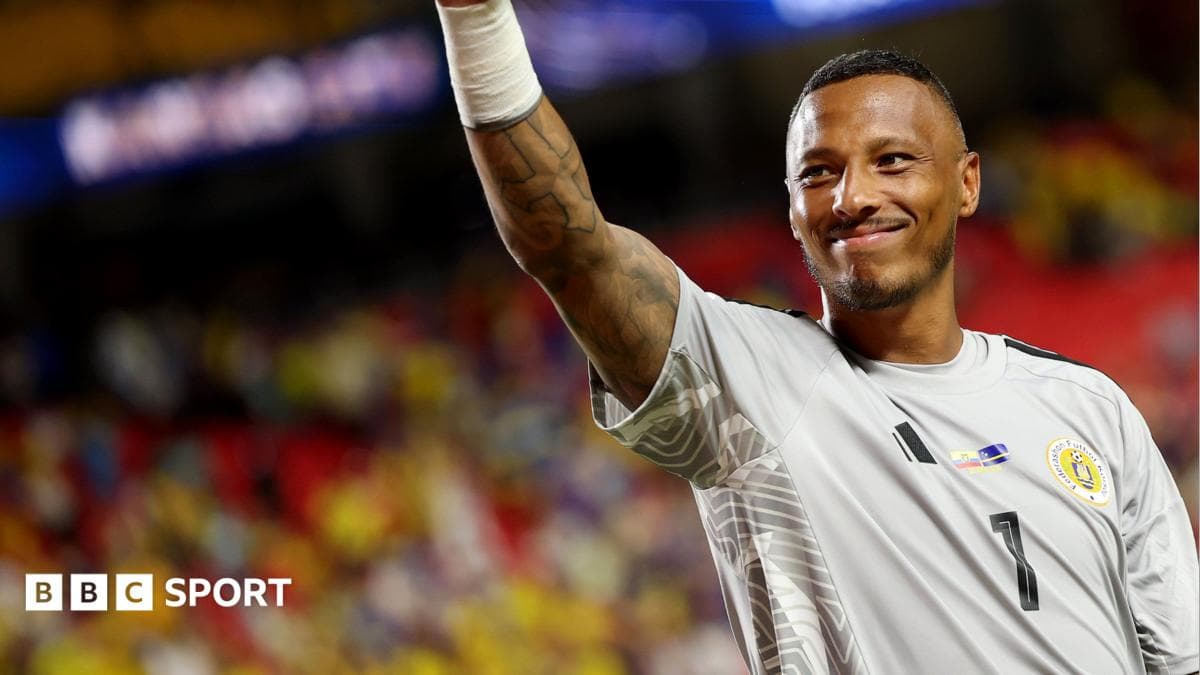
Meet the record-equalling keeper who helped Curacao make history

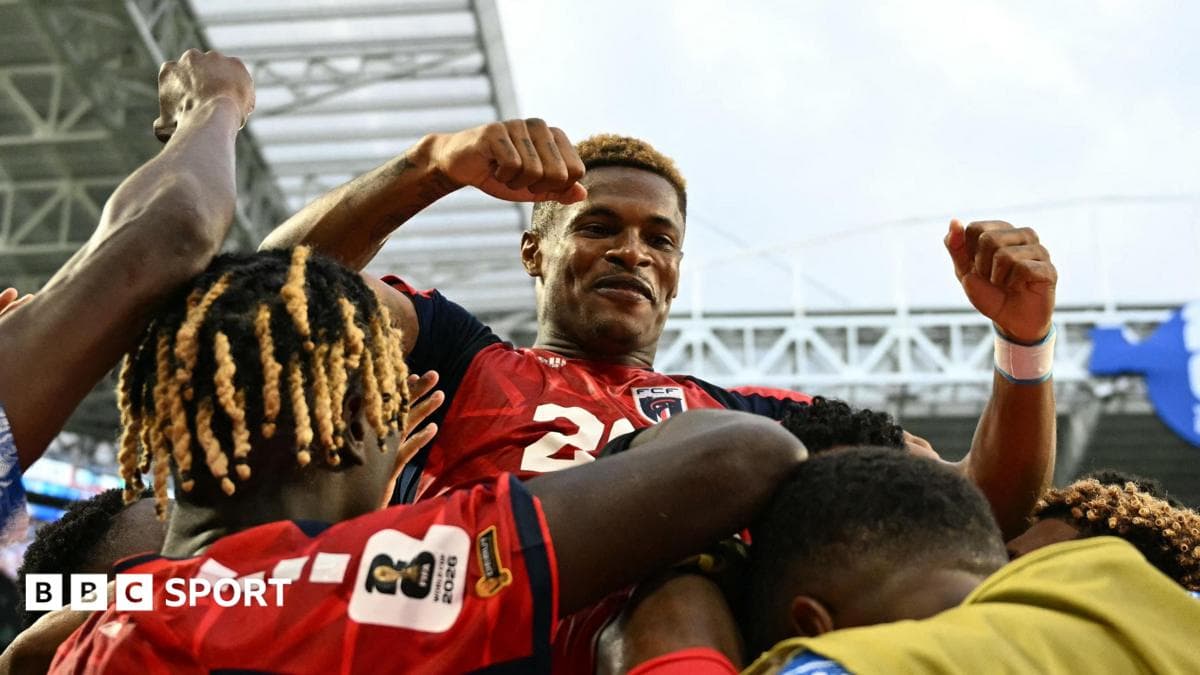
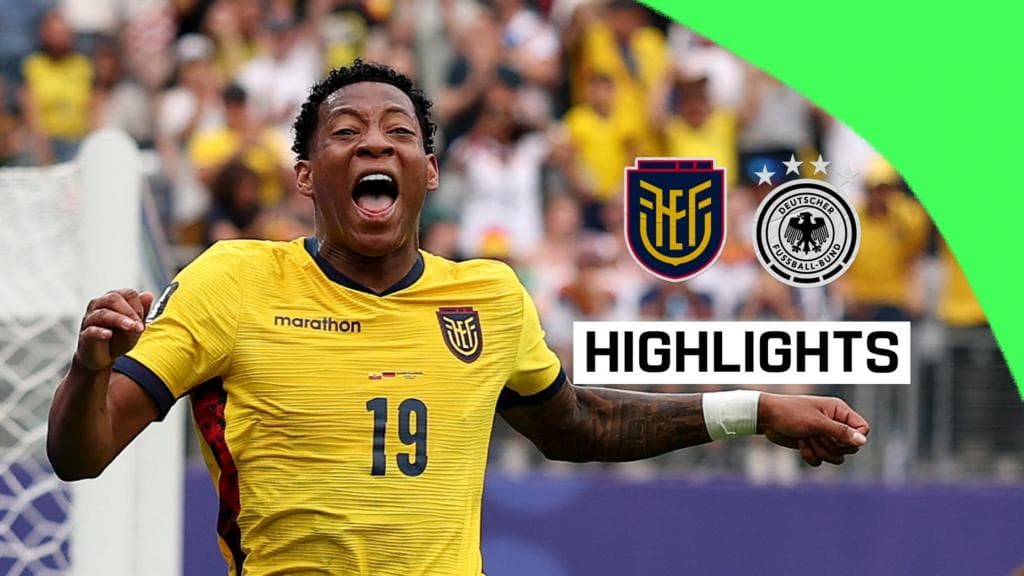
This video can not be played Impenetrable Room inspires Curacao to first World Cup point against Ecuador As Ecuador forward Enner Valencia raced through on Curacao's goal inside the opening three minutes, the outcome seemed inevitable. About 10 yards out and with just the keeper to beat, he looked certain to score. It would give Curacao a mountain to climb - and, as it did in the 7-1 defeat by Germany in their World Cup opener, could well set the tone for what was to come. But goalkeeper Eloy Room anticipated where Valencia's shot was headed, stooped low to his left and clawed the ball around the post. It was an improbable, barely believable save. And the tone was, indeed, set. By full-time, BBC Sport pundit and former Arsenal defender Martin Keown was joking a calculator might be needed to tot up the number of times Room had bailed his team out. Yet it was Ecuador who were left counting the cost of their missed chances as World Cup debutants Curacao celebrated their first-ever point in the tournament. Room, the 37-year-old Miami FC keeper, produced a remarkable and record-equalling performance, making 15 saves to keep his country level and eventually secure a goalless draw which will live long in the memory of the island nation. Since records began in 1966, no goalkeeper has made more stops in 90 minutes of World Cup action, according to Opta. Only Tim Howard has made as many in a single game but, unlike Room, he failed to keep a clean sheet after conceding twice in extra-time for the USA against Belgium in 2014. "Take a bow, Room," said Keown on BBC One after the 0-0 draw. "Absolutely magnificent. The number of saves, you were almost getting a calculator out at the end of the game to count them up. "It just became a shopping list of saves. His reactions were first class. He seemed destined to keep a clean sheet all night." It was a performance that inspired Room's country to their biggest-ever result. Eloy Room and Dick Advocaat celebrate a historic result for Curacao The fact Curacao are even in the competition has a lot to do with the Dutch-born goalkeeper Ҁ“ and the oldest member of their squad - as he made a crucial save in a 0-0 draw with Jamaica which secured their qualification in November. Patrick Kluivert was manager of the Blue Wave in 2015 and it was the former striker who called former Netherlands Under-21 international Room to convince him to play for the country where his father is from. Hailing from Nijmegen in the Netherlands, Room played the early part of his career in the Eredivisie. He made over 200 appearances across 10 years in the Dutch league including a title success with PSV and cup glory with Vitesse before moving to the USA and Columbus Crew in 2019. After winning the MLS Cup with Columbus Crew in 2020 and the save-of-the-season honour, Room briefly returned to Europe but ended up back in the US with Miami FC, who compete in the second tier. The goalkeeper, who loves to play padel and believes it helps improve his reflexes, may have made 15 saves in one World Cup match - but he did not make more than five in any one of his nine league games this season for Miami FC. The five-save match came in a 4-3 win over Louisville City at Miami FC's Pitbull Stadium, a 20,000-capacity venue which had just 713 fans in attendance that evening. But in front of 68,598 supporters at Kansas City Stadium, he wrote his name into World Cup history on football's biggest stage with a series of superb saves (from a total of 27 shots) and stopped Ecuador scoring despite an xG of 3.05. "I still have to process myself," Room said. "The match is full of emotions. I knew it was going to be a tough match. "The first save, the tone was put in place, also for the team. It gave me confidence and I grew, we all grew, this was a team effort. "We've been fighting, fighting up to the last minute. Earning a point this way for Curacao is absolutely great." This video can not be played Curacao keeper Room equals World Cup saves record Room's display also helped create history for the island nation in their first ever World Cup. There was delirium when they took an early lead against Germany in their opening game, but it would end in humiliation as the European giants eventually stuck seven past them. Curacao next had to face Ecuador, a country ranked more than 50 places higher than them in the world who were looking to respond following defeat by Ivory Coast. With a population of just 156,000 and a land mass smaller than the Isle of Man, Curacao is the smallest nation to ever compete in the World Cup. The Caribbean island exists as a self-governing entity within the Kingdom of Netherlands and Dutch royalty King Willem-Alexander and Queen Maxima were in the stands to watch Dick Advocaat's side pull off this unexpected draw. It is just the third time a team ranked 80th or lower in Fifa's world rankings have earned a point at a World Cup (Curacao were 82nd before this fixture). Hosts South Africa claimed four points in 2010 (ranked 83rd) while New Zealand were also 82nd before their draw with Iran this year. "This evening is all about Curacao and what they've done, what they've achieved and that will feel like a victory for them," said Keown. "It's a foothold in world football. They didn't come here to just make up the numbers - that is an outstanding result for them." Curacao now face Ivory Coast in their final Group E game and, with this point secured, if they were to pull off a huge shock and beat the African nation then they would be heading into the last 32. But whatever happens, this night will be forever remembered by the tiny island nation punching above its weight. This video can not be played 'Curacao should build me a statue' World Cup fixtures and group standings How to watch the World Cup on the BBC Everything you need to know about the World Cup
From factory floor to World Cup star - Germany's super-sub Undav
Sports

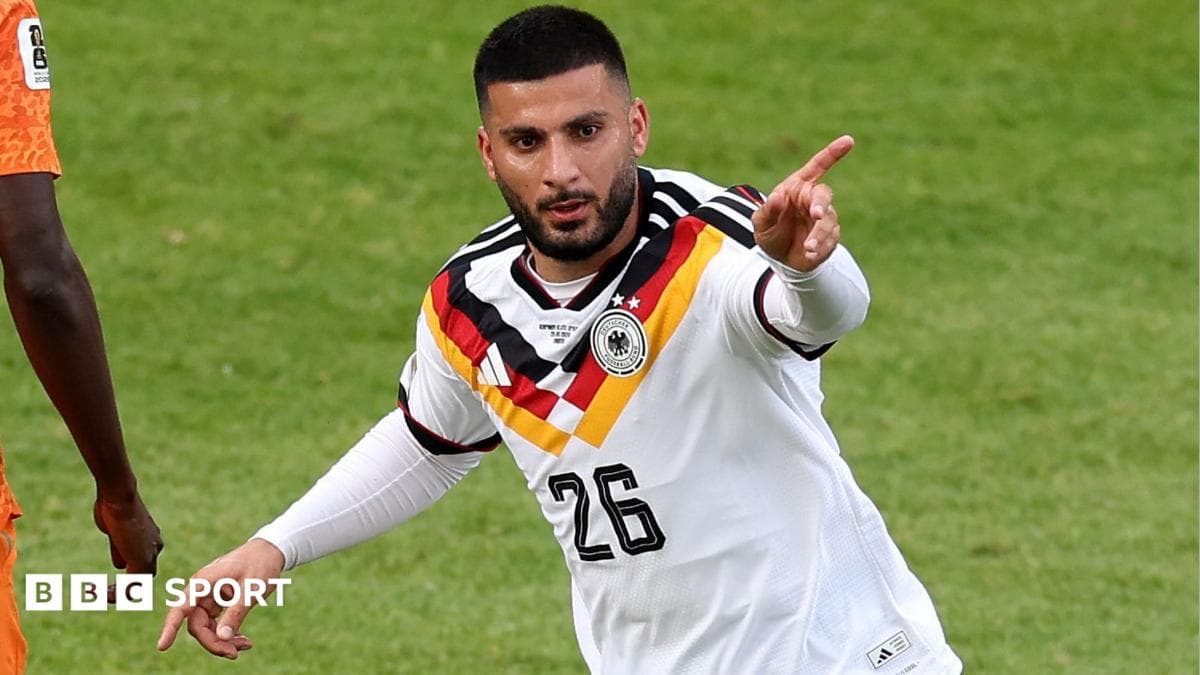
From factory floor to World Cup star - Germany's super-sub Undav

This video can not be played Undav's double wins it late on for Germany It was not long ago that he was being publicly called out by manager Julian Nagelsmann - but Deniz Undav is proving himself a key player for Germany at the World Cup. Undav's double in the dramatic 2-1 comeback win over Ivory Coast again underlined his value, sending Die Mannschaft into the knockout stages of the World Cup for the first time since their victorious 2014 campaign. With three goals and two assists, the striker has five goal involvements in two appearances off the bench - the joint-most by a substitute at a World Cup since 1966 (tying Cameroon's Roger Milla in 1990). But the 29-year-old's place in Germany's World Cup squad was far from certain after a public row with Nagelsmann following his last-gasp winner as a substitute against Ghana in March. Undav had spoken openly of his ambition to push for a starting role with Germany - only for the former RB Leipzig and Bayern Munich manager to respond by warning he was placing unnecessary pressure on himself with such comments. Nagelsmann suggested Undav would not have scored had he played from the start, before later revealing he had apologised to the forward. And Undav has since let his football do the talking - in emphatic fashion. So much so that he is now in serious contention for a starting spot at the World Cup, after taking his tally to nine goals in 11 international matches. "Yes, definitely," Nagelsmann said after Saturday's win, when asked whether Undav could start Germany's final group game against Ecuador on Thursday (21:00 BST). "I said before we can talk a lot about the different approaches. Why should I ruin his flow? He came in twice and got goals twice." It is only the latest chapter in a remarkable journey for a striker who has made a career of defying expectations. With his double against the Ivorians, Undav became the first German to score in his first two World Cup appearances since Miroslav Klose in 2002. That is elite company - but at one stage even taking part in a World Cup was a distant dream for Undav, who was rejected by Werder Bremen aged 14. At 17, he was earning £120 a week as a semi-professional in the German fourth tier while balancing his footballing career with eight-hour shifts at a factory. "When Werder told me at 14 that I didn't have a future with them because I was too small, it broke my heart," Undav said in an interview with Belgian outlet 7sur7. "But I did not abandon hope. I left the family home at 17 to sign for Havelse in the fourth division in Germany where I combined playing and training with working full-time, eight-hour days operating a laser machine in a factory. "I got up around 4am, went to the factory, then I went to training and got back home around 8pm... before doing it all again the next day. "I had to do that job for the money to live because I couldn't survive on the money from the football alone." Undav moved to Belgian second division side Union Saint-Gilloise in 2020, helping them earn promotion the following year and then scoring 25 goals in the top flight - which earned him a move to Brighton . But after only scoring five goals in 22 Premier League appearances in 2022-23 season, he was loaned out to Stuttgart who signed him permanently in 2024. Undav hit 19 Bundesliga goals in 2025-26 - finishing second behind Harry Kane in the top scoring list - to earn his World Cup spot. This video can not be played Undav scores twice as Germany fight back to beat Ivory Coast Nagelsmann has preferred Arsenal's Kai Havertz up front in Germany's wins against Curacao and Ivory Coast - but Undav has now made a strong case for a rethink. "When the game opens up he is great moving around," said the Germany boss. "I could say keep your flow and it's better you come in as the finisher. He really reached the highest point for the World Cup. "I could have him in the starting line-up. Every player would love to start, but I think he is happy as it is now because he played an important role and we are happy with his performance. "For Deniz it was clear, he gave us a lot in the last game when he was a sub. Deniz doesn't need to be prepared, he can jump in right away." In his last start for Germany, Undav scored twice and provided an assist in a 4-0 friendly win against Finland on 31 May. "It's a great feeling," said the Stuttgart forward after taking home the player-of-the-match award against the Ivorians. "I wanted to have it last time, it didn't work. Its wonderful, a fantastic feeling. For me to get the trophy is extraordinary, but the important thing is we won the game and go into the next round and see what happens." If he keeps up this form, more honours could be on the way - perhaps even the biggest prize of them all as Germany chase a fifth World Cup crown. World Cup fixtures and group standings How to watch the World Cup on the BBC Everything you need to know about the World Cup
Scheffler makes move but US Open is Clark's to lose
Sports

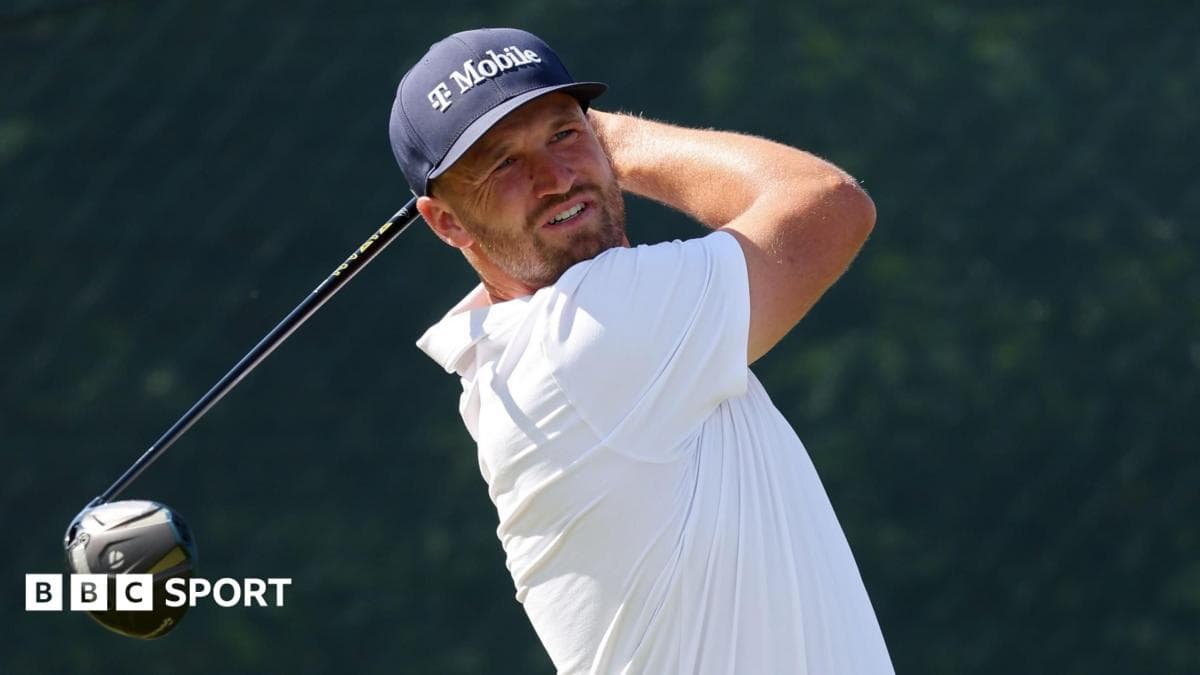
Scheffler makes move but US Open is Clark's to lose

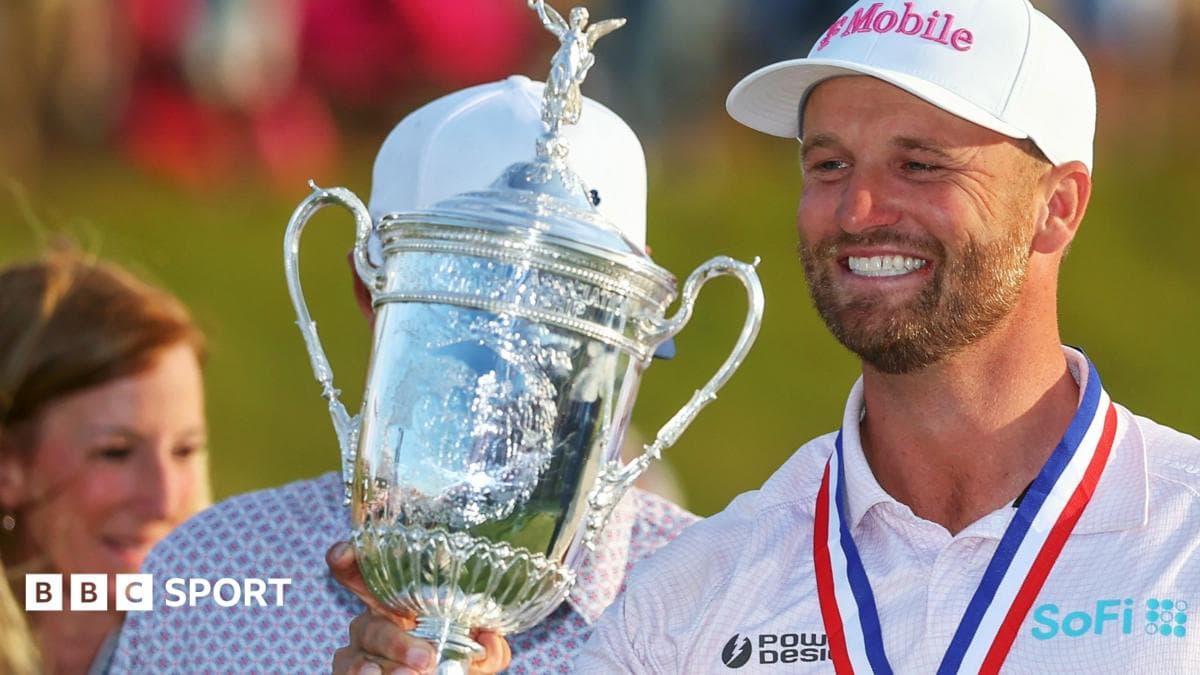
This video can not be played Clark digs deep on back nine to take six-shot lead US Open, round three leaderboard Leader: -7 W Clark (US); -1 S Scheffler (US), S Theegala (US), T Kim (Kor), S Stevens (US) Selected: Level X Schauffele (US); +1 T Fleetwood (Eng), C Morikawa (US), M Fitzpatrick (Eng); +2 A Fitzpatrick (Eng); +3 R McIlroy (NI), J Parry (Eng), A Rai (Eng); +4 J Rose (Eng), T Hatton (Eng); +7 R MacIntyre (Sco) In a third round that saw challengers rise but ultimately fall away, Wyndham Clark stood firm to position himself as the overwhelming favourite to win a second US Open title. Not only did the American fail to budge from the top of the pile, the 32-year-old extended his lead from four to six strokes as he looks to become the first wire-to-wire winner of the tournament since Martin Kaymer in 2014. Clark delivered a masterclass in scrambling at Shinnecock Hills before signing for a level-par 70 that gives him a commanding advantage heading into Sunday's final round. Sahith Theegala, Tom Kim and Sam Stevens are among a quartet at one under but ominously for Clark, so too is Scottie Scheffler, who arguably represents the biggest danger to him repeating his triumph at the Los Angeles Country Club, in 2023. A shot further back and all but out of contention are Americans Sam Burns and Xander Schauffele, while Collin Morikawa and England's Tommy Fleetwood and Matt Fitzpatrick are at one over. But it is the presence of world number one Scheffler that will concern Clark the most, even if there has only been one occasion since the first Masters in 1934 that a six-shot lead has been overturned in the final round of a men's major championship - when Greg Norman faded and Nick Faldo claimed his third Masters title in 1996. "I feel good. I have got more and more comfortable every time I have got in these positions," said Clark. "Scottie is the best player in the world, and he's probably going to play really good. He always does, but it's nice to have a six-shot lead on him. "I'm just going to keep approaching it the same way. If I go through my process and hit the shots I know I can hit, I like my chances." US Open final round tee-times US Open round three as it happened - Clark finishes six clear of Scheffler as Fitzpatrick and McIlroy fade The biggest deficit that Scottie Scheffler has overcome in a final round to win previously is five strokes at the Players Championship in 2024 At the end of the delayed first round on Friday, Scheffler was joint 49th after opening with a two-over 72. On Sunday, he will be in the final pairing heading out alongside Clark. For all of Clark's heroics on Saturday, and there were plenty, including a magnificent eagle at the par-five 16th - the only three on that hole so far this week - and several audacious escapes to get up and down for par, it will be another matter entirely to see how his game stands up with the world's best player metaphorically breathing down his neck. A formidable opponent in any circumstances, Scheffler will not lack for motivation. On the day he celebrates his 30th birthday, he has an outside chance of winning a fifth major title and joining an exclusive club of six other players to have completed a career Grand Slam. Only Gene Sarazen, Ben Hogan, Gary Player, Jack Nicklaus, Tiger Woods, and Rory McIlroy have won the full set of major titles but Scheffler put himself back into the conversation with a one-under 69 in the third round. "It would be special," said Scheffler. "This tournament means so much to me. All I can do is go out there and try and execute. I have an opportunity to go out there and have a great round and give myself a chance to win the tournament. "We've been battling hard for a few days and I did a good job of keeping myself in the tournament. I'll need a really nice round if I'm going to try and catch Wyndham." US Open 18-21 June Shinnecock Hills, New York Live text updates of all four rounds on BBC Sport website and app. Live radio commentary of rounds three and four on BBC Radio 5 Live, Sports Extra and BBC Sounds. Scheffler's score was deceptively good on a day when gusting winds reached 40mph and ensured that the greens became firmer and even more perilous. Only one other player, Argentina's Emiliano Grillo - who moved to level par for the championship after signing for a three-under 67 - broke the par score of 70. It was attritional. As US Opens often are. Ten players began the day under par. By the end, there were only five. The third-round scoring average was 73.61, the highest of the championship. It took one hour and 50 minutes for the first birdie to be registered, one of only two in 70 combined holes played by the field over the opening two hours. Scheffler's performance was all the more impressive given he bogeyed the first two holes and his resurgence arrived entirely on the harder back nine. A birdie on the 10th provided some impetus but his chip-in on the 14th followed by an outpouring of emotion signalled a shift in momentum. Further birdies at the 15th and 16th helped him play the final nine holes in 32 shots, matching the lowest score of the week. But Clark's lead was barely threatened. Unheralded American Stevens briefly got within two shots at four under par but he was one of several players whose challenge faded on the back nine. Rory McIlroy was another. The Northern Irishman had a hat-trick of birdies from the fifth, one of which was a sensational 66-foot putt, to get to two under but five bogeys in his closing nine holes derailed his title hopes. And Fitzpatrick's hopes of adding to his 2022 US Open triumph were all but sunk by a ruinous run of three successive bogeys to start his round. The normally unflappable Yorkshireman, playing in the final group with Clark, had started four back at three under but by the final hole his frustration was evident after he hacked out of deep rough and then overhit a chip. It led to a fifth bogey of the round as he finished eight off the pace. Those at one under know they need to shoot low on Sunday and hope Clark makes mistakes. Perhaps they will follow Fleetwood in taking inspiration from the last US Open held at this Long Island layout when the Englishman shot a 63 in 2018's final round as he came from six back to finish one behind champion Brooks Koepka. Fleetwood, who will start eight adrift said: "We'll see what conditions bring. It's nice when you have good memories of a place, isn't it? I have great shots to go off and good feelings, so you know, I can draw on that." But equally Clark knows that if he can emulate the only three players to have finished under par at a Shinnecock Hills US Open - Ray Floyd in winning in 1986, and champion Retief Goosen and runner-up Phil Mickelson in 2004 - then the title is likely his.

Fastest World Cup to 100 goals in 68 years - are balls and breaks behind it?
Sports

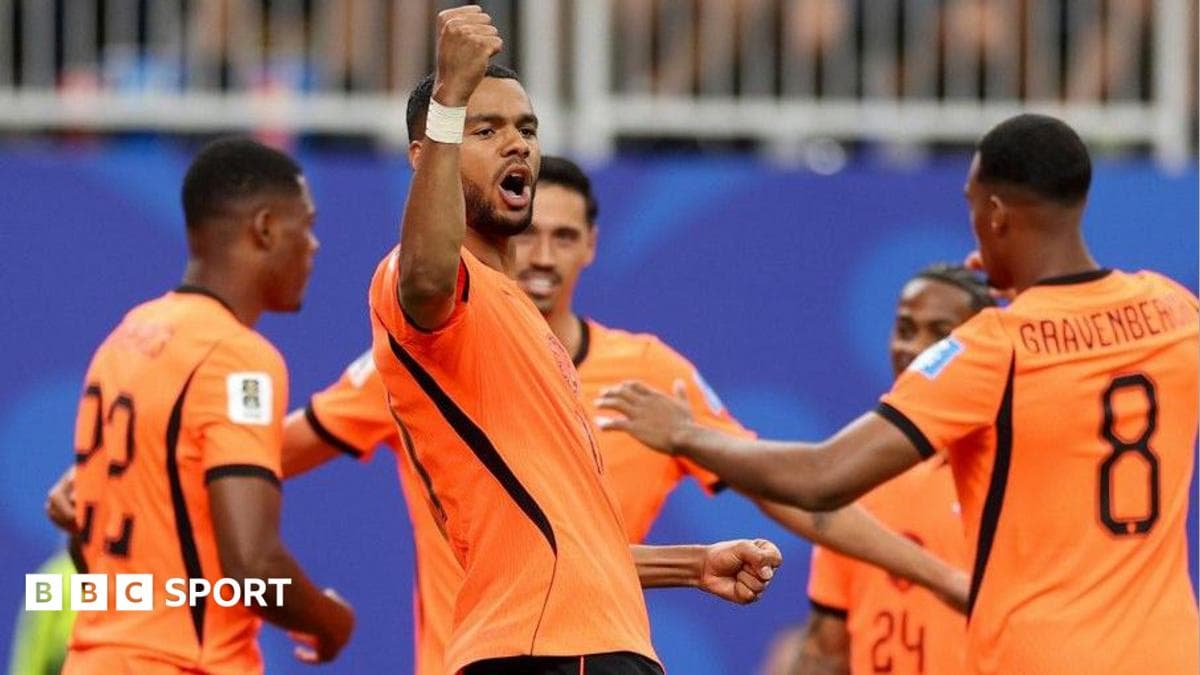
Fastest World Cup to 100 goals in 68 years - are balls and breaks behind it?

This video can not be played Messi, Mbappe and Vinicius Jr - the best World Cup goals from round one The 2026 World Cup has become the fastest edition of the tournament to hit 100 goals since 1958 - with the landmark reached in the 33rd game. Liverpool forward Cody Gakpo brought up the century with the Netherlands' third goal in a 5-1 win over Sweden on Saturday. It is the first time in 68 years it has taken 33 matches to reach triple figures. The only faster tournament was in Switzerland in 1954 - won by West Germany - when it took just 20 matches. "Probably the most compact and tactically tight game I've seen so far was Netherlands versus Japan - and even that had four goals," England's Euro 2022 winner Ellen White told BBC Sport. In the 2014 finals in Brazil, it took 36 games to reach 100, the same number as in 1982. It took 38 games at Argentina 1978 and the United States in 1994. This World Cup - co-hosted by the USA, Mexico and Canada - is averaging 3.09 goals per game and is on course to surpass 300 goals. So why has it only taken 33 games to reach 100 goals? This video can not be played Quinones nets opening goal of 2026 World Cup Mexico's Julian Quinones opened the scoring in this World Cup in a 2-0 win over South Africa on 11 June. The goals have continued to fly in since that opening match in Mexico City. From Germany's 7-1 rout of debutants Curacao in Houston on 14 June to Canada's 6-0 hammering of Qatar in Vancouver four days later, there has been an avalanche of goals. One of the reasons for so many goals could be the Adidas 'Trionda' ball used in matches. It appears as though several goalkeepers have already been caught out by the flight of the ball. That was evident earlier this week when France captain Kylian Mbappe scored his second goal of the game - and longest of the tournament - by beating Senegal goalkeeper Edouard Mendy from 30 yards. It was one of five strikes from the first round of fixtures that were scored from more than 22 yards out. Two of those goals were scored by Sweden's Yasin Ayari against Tunisia - from 24.8 yards and 24.3 yards respectively. Goals from Australia's Connor Metcalfe (25.6 yards against Tunisia) and Ismael Saibari (24.7 yards against Brazil) make up the top five. Former England goalkeeper Joe Hart, speaking to BBC Sport, has suggested goalkeepers are struggling to get to grips with the ball. Hart noticed the ball rushing Jordan Pickford quicker than expected when Martin Baturina equalised for Croatia against England on 17 June. More than 10 goals have been scored from outside the penalty area, not to mention tap-ins after keepers have fumbled swerving shots. "There are one or two occasions where this football has not necessarily behaved as you would expect it to," former England goalkeeper Paul Robinson, who is working at the World Cup for BBC Sport, said. "It is something to keep an eye on." It isn't the first time World Cup balls have caused problems. During the 2010 tournament in South Africa, the 'Jabulani' became well known for its swerve, dip and drift, which was thought to have contributed to several long-range goals. At the time, England's David James was one of several players to criticise the ball, saying it would "allow extra goals" and "make some goalkeepers look daft". "The ball is dreadful," said James. "It's horrible, but it's horrible for everyone." By the end of that tournament, 26 out of the 145 goals scored were from outside the area. Goalless draws at this World Cup have been about as rare as Neymar making an appearance on the pitch for Brazil. Thirty-three games deep into the newly-expanded 104-match tournament, there has been just one. And what a memorable goalless draw it was for debutants Cape Verde who held 2010 world champions Spain in Atlanta on 15 June. The Blue Sharks are one of four nations making their debuts at the expanded 48-team World Cup along with Curacao, Jordan and Uzbekistan. While Cape Verde frustrated Spain, Curacao - the smallest nation ever, by size and population, to take part in the tournament - conceded seven against Germany in their opening game. "Of course, having more teams and lower-ranked sides has had an small impact in terms of quality," said former Brentford and Tottenham boss Thomas Frank. "But aside from a few matches, like Germany against Curacao where the game eventually got away from them, not that many sides have been blown away so far." Jordan, 68th in Fifa's rankings, , external opened their campaign with a 3-1 defeat to Austria, while Uzbekistan lost by the same scoreline to Colombia. Has the gap between games been a factor in so many goals being scored? Mexico, who kicked the whole things off on 11 June, had to wait a week before playing again against South Korea. Has that given the more powerful teams a chance to refresh and recharge before playing again? This World Cup (3.09 goals per games) is exceeding the scoring rate from Qatar four years (2.69 goals per game), with that tournament played in December to mitigate the soaring summer temperatures in the Middle East. So could the heat in North America be leading to physical struggles - and more goals? Of the tournament's 105 goals (after Germany's win over Ivory Coast), 30 have arrived between the 76th minute and full-time (28.6% - on pace to be the sixth-highest in history and the highest since 2014). There have also been a high number of costly errors leading to goals. Tunisia's Ellyes Skhiri lost possession in a dangerous area against Sweden, allowing Viktor Gyokeres to score. The North Africans committed six errors leading to shots in total, four of which resulted directly in goals, as Graham Potter's side ran out 5-1 winners in their opening game. Elsewhere, have hydration breaks - booed by fans at some games - allowed teams to reset and then go on and score? The mandatory three-minute breaks at all 104 games are meant to be used for players to take in liquids, but head coaches have used them to make tactical changes and issue fresh instructions to players. Brazil were trailing Morocco 1-0 in their opening game in New Jersey but were back on level terms within 10 minutes of the restart after a first-half drinks break. "You can tell the players what to do," said Switzerland boss Murat Yakin. "We are able to show them images. During three minutes we can talk to them, talk about substitutions, we can talk about changes." This video can not be played 'Magnificent' - Messi scores hat-trick to equal Klose scoring record Another factor behind the goal surge is that many of the big names have turned up and hit the ground running. Lionel Messi hit a hat-trick against Algeria, Kylian Mbappe fired a double against Senegal, while Vinicius Jr has scored in each of Brazil's two games. Erling Haaland, who won the 2025-26 Premier League Golden Boot for his 27 goals for Manchester City, also scored a double in Norway's 4-1 win against Iraq , as did England captain Harry Kane in the victory over Croatia . "We have seen so many times at either World Cups or Euros that top players have not been fully fit after a tough season, which is exactly what happened to Harry Kane two years ago at Euro 2024," added Frank. "But he and other key players like Lionel Messi and Erling Haaland are all flying and couldn't look fitter." Speaking to BBC Sport, former Manchester City defender Micah Richards said: "The forward players at this World Cup look so confident. "It's like they all believe they are going to score and everyone is backing themselves. It's become less about tactics and more about the feel-good factor of being at a World Cup." World Cup fixtures and group standings How to watch the World Cup on the BBC Everything you need to know about the World Cup
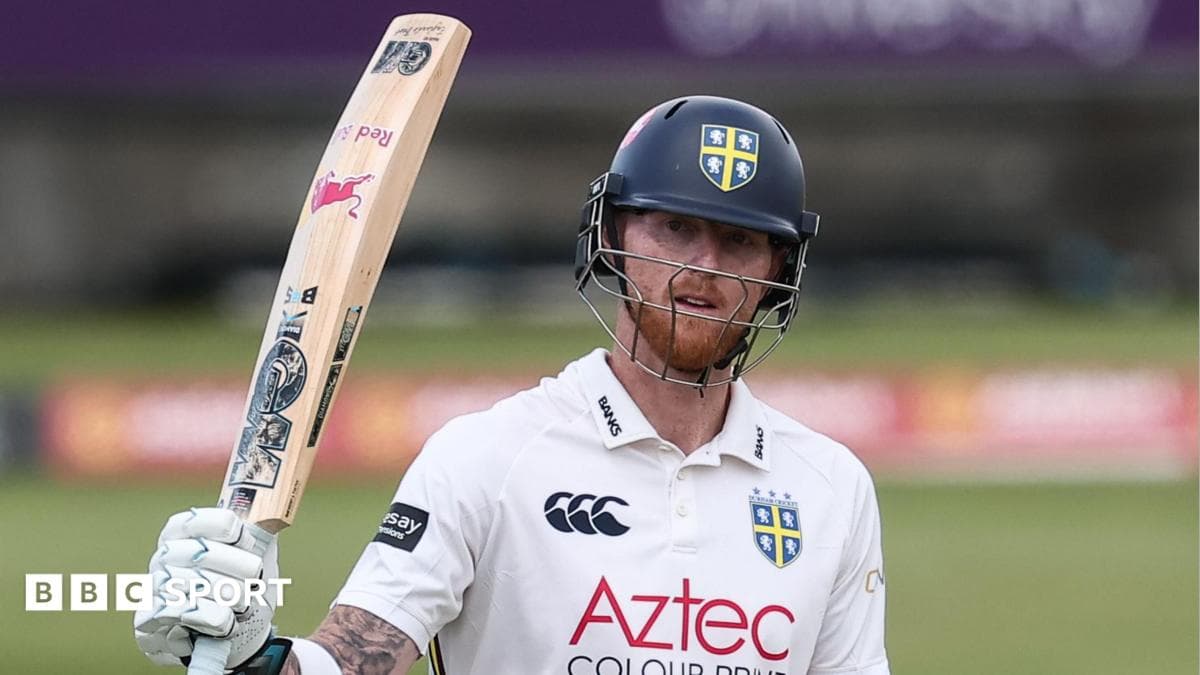
Tongue admits England have missed absent Stokes
Sports

Tongue admits England have missed absent Stokes

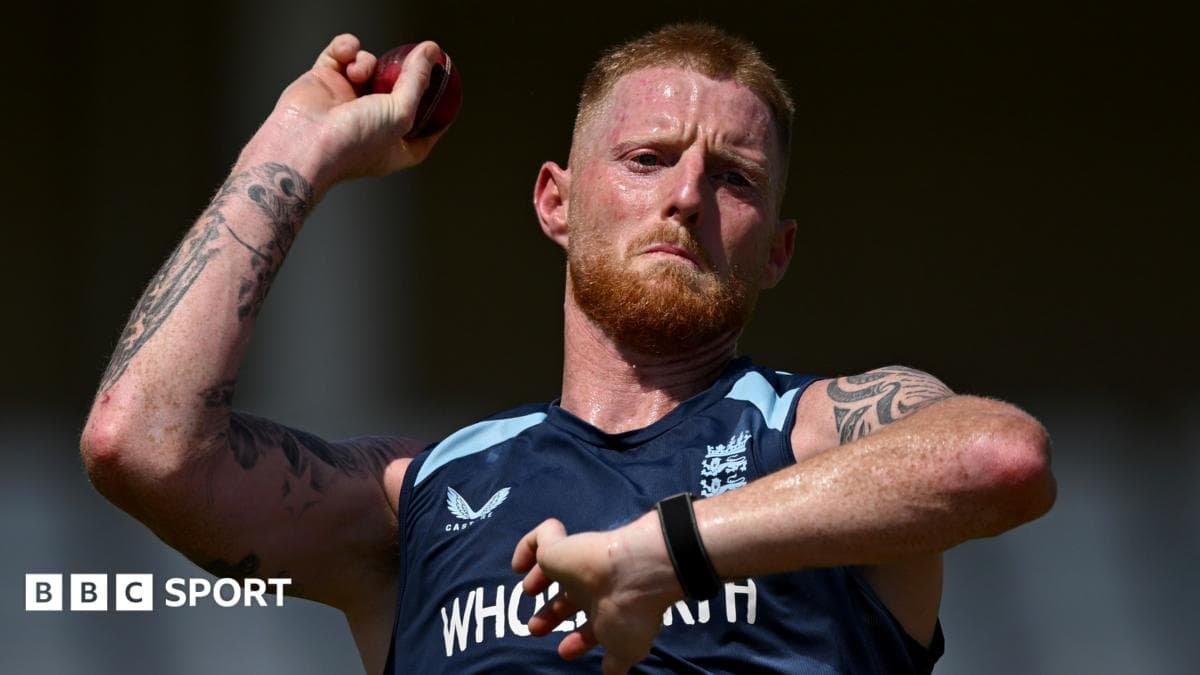
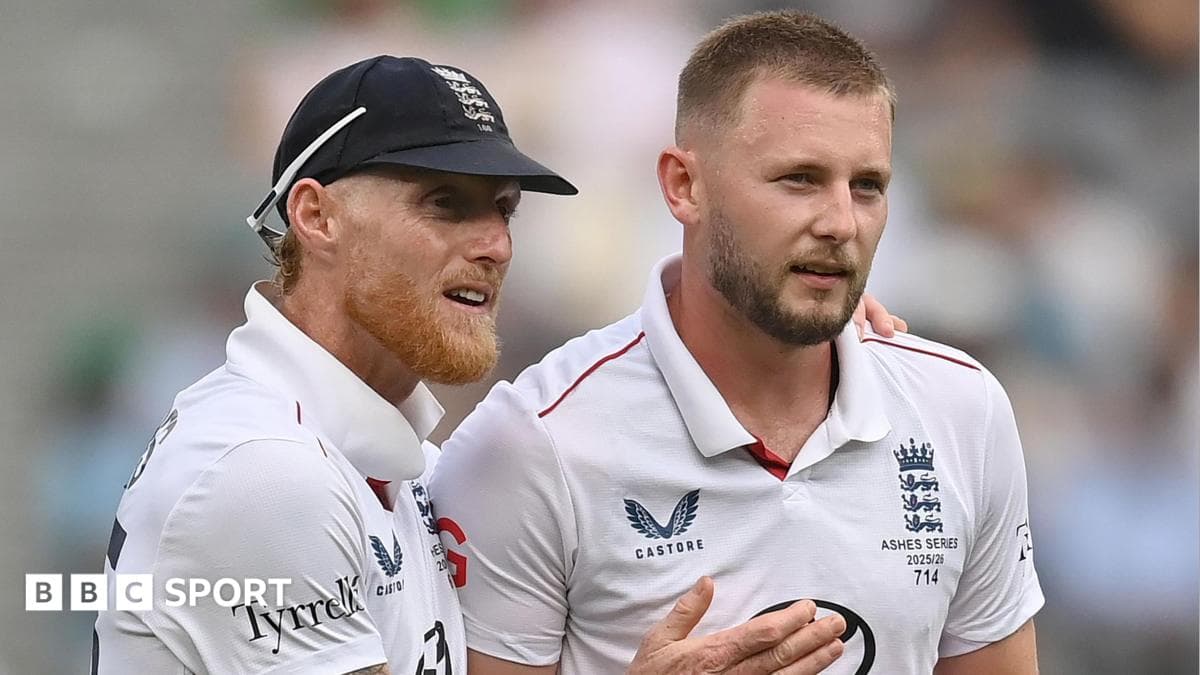
Ben Stokes' 95 for Durham was his highest score in any cricket for almost a year Pace bowler Josh Tongue admitted England have missed absent captain Ben Stokes as they head for a heavy defeat in the second Test against New Zealand. Stokes and pace bowler Gus Atkinson have been made unavailable for the Test at The Oval pending an investigation into an incident in a London nightclub. But both have been permitted to play county cricket and Stokes struck 95 for Durham against Northamptonshire on Saturday. It is his highest score in any cricket since the century he made for England in the fourth Test against India last July. Before the nightclub episode, England head coach Brendon McCullum had backed 35-year-old Stokes to return to form with the bat. Speaking at the end of the fourth day of the second Test, Tongue said he was unaware of the score Stokes made for Durham. But when asked about Stokes' return to form, Tongue replied: "Stokesy is an unbelievable player. "I made my England debut when he was captain. I've got huge respect for Stokesy and it's always nice seeing him get some runs." This video can not be played Root drags England fight into final day against NZ Root drags England fight into final day against NZ Stokes hits 95 for Durham while England struggle Stokes' absence as a leader and all-rounder have been noticeable as England head for their third successive defeat in Tests at The Oval. Chasing a fanciful and world record target of 463, the home side closed Saturday on 182-5 and probably would have been beaten inside four days had it not been for stand-in captain Joe Root's unbeaten 75. Without Stokes to balance the team, England have been forced to pick Jordan Cox as a specialist batter at number seven and omitted spinner Shoaib Bashir. After Ollie Robinson missed the match with an injury and Jamie Smith also sat out on paternity leave, Root was left to lead an England team including three debutants and its fewest combined caps in 17 years. "Yeah, we've missed him," said Tongue of Stokes. "Obviously we've got a lot of leaders in our team as well. "Rooty stepping in as captain is an unbelievable player and an unbelievable leader as well. It's been good." Stokes and Atkinson broke England's midnight curfew celebrating the win over New Zealand in the first Test at Lord's. The pair were present when a member of security staff was struck by a Saracens rugby player. Both Stokes and Atkinson have been spoken to as part of the investigations and could be available for the third Test at Trent Bridge, starting on Thursday, with Stokes in line to return as captain. This video can not be played Root drags England fight into final day against NZ Stokes could return as captain for third Test against NZ Durham bemused by Stokes doubts as England captain finds home comfort Get cricket news sent straight to your phone

Stokes & Atkinson 'blameless for violent conduct'
Sports

Stokes & Atkinson 'blameless for violent conduct'

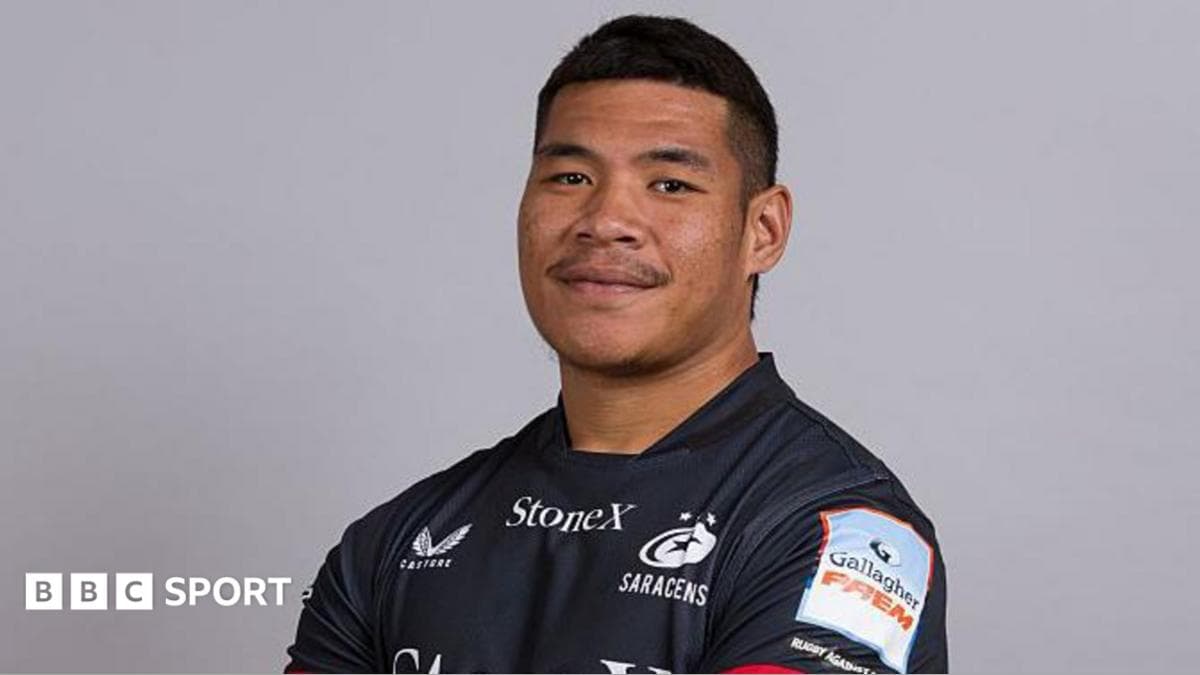
Ben Stokes and Gus Atkinson were made unavailable for England's defeat by New Zealand in the second Test Ben Stokes and Gus Atkinson breached "contractual obligations" but were blameless for "violent conduct" in a London nightclub, according to an investigation. Captain Stokes and pace bowler Atkinson were made unavailable for England's second Test defeat by New Zealand pending an inquiry into events that unfolded when they were out celebrating victory in the first Test two weeks ago. They breached the team's midnight curfew and were present when a member of security staff was struck by a Saracens rugby player. A disciplinary hearing by the England and Wales Cricket Board (ECB) found Stokes and Atkinson to have "breached specific contractual obligations that require England players to at all times maintain the highest standards of conduct and act in the best interests of England cricket". Both men have been given a written a warning, with no further action added to their removal from the second Test. They have been named in the squad for the deciding Test at Trent Bridge, starting on Thursday, with Stokes restored as captain. A separate inquiry by the Cricket Regulator has found that Stokes and Atkinson have no further case to answer. The member of England's security staff was left bloodied and in need of medical attention when he was struck by Saracens player Totoa Avuaa. The ECB statement said Avuaa attacked both Atkinson and the security guard. "No blame should be attached to the players for violent conduct at the nightclub," said the ECB. "Stokes was not involved in the altercation and did not witness either incident. "The evidence the ECB has seen demonstrates that Atkinson was the victim of unprovoked attacks and did not retaliate on either occasion." Get cricket news sent straight to your phone

The beauty of sharing your child's first World Cup
Sports

The beauty of sharing your child's first World Cup

There is nothing like the wonder of your first World Cup - the misty-eyed nostalgia of youth, summers that seemed to last forever, the gargantuan stars you believed were immortal. In a blink of an eye those childhood heroes became a cut-to in the crowd - Ronaldo, the original, with Roberto Carlos and Kaka - greying legends in suits instead of swashbuckling boots. Still a twinkle in their eye. Aura with achy knees. Tournaments once so defined now blur into adulthood ambivalence, postcards plotted along the timeline of your life, the details growing grainy. That one you rushed home from school for, those barbecues with your mates, the one you watched in your first house. The summers ended - with a wink, a shootout or a "why didn't he square it?" The World Cup cycle seems to pedal round far quicker as an adult, yet something huge changed since Qatar four years ago - a tournament lived through a sleep-deprived haze in soft-play centres and binge-watching Bluey. But the past few weeks have brought an unexpected joy. Because, yes, there is nothing like your first World Cup, but there's also nothing like the first World Cup you enjoy with your kid. In the nick of time, our almost six-year-old has become head-over-heels obsessed with the beautiful game - marvelling at its greatest stars, hooked by a cast of new characters in vibrant kits, kidsplaining their celebrations to his parents. What a privilege to share those earliest footballing memories with him. We thought it might not happen, and that would be absolutely fine, because you can dress them up in Three Lions babygrows and joke about Project Mbappe, but falling in love with the sport has to come naturally - through knees grazed on the playground and a childhood intrigue that breeds between young mates. "Who's better, Messi or Ronaldo?!" The eternal question. Lionel Messi, at 38, stills resonates with kids in the playground Four years ago, any effort to watch a game together was met with the same stubborn toddler resistance as suggesting a midday nap. Suddenly, here we are, knee-deep in Panini swapsies, reeling off an all-star French attack, pointing out the flags and badges of all 48 nations. Shiny Brazil! Of course, the medium through which he is engaging with this World Cup is different from our childhood experiences, which in turn are different to our parents'. "Grandad saw Pele at Goodison Park?" Poignant for Grandad because he's an Evertonian, impressive for the little one because his favourite YouTuber - Chuffsters - pulled a 99-ranked Pele icon card. This isn't a bedtime-friendly World Cup for those this side of the pond - we've not yet stayed up late and there's no dashing into school early, class teacher wheeling out a chunky television to catch Senegal shock France. Instead, this World Cup is about climbing into our bed at first light with his little brother, listing yesterday's fixtures and predicting which star player is going to score - a thirst fulfilled through highlights packages. A hearty hit of goals before breakfast. Waking up last Wednesday was like Christmas morning. Every clip unwrapped the gift of another stunning display. Kylian Mbappe, Erling Haaland, LIONEL MESSI GOT A HAT-TRICK! Because, despite being the same age as most of their parents, it's still Messi who resonates for today's kids - his shirt dotted across Sunday morning playing fields. But for all that's different, the core things stay the same. Filling out sticker books and writing on wallcharts, unboxing football figures - we've two Bradley Barcolas, if anyone needs? - hours spent pretending to be Harry Kane or Jude Bellingham in the garden, trying to recreate the tournament's greatest goals. This will be the summer we buy a new fence. It's seeing your heroes come alive on screen and falling in love with unexpected new ones. Where can you find a Vozinha shirt? To enjoy the game through the eyes of your kids is to see it in a different light. One of wonder and a million questions, those you haven't thought about for decades. An experience completely ignorant to the ills of modern football, to politics, ticket prices or hydration breaks. Just the pure magic of the game, an innocent curiosity to know more about it, the uncontrollable desire to 'Siuuuuu!' down supermarket shopping aisles. Football can be tribal and divisive but at its heart is a sport that unites, whether that's supporters from across the globe embracing each other in a Mexico City fan park or a dad and his young lads gathered around a sticker book in Manchester. Because the World Cup is a phenomenon that transcends generations. My grandpa died earlier in the tournament - his last interaction with the boys was to post some England stickers picked up with his weekly shop. The sadness of losing him sated by a small, thoughtful gesture - that will be how they remember him. Whether our young football anorak will remember the tournament too, who knows, and it doesn't really matter. Such is the glorious childhood gift of living in the moment, perhaps next week he'll have moved on to something else, maybe we'll be chasing Pokemon again. And we'll enjoy that together too. But right now, what a beautiful satisfaction it is to experience this World Cup through his wide-eyed wonder, to treasure this passion we share. So, here's to this summer. For me, this is the one that will last forever. Let us know how you are experiencing the World Cup Fastest World Cup to 100 goals in 68 years - are balls and breaks behind it? Meet the record-equalling keeper who helped Curacao make history Play BBC Sport's new World Cup predictor game World Cup fixtures and group standings

Sooryavanshi, 15, hits record 11-ball fifty
Sports

Sooryavanshi, 15, hits record 11-ball fifty

Vaibhav Sooryavanshi was the leading run-scorer in this year's IPL Teenage sensation Vaibhav Sooryavanshi struck a remarkable 11-ball 50 for India A, breaking the record for the fastest half-century in the history of List A 50-over cricket. The 15-year-old's latest remarkable feat came for India A against Sri Lanka A as he made 94 off 29 balls in a total of 377-9, a knock that included 10 fours and eight sixes. He faced just one dot ball in his fifty and hit five fours and five sixes from the other 10 balls to bring up the landmark. The previous fastest in 50-over cricket was Thisara Perera's 13-ball knock for the Sri Lankan Army in 2021, while the quickest internationally was 16 balls which was achieved by South Africa's AB de Villiers and West Indies' Matthew Forde. Sooryavanshi's knock came on the same day that he was not included in India's full squad for the upcoming one-day international series against England. He has been named in their T20 side for matches against both Ireland and England next month, when he could make his international debut after an incredible rise which has included being this year's leading run-scorer in the Indian Premier League (IPL). Virat Kohli could return to the ODI side if he passes a fitness test after a hamstring injury, while fast bowler Jasprit Bumrah is also included but batter Yashasvi Jaiswal and all-rounder Hardik Pandya miss out. The first T20 v Ireland takes place on 26 June before the five-match series against England begins on 1 July, followed by three ODIs starting on 14 July. India ODI squad v England: Shubman Gill (captain), Rohit Sharma, Virat Kohli (subject to fitness clearance), Shreyas Iyer, KL Rahul (wk), Ishan Kishan (wk), Washington Sundar, Axar Patel, Nitish Kumar Reddy, Kuldeep Yadav, Jasprit Bumrah, Prasidh Krishna, Harshit Rana, Arshdeep Singh, Gurnoor Brar. Is 15-year-old IPL wonderkid ready to play for India? Get cricket news sent straight to your phone

Doku criticised over plan to return home for birth
Sports

Doku criticised over plan to return home for birth

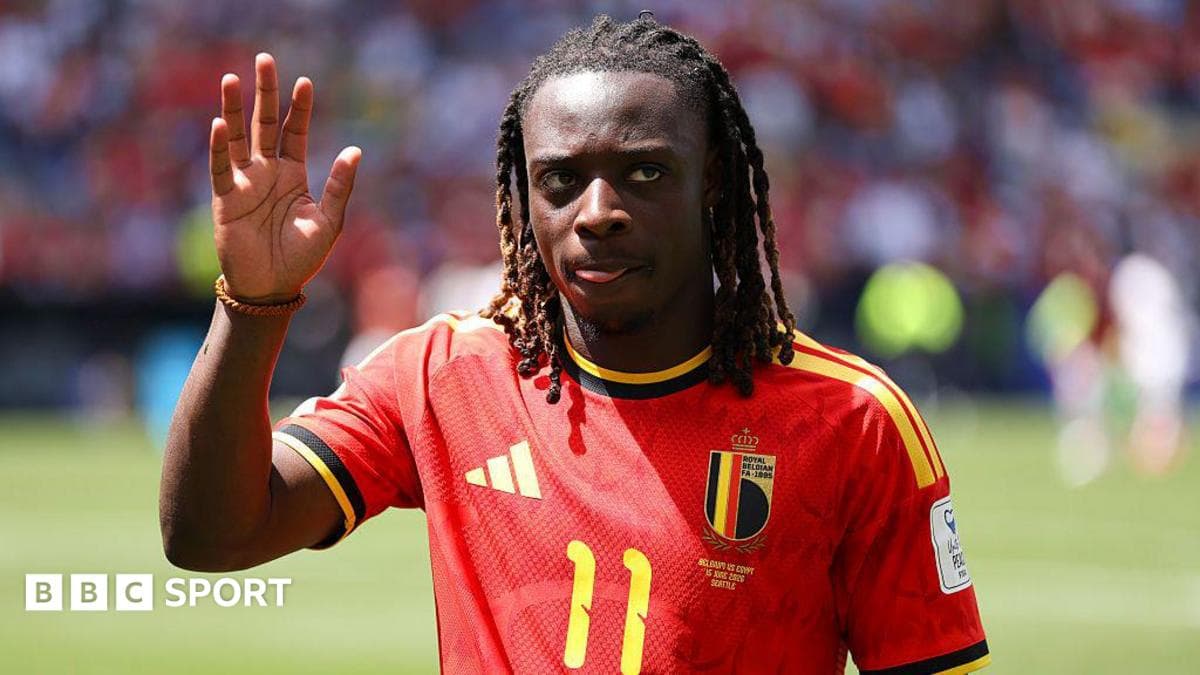
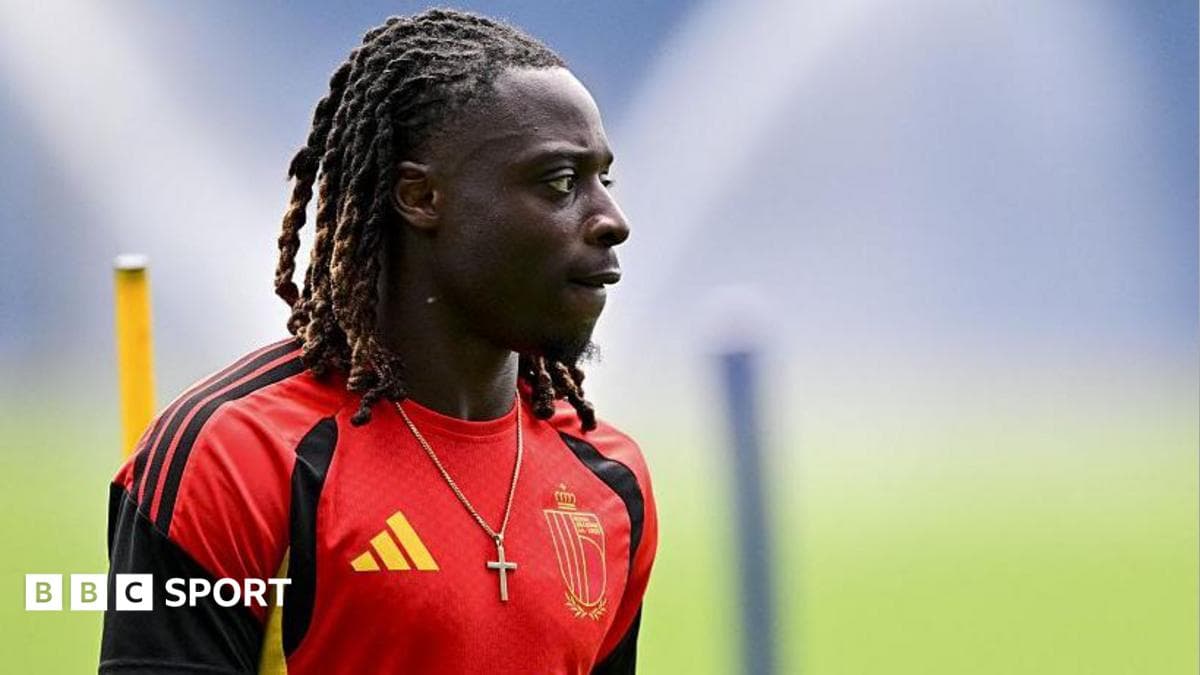
Jeremy Doku is ill and will miss Belgium's next game Winger Jeremy Doku has been criticised for saying he wants to leave Belgium's World Cup camp to be with his wife when she gives birth to their first child. Doku's wife Shireen is due to give birth during the second week of July and he intends to return home even if the Red Devils are still in the tournament, which would then be at the quarter-final stage. "It's my first child, so I Γ’Β€ΒŒwould ҁ definitely want to be there," the Manchester City forward, 24, told Reuters , external . "If you ask me what I want, my answer is that nobody wants to miss the birth of their first child. But I also Ҁ‹know that football Ҁ‹involves many ҁ other considerations. "I know the federation supports its players and understands their situations. We'll see what we Ҁ‹can do." However, Doku's plan to leave the USA and return home has brought fierce criticism from L'Equipe channel presenter France Pierron, who labelled a father "completely useless" at the time of their child's birth. "The World Cup is an incredible joy," she said in a message posted to the Facebook page of French sports publication L'Equipe. "There are hundreds of footballers who would kill to be in your shoes. It might never happen again in your life. "You're living out a childhood dream, yet you're going to walk away from it all to attend the birth of your child - a disgusting moment, if you'll pardon the expression, where the dad is completely useless." Doku has received plenty of support online following Pierron's remarks - including from retired boxer Brahim Asloum, who won light-flyweight gold for France at the 2000 Sydney Olympics. "A baby is your entire life. A World Cup is over when it is over," he wrote. Later on Saturday, Pierron released a statement on her X page in a bid to explain her comments and apologise for any offence caused. "I was expressing a personal opinion, within the context of a contentious exchange," she said. "I understand that they may have shocked, hurt, or wounded some of you, and I am sorry for that. "My intention has never been to minimise the place or role of fathers with their partner and their child." Belgium confirmed on Saturday that Doku will miss their second World Cup group match against Iran (20:00 BST) because of illness. Rudi Garcia's side drew their opening game with Egypt 1-1. World Cup fixtures and group standings How to watch the World Cup on the BBC Everything you need to know about the World Cup
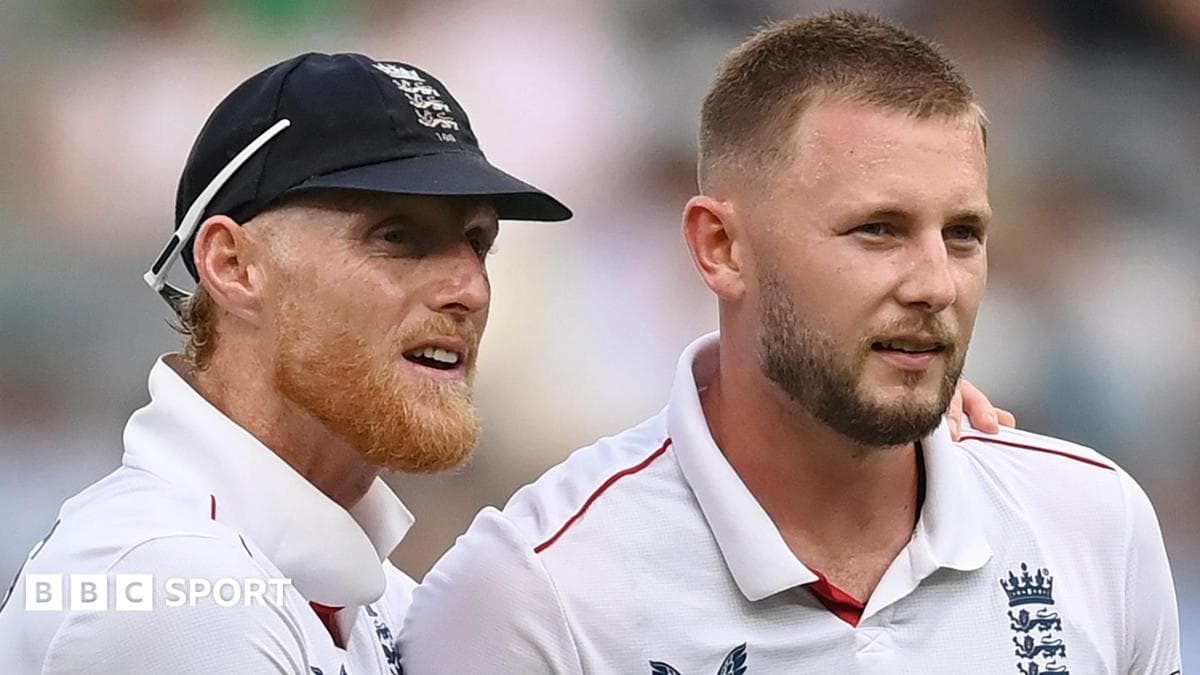
England embarrassed by Henry as NZ secure huge win to level series
Sports

England embarrassed by Henry as NZ secure huge win to level series

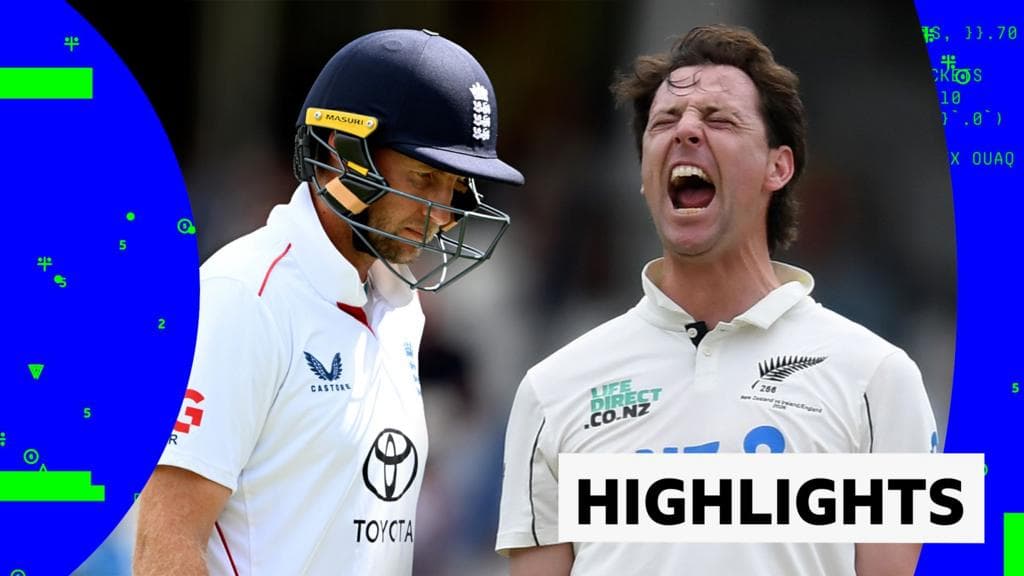
There was an error New Zealand crash through England's lower batting order, taking the five wickets required for victory in the first hour of play on day five, with Matt Henry finishing with 11 wickets in the match, as the tourists secure a 253-run victory in the second Test at The Oval to level the series 1-1 with one match to play. READ MORE: Chaotic England fortnight ends with huge defeat Available to UK users only.

Emotional Hodgkinson pulls out of UK 400m final
Sports

Emotional Hodgkinson pulls out of UK 400m final

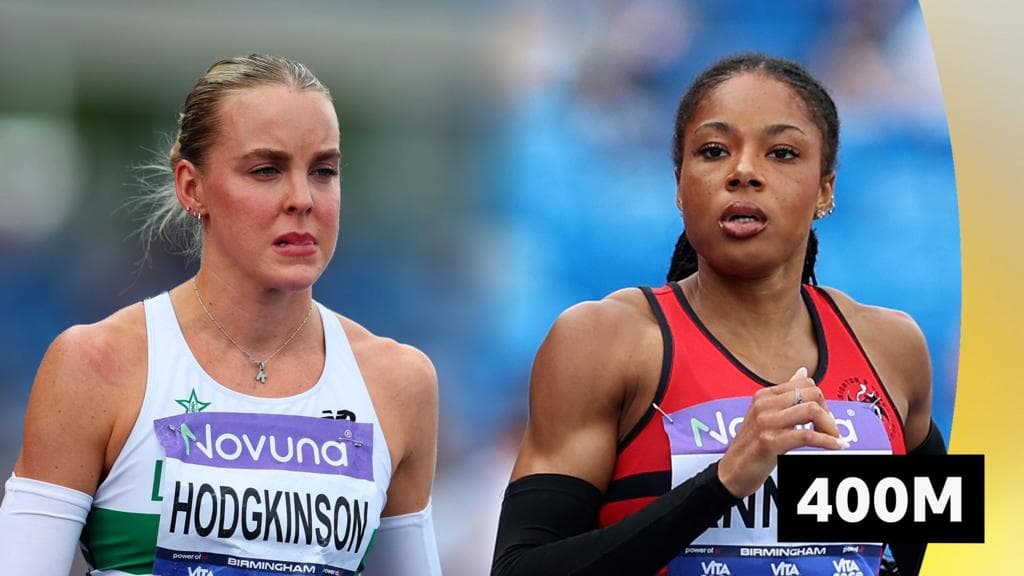
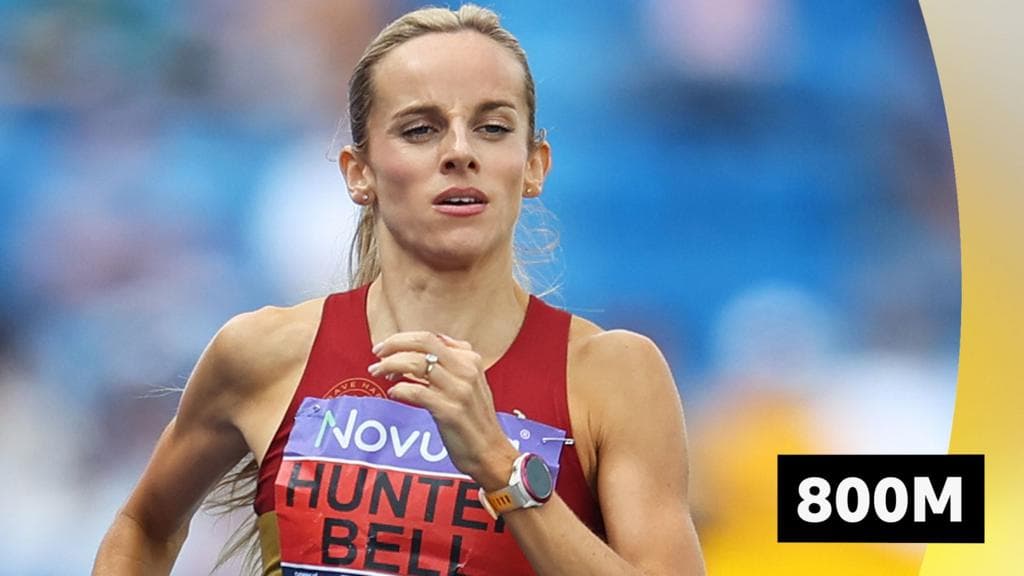
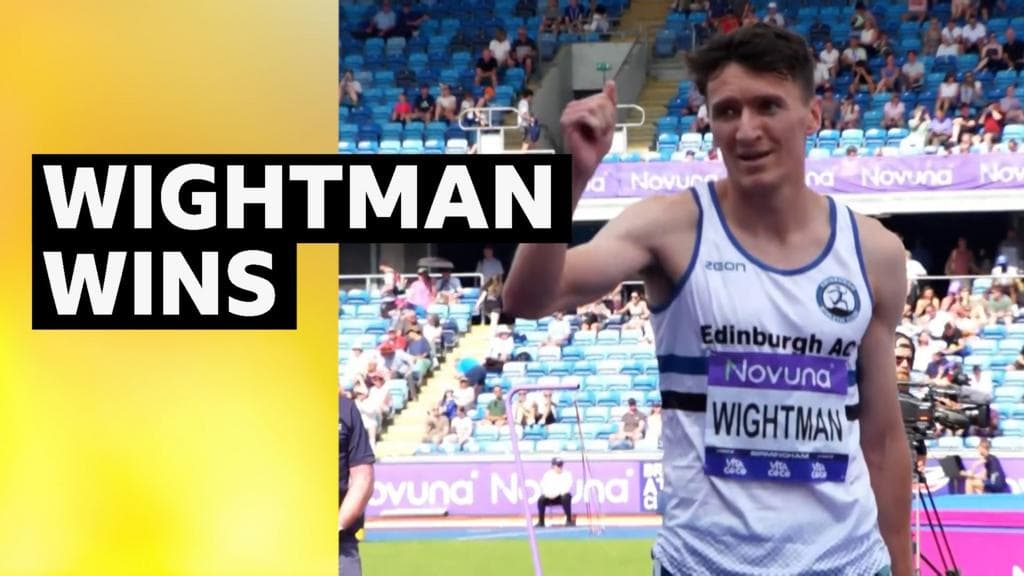
This video can not be played Hodgkinson forced to withdraw as Anning wins 400m title A tearful Keely Hodgkinson pulled out of the 400m final at the UK Athletics Championships moments before Sunday's race after feeling "a little twinge". The Olympic 800m champion has been competing over the shorter distance in a bid to improve her first-lap speed and challenge for the 800m world record this summer. After qualifying from Saturday's heats, the 24-year-old warmed up for the final in Birmingham but stepped out of her lane shortly before the finalists were put under starters' orders. Hodgkinson was emotional as she stood at the side of the track before making her way back inside the Alexander Stadium. BBC's commentary team later received a message from Hodgkinson's coach Jenny Meadows, saying she withdrew as she "felt a little twinge in her last strides before the race". Hodgkinson then added: "I wasn't feeling 100% standing on the start line, so I made the tough decision to step away and not race. I didn't want to risk anything this summer." Hodgkinson endured an injury-hit 2025 yet still managed to win bronze at the World Championships in September, with British team-mate Georgia Hunter Bell claiming silver. Her withdrawal on Sunday comes four weeks before the London Diamond League meeting, which she has earmarked for a tilt at a world record which has stood for 43 years. Amber Anning earned a reprieve after a false start in the 400m but the world indoor champion regrouped to retain her title, winning in a time of 50.16 seconds. Minutes before Hodgkinson's withdrawal, her friend and rival Georgia Hunter Bell retained her 800m title, leading throughout to win by a distance in one minute 55.93 seconds, breaking a championship record set by Kelly Holmes in 1995. This video can not be played 'Dominant display' - Hunter Bell wins 800m in record time The Alexander Stadium is also hosting the European Championships from 10-16 August and one of its stands has been named after Matthew Hudson-Smith for each event. The US-based Wolverhampton athlete became British champion for a sixth time as the 2024 Olympic 400m silver medallist won in 44.45secs. Ben Jefferies was a surprise second after smashing his personal best with 44.66, while reigning champion Charlie Dobson had to settle for third. After losing his 100m title on Saturday, Zharnel Hughes remained the British champion in his preferred 200m by running a championship record of 20.04 seconds to win from Nethaneel Mitchell-Blake (20.35). "With the 100m, I'm still trying to get myself sharp for it," said Hughes. "I'm not 100% yet, so it's taking it's time. But I trust it and I know I will get better as the season progresses. "I look forward to the 200m because it's my favourite event and I like to put on a show for the fans. They came out in their huge numbers today to support us and I'm thoroughly grateful for it. "I wanted 19 [seconds] today but my body's feeling it, it's tired. But 19's definitely around the corner and I know for a fact it's going to come right here when the European Championships come around." This video can not be played Hughes wins 200m with championship record Amy Hunt retained her 100m title on Saturday and despite winning 200m silver at last year's World Championships, the national title continues to elude her. She and Success Eduan were level as they came off the turn, before 21-year-old Eduan charged down the home straight to win in a personal best of 22.43, with Hunt second in 22.64. Jake Wightman has won 1500m gold and silver at the World Championships and is finally a national champion too having claimed the 800m in 1:45.40. This video can not be played Wightman wins 800m title

The World Cup records that look set to be broken
Sports

The World Cup records that look set to be broken

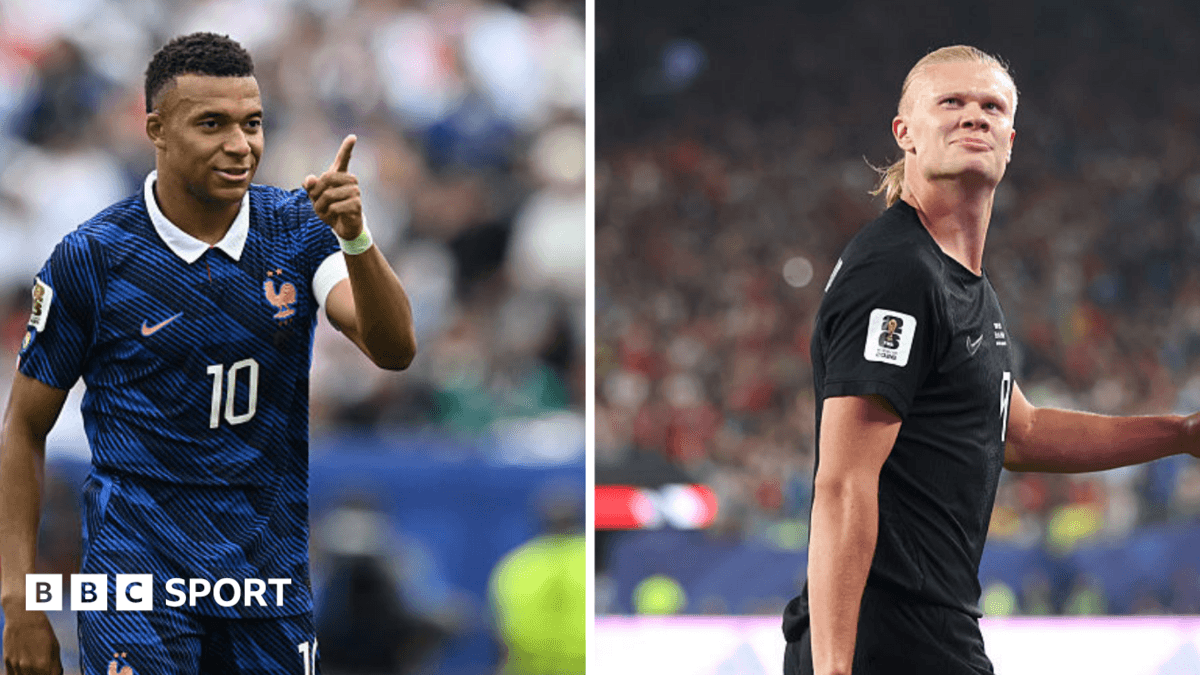
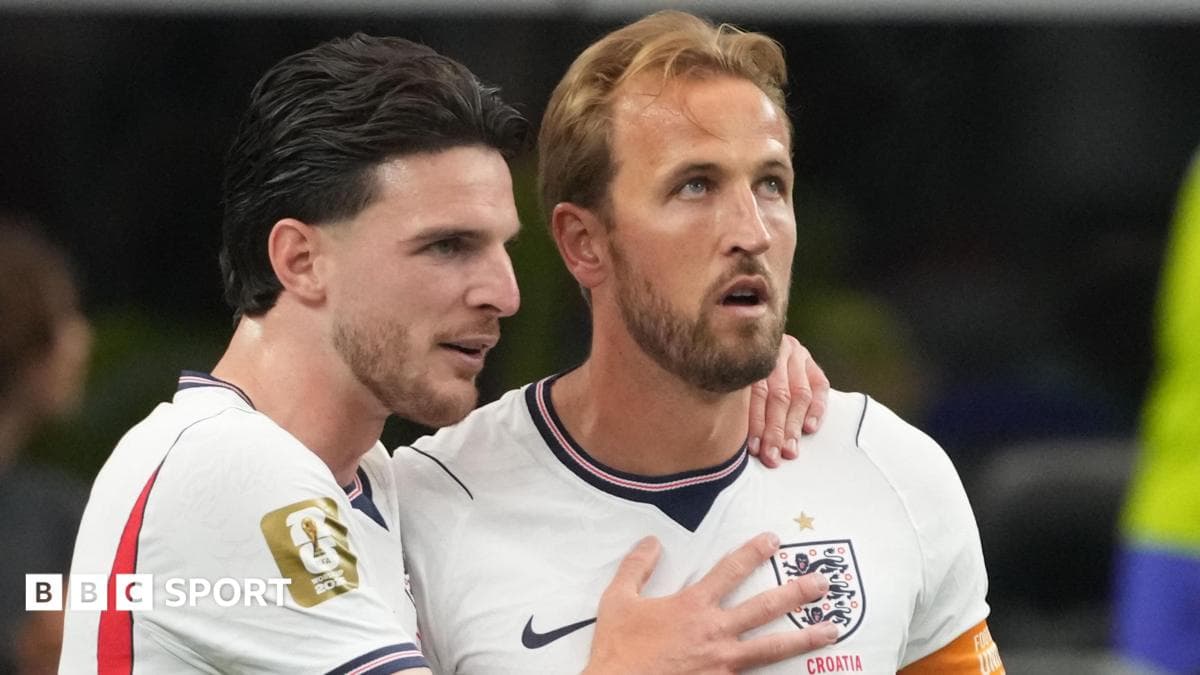
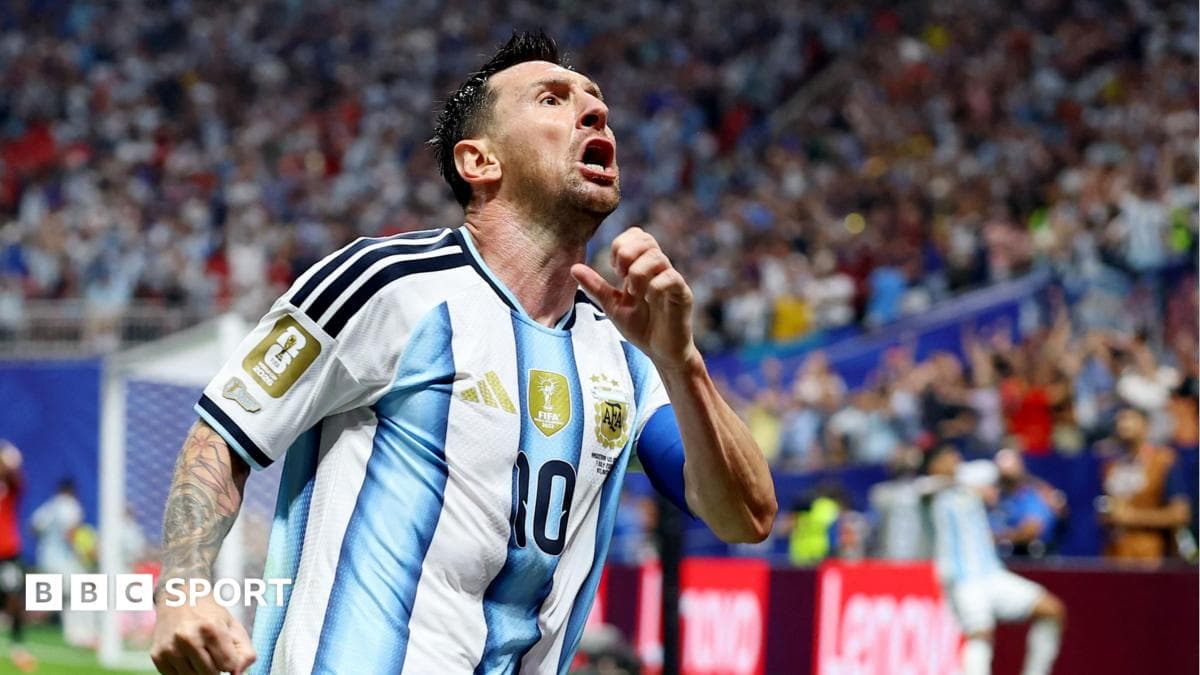
Lionel Messi has appeared at six World Cups, scoring 16 goals The 2026 World Cup may only be 10 days old but the tournament has already rewritten football history. Not wanting to be outdone by the other, Lionel Messi, Kylian Mbappe, Harry Kane and Erling Haaland all came out of the blocks firing in their respective nations' opening fixtures. And as the World Cup's biggest hitters prepare to make their second appearances at the first 48-team competition, records aplenty look ready to fall. From Argentina's Messi and Portugal's Cristiano Ronaldo extending their World Cup legacies to Mbappe becoming France's all-time leading scorer, BBC Sport takes a look at a list of the major records already broken or set to be. Lionel Messi won the Golden Ball for the best player at the 2022 World Cup Since 2014, Germany striker Miroslav Klose stood on his own with 16 World Cup goals. But Messi's stunning hat-trick in Argentina's opening 3-0 win over Algeria moved the eight-time Ballon d'Or winner level at the top of the all-time standings and poised to move out in front on his own. Messi required 27 games - three more than Klose - to hit 16 but the 2022 World Cup winner will not mind. Lurking close behind with 14 is France captain Mbappe, who is now the all-time leading scorer for France with 58 , and could well have the goals record in his sights himself. Kane is four further back - but surely it is too far for him this tournament? Next up for Messi and Co. in Group J are Austria. Are we about to witness a new record? Harry Kane has scored 81 goals in 115 games for England After watching Messi, Haaland and Mbappe all hit the back of the net, Kane reminded the footballing world what he could do in England's 4-2 win over Croatia on Wednesday. The Three Lions skipper netted twice in Dallas to move England top of Group L and draw level with Gary Lineker as their all-time leading scorer at World Cup finals on 10 goals. With Ghana to come on Tuesday night, Kane might not be level with Lineker for long. Wednesday's game also meant Kane became just the second England player - after Sir David Beckham in 1998, 2002 and 2006 - to score at three different World Cups. The Croatia match also marked Kane's 115th England appearance, moving him level with Beckham among the country's most-capped players. Kylian Mbappe won the World Cup with France in 2018 Sticking with Mbappe, is he going to become the first player to win multiple World Cup Golden Boots or will it be England skipper Kane? Mbappe struck eight times to win the Golden Boot in Qatar in 2022 but faces fierce competition to retain the accolade. Kane, also with records on his mind, won the prize in 2018 with six goals. Messi, Germany's Denis Undav and Canada's Jonathan David currently lead the way on three but Kane, Haaland and Mbappe are just a goal adrift. This could be a race for the ages. Cristiano Ronaldo has 143 goals in 229 caps for Portugal Ronaldo was bound to appear at some point. It may have been a lacklustre performance from him in Portugal's shock 1-1 draw with DR Congo but a record is always around the corner. In 2022, Ronaldo set the record for the most World Cups scored in at five - 2006, 2010, 2014, 2018 and 2022 - but Messi has already equalled that. But a goal for Ronaldo at the 2026 edition will make it a record six for the five-time Ballon d'Or winner. Cristiano Ronaldo has scored eight times at the World Cup But a record did fall for Ronaldo in the opening game. Taking to the pitch in Houston, the Portuguese had joined Messi as the second man to play in six World Cup tournaments. In doing so, he also became the oldest outfield player to start at the World Cup - aged 41 years and 132 days. The record previously belonged to Canada's Atiba Hutchinson, at 39 years and 296 days when he started at the 2022 World Cup in a group match against Croatia. Erling Haaland made his World Cup debut in Norway's 4-1 win over Iraq Where records are falling, Haaland is always close by. The Norway striker needed just 20 touches to score twice in the 4-1 win over Iraq and become the first player to net a double for his nation at the World Cup. Haaland only needed one game to become Norway's joint all-time leading scorer at the World Cup - levelling with Kjetil Rekdal. He can move clear of Rekdal when taking on Senegal on Tuesday morning. Vozinha was left in tears at the end of Cape Verde's shock draw with Spain Cape Verde goalkeeper Vozinha became one of the stories of the tournament despite playing in a 0-0 draw. He made seven crucial saves to keep out European champions Spain in Cape Verde's World Cup debut - and also set some records himself. At 40 years and 12 days, he became the oldest player to appear in a nation's debut World Cup match, surpassing the record set by Curacao's Eloy Room. Vozinha also broke the World Cup record for being the oldest goalkeeper to keep a clean sheet on his finals debut. Didier Deschamps has won the World Cup as a player and manager of France France boss Didier Deschamps is one win away from equalling the record for most wins as a manager at the World Cup. Former West Germany manager Helmut Schon is at the top of the all-time list with 16 victories, and a win for France over Iraq will move Deschamps level. All being well for the Frenchman, he will set a new record of 17 in the final group game against Norway. What a way to end your time as France manager that would be. There was only one straight red card shown at the 2022 World Cup The record for the most red cards at a World Cup stands at 28, in 2006. In the 2026 competition, six reds have been brandished already. Three red cards were shown in Mexico's opening-game win over South Africa, before Bosnia-Herzegovina's Tarik Muharemovic and Qatar duo Assim Omer Madibo and Homam el Amin soon followed. This tally is more than the past two World Cups, where four red cards were shown in Qatar and Russia. There is still a way to go for this record, but there is an awful lot of football to come. Play BBC Sport's new World Cup predictor game World Cup fixtures and group standings How to watch the World Cup on the BBC Everything you need to know about the World Cup
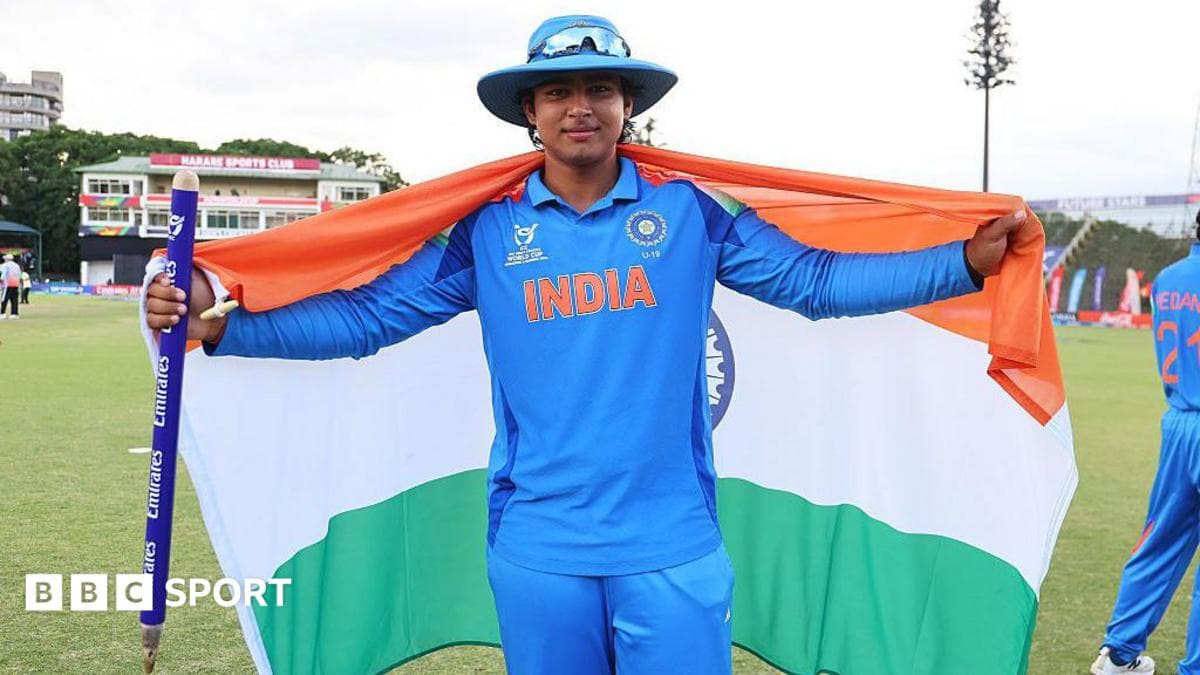
Brilliant Kapp leads South Africa past India
Sports

Brilliant Kapp leads South Africa past India

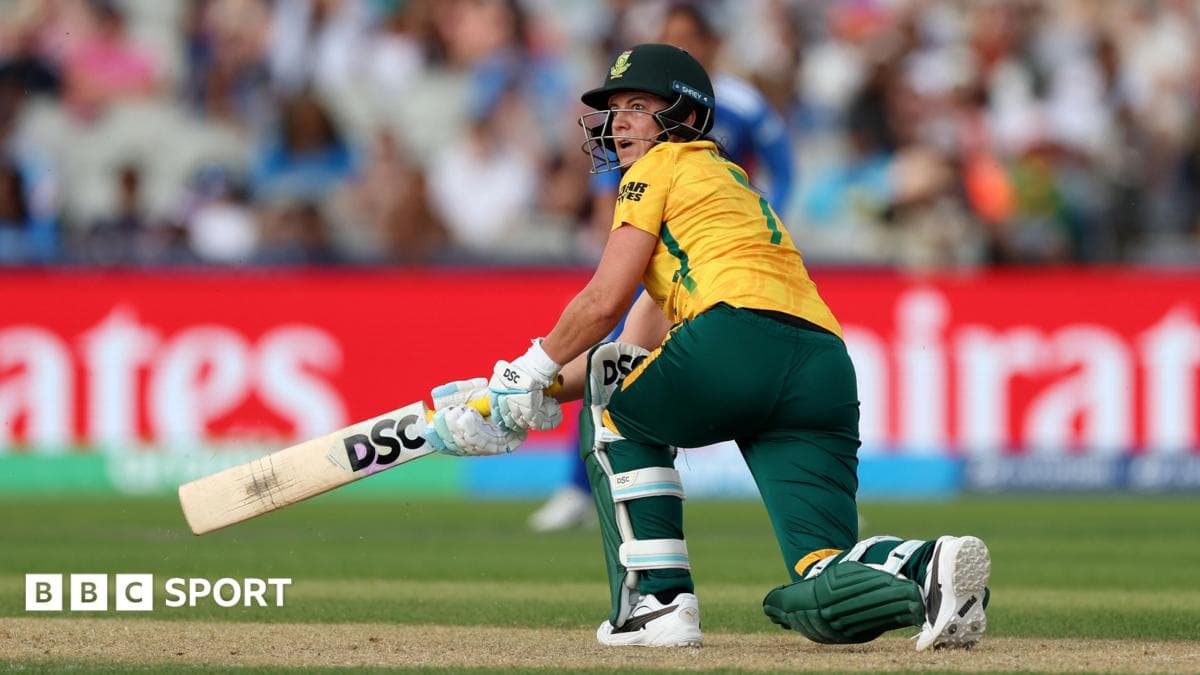
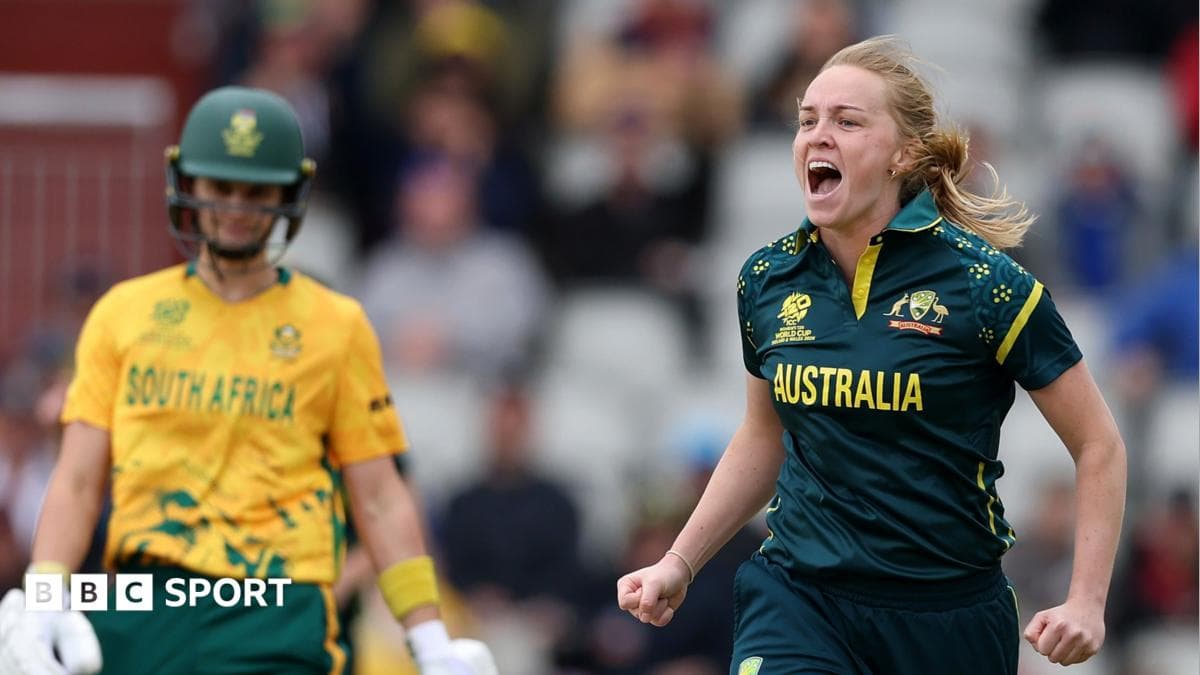
Marizanne Kapp struck seven fours and four sixes in a 45-ball innings Women's T20 World Cup, Group 1, Manchester India 158-7 (20 overs): Verma 31 (15); Kapp 2-27, Ismail 2-28 South Africa 161-4 (19.1 overs): Kapp 81 (45); Charani 3-24 South Africa won by six wickets Scorecard , Table Marizanne Kapp struck a powerful unbeaten 81 as South Africa beat India by six wickets to keep their World Cup hopes alive. Having taken 2-27 with the ball, the all-rounder struck seven fours and four sixes in a 45-ball innings as the Proteas chased down a target of 159 with five balls to spare. Kapp joined Tazmin Brits at the crease at 25-2 in the final over of the powerplay and the pair began slowly, only reaching 59 at the halfway mark, before steadily beginning to accumulate. With their partnership three short of a century Brits departed for a 36-ball 40, caught in the deep off Shafali Verma, while Kapp survived a drop by Radha Yadav later in the over. She took advantage, hammering two sixes in Deepti Sharma's penultimate over, before Chloe Tyron edged a winning four off Nandni Sharma. India captain Harmanpreet Kaur - playing a record 200th T20 international - had chosen to bat and Shafali Verma got her side off to a strong start, striking three fours and a six in a 15-ball 31. Her innings helped India reach 59-2 at the end of the powerplay, but by that point both openers were back in the dugout, with Smriti Mandhana bowled having missed a scoop shot and Verma gloving a short ball behind. India were unable to press on from their platform, with none of their subsequent batters managing to outscore Shafali. Deepti threatened for a time, striking 29 from 21 deliveries, but both she and Richa Ghosh chipped tamely to short fine leg as India closed on 158-7. South Africa now join their opponents on four points, behind group leaders Australia on six. They have fixtures with Bangladesh and the Netherlands to play, while the result likely makes India's match against Australia at Lord's on 28 June crucial to the outcome of the group. Women's T20 World Cup top run-scorers & wicket-takers Relive South Africa beating India to boost semi-final hopes Having lost by 65 runs to Australia in their opening fixture, South Africa knew they had to beat India if they were to have any realistic hopes of taking one of two semi-final spots from group one. Kapp kept them in the mix in India's innings, bowling Mandhana as she attempted a scoop shot, after which she roared with delight, then removing dangerous lower-order batter Ghosh later in the innings. She came into bat with South Africa in a precarious position after leg-spinner Sree Charani took two wickets in three balls, grabbing a return catch off Laura Wolvaardt and then bowling Annerie Dercksen. The required run-rate swiftly climbed to more than 10 an over, but Kapp and Brits stuck together to build a platform from which they could accelerate. After Brits found the hands of Charani at deep square, Kapp responded with a flat six down the ground, but should have caught from the following ball when Radha shelled a chance running in from the rope at long-on. From there Kapp was in control, twice launching Deepti over the mid-wicket ropes to set-up Tyron's winning runs. "She is probably the biggest big-match player I've ever seen. I'm really glad she's on my team," captain Wolvaardt said of Kapp. "Whenever something is on the line or we're playing in a World Cup she finds a way. "She said she didn't feel great today so I hope she doesn't feel great every game! She just has that competitive nature and it brings out the best in her." India were slow to switch their plans when Kapp moved around the crease and hit behind square Notifications, social media and more with BBC Sport

Hodgkinson withdraws in tears as Anning wins 400m
Sports

Hodgkinson withdraws in tears as Anning wins 400m

There was an error Amber Anning takes the women's 400m title at the UK Athletics Championships with a new record time of 50.16, as an emotional Keely Hodgkinson withdraws from the final. WATCH LIVE: UK Athletics Championships Available to UK users only.

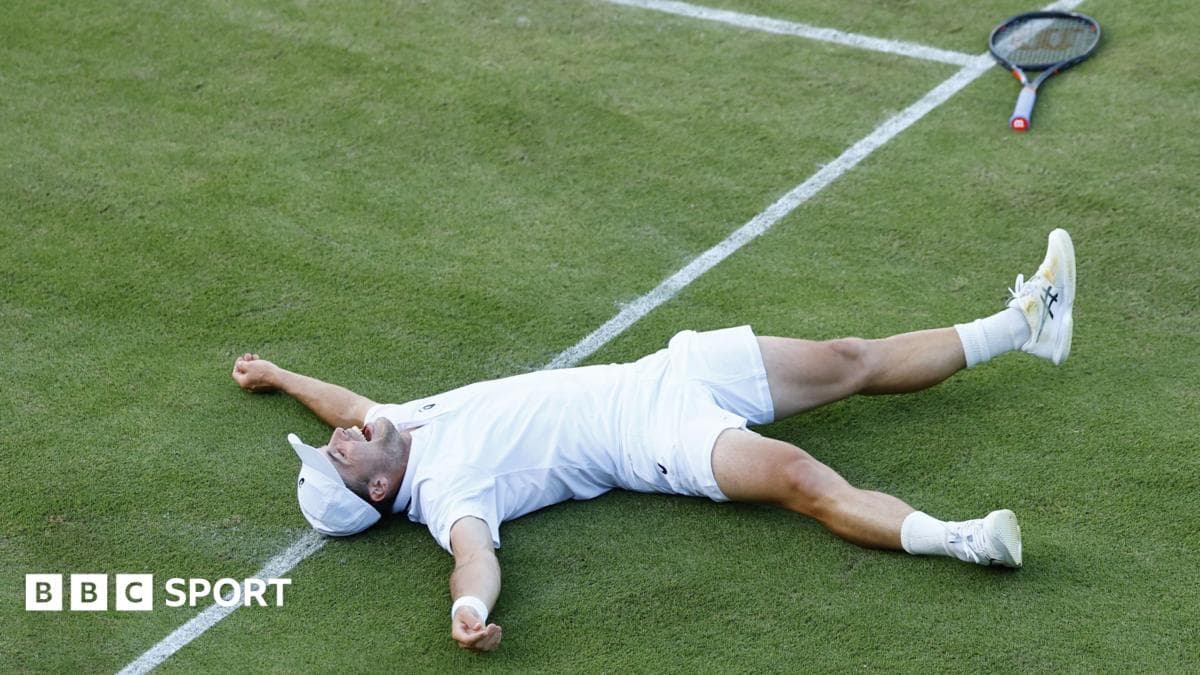
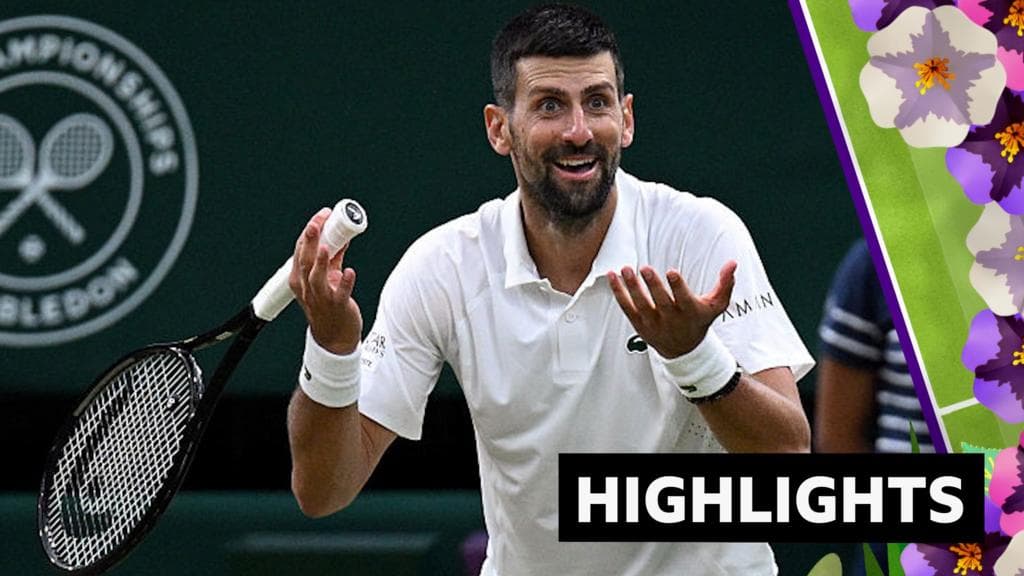
Cerundolo wins biggest title of career at Queen's as parents fly in just in time
Sports

Cerundolo wins biggest title of career at Queen's as parents fly in just in time

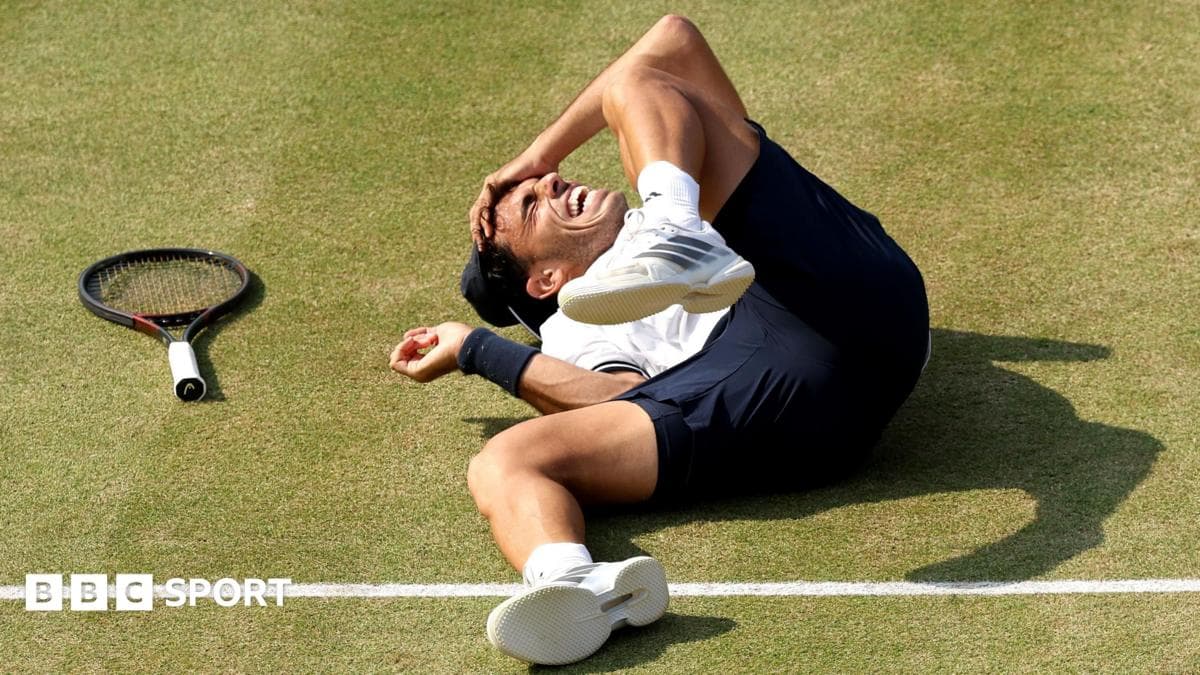
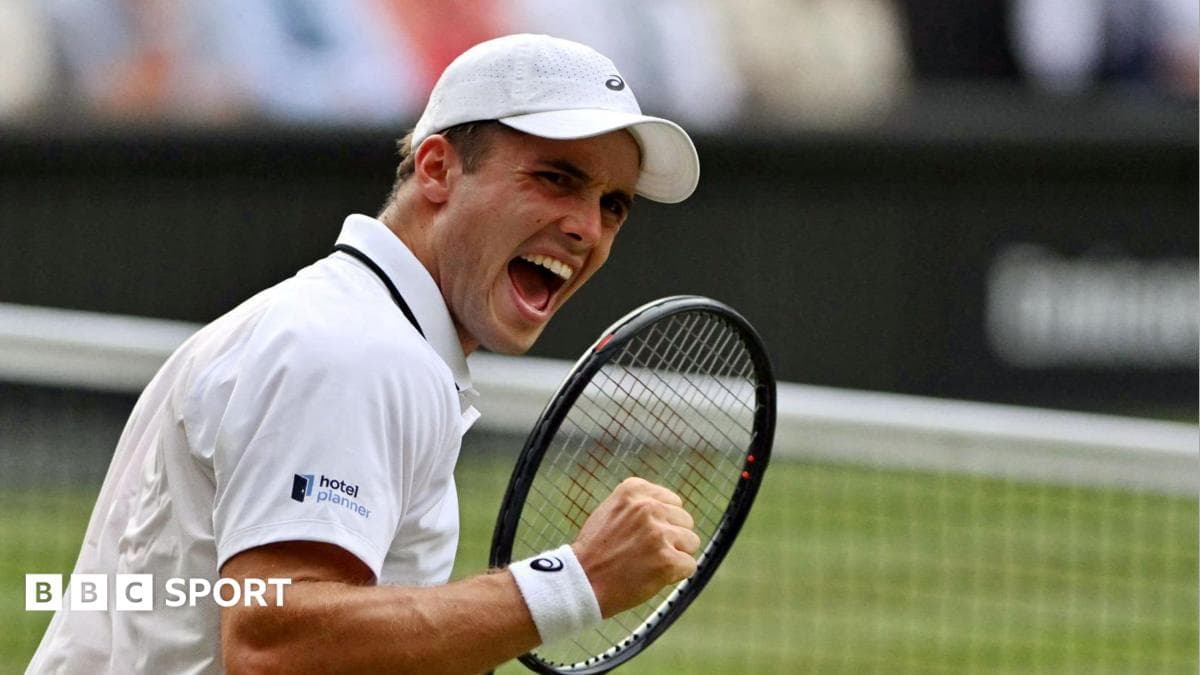
This video can not be played Cerundolo's best shots as he beats Paul in Queen's final Francisco Cerundolo secured the biggest title of his career as he produced a superb comeback to beat Tommy Paul in an enthralling men's singles final at Queen's. The Argentine had never won a title above ATP 250 level before and it looked as though his wait would continue when he went a set and a break down against Paul. But after three hours and two minutes on court - the longest final in Queen's history - and four missed championship points, a triumphant Cerundolo threw himself to the floor in celebration after a 6-7 (4-7) 6-4 6-3 victory. "It's not easy to speak right now," an emotional Cerundolo said. "I want to thank my mum and my dad, they arrived for the last two games." He then told BBC TV: "My dad has a phobia of planes. Since I was born, I never travelled with him and he never came to watch me in tournaments. "He watched me in Buenos Aires one time a year and at the Davis Cup. They just arrived and I just saw them when I went to celebrate." A fan favourite at the iconic Queen's Club this week, Cerundolo delighted the crowds in London with his fierce forehand winners and never-give-up mentality. Four of his five matches went to a decider as he spent 11 hours 33 minutes on court over the past six days. It is a second grass-court title for the 27-year-old, who also beat Paul in the final of Eastbourne in 2023. Paul, champion at Queen's in 2024, missed the opportunity to defend his title last year because of an abdominal injury and he looked downcast as Cerundolo celebrated the victory on Andy Murray Arena. "I want to congratulate Francisco and your team. We always seem to have unreal matches and today you were the better player so I am happy for you. Congrats," Paul said. Bouzkova beats Navarro to clinch Nottingham title Draper returns at Eastbourne - follow on the BBC Cerundolo won the coin toss and chose to receive - a decision that paid off as he broke Paul's serve in the very first game. But the Argentine tightened up as he tried to serve out the opener, and four successive unforced errors allowed Paul to break back for 5-5. The momentum stayed with Paul in the tie-break, with a delicate drop shot helping him to a mini-break before a Cerundolo double fault gifted him the set. In a tight second set, the players traded breaks and saved multiple break points each before Paul's level faltered and Cerundolo struck a decisive blow at 5-4 to force a decider. Cerundolo broke first in the third set, but his emotions threatened to boil over when he squandered a 40-0 lead on serve and Paul carved out two break-back points. The South American let out a huge cry of "vamos" as he clung on to hold, although he was left disgruntled after four championship points went by. But at the fifth time of asking, Cerundolo hammered home his 27th winner of the day to finally seal victory. "This is the biggest moment of my tennis career by far," he told BBC TV. "Coming from Argentina, winning my first ATP 500 tournament at Queen's - such a historic event. "I would never imagine lifting this trophy in my whole life and now I am the winner, so I am just super happy and proud of myself."

Cerundolo fights back to beat Paul in Queen's final
Sports

Cerundolo fights back to beat Paul in Queen's final

There was an error Watch the best shots from the men's singles final as Argentina's Francisco Cerundolo comes from a set down to beat Tommy Paul 6-7 (4-7) 6-4 6-3 to win the biggest title of his career at Queen's. WATCH MORE: Tennis Video Available to UK users only.

Wightman wins 800m title
Sports

Wightman wins 800m title

There was an error Jake Wightman wins the men's 800m title at the UK Athletics Championships in a time of 1:45.40 at the Alexander Stadium in Birmingham. WATCH LIVE: UK Athletics Championships Available to UK users only.

What have we learned from Scotland's World Cup so far?
Sports

What have we learned from Scotland's World Cup so far?

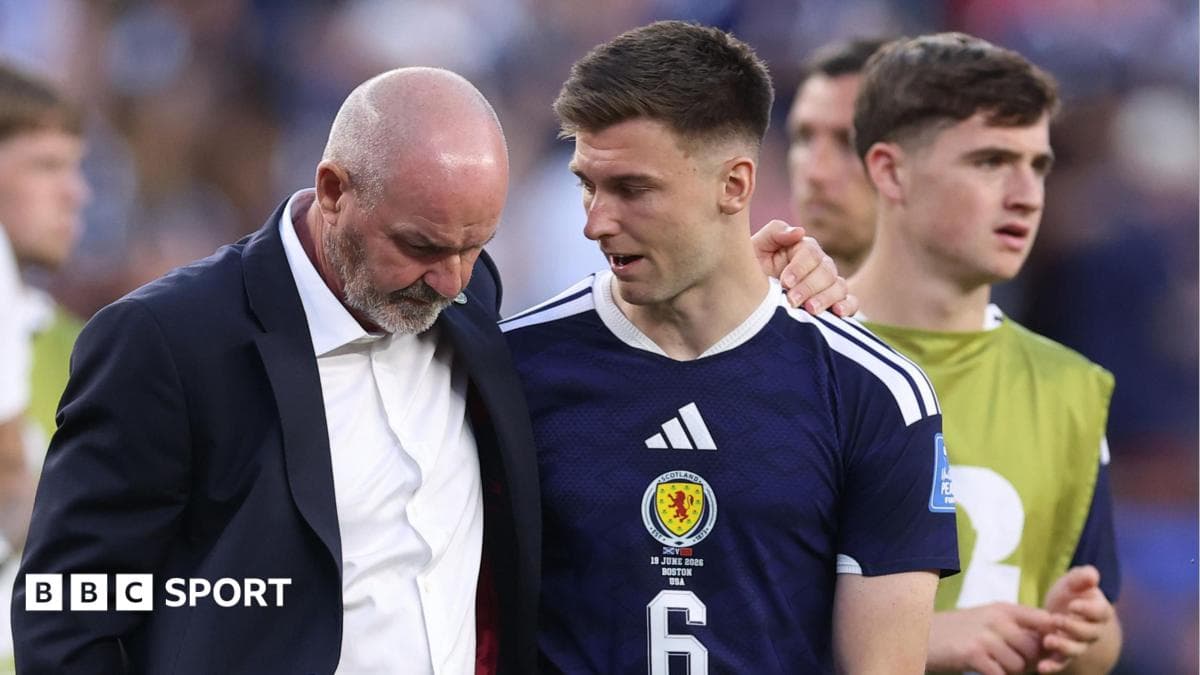
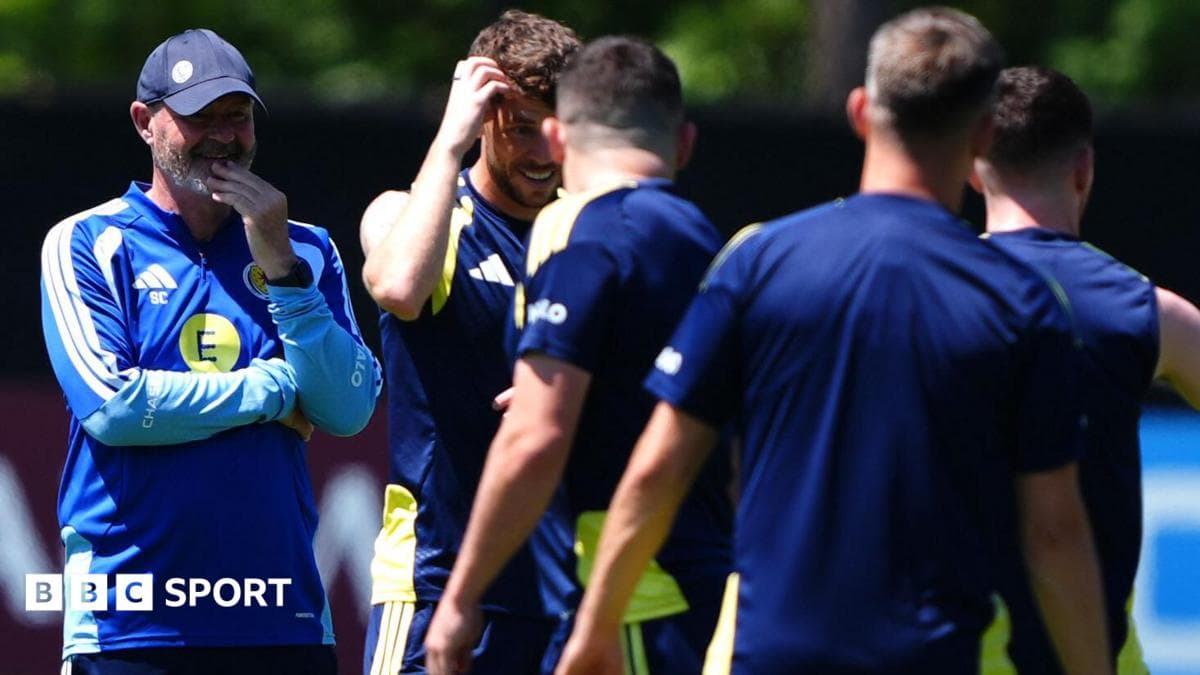
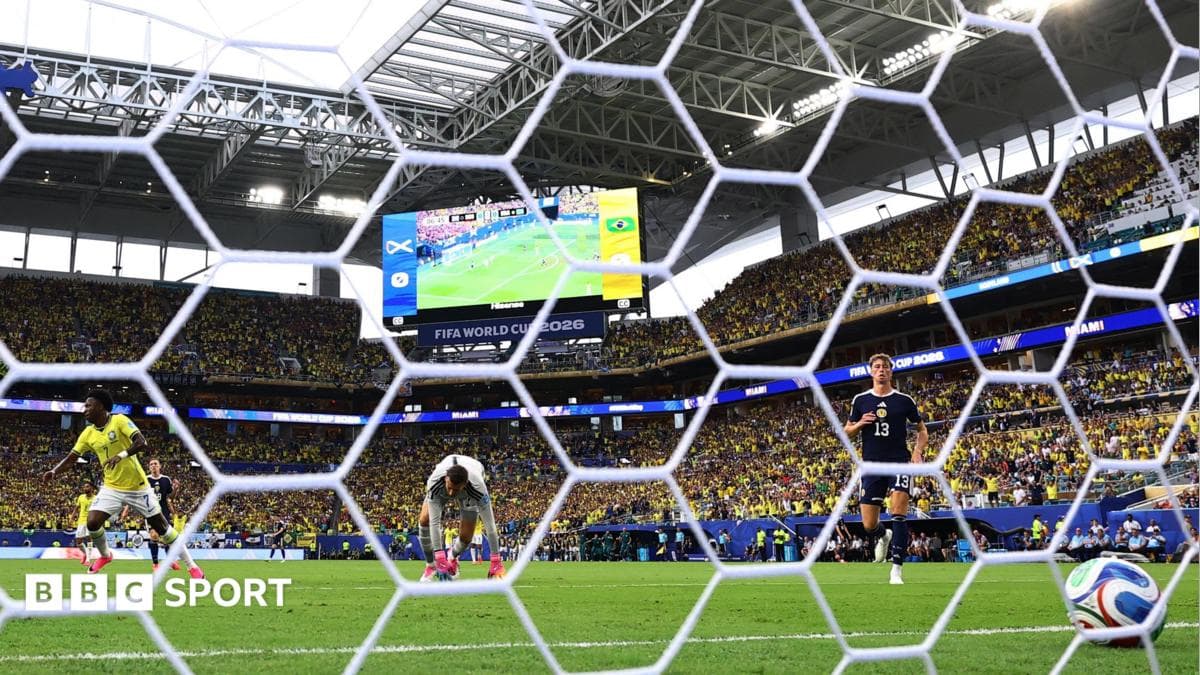
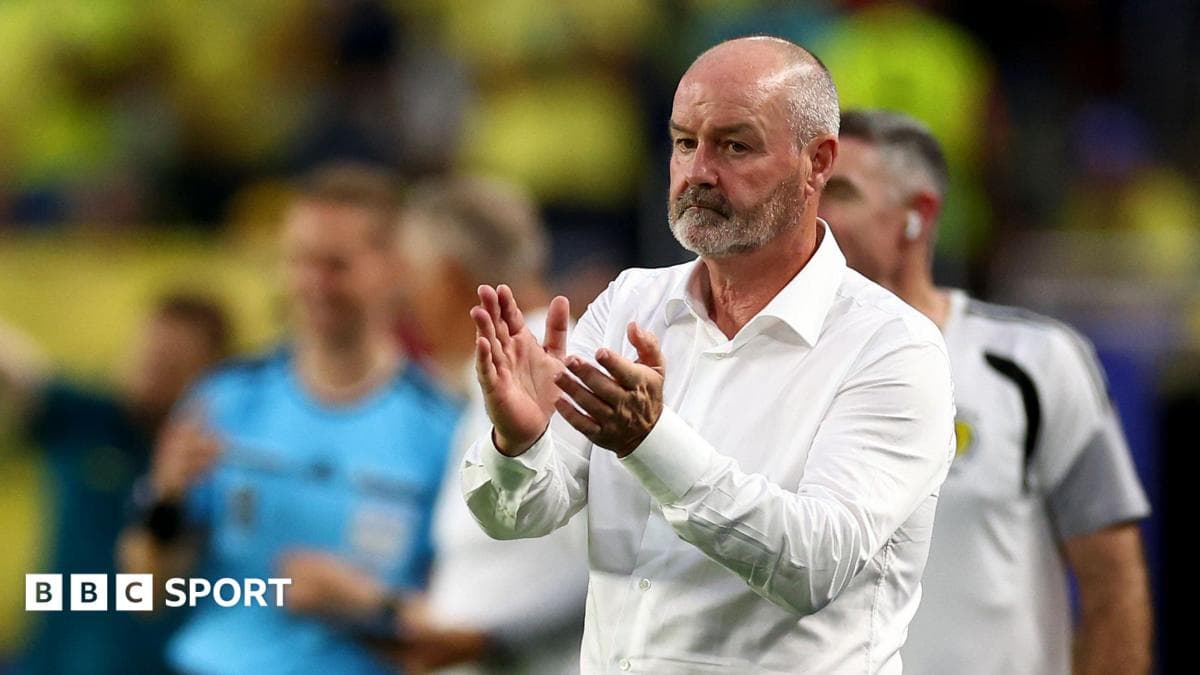
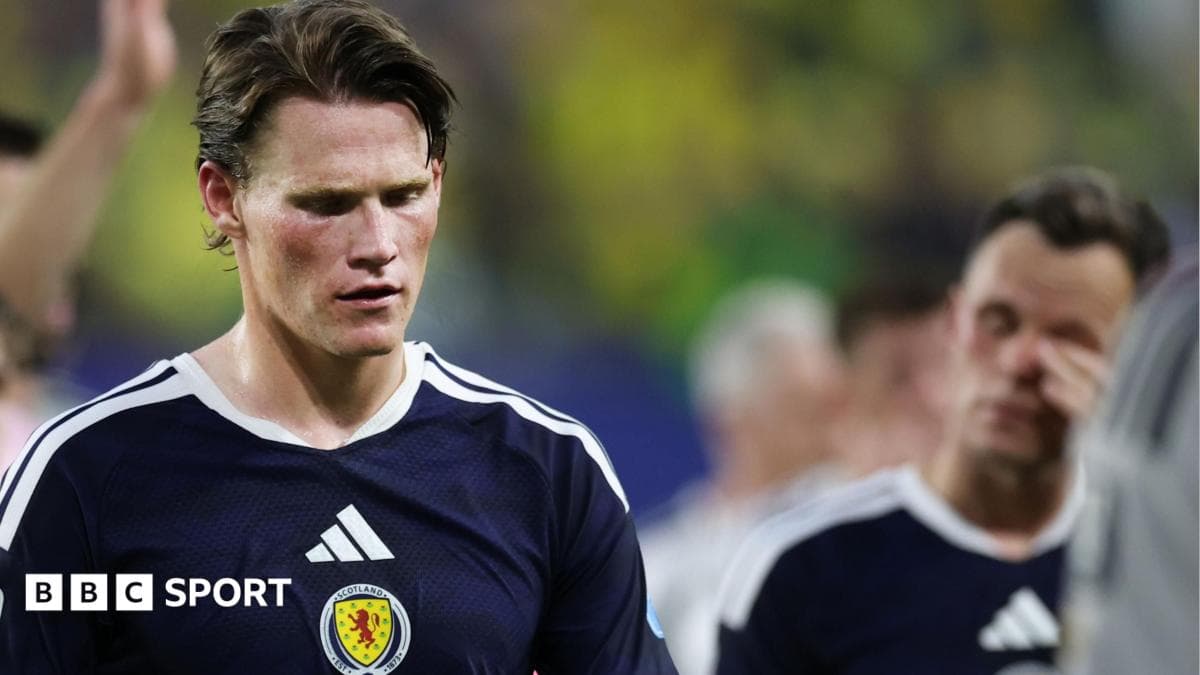
Steve Clarke is bidding to become the first manager to steer Scotland beyond the group stage of a major tournament After two World Cup outings, Scotland's hopes of progressing from Group C hang in the balance. They have three points after a 1-0 win over Haiti and a 1-0 reverse against Morocco. That tally could be enough should they avoid a heavy defeat against Brazil on Wednesday (23:00 BST), while a point would all but guarantee their place in the last 32. But what have we learned from the two outings in Boston before the Tartan Army descend on Miami? Scotland expects: What is behind McTominay's understated World Cup? Boston bounce sends Scotland to Miami with hope and no fear Referee told McGinn penalty denied as ball going out of play Che Adams managed just 11 touches against Morocco In the build-up to this tournament, head coach Steve Clarke deployed a 4-4-2 formation in friendlies against Curacao and Bolivia to great effect. Against admittedly poor opposition, Scotland scored eight goals across the two matches and looked confident before the World Cup. Clarke stuck with the same shape for the tournament opener against Haiti, but Scotland had fewer shots than their opponents and a lower expected goals (xG of 1.05 v 1.21). John McGinn's winning goal came via a deflection, and starting strikers Lawrence Shankland and Che Adams were on the periphery. Shankland dropped to the bench against Morocco as Clarke bolstered his midfield, but once again, Adams failed to get into the contest. Often an isolated figure up front, he failed to hold the ball up and get Scotland up the park, managing just 11 touches before being substituted for Lyndon Dykes on 71 minutes. Scotland finished the game with zero shots on target. It seems likely Clarke will go with the same system against Brazil, but there could be a personnel change with Dykes, Shankland, Ross Stewart and George Hirst competing with Adams to lead the line. Winger Ben Gannon-Doak, having impressed against Haiti, provided much-needed late dynamism off the bench as Clarke's side finished strongly against Morocco. Fellow wide player Findlay Curtis, 19, came off the bench late on against Haiti for his World Cup debut and also offers pace and trickery. Might he feature at some stage in midweek as Scotland look to relieve the pressure? Although Scotland have struggled to carve out meaningful opportunities in their two group matches, they have been largely solid in defence. One mistake against Morocco was punished as Ismael Saibari raced past Grant Hanley to score the game's only goal after just 70 seconds. However, from that point onwards, the Scots' back four limited their high-quality opposition to relatively few chances. Jack Hendry was superb, averting danger more than once with his pace and reading of the game. His block to deny Saibari a second was out of the top drawer. "Terrible start but the reaction to that was good," Clarke said after the game. "We had to dig in for five or 10 minutes just to get our feet in the game. "This group of players, this squad, have shown that [resilience] in abundance over the years." That resilience bodes well for Scotland's third group game, where another stout defensive display is of vital importance. It was widely expected Angus Gunn would be Scotland's number one for this tournament, but the 30-year-old's struggle for minutes with Nottingham Forest last season meant he was not a certainty. Having signed on a free transfer last summer after his Norwich City deal expired, Gunn made just one club appearance, playing 45 minutes off the bench in a 1-1 Premier League draw against Crystal Palace. However, Clarke stuck with Gunn ahead of Craig Gordon and Liam Kelly and has been justified in his selection to this point. A clean sheet against Haiti - despite one or two hairy moments - ensured a vital three points in the hunt for knockout football. He had no chance with Saibari's powerful strike in game two and kept Scotland in the contest with several fine stops, denying Achraf Hakimi, Bilal El Khannouss and Chemsdine Talbi. More of the same will be required come Wednesday night. Billy Gilmour was ruled out of the World Cup after injuring his knee in a pre-tournament friendly against Curacao Although Billy Gilmour is with the squad in the United States, Scotland have missed the Napoli man's calming influence in the heart of midfield. He sustained a knee injury in the friendly victory against Curacao and was ruled out of the World Cup, with Manchester United youngster Tyler Fletcher called up in his place. In both matches, Scotland have struggled to both keep possession and build attacks through midfield. One of Gilmour's strengths is his ability to take the ball off his centre-backs and progress the play. Against Haiti and Morocco, there has been plenty of keeping the ball at the back before going long towards Adams. Much has been made of Scott McTominay's subdued start to the tournament and how well Lewis Ferguson has applied himself, but neither are in the Gilmour mould. World Cup fixtures and group standings How to watch the World Cup on the BBC Everything you need to know about the World Cup
Salah's World Cup pain ends as he fires Egypt to historic win
Sports

Salah's World Cup pain ends as he fires Egypt to historic win

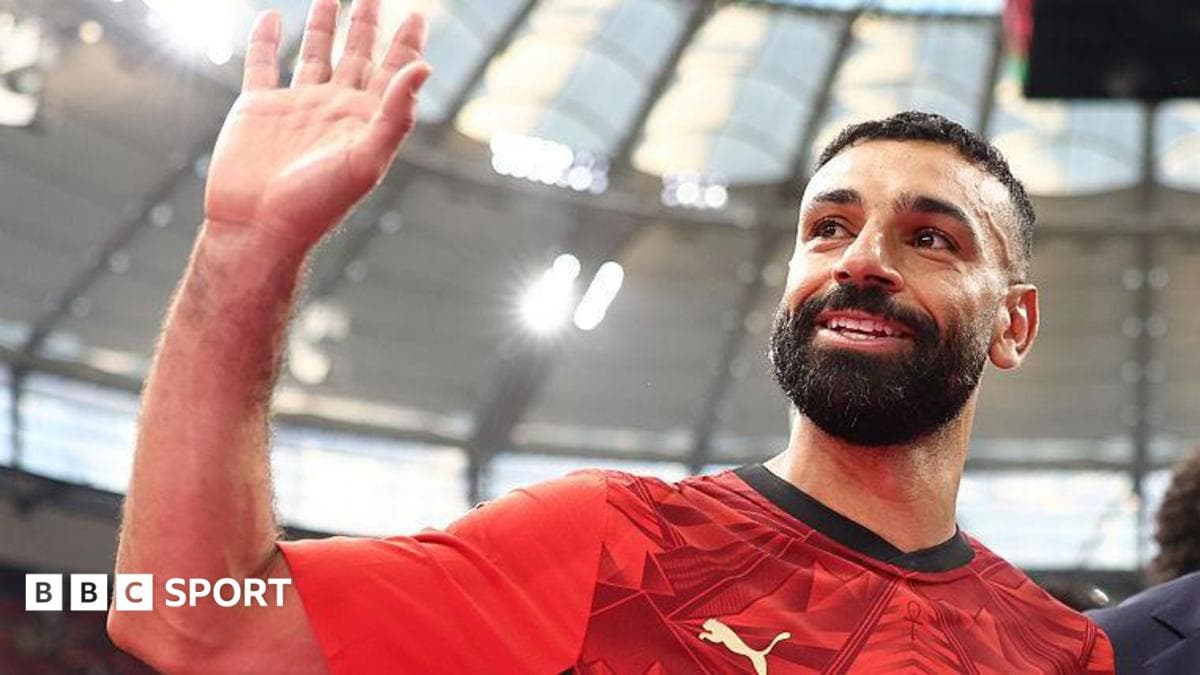
This video can not be played Salah scores to help Egypt to first World Cup win Mohamed Salah's - and Egypt's - World Cup wait is finally over. The Egyptian King's match-winning second-half display against New Zealand helped the Pharaohs to their first-ever World Cup win, at their ninth attempt, and leaves them on the brink of qualifying for the last 32. Salah's 67th-minute goal gave Egypt the lead - after they recovered from a shock early New Zealand opener - before his corner was headed home by Trezeguet to seal the historic 3-1 win . Salah had made a slow start to the tournament, with an ineffectual display in their opening draw with Belgium followed up by a quiet opening half against the Kiwis. But, just when it looked like his own World Cup nightmares were about to continue, the 34-year-old became the latest superstar to make his mark on the tournament, following in the footsteps of Lionel Messi, Kylian Mbappe, Erling Haaland and Harry Kane. After a forgettable World Cup campaign in 2018 and failure to qualify four years later in Qatar, Egypt's greatest player has finally had his moment on the biggest stage. And he will know a point against Iran will see his country through to the next round - and they may not even need that. Salah said: "It's a great achievement for all the players. It's a great win. It's a great vibe. The next game is very important." Mohamed Salah needs one goal to equal his country's scoring record Salah helps Egypt beat New Zealand to end 92-year wait for World Cup win Salah's club future remains uncertain after a forgettable final campaign at Liverpool, which saw him fall out with then manager Arne Slot before announcing he was leaving this summer. He has been linked with various clubs across the world but was determined to focus on his country's World Cup campaign first in a bid to put right the wrongs of the past. In 2018, Salah faced a race against time to make the World Cup because of injury and, despite making the squad, had to settle for a place on the bench in their opening defeat to Uruguay. His converted penalty was then merely a consolation in a 3-1 loss to hosts Russia before he missed a sitter as Egypt suffered a humiliating loss to Saudi Arabia. The fallout to that World Cup failure was huge, with Salah accusing Egypt's FA of disrupting preparations and reports he was close to quitting international football. Things didn't get better as four years later they failed to qualify for Qatar and - after 45 minutes on Sunday - it looked like Salah's World Cup misery was set to continue. Egypt manager Hossam Hassan even had to speak out before the match to deny any fall out with Salah - after substituting him during the draw with Belgium. But, just when it looked like the Iran match could be the last-chance saloon, Salah took matters into his hands to spark wild celebrations among Egypt fans across the world. Mo Salah: Never Give Up 10 December 2025 The story of Mo SalahҀ™s unlikely rise to global stardom Ҁ“ how he defied the odds and never gave up on his challenging journey to the top. Salah may have been a superstar at Liverpool. He is on an even higher plane in Egypt. With every touch comes loud cheers from his country's fans, with huge pressure on his shoulders on every appearance. Sunday's goal was his 68th for his country in 118 appearances, leaving him just one shy of manager Hassan's all-time goal scoring record, and some will say it's his most important yet as Egypt finally ended a 92-year wait for a World Cup win. No player has been involved in more shots during a game at this World Cup than Salah was against New Zealand - having five shots himself and creating five more for others. Former Tottenham manager Ange Postecoglou told ITV: "If there was any doubt about Mo's impact on this team, you can still see it. "It will give them enormous belief. They had to deal with adversity and their big player stood up and that will give them big confidence. You need your big players to perform to progress." Former Jamaica winger Jobi McAnuff added: "Just when he was needed, Mo Salah stood up for his country." Salah has played for the senior national team for 14 years and his importance to Egypt is such that high-ranking government officials have been known to get involved when he has been injured. "I even had calls from Egypt's Minister of Health," recalls Dr Mohamed Aboud, the national team's medic, about the time Salah sustained a serious shoulder injury in Liverpool's defeat by Real Madrid in the 2018 Champions League final, leading to speculation he could miss the World Cup in Russia a few weeks later. But, despite helping Liverpool to the Premier League title in 2019-20 and 2024-25, the player has yet to lift a trophy for his country. The generation before Salah won three Africa Cup of Nations titles in a row between 2006 and 2010. Since then, there have been two defeats in finals, against Cameroon in 2017 and Senegal in the 2021 edition, which took place in early 2022. This World Cup win at least banishes one of Egypt's ghosts. World Cup fixtures and group standings How to watch the World Cup on the BBC Everything you need to know about the World Cup
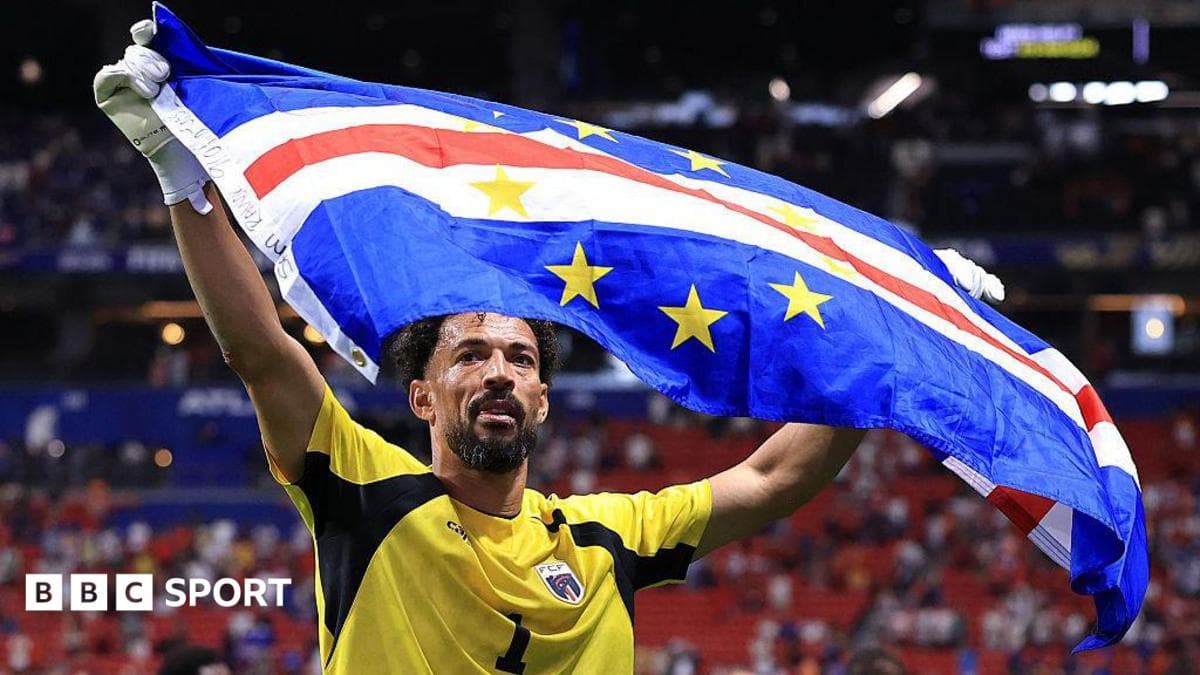
One of World Cup's great stories - can Cape Verde extend dream run?
Sports

One of World Cup's great stories - can Cape Verde extend dream run?

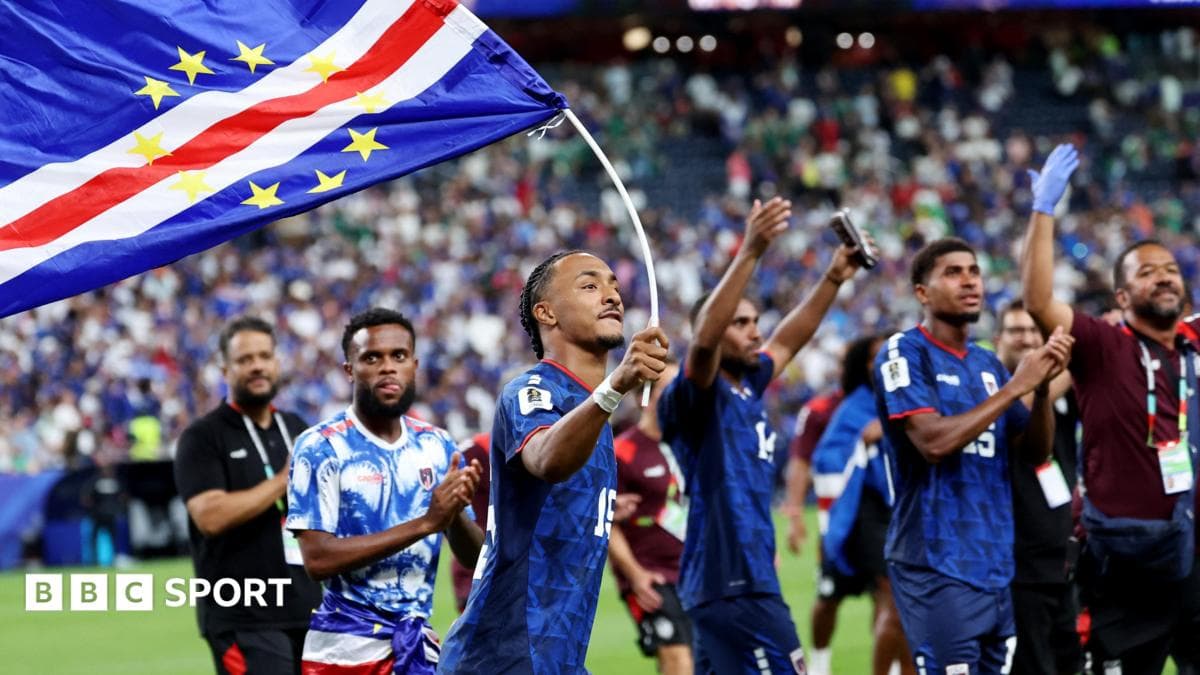
This video can not be played Cape Verde continue to surprise with entertaining Uruguay draw Cape Verde's World Cup campaign will go down in history - and they are now on the cusp of going a step further. They had already produced one of the biggest shocks of all time as they drew with Spain (who were 65 places higher in Fifa's world rankings) in their tournament debut. The Blue Sharks showed their class again on the game's biggest stage on Sunday by holding two-time winners Uruguay, and are in serious contention for a place in the knockouts. They were creative, entertaining and confident in their thrilling 2-2 draw , and also produced another dose of the steely determination that guided them to their shock result against Spain. The archipelago of 10 islands in the Atlantic Ocean, with a population of just under 525,000 according to the latest figures from the World Bank, have now held their own against two World Cup stalwarts. No heroics were needed from goalkeeper Vozinha - who rose from 40,000 Instagram followers before the game against Spain to move than 15 million - this time as they limited Uruguay to just two shots on target, but heroes were found at the other end of the pitch. "They will be checking their phones to see how many followers they have," said former Wales defender Ashley Wiliams on BBC One. Vozinha's mother was not able to attend the Spain match because of the high cost of obtaining a visa to enter the USA but she was present in Miami, and treated to an enthralling display. Helio Varela equalised for Cape Verde against Uruguay The 40-year-old keeper who inspired Cape Verde's historic debut The key stats as Cape Verde earn shock draw against Spain From the first minute, Cape Verde employed an attack-minded game - constantly attempting to get the ball up the pitch to cause Uruguay trouble. The South American heavyweights found themselves on the ropes in the face of Cape Verde's verve. Then came the history-making moment. Kevin Pina stepped up to take a 30-yard free-kick and Uruguay's wall opted to part as they jumped, letting his arrowed effort find a path through the middle and go past keeper Fernando Muslera. Back in the archipelago's capital of Praia, their first goal was met with jubilation. This video can not be played Cape Verde fan goes wild over first goal live on BBC News Written off by pundits going into their match against Uruguay - Williams and Benni McCarthy on BBC One both predicted they would lose - Cape Verde refused to follow the script. A gift led to the second goal which drew the scores level, but Helio Varela did well regardless to produce a deft touch to take the ball past the stranded Muslera before stroking it into the back of the net. After that, Cape Verde showed the defensive strength that made the difference against Spain to be able to hold on to a point. They made sure to combine it with their attacking threat, though, and continued to hunt for a way to snatch three points. It was a performance which led former South Africa striker McCarthy to say he has a "new lease of respect" for Cape Verde, and ex-Wales defender Williams to claim it was the "most entertaining" game he has covered at the World Cup so far. "They really came out to play," said McCarthy. "They were sensational. I thought they were brave. "The only thing that's needed is working on their final-third entry, that composure, working on those decisions in the final moment of the game. I think they've won a lot of people's hearts after this performance." One Cape Verde fan told BBC Sport at a fan park in the US that "everybody doubted us, everybody thought we weren't going to make it. We're here now". Such a reaction captures the feeling currently surrounding Cape Verde, who are fast becoming one of the best stories of this year's World Cup. This video can not be played Cape Verdean fan scenes! Drawing with Uruguay means Cape Verde are third in the Group H table, level with Sunday's opponents on two points. The new format in this expanded World Cup means Cape Verde have a fighting chance of making the knockouts on their tournament debut. They take on Saudi Arabia, who drew 1-1 with Uruguay and were thrashed 4-0 by Spain , on Saturday in their final group-stage game (01:00 BST). "I think this performance gets them a win against Saudi Arabia," McCarthy said on BBC One. Eight of the 12 best third-placed teams will qualify for the last 32, while the top two sides in each group progress automatically. Three points against Saudi Arabia will be enough for them to seal progression. Nigeria (74th in 1998) and Russia (70th in 2018) are the only teams to progress to the knockout stage previously who were ranked lower than Cape Verde currently are (63rd). On Cape Verde's confidence, Williams said: "They'll be going into the Saudi Arabia game with their tails up thinking 'we can qualify here'." Speaking on BBC Radio 5 Live, former England forward Sue Smith summed up the debutants' display. "it was outstanding from Cape Verde yet again," she said. They managed 12 shots and had four efforts on target, two more than Uruguay. It was in the second half, as they fought back to level and then pushed for a winner, that the bulk of their opportunities came - with 10 of their shots coming after the break. "The story of this team keeps going," added Smith. Former Wales defender Williams said he thought Cape Verde's performance was "definitely worth a point" "Cape Verde were excellent," he added. "Even at the end, they wanted the win - and that's against Uruguay." The draw means they are the first debutants to go unbeaten across their first two World Cup games since Senegal in 2002. "The biggest thing for me is how much Cape Verde are enjoying themselves," said former Scotland forward James McFadden. "They are enjoying themselves so much. It's been a joy to watch." Play BBC Sport's new World Cup predictor game World Cup fixtures and group standings How to watch the World Cup on the BBC Everything you need to know about the World Cup
It started on the ski slopes - the making of Sinner
Sports

It started on the ski slopes - the making of Sinner

It was in the foothills of the Dolomite mountains that a three-year-old Jannik Sinner took his first steps towards becoming the world's best player. It started on the ski slopes, where he was so good he later became a giant slalom runner-up in the junior national championships. Sinner also showed enormous promise on the football pitch with an instinctive ability to play with both feet. But tennis soon started to take over Sinner's life in the mountain village of Sexten, just a short hike from the Austrian border. It is a picturesque, peaceful place. Street signs are presented in both Italian and German, but the main language is a German dialect. Plates in restaurants regularly carry meat and dumplings, as if you were ordering from an Austrian or German menu. It may not look an obvious launchpad for the career of a future world number one - but, as the dome that stretches over a nearby indoor tennis courts proclaims, it is "where champions are born". Sinner's first coach was family friend Andreas SchΓΆnegger. Having given the infant Sinner an introduction to life on skis in his fourth winter, he was entrusted with tennis lessons the following summer. Sinner was a slight child - often the smallest in his group - but what he lacked in physical presence he more than made up for in talent. Family friend Andreas SchΓΆnegger "Everybody thinks when they see this guy on the court that to beat him is not a problem, but he had incredible technique from the beginning," SchΓΆnegger told BBC Sport. "The hair was long and red, similar to a girl. The first tournament he played, I remember the group asking me 'Andy, why today plays a girl with us?' "And I tell them - this is not a girl, it's a very, very strong boy!" SchΓΆnegger has a lot of praise for Sinner's parents. Father Hanspeter - also known as Johann - would sometimes work a 14-hour shift as a chef in the kitchens of a local ski lodge before heading to the courts to practise with his son. Not that Sinner was ever keen to leave early. SchΓΆnegger remembers him as a youngster who stayed on to practise his footwork and groundstrokes after the group lessons were over. When the time came to decide which sport to devote his abundant talent to, tennis won through – but the decision was not without a personal cost. At the age of just 13 and a half, Sinner left home, with his destination some 400 miles away. The renowned Piatti Tennis Centre is also in Italy, but in a town very different to Sexten. Bordighera is on the Italian Riviera, bracketed by the sea, with a beach and an exotic garden referenced by painter Claude Monet. There is no snow, no skiing, and very little German spoken. Founder Riccardo Piatti - who had already enjoyed great success with Milos Raonic and Ivan Ljubicic, and worked with a teenage Novak Djokovic - initially thought Sinner was too young for the move. But Sinner had made up his mind and, with his parents as advocates, Piatti relented. He decided Sinner should spend every fourth week back in the mountains - reconnecting with family, friends and schoolwork - but his prodigy soon decided he wanted to become a full-time student of the tennis academy. Sinner admits it was a tough transition. His Italian was limited, his English even more so, and he had very much been a part-time player until that point. "I never went to the gym before, never played more than a couple of times a week before, and then everything changed," Sinner told me at May's Italian Open. "I was struggling to get used to the new conditions for my body. "But it's been an amazing experience and I would do it again, because it makes me grow as a person." Sinner lived with a Croatian family to give him as normal a life as possible despite being so far from home. He has kept up contact with that family during his rise through the sport's ranks. Piatti remembers a strong personality and character with a good sense of humour, while coach Andrea Volpini - who travelled with Sinner in his early career - recalls more typical teenage traits. He remembers a sociable teenager who enjoyed "simple things" like football, ice cream and - when time allowed - a trip to the karting track. Volpini also visited Sinner's hometown with him. "I went to run with him high in the mountains. It was tough to follow him – he knew all the curves and the jumps, and it was not easy for me," Volpini recalls. "He spent a lot of time far away and then came back there [to] regenerate, find new energy to restart." Sinner also differed from many others of his generation in that he never played a junior Grand Slam. Piatti preferred to send him to play on the Futures tour, the lowest rung of men's professional tennis. "He was, by our opinion, ready to play them - not to win, but these tournaments gave more possibilities for him to work on his goals," Volpini explained. There were also some handy practice partners from time to time. Roger Federer was a visitor to the academy and on more than one occasion Sinner practised with Djokovic in Monte Carlo. "The first time you face these great players, maybe more important [are the] off-court moments, when you sit down and take a break," Volpini added. "We always push Jannik to ask a question. I remember one time in Monte Carlo when Novak told him some advice on his forehand – don't push but try to find a bit shorter corner." Sinner’s forehand is now one of his biggest weapons and is aided by a superb serve and Djokovic-like movement around the court. "My idea was that this guy is a player that can beat Novak because they were similar - the movement is very similar," Piatti added. "The idea was to hit the ball faster than the other one, especially to Djokovic." Sinner played his first professional tournament in the Egyptian resort of Sharm El Sheikh as a 16-year-old in January 2018. He reached the second round, earning $258 (Β£192). "He was very, very skinny.Β It’sΒ impossible to think in which way it is possible to work because the body was not ready," his former physiotherapist Claudio Zimaglia remembers. "When he started to work in theΒ gym, it was tough. It isΒ different from going to ski or play soccer for fun." The work paid off. By the end of the following year, Sinner was already good enough to reach the semi-finals of an ATP Tour event in Antwerp and to win - aged just 18 - the Next Gen ATP Finals that is contested by the best under-21 players of the year. Piatti could see he had all the ingredients for life at the top. "95% of his life is tennis. He thinks in tennis," Piatti said. "He lives his life, but he is thinking always about tennis, in which ways he can do better. "I think it is part of his character and also part of the people around him." Sinner split from Piatti after he had reached his second Grand Slam quarter-final at the 2022 Australian Open. He was a top-10 player, and the winner of five ATP Tour titles, but felt the time had come for a fresh perspective. Under Italy’s Simone Vagnozzi and the Australian Darren Cahill, Sinner has won four Grand Slam titles, risen to the top of the world rankings and developed a potentially era-defining rivalry with Carlos Alcaraz. But Cahill is quick to point out that the foundations of Sinner's success were laid in those early years. "I speak about his parents all the time – his grounded upbringing and the way he treats the people around him," Cahill said after Sinner's Wimbledon triumph in 2025. "He's a good man. He's a good, young fellow. Always has a smile on his face. The person that you see on the tennis court is not the same guy off the court. "He's a fun-loving guy who is joking around all the time that just loves the company of the people around him." Sinner’s bid to complete the career Grand Slam of all four major titles at the age of just 24 ran aground at the French Open in May, when a combination of illness, heat and fatigue contributed to a second-round defeat by Juan Manuel Cerundolo. But when he begins his Wimbledon title defence, the regulars at Bar da Marco in Innichen - the village where Sinner was born - will hope to have more to cheer about. About 50 square metres of grassΒ was laid downΒ outside the bar for last year's Wimbledon watch parties. Strawberries and white wine were on the menu, and - as has now become customary - one of the empty bottles was annotated and encased in a glass table to commemorate Sinner's latest success. "We show every match from the quarter-finals onwards to friends and guests," owner Marco Dapoz explained. "It's always quite full, and you have to check in advance that you can get a seat. "We drink water to start with and then often champagne or sparkling wine or beer so our guests can celebrate - even when he loses, we celebrate nonetheless." Innichen, and the neighbouring commune of Sexten where Sinner grew up, are full of images of their favourite son - including of the June day two years ago when he returned for a public celebration of his achievements. Sinner had just become world number one for the first time, bringing with him the trophy, along with the replica Norman Brookes Challenge Cup he had received for winning his first Grand Slam at the Australian Open that January, and the Davis Cup - which Italy had won for the first time in 47 years the previous November. The day was organised by mayor Thomas Summerer, who summed up what Sinner means to the region. "I always say he is incomparable as an athlete when we see everything he has won," Summerer said. "He speaks very often about his family, about his parents, about his environment - about things very many of us are preoccupied with. "When he is here, he is always asking after your parents, whether everyone is healthy and then wishes you all the best when he says goodbye. "In my experience, Jannik the person outstrips Jannik the athlete. It is his simple manner, his sincerity, his openness and his direct connection with people." Credits Written by Russell Fuller Subbed by John Skilbeck Edited by Amy Lofthouse Filming by David McDaid and Melissa Sharman Design by Scott McCall Images by Getty, the Piatti Tennis Centre and Andreas Schonegger Jannik Sinner and Carlos Alcaraz have dominated men’s tennis in 2025. BBC Sport looks at the evolution of their growing rivalry – and where it could go next. Before CarlosΒ Alcaraz became the youngest man to complete the career Grand Slam, he was simply Carlitos from Murcia. This is his story.

Clark blocks out New York jeers to win US Open title
Sports

Clark blocks out New York jeers to win US Open title

This video can not be played Clark beats Burns on closing holes of dramatic US Open US Open, final leaderboard Champion: -4 W Clark (US) Selected: -3 S Burns (US); -1 T Kim (Kor); Level S Scheffler (US); +1 T Hatton (Eng); +2 J Rose (Eng), A Rai (Eng), J Parry (Eng), T Fleetwood (Eng); +4 M Fitzpatrick (Eng); +5 A Fitzpatrick (Eng); +6 R McIlroy (NI); +7 R MacIntyre (Sco) Full leaderboard At times on Sunday at Shinnecock Hills it felt like becoming a case of if, and not when, Wyndham Clark would collect a second US Open title and the moment he has craved since smashing up a locker at last year's championship. Clark, imperious in building a six-shot lead over the first three days at this Long Island track, looked a shoo-in to win a second major. But he showed frailty early in round four, while some of the notoriously feisty New York fans were intent on letting their fellow American know he wasn't their favourite. It is unclear whether they had not forgotten Clark's injudicious outburst at Oakmont 12 months ago, or were simply hoping to watch his playing partner Scottie Scheffler become the seventh man to win the career Grand Slam of all four majors. But the jeers aimed towards Clark, as he stumbled to a one-shot victory over compatriot Sam Burns, made for uncomfortable viewing, with world number one Scheffler saying: "The crowd was tough. New Yorkers are tough people. "Sometimes it can get a little too much when balls are going off greens and you start hearing cheers. That felt a bit much to me. "It shows a lot about Wyndham, how he handled not only this golf course but the crowd as well and he is a well-deserving champion." Shinnecock Hills 'won the battle over me' - McIlroy Clark wins second US Open title - as it happened Yamashita denies Woad third LPGA title in play-off While many fans were against Clark, Scheffler sportingly acknowledged his playing partner's terrific approach to the 10th which led to a birdie Since the Masters was first played in 1934, only Greg Norman had let slip a six-shot 54-hole lead at a major, when Nick Faldo overturned the deficit to claim his third Green Jacket in 1996. But by the end of the seventh hole at Shinnecock Hills, it looked like Clark might add to that statistic. The 2023 champion was wobbling. His massive advantage had evaporated to a single stroke with Burns in hot pursuit. Crucially though, nobody was able to draw level with Clark. And while there were several more plot twists, it was only when he holed a stunning 25-foot birdie putt on the 16th that it felt like he would cross the finishing line as the first winner of the tournament since Martin Kaymer in 2014 to lead from the first round to the last. Even then there was drama. A three-putt bogey on the 17th left him needing to par the last, which he did after knocking a superb 52-foot birdie putt to within inches of the hole. "The first one was a breakthrough of knowing I can do it. This one was a lot of redemption," said Clark after winning his second major. "Last year was so tough, a terrible year. I left [last year's US Open at Oakmont] in a shambles. It's amazing what a year can do. I'm leaving here as a champion and I'm just so blessed." This victory will not fully atone for his infamous meltdown after missing the halfway cut a year ago when he received a ban from the Pennsylvania club until he underwent anger management therapy and paid for the repairs to the two lockers he damaged. And there were occasions on Sunday, when it appeared like his subsequent acts of contrition had not cut through to the galleries judging by their reactions to him. A huge number of fans vociferously celebrated Clark's bogey on the seventh, while others were reportedly ejected from the course because of their hostility towards him. It was far from the scenes Europe's players faced at nearby Bethpage Black during last September's Ryder Cup but Clark had noise to block out. "New York didn't really like me," Clark added. "I get it. Some of it is self-deserved. I did some unfortunate things last year that I really regret. I've been sorry multiple times and I'm still sorry. Hopefully I can win you guys over eventually. I get it. They were rooting for Scottie." While Clark may not be the most popular champion - given his past misdemeanours also include flinging his driver and breaking the clubhead off it during the 2025 US PGA Championship - he proved deserving of the 18-inch sterling silver winner's trophy and a hefty top prize of $4.5m (£3.9m). The 32-year-old will also undoubtedly concede that good fortune - namely the luck of the draw for the opening two rounds - also played a part in his success. Clark, who climbs from 34th to eighth in the world rankings, was able to capitalise better than his peers from playing his first round in the more benign conditions late on Thursday and second round early on Friday, as he followed his opening six-under 64 with a 69. On Saturday, his one-over 71 was anchored to a masterclass in scrambling and his proficiency on the greens, with only three players better than him - an improvement in his game that can be traced back to a change of putter at the Masters in April. After being criticised for "losing the course" at previous US Opens held at this revered layout, the United States Golf Association was adamant it would remain playable throughout the week and produced a final-round set-up to deliver an intriguing finale. Burns, who led after 54 holes in last year's championship, started seven shots back on Sunday but was unable to bridge the gap despite shooting a three-under 67, on a day when 17 players broke 70. With the field averaging 71.389 strokes on Sunday, it was the third-lowest final round scoring average in US Open history. Not that it helped four-time major champion Scheffler. His expected charge towards acquiring the full set of major titles never materialised, as he marked his 30th birthday by signing for a one-over 71 to end up four shots back alongside fellow Americans JT Poston and Keith Mitchell, the latter becoming the first player to shoot four rounds of level-par 70 at a US Open. South Korea's Tom Kim recorded his second best finish in a major at one under while England's Tyrrell Hatton ended in a tie for seventh at one over after a round that matched Burns' 67 and contained an eagle and four birdies. Hatton's fellow Englishmen, Justin Rose, Tommy Fleetwood, John Parry and recently crowned US PGA champion Aaron Rai, were all a stroke further adrift. Meanwhile, world number two Rory McIlroy conceded that the course had "won the battle over me" after finishing six over par. Masters champion McIlroy carded a final round of 73 as his challenge for a second US Open title fell away.

Does it matter if Scotland lose and still make history?
Sports

Does it matter if Scotland lose and still make history?

Steve Clarke and his squad are preparing for a potentially historic game In a World Cup where the boffins with their big brainy heads and their super computers are working overtime on who might play who in the last 32, there are other calculations worth conjuring with. As Steve Clarke's squad prepare to head for Miami to face Brazil on Wednesday, potentially the biggest day in the history of Scotland's national team, they travel having had no shot on target in their last game and a half and only two overall. Che Adams, the principal striker, has had three touches of the ball in the opposition box in 146 minutes. One goal has been scored - a double deflection less than half an hour into the opening game. Despite all their endeavour, all the heat they put on Morocco late on and a few big decisions that went against them, Scotland failed to register a shot on target on Friday, the first time that's happened to them on this stage since the 1986 World Cup. They wanted to be a bazooka, but so far they're positively popgun. Taking the last Euros into account, Scotland have had five shots on target in their last five tournament matches. Their three goals across those five contests have come from two deflected shots and one own goal. And yet, if the football data experts are to be believed, the chances of them progressing are high. The mad psychology is that win, lose, or draw, this might be the most glorious week in the long story of the national team, the moment they finally make it out of a group and into the nirvana of the knockout rounds. Scots 'won't go gung-ho', but Naismith believes they can 'get job done' Scotland trio not part of training group Miami heat could mean a repeat of 1982 against Brazil - Vickery A first-ever win over Brazil would do the job beautifully. Cue a Tartan Army carnival in Miami to wipe the floor with anything that's seen in Rio. A draw would spark the same merry chaos. The avoidance of defeat would need to be a hell of a Scotland performance, one that would merit a place in the last 32. Where the mentality gets interesting and, perhaps to some, complicated, is if Scotland lose by a goal or two, or even three, and still make it into the next round. They could be utterly brilliant and progress and they could be utterly unthreatening and progress. They could play to keep the score down, pack the midfield, hoof everything downfield and never venture a shot on Brazil's goal and still make it through. A strange kind of glory? Or, when you've lost out on goal difference so many times before, does it actually matter a damn? Is the bottom line everything? Does the end justify the means? Never mind the quality, just rejoice in the qualification? Would a win over Haiti followed by two defeats be acclaimed as a riotous success if it's enough to scrape into the knockouts as one of the best third-placed teams? A point, or three, against Brazil and nobody needs to contemplate such existential issues. A result and Miami won't know what hit it, but they'll love it. Clarke has been criticised in places for a supposed risk-averse approach against Morocco, a game that Scotland finished by having a forward line of Lyndon Dykes, Ross Stewart, Scott McTominay and Ben Gannon-Doak. If that was caution, it's hard to imagine what abandon looks like. Clarke can't please some people, that much is obvious. No matter what he does, there is a constituency of fans out there that will slam him, some for legitimate reasons based on the paucity of the last Euros, many others because they just don't like the guy. Calling on him to be gung-ho from the get-go against Morocco, or Brazil, is deeply flawed because that's exactly what those teams want Scotland to do. Clarke is trying to find a balance that sits somewhere between ambition and pragmatism and hasn't really found it yet, but he's trying. Everybody's an expert in telling him what to do. Steven Naismith, the assistant manager, spoke in Charlotte on Sunday about the fine line that Scotland had to walk against Morocco and will have to walk against Brazil, an infinitely more technically adept team with searing pace out wide and world-class finishers. Scotland can try to go toe-to-toe with them in the manner of a middleweight taking on a heavyweight. There's only going to be one winner there. This video can not be played 'No bother' - Jack Hendry on facing Neymar "If you look at Brazil in the last game [against Haiti] before half-time, it's 3-0," Naismith pointed out. "The game that's been on today [Spain led Saudi Arabia 3-0 after 24 minutes]... So there has to be a gameplan, but that doesn't mean we're sitting around in our 18-yard box for 90 minutes because taking into consideration the conditions and the opposition, it's impossible to do." The heat in Miami will be oppressive, considerably hotter than Boston. Expecting Scotland to 'go for it' like mad dogs in a meathouse betrays a serious lack of understanding of the weather here. "It's at moments in the game where we feel as if we're dominating, then we need to take risks and be ready," Naismith said. "But there's going to be hard moments where we need to set our shape and wait. "Some of their players have got similar traits to Morocco's forward players. We'll go and do what we need to do to get through the group. "That's ultimately what we're here to do. But we need to make sure we're solid because, as you've seen in some of the results, teams are ruthless when they get the opportunity. "I sat here last week and said, if we qualify out of the group, it's the first squad to do it. I think this squad deserves to do it. I think we've got the players to do it and I think we've got the manager to do it. "The magnitude of these games is definitely as [big] as any games [the players] have played in, but you know you can be punished at any one moment. You've got to be switched on." Naismith talked about Scotland getting into the final third and then making poor decisions, which is a quality thing and, despite the reputations of some of these Scotland players they went up against more accomplished operators last Friday in Boston and they'll be doing the same again on Wednesday in Miami. "When we've got possession, and we've got a good feel in the game that we're in control, we need to take risks to try and score," he said. "That's the bit that needs to change. "We don't need to go, 'if we lose 4-0, we've still got a chance of going through'. We need to take the chances, definitely, but I'd rather have a proper gameplan than just going, let's go for it." That's the essential weirdness of Scotland's situation. If they're trailing 1-0 late on, do they push, or do they settle? If they're trailing 2-0, do they commit more people forward or chase the game and run the risk of conceding more and taking themselves out of the tournament on goal difference in the process? These are dilemmas you hope they don't have to face. Dan Marino, the greatest Miami Dolphin, once said of a player's mindset: "You have to feel you're the best at what you do. You don't have to come out and say it. But you have to know it within yourself." Brazil will know it, that's for certain. Scotland need to believe it, too. A game of football, but also a fascinating and complex game of psychology. What a denouement to the group this promises to be. World Cup fixtures and group standings How to watch the World Cup on the BBC Everything you need to know about the World Cup
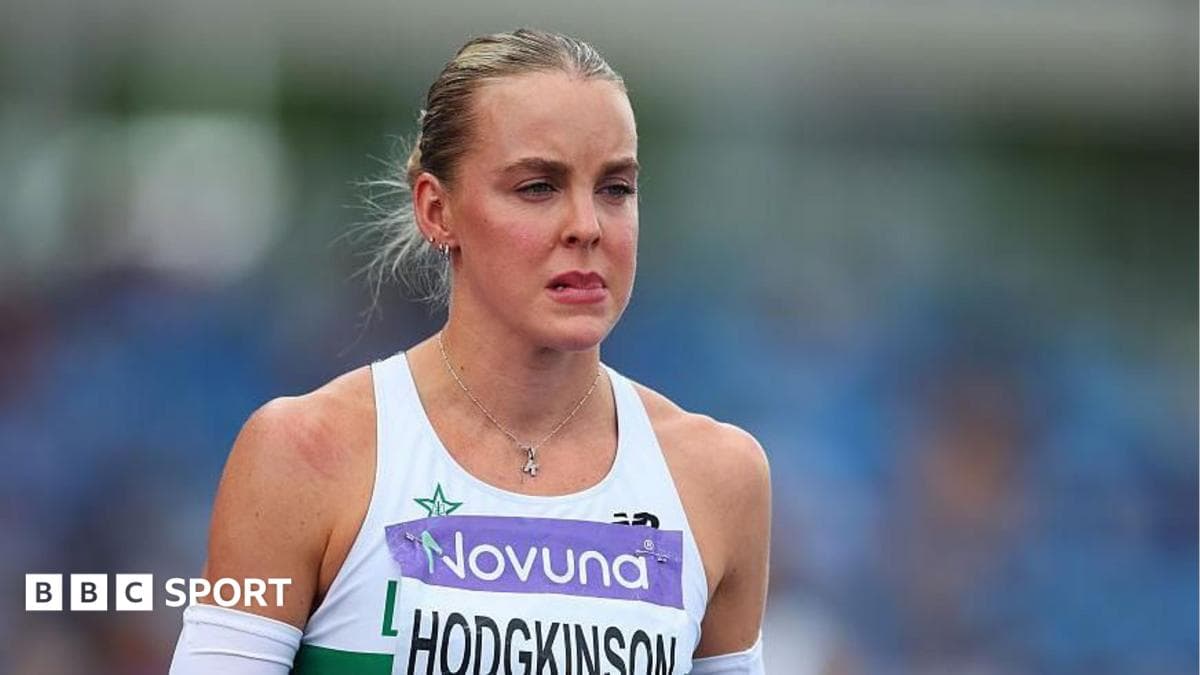
Serena Williams to make singles comeback at Wimbledon
Sports

Serena Williams to make singles comeback at Wimbledon

Serena Williams won the Wimbledon ladies' singles title in 2002, 2003, 2009, 2010, 2012, 2015 and 2016 Serena Williams will make a surprise return to singles action at Wimbledon later this month after accepting a wildcard. The 44-year-old has been given the final spot in the women's main draw - filling a gap left following the initial announcement on Tuesday. Williams has played two doubles matches since making her competitive return earlier this month after a four-year absence. She has won the Wimbledon singles title seven times but remains one short of Margaret Court's long-standing women's record of 24 Grand Slam wins. Williams had already been given a wildcard to play alongside older sister Venus in the Wimbledon doubles. But asked earlier this month if she would consider a singles return at SW19, she said: "You think I'm ready for singles? I need to get to work." Williams has not won a singles match at Wimbledon since 2019, when she lost in the final to Romania's Simona Halep. She spent 319 weeks at the top of the world rankings and has won 73 singles titles on the WTA Tour during an illustrious career. She has also completed a career 'Golden Slam' in singles and doubles - winning all four Grand Slams and Olympic gold - and won every singles major at least three times. Williams will discover her first-round opponent when the draw takes place on Friday, with the tournament getting under way on Monday, 29 June. Williams rolls back the years on return at Queen's Williams sisters receive Wimbledon doubles wildcard Williams won her first Wimbledon singles title in 2002 - beating sister Venus in the final - and repeated the feat a year later. She won again in 2009, 2010, 2012, 2015 and 2016 - with her seventh triumph meaning she equalled Steffi Graf's Open era record of 22 major singles titles. After taking maternity leave in 2017, she reached the final on her next two Wimbledon appearances, but lost in straight sets to Angelique Kerber and Halep. Her 2021 campaign ended after just six games as she retired injured against Aliaksandra Sasnovich, and there were doubts she would return. Given a wildcard in 2022, she was two points from victory against Harmony Tan before being edged out in a final-set tie-break. Asked afterwards if that would be her final Wimbledon appearance, Williams said: "That's a question I can't answer. Who knows? Who knows where I'll pop up?" Williams has won 14 titles at Wimbledon, with six women's doubles and one mixed doubles among her tally. She also won Olympic singles and doubles gold on the same courts at the 2012 London Olympics. Williams has won 107 of her 123 singles matches on grass courts, and it is the surface she has the best record on with an 87% win-rate. Allow Instagram content? This article contains content provided by Instagram. We ask for your permission before anything is loaded, as they may be using cookies and other technologies. You may want to read MetaҀ™s Instagram cookie policy , external and privacy policy , external before accepting. To view this content choose Γ’Β€Β˜accept and continueҀ™ . Williams played what was widely expected to be the final match of her career at the 2022 US Open before "evolving away" from the sport. But refusing to use the word 'retirement' always left the door ajar for a return. She said the main motivation for her comeback was the prospect of her two daughters seeing her play. Williams won the Australian Open while pregnant with eldest daughter Olympia and gave birth to her second child, Adira, in 2023. Her daughters watched from the stands as their mother won the first doubles match of her return at Queen's alongside Victoria Mboko. However, the pair had to withdraw from the tournament when Canadian teenager Mboko injured her knee in the singles. Former world number one Williams then entered the doubles in Berlin, where she lost alongside Czech Karolina Muchova in their first-round match on Tuesday. Afterwards, Williams remained coy when asked about the prospect of playing singles at Wimbledon, but returned to London the following day and started practising at SW19 on Thursday. After her second doubles match in Berlin last week, Williams said she felt more nimble, sturdy and speedy - and a practice session on Sunday persuaded her the time was right for a singles return. A singles comeback always seemed likely once she had committed herself to all the training, travelling and drug testing required of a professional athlete. That it has come so soon is more surprising. Even as a seven-time singles champion, it is bold to make your return at Wimbledon having not played a singles match for nearly four years. Williams' last Grand Slam title was nine years ago, and as an unranked player she could face one of the top seeds in the first round. Martina Navratilova may, perhaps, prove an inspiration. She won a Grand Slam doubles title a month shy of her 50th birthday, and a singles match at Wimbledon at the age of 47.

Liverpool reject Β£21.7m Inter Milan offer for Jones
Sports

Liverpool reject Β£21.7m Inter Milan offer for Jones

Curtis Jones' current Liverpool deal expires in 2027 Liverpool have rejected a verbal offer of 25m euros (£21.7m) from Inter Milan for Curtis Jones. The offer is well short of the £35m which Liverpool value Jones at and they are unwilling to sanction a cut-price exit for the midfielder. Jones, 25, only has one year left on his current deal at Anfield and this is the second time Inter have come in for him this year. The Italian club were interested in his availability in January and proposed a loan with a view to a transfer but that was also turned down by Liverpool . This month, Piero Ausilio, Inter's sporting director, said: "Curtis Jones - we are paying attention to him. We didn't hide. We understand what the developments will be." Federico Chiesa went as far as telling Italian newspaper La Gazzetta dello Sport that Jones asked him what it is like to live in Italy. Homegrown talent Jones joined Liverpool 's academy aged nine before signing his first professional contract with the Reds in 2018. What's next for Jones as Inter Milan step up interest? Follow Liverpool on BBC Sounds Pre-match, post-match and topical Reds content Subscribe and listen for everything you love about Liverpool Latest Liverpool news, analysis and fan views Ask about Liverpool - what do you want to know?

The questions facing England after awful fortnight
Sports

The questions facing England after awful fortnight

This video can not be played Highlights: NZ level series after Henry blows away England on day five At the end of an extraordinary fortnight, English cricket is dealing with the consequences of another controversy. Captain Ben Stokes and pace bowler Gus Atkinson will face no further action following an incident that occurred in a London nightclub, and have returned to the squad for the third Test against New Zealand starting on Thursday at Trent Bridge. The fallout will hang over the decider in Nottingham, with England desperate for a series win following their awful Ashes tour. Stokes and Atkinson may have been cleared, but questions remain over the entire England set-up. Brendon McCullum was appointed England head coach in May 2022, a month after Ben Stokes was named England Test captain Captain Stokes and coach Brendon McCullum were all smiles after England won the first Test at Lord's, apparently on the same page after a bruising Ashes winter. In the run-up to the home summer, both men denied Australia had damaged their relationship. Assessing where they are after this episode is mainly done through the words of McCullum. The New Zealander has spoken and Stokes is yet to. Two days before the second Test, for which Stokes was absent, McCullum repeatedly spoke of his "worry" and "concern" for the all-rounder. However, when Stokes returned to play for his county, Durham chief executive Tim Bostock said he was "bemused" by McCullum's take. Two things can be true at the same time. McCullum said he has been in daily contact with Stokes, and could have been given cause for concern. Meanwhile, the 35-year-old could have felt relaxed with Durham, away from everything going on with England. Before the Test, McCullum would not be drawn on Stokes' future as a player or captain. He may have genuinely not known, and probably had a right to be frustrated it was Stokes, of all people, who had allowed himself to be caught up in a nightclub incident. Following a crushing defeat in the second Test, McCullum confirmed Stokes' return and said: "I anticipate we'll be able to work together really well in the week coming and I'm sure that both of us have that same vision for this cricket team." Stokes will speak to the media on Wednesday, while England train in Nottingham for the first time on Tuesday. There will be plenty of interested observers. Stokes' mistrust of those who were a "suit" was fostered in the aftermath of the incident outside a Bristol nightclub in 2017 that almost cost him his career. He felt let down by the hierarchy and made his feelings known after his starring role in the 2019 World Cup final. Stokes was asked for a selfie by "someone who wears a suit". His response is unprintable. Neither England and Wales Cricket Board (ECB) chief executive Richard Gould nor chair Richard Thompson have spoken publicly on this latest episode. The official message from the ECB is that Stokes was not asked to resign. However, speaking on the BBC's Today at the Test, former England captain Michael Vaughan said: "There were people briefing they did not want Ben Stokes to come back as England captain. He will know that." Ex-England skipper Alastair Cook added: "Where is the actual leadership? Why has McCullum had to deal with it? People who are making decisions are hiding away from the media." Stokes, one of the greatest to ever play for England, is in a strong position. English cricket could find another chair, chief executive, director of cricket or coach, but it will not find another Stokes. It would be a brave individual who tries to take him on. This video can not be played 'Some people don't want Stokes to return as England captain' - Vaughan A midnight curfew was enforced on the England team after the Ashes tour was dogged by off-field issues. When the ECB first released details of the Stokes-Atkinson episode, the governing body said the pair had breached the curfew. It was confirmed the curfew was still in place despite the completion of the first Test and the second being more than a week away. However, four days later, England director of cricket Rob Key revealed Atkinson did not know the curfew was in force, leading to the question of who knew what, and how the curfew was communicated. In the aftermath of the second Test, McCullum said there was an "ambiguity" over the terms of the curfew and that it had not been put in writing. The coach said standards would be "better documented". There are different ways to look at this. On one hand, has an England environment often accused of being sloppy once again overlooked the details? But do grown men - professional athletes - really need their bedtime to be put in writing? Plenty outside the team knew about the curfew, so how had the players managed to avoid hearing about it? After all that happened in Australia, should the players not be taking it upon themselves to quell talk of a drinking culture and act like high-performance sportsmen? The curfew remains in place for the third Test at Trent Bridge. Hugely. England had to make five changes for the second Test - admittedly not all because of Stokes' absence - and they could make at least another four for the third. Without Stokes, even a Stokes who has not been at his best with the bat, England lose their balance. At The Oval they had to pick Jordan Cox as an extra batter at number seven to protect a long tail, and their desire for four seamers meant spinner Shoaib Bashir was squeezed out. With Stokes, England have the required amount of batting and a rounded attack. From the team that played at The Oval, England will definitely omit James Rew and Sonny Baker, who are not in the squad, and probably Cox and Matthew Fisher. In would come Stokes, Atkinson, Bashir and wicketkeeper Jamie Smith, returning after paternity leave. England could even make a fifth change if they decide not to risk Jofra Archer in back-to-back Tests, especially if Ollie Robinson is fit after a knee problem. One silver lining to Stokes' absence could be the time he spent in the middle for Durham. A 95 against Northamptonshire was his highest score in nearly a year. Eight years ago, Stokes' first Test after he was cleared of charges of affray over the Bristol incident was at Trent Bridge. He was booed by sections of the crowd. There will surely be no repeat this time around. Initial frustration over Stokes' involvement in the Rex Rooms episode appears to have given way to support for the skipper. Nottingham will be rocking when he comes out to bat. However, there is no escaping the impatience with England's results and the crisis-to-crisis reputation the game is struggling to shake. The management were backed after the Ashes thumping, but the demand was to turn things around quickly. There was the question as to what could happen to the hierarchy if England lose the series against New Zealand. Pressure for heads to roll would potentially be irresistible. We may only be a week or so from finding out. Second Test ratings: Which England players got 3/10? TMS podcast: Stokes will return as captain - McCullum Get cricket news sent straight to your phone

Proposals to keep 'crown jewel' sports free on streaming services
Sports

Proposals to keep 'crown jewel' sports free on streaming services

The World Cup, Olympics and Wimbledon finals are on the list of 'crown jewel' sporting events in the UK The government is proposing new legislation to prevent streaming and catch-up rights to some of the world's biggest sporting events - including the World Cup - being put behind a paywall for UK viewers. The current legislation covering the so-called 'crown jewels' was established in 1996, when just 4% of UK households had access to the internet. It does not prevent on-demand rights being sold to a streaming service such as Netflix or Discovery+, which would charge subscribers for watching at a time that suits them. The Olympics, the FA Cup final, the Grand National and Wimbledon finals are among the other listed events that will now have such digital rights added to the scope of the regime, as part of a media green paper being published this week. Culture secretary Lisa Nandy said: "Due to the late night kick-offs, so many families are currently following the World Cup by catching up on-demand in the mornings. "With these changes we are protecting that for the future, ensuring streaming rights for the biggest sports events must be offered to our public service broadcasters. "This will not only help those broadcasters compete, it will make sure that people never miss out on the history-making sporting moments that bring us together as a nation, for free and however and whenever they choose to watch." In 2022, a report by the Department for Culture, Media and Sport Select Committee , external recommended that the previous government "should review extending the protections currently offered under the listed events regime to digital and on-demand content". Ministers had also been under some pressure to add the Six Nations rugby championship to the 'crown jewels' events. However, the government has no plans to expand the list, and is said to believe that it currently strikes the right balance of ensuring many of the nation's biggest sporting moments are free-to-air, while protecting competition organisers' ability to raise income from the sale of broadcast rights.

Prem Rugby play-offs set to move to neutral venue
Sports

Prem Rugby play-offs set to move to neutral venue

Northampton's George Hendy (centre) celebrates one of his two tries in Saturday's Prem final The Prem Rugby play-offs are set be played at a neutral venue from the 2029-2030 season. The current format, which sees the top two teams in the regular season table getting home advantage in the semi-finals, has been in place since 2005. But league bosses say they have a vision of playing both the play-offs on consecutive days in one city, similar to the European finals weekend. It is thought Liverpool and Brighton are two of the cities under consideration at this early stage. This season's play-offs were a major success, with Northampton's Franklin's Gardens and the Rec in Bath hosting two epic contests in front of sold-out crowds. However, with both grounds having a modest capacity of about 15,000, Prem Rugby chief executive Simon Massie-Taylor believes there is an opportunity to grow the product on both a commercial and sporting level. France's Top 14 semi-finals have taken place this season at Marseille's Stade Velodrome, which has a capacity of more than 67,000. "The semi-finals that we have just had were awesome in terms of the rugby spectacle, and they're sell-out games with their home crowds," Massie-Taylor said. "But I think they would sell out larger venues and neutrals would go as well. This is about the long term. In the long term, it will be more valuable if you are playing in bigger stadia." Every moment ached with importance as Northampton win compelling final Can 'best Northampton team ever' become one of English rugby's greats? Club insiders have given the proposal a mixed reception when approached by the BBC, with some excited about the number of fans that could attend the play-off weekend in a big venue in a destination city. However, it is estimated clubs currently make between £600,000-£750,000 when hosting a play-off at their home ground, so the money generated from switching to a neutral venue would need to be significant to make it financially viable. There are also concerns the lack of home advantage might disincentivise clubs towards the back end of the season, especially if there is no tangible benefit for finishing first in the regular campaign compared with fourth. One option would be to incentivise teams to finish in the top two by awarding either prize money and/or a greater share of the play-off gates. As well as the commercial factors, another advantage of holding the play-offs in a host city would be the chance to take big league games to an underserved area of the country. "You have to mix up trying to open up new markets and with tried and tested fan bases," added Massie-Taylor. Listen to the latest Rugby Union Weekly podcast

Ex-Wimbledon champion Vondrousova given four-year ban
Sports

Ex-Wimbledon champion Vondrousova given four-year ban

Marketa Vondrousova beat Ons Jabeur in the Wimbledon women's singles final three years ago Former Wimbledon champion Marketa Vondrousova has been banned for four years for refusing an anti-doping test last year. Vondrousova, 26, was charged by the International Tennis Integrity Agency (ITIA) after denying a doping control officer entry to her home to conduct the test in December 2025. The Czech player said in April she feared for her safety when the officer called and said they failed to follow "protocol". But a tribunal determined Vondrousova, who became the first unseeded player to win the Wimbledon women's singles title in 2023, provided "no compelling justification" for refusing a test. Vondrousova's suspension will end on 21 June 2030, but she has a right to appeal against the decision to the Court of Arbitration for Sport (Cas). Under anti-doping rules, the starting point for a sanction when a player refuses a test is the same as if they had tested positive. During the hearing, Vondrousova explained stress and poor mental health had affected her decision-making, in addition to her safety concerns. ITIA chief executive officer Karen Moorhouse said while the agency understands the testing process is "uncomfortable" and also acknowledges the additional burden it can carry for players competing, "it is essential to protect fair competition". Moorhouse added: "Safety and welfare of players and our testers is really important to us. Our testers are well-trained, professional, and the gender of our testing witness always matches the player. "They carry ID at all times, and players are able to verify their identity in other ways if they are ever unsure." Vondrousova, who is ranked 122 in the world, said she felt scared when the officer approached her door late at night without properly identifying themselves or following protocol, adding: "In that moment it was about feeling safe, not about avoiding anything." Live scores, results and order of play Williams is the greatest - but will she produce another great fight?

The key differences between Tuchel and Southgate's England teams
Sports

The key differences between Tuchel and Southgate's England teams

Tuchel was named England manager in October 2024 and took charge in January 2025 England's opening World Cup match - a 4-2 win over Croatia - was an intense 90 minutes that was a departure from the more measured approach fans had become used to under Gareth Southgate. Football is ultimately about results, of course, and Southgate turned England into an international team capable of making deep runs in tournaments - leading them to the final of the European Championship in both 2021 and 2024. But for many, style matters too. Here we take a closer look at the similarities and differences between the approaches of Southgate and his successor Thomas Tuchel. The most obvious change since Tuchel's appointment has been his willingness to leave star names out of the squad. At times during Euro 2024, Southgate's England had Phil Foden on the left wing, Cole Palmer in attacking midfield and Trent Alexander-Arnold in holding midfield. Tuchel left all three out of his World Cup squad. In simple terms, this can be explained as Tuchel taking a system-first approach while Southgate took a player-first approach. Tuchel decided on a clear system and a set of tactics he wanted to use, then looked at the players who could best carry out the roles he wanted - irrespective of name. It is one of the reasons Morgan Rogers - more suited to what Tuchel wants from his number 10 - was picked over Foden and Palmer. Southgate appeared to look at the best individuals he could select before trying to build a system around them, and at times was questioned for shoehorning players into roles they were not perfect fits for. That is partly why we saw changes to the starting XI and system mid-tournament under Southgate. Both approaches have proved successful throughout football and come with their own pros and cons. While Tuchel has created a system in which each player's role is clear, Southgate instead encouraged individuals to solve problems - reading the game as it happened. Including big names across the pitch therefore made sense, with their individual quality helping England produce game-changing moments. Think Jude Bellingham's bicycle kick against Slovakia, or the long-range finish from Cole Palmer against Spain. Bellingham did score an individually brilliant goal in last week's opener against Croatia, but it came on the back of a well-worked attacking routine England have developed over the course of Tuchel's reign. It's a move that, in theory, also works with Rogers in Bellingham's role. Without Alexander-Arnold's through-balls, Foden's long shots and Palmer's creativity, England's current squad has perhaps slightly less individual game-breaking quality - but Tuchel will hope those he has selected will combine to produce a greater collective performance. Looking at England's equaliser in the Euro 2024 final, the ability of individual players - profiled properly - to come up with solutions was clear. First, Bukayo Saka - from this one-against-two situation - was able to thread a pass into Jude Bellingham in the box The pass - slightly behind Bellingham - was laid off to Cole Palmer at the edge of the box through an impressive first-time pass while off balance And Palmer, who thrives on the edge of the box, curled the shot in for England's equaliser. Not an easy chance to convert 1 of 3 Tuchel's game model for England is built on a few core ideas. In November, assistant coach Anthony Barry told the Guardian , external the modern game needed a new approach. "There are emotional wins you can get as a coach in the first and final thirds - playing out from the back, pressing from the front," he said. "But in the middle area of the pitch, those 24 metres, we feel the game has become stuck, particularly in the Premier League. "Everybody has so much information now. They know how to set up - mid-blocks, deep blocks. We are really trying to focus on accelerating the game across those 24 metres." Watching the Croatia game back, that was easy to see. Pickford had 72 touches as Tuchel's men went backwards to entice Croatia to step out before playing forward quickly into the runners in behind. England passed the ball back to Jordan Pickford to entice Croatian pressure. Harry Kane dropped deep into the space vacated by Declan Rice. He moved over to the left and Jude Bellingham began to make a run into the space Kane vacated. On the ball, Kane turned to face play. Under no pressure and with time on the ball, he looked for a direct pass into England's runners - Bellingham, Anthony Gordon or Noni Madueke. We see Rice in a higher, left-sided position. 1 of 2 That game, in particular, highlighted two clear differences to the Southgate era. The first being the speed of play through the middle third. Southgate's sides, perhaps more traditionally, built up short - looking to progress the ball more slowly. They wanted to keep the ball, move up the pitch as a unit before - when pinning the opposition in their own third - trying to break down the low block. That worked particularly well against teams who conceded control and were reluctant to press high. But with football always developing, games towards the end of Southgate's reign featured England facing increasingly clever defensive tactics. We saw braver mid-blocks and, at times, teams pressing higher. This is in line with the rise in man-to-man pressure we've seen become more common in club football. The second difference was the manner in which the team looked to solve tactical dilemmas. For Tuchel, clever and more aggressive defensive tactics are countered through specific patterns and planned solutions. Against Croatia, as England passed the ball backwards, Declan Rice moved into a wide-left position vacating the centre of the pitch for Harry Kane to drop into alongside Elliot Anderson. Bellingham pushed forward into the last line. These movements were automatic but worked to undo Croatia's press. After bringing Croatia up the pitch, the moves ended with Kane or Anderson playing it long into Bellingham, Anthony Gordon or Noni Madueke. Coaches prescribe solutions for players, who are selected to execute those ideas. That is put in a simplistic way, but is the Tuchel way. Southgate, when faced with a similar mid-block shape, would rely on the players he'd selected to solve the problem in a more intuitive manner. This approach was harder for opponents to prepare for, with Alexander-Arnold and Kobbie Mainoo able to come up with different ways to progress the ball - but without specific direction, players could become stuck against well-prepared defences in an increasingly tactical sport. The rotation England used against Croatia, of course, won't be a surprise for their next opponents. This was a common situation England found themselves in under Southgate. By building up slowly, and moving up the pitch as a unit, they pushed teams close to their own goal before then trying to break them down By comparison, Tuchel's England have created attacking situations that look more like this. By using build-up to entice the opposition midfield and attack to step up the pitch, England have been encouraged to play quickly into attackers higher up, with fewer defenders between them and the goal - a more high-risk, high-reward tactic 1 of 2 In the coaching world, there is a maxim some believe in - that teams are built in the image of their coaches. Southgate was impressively able to steady the ship before pushing them extremely close to glory. He did so in a highly pragmatic manner. His sides didn't create end-to-end affairs as though it might have increased their chances of scoring, it would also have increased the likelihood of them turning the ball over and conceding. By reducing variance and keeping the game tight, eventually England's quality would shine through. Against top-level quality, their collective tactical ideas could appear undercooked. When they did go ahead, one critique was they would look to defend their lead rather than build it - just look at the Euro 2020 final as one example. Tuchel's appetite for risk is greater. England's substitutes against Croatia were like for like in profile rather than changing the dynamic or balance of the team. Yes, they looked more fragile than Southgate's side defensively. But it's a trade-off many fans will be willing to accept. Tactical analysis: England look exciting but how can they tighten up? Why Pochettino's fluid USA midfield is thriving

Madueke's remarkable season - from petition to World Cup starter
Sports

Madueke's remarkable season - from petition to World Cup starter

Noni Madueke has made 12 appearances for England When Noni Madueke was named in England's starting line-up for their World Cup opener against Croatia it was the latest moment in what has been a dramatic season for the Arsenal winger. Last summer Madueke completed a move to the Gunners from Chelsea for about £50m, but supporters started a petition against the signing with a #NoToMadueke hashtag being used across social media platforms. But just under 12 months later, the 24-year-old has become a Premier League winner, after helping Mikel Arteta's side to their first league title in 22 years, and is starting for Thomas Tuchel's England on the right wing. Madueke was one of England's standout players in the 4-2 win over Croatia and won the penalty which Harry Kane scored to give the Three Lions the lead. Madueke's Arsenal team-mate Bukayo Saka had been expected to be England's starting right winger at the World Cup but the 24-year-old is dealing with an Achilles issue he has been carrying since March. Saka and Madueke find themselves in the unusual situation of competing for game time at both club and country. Saka, who made his 50th appearance for England in the victory over Croatia, called the situation "unique", before adding "I don't really know how it works, but it works" when describing his relationship with Madueke. Tuchel not afraid to shout at players - Watkins All three England keepers played there - Carlisle's role in trio's rise When Tuchel named his England squad for the World Cup the German was full of praise for Madueke. The forward has put in consistently good performances for the Three Lions since Tuchel took charge and the manager said Madueke can be a "difference-maker" before highlighting his "one-on-one ability". Tuchel has made it clear he wants his England team to play in a style that replicates the physicality of the Premier League. And that thinking shaped the selection of his squad, with the 52-year-old picking a group of players who are physically robust and powerful runners. Tuchel has ensured that his gameplan is built around record goalscorer and captain Kane, with the Bayern Munich forward surrounded by wingers who like to run behind the defence to leave space for him to drop deep. That thinking worked out well with Madueke's four passes to Kane against Croatia the joint most in the England team, matched by goalkeeper Jordan Pickford. Anthony Gordon started on the opposite flank to Madueke and their energetic performances on the wings was one of the positives of the match for Tuchel's side. Kane is known for his passing range and when given space the striker attempted a couple of passes to release Madueke behind the Croatia defence. Madueke had five touches in the opposition box, completed his only dribble of the game and won the penalty to set England on their way. Round-of-32 fixtures as it stands Tuchel not afraid to shout at players - Watkins Despite fighting for game time, Madueke and Saka are close away from the pitch too with Saka calling his team-mate his "brother". Arsenal boss Arteta found ways to get both wingers on the pitch at the same time in 2025-26, which may be something Tuchel opts to do as the World Cup goes on. Madueke was utilised on the left wing by Arteta, while Saka also featured in the number 10 role as the Gunners lifted the title. Madueke made 43 appearances last season - scoring eight goals and registering four assists in all competitions - as Arsenal ended their trophy drought. However, Madueke only started 16 times in the league. Competing with Saka and a knee injury limited the number of times he was picked from the off. He provided a bright spark for Arsenal in the Champions League final when replacing Saka from the bench in their loss to Paris-St Germain on penalties last month. And he may have a similar role for his country, if England progress to the latter stages of the World Cup. Saka continues to recover from his Achilles issue and is not expected to start until the final Group L game against Panama in New Jersey on Saturday (22:00 BST). And with another start for Madueke likely against Ghana on Tuesday (21:00 BST), he has another chance to stake his claim that he is not just a back-up to Saka. The key differences between Tuchel and Southgate's England teams World Cup fixtures and group standings How to watch the World Cup on the BBC

Iran leave note asking for peace after Belgium draw
Sports

Iran leave note asking for peace after Belgium draw

Iran have drawn their opening two games at the 2026 World Cup Iran left a message saying "may peace, respect and friendship prevail among all nations" following their World Cup group match against Belgium at Los Angeles Stadium. The handwritten note was left in their dressing room following a goalless draw in their second Group G game. Iran are competing at the World Cup while their country and the United States - who are co-hosts along with Canada and Mexico - are in negotiations to end their war. "From the ancient Persia of thousands of years ago to the civilised Iran of today, the spirit of Iran remains alive and steadfast," read the message, which was released by the Football Federation of Iran (FFIRI). "We came to Los Angeles with pride, competed with honour, and leave with dignity," the note continued. "Thank you Los Angeles for your hospitality. "And thank you to every Iranian who gave their heart, voice and soul for Iran throughout these 180 minutes. "May peace, respect and friendship prevail among all nations." The message also made reference to an attack on a girls' school in Minab, where at least 168 people were killed on the first day of the war. The handwritten note left by Iran in their dressing room following the game against Belgium Belgium show further signs of decline in draw with Iran White House in talks over Iran travel restrictions Iran played their opening match - a 2-2 draw with New Zealand - at Los Angeles Stadium, and will play their third and final group game against Egypt in Seattle on 27 June (04:00 BST). Their involvement in the World Cup has been plagued with uncertainty, linked to the war in the Middle East and related security concerns. Multiple "integral" members of their backroom staff were denied entry visas for the US while the FFIRI called on Fifa to "uphold the principles of neutrality, fairness, and established regulations" after its allocation of tickets was revoked on the eve of the tournament. Iran subsequently switched their base for the World Cup from Arizona in the US to Tijuana in Mexico, and face strict travel restrictions during their campaign. They are allowed to fly into the US a day before they have a game and have to leave the country on the same day as the match, under the conditions of their visas. This led Iran to head coach Amir Ghalenoei saying they are the "most oppressed" team at the tournament following the draw with New Zealand. However, Andrew Giuliani, the executive director of the White House's World Cup taskforce, says there are "discussions going on" about the timings for Iran's travel to and from their game against Egypt. Play BBC Sport's new World Cup predictor game World Cup fixtures and group standings How to watch the World Cup on the BBC Everything you need to know about the World Cup
How football united behind Doku after childbirth criticism
Sports

How football united behind Doku after childbirth criticism

Jeremy Doku moved to Manchester City from Rennes in 2023 for £55.4m Jeremy Doku has made it clear - family comes first. The Manchester City winger is due to become a father next month and says he wants to leave the Belgium camp to be at the birth, even if they are still at the World Cup. L'Equipe channel presenter France Pierron criticised him, saying a father is "completely useless" at the time of their child's birth, which she said was a "disgusting moment". In a statement, L'Equipe apologised and said Pierron's comments were "very far removed" from its values. The presenter also apologised, and reports in France said she would not present her show on Monday. The reaction in football - and elsewhere - was united. Doku played 86 minutes of Belgium's opening 1-1 draw with Egypt in Group G but missed their 0-0 draw against Iran because of illness. His wife Shireen is due to give birth during the second week of July, which could mean her husband missing a quarter-final if Belgium have progressed that far. "If you ask me what I want, my answer is that nobody wants to miss the birth of their first child," Doku, 24, told Reuters. "But I also Ҁ‹know that football Ҁ‹involves many ҁ other considerations. I know the federation supports its players and understands their situations. We'll see what we Ҁ‹can do." England striker Ollie Watkins, who has two children, backed Doku. "I think someone labelled it disgusting and I think for a start that's not a way to label a birth," he said. "I've seen what my wife had to go through and that was quite smooth sailing but I know family members and friends that haven't had it that way. "It only happens once - welcoming your first child to the world - and it is a blessing. There's a lot of times where you're away from family and friends during the season and it's very difficult, so to miss that would be tough and I see where he's coming from." The Professional Footballers' Association said demands placed on players should not be at the expense of "fundamental family moments". "While every situation is different, we believe players should be supported in balancing their professional responsibilities with important life events," a PFA spokesperson said. "Supporting players as people, not just athletes, is an important part of creating a healthy professional working environment." The Fatherhood Institute, which supports men as hands-on fathers and caregivers, also backed Doku. "It makes me think of gladiators in the Colosseum," deputy chief executive Jeremy Davies told BBC Sport. "We want these men to be these heroic figures who exist for our entertainment. They get paid lots of money but there are some things that are worth a lot more." Fifa regulations state maternity leave for female footballers should be "a minimum period of 14 weeks' paid absence" - eight weeks of which must be after the birth. There is no specific stipulation on paternity leave, leaving those in the men's game to juggle their responsibilities. One club had a car on standby outside the ground for a player whose partner was soon due to give birth, while one manager at a top-flight European club did not travel to a match to be with his wife as she was about to have their second child. Instead of being in the dugout, he watched the game on TV and relayed instructions to his coaching staff. "I was on the earpiece to the bench and 10 minutes into the game she started getting labour pains," said the manager, who is now working in the Championship. "We were 2-1 up at half-time but she was getting more into labour. I rang the hospital to say we were going to come in, but had to stop because we got a penalty. "We scored, I knew we won the game, and we came right in. Our daughter was born two hours later. "It's less common with managers because they are typically older but the game doesn't stop... you need to win the next game." Doku would certainly not be the first player to put attending his child's birth before football. In 2018, Fabian Delph left England's World Cup camp in Russia to return to the UK for the birth of his daughter. David Silva, meanwhile, missed two Manchester City matches following the premature arrival of his son in 2018. And former Manchester United goalkeeper David de Gea was given extended leave during the Covid pandemic when his partner Edurne gave birth to their daughter in 2021. Others, though, have not been present. Just this weekend, Norway defender Leo Ostigard watched his son being born on FaceTime , external while at the World Cup. Ruben Neves had a similar experience in January 2021 - watching the birth of his third child on his phone from Wolves ' team bus after a 1-0 defeat at Crystal Palace . His wife had returned to Portugal as her doctor was there, but Neves' plans to join her were scuppered by travel restrictions because of the pandemic. When Roy Keane was Republic of Ireland assistant manager, he quipped Robbie Keane should be available to play in a match against Germany after the birth of his son "unless he's breastfeeding". Former Brentford and Tottenham boss Thomas Frank, who is a pundit for BBC Sport during the World Cup, has handled similar situations. "Football is the most important of not important things - so it is not important at a time like this," he said. "To see your wife or partner give birth is one of the biggest things you will experience, and I think it is so important also to be there. "It has always been a priority to tell my players that. I would say: 'It is up you - I recommend you be there.'" Frank said Doku heading home for his child's birth would be "the right thing to do", adding: "When he comes back, he will be absolutely on top of the world." Jamie Smith has 21 Test caps, having made his debut in 2024 Last week, cricketer Jamie Smith missed England's second Test defeat by New Zealand after the birth of his daughter. England's record wicket-taker Sir James Anderson flew back between Ashes Tests in Australia to be at the birth of his second child in 2010. Basketball player Anthony Edwards left at half-time of a game in 2024 so he could be there for the birth of his daughter. And British tennis great Sir Andy Murray said in 2016 he would leave the Australian Open early if his wife Kim went into labour. "I'd be way more disappointed winning the Australian Open and not being at the birth of the child," he said at the time. But darts player Rob Cross missed the birth of his third child in 2017 in order to qualify for the World Matchplay tournament.

Is VAR being used differently at the World Cup vs the Premier League?
Sports

Is VAR being used differently at the World Cup vs the Premier League?

Four goals have been disallowed on VAR review at the 2026 World Cup Complaining about the video assistant referee has become a sport all of its own in the Premier League. It has felt very different at the 2026 World Cup, where VAR has largely been pretty low key. So it may come as a surprise that there have been more regular VAR interventions than in the Premier League last season. Perception can be just as powerful as the facts, especially in the emotionally charged world of football. Games come thick and fast at a World Cup. No sooner has one incident happened, another match comes along to wash over it. In the Premier League, where supporters have a vested interest in every game, controversy does not fade away quite so quickly. So why does it feel so different at the World Cup? VAR at the World Cup has not been without its controversies. Think of the red card for South Africa's Themba Zwane for violent conduct in the opening game. Or the referee rejecting a penalty review after France's Kylian Mbappe appeared to be tripped by Senegal's Sadio Mane. But for the most part, there have not been too many talking points. It is often the way at major tournaments, as players take fewer risks compared to a 38-game league season. On average, there is one key match incident (red card, penalty claim etc) in a World Cup fixture. In the Premier League, it is three. That instantly creates the scope for more controversy at league level. We should expect refereeing to be the gold standard at the World Cup, too. After all, Fifa scoured the globe to select the creme de la creme, the 51 top referees and 30 best video match officials. Whisper it, but Pierluigi Collina, Fifa's head of referees, wants his officials to approach the tournament a bit like a Premier League game. Collina's ethos is that football is a contact sport, and not all contact is a foul. He wants to see free-flowing games at a higher tempo. You could pick that wording right out of the Premier League handbook. The stats back this up, too. Referees are blowing for far fewer fouls. The 2018 World Cup saw 27 fouls per game, while in Qatar four years ago it was 25. For this World Cup it is down to 21.7. In the Premier League last season it was 21.6. Collina has also reduced the number of cautions per game, with 2.4 well below any other competition or recent World Cup. If you change the way a game is being refereed, you must adapt video review too. Collina's desire to have a higher threshold for challenges on the field has a direct link to VAR. The Italian wants consistency of decision-making. If you let more tackles go on the field, you must have fewer VAR interventions. Both bars must move in unison. Take the penalty appeals for Scotland's John McGinn and Scott McTominay against Morocco. Claims for a spot-kick undeniably, but too soft for Collina's threshold. Against public perception, the Premier League has the lowest rate for VAR interventions in Europe at 0.29 per game. The high bar we hear about so much in England has made its way to the World Cup. In Qatar we saw 0.41 interventions per game, for this World Cup it is down to 0.33 - much closer to the Premier League interpretation. Compare that to the Champions League, which saw 0.47 interventions per match last season - almost one every other game. Then there are the subjective reviews, when a referee must go to the monitor. The World Cup (six reviews) and the Premier League (57) both trend the same at 0.15 subjective interventions per game. In the Champions League, it is more than double at 0.36 monitor visits per game. All the stats should point to other competitions having more intrusive video review. Lies, damned lies and statistics. How can the World Cup possibly have more VAR interventions than the Premier League when it feels like the opposite is true? There are a few reasons behind it. First and foremost, speed. Delay feeds doubt. Collina has a clear philosophy - he wants his VARs to make quick and decisive decisions. Errors should jump out, and video officials should not over-analyse. This has led to much shorter reviews on those subjective decisions like penalties and red cards. In the Premier League, there can be a tendency to procrastinate, to over-think by dwelling on replays. That can lead to long VAR reviews, including with its own version of semi-automated offside technology. Howard Webb, the Premier League's head of referees, has a similar ethos to Collina. But getting the same results across 380 games is more challenging. Fifa's enhanced semi-automated offside technology has helped too. The assistant referee gets an audio alert when a player is 10cm or more offside, so the delayed flag has largely been eradicated. It has removed many frustrating passages of play and cut the need for a VAR review on some disallowed goals. It has not been without a few issues, but the benefits of cutting delays have been obvious. Madueke's remarkable season - from petition to World Cup starter Does it matter if Scotland lose and still make history? One of World Cup's great stories - can Cape Verde become legends? One indirect reason should not be underestimated. At a World Cup, the in-game match pictures are delivered by the tournament organiser, and the broadcaster provides the commentary. Fifa, and Uefa, both have very clear policies. The incident might be replayed once, twice at most, while the VAR is looking at a possible red card or penalty. The viewer is only shown the VAR's screen if the referee is at the pitchside monitor. Now compare this to the Premier League, where Sky Sports' and TNT Sports' first responsibility is to analyse an incident, show it from every possible angle. Slow it down, speed it up, throw it to the pundit. Has there been a mistake or not? The commentators have a live feed from the VAR hub to both watch and listen to. They can pull back the curtain and switch to this at any time. It creates a completely different perspective on each potential incident. Tournament organisers want to present less controversy, rights holders want to showcase it. The Premier League must get frustrated that fans still believe VAR is worse in England even though the numbers are aligned with the World Cup. Two key lessons are clear. While accuracy is most important, speed is the greatest asset for the success of video review. And how it is portrayed can make a huge difference too. Play BBC Sport's new World Cup predictor game World Cup fixtures and group standings How to watch the World Cup on the BBC Everything you need to know about the World Cup
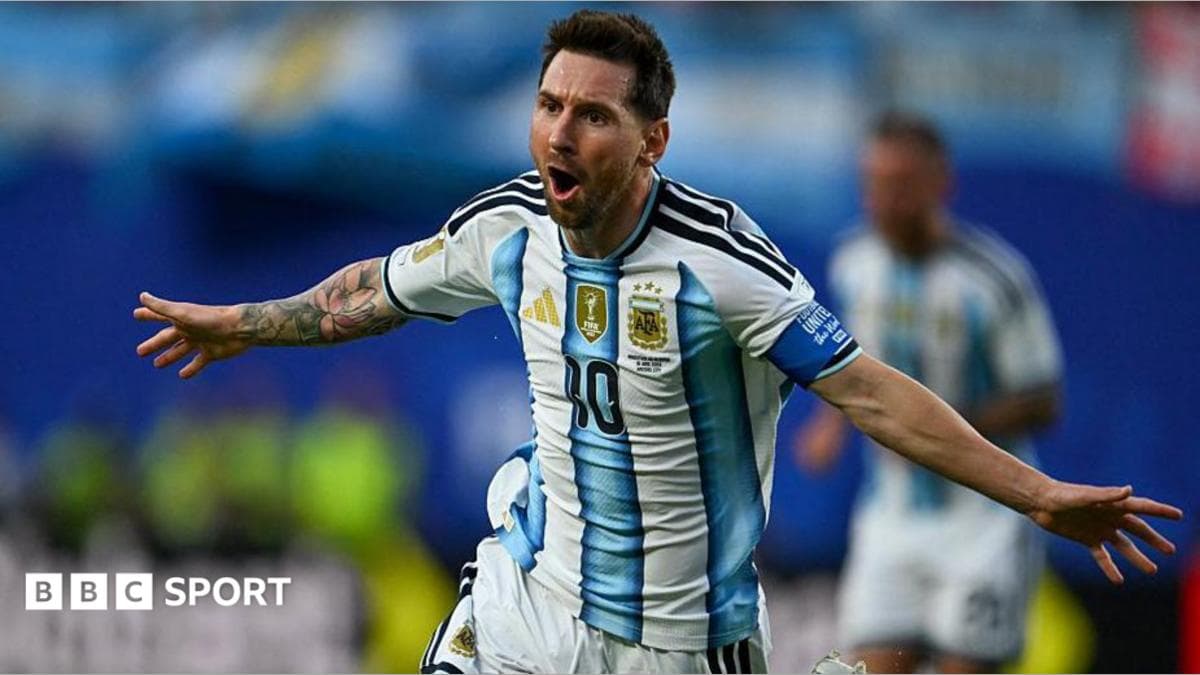
'He's stored in a hard disk in my head' - watching the World Cup as a manager
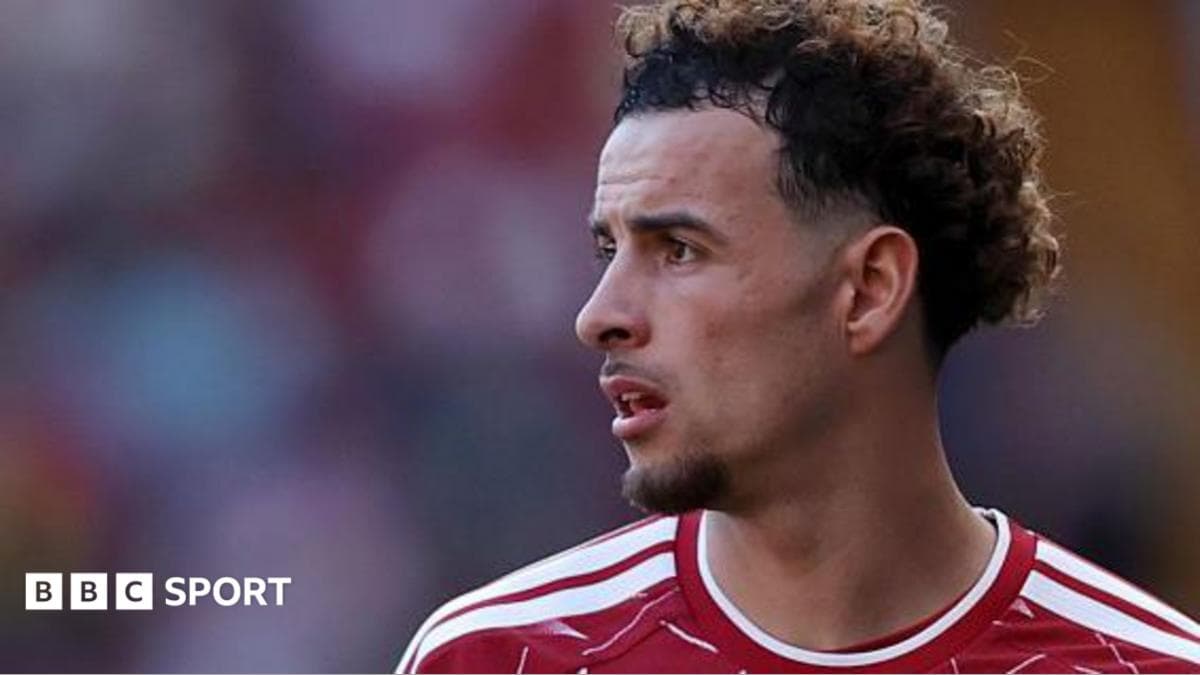
Sports

'He's stored in a hard disk in my head' - watching the World Cup as a manager
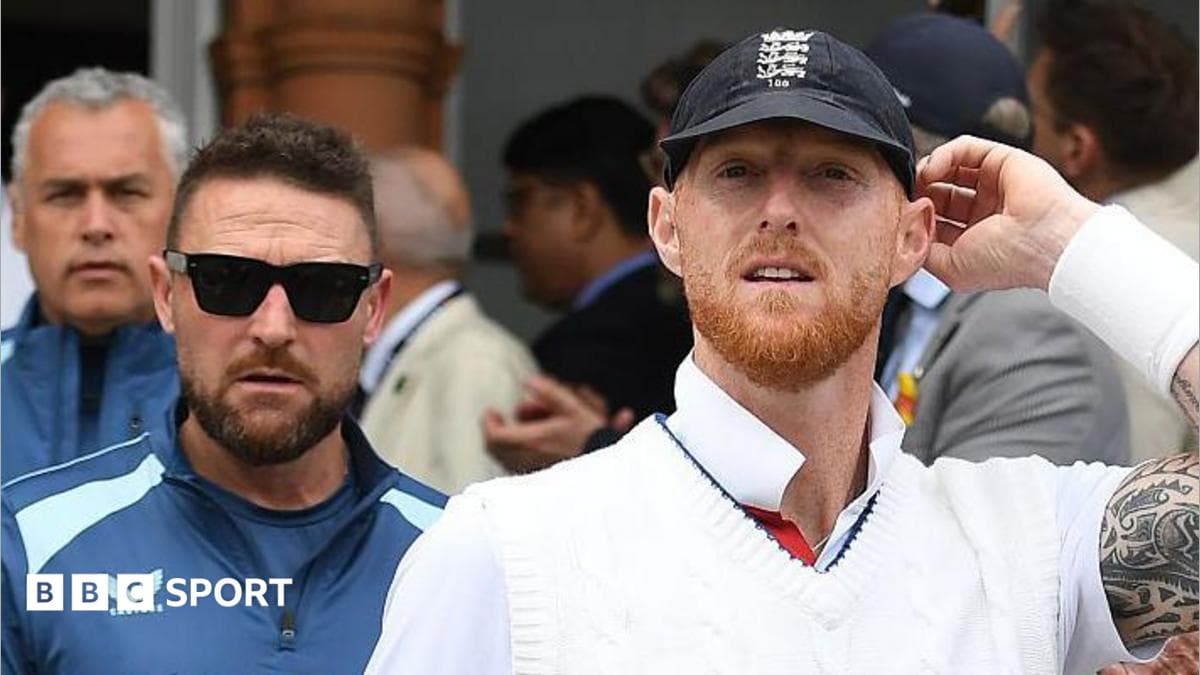
I've loved the World Cup since I saw Denmark at Mexico '86 as a boy - my dad would record the matches overnight so I could watch them with my sister before school the next morning, a lot like kids today are still doing 40 years later! I can still enjoy it like a fan now, but of course I think like a manager when I am covering games as a pundit. While I still get excited by the emotion and the whole spectacle of the supporters who are following teams like Scotland, Norway and the Netherlands at this tournament, I see matches more analytically - what the tactical trends are and what different coaches are doing. I also love to see new players for myself. Even with all the data that is available about almost everyone, there are still some surprises out there. You might find someone who you've not heard of who is interesting - or, with someone you do know about, get a chance to watch them properly yourself for the first time. At this World Cup, for example, I've already done that with two Ivory Coast players. RB Leipzig's Yan Diomande is the talk of the town for everyone at the moment and we actually looked at him when I was at Brentford, when he played for Spanish side Leganes. He was always on our radar then so he is a player I have been aware of for a while, and of course I had seen him - but that was just a lot of clips maybe, or a few highlights from a downloaded game. That is how it is presented to you when you are scouting someone to sign them, unless it is a top priority and you would watch full games. Now, though, I have just watched him play a whole match against Germany, so I saw everything about him. I will hopefully see him again over two or three, or even more, matches in the coming weeks too. I could look up some clips or study his data any time, but now what he can do is stored in the hard disk in my head. As a coach, that is always how you prefer to remember players, and what they can bring. Yan Diomande (right) has been linked with Liverpool, Manchester City, Real Madrid, Paris St-Germain and Bayern Munich this summer The other Ivory Coast player I've seen and liked was not someone I knew myself before this World Cup, although of course the big clubs know everything about everyone so he will not be unknown to them. But I have seen Trabzonspor midfielder Christ Inao Oulai for myself now and, although his side ended up being beaten by Germany, I thought he made some really good actions. I liked the way he turned, and the way he played forward, and how mobile he was. Technically he was very strong. Again, you only get this kind of full impression of a player from seeing him with your own eyes. There's no other way of doing it. It was actually similar with watching the Germany players properly, too. Of course I know who they are but, because I've been working in the Premier League, I watch the Premier League all the time - that is what I am focused on to get updated on the players and teams there. After that, it is the Champions League. So I know them from there too, but I might only watch a big Bundesliga game, say Bayern Munich against Borussia Dortmund, because that's the way it is. I only saw a little bit more of Bayer Leverkusen last year because my friend Kasper Hjulmand was head coach there. I'd love to watch more games, and see more of these players, but it's just not possible. Even though I think about football 24/7, you only have so many hours each day. Christ Inao Oulai (right) is a 20-year-old midfielder who joined Turkish side Trabzonspor in August 2025 As a fan, Lionel Messi is still the player I love the most at this World Cup. He is the GOAT - the greatest of all time - and we all need to watch him while we can. When Argentina play Austria on Monday (18:00 BST) I have arranged to watch that game with my son, who is a huge Messi fan. He is 22 - so for his entire life that he has followed Messi, he has been the best in the world. We've been privileged to see him live several times but just to watch him together on TV this time will be special, because this is probably his last World Cup. As a manager, though, if you asked me who I would sign first out of the 1,428 players who are at this tournament, I'd have to remember that Messi is 38 now - even if he is still a genius. With my manager hat on, my answer to that question would be different. It would depend on what I want for my team, and who else I already had there, but I would probably still go for the midfielder who I think is the most unique in that position. I have always loved Pedri, of Spain and Barcelona, but right now that player would probably be Vitinha, of Portugal and Paris St-Germain - he has been exceptional this season. I don't know if I would say it was a privilege - because we had to try to stop him! - but I faced him twice with Spurs, in the Uefa Super Cup and the Champions League, and seeing him close... wow. Just wow. He was so good, especially in the second game we played against PSG, in Paris, when he scored two goals from outside the box. He is phenomenal and he is probably playing the best football he can right now. Vitinha, 26, has just won back-to-back Champions Leagues with Paris St-Germain The other player I would mention here is Michael Olise, of Bayern Munich and France. While I can dream of signing Vitinha or Pedri, with Olise I almost did. We came close to bringing him to Brentford from Reading before he joined Crystal Palace instead. I had a talk with him for Brentford and he wanted to come, but for whatever reason we could not make it happen. I have followed him closely since then and the way he has developed. There are other superstar players just for France, of course, but what I've always liked about Olise is that he works so hard for the team. Every player has got an ego, but it seems like he is on top of his. In France's first game against Senegal, I know Kylian Mbappe scored two goals but actually Olise for me was the man of the match. He was exceptional. Olise was running so hard - I love that in a player - and working hard too, so he was always involved, and then he can do things out of nothing with his left foot. He can shoot, he can cross and his range of passing is brilliant too. For Mbappe's first goal, his through-ball had to be absolutely inch-perfect, and weighted exactly right too. When you try to stop France, you have to try to stop four or five players, but there is always one player in every big team that is more influential than others - and I think Olise is that player for them. Maybe when this World Cup is gone, he will be remembered as the player of the tournament. There are going to be some surprises in the next few weeks, but for me that would not be one of them. Thomas Frank was speaking to BBC Sport's Chris Bevan This video can not be played Highlights: Mbappe stars as France beat Senegal Olivier Giroud on Mbappe & winning the World Cup Predict the winners and losers of World Cup 2026 Iliman Ndiaye: SenegalҀ™s goal is to win World Cup 2026
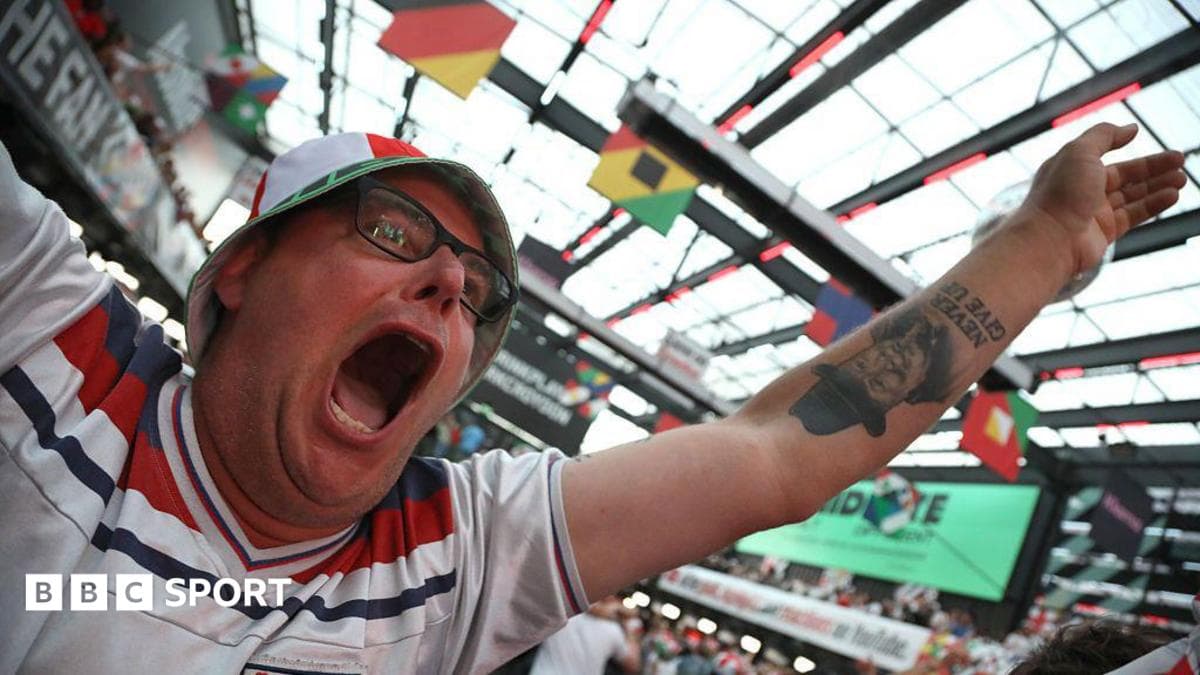
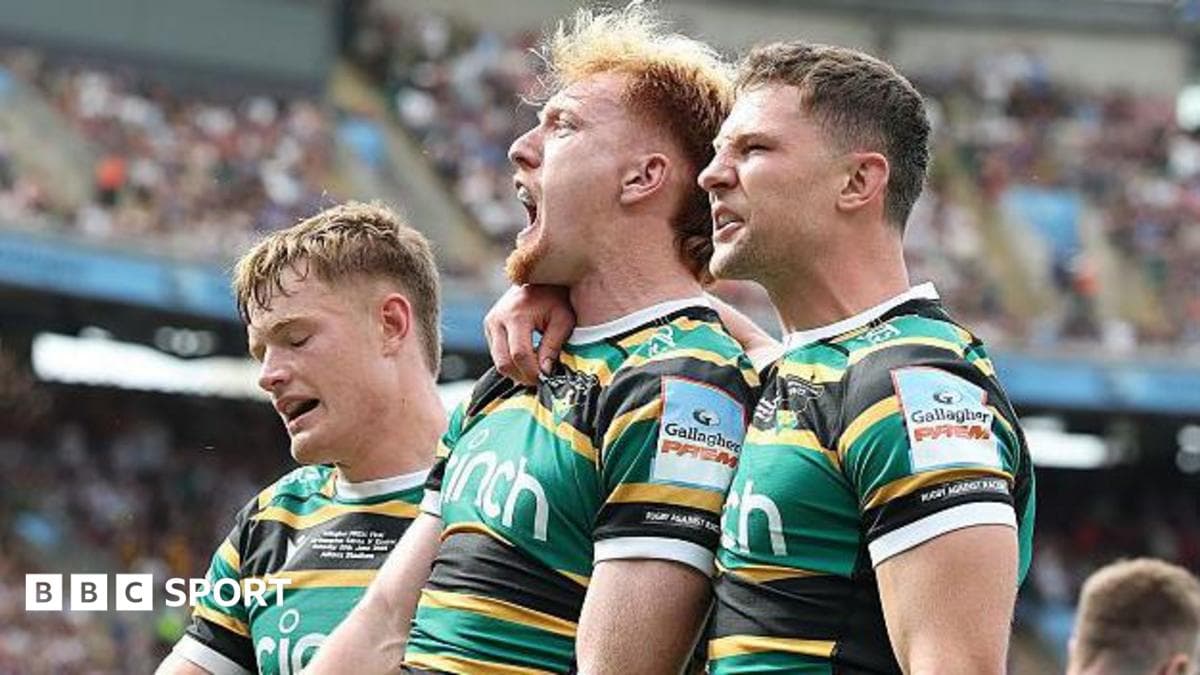
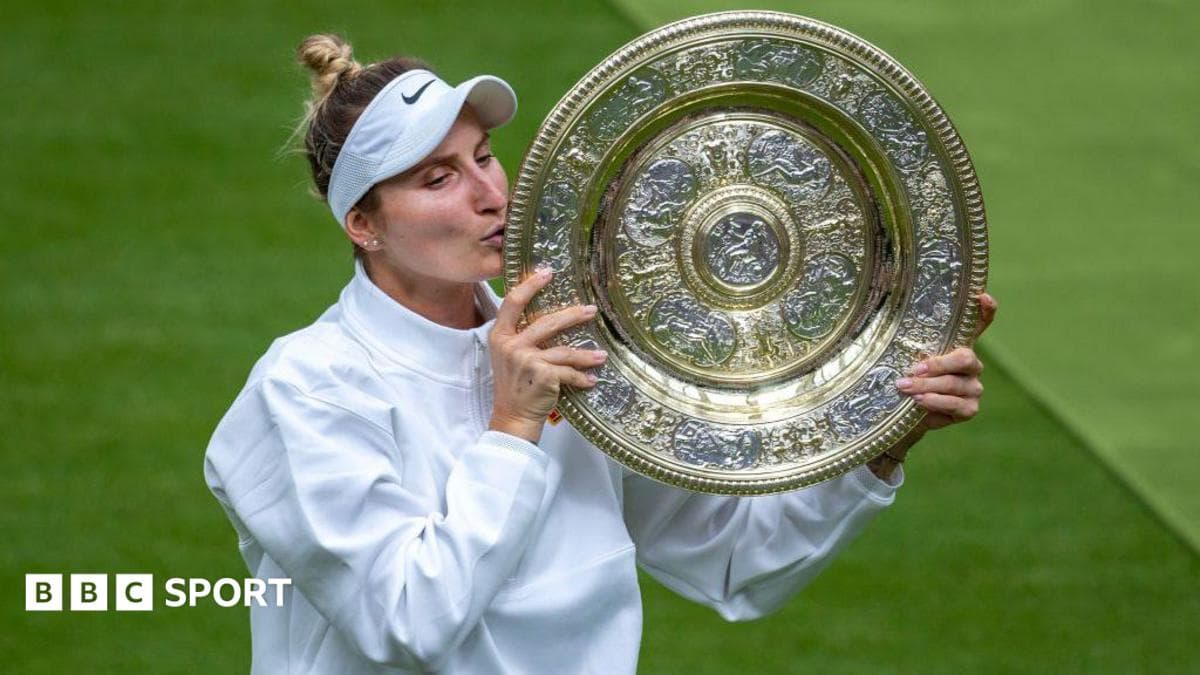
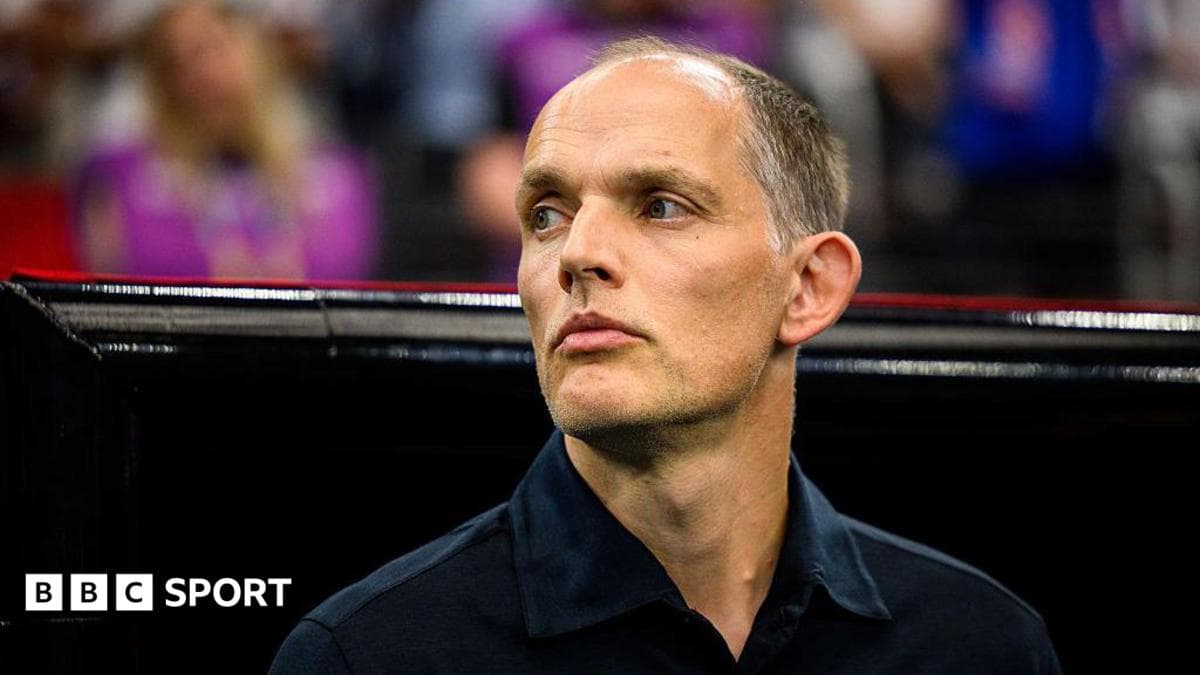
US Open shows why golf is on guard against bad behaviour
Sports

US Open shows why golf is on guard against bad behaviour

This video can not be played Clark beats Burns on closing holes of dramatic US Open US Opens drive players to distraction because the intention is always to test temperament as much as technique. The latest championship, won by Wyndham Clark at Shinnecock Hills on Sunday, did exactly that. But this edition will be remembered for its less savoury side. It was a tournament that reflected our golfing times, where deteriorating standards of behaviour inside and outside the ropes took precedence. The course was brilliantly set up to traditional US Open standards. It demanded the full gamut of shots, punishing any that fell short of perfection, and delivered a thrilling final day as Clark limped home. The champion showed steely sporting character to win his second title, after also triumphing in 2023, but he attracted more jeers than cheers while holding off the plucky Sam Burns and world number one Scottie Scheffler. Clark blocks out New York jeers to win US Open title Shinnecock Hills 'won the battle over me' - McIlroy Niemann first to get two-shot penalty for throwing club One of the reasons for Clark's unpopularity was his furious demolishing of two ancient locker doors in the Oakmont clubhouse after missing the cut at last year's US Open. It was an act of uncontrolled vandalism that speaks to the sense of entitlement that many perceive has spread through the upper echelons of the men's game. Players have never had it so good. They are richer and more pampered than ever before, yet for all that wealth and influence they have never seemed more unattractively angry. Every broadcast seems populated with commentators being forced to say sorry for players' bad language and the fact that it is the broadcaster rather than the golfer doing the apologising sums up a lack of accountability. This worsening malaise has prompted the majors to introduce its new code of conduct which resulted last week in Joaquin Niemann becoming the first player to receive a two-stroke penalty for throwing his club, while running up a nine on the par-four sixth in his first round. That nine became an 11. The Chilean fought back brilliantly to make the cut and ultimately finish tied for seventh. He would have been third with a guaranteed Masters invitation without the penalty. The United States Golf Association (USGA) hit him where it hurts most by adversely affecting his scorecard rather than a bulging bank balance with a meaningless fine. Many will feel such firm action, in general terms, is long overdue. "I really like what's happening here," former European Ryder Cup captain Paul McGinley told viewers of the Golf Channel. "We're in a game where we are seeing so much in favour of the players; so much entitlement, so much money going to the players, so much control. "The powers that be, the R&A and USGA, along with Augusta National, are making a very strong stance here about codes of conduct. "And about boundaries. And I think those boundaries have been stretched too far over the years. And its really good and refreshing to see those boundaries coming in." But Niemann's penalty sets a precedent that will be tough to fairly enforce because different players receive different levels of scrutiny. Potential punishments can influence leaderboards, cuts and careers. Next the spotlight will next fall on July's Open Championship at Royal Birkdale. R&A chief executive Mark Darbon told BBC Sport in April that he will be ready to impose shot penalties for bad behaviour. "You want passion from players, you want passion from spectators, but there's a fine line, and one of the amazing things about this sport are the values and integrity that underpin it," he said. "So we will watch that line very closely." Each group at The Open has an individual referee which should make it easier to enforce the code of conduct with consistency. The main tours, meanwhile, are still working out protocols that will be acceptable to their ultimate bosses - the players. Behaviour also needs careful management amid galleries of fans. Boorish individuals can repeatedly be heard yelling, at best, unfunny lines, and at worst abuse designed to influence an outcome. "Don't choke Wyndham," was the last thing Clark needed to hear as his six stroke lead was whittling away last Sunday. Yet such sentiments rang in his ears throughout the final day. Golf is played in an intimate arena, fans are privileged to share the stage. There is no escape for the players and it feels as though we are creeping towards a point where people could start yelling at the top of backswings to put off players while hitting. The proliferation of betting within the golf industry on both sides of the Atlantic does not help. And we saw the effects of partisan crowds at the Ryder Cup last autumn at Bethpage with abuse of European stars that was an absolute disgrace. Top level golf returned to Long Island last week and some members of the New York crowds again lived down to those depressingly deteriorating standards. And with The Open about to return to north-west England, it is worth remembering there were several individuals who behaved similarly as American Brian Harman won the 2023 Open at Hoylake when the championship was last in that region. Harman and Clark have plenty in common with what they endured among their finest hours on golf courses. Record crowds are expected at Birkdale and with high summer booze flowing, successfully policing them will be crucial. Last Sunday Clark and Burns, who came up just shy of a first major, produced a thrilling denouement played out on a great but maddening course. Despite the brilliance of the Shinnecock spectacle it also proved the sport has never been so angry or unruly. Those imposters have to be kept in check. Without its traditional civility, golf is much diminished.
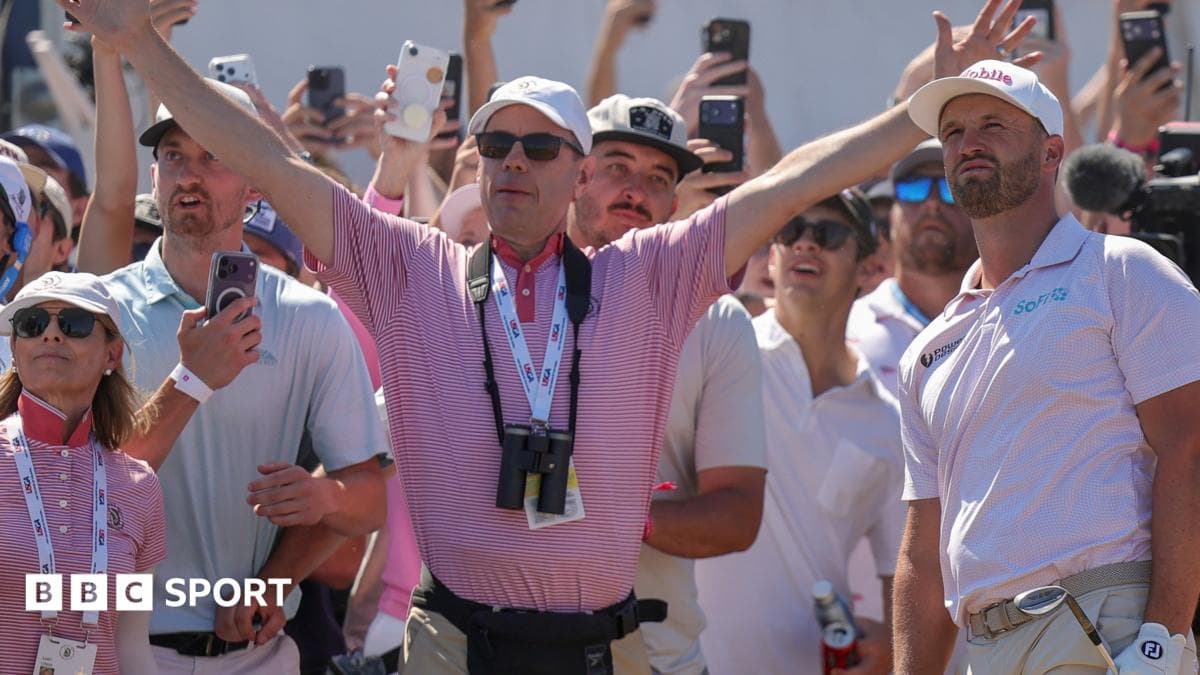
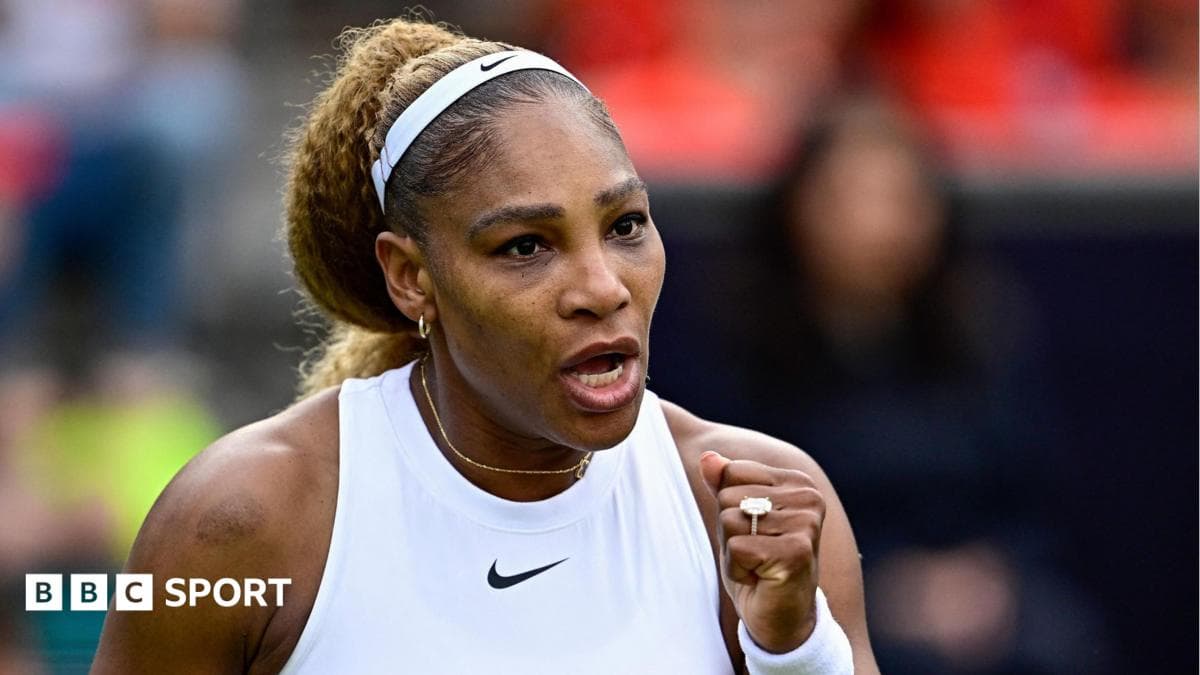
Williams is the greatest - but will she produce another great fight?
Sports

Williams is the greatest - but will she produce another great fight?

Seven-time Wimbledon singles champion Serena Williams has been given a wildcard to make her comeback at the All England Club Every great fighter thinks they have one great fight left in them. That old adage is usually applied to boxers who come out of retirement for another swing - but it feels particularly relevant as 44-year-old Serena Williams makes the next step in her comeback to professional tennis. The 23-time Grand Slam singles champion will return to the singles court at Wimbledon next week after a four-year absence from the sport she once dominated. In many eyes, the American superstar is the greatest player of all time - certainly in the women's game - and she clearly believes she has the ability to win matches again. But the reality is Williams has not played a competitive singles match since the 2022 US Open and launching her comeback at the All England Club is an ambitious move. Williams insists she does not "need to win" and rightly says she has "nothing to prove". The fire still burns in her belly, though. "Serena's mindset has always been to be the best and not settle for mediocrity," former world number one Lindsay Davenport, one of Williams' main rivals in the early 2000s, told BBC Sport. "I think we have to assume that she's coming back because she feels she's in a position where she can make an impact immediately in women's tennis." It was only a matter of time before Williams would be tempted back to singles action after making her return on the doubles court at Queen's. The US Open, which starts in late August, seemed a more obvious starting point. But, having played two doubles matches and practised intensely at Wimbledon over the past few days, Williams believes she is sharp and solid enough to return at the place where she won seven singles titles. A lot of athletes dream of rolling back the years but discover the reality of proving they can still compete - and not simply indulging in a nostalgia trip - is a different matter. Williams will also play with older sister Venus, 46, in the Wimbledon women's doubles, which the pair have already won six times Williams, who turns 45 in September, is the oldest player in the women's singles main draw by some margin - she has six years on Germany's Tatjana Maria, the oldest player with direct entry. Williams is an inspiration to millions across the world and her message of being able to "do anything at any age" is admirable. But there is no doubt that age is likely to be a barrier to her hopes of winning singles matches at Wimbledon, and two doubles matches does not feel like enough preparation to beat the world's very best. There is little comparison between singles and doubles in terms of athletic output. Williams' movement and stamina will come under severe examination by her more youthful opponents. The majority of the leading women's players are about 20 years younger than Williams, including 28-year-old world number one Aryna Sabalenka and reigning Wimbledon champion Iga Swiatek, who is 25. "It doesn't get easy as you get older and grass is a tough surface to start on," Davenport said. "The ball goes very quick, very low and it's very physical - there is a lot of bending. "It's not going to be easy [but] if anyone could do it, certainly it could be her." Former world number one Kim Clijsters found out how hard a comeback is when she returned aged 36 in 2020, unable to win any of her five matches over the next 18 months. Three-time Grand Slam champion Angelique Kerber fared better in her 2024 comeback, but lost in the first round in all three of her major appearances. "It's easier to see on TV how the girls are playing and say 'OK I can still do it'," Kerber, who came back aged 36 after having a baby, told BBC Sport. "You know you can do it - especially Serena because she was the greatest. "But working every day, going to the practice courts, going to the gym, sweating, is what you have to do." Serena Williams to make singles comeback at Wimbledon Williams rolls back the years on return at Queen's How Serena's British hitting partner kept comeback secret Williams has not won a Grand Slam since the 2017 Australian Open, when she was 35. She has since given birth to two daughters - Olympia, now aged eight, and two-year-old Adira. After her first comeback in 2018, Williams reached four Grand Slam finals - twice at Wimbledon and twice at the US Open - but lost them all. Her past two Wimbledon appearances - in 2021 and 2022 - have ended in first-round defeats. What Williams has in her favour is one of the greatest technical talents ever seen - and an incomparable aura. Winning a 24th major to tie Margaret Court's all-time women's record seems out of reach, but Williams will have looked at the open nature of the WTA Tour and felt there are plenty of players she can still beat. The power and accuracy of her serve was particularly effective on the grass and she will be hoping her opening shot can earn her plenty of free points. Her odds of winning matches are certainly favourable at Wimbledon, especially if she faces a relatively inexperienced opponent who may get overawed by what is bound to be an electric occasion on Centre Court. World number nine Victoria Mboko played doubles with Williams at Queen's and was convinced the veteran is "ready to go". "She has such clean ball striking. She could take years off and once she steps on the court she could probably find her rhythm and timing again," said the 19-year-old Canadian. "I think that's really a god-given gift she has. I'm hitting with her and she's hitting pretty big." In her pomp, Williams was the embodiment of fitness and athleticism. Last year, she admitted she had used weight loss drugs in order to lift what she called the "stigma" around using such medication. Williams said she had struggled to lose weight she had gained during pregnancy - a common experience for many women - and returns to tennis looking lean. "We've all seen her. She looks in incredible shape and better shape than arguably when she left the sport," Davenport, who won three Grand Slam titles, said. "But we have got to be a little graceful in the time we give her until she hits her peak." Williams might not get anywhere near her best and she doesn't know how long this comeback will last. But one thing is certain: the woman who many consider to be the GOAT will go down swinging in pursuit of restoring former glory. The people and places that made Jannik Sinner Cerundolo's dad conquers fear of flying to watch son win Queen's
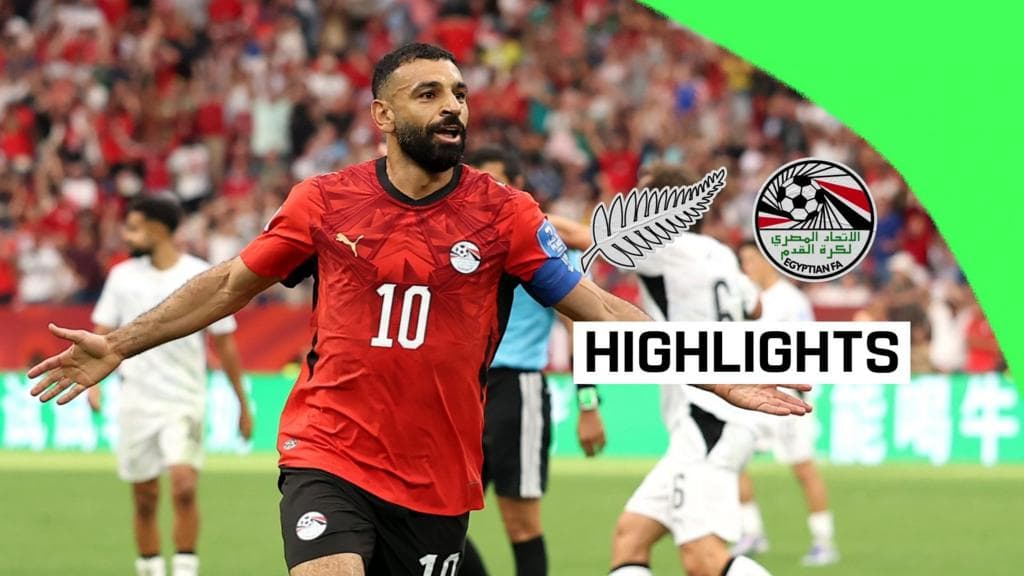
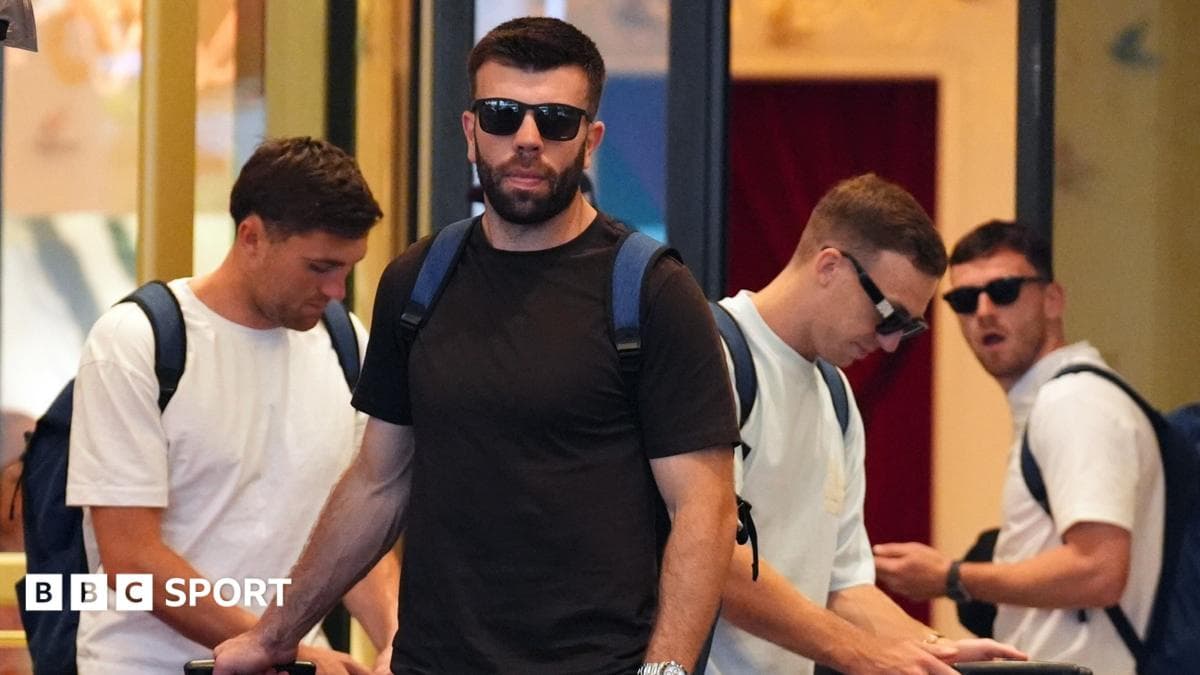
Page 1 of 1