The abundant but expensive energy source that's under your feet
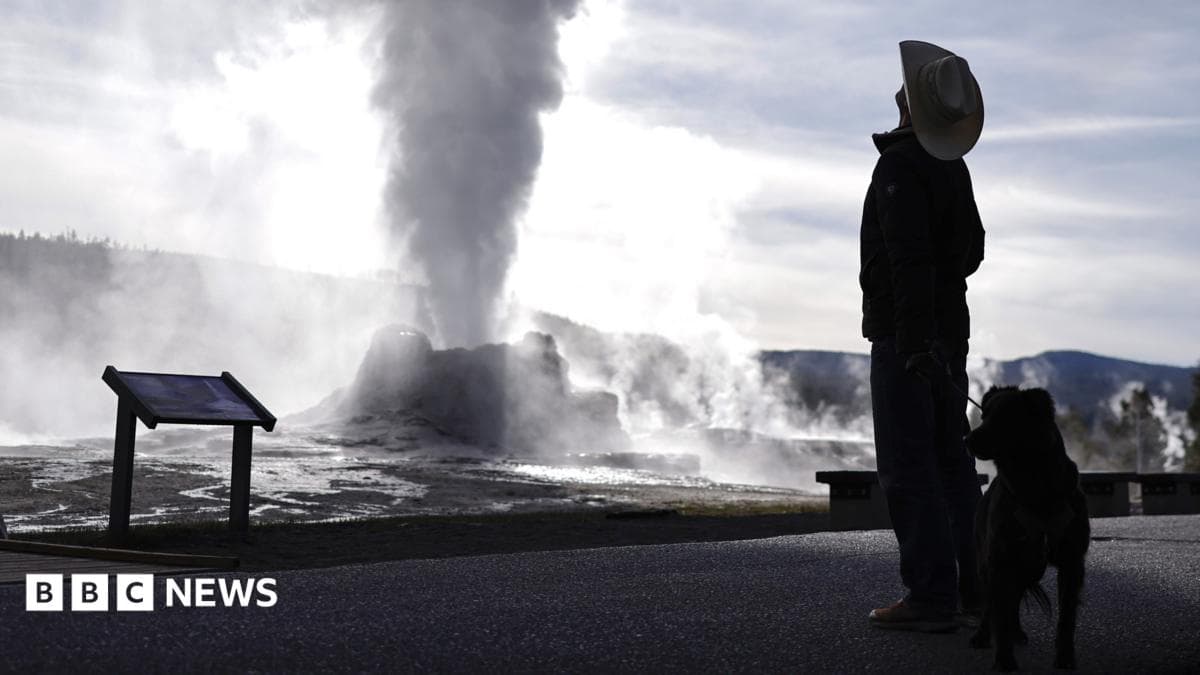
Geysers show us there's plenty of heat in the earth's crust It's hard to get Democrat and Republican politicians to agree on much at the moment, but the benefits of geothermal energy is one rare area of consensus. Geothermal energy makes use of natural heat below the Earth's surface and the next generation of technology can access hotter, deeper and more varied locations than ever before. Broadly, the low greenhouse gas emissions of geothermal plants appeals to liberals, while conservatives like the additional energy independence of geothermal, plus the use of drilling technology familiar in the oil and gas industry. Some US states are trying to accelerate permits for geothermal plants and in April senators from both parties introduced the Next-Generation Geothermal , external Research and Development Act. The legislation would direct the Department of Energy to support the development and commercialisation of the next generation of geothermal energy systems. One emerging type is known as enhanced geothermal systems (EGS). In EGS, underground rock is fractured hydraulically. That's done by pumping pressurised fluid into one well, and then collecting steam or hot water from another well. Better known as fracking, this technique has become well known and controversial ( particularly in the UK ) in the oil and gas industry. "It's the same techniques and up to a point it's the same industry as well," sums up Gernot Wagner, a climate economist at Columbia Business School in New York. But "from a climate perspective, there's a huge difference," he adds. For him, the risk of seismic activity, by creating cracks underground, is outweighed by the benefits of an energy source that is renewable, always-on and large-capacity. "Based on where we are, moving much faster, much bigger in the direction of using much more geothermal, frankly, is all good news," Wagner says. Quaise uses concentrated millimetre-waves to vaporise rock To go faster and deeper will require advances in drilling technologies. Companies are developing drilling equipment that is more stable when breaking through hard rock at high temperatures. Some firms are even aiming to penetrate rock without using standard drills. Quaise, a company with roots at the Massachusetts Institute of Technology (MIT), is using a technology called millimetre wave drilling. The frequency is similar to that of microwaves. Quaise's application involves "sending electromagnetic waves in the microwave millimetre wave spectrum to essentially melt and vaporise through the rock," explains Harry Kelso, Quaise's communications manager. Traditional geothermal energy clusters around hotspots on the earth's surface where very hot rocks can be easily accessed. "Millimetre wave drilling really enables you to access super-hot geothermal just about anywhere in the world," says Kelso. While Quaise is planning to use some conventional drilling at the project site it's developing in Oregon, Kelso says that conventional drills start to break down more quickly when it reaches very hard rock. Replacing drill bits increases the cost and time of drilling. In Quaise's case, Kelso says, "millimetre wave drilling is really what changes that because we're not using a physical drill bit." Other companies are also working on advanced drilling technology, such as projectiles that move several times faster than the speed of sound. Another crucial resource in the process is water. While some types of next-generation geothermal could create risks of water contamination or overconsumption, careful design can avoid this problem. Initially Quaise's system requires a lot of water, but according to Kelso, once the water is in the system it is continually circulated over the super-hot rocks. "We're essentially just recycling the water over and over," he says. Quaise is continuing to raise funds, with the aim of its Oregon project being up and running by 2030. Like other early versions of geothermal systems, it's an expensive project to get up and running. "The economics are somewhat challenging," Kelso admits. "Geothermal today is still more expensive because you are not getting as much power out of the well as you would if you were using that well for fossil fuel." But Quaise hopes that by targeting very high temperatures, of between 300C and 500C, the economics will improve. While the higher end of that temperature range is ambitious, it's a case of the-hotter-the-better. "It allows you to get 10 times more energy per well from geothermal, which changes the economics and the power potential of geothermal," according to Kelso. Quaise says its tech will bring geothermal energy to more regions In May, the Texas company Fervo Energy generated huge interest by becoming the first next-generation geothermal company to become publicly traded. It was initially valued at around $7.7bn. At the time of writing, shares are up around 18% from their IPO price. Fervo quotes a construction cost for its Utah plant of $7,000 per kilowatt of electricity, which it says is comparable to traditional nuclear power , external . And while that's expensive, Fervo points out that, like other renewable energy sources, it does not have any ongoing costs for fuel. "Over time, our goal is to achieve scale and drive down prices such that we're able to outcompete gas," the company said in its IPO filing. Fervo has one high-profile customer - in 2021 it signed a deal , external sell its energy to Google, which needs vast amounts of electricity of its new datacentres. It also has backing from Breakthrough Energy, a venture by Microsoft founder Bill Gates , external to accelerate innovative electricity production. Geothermal firm Fevro listed on the Nasdaq in May Such investment is badly needed for next-gen geothermal firms, which have enormous capital costs. Datacentre projects alone won't be enough to move the needle, according to the International Energy Agency. Both customer demand and costs remain uncertain. The climate solutions organisation Project Drawdown , external notes that "early projects carry a significant risk of cost overruns". Nevertheless Columbia researcher Wagner believes geothermal has tremendous potential and is not just hype. He emphasises that commodities like oil, gas and coal are vulnerable to political disruption, but "geothermal is a technology" and more secure. Wagner is confident that geothermal energy has now achieved liftoff, and will only get better and cheaper over time. Correction 26 June: This article was updated to clarify that the $7,000 per kilowatt of electricity figure was related to construction costs and not energy production. India's 'blue gold' starts a new drinks industry The ancient trick making food waste useful and tasty Could humanoid robots be heading for the battlefield?