'Cool in 90 seconds' - the fake portable air conditioners sweeping the internet
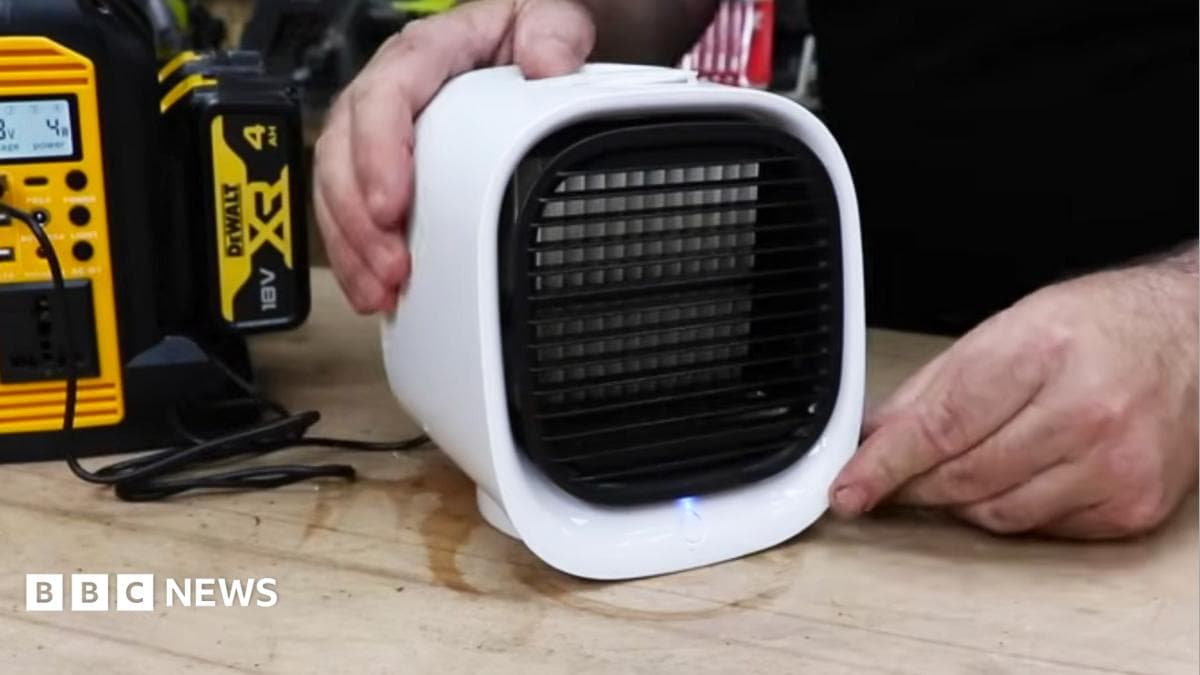
As parts of the UK brace for another hot weekend, online adverts have been appearing for portable air conditioners claiming to be "designed by former Nasa engineers" and able to "cool a room in 90 seconds". The adverts have emerged on platforms including Facebook and YouTube, but the Advertising Standards Authority (ASA) has now warned the products are often "too good to be true". YouTuber Stuart Matthews, who bought several devices to test on his Proper DIY channel, told the BBC that despite paying £70 for one machine, it turned out to be "a small, simple fan worth only a few pounds". The BBC has approached Meta and YouTube for comment. The ASA told the BBC that some of the adverts it had seen online in recent weeks made exaggerated claims, including that a small device could cool an entire home within minutes or used very little electricity. It also said the adverts frequently featured fake customer reviews describing dramatic temperature drops or exceptional performance. The adverts direct shoppers to websites selling the devices, typically for between £70 and £120. Many of the adverts also appeared to be AI-generated, using visuals such as copper coils and metallic boxes to make the products seem more sophisticated. One advert the BBC found online which claimed to cool down a room in minutes The ASA said there were several ways for customers to tell if an advert for a portable air conditioner was likely to be misleading. It said people should be sceptical of the following: Promises which sound too good to be true, like claims a small device can chill large rooms Dramatic backstories about "secret inventions" or "industry breakthroughs" Poor grammar, spelling mistakes and inconsistent branding Customer reviews describing dramatic results or reading as though they're too perfect The watchdog advised consumers who were unsure to research the retailer and check it provided genuine contact details and a business address. Customers should also look for independent reviews rather than relying solely on testimonials on the seller's website. It added that anyone concerned about an air conditioner advert could report it via their website , external . Stuart Matthews of the Proper DIY YouTube channel was not impressed with the device Matthews said he bought several of the devices to see whether they performed as advertised. The civil engineer and content creator said rather than buying something that would bring the temperature of his room down quickly, he found he had instead bought some "cheap components" made using "flawed science". One advert described the product as a "reverse-engineered aircon unit" featuring "a liquid-compressed cooling cartridge". Matthews said the device actually contained "a load of cardboard fins that get wet as the water blows past them". While so-called "swamp coolers" - machines that chill air by evaporating water - do work reasonably well in hot, dry climates, they also increase humidity and so are much less effective in humid places like much of the UK. They are also not conventional air conditioners, which work by removing heat from a room via an exhaust hose or external unit. "I really feel for the people that have been sucked into buying some of this rubbish," Matthews said. "While we'll continue to take action where we see the rules being broken, the nature of some of the businesses behind these ads means enforcement alone isn't enough to stop the problem," said the ASA. Although the watchdog regulates paid-for adverts on platforms including YouTube and Facebook, it cannot issue fines itself. How can I get air conditioning in my home and how much does it cost? Big tech must deal with scam ads under Ofcom proposals Sign up for our Tech Decoded newsletter to follow the world's top tech stories and trends. Outside the UK? Sign up here . Have you been affected by the extreme heat in the UK? Do you have a story to share? No air con? Here's how to get the most out of your electric fan More protein or less? The foods to get you through a heatwave Beauty Pie LED mask ad banned over misleading anti-wrinkle claim