Mahmood announces new refugee sponsorship route into UK
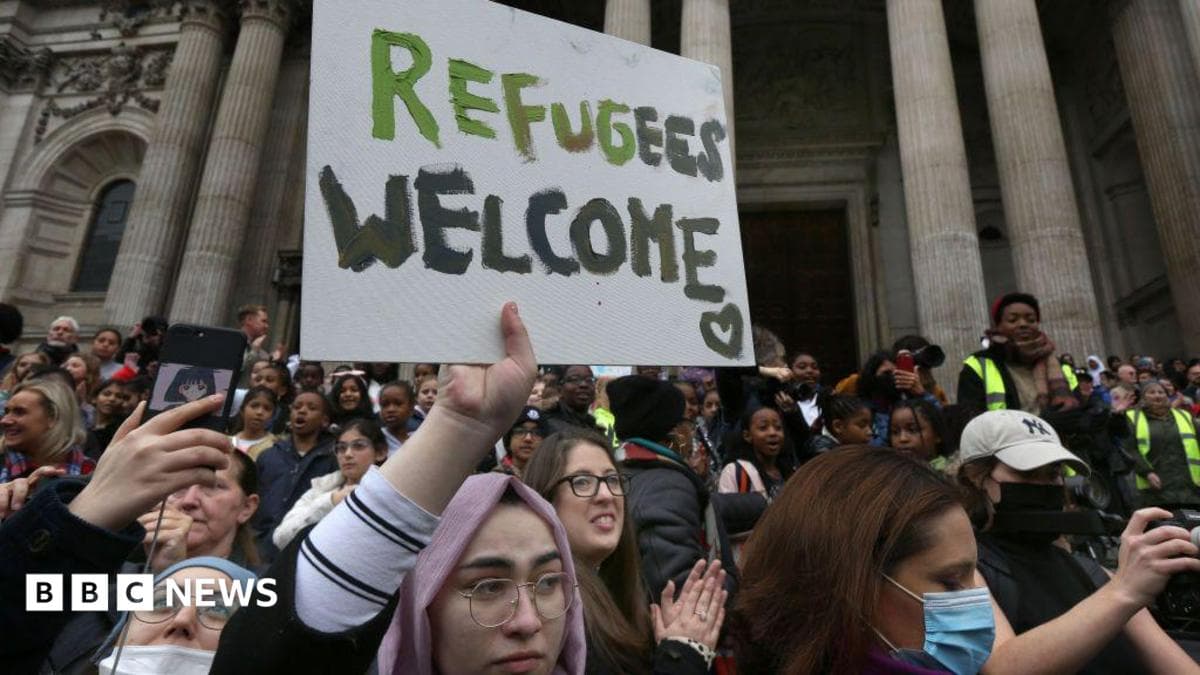
Voluntary and community groups will be permitted to sponsor refugees to come to the UK from the autumn The Home Office has vowed to introduce new "capped safe and legal" routes for refugees to come to the UK from later this year. The department said it would allow organisations like universities, community groups and businesses to sponsor refugees who applied to come to the UK, a model based on Canada's asylum system. Alongside the new route, the government said it would press ahead with changes to how human rights and modern slavery laws are applied to asylum applications to root out what it described as "vexatious" claims. In response, the Conservatives said no extra people should be let into the country until illegal immigration was stopped. Home Secretary Shabana Mahmood said the new system would protect "genuine refugees" while "closing loopholes that have been too often abused". "Britain has always offered sanctuary to those â¯fleeing warâ¯andâ¯persecution," she said. "But this system only survives if the public trustsâ¯that it is fair,⯠controlled, and notâ¯open toâ¯abuse." Mahmood is attempting to shore up support for her immigration bill before Andy Burnham's expected rise to prime minister. It is set to be put before the Commons next week and its more hardline elements could be opposed by some Labour MPs. Earlier this year, she took inspiration from Denmark with an asylum system shake-up giving only temporary protection to refugees and doubling the time migrants must wait to gain permanent residency. The reforms have angered some in Labour who feel there should be more safe and legal routes to the UK to help prevent small boat crossings. The latest measures, announced on Friday night, draw on Canada's community sponsorship scheme, which has successfully resettled almost 400,000 refugees since being introduced in 1979. In Canada, 70% of sponsored refugees find work within a year - 30% higher than those resettled through government schemes, according to the Home Office. The UK already has a relatively small number of refugees who are sponsored in communities under the UK Resettlement Scheme (UKRS), but the Home Office said the "vast majority" were supported by local councils. The government has been under pressure to reduce the number of asylum seekers being housed in hotels at the taxpayers' expense, while illegal small boat arrivals have also undermined public confidence in the asylum system. Home Secretary Shabana Mahmood says the new system would protect genuine refugees fleeing war and persecution The new routes would allow a wider number of organisations to support those who arrive, including "trusted universities" and community groups such as churches - though the full scope of which groups would be accepted is unclear. These organisations would be responsible for providing support to refugees in finding housing and work. The government would work with the UN High Commission on Refugees to establish eligibility - and background checks would be conducted before refugees could come to the UK. A refugee work route is expected to open next year, allowing employers to sponsor refugees, the Home Office said. Applications for the university route is set to open later this year, with the first arrivals due to take place in 2027. The government did not say how many people would be allowed to arrive under the new routes, but said it would be capped and start from a low base - and would "operate at a much higher capacity" than UKRS once it is fully established. It also said the Home Office would control which organisations could provide sponsorship and that all applicants would be subject to strict checks. Conservative shadow home secretary Chris Philp said that until illegal migration was at zero, "we shouldn't be shipping any extra people in at all on 'humanitarian grounds'". He said the measures "won't stop the boats" and accused Labour of supporting "open borders". Max Wilkinson, Liberal Democrat home affairs spokesman, said the plan was a "step in the right direction" but more work was needed to stop small boat arrivals. The government has been under pressure to create more safe and legal routes to the UK to help prevent small boat crossings The Community Sponsorship Alliance wants the government to let local people and communities decide who they will sponsor under the new scheme. "We urge the government not to draw eligibility criteria so narrowly that it stifles the very public goodwill that makes sponsorship work," the group's deputy chair Leonie Ansems De Vries said. Ministers have been under pressure from some on the right to leave the European Convention on Human Rights (ECHR) over concerns about appeals under Article 8, enshrining a right to a family life, against rejected asylum applications. The Home Office insisted membership of the ECHR was "firmly in our national interest, especially at a time of geographical instability" but said it would tighten the definition of family to mean an immediate family member. Changes are also being planned to how the Modern Slavery Act is applied, including removing the right to protection for any foreign national who has received a custodial sentence, or where there is evidence documents have been forged. This latest announcement on UK asylum policy came as the home secretary clashed with her junior minister Mike Tapp . He used a Times article to argue foreign care workers should be exempt from the home secretary's plans to change visa rules for migrants already living in the UK in the upcoming immigration bill. Mahmood requested that Tapp be sacked but was rebuffed by Prime Minister Sir Keir Starmer. Between 1 January and 25 June 2026, a total of 11,638 people crossed the English Channel by small boat from France. This was down by 37% on the same period the previous year. These crossings have become the most common way for people to be detected entering the UK illegally since 2020. Nearly all those who arrive by small boat claim asylum. Under international law, this means they are allowed to stay in the country while their asylum application is considered. Small boat arrivals made up 42% of asylum applications between April 2025 to March 2026. Boats that arrived in the UK from 26 June 2025 to 25 June 2026 carried an average of 65 people. This has more than doubled since 2021. Experts say overcrowding in boats makes crossings riskier . At least 84 people died while attempting to cross the Channel in 2024, according to the United Nations (UN). When looking at the scale of small boats crossings, the number of these arrivals is about 5% of the size of total immigration into the UK from January 2025 to December 2025. The government has pledged to âsmash the gangsâ behind these crossings in order to reduce the numbers. People from Eritrea accounted for 18% of all arrivals from April 2025 to March 2026. In the latest figures covering January 2025 to December 2025, at least 2,000 people who arrived by small boat were found to be potential victims of human trafficking or other forms of modern slavery, according to the Home Office. Another 4,535 people were detected entering the UK without permission via other methods including hiding in vehicles, travelling on ferries or through airports from April 2025 to March 2026. This was down by 22% on the same period the previous year. There are also individuals who arrive legally, for example via a work or study visa, and then overstay their limit. The total number of people who live in the UK illegally after arriving legally is not known. An asylum seeker is someone who wants to be in the UK because they say they cannot live safely in their own country due to persecution or violence. The government must house an asylum seeker if they cannot financially support themselves while their claim is being considered. There were 93,653 people in asylum accommodation as of March 2026. About 22% of those people, 20,885, were in hotels. These are used when there is not enough shared housing available, such as houses of multiple occupation (HMOs) or former military sites . The government has pledged to stop the use of hotels by 2029. More people are in hotels across the south of England than elsewhere in the UK, while HMOs are more common in the north of England and Scotland. A modern browser with JavaScript and a stable internet connection is required to view this interactive Type in a postcode or the name of a local council below to see how many asylum seekers are housed in the area A total of 93,525 people applied for asylum in the UK from April 2025 to March 2026. This was down by 12% on the same period in the previous year. Most people who arrive in the UK by small boat claim asylum, but they were only 42% of all asylum seekers from April 2025 to March 2026. The rest include people who arrived by other illegal means or who came to the UK legally and applied for asylum while holding, or just after holding, a valid visa. It can take years for the government to decide whether someone should be granted asylum. In March 2026, 48,758 people - across 35,744 asylum applications - were waiting for an initial decision. The number of people awaiting an initial decision was down by 55% on the previous year. As of March 2026, a further 87,450 refused asylum applications were part of a second backlog, waiting the outcome of an appeal in the courts. This was up by 72% on the previous year. Together, these initial decision and appeal cases form the governmentâs total asylum applications backlog, which it has pledged to clear . Refugee status was granted in about 39% of asylum decisions made by the Home Office from April 2025 to March 2026. About 39% of asylum appeal cases concluded between April 2025 to March 2026 resulted in a previous refusal decision being overturned. The government requires people who are in the UK, but no longer have permission to live or work in the country, to leave. This is called a return and can happen voluntarily or involuntarily. People can lose the right to be in the UK for different reasons, such as a visa expiring, an asylum claim being refused, or by receiving a criminal conviction that results in deportation. There were 39,007 returns from April 2025 to March 2026. This was up by 7% on the same period the previous year. That number of returns is equivalent to about 6% of total emigration from the UK from January 2025 to December 2025. Of all returns from April 2025 to March 2026: 5,858 had been convicted of a criminal offence 11,918 had lodged an asylum claim at some point 2,750 had arrived in the UK by small boat People from India made up 26% of all returns from April 2025 to March 2026. The UK is trialing a scheme with France to return people who arrived in the country on a small boat. For every person the UK sends back to France, the UK will accept an equal number of asylum seekers. This is called the "one in, one out" deal. As of 15 June 2026, 921 people have been returned through this arrangement. Returns can happen in different ways. "Enforced returns", which includes deportations, means the government arranges transport to return people to a different country. In some cases, people are escorted by officers. All other returns are "voluntary". This means a person has agreed to leave and may receive government help with travel and other costs to help facilitate the return. Some people classed as leaving the country voluntarily do so completely independently and without any government knowledge or involvement . Independent returns made up 33% of the total from April 2025 to March 2026. Most people who come to the UK do so legally, after being granted a visa before they travel. A visa gives someone permission to enter or stay in the UK for a specific purpose, such as work, study or joining family members. There were 778,625 people who came to the UK via visas from April 2025 to March 2026, not including visitors or people transiting through the UK. This was down by 11% on the same period the previous year. That does not mean all those people travelled to the UK, only that they were approved to do so. The most common type of visa people came to the UK on was study, which made up 53% of all visa entries from April 2025 to March 2026. People from India were the most common group to come to the UK on study visas, making up 22% of the total. Together, people from China and India accounted for nearly half of all study visas. This has been the case for many years. The EU and UK monitor the number of people crossing borders in the Mediterranean and English Channel by sea without permission. There were 161,608 sea arrivals to the UK, Greece, Italy, Spain and Cyprus from May 2025 to April 2026. Crossings to the UK accounted for about 23% of the combined total. Sea arrivals into mainland Europe peaked in 2015, when the UN said more than a million people crossed the Mediterranean. The top three countries with the most people claiming asylum from April 2025 to March 2026 were Spain with 133,795, Italy with 124,740 and France with 111,320. The UK ranked at number five for asylum claims over the same period when compared with 26 other European countries with populations over one million. When adjusted for population size, the UK ranks at number 10 for asylum applications per 100,000 people. Net migration measures the overall change in a countryâs population due to migration over a given period. It is everyone coming into the country (immigration) minus everyone who leaves (emigration). The latest available data to compare the UK with other European nations is January 2024 to December 2024. At that point, the countries with the biggest increase in their population were Spain with 626,000, Germany with 494,000 and the UK with 331,000, after taking into account the people who left the country, and those who arrived. When adjusting for population size, the UK was in position 11 for increase in population due to migration, alongside 13 other European countries with comparable data per 100,000 residents. UK migration drops to 171,000 - almost half 2024's figure Track UK's latest migration numbers - net migration, visas, asylum and small boats UK backs human rights plan to accelerate illegal migration removals Rayner warns immigration reforms risk being 'un-British'