From Passive Feeds to Edge Intelligence: How Heavy Industry in India and Africa is Re-Engineering Physical Surveillance
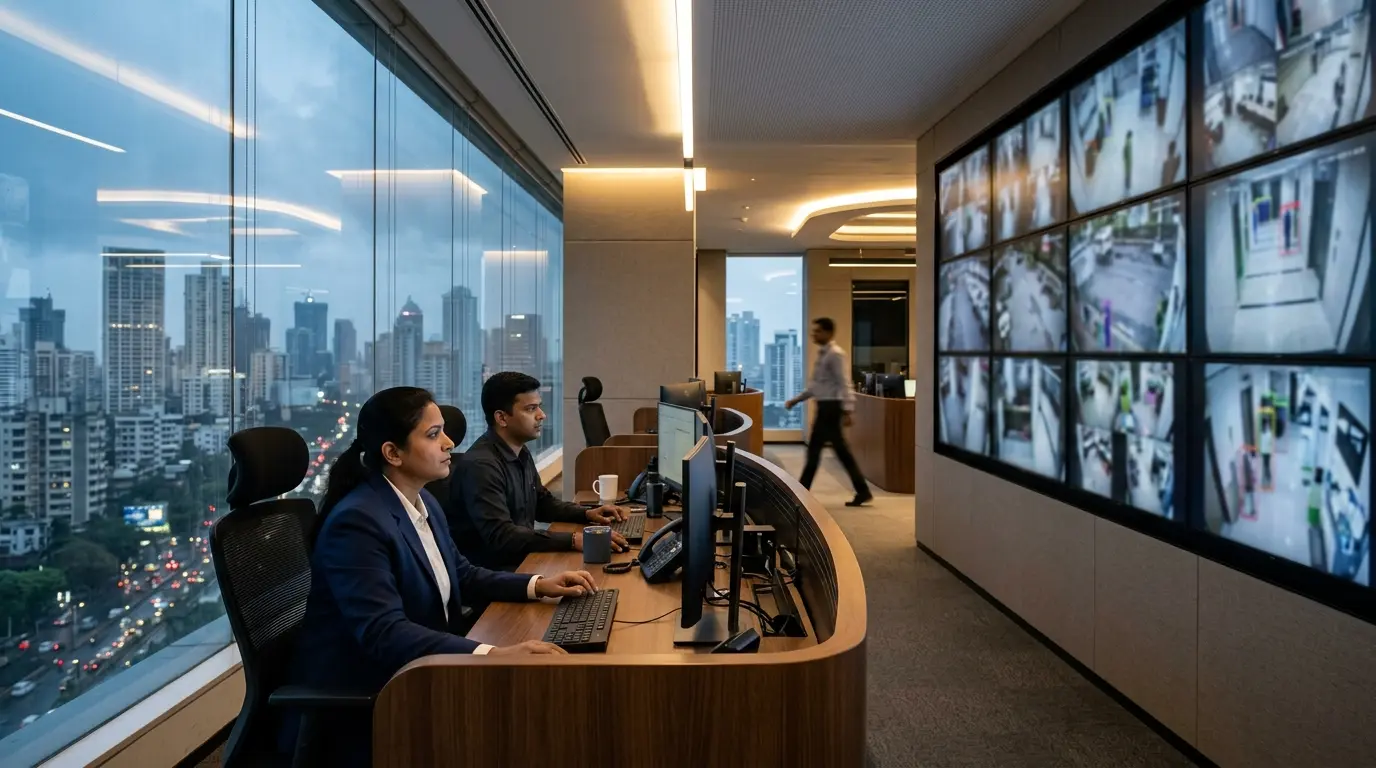
Across high-throughput industrial hubs - from automotive corridors in western India to logistics corridors and mining infrastructure spanning East Africa - a quiet technological shift is transforming perimeter and facility management. For decades, thousands of enterprise CCTV cameras captured endless hours of passive footage, primarily consulted in retrospect after an incident occurred. Today, enterprise leaders are swapping passive monitors for active, real-time computer vision networks that alert teams within milliseconds. The pivot comes at a critical intersection of regulatory compliance, operational safety, and cybersecurity. As industrial facilities face stricter worker safety mandates (such as automated PPE and restricted-zone compliance) alongside operational throughput challenges, relying purely on manual security observation has proven increasingly insufficient. However, bringing artificial intelligence into heavy facilities has historically introduced a significant dilemma: network bandwidth and data sovereign privacy. Streaming dozens or hundreds of high-definition camera feeds to central public cloud environments creates severe latency bottlenecks and raises sensitive data-leak liabilities for large enterprise estates. This infrastructure challenge has fueled the rapid rise of specialized edge-native architectures. In markets like India, emerging deep-tech ventures like Toplens AI Solutions Pvt Ltd are pioneering a model that keeps video streams entirely on-premises through air-gapped edge computing. Rather than transmitting raw operational footage across external networks, their computer vision models run localized inference with sub-10-millisecond latency - evaluating perimeter risks, equipment hazards, and worker safety protocols right on client hardware. Industry observers note that this architecture is striking a resonant chord with large multinational organizations, particularly those scaling operations across emerging industrial powerhouses. With significant deployments spanning enterprise facilities in India as well as expanding cross-border footprints in African markets, companies operating in rigorous manufacturing, supply chain logistics, and resource management are increasingly leaning into hybrid and local edge deployments. "The fundamental benchmark for enterprise AI surveillance in large-scale plants is no longer just algorithmic accuracy on paper - it is whether the system can function without cloud dependency during critical operational hours," notes a senior systems infrastructure consultant. "When an enterprise can overlay advanced computer vision directly onto legacy camera assets without rewiring the facility or leaking telemetry, the economics of industrial security fundamentally change." As competitive global supply chains demand zero-downtime safety standards and airtight perimeter defenses, India's enterprise computer vision sector is positioning itself as a key supplier of edge intelligence. With industrial corridors modernizing across South Asia and Africa, real-time, privacy-first computer vision platforms are swiftly transitioning from optional facility upgrades into foundational operational infrastructure.